

The Rbf1, Hfl1 and Dbp4 of Candida albicans regulate common as well as transcription factor-specific mitochondrial and other cell activities
Open accessThe DOI matches its Crossref record; 48 of the 48 references it cites were found in a registry or an index.
Abstract
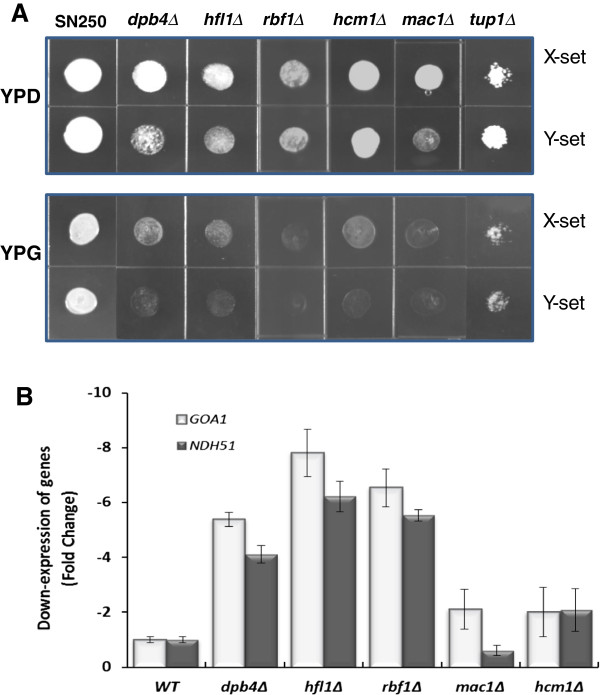
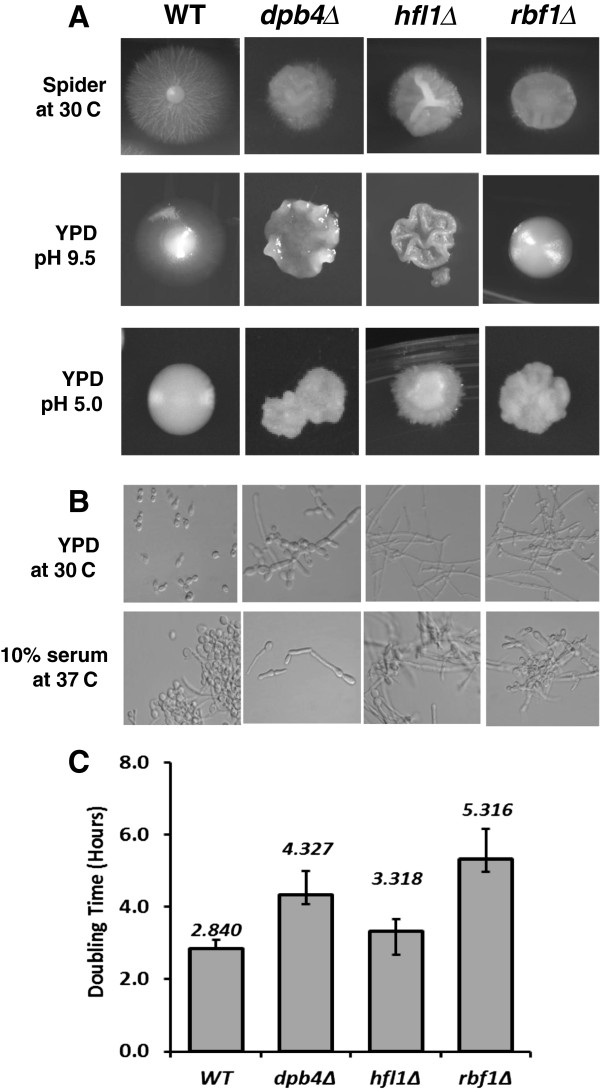
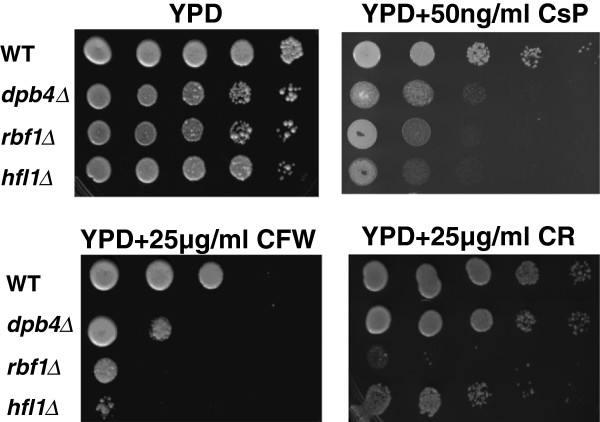
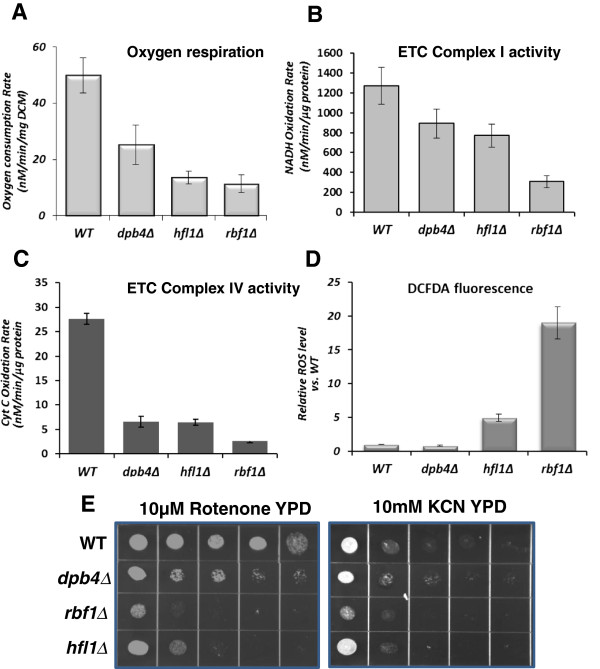
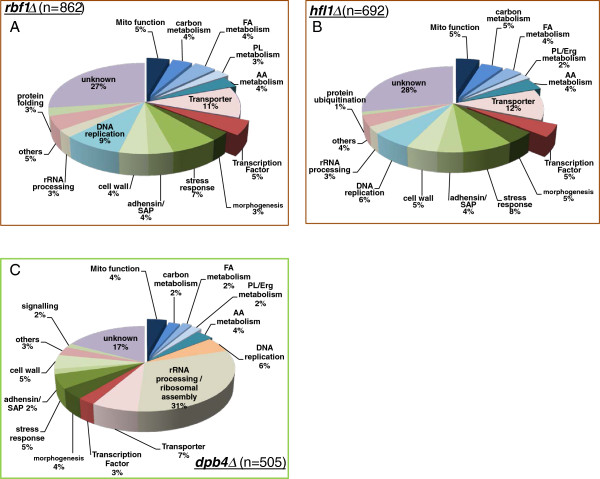
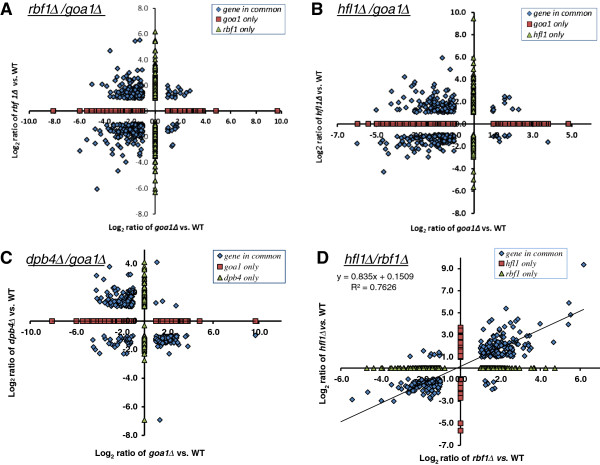
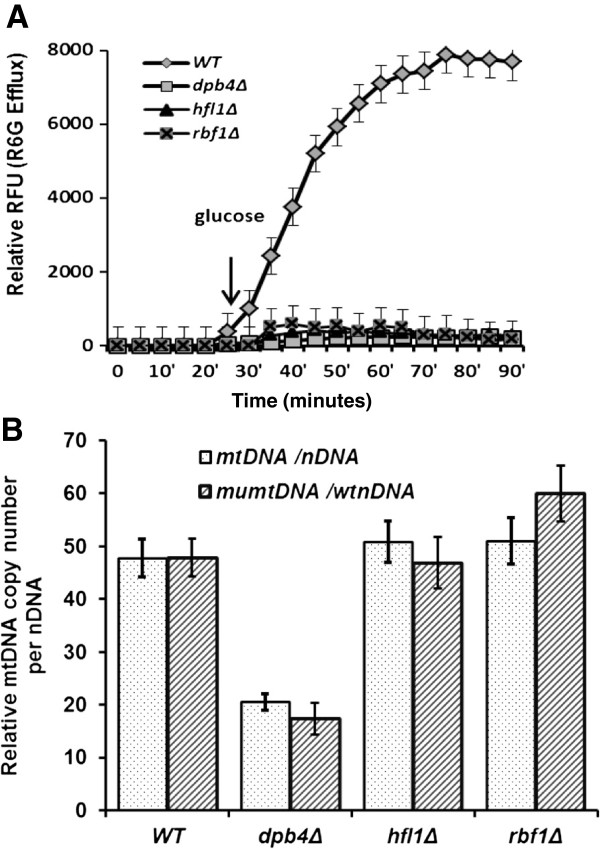
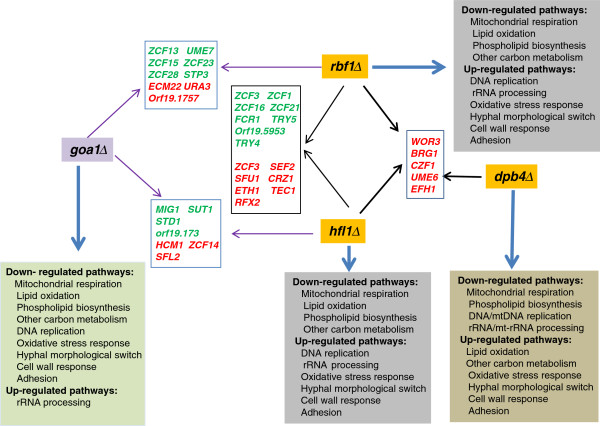
Background: Our interest in Candida albicans mitochondria began with the identification of GOA1. We demonstrated its role in cell energy production, cross-talk among mitochondria and peroxisomes, non-glucose energy metabolism, maintenance of stationary phase growth, and prevention of premature apoptosis. Its absence results in avirulence. However, what regulated transcription of GOA1 was unknown. Results: To identify transcriptional regulators (TRs) of GOA1, we screened a C. albicans TF knockout library (TRKO) and identified Rbf1p, Hfl1p, and Dpb4p as positive TRs of GOA1. The phenotypes of each mutant (reduced respiration, inability to grow on glycerol, reduced ETC CI and CIV activities) are reasonable evidence for their required roles especially in mitochondrial functions. While the integration of mitochondria with cell metabolic activities is presumed to occur, there is minimal information on this subject at the genome level. Therefore, microarray analysis was used to provide this information for each TR mutant. Transcriptional profiles of Rbf1p and Hfl1p are more similar than that of Dpn4p. Our data demonstrate common and also gene-specific regulatory functions for each TR. We establish their roles in carbon metabolism, stress adaptation, cell wall synthesis, transporter efflux, peroxisomal metabolism, phospholipid synthesis, rRNA processing, and nuclear/mtDNA replication. Conclusions: The TRs regulate a number of common genes but each also regulates specific gene transcription. These data for the first time create a genome roadmap that can be used to integrate mitochondria with other cell processes. Of interest, the TRs are fungal-specific, warranting consideration as antifungal drug targets.
Overview
The claims and statistics of this paper haven’t been checked yet.
Free: it reads the open-access text and checks the first 5 claims that cite a source we can check. Create a free account to check every claim.
Integrity signals
Registry
Cites
Statistics
Figures
Verification
Claims the paper makes
The claims and statistics of this paper haven’t been checked yet.
Free: it reads the open-access text and checks the first 5 claims that cite a source we can check. Create a free account to check every claim.
Claims other papers make about this one
Each is checked against this paper’s own text: does it say what the citing paper says it does?
The source backs part of the claim, not all of it — or backs it for a different population, condition or comparison.
In the citing paper
“In pathogenic fungi including C. albicans, Cryptococcus neoformans, and Aspergillus fumigatus, inhibiting the respiratory chain can affect the morphological transition from yeast to hyphae, cell wall biogenesis, drug resistance, and virulence [10–17].”
From Mitochondrial anchor protein Num11 is key to pathogenicity of Candida albicans by affecting mitochondrial function and cell wall masking (2025) · cites this paper as [14]
Experimental — accuracy not yet measuredThe source backs part of the claim, not all of it — or backs it for a different population, condition or comparison.
In the citing paper
“C. albicans respiration-deficient mutants dpb4Δ, hfl1Δ, and rbf1Δ (8) and mutants goa1Δ and ndh51Δ (16) have similarly been shown to be sensitive to CFW and CR.”
From Inhibition of Classical and Alternative Modes of Respiration in Candida albicans Leads to Cell Wall Remodeling and Increased Macrophage Recognition (2019) · cites this paper as [8]
Experimental — accuracy not yet measuredThe cited source says what the claim attributes to it.
In the citing paper
“Mutants defective in respiration have consistently been shown to affect the hyphal morphological switch, an important determinant of virulence in C. albicans, whether negatively (goa1Δ, ndh51Δ) (7) or positively (dbp4Δ, hfl1Δ, rbf1Δ) (8).”
From Inhibition of Classical and Alternative Modes of Respiration in Candida albicans Leads to Cell Wall Remodeling and Increased Macrophage Recognition (2019) · cites this paper as [8]
Self-check
Percentages, sums and reported differences re-computed from the paper’s own numbers.
The self-check needs the paper’s full text.
Citations
Cites
Hidden Killers: Human Fungal Infections
Brown, G. D., Denning, D. W., Gow, N. A. R., Levitz, S. M., Netea, M. G., & White, T. C. (2012) · Science Translational Medicine · doi:10.1126/scitranslmed.3004404 · Cited by 4,284 · cited 6×
“Virulence of this organism is commonly attributed to factors that initiate colonization of host cells (the ALS gene family and others), cause invasion (secreted lipases and proteases), regulate morphogenesis (the yeast hyphal transition), and biofilm formation [1].”
InfluentialHazelwood, L. A., Daran, J.-M., van Maris, A. J. A., Pronk, J. T., & Dickinson, J. R. (2008) · Applied and Environmental Microbiology · doi:10.1128/aem.02625-07 · Cited by 1,547
The glyoxylate cycle is required for fungal virulence
Lorenz, M. C., & Fink, G. R. (2001) · Nature · doi:10.1038/35083594 · Cited by 745 · cited 1×
“albicans has been described [12,28-30].”
Transcriptional Response of Candida albicans upon Internalization by Macrophages
Lorenz, M. C., Bender, J. A., & Fink, G. R. (2004) · Eukaryotic Cell · doi:10.1128/ec.3.5.1076-1087.2004 · Cited by 712 · cited 2×
“albicans are critical to the pathogenesis of candidiasis, since these organelles house alternative carbon metabolic pathways (such as the glyoxylate cycle) that are critical to survival of the organisms in macrophages [15].”
Blumberg, H. M., Jarvis, W. R., Soucie, J. M., Edwards, J. E., Patterson, J. E., Pfaller, M. A., Rangel‐Frausto, M. S., Rinaldi, M. G., Saiman, L., Wiblin, R. T., et al. (2001) · Clinical Infectious Diseases · doi:10.1086/321811 · Cited by 661
Metabolism and Regulation of Glycerolipids in the Yeast Saccharomyces cerevisiae
Henry, S. A., Kohlwein, S. D., & Carman, G. M. (2012) · Genetics · doi:10.1534/genetics.111.130286 · Cited by 518
A Phenotypic Profile of the Candida albicans Regulatory Network
Homann, O. R., Dea, J., Noble, S. M., & Johnson, A. D. (2009) · PLoS Genetics · doi:10.1371/journal.pgen.1000783 · Cited by 444 · cited 3×
“Rbf1Δ and hfl1Δ were similar to WT cells in 10% serum at 37°C, as reported previously for rbf1Δ [21].”
Pfaller, M., Neofytos, D., Diekema, D., Azie, N., Meier-Kriesche, H.-U., Quan, S.-P., & Horn, D. (2012) · Diagnostic Microbiology and Infectious Disease · doi:10.1016/j.diagmicrobio.2012.10.003 · Cited by 394 · cited 1×
“6 billion per year [5-8].”
Niche-specific regulation of central metabolic pathways in a fungal pathogen
Barelle, C. J., Priest, C. L., MacCallum, D. M., Gow, N. A. R., Odds, F. C., & Brown, A. J. P. (2006) · Cellular Microbiology · doi:10.1111/j.1462-5822.2005.00676.x · Cited by 336 · cited 1×
“albicans, low blood levels of glucose cause the utilization of alternative carbon sources as mentioned above and described in other labs [13-16].”
Fungal respiration: a fusion of standard and alternative components
Joseph-Horne, T., Hollomon, D. W., & Wood, P. M. (2001) · Biochimica et Biophysica Acta (BBA) - Bioenergetics · doi:10.1016/s0005-2728(00)00251-6 · Cited by 331 · cited 3×
“This is especially true for AOX2, which is a hallmark gene of a mitochondrial stress response rather than its role in respiration [25].”
Cited by
System-level impact of mitochondria on fungal virulence: to metabolism and beyond
Calderone, R., Li, D., & Traven, A. (2015) · FEMS Yeast Research · doi:10.1093/femsyr/fov027 · Cited by 101
“albicans Subsequently, an isogenic set of strains was constructed that included a null mutant and a single gene-reconstituted strain were compared phenotypically to parental WT cells (Bambach et al. 2009; Li et al. 2011; Chen et al. 2012; She et al. 2013, 2015; Sun et al. 2013; Khamooshi et al. 2014).”
BackgroundSelf-citationCandida albicans targets that potentially synergize with fluconazole
Lu, H., Shrivastava, M., Whiteway, M., & Jiang, Y. (2021) · Critical Reviews in Microbiology · doi:10.1080/1040841x.2021.1884641 · Cited by 81
“2009), show increased susceptibility to fluconazole (Nagao et al. 2012; Ko et al. 2013; Khamooshi et al. 2014; Chen et al. 2018).”
BackgroundExploiting mitochondria as targets for the development of new antifungals
Li, D., & Calderone, R. (2017) · Virulence · doi:10.1080/21505594.2016.1188235 · Cited by 67
Self-citationDuvenage, L., Walker, L. A., Bojarczuk, A., Johnston, S. A., MacCallum, D. M., Munro, C. A., & Gourlay, C. W. (2019) · mBio · doi:10.1128/mbio.02535-18 · Cited by 61
“Mutants defective in respiration have consistently been shown to affect the hyphal morphological switch, an important determinant of virulence in C. albicans , whether negatively ( goa1 Δ, ndh51 Δ) (7) or positively ( dbp4 Δ, hfl1 Δ, rbf1 Δ) (8).”
Sharma, N. L., Massie, C. E., Butter, F., Mann, M., Bon, H., Ramos‐Montoya, A., Menon, S., Stark, R., Lamb, A. D. G., Scott, H. E., et al. (2014) · Nucleic Acids Research · doi:10.1093/nar/gku281 · Cited by 61
She, X., Khamooshi, K., Gao, Y., Shen, Y., Lv, Y., Calderone, R., Fonzi, W., Liu, W., & Li, D. (2015) · Cellular Microbiology · doi:10.1111/cmi.12438 · Cited by 51
Self-citationBromley, M., Johns, A., Davies, E., Fraczek, M., Mabey Gilsenan, J., Kurbatova, N., Keays, M., Kapushesky, M., Gut, M., Gut, I., et al. (2016) · PLOS ONE · doi:10.1371/journal.pone.0158724 · Cited by 45
“Other reports suggest that uncoupling of oxidative phosphorylation in the mitochondria or defects in mitochondrial fusion may also lead to alterations in azole sensitivity [59, 60].”
BackgroundCan Saccharomyces cerevisiae keep up as a model system in fungal azole susceptibility research?
Demuyser, L., & Dijck, P. V. (2019) · Drug Resistance Updates · doi:10.1016/j.drup.2019.02.002 · Cited by 46
Ke, C.-L., Liao, Y.-T., & Lin, C.-H. (2021) · Virulence · doi:10.1080/21505594.2020.1870082 · Cited by 41
“three transcription factors (TFs) Rbf1, Hfl1 and Dpb4, which positively regulate GOA1 directly or indirectly, are involved in mitochondrial biogenesis [12].”
BackgroundInfluentialKhemiri, I., Tebbji, F., & Sellam, A. (2020) · Frontiers in Microbiology · doi:10.3389/fmicb.2020.00935 · Cited by 40
“…deprivation, we first tested and confirmed the growth defect of mac1 mutant under different conditions including Cu deprivation, utilization of non-fermentable carbon sources and iron chelation as previously reported (Marvin et al., 2004, 1; Homann et al., 2009; Khamooshi et al., 2014) (Figure 3).”
MethodFungal resilience and host–pathogen interactions: Future perspectives and opportunities
Brown, A. J. P. (2022) · Parasite Immunology · doi:10.1111/pim.12946 · Cited by 46
Tian, F., Lee, S. Y., Woo, S. Y., & Chun, H. S. (2020) · Frontiers in Microbiology · doi:10.3389/fmicb.2020.00419 · Cited by 40
MIG1Regulates Resistance of Candida albicans against the Fungistatic Effect of Weak Organic Acids
Cottier, F., Tan, A. S. M., Xu, X., Wang, Y., & Pavelka, N. (2015) · Eukaryotic Cell · doi:10.1128/ec.00129-15 · Cited by 37
“Consistent with prior reports (33, 34), we were unable to calculate 189 a growth rate in control media for five strains (each deleted of one of genes DPB4, HFL1, RBF1, 190 orf19.”
ResultAspergillus fumigatus Transcription Factors Involved in the Caspofungin Paradoxical Effect
Valero, C., Colabardini, A. C., Chiaratto, J., Pardeshi, L. A., de Castro, P. A., Filho, J. A. F., Silva, L. P., Rocha, M. C., Malavazi, I., Costa, J. H., et al. (2020) · mBio · doi:10.1128/mbio.00816-20 · Cited by 40
“albicans Δdpb4 is more sensitive to cell wall inhibitors, including caspofungin, and shows defects in mitochondrial function (45).”
BackgroundKolondra, A., Labedzka-Dmoch, K., Wenda, J. M., Drzewicka, K., & Golik, P. (2015) · BMC Genomics · doi:10.1186/s12864-015-2078-z · Cited by 33
“maintains active mitochondrial respiration in the presence of glucose [56], even though it tolerates anaerobiosis and respiratory-deficient mutants are viable [61, 62, 66–68].”
Verma-Gaur, J., Qu, Y., Harrison, P. F., Lo, T. L., Quenault, T., Dagley, M. J., Bellousoff, M., Powell, D. R., Beilharz, T. H., & Traven, A. (2015) · PLOS Genetics · doi:10.1371/journal.pgen.1005590 · Cited by 33
“Three transcription factors have been shown to have a role in mitochondrial respiratory activity in this pathogen [28], and the transcriptional regulatory complex Mediator modulates respiratory metabolism, although the gene targets are not known [25].”
BackgroundMetabolic regulation in model ascomycetes – adjusting similar genomes to different lifestyles
Whiteway, M. S., Tebung, W. A., Choudhury, B. I., & Rodríguez-Ortiz, R. (2015) · Trends in Genetics · doi:10.1016/j.tig.2015.05.002 · Cited by 30
She, X., Calderone, R., Kruppa, M., Lowman, D., Williams, D., Zhang, L., Gao, Y., Khamooshi, K., Liu, W., & Li, D. (2016) · PLOS ONE · doi:10.1371/journal.pone.0147175 · Cited by 27
Self-citationA mitochondrial proteomics view of complex I deficiency in Candida albicans
She, X., Zhang, P., Gao, Y., Zhang, L., Wang, Q., Chen, H., Calderone, R., Liu, W., & Li, D. (2018) · Mitochondrion · doi:10.1016/j.mito.2017.08.003 · Cited by 26
Self-citationDeciphering the oxidative stress response in Candida albicans
Arribas, V., Gil, C., & Molero, G. (2025) · Fungal Biology Reviews · doi:10.1016/j.fbr.2025.100427 · Cited by 23
Qasim, M. N., Arevalo, A. V., Nobile, C. J., & Hernday, A. D. (2021) · Journal of Fungi · doi:10.3390/jof7010037 · Cited by 20
Conrad, K. A., Rodriguez, R., Salcedo, E. C., & Rauceo, J. M. (2018) · PLoS ONE · doi:10.1371/journal.pone.0192250 · Cited by 17
Conrad, T., Kniemeyer, O., Henkel, S. G., Krüger, T., Mattern, D. J., Valiante, V., Guthke, R., Jacobsen, I. D., Brakhage, A. A., Vlaic, S., et al. (2018) · BMC Systems Biology · doi:10.1186/s12918-018-0620-8 · Cited by 17
Cui, Y., Wang, D., Nobile, C. J., Dong, D., Ni, Q., Su, T., Jiang, C., & Peng, Y. (2020) · Microbial Pathogenesis · doi:10.1016/j.micpath.2023.106507 · Cited by 14
The antifungal pipeline: the need is established. Are there new compounds?
Li, D., She, X., & Calderone, R. (2020) · FEMS Yeast Research · doi:10.1093/femsyr/foaa023 · Cited by 16
Self-citationThe Role of Glycoside Hydrolases in S. gordonii and C. albicans Interactions
Zhou, Z., Ren, B., Li, J., Zhou, X., Xu, X., & Zhou, Y. (2022) · Applied and Environmental Microbiology · doi:10.1128/aem.00116-22 · Cited by 11
Mitochondrial phosphate carrier plays an important role in virulence of Candida albicans
Hu, Q., Zhong, H., Wang, X., Han, L., Ma, S.-S., Li, L., & Wang, Y. (2024) · Mycology: An International Journal on Fungal Biology · doi:10.1080/21501203.2024.2354876 · Cited by 11
“Further study shows that interrupting DPB4 and RBF1 , which are the transcriptional regulators of GOA1 , also affects the yeast-to-hyphal transition of C. albicans (Khamooshi et al. 2014).”
Karasaki, S. S. M. (2014) · Journal of Proteomics & Bioinformatics · doi:10.4172/jpb.1000313 · Cited by 5
Yang, G., Niu, X., Zhuang, T., Zhu, X., Xu, Q., Wang, H., Shao, J., Wang, C., Yang, Y., Wang, T., et al. (2025) · Virulence · doi:10.1080/21505594.2025.2519149 · Cited by 4
Duvenage, L., Walker, L. A., Bojarczuk, A., Johnston, S. A., McCallum, D. M., Munro, C. A., & Gourlay, C. W. (2018) · bioRxiv (Cold Spring Harbor Laboratory) · doi:10.1101/405670 · Cited by 4
“The absence of Aox does not affect cell wall integrity or macrophage recognition Several studies have shown a link between respiration and cell wall integrity in C. albicans (Dagley et al., 2011; Khamooshi et al., 2014; She et al., 2013).”
BackgroundAssessing Mitochondrial Functions in Candida albicans
Li, D., & Calderone, R. (2015) · Methods in molecular biology · doi:10.1007/978-1-4939-3052-4_5
Self-citationJaputra, C. (2014) · Digital WPI
Assessing Complex I (CI) Mitochondrial Subunit Protein Functions in Candida albicans
Li, D., She, X., & Calderone, R. (2022) · Methods in molecular biology · doi:10.1007/978-1-0716-2549-1_11
Self-citationShe, X., Zhou, X., Zhou, M., Zhang, L., Calderone, R., Bellanti, J. A., Liu, W., & Li, D. (2024) · Virulence · doi:10.1080/21505594.2024.2412750
“This is evidenced by the reduced filamentous growth, a predominant growth form of the hfl1∆/hfl1∆ mutant [11], observed in YPD broth and on agar plates.”
BackgroundMethodInfluentialSelf-citationEnvironmental adaptation of Candida albicans : the examples of persistence and chlamydosporulation
Denega, I. (2020) · theses.fr (ABES) · doi:10.70675/748584ddzf6f4z4124z9237z56d0535d3352
Metadata
- Authors
- Khamooshi, K., Sikorski, P., Sun, N., Calderone, R., & Li, D.
- Affiliations
- Georgetown University Medical Center (US)
- Corresponding author
- Li, Dongmei
- Venue
- BMC Genomics
- Published
- 2014-01-22
- Volume
- 15
- Issue
- 1
- Pages
- 56-56
- ISSN
- 1471-2164 (ISSN-L)
- PMC
- PMC3904162
- OpenAlex
- W2135399192
- Cited by
- 37
- References
- 48
- Citations by year
- 2025: 2 · 2024: 2 · 2022: 3 · 2021: 4 · 2020: 6 · 2019: 2 · 2018: 4 · 2017: 1 · 2016: 3 · 2015: 7 · 2014: 3
- FWCI
- 1.91
- Type
- journal article
- Language
- en
- Open access
- gold
- doi.org
- Licence
- cc-by
- Locations
- BMC Genomics (publishedVersion, cc-by)
- Europe PMC (PubMed Central) (publishedVersion, cc-by)
- PubMed Central (publishedVersion, cc-by)
- PubMed (publishedVersion)
- Funders
- Georgetown University
- National Institutes of Health
- National Institute of Allergy and Infectious Diseases (AI09029)
- Topics
- Life Sciences › Biochemistry, Genetics and Molecular Biology › Molecular Biology › Fungal and yeast genetics research
- Life Sciences › Biochemistry, Genetics and Molecular Biology › Molecular Biology › Mitochondrial Function and Pathology
- Health Sciences › Medicine › Infectious Diseases › Antifungal resistance and susceptibility
- Keywords
- Candida albicans, Rbf1, transcription factors, mitochondrial transcription, transcriptional regulation, carbon metabolism, peroxisomal metabolism, stress adaptation, cell wall biosynthesis, phospholipid synthesis, rRNA processing, mitochondrial DNA replication, antifungal drug targets
- MeSH terms
- Antifungal Agents, Candida albicans, Carbon, Cell Wall, DNA-Binding Proteins, Fungal Proteins, Mitochondria, Nuclear Proteins, Phenotype, Transcription Factors, Lipid Peroxidation, Gene Library, Cell Respiration, GTP-Binding Protein alpha Subunits, Gi-Go, Caenorhabditis elegans Proteins, Gene Knockout Techniques, Transcriptome
About these checks
Registry, retraction, Cites and statistics results are computed, not judged, with one exception: a printed reference that no index lists is read once by a model before it counts as a citation error. Claims are extracted by a model and kept only when their quote appears verbatim in the text; each cited source is then checked, with a model’s help, for whether it says what the claim relies on. Those verdicts can be wrong — read the claim’s quote and the cited source before relying on one.
Statistics and arithmetic are recomputed, not judged.
Confidence bands are shown only for fields calibrated on our annotated test set. None is calibrated yet, so no band is shown.
What counts as a claim ›How we measure confidence ›How we check this ›
Are you an author, or do you see a problem with this page? Request a review
Data sources
Bibliographic data: Semantic Scholar, OpenAlex, Crossref.
Contains information from the Semantic Scholar Academic Graph Datasets, made available under the ODC Attribution License (ODC-BY 1.0).
Semantic Scholar’s data is described in: Kinney, R., et al. (2023). The Semantic Scholar Open Data Platform. arXiv:2301.10140.
