

The DOI matches its Crossref record; 41 of the 42 references it cites were found in a registry or an index.
Network motifs: Structure does not determine function.
Open accessAbstract
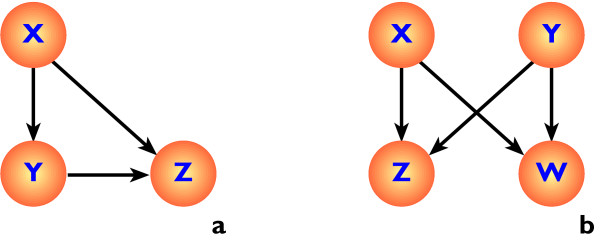
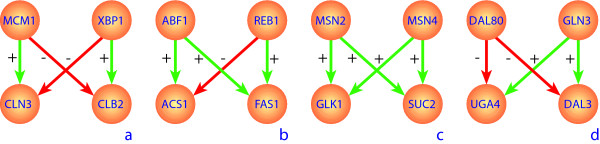
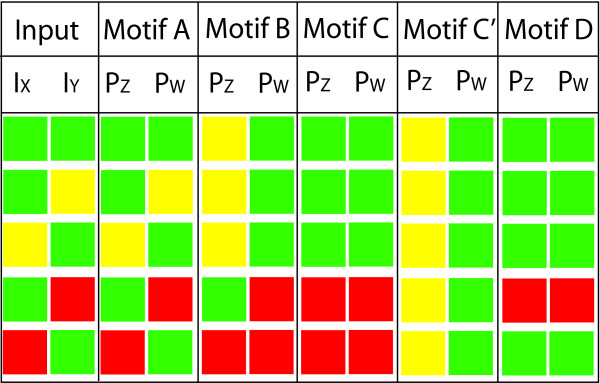
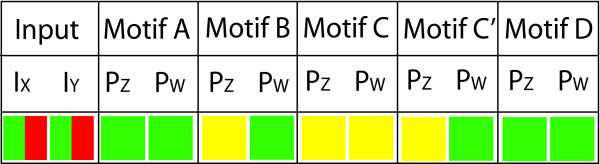
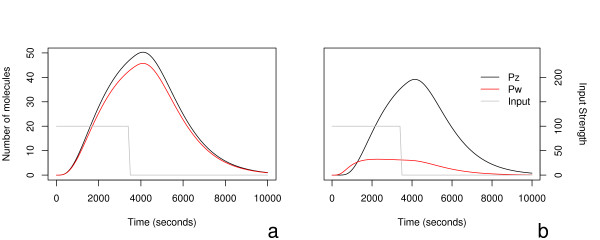
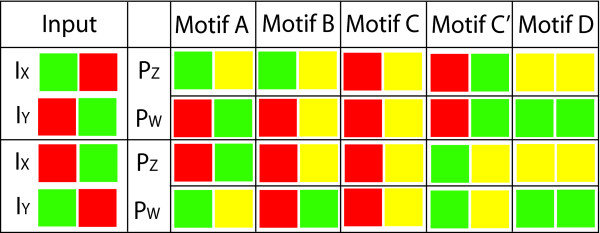
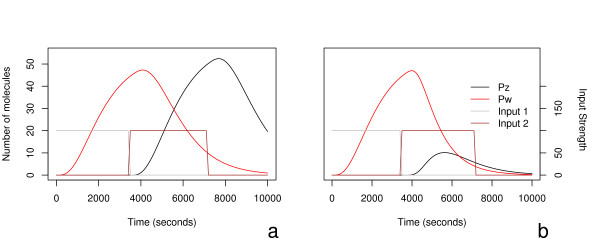
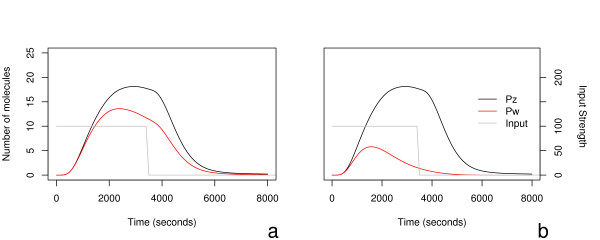
Background: A number of publications have recently examined the occurrence and properties of the feed-forward motif in a variety of networks, including those that are of interest in genome biology, such as gene networks. The present work looks in some detail at the dynamics of the bi-fan motif, using systems of ordinary differential equations to model the populations of transcription factors, mRNA and protein, with the aim of extending our understanding of what appear to be important building blocks of gene network structure. Results: We develop an ordinary differential equation model of the bi-fan motif and analyse variants of the motif corresponding to its behaviour under various conditions. In particular, we examine the effects of different steady and pulsed inputs to five variants of the bifan motif, based on evidence in the literature of bifan motifs found in Saccharomyces cerevisiae (commonly known as baker's yeast). Using this model, we characterize the dynamical behaviour of the bi-fan motif for a wide range of biologically plausible parameters and configurations. We find that there is no characteristic behaviour for the motif, and with the correct choice of parameters and of internal structure, very different, indeed even opposite behaviours may be obtained. Conclusion: Even with this relatively simple model, the bi-fan motif can exhibit a wide range of dynamical responses. This suggests that it is difficult to gain significant insights into biological function simply by considering the connection architecture of a gene network, or its decomposition into simple structural motifs. It is necessary to supplement such structural information by kinetic parameters, or dynamic time series experimental data, both of which are currently difficult to obtain.
Overview
The claims and statistics of this paper haven’t been checked yet.
Run the check — free, no account needed. It reads the open-access text and checks the sources it cites.
Integrity signals
Registry
Cites
Statistics
Figures
Verification
Claims the paper makes
The claims and statistics of this paper haven’t been checked yet.
Run the check — free, no account needed. It reads the open-access text and checks the sources it cites.
Claims other papers make about this one
Each is checked against this paper’s own text: does it say what the citing paper says it does?
The source backs part of the claim, not all of it — or backs it for a different population, condition or comparison.
In the citing paper
“A major challenge with such models, however, is that they often possess tens or even hundreds of free parameters whose values can significantly affect model behavior [5,6].”
From Universally Sloppy Parameter Sensitivities in Systems Biology Models (2007) · cites this paper as [5]
Experimental — accuracy not yet measured
Self-check
Percentages, sums and reported differences re-computed from the paper’s own numbers.
The self-check needs the paper’s full text.
Citations
Cites
Exact stochastic simulation of coupled chemical reactions
Gillespie, D. T. (1977) · The Journal of Physical Chemistry · doi:10.1021/j100540a008 · Cited by 10,215
Network motifs: simple building blocks of complex networks.
Milo, R., Shen-Orr, S., Itzkovitz, S., Kashtan, N., Chklovskii, D., & Alon, U. (2002) · Science · doi:10.1126/science.298.5594.824 · Cited by 7,368
Structure and function of the feed-forward loop network motif
Mangan, S., & Alon, U. (2003) · Proceedings of the National Academy of Sciences · doi:10.1073/pnas.2133841100 · Cited by 1,827
Superfamilies of Evolved and Designed Networks
Milo, R., Itzkovitz, S., Kashtan, N., Levitt, R., Shen-Orr, S. S., Ayzenshtat, I., Sheffer, M., & Alon, U. S. (2004) · Science · doi:10.1126/science.1089167 · Cited by 1,427
The Coherent Feedforward Loop Serves as a Sign-sensitive Delay Element in Transcription Networks
Mangan, S., Zaslaver, A., & Alon, U. S. (2003) · Journal of Molecular Biology · doi:10.1016/j.jmb.2003.09.049 · Cited by 548
How the λ repressor and cro work
Ptashne, M., Jeffrey, A., Johnson, A. D., Maurer, R., Meyer, B. J., Pabo, C. O., Roberts, T. M., & Sauer, R. T. (1980) · Cell · doi:10.1016/0092-8674(80)90383-9 · Cited by 452
Dynamic Properties of Network Motifs Contribute to Biological Network Organization
Prill, R. J., Iglesias, P. A., & Levchenko, A. (2005) · PLoS Biology · doi:10.1371/journal.pbio.0030343 · Cited by 378
Cosma, M. P. (2002) · Molecular Cell · doi:10.1016/s1097-2765(02)00604-4 · Cited by 266
Artzy‐Randrup, Y., Fleishman, S. J., Ben‐Tal, N., & Stone, L. (2004) · Science · doi:10.1126/science.1099334 · Cited by 254
Estruch, F., & Carlson, M. (1993) · Molecular and Cellular Biology · doi:10.1128/mcb.13.7.3872-3881.1993 · Cited by 221
Cited by
Sorted by citations
Items 101–200 of 265
Sloppiness, Modeling, and Evolution in Biochemical Networks
Gutenkunst, R. N. (2007) · eCommons (Cornell University) · Cited by 20
Felmlee, D., McMillan, C., & Whitaker, R. M. (2021) · Applied Network Science · doi:10.1007/s41109-021-00403-5 · Cited by 19
Learning and Detecting Patterns in Multi-Attributed Network Data.
Levchuk, G., Roberts, J. M., & Freeman, J. (2012) · National Conference on Artificial Intelligence · Cited by 18
Dynamical modules in metabolism, cell and developmental biology
Jaeger, J., & Monk, N. (2021) · Interface Focus · doi:10.1098/rsfs.2021.0011 · Cited by 18
A bistable autoregulatory module in the developing embryo commits cells to binary expression fates
Zhao, J., Perkins, M. L., Norstad, M., & García, H. G. (2023) · Current Biology · doi:10.1016/j.cub.2023.06.060 · Cited by 17
Predicting network functions with nested patterns
Ganter, M., Kaltenbach, H., & Stelling, J. (2014) · Nature Communications · doi:10.1038/ncomms4006 · Cited by 18
Xiong, K., Lancaster, A. K., Siegal, M. L., & Masel, J. (2019) · Nature Communications · doi:10.1038/s41467-019-10388-6 · Cited by 17
Dynamic systems approaches and levels of analysis in the nervous system
Parker, D., & Srivastava, V. (2013) · Frontiers in Physiology · doi:10.3389/fphys.2013.00015 · Cited by 15
Multi-model and network inference based on ensemble estimates: avoiding the madness of crowds
Stumpf, M. P. H. (2020) · Journal of The Royal Society Interface · doi:10.1098/rsif.2020.0419 · Cited by 16
Self-citationModel comparison via simplicial complexes and persistent homology
Vittadello, S. T., & Stumpf, M. P. H. (2021) · Royal Society Open Science · doi:10.1098/rsos.211361 · Cited by 15
Self-citation‘Molecular habituation’ as a potential mechanism of gradual homeostatic loss with age
Guimera, A. M., Welsh, C., Proctor, C. J., McArdle, A., & Shanley, D. P. (2017) · Mechanisms of Ageing and Development · doi:10.1016/j.mad.2017.11.010 · Cited by 15
Beber, M. E., & Becker, T. (2014) · Procedia CIRP · doi:10.1016/j.procir.2014.05.005 · Cited by 13
Cross-Disciplinary Network Comparison: Matchmaking between Hairballs
Yan, K., Wang, D., Sethi, A., Muir, P., Kitchen, R. R., Cheng, C., & Gerstein, M. (2016) · Cell Systems · doi:10.1016/j.cels.2016.02.014 · Cited by 13
Likelihood-free nested sampling for parameter inference of biochemical reaction networks
Mikelson, J., & Khammash, M. (2020) · PLoS Computational Biology · doi:10.1371/journal.pcbi.1008264 · Cited by 12
Self-selection of evolutionary strategies: adaptive versus non-adaptive forces
Putnins, M., & Androulakis, I. P. (2021) · Heliyon · doi:10.1016/j.heliyon.2021.e06997 · Cited by 14
Evolutionary Characteristics of Bacterial Two-Component Systems
Sheng, X., Huvet, M., Pinney, J. W., & Stumpf, M. P. H. (2012) · Advances in experimental medicine and biology · doi:10.1007/978-1-4614-3567-9_6 · Cited by 11
Self-citationStructure–function relations are subtle in genetic regulatory networks
Wall, M. E. (2011) · Mathematical Biosciences · doi:10.1016/j.mbs.2011.02.003 · Cited by 11
Martin, O., Krzywicki, A., & Zagórski, M. (2016) · Physics of Life Reviews · doi:10.1016/j.plrev.2016.06.002 · Cited by 11
Nafis, S., Ponnusamy, K., Husain, M., Singh, R. K. B., & Bamezai, R. N. K. (2016) · Molecular BioSystems · doi:10.1039/c6mb00526h · Cited by 11
Freyre-González, J. A., & Tauch, A. (2016) · Journal of Biotechnology · doi:10.1016/j.jbiotec.2016.10.025 · Cited by 11
Testing biological network motif significance with exponential random graph models
Stivala, A. D., & Lomi, A. (2021) · Applied Network Science · doi:10.1007/s41109-021-00434-y · Cited by 10
Evolution of gene regulatory networks: Robustness as an emergent property of evolution
Krishnan, A. V., Tomita, M., & Giuliani, A. (2007) · Physica A Statistical Mechanics and its Applications · doi:10.1016/j.physa.2007.11.022 · Cited by 10
Subgraphs and motifs in a dynamic airline networkPreprint
Agasse-Duval, M., & Lawford, S. (2018) · arXiv (Cornell University) · doi:10.48550/arxiv.1807.02585 · Cited by 10
Identification of gene network motifs for cancer disease diagnosis
Gupta, R., Fayaz, S. M., & Singh, S. (2016) · IEEE International Conference on Distributed Computing, VLSI, Electrical Circuits and Robotics (DISCOVER) · doi:10.1109/discover.2016.7806253 · Cited by 9
A synthetic synthesis to explore animal evolution and development
Perkins, M. L., Gándara, L., & Crocker, J. (2022) · Philosophical Transactions of the Royal Society B Biological Sciences · doi:10.1098/rstb.2020.0517 · Cited by 9
Computational Intelligence in the Design of Synthetic Microbial Genetic Systems
Hallinan, J. S. (2013) · Methods in microbiology · doi:10.1016/b978-0-12-417029-2.00001-7 · Cited by 9
Network models in the study of metabolism
Infante, D., & Rodríguez., A. J. (2009) · Electronic Journal of Biotechnology · doi:10.2225/vol12-issue4-fulltext-2 · Cited by 10
Network analysis of aggregated money flows in stock markets
Karaila, J., Baltakys, K., Hansen, H., Goel, A., & Kanniainen, J. (2024) · Quantitative Finance · doi:10.1080/14697688.2024.2409272 · Cited by 8
Competition and evolutionary selection among core regulatory motifs in gene expression control
György, A. (2023) · Nature Communications · doi:10.1038/s41467-023-43327-7 · Cited by 9
Wu, C., Zhang, F., Li, X., Zhang, S., Li, J., Su, F., Li, K., & Yan, Y. (2010) · BMC Systems Biology · doi:10.1186/1752-0509-4-82 · Cited by 8
Chiang, A. W. T., & Hwang, M. (2013) · BMC Bioinformatics · doi:10.1186/1471-2105-14-s16-s5 · Cited by 8
Bayesian Parameter Inference and Model Selection by Population Annealing in Systems Biology
Murakami, Y. (2014) · PLoS ONE · doi:10.1371/journal.pone.0104057 · Cited by 8
Analysis of Dynamical Models of Signaling Networks with Petri Nets and Dynamic Graphs
Hardy, S. V., & Iyengar, R. (2010) · Computational biology · doi:10.1007/978-1-84996-474-6_11 · Cited by 8
Deduction of intracellular sub-systems from a topological description of the network
Nordling, T. E. M., Hiroi, N. F., Funahashi, A., & Kitano, H. (2007) · Molecular BioSystems · doi:10.1039/b702142a · Cited by 8
Learning Geometric Models for Developmental Dynamics
Howe, A., & Mani, M. (2025) · Physical Review X · doi:10.1103/8vpj-bj7d · Cited by 7
Kitchen, J., & Allaby, R. G. (2013) · Plants · doi:10.3390/plants2010016 · Cited by 7
Otero‐Muras, I., & Banga, J. R. (2016) · IFAC-PapersOnLine · doi:10.1016/j.ifacol.2016.07.289 · Cited by 7
Exploring Structural Patterns Across Evolved and Designed Systems: A Network Perspective
Ellinas, C., Allan, N., & Johansson, A. (2016) · Systems Engineering · doi:10.1002/sys.21350 · Cited by 7
Crawford-Kahrl, P., Cummins, B., & Gedeon, T. (2019) · SIAM Journal on Applied Dynamical Systems · doi:10.1137/18m1163610 · Cited by 7
Dynamical Modularity of the Genotype-Phenotype Map
Jaeger, J., & Monk, N. (2021) · Springer eBooks · doi:10.1007/978-3-030-71737-7_11 · Cited by 8
The Topology and Motif Analysis of Journal Citation Networks
Wu, W., Han, Y., & Li, D. (2008) · doi:10.1109/csse.2008.495 · Cited by 7
Metabolic network destruction: Relating topology to robustness
Winterbach, W., Wang, H., Reinders, M. J. T., Mieghem, P. V., & de Ridder, D. (2011) · Nano Communication Networks · doi:10.1016/j.nancom.2011.05.001 · Cited by 7
Switching and Diffusion Models for Gene Regulation Networks
Intep, S., Higham, D. J., & Mao, X. (2009) · Multiscale Modeling and Simulation · doi:10.1137/080735412 · Cited by 7
Simulating in vitro transcriptional response of zinc homeostasis system in Escherichia coli
Cui, J., Kaandorp, J. A., & Lloyd, C. M. (2008) · BMC Systems Biology · doi:10.1186/1752-0509-2-89 · Cited by 7
Steiner, T., Jin, Y., & Sendhoff, B. (2009) · PLoS ONE · doi:10.1371/journal.pone.0008177 · Cited by 7
An Evolutionary Systems Biology View on Metabolic System Structure and Dynamics
Johnson, C., Delattre, H., Hayes, C. A., & Soyer, O. S. (2021) · Springer eBooks · doi:10.1007/978-3-030-71737-7_8 · Cited by 6
Dynamics and bifurcations in genetic circuits with fibration symmetries
Stewart, I. N., Reis, S. D. S., & Makse, H. A. (2024) · Journal of The Royal Society Interface · doi:10.1098/rsif.2024.0386 · Cited by 6
Schmidt, C. Q., Weiß, T., Komusiewicz, C., Witte, H., & Leistritz, L. (2012) · Computational and Mathematical Methods in Medicine · doi:10.1155/2012/910380 · Cited by 6
Borotkanics, R., & Lehmann, H. P. (2014) · Archives of Toxicology · doi:10.1007/s00204-014-1274-y · Cited by 6
Detection of network motifs using three-way ANOVA
Tavakkolkhah, P., Zimmer, R., & Küffner, R. (2018) · PLoS ONE · doi:10.1371/journal.pone.0201382 · Cited by 6
Extrinsic noise of the target gene governs abundance pattern of feed-forward loop motifs
Momin, M. S. A., & Biswas, A. (2020) · Physical review. E · doi:10.1103/physreve.101.052411 · Cited by 6
Effects of Signalling on the Evolution of Gene Regulatory Networks
Jenkins, D. J., & Stekel, D. J. (2008) · Artificial Life · Cited by 6
White Box Classification of Dissimilarity Data
Hammer, B., Mokbel, B., Schleif, F.-M., & Zhu, X. (2012) · Lecture notes in computer science · doi:10.1007/978-3-642-28942-2_28 · Cited by 5
Murakami, Y., & Takada, S. (2013) · PLoS ONE · doi:10.1371/journal.pone.0074178 · Cited by 5
Parameter identification of biological networks using extended Kalman filtering and χ2 criteria
Lillacci, G., & Khammash, M. (2010) · IEEE Conference on Decision and Control (CDC) · doi:10.1109/cdc.2010.5717460 · Cited by 5
Mapping Network Motif Tunability and Robustness in the Design of Synthetic Signaling Circuits
Iadevaia, S., Nakhleh, L. K., Azencott, R., & Ram, P. T. (2014) · PLoS ONE · doi:10.1371/journal.pone.0091743 · Cited by 5
Stability from Structure: Metabolic Networks Are Unlike Other Biological Networks
van Nes, P., Bellomo, D., Reinders, M. J. T., & de Ridder, D. (2009) · EURASIP Journal on Bioinformatics and Systems Biology · doi:10.1155/2009/630695 · Cited by 5
Diffusion Dynamics Prediction on Networks Using Sub-graph Motif Distribution
Zaykov, A. L., Vaganov, D. A., & Guleva, V. Y. (2020) · Studies in computational intelligence · doi:10.1007/978-3-030-65347-7_40 · Cited by 4
Supervised Generative Models for Learning Dissimilarity Data
Nebel, D., Hammer, B., & Villmann, T. (2014) · Cited by 4
Estimation of delays in generalized asynchronous Boolean networks
Das, H., & Layek, R. K. (2016) · Molecular BioSystems · doi:10.1039/c6mb00276e · Cited by 4
On motifs and functional modules in complex networks
Wang, J., & Provan, G. M. (2009) · IEEE Toronto International Conference Science and Technology for Humanity · doi:10.1109/tic-sth.2009.5444392 · Cited by 4
Network motif-based analysis of regulatory patterns in paralogous gene pairs
Melkus, G., Ručevskis, P., Celms, E., Čerāns, K., Freivalds, K., Ķikusts, P., Lāce, L., Opmanis, M., Rituma, D., & Vīksna, J. (2020) · Journal of Bioinformatics and Computational Biology · doi:10.1142/s0219720020400089 · Cited by 4
QOMIC: quantum optimization for motif identification
Ngo, H. M., Khatib, T., Thai, M. T., & Kahveci, T. (2024) · Bioinformatics Advances · doi:10.1093/bioadv/vbae208 · Cited by 3
Wang, X.-D., Qi, Y.-X., & Jiang, Z.-L. (2011) · IET Systems Biology · doi:10.1049/iet-syb.2010.0041 · Cited by 3
Dynamics of Regulatory Networks in Gastrin-Treated Adenocarcinoma Cells
Jayavelu, N. D., & Bar, N. (2014) · PLoS ONE · doi:10.1371/journal.pone.0078349 · Cited by 3
Modelling the Evolution of Dynamic Regulatory Networks: Some Critical Insights
Crombach, A. (2017) · Springer eBooks · doi:10.1007/978-3-319-61569-1_14 · Cited by 3
First Betti number of the path homology of random directed graphs
Chaplin, T. (2022) · Journal of Applied and Computational Topology · doi:10.1007/s41468-022-00108-3 · Cited by 3
Organization of signal flow in directed networks
Bányai, M., Négyessy, L., & Bazsó, F. (2011) · Journal of Statistical Mechanics Theory and Experiment · doi:10.1088/1742-5468/2011/06/p06001 · Cited by 3
Network motif & triad significance profile analyses on software system
Li, Z., Qian, G., & Li, Z. (2008) · WSEAS Transactions on Computers archive · Cited by 3
Dynamic and structural constraints in signal propagation by regulatory networks
Estrada, J., & Guantes, R. (2012) · Molecular BioSystems · doi:10.1039/c2mb25243k · Cited by 3
Graphlets and Motifs in Biological Networks
Moreno, L. Q. (2018) · Elsevier eBooks · doi:10.1016/b978-0-12-809633-8.20291-4 · Cited by 3
Vieira, L. S., & Vera‐Licona, P. (2018) · bioRxiv (Cold Spring Harbor Laboratory) · doi:10.1101/272344 · Cited by 3
Petit, A. J. R., Génissel, A., & Rouzic, A. L. (2026) · Genetics · doi:10.1093/genetics/iyag009 · Cited by 3
Structural Patterns in Complex Systems: A network perspective
Ellinas, C., Allan, N., & Johansson, A. (2014) · Bristol Research (University of Bristol) · Cited by 2
Learning to capture the functions of genetic regulatory networks using graph motifs
Murthy, V. K., & Krishnamurthy, E. V. (2012) · International Journal of Advanced Intelligence Paradigms · doi:10.1504/ijaip.2012.048146 · Cited by 2
About Learning of Supervised Generative Models for Dissimilarity Data
Nebel, D., Hammer, B., & Villmann, T. (2013) · Cited by 2
No tradeoff between versatility and robustness in gene circuit motifs
Payne, J. L. (2016) · Physica A Statistical Mechanics and its Applications · doi:10.1016/j.physa.2015.12.065 · Cited by 2
Shao, B., Cannistraci, C. V., & Conrad, T. (2017) · Genomics and Computational Biology · doi:10.18547/gcb.2017.vol3.iss3.e57 · Cited by 2
Plasticity of the truth table of low-leakage genetic logic gates
Smith, S., & Grima, R. (2018) · Physical review. E · doi:10.1103/physreve.98.062410 · Cited by 2
A group theoretic approach to model comparison with simplicial representations
Vittadello, S. T., & Stumpf, M. P. H. (2022) · Journal of Mathematical Biology · doi:10.1007/s00285-022-01807-2 · Cited by 2
Self-citationTowards a Theory of Brain Structure and Function
Gómez‐Ramírez, J. (2013) · Springer eBooks · doi:10.1007/978-94-007-7738-5_7 · Cited by 2
A Theory of Hippocampus Structure and Function Based on Category Theory
Gómez‐Ramírez, J. (2013) · Springer eBooks · doi:10.1007/978-94-007-7738-5_8 · Cited by 2
Global optimization using Gaussian processes to estimate biological parameters from image data
Barac, D., Multerer, M., & Iber, D. (2018) · Journal of Theoretical Biology · doi:10.1016/j.jtbi.2018.12.002 · Cited by 2
Adaptive prototype-based dissimilarity learning
Zhu, X. (2015) · PUB – Publications at Bielefeld University (Bielefeld University) · Cited by 2
Symmetries in metabolic networks of Escherichia coli
Alvarez, L., Liu, K., Ishida, C., Sánchez-Pérez, M., Wuchty, S., & Makse, H. A. (2025) · PNAS Nexus · doi:10.1093/pnasnexus/pgaf080 · Cited by 1
Subgraphs and motifs in a dynamic airline network
Agasse-Duval, M., & Lawford, S. (2025) · Physica A Statistical Mechanics and its Applications · doi:10.1016/j.physa.2025.130660 · Cited by 1
Parallel Matrix Multiplication Algorithms Acquire Connected Network Motifs
Zaenudin, E., & Ng, K. (2023) · Journal of Information Technology and Its Utilization · doi:10.56873/jitu.6.1.4983 · Cited by 1
Kong, K. K., Luo, C., & Liu, F. (2024) · Communications Physics · doi:10.1038/s42005-024-01567-z · Cited by 1
Frank, T. D., Collins, A. J. F., & Cheong, A. (2013) · ISRN Computational Biology · doi:10.1155/2013/719138 · Cited by 1
Ridden, S. J., & MacArthur, B. D. (2012) · Springer eBooks · doi:10.1007/978-94-007-4330-4_2 · Cited by 1
Neuronal motifs reveal backbone structure and influential neurons of neural network in C. elegans
Liu, J., Yuan, Y., Zhao, P., Gu, X., Huo, H., Li, Z., & Fang, T. (2023) · Journal of Complex Networks · doi:10.1093/comnet/cnad013 · Cited by 1
Pavlenko, E. Y. (2023) · Automatic Control and Computer Sciences · doi:10.3103/s0146411623080229 · Cited by 1
Methods for Dynamical Inference in Intracellular Networks
Tzamali, E., Poirazi, P., & Reczko, M. (2008) · Humana Press eBooks · doi:10.1007/978-1-59745-440-7_28 · Cited by 1
Multiscale modeling of dorsoventral patterning in Drosophila
MacNamara, S. (2014) · Seminars in Cell and Developmental Biology · doi:10.1016/j.semcdb.2014.07.001 · Cited by 1
Zweig, K. A. (2016) · Lecture notes in social networks · doi:10.1007/978-3-7091-0741-6_7 · Cited by 1
Decoding Signal Processing at the Single-Cell Level
Wiley, H. S. (2017) · Cell Systems · doi:10.1016/j.cels.2017.12.003 · Cited by 1
Costa, R. S., & Vinga, S. (2018) · Biotechnology Progress · doi:10.1002/btpr.2700 · Cited by 1
Melkus, G., Ručevskis, P., Celms, E., Čerāns, K., Freivalds, K., Ķikusts, P., Lāce, L., Opmanis, M., Rituma, D., & Vīksna, J. (2019) · International Conference Computational Systems-Biology and Bioinformatics · doi:10.1145/3365953.3365954 · Cited by 1
Topology of Plant Metabolic Networks
Grafahrend‐Belau, E., Junker, B. H., Klukas, C., Koschützki, D., Schreiber, F., & Schwöbbermeyer, H. (2008) · Springer eBooks · doi:10.1007/978-0-387-78745-9_7 · Cited by 1
Metadata
- Authors
- Ingram, P. J., Stumpf, M. P., & Stark, J.
- Affiliations
- Imperial College London (GB)
- Corresponding author
- Ingram, Piers J
- ORCID
- Stumpf, Michael PH
- Venue
- BMC Genomics
- Published
- 2006-05-05
- Volume
- 7
- Issue
- 1
- Pages
- 108-108
- ISSN
- 1471-2164 (ISSN-L)
- PMC
- PMC1488845
- OpenAlex
- W1808967201
- Cited by
- 267
- References
- 42
- Citations by year
- 2026: 13 · 2025: 5 · 2024: 8 · 2023: 5 · 2022: 4 · 2021: 13 · 2020: 10 · 2019: 11 · 2018: 16 · 2017: 9 · 2016: 20 · 2015: 12 · 2014: 19 · 2013: 29 · 2012: 15
- FWCI
- 6.53
- Type
- journal article
- Language
- en
- Open access
- gold
- doi.org
- Licence
- Locations
- BMC Genomics (publishedVersion, cc-by)
- PubMed Central (publishedVersion, cc-by)
- PubMed (publishedVersion)
- DOAJ (DOAJ: Directory of Open Access Journals) (submittedVersion, cc-by-sa)
- Minerva Access (University of Melbourne) (submittedVersion, cc-by)
- Funders
- Wellcome Trust
- Topics
- Life Sciences › Biochemistry, Genetics and Molecular Biology › Molecular Biology › Gene Regulatory Network Analysis
- Life Sciences › Biochemistry, Genetics and Molecular Biology › Molecular Biology › Bioinformatics and Genomic Networks
- Life Sciences › Biochemistry, Genetics and Molecular Biology › Molecular Biology › Microbial Metabolic Engineering and Bioproduction
- Keywords
- network motifs, gene regulatory networks, transcription factors, ordinary differential equation model, network dynamics, Saccharomyces cerevisiae, kinetic parameters, structure-function relationship
- MeSH terms
- Genes, Fungal, Models, Biological, Saccharomyces cerevisiae, Transcription, Genetic, Gene Expression Regulation, Fungal, Computational Biology, Amino Acid Motifs
About these checks
Registry, retraction, Cites and statistics results are computed, not judged, with one exception: a printed reference that no index lists is read once by a model before it counts as a citation error. Claims are extracted by a model and kept only when their quote appears verbatim in the text; each cited source is then checked, with a model’s help, for whether it says what the claim relies on. Those verdicts can be wrong — read the claim’s quote and the cited source before relying on one.
Statistics and arithmetic are recomputed, not judged.
Confidence bands are shown only for fields calibrated on our annotated test set. None is calibrated yet, so no band is shown.
What counts as a claim ›How we measure confidence ›How we check this ›
Are you an author, or do you see a problem with this page? Request a review
