

The DOI matches its Crossref record; 81 of the 82 references it cites were found in a registry or an index, and 1 are not checked yet.
Highly plastic genome of Microcystis aeruginosa PCC 7806, a ubiquitous toxic freshwater cyanobacterium
Open accessAbstract
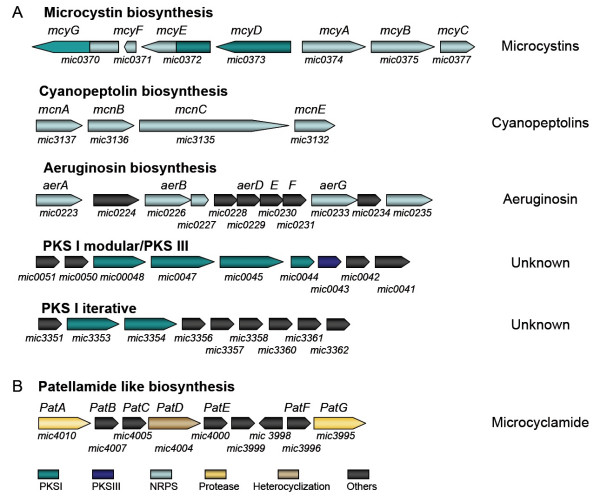
Background: The colonial cyanobacterium Microcystis proliferates in a wide range of freshwater ecosystems and is exposed to changing environmental factors during its life cycle.Microcystis blooms are often toxic, potentially fatal to animals and humans, and may cause environmental problems. There has been little investigation of the genomics of these cyanobacteria. Results: Deciphering the 5,172,804 bp sequence of Microcystis aeruginosa PCC 7806 has revealed the high plasticity of its genome: 11.7% DNA repeats containing more than 1,000 bases, 6.8% putative transposases and 21 putative restriction enzymes. Compared to the genomes of other cyanobacterial lineages, strain PCC 7806 contains a large number of atypical genes that may have been acquired by lateral transfers. Metabolic pathways, such as fermentation and a methionine salvage pathway, have been identified, as have genes for programmed cell death that may be related to the rapid disappearance of Microcystis blooms in nature. Analysis of the PCC 7806 genome also reveals striking novel biosynthetic features that might help to elucidate the ecological impact of secondary metabolites and lead to the discovery of novel metabolites for new biotechnological applications.M. aeruginosa and other large cyanobacterial genomes exhibit a rapid loss of synteny in contrast to other microbial genomes. Conclusion: Microcystis aeruginosa PCC 7806 appears to have adopted an evolutionary strategy relying on unusual genome plasticity to adapt to eutrophic freshwater ecosystems, a property shared by another strain of M. aeruginosa(NIES-843). Comparisons of the genomes of PCC 7806 and other cyanobacterial strains indicate that a similar strategy may have also been used by the marine strain Crocosphaera watsonii WH8501 to adapt to other ecological niches, such as oligotrophic open oceans.
Overview
The claims and statistics of this paper haven’t been checked yet.
Run the check — free, no account needed. It reads the open-access text and checks the sources it cites.
Integrity signals
Registry
Cites
Statistics
Figures
Verification
Claims the paper makes
The claims and statistics of this paper haven’t been checked yet.
Run the check — free, no account needed. It reads the open-access text and checks the sources it cites.
Claims other papers make about this one
Each is checked against this paper’s own text: does it say what the citing paper says it does?
The source backs part of the claim, not all of it — or backs it for a different population, condition or comparison.
In the citing paper
“Another significant characteristic of duplicated genes was that they were usually adjacently located or duplication-linked with a plenty of unknown functions, some of which can be annotated by one or two of the three enzymes (RTase, transposase, and integrase), and these duplicated fragments varied in size from several to dozens of kilobases.57–59”
From Whole genomic DNA sequencing and comparative genomic analysis of Arthrospira platensis: high genome plasticity and genetic diversity (2016) · cites this paper as [59]
Experimental — accuracy not yet measuredThe source backs part of the claim, not all of it — or backs it for a different population, condition or comparison.
In the citing paper
“Previous studies have shown that a large proportion of the transposases and RTase constituted the long repeated sequences in some cyanobacteria.57–60”
From Whole genomic DNA sequencing and comparative genomic analysis of Arthrospira platensis: high genome plasticity and genetic diversity (2016) · cites this paper as [59]
Experimental — accuracy not yet measuredThe cited source says what the claim attributes to it.
In the citing paper
“For example, 93% of 362 transposases of Microcystis aeruginosa PCC 7806 emerged in the long repeats.59”
From Whole genomic DNA sequencing and comparative genomic analysis of Arthrospira platensis: high genome plasticity and genetic diversity (2016) · cites this paper as [59]
Self-check
Percentages, sums and reported differences re-computed from the paper’s own numbers.
The self-check needs the paper’s full text.
Citations
Cites
MUSCLE: multiple sequence alignment with high accuracy and high throughput
Edgar, R. C. (2004) · Nucleic Acids Research · doi:10.1093/nar/gkh340 · Cited by 44,662
A Simple, Fast, and Accurate Algorithm to Estimate Large Phylogenies by Maximum Likelihood
Guindon, S., & Gascuel, O. (2003) · Systematic Biology · doi:10.1080/10635150390235520 · Cited by 16,923
Bergey's Manual of Systematic Bacteriology
(1990) · Annals of Internal Medicine · doi:10.7326/0003-4819-112-5-391_3 · Cited by 15,633
Harmful Freshwater Algal Blooms, With an Emphasis on Cyanobacteria
Paerl, H. W., Fulton, R. S., Moisander, P. H., & Dyble, J. (2001) · The Scientific World JOURNAL · doi:10.1100/tsw.2001.16 · Cited by 1,054
Tillett, D., Dittmann, E., Erhard, M., von Döhren, H., Börner, T., & Neilan, B. A. (2000) · Chemistry & Biology · doi:10.1016/s1074-5521(00)00021-1 · Cited by 996
Self-citationCyanobacterial peptides — Nature's own combinatorial biosynthesis
Welker, M., & von Döhren, H. (2006) · FEMS Microbiology Reviews · doi:10.1111/j.1574-6976.2006.00022.x · Cited by 803
Unicellular cyanobacteria fix N2 in the subtropical North Pacific Ocean
Zehr, J. P., Waterbury, J. B., Turner, P. J., Montoya, J. P., Omoregie, E. O., Steward, G. F., Hansen, A. S., & Karl, D. M. (2001) · Nature · doi:10.1038/35088063 · Cited by 718
Schmidt, E. W., Nelson, J. T., Rasko, D. A., Sudek, S., Eisen, J. A., Haygood, M. G., & Ravel, J. (2005) · Proceedings of the National Academy of Sciences · doi:10.1073/pnas.0501424102 · Cited by 567
High rates of N2 fixation by unicellular diazotrophs in the oligotrophic Pacific Ocean
Montoya, J. P., Holl, C. M., Zehr, J. P., Hansen, A. S., Villareal, T. A., & Capone, D. G. (2004) · Nature · doi:10.1038/nature02824 · Cited by 560
Udwary, D., Allen, L. Z., Asolkar, R. N., Singan, V. R., Lapidus, A. L., Fenical, W., Jensen, P. R., & Moore, B. S. (2007) · Proceedings of the National Academy of Sciences · doi:10.1073/pnas.0700962104 · Cited by 537
Research works printed but not linked: 1
- Steffensen DA: Economic costs of cyanobacterial blooms. Interagency, International Symposium on Cyanobacterial Harmful Algal Blooms (ISOC-HAB), Advances in Experimental Medicine and Biology. 2008, New York: Springer Verlag, 619: 843-853.
Cited by
Sorted by citations
The rise of harmful cyanobacteria blooms: the potential roles of eutrophication and climate change
O’Neil, J. M., Davis, T. W., Burford, M. A., & Gobler, C. J. (2012) · Harmful Algae · doi:10.1016/j.hal.2011.10.027 · Cited by 2,225
Harke, M. J., Steffen, M. M., Gobler, C. J., Otten, T. G., Wilhelm, S. W., Wood, S. A., & Paerl, H. W. (2016) · Harmful Algae · doi:10.1016/j.hal.2015.12.007 · Cited by 1,114
Improving the coverage of the cyanobacterial phylum using diversity driven genome sequencing
Shih, P. M., Wu, D., Latifi, A., Axen, S. D., Fewer, D. P., Talla, E., Calteau, A., Cai, F., Tandeau de Marsac, N., Rippka, R., et al. (2013) · Proceedings of the National Academy of Sciences · doi:10.1073/pnas.1217107110 · Cited by 800
Self-citationOxidative stress in cyanobacteria
Latifi, A., Ruiz, M., & Zhang, C. (2008) · FEMS Microbiology Reviews · doi:10.1111/j.1574-6976.2008.00134.x · Cited by 824
Self-citationAn environmental bacterial taxon with a large and distinct metabolic repertoire
Wilson, M. C., Mori, T., Rückert, C., Uria, A. R., Helf, M. J., Takada, K., Gernert, C., Steffens, U. A. E., Heycke, N., Schmitt, S., et al. (2014) · Nature · doi:10.1038/nature12959 · Cited by 612
Biotechnological and industrial significance of cyanobacterial secondary metabolites
Rastogi, R. P., & Sinha, R. P. (2009) · Biotechnology Advances · doi:10.1016/j.biotechadv.2009.04.009 · Cited by 371
Environmental conditions that influence toxin biosynthesis in cyanobacteria
Neilan, B. A., Pearson, L. A., Muenchhoff, J., Moffitt, M. C., & Dittmann, E. (2012) · Environmental Microbiology · doi:10.1111/j.1462-2920.2012.02729.x · Cited by 342
Self-citationTan, B., Ng, C., Nshimyimana, J. P., Loh, L. L., Gin, K. Y., & Thompson, J. R. (2015) · Frontiers in Microbiology · doi:10.3389/fmicb.2015.01027 · Cited by 313
Albers, E. (2009) · IUBMB Life · doi:10.1002/iub.278 · Cited by 236
Cyanobacteria and ultraviolet radiation (UVR) stress: Mitigation strategies
Singh, S. P., Häder, D., & Sinha, R. P. (2009) · Ageing Research Reviews · doi:10.1016/j.arr.2009.05.004 · Cited by 241
Status, causes and controls of cyanobacterial blooms in Lake Erie
Steffen, M. M., Belisle, B. S., Watson, S. B., Boyer, G. L., & Wilhelm, S. W. (2014) · Journal of Great Lakes Research · doi:10.1016/j.jglr.2013.12.012 · Cited by 235
Ultraviolet radiation and cyanobacteria
Rastogi, R. P., Sinha, R. P., Moh, S. H., Lee, T. K., Kottuparambil, S., Kim, Y.-J., Rhee, J.-S., Choi, E.-M., Brown, M. T., Häder, D.-P., et al. (2014) · Journal of Photochemistry and Photobiology B: Biology · doi:10.1016/j.jphotobiol.2014.09.020 · Cited by 225
Briand, E., Escoffier, N., Straub, C., Sabart, M., Quiblier, C., & Humbert, J. F. (2008) · The ISME Journal · doi:10.1038/ismej.2008.121 · Cited by 200
Self-citationStucken, K., John, U., Cembella, A. D., Murillo, A. A., Soto-Liebe, K., Fuentes-Valdés, J. J., Friedel, M., Plominsky, Á. M., Vásquez, M., & Glöckner, G. (2010) · PLoS ONE · doi:10.1371/journal.pone.0009235 · Cited by 196
Klatt, C. G., Wood, J. M., Rusch, D. B., Bateson, M. M., Hamamura, N., Heidelberg, J. F., Grossman, A. R., Bhaya, D., Cohan, F. M., Kühl, M., et al. (2011) · The ISME Journal · doi:10.1038/ismej.2011.73 · Cited by 186
Humbert, J. F., Barbe, V., Latifi, A., Gugger, M. F., Calteau, A., Coursin, T., Lajus, A., Castelli, V., Oztas, S., Samson, G., et al. (2013) · PLoS ONE · doi:10.1371/journal.pone.0070747 · Cited by 181
Self-citationHarke, M. J., & Gobler, C. J. (2013) · PLoS ONE · doi:10.1371/journal.pone.0069834 · Cited by 180
Kinney, J. N., Salmeen, A. E., Cai, F., & Kerfeld, C. A. (2012) · Journal of Biological Chemistry · doi:10.1074/jbc.m112.355305 · Cited by 170
Genesis, effects and fates of repeats in prokaryotic genomes
Treangen, T. J., Abraham, A., Touchon, M., & Rocha, E. P. C. (2009) · FEMS Microbiology Reviews · doi:10.1111/j.1574-6976.2009.00169.x · Cited by 182
Gillespie, J. J., Joardar, V., Williams, K. P., Driscoll, T., Hostetler, J. B., Nordberg, E. K., Shukla, M. P., Walenz, B. P., Hill, C. A., Nene, V. M., et al. (2011) · Journal of Bacteriology · doi:10.1128/jb.06244-11 · Cited by 174
Harke, M. J., Davis, T. W., Watson, S. B., & Gobler, C. J. (2015) · Environmental Science & Technology · doi:10.1021/acs.est.5b03931 · Cited by 161
Iron uptake and toxin synthesis in the bloom‐forming Microcystis aeruginosa under iron limitation
Alexova, R., Fujii, M., Birch, D., Cheng, J., Waite, T. D., Ferrari, B. C., & Neilan, B. A. (2011) · Environmental Microbiology · doi:10.1111/j.1462-2920.2010.02412.x · Cited by 155
Sandrini, G., Matthijs, H. C. P., Verspagen, J. M. H., Muyzer, G., & Huisman, J. (2013) · The ISME Journal · doi:10.1038/ismej.2013.179 · Cited by 131
Self-citationHarke, M. J., Berry, D. L., Ammerman, J. W., & Gobler, C. J. (2011) · Microbial Ecology · doi:10.1007/s00248-011-9894-8 · Cited by 125
van Gremberghe, I., Leliaert, F., Mergeay, J., Vanormelingen, P., der Gucht, K. V., Debeer, A., Lacerot, G., Meester, L. D., & Vyverman, W. (2011) · PLoS ONE · doi:10.1371/journal.pone.0019561 · Cited by 122
Jones, A. C., Monroe, E. A., Eisman, E. B., Gerwick, L. G., Sherman, D. H., & Gerwick, W. H. (2010) · Natural Product Reports · doi:10.1039/c000535e · Cited by 121
Plasticity and Evolution of Aeruginosin Biosynthesis in Cyanobacteria
Ishida, K., Welker, M., Christiansen, G., Cadel-Six, S., Bouchier, C., Dittmann, E., Hertweck, C., & de Marsac, N. T. (2009) · Applied and Environmental Microbiology · doi:10.1128/aem.02258-08 · Cited by 119
Self-citationOmidi, A., Esterhuizen‐Londt, M., & Pflugmacher, S. (2017) · Toxin Reviews · doi:10.1080/15569543.2017.1326059 · Cited by 115
Ye, W., Liu, X., Tan, J., Li, D., & Yang, H. (2008) · Harmful Algae · doi:10.1016/j.hal.2008.10.010 · Cited by 114
A Day in the Life of Microcystis aeruginosa Strain PCC 7806 as Revealed by a Transcriptomic Analysis
Straub, C., Quillardet, P., Vergalli, J., de Marsac, N. T., & Humbert, J. F. (2011) · PLoS ONE · doi:10.1371/journal.pone.0016208 · Cited by 110
Self-citationPenn, K., Wang, J., Fernando, S. C., & Thompson, J. R. (2014) · The ISME Journal · doi:10.1038/ismej.2014.27 · Cited by 107
Ding, Y., Gan, N., Li, J., Sedmak, B., & Song, L. (2012) · Phycologia · doi:10.2216/11-107.1 · Cited by 103
Qi, J. Y., Lan, H., Liu, R., Miao, S., Liu, H., & Qu, J. (2016) · Water Research · doi:10.1016/j.watres.2016.06.039 · Cited by 102
Steffen, M. M., Dearth, S. P., Dill, B. D., Li, Z., Larsen, K. M., Campagna, S. R., & Wilhelm, S. W. (2014) · The ISME Journal · doi:10.1038/ismej.2014.78 · Cited by 99
Non-ribosomal peptides produced by Brazilian cyanobacterial isolates with antimicrobial activity
Silva‐Stenico, M. E., Silva, C. S. P., Lorenzi, A. S., Shishido, T. K., Etchegaray, A., de Lira, S. P., de Moraes, L. A. B., & Fiore, M. F. (2010) · Microbiological Research · doi:10.1016/j.micres.2010.04.002 · Cited by 100
Cai, H., Yan, Z., Wang, A., Krumholz, L. R., & Jiang, H. (2013) · Microbial Ecology · doi:10.1007/s00248-013-0224-1 · Cited by 99
Microcystis pangenome reveals cryptic diversity within and across morphospecies
Cai, H., McLimans, C. J., Beyer, J. E., Krumholz, L. R., & Hambright, K. D. (2023) · Science Advances · doi:10.1126/sciadv.add3783 · Cited by 97
Ziemert, N., Ishida, K., Weiz, A. R., Hertweck, C., & Dittmann, E. (2010) · Applied and Environmental Microbiology · doi:10.1128/aem.02858-09 · Cited by 95
Self-citationQi, J. Y., Lan, H., Miao, S., Xu, Q., Liu, R., Liu, H., & Qu, J. (2015) · Water Research · doi:10.1016/j.watres.2015.10.004 · Cited by 93
Recent trends in development of biosensors for detection of microcystin
Singh, S., Srivastava, A., Oh, H., Ahn, C., Choi, G., & Asthana, R. K. (2012) · Toxicon · doi:10.1016/j.toxicon.2012.06.005 · Cited by 90
Meißner, S., Steinhauser, D., & Dittmann, E. (2014) · Environmental Microbiology · doi:10.1111/1462-2920.12565 · Cited by 88
Self-citationDiversity, Ecology, and Prevalence of Antimicrobials in Nature
Mullis, M. M., Rambo, I. M., Baker, B. J., & Reese, B. K. (2019) · Frontiers in Microbiology · doi:10.3389/fmicb.2019.02518 · Cited by 90
Briand, E., Bormans, M., Gugger, M. F., Dorrestein, P. C., & Gerwick, W. H. (2015) · Environmental Microbiology · doi:10.1111/1462-2920.12904 · Cited by 86
Microcystin interferes with defense against high oxidative stress in harmful cyanobacteria
Schuurmans, J. M., Brinkmann, B. W., Makower, A. K., Dittmann, E., Huisman, J., & Matthijs, H. C. P. (2018) · Harmful Algae · doi:10.1016/j.hal.2018.07.008 · Cited by 86
Self-citationHewson, I., Poretsky, R. S., Beinart, R. A., White, A., Shi, T., Bench, S. R., Moisander, P. H., Paerl, R. W., Tripp, H. J., Montoya, J. P., et al. (2009) · The ISME Journal · doi:10.1038/ismej.2009.8 · Cited by 79
Comparative genomics of Cylindrospermopsis raciborskii strains with differential toxicities
Sinha, R. K., Pearson, L. A., Davis, T. W., Muenchhoff, J., Pratama, R., Jex, A. R., Burford, M. A., & Neilan, B. A. (2014) · BMC Genomics · doi:10.1186/1471-2164-15-83 · Cited by 80
Pre-oxidation enhanced cyanobacteria removal in drinking water treatment: A review
Qi, J. Y., Ma, B., Miao, S., Liu, R., Hu, C., & Qu, J. (2021) · Journal of Environmental Sciences · doi:10.1016/j.jes.2021.03.040 · Cited by 76
Tanabe, Y., Hodoki, Y., Sano, T., Tada, K., & Watanabe, M. M. (2018) · Frontiers in Microbiology · doi:10.3389/fmicb.2018.01150 · Cited by 76
High abundance and expression of transposases in bacteria from the Baltic Sea
Vigil-Stenman, T., Ininbergs, K., Bergman, B., & Ekman, M. (2017) · The ISME Journal · doi:10.1038/ismej.2017.114 · Cited by 75
Makower, A. K., Schuurmans, J. M., Groth, D., Zilliges, Y., Matthijs, H. C. P., & Dittmann, E. (2014) · Applied and Environmental Microbiology · doi:10.1128/aem.02601-14 · Cited by 73
Self-citationHu, C., & Rzymski, P. (2019) · Toxins · doi:10.3390/toxins11120706 · Cited by 71
Defining Cyanobacterial Species: Diversity and Description Through Genomics
Willis, A., & Woodhouse, J. N. (2020) · Critical Reviews in Plant Sciences · doi:10.1080/07352689.2020.1763541 · Cited by 71
Cadel-Six, S., Dauga, C., Castets, A. M., Rippka, R., Bouchier, C., de Marsac, N. T., & Welker, M. (2008) · Molecular Biology and Evolution · doi:10.1093/molbev/msn150 · Cited by 68
Self-citationCyanobacterial genomics for ecology and biotechnology
Hess, W. R. (2011) · Current Opinion in Microbiology · doi:10.1016/j.mib.2011.07.024 · Cited by 68
Kim, S.-G., Joung, S.-H., Ahn, C., Ko, S.-R., Boo, S. M., & Oh, H. (2010) · FEMS Microbiology Ecology · doi:10.1111/j.1574-6941.2010.00947.x · Cited by 68
Conradie, K. R., & Barnard, S. (2012) · Harmful Algae · doi:10.1016/j.hal.2012.03.006 · Cited by 68
Wang, H., Sivonen, K., Rouhiainen, L., Fewer, D. P., Lyra, C., Ylinen, A., Vestola, J., Jokela, J., Rantasärkkä, K., Li, Z., et al. (2012) · BMC Genomics · doi:10.1186/1471-2164-13-613 · Cited by 68
Sabart, M., Crenn, K., Pérrière, F., Abila, A., Leremboure, M., Colombet, J., Jousse, C., & Latour, D. (2015) · Harmful Algae · doi:10.1016/j.hal.2015.06.007 · Cited by 67
Lin, S., Haas, S. A., Żemojtel, T., Xiao, P., Vingron, M., & Li, R. (2010) · Gene · doi:10.1016/j.gene.2010.11.011 · Cited by 65
Alexova, R., Haynes, P. A., Ferrari, B. C., & Neilan, B. A. (2011) · Molecular & Cellular Proteomics · doi:10.1074/mcp.m110.003749 · Cited by 64
Weenink, E. F. J., Matthijs, H. C. P., Schuurmans, J. M., Piel, T., van Herk, M. J., Sigon, C. A. M., Visser, P., & Huisman, J. (2021) · Environmental Microbiology · doi:10.1111/1462-2920.15429 · Cited by 63
Self-citationSaxton, M. A., Arnold, R. J., Bourbonniere, R. A., McKay, R. M. L., & Wilhelm, S. W. (2012) · Frontiers in Microbiology · doi:10.3389/fmicb.2012.00003 · Cited by 61
Leikoski, N., Fewer, D. P., Jokela, J., Alakoski, P., Wahlsten, M., & Sivonen, K. (2012) · PLoS ONE · doi:10.1371/journal.pone.0043002 · Cited by 60
Belisle, B. S., Steffen, M. M., Pound, H. L., Watson, S. B., DeBruyn, J. M., Bourbonniere, R. A., Boyer, G. L., & Wilhelm, S. W. (2016) · Journal of Great Lakes Research · doi:10.1016/j.jglr.2016.03.002 · Cited by 67
Resilience and Mitigation Strategies of Cyanobacteria under Ultraviolet Radiation Stress
Singh, V. K., Jha, S., Rana, P., Mishra, S., Kumari, N., Singh, S. C., Anand, S., Upadhye, V. J., & Sinha, R. P. (2023) · International Journal of Molecular Sciences · doi:10.3390/ijms241512381 · Cited by 62
Climate change and regulation of hepatotoxin production in Cyanobacteria
Gehringer, M. M., & Wannicke, N. (2014) · FEMS Microbiology Ecology · doi:10.1111/1574-6941.12291 · Cited by 56
Méjean, A., Mann, S., Vassiliadis, G., Lombard, B., Loew, D., & Ploux, O. (2009) · Biochemistry · doi:10.1021/bi9018785 · Cited by 54
Structural and functional diversity of caspase homologues in non-metazoan organisms
Klemenčič, M., & Funk, C. (2017) · PROTOPLASMA · doi:10.1007/s00709-017-1145-5 · Cited by 55
Exploring cyanobacterial genomes for natural product biosynthesis pathways
Micallef, M. L., D’Agostino, P. M., Al‐Sinawi, B., Neilan, B. A., & Moffitt, M. C. (2014) · Marine Genomics · doi:10.1016/j.margen.2014.11.009 · Cited by 54
Kuno, S., Yoshida, T., Kaneko, T., & Sako, Y. (2012) · Applied and Environmental Microbiology · doi:10.1128/aem.00626-12 · Cited by 54
Sandrini, G., Piel, T., Xu, T., White, E., Qin, H., Slot, P. C., Huisman, J., & Visser, P. (2020) · Harmful Algae · doi:10.1016/j.hal.2020.101916 · Cited by 54
Marine Microbial Secondary Metabolites
Giordano, D., Coppola, D., Russo, R., Denaro, R., Giuliano, L., Lauro, F. M., di Prisco, G., & Verde, C. (2015) · Advances in microbial physiology/Advances in Microbial Physiology · doi:10.1016/bs.ampbs.2015.04.001 · Cited by 57
Sandrini, G., Cunsolo, S., Schuurmans, J. M., Matthijs, H. C. P., & Huisman, J. (2015) · Frontiers in Microbiology · doi:10.3389/fmicb.2015.00401 · Cited by 56
Self-citationCyanophage Infection in the Bloom-Forming Cyanobacteria Microcystis aeruginosa in Surface Freshwater
Yoshida‐Takashima, Y., Yoshida, M., Ogata, H., Nagasaki, K., Hiroishi, S., & Yoshida, T. (2012) · Microbes and Environments · doi:10.1264/jsme2.me12037 · Cited by 53
Everything is not everywhere: a tale on the biogeography of cyanobacteria
Ribeiro, K. F., Duarte, L., & Crossetti, L. O. (2018) · Hydrobiologia · doi:10.1007/s10750-018-3669-x · Cited by 52
Stucken, K., Koch, R., & Dagan, T. (2013) · Biological Research · doi:10.4067/s0716-97602013000400009 · Cited by 52
UV-induced DNA damage and repair: A cyanobacterial perspective
Pathak, J., Rajneesh, Singh, P. R., Häder, D. P., & Sinha, R. P. (2019) · Plant Gene · doi:10.1016/j.plgene.2019.100194 · Cited by 49
Rao, N. R. H., Granville, A. M., Wich, P. R., & Henderson, R. K. (2020) · Water Research · doi:10.1016/j.watres.2020.115833 · Cited by 51
Chen, M., Tian, L., Ren, C., Xu, C.-Y., Wang, Y., & Li, L. (2019) · Scientific Reports · doi:10.1038/s41598-018-37398-6 · Cited by 50
Hepatotoxic Seafood Poisoning (HSP) Due to Microcystins: A Threat from the Ocean?
Vareli, K., Jaeger, W., Τούκα, Α., Frillingos, S., Briasoulis, E. C., & Sainis, I. (2013) · Marine Drugs · doi:10.3390/md11082751 · Cited by 49
Harke, M. J., Jankowiak, J. G., Morrell, B. K., & Gobler, C. J. (2016) · Applied and Environmental Microbiology · doi:10.1128/aem.02832-16 · Cited by 48
Benzerara, K., Duprat, E., Bitard-Feildel, T., Caumes, G., Cassier-Chauvat, C., Chauvat, F., Dezi, M., Diop, S. I., Gaschignard, G., Görgen, S., et al. (2022) · Genome Biology and Evolution · doi:10.1093/gbe/evac026 · Cited by 47
Klemenčič, M., Novinec, M., & Dolinar, M. (2015) · Molecular Microbiology · doi:10.1111/mmi.13110 · Cited by 46
Zhang, M., Wang, X., Tao, J., Li, S., Hao, S., Zhu, X., & Hong, Y. (2018) · Ecotoxicology and Environmental Safety · doi:10.1016/j.ecoenv.2018.03.052 · Cited by 45
Yang, C., Lin, F., Li, Q., Li, T., & Zhao, J. (2015) · Frontiers in Microbiology · doi:10.3389/fmicb.2015.00394 · Cited by 44
Meyer, K. A., Davis, T. W., Watson, S. B., Denef, V. J., Berry, M. A., & Dick, G. J. (2017) · PLoS ONE · doi:10.1371/journal.pone.0183859 · Cited by 50
Ding, Y., Song, L., & Sedmak, B. (2013) · PLoS ONE · doi:10.1371/journal.pone.0073919 · Cited by 44
Bench, S. R., Ilikchyan, I. N., Tripp, H. J., & Zehr, J. P. (2011) · Frontiers in Microbiology · doi:10.3389/fmicb.2011.00261 · Cited by 43
Nishizawa, T., Ueda, A., Nakano, T., Nishizawa, A., Miura, T., Asayama, M., Fujii, K., Harada, K., & Shirai, M. (2011) · The Journal of Biochemistry · doi:10.1093/jb/mvq150 · Cited by 42
Savela, H., Lamminmäki, U., Spoof, L. E. M., Nybom, S. M. K., Meriluoto, J. A. O., & Vehniäinen, M. (2012) · Ecotoxicology and Environmental Safety · doi:10.1016/j.ecoenv.2012.10.008 · Cited by 41
Benthic survival of Microcystis: Long-term viability and ability to transcribe microcystin genes
Misson, B., Sabart, M., Amblard, C., & Latour, D. (2011) · Harmful Algae · doi:10.1016/j.hal.2011.09.010 · Cited by 41
Sandrini, G., Tann, R. P., Schuurmans, J. M., van Beusekom, S. A. M., Matthijs, H. C. P., & Huisman, J. (2016) · Frontiers in Microbiology · doi:10.3389/fmicb.2016.00551 · Cited by 40
Self-citationComparative genomics of 16 Microbacterium spp. that tolerate multiple heavy metals and antibiotics
Learman, D. R., Ahmad, Z., Brookshier, A., Henson, M. W., Hewitt, V., Lis, A., Morrison, C. T., Robinson, A. J., Todaro, E., Wologo, E., et al. (2019) · PeerJ · doi:10.7717/peerj.6258 · Cited by 40
Jackrel, S. L., White, J. D., Evans, J. T., Buffin, K., Hayden, K., Sarnelle, O., & Denef, V. J. (2019) · Molecular Ecology · doi:10.1111/mec.15198 · Cited by 41
Xu, T., Qin, S., Hu, Y., Song, Z., Ying, J., Li, P., Dong, W., Zhao, F., Yang, H., & Bao, Q. (2016) · DNA Research · doi:10.1093/dnares/dsw023 · Cited by 37
Local Expansion of a Panmictic Lineage of Water Bloom-Forming Cyanobacterium Microcystis aeruginosa
Tanabe, Y., & Watanabe, M. M. (2011) · PLoS ONE · doi:10.1371/journal.pone.0017085 · Cited by 38
Mankiewicz‐Boczek, J., & Font-Nájera, A. (2022) · Scientific Reports · doi:10.1038/s41598-022-23671-2 · Cited by 38
Advances in genomics, transcriptomics and proteomics of toxin‐producing cyanobacteria
D’Agostino, P. M., Woodhouse, J. N., Makower, A. K., Yeung, A. C. Y., Ongley, S. E., Micallef, M. L., Moffitt, M. C., & Neilan, B. A. (2015) · Environmental Microbiology Reports · doi:10.1111/1758-2229.12366 · Cited by 37
Characterisation of Host Growth after Infection with a Broad-Range Freshwater Cyanopodophage
Watkins, S. C., Smith, J. R., Hayes, P. K., & Watts, J. E. M. (2014) · PLoS ONE · doi:10.1371/journal.pone.0087339 · Cited by 34
Mirasbekov, Y., Zhumakhanova, A., Zhantuyakova, A., Sarkytbayev, K., Malashenkov, D. V., Baishulakova, A., Dashkova, V., Davidson, T. A., Vorobjev, I. A., Jeppesen, E., et al. (2021) · Scientific Reports · doi:10.1038/s41598-021-88661-2 · Cited by 28
Metadata
- Authors
- Frangeul, L., Quillardet, P., Castets, A.-M., Humbert, J.-F., Matthijs, H. C., Cortez, D., Tolonen, A., Zhang, C.-C., Gribaldo, S., Kehr, J.-C., Zilliges, Y., Ziemert, N., Becker, S., Talla, E., Latifi, A., Billault, A., Lepelletier, A., Dittmann, E., Bouchier, C., & Tandeau de Marsac, N.
- Affiliations
- Institut Pasteur (FR)
- Centre National de la Recherche Scientifique (FR)
- University of Amsterdam (NL)
- Humboldt-Universität zu Berlin (DE)
- Netherlands Institute of Ecology (NL)
- Genoscope (FR)
- ORCID
- Venue
- BMC Genomics
- Published
- 2008-06-05
- Volume
- 9
- Issue
- 1
- Pages
- 274-274
- ISSN
- 1471-2164 (ISSN-L)
- PMC
- PMC2442094
- OpenAlex
- W2109250549
- Cited by
- 221
- References
- 81
- Citations by year
- 2026: 6 · 2025: 7 · 2024: 12 · 2023: 10 · 2022: 9 · 2021: 9 · 2020: 7 · 2019: 19 · 2018: 12 · 2017: 9 · 2016: 12 · 2015: 15 · 2014: 20 · 2013: 14 · 2012: 17
- FWCI
- 10.47
- Type
- journal article
- Language
- en
- Open access
- gold
- doi.org
- Licence
- cc-by
- Locations
- BMC Genomics (publishedVersion, cc-by)
- PubMed Central (publishedVersion, cc-by)
- PubMed (publishedVersion)
- UvA-DARE (University of Amsterdam) (publishedVersion, cc-by)
- KNAW research portal (Royal Academy of Art and Sciences (KNAW)) (publishedVersion, cc-by)
- Digital Access to Scholarship at Harvard (DASH) (Harvard University) (submittedVersion, cc-by)
- Data Archiving and Networked Services (DANS) (submittedVersion, cc-by)
- HAL (submittedVersion, other-oa)
- DOAJ (DOAJ: Directory of Open Access Journals) (submittedVersion)
- KNAW Research Portal (The Royal Netherlands Academy of Arts and Sciences) (submittedVersion, cc-by)
- Data Archiving and Networked Services (DANS) (submittedVersion, other-oa)
- Funders
- Gordon and Betty Moore Foundation
- Centre National de la Recherche Scientifique
- Topics
- Physical Sciences › Environmental Science › Environmental Chemistry › Aquatic Ecosystems and Phytoplankton Dynamics
- Life Sciences › Biochemistry, Genetics and Molecular Biology › Molecular Biology › Genomics and Phylogenetic Studies
- Life Sciences › Biochemistry, Genetics and Molecular Biology › Genetics › Bacterial Genetics and Biotechnology
- Keywords
- genome plasticity, cyanobacterial genomics, repetitive DNA, transposase, restriction enzymes, horizontal gene transfer, methionine salvage pathway, programmed cell death, cyanobacterial blooms, secondary metabolites, biosynthetic genes
- MeSH terms
- Animals, DNA, Bacterial, DNA, Ribosomal, Fresh Water, Multigene Family, Humans, Molecular Sequence Data, Phylogeny, Repetitive Sequences, Nucleic Acid, Species Specificity, DNA Restriction-Modification Enzymes, Genome, Bacterial, Ecosystem, Evolution, Molecular, DNA, Intergenic, Microcystis
About these checks
Registry, retraction, Cites and statistics results are computed, not judged, with one exception: a printed reference that no index lists is read once by a model before it counts as a citation error. Claims are extracted by a model and kept only when their quote appears verbatim in the text; each cited source is then checked, with a model’s help, for whether it says what the claim relies on. Those verdicts can be wrong — read the claim’s quote and the cited source before relying on one.
Statistics and arithmetic are recomputed, not judged.
Confidence bands are shown only for fields calibrated on our annotated test set. None is calibrated yet, so no band is shown.
What counts as a claim ›How we measure confidence ›How we check this ›
Are you an author, or do you see a problem with this page? Request a review
