

The DOI matches its Crossref record; 81 of the 82 references it cites were found in a registry or an index, and 1 are not checked yet.
Highly plastic genome of Microcystis aeruginosa PCC 7806, a ubiquitous toxic freshwater cyanobacterium
Open accessAbstract
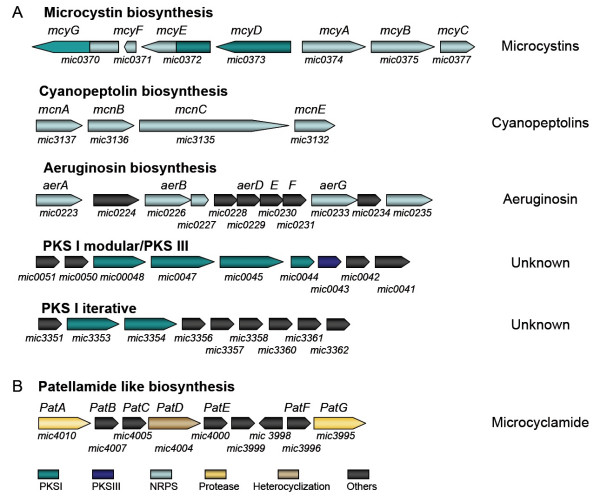
Background: The colonial cyanobacterium Microcystis proliferates in a wide range of freshwater ecosystems and is exposed to changing environmental factors during its life cycle.Microcystis blooms are often toxic, potentially fatal to animals and humans, and may cause environmental problems. There has been little investigation of the genomics of these cyanobacteria. Results: Deciphering the 5,172,804 bp sequence of Microcystis aeruginosa PCC 7806 has revealed the high plasticity of its genome: 11.7% DNA repeats containing more than 1,000 bases, 6.8% putative transposases and 21 putative restriction enzymes. Compared to the genomes of other cyanobacterial lineages, strain PCC 7806 contains a large number of atypical genes that may have been acquired by lateral transfers. Metabolic pathways, such as fermentation and a methionine salvage pathway, have been identified, as have genes for programmed cell death that may be related to the rapid disappearance of Microcystis blooms in nature. Analysis of the PCC 7806 genome also reveals striking novel biosynthetic features that might help to elucidate the ecological impact of secondary metabolites and lead to the discovery of novel metabolites for new biotechnological applications.M. aeruginosa and other large cyanobacterial genomes exhibit a rapid loss of synteny in contrast to other microbial genomes. Conclusion: Microcystis aeruginosa PCC 7806 appears to have adopted an evolutionary strategy relying on unusual genome plasticity to adapt to eutrophic freshwater ecosystems, a property shared by another strain of M. aeruginosa(NIES-843). Comparisons of the genomes of PCC 7806 and other cyanobacterial strains indicate that a similar strategy may have also been used by the marine strain Crocosphaera watsonii WH8501 to adapt to other ecological niches, such as oligotrophic open oceans.
Overview
The claims and statistics of this paper haven’t been checked yet.
Run the check — free, no account needed. It reads the open-access text and checks the sources it cites.
Integrity signals
Registry
Cites
Statistics
Figures
Verification
Claims the paper makes
The claims and statistics of this paper haven’t been checked yet.
Run the check — free, no account needed. It reads the open-access text and checks the sources it cites.
Claims other papers make about this one
Each is checked against this paper’s own text: does it say what the citing paper says it does?
The source backs part of the claim, not all of it — or backs it for a different population, condition or comparison.
In the citing paper
“Another significant characteristic of duplicated genes was that they were usually adjacently located or duplication-linked with a plenty of unknown functions, some of which can be annotated by one or two of the three enzymes (RTase, transposase, and integrase), and these duplicated fragments varied in size from several to dozens of kilobases.57–59”
From Whole genomic DNA sequencing and comparative genomic analysis of Arthrospira platensis: high genome plasticity and genetic diversity (2016) · cites this paper as [59]
Experimental — accuracy not yet measuredThe source backs part of the claim, not all of it — or backs it for a different population, condition or comparison.
In the citing paper
“Previous studies have shown that a large proportion of the transposases and RTase constituted the long repeated sequences in some cyanobacteria.57–60”
From Whole genomic DNA sequencing and comparative genomic analysis of Arthrospira platensis: high genome plasticity and genetic diversity (2016) · cites this paper as [59]
Experimental — accuracy not yet measuredThe cited source says what the claim attributes to it.
In the citing paper
“For example, 93% of 362 transposases of Microcystis aeruginosa PCC 7806 emerged in the long repeats.59”
From Whole genomic DNA sequencing and comparative genomic analysis of Arthrospira platensis: high genome plasticity and genetic diversity (2016) · cites this paper as [59]
Self-check
Percentages, sums and reported differences re-computed from the paper’s own numbers.
The self-check needs the paper’s full text.
Citations
Cites
MUSCLE: multiple sequence alignment with high accuracy and high throughput
Edgar, R. C. (2004) · Nucleic Acids Research · doi:10.1093/nar/gkh340 · Cited by 44,662
A Simple, Fast, and Accurate Algorithm to Estimate Large Phylogenies by Maximum Likelihood
Guindon, S., & Gascuel, O. (2003) · Systematic Biology · doi:10.1080/10635150390235520 · Cited by 16,923
Bergey's Manual of Systematic Bacteriology
(1990) · Annals of Internal Medicine · doi:10.7326/0003-4819-112-5-391_3 · Cited by 15,633
Harmful Freshwater Algal Blooms, With an Emphasis on Cyanobacteria
Paerl, H. W., Fulton, R. S., Moisander, P. H., & Dyble, J. (2001) · The Scientific World JOURNAL · doi:10.1100/tsw.2001.16 · Cited by 1,054
Tillett, D., Dittmann, E., Erhard, M., von Döhren, H., Börner, T., & Neilan, B. A. (2000) · Chemistry & Biology · doi:10.1016/s1074-5521(00)00021-1 · Cited by 996
Self-citationCyanobacterial peptides — Nature's own combinatorial biosynthesis
Welker, M., & von Döhren, H. (2006) · FEMS Microbiology Reviews · doi:10.1111/j.1574-6976.2006.00022.x · Cited by 803
Unicellular cyanobacteria fix N2 in the subtropical North Pacific Ocean
Zehr, J. P., Waterbury, J. B., Turner, P. J., Montoya, J. P., Omoregie, E. O., Steward, G. F., Hansen, A. S., & Karl, D. M. (2001) · Nature · doi:10.1038/35088063 · Cited by 718
Schmidt, E. W., Nelson, J. T., Rasko, D. A., Sudek, S., Eisen, J. A., Haygood, M. G., & Ravel, J. (2005) · Proceedings of the National Academy of Sciences · doi:10.1073/pnas.0501424102 · Cited by 567
High rates of N2 fixation by unicellular diazotrophs in the oligotrophic Pacific Ocean
Montoya, J. P., Holl, C. M., Zehr, J. P., Hansen, A. S., Villareal, T. A., & Capone, D. G. (2004) · Nature · doi:10.1038/nature02824 · Cited by 560
Udwary, D., Allen, L. Z., Asolkar, R. N., Singan, V. R., Lapidus, A. L., Fenical, W., Jensen, P. R., & Moore, B. S. (2007) · Proceedings of the National Academy of Sciences · doi:10.1073/pnas.0700962104 · Cited by 537
Biased biological functions of horizontally transferred genes in prokaryotic genomes
Nakamura, Y., Itoh, T., Matsuda, H., & Gojobori, T. (2004) · Nature Genetics · doi:10.1038/ng1381 · Cited by 475
Walsby, A. E. (1994) · Microbiological Reviews · doi:10.1128/mr.58.1.94-144.1994 · Cited by 459
On the annual cycle of the blue-green alga Microcystis Aeruginosa Kütz. Emend. Elenkin
REYNOLDS, C. S., Jaworski, G. H. M., Cmiech, H. A., & Leedale, G. F. (1981) · Philosophical transactions of the Royal Society of London. Series B, Biological sciences · doi:10.1098/rstb.1981.0081 · Cited by 409
The origin of atmospheric oxygen on Earth: The innovation of oxygenic photosynthesis
Dismukes, G. C., Klimov, V. V., Баранов, В. С., Kozlov, Y. N., Dasgupta, J., & Tyryshkin, A. M. (2001) · Proceedings of the National Academy of Sciences · doi:10.1073/pnas.061514798 · Cited by 392
Automated Finishing with AutofinishPreprint
Gordon, D., Desmarais, C., & Green, P. (2001) · Genome Research · doi:10.1101/gr.171401 · Cited by 376
Health Risk Assessment of Cyanobacterial (Blue-green Algal) Toxins in Drinking Water
Falconer, I. R., & Humpage, A. R. (2005) · International Journal of Environmental Research and Public Health · doi:10.3390/ijerph2005010043 · Cited by 367
Health hazards for terrestrial vertebrates from toxic cyanobacteria in surface water ecosystems
Briand, J., Jacquet, S., Bernard, C., & Humbert, J. F. (2003) · Veterinary Research · doi:10.1051/vetres:2003019 · Cited by 331
Self-citationA genomics-guided approach for discovering and expressing cryptic metabolic pathways
Zazopoulos, E., Huang, K.-X., Staffa, A., Liu, W., Bachmann, B. O., Nonaka, K., Ahlert, J., Thorson, J. S., Shen, B., & Farnet, C. M. (2003) · Nature Biotechnology · doi:10.1038/nbt784 · Cited by 317
An overview of the genome of Nostoc punctiforme, a multicellular, symbiotic cyanobacterium
Meeks, J. C., Elhai, J., Thiel, T., Potts, M., Larimer, F. W., Lamerdin, J. E., Predki, P. F., & Atlas, R. (2001) · Photosynthesis Research · doi:10.1023/a:1013840025518 · Cited by 285
Complete Genomic Structure of the Bloom-forming Toxic Cyanobacterium Microcystis aeruginosa NIES-843
Kaneko, T., Nakajima, N., Okamoto, S., Suzuki, I., Tanabe, Y., Tamaoki, M., Nakamura, Y., Kasai, F., Watanabe, A., Kawashima, K., et al. (2007) · DNA Research · doi:10.1093/dnares/dsm026 · Cited by 284
The replication-related organization of bacterial genomes
Rocha, E. P. C. (2004) · Microbiology · doi:10.1099/mic.0.26974-0 · Cited by 279
Phosphorothioation of DNA in bacteria by dnd genes
Wang, L., Chen, S., Xu, T., Taghizadeh, K., Wishnok, J. S., Zhou, X., You, D., Deng, Z., & Dedon, P. C. (2007) · Nature Chemical Biology · doi:10.1038/nchembio.2007.39 · Cited by 274
The demise of the marine cyanobacterium, Trichodesmium spp., via an autocatalyzed cell death pathway
Berman‐Frank, I., Bidle, K. D., Haramaty, L., & Falkowski, P. G. (2004) · Limnology and Oceanography · doi:10.4319/lo.2004.49.4.0997 · Cited by 271
Nishizawa, T., Ueda, A., Asayama, M., Fujii, K., Harada, K., Ochi, K., & Shirai, M. (2000) · The Journal of Biochemistry · doi:10.1093/oxfordjournals.jbchem.a022670 · Cited by 257
Ross, C., Santiago-Vàzquez, L. Z., & Paul, V. J. (2006) · Aquatic Toxicology · doi:10.1016/j.aquatox.2006.02.007 · Cited by 255
The Archaea and the deeply branching and phototrophic bacteria
Boone, D. R., Castenholz, R. W., Garrity, G. M., Staley, J. T., & Bergey, D. H. (2001) · Springer eBooks · Cited by 254
The Impact of Bacterial Genomics on Natural Product Research
Bode, H. B., & Müller, R. (2005) · Angewandte Chemie International Edition · doi:10.1002/anie.200501080 · Cited by 251
Towards clarification of the biological role of microcystins, a family of cyanobacterial toxins
Schatz, D., Keren, Y., Vardi, A., Sukenik, A., Carmeli, S., Börner, T., Dittmann, E., & Kaplan, A. (2007) · Environmental Microbiology · doi:10.1111/j.1462-2920.2006.01218.x · Cited by 243
Self-citationGherna, R. L. (1978) · Medical Entomology and Zoology · Cited by 239
Via-Ordorika, L., Fastner, J., Kurmayer, R., Hisbergues, M., Dittmann, E., Komárek, J., Erhard, M., & Chorus, I. (2004) · Systematic and Applied Microbiology · doi:10.1078/0723202041748163 · Cited by 224
Self-citationThe histidine kinase Hik33 perceives osmotic stress and cold stress in Synechocystis sp. PCC 6803
Mikami, K., Kanesaki, Y., Suzuki, I., & Murata, N. (2002) · Molecular Microbiology · doi:10.1046/j.1365-2958.2002.03202.x · Cited by 204
Goericke, R., & Welschmeyer, N. A. (1993) · Deep Sea Research Part I Oceanographic Research Papers · doi:10.1016/0967-0637(93)90104-b · Cited by 189
Korbel, J. O., Jensen, L. J., von Mering, C., & Bork, P. (2004) · Nature Biotechnology · doi:10.1038/nbt988 · Cited by 180
Genes encoding synthetases of cyclic depsipeptides, anabaenopeptilides, in Anabaena strain 90
Rouhiainen, L., Paulin, L. G., Suomalainen, S., Hyytiäinen, H., Buikema, W. J., Haselkorn, R., & Sivonen, K. (2000) · Molecular Microbiology · doi:10.1046/j.1365-2958.2000.01982.x · Cited by 177
Otsuka, S., Suda, S., Shibata, S., Oyaizu, H., Matsumoto, S., & Watanabe, M. M. (2001) · INTERNATIONAL JOURNAL OF SYSTEMATIC AND EVOLUTIONARY MICROBIOLOGY · doi:10.1099/00207713-51-3-873 · Cited by 172
Cyanopeptolins, new depsipeptides from the cyanobacterium Microcystis sp. pcc 7806.
Martin, C., Oberer, L., Ino, T., König, W. Α., BUSCH, M., & Weckesser, J. (1993) · The Journal of Antibiotics · doi:10.7164/antibiotics.46.1550 · Cited by 163
Bacterial variations on the methionine salvage pathway
Sekowska, A., Dénervaud, V., Ashida, H., Michoud, K., Haas, D., Yokota, A., & Danchin, A. (2004) · BMC Microbiology · doi:10.1186/1471-2180-4-9 · Cited by 162
The oldest records of photosynthesis
Awramik, S. M. (1992) · Photosynthesis Research · doi:10.1007/bf00039172 · Cited by 151
Phosphorus Scavenging in the Unicellular Marine Diazotroph Crocosphaera watsonii
Dyhrman, S. T., & Haley, S. T. (2006) · Applied and Environmental Microbiology · doi:10.1128/aem.72.2.1452-1458.2006 · Cited by 148
Ehrenreich, I. M., Waterbury, J. B., & Webb, E. A. (2005) · Applied and Environmental Microbiology · doi:10.1128/aem.71.11.7401-7413.2005 · Cited by 141
Whitfield, C., & Paiment, A. (2003) · Carbohydrate Research · doi:10.1016/j.carres.2003.08.010 · Cited by 137
Gelfand, M. S., & Koonin, E. V. (1997) · Nucleic Acids Research · doi:10.1093/nar/25.12.2430 · Cited by 134
A novel DNA modification by sulphur
Zhou, X., He, X., Liang, J., Li, A., Xu, T., Kieser, T., Helmann, J. D., & Deng, Z. (2005) · Molecular Microbiology · doi:10.1111/j.1365-2958.2005.04764.x · Cited by 131
Buoyancy Regulation in a Strain of Microcystis
THOMAS, R. H., & Walsby, A. E. (1985) · Microbiology · doi:10.1099/00221287-131-4-799 · Cited by 130
Kehr, J., Zilliges, Y., Springer, A., Disney, M. D., Ratner, D. M., Bouchier, C., Seeberger, P. H., de Marsac, N. T., & Dittmann, E. (2005) · Molecular Microbiology · doi:10.1111/j.1365-2958.2005.05001.x · Cited by 126
Self-citationIshida, K., Christiansen, G., Yoshida, W. Y., Kurmayer, R., Welker, M., Valls, N., Bonjoch, J., Hertweck, C., Börner, T., Hemscheidt, T. K., et al. (2007) · Chemistry & Biology · doi:10.1016/j.chembiol.2007.04.006 · Cited by 125
Self-citationZiemert, N., Ishida, K., Quillardet, P., Bouchier, C., Hertweck, C., de Marsac, N. T., & Dittmann, E. (2008) · Applied and Environmental Microbiology · doi:10.1128/aem.02392-07 · Cited by 121
Self-citationLehman, P. W., Boyer, G. L., Satchwell, M., & Waller, S. (2007) · Hydrobiologia · doi:10.1007/s10750-007-9231-x · Cited by 120
Persistence drives gene clustering in bacterial genomes
Fang, G., Rocha, E. P., & Danchin, A. (2008) · BMC Genomics · doi:10.1186/1471-2164-9-4 · Cited by 112 · cited 1×
“[23], who showed that both persistent and rare genes are significantly clustered in most of the 169 bacterial genomes analyzed.”
Gross, F., Luniak, N., Perlova, O., Gaitatzis, N., Jenke‐Kodama, H., Gerth, K., Gottschalk, D., Dittmann, E., & Müller, R. (2006) · Archives of Microbiology · doi:10.1007/s00203-005-0059-3 · Cited by 106
Self-citationOrder and disorder in bacterial genomes
Rocha, E. P. (2004) · Current Opinion in Microbiology · doi:10.1016/j.mib.2004.08.006 · Cited by 104
Sublethal exposure from microcystins to renal insufficiency patients in Rio de Janeiro, Brazil
Soares, R. M., Yuan, M., Servaites, J. C., Delgado, A. G., de Magalhães, V. F., Hilborn, E. D., Carmichael, W. W., & Azevedo, S. M. F. O. (2006) · Environmental Toxicology · doi:10.1002/tox.20160 · Cited by 104
Dynamics of microcystin-degrading bacteria in mucilage of Microcystis
Maruyama, T., Kato, K., Yokoyama, A., Tanaka, T., Hiraishi, A., & Park, H. D. (2003) · Microbial Ecology · doi:10.1007/s00248-002-3007-7 · Cited by 104
Carré‐Mlouka, A., Comte, K., Castets, A.-M., Bouchier, C., & de Marsac, N. T. (2004) · Journal of Bacteriology · doi:10.1128/jb.186.8.2355-2365.2004 · Cited by 102
Self-citationThe methionine salvage pathway in Bacillus subtilis
Sekowska, A., & Danchin, A. (2002) · BMC Microbiology · doi:10.1186/1471-2180-2-8 · Cited by 100
Hehir‐Kwa, J. Y., Egmont-Petersen, M., Janssen, I. M., Smeets, D., van Kessel, A. G., & Veltman, J. A. (2007) · DNA Research · doi:10.1093/dnares/dsm002 · Cited by 99
Microcyclamide, a Cytotoxic Cyclic Hexapeptide from the Cyanobacterium Microcystis aeruginosa
Ishida, K., Nakagawa, H., & Murakami, M. (2000) · Journal of Natural Products · doi:10.1021/np000159p · Cited by 79
Hudnell, H. K., & Dortch, Q. (2008) · Springer eBooks · doi:10.1007/978-0-387-75865-7_2 · Cited by 71
Zilliges, Y., Kehr, J., Mikkat, S., Bouchier, C., de Marsac, N. T., Börner, T., & Dittmann, E. (2008) · Journal of Bacteriology · doi:10.1128/jb.01867-07 · Cited by 69
Self-citationHe, X., Ou, H., Yu, Q., Zhou, X., Wu, J., Liang, J., Zhang, W., Rajakumar, K., & Deng, Z. (2007) · Molecular Microbiology · doi:10.1111/j.1365-2958.2007.05846.x · Cited by 67
Morán, X. A. G. (2007) · Aquatic Microbial Ecology · doi:10.3354/ame01151 · Cited by 64
Tooming‐Klunderud, A., Rohrlack, T., Shalchian‐Tabrizi, K., Kristensen, T., & Jakobsen, K. S. (2007) · Microbiology · doi:10.1099/mic.0.2006/001123-0 · Cited by 61
Horizontal gene transfer of two cytoskeletal elements from a eukaryote to a cyanobacterium
Guljamow, A., Jenke‐Kodama, H., Saumweber, H., Quillardet, P., Frangeul, L., Castets, A. M., Bouchier, C., de Marsac, N. T., & Dittmann, E. (2007) · Current Biology · doi:10.1016/j.cub.2007.06.063 · Cited by 58
Self-citationManage, P. M., Kawabata, Z., & Nakano, S. (1999) · Hydrobiologia · doi:10.1023/a:1003868803832 · Cited by 54
CAAT-Box, contigs-Assembly and Annotation Tool-Box for genome sequencing projects
Frangeul, L., Glaser, P., Rusniok, C., Buchrieser, C., Duchaud, É., Dehoux, P., & Kunst, F. (2004) · Bioinformatics · doi:10.1093/bioinformatics/btg490 · Cited by 53
Self-citationWinding up the cyanobacterial circadian clock
Mackey, S. R., & Golden, S. S. (2007) · Trends in Microbiology · doi:10.1016/j.tim.2007.08.005 · Cited by 50
Genome-wide analysis of restriction-modification system in unicellular and filamentous cyanobacteria
Zhao, F., Zhang, X., Liang, C., Wu, J., Bao, Q., & Qin, S. (2006) · Physiological Genomics · doi:10.1152/physiolgenomics.00255.2005 · Cited by 47
Light-Dependent Regulation of Cyanobacterial Phytochrome Expression
García‐Domínguez, M., Muro‐Pastor, M. I., Reyes, J. C., & Florencio, F. J. (2000) · Journal of Bacteriology · doi:10.1128/jb.182.1.38-44.2000 · Cited by 42
Some aspects of the ecophysiology of cyanobacteria
Mur, L. R. (1983) · Research in Microbiology · doi:10.1016/s0769-2609(83)80097-0 · Cited by 37
Genomic Rearrangements at rrn Operons in Salmonella
Helm, R. A., Lee, A., Christman, H. D., & Maloy, S. (2003) · Genetics · doi:10.1093/genetics/165.3.951 · Cited by 37
Voß, B., Gierga, G., Axmann, I. M. I., & Hess, W. R. (2007) · BMC Genomics · doi:10.1186/1471-2164-8-375 · Cited by 36
Shi, L., Li, J., Cheng, Y., Wang, L., Chen, W., & Zhang, C. (2007) · Journal of Bacteriology · doi:10.1128/jb.00323-07 · Cited by 36
Self-citationRegulation of an Osmoticum-Responsive Gene in Anabaena sp. Strain PCC 7120
Schwartz, S. H., Black, T. A., Jäger, K., Panoff, J.-M., & Wölk, C. P. (1998) · Journal of Bacteriology · doi:10.1128/jb.180.23.6332-6337.1998 · Cited by 33
Cheng, Y., Li, J., Shi, L., Wang, L., Latifi, A., & Zhang, C. (2006) · Journal of Bacteriology · doi:10.1128/jb.00258-06 · Cited by 30
Self-citationCharacteristics of DNA and Multiple rpoD Homologs of Microcystis(Synechocystis) Strains
SAKAMOTO, T., SHIRAI, M., Asayama, M., AIDA, T., SATO, A., Tanaka, K., Takahashi, H., & Nakano, M. (1993) · International Journal of Systematic Bacteriology · doi:10.1099/00207713-43-4-844 · Cited by 29
Carré‐Mlouka, A., Méjean, A., Quillardet, P., Ashida, H., Saito, Y., Yokota, A., Callebaut, I., Sekowska, A., Dittmann, E., Bouchier, C., et al. (2006) · Journal of Biological Chemistry · doi:10.1074/jbc.m602973200 · Cited by 27
Self-citationMoezelaar, R., & Stal, L. J. (1997) · European Journal of Phycology · doi:10.1080/09670269710001737309 · Cited by 25
Cortez, D., Lazcano, A., & Becerra, A. (2005) · In Silico Biology · doi:10.3233/isb-00212 · Cited by 24
Self-citationScharnagl, M., Richter, S., & Hagemann, M. (1998) · Journal of Bacteriology · doi:10.1128/jb.180.16.4116-4122.1998 · Cited by 23
Two Closely Related Peptide Toxins in Axenically Grown Microcystis aeruginosa PCC 7806
Dierstein, R., Kaiser, I., Weckesser, J., Matern, U., König, W. Α., & Krebber, R. (1990) · Systematic and Applied Microbiology · doi:10.1016/s0723-2020(11)80184-0 · Cited by 21
Carré‐Mlouka, A. (2004) · FEMS Microbiology Letters · doi:10.1016/j.femsle.2004.06.011 · Cited by 12
Carré‐Mlouka, A., Comte, K., & de Marsac, N. T. (2004) · FEMS Microbiology Letters · doi:10.1111/j.1574-6968.2004.tb09674.x · Cited by 10
Research works printed but not linked: 1
- Steffensen DA: Economic costs of cyanobacterial blooms. Interagency, International Symposium on Cyanobacterial Harmful Algal Blooms (ISOC-HAB), Advances in Experimental Medicine and Biology. 2008, New York: Springer Verlag, 619: 843-853.
Cited by
Sorted by citations
The rise of harmful cyanobacteria blooms: the potential roles of eutrophication and climate change
O’Neil, J. M., Davis, T. W., Burford, M. A., & Gobler, C. J. (2012) · Harmful Algae · doi:10.1016/j.hal.2011.10.027 · Cited by 2,225
Harke, M. J., Steffen, M. M., Gobler, C. J., Otten, T. G., Wilhelm, S. W., Wood, S. A., & Paerl, H. W. (2016) · Harmful Algae · doi:10.1016/j.hal.2015.12.007 · Cited by 1,114
Improving the coverage of the cyanobacterial phylum using diversity driven genome sequencing
Shih, P. M., Wu, D., Latifi, A., Axen, S. D., Fewer, D. P., Talla, E., Calteau, A., Cai, F., Tandeau de Marsac, N., Rippka, R., et al. (2013) · Proceedings of the National Academy of Sciences · doi:10.1073/pnas.1217107110 · Cited by 800
Self-citationOxidative stress in cyanobacteria
Latifi, A., Ruiz, M., & Zhang, C. (2008) · FEMS Microbiology Reviews · doi:10.1111/j.1574-6976.2008.00134.x · Cited by 824
Self-citationAn environmental bacterial taxon with a large and distinct metabolic repertoire
Wilson, M. C., Mori, T., Rückert, C., Uria, A. R., Helf, M. J., Takada, K., Gernert, C., Steffens, U. A. E., Heycke, N., Schmitt, S., et al. (2014) · Nature · doi:10.1038/nature12959 · Cited by 612
Metadata
- Authors
- Frangeul, L., Quillardet, P., Castets, A.-M., Humbert, J.-F., Matthijs, H. C., Cortez, D., Tolonen, A., Zhang, C.-C., Gribaldo, S., Kehr, J.-C., Zilliges, Y., Ziemert, N., Becker, S., Talla, E., Latifi, A., Billault, A., Lepelletier, A., Dittmann, E., Bouchier, C., & Tandeau de Marsac, N.
- Affiliations
- Institut Pasteur (FR)
- Centre National de la Recherche Scientifique (FR)
- University of Amsterdam (NL)
- Humboldt-Universität zu Berlin (DE)
- Netherlands Institute of Ecology (NL)
- Genoscope (FR)
- ORCID
- Venue
- BMC Genomics
- Published
- 2008-06-05
- Volume
- 9
- Issue
- 1
- Pages
- 274-274
- ISSN
- 1471-2164 (ISSN-L)
- PMC
- PMC2442094
- OpenAlex
- W2109250549
- Cited by
- 221
- References
- 81
- Citations by year
- 2026: 6 · 2025: 7 · 2024: 12 · 2023: 10 · 2022: 9 · 2021: 9 · 2020: 7 · 2019: 19 · 2018: 12 · 2017: 9 · 2016: 12 · 2015: 15 · 2014: 20 · 2013: 14 · 2012: 17
- FWCI
- 10.47
- Type
- journal article
- Language
- en
- Open access
- gold
- doi.org
- Licence
- cc-by
- Locations
- BMC Genomics (publishedVersion, cc-by)
- PubMed Central (publishedVersion, cc-by)
- PubMed (publishedVersion)
- UvA-DARE (University of Amsterdam) (publishedVersion, cc-by)
- KNAW research portal (Royal Academy of Art and Sciences (KNAW)) (publishedVersion, cc-by)
- Digital Access to Scholarship at Harvard (DASH) (Harvard University) (submittedVersion, cc-by)
- Data Archiving and Networked Services (DANS) (submittedVersion, cc-by)
- HAL (submittedVersion, other-oa)
- DOAJ (DOAJ: Directory of Open Access Journals) (submittedVersion)
- KNAW Research Portal (The Royal Netherlands Academy of Arts and Sciences) (submittedVersion, cc-by)
- Data Archiving and Networked Services (DANS) (submittedVersion, other-oa)
- Funders
- Gordon and Betty Moore Foundation
- Centre National de la Recherche Scientifique
- Topics
- Physical Sciences › Environmental Science › Environmental Chemistry › Aquatic Ecosystems and Phytoplankton Dynamics
- Life Sciences › Biochemistry, Genetics and Molecular Biology › Molecular Biology › Genomics and Phylogenetic Studies
- Life Sciences › Biochemistry, Genetics and Molecular Biology › Genetics › Bacterial Genetics and Biotechnology
- Keywords
- genome plasticity, cyanobacterial genomics, repetitive DNA, transposase, restriction enzymes, horizontal gene transfer, methionine salvage pathway, programmed cell death, cyanobacterial blooms, secondary metabolites, biosynthetic genes
- MeSH terms
- Animals, DNA, Bacterial, DNA, Ribosomal, Fresh Water, Multigene Family, Humans, Molecular Sequence Data, Phylogeny, Repetitive Sequences, Nucleic Acid, Species Specificity, DNA Restriction-Modification Enzymes, Genome, Bacterial, Ecosystem, Evolution, Molecular, DNA, Intergenic, Microcystis
About these checks
Registry, retraction, Cites and statistics results are computed, not judged, with one exception: a printed reference that no index lists is read once by a model before it counts as a citation error. Claims are extracted by a model and kept only when their quote appears verbatim in the text; each cited source is then checked, with a model’s help, for whether it says what the claim relies on. Those verdicts can be wrong — read the claim’s quote and the cited source before relying on one.
Statistics and arithmetic are recomputed, not judged.
Confidence bands are shown only for fields calibrated on our annotated test set. None is calibrated yet, so no band is shown.
What counts as a claim ›How we measure confidence ›How we check this ›
Are you an author, or do you see a problem with this page? Request a review
