

Direct cell-to-cell spread of a pathogenic yeast
Open accessThe DOI matches its Crossref record; 19 of the 19 references it cites were found in a registry or an index.
Abstract
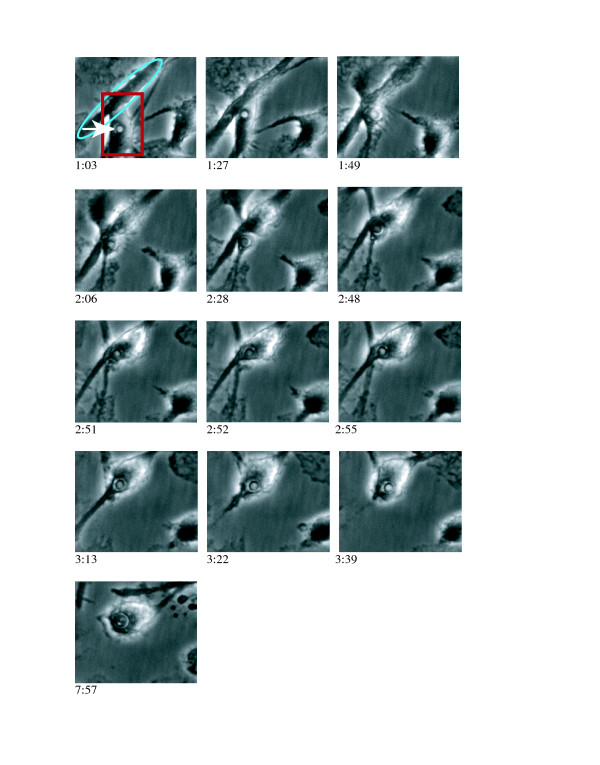
Background: Cryptococcosis, a fatal fungal infection of the central nervous system, is one of the major killers of AIDS patients and other immunocompromised hosts. The causative agent, Cryptococcus neoformans , has a remarkable ability to 'hide' and proliferate within phagocytic cells of the human immune system. This intracellular phase is thought to underlie the ability of the pathogen to remain latent for long periods of time within infected individuals. Results: We now report that Cryptococcus is able to undergo 'lateral transfer' between phagocytes, moving directly from infected to uninfected macrophages. This novel process was observed in both C. neoformans serotypes (A and D) and occurs in both immortalised cell lines and in primary human macrophages. Lateral transfer is independent of the initial route of uptake, since both serum-opsonised and antibody-opsonised C. neoformans are able to undergo direct cell-to-cell transfer. Conclusion: We provide the first evidence for lateral transfer of a human fungal pathogen. This rare event may occur repeatedly during latent cryptococcal infections, thereby allowing the pathogen to remain concealed from the immune system and protecting it from exposure to antifungal agents.
Overview
The claims and statistics of this paper haven’t been checked yet.
Free: it reads the open-access text and checks the first 5 claims that cite a source we can check. Create a free account to check every claim.
Integrity signals
Registry
Cites
Statistics
Figures
Verification
Claims the paper makes
The claims and statistics of this paper haven’t been checked yet.
Free: it reads the open-access text and checks the first 5 claims that cite a source we can check. Create a free account to check every claim.
Claims other papers make about this one
Each is checked against this paper’s own text: does it say what the citing paper says it does?
In the citing paper
“This cell-to-cell spread, known as lateral transfer or dragotcytosis, is an actin-dependent process that requires donor and acceptor cells be in physical contact [124–126].”
From Mechanisms of fungal dissemination (2021) · cites this paper as [124]
Self-check
Percentages, sums and reported differences re-computed from the paper’s own numbers.
The self-check needs the paper’s full text.
Citations
Cites
Tilney, L. G., & Portnoy, D. A. (1989) · The Journal of cell biology · doi:10.1083/jcb.109.4.1597 · Cited by 1,263 · cited 1×
“Most of these organisms undergo direct cell-to-cell spread via polarised actin polymerisation, which generates force to propel them through the cytoplasm of the infected cell and into uninfected neighbouring cells [11-13].”
BackgroundCryptococcus neoformans Is a Facultative Intracellular Pathogen in Murine Pulmonary Infection
Feldmesser, M., Kress, Y., Novikoff, P., & Casadevall, A. (2000) · Infection and Immunity · doi:10.1128/iai.68.7.4225-4237.2000 · Cited by 423 · cited 1×
“neoformans shows a remarkable ability to survive and proliferate within host macrophages in vitro [3,4].”
BackgroundPhagosome Extrusion and Host-Cell Survival after Cryptococcus neoformans Phagocytosis by Macrophages
Alvarez, M., & Casadevall, A. (2006) · Current Biology · doi:10.1016/j.cub.2006.09.061 · Cited by 414 · cited 5×
“neoformans is able to escape from within macrophages by a novel expulsive mechanism [6,7].”
BackgroundInfluentialDeciphering the Model Pathogenic Fungus Cryptococcus Neoformans
Idnurm, A., Bahn, Y.-S., Nielsen, K., Lin, X., Fraser, J. A., & Heitman, J. (2005) · Nature Reviews Microbiology · doi:10.1038/nrmicro1245 · Cited by 337 · cited 1×
“Should an infected individual later become immunocompromised, the fungus can then spread from the lungs to the central nervous system to cause meningoencephalitis, which is uniformly fatal without rapid clinical intervention [2].”
BackgroundEpidemiological Evidence for Dormant Cryptococcus neoformans Infection
Garcia-Hermoso, D., Janbon, G., & Dromer, F. (1999) · Journal of Clinical Microbiology · doi:10.1128/jcm.37.10.3204-3209.1999 · Cited by 323 · cited 1×
“Infection is thought to begin with the inhalation of airborne spores and epidemiological evidence suggests that exposure to Cryptococcus early in life can produce a prolonged, asymptomatic, latent infection [1].”
BackgroundExpulsion of Live Pathogenic Yeast by Macrophages
Ma, H., Croudace, J. E., Lammas, D. A., & May, R. C. (2006) · Current Biology · doi:10.1016/j.cub.2006.09.032 · Cited by 310
Self-citationTucker, S. C., & Casadevall, A. (2002) · Proceedings of the National Academy of Sciences · doi:10.1073/pnas.052702799 · Cited by 306 · cited 2×
“neoformans shows a remarkable ability to survive and proliferate within host macrophages in vitro [3,4].”
BackgroundChang, Y. C., Stins, M. F., McCaffery, M. J., Miller, G. F., Pare, D. R., Dam, T., Paul-Satyasee, M., Kim, K. S., & Kwon-Chung, K. J. (2004) · Infection and Immunity · doi:10.1128/iai.72.9.4985-4995.2004 · Cited by 278 · cited 1×
“neoformans may use such transient contact in order to cross the blood-brain barrier by direct cell-to-cell spread from adherent infected macrophages to microvascular endothelial cells [14].”
BackgroundDirected Egress of Animal Viruses Promotes Cell-to-Cell Spread
Johnson, D. C., & Huber, M. T. (2002) · Journal of Virology · doi:10.1128/jvi.76.1.1-8.2002 · Cited by 257 · cited 2×
“Finally, infected macrophage cells may travel widely throughout the host circulatory and lymphatic systems, where they interact intimately with one another and with other cell types through transient contacts [12].”
BackgroundCryptococcus neoformans Resides in an Acidic Phagolysosome of Human Macrophages
Levitz, S. M., Nong, S.-H., Seetoo, K. F., Harrison, T. S., Speizer, R. A., & Simons, E. R. (1999) · Infection and Immunity · doi:10.1128/iai.67.2.885-890.1999 · Cited by 231 · cited 1×
“Alternatively, it is possible that cryptococci that subsequently undergo lateral transfer are initially internalized into an atypical 'transfer-competent' compartment (rather than a phagosome) although this seems unlikely given that internalized cryptococci have previously been shown to acquire normal phagosome marker…”
BackgroundPathogenesis of Cerebral Cryptococcus neoformans Infection after Fungemia
Chrétien, F., Lortholary, O., Kansau, I., Neuville, S., Gray, F., & Dromer, F. (2002) · The Journal of Infectious Diseases · doi:10.1086/341564 · Cited by 201 · cited 1×
“Secondly, live cryptococci can be recovered from circulating monocytes in infected mice [5].”
BackgroundIdentification of App1 as a regulator of phagocytosis and virulence of Cryptococcus neoformans
Luberto, C., Martinez-Mariño, B., Taraskiewicz, D., Bolaños, B., Chitano, P., Toffaletti, D. L., Cox, G. M., Perfect, J. R., Hannun, Y. A., Balish, E., et al. (2003) · Journal of Clinical Investigation · doi:10.1172/jci18309 · Cited by 156 · cited 1×
“neoformans, which proposes that cryptococci are engulfed by phagocytic cells at an early stage of infection and then trafficked by these host cells into distal tissues without being exposed to the full onslaught of the immune system [8,9].”
BackgroundAlvarez, M., & Casadevall, A. (2007) · BMC Immunology · doi:10.1186/1471-2172-8-16 · Cited by 131 · cited 2×
“BMC Immunology 2007, 8(1):16.”
BackgroundDissemination of Listeria monocytogenes by Infected Phagocytes
Drevets, D. A. (1999) · Infection and Immunity · doi:10.1128/iai.67.7.3512-3517.1999 · Cited by 122
Entry of Listeria monocytogenes into Neurons Occurs by Cell-to-Cell Spread: an In Vitro Study
Dramsi, S., Lévi, S., Triller, A., & Cossart, P. (1998) · Infection and Immunity · doi:10.1128/.66.9.4461-4468.1998 · Cited by 121 · cited 1×
“For instance, the Gram-positive bacterium Listeria monocytogenes can infect neurons by cell-to-cell spread from adherent macrophages, a more efficient process than direct invasion of neurons [15].”
BackgroundLeukocyte-facilitated entry of intracellular pathogens into the central nervous system
Drevets, D. A., & Leenen, P. J. M. (2000) · Microbes and Infection · doi:10.1016/s1286-4579(00)01317-4 · Cited by 67 · cited 2×
“neoformans, which proposes that cryptococci are engulfed by phagocytic cells at an early stage of infection and then trafficked by these host cells into distal tissues without being exposed to the full onslaught of the immune system [8,9].”
BackgroundCarlsson, F., & Brown, E. J. (2006) · Journal of Cellular Physiology · doi:10.1002/jcp.20721 · Cited by 39 · cited 1×
“Most of these organisms undergo direct cell-to-cell spread via polarised actin polymerisation, which generates force to propel them through the cytoplasm of the infected cell and into uninfected neighbouring cells [11-13].”
BackgroundFazal, N., Lammas, D. A., Rahelu, M., Pithie, A. D., Gaston, H., & Kumararatne, D. S. (1995) · Clinical & Experimental Immunology · doi:10.1111/j.1365-2249.1995.tb03476.x · Cited by 19 · cited 1×
“Human primary blood macrophage cells (PBMC) were prepared as described previously [17] and resuspended at 6 × 10⁶ cells/ml in RPMI 1640 medium containing 2% pooled AB+ male human serum and 2 mM L-glutamine.”
MethodSelf-citationIdentification of App1 as a regulator of phagocytosis and virulence of Cryptococcus neoformans
Luberto, C., Martinez-Mariño, B., Taraskiewicz, D., et al. (2003) · Journal of Clinical Investigation · doi:10.1172/jci200318309 · Cited by 16
Cited by
Interactions of fungal pathogens with phagocytes
Erwig, L. P., & Gow, N. A. R. (2016) · Nature Reviews Microbiology · doi:10.1038/nrmicro.2015.21 · Cited by 626
Cryptococcus: from environmental saprophyte to global pathogen
May, R. C., Stone, N. R. H., Wiesner, D. L., Bicanic, T., & Nielsen, K. (2016) · Nature Reviews Microbiology · doi:10.1038/nrmicro.2015.6 · Cited by 541
Self-citationChapter 4 The Capsule of the Fungal Pathogen Cryptococcus neoformans
Zaragoza, O., Rodrigues, M. L., De Jesus, M., Frases, S., Dadachova, E., & Casadevall, A. (2009) · Advances in Applied Microbiology · doi:10.1016/s0065-2164(09)01204-0 · Cited by 457
“, 2006) or even cell-to-cell spread (Alvarez and Casadevall, 2007; Ma et al., 2007).”
Evidence of a Role for Monocytes in Dissemination and Brain Invasion by Cryptococcus neoformans
Charlier, C., Nielsen, K., Daou, S., Brigitte, M., Chretien, F., & Dromer, F. (2009) · Infection and Immunity · doi:10.1128/iai.01065-08 · Cited by 362
“However, the escaping phenomenon involved 10% of the phagocytes and was more frequent with human macrophages than with murine macrophages and with Clostridium gattii than with C. neoformans ( 35 ).”
BackgroundExpanding fungal pathogenesis: Cryptococcus breaks out of the opportunistic box
Kronstad, J. W., Attarian, R., Cadieux, B., Choi, J., D'Souza, C. A., Griffiths, E. J., Geddes, J. M. H., Hu, G., Jung, W. H., Kretschmer, M., et al. (2011) · Nature Reviews Microbiology · doi:10.1038/nrmicro2522 · Cited by 340
Metadata
- Authors
- Ma, H., Croudace, J. E., Lammas, D. A., & May, R. C.
- Affiliations
- University of Birmingham (GB)
- Corresponding author
- May, Robin C
- Venue
- BMC Immunology
- Published
- 2007-08-16
- Volume
- 8
- Issue
- 1
- Pages
- 15-15
- ISSN
- 1471-2172 (ISSN-L)
- PMC
- PMC1976318
- OpenAlex
- W2143286751
- Cited by
- 96
- References
- 18
- Citations by year
- 2025: 2 · 2024: 2 · 2023: 5 · 2022: 6 · 2021: 1 · 2020: 6 · 2019: 6 · 2018: 5 · 2017: 4 · 2016: 4 · 2015: 3 · 2014: 10 · 2013: 5 · 2012: 8
- FWCI
- 4.37
- Type
- journal article
- Language
- en
- Open access
- gold
- doi.org
- Licence
- cc-by
- Locations
- BMC Immunology (publishedVersion, cc-by)
- PubMed Central (publishedVersion, cc-by)
- PubMed (publishedVersion)
- Worcester Research and Publications (University of Worcester) (acceptedVersion)
- DOAJ (DOAJ: Directory of Open Access Journals) (submittedVersion, cc-by-sa)
- University of Birmingham Research Portal (University of Birmingham) (submittedVersion, cc-by)
- University of Birmingham Research Portal (University of Birmingham) (submittedVersion, other-oa)
- Apollo (University of Cambridge) (submittedVersion, cc-by)
- Apollo (cc-by)
- Topics
- Health Sciences › Medicine › Infectious Diseases › Fungal Infections and Studies
- Health Sciences › Medicine › Infectious Diseases › Antifungal resistance and susceptibility
- Life Sciences › Immunology and Microbiology › Parasitology › Parasitic Infections and Diagnostics
- Keywords
- Cryptococcus neoformans, cryptococcosis, cell-to-cell transmission, lateral transfer, macrophages, phagocytosis, AIDS, opsonization, antifungal resistance
- MeSH terms
- Animals, Cell Line, Cell Movement, Cells, Cultured, Cryptococcosis, Cryptococcus neoformans, Humans, Macrophages, Phagocytosis, Mice
About these checks
Registry, retraction, Cites and statistics results are computed, not judged, with one exception: a printed reference that no index lists is read once by a model before it counts as a citation error. Claims are extracted by a model and kept only when their quote appears verbatim in the text; each cited source is then checked, with a model’s help, for whether it says what the claim relies on. Those verdicts can be wrong — read the claim’s quote and the cited source before relying on one.
Statistics and arithmetic are recomputed, not judged.
Confidence bands are shown only for fields calibrated on our annotated test set. None is calibrated yet, so no band is shown.
What counts as a claim ›How we measure confidence ›How we check this ›
Are you an author, or do you see a problem with this page? Request a review
Data sources
Bibliographic data: Semantic Scholar, OpenAlex, Crossref.
Contains information from the Semantic Scholar Academic Graph Datasets, made available under the ODC Attribution License (ODC-BY 1.0).
Semantic Scholar’s data is described in: Kinney, R., et al. (2023). The Semantic Scholar Open Data Platform. arXiv:2301.10140.
