

The Fur regulon in anaerobically grown Salmonella enterica sv. Typhimurium: identification of new Fur targets
Open accessThe DOI matches its Crossref record; 156 of the 156 references it cites were found in a registry or an index.
Abstract
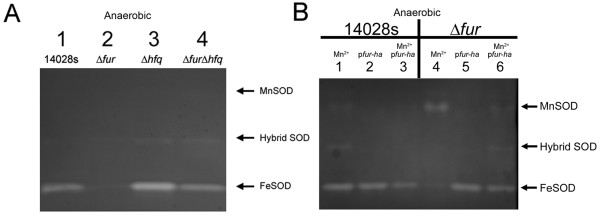
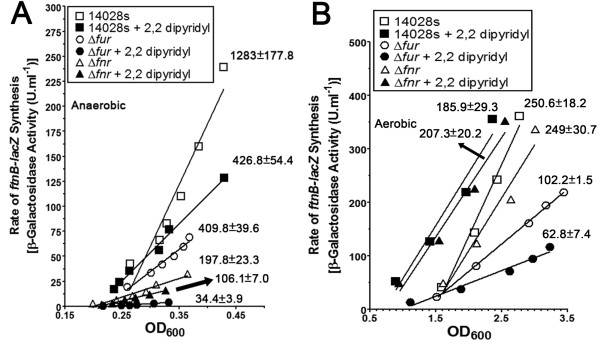
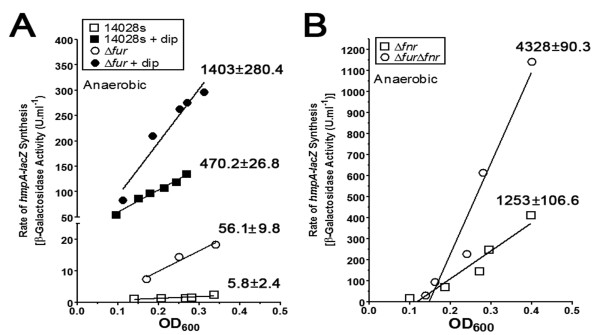
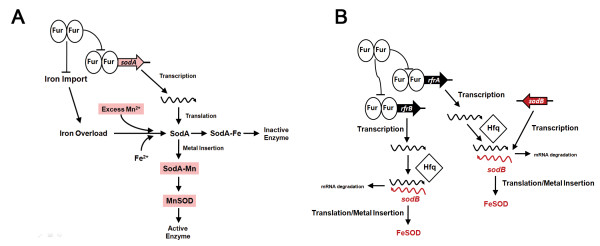
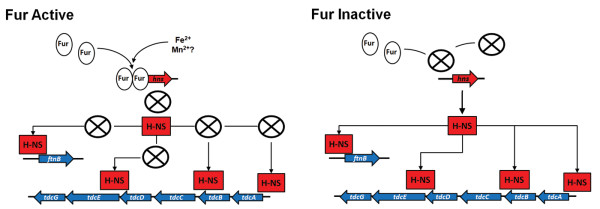
Background: The Ferric uptake regulator (Fur) is a transcriptional regulator that controls iron homeostasis in bacteria. Although the regulatory role of Fur in Escherichia coli is well characterized, most of the studies were conducted under routine culture conditions, i.e., in ambient oxygen concentration. To reveal potentially novel aspects of the Fur regulon in Salmonella enterica serovar Typhimurium under oxygen conditions similar to that encountered in the host, we compared the transcriptional profiles of the virulent wild-type strain (ATCC 14028s) and its isogenic Δ fur strain under anaerobic conditions. Results: Microarray analysis of anaerobically grown Δ fur S. Typhimurium identified 298 differentially expressed genes. Expression of several genes controlled by Fnr and NsrR appeared to be also dependent on Fur. Furthermore, Fur was required for the activity of the cytoplasmic superoxide disumutases (MnSOD and FeSOD). The regulation of FeSOD gene,sodB, occurred via small RNAs (i.e., the ryhB homologs,rfrA and rfrB) with the aid of the RNA chaperone Hfq. The transcription of sodA was increased in Δ fur;however, the enzyme was inactive due to the incorporation of iron instead of manganese in SodA. Additionally, in Δ fur, the expression of the gene coding for the ferritin-like protein (ftnB) was down-regulated, while the transcription of the gene coding for the nitric oxide (NO·) detoxifying flavohemoglobin (hmpA) was up-regulated. The promoters of ftnB and hmpA do not contain recognized Fur binding motifs, which indicated their probable indirect regulation by Fur. However, Fur activation of ftnB was independent of Fnr. In addition, the expression of the gene coding for the histone-like protein, H-NS (hns) was increased in Δ fur. This may explain the observed down-regulation of the tdc operon, responsible for the anaerobic degradation of threonine, and ftnB in Δ fur. Conclusions: This study determined that Fur is a positive factor in ftnB regulation, while serving to repress the expression of hmpA. Furthermore, Fur is required for the proper expression and activation of the antioxidant enzymes, FeSOD and MnSOD. Finally, this work identified twenty-six new targets of Fur regulation, and demonstrates that H-NS repressed genes are down-regulated in Δ fur.
Overview
The claims and statistics of this paper haven’t been checked yet.
Free: it reads the open-access text and checks the first 5 claims that cite a source we can check. Create a free account to check every claim.
Integrity signals
Registry
Cites
Statistics
Figures
Verification
Claims the paper makes
The claims and statistics of this paper haven’t been checked yet.
Free: it reads the open-access text and checks the first 5 claims that cite a source we can check. Create a free account to check every claim.
Claims other papers make about this one
Each is checked against this paper’s own text: does it say what the citing paper says it does?
The source backs part of the claim, not all of it — or backs it for a different population, condition or comparison.
In the citing paper
“Furthermore, indirect regulation by the Fur‐inhibited repressor RyhB sRNA suppresses expression of non‐essential iron‐requiring proteins during iron depletion. 62 , 70 , 71 , 72”
From The battle for iron in enteric infections (2020) · cites this paper as [72]
Experimental — accuracy not yet measured
Self-check
Percentages, sums and reported differences re-computed from the paper’s own numbers.
The self-check needs the paper’s full text.
Citations
Cites
PROTEIN MEASUREMENT WITH THE FOLIN PHENOL REAGENT
Lowry, O., Rosebrough, N., Farr, A. L., & Randall, R. (1951) · Journal of Biological Chemistry · doi:10.1016/s0021-9258(19)52451-6 · Cited by 317,331 · cited 1×
“Protein concentration was determined by the Lowry method [54].”
MethodExperiments in molecular genetics
Miller, J. H. (1972) · Medical Entomology and Zoology · Cited by 27,157
One-step inactivation of chromosomal genes in Escherichia coli K-12 using PCR products
Datsenko, K. A., & Wanner, B. L. (2000) · Proceedings of the National Academy of Sciences · doi:10.1073/pnas.120163297 · Cited by 14,782 · cited 4×
“pKD4 bla FRT cat FRT PS1 PS2 oriR6K [41]”
BackgroundInfluentialSuperoxide dismutase: Improved assays and an assay applicable to acrylamide gels
Beauchamp, C., & Fridovich, I. (1971) · Analytical Biochemistry · doi:10.1016/0003-2697(71)90370-8 · Cited by 12,892 · cited 2×
“1 Yes [14,55,82,88,143-148] Yes [85,146,148] Fnr, ArcA, IHF, SoxRS [53,81]”
MethodUniversal chemical assay for the detection and determination of siderophores
Schwyn, B., & Neilands, J. B. (1987) · Analytical Biochemistry · doi:10.1016/0003-2697(87)90612-9 · Cited by 6,549 · cited 1×
“In addition, the plasmid pfur-ha restored FeSOD activity (Figure 3A - lane 5) as well as the phenotypic appearance of the WT strain observed on a Tris buffered chrome azurol agar plates (CAS plates) [94] containing 0.”
BackgroundLXXIII.—Oxidation of tartaric acid in presence of iron
Fenton, H. J. H. (1894) · J. Chem. Soc., Trans. · doi:10.1039/ct8946500899 · Cited by 3,179
Oxidation of tartaric acid in presence of iron
Fenton, H. J. H. (1894) · Journal of the Chemical Society (Resumed) · Cited by 1,498
Gut inflammation provides a respiratory electron acceptor for Salmonella
Winter, S. E., Thiennimitr, P., Winter, M. G., Butler, B. P., Huseby, D. L., Crawford, R. W., Russell, J. M., Bevins, C. L., Adams, L. G., Tsolis, R. M., et al. (2010) · Nature · doi:10.1038/nature09415 · Cited by 1,290 · cited 1×
“, conditions resembling that encountered by the pathogen during infection [40]).”
BackgroundHertz, G. Z., & Stormo, G. D. (1999) · Bioinformatics · doi:10.1093/bioinformatics/15.7.563 · Cited by 1,243 · cited 1×
“If a sequence corresponding to a Fur binding motif was identified, then this sequence was given a weighted score [45].”
BackgroundA small RNA regulates the expression of genes involved in iron metabolism in Escherichia coli
Massé, E., & Gottesman, S. (2002) · Proceedings of the National Academy of Sciences · doi:10.1073/pnas.032066599 · Cited by 1,154 · cited 13×
“The regulation of FeSOD gene, sodB, occurred via small RNAs (i.e., the ryhB homologs, rfrA and rfrB) with the aid of the RNA chaperone Hfq.”
BackgroundInfluential
Cited by
Transcriptional regulation by Ferric Uptake Regulator (Fur) in pathogenic bacteria
Troxell, B., & Hassan, H. M. (2013) · Frontiers in Cellular and Infection Microbiology · doi:10.3389/fcimb.2013.00059 · Cited by 500
Self-citationSalmonella Pathogenicity and Host Adaptation in Chicken-Associated Serovars
Foley, S. L., Johnson, T. J., Ricke, S. C., Nayak, R., & Danzeisen, J. (2013) · Microbiology and Molecular Biology Reviews · doi:10.1128/mmbr.00015-13 · Cited by 330
Pajarillo, E. A. B., Lee, E., & Kang, D.-K. (2021) · Animal Nutrition · doi:10.1016/j.aninu.2021.03.005 · Cited by 223
Colgan, A. M., Kröger, C., Diard, M., Hardt, W.-D., Puente, J. L., Sivasankaran, S. K., Hokamp, K., & Hinton, J. C. D. (2016) · PLOS Genetics · doi:10.1371/journal.pgen.1006258 · Cited by 128
Protection from nitrosative stress: A central role for microbial flavohemoglobin
Forrester, M. T., & Foster, M. W. (2012) · Free Radical Biology and Medicine · doi:10.1016/j.freeradbiomed.2012.01.028 · Cited by 141
Nikaido, E., Giraud, E., Baucheron, S., Yamasaki, S., Wiedemann, A., Okamoto, K., Takagi, T., Yamaguchi, A., Cloeckaert, A., & Nishino, K. (2012) · Gut Pathogens · doi:10.1186/1757-4749-4-5 · Cited by 116
Amemiya, H. M., Schroeder, J. W., & Freddolino, L. (2021) · Transcription · doi:10.1080/21541264.2021.1973865 · Cited by 87
“It is one of the first proteins to be synthesized when starved cells are brought into rich medium [162] and is also induced by insults such as cold shock [163] and iron starvation [164].”
The vulnerable versatility of Salmonella antibiotic persisters during infection
Hill, P. W. S., Moldoveanu, A. L., Sargen, M. R., Ronneau, S., Glegola-Madejska, I., Beetham, C. M., Fisher, R. A., & Hélaine, S. (2021) · Cell Host & Microbe · doi:10.1016/j.chom.2021.10.002 · Cited by 92
Fructose-Asparagine Is a Primary Nutrient during Growth of Salmonella in the Inflamed Intestine
Ali, M. M., Newsom, D. L., González, J. F., Sabag-Daigle, A., Stahl, C. C., Steidley, B. L., Dubena, J., Dyszel, J. L., Smith, J. N., Dieye, Y., et al. (2014) · PLoS Pathogens · doi:10.1371/journal.ppat.1004209 · Cited by 84
“Both of these loci are associated with induction of inflammation or growth during inflammation [8,62].”
BackgroundGlobal transcriptional response of Caulobacter crescentus to iron availability
da Silva Neto, J. F., Lourenço, R. F., & Marques, M. V. (2013) · BMC Genomics · doi:10.1186/1471-2164-14-549 · Cited by 62
“coli [21] and Salmonella enterica serovar Typhimurium [33].”
Role of Salmonella Typhimurium small RNAs RyhB-1 and RyhB-2 in the oxidative stress response
Calderón, I. L., Morales, E. H., Collao, B., Calderón, P. F., Chahúan, C. A., Acuña, L. G., Gil, F., & Saavedra, C. P. (2013) · Research in Microbiology · doi:10.1016/j.resmic.2013.10.008 · Cited by 67
Powers, T. R., Haeberle, A. L., Predeus, A. V., Hammarlöf, D. L., Cundiff, J. A., Saldaña‐Ahuactzi, Z., Hokamp, K., Hinton, J. C. D., & Knodler, L. A. (2021) · PLoS Pathogens · doi:10.1371/journal.ppat.1009280 · Cited by 66
The battle for iron in enteric infections
Sousa Gerós, A., Simmons, A., Drakesmith, H., Aulicino, A., & Frost, J. N. (2020) · Immunology · doi:10.1111/imm.13236 · Cited by 58
Salmonella Reprograms Nucleotide Metabolism in Its Adaptation to Nitrosative Stress
Fitzsimmons, L. F., Liu, L., Kim, J.-S., Jones‐Carson, J., & Vázquez‐Torres, A. (2018) · mBio · doi:10.1128/mbio.00211-18 · Cited by 63
“Additional regulation by small RNAs and the RNA-binding protein Hfq could contribute to the delayed translation of hmpA (58, 59).”
Potts, A. H., Guo, Y., Ahmer, B. M. M., & Romeo, T. (2019) · PLoS ONE · doi:10.1371/journal.pone.0211430 · Cited by 58
Manganese and Zinc Regulate Virulence Determinants in Borrelia burgdorferi
Troxell, B., Ye, M., Yang, Y., Carrasco, S. E., Lou, Y., & Yang, X. F. (2013) · Infection and Immunity · doi:10.1128/iai.00507-13 · Cited by 54
“In these organisms, repression of Mn(2) transport is accomplished by redox-sensing transcription factors, mainly DtxR or Fur homologs, which promote Mn(2) uptake under conditions of oxidative stress (1, 69, 70).”
BackgroundSelf-citationFur-Mediated Global Regulatory Circuits in Pathogenic Neisseria Species
Yu, C., & Genco, C. A. (2012) · Journal of Bacteriology · doi:10.1128/jb.00262-12 · Cited by 54
“enterica serovar Typhimurium, and Listeria monocytogenes, have revealed a number of novel regulatory roles for Fur (12, 20, 40, 56, 68, 94, 101, 102, 107).”
BackgroundLeclerc, J.-M., Dozois, C. M., & Daigle, F. (2013) · Microbiology · doi:10.1099/mic.0.064329-0 · Cited by 51
“…HilA, the master regulator of SPI-1, via HilD (Ellermeier & Slauch, 2008; Teixidó et al., 2011) or via the repression of the histone-like protein H-NS (Troxell et al., 2011b). qPCR data confirm that hilA expression was lower in the S. Typhi fur mutant in SPI-1-inducing conditions (data not shown).”
BackgroundInfluentialGonzález, A., Angarica, V. E., Sancho, J., & Fillat, M. F. (2014) · Nucleic Acids Research · doi:10.1093/nar/gku123 · Cited by 56
“5% of the Salmonella typhimurium genome (60).”
Baron, F., Bonnassié, S., Alabdeh, M., Cochet, M., Nau, F., Guérin‐Dubiard, C., Gautier, M., Andrews, S. C., & Jan, S. (2017) · Frontiers in Microbiology · doi:10.3389/fmicb.2017.00829 · Cited by 50
“…Perkins et al., 2009 [p3]; De la Cruz and Calva, 2010 [c]; Hu et al., 2011 [h1]; Kumar and Shimizu, 2011 [k3]; Weatherspoon-Griffin et al., 2011 [w]; Troxell et al., 2011 [t]; Teixidó et al., 2011 [x]; Lin et al., 2012 [l]; Kim and Kwon, 2013a [k1]; Kim and Kwon, 2013b [k2]; Samanta et al.,…”
InfluentialThe Influence of Promoter Architectures and Regulatory Motifs on Gene Expression in Escherichia coli
Rydenfelt, M., García, H. G., Cox, R. S., & Phillips, R. (2014) · PLoS ONE · doi:10.1371/journal.pone.0114347 · Cited by 46
“Fur and IHF are also global regulators, whose interplay with FNR has been investigated in [61–63].”
BackgroundRedox-Based Transcriptional Regulation in Prokaryotes: Revisiting Model Mechanisms
Sevilla, E., Bes, M. T., González, A., Peleato, M. L., & Fillat, M. F. (2019) · Antioxidants and Redox Signaling · doi:10.1089/ars.2017.7442 · Cited by 41
Miller, K. A., Phillips, R. S., Mrazek, J., & Hoover, T. R. (2013) · Journal of Bacteriology · doi:10.1128/jb.00290-13 · Cited by 36
Su, R., Fu, H., Ding, L., Fu, B., He, S., Ma, H., Hu, H., & Ren, H. (2023) · Bioresource Technology · doi:10.1016/j.biortech.2023.130028 · Cited by 34
Wang, S., Yang, D., Wu, X., Yi, Z., Wang, Y., Xin, S., Wang, D., Tian, M., Li, T., Qi, J., et al. (2019) · Infection and Immunity · doi:10.1128/iai.00562-19 · Cited by 41
“These regulation characteristics of Fur have already been studied in previous works (48).”
BackgroundVishwakarma, V., Pati, N. B., Chandel, H. S., Sahoo, S. S., Saha, B., & Suar, M. (2012) · PLoS ONE · doi:10.1371/journal.pone.0052043 · Cited by 35
“The same was found to be competent enough to induce efficient serum and mucosal immune responses to confer protections against wild-type Salmonella Typhimurium infections.”
BackgroundInfluentialCalderón, P. F., Morales, E. H., Acuña, L. G., Fuentes, D. N., Gil, F., Porwollik, S., McClelland, M., Saavedra, C. P., & Calderón, I. L. (2014) · Biochemical and Biophysical Research Communications · doi:10.1016/j.bbrc.2014.06.031 · Cited by 35
Self-citationRegulation of Iron Uptake by Fine-Tuning the Iron Responsiveness of the Iron Sensor Fur
Choi, J., & Ryu, S. (2019) · Applied and Environmental Microbiology · doi:10.1128/aem.03026-18 · Cited by 32
“5), thereby properly controlling the iron uptake system and potentially other biological functions (5, 8, 27).”
BackgroundStress Response of Salmonella enterica Serovar Typhimurium to Acidified Nitrite
Mühlig, A., Behr, J., Scherer, S., & Müller-Herbst, S. (2014) · Applied and Environmental Microbiology · doi:10.1128/aem.01696-14 · Cited by 35
“The other large group of genes found to be deregulated under prolonged acidified-NaNO2 exposure consisted of iron-responsive genes, which are subjected to regulation by Fur (ferric uptake regulator) (45, 52).”
BackgroundCondell, O., Power, K. A., Händler, K., Finn, S., Sheridan, Á., Sergeant, K., Renaut, J., Burgess, C. M., Hinton, J. C. D., Nally, J. E., et al. (2014) · Frontiers in Microbiology · doi:10.3389/fmicb.2014.00373 · Cited by 32
“Fur is involved in metal-dependent transcriptional regulation in response to different metal concentrations and the redox state of the bacterial cell (Escolar et al., 1999; Troxell et al., 2011).”
BackgroundNetwork analysis of transcriptomics expands regulatory landscapes inSynechococcussp. PCC 7002
McClure, R., Overall, C. C., McDermott, J., Hill, E. A., Markillie, L. M., McCue, L. A., Taylor, R. C., Ludwig, M., Bryant, D. A., & Beliaev, A. S. (2016) · Nucleic Acids Research · doi:10.1093/nar/gkw737 · Cited by 32
“As expected, the intergenic regions upstream of genes in Module 5 were strongly enriched for putative ferric uptake regulator (Fur) binding sites, whose activity is regulated by Fe2+ (44,45).”
BackgroundGallo, G., Baldi, F., Renzone, G., Gallo, M., Cordaro, A., Scaloni, A., & Puglia, A. M. (2012) · Microbial Cell Factories · doi:10.1186/1475-2859-11-152 · Cited by 30
“typhimurium [48], the presence of iron causes the accumulation of a Fe-SOD whose activity is devoted to contrast iron dependent free radical formation.”
BackgroundTranscriptome dynamics-based operon prediction in prokaryotes
Fortino, V., Smolander, O., Auvinen, P., Tagliaferri, R., & Greco, D. (2014) · BMC Bioinformatics · doi:10.1186/1471-2105-15-145 · Cited by 27
“There is similar evidence for genes B1716 and B1717 [44].”
ResultYang, X., He, Y., Xu, J. Y., Xiao, X., & Wang, F. (2013) · PLoS ONE · doi:10.1371/journal.pone.0075588 · Cited by 25
An overview ofSalmonella entericametal homeostasis pathways during infection
Cunrath, O., & Palmer, J. D. (2021) · microLife · doi:10.1093/femsml/uqab001 · Cited by 27
Brenneman, K. E., Willingham, C., Kong, W., Curtiss, R., & Roland, K. L. (2013) · Journal of Bacteriology · doi:10.1128/jb.00104-13 · Cited by 30
“Fur is known to regulate expression of a number of outer membrane proteins and other genes that may influence surface structure (53).”
BackgroundWallrodt, I., Jelsbak, L., Thorndahl, L., Thomsen, L. E., Lemire, S., & Olsen, J. E. (2013) · PLoS ONE · doi:10.1371/journal.pone.0070829 · Cited by 25
“Typhimurium has been reported to contain four iron-storage proteins, of which ferritin B encoded by ftnB and regulated by the Fur-system [54] has been identified as important for repair of ironsulfur clusters [55].”
Microgravity and evasion of plant innate immunity by human bacterial pathogens
Totsline, N., Kniel, K. E., & Bais, H. P. (2023) · npj Microgravity · doi:10.1038/s41526-023-00323-x · Cited by 27
“Anerobic conditions like the host environment of the human gastrointestinal tract were associated with upregulation of virulence genes controlled by fur in Salmonella Typhimurium in a normal gravity experiment 47 .”
BackgroundWang, Y., Jia, B., Xu, X., Zhang, L., Wei, C., Ou, H., Cui, Y., Shi, C., & Shi, X. (2018) · Frontiers in Microbiology · doi:10.3389/fmicb.2018.02111 · Cited by 20
“In addition, iron is a necessary component for DmsA and SdaB function (Su and Newman, 1991; Troxell et al., 2011).”
BackgroundParker, A. C., Seals, N. L., Baccanale, C. L., & Rocha, E. R. (2021) · Infection and Immunity · doi:10.1128/iai.00469-21 · Cited by 17
Husain, M., Jones‐Carson, J., Liu, L., Song, M., Saah, J. R., Troxell, B., Mendoza, M., Hassan, H. M., & Vázquez‐Torres, A. (2013) · Infection and Immunity · doi:10.1128/iai.01201-13 · Cited by 17
“The transcription of hmp is derepressed in a fur mutant grown under anaerobic conditions (32), raising the possibility that the sustained inhibition of respiratory activity endured by fur-deficient Salmonella undergoing nitrosative stress is independent of Hmp function.”
BackgroundSelf-citationComplete Proteome of a Quinolone-Resistant Salmonella Typhimurium Phage Type DT104B Clinical Strain
Correia, S., Nunes-Miranda, J. D., Pinto, L., Santos, H. M., de Toro, M., Sáenz, Y., Torres, C., Capelo, J. L., Poeta, P. A. C. Q. D., & Igrejas, G. (2014) · International Journal of Molecular Sciences · doi:10.3390/ijms150814191 · Cited by 18
“Typhimurium, SodA and SodB are cytoplasmic superoxide dismutases that require manganese and iron respectively as cofactors [83].”
Control of Francisella tularensis Virulence at Gene Level: Network of Transcription Factors
Špidlová, P., Stojková, P., Sjöstedt, A. B., & Stulík, J. (2020) · Microorganisms · doi:10.3390/microorganisms8101622 · Cited by 16
Metaane, S., Monteil, V., Ayrault, S., Bordier, L., Lévi-Meyrueis, C., & Norel, F. (2022) · PLoS ONE · doi:10.1371/journal.pone.0265511 · Cited by 16
“Typhimurium has underlined the importance of the AAT motifs in Fur binding [29].”
BackgroundAcquisition of Iron Is Required for Growth of Salmonella spp. in Tomato Fruit
Nugent, S. L., Meng, F., Martin, G. B., & Altier, C. (2015) · Applied and Environmental Microbiology · doi:10.1128/aem.04257-14 · Cited by 16
“Typhimurium using bacteria grown under anaerobic conditions, and this analysis identified regulated genes not known to be controlled by Fur when bacteria were grown in the presence of oxygen (35).”
BackgroundSakharova, T. V., Мухаметов, А., & Bokov, D. O. (2022) · Saudi Journal of Biological Sciences · doi:10.1016/j.sjbs.2022.02.048 · Cited by 15
FoxR is an AraC ‐like transcriptional regulator of ferrioxamine uptake in Salmonella enterica
Saldaña‐Ahuactzi, Z., & Knodler, L. A. (2022) · Molecular Microbiology · doi:10.1111/mmi.14970 · Cited by 11
Manganese Transporter Proteins in Salmonella enterica serovar Typhimurium
Ha, N. K., & Lee, E. (2023) · The Journal of Microbiology · doi:10.1007/s12275-023-00027-7 · Cited by 12
“At high Mn2+ and Fe2+ concentrations, Mn2+-bound MntR and Fe2+-bound Fur bind to the promoter region and repress mntH expression (Kehres et al., 2000, 2002a; Powers et al., 2021; Troxell et al., 2011).”
BackgroundManganese Utilization in Salmonella Pathogenesis: Beyond the Canonical Antioxidant Response
Uppalapati, S. R., & Vázquez‐Torres, A. (2022) · Frontiers in Cell and Developmental Biology · doi:10.3389/fcell.2022.924925 · Cited by 11
Interplay between Fur and HNS in controlling virulence gene expression in Salmonella typhimurium
Prajapat, M. K., & Saini, S. (2012) · Computers in Biology and Medicine · doi:10.1016/j.compbiomed.2012.09.005 · Cited by 11
Leclerc, J., Dozois, C. M., & Daigle, F. (2017) · FEMS Microbiology Letters · doi:10.1093/femsle/fnx147 · Cited by 11
Bertrand, R. L. (2014) · Journal of Theoretical Biology · doi:10.1016/j.jtbi.2014.05.039 · Cited by 12
Peeling back the many layers of competitive exclusion
Maurer, J. J., Cheng, Y., Pedroso, A. A., Thompson, K. K., Akter, S., Kwan, T., Morota, G., Kinstler, S., Porwollik, S., McClelland, M., et al. (2024) · Frontiers in Microbiology · doi:10.3389/fmicb.2024.1342887 · Cited by 11
Self-citationBharathan, G., Mundra, S., Darwich, D. M., Saeed, M. M., Hafri, A. S. A. A., Alsalmi, M. M. S. M., Maqsood, S., Mudgil, P., Fanning, S., & Srikumar, S. (2023) · Food Microbiology · doi:10.1016/j.fm.2023.104326 · Cited by 9
Das, G., Das, S., Dutta, S., & Ghosh, I. (2017) · Genomics · doi:10.1016/j.ygeno.2017.08.002 · Cited by 9
Zhang, Q., Wan, C., Li, C., Bai, X., Ming, L. I. U., Liu, S., & ZHANG, Y. (2017) · Journal of Veterinary Medical Science · doi:10.1292/jvms.17-0227 · Cited by 5
“The transcriptional regulatory protein (DtxR) evolved in mediating metal ion homeostasis and pathogenesis of bacteria [2, 9, 16, 17, 21], which is highly conserved and might be another suitable gene for bacteria identification and classification.”
BackgroundMethodStévenin, V., Coipan, C. E., Duijster, J. W., van Elsland, D. M., Voogd, L., Bigey, L., van Hoek, A. H. A. M., Wijnands, L. M., Janssen, L., Akkermans, J. J. L. L., et al. (2024) · Cell Reports · doi:10.1016/j.celrep.2024.114931 · Cited by 6
Olbei, M. L., Bohár, B., Fazekas, D., Madgwick, M., Sudhakar, P., Hautefort, I., Métris, A., Baranyi, J., Kingsley, R. A., & Korcsmáros, T. (2022) · mSystems · doi:10.1128/msystems.01493-21 · Cited by 6
“For example, the ferric uptake regulator Fur senses metal concentration and redox state of cells, and regulates many operons and genes involved in these processes (30).”
BackgroundRegulators of Oxidative Stress Response Genes in Escherichia Coli and Their Conservation in Bacteria
Schellhorn, H. E., Mohiuddin, M. M., Hammond, S. M., & Botts, S. R. (2016) · Wiley eBooks · doi:10.1002/9781119004813.ch60 · Cited by 6
Pakarian, P., & Pawelek, P. D. (2016) · BMC Biotechnology · doi:10.1186/s12896-016-0298-1 · Cited by 5
“Numerous genes are controlled by holo-Fur, including those that encode: (i) proteins involved in siderophore-mediated iron uptake [13], (ii) small RNAs such as ryhB that regulate bacterial iron uptake [14], (iii) some TCA cycle enzymes [15], (iv) superoxide dismutase [14, 16], and (v) Fur itself [17].”
BackgroundWang, X., Zhang, F., Dai, Q., Zhao, Y., Liu, M., Wu, C., Tang, J., Gu, Y., Xie, Z., Chen, S., et al. (2025) · Cytokine · doi:10.1016/j.cyto.2025.157009 · Cited by 4
Lewis, A. M., Melendrez, M. C., & Fink, R. C. (2019) · ASM Press eBooks · doi:10.1128/9781555819972.ch9 · Cited by 7
Self-citationProstate cancers with distinct transcriptional programs in Black and White men
Kim, M., Tamukong, P. K., Galván, G. C., Yang, Q., Hoedt, A. M. D., Freeman, M. R., You, S., & Freedland, S. J. (2024) · Genome Medicine · doi:10.1186/s13073-024-01361-0 · Cited by 8
Comparative genomics reveals ‘novel’ Fur regulated sRNAs and coding genes in diverse proteobacteria
Sridhar, J., Sabarinathan, R., Gunasekaran, P., & Sekar, K. (2012) · Gene · doi:10.1016/j.gene.2012.12.057 · Cited by 1
Gans, J. H., Osborne, J., Cheng, J., Djapgne, L., & Oglesby, A. G. (2018) · Methods in molecular biology · doi:10.1007/978-1-4939-7634-8_19 · Cited by 1
Troxell, B., & Hassan, H. M. (2016) · Wiley eBooks · doi:10.1002/9781119004813.ch105 · Cited by 3
Self-citationOlbei, M. L., Bohár, B., Fazekas, D., Madgwick, M., Sudhakar, P., Hautefort, I., Métris, A., Baranyi, J., Kingsley, R. A., & Korcsmaros, T. D. (2021) · bioRxiv (Cold Spring Harbor Laboratory) · doi:10.1101/2021.12.20.473597
Poole, R. K. (2019) · Faculty Opinions – Post-Publication Peer Review of the Biomedical Literature · doi:10.3410/f.732770207.793568901
Su, R., Fu, H., Ding, L., Fu, B., He, S., Ma, H., Hu, H., & Ren, H. (2023) · SSRN Electronic Journal · doi:10.2139/ssrn.4526853
Estudi de l'expressió i funció de les Ribonucleotidil Reductases d'Escherichia coli
Gascón, C., & del Mar, M. (2013) · Dipòsit Digital de la Universitat de Barcelona (Universitat de Barcelona) · Cited by 1
NrdR—a unique nucleotide-sensing regulator of prokaryotic ribonucleotide reductases
Grinberg, I. R., Lundin, D., Cohen, G., Borovok, I., Aharonowitz, Y., Sjöberg, B., & Logan, D. T. (2026) · Microbiology and Molecular Biology Reviews · doi:10.1128/mmbr.00009-25 · Cited by 2
“…a putative Fur binding site in the nrdR promoter region in Salmonella typhimurium, and anaerobic nrdR transcription was upregulated in a fur deletion mutant (95), suggesting that Fur in this case may indirectly control expression of the three RNR operons via modulation of nrdR expression (33, 95).”
Gafford-Gaby, D., Stone, B. L., Ante, V. M., Green, S. M., Coleman, K. L., Reeves, M. D., Rosche, K. L., Shaw, D. K., & Hyde, J. A. (2026) · bioRxiv (Cold Spring Harbor Laboratory) · doi:10.64898/2026.06.16.732666
“Another potential difference that could have altered intracellular Mn levels was the presence of elevated CO 2 that could be detrimental to Mn transport [102–104].”
Metadata
- Authors
- Troxell, B., Fink, R. C., Porwollik, S., McClelland, M., & Hassan, H. M.
- Affiliations
- North Carolina State University (US)
- University of Minnesota (US)
- Vaccine Research Institute of San Diego (US)
- Corresponding author
- Hassan, Hosni M
- Venue
- BMC Microbiology
- Published
- 2011-10-21
- Volume
- 11
- Issue
- 1
- Pages
- 236-236
- ISSN
- 1471-2180 (ISSN-L)
- PMC
- PMC3212961
- OpenAlex
- W2137164070
- Cited by
- 72
- References
- 156
- Citations by year
- 2026: 2 · 2025: 1 · 2024: 3 · 2023: 5 · 2022: 5 · 2021: 7 · 2020: 2 · 2019: 5 · 2018: 4 · 2017: 4 · 2016: 5 · 2015: 1 · 2014: 9 · 2013: 12 · 2012: 7
- FWCI
- 5.58
- Type
- journal article
- Language
- en
- Open access
- gold
- doi.org
- Licence
- cc-by
- Locations
- BMC Microbiology (publishedVersion, cc-by)
- PubMed Central (publishedVersion, cc-by)
- PubMed (publishedVersion)
- IUScholarWorks (Indiana University) (submittedVersion, cc-by)
- eScholarship (California Digital Library) (submittedVersion, cc-by)
- DOAJ (DOAJ: Directory of Open Access Journals) (submittedVersion, cc-by-sa)
- Funders
- National Institutes of Health (NIH T32)
- Agricultural Research Service
- National Institute of Allergy and Infectious Diseases (R21AI083964, R01AI 07397, R01AI079065, R01AI083646, R01AI039557, R01AI052237, R01AI075093, T32AI060519)
- Topics
- Life Sciences › Biochemistry, Genetics and Molecular Biology › Genetics › Bacterial Genetics and Biotechnology
- Life Sciences › Immunology and Microbiology › Microbiology › Escherichia coli research studies
- Life Sciences › Agricultural and Biological Sciences › Food Science › Salmonella and Campylobacter epidemiology
- Keywords
- Fur regulon, ferric uptake regulator, Salmonella typhimurium, anaerobic growth, iron homeostasis, iron-sulfur proteins, superoxide dismutase, sodB, soft drinks, H-NS, FNR, NSRR, small RNA, Hfq
- MeSH terms
- Anaerobiosis, Bacterial Proteins, Iron, Oxygen, Repressor Proteins, Salmonella typhimurium, Gene Expression Regulation, Bacterial, Regulon
About these checks
Registry, retraction, Cites and statistics results are computed, not judged, with one exception: a printed reference that no index lists is read once by a model before it counts as a citation error. Claims are extracted by a model and kept only when their quote appears verbatim in the text; each cited source is then checked, with a model’s help, for whether it says what the claim relies on. Those verdicts can be wrong — read the claim’s quote and the cited source before relying on one.
Statistics and arithmetic are recomputed, not judged.
Confidence bands are shown only for fields calibrated on our annotated test set. None is calibrated yet, so no band is shown.
What counts as a claim ›How we measure confidence ›How we check this ›
Are you an author, or do you see a problem with this page? Request a review
Data sources
Bibliographic data: Semantic Scholar, OpenAlex, Crossref.
Contains information from the Semantic Scholar Academic Graph Datasets, made available under the ODC Attribution License (ODC-BY 1.0).
Semantic Scholar’s data is described in: Kinney, R., et al. (2023). The Semantic Scholar Open Data Platform. arXiv:2301.10140.
