

Development and antimicrobial susceptibility studies of in vitro monomicrobial and polymicrobial biofilm models with Aspergillus fumigatus and Pseudomonas aeruginosa
Open accessThe DOI matches its Crossref record; 70 of the 70 references it cites were found in a registry or an index.
Abstract
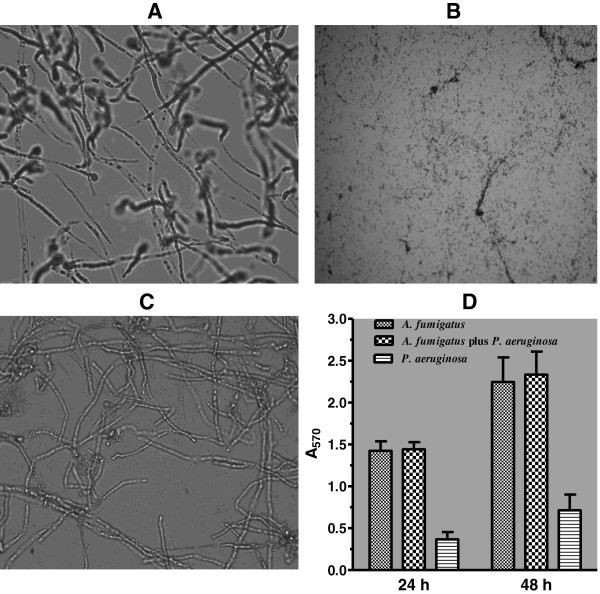
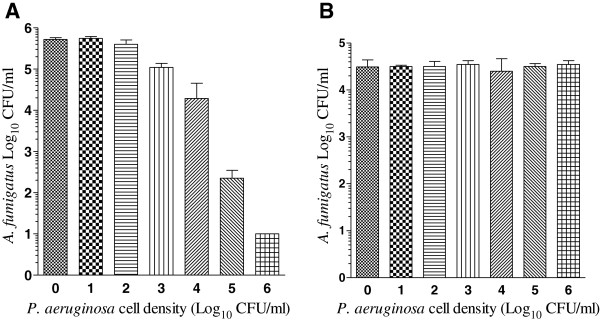
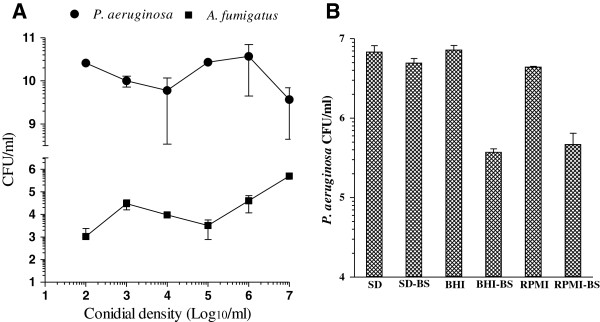
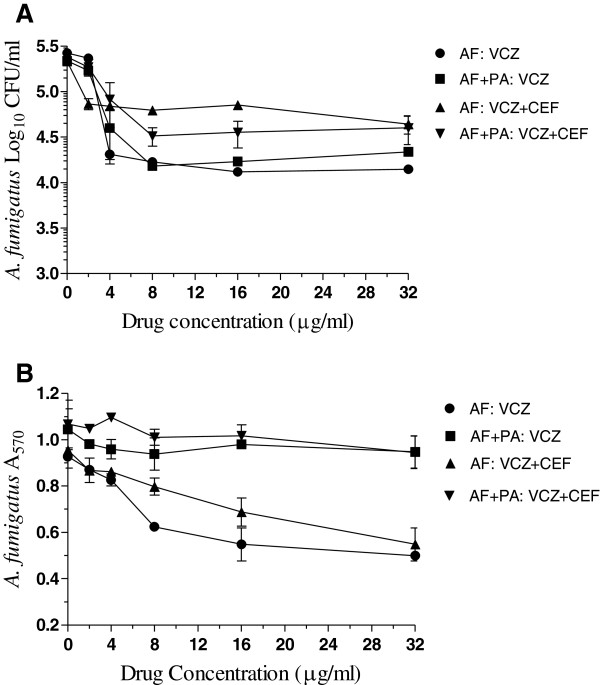
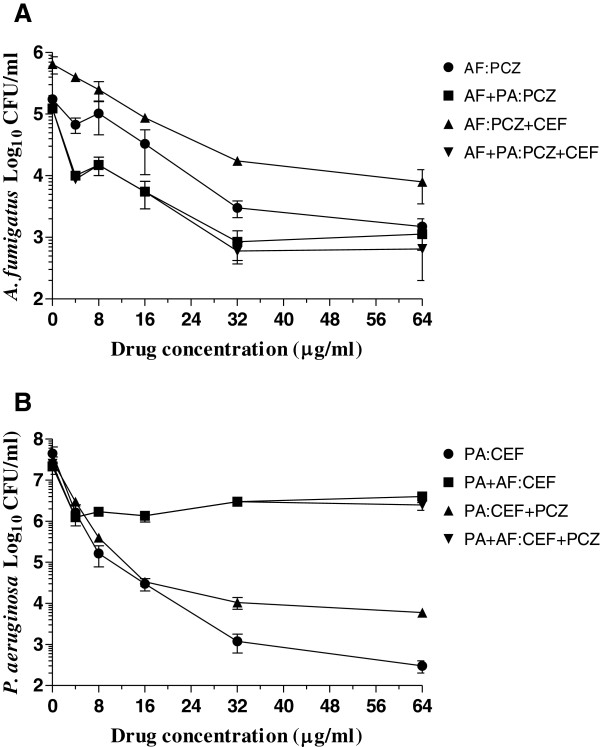
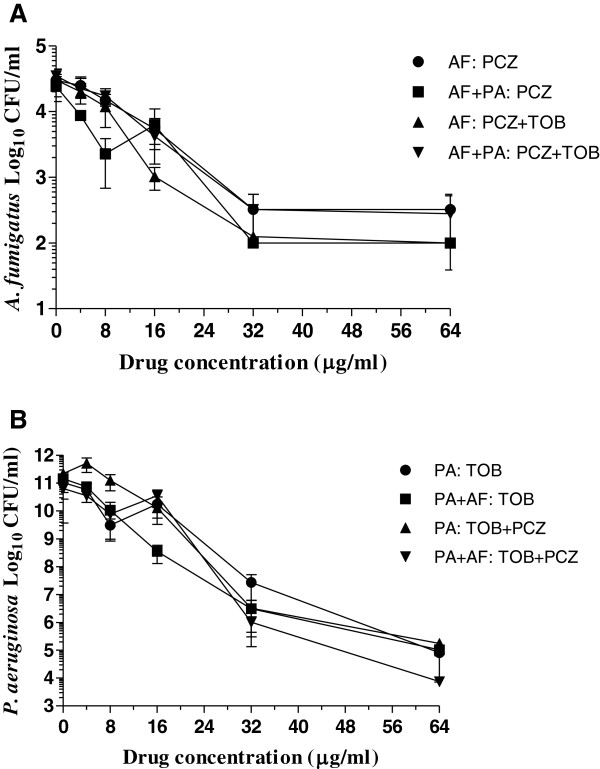
Background: Mixed microbial infections of the respiratory tracts with P. aeruginosa and A. fumigatus capable of producing biofilms are commonly found in cystic fibrosis patients. The primary objective of this study was to develop an in vitro model for P. aeruginosa and A. fumigatus polymicrobial biofilm to study the efficacy of various antimicrobial drugs alone and in combinations against biofilm-embedded cells. Simultaneous static cocultures of P. aeruginosa and sporelings were used for the development of in vitro P. aeruginosa-A. fumigatus polymicrobial biofilm in SD broth in 24-well cell culture plates at 35°C, and the biofilm formation was monitored microscopically and spectrophotometrically. Using P. aeruginosa-A. fumigatus sporelings cocultures we examined the effects of various antimicrobial drugs alone and in combination against polymicrobial biofilm by CFU and tetrazolium reduction assays. Results: In simultaneous static cocultures P. aeruginosa cells killed A. fumigatus conidia, whereas the bacterial cells showed no substantial fungicidal effect on sporelings grown for 12 h or longer at 35°C. Monospecies cultures of P. aeruginosa produced loosely adhered monomicrobial biofilm and addition of 10% bovine serum to the growth medium inhibited the formation of monomicrobial biofilm by P. aeruginosa whereas it produced tightly adhered polymicrobial biofilm in the presence of A. fumigatus mycelial growth.A. fumigatus produced firmly adherent monomicrobial and polymicrobial biofilms. A comparison of CFU and MTT assays showed that the latter is unsuitable for studying the effectiveness of antimicrobial treatment against polymicrobial biofilm. Tobramycin alone and in combination with posaconazole was highly effective against monomicrobial and polymicrobial biofilms of P. aeruginosa whereas cefepime alone and in combination with posaconazole showed excellent activity against monomicrobial biofilm of P. aeruginosa but was less effective against polymicrobial biofilm. Monomicrobial and polymicrobial biofilms of A. fumigatus showed similar susceptibility to posaconazole with and without the antibacterial drug. Conclusions: Simultaneous static coculture of A. fumigatus sporelings grown for 12 h or longer was superior to ungerminated conidia with P. aeruginosa for the development of A. fumigatus-P. aeruginosa biofilm.P. aeruginosa-A. fumigatus polymicrobial biofilm shows differential susceptibility to antimicrobial drugs whereas the susceptibility of A. fumigatus to antimicrobial drugs was unchanged.
Overview
The claims and statistics of this paper haven’t been checked yet.
Free: it reads the open-access text and checks the first 5 claims that cite a source we can check. Create a free account to check every claim.
Integrity signals
Registry
Cites
Statistics
Figures
Verification
Claims the paper makes
The claims and statistics of this paper haven’t been checked yet.
Free: it reads the open-access text and checks the first 5 claims that cite a source we can check. Create a free account to check every claim.
Claims other papers make about this one
Each is checked against this paper’s own text: does it say what the citing paper says it does?
In the citing paper
“Most studies have found that these bacterial molecules inhibit the fungal biofilm (573–576).”
From Aspergillus fumigatus and Aspergillosis in 2019 (2019) · cites this paper as [573]
Self-check
Percentages, sums and reported differences re-computed from the paper’s own numbers.
The self-check needs the paper’s full text.
Citations
Cites
Mechanisms of biofilm resistance to antimicrobial agents
Mah, T.-F. C., & O'Toole, G. A. (2001) · Trends in Microbiology · doi:10.1016/s0966-842x(00)01913-2 · Cited by 3,921 · cited 1×
“aeruginosa is a well known biofilm producer both in the laboratory and in clinical settings, especially in chronic infections [51-59].”
BackgroundAntibiotic resistance of bacterial biofilms
Høiby, N., Bjarnsholt, T., Givskov, M., Molin, S., & Ciofu, O. (2010) · International Journal of Antimicrobial Agents · doi:10.1016/j.ijantimicag.2009.12.011 · Cited by 3,225 · cited 1×
“The biofilm-embedded cells are highly resistant to antimicrobial drug therapy [37-40], difficult to eradicate and often develop chronic infection that acts as a reservoir causing serious life-threatening infection in individuals with debilitated immune function.”
BackgroundPseudomonas biofilm formation and antibiotic resistance are linked to phenotypic variation
Drenkard, E., & Ausubel, F. M. (2002) · Nature · doi:10.1038/416740a · Cited by 997 · cited 1×
“aeruginosa is a well known biofilm producer both in the laboratory and in clinical settings, especially in chronic infections [51-59].”
BackgroundAnalysis of the lung microbiome in the “healthy” smoker and in COPD.
Erb-Downward, J. R., Thompson, D. L., Han, M. K., Freeman, C. M., McCloskey, L., Schmidt, L. A., Young, V. B., Toews, G. B., Curtis, J. L., Sundaram, B., et al. (2011) · PLoS ONE · doi:10.1371/journal.pone.0016384 · Cited by 973
Biofilm bacteria: formation and comparative susceptibility to antibiotics.
Olson, M. E., Ceri, H., Morck, D. W., Buret, A. G., & Read, R. R. (2002) · Europe PMC (PubMed Central) · Cited by 918
The Changing Microbial Epidemiology in Cystic Fibrosis
LiPuma, J. J. (2010) · Clinical Microbiology Reviews · doi:10.1128/cmr.00068-09 · Cited by 806 · cited 1×
“The epidemiology and clinical significance of Aspergillus infection in cystic fibrosis patients have been recently reviewed [25-27].”
BackgroundMulcahy, L. R., Burns, J. L., Lory, S., & Lewis, K. (2010) · Journal of Bacteriology · doi:10.1128/jb.01651-09 · Cited by 631 · cited 1×
“aeruginosa is a well known biofilm producer both in the laboratory and in clinical settings, especially in chronic infections [51-59].”
BackgroundThe Lung Tissue Microbiome in Chronic Obstructive Pulmonary Disease
Sze, M. A., Dimitriu, P. A., Hayashi, S., Elliott, W. M., McDonough, J. E., Gosselink, J. V., Cooper, J., Sin, D. D., Mohn, W. W., & Hogg, J. C. (2012) · American Journal of Respiratory and Critical Care Medicine · doi:10.1164/rccm.201111-2075oc · Cited by 552 · cited 1×
“Background Polymicrobial infection caused by multiple species of microorganisms belonging to markedly different taxonomic groups is a common occurrence in severely immunocompromised patients [1-5] as well as in individuals suffering from persistent diabetic wounds [6-9], chronic pulmonary obstructive disease [10-13],…”
BackgroundOur Current Understanding of Fungal Biofilms
Ramage, G., Mowat, E., Jones, B., Williams, C., & Lopez-Ribot, J. (2009) · Critical Reviews in Microbiology · doi:10.3109/10408410903241436 · Cited by 483 · cited 1×
“antimicrobial drugs and microbiocidal agents while the individual cells of the biofilm community are highly drug susceptible in planktonic cultures [38,40,42,60,61].”
BackgroundThe lung microbiome in moderate and severe chronic obstructive pulmonary disease
Pragman, A. A., Kim, H. B., Reilly, C. S., Wendt, C., & Isaacson, R. E. (2012) · PLoS ONE · doi:10.1371/journal.pone.0047305 · Cited by 437
Research works printed but not linked: 2
- Foundation CF Patient Registry 2008: Annual Data Report to the Center Directors 2008 Bethesda, MD: Cystic Fibrosis Foundation
- Software SC SPOT Basic Software User Guide (Version 4.7) 2008, SPOT Imaging Solutions, A Division of Diagnostic Instruments, Inc Sterling Heights, MI 48314, USA
Cited by
Aspergillus fumigatus and Aspergillosis in 2019
Latgé, J.-P., & Chamilos, G. (2019) · Clinical Microbiology Reviews · doi:10.1128/cmr.00140-18 · Cited by 1,400
Fungal Biofilms and Polymicrobial Diseases
Costa-Orlandi, C., Sardi, J., Pitangui, N., De Oliveira, H., Scorzoni, L., Galeane, M., Medina-Alarcón, K., Melo, W., Marcelino, M., Braz, J., et al. (2017) · Journal of Fungi · doi:10.3390/jof3020022 · Cited by 231
“[108] when using MTT to determine the effects of antimicrobials on polymicrobial biofilms of A.”
BackgroundMethodPolymicrobial Infections and Biofilms: Clinical Significance and Eradication Strategies
Anju, V. T., Busi, S., Imchen, M., Kumavath, R., Mohan, M. S., Salim, S. A., Subhaswaraj, P., & Dyavaiah, M. (2022) · Antibiotics · doi:10.3390/antibiotics11121731 · Cited by 177
“Thus, the in vitro biofilm static model enabled studies of the effect of antibiotics and combinations thereof (cefepime, tobramycin and posaconazole) [101].”
BackgroundBiofilms: Microbial Shelters Against Antibiotics
Hathroubi, S., Mekni, M. A., Domenico, P., Nguyen, D., & Jacques, M. (2017) · Microbial Drug Resistance · doi:10.1089/mdr.2016.0087 · Cited by 167
“83 Biofilm matrices and EPS that sequester antibiotics may confer cross-species shelter.”
Bacterial Adaptation during Chronic Respiratory Infections
Cullen, L., & McClean, S. (2015) · Pathogens · doi:10.3390/pathogens4010066 · Cited by 159
“fumigatus biofilm structure alone [113].”
Metadata
- Authors
- Manavathu, E. K., Vager, D. L., & Vazquez, J. A.
- Affiliations
- Augusta University (US)
- Henry Ford Hospital (US)
- Venue
- BMC Microbiology
- Published
- 2014-03-03
- Volume
- 14
- Issue
- 1
- Pages
- 53-53
- ISSN
- 1471-2180 (ISSN-L)
- PMC
- PMC3973989
- OpenAlex
- W2088330635
- Cited by
- 80
- References
- 70
- Citations by year
- 2025: 3 · 2024: 5 · 2023: 11 · 2022: 7 · 2021: 7 · 2020: 5 · 2019: 9 · 2018: 4 · 2017: 11 · 2016: 9 · 2015: 7 · 2014: 2
- FWCI
- 3.96
- Type
- journal article
- Language
- en
- Open access
- gold
- doi.org
- Licence
- cc-by
- Locations
- BMC Microbiology (publishedVersion, cc-by)
- Europe PMC (PubMed Central) (publishedVersion, cc-by)
- PubMed Central (publishedVersion, cc-by)
- PubMed (publishedVersion)
- Topics
- Life Sciences › Biochemistry, Genetics and Molecular Biology › Molecular Biology › Bacterial biofilms and quorum sensing
- Health Sciences › Medicine › Infectious Diseases › Antifungal resistance and susceptibility
- Health Sciences › Medicine › Pulmonary and Respiratory Medicine › Cystic Fibrosis Research Advances
- Keywords
- Aspergillus fumigatus, Pseudomonas aeruginosa, polymicrobial biofilms, cystic fibrosis, in vitro biofilm model, antimicrobial susceptibility, posaconazole, tobramycin, cefepime, bovine serum, biofilm dispersal
- MeSH terms
- Anti-Bacterial Agents, Aspergillus fumigatus, Microbial Sensitivity Tests, Microscopy, Pseudomonas aeruginosa, Spectrophotometry, Staining and Labeling, Tetrazolium Salts, Thiazoles, Colony Count, Microbial, Biofilms, Microbial Viability
About these checks
Registry, retraction, Cites and statistics results are computed, not judged, with one exception: a printed reference that no index lists is read once by a model before it counts as a citation error. Claims are extracted by a model and kept only when their quote appears verbatim in the text; each cited source is then checked, with a model’s help, for whether it says what the claim relies on. Those verdicts can be wrong — read the claim’s quote and the cited source before relying on one.
Statistics and arithmetic are recomputed, not judged.
Confidence bands are shown only for fields calibrated on our annotated test set. None is calibrated yet, so no band is shown.
What counts as a claim ›How we measure confidence ›How we check this ›
Are you an author, or do you see a problem with this page? Request a review
How to cite
Cite CoChat for the checks on this page, and the paper for its own findings.
- This page
- CoChat. (2026). Citation check: Development and antimicrobial susceptibility studies of in vitro monomicrobial and polymicrobial biofilm models with Aspergillus fumigatus and Pseudomonas aeruginosa. https://app.cochat.ai/papers/10.1186/1471-2180-14-53
- The paper
- Manavathu, E. K., Vager, D. L., & Vazquez, J. A. (2014). Development and antimicrobial susceptibility studies of in vitro monomicrobial and polymicrobial biofilm models with Aspergillus fumigatus and Pseudomonas aeruginosa. BMC Microbiology. https://doi.org/10.1186/1471-2180-14-53
Data sources
Bibliographic data: Semantic Scholar, OpenAlex, Crossref.
Contains information from the Semantic Scholar Academic Graph Datasets, made available under the ODC Attribution License (ODC-BY 1.0).
Semantic Scholar’s data is described in: Kinney, R., et al. (2023). The Semantic Scholar Open Data Platform. arXiv:2301.10140.
