

Amygdala temporal dynamics: temperamental differences in the timing of amygdala response to familiar and novel faces
Open accessThe DOI matches its Crossref record; 40 of the 40 references it cites were found in a registry or an index.
Abstract
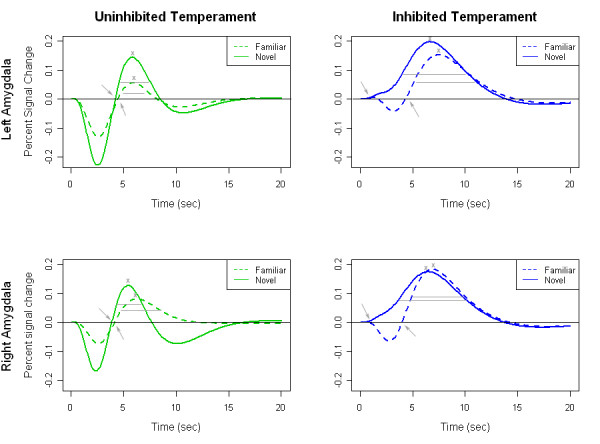
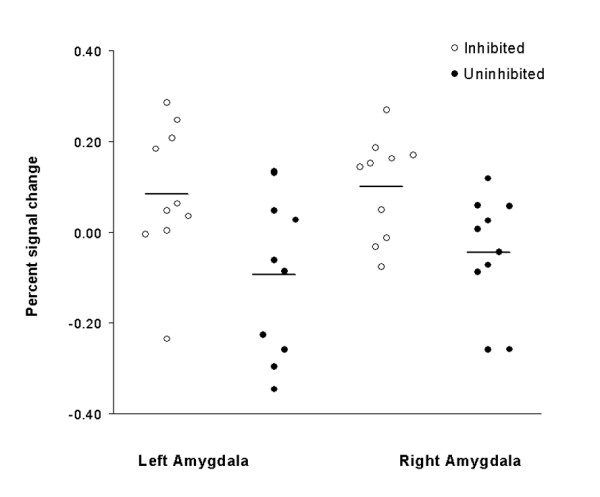
BACKGROUND: Inhibited temperament - the predisposition to respond to new people, places or things with wariness or avoidance behaviors - is associated with increased risk for social anxiety disorder and major depression. Although the magnitude of the amygdala's response to novelty has been identified as a neural substrate of inhibited temperament, there may also be differences in temporal dynamics (latency, duration, and peak). We hypothesized that persons with inhibited temperament would have faster responses to novel relative to familiar neutral faces compared to persons with uninhibited temperament. We used event-related functional magnetic resonance imaging to measure the temporal dynamics of the blood oxygen level dependent (BOLD) response to both novel and familiar neutral faces in participants with inhibited or uninhibited temperament. RESULTS: Inhibited participants had faster amygdala responses to novel compared with familiar faces, and both longer and greater amygdala response to all faces. There were no differences in peak response. CONCLUSION: Faster amygdala response to novelty may reflect a computational bias that leads to greater neophobic responses and represents a mechanism for the development of social anxiety.
Overview
The claims and statistics of this paper haven’t been checked yet.
Free: it reads the open-access text and checks the first 5 claims that cite a source we can check. Create a free account to check every claim.
Integrity signals
Registry
Cites
Statistics
Figures
Verification
Claims the paper makes
The claims and statistics of this paper haven’t been checked yet.
Free: it reads the open-access text and checks the first 5 claims that cite a source we can check. Create a free account to check every claim.
Claims other papers make about this one
Each is checked against this paper’s own text: does it say what the citing paper says it does?
The source backs part of the claim, not all of it — or backs it for a different population, condition or comparison.
In the citing paper
“Studies of young adults who were inhibited as children demonstrate that behavioral inhibition is associated with amygdala hyperactivity111–114,117 and dmPFC hypoactivity117”
From Neural Substrates of Childhood Anxiety Disorders (2012) · cites this paper as [111]
Experimental — accuracy not yet measured
Self-check
Percentages, sums and reported differences re-computed from the paper’s own numbers.
The self-check needs the paper’s full text.
Citations
Cites
The assessment and analysis of handedness: The Edinburgh inventory
Oldfield, R. C. (1971) · Neuropsychologia · doi:10.1016/0028-3932(71)90067-4 · Cited by 35,900 · cited 1×
“7 years (SD = 3 years), were approximately half female (60%), predominantly right-handed [90%; [23]], and represented several ethnic groups.”
BackgroundTzourio-Mazoyer, N., Landeau, B., Papathanassiou, D., Crivello, F., Etard, O., Delcroix, N., Mazoyer, B., & Joliot, M. (2002) · NeuroImage · doi:10.1006/nimg.2001.0978 · Cited by 16,319 · cited 1×
“The bilateral amygdala regions of interest (ROI) were defined using the anatomical amygdala templates based on Automated Anatomical Labeling [AAL; [33]] imple-”
MethodStatistical parametric maps in functional imaging: A general linear approach
Friston, K. J., Holmes, A. P., Worsley, K. J., Poline, J. ‐., Frith, C. D., & Frackowiak, R. S. J. (1994) · Human Brain Mapping · doi:10.1002/hbm.460020402 · Cited by 9,688 · cited 1×
“The participant-specific general linear model [30] was estimated using both face types (novel and familiar) as regressors.”
MethodMaldjian, J. A., Laurienti, P. J., Kraft, R. A., & Burdette, J. H. (2003) · NeuroImage · doi:10.1016/s1053-8119(03)00169-1 · Cited by 5,085 · cited 1×
“mented in the WFU Pick Atlas [Version 2.4; [ 34 ]].”
MethodInfluentialGray, J. A. (1982) · Behavioral and Brain Sciences · doi:10.1017/s0140525x00013066 · Cited by 4,477 · cited 1×
“Most models of temperament include a construct related to distress and avoidance [e.g., [ 1-5 ]].”
The Structured Clinical Interview for DSM-III-R (SCID): I: History, Rationale, and Description
Spitzer, R. L. (1992) · Archives of General Psychiatry · doi:10.1001/archpsyc.1992.01820080032005 · Cited by 4,336
A Systematic Method for Clinical Description and Classification of Personality Variants: A Proposal
Cloninger, C. R. (1987) · Archives of General Psychiatry · doi:10.1001/archpsyc.1987.01800180093014 · Cited by 3,678 · cited 1×
“, [1-5]].”
The amygdala: vigilance and emotion
Davis, M., & Whalen, P. J. (2001) · Molecular Psychiatry · doi:10.1038/sj.mp.4000812 · Cited by 2,882 · cited 1×
“Faster amygdala responses may reflect a bias for detecting novelty and potential threat [19,20].”
BackgroundRegion of interest analysis using an SPM toolbox
Brett, M. (2002) · NeuroImage · Cited by 2,273
(2016) · The SAGE Encyclopedia of Contemporary Early Childhood Education · doi:10.4135/9781483340333.n409 · Cited by 2,185
Research works printed but not linked: 1
- Matsumoto D Ekman P Japanese and Caucasian Facial Expressions of Emotion (JACFEE) and Japanese and Caucasian Neutral Faces (JACNeuF) 1998 San Francisco, CA, Intercultural and Emotion Research Laboratory, Department of Psychology, San Francisco State University
Cited by
Behavioral Inhibition and Risk for Developing Social Anxiety Disorder: A Meta-Analytic Study
Clauss, J. A., & Blackford, J. U. (2012) · Journal of the American Academy of Child & Adolescent Psychiatry · doi:10.1016/j.jaac.2012.08.002 · Cited by 573
Self-citationOkon-Singer, H., Hendler, T., Pessoa, L., & Shackman, A. J. (2015) · Frontiers in Human Neuroscience · doi:10.3389/fnhum.2015.00058 · Cited by 371
“…in emotional recovery (a) strongly predict personality traits, such as neuroticism, that confer increased risk of developing psychopathology (e.g., Blackford et al., 2009; Schuyler et al., 2014); and (b) are sensitive to adversity and chronic stress exposure, two other well-established risk…”
BackgroundDevelopment of anxiety: the role of threat appraisal and fear learning
Britton, J. C., Lissek, S., Grillon, C., Norcross, M. A., & Pine, D. S. (2011) · Depression and Anxiety · doi:10.1002/da.20733 · Cited by 279
“As with other work linking anxiety to amygdala responding, research on novelty demonstrates different amygdala response patterns in behaviorally inhibited and noninhibited individuals.([52,53]) These temperamental differences may reflect difficulties in resolving ambiguity in novel stimuli.”
BackgroundDispositional negativity: An integrative psychological and neurobiological perspective.
Shackman, A. J., Tromp, D. P. M., Stockbridge, M. D., Kaplan, C. M., Tillman, R. M., & Fox, A. S. (2016) · Psychological Bulletin · doi:10.1037/bul0000073 · Cited by 234
Fox, A. S., & Kalin, N. H. (2014) · American Journal of Psychiatry · doi:10.1176/appi.ajp.2014.14040449 · Cited by 161
“demonstrated that highly inhibited young adults show faster amygdala responding (46), prolonged and exaggerated amygdala reactivity (47; 48), decreased amygdala habituation (49), and increased amygdala volume (50).”
Neural Substrates of Childhood Anxiety Disorders
Blackford, J. U., & Pine, D. S. (2012) · Child and Adolescent Psychiatric Clinics of North America · doi:10.1016/j.chc.2012.05.002 · Cited by 138
Self-citationA phenotype of early infancy predicts reactivity of the amygdala in male adults
Schwartz, C. E., Kunwar, P. S., Greve, D. N., Kagan, J., Snidman, N. C., & Bloch, R. B. (2012) · Molecular Psychiatry · doi:10.1038/mp.2011.96 · Cited by 131
“A second repeated-measures GLM with infant phenotype (high-reactive, low-reactive) and gender (female, male) as the between-group factors and face type (novel, familiar), and time block (1,2,3,4) as within- group factors, was performed on functional data from the second phase of the protocol in which alternating Novel…”
MethodHuman Amygdala Represents the Complete Spectrum of Subjective Valence
Jin, J., Zelano, C., Gottfried, J. A., & Mohanty, A. (2015) · Journal of Neuroscience · doi:10.1523/jneurosci.2450-15.2015 · Cited by 120
Cortico-Limbic Interactions Mediate Adaptive and Maladaptive Responses Relevant to Psychopathology
Kovner, R., Oler, J. A., & Kalin, N. H. (2019) · American Journal of Psychiatry · doi:10.1176/appi.ajp.2019.19101064 · Cited by 102
Amygdala and hippocampus fail to habituate to faces in individuals with an inhibited temperament
Blackford, J. U., Allen, A. H., Cowan, R. L., & Avery, S. N. (2013) · Social Cognitive and Affective Neuroscience · doi:10.1093/scan/nsr078 · Cited by 98
“Consistent with other studies (Schwartz et al., 1999; Blackford et al., 2009), inhibited participants had higher rates of current internalizing disorders compared to the uninhibited group.”
ResultSelf-citationFu, X., Taber-Thomas, B. C., & Pérez-Edgar, K. (2017) · Biological Psychology · doi:10.1016/j.biopsycho.2015.08.010 · Cited by 93
Heller, A. S., & Casey, B. J. (2016) · Developmental Science · doi:10.1111/desc.12373 · Cited by 92
Clauss, J. A., Avery, S. N., & Blackford, J. U. (2015) · Progress in Neurobiology · doi:10.1016/j.pneurobio.2015.03.001 · Cited by 103
Self-citationFu, X., & Pérez‐Edgar, K. E. (2018) · Developmental Review · doi:10.1016/j.dr.2018.11.002 · Cited by 98
Shackman, A. J., Stockbridge, M. D., Tillman, R. M., Kaplan, C. M., Tromp, D., Fox, A. S., & Gamer, M. (2016) · Journal of Experimental Psychopathology · doi:10.5127/jep.054015 · Cited by 94
Blackford, J. U., Avery, S. N., Cowan, R. L., Shelton, R. C., & Zald, D. H. (2011) · Social Cognitive and Affective Neuroscience · doi:10.1093/scan/nsq073 · Cited by 70
Self-citationAmygdala–cingulate intrinsic connectivity is associated with degree of social inhibition
Blackford, J. U., Clauss, J. A., Avery, S. N., Cowan, R. L., Benningfield, M. M., & VanDerKlok, R. M. (2014) · Biological Psychology · doi:10.1016/j.biopsycho.2014.02.003 · Cited by 67
“…of human neuroimaging studies of social inhibition have relied on tasks designed to elicit brain responses to salient stimuli, such as novel or threatening human faces (Beaton et al., 2008; Blackford et al., 2011, 2009; Pérez-Edgar et al., 2007; Schwartz et al, 2003b; Schwartz et al., 2012).”
BackgroundSelf-citationTime Perception Distortion in Neuropsychiatric and Neurological Disorders
Teixeira, S. S., Machado, S. E. D. C., Paes, F., Velasques, B., Silva, J., Sanfim, A., Minc, D., Anghinah, R., Menegaldo, L. L., Salama, M., et al. (2013) · CNS & Neurological Disorders - Drug Targets · doi:10.2174/18715273113129990080 · Cited by 83
“[76] investigated patients with social anxiety disorder (SAD) in order to verify the timing of amygdala response characterized by latency, duration and peak using event-related functional magnetic resonance imaging when patients compared novel to familiar neutral faces.”
MethodApproach, avoidance, and the detection of conflict in the development of behavioral inhibition
Barker, T. V., Buzzell, G. A., & Fox, N. A. (2018) · New Ideas in Psychology · doi:10.1016/j.newideapsych.2018.07.001 · Cited by 71
Shyness and the first 100 ms of emotional face processing
Jetha, M. K., Zheng, X., Schmidt, L. A., & Segalowitz, S. J. (2011) · Social Neuroscience · doi:10.1080/17470919.2011.581539 · Cited by 67
“In line with this idea, a number of studies using various methods have demonstrated heightened vigilance to threat-related information, including threat-related faces, in individuals who exhibit disorders characterized by dysregulation of the fear system; that is, general anxiety (Britton et al, 2011 ), social anxiety…”
Caulfield, M. D., Zhu, D. C., McAuley, J. D., & Servatius, R. J. (2015) · Brain Structure and Function · doi:10.1007/s00429-015-1088-6 · Cited by 53
“Previous research indicates that individuals with behavioral inhibition may react differently to novel situations, people, or stimuli (Blackford et al. 2009; Clauss et al. 2015).”
BackgroundClauss, J. A., Avery, S. N., VanDerKlok, R. M., Rogers, B. P., Cowan, R. L., Benningfield, M. M., & Blackford, J. U. (2014) · Depression and Anxiety · doi:10.1002/da.22265 · Cited by 51
Self-citationSlow to warm up: the role of habituation in social fear
Avery, S. N., & Blackford, J. U. (2016) · Social Cognitive and Affective Neuroscience · doi:10.1093/scan/nsw095 · Cited by 50
“Preliminary evidence from our lab suggests that both amplitude and duration of response are disrupted in inhibited temperament (Blackford et al., 2009).”
BackgroundSelf-citationHuman amygdala response to dynamic facial expressions of positive and negative surprise.
Vrtička, P., Lordier, L., Bediou, B., & Sander, D. (2013) · Emotion · doi:10.1037/a0034619 · Cited by 49
“…accumulates to suggest that the amygdala plays a key role in the processing of novel stimuli (e.g., Balderston, Schultz, & Helmstetter, 2011; Blackford, Avery, Shelton, & Zald, 2009; Weierich, Wright, Negreira, Dickerson, & Barrett, 2010), only little is known about the role of the amygdala…”
Altered timing of amygdala activation during sad mood elaboration as a function of 5-HTTLPR
Furman, D. J., Hamilton, J. P., Joormann, J., & Gotlib, I. H. (2011) · Social Cognitive and Affective Neuroscience · doi:10.1093/scan/nsq029 · Cited by 40
Kenkel, W. M., Yee, J. R., Moore, K., Madularu, D., Kulkarni, P., Gamber, K., Nedelman, M., & Ferris, C. F. (2016) · Translational Psychiatry · doi:10.1038/tp.2016.15 · Cited by 39
Figel, B., Brinkmann, L., Buff, C., Heitmann, C. Y., Hofmann, D., Bruchmann, M., Becker, M. P. I., Herrmann, M. J., & Straube, T. (2019) · NeuroImage: Clinical · doi:10.1016/j.nicl.2019.101735 · Cited by 38
“…present findings provide preliminary evidence for SAD specific BNST responding to threat anticipation suggesting a fast salience detection reaction (Blackford et al., 2009; Kim and Yoon, 2017) mediated by phasic BNST and CeA responses following threat-indicating cues but a less pronounced…”
Edmiston, E. K., & Blackford, J. U. (2013) · Psychiatry Research Neuroimaging · doi:10.1016/j.pscychresns.2012.11.009 · Cited by 45
Self-citationAltered Prefrontal Cortex Function Marks Heightened Anxiety Risk in Children
Clauss, J. A., Benningfield, M. M., Rao, U., & Blackford, J. U. (2016) · Journal of the American Academy of Child & Adolescent Psychiatry · doi:10.1016/j.jaac.2016.05.024 · Cited by 41
Self-citationNonhuman Primate Models to Explore Mechanisms Underlying Early-Life Temperamental Anxiety
Kenwood, M. M., & Kalin, N. (2020) · Biological Psychiatry · doi:10.1016/j.biopsych.2020.08.028 · Cited by 29
Neuroimaging the temporal dynamics of human avoidance to sustained threat
Schlund, M. W., Hudgins, C. D., Magee, S., & Dymond, S. (2013) · Behavioural Brain Research · doi:10.1016/j.bbr.2013.09.042 · Cited by 33
“We employed a whole-brain temporal assessment of activation modeled after approaches used in neurophysiological research on fear [31], pain [33], psychiatric dysfunction [34], working memory [35], approach-avoidance learning [29] and emotional responses [36,37].”
MethodClauss, J. A., Cowan, R. L., & Blackford, J. U. (2011) · Cognitive, Affective, & Behavioral Neuroscience · doi:10.3758/s13415-010-0007-9 · Cited by 34
“The use of two extreme groups is based on the original description of inhibited temperament and is commonly used in studies of this temperament trait (Blackford et al., 2009; Guyer et al., 2006; Perez-Edgar et al., 2007; Schwartz et al., 2003a; BarHaim et al., 2009; Beaton et al., 2008).”
BackgroundResultInfluentialSelf-citationChristian, C., & Levinson, C. A. (2022) · New Ideas in Psychology · doi:10.1016/j.newideapsych.2022.100964 · Cited by 33
Karim, H. T., & Perlman, S. B. (2017) · Human Brain Mapping · doi:10.1002/hbm.23742 · Cited by 31
“…the neural underpinnings of anxious temperament in humans and primates has generally centered upon the amygdala as a region of interest [Blackford et al., 2009, 2011, 2014; Fox et al., 2008; Oler et al., 2010; Perez-Edgar et al., 2007], whereas the literature investigating irritability…”
BackgroundShyness and emotional face processing in schizophrenia: An ERP study
Jetha, M. K., Zheng, X., Goldberg, J. O., Segalowitz, S. J., & Schmidt, L. A. (2013) · Biological Psychology · doi:10.1016/j.biopsycho.2013.10.001 · Cited by 32
Enhanced avoidance learning in behaviorally inhibited young men and women
Sheynin, J., Shikari, S., Gluck, M. A., Moustafa, A. A., Servatius, R. J., & Myers, C. E. (2012) · Stress · doi:10.3109/10253890.2012.744391 · Cited by 32
“Given the prior literature linking BI with brain substrates including cerebellum, amygdala and hippocampus (e.g., Blackford et al., 2012; Blackford et al., 2009), an interesting direction for future work would be to explore brain activation in inhibited vs.”
An Honest Reckoning With the Amygdala and Mental Illness
Fox, A. S., & Shackman, A. J. (2024) · American Journal of Psychiatry · doi:10.1176/appi.ajp.20240941 · Cited by 35
Lages, Y., & McNaughton, N. (2022) · Personality Neuroscience · doi:10.1017/pen.2022.4 · Cited by 29
Connecting Childhood Wariness to Adolescent Social Anxiety through the Brain and Peer Experiences
Jarcho, J. M., Grossman, H., Guyer, A. E., Quarmley, M., Smith, A. R., Fox, N. A., Leibenluft, E., Pine, D. S., & Nelson, E. E. (2019) · Research on Child and Adolescent Psychopathology · doi:10.1007/s10802-019-00543-4 · Cited by 30
“Prior studies have shown that wariness and associated temperamental traits in early childhood predict heightened amygdala response to novelty, particularly in the social domain (e.g., Blackford et al. 2009; Schwartz et al. 2012).”
BackgroundBehavioral and neural indices of affective coloring for neutral social stimuli
Grupe, D. W., Schaefer, S. M., Lapate, R. C., Schoen, A. J., Gresham, L. K., Mumford, J. A., & Davidson, R. J. (2018) · Social Cognitive and Affective Neuroscience · doi:10.1093/scan/nsy011 · Cited by 29
“…chronometry are critical for both positive well-being (Davidson 2004; Heller et al. 2013; Schaefer et al. 2013) and risk of psychopathology (Blackford et al. 2009; Burke et al. 2005; Dichter and Tomarken 2008; Lapate et al. 2014; Larson et al. 2006; Schuyler et al. 2014; Siegle et al.…”
BackgroundHolloway, J. L., Trivedi, P., Myers, C. E., & Servatius, R. J. (2012) · Frontiers in Behavioral Neuroscience · doi:10.3389/fnbeh.2012.00076 · Cited by 22
“The latter possibility is likely for anxiety vulnerable individuals, given evidence of enhanced reactivity and vigilance to environmental stimuli (Blackford et al., 2009).”
BackgroundPrenatal stress and enhanced developmental plasticity
Hartman, S., & Belsky, J. (2018) · Journal of Neural Transmission · doi:10.1007/s00702-018-1926-9 · Cited by 28
Clauss, J. A. (2019) · General Psychiatry · doi:10.1136/gpsych-2019-100137 · Cited by 30
“39 57 Early neuroimaging studies found that behavioural inhibition was associated with a faster, 58 larger 50 59 and more sustained 58 amygdala response to novel social stimuli.”
BackgroundFocusing on the Possible Role of the Cerebellum in Anxiety Disorders
Meghan, D., & Richard, J. (2013) · InTech eBooks · doi:10.5772/52954 · Cited by 28
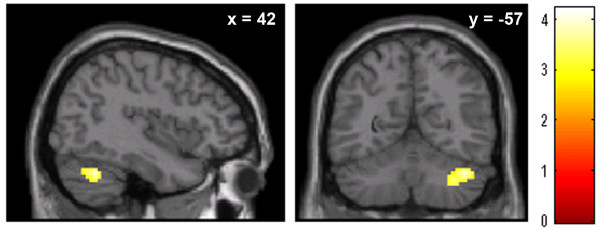
“In the only published study to date to our knowledge that discusses cerebellar activity and tempera‐ ment, Blackford and colleagues [10] compared behaviorally inhibited to uninhibited individ‐ uals when viewing familiar and novel faces and found significant increases in BOLD activation in the right cerebellum of the i…”
BackgroundThe Neurobiology of Behavioral Inhibition as a Developmental Mechanism
Blackford, J. U., Clauss, J. A., & Benningfield, M. M. (2018) · Springer eBooks · doi:10.1007/978-3-319-98077-5_6 · Cited by 22
Self-citationLi, Y., Jinchuan, Y., Dongqing, W., Meifang, S., Yan, Z., Xiaolan, Z., Ping, J., Ruigen, Y., & Zhao, L. (2014) · Chinese Medical Journal · doi:10.3760/cma.j.issn.0366-6999.20132974 · Cited by 16
“facilitate hippocampal-dependent learning was echoed in neuroimaging studies performed on humans that have revealed a significant correlation between the activation of the amygdala and the hippocampus during the successful encoding of affective stimuli.(11)”
Temporal dynamics of affect in the brain: Evidence from human imaging and animal models
Puccetti, N. A., Villano, W. J., Fadok, J. P., & Heller, A. S. (2021) · Neuroscience & Biobehavioral Reviews · doi:10.1016/j.neubiorev.2021.12.014 · Cited by 22
Parsaei, M., Hasehmi, S. M., Seyedmirzaei, H., Cattarinussi, G., Sambataro, F., Brambilla, P., & Delvecchio, G. (2024) · Journal of Affective Disorders · doi:10.1016/j.jad.2024.01.118 · Cited by 18
Pedersen, W. S., Dean, D., Adluru, N., Gresham, L. K., Lee, S. D., Kelly, M. P., Mumford, J. A., Davidson, R. J., & Schaefer, S. M. (2022) · Emotion · doi:10.1037/emo0000996 · Cited by 15
Two types of behavioral inhibition: Relations to effortful control and attention in school children
Geng, F., Hu, Y., Wang, Y., & Chen, F. (2011) · Journal of Research in Personality · doi:10.1016/j.jrp.2011.09.005 · Cited by 15
The Neural Mechanisms of Behavioral Inhibition
Jarcho, J. M., & Guyer, A. E. (2018) · Springer eBooks · doi:10.1007/978-3-319-98077-5_4 · Cited by 17
“ioral inhibition exhibited a more rapid response to novel (Blackford et al., 2009; Blackford et al., 2011) but also familiar (Blackford et al.”
BackgroundCaulfield, M. D., VanMeenen, K. M., & Servatius, R. J. (2014) · Behavioural Brain Research · doi:10.1016/j.bbr.2014.10.027 · Cited by 12
Allen, M. T., Handy, J. D., Miller, D. P., & Servatius, R. J. (2019) · Neuroscience & Biobehavioral Reviews · doi:10.1016/j.neubiorev.2019.03.003 · Cited by 12
Novelty and fear conditioning induced gene expression in high and low states of anxiety
Donley, M. P., & Rosen, J. B. (2017) · Learning & Memory · doi:10.1101/lm.044289.116 · Cited by 13
“…of the amygdala during novelty detection is also positively correlated to state and trait anxiety (Schwartz et al. 2003; Somerville et al. 2004; Blackford et al. 2009, 2011, 2013; Balderston et al. 2011, 2013), but novelty detection might also be independent of trait anxiety (Pedersen et al.…”
BackgroundInfluentialWilcox, C. E., Adinoff, B. H., Clifford, J. M., Ling, J. M., Witkiewitz, K. A., Mayer, A. R., Boggs, K. M., Eck, M., & Bogenschutz, M. P. (2020) · NeuroImage Clinical · doi:10.1016/j.nicl.2020.102162 · Cited by 12
“brain regions (Alvarez et al., 2011; Blackford et al., 2009) or what the shape of the hemodynamic function would be during this particular task.”
Trajectory of heart period to socioaffective threat in shy children
Poole, K. L., & Schmidt, L. A. (2018) · Developmental Psychobiology · doi:10.1002/dev.21774 · Cited by 8
Behavioral Inhibition: A Discrete Precursor to Social Anxiety Disorder?
Hirshfeld‐Becker, D. R., Micco, J. A., Wang, C. H., & Henin, A. (2014) · Wiley eBooks · doi:10.1002/9781118653920.ch7 · Cited by 9
Mnemonic discrimination is associated with individual differences in anxiety vulnerability
Caulfield, M. D., Vogel, A. L., Coutinho, M. R., & Kan, I. P. (2020) · Behavioural Brain Research · doi:10.1016/j.bbr.2020.113056 · Cited by 4
Behavioral Inhibition and Psychopathology in Childhood
Mumper, E. E., & Klein, D. N. (2021) · Wiley eBooks · doi:10.1002/9781119576457.ch7 · Cited by 2
Inhibited Children in a Social World: Transactional and Interactive Processes
Liu, P., McDonnell, C. G., & Hayden, E. P. (2020) · Springer eBooks · doi:10.1007/978-3-030-38877-5_5 · Cited by 1
Virtual Environment TBI Screen (VETS)
Wright, W. G., McDevitt, J. K., Tierney, R., Dumont, M., Dumont, A., & Appiah-Kubi, K. O. (2014)
Carving Out the Path to Computational Biomarkers for Mental Disorders
Sladky, R., Todeva-Radneva, A., & Lamm, C. (2023) · Neuromethods · doi:10.1007/978-1-0716-3230-7_10
Neurodevelopmental Pathways from Temperamental Fear to Anxiety
Shin, E., & Pérez‐Edgar, K. E. (2025) · Current topics in behavioral neurosciences · doi:10.1007/7854_2024_571
Structural Brain Correlates of Childhood Inhibited Temperament: An ENIGMA-Anxiety Mega-Analysis
Bas‐Hoogendam, J. M., Bernstein, R. A., Benson, B. E., Frank, S. E. C., Buss, K. A., Gunther, K. E., Pérez‐Edgar, K. E., Salum, G. A., Jackowski, A. P., Bressan, R. A., et al. (2025) · Journal of the American Academy of Child & Adolescent Psychiatry · doi:10.1016/j.jaac.2025.06.026 · Cited by 1
Self-citationGong, S., Huang, B., Pan, N., Kemp, G. J., Wang, S., Gao, B., & Gong, Q. (2026) · Neuroscience & Biobehavioral Reviews · doi:10.1016/j.neubiorev.2026.106690
Metadata
- Authors
- Blackford, J. U., Avery, S. N., Shelton, R. C., & Zald, D. H.
- Affiliations
- Vanderbilt University (US)
- Corresponding author
- Blackford, Jennifer U
- Venue
- BMC Neuroscience
- Published
- 2009-12
- Volume
- 10
- Issue
- 1
- Pages
- 145-145
- ISSN
- 1471-2202 (ISSN-L)
- PMC
- PMC2797525
- OpenAlex
- W2167180542
- Cited by
- 65
- References
- 39
- Citations by year
- 2026: 1 · 2025: 2 · 2024: 2 · 2023: 1 · 2022: 2 · 2021: 3 · 2020: 4 · 2019: 5 · 2018: 7 · 2017: 2 · 2016: 5 · 2015: 6 · 2014: 7 · 2013: 6 · 2012: 5
- FWCI
- 5.08
- Type
- journal article
- Language
- en
- Open access
- gold
- doi.org
- Licence
- cc-by
- creativecommons.org/licenses/by/2.0 (tdm)
- Locations
- BMC Neuroscience (publishedVersion, cc-by)
- PubMed Central (publishedVersion, cc-by)
- PubMed (publishedVersion)
- DOAJ (DOAJ: Directory of Open Access Journals) (submittedVersion, cc-by-sa)
- Funders
- Vanderbilt University
- Georgia Clinical and Translational Science Alliance (RR024975)
- National Institute of Mental Health (K01MH083052, MH083052, R01MH074567)
- National Center for Research Resources (RR024975, UL1RR024975)
- Topics
- Social Sciences › Psychology › Experimental and Cognitive Psychology › Anxiety, Depression, Psychometrics, Treatment, Cognitive Processes
- Life Sciences › Neuroscience › Cognitive Neuroscience › Face Recognition and Perception
- Life Sciences › Neuroscience › Cognitive Neuroscience › Memory and Neural Mechanisms
- Keywords
- inhibited temperament, amygdala, temporal dynamics, familiar faces, neophobia, social anxiety, major depressive disorder, event-related fMRI
- MeSH terms
- Adult, Amygdala, Cerebellum, Evoked Potentials, Face, Female, Humans, Magnetic Resonance Imaging, Male, Pattern Recognition, Visual, Reaction Time, Behavior Control, Young Adult
About these checks
Registry, retraction, Cites and statistics results are computed, not judged, with one exception: a printed reference that no index lists is read once by a model before it counts as a citation error. Claims are extracted by a model and kept only when their quote appears verbatim in the text; each cited source is then checked, with a model’s help, for whether it says what the claim relies on. Those verdicts can be wrong — read the claim’s quote and the cited source before relying on one.
Statistics and arithmetic are recomputed, not judged.
Confidence bands are shown only for fields calibrated on our annotated test set. None is calibrated yet, so no band is shown.
What counts as a claim ›How we measure confidence ›How we check this ›
Are you an author, or do you see a problem with this page? Request a review
Data sources
Bibliographic data: Semantic Scholar, OpenAlex, Crossref.
Contains information from the Semantic Scholar Academic Graph Datasets, made available under the ODC Attribution License (ODC-BY 1.0).
Semantic Scholar’s data is described in: Kinney, R., et al. (2023). The Semantic Scholar Open Data Platform. arXiv:2301.10140.
