

Amygdala temporal dynamics: temperamental differences in the timing of amygdala response to familiar and novel faces
Open accessThe DOI matches its Crossref record; 40 of the 40 references it cites were found in a registry or an index.
Abstract
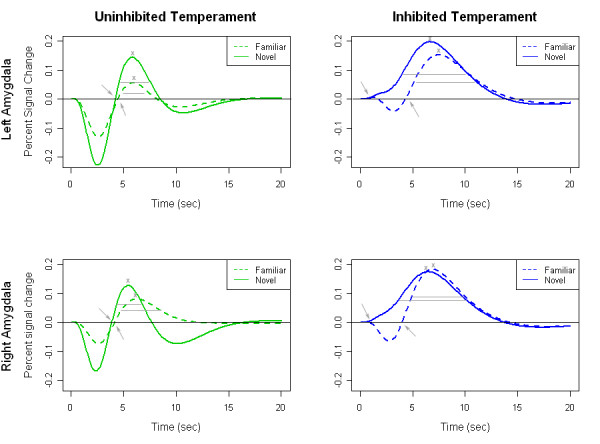
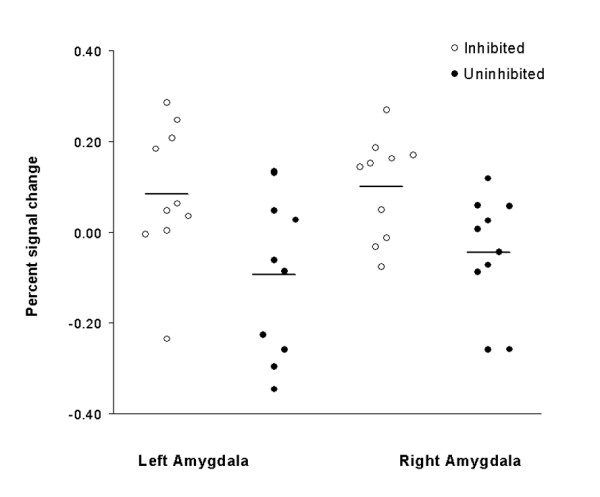
BACKGROUND: Inhibited temperament - the predisposition to respond to new people, places or things with wariness or avoidance behaviors - is associated with increased risk for social anxiety disorder and major depression. Although the magnitude of the amygdala's response to novelty has been identified as a neural substrate of inhibited temperament, there may also be differences in temporal dynamics (latency, duration, and peak). We hypothesized that persons with inhibited temperament would have faster responses to novel relative to familiar neutral faces compared to persons with uninhibited temperament. We used event-related functional magnetic resonance imaging to measure the temporal dynamics of the blood oxygen level dependent (BOLD) response to both novel and familiar neutral faces in participants with inhibited or uninhibited temperament. RESULTS: Inhibited participants had faster amygdala responses to novel compared with familiar faces, and both longer and greater amygdala response to all faces. There were no differences in peak response. CONCLUSION: Faster amygdala response to novelty may reflect a computational bias that leads to greater neophobic responses and represents a mechanism for the development of social anxiety.
Overview
The claims and statistics of this paper haven’t been checked yet.
Free: it reads the open-access text and checks the first 5 claims that cite a source we can check. Create a free account to check every claim.
Integrity signals
Registry
Cites
Statistics
Figures
Verification
Claims the paper makes
The claims and statistics of this paper haven’t been checked yet.
Free: it reads the open-access text and checks the first 5 claims that cite a source we can check. Create a free account to check every claim.
Claims other papers make about this one
Each is checked against this paper’s own text: does it say what the citing paper says it does?
The source backs part of the claim, not all of it — or backs it for a different population, condition or comparison.
In the citing paper
“Studies of young adults who were inhibited as children demonstrate that behavioral inhibition is associated with amygdala hyperactivity111–114,117 and dmPFC hypoactivity117”
From Neural Substrates of Childhood Anxiety Disorders (2012) · cites this paper as [111]
Experimental — accuracy not yet measured
Self-check
Percentages, sums and reported differences re-computed from the paper’s own numbers.
The self-check needs the paper’s full text.
Citations
Cites
The assessment and analysis of handedness: The Edinburgh inventory
Oldfield, R. C. (1971) · Neuropsychologia · doi:10.1016/0028-3932(71)90067-4 · Cited by 35,900 · cited 1×
“7 years (SD = 3 years), were approximately half female (60%), predominantly right-handed [90%; [23]], and represented several ethnic groups.”
BackgroundTzourio-Mazoyer, N., Landeau, B., Papathanassiou, D., Crivello, F., Etard, O., Delcroix, N., Mazoyer, B., & Joliot, M. (2002) · NeuroImage · doi:10.1006/nimg.2001.0978 · Cited by 16,319 · cited 1×
“The bilateral amygdala regions of interest (ROI) were defined using the anatomical amygdala templates based on Automated Anatomical Labeling [AAL; [33]] imple-”
MethodStatistical parametric maps in functional imaging: A general linear approach
Friston, K. J., Holmes, A. P., Worsley, K. J., Poline, J. ‐., Frith, C. D., & Frackowiak, R. S. J. (1994) · Human Brain Mapping · doi:10.1002/hbm.460020402 · Cited by 9,688 · cited 1×
“The participant-specific general linear model [30] was estimated using both face types (novel and familiar) as regressors.”
MethodMaldjian, J. A., Laurienti, P. J., Kraft, R. A., & Burdette, J. H. (2003) · NeuroImage · doi:10.1016/s1053-8119(03)00169-1 · Cited by 5,085 · cited 1×
“mented in the WFU Pick Atlas [Version 2.4; [ 34 ]].”
MethodInfluentialGray, J. A. (1982) · Behavioral and Brain Sciences · doi:10.1017/s0140525x00013066 · Cited by 4,477 · cited 1×
“Most models of temperament include a construct related to distress and avoidance [e.g., [ 1-5 ]].”
The Structured Clinical Interview for DSM-III-R (SCID): I: History, Rationale, and Description
Spitzer, R. L. (1992) · Archives of General Psychiatry · doi:10.1001/archpsyc.1992.01820080032005 · Cited by 4,336
A Systematic Method for Clinical Description and Classification of Personality Variants: A Proposal
Cloninger, C. R. (1987) · Archives of General Psychiatry · doi:10.1001/archpsyc.1987.01800180093014 · Cited by 3,678 · cited 1×
“, [1-5]].”
The amygdala: vigilance and emotion
Davis, M., & Whalen, P. J. (2001) · Molecular Psychiatry · doi:10.1038/sj.mp.4000812 · Cited by 2,882 · cited 1×
“Faster amygdala responses may reflect a bias for detecting novelty and potential threat [19,20].”
BackgroundRegion of interest analysis using an SPM toolbox
Brett, M. (2002) · NeuroImage · Cited by 2,273
(2016) · The SAGE Encyclopedia of Contemporary Early Childhood Education · doi:10.4135/9781483340333.n409 · Cited by 2,185
Event-Related fMRI: Characterizing Differential Responses
Friston, K. J., Fletcher, P., Josephs, O., Holmes, A., Rugg, M. D., & Turner, R. (1998) · NeuroImage · doi:10.1006/nimg.1997.0306 · Cited by 2,029 · cited 1×
“Temporal (latency) and dispersion (duration) derivatives were also included in the model to provide a more precise estimate of the event-related response curve [31,32].”
MethodAdvances in developmental psychology
Lamb, M. E., Brown, A. L., & Rogoff, B. (1981) · Lawrence Erlbaum Associates eBooks · Cited by 1,686
Affective style and affective disorders: Perspectives from affective neuroscience
Davidson, R. J. (1998) · Cognition & Emotion · doi:10.1080/026999398379628 · Cited by 1,496 · cited 1×
“Individual differences in the temporal dynamics of emotional response, or "affective chronometry", have been suggested as an important component of affective style [15]; for example, a typical pattern of emotional response might be characterized as a "quick temper" or being able to "recover quickly" from negative emot…”
BackgroundDevelopment of individual differences in temperament
Rothbart, M. K., & Derryberry, D. (1981) · Cited by 1,164
Caspi, A. (1996) · Archives of General Psychiatry · doi:10.1001/archpsyc.1996.01830110071009 · Cited by 1,159
The human amygdala and the emotional evaluation of sensory stimuli
Zald, D. H. (2003) · Brain Research Reviews · doi:10.1016/s0165-0173(02)00248-5 · Cited by 1,062 · cited 1×
“Face stimuli strongly elicit amygdala responses [10,11], with several studies suggesting the response is modulated by individual differences in inhibited temperament [12-14].”
BackgroundSelf-citationSergerie, K., Chochol, C., & Armony, J. L. (2008) · Neuroscience & Biobehavioral Reviews · doi:10.1016/j.neubiorev.2007.12.002 · Cited by 917 · cited 1×
“Face stimuli strongly elicit amygdala responses [10,11], with several studies suggesting the response is modulated by individual differences in inhibited temperament [12-14].”
BackgroundGeneralisability, Random Effects & Population Inference
Holmes, A. P., & Friston, K. J. (1998) · NeuroImage · doi:10.1016/s1053-8119(18)31587-8 · Cited by 890
Fear, Vigilance, and Ambiguity: Initial Neuroimaging Studies of the Human Amygdala
Whalen, P. J. (1998) · Current Directions in Psychological Science · doi:10.1111/1467-8721.ep10836912 · Cited by 788
Adolescent social anxiety as an outcome of inhibited temperament in childhood
SCHWARTZ, C. E., SNIDMAN, N., & KAGAN, J. (1999) · Journal of the American Academy of Child & Adolescent Psychiatry · doi:10.1097/00004583-199908000-00017 · Cited by 758 · cited 1×
“Inhibited temperament has a wellcharacterized phenotype and is associated with increased risk for both social anxiety disorder [6,7] and major depression [8].”
BackgroundDUFFY, J. C. (1977) · American Journal of Psychiatry · doi:10.1176/ajp.134.12.1455-b · Cited by 732
Children's Social Competence in Cultural Context
Chen, X., & French, D. C. (2008) · Annual Review of Psychology · doi:10.1146/annurev.psych.59.103006.093606 · Cited by 708 · cited 1×
“The inhibited group had a higher proportion of Asian-Americans, consistent with published ethnic differences in rates of inhibited and uninhibited temperament [24].”
Further evidence of association between behavioral inhibition and social anxiety in children
Biederman, J., Hirshfeld-Becker, D. R., Rosenbaum, J. F., Hérot, C., Friedman, D., Snidman, N., Kagan, J., & Faraone, S. V. (2001) · American Journal of Psychiatry · doi:10.1176/appi.ajp.158.10.1673 · Cited by 655 · cited 1×
“Inhibited temperament has a wellcharacterized phenotype and is associated with increased risk for both social anxiety disorder [6,7] and major depression [8].”
BackgroundInhibited and uninhibited infants “grown up”: adult amygdalar response to novelty
Schwartz, C. E., Wright, C. I., Shin, L. M., Kagan, J., & Rauch, S. L. (2003) · Science · doi:10.1126/science.1083703 · Cited by 528 · cited 6×
“However, amygdala responses have been consistently demonstrated with samples of this size, including the study by Schwartz and colleagues [12], and were large enough to see differences in temporal dynamics and overall duration and magnitude.”
BackgroundResultInfluentialTemperament and the Reactions to Unfamiliarity
Kagan, J. (1997) · Child Development · doi:10.1111/j.1467-8624.1997.tb01931.x · Cited by 512
Horton, A. M., & Larrabee, G. J. (1999) · Archives of Clinical Neuropsychology · doi:10.1093/arclin/14.5.473 · Cited by 486
Computerized Neurocognitive Scanning: I. Methodology and Validation in Healthy People
Gur, R. (2001) · Neuropsychopharmacology · doi:10.1016/s0893-133x(01)00278-0 · Cited by 398 · cited 1×
“Face stimuli were black and white human face images with neutral expressions, selected from two standard sets of emotional expressions [28,29].”
BackgroundTemperament and the Reactions to Unfamiliarity
Kagan, J. (1997) · Child Development · doi:10.2307/1131931 · Cited by 334
Prediction and preparation, fundamental functions of the cerebellum.
Courchesne, E., & Allen, G. (1997) · Learning & Memory · doi:10.1101/lm.4.1.1 · Cited by 288 · cited 1×
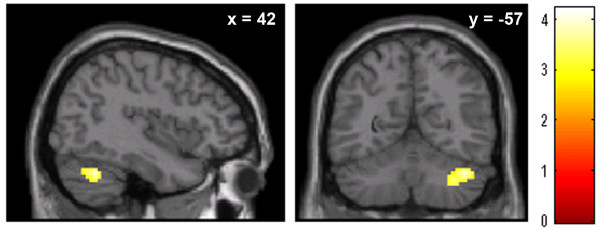
“The cerebellum has traditionally been viewed as controlling motor function; however, evidence is accumulating for a broader preparatory function in multiple neural systems, including sensory, attention, and memory systems (for a review see [21]).”
BackgroundThe Long Shadow of Temperament
Denham, R. (2005) · Journal of the American Academy of Child & Adolescent Psychiatry · doi:10.1097/01.chi.0000179051.23925.a8 · Cited by 269
The Long Shadow of Temperament
KAGAN, J., & SNIDMAN, N. (2009) · Harvard University Press eBooks · doi:10.2307/j.ctv2jfvczc · Cited by 256
Attention alters neural responses to evocative faces in behaviorally inhibited adolescents
Pérez-Edgar, K., Roberson-Nay, R., Hardin, M. G., Poeth, K., Guyer, A. E., Nelson, E. E., McClure, E. B., Henderson, H. A., Fox, N. A., Pine, D. S., et al. (2007) · NeuroImage · doi:10.1016/j.neuroimage.2007.02.006 · Cited by 198 · cited 1×
“Face stimuli strongly elicit amygdala responses [10,11], with several studies suggesting the response is modulated by individual differences in inhibited temperament [12-14].”
BackgroundFear Is Fast in Phobic Individuals: Amygdala Activation in Response to Fear-Relevant Stimuli
Larson, C. L., Schaefer, H. S., Siegle, G. J., Jackson, C. A., Anderle, M. J., & Davidson, R. J. (2006) · Biological Psychiatry · doi:10.1016/j.biopsych.2006.03.079 · Cited by 181 · cited 3×
“Amygdala latency and magnitude for people with a spider phobia were compared to non-phobic participants in an event-related fMRI study [18].”
BackgroundResultInfluentialReznick, J. S., Hegeman, I. M., Kaufman, E. R., Woods, S. W., & Jacobs, M. (1992) · Development and Psychopathology · doi:10.1017/s095457940000016x · Cited by 159 · cited 5×
“The self-report instruments used here were developed for consistency with the infant and toddler behavioral assessments, have good reliability and validity, and have been associated with expected outcomes like social anxiety [22].”
BackgroundMethodInfluentialGray'sNeuropsychology of anxiety: An enquiry into the functions of septohippocampal theories
McNaughton, N. (1982) · Behavioral and Brain Sciences · doi:10.1017/s0140525x00013170 · Cited by 144
Individual differences in rate of affect change: Studies in affective chronometry.
Hemenover, S. H. (2003) · Journal of Personality and Social Psychology · doi:10.1037/0022-3514.85.1.121 · Cited by 135 · cited 2×
“Differences in the time course of behavioral affective responses have been associated with individual differences in both introversion/extraversion [16] and depression [ 16 ,17].”
BackgroundThe choice of basis functions in event-related fMRI
Henson, R. N., Rugg, M. D., & Friston, K. J. (2001) · NeuroImage · doi:10.1016/s1053-8119(01)91492-2 · Cited by 117 · cited 1×
“Temporal (latency) and dispersion (duration) derivatives were also included in the model to provide a more precise estimate of the event-related response curve [31,32].”
MethodEarly childhood temperament as a determinant of externalizing behavior in adolescence
Schwartz, C. E., Snidman, N., & Kagan, J. (1996) · Development and Psychopathology · doi:10.1017/s0954579400007252 · Cited by 100 · cited 1×
“Participants were not excluded for presence or history of psychiatric illness because both inhibited and uninhibited temperament are associated with increased rates of internalizing and externalizing disorders, respectively [25].”
BackgroundThe chronometry of affective startle modulation in unipolar depression.
Dichter, G. S., & Tomarken, A. J. (2008) · Journal of Abnormal Psychology · doi:10.1037/0021-843x.117.1.1 · Cited by 70 · cited 1×
“Differences in the time course of behavioral affective responses have been associated with individual differences in both introversion/extraversion [16] and depression [16,17].”
BackgroundDifferent neural responses to stranger and personally familiar faces in shy and bold adults.
Beaton, E. A., Schmidt, L. A., Schulkin, J., Antony, M. M., Swinson, R. P., & Hall, G. B. (2008) · Behavioral Neuroscience · doi:10.1037/0735-7044.122.3.704 · Cited by 59 · cited 3×
“These results extend previous reports of temperamentbased differences in magnitude of amygdala response [ 12- 14 ] by demonstrating temperament-related differences in the amygdala's latency to respond to novel faces.”
BackgroundResultInfluential
Research works printed but not linked: 1
- Matsumoto D Ekman P Japanese and Caucasian Facial Expressions of Emotion (JACFEE) and Japanese and Caucasian Neutral Faces (JACNeuF) 1998 San Francisco, CA, Intercultural and Emotion Research Laboratory, Department of Psychology, San Francisco State University
Cited by
Behavioral Inhibition and Risk for Developing Social Anxiety Disorder: A Meta-Analytic Study
Clauss, J. A., & Blackford, J. U. (2012) · Journal of the American Academy of Child & Adolescent Psychiatry · doi:10.1016/j.jaac.2012.08.002 · Cited by 573
Self-citationOkon-Singer, H., Hendler, T., Pessoa, L., & Shackman, A. J. (2015) · Frontiers in Human Neuroscience · doi:10.3389/fnhum.2015.00058 · Cited by 371
“…in emotional recovery (a) strongly predict personality traits, such as neuroticism, that confer increased risk of developing psychopathology (e.g., Blackford et al., 2009; Schuyler et al., 2014); and (b) are sensitive to adversity and chronic stress exposure, two other well-established risk…”
BackgroundDevelopment of anxiety: the role of threat appraisal and fear learning
Britton, J. C., Lissek, S., Grillon, C., Norcross, M. A., & Pine, D. S. (2011) · Depression and Anxiety · doi:10.1002/da.20733 · Cited by 279
“As with other work linking anxiety to amygdala responding, research on novelty demonstrates different amygdala response patterns in behaviorally inhibited and noninhibited individuals.([52,53]) These temperamental differences may reflect difficulties in resolving ambiguity in novel stimuli.”
BackgroundDispositional negativity: An integrative psychological and neurobiological perspective.
Shackman, A. J., Tromp, D. P. M., Stockbridge, M. D., Kaplan, C. M., Tillman, R. M., & Fox, A. S. (2016) · Psychological Bulletin · doi:10.1037/bul0000073 · Cited by 234
Fox, A. S., & Kalin, N. H. (2014) · American Journal of Psychiatry · doi:10.1176/appi.ajp.2014.14040449 · Cited by 161
“demonstrated that highly inhibited young adults show faster amygdala responding (46), prolonged and exaggerated amygdala reactivity (47; 48), decreased amygdala habituation (49), and increased amygdala volume (50).”
Metadata
- Authors
- Blackford, J. U., Avery, S. N., Shelton, R. C., & Zald, D. H.
- Affiliations
- Vanderbilt University (US)
- Corresponding author
- Blackford, Jennifer U
- Venue
- BMC Neuroscience
- Published
- 2009-12
- Volume
- 10
- Issue
- 1
- Pages
- 145-145
- ISSN
- 1471-2202 (ISSN-L)
- PMC
- PMC2797525
- OpenAlex
- W2167180542
- Cited by
- 65
- References
- 39
- Citations by year
- 2026: 1 · 2025: 2 · 2024: 2 · 2023: 1 · 2022: 2 · 2021: 3 · 2020: 4 · 2019: 5 · 2018: 7 · 2017: 2 · 2016: 5 · 2015: 6 · 2014: 7 · 2013: 6 · 2012: 5
- FWCI
- 5.08
- Type
- journal article
- Language
- en
- Open access
- gold
- doi.org
- Licence
- cc-by
- creativecommons.org/licenses/by/2.0 (tdm)
- Locations
- BMC Neuroscience (publishedVersion, cc-by)
- PubMed Central (publishedVersion, cc-by)
- PubMed (publishedVersion)
- DOAJ (DOAJ: Directory of Open Access Journals) (submittedVersion, cc-by-sa)
- Funders
- Vanderbilt University
- Georgia Clinical and Translational Science Alliance (RR024975)
- National Institute of Mental Health (K01MH083052, MH083052, R01MH074567)
- National Center for Research Resources (RR024975, UL1RR024975)
- Topics
- Social Sciences › Psychology › Experimental and Cognitive Psychology › Anxiety, Depression, Psychometrics, Treatment, Cognitive Processes
- Life Sciences › Neuroscience › Cognitive Neuroscience › Face Recognition and Perception
- Life Sciences › Neuroscience › Cognitive Neuroscience › Memory and Neural Mechanisms
- Keywords
- inhibited temperament, amygdala, temporal dynamics, familiar faces, neophobia, social anxiety, major depressive disorder, event-related fMRI
- MeSH terms
- Adult, Amygdala, Cerebellum, Evoked Potentials, Face, Female, Humans, Magnetic Resonance Imaging, Male, Pattern Recognition, Visual, Reaction Time, Behavior Control, Young Adult
About these checks
Registry, retraction, Cites and statistics results are computed, not judged, with one exception: a printed reference that no index lists is read once by a model before it counts as a citation error. Claims are extracted by a model and kept only when their quote appears verbatim in the text; each cited source is then checked, with a model’s help, for whether it says what the claim relies on. Those verdicts can be wrong — read the claim’s quote and the cited source before relying on one.
Statistics and arithmetic are recomputed, not judged.
Confidence bands are shown only for fields calibrated on our annotated test set. None is calibrated yet, so no band is shown.
What counts as a claim ›How we measure confidence ›How we check this ›
Are you an author, or do you see a problem with this page? Request a review
Data sources
Bibliographic data: Semantic Scholar, OpenAlex, Crossref.
Contains information from the Semantic Scholar Academic Graph Datasets, made available under the ODC Attribution License (ODC-BY 1.0).
Semantic Scholar’s data is described in: Kinney, R., et al. (2023). The Semantic Scholar Open Data Platform. arXiv:2301.10140.
