

Mice do not require auditory input for the normal development of their ultrasonic vocalizations
Open accessThe DOI matches its Crossref record; 35 of the 35 references it cites were found in a registry or an index.
Abstract
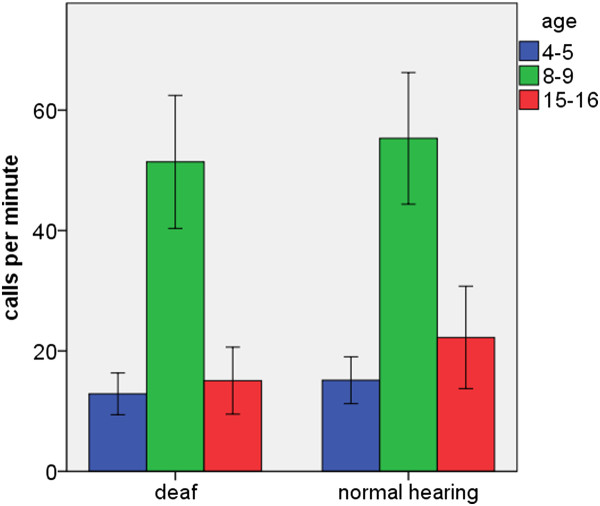
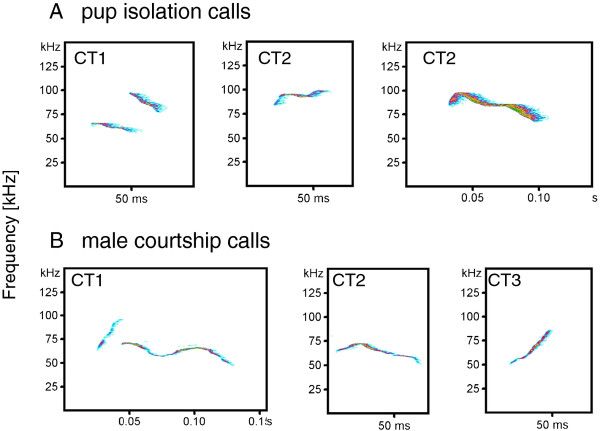
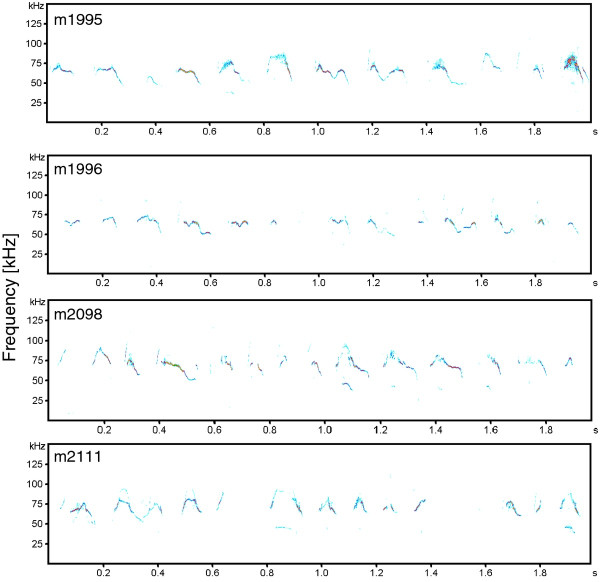
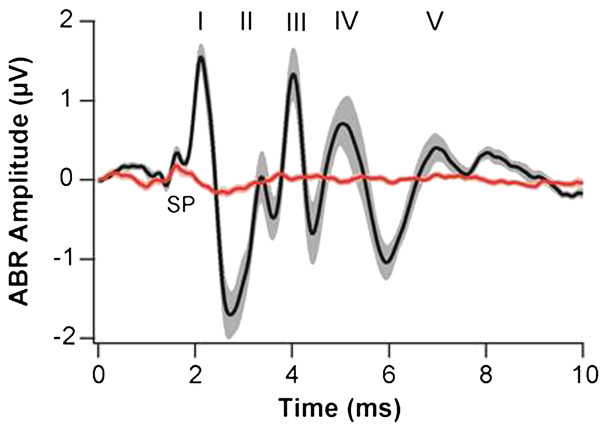
BACKGROUND: Transgenic mice have become an important tool to elucidate the genetic foundation of the human language faculty. While learning is an essential prerequisite for the acquisition of human speech, it is still a matter of debate whether auditory learning plays any role in the development of species-specific vocalizations in mice. To study the influence of auditory input on call development, we compared the occurrence and structure of ultrasonic vocalizations from deaf otoferlin-knockout mice, a model for human deafness DFNB9, to those of hearing wild-type and heterozygous littermates. RESULTS: We found that the occurrence and structure of ultrasonic vocalizations recorded from deaf otoferlin-knockout mice and hearing wild-type and heterozygous littermates do not differ. Isolation calls from 16 deaf and 15 hearing pups show the same ontogenetic development in terms of the usage and structure of their vocalizations as their hearing conspecifics. Similarly, adult courtship 'songs' produced by 12 deaf and 16 hearing males did not differ in the latency to call, rhythm of calling or acoustic structure. CONCLUSION: The results indicate that auditory experience is not a prerequisite for the development of species-specific vocalizations in mice. Thus, mouse models are of only limited suitability to study the evolution of vocal learning, a crucial component in the development of human speech. Nevertheless, ultrasonic vocalizations of mice constitute a valuable readout in studies of the genetic foundations of social and communicative behavior.
Overview
The claims and statistics of this paper haven’t been checked yet.
Free: it reads the open-access text and checks the first 5 claims that cite a source we can check. Create a free account to check every claim.
Integrity signals
Registry
Cites
Statistics
Figures
Verification
Claims the paper makes
The claims and statistics of this paper haven’t been checked yet.
Free: it reads the open-access text and checks the first 5 claims that cite a source we can check. Create a free account to check every claim.
Claims other papers make about this one
Each is checked against this paper’s own text: does it say what the citing paper says it does?
The source backs part of the claim, not all of it — or backs it for a different population, condition or comparison.
In the citing paper
“Previous studies suggest that the contribution of the newcomer to the vocalization is minor in comparison with that of the occupant (Hammerschmidt, et al. 2012).”
From DLX5/6 GABAergic Expression Affects Social Vocalization: Implications for Human Evolution (2021) · cites this paper as Hammerschmidt, et al. 2012
Experimental — accuracy not yet measured
Self-check
Percentages, sums and reported differences re-computed from the paper’s own numbers.
The self-check needs the paper’s full text.
Citations
Cites
Roux, I., Safieddine, S., Nouvian, R., Grati, M., Simmler, M.-C., Bahloul, A., Perfettini, I., Le Gall, M., Rostaing, P., Hamard, G., et al. (2006) · Cell · doi:10.1016/j.cell.2006.08.040 · Cited by 753
Holy, T. E., & Guo, Z. (2005) · PLoS Biology · doi:10.1371/journal.pbio.0030386 · Cited by 670
A humanized version of Foxp2 affects cortico-basal ganglia circuits in mice
Enard, W., Gehre, S., Hammerschmidt, K., Hölter, S. M., Blass, T., Somel, M., Brückner, M. K., Schreiweis, C., Winter, C., Sohr, R., et al. (2009) · Cell · doi:10.1016/j.cell.2009.03.041 · Cited by 605 · cited 2×
“These criteria were compared with former analysis of pup vocalizations [4].”
BackgroundResultSelf-citationFitch, W. T. (2010) · doi:10.1017/cbo9780511817779 · Cited by 594
Jamain, S., Radyushkin, K., Hammerschmidt, K., Granon, S., Boretius, S., Varoqueaux, F., Ramanantsoa, N., Gallego, J., Ronnenberg, A., Winter, D., et al. (2008) · Proceedings of the National Academy of Sciences · doi:10.1073/pnas.0711555105 · Cited by 556
Self-citationUnusual repertoire of vocalizations in the BTBR T+tf/J mouse model of autism
Scattoni, M. L., Gandhy, S. U., Ricceri, L., & Crawley, J. N. (2008) · PLoS ONE · doi:10.1371/journal.pone.0003067 · Cited by 550 · cited 2×
“While we found no differences in relation to hearing ability within our mouse strain, there is now evidence accumulating that genetic differences between mouse strains may affect calling rate, call duration and frequency characteristics of isolation calls [17,19].”
BackgroundThe different roles of social learning in vocal communication
Janik, V. M., & Slater, P. J. B. (2000) · Animal Behaviour · doi:10.1006/anbe.2000.1410 · Cited by 537
Scattoni, M. L., Crawley, J., & Ricceri, L. (2009) · Neuroscience & Biobehavioral Reviews · doi:10.1016/j.neubiorev.2008.08.003 · Cited by 473
Neural mechanisms of birdsong memory
Bolhuis, J. J., & Gahr, M. (2006) · Nature Reviews Neuroscience · doi:10.1038/nrn1904 · Cited by 374
Infant Rodent Ultrasounds ? A Gate to the Understanding of Sound Communication
Ehret, G. (2005) · Behavior Genetics · doi:10.1007/s10519-004-0853-8 · Cited by 323
Cited by
Arriaga, G., Zhou, E. P., & Jarvis, E. D. (2012) · PLoS ONE · doi:10.1371/journal.pone.0046610 · Cited by 296
Female mice ultrasonically interact with males during courtship displays
Neunuebel, J. P., Taylor, A. L., Arthur, B. J., & Egnor, S. R. (2015) · eLife · doi:10.7554/elife.06203 · Cited by 224
“…vocal behavior of adult mice, most experimental paradigms use pairs of mice (Bean et al., 1981; Choi et al., 2011; D’Amato and Moles, 2001; Hammerschmidt et al., 2012b; Nunez et al., 1978; Nyby et al., 1976; Ogawa et al., 2000; Pomerantz and Clemens, 1981; Rotschafer et al., 2012;…”
BackgroundMethodInfluentialMale mice song syntax depends on social contexts and influences female preferences
Chabout, J., Sarkar, A., Dunson, D. B., & Jarvis, E. D. (2015) · Frontiers in Behavioral Neuroscience · doi:10.3389/fnbeh.2015.00076 · Cited by 212
Mouse vocal communication system: Are ultrasounds learned or innate?
Arriaga, G., & Jarvis, E. D. (2013) · Brain and Language · doi:10.1016/j.bandl.2012.10.002 · Cited by 209
“Here we discuss the concepts of innate versus learned vocal communication, give an overview of the neural pathways involved, critically review recent studies that have approached the issue of vocal plasticity mice (Arriaga, Zhou, & Jarvis, 2012; Chabout et al., 2012; Grimsley, Monaghan, & Wenstrup, 2011; Hammerschmidt…”
BackgroundResultInfluentialTranslational Mouse Models of Autism: Advancing Toward Pharmacological Therapeutics
Kazdoba, T. M., Leach, P. T., Yang, M., Silverman, J. L., Solomon, M., & Crawley, J. N. (2015) · Current Topics in Behavioral Neurosciences · doi:10.1007/7854_2015_5003 · Cited by 170
The role of ultrasonic vocalizations in mouse communication
Portfors, C. V., & Perkel, D. J. (2014) · Current Opinion in Neurobiology · doi:10.1016/j.conb.2014.07.002 · Cited by 165
“, [20] showed that vocalizations emitted by mice lacking the gene for otoferlin, (a protein essential for synaptic transmission in hair cells and thus for hearing) were not acoustically different from those emitted by normal hearing mice.”
BackgroundThe neurobiology of innate, volitional and learned vocalizations in mammals and birds
Nieder, A., & MOONEY, R. D. (2019) · Philosophical Transactions of the Royal Society B Biological Sciences · doi:10.1098/rstb.2019.0054 · Cited by 162
Decoding the genetics of speech and language
Graham, S. A., & Fisher, S. E. (2012) · Current Opinion in Neurobiology · doi:10.1016/j.conb.2012.11.006 · Cited by 153
Brain evolution by brain pathway duplication
Chakraborty, M., & Jarvis, E. D. (2015) · Philosophical Transactions of the Royal Society B: Biological Sciences · doi:10.1098/rstb.2015.0056 · Cited by 150
“The nuances for limited vocal plasticity and an associated neural circuit in mice and non-human primates are also still an ongoing debate that requires further investigation [104–111].”
BackgroundVocal production learning in mammals revisited
Janik, V. M., & Knörnschild, M. (2021) · Philosophical Transactions of the Royal Society B Biological Sciences · doi:10.1098/rstb.2020.0244 · Cited by 147
The origins of the vocal brain in humans
Belyk, M., & Brown, S. (2017) · Neuroscience & Biobehavioral Reviews · doi:10.1016/j.neubiorev.2017.03.014 · Cited by 144
Ey, E., Torquet, N., Le Sourd, A.-M., Leblond, C. S., Boeckers, T. M., Faure, P., & Bourgeron, T. (2013) · Behavioural Brain Research · doi:10.1016/j.bbr.2013.08.031 · Cited by 140
Van Segbroeck, M., Knoll, A. T., Levitt, P., & Narayanan, S. (2017) · Neuron · doi:10.1016/j.neuron.2017.04.005 · Cited by 137
Jabarin, R., Netser, S., & Wagner, S. (2022) · Molecular Autism · doi:10.1186/s13229-022-00521-6 · Cited by 135
Engineered Deafness Reveals That Mouse Courtship Vocalizations Do Not Require Auditory Experience
Mahrt, E. J., Perkel, D. J., Tong, L., Rubel, E. W., & Portfors, C. V. (2013) · The Journal of Neuroscience · doi:10.1523/jneurosci.5054-12.2013 · Cited by 134
Kas, M. J., Glennon, J. C., Buitelaar, J., Ey, E., Biemans, B., Crawley, J., Ring, R. H., Lajonchere, C., Esclassan, F., Talpos, J., et al. (2014) · Psychopharmacology · doi:10.1007/s00213-013-3268-5 · Cited by 132
Hammerschmidt, K., Radyushkin, K., Ehrenreich, H., & Fischer, J. (2012) · PLoS ONE · doi:10.1371/journal.pone.0041133 · Cited by 126
Self-citationFOXP transcription factors in vertebrate brain development, function, and disorders
Co, M., Anderson, A. G., & Konopka, G. (2020) · Wiley Interdisciplinary Reviews Developmental Biology · doi:10.1002/wdev.375 · Cited by 120
Sexual attractiveness of male chemicals and vocalizations in mice
Asaba, A., Hattori, T., Mogi, K., & Kikusui, T. (2014) · Frontiers in Neuroscience · doi:10.3389/fnins.2014.00231 · Cited by 103
Chabout, J., Sarkar, A., Patel, S. R., Radden, T., Dunson, D. B., Fisher, S. E., & Jarvis, E. D. (2016) · Frontiers in Behavioral Neuroscience · doi:10.3389/fnbeh.2016.00197 · Cited by 101
Determinants of the mouse ultrasonic vocal structure and repertoire
Heckman, J. J., McGuinness, B., Celikel, T., & Englitz, B. (2016) · Neuroscience & Biobehavioral Reviews · doi:10.1016/j.neubiorev.2016.03.029 · Cited by 100
The contribution of ultrasonic vocalizations to mouse courtship
Egnor, S. E. R., & Seagraves, K. M. (2016) · Current Opinion in Neurobiology · doi:10.1016/j.conb.2015.12.009 · Cited by 99
Structure and function of neonatal social communication in a genetic mouse model of autism
Takahashi, T., Okabe, S., Broin, P. Ó., Nishi, A., Ye, K., Beckert, M., Izumi, T., Machida, A., Kang, G., Abe, S., et al. (2015) · Molecular Psychiatry · doi:10.1038/mp.2015.190 · Cited by 99
Premoli, M., Pietropaolo, S., Wöhr, M., Simola, N., & Bonini, S. A. (2023) · European Journal of Neuroscience · doi:10.1111/ejn.15957 · Cited by 96
Ultrasonic vocalizations in mice: relevance for ethologic and neurodevelopmental disorders studies
Premoli, M., Memo, M., & Bonini, S. A. (2020) · Neural Regeneration Research · doi:10.4103/1673-5374.300340 · Cited by 94
von Merten, S., Hoier, S., Pfeifle, C., & Tautz, D. (2014) · PLoS ONE · doi:10.1371/journal.pone.0097244 · Cited by 89
A Modular Approach to Vocal Learning: Disentangling the Diversity of a Complex Behavioral Trait
Wirthlin, M. E., Chang, E. F., Knörnschild, M., Krubitzer, L. A., Mello, C. V., Miller, C. T., Pfenning, A. R., Vernes, S. C., Tchernichovski, O., & Yartsev, M. M. (2019) · Neuron · doi:10.1016/j.neuron.2019.09.036 · Cited by 81
Male mice emit distinct ultrasonic vocalizations when the female leaves the social interaction arena
Yang, M., Loureiro, D., Kalikhman, D., & Crawley, J. N. (2013) · Frontiers in Behavioral Neuroscience · doi:10.3389/fnbeh.2013.00159 · Cited by 76
Ultrasonic vocalizations of adult male Foxp2‐mutant mice: behavioral contexts of arousal and emotion
Gaub, S., Fisher, S. E., & Ehret, G. (2016) · Genes Brain & Behavior · doi:10.1111/gbb.12274 · Cited by 74
Sungur, A. Ö., Schwarting, R. K. W., & Wöhr, M. (2016) · Autism Research · doi:10.1002/aur.1564 · Cited by 72
Maciej, P., Ndao, I., Hammerschmidt, K., & Fischer, J. (2013) · Frontiers in Zoology · doi:10.1186/1742-9994-10-58 · Cited by 67
Self-citationMusolf, K., Meindl, S., Larsen‐Gray, A. L., Kalcounis‐Rueppell, M. C., & Penn, D. J. (2015) · PLoS ONE · doi:10.1371/journal.pone.0134123 · Cited by 65
Ju, A., Hammerschmidt, K., Tantra, M., Krueger‐Burg, D., Brose, N., & Ehrenreich, H. (2014) · Behavioural Brain Research · doi:10.1016/j.bbr.2014.05.019 · Cited by 65
Self-citationSex-dependent modulation of ultrasonic vocalizations in house mice (Mus musculus musculus)
Zala, S. M., Reitschmidt, D., Noll, A., Balázs, P., & Penn, D. J. (2017) · PLoS ONE · doi:10.1371/journal.pone.0188647 · Cited by 66
Hammerschmidt, K., Whelan, G., Eichele, G., & Fischer, J. (2015) · Scientific Reports · doi:10.1038/srep08808 · Cited by 65
Self-citationThe neurobiology of innate and learned vocalizations in rodents and songbirds
MOONEY, R. D. (2020) · Current Opinion in Neurobiology · doi:10.1016/j.conb.2020.01.004 · Cited by 64
Vocal Ontogeny in Neotropical Singing Mice (Scotinomys)
Campbell, P., Pasch, B. S., Warren, A. L., & Phelps, S. M. (2014) · PLoS ONE · doi:10.1371/journal.pone.0113628 · Cited by 63
Lovell, P. V., Wirthlin, M. E., Kaser, T., Buckner, A. A., Carleton, J. B., Snider, B. R., McHugh, A. K., Tolpygo, A. S., Mitra, P. P., & Mello, C. V. (2020) · The Journal of Comparative Neurology · doi:10.1002/cne.24879 · Cited by 53
Medial Preoptic Area Modulates Courtship Ultrasonic Vocalization in Adult Male Mice
Gao, S.-C., Wei, Y., Wang, S.-R., & Xu, X. (2019) · Neuroscience Bulletin · doi:10.1007/s12264-019-00365-w · Cited by 50
Animal Models of Speech and Vocal Communication Deficits Associated With Psychiatric Disorders
Konopka, G., & Roberts, T. F. (2015) · Biological Psychiatry · doi:10.1016/j.biopsych.2015.07.001 · Cited by 49
Berg, E. L., Ching, T. M., Bruun, D. A., Rivera, J. K., Careaga, M., Ellegood, J., Lerch, J. P., Wöhr, M., Lein, P. J., & Silverman, J. L. (2020) · Journal of Neurodevelopmental Disorders · doi:10.1186/s11689-020-09342-1 · Cited by 49
Rat Ultrasonic Vocalization Shows Features of a Modular Behavior
Riede, T. (2014) · Journal of Neuroscience · doi:10.1523/jneurosci.0262-14.2014 · Cited by 46
Foxp1 expression is essential for sex-specific murine neonatal ultrasonic vocalization
Fröhlich, H., Rafiullah, R., Schmitt, N., Abele, S., & Rappold, G. (2017) · Human Molecular Genetics · doi:10.1093/hmg/ddx055 · Cited by 45
Detection and Classification Methods for Animal Sounds
Oswald, J. N., Erbe, C., Gannon, W. L., Madhusudhana, S., & Thomas, J. A. (2022) · Springer eBooks · doi:10.1007/978-3-030-97540-1_8 · Cited by 40
Automatic mouse ultrasound detector (A-MUD): A new tool for processing rodent vocalizations
Zala, S. M., Reitschmidt, D., Noll, A., Balázs, P., & Penn, D. J. (2017) · PLoS ONE · doi:10.1371/journal.pone.0181200 · Cited by 39
A review of ultrasonic vocalizations in mice and how they relate to human speech
Yao, K., Bergamasco, M., Scattoni, M. L., & Vogel, A. P. (2023) · The Journal of the Acoustical Society of America · doi:10.1121/10.0020544 · Cited by 38
Montero, I., Teschke, M., & Tautz, D. (2013) · Molecular Ecology · doi:10.1111/mec.12271 · Cited by 35
Variation in vocal production learning across songbirds
Searcy, W. A., Soha, J. A., Peters, S. S., & Nowicki, S. (2021) · Philosophical Transactions of the Royal Society B Biological Sciences · doi:10.1098/rstb.2020.0257 · Cited by 34
Cortical circuits modulate mouse social vocalizations
Gan-Or, B., & London, M. (2023) · Science Advances · doi:10.1126/sciadv.ade6992 · Cited by 33
Ultrasonic vocalization of pup and adult fat-tailed gerbils (Pachyuromys duprasi)
Zaytseva, A. S., Volodin, I. A., Ilchenko, O. G., & Volodina, E. V. (2019) · PLoS ONE · doi:10.1371/journal.pone.0219749 · Cited by 33
Vocal repertoire of long-finned pilot whales (Globicephala melas) in northern Norway
Vester, H., Hallerberg, S., Timme, M., & Hammerschmidt, K. (2017) · The Journal of the Acoustical Society of America · doi:10.1121/1.4983685 · Cited by 31
Self-citationA humanized version of Foxp2 does not affect ultrasonic vocalization in adult mice
Hammerschmidt, K., Schreiweis, C., Minge, C., Pääbo, S., Fischer, J., & Enard, W. (2015) · Genes, Brain and Behavior · doi:10.1111/gbb.12237 · Cited by 30
Self-citationZala, S. M., Nicolakis, D., Marconi, M. A., Noll, A., Ruf, T., Balázs, P., & Penn, D. J. (2020) · PLoS ONE · doi:10.1371/journal.pone.0242959 · Cited by 30
Oliveira-Stahl, G., Farboud, S., Sterling, M. L., Heckman, J. J., van Raalte, B., Lenferink, D. B., van der Stam, A. H., Smeets, C. J. L. M., Fisher, S. E., & Englitz, B. (2023) · Scientific Reports · doi:10.1038/s41598-023-31554-3 · Cited by 29
Molecular specializations of deep cortical layer analogs in songbirds
Nevue, A. A., Lovell, P. V., Wirthlin, M. E., & Mello, C. V. (2020) · Scientific Reports · doi:10.1038/s41598-020-75773-4 · Cited by 29
Knoll, A. T., Jiang, K., & Levitt, P. R. (2017) · Genes Brain & Behavior · doi:10.1111/gbb.12431 · Cited by 27
Grimsley, J. M. S., Gadziola, M. A., & Wenstrup, J. J. (2013) · Frontiers in Behavioral Neuroscience · doi:10.3389/fnbeh.2012.00089 · Cited by 26
Vocal Learning and Auditory-Vocal Feedback
Tyack, P. L. (2016) · Springer handbook of auditory research · doi:10.1007/978-3-319-27721-9_9 · Cited by 26
Nonlinear phenomena in mammalian vocal communication: an introduction and scoping review
Muir, J., Herbst, C. T., Hawes, J. E., O'mahoney, T., & Dunn, J. C. (2025) · Philosophical Transactions of the Royal Society B Biological Sciences · doi:10.1098/rstb.2024.0017 · Cited by 25
Berg, E. L., Jami, S. A., Petkova, S. P., Berz, A., Fenton, T. A., Lerch, J. P., Segal, D. J., Gray, J. A., Ellegood, J., Wöhr, M., et al. (2021) · Journal of Neuroscience · doi:10.1523/jneurosci.0925-21.2021 · Cited by 24
DLX5/6 GABAergic Expression Affects Social Vocalization: Implications for Human Evolution
Levi, G., de Lombares, C., Giuliani, C., Iannuzzi, V., Aouci, R., Garagnani, P., Franceschi, C., Grimaud-Hervé, D., & Narboux-Nême, N. (2021) · Molecular Biology and Evolution · doi:10.1093/molbev/msab181 · Cited by 23
Speech- and language-linked FOXP2 mutation targets protein motors in striatal neurons
Kuo, H., Chen, S.-Y., Huang, R.-C., Takahashi, H., Lee, Y., Pang, H.-Y., Wu, C.-H., Graybiel, A. M., & Liu, F. (2023) · Brain · doi:10.1093/brain/awad090 · Cited by 23
Characteristics of Vocalization in Adult Mice
Ehret, G. (2018) · Handbook of behavioral neuroscience · doi:10.1016/b978-0-12-809600-0.00018-4 · Cited by 22
Hülsmann, S., Oke, Y., Mesuret, G., Latal, A. T., Fortuna, M. G., Niebert, M., Hirrlinger, J., Fischer, J., & Hammerschmidt, K. (2018) · The Journal of Physiology · doi:10.1113/jp276976 · Cited by 22
Self-citationAuditory feedback modulates development of kitten vocalizations
Hubka, P., Konerding, W. S., & Kral, A. (2014) · Cell and Tissue Research · doi:10.1007/s00441-014-2059-6 · Cited by 22
Ultrasonic bouts of a blind climbing rodent (Typhlomys chapensis): acoustic analysis
Volodin, I. A., Panyutina, A. A., Abramov, A. V., Ilchenko, O. G., & Volodina, E. V. (2018) · Bioacoustics · doi:10.1080/09524622.2018.1509374 · Cited by 21
Pasch, B. S., Abbasi, M. Z., Wilson, M. M., Zhao, D., Searle, J. B., Webster, M. S., & Rice, A. N. (2016) · Physiology & Behavior · doi:10.1016/j.physbeh.2016.02.012 · Cited by 20
Bench to Cribside: the Path for Developing a Neuroprotectant
Ramanantsoa, N., Fleiss, B., Bouslama, M., Matrot, B., Schwendimann, L., Cohen‐Salmon, C., Gressèns, P., & Gallego, J. (2012) · Translational Stroke Research · doi:10.1007/s12975-012-0233-2 · Cited by 20
Playback of broadband vocalizations of female mice suppresses male ultrasonic calls
Hood, K. E., Long, E., Navarro, E., & Hurley, L. M. (2023) · PLoS ONE · doi:10.1371/journal.pone.0273742 · Cited by 19
Rodent Vocalizations: Adaptations to Physical, Social, and Sexual Factors
Okanoya, K., & Screven, L. A. (2018) · Springer handbook of auditory research · doi:10.1007/978-3-319-92495-3_2 · Cited by 18
Burenkova, O. V., Averkina, A. A., Aleksandrova, E. A., & Zarayskaya, I. Y. (2020) · Physiology & Behavior · doi:10.1016/j.physbeh.2020.112877 · Cited by 17
Maturation of Social-Vocal Communication in Prairie Vole (Microtus ochrogaster) Pups
Warren, M. R., Campbell, D. B., Borie, A. M., Ford, C. L., Dharani, A. M., Young, L. J., & Liu, R. C. (2022) · Frontiers in Behavioral Neuroscience · doi:10.3389/fnbeh.2021.814200 · Cited by 16
Temporal vocal features suggest different call-pattern generating mechanisms in mice and bats
Hage, S. R., Gavrilov, N., Salomon, F., & Stein, A. M. (2013) · BMC Neuroscience · doi:10.1186/1471-2202-14-99 · Cited by 16
Variations on a theme: Songbirds, variability, and sensorimotor error correction
Kuebrich, B. D., & Sober, S. J. (2014) · Neuroscience · doi:10.1016/j.neuroscience.2014.09.068 · Cited by 16
Altered postnatal developmental patterns of ultrasonic vocalizations in Dock4 knockout mice
Yang, X., Guo, D., Li, K., & Shi, L. (2021) · Behavioural Brain Research · doi:10.1016/j.bbr.2021.113232 · Cited by 15
A Molecular Genetic Perspective on Speech and Language
Fisher, S. E. (2015) · Elsevier eBooks · doi:10.1016/b978-0-12-407794-2.00002-x · Cited by 15
Kiefer, S., Scharff, C., Hultsch, H., & Kipper, S. (2014) · Die Naturwissenschaften · doi:10.1007/s00114-014-1236-5 · Cited by 15
Викторовна, К. А., Volodin, I. A., Volodina, E. V., Ranneva, S. V., Amstislavskaya, T. G., & Lipina, T. V. (2021) · Behavioural Brain Research · doi:10.1016/j.bbr.2021.113430 · Cited by 14
The clock gene Period1 regulates innate routine behaviour in mice
Bechstein, P., Rehbach, N.-J., Yuhasingham, G., Schürmann, C., Göpfert, M., Kössl, M., & Maronde, E. (2014) · Proceedings of the Royal Society B Biological Sciences · doi:10.1098/rspb.2014.0034 · Cited by 14
A humanized version of Foxp2 affects ultrasonic vocalization in adult female and male mice
von Merten, S., Pfeifle, C., Künzel, S., Hoier, S., & Tautz, D. (2021) · Genes Brain & Behavior · doi:10.1111/gbb.12764 · Cited by 14
Sequence and hierarchy in vocal rhythms and phonology
Fitch, W. T. (2019) · Annals of the New York Academy of Sciences · doi:10.1111/nyas.14215 · Cited by 13
Vocalization modulates the mouse auditory cortex even in the absence of hearing
Harmon, T. C., Madlon‐Kay, S., Pearson, J., & MOONEY, R. D. (2024) · Cell Reports · doi:10.1016/j.celrep.2024.114611 · Cited by 13
The vocal development of the pale spear-nosed bat is dependent on auditory feedback
Lattenkamp, E. Z., Linnenschmidt, M., Mardus, E., Vernes, S. C., Wiegrebe, L., & Schütte, M. (2021) · Philosophical Transactions of the Royal Society B Biological Sciences · doi:10.1098/rstb.2020.0253 · Cited by 13
Age‐related and noise‐induced hearing loss alters grasshopper mouse (Onychomys) vocalizations
Kobrina, A., Hidau, M. K., Riede, T., Guthrie, O. W., & Pasch, B. S. (2021) · Hearing Research · doi:10.1016/j.heares.2021.108210 · Cited by 11
Genetic Mechanisms Emerging from Mouse Models of CNV-Associated Neuropsychiatric Disorders
Nishi, A., & Hiroi, N. (2016) · Elsevier eBooks · doi:10.1016/b978-0-12-801829-3.00030-6 · Cited by 9
Anatomy of Vocal Communication and Hearing in Rodents
Kubke, M. F., & Wild, J. M. (2018) · Springer handbook of auditory research · doi:10.1007/978-3-319-92495-3_6 · Cited by 9
Ultrasonic vocalization phenotypes in the Ts65Dn and Dp(16)1Yey mouse models of Down syndrome
Glass, T. J., Lenell, C., Fisher, E. H., Yang, Q., & Connor, N. P. (2023) · Physiology & Behavior · doi:10.1016/j.physbeh.2023.114323 · Cited by 9
The Genetics of Language: From complex genes to complex communication
Devanna, P., Dediu, D., & Vernes, S. C. (2018) · Oxford University Press eBooks · doi:10.1093/oxfordhb/9780198786825.013.37 · Cited by 7
Why the Caged Mouse Sings: Studies of the Mouse Ultrasonic Song System and Vocal Behavior
Arriaga, G. (2013) · Springer eBooks · doi:10.1007/978-94-007-7414-8_6 · Cited by 7
From songbird to humans: The multifaceted roles of FOXP2 in speech and motor learning
Valle-Bautista, R., Olivera-Acevedo, M., Horta-Brussolo, V. R., Díaz, N. F., Ávila‐González, D., & Molina‐Hernández, A. (2024) · Neuroscience & Biobehavioral Reviews · doi:10.1016/j.neubiorev.2024.105936 · Cited by 7
Effects of Congenital Blindness on Ultrasonic Vocalizations and Social Behaviors in the ZRDBA Mouse
Bouguiyoud, N., Morales-Grahl, E., Bronchti, G., Frasnelli, J., Roullet, F., & Aïn, S. A. (2022) · Frontiers in Behavioral Neuroscience · doi:10.3389/fnbeh.2022.884688 · Cited by 6
Insights from a Nonvocal Learner on Social Communication
Day, N. F., & Fraley, E. (2013) · Journal of Neuroscience · doi:10.1523/jneurosci.2258-13.2013 · Cited by 6
Piastolov, S. V., Volodin, I. A., Vasilieva, N. Y., Хрущова, А. М., Shekarova, O. N., & Volodina, E. V. (2023) · Behavioural Processes · doi:10.1016/j.beproc.2023.104917 · Cited by 6
Cross-fostering effects on ultrasonic calls in two gerbil species
Volodin, I. A., Kozhevnikova, J. D., Ilchenko, O. G., Sapozhnikova, S. R., & Volodina, E. V. (2023) · Russian Journal of Theriology · doi:10.15298/rusjtheriol.22.1.02 · Cited by 6
Behavioral characterization of a novel Cisd2 mutant mouse
Gaines, C. H., Snyder, A. E., Ervin, R., Farrington, J., Walsh, K., Schoenrock, S. A., & Tarantino, L. M. (2021) · Behavioural Brain Research · doi:10.1016/j.bbr.2021.113187 · Cited by 6
Hidden in plain sound: the scientific potential of house mouse squeaks
Keesom, S. M., Leuner, L. R., Hood, K. E., & Hurley, L. M. (2025) · Biology Letters · doi:10.1098/rsbl.2025.0333 · Cited by 5
de Chaumont, F., Yvenou, G., Pérez‐Villalba, A., Hérault, Y., Bourgeron, T., & Ey, E. (2025) · Behavioural Brain Research · doi:10.1016/j.bbr.2025.115788 · Cited by 5
Gaining insights into the internal states of the rodent brain through vocal communications
Karigo, T. (2022) · Neuroscience Research · doi:10.1016/j.neures.2022.07.008 · Cited by 4
Impact of Postnatal Manipulations on Offspring Development in Rodents
Oddi, D., Luchetti, A., & D'Amato, F. R. (2017) · Wiley eBooks · doi:10.1002/9781118540770.ch15 · Cited by 4
Rossano, F., & Kaufhold, S. P. (2021) · Cambridge University Press eBooks · doi:10.1017/9781108564113.003 · Cited by 4
Metadata
- Authors
- Hammerschmidt, K., Reisinger, E., Westekemper, K., Ehrenreich, L., Strenzke, N., & Fischer, J.
- Affiliations
- German Primate Center (DE)
- Universitätsmedizin Göttingen (DE)
- Corresponding author
- Hammerschmidt, Kurt
- Venue
- BMC Neuroscience
- Published
- 2012-04-25
- Volume
- 13
- Issue
- 1
- Pages
- 40-40
- ISSN
- 1471-2202 (ISSN-L)
- PMC
- PMC3350408
- OpenAlex
- W1999247495
- Cited by
- 123
- References
- 34
- Citations by year
- 2026: 5 · 2025: 7 · 2024: 4 · 2023: 12 · 2022: 6 · 2021: 13 · 2020: 10 · 2019: 5 · 2018: 6 · 2017: 9 · 2016: 6 · 2015: 12 · 2014: 12 · 2013: 12 · 2012: 4
- FWCI
- 9.88
- Type
- journal article
- Language
- en
- Open access
- gold
- doi.org
- Licence
- cc-by
- creativecommons.org/licenses/by/2.0 (tdm)
- Locations
- BMC Neuroscience (publishedVersion, cc-by)
- Europe PMC (PubMed Central) (publishedVersion, cc-by)
- PubMed Central (publishedVersion, cc-by)
- PubMed (publishedVersion)
- DOAJ (DOAJ: Directory of Open Access Journals) (submittedVersion)
- GoeScholar The Publication Server of the Georg-August-Universität Göttingen (Georg-August-Universität Göttingen) (submittedVersion, cc-by)
- GRO (submittedVersion, cc-by)
- Topics
- Life Sciences › Agricultural and Biological Sciences › Ecology, Evolution, Behavior and Systematics › Animal Vocal Communication and Behavior
- Social Sciences › Psychology › Developmental and Educational Psychology › Language Development and Disorders
- Social Sciences › Psychology › Experimental and Cognitive Psychology › Phonetics and Phonology Research
- Keywords
- ultrasonic vocalizations, auditory learning, deafness, DFNB9, isolation calls, courtship song, vocal development, vocal learning, social communication
- MeSH terms
- Acoustic Stimulation, Animals, Deafness, Female, Hearing, Male, Membrane Proteins, Sexual Behavior, Animal, Vocalization, Animal, Mice, Knockout, Mice
About these checks
Registry, retraction, Cites and statistics results are computed, not judged, with one exception: a printed reference that no index lists is read once by a model before it counts as a citation error. Claims are extracted by a model and kept only when their quote appears verbatim in the text; each cited source is then checked, with a model’s help, for whether it says what the claim relies on. Those verdicts can be wrong — read the claim’s quote and the cited source before relying on one.
Statistics and arithmetic are recomputed, not judged.
Confidence bands are shown only for fields calibrated on our annotated test set. None is calibrated yet, so no band is shown.
What counts as a claim ›How we measure confidence ›How we check this ›
Are you an author, or do you see a problem with this page? Request a review
Data sources
Bibliographic data: Semantic Scholar, OpenAlex, Crossref.
Contains information from the Semantic Scholar Academic Graph Datasets, made available under the ODC Attribution License (ODC-BY 1.0).
Semantic Scholar’s data is described in: Kinney, R., et al. (2023). The Semantic Scholar Open Data Platform. arXiv:2301.10140.
