

The DOI matches its Crossref record; 51 of the 51 references it cites were found in a registry or an index.
Salicylic acid alleviates decreases in photosynthesis under heat stress and accelerates recovery in grapevine leaves
Open accessAbstract
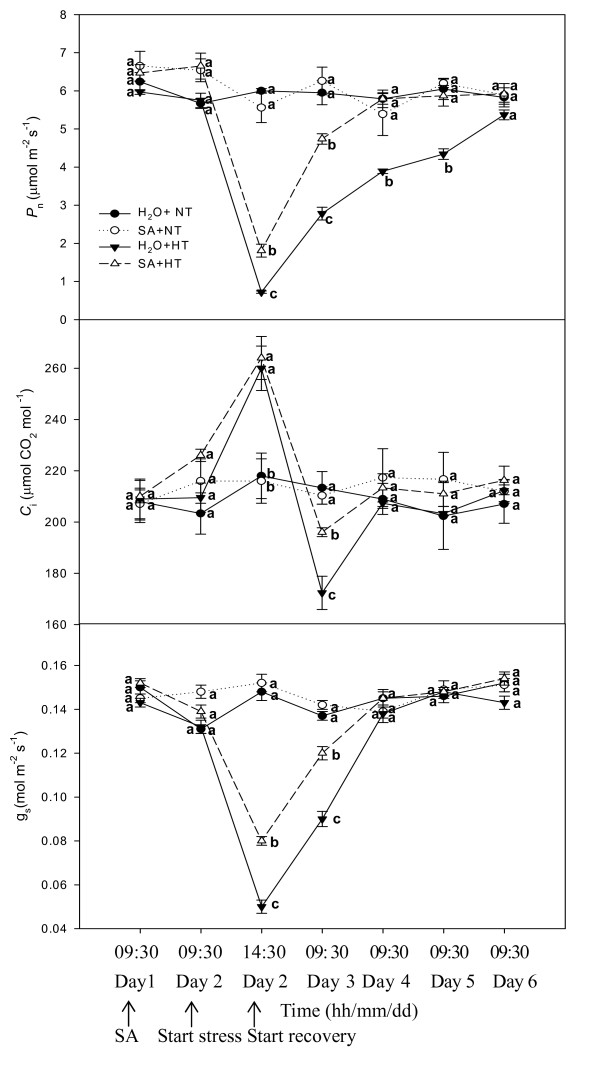
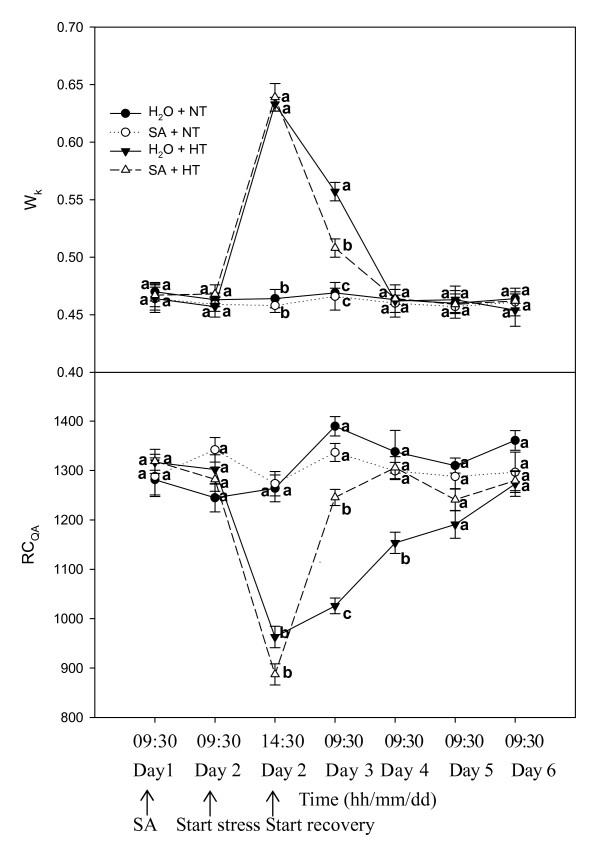
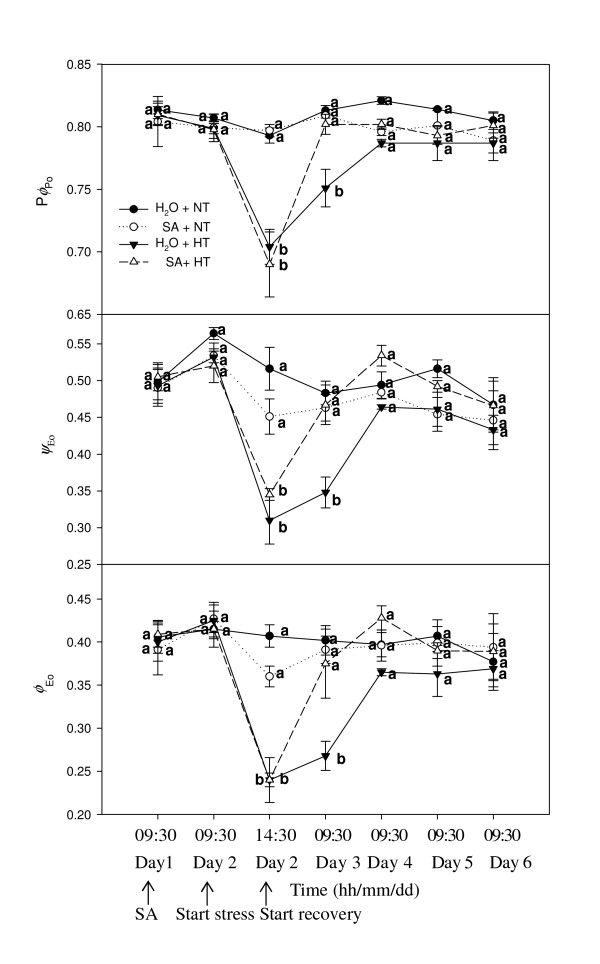
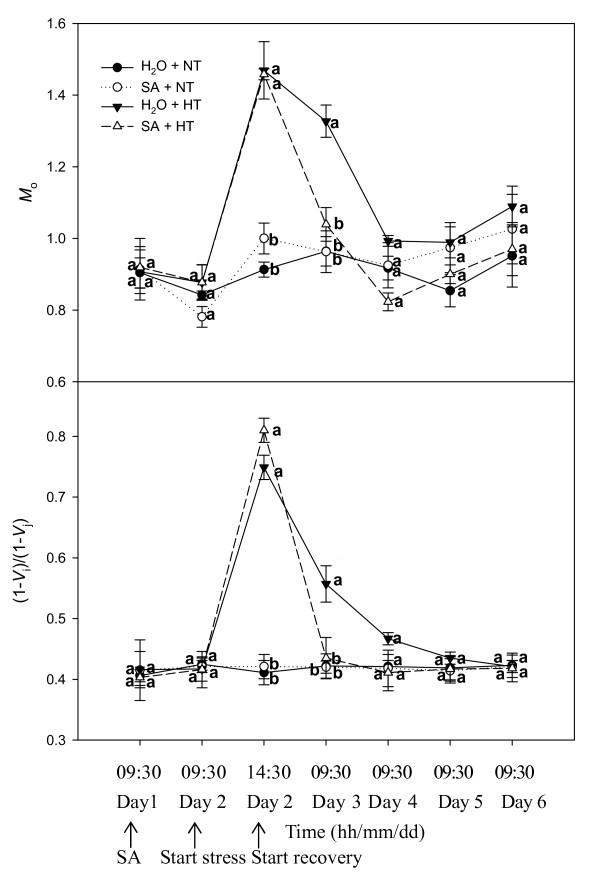
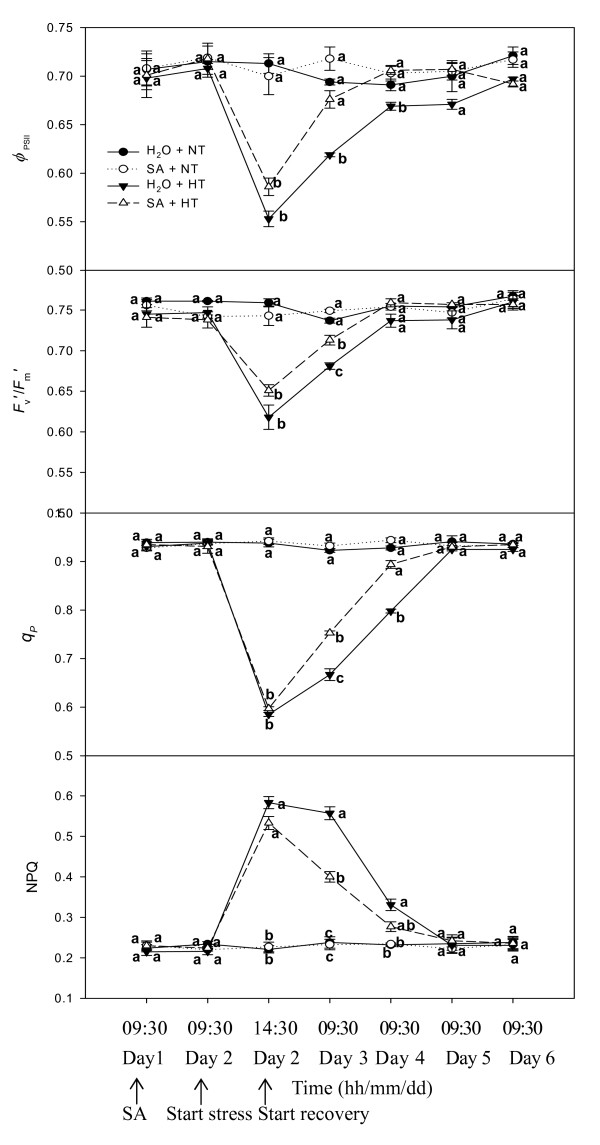
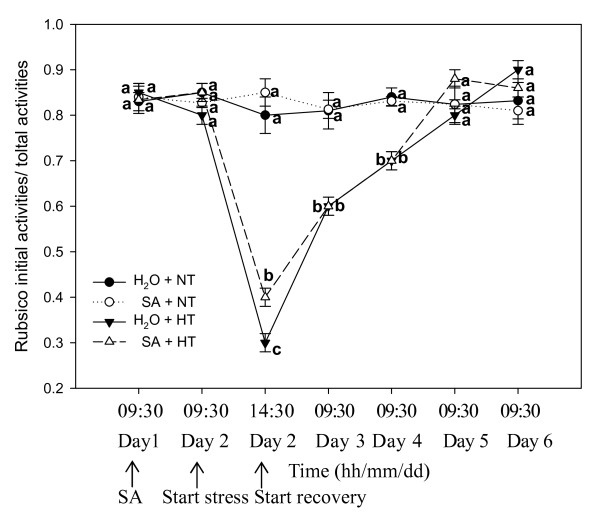
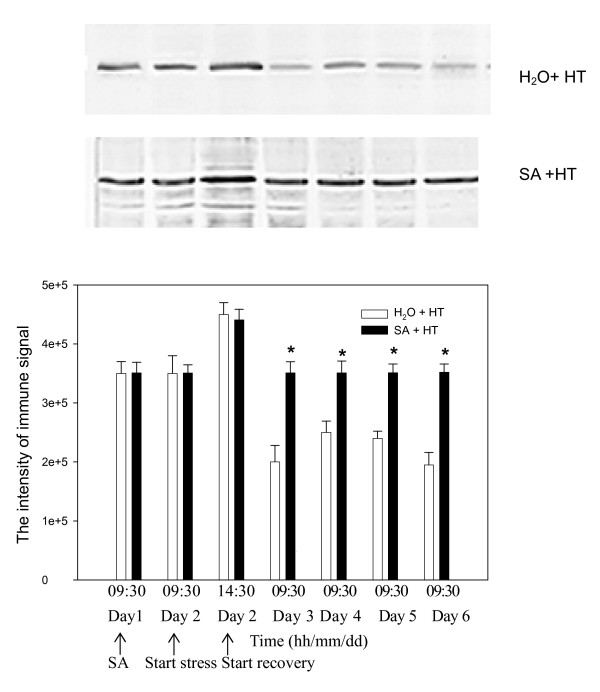
BACKGROUND: Although the effect of salicylic acid (SA) on photosynthesis of plants including grapevines has been investigated, very little is yet known about the effects of SA on carbon assimilation and several components of PSII electron transport (donor side, reaction center and acceptor side). In this study, the impact of SA pretreatment on photosynthesis was evaluated in the leaves of young grapevines before heat stress (25 degrees C), during heat stress (43 degrees C for 5 h), and through the following recovery period (25 degrees C). Photosynthetic measures included gas exchange parameters, PSII electron transport, energy dissipation, and Rubisco activation state. The levels of heat shock proteins (HSPs) in the chloroplast were also investigated. RESULTS: SA did not significantly (P < 0.05) influence the net photosynthesis rate (Pn) of leaves before heat stress. But, SA did alleviate declines in Pn and Rubisco activation state, and did not alter negative changes in PSII parameters (donor side, acceptor side and reaction center QA) under heat stress. Following heat treatment, the recovery of Pn in SA-treated leaves was accelerated compared with the control (H2O-treated) leaves, and, donor and acceptor parameters of PSII in SA-treated leaves recovered to normal levels more rapidly than in the controls. Rubisco, however, was not significantly (P < 0.05) influenced by SA. Before heat stress, SA did not affect level of HSP 21, but the HSP21 immune signal increased in both SA-treated and control leaves during heat stress. During the recovery period, HSP21 levels remained high through the end of the experiment in the SA-treated leaves, but decreased in controls. CONCLUSION: SA pretreatment alleviated the heat stress induced decrease in Pn mainly through maintaining higher Rubisco activation state, and it accelerated the recovery of Pn mainly through effects on PSII function. These effects of SA may be related in part to enhanced levels of HSP21.
Overview
The claims and statistics of this paper haven’t been checked yet.
Run the check — free, no account needed. It reads the open-access text and checks the sources it cites.
Integrity signals
Registry
Cites
Statistics
Figures
Verification
Claims the paper makes
The claims and statistics of this paper haven’t been checked yet.
Run the check — free, no account needed. It reads the open-access text and checks the sources it cites.
Claims other papers make about this one
Each is checked against this paper’s own text: does it say what the citing paper says it does?
The source backs part of the claim, not all of it — or backs it for a different population, condition or comparison.
In the citing paper
“It has been also reported that plants exposed to heat stress for even a short time experience the inhibition of the OEC and the reaction center of PSII (Wang et al. 2010, Hamdani et al. 2011), although the former is more sensitive to heat than the latter.”
From Photosynthesis under stressful environments: An overview (2013) · cites this paper as Wang et al. 2010
Experimental — accuracy not yet measuredThe source backs part of the claim, not all of it — or backs it for a different population, condition or comparison.
In the citing paper
“High temperature can damage the ultrastructure of the thylakoid membrane, thereby modulating its biochemical properties (Berry andBjörkman 1980, Wang et al. 2010).”
From Photosynthesis under stressful environments: An overview (2013) · cites this paper as Wang et al. 2010
Experimental — accuracy not yet measured
Self-check
Percentages, sums and reported differences re-computed from the paper’s own numbers.
The self-check needs the paper’s full text.
Citations
Cites
Bradford, M. M. (1976) · Analytical Biochemistry · doi:10.1016/0003-2697(76)90527-3 · Cited by 255,302
Photosynthetic Response and Adaptation to Temperature in Higher Plants
Berry, J., & Bjorkman, O. (1980) · Annual Review of Plant Physiology · doi:10.1146/annurev.pp.31.060180.002423 · Cited by 3,063
Role of plant heat-shock proteins and molecular chaperones in the abiotic stress response
Wang, W., Vinocur, B. J., Shoseyov, O., & Altman, A. (2004) · Trends in Plant Science · doi:10.1016/j.tplants.2004.03.006 · Cited by 2,759
The use of chlorophyll fluorescence nomenclature in plant stress physiology
van Kooten, O., & Snel, J. F. H. (1990) · Photosynthesis Research · doi:10.1007/bf00033156 · Cited by 2,314
Role of Salicylic Acid in Plants
Raskin, I. (1992) · Annual Review of Plant Physiology and Plant Molecular Biology · doi:10.1146/annurev.pp.43.060192.002255 · Cited by 1,346
Insulin Staining of ES Cell Progeny from Insulin Uptake
Rajagopal, J., Anderson, W. J., Kume, S., Martinez, O. I., & Melton, D. A. (2003) · Science · doi:10.1126/science.1077838 · Cited by 931
Influence of Climate, Soil, and Cultivar on Terroir
van Leeuwen, C., Friant, P., Choné, X., Trégoat, O., Koundouras, S., & Dubourdieu, D. (2004) · American Journal of Enology and Viticulture · doi:10.5344/ajev.2004.55.3.207 · Cited by 818
Demmig‐Adams, B., Adams, W. W., Barker, D. H., Logan, B. A., Bowling, D. R., & Verhoeven, A. S. (1996) · Physiologia Plantarum · doi:10.1034/j.1399-3054.1996.980206.x · Cited by 800
Induction of Abiotic Stress Tolerance by Salicylic Acid Signaling
Horváth, E., Szalai, G., & Janda, T. (2007) · Journal of Plant Growth Regulation · doi:10.1007/s00344-007-9017-4 · Cited by 772
Climate and Management Contributions to Recent Trends in U.S. Agricultural Yields
Lobell, D. B., & Asner, G. P. (2003) · Science · doi:10.1126/science.1078475 · Cited by 740
Research works printed but not linked: 1
- Schultz HR: Climate change and world viticulture. Cost Action 858 Workshop: Vineyard under environmental constraints: adaptations to climate change. Abiotic stress ecophysiology and grape functional genomics. Poland: University of Lodz 2007.
Cited by
Sorted by citations
Physiological, Biochemical, and Molecular Mechanisms of Heat Stress Tolerance in Plants
Hasanuzzaman, M., Nahar, K., Alam, M., Roychowdhury, R., & Fujita, M. (2013) · International Journal of Molecular Sciences · doi:10.3390/ijms14059643 · Cited by 2,313
Photosynthesis under stressful environments: An overview
Ashraf, M., & Harris, P. J. C. (2013) · Photosynthetica · doi:10.1007/s11099-013-0021-6 · Cited by 2,028
Salicylic acid-induced abiotic stress tolerance and underlying mechanisms in plants
Khan, M. I. R., Fatma, M., Per, T. S., Anjum, N. A., & Khan, N. A. (2015) · Frontiers in Plant Science · doi:10.3389/fpls.2015.00462 · Cited by 1,321
Regulation of Photosynthesis during Abiotic Stress-Induced Photoinhibition
Gururani, M. A., Venkatesh, J., & Tran, L. P. (2015) · Molecular Plant · doi:10.1016/j.molp.2015.05.005 · Cited by 880
Nazar, R., Iqbal, N., Syeed, S., & Khan, N. A. (2010) · Journal of Plant Physiology · doi:10.1016/j.jplph.2010.11.001 · Cited by 559
Mechanisms Regulating the Dynamics of Photosynthesis Under Abiotic Stresses
Muhammad, I., Shalmani, A., Ali, M., Yang, Q., Ahmad, H., & Li, F. B. (2021) · Frontiers in Plant Science · doi:10.3389/fpls.2020.615942 · Cited by 474
Khan, M. I. R., Iqbal, N., Masood, A., Per, T. S., & Khan, N. A. (2013) · Plant Signaling & Behavior · doi:10.4161/psb.26374 · Cited by 407
Plant Hormone-Mediated Regulation of Heat Tolerance in Response to Global Climate Change
Li, N., Euring, D., Cha, J. Y., Lin, Z., Lu, M.-Z., Huang, L., & Kim, W. Y. (2021) · Frontiers in Plant Science · doi:10.3389/fpls.2020.627969 · Cited by 347
Heat stress in cultivated plants: nature, impact, mechanisms, and mitigation strategies—a review
Hassan, M., Chattha, M. U., Khan, İ., Chattha, M. B., Barbanti, L., Aamer, M., Iqbal, M. M., Nawaz, M., Mahmood, A., Ali, A., et al. (2020) · Plant Biosystems - An International Journal Dealing with all Aspects of Plant Biology · doi:10.1080/11263504.2020.1727987 · Cited by 340
Temperature stress and redox homeostasis in agricultural crops
Awasthi, R., Bhandari, K., & Nayyar, H. (2015) · Frontiers in Environmental Science · doi:10.3389/fenvs.2015.00011 · Cited by 321
Thermotolerance effect of plant growth-promoting Bacillus cereus SA1 on soybean during heat stress
Khan, M. A., Asaf, S., Khan, A. L., Jan, R., Kang, S., Kim, K., & Lee, I. (2020) · BMC Microbiology · doi:10.1186/s12866-020-01822-7 · Cited by 303
Nazar, R., Umar, S., Khan, N. A., & Sareer, O. (2015) · South African Journal of Botany · doi:10.1016/j.sajb.2015.02.005 · Cited by 292
Zandalinas, S. I., Rivero, R. M., Martı́nez, V., Gómez‐Cadenas, ., & Arbona, V. (2016) · BMC Plant Biology · doi:10.1186/s12870-016-0791-7 · Cited by 266
Arif, Y., Sami, F., Siddiqui, H., Bajguz, A., & Hayat, S. (2020) · Environmental and Experimental Botany · doi:10.1016/j.envexpbot.2020.104040 · Cited by 257
Li, T., Hu, Y., Du, X., Tang, H., Shen, C., & Wu, J. (2014) · PLoS ONE · doi:10.1371/journal.pone.0109492 · Cited by 253
Jahan, M. S., Wang, Y., Shu, S., Zhong, M., Chen, Z., Wu, J., Sun, J., & Guo, S. (2018) · Scientia Horticulturae · doi:10.1016/j.scienta.2018.12.047 · Cited by 252
Grapevine Responses to Heat Stress and Global Warming
Venios, X., Korkas, E., Nisiotou, A. A., & Banilas, G. (2020) · Plants · doi:10.3390/plants9121754 · Cited by 249
Salicylic acid: A key regulator of redox signalling and plant immunity
Saleem, M., Fariduddin, Q., & Castroverde, C. D. M. (2021) · Plant Physiology and Biochemistry · doi:10.1016/j.plaphy.2021.10.011 · Cited by 231
Role of Reactive Oxygen Species and Hormones in Plant Responses to Temperature Changes
Devireddy, A. R., Tschaplinski, T. J., Tuskan, G. A., Muchero, W., & Chen, J. (2021) · International Journal of Molecular Sciences · doi:10.3390/ijms22168843 · Cited by 221
Gouot, J., Smith, J. P., Holzapfel, B., Walker, A. R., & Barril, C. (2018) · Journal of Experimental Botany · doi:10.1093/jxb/ery392 · Cited by 213
Kaushal, N., Bhandari, K., Siddique, K. H. M., & Nayyar, H. (2016) · Cogent Food & Agriculture · doi:10.1080/23311932.2015.1134380 · Cited by 224
Christou, A., Filippou, P. S., Manganaris, G. Α., & Fotopoulos, V. (2014) · BMC Plant Biology · doi:10.1186/1471-2229-14-42 · Cited by 199
Salicylic acid and photosynthesis: signalling and effects
Janda, T., Gondor, O. K., Yordanova, R., Szalai, G., & Pál, M. (2014) · Acta Physiologiae Plantarum · doi:10.1007/s11738-014-1620-y · Cited by 195
Zinta, G., AbdElgawad, H., Domagalska, M. A., Vergauwen, L., Knapen, D., Nijs, I., Janssens, I. A., Beemster, G. T. S., & Asard, H. (2014) · Global Change Biology · doi:10.1111/gcb.12626 · Cited by 196
Multidimensional role of silicon to activate resilient plant growth and to mitigate abiotic stress
Mir, R. A., Bhat, B. A., Yousuf, H., Islam, S. T., Raza, A., Rizvi, M. A., Charagh, S., Albaqami, M., Sofi, P. A., & Zargar, S. M. (2022) · Frontiers in Plant Science · doi:10.3389/fpls.2022.819658 · Cited by 178
Emamverdian, A., Ding, Y., & Mokhberdoran, F. (2020) · Plant Signaling & Behavior · doi:10.1080/15592324.2020.1777372 · Cited by 167
Redox Signaling in Plant Heat Stress Response
Fortunato, S., Lasorella, C., Dipierro, N., Vita, F., & de Pinto, M. C. (2023) · Antioxidants · doi:10.3390/antiox12030605 · Cited by 167
Liu, G., Wang, J., Cramer, G. R., Dai, Z., Duan, W., Xu, H.-G., Wu, B., Fan, P., Wang, L., & Li, S. (2012) · BMC Plant Biology · doi:10.1186/1471-2229-12-174 · Cited by 159
Self-citationWassie, M., Zhang, W., Zhang, Q., Ji, K., Cao, L., & Chen, L. (2020) · Ecotoxicology and Environmental Safety · doi:10.1016/j.ecoenv.2020.110206 · Cited by 159
Photosynthesis in a Changing Global Climate: Scaling Up and Scaling Down in Crops
Baslam, M., Mitsui, T., Hodges, M., Priesack, E., Herritt, M. T., Aranjuelo, Í., & Sanz‐Sáez, Á. (2020) · Frontiers in Plant Science · doi:10.3389/fpls.2020.00882 · Cited by 156
Kurepin, L. V., Ivanov, A. G., Zaman, M., Pharis, R. P., Allakhverdiev, S. I., Hurry, V., & Hüner, N. P. A. (2015) · Photosynthesis Research · doi:10.1007/s11120-015-0125-x · Cited by 149
Salicylic Acid, a Multifaceted Hormone, Combats Abiotic Stresses in Plants
Liu, J., Qiu, G., Liu, C., Li, H., Chen, X., Fu, Q., Lin, Y., & Guo, B. (2022) · Life · doi:10.3390/life12060886 · Cited by 144
Exogenous salicylic acid alleviates oxidative damage of barley plants under drought stress
Habibi, G. (2012) · Acta Biologica Szegediensis · Cited by 140
Rice Responses and Tolerance to High Temperature
Fahad, S., Adnan, M., Hassan, S., Saud, S., Hussain, S., Wu, C., Wang, D., Hakeem, K. R., Alharby, H. F., Turan, V., et al. (2018) · Elsevier eBooks · doi:10.1016/b978-0-12-814332-2.00010-1 · Cited by 143
Abiotic Stress and Role of Salicylic Acid in Plants
Hara, M., Furukawa, J., Sato, A., Mizoguchi, T., & Miura, K. (2011) · Springer eBooks · doi:10.1007/978-1-4614-0634-1_13 · Cited by 137
Zhao, Q., Zhou, L., Liu, J., Cao, Z., Du, X., Huang, F., Pan, G., & Cheng, F. (2018) · Plant Cell Reports · doi:10.1007/s00299-018-2264-y · Cited by 137
Gururani, M. A., Mohanta, T. K., & Bae, H. (2015) · International Journal of Molecular Sciences · doi:10.3390/ijms160819055 · Cited by 138
Wang, A., Hu, J., Gao, C., Chen, G., Wang, B., Lin, C., Song, L., Ding, Y., & Zhou, G. (2019) · Scientific Reports · doi:10.1038/s41598-019-41428-2 · Cited by 133
Oxidative stress homeostasis in grapevine (Vitis vinifera L.)
Carvalho, L. C., Vidigal, P., & Amâncio, S. (2015) · Frontiers in Environmental Science · doi:10.3389/fenvs.2015.00020 · Cited by 137
La, V. H., Lee, B., Zhang, Q., Park, S., Islam, M. T., & Kim, T. (2018) · Horticulture Environment and Biotechnology · doi:10.1007/s13580-018-0099-7 · Cited by 120
Luo, H.-B., Ma, L., Xi, H.-F., Duan, W., Li, S.-H., Loescher, W. H., Wang, J.-F., & Wang, L.-J. (2011) · PLoS ONE · doi:10.1371/journal.pone.0023033 · Cited by 120
Self-citationFaghih, S., Ghobadi, C., & Zarei, A. (2017) · Journal of Plant Growth Regulation · doi:10.1007/s00344-017-9666-x · Cited by 117
Khan, A., Khan, A. L., Imran, M., Asaf, S., Kim, Y.-H., Bilal, S., Numan, M., Al‐Harrasi, A., Al-Rawahi, A. N., & Lee, I. (2020) · BMC Plant Biology · doi:10.1186/s12870-020-02456-7 · Cited by 112
Khan, M. A., Asaf, S., Khan, A. L., Jan, R., Kang, S., Kim, K., & Lee, I. (2020) · PLoS ONE · doi:10.1371/journal.pone.0232228 · Cited by 111
Salt Stress in Brassica: Effects, Tolerance Mechanisms, and Management
Shahzad, B., Rehman, A., Tanveer, M., Wang, L., Park, S. K., & Ali, A. (2021) · Journal of Plant Growth Regulation · doi:10.1007/s00344-021-10338-x · Cited by 110
Self-citationUncovering the mechanisms of salicylic acid-mediated abiotic stress tolerance in horticultural crops
Yang, H., Fang, R. X., Luo, L., Yang, W., Huang, Q., Yang, C., Hui, W., Gong, W., & Wang, J. (2023) · Frontiers in Plant Science · doi:10.3389/fpls.2023.1226041 · Cited by 94
Targeting salt stress coping mechanisms for stress tolerance in Brassica: A research perspective
Shah, A. N., Tanveer, M., Abbas, A., Fahad, S., Baloch, M. S., Ahmad, M. I., Saud, S., & Song, Y. (2020) · Plant Physiology and Biochemistry · doi:10.1016/j.plaphy.2020.11.044 · Cited by 91
Paolinelli, M., Villalobos‐Escobedo, J. M., Rolshausen, P. E., Herrera‐Estrella, A., Galindo‐Sánchez, C. E., Hernández, J. F. L., & Hernández-Martínez, R. (2016) · BMC Genomics · doi:10.1186/s12864-016-2952-3 · Cited by 90
Batista, V. C. V., Pereira, I. M. C., Paula‐Marinho, S. D. O., Canuto, K. M., Pereira, R. D. C. A., Rodrigues, T. H. S., Daloso, D. M., Filho, E. G., & de Carvalho, H. H. (2019) · Environmental and Experimental Botany · doi:10.1016/j.envexpbot.2019.103870 · Cited by 82
Sharma, L., Priya, M. S., Kaushal, N., Bhandhari, K., Chaudhary, S., Dhankher, O. P., Prasad, P. V. V., Siddique, K. H. M., & Nayyar, H. (2019) · Journal of Experimental Botany · doi:10.1093/jxb/erz333 · Cited by 78
Zhang, L., Zhang, Z., Gao, H., Meng, X., Yang, C., Liu, J.-G., & Meng, Q. (2012) · BMC Plant Biology · doi:10.1186/1471-2229-12-40 · Cited by 75
Balfagón, D., Zandalinas, S. I., & Gómez‐Cadenas, . (2018) · Physiologia Plantarum · doi:10.1111/ppl.12815 · Cited by 74
Khatri, K., & Rathore, M. S. (2022) · Plant Stress · doi:10.1016/j.stress.2022.100063 · Cited by 74
Zhang, Z., Lan, M., Han, X., Wu, J., & Wang‐Pruski, G. (2019) · Journal of Plant Growth Regulation · doi:10.1007/s00344-019-09969-y · Cited by 71
Sabagh, A. E., Hossain, A., Barutçular, C., Islam, M. S., Ratnasekera, D., Kumar, N., Meena, R. S., Gharib, H. S., Saneoka, H., da Silva, J. A. T., et al. (2019) · Australian Journal of Crop Science · doi:10.21475/ajcs.19.13.01.p1284 · Cited by 71
Elsisi, M., Elshiekh, M., Sabry, N., Aziz, M., Attia, K. A., Islam, F., Chen, J., & Abdelrahman, M. (2024) · Stress Biology · doi:10.1007/s44154-024-00160-2 · Cited by 73
Physiological response to drought in radiata pine: phytohormone implication at leaf level
Diego, N. D., Pérez‐Alfocea, F., Cantero, E., Lacuesta, M., & Moncaleán, P. (2012) · Tree Physiology · doi:10.1093/treephys/tps029 · Cited by 70
Salicylic Acid: Physiological Roles in Plants
Yusuf, M., Hayat, S., Alyemeni, M. N., Fariduddin, Q., & Ahmad, A. (2013) · Springer eBooks · doi:10.1007/978-94-007-6428-6_2 · Cited by 70
Role of Phytohormones in Regulating Heat Stress Acclimation in Agricultural Crops
Jha, U. C., Nayyar, H., & Siddique, K. H. M. (2021) · Journal of Plant Growth Regulation · doi:10.1007/s00344-021-10362-x · Cited by 69
Heat stress in grapevine: the pros and cons of acclimation
Carvalho, L. C., Coito, J. L., COLAÇO, S., Sangiogo, M., & Amâncio, S. (2014) · Plant Cell & Environment · doi:10.1111/pce.12445 · Cited by 69
Macovei, A., Pagano, A., Leonetti, P., Carbonera, D., Balestrazzi, A., & Araújo, S. D. S. (2016) · Plant Cell Reports · doi:10.1007/s00299-016-2060-5 · Cited by 73
Nie, W., Gong, B., Chen, Y., Wang, J., Wei, M., & Shi, Q. (2018) · Scientia Horticulturae · doi:10.1016/j.scienta.2018.03.011 · Cited by 69
Shasmita, Mohapatra, D., Mohapatra, P. K., Naik, S. K., & Mukherjee, A. K. (2019) · Physiological and Molecular Plant Pathology · doi:10.1016/j.pmpp.2019.101427 · Cited by 68
Role of Hormones in Plant Adaptation to Heat Stress
Ahammed, G. J., Li, X., Zhou, J., Zhou, Y., & Yu, J. (2016) · Springer eBooks · doi:10.1007/978-94-017-7758-2_1 · Cited by 69
Kim, Y., Khan, M. A., Kang, S., Hamayun, M., & Lee, I. (2020) · Journal of Microbiology and Biotechnology · doi:10.4014/jmb.2006.06010 · Cited by 64
Plant hormone-mediated stress regulation responses in fruit crops- a review
Rachappanavar, V., Manish, K., Sharma, J. K., Panday, H., & sharma, C. (2022) · Scientia Horticulturae · doi:10.1016/j.scienta.2022.111302 · Cited by 62
Tang, Y., Sun, X., Wen, T., Liu, M., Yang, M.-Y., & Chen, X. (2016) · Plant Physiology and Biochemistry · doi:10.1016/j.plaphy.2016.11.016 · Cited by 62
Liu, R., Cao, P., Ren, A., Wang, S., Tao, Y., Zhu, T., Shi, L., Zhu, J. K., Jiang, A., & Zhao, M. (2018) · Redox Biology · doi:10.1016/j.redox.2018.03.018 · Cited by 63
Almagro, L., Navarro, S. B., Martínez‐Márquez, A., Bru‐Martínez, R., & Pedreño, M. A. (2015) · Plant Physiology and Biochemistry · doi:10.1016/j.plaphy.2015.10.025 · Cited by 61
Liu, D., Li, M., Liu, Y., & Shi, L. (2020) · Environmental and Experimental Botany · doi:10.1016/j.envexpbot.2020.104043 · Cited by 60
Microbe-Mediated Thermotolerance in Plants and Pertinent Mechanisms- A Meta-Analysis and Review
Dastogeer, K. M. G., Zahan, M. I., Rhaman, M. S., Sarker, M. S. A., & Chakraborty, A. (2022) · Frontiers in Microbiology · doi:10.3389/fmicb.2022.833566 · Cited by 60
Salicylic acid had the potential to enhance tolerance in horticultural crops against abiotic stress
Chen, S., Zhao, C., Ren, R.-M., & Jiang, J.-H. (2023) · Frontiers in Plant Science · doi:10.3389/fpls.2023.1141918 · Cited by 60
Effect of Low Temperature Stress on Photosynthesis and Allied Traits: A Review
Bhattacharya, A. (2022) · Springer eBooks · doi:10.1007/978-981-16-9037-2_3 · Cited by 61
Salem, A. B., Bouamama, B., Ghorbel, A., & Mliki, A. (2010) · Microscopy Research and Technique · doi:10.1002/jemt.20955 · Cited by 59
Brito, C., Dinis, L., Meijón, M., Ferreira, H. F., Pinto, G., Moutinho‐Pereira, J., & Correia, C. M. (2018) · Journal of Plant Physiology · doi:10.1016/j.jplph.2018.08.004 · Cited by 61
Martins, S., Pereira, S., Dinis, L., & Brito, C. (2024) · Horticulturae · doi:10.3390/horticulturae10101066 · Cited by 57
Can biostimulants enhance plant resilience to heat and water stress in the Mediterranean hotspot?
Carillo, P. (2025) · Plant Stress · doi:10.1016/j.stress.2025.100802 · Cited by 57
Wakchaure, G. C., Minhas, P. S., Pasala, R., & Choudhary, R. L. (2016) · Agricultural Water Management · doi:10.1016/j.agwat.2016.04.004 · Cited by 57
Salicylic Acid–Mediated Defense Mechanisms to Abiotic Stress Tolerance
Ahmad, F. J., Singh, A., & Kamal, A. (2019) · Elsevier eBooks · doi:10.1016/b978-0-12-816451-8.00022-8 · Cited by 57
Ghaderi, N., Normohammadi, S., & Javadi, T. (2015) · Cited by 56
Silicon-mediated heat tolerance in higher plants: A mechanistic outlook
Saha, G., Mostofa, M. G., Rahman, M. M., & Tran, L. P. (2021) · Plant Physiology and Biochemistry · doi:10.1016/j.plaphy.2021.05.051 · Cited by 58
Rocheta, M., Becker, J. D., Coito, J. L., Carvalho, L. C., & Amâncio, S. (2013) · Functional & Integrative Genomics · doi:10.1007/s10142-013-0338-z · Cited by 55
Salicylic Acid: An All-Rounder in Regulating Abiotic Stress Responses in Plants
Hasanuzzaman, M., Nahar, K., Bhuiyan, T. F., Anee, T. I., Inafuku, M., Oku, H., & Fujita, M. (2017) · InTech eBooks · doi:10.5772/intechopen.68213 · Cited by 57
Plant Responses and Tolerance to High Temperature Stress: Role of Exogenous Phytoprotectants
Nahar, K., Hasanuzzaman, M., Ahamed, K. U., Hakeem, K. R., Öztürk, M., & Fujita, M. (2015) · Springer eBooks · doi:10.1007/978-3-319-23162-4_17 · Cited by 54
Gorni, P. H., Pacheco, A. C., Moro, A. L., Silva, J. F. A., Moreli, R. R., de Miranda, G. R., Pelegrini, J. M., Spera, K. D., Bronzel, J. L., & da Silva, R. M. G. (2020) · Scientia Horticulturae · doi:10.1016/j.scienta.2020.109436 · Cited by 54
Role of Salicylic Acid in Biotic and Abiotic Stress Tolerance in Plants
Mohamed, H. I., El-Shazly, H. H., & Badr, A. (2020) · Springer eBooks · doi:10.1007/978-981-15-4890-1_23 · Cited by 54
Sangwan, S., Shameem, N., Yashveer, S., Tanwar, H., Parray, J. A., Jatav, H. S., Sharma, S., Punia, H., Sayyed, R. Z., Almalki, W. H., et al. (2022) · Frontiers in Bioscience-Landmark · doi:10.31083/j.fbl2711310 · Cited by 53
Prospects for Increasing the Efficacy of Plant Resistance Inducers Stimulating Salicylic Acid
Urban, L., Lopez‐Lauri, F., Hdech, D. B., & Aarrouf, J. (2022) · Agronomy · doi:10.3390/agronomy12123151 · Cited by 52
Khan, N., Bano, A., Shahid, M. A., Nasim, W., & Babar, M. A. (2018) · Biologia · doi:10.2478/s11756-018-0127-1 · Cited by 52
Darvizheh, H., Zahedi, M., Abbaszadeh, B., & Razmjoo, J. (2018) · Scientia Horticulturae · doi:10.1016/j.scienta.2018.12.037 · Cited by 51
Spagnolo, A., Magnin‐Robert, M., Alayi, T. D., Cilindre, C., Mercier, L., Schaeffer‐Reiss, C., DORSSELAER, A. V., Clément, C., & Fontaine, F. (2011) · Journal of Proteome Research · doi:10.1021/pr200892g · Cited by 49
Chen, Y., Mao, H., Wu, N., Din, A. M. U., Khan, A., Zhang, H., & Yuan, S. (2020) · International Journal of Molecular Sciences · doi:10.3390/ijms21041229 · Cited by 49
Emerging Roles of Salicylic Acid and Jasmonates in Plant Abiotic Stress Responses
Santisree, P., Jalli, L. C. L., Bhatnagar‐Mathur, P., & Sharma, K. K. (2020) · Wiley eBooks · doi:10.1002/9781119552154.ch17 · Cited by 49
Diego, N. D., Saiz‐Fernández, I., Rodriguez, J. L., Pérez-Alfocea, P., Sampedro, M. C., Barrio, R. J., Lacuesta, M., & Moncaleán, P. (2015) · Journal of Plant Physiology · doi:10.1016/j.jplph.2015.08.006 · Cited by 47
Li, X., & Zhang, L. (2015) · Journal of Hazardous Materials · doi:10.1016/j.jhazmat.2015.04.015 · Cited by 47
Sehar, Z., Gautam, H., Masood, A., & Khan, N. A. (2022) · Journal of Plant Growth Regulation · doi:10.1007/s00344-022-10737-8 · Cited by 47
Lobato, A. K. D. S., Barbosa, M. A. M., Alsahli, A. A., Lima, E. J. A., & da Silva, B. R. S. (2021) · Physiologia Plantarum · doi:10.1111/ppl.13329 · Cited by 46
Shen, C., Hu, Y., Du, X., Li, T., Tang, H., & Wu, J. (2014) · Trees · doi:10.1007/s00468-014-1009-y · Cited by 45
Zhan, Y., Li, J., Sun, J., Zhang, W., Li, Y., Cui, D., Hu, W., & Chang, Y. (2019) · Frontiers in Genetics · doi:10.3389/fgene.2019.00301 · Cited by 43
Carvalho, L. C., & Amâncio, S. (2018) · Physiologia Plantarum · doi:10.1111/ppl.12857 · Cited by 41
Metadata
- Authors
- Wang, L.-J., Fan, L., Loescher, W., Duan, W., Liu, G.-J., Cheng, J.-S., Luo, H.-B., & Li, S.-H.
- Affiliations
- Chinese Academy of Sciences (CN)
- Michigan State University (US)
- China Agricultural University (CN)
- Corresponding author
- Li, Shao-Hua
- Venue
- BMC Plant Biology
- Published
- 2010-02-23
- Volume
- 10
- Issue
- 1
- Pages
- 34-34
- ISSN
- 1471-2229 (ISSN-L)
- PMC
- PMC2848757
- OpenAlex
- W2067467448
- Cited by
- 338
- References
- 51
- Citations by year
- 2026: 11 · 2025: 24 · 2024: 22 · 2023: 29 · 2022: 35 · 2021: 36 · 2020: 35 · 2019: 24 · 2018: 22 · 2017: 11 · 2016: 23 · 2015: 21 · 2014: 13 · 2013: 17 · 2012: 8
- FWCI
- 4.17
- Type
- journal article
- Language
- en
- Open access
- gold
- doi.org
- Licence
- cc-by
- Locations
- BMC Plant Biology (publishedVersion, cc-by)
- PubMed Central (publishedVersion, cc-by)
- PubMed (publishedVersion)
- DOAJ (DOAJ: Directory of Open Access Journals) (submittedVersion)
- Institute of Botany, CAS Institutional Repository (submittedVersion)
- Funders
- National Natural Science Foundation of China
- Chinese Academy of Sciences
- Shandong Agricultural University
- Institute of Botany, Chinese Academy of Sciences
- Topics
- Life Sciences › Biochemistry, Genetics and Molecular Biology › Molecular Biology › Photosynthetic Processes and Mechanisms
- Life Sciences › Agricultural and Biological Sciences › Plant Science › Plant Stress Responses and Tolerance
- Life Sciences › Agricultural and Biological Sciences › Plant Science › Plant Physiology and Cultivation Studies
- Keywords
- salicylic acid, heat stress, grapevine, photosynthesis, photosystem II electron transport, Rubisco activation, heat shock proteins, HSP21, heat stress recovery, carbon assimilation
- MeSH terms
- Carbon Dioxide, Chloroplasts, Electron Transport, Hot Temperature, Heat-Shock Proteins, Photosynthesis, Ribulose-Bisphosphate Carboxylase, Stress, Physiological, Plant Leaves, Plant Transpiration, Salicylic Acid, Vitis, Photosystem II Protein Complex
About these checks
Registry, retraction, Cites and statistics results are computed, not judged, with one exception: a printed reference that no index lists is read once by a model before it counts as a citation error. Claims are extracted by a model and kept only when their quote appears verbatim in the text; each cited source is then checked, with a model’s help, for whether it says what the claim relies on. Those verdicts can be wrong — read the claim’s quote and the cited source before relying on one.
Statistics and arithmetic are recomputed, not judged.
Confidence bands are shown only for fields calibrated on our annotated test set. None is calibrated yet, so no band is shown.
What counts as a claim ›How we measure confidence ›How we check this ›
Are you an author, or do you see a problem with this page? Request a review
