

Comparison of the transcriptomes of American chestnut (Castanea dentata) and Chinese chestnut (Castanea mollissima) in response to the chestnut blight infection
Open accessThe DOI matches its Crossref record; 58 of the 58 references it cites were found in a registry or an index.
Abstract
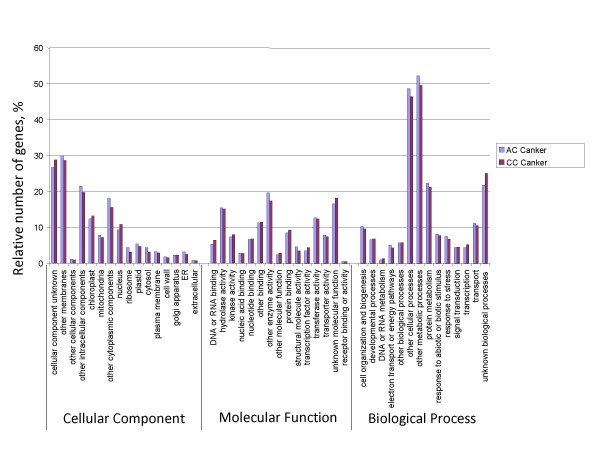
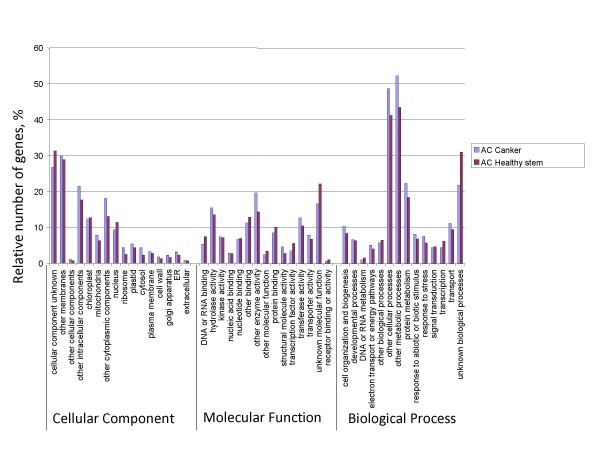
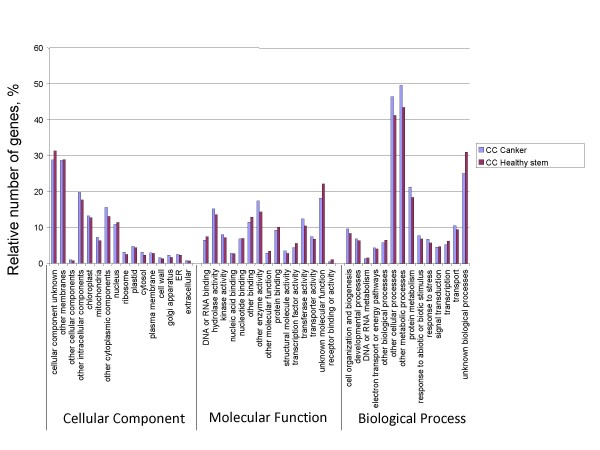
UNLABELLED: BACKGROUND1471-2229-9-51: American chestnut (Castanea dentata) was devastated by an exotic pathogen in the beginning of the twentieth century. This chestnut blight is caused by Cryphonectria parasitica, a fungus that infects stem tissues and kills the trees by girdling them. Because of the great economic and ecological value of this species, significant efforts have been made over the century to combat this disease, but it wasn't until recently that a focused genomics approach was initiated. Prior to the Genomic Tool Development for the Fagaceae project, genomic resources available in public databases for this species were limited to a few hundred ESTs. To identify genes involved in resistance to C. parasitica, we have sequenced the transcriptome from fungal infected and healthy stem tissues collected from blight-sensitive American chestnut and blight-resistant Chinese chestnut (Castanea mollissima) trees using ultra high throughput pyrosequencing. RESULTS: We produced over a million 454 reads, totaling over 250 million bp, from which we generated 40,039 and 28,890 unigenes in total from C. mollissima and C. dentata respectively. The functions of the unigenes, from GO annotation, cover a diverse set of molecular functions and biological processes, among which we identified a large number of genes associated with resistance to stresses and response to biotic stimuli. In silico expression analyses showed that many of the stress response unigenes were expressed more in canker tissues versus healthy stem tissues in both American and Chinese chestnut. Comparative analysis also identified genes belonging to different pathways of plant defense against biotic stresses that are differentially expressed in either American or Chinese chestnut canker tissues. CONCLUSION: Our study resulted in the identification of a large set of cDNA unigenes from American chestnut and Chinese chestnut. The ESTs and unigenes from this study constitute an important resource to the scientific community interested in the discovery of genes involved in various biological processes in Chestnut and other species. The identification of many defense-related genes differentially expressed in canker vs. healthy stem in chestnuts provides many new candidate genes for developing resistance to the chestnut blight and for studying pathways involved in responses of trees to necrotrophic pathogens. We also identified several candidate genes that may underline the difference in resistance to Cryphonectria parasitica between American chestnut and Chinese chestnut.
Overview
The claims and statistics of this paper haven’t been checked yet.
Free: it reads the open-access text and checks the first 5 claims that cite a source we can check. Create a free account to check every claim.
Integrity signals
Registry
Cites
Statistics
Figures
Verification
Claims the paper makes
The claims and statistics of this paper haven’t been checked yet.
Free: it reads the open-access text and checks the first 5 claims that cite a source we can check. Create a free account to check every claim.
Claims other papers make about this one
Each is checked against this paper’s own text: does it say what the citing paper says it does?
The source backs part of the claim, not all of it — or backs it for a different population, condition or comparison.
In the citing paper
“The newly developed high throughput sequencing technology, i.e. Next Generation Sequencing (NGS), including the Roche/454 Genome Sequencer FLX Instrument, the ABI SOLiD System, and the Illumina Genome Analyser, is a powerful and cost-efficient tool for advanced research in many areas, including re-sequencing, microRNA expression profiling, DNA methylation, especially de novo transcriptome”
From De novo assembly and characterization of root transcriptome using Illumina paired-end sequencing and development of cSSR markers in sweetpotato (Ipomoea batatas) (2010) · cites this paper as [19]
Experimental — accuracy not yet measuredThe cited source says what the claim attributes to it.
In the citing paper
“Due to its long read length and appearance ahead of the other two platforms, Roche GS FLX has been the most widely used platform for de novo transcriptome sequencing in many organisms, such as chestnut [19], pine [10], olive [44], ginseng [20], A. thaliana [45,46], maize [47], Artemisia annua [48], fish [18], insects [49,50], and worms [17].”
The cited source says what the claim attributes to it.
In the citing paper
“Like [10,19], if we assumed that the number of genes in sweetpotato was commensurate with that in Arabidopsis (25,000 genes, [62]), our annotated unigenes (20,755 genes with unique protein accession numbers) would likely represent more than 80% of genes in sweetpotato.”
Self-check
Percentages, sums and reported differences re-computed from the paper’s own numbers.
The self-check needs the paper’s full text.
Citations
Cites
Genome sequencing in microfabricated high-density picolitre reactors
Margulies, M., Egholm, M., Altman, W. E., Attiya, S., Bader, J. S., Bemben, L. A., Berka, J., Braverman, M. S., Chen, Y.-J., Chen, Z., et al. (2005) · Nature · doi:10.1038/nature03959 · Cited by 7,693 · cited 2×
“Bead-based pyrosequencing introduced recently [18] constitutes a better alternative for transcriptomics.”
BackgroundMethodA simple and efficient method for isolating RNA from pine trees
Chang, S., Puryear, J., & Cairney, J. (1993) · Plant Molecular Biology Reporter · doi:10.1007/bf02670468 · Cited by 3,580 · cited 1×
“RNA preparation and cDNA library synthesis Total RNA was prepared by the method of Chang and collaborators [56].”
MethodThe Significance of Digital Gene Expression Profiles
Audic, S., & Claverie, J.-M. (1997) · Genome Research · doi:10.1101/gr.7.10.986 · Cited by 2,786 · cited 1×
“Statistical tests as per [27] of the expression data showed that the differential expres-”
BackgroundMolecular Mechanisms of Metabolic Resistance to Synthetic and Natural Xenobiotics
Li, X., Schuler, M. A., & Berenbaum, M. R. (2007) · Annual Review of Entomology · doi:10.1146/annurev.ento.51.110104.151104 · Cited by 2,109 · cited 2×
“Polyphenol oxidases (PPO) catalyzing the oxygendependent oxidation of phenols to quinines, have been demonstrated to increase tomato plant resistance against Pseudomonas syringae [43].”
BackgroundStructures and mechanisms of glycosyl hydrolases
Davies, G., & Henrissat, B. (1995) · Structure · doi:10.1016/s0969-2126(01)00220-9 · Cited by 2,028 · cited 1×
“Glycosyl hydrolases break the bonds between carbohydrates and are involved in expansion and degradation of cell walls [30].”
BackgroundNational Center for Biotechnology Information
(2019) · Springer Reference Medizin · doi:10.1007/978-3-662-48986-4_301184 · Cited by 1,400
GOstat: find statistically overrepresented Gene Ontologies within a group of genes
Beißbarth, T., & Speed, T. P. (2004) · Bioinformatics · doi:10.1093/bioinformatics/bth088 · Cited by 1,257 · cited 2×
“However, statistical analysis using GOstat program showed that none of those differences were statistically significant [ 26 ].”
Applications of next-generation sequencing technologies in functional genomics
Morozova, O., & Marra, M. A. (2008) · Genomics · doi:10.1016/j.ygeno.2008.07.001 · Cited by 1,188 · cited 1×
“A comparison of capillary sequencing and next generation sequencing methods [23] showed that pyrosequencing is well adapted for analyzing the transcriptome of both model and non-model species, with lower cost than conventional methods such as microarrays, SAGE, or EST analysis generated using capillary sequencing.”
MethodChen, W., Provart, N. J., Glazebrook, J., Katagiri, F., Chang, H.-S., Eulgem, T., Mauch, F., Luan, S., Zou, G., Whitham, S. A., et al. (2002) · The Plant Cell · doi:10.1105/tpc.010410 · Cited by 968 · cited 1×
“The infection is also sensed by mitogen kinases, which activate other transcriptions factors such as AP2, Myb, and WRKY, which in turn induce the expression of genes from the phenylpropanoid, jasmonic acid, oligochitosan, and other pathways that are involved in resistance to pathogens [53,54].”
BackgroundThe Gene Ontology project in 2008
The Gene Ontology Consortium (2008) · Nucleic Acids Research · doi:10.1093/nar/gkm883 · Cited by 776
Research works printed but not linked: 1
- [2]Griffin GJ Blight Control and Resoration of the American Chestnut Journal of Forestry 2000 99 22 27
Cited by
Items 101–200 of 243
Corredoira, E., Valladares, S., Allona, I., Aragoncillo, C., Viéitez, A., & Ballester, A. (2012) · Tree Physiology · doi:10.1093/treephys/tps098 · Cited by 40
“improvement (Barakat et al. 2009).”
Molecular markers and their application in genetic diversity of penaeid shrimp
Vaseeharan, B., Rajakamaran, P., Jayaseelan, D., & vincent, A. Y. (2012) · Aquaculture International · doi:10.1007/s10499-012-9582-9 · Cited by 41
“…about differential expression between different tissues, life stages, individuals or populations, differences that may be important for understanding gene function, development, phenotypic plasticity, local adaptation and speciation (Barakat et al. 2009; Kristiansson et al. 2009; Wolf et al. 2010).”
BackgroundNew ecological and physiological dimensions of beech bark disease development in aftermath forests
Cale, J. A., Teale, S. A., Johnston, M. T., Boyer, G. L., Perri, K. A., & Castello, J. D. (2014) · Forest Ecology and Management · doi:10.1016/j.foreco.2014.10.019 · Cited by 37
Dini, F., Sartor, C., & Botta, R. (2012) · Plant Physiology and Biochemistry · doi:10.1016/j.plaphy.2012.07.023 · Cited by 37
Dong, S., Liu, Y., Niu, J., Ning, Y., Lin, S., & Zhang, Z. (2014) · Gene · doi:10.1016/j.gene.2014.04.031 · Cited by 40
Characterizing the walnut genome through analyses of BAC end sequences
Wu, J., Gu, Y., Hu, Y., You, F. M., Dandekar, A. M., Leslie, C. A., Aradhya, M. K., Dvořák, J., & Luo, M. (2011) · Plant Molecular Biology · doi:10.1007/s11103-011-9849-y · Cited by 39
Structural properties of high-pressure-treated chestnut flour dispersions
Ahmed, J., & Al‐Attar, H. (2017) · International Journal of Food Properties · doi:10.1080/10942912.2017.1311343 · Cited by 35
“The microstructures of CNF particles were observed through a scanning electron microscope (SEM) (JEOL, JSM-5410LV, Tokyo, Japan) following the method described by our earlier publication on CNF.([1]) Each sample was coated with gold in a sputter coater (Structure Probe, West Chester, PA, USA) before being scanned and…”
BackgroundMethodInfluentialStaton, M. E., Addo‐Quaye, C., Cannon, N., Sun, Y., Zhebentyayeva, T. N., Huff, M. L., Fan, S., Bellis, E., Islam‐Faridi, N., Yu, J., et al. (2020) · Tree Genetics & Genomes · doi:10.1007/s11295-020-01454-y · Cited by 36
Self-citationZamora-Ballesteros, C., Pinto, G., Amaral, J., Valledor, L., Alves, A., Díez, J. J., & Martín‐García, J. (2021) · International Journal of Molecular Sciences · doi:10.3390/ijms22105231 · Cited by 41
Ye, D.-Y., Yonghong, Q., Cao, S.-F., Wei, B., & Zhang, H. (2017) · Journal of Plant Physiology · doi:10.1016/j.jplph.2017.02.002 · Cited by 44
Han, H., Sun, X., Xie, Y., Feng, J., & Zhang, S. (2014) · BMC Plant Biology · doi:10.1186/s12870-014-0305-4 · Cited by 35
“Compared with other techniques, the 454 pyrosequencing technique is a better alternative for de novo sequencing and analysis of the transcriptomes of non-model plants, because of the high number of reads generated per run and the low sequencing error rate in the obtained contigs [24].”
BackgroundMethodResultDe Novo Transcriptome Assembly of Pummelo and Molecular Marker Development
Liang, M., Yang, X., Li, H., Su, S., Yi, H., Chai, L., & Deng, X. (2015) · PLoS ONE · doi:10.1371/journal.pone.0120615 · Cited by 37
Lovat, C., & Donnelly, D. J. (2019) · Forest Pathology · doi:10.1111/efp.12562 · Cited by 36
Transcriptome Sequencing in a Tibetan Barley Landrace with High Resistance to Powdery Mildew
Zeng, X., Luo, X., Wang, Y., Xu, Q., Bai, L., Yuan, H., & Tashi, N. (2014) · The Scientific World JOURNAL · doi:10.1155/2014/594579 · Cited by 33
Santos, C., Zhebentyayeva, T. N., Serrazina, S., Nelson, C. D., & Costa, R. M. L. (2015) · Scientia Horticulturae · doi:10.1016/j.scienta.2015.07.043 · Cited by 34
Ikegami, H., Habu, T., Mori, K., Nogata, H., Hirata, C., 平島, 敬., Tashiro, K., & Kuhara, S. (2013) · Tree Genetics & Genomes · doi:10.1007/s11295-013-0622-z · Cited by 31
“) (Barakat et al. 2009), and chickpea (Cicerarietinum L.”
Camacho-Cervantes, M., Ojanguren, A. F., & Magurran, A. E. (2015) · Animal Behaviour · doi:10.1016/j.anbehav.2015.05.012 · Cited by 35
“The benefits of grouping extend to heterospecific associations as well as conspecific ones (Barakat et al., 2009; Frank, 1994).”
BackgroundUse of Non‐Normalized, Non‐Amplified cDNA for 454‐Based RNA Sequencing of Fleshy Melon Fruit
Portnoy, V. H., Diber, A., Pollock, S. R., Karchi, H., Lev, S., Tzuri, G., Harel‐Beja, R., Forer, R., Portnoy, V. H., Lewinsohn, E., et al. (2011) · The Plant Genome · doi:10.3835/plantgenome2010.11.0026 · Cited by 31
“Transcriptome analysis based on deep sequencing has been reported in a growing number of studies in recent years (e.g., Alagna et al., 2009; Ando and Grumet, 2010; Barakat et al., 2009; Emrich et al., 2007; Folta et al., 2010; Guo et al., 2010; Jones-Rhoades et al., 2007; Wang et al., 2009a; Weber et al., 2007).”
MethodZhang, L., Wang, Z., Shi, G., Yang, H., Wang, X., Zhao, H., & Zhao, S. (2018) · Journal of Food Science and Technology · doi:10.1007/s13197-018-3227-6 · Cited by 32
Habu, T., Yamane, H., Igarashi, K., Hamada, K., Yano, K., & Tao, R. (2012) · Journal of the Japanese Society for Horticultural Science · doi:10.2503/jjshs1.81.239 · Cited by 30
Zhu, C., Shi, F., Chen, Y., Wang, M., Zhao, Y., & Geng, G. (2019) · International Journal of Molecular Sciences · doi:10.3390/ijms20040855 · Cited by 32
“Chestnuts are economically important nuts and timber-producing trees that include the Chinese chestnut (Castanea mollissima), Japanese chestnut (Castanea crenata), European chestnut (Castanea sativa), and American chestnut (Castanea dentata) [1,2].”
BackgroundZhu, S., Tang, S., Tang, Q., & Liu, T. (2014) · Gene · doi:10.1016/j.gene.2014.09.014 · Cited by 31
“To date, the sequencing of a number of minor crops has been completed and hundreds of thousands of ESTs have been identified in these species (Barakat et al., 2009; Deng et al., 2012; Garg et al., 2011; Sun et al., 2010; Wang et al., 2010).”
BackgroundFang, G., Blackmon, B. P., Staton, M. E., Nelson, C. D., Kubisiak, T. L., Olukolu, B. A., Henry, D. C., Zhebentyayeva, T. N., Saski, C. A., Cheng, C.-H., et al. (2012) · Tree Genetics & Genomes · doi:10.1007/s11295-012-0576-6 · Cited by 30
“…of “effector genes” carry out the synchronized cell death and activate other defense reactions such as lignin deposition from surrounding cells to restrain further enlargement of canker tissue and block growth of the fungal mycelial fans (Hebard et al. 1984; Anagnostakis 1987; Barakat et al. 2009).”
BackgroundSelf-citationEo, S. H., Doyle, J. M., Hale, M. C., Marra, N. J., Ruhl, J. D., & DeWoody, J. A. (2011) · Gene · doi:10.1016/j.gene.2011.11.018 · Cited by 29
The Infection Biology of Sphaerulina musiva: Clues to Understanding a Forest Pathogen
Qin, R., & LeBoldus, J. M. (2014) · PLoS ONE · doi:10.1371/journal.pone.0103477 · Cited by 28
“suggests that this pattern of growth may be related to a chemotrophic rather than a thigmotrophic mechanism of attraction [29], [30].”
BackgroundGao, Y., Sun, J., Sun, Z.-L., Xing, Y., Zhang, Q., Fang, K., Cao, Q., & Qin, L. (2020) · Journal of Integrative Agriculture · doi:10.1016/s2095-3119(20)63157-4 · Cited by 26
Wang, Q., Ji, Y., Qu, Y.-Y., Qi, Y.-K., Li, D., Liu, Z., & Wu, X. (2020) · Biological Control · doi:10.1016/j.biocontrol.2020.104372 · Cited by 26
Saiz‐Fernández, I., Milenković, I. L., Berka, M., Černý, M., Tomšovský, M., Brzobohatý, B., & Kerchev, P. (2020) · International Journal of Molecular Sciences · doi:10.3390/ijms21228525 · Cited by 25
“mollissima, for peptide sequence annotation and protein identification [32,33].”
BackgroundPavese, V., Moglia, A., Gonthier, P., Marinoni, D. T., Cavalet-Giorsa, E., & Botta, R. (2021) · Plants · doi:10.3390/plants10050913 · Cited by 31
Torales, S., Rivarola, M., Pomponio, M. F., Fernández, P. D. C., Acuña, C. V., Marchelli, P., González, S., Azpilicueta, M. M., Hopp, H. E., Gallo, L., et al. (2012) · BMC Genomics · doi:10.1186/1471-2164-13-291 · Cited by 24
“The favorable effect of using specific databases for annotation was also reported for other authors [31-33].”
BackgroundĆalić, I., Koch, J. L., Carey, D. W., Addo‐Quaye, C., Carlson, J. E., & Neale, D. B. (2017) · BMC Genomics · doi:10.1186/s12864-017-3931-z · Cited by 29
“Individual total RNA samples were prepared from bark tissues using the method first described by [28] and modified by [29].”
MethodSelf-citationChen, W., Lee, K., Chih, Y.-K., Eng, C.-F., Lin, H., Chiou, Y.-B., Cheng, C.-L., Lin, Y.-X., & Chang, J. (2020) · Energy & Fuels · doi:10.1021/acs.energyfuels.9b04495 · Cited by 25
Sandercock, A. M., Westbrook, J. W., Zhang, Q., Johnson, H. A., Saielli, T. M., Scrivani, J. A., Fitzsimmons, S. F., Collins, K., Perkins, M. T., Craddock, J. H., et al. (2022) · Molecular Ecology · doi:10.1111/mec.16629 · Cited by 25
Huang, S., Liu, Z., Yao, R., Li, D., & Feng, H. (2015) · Molecular Genetics and Genomics · doi:10.1007/s00438-015-1041-7 · Cited by 24
“Due to the advantages of deep-sequencing, RNA-Seq can fully reveal patterns of global gene expression in an organism at particular times and in specific tissues (Alagna et al. 2009; Barakat et al. 2009; Dassanayake et al. 2009; Novaes et al. 2008; Wang et al. 2009a, b).”
BackgroundLiu, T., Li, X., Xie, S., Wang, L., & Yang, S. (2016) · Acta Botanica Yunnanica · doi:10.1016/j.pld.2016.05.002 · Cited by 23
“Despite the shorter reads, our assembly is comparable to other published transcriptomes using 454 pyrosequencing (Barakat et al., 2009; Wall et al., 2009).”
ResultElizondo-Reyna, E., Medina-González, R., Nieto-López, M. G., Ortíz-López, R., Elizondo-González, R., Powell, M. S., Ricque-Marie, D., & Cruz‐Suárez, L. E. (2016) · Journal of Applied Phycology · doi:10.1007/s10811-016-0889-1 · Cited by 24
“Concerning the metabolic pathways associated with immune response, the following pathways were affected: toll-like receptor signaling pathway, apoptosis, MAPK signaling pathway, melanogenesis, drug metabolism - cytochrome P450, natural killer cell-mediated cytotoxicity, and TNF signaling pathways (Table 5) (Cohen 1993…”
BackgroundShirasawa, K., Nishio, S., Terakami, S., Botta, R., Marinoni, D. T., & Isobe, S. (2021) · DNA Research · doi:10.1093/dnares/dsab016 · Cited by 22
Ekblom, R., Slate, J., Horsburgh, G. J., Birkhead, T. R., & Burke, T. A. (2012) · Comparative and Functional Genomics · doi:10.1155/2012/281693 · Cited by 24
“individuals or populations, differences that may be important for understanding gene function, development, phenotypic plasticity, local adaptation and speciation [6, 16, 17].”
BackgroundGenomics of the Dutch elm disease pathosystem: are we there yet?
Bernier, L., Aoun, M., Bouvet, G. F., Comeau, A., Dufour, J., Naruzawa, E., Nigg, M., & Plourde, K. V. (2014) · iForest - Biogeosciences and Forestry · doi:10.3832/ifor1211-008 · Cited by 21
Ramawat, K. G., Merillon, J.-M., & Ahuja, M. R. (2014) · CRC Press eBooks · doi:10.1201/b16714 · Cited by 23
Liu, W., Kang, M., Tian, H., & Huang, H. (2013) · Tree Genetics & Genomes · doi:10.1007/s11295-013-0610-3 · Cited by 20
Sheng, L., Xia, W., Zang, S., Zeng, Y., Yuan, X., Ning, G., Zhang, S., & Feng, L. (2018) · Acta Physiologiae Plantarum · doi:10.1007/s11738-018-2635-6 · Cited by 22
“Transcriptome sequencing refers to the high-throughput sequencing of cDNA; it can rapidly obtain nearly all information for specially organized mRNA transcripts under certain conditions for research materials (Alagna et al. 2009; Barakat et al. 2009).”
BackgroundMcGuigan, L. D., Fernandes, P., Oakes, A. D., Stewart, K., & Powell, W. A. (2020) · Forests · doi:10.3390/f11111196 · Cited by 19
Self-citationComparative Analysis of the Complete Chloroplast Genomes of Four Chestnut Species (Castanea)
Zhou, H., Gao, X., Woeste, K., Zhao, P., & Zhang, S. (2021) · Forests · doi:10.3390/f12070861 · Cited by 19
“[3,4].”
Yoshino, T. P., Dinguirard, N., & Mourão, M. D. M. (2009) · Parasitology · doi:10.1017/s0031182009991302 · Cited by 18
“mansoni and its snail intermediate host, Biomphalaria, ultra-sequencing using pyrosequencing methodologies will provide valuable insights into snail hostlarval gene interactions (‘ interactome’) (Barakat et al. 2009).”
Djami‐Tchatchou, A. T., Straker, C. J., & Allie, F. (2012) · Journal of Phytopathology · doi:10.1111/j.1439-0434.2012.01925.x · Cited by 20
Cipollini, M. L., Dingley, N. R., Felch, P., & Maddox, C. (2017) · Global Ecology and Conservation · doi:10.1016/j.gecco.2017.01.004 · Cited by 22
Woody Ornamentals of the Temperate Zone
LAERE, K. V., Hokanson, S. C., Contreras, R. N., & Huylenbroeck, J. V. (2018) · Handbook of plant breeding · doi:10.1007/978-3-319-90698-0_29 · Cited by 17
Li, S., Shi, Z., Zhu, Q., Tao, L., Liang, W., & Zhao, Z. (2021) · BMC Genomics · doi:10.1186/s12864-021-07923-5 · Cited by 22
Transcriptome analysis of Cinnamomum longepaniculatum by high-throughput sequencing
Yan, K., Wei, Q., Feng, R., Zhou, W., & Chen, F. (2017) · Electronic Journal of Biotechnology · doi:10.1016/j.ejbt.2017.05.006 · Cited by 16
“For instance, gene expression profiles of important industrial or medicinal plants at a specific developmental stage or from tissues can be rapidly obtained by high-throughput transcriptome sequencing [7,8,9,10].”
BackgroundHe, M., Zhou, Y., Ye, G., Zheng, J., Meng, Y., Wang, J., & Shan, W. (2021) · Agronomy · doi:10.3390/agronomy11101919 · Cited by 15
“With the rapid development of sequencing technologies, RNA-seq technology provides an efficient, accurate, and high-throughput method for the identification of candidate genes, as it is able to fully detect gene expression at specific times within specific tissues [24], which is also increasingly used to mine genes po…”
BackgroundHyperspectral imaging-based prediction of soluble sugar content in Chinese chestnuts
Yang, J., Gong, B., & Jiang, X. (2023) · Frontiers in Forests and Global Change · doi:10.3389/ffgc.2023.1203674 · Cited by 15
Genomics, Domestication, and Evolution of Forest Trees
Sederoff, R. R., Myburg, A. A., & Kirst, M. (2009) · Cold Spring Harbor Symposia on Quantitative Biology · doi:10.1101/sqb.2009.74.040 · Cited by 18
Self-citationDjami‐Tchatchou, A. T., Matsaunyane, L. B. T., Kalu, C. M., & Ntushelo, K. (2019) · Functional Plant Biology · doi:10.1071/fp18244 · Cited by 14
An update on bioinformatics resources for plant genomics research
Basantani, M. K., Gupta, D., Mehrotra, R., Mehrotra, S., Vaish, S., & Singh, A. (2017) · Current Plant Biology · doi:10.1016/j.cpb.2017.12.002 · Cited by 15
Giordano, A. M., Cogan, N. O. I., Kaur, S., Drayton, M. C., Mouradov, A., Panter, S., Schrauf, G. E., Mason, J. G., & SPANGENBERG, G. C. (2014) · PLoS ONE · doi:10.1371/journal.pone.0085050 · Cited by 14
“400 bp, it has been used for de novo annotation in non-model plants such as olive [42,43], chestnut [44], ginseng [45],strawberry [46], bracken fern [47] and recently, in switchgrass [48].”
MethodFIELD INVESTIGATION OF INNATE IMMUNITY IN PASSERINE BIRDS IN SUBURBAN CHICAGO, ILLINOIS, USA
Girard, J., Goldberg, T. L., & Hamer, G. L. (2011) · Journal of Wildlife Diseases · doi:10.7589/0090-3558-47.3.603 · Cited by 15
“…been utilized to explore genetic responses of House Finches (Carpodacus mexicanus) to infection by Mycoplasma gallisepticum (Wang et al., 2006), and Barakat et al. (2009) used nextgeneration sequencing to identify candidate genes in the American chestnut (Castanea dentata) responsible for…”
MethodKobayashi, M. J., & Shimizu, K. K. (2011) · Ecological Research · doi:10.1007/s11284-011-0835-2 · Cited by 17
Transcriptome analysis of muskrat scented glands degeneration mechanism
Li, Y., Zhang, T., Zhou, J., Yang, S., Fan, M., Sun, X., Zhang, M., Xu, S., Cha, M., Hu, X., et al. (2017) · PLoS ONE · doi:10.1371/journal.pone.0176935 · Cited by 12
Fernandes, P., Pimentel, D., Ramiro, R. S., Silva, M. D. C., Fevereiro, P. S., & Costa, R. M. L. (2024) · Frontiers in Plant Science · doi:10.3389/fpls.2024.1439380 · Cited by 13
Jiang, H., Zhou, C., Ma, J., Qu, S., Liu, F., Sun, H., Zhao, X., & Han, Y. (2023) · Frontiers in Plant Science · doi:10.3389/fpls.2022.1118503 · Cited by 11
“Because of the advantage of sequencing depth, RNA sequencing (RNA-Seq) is a better method for revealing individual gene expression in a specific time and tissue and has been widely used for SCN (Barakat et al., 2009; Dassanayake et al., 2009; Bhattacharyya et al., 2013; Jain et al., 2016).”
MethodSpriggs, E. L., & Fertakos, M. E. (2021) · American Journal of Botany · doi:10.1002/ajb2.1726 · Cited by 10
Djami‐Tchatchou, A. T., Allie, F., & Straker, C. J. (2013) · South African Journal of Botany · doi:10.1016/j.sajb.2013.02.166 · Cited by 12
Jung, W. Y., Lee, S. S., Park, H. J., Kim, C. W., Kwon, S., Jeon, J.-H., Kim, H., & Cho, H. S. (2016) · Plant Biotechnology Reports · doi:10.1007/s11816-016-0421-8 · Cited by 9
“Furthermore, comparative deep sequencing of non-model transcriptomes facilitates identification of differences in gene expression based on genotype, tissue or physiological condition (Barakat et al. 2009; Novaes et al. 2008; Prasath et al. 2014; Riggins et al. 2010; Shin and Shin 2016).”
BackgroundJiang, H., Bu, F., Tian, L., Sun, Q., Bao, D., Zhao, X., & Han, Y. (2020) · Australian Journal of Agricultural Research · doi:10.1071/cp20060 · Cited by 9
Pang, M., Percy, R. G., Stewart, J. M., Hughs, E., & Zhang, J. (2012) · Molecular Breeding · doi:10.1007/s11032-012-9702-2 · Cited by 10
“It appears that the percentage of 454 EST sequence reads assembled into contigs was significantly lower than those reported in other genomes (e.g., Barakat et al. 2009).”
BackgroundMethodInfluentialLi, X., Li, M., Liu, X., Jiang, Y., Zhao, D., Gao, J., Wang, Z., Jiang, Y., & Chen, C. (2022) · Journal of Fungi · doi:10.3390/jof8080779 · Cited by 9
“Highthroughput sequencing technologies (RNA-Seq) can be used to analyze the gene expression of most organisms under different conditions [27,28].”
GWAS identifies two important genes involved in Chinese chestnut weight and leaf length regulation
Zhang, Y., Zhang, W., Liu, Y., Zheng, Y., Nie, X., Wu, Q., Yu, W., Wang, Y., Wang, X., Fang, K., et al. (2023) · PLANT PHYSIOLOGY · doi:10.1093/plphys/kiad674 · Cited by 8
Self-citationTools and Technologies for Quantifying Spread and Impacts of Invasive Species
Reeves, M. C., Ibáñez, I., Blumenthal, D. M., Chen, G., Guo, Q., Jarnevich, C. S., Koch, J. L., Sapio, F. J., Schwartz, M. K., Meentemeyer, R. K., et al. (2021) · Springer eBooks · doi:10.1007/978-3-030-45367-1_11 · Cited by 8
Application of “Omics” Technologies in Crop Breeding
Priyadarshi, R., Sinha, P., Dasari, A., & Sundaram, R. M. (2021) · Springer eBooks · doi:10.1007/978-981-16-2956-3_2 · Cited by 9
Oak genomics takes off … and enters the ecological genomics era
Plomion, C., & Fiévet, V. (2013) · New Phytologist · doi:10.1111/nph.12357 · Cited by 8
Breeding Alnus species for resistance to Phytophthora disease in the Iberian Peninsula
Cordeiro, D., Pizarro, A., Vélez, M. D., Guevara, M. Á., de María, N., Ramos, P. S., Cobo-Simón, I., Galán, A. D., Benavente, A., Ferreira, V., et al. (2024) · Frontiers in Plant Science · doi:10.3389/fpls.2024.1499185 · Cited by 7
Yu, L., Tian, Y., Wang, J., Wang, D., Wang, X., Zhang, J., Zhang, J., & Wang, X. (2025) · BMC Plant Biology · doi:10.1186/s12870-025-06829-8 · Cited by 8
“Different ecological stresses of C. mollissima and Q. robur reshape the collinear regions, accompanied by the duplication and loss of associated genes, which also affects the type and number of gene families within the collinear regions [55-57].”
Fu, Y., Wei, J., Pan, Y., Zhou, X. D., He, E., Liu, R., Huang, H., Lü, J., & Liu, F. (2019) · Journal of Phytopathology · doi:10.1111/jph.12856 · Cited by 7
Next-Generation Sequencing and Potential Applications in Fungal Genomics
SanMiguel, P. J. (2011) · Methods in molecular biology · doi:10.1007/978-1-61779-040-9_4 · Cited by 7
Filippis, L. F. D. (2018) · Springer eBooks · doi:10.1007/978-3-319-77776-4_11 · Cited by 7
Shah, Z. H., Hamooh, B. T., Daur, İ., Rehman, H. M., & Alghabari, F. (2016) · Current Issues in Molecular Biology · doi:10.21775/cimb.021.073 · Cited by 8
New Generation DNA Sequencing (NGS): Mining for Genes and the Potential of Extremophiles
Rekadwad, B. N., & Grau, J. M. G. (2017) · Springer eBooks · doi:10.1007/978-3-319-52666-9_12 · Cited by 6
Bandupriya, H. D. D., & Dunwell, J. M. (2015) · Journal of the National Science Foundation of Sri Lanka · doi:10.4038/jnsfsr.v43i4.7967 · Cited by 6
“December 2015 Journal of the National Science Foundation of Sri Lanka 43(4) and characterisation, global transcript profile analysis, generation of molecular markers and probe designing for gene array experiments.”
BackgroundInfluentialYu, L. Y., Bai, J., Fan, J., Ma, D. M., Quan, Y., & Jiang, P. (2015) · Genetics and Molecular Research · doi:10.4238/2015.december.29.35 · Cited by 6
An Update on Transcriptome Sequencing of Hairy Root Cultures of Medicinally Important Plants
Ganjewala, D., Kaur, G., & Verma, P. C. (2018) · Springer eBooks · doi:10.1007/978-981-13-2562-5_13 · Cited by 5
Chestnut (Castanea spp. Miller) Breeding
Craddock, J. H., & Perkins, M. T. (2019) · Springer eBooks · doi:10.1007/978-3-030-23112-5_5 · Cited by 6
Amorim, A., Rodrigues, R., Nunes, L. J. R., Freitas, M., & Moura, L. (2022) · Agronomy · doi:10.3390/agronomy12092184 · Cited by 5
De novo assembly and analysis of crow lungs transcriptome
Vijayakumar, P., Raut, A. A., Kumar, T. V., Sharma, D., & Mishra, A. (2014) · Genome · doi:10.1139/gen-2014-0122 · Cited by 6
“2010), disease resistance (Barakat et al. 2009), and selection on life history traits (Bruneaux et al.”
BackgroundHowyzeh, M. S., Noori, S. A. S., Shariati, V., & Amiripour, M. (2019) · Plant Genetic Researches · doi:10.29252/pgr.6.1.31 · Cited by 5
Pulman, J. A. (2015) · University of Liverpool · doi:10.17638/02006379 · Cited by 8
Nash, B. T. (2011) · The Atrium (University of Guelph) · Cited by 8
Fan, S., Georgi, L. L., Hebard, F. V., Zhebentyayeva, T. N., Yu, J., Sisco, P. H., Fitzsimmons, S. F., Staton, M. E., Abbott, A. G., & Nelson, C. D. (2024) · Frontiers in Plant Science · doi:10.3389/fpls.2024.1365951 · Cited by 5
Wang, B., Zhang, C., Li, J., Li, X., Mao, J., Wang, Y., & Zhang, Z. (2024) · Acta Physiologiae Plantarum · doi:10.1007/s11738-024-03726-9 · Cited by 5
Dasgupta, M. G., Veluthakkal, R., & Karpaga, R. S. B. (2013) · Silvae genetica/Silvae Genetica · doi:10.1515/sg-2013-0021 · Cited by 4
“In chestnut-Cryphonectria parasitica interaction, the expression of kinases and CCR4-NOT transcription factor was reported by BARAKAT et al. (2009).”
BackgroundMethodFernandes, P., Serrazina, S., Pavese, V., Martín, A., Mattioni, C., Martínez, M., Piñeiro, P., Fraga, M., Cuenca, B., Moglia, A., et al. (2025) · Horticulturae · doi:10.3390/horticulturae12010011 · Cited by 3
“Barakat et al. [134,143] generated valuable genomic resources and identi fi ed candidate genes and networks linked to resistance to C. parasitica .”
Biotechnological Interventions for Improvement of Temperate Nuts
Sharma, V., Singh, J., & Sidhu, G. S. (2023) · Springer eBooks · doi:10.1007/978-981-19-9497-5_10 · Cited by 3
Zulfiqar, S., Aslam, M. M., Ditta, A., Iqbal, R., Mustafa, A. E. M. A., Elshikh, M. S., Uzair, M., Aghayeva, S., Qasim, M., Erċışlı, S., et al. (2024) · Genetic Resources and Crop Evolution · doi:10.1007/s10722-024-02107-y · Cited by 3
“Chestnuts (Cas-tanea spp.) have been utilized by pre-agricultural peoples for food and timber, which play an essential role in the successful settlement of Europe and North America (Barakat et al. 2009; Bai et al. 2014).”
Advances in Transcriptomic Studies and Ginsenoside Biosynthesis of American Ginseng
Zou, L.-Q., Kuang, X.-J., & Sun, C. (2015) · Chinese Herbal Medicines · doi:10.1016/s1674-6384(15)60028-4 · Cited by 4
EVOLUTIONARY ECOLOGY OF PLANT DEFENCES Plant traits that predict resistance to herbivores
Carmona, D., & Lajeunesse, M. J. (2010) · Cited by 3
LaBonte, N. R., & Woeste, K. (2018) · Ecology and Evolution · doi:10.1002/ece3.4336 · Cited by 3
Ma, Q., Shi, W., Jahan, K., Wen Winston, Z. H. A. O., Xu, Q., Huo, Z., Fang, L., Yang, F., & Yan, X. (2022) · Comparative Biochemistry and Physiology Part D Genomics and Proteomics · doi:10.1016/j.cbd.2022.101016 · Cited by 5
Muradoğlu, F., Alparslan, K., & Başak, İ. (2023) · Erwerbs-Obstbau · doi:10.1007/s10341-023-00893-w · Cited by 2
Physiological and transcriptome analyses in Yulania stellata under flooding stress
Xu, L., Pan, L., Ye, K., Qin, J., Hu, Y., Guo, C., Wu, D., & Wang, H. (2025) · New Zealand Journal of Botany · doi:10.1080/0028825x.2025.2475909 · Cited by 2
“Numerous woody plants have recently bene fi ted from the use of high-throughput sequencing technology, including the Ziziphus jujuba , Eucalyptus grandis , Olea europaea , Castanea dentata , and Castanea mollissima (Barakat et al. 2009; Wu et al. 2010; Rivera and Loren 2011; Liu et al. 2014).”
Prediction of current and future environmental suitability for Toona ciliata cultivation in Brazil
Porto, A. C. M., & Novaes, E. (2025) · Discover Forests · doi:10.1007/s44415-025-00029-w · Cited by 2
“and diseases that have coevolved with the target species in native ecosystems [7–10].”
Metadata
- Authors
- Barakat, A., DiLoreto, D. S., Zhang, Y., Smith, C., Baier, K., Powell, W. A., Wheeler, N., Sederoff, R., & Carlson, J. E.
- Affiliations
- Pennsylvania State University (US)
- North Carolina State University (US)
- State University of New York (US)
- Corresponding author
- Carlson, John E
- Venue
- BMC Plant Biology
- Published
- 2009
- Volume
- 9
- Issue
- 1
- Pages
- 51
- ISSN
- 1471-2229 (ISSN-L)
- PMC
- PMC2688492
- OpenAlex
- W2138092581
- Cited by
- 243
- References
- 58
- Citations by year
- 2026: 4 · 2025: 4 · 2024: 6 · 2023: 5 · 2022: 5 · 2021: 14 · 2020: 17 · 2019: 8 · 2018: 9 · 2017: 14 · 2016: 10 · 2015: 21 · 2014: 23 · 2013: 26 · 2012: 30
- FWCI
- 11.43
- Type
- journal article
- Language
- en
- Open access
- gold
- doi.org
- Licence
- cc-by
- Locations
- BMC Plant Biology (publishedVersion, cc-by)
- Europe PMC (PubMed Central) (publishedVersion, cc-by)
- PubMed Central (publishedVersion, cc-by)
- PubMed (publishedVersion)
- DOAJ (DOAJ: Directory of Open Access Journals) (submittedVersion)
- Funders
- National Science Foundation (0605135)
- Joint Genome Institute
- Topics
- Life Sciences › Agricultural and Biological Sciences › Plant Science › Plant Pathogens and Fungal Diseases
- Life Sciences › Agricultural and Biological Sciences › Plant Science › Plant Disease Resistance and Genetics
- Life Sciences › Immunology and Microbiology › Virology › Plant and Fungal Interactions Research
- Keywords
- Castanea dentata, Castanea mollissima, chestnut blight, Cryphonectria parasitica, fungal infection, plant defense genes, disease resistance, differentially expressed genes, stem tissue, unigene sequences, necrotrophic pathogens, candidate resistance genes, comparative transcriptomics
- MeSH terms
- Ascomycota, Plant Diseases, Gene Library, Genes, Plant, Sequence Analysis, DNA, DNA, Complementary, Gene Expression Regulation, Plant, RNA, Plant, Expressed Sequence Tags, Gene Expression Profiling, Genomics, Fagaceae
About these checks
Registry, retraction, Cites and statistics results are computed, not judged, with one exception: a printed reference that no index lists is read once by a model before it counts as a citation error. Claims are extracted by a model and kept only when their quote appears verbatim in the text; each cited source is then checked, with a model’s help, for whether it says what the claim relies on. Those verdicts can be wrong — read the claim’s quote and the cited source before relying on one.
Statistics and arithmetic are recomputed, not judged.
Confidence bands are shown only for fields calibrated on our annotated test set. None is calibrated yet, so no band is shown.
What counts as a claim ›How we measure confidence ›How we check this ›
Are you an author, or do you see a problem with this page? Request a review
Data sources
Bibliographic data: Semantic Scholar, OpenAlex, Crossref.
Contains information from the Semantic Scholar Academic Graph Datasets, made available under the ODC Attribution License (ODC-BY 1.0).
Semantic Scholar’s data is described in: Kinney, R., et al. (2023). The Semantic Scholar Open Data Platform. arXiv:2301.10140.
