

Comparison of the transcriptomes of American chestnut (Castanea dentata) and Chinese chestnut (Castanea mollissima) in response to the chestnut blight infection
Open accessThe DOI matches its Crossref record; 58 of the 58 references it cites were found in a registry or an index.
Abstract
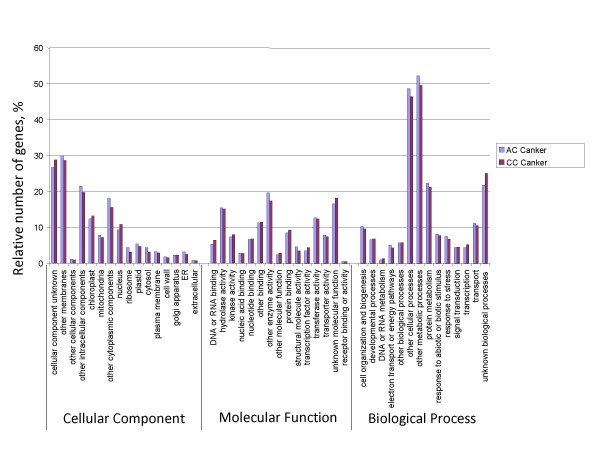
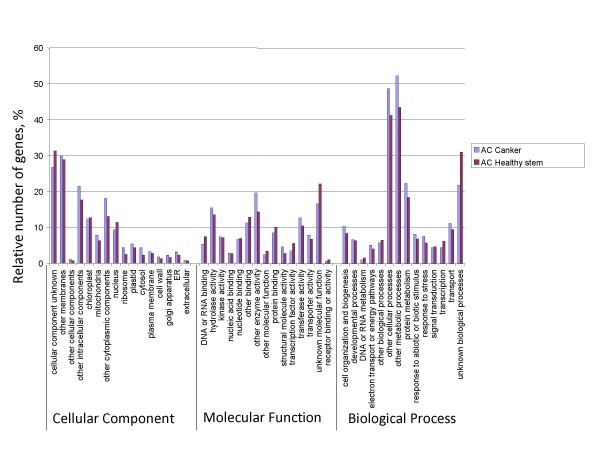
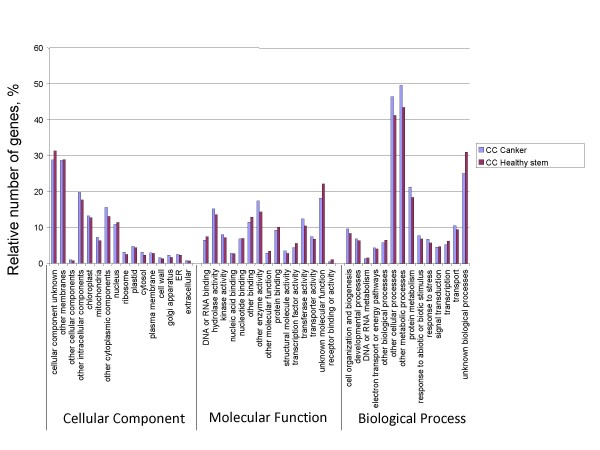
UNLABELLED: BACKGROUND1471-2229-9-51: American chestnut (Castanea dentata) was devastated by an exotic pathogen in the beginning of the twentieth century. This chestnut blight is caused by Cryphonectria parasitica, a fungus that infects stem tissues and kills the trees by girdling them. Because of the great economic and ecological value of this species, significant efforts have been made over the century to combat this disease, but it wasn't until recently that a focused genomics approach was initiated. Prior to the Genomic Tool Development for the Fagaceae project, genomic resources available in public databases for this species were limited to a few hundred ESTs. To identify genes involved in resistance to C. parasitica, we have sequenced the transcriptome from fungal infected and healthy stem tissues collected from blight-sensitive American chestnut and blight-resistant Chinese chestnut (Castanea mollissima) trees using ultra high throughput pyrosequencing. RESULTS: We produced over a million 454 reads, totaling over 250 million bp, from which we generated 40,039 and 28,890 unigenes in total from C. mollissima and C. dentata respectively. The functions of the unigenes, from GO annotation, cover a diverse set of molecular functions and biological processes, among which we identified a large number of genes associated with resistance to stresses and response to biotic stimuli. In silico expression analyses showed that many of the stress response unigenes were expressed more in canker tissues versus healthy stem tissues in both American and Chinese chestnut. Comparative analysis also identified genes belonging to different pathways of plant defense against biotic stresses that are differentially expressed in either American or Chinese chestnut canker tissues. CONCLUSION: Our study resulted in the identification of a large set of cDNA unigenes from American chestnut and Chinese chestnut. The ESTs and unigenes from this study constitute an important resource to the scientific community interested in the discovery of genes involved in various biological processes in Chestnut and other species. The identification of many defense-related genes differentially expressed in canker vs. healthy stem in chestnuts provides many new candidate genes for developing resistance to the chestnut blight and for studying pathways involved in responses of trees to necrotrophic pathogens. We also identified several candidate genes that may underline the difference in resistance to Cryphonectria parasitica between American chestnut and Chinese chestnut.
Overview
The claims and statistics of this paper haven’t been checked yet.
Free: it reads the open-access text and checks the first 5 claims that cite a source we can check. Create a free account to check every claim.
Integrity signals
Registry
Cites
Statistics
Figures
Verification
Claims the paper makes
The claims and statistics of this paper haven’t been checked yet.
Free: it reads the open-access text and checks the first 5 claims that cite a source we can check. Create a free account to check every claim.
Claims other papers make about this one
Each is checked against this paper’s own text: does it say what the citing paper says it does?
The source backs part of the claim, not all of it — or backs it for a different population, condition or comparison.
In the citing paper
“The newly developed high throughput sequencing technology, i.e. Next Generation Sequencing (NGS), including the Roche/454 Genome Sequencer FLX Instrument, the ABI SOLiD System, and the Illumina Genome Analyser, is a powerful and cost-efficient tool for advanced research in many areas, including re-sequencing, microRNA expression profiling, DNA methylation, especially de novo transcriptome”
From De novo assembly and characterization of root transcriptome using Illumina paired-end sequencing and development of cSSR markers in sweetpotato (Ipomoea batatas) (2010) · cites this paper as [19]
Experimental — accuracy not yet measuredThe cited source says what the claim attributes to it.
In the citing paper
“Due to its long read length and appearance ahead of the other two platforms, Roche GS FLX has been the most widely used platform for de novo transcriptome sequencing in many organisms, such as chestnut [19], pine [10], olive [44], ginseng [20], A. thaliana [45,46], maize [47], Artemisia annua [48], fish [18], insects [49,50], and worms [17].”
The cited source says what the claim attributes to it.
In the citing paper
“Like [10,19], if we assumed that the number of genes in sweetpotato was commensurate with that in Arabidopsis (25,000 genes, [62]), our annotated unigenes (20,755 genes with unique protein accession numbers) would likely represent more than 80% of genes in sweetpotato.”
Self-check
Percentages, sums and reported differences re-computed from the paper’s own numbers.
The self-check needs the paper’s full text.
Citations
Cites
Genome sequencing in microfabricated high-density picolitre reactors
Margulies, M., Egholm, M., Altman, W. E., Attiya, S., Bader, J. S., Bemben, L. A., Berka, J., Braverman, M. S., Chen, Y.-J., Chen, Z., et al. (2005) · Nature · doi:10.1038/nature03959 · Cited by 7,693 · cited 2×
“Bead-based pyrosequencing introduced recently [18] constitutes a better alternative for transcriptomics.”
BackgroundMethodA simple and efficient method for isolating RNA from pine trees
Chang, S., Puryear, J., & Cairney, J. (1993) · Plant Molecular Biology Reporter · doi:10.1007/bf02670468 · Cited by 3,580 · cited 1×
“RNA preparation and cDNA library synthesis Total RNA was prepared by the method of Chang and collaborators [56].”
MethodThe Significance of Digital Gene Expression Profiles
Audic, S., & Claverie, J.-M. (1997) · Genome Research · doi:10.1101/gr.7.10.986 · Cited by 2,786 · cited 1×
“Statistical tests as per [27] of the expression data showed that the differential expres-”
BackgroundMolecular Mechanisms of Metabolic Resistance to Synthetic and Natural Xenobiotics
Li, X., Schuler, M. A., & Berenbaum, M. R. (2007) · Annual Review of Entomology · doi:10.1146/annurev.ento.51.110104.151104 · Cited by 2,109 · cited 2×
“Polyphenol oxidases (PPO) catalyzing the oxygendependent oxidation of phenols to quinines, have been demonstrated to increase tomato plant resistance against Pseudomonas syringae [43].”
BackgroundStructures and mechanisms of glycosyl hydrolases
Davies, G., & Henrissat, B. (1995) · Structure · doi:10.1016/s0969-2126(01)00220-9 · Cited by 2,028 · cited 1×
“Glycosyl hydrolases break the bonds between carbohydrates and are involved in expansion and degradation of cell walls [30].”
BackgroundNational Center for Biotechnology Information
(2019) · Springer Reference Medizin · doi:10.1007/978-3-662-48986-4_301184 · Cited by 1,400
GOstat: find statistically overrepresented Gene Ontologies within a group of genes
Beißbarth, T., & Speed, T. P. (2004) · Bioinformatics · doi:10.1093/bioinformatics/bth088 · Cited by 1,257 · cited 2×
“However, statistical analysis using GOstat program showed that none of those differences were statistically significant [ 26 ].”
Applications of next-generation sequencing technologies in functional genomics
Morozova, O., & Marra, M. A. (2008) · Genomics · doi:10.1016/j.ygeno.2008.07.001 · Cited by 1,188 · cited 1×
“A comparison of capillary sequencing and next generation sequencing methods [23] showed that pyrosequencing is well adapted for analyzing the transcriptome of both model and non-model species, with lower cost than conventional methods such as microarrays, SAGE, or EST analysis generated using capillary sequencing.”
MethodChen, W., Provart, N. J., Glazebrook, J., Katagiri, F., Chang, H.-S., Eulgem, T., Mauch, F., Luan, S., Zou, G., Whitham, S. A., et al. (2002) · The Plant Cell · doi:10.1105/tpc.010410 · Cited by 968 · cited 1×
“The infection is also sensed by mitogen kinases, which activate other transcriptions factors such as AP2, Myb, and WRKY, which in turn induce the expression of genes from the phenylpropanoid, jasmonic acid, oligochitosan, and other pathways that are involved in resistance to pathogens [53,54].”
BackgroundThe Gene Ontology project in 2008
The Gene Ontology Consortium (2008) · Nucleic Acids Research · doi:10.1093/nar/gkm883 · Cited by 776
Research works printed but not linked: 1
- [2]Griffin GJ Blight Control and Resoration of the American Chestnut Journal of Forestry 2000 99 22 27
Cited by
Items 201–243 of 243
Bioinformatics Techniques for Understanding and Analyzing Tree Gene Expression Data
LUKENS, L. N., & Downs, G. S. (2012) · Springer eBooks · doi:10.1007/978-1-4614-0920-5_2 · Cited by 2
“Roche 454 sequencing experiments typically generate hundreds of thousands of sequences and thus provide exploratory gene expression estimates (Barakat et al. 2009 ) .”
BackgroundTackling the Heat-Stress Tolerance in Crop Plants: A Bioinformatics Approach
Palakolanu, S. R., Vadez, V., Sreenivasulu, N., & Kishor, P. B. K. (2014) · Springer eBooks · doi:10.1007/978-81-322-1880-7_3 · Cited by 2
Rogstad, S. H., & Pelikan, S. (2014) · Restoration Ecology · doi:10.1111/rec.12124 · Cited by 2
Dvořák, J., Luo, M., Aradhya, M. K., Velasco, D., Leslie, C. A., Britton, M., Reagan, R. L., McGranahan, G. H., & Dandekar, A. M. (2009) · Cited by 2
He, Y., Li, Z., Liu, P., Wang, Q., & Li, J. (2016) · Fisheries Science · doi:10.1007/s12562-015-0961-9 · Cited by 2
Dassanayake, M., Oh, D., Yun, D., Bressan, R. A., Cheeseman, J. M., & Bohnert, J. H. (2011) · Elsevier eBooks · doi:10.1016/b978-0-12-381466-1.00002-x · Cited by 2
Diversity and Roles of Mycorrhizal Fungi in the Bee Orchid Ophrys apifera
Abdullah, W. (2018) · University of Liverpool · doi:10.17638/03022579 · Cited by 4
Chestnut (Castanea sativa) Oil
Kıralan, M., Kıralan, S. S., Özkan, G., & Karacabey, E. (2019) · Springer eBooks · doi:10.1007/978-3-030-12473-1_8 · Cited by 2
Plasticité phénotypique et moléculaire de deux clones d'eucalyptus sous contrainte hydrique au champ
Villar, É. (2011) · theses.fr (ABES) · doi:10.70675/52657987zfd09z428dz9e36z619c173798ea · Cited by 3
“Figure 4 – Evolution of water reserve was modeled using soil volumetric water content measured with TDR trases installed on P6 for the two genotypes (1-41; 18-50) subjected to the two treatments (NIR; IR).”
MethodMao, B., Shen, M., Fu, Y., Wang, J., Yu, P., & Xiao, Y. (2024) · PLoS ONE · doi:10.1371/journal.pone.0310509 · Cited by 1
Gartland, K. M. A., & Gartland, J. S. (2013) · Forestry sciences · doi:10.1007/978-94-007-7076-8_23 · Cited by 1
Striatibotrys neoeucylindrosporus sp. nov., a Stachybotrys-like fungus from North America
Schultes, N. P., Castañeda-Ruíz, R. F., Marra, R. E., Strzalkowski, N., & Li, D. (2021) · INTERNATIONAL JOURNAL OF SYSTEMATIC AND EVOLUTIONARY MICROBIOLOGY · doi:10.1099/ijsem.0.004778 · Cited by 1
Zhang, X., Liao, L., Liu, Y., Wang, Z., & Liu, J. (2016) · HortScience · doi:10.21273/hortsci.51.3.232 · Cited by 1
“This phenomenon also mentioned in other studies (Budak et al., 2004; Tani et al., 1998; Wang and Wang, 2015; Wang et al., 2010, 2013).”
Genomics in Hardwood Tree Improvement: Applications of a Growing Resource
Alexander, L. W., & Lawson, S. S. (2014) · CRC Press eBooks · doi:10.1201/b17573-4 · Cited by 1
Progress and Prospects of Population Genomics of North American Hardwoods
Gailing, O., Staton, M. E., Schlarbaum, S. E., Coggeshall, M. V., Romero‐Severson, J., Liang, H., & Carlson, J. E. (2021) · Population genomics · doi:10.1007/13836_2021_99 · Cited by 1
Self-citationSchwaner, G. W. (2018) · The Research Repository @ WVU (West Virginia University) · doi:10.33915/etd.7248 · Cited by 1
High-Throughput Transcriptome Analysis of Plant Stress Responses
Tombuloğlu, G., & Tombuloğlu, H. (2015) · Springer eBooks · doi:10.1007/978-3-319-17157-9_12
Beyond Tags to Full‐Length Transcripts
Mohiuddin, M., Hutchison, S. K., & Jarvie, T. P. (2011) · Wiley eBooks · doi:10.1002/9783527644582.ch21
Gómez, C. (2012) · RiuNet (Universitat Politècnica de València) · doi:10.4995/thesis/10251/17046 · Cited by 2
Diningrat, D. S. (2014) · Digital Repository Universitas Negeri Medan (Universitas Negeri Medan)
The difference between Treg cells and naive T cells analyzed by cluster analysis
Wang, Y. (2017) · International Conference on Machinery, Electronics and Control Simulation (MECS) · doi:10.2991/mecs-17.2017.46
“RNA-seq more fully reveals the biological individuals at specific times and specific tissue global gene expression ([5-9]), such as the discovery of new transcripts.”
BackgroundBandupriya, H. D. D. (2015) · CORD · doi:10.37833/cord.v31i2.58
“Roche 454 Genome Sequencer (GS) FLX platform is widely used for de novo sequencing and EST analyses in non-model plants (Barakat et al. 2009; Graham et al. 2010; Li et al. 2010; Luo et al. 2010; Wang et al. 2009; Novaes et al. 2008; Alagna et al. 2009) and is an ideal way to discover genes and…”
MethodDNA fingerprinting of Castanea species in USA
Li, X. (2011)
Wang, Z., Fang, B., Chen, J., Zhang, X., Luo, Z., Huang, L., Chen, X., & Li, Y. (2020) · Figshare · doi:10.6084/m9.figshare.12880604
Additional file 1 of Comparing de novo assemblers for 454 transcriptome data
Kumar, S., & Blaxter, M. L. (2021) · Figshare · doi:10.6084/m9.figshare.14436782
Wang, Z., Fang, B., Chen, J., Zhang, X., Luo, Z., Huang, L., Chen, X., & Li, Y. (2020) · Figshare · doi:10.6084/m9.figshare.12880616
Wang, Z., Fang, B., Chen, J., Zhang, X., Luo, Z., Huang, L., Chen, X., & Li, Y. (2020) · Figshare · doi:10.6084/m9.figshare.12880619
Additional file 4 of Comparing de novo assemblers for 454 transcriptome data
Kumar, S., & Blaxter, M. L. (2021) · Figshare · doi:10.6084/m9.figshare.14436791
Wang, Z., Fang, B., Chen, J., Zhang, X., Luo, Z., Huang, L., Chen, X., & Li, Y. (2020) · Figshare · doi:10.6084/m9.figshare.12880610
Wang, Z., Fang, B., Chen, J., Zhang, X., Luo, Z., Huang, L., Chen, X., & Li, Y. (2020) · Figshare · doi:10.6084/m9.figshare.12880625
Additional file of Comparing de novo assemblers for 454 transcriptome data
Kumar, S., & Blaxter, M. L. (2021) · Figshare · doi:10.6084/m9.figshare.14436779
Wang, Z., Fang, B., Chen, J., Zhang, X., Luo, Z., Huang, L., Chen, X., & Li, Y. (2020) · Figshare · doi:10.6084/m9.figshare.12880601
Wang, Z., Fang, B., Chen, J., Zhang, X., Luo, Z., Huang, L., Chen, X., & Li, Y. (2020) · Figshare · doi:10.6084/m9.figshare.12880631
Wang, Z., Fang, B., Chen, J., Zhang, X., Luo, Z., Huang, L., Chen, X., & Li, Y. (2020) · Figshare · doi:10.6084/m9.figshare.12880628
Wang, Z., Fang, B., Chen, J., Zhang, X., Luo, Z., Huang, L., Chen, X., & Li, Y. (2020) · Figshare · doi:10.6084/m9.figshare.12880613
Wang, Z., Fang, B., Chen, J., Zhang, X., Luo, Z., Huang, L., Chen, X., & Li, Y. (2020) · Figshare · doi:10.6084/m9.figshare.12880598
Chen, R., Wu, Y., Shi, X., Sun, W., Wang, G., Li, Y., & Shi, S. (2026) · Scientia Horticulturae · doi:10.1016/j.scienta.2026.114609
de Carvalho, J. F. (2013) · theses.fr (ABES) · doi:10.70675/1e79d92cz4a5fz4205zab66zcc2e30c0d6f1 · Cited by 1
Vers une comparaison métatranscriptomique entre deux sols alpins sous couvert nival contrasté
Mustafa, T. (2011) · theses.fr (ABES) · doi:10.70675/f44ff2adze29az4b9eza7f4z55fddfc0ba62
Søndreli, K. L., Rush, T. A., Drott, M. T., McTaggart, A. R., Alexander, W. G., Sawyer, C. R., Chhetri, H. B., Hyatt, D., Brueggeman, R. S., Richards, J. K., et al. (2026) · mBio · doi:10.1128/mbio.03120-25
Wang, X., 刘西莉, Liu, J., Niu, L., Quan, H., Zhang, T., Li, Q., Zhang, G., & Yu, L. (2026) · Frontiers in Plant Science · doi:10.3389/fpls.2026.1907055 · Cited by 1
“Such reshuf fl ing affects the detection of collinear regions and their gene compositions (Barakat et al., 2009; Yang et al., 2021; Wang et al., 2024).”
Fill, A. (2014) · MOspace Institutional Repository (University of Missouri)
Metadata
- Authors
- Barakat, A., DiLoreto, D. S., Zhang, Y., Smith, C., Baier, K., Powell, W. A., Wheeler, N., Sederoff, R., & Carlson, J. E.
- Affiliations
- Pennsylvania State University (US)
- North Carolina State University (US)
- State University of New York (US)
- Corresponding author
- Carlson, John E
- Venue
- BMC Plant Biology
- Published
- 2009
- Volume
- 9
- Issue
- 1
- Pages
- 51
- ISSN
- 1471-2229 (ISSN-L)
- PMC
- PMC2688492
- OpenAlex
- W2138092581
- Cited by
- 243
- References
- 58
- Citations by year
- 2026: 4 · 2025: 4 · 2024: 6 · 2023: 5 · 2022: 5 · 2021: 14 · 2020: 17 · 2019: 8 · 2018: 9 · 2017: 14 · 2016: 10 · 2015: 21 · 2014: 23 · 2013: 26 · 2012: 30
- FWCI
- 11.43
- Type
- journal article
- Language
- en
- Open access
- gold
- doi.org
- Licence
- cc-by
- Locations
- BMC Plant Biology (publishedVersion, cc-by)
- Europe PMC (PubMed Central) (publishedVersion, cc-by)
- PubMed Central (publishedVersion, cc-by)
- PubMed (publishedVersion)
- DOAJ (DOAJ: Directory of Open Access Journals) (submittedVersion)
- Funders
- National Science Foundation (0605135)
- Joint Genome Institute
- Topics
- Life Sciences › Agricultural and Biological Sciences › Plant Science › Plant Pathogens and Fungal Diseases
- Life Sciences › Agricultural and Biological Sciences › Plant Science › Plant Disease Resistance and Genetics
- Life Sciences › Immunology and Microbiology › Virology › Plant and Fungal Interactions Research
- Keywords
- Castanea dentata, Castanea mollissima, chestnut blight, Cryphonectria parasitica, fungal infection, plant defense genes, disease resistance, differentially expressed genes, stem tissue, unigene sequences, necrotrophic pathogens, candidate resistance genes, comparative transcriptomics
- MeSH terms
- Ascomycota, Plant Diseases, Gene Library, Genes, Plant, Sequence Analysis, DNA, DNA, Complementary, Gene Expression Regulation, Plant, RNA, Plant, Expressed Sequence Tags, Gene Expression Profiling, Genomics, Fagaceae
About these checks
Registry, retraction, Cites and statistics results are computed, not judged, with one exception: a printed reference that no index lists is read once by a model before it counts as a citation error. Claims are extracted by a model and kept only when their quote appears verbatim in the text; each cited source is then checked, with a model’s help, for whether it says what the claim relies on. Those verdicts can be wrong — read the claim’s quote and the cited source before relying on one.
Statistics and arithmetic are recomputed, not judged.
Confidence bands are shown only for fields calibrated on our annotated test set. None is calibrated yet, so no band is shown.
What counts as a claim ›How we measure confidence ›How we check this ›
Are you an author, or do you see a problem with this page? Request a review
Data sources
Bibliographic data: Semantic Scholar, OpenAlex, Crossref.
Contains information from the Semantic Scholar Academic Graph Datasets, made available under the ODC Attribution License (ODC-BY 1.0).
Semantic Scholar’s data is described in: Kinney, R., et al. (2023). The Semantic Scholar Open Data Platform. arXiv:2301.10140.
