

Methods for the thematic synthesis of qualitative research in systematic reviews
Open accessThe DOI matches its Crossref record; 60 of the 64 references it cites were found in a registry or an index; 3 of the 48 sources its claims cite were checked for support.
Abstract
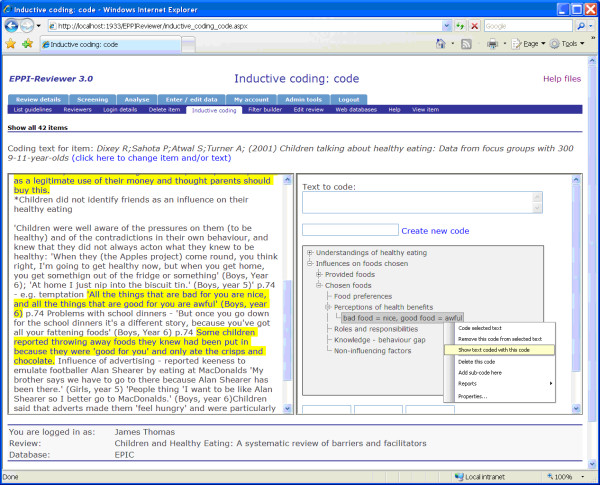
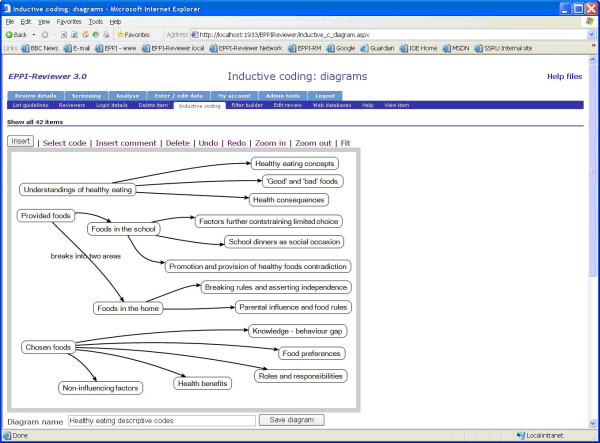
BACKGROUND: There is a growing recognition of the value of synthesising qualitative research in the evidence base in order to facilitate effective and appropriate health care. In response to this, methods for undertaking these syntheses are currently being developed. Thematic analysis is a method that is often used to analyse data in primary qualitative research. This paper reports on the use of this type of analysis in systematic reviews to bring together and integrate the findings of multiple qualitative studies. METHODS: We describe thematic synthesis, outline several steps for its conduct and illustrate the process and outcome of this approach using a completed review of health promotion research. Thematic synthesis has three stages: the coding of text 'line-by-line'; the development of 'descriptive themes'; and the generation of 'analytical themes'. While the development of descriptive themes remains 'close' to the primary studies, the analytical themes represent a stage of interpretation whereby the reviewers 'go beyond' the primary studies and generate new interpretive constructs, explanations or hypotheses. The use of computer software can facilitate this method of synthesis; detailed guidance is given on how this can be achieved. RESULTS: We used thematic synthesis to combine the studies of children's views and identified key themes to explore in the intervention studies. Most interventions were based in school and often combined learning about health benefits with 'hands-on' experience. The studies of children's views suggested that fruit and vegetables should be treated in different ways, and that messages should not focus on health warnings. Interventions that were in line with these suggestions tended to be more effective. Thematic synthesis enabled us to stay 'close' to the results of the primary studies, synthesising them in a transparent way, and facilitating the explicit production of new concepts and hypotheses. CONCLUSION: We compare thematic synthesis to other methods for the synthesis of qualitative research, discussing issues of context and rigour. Thematic synthesis is presented as a tried and tested method that preserves an explicit and transparent link between conclusions and the text of primary studies; as such it preserves principles that have traditionally been important to systematic reviewing.
Overview
CoChat Summary
TL;DR
This paper describes thematic synthesis, a three-stage method for integrating qualitative findings in systematic reviews: line-by-line coding, descriptive themes, and analytical themes. It illustrates the method with a review of children’s views on healthy eating and argues it preserves transparency while enabling new interpretive constructs.
Key findings
- Thematic synthesis has three overlapping stages: free line-by-line coding, development of descriptive themes, and generation of analytical themes; descriptive themes remain close to primary studies, while analytical themes go beyond them.
- In the example review, eight relevant qualitative studies yielded 36 initial codes, 12 descriptive themes, six analytical themes, and ten intervention recommendations.
- Six main issues emerged from children’s views: children do not see it as their role to be interested in health; future-health messages are not personally relevant or credible; fruit, vegetables and confectionery have different meanings; children seek food choices; eating is valued as a social occasion; and children see contradictions between promoted theory and adult practice.
- Most interventions were school-based and combined health-benefit learning with hands-on experience; interventions aligned with children’s views tended to be more effective, while multi-component physical activity plus healthy eating interventions worked less well than healthy-eating-only ones.
Methods
- Methodological paper describing thematic synthesis, illustrated with a completed systematic review of barriers to and facilitators of healthy eating among children aged four to 10 years.
- Searching involved extensive grey literature, author contact, and manual journal screening; quality was assessed using 12 criteria covering reporting, validity/reliability strategies, and appropriateness for children’s perspectives.
- Findings text labelled results/findings was entered verbatim into NVivo/EPPI-Reviewer; three reviewers independently coded line-by-line, grouped codes into descriptive themes, then generated analytical themes through group discussion and review questions.
Limitations
- Stated: contextual information in primary reports was very restricted, making it difficult to use context fully; there is little consensus on assessing qualitative quality and no accepted or empirically tested methods for excluding studies on quality, so all studies were included regardless of quality.
- Stated: the analytical-theme stage depends on reviewers’ judgement and insights and is potentially controversial; sensitivity analysis was done after synthesis by examining relative contributions of studies, finding poorer-quality studies contributed comparatively little and contained few unique themes.
- Evident: the method is illustrated with a single example review rather than compared empirically with other synthesis methods; the paper does not report a formal validation or inter-rater reliability for the synthesis.
Model-written summary. Check it against the paper before relying on it.
Integrity signals
Registry
Cites
Statistics
Figures
Verification
Claims the paper makes
3 Valid · 1 Not valid · 20 Not checked · 63 Own results and interpretations
A result the paper reports from its own data — it cites no other source for it, so there is none to check. The quote shows it is in the paper.
In the paper
“we found that there was very little difference in the methods we had to use to find qualitative studies compared to the methods we use when searching for studies for inclusion in a meta-analysis.”
§ Methods for the thematic synthesis of qualitative research in systematic reviews > Methods > Searching
plain- Asserted: passes — The authors put it forward as true.
- Checkable: passes — It can be checked against evidence.
- Load-bearing: unclear — It is unclear whether the paper’s conclusions depend on it.
- Based: passes — The paper gives a reason why it holds.
A result the paper states — it cites no source for it, so there is none to check. The quote shows it is in the paper.
In the paper
“Interventions that were in line with these suggestions tended to be more effective.”
§ Methods for the thematic synthesis of qualitative research in systematic reviews > Abstract > Results
hedgedstates an association- Asserted: passes — The authors put it forward as true.
- Checkable: passes — It can be checked against evidence.
- Load-bearing: passes — The paper’s conclusions depend on it.
- Based: passes — The paper gives a reason why it holds.
A result the paper states — it cites no source for it, so there is none to check. The quote shows it is in the paper.
In the paper
“In our review, it was not possible to rely on simple electronic searches of databases.”
§ Methods for the thematic synthesis of qualitative research in systematic reviews > Methods > Searching
plain- Asserted: passes — The authors put it forward as true.
- Checkable: passes — It can be checked against evidence.
- Load-bearing: unclear — It is unclear whether the paper’s conclusions depend on it.
- Based: passes — The paper gives a reason why it holds.
A result the paper reports from its own data — it cites no other source for it, so there is none to check. The quote shows it is in the paper.
In the paper
“In the event, we did not find any themes that belonged to a specific group, but another outcome of this process was a realisation that the contextual information given in the reports of studies was very restricted indeed.”
§ Methods for the thematic synthesis of qualitative research in systematic reviews > Discussion > Context and rigour in thematic synthesis
plain- Asserted: passes — The authors put it forward as true.
- Checkable: passes — It can be checked against evidence.
- Load-bearing: unclear — It is unclear whether the paper’s conclusions depend on it.
- Based: passes — The paper gives a reason why it holds.
A result the paper states — it cites no source for it, so there is none to check. The quote shows it is in the paper.
In the paper
“Interventions targeted at people with particular risk factors worked better than others, and multi-component interventions that combined the promotion of physical activity with healthy eating did not work as well as those that only concentrated on healthy eating.”
§ Methods for the thematic synthesis of qualitative research in systematic reviews > Results
plainstates a cause- Asserted: passes — The authors put it forward as true.
- Checkable: passes — It can be checked against evidence.
- Load-bearing: passes — The paper’s conclusions depend on it.
- Based: passes — The paper gives a reason why it holds.
25 more claims
Create a free account to see all 87 claims and to verify the 9 references still open.
- It may state two separate claims as one. 26
- Probably not a substantial claim. 45
Claims other papers make about this one
Each is checked against this paper’s own text: does it say what the citing paper says it does?
The source backs part of the claim, not all of it — or backs it for a different population, condition or comparison.
In the citing paper
“A thematic synthesis approach was used to integrate findings from studies with diverse methodological designs, following three key stages (Thomas & Harden, 2008).”
From Mind the gap: a systematic review of barriers, facilitators, and experiences of care transitions for people living with dementia and their informal caregivers. (2026) · cites this paper as Thomas & Harden, 2008
Experimental — accuracy not yet measuredThe source backs part of the claim, not all of it — or backs it for a different population, condition or comparison.
In the citing paper
“The thematic coding frame in Table 2 was applied to all included studies and reviewed for consistency of interpretation. This process, known as “axial coding,” ensured coded themes remained connected to and understood within the context of the source studies [13].”
From Patient-Perceived Factors Influencing Physical Activity Sensor Use in Stroke Prevention and Rehabilitation: Systematic Review of Qualitative Studies Using Thematic Synthesis (2026) · cites this paper as [13]
Experimental — accuracy not yet measuredThe source backs part of the claim, not all of it — or backs it for a different population, condition or comparison.
In the citing paper
“These data will be analysed following a three-step process. First, study data will be coded line by line by the first reviewer and checked by a second reviewer with a coding frame developed from codes derived from the data.”
From Effectiveness and acceptability of cognitive-behavioural therapy based interventions for maternal peripartum depression: A systematic review, meta-analysis and thematic synthesis protocol (2019) · cites this paper as [104]
Experimental — accuracy not yet measuredThe cited source says what the claim attributes to it.
In the citing paper
“The data coding, extraction and synthesis process was an iterative process, aligned with the thematic synthesis process outlined by Thomas 2008.”
From Health workers' perceptions and experiences of using mHealth technologies to deliver primary healthcare services: a qualitative evidence synthesis (2020) · cites this paper as Thomas 2008
The cited source says what the claim attributes to it.
In the citing paper
“To ensure the scientific reliability and trustworthiness of the findings, the qualitative analysis followed a thematic synthesis approach [25].”
From Sustainable Value Creation in Nonprofit Organizations: Processes, Determinants, and Strategic Dimensions (2026) · cites this paper as [25]
31 more claims about this paper
Create a free account to see every claim other papers make about this one.
Citations
Cites
Using thematic analysis in psychology
Braun, V., & Clarke, V. (2006) · Qualitative Research in Psychology · doi:10.1191/1478088706qp063oa · Cited by 194,414
(1997) · Cited by 4,204
Systematic reviews in the social sciences: a practical guide
(2006) · Choice Reviews Online · doi:10.5860/choice.43-5664 · Cited by 4,089
The Handbook of Research Synthesis.
Howel, D., Cooper, H., & Hedges, L. V. (1995) · Biometrics · doi:10.2307/2533295 · Cited by 3,642
Systematic Reviews in the Social Sciences: A Practical Guide
Petticrew, M., & Roberts, H. (2006) · doi:10.1002/9780470754887 · Cited by 3,586
Assessing the quality of controlled clinical trials
Jüni, P., Altman, D. G., & Egger, M. (2001) · BMJ · doi:10.1136/bmj.323.7303.42 · Cited by 3,309
Noblit, G., & Hare, R. (1988) · doi:10.4135/9781412985000 · Cited by 2,723
Qualitative Research: Rigour and qualitative research
Mays, N., & Pope, C. (1995) · BMJ · doi:10.1136/bmj.311.6997.109 · Cited by 2,715
Systematic Reviews in Health Care : Meta-Analysis in Context
Egger, M., Smith, G. D., & Altman, D. G. (2000) · Cited by 2,417
Dixon-Woods, M., Cavers, D., Agarwal, S., Annandale, E., Arthur, A., Harvey, J., Hsu, R., Katbamna, S., Olsen, R., Smith, L., et al. (2006) · BMC Medical Research Methodology · doi:10.1186/1471-2288-6-35 · Cited by 2,289
Research works printed but not linked: 9
- EPPI-Centre EPPI-Centre Methods for Conducting Systematic Reviews 2006 London: EPPI-Centre, Social Science Research Unit, Institute of Education, University of London
- Higgins J Green S (Eds) Cochrane Handbook for Systematic Reviews of Interventions 426 2006 Updated September 2006. Accessed 24th January 2007
- Sandelowski M Barroso J Handbook for Synthesising Qualitative Research 2007 New York: Springer
- Oakley A Experiments in Knowing: Gender and methods in the social sciences 2000 Cambridge: Polity Press
- Shepherd J Harden A Rees R Brunton G Oliver S Oakley A Young People and Healthy Eating: A systematic review of barriers and facilitators 2001 London: EPPI-Centre, Social Science Research Unit, Institute of Education, University of London
- Popay J Moving Beyond Effectiveness in Evidence Synthesis 2006 London: National Institute for Health and Clinical Excellence
- Boyatzis RE Transforming Qualitative Information 1998 Sage: Cleveland
- Medical Sociology Group Criteria for the evaluation of qualitative research papers Med Sociol News 1996 22 68 71
- Thomas J Brunton J EPPI-Reviewer 30: Analysis and management of data for research synthesis EPPI-Centre software 2006 London: EPPI-Centre, Social Science Research Unit, Institute of Education
Cited by
Items 8,001–8,100 of 9,166
Cruz-Cano, R. I., Kolb, M., Saldaña‐Vázquez, R. A., Bretón‐Deval, L., Cruz‐Cano, N. B., & Aldama-Cervantes, A. (2024) · Figshare · doi:10.6084/m9.figshare.26681110
Farrar, N., Elliott, D., Houghton, C., Jepson, M., Mills, N., Paramasivan, S., Plumb, L., Wade, J., Young, B., Donovan, J., et al. (2022) · Figshare · doi:10.6084/m9.figshare.21376224
McCarthy, M., Houghton, C., & Matvienko‐Sikar, K. (2021) · Figshare · doi:10.6084/m9.figshare.17127246
Zhu, N., Yang, L., Wang, X., Tuo, J., Chen, L., Deng, R., & Kwan, R. Y. C. (2024) · Figshare · doi:10.6084/m9.figshare.26587575
Cruz-Cano, R. I., Kolb, M., Saldaña‐Vázquez, R. A., Bretón‐Deval, L., Cruz‐Cano, N. B., & Aldama-Cervantes, A. (2024) · Figshare · doi:10.6084/m9.figshare.26681089
Cruz-Cano, R. I., Kolb, M., Saldaña‐Vázquez, R. A., Bretón‐Deval, L., Cruz‐Cano, N. B., & Aldama-Cervantes, A. (2024) · Figshare · doi:10.6084/m9.figshare.26681083
Huang, Y., Deng, C., Peng, M., & Yanping, H. (2024) · Figshare · doi:10.6084/m9.figshare.26752861
Namasaba, M., Kazembe, N., Seera, G., & Baguwemu, A. A. (2022) · Figshare · doi:10.6084/m9.figshare.19556209
McKenna-Plumley, P. E., Groarke, J. M., Turner, R. N., & Yang, K. (2020) · Figshare · doi:10.6084/m9.figshare.13339310
van Braam, E. J., McRae, D. N., Portela, A. G., Stekelenburg, J., & Penn‐Kekana, L. (2024) · Figshare · doi:10.6084/m9.figshare.26602279
Eyre, A., Cohen, J. S., Funnell, S., James, L., Guglani, S., Abi Haidar, H., Samson, L. M., Ward, M., Jetty, R., Harrison, M., et al. (2024) · Figshare · doi:10.6084/m9.figshare.26715688
Karpouzis, F., Walsh, A. C., S., S., K., B., & Lindberg, R. (2024) · Figshare · doi:10.6084/m9.figshare.25376132
Schröder, J., Riiser, K., & Holmen, H. (2024) · Figshare · doi:10.6084/m9.figshare.26665900
Pourtaheri, A., Mahdizadeh, M., Tehrani, H., Jamali, J., & Peyman, N. (2024) · Figshare · doi:10.6084/m9.figshare.25201942
Al-Mutawtah, M., Campbell, E., Kubis, H.-P., & Erjavec, M. (2023) · Figshare · doi:10.6084/m9.figshare.24546994
Moffat, K. R., Shi, W., Cannon, P., & Sullivan, F. (2023) · Figshare · doi:10.6084/m9.figshare.22616216
Malik, K., Ibrahim, M., Bernstein, A., Venkatesh, R. K., Rai, T., Chorpita, B. F., & Patel, V. (2021) · Figshare · doi:10.6084/m9.figshare.16755778
Gogoescu, L., Elwadhi, D., & Kousoulis, A. A. (2025) · Journal of Public Mental Health · doi:10.1108/jpmh-03-2025-0038 · Cited by 2
Housing Market Cycles and Macroeconomic Stability in Egypt: A Systematic Review
Hammam, A. A.-M., Momtaz, M., & Hanafy, M. (2025) · Open Journal of Social Sciences · doi:10.4236/jss.2025.139037
Technology to Support the Academic Success of Students with ASD at University: A Systematic Review
Laronze, F., & N’Kaoua, B. (2025) · Education and Training in Autism and Developmental Disabilities · doi:10.1177/215416472506000106 · Cited by 4
VON-ZESCHAU, J. F., & SÁNCHEZ-MOSQUERA, M. (2025) · Revue internationale du Travail · doi:10.16995/ilrf.18857
Kerketta, A., Balasundaram, S., & Chacko, E. (2025) · JMIR Research Protocols · doi:10.2196/78573
Wang, W., Chang, A., Ma, X., & Liu, M. T. C. (2025) · doi:10.2196/preprints.84818
Albalawi, S. I., Albagshi, D. A., Alsuwailem Norah Aziz, S., Almazyadi, F. A., Almohaishi, K. A., Bakkari, K. S., Alali, G. A. T., Almaski-Zainab Muhammad Khaire, M., Almuski, A. A. M., & Altolaihi, A. A. (2025) · International Journal of Computational and Experimental Science and Engineering · doi:10.22399/ijcesen.4334
Medication Administration Practices in Hospitalized Patients: A Review of Nursing Care
Alruwaili, W. M. M., Alanazi, E. R. F., Alrawili, F. A. S., Alruwaili, S. H. S., Alanazi, K. A. R., Alrashidi, H. S. G., Alrashdi, M. M. S., Alrashdi, A. S. B. T., Alenazi, A. Y. A., Alanazi, T. Y., et al. (2024) · International Journal of Computational and Experimental Science and Engineering · doi:10.22399/ijcesen.4442
Decolonisation and Decolonial Praxis: Perspectives of Indian Psychologists
Singh, S. (2025) · Psychology of Women and Equalities Section Review · doi:10.53841/bpspowe.2025.8.2.29
Smart Textile in Transportation: A State-of-the-art ReviewPreprint
Hossain, F., & Fardin, M. (2025) · SSRN Electronic Journal · doi:10.2139/ssrn.5895482
Osho, F. E., Abdullahi, V. A., & Raji, R. O. (2025) · European Journal of Medical and Health Research · doi:10.59324/ejmhr.2025.3(6).27
Dipela, M. P. (2025) · Community Development Journal · doi:10.33086/cdj.v9i1.7266
Shan, Y., Xing, Z., Xu, X., Zhu, W., Dong, Z., & Ji, M. (2025) · Critical Public Health · doi:10.1080/09581596.2025.2593998
Polanco-Fernández, R., Penas, P., & Iraurgi, I. (2025) · Health and Quality of Life Outcomes · doi:10.1186/s12955-025-02455-y
A Systematic Review of Perceived Risks and Risk Management Strategies in Non-Suicidal Self-Harm
Kharboutly, O., Pitman, A., Davies, J., Clarke, C., & Rowe, S. L. (2025) · Archives of Suicide Research · doi:10.1080/13811118.2025.2602011 · Cited by 1
Yépez, M. P., Hernández-Martínez, M., Arciniegas-Romero, G., & Posso-Astudillo, M. (2025) · Cogent Arts and Humanities · doi:10.1080/23311983.2025.2603405 · Cited by 3
Sidhu, R. G. (2025) · Equity in Education & Society · doi:10.1177/27526461251409409
Barriers and Facilitators to Formal Dementia Care Use Among UK South Asians: A Systematic Review
Chaib, D., Biggs, K., & Khan, H. (2025) · Health Services Insights · doi:10.1177/11786329251408964 · Cited by 1
Han, W., Zhou, L., Lu, J., & Pill, S. (2025) · Brain Sciences · doi:10.3390/brainsci16010020
., F., Yuwita, N., Riswandari, N., et al. (2025) · Journal of Innovation and Technology · doi:10.61453/joit.v2025no29
Li, H. H., Tang, W. W. C., Leung, H. L. H., Gao, Z., Chan, K., & LOU, V. W. Q. (2025) · The Gerontologist · doi:10.1093/geront/gnaf301
Alfarwan, N., Hassan, L., Panagioti, M., Zghebi, S. S., Hodkinson, A., & Kontopantelis, E. (2025) · Mayo Clinic Proceedings Digital Health · doi:10.1016/j.mcpdig.2025.100333
Decoding the drivers and deterrents of physician-led innovation: a systematic qualitative review
Wiersma, M., Kerridge, I., & Lipworth, W. L. (2025) · BMJ Innovations · doi:10.1136/bmjinnov-2025-001467 · Cited by 1
Bridging Finance and Farming: A Literature-Based Analysis of Financial Management in Agribusiness
Mambauy, N., Jalal, F. D. H., & Bandera, A. D. (2025) · Journal of Business Economics and Agribusiness · doi:10.47134/jbea.v3i1.939
Li, Y., Liu, S., Xu, K., Wang, C., Cun, W., Su, X., & Jiang, Y. (2025) · Palliative Medicine · doi:10.1177/02692163251400117 · Cited by 1
Zhang, S., Tang, L. “., Chidarikire, S., Sohail, S., & Alashwal, A. M. (2025) · Journal of Construction Engineering and Management · doi:10.1061/jcemd4.coeng-16529
Pentecost, C. L., Carr, A. M., Alexander, C. M., et al. (2025) · Dementia · doi:10.1177/14713012251410993
Pol, S. M., Link, V., Toivonen, H. K., Scheepers, F. E., & Drossaert, C. H. C. (2025) · International Journal of Clinical Practice · doi:10.1155/ijcp/5023850 · Cited by 1
Understanding Depression in Young Jamaican Women: A Study of Cultural, and Social Influences
Scholar, E. S. F., & Cunningham, E. (2025) · Greener Journal of Social Sciences · doi:10.15580/gjss.2025.1.121725194
Brockbank, C., & Atkinson, C. (2026) · The Journal of Mental Health Training Education and Practice · doi:10.1108/jmhtep-10-2024-0106 · Cited by 3
Salamah, M. M. (2025) · Journal of Nursing Science and Professional Practice · doi:10.4103/jnspp.jnspp_38_25
Role of Nursing in Managing Polypharmacy and Reducing Medication Errors in Older Adults
Alotaibi, A. G. A., Almoahamadi, S. A. S., Mashta Abeer Mukhdhari, E., Alasmari, A. S., Alslopi, H. H., Ghammari, N. H. M., Alanazi Abdulrahman Lafi, O., Almotairi, M. A. F., Alshammari, M. N. M., Alruwaili, A. Q. B., et al. (2024) · International Journal of Computational and Experimental Science and Engineering · doi:10.22399/ijcesen.4617 · Cited by 1
Enhancing Cybersecurity Through User Experience (UX) Design: Bridging Usability and Protection
Wiberg, C. (2026) · Lecture notes in computer science · doi:10.1007/978-3-032-12801-0_26 · Cited by 2
Abebe, Y. T., Bekele, D., & Berhanu, R. D. (2026) · Women s Health · doi:10.1177/17455057251411072 · Cited by 1
Taylor, K., McLellan, J., Kristunas, C., Bankhead, C. R., Pidduck, N., Roberts, N. W., Perera, R., & Hemming, K. (2026) · International Journal of Epidemiology · doi:10.1093/ije/dyaf217
Amerika’da Müslüman Okulları: Eğitim Felsefesi, Müfredat Yaklaşımları ve Güncel Tartışmalar
Tuzer, S. (2025) · Eskiyeni (Online)/Eskiyeni · doi:10.37697/eskiyeni.1674848
From discourse to action: The young generation’s strategy for bringing pancasila to life in society
Komarudin, Wibowo, A., Alkhudri, A. T., & Narmaditya, B. S. (2025) · Multidisciplinary Reviews · doi:10.31893/multirev.2026328 · Cited by 2
Daly, M., Boehme, T., Turner, N., Aitken, J., Green, A., McKinnon, S., Eriksen, C., & Cooper, P. (2026) · International Journal of Disaster Risk Reduction · doi:10.1016/j.ijdrr.2026.106000
Food Ethics as a Framework for Sustainable Food Transitions: A Systematic Review
López, I. E. G., Flores-García, B. D., Fernández-Esquivel, Z. Y., & Verdugo, G. C. (2026) · Food Ethics · doi:10.1007/s41055-025-00194-w · Cited by 1
Watson, O., Mitchell, G., Anderson, T. J., Halaiqa, F. A., Raddaha, A. H. A., Atan, A., McLaughlin, S. B., & Craig, S. G. (2026) · Current Oncology · doi:10.3390/curroncol33010033
Risk Management in Multimedia Production: Identifying and Overcoming Creative Project Challenges
Emtiaz, U. M., Tapu, A. M., Md., S., Hasnoon, M. F., Khadija, B., & Abdul, M. K. (2026) · International Research Journal of Business and Social Science · doi:10.64907/xkmf.v12i1.irjbss.3
Kennett, J., Moss, S. J., Leigh, J. P., Bobrovitz, N., & Stelfox, H. T. (2026) · Journal of Clinical Epidemiology · doi:10.1016/j.jclinepi.2026.112135 · Cited by 2
Intensive Care Unit Nurses' Experience in Human–Computer Interaction: A Qualitative Meta‐Synthesis
Zhu, Y., Song, H., Xb, W., Yun, Z., Bian, X., Peng, C., Zhao, J., & Wei, J. (2026) · Nursing in Critical Care · doi:10.1111/nicc.70333
Liang, Y., & Zhu, X. (2026) · Mental health and physical activity · doi:10.1016/j.mhpa.2026.100753 · Cited by 1
Digital Reading Behavior in Afghanistan: A Meta-Synthesis of Influential Factors
Stanikzai, H., Hafiz, H., & Mokhlis, A. (2026) · Nangarhar University Journal of Arts and Humanities · doi:10.70436/nujah.v1i02.18
Htay, M. N. N., Mohd, N. H. N., Oo, M. M. T., et al. (2026) · Malaria Journal · doi:10.1186/s12936-026-05785-4
Sraboni, A., Farhana, K. M., & Abdul, M. K. (2026) · Review of Medicine Surgery and Dentistry · doi:10.64907/xkmf.v5.i1.rmsd.1
Shayan, M. (2026) · Primary Health Care · doi:10.7748/phc.2026.e1884
Lü, N., li, M., gou, X., yang, T., Li, W., Yan, L., Yang, L., Li, Y., & Li, Y. (2026) · Spinal Cord · doi:10.1038/s41393-025-01161-2 · Cited by 2
Yi, X., Sunzi, K., Wu, X., et al. (2026) · BMJ Open · doi:10.1136/bmjopen-2025-101863
Ebneter, T. H., Choo, S. J. S., Hamzah, N., Hamzaid, A., Schwank, T., Vetterli, I., Willmann, S., & Spiess, M. R. (2025) · doi:10.2196/preprints.89808
Youth's Coping Dynamics in Responding to Parental Bereavement: A Thematic Synthesis
Choi, H. R., Zhai, X., Bae, D. E., & Lee, J. J. (2026) · Journal of Adolescent Health · doi:10.1016/j.jadohealth.2025.11.002 · Cited by 2
Schröer-Günther, M., Zschorlich, B., Siegert, S., & Koch, K. (2026) · Bundesgesundheitsblatt - Gesundheitsforschung - Gesundheitsschutz · doi:10.1007/s00103-026-04188-9
Enduring hope and loss: qualitative evidence synthesis of LGBTQ+ experiences of perinatal loss
Darwin, Z. J., Bainbridge, A., Bekiropoulou, A., & Greenfield, M. (2026) · Frontiers in Psychiatry · doi:10.3389/fpsyt.2025.1732197
Iduye, S., Museve, A. K., McKibbon, S., & Agboji, A. (2026) · American Journal of Qualitative Research · doi:10.29333/ajqr/17461
SENCOs ' perceptions of the impact of leadership status on the enactment of their role in England
Osuki, A. J. (2026) · British Journal of Special Education · doi:10.1111/1467-8578.70088
Navigating Advance Care Planning for Individuals With Young-Onset Dementia: A Systematic Review
Yang, C., & Wu, Y. (2026) · Journal of the American Medical Directors Association · doi:10.1016/j.jamda.2025.106081
Rahman, Z. D., Sarmain, S., Muslihah, E., et al. (2026) · Nidhomiyyah Jurnal Manajemen Pendidikan Islam · doi:10.38073/nidhomiyyah.v7i1.4143
Christensen, M. E., Jónsdóttir, R. B., Skúladóttir, S. S., & Klinke, M. E. (2026) · Journal of Adolescent and Young Adult Oncology · doi:10.1177/21565333251412395
Whittaker, M., Jahoda, A. J., Lewis, D., & Dagnan, D. (2026) · Journal of Applied Research in Intellectual Disabilities · doi:10.1111/jar.70187
León, P. M. S., Farroñán, E. V. R., Chilicaus, G. C. F., Salinas, L. E. C., Aguinaga, D. A. L., & Cumpa, R. O. (2026) · Communications in computer and information science · doi:10.1007/978-3-032-14706-6_15 · Cited by 1
Approaches in neurological pre-registration physiotherapy education: a systematic review
Lidster, L., & Killingback, C. (2026) · Physical Therapy Reviews · doi:10.1080/10833196.2025.2603847
Bell, A., Ford, T., Roberts, N., Blane, D., Tonkin-Crine, S. K., & Borek, A. J. (2026) · Journal of Health Equity · doi:10.1080/29944694.2025.2606722 · Cited by 1
Jadhav, B. N., & Azeez, E. P. A. (2026) · Discover Social Science and Health · doi:10.1007/s44155-026-00361-2
Li, X., Zhang, C., Zhang, W., Xie, W., Liu, S., Xiao, W., & Huang, S. (2026) · BMC Oral Health · doi:10.1186/s12903-026-07766-0
Purwanto, Y., Gernowo, R., & Nugraheni, D. M. K. (2025) · 2025 9th International Conference on Information Technology, Information Systems and Electrical Engineering (ICITISEE) · doi:10.1109/icitisee68184.2025.11355023
Fewins, C. J., Ostler, C., & Donovan-Hall, M. (2026) · BMJ Open · doi:10.1136/bmjopen-2025-109817 · Cited by 5
Motivating Human Resources to Foster Innovation Elements of Smart Workplace Design in Qatar
Yaqoob, D., Manivannan, N., & Xu, Y. (2026) · Journal of Human Resource and Sustainability Studies · doi:10.4236/jhrss.2026.141004
Yu, X., Honey, A., & Barton, R. (2026) · Disability and Rehabilitation · doi:10.1080/09638288.2026.2616390 · Cited by 1
Arias-Ortega, K., Cárdenas, V. V., & Blanco, L. (2026) · Journal of Latinos and Education · doi:10.1080/15348431.2026.2621318 · Cited by 1
Digital Panopticon: How Remote Work Monitoring Shapes Employee Behavior and Motivation
Nikodinovski, A., Karabašević, D., & Mirčetić, V. (2026) · Businesses · doi:10.3390/businesses6010006 · Cited by 4
Barbazza, E. S., Frenette, N., Rouleau, K. D., Lahariya, C., Zomorodian, L. M., Dalil, S., Govender, V., & Khalid, F. (2026) · BMC Health Services Research · doi:10.1186/s12913-026-14051-x
Nduwimana, I., Meidinger, P., Pouliot, J., Gagnon, M., Marier-Deschênes, P., Roy, J., & Massé‐Alarie, H. (2026) · International Journal of Qualitative Methods · doi:10.1177/16094069251407047
Nair, P., Spencer, E., Walters, K. R., Stevenson, F. A., Dooley, J., & Davies, N. (2026) · BMC Geriatrics · doi:10.1186/s12877-026-07064-y · Cited by 1
Blended learning in Yemen: A systematic review of key themes, emerging trends, and future directions
Boset, S. A. A. (2026) · Journal of Educational Technology and Online Learning · doi:10.31681/jetol.1695329
Teixeira, J. E., Lobo, R. C. G., & Thompson-Bahm, H. (2026) · Springer eBooks · doi:10.1007/978-3-031-99147-9_14
Keemink, J. R., Stander, W. J., Thomas, B., & Willis, P. B. (2026) · BMJ Open · doi:10.1136/bmjopen-2025-110207 · Cited by 1
Ku, T.-L., Joseph, S., Schweikhard, A. J., Fields, B., Jennings, L. A., & Klinedinst, T. C. (2026) · Geriatric Pharmacology · doi:10.1080/2994399x.2025.2602294
Kim, Y., & Nam, S. (2026) · International Journal of Mental Health Nursing · doi:10.1111/inm.70233 · Cited by 1
Davis, C., Kowalski, K. L., Noblet, T., & Rushton, A. (2026) · PLoS ONE · doi:10.1371/journal.pone.0342152 · Cited by 1
Starcevich, C., Ardern, C. L., Bunzli, S., Smith, B. J., Beales, D. J., Travers, M. J., & Smith, A. J. (2026) · Journal of Orthopaedic and Sports Physical Therapy · doi:10.2519/jospt.2026.13852 · Cited by 3
Chen, L., & Cheng, J. (2026) · BMC Psychology · doi:10.1186/s40359-026-04124-1 · Cited by 1
Craddock, H. A., Stapleton, K., Markey, P., O'Donovan, D. O., & Stanistreet, D. (2026) · HRB Open Research · doi:10.12688/hrbopenres.14307.1
Metadata
- Authors
- Thomas, J., & Harden, A.
- Affiliations
- University of London (GB)
- Corresponding author
- Thomas, James
- Venue
- BMC Medical Research Methodology
- Published
- 2008-07-10
- Volume
- 8
- Issue
- 1
- Pages
- 45-45
- ISSN
- 1471-2288 (ISSN-L)
- PMC
- PMC2478656
- OpenAlex
- W2109305774
- Cited by
- 9,312
- References
- 64
- Citations by year
- 2026: 1606 · 2025: 1253 · 2024: 1082 · 2023: 899 · 2022: 903 · 2021: 852 · 2020: 606 · 2019: 472 · 2018: 404 · 2017: 318 · 2016: 275 · 2015: 179 · 2014: 141 · 2013: 122 · 2012: 91
- FWCI
- 38.28
- Type
- journal article
- Language
- en
- Open access
- gold
- doi.org
- Licence
- cc-by
- creativecommons.org/licenses/by/2.0 (tdm)
- Locations
- BMC Medical Research Methodology (publishedVersion, cc-by)
- PubMed Central (publishedVersion, cc-by)
- PubMed (publishedVersion)
- UEL Research Repository (University of East London) (acceptedVersion)
- City Research Online (City University London) (acceptedVersion)
- IOE EPrints (submittedVersion)
- UEL Research Repository (University of East London) (submittedVersion, cc-by-nd)
- DOAJ (DOAJ: Directory of Open Access Journals) (submittedVersion, cc-by-sa)
- UCL Discovery (University College London) (submittedVersion)
- Funders
- National Institute for Health and Care Research
- Economic and Social Research Council (RES-576-25-5008)
- Topics
- Social Sciences › Education › Qualitative Research Methods and Applications
- Social Sciences › Decision Sciences › Statistics, Probability and Uncertainty › Meta-analysis and systematic reviews
- Social Sciences › Sociology and Political Science › Delphi Technique in Research
- Keywords
- thematic synthesis, thematic analysis, health promotion interventions, children's perspectives, school-based intervention, fruit and vegetable intake, health messaging
- MeSH terms
- Humans, Methods, Review Literature as Topic, Statistics as Topic, Qualitative Research
About these checks
Registry, retraction, Cites and statistics results are computed, not judged, with one exception: a printed reference that no index lists is read once by a model before it counts as a citation error. Claims are extracted by a model and kept only when their quote appears verbatim in the text; each cited source is then checked, with a model’s help, for whether it says what the claim relies on. Those verdicts can be wrong — read the claim’s quote and the cited source before relying on one.
The claim verdicts this report counts are experimental: their accuracy is not yet measured.
A language model drew the claims from the paper on 2026-10-04, under version 3 of the claim definition (model deepseek-v4.1-flash, prompt extract-v3).
A second model labelled each claim on 2026-10-04 (model jev-1.13-20260917, definition revision gold-guideline-v0.2).
Statistics and arithmetic are recomputed, not judged.
Confidence bands are shown only for fields calibrated on our annotated test set. None is calibrated yet, so no band is shown.
What counts as a claim ›How we measure confidence ›How we check this ›
Are you an author, or do you see a problem with this page? Request a review
Data sources
Bibliographic data: Semantic Scholar, OpenAlex, Crossref.
Contains information from the Semantic Scholar Academic Graph Datasets, made available under the ODC Attribution License (ODC-BY 1.0).
Semantic Scholar’s data is described in: Kinney, R., et al. (2023). The Semantic Scholar Open Data Platform. arXiv:2301.10140.
