

The DOI matches its Crossref record; 39 of the 39 references it cites were found in a registry or an index.
Rapid appraisal of barriers to the diagnosis and management of patients with dementia in primary care: a systematic review
Open accessAbstract
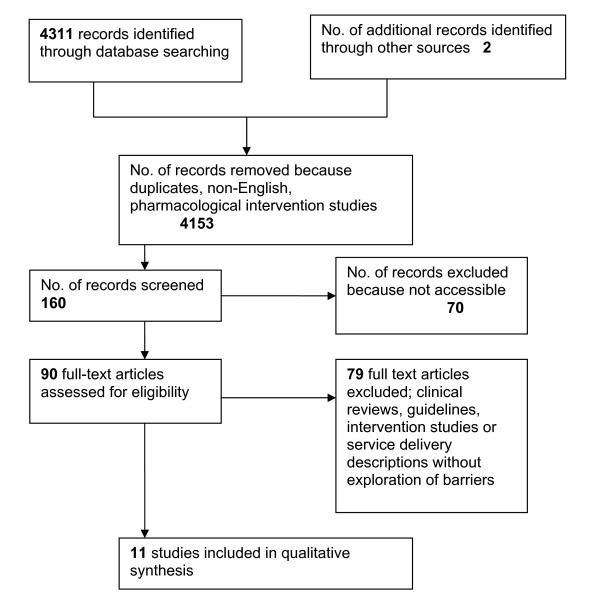
BACKGROUND: The diagnosis of dementia in primary care is perceived as a problem across countries and systems, resulting in delayed recognition and adverse outcomes for patients and their carers. Improving its early detection is an area identified for development in the English National Dementia Strategy 2009; there are thought to be multiple benefits to the patient, family, and resources by doing this. The aim of this review was to carry out a rapid appraisal in order to inform the implementation of this policy. METHOD: Publications in English up to August 2009 relating to barriers to the recognition of dementia, were identified by a broad search strategy, using electronic databases MEDLINE, EMBASE, and psycINFO. Exclusion criteria included non-English language, studies about pharmacological interventions or screening instruments, and settings without primary care. RESULTS: Eleven empirical studies were found: 3 quantitative, 6 qualitative, and 2 with mixed methodologies. The main themes from the qualitative studies were found to be lack of support, time constraints, financial constraints, stigma, diagnostic uncertainty, and disclosing the diagnosis. Quantitative studies yielded diverse results about knowledge, service support, time constraints, and confidence. The factors identified in qualitative and quantitative studies were grouped into 3 categories: patient factors, GP factors and system characteristics. CONCLUSION: Much can still be done in the way of service development and provision, GP training and education, and the eradication of stigma attached to dementia, to improve the early detection and management of dementia. Implementation of dementia strategies should include attention to all three categories of barriers. Further research should focus on their interaction, using different methods from studies to date.
Overview
The claims and statistics of this paper haven’t been checked yet.
Run the check — free, no account needed. It reads the open-access text and checks the sources it cites.
Integrity signals
Registry
Cites
Statistics
Figures
Verification
Claims the paper makes
The claims and statistics of this paper haven’t been checked yet.
Run the check — free, no account needed. It reads the open-access text and checks the sources it cites.
Claims other papers make about this one
Each is checked against this paper’s own text: does it say what the citing paper says it does?
The cited source says what the claim attributes to it.
In the citing paper
“Personal style, defined as the perceived fit between the intervention and the preferred style of clinical practice, such as clinicians’ communication style [78, 79], personality [54] and philosophical opposition to the intervention [69, 76], were presented exclusively as barriers.”
From Achieving change in primary care—causes of the evidence to practice gap: systematic reviews of reviews (2015) · cites this paper as [79]
The check wasn’t confident either way, so it gives no verdict — never disputed.
In the citing paper
“Perceptions of barriers may be socially constructed, and addressing them may not necessarily improve implementation [79].”
From Achieving change in primary care—causes of the evidence to practice gap: systematic reviews of reviews (2015) · cites this paper as [79]
Experimental — accuracy not yet measured
Self-check
Percentages, sums and reported differences re-computed from the paper’s own numbers.
The self-check needs the paper’s full text.
Citations
Cites
Preferred Reporting Items for Systematic Reviews and Meta-Analyses: the PRISMA statement
Moher, D., Liberati, A., Tetzlaff, J., Altman, D. G., & for the PRISMA Group (2009) · BMJ · doi:10.1136/bmj.b2535 · Cited by 83,823
Preferred reporting items for systematic reviews and meta-analyses: the PRISMA Statement.
(2009) · PubMed Central · Cited by 44,859
Dixon-Woods, M., Cavers, D., Agarwal, S., Annandale, E., Arthur, A., Harvey, J., Hsu, R., Katbamna, S., Olsen, R., Smith, L., et al. (2006) · BMC Medical Research Methodology · doi:10.1186/1471-2288-6-35 · Cited by 2,289
Living Well with Dementia: A National Dementia Strategy
(2009) · PsycEXTRA Dataset · doi:10.1037/e608082011-001 · Cited by 1,119
Rogers, S. L., & Friedhoff, L. T. (1996) · Dementia and Geriatric Cognitive Disorders · doi:10.1159/000106895 · Cited by 743
Evidence based policy: proceed with careCommentary: research must be taken seriously
Black, N. A., & Donald, A. (2001) · BMJ · doi:10.1136/bmj.323.7307.275 · Cited by 588 · cited 1×
“Influencing policy development and implementation is now an issue for researchers in all those countries with government-driven dementia strategies, and as Black has pointed out [25], timing is important: "Windows of opportunity to make change open up only rarely and briefly, when policy makers' values happen to coinc…”
BackgroundNon-communicable diseases must have greater priority, says WHO
Zarocostas, J. (2009) · British medical journal · doi:10.1136/bmj.b2857 · Cited by 391
Turner, S., Iliffe, S., Downs, M., Wilcock, J., Bryans, M., Levin, E., Keady, J., & O'Carroll, R. (2004) · Age and Ageing · doi:10.1093/ageing/afh140 · Cited by 375 · cited 7×
“The response rates of the studies ranged from 28% (n = 127) [30] to 67% (n = 153) [16].”
BackgroundResultInfluentialSelf-citationDiagnosing Dementia: Perspectives of Primary Care Physicians
Boise, L., Camicioli, R. M., Morgan, D. L., Rose, J. H., & Congleton, L. (1999) · The Gerontologist · doi:10.1093/geront/39.4.457 · Cited by 329 · cited 1×
“Despite this, early detection of dementia is difficult to achieve in primary care across different health care systems [16-18] with diagnosis taking between 18 to 30 months, and in the extreme, up to 4 years [19].”
BackgroundPractice constraints, behavioral problems, and dementia care: primary care physicians' perspectives
Hinton, L., Franz, C. E., Reddy, G., Flores, Y., Kravitz, R. L., & Barker, J. C. (2007) · Journal of General Internal Medicine · doi:10.1007/s11606-007-0317-y · Cited by 268 · cited 5×
“Inadequate financial remuneration (especially in countries where PCPs are paid according to services they provide) was proposed by PCPs as a barrier in the qualitative research [33,28,31,34], and was confirmed in one quantitative study (46% of PCPs in Turner et al [30]).”
BackgroundResultInfluential
Research works printed but not linked: 5
- Alzheimer's Disease International: Global Alzheimer's Disease Charter. 2009, (accessed 12/04/10), [ http://www.globalcharter.org/charter.php ]
- Levin E, Sinclair I, Gorbach P: Families Confusion, & Old Age. 1989, Aldershot: Gower
- The Audit Commission: Forget me not: developing mental health services for older people in England. 2000, London, The Audit Commission
- National Audit Office: Improving services and support for people with dementia. 2007, London: TSO
- Public Accounts Committee: Sixth report of session 2007-8: Improving services and support for people with dementia. 2008, London: TSO
Cited by
Sorted by citations
Items 101–200 of 275
Saccasan, N., & Scerri, C. (2020) · International Journal of Language & Communication Disorders · doi:10.1111/1460-6984.12574 · Cited by 19
Lü, Y., Liu, C., Wells, Y., & Yu, D. (2022) · BMJ Open · doi:10.1136/bmjopen-2022-062240 · Cited by 20
Wray, L. O., Wade, M. J., Beehler, G. P., Hershey, L. A., & Vair, C. L. (2013) · American Journal of Geriatric Psychiatry · doi:10.1016/j.jagp.2013.04.018 · Cited by 20
Brazil, K., Galway, K., Carter, G., & van der Steen, J. T. (2016) · Journal of Palliative Medicine · doi:10.1089/jpm.2015.0274 · Cited by 20
“In contrast, in NI, dementia care potentially remains fragmented,(13) with the GP role limited in both contact time and access to specialist service provision.(14,15) Lack of education of professional teams and lack of awareness of the general public were among the most important barriers in both countries.”
Hungarian general practitioners’ attitude and the role of education in dementia care
Heim, S., Busa, C., Pozsgai, É., Csikós, Á., Papp, E., Pákáski, M., Kálmán, J., Hajnal, F., & Karádi, K. (2019) · Primary Health Care Research & Development · doi:10.1017/s1463423619000203 · Cited by 19
“…the efficacy of treatment or concerns about the emotional effect on the patient by disclosing the diagnosis may also be obstacles (Boise et al., 1999; Iliffe et al., 2005; Pimlott et al., 2009b; Koch and Iliffe 2010a; Lahjibi-Paulet et al., 2012; Caruana-Pulpan and Scerri, 2014; Gove et al., 2016).”
BackgroundDiagnosis and Management of the Patient with Suspected Dementia in Primary Care
Holzer, S., Warner, J. P., & Iliffe, S. (2013) · Drugs & Aging · doi:10.1007/s40266-013-0098-4 · Cited by 19
“Shared care protocols and referral pathways can strengthen the link between primary care and specialist services [17].”
Self-citationBalsinha, C., Iliffe, S., Dias, S., Freitas, A., Grave, J., & Gonçalves-Pereira, M. (2021) · Dementia · doi:10.1177/1471301220977710 · Cited by 18
“…GP factors (e.g. a general lack of knowledge regarding dementia, lack of training in communicating with the patients and their families) and, thirdly, system characteristics (e.g. limited availability of support services) (Aminzadeh et al., 2012; Koch & Iliffe, 2010; Mansfield et al., 2018).”
BackgroundResultSelf-citation“At least we finally found out what it was”: Dementia diagnosis in minoritized populations
Blinka, M. D., Gundavarpu, S., Baker, D., Thorpe, R. J., Gallo, J. J., Samus, Q. M., & Amjad, H. (2023) · Journal of the American Geriatrics Society · doi:10.1111/jgs.18329 · Cited by 18
Tang, E. Y. H., Exley, C., Price, C., Stephan, B. C. M., & Robinson, L. A. (2019) · BMJ Open · doi:10.1136/bmjopen-2018-025586 · Cited by 18
Pond, D. C., Higgins, I., Mate, K. E., Merl, H., Mills, D., & McNeil, K. (2021) · Australian Journal of Primary Health · doi:10.1071/py20118 · Cited by 19
“Such results are consistent with research that time constraints pose a barrier to GPs effectively identifying patients with dementia (Koch and Iliffe 2010).”
ResultDodd, E., Cheston, R., Cullum, S. J., Jefferies, R., Ismail, S. U., Gatting, L., Fear, T., & Gray, R. J. (2015) · Dementia · doi:10.1177/1471301214566476 · Cited by 17
“Arguably the most critical barrier preventing effective primary care services from working with people with dementia is the feeling of a lack of support from and communication with secondary care (Koch & Iliffe, 2010).”
BackgroundPutting personalisation and integration into practice in primary care
Clark, M., Moreland, N., Greaves, I., Greaves, N., & Jolley, D. J. (2013) · Journal of Integrated Care · doi:10.1108/14769011311316033 · Cited by 17
What next? Experiences of social support and signposting after a diagnosis of dementia
Hagan, R. J. (2020) · Health & Social Care in the Community · doi:10.1111/hsc.12949 · Cited by 17
Featherstone, K., & Northcott, A. (2020) · Routledge eBooks · doi:10.4324/9781003087335 · Cited by 17
Chithiramohan, A., Iliffe, S., & Khattak, I. (2016) · Dementia · doi:10.1177/1471301216682625 · Cited by 17
Self-citationMartínez-Ruiz, A., Huang, Y., Gee, S. B., Jamieson, H. A., & Cheung, G. (2018) · Dementia · doi:10.1177/1471301218786277 · Cited by 17
Jeyagurunathan, A., Yuan, Q., Samari, E., Zhang, Y., Goveas, R. R., Ng, L. L., & Subramaniam, M. (2024) · Frontiers in Public Health · doi:10.3389/fpubh.2024.1396056 · Cited by 16
Health-Care Delivery for Older People with Dementia in Primary Care
Balsinha, C., Gonçalves‐Pereira, M., Iliffe, S., Freitas, J. A., & Grave, J. (2019) · Springer eBooks · doi:10.1007/978-3-030-10814-4_23 · Cited by 17
Self-citationAttitude toward dementia and preferences for diagnosis in Japanese health service consumers
Oba, H., Matsuoka, T., Kato, Y., Watson, R., Mansfield, E. L., Sanson‐Fisher, R., & Narumoto, J. (2021) · BMC Health Services Research · doi:10.1186/s12913-021-06381-9 · Cited by 16
“The difference may also help explain why some family members may delay seeking further assessment for possible symptoms of dementia, and why physicians may be reluctant to deliver a diagnosis [7].”
BackgroundNHG-Standaard Dementie (derde herziening)+
van Charante, E. P. M., Perry, M., Vernooij-Dassen, M. J. F. J., Boswijk, D., Stoffels, J., Achthoven, L., & Luning-Koster, M. N. (2012) · Cited by 16
Mason, R. L., Doherty, K., Eccleston, C. E. A., Winbolt, M., Long, M., & Robinson, A. J. (2020) · BMJ Open · doi:10.1136/bmjopen-2019-033218 · Cited by 16
“4 5 Obstacles to timely diagnosis and intervention may include a lack of diagnostic tests/certainty 6 and lack of confidence in diagnostic skills and management, 7 while negative attitudes towards diagnosis, disclosure and treatment 8–10 may also affect diagnosis rates.”
BackgroundPond, D. C., Mate, K. E., Phillips, J., Stocks, N., Magin, P. J., Weaver, N., & Brodaty, H. (2013) · International Psychogeriatrics · doi:10.1017/s1041610213000884 · Cited by 16
Do Patients Retain their Family Physicians after Long-Term Care Entry? A Retrospective Cohort Study
Staykov, E., Qureshi, D., Scott, M., Talarico, R., Hsu, A. T., Howard, M., Costa, A. P., Fung, C., Ip, M., Liddy, C. E., et al. (2020) · Journal of the American Medical Directors Association · doi:10.1016/j.jamda.2020.04.016 · Cited by 18
Structured approach to patients with memory difficulties in family practice.
Lee, L. S., Weston, W. W., Heckman, G. A., Gagnon, M., Lee, F. J., & Sloka, S. (2013) · Europe PMC (PubMed Central) · Cited by 14
COVID-19 in the Gulf Cooperation Council Member States: An Evidence of Effective Response
Awaidy, S. T. A., Khamis, F. A., Attar, F. A., Abdulrazzaq, N. M., Dabal, L. A., Enani, M. A., Alfouzan, W. A., Maslamani, M. A. R. S. A., Romaihi, H. A., Salman, J. A., et al. (2021) · Oman Medical Journal · doi:10.5001/omj.2021.115 · Cited by 15
Knowledge, Attitudes, and Perceptions Toward Dementia Among Middle-Aged Singapore Residents
Siddiqui, F., Nistala, K. R. Y., Quek, C. W. N., Leong, V. S. Y., Tan, A. Y. S., Tan, C. Y. E., & Hilal, S. (2022) · Journal of Alzheimer s Disease · doi:10.3233/jad-215262 · Cited by 16
“Furthermore, a review of medical literature on family ,inspiteoftheirhigheduca-tionalattainment:doctorswerenotedtobeunwilling todiagnosepatientswithdementia,astheyassumed thatpatients’familieswouldonlywanttoknowat theend-stage[58].”
Liu, S., Cao, Y., Liu, J., Ding, X., Coyle, D., & Initiative, A. D. N. (2022) · International Journal of Machine Learning and Cybernetics · doi:10.1007/s13042-022-01570-2 · Cited by 16
“FDG-PET is invasive and expensive and involves radiation exposure [3] and most basic clinics do not have standardised screening equipment [37].”
BackgroundLü, Y., Liu, C., Yu, D., & Wells, Y. (2022) · Frontiers in Public Health · doi:10.3389/fpubh.2022.943964 · Cited by 15
“For example, GPs may fear that disclosing a diagnosis of cognitive impairment might damage their relationship with patients because of the potential negative impacts on the patient receiving the diagnostic information (44).”
BackgroundBest Practices for Communicating a Diagnosis of Dementia
Armstrong, M. J., Bedenfield, N., Rosselli, M., Curiel, R. E., Kitaigorodsky, M., Galvin, J. E., Lachner, C., Smith, A., Ortega, M., Mohiuddin, Y., et al. (2023) · Neurology Clinical Practice · doi:10.1212/cpj.0000000000200223 · Cited by 15
Resource Use During the Last 6 Months of Life of Individuals Dying with and of Alzheimer's Disease
Faes, K., Cohen, J., & Annemans, L. (2018) · Journal of the American Geriatrics Society · doi:10.1111/jgs.15287 · Cited by 15
The Pathway to Diagnosis of Dementia for Francophones Living in a Minority Situation
Garcia, L., McCleary, L., Emerson, V. F., Léopoldoff, H., Dalziel, W. B., Drummond, N., Cohen, C. A., Koehn, S. D., & Silvius, J. L. (2013) · The Gerontologist · doi:10.1093/geront/gnt121 · Cited by 15
Establishment of the Japanese version of the dementia stigma assessment scale
Noguchi, T., Shang, E., Nakagawa, T., Komatsu, A., Murata, C., & Saito, T. (2022) · Geriatrics and gerontology international/Geriatrics & gerontology international · doi:10.1111/ggi.14453 · Cited by 13
Satterwhite, S., Nguyen, M. T., Honcharov, V., McDermott, A. M., & Sarkar, U. (2024) · Journal of General Internal Medicine · doi:10.1007/s11606-024-08658-1 · Cited by 14
Ollerenshaw, A., Shee, A. W., & Yates, M. W. (2017) · Australian Journal of Rural Health · doi:10.1111/ajr.12376 · Cited by 15
Buhr, G. T., Dixon, C., Dillard, J., Nickolopoulos, E., Bowlby, L. A., Canupp, H., Matters, L., Konrad, T. R., Previll, L. A., Heflin, M. T., et al. (2019) · Geriatrics · doi:10.3390/geriatrics4040059 · Cited by 14
Confidence in Dementia Management and Its Associated Factors among Primary Care Doctors in Malaysia
Sodri, N. I., Mohamed-Yassin, M.-S., Mohamad, M., & Baharudin, N. (2022) · International Journal of Environmental Research and Public Health · doi:10.3390/ijerph19169995 · Cited by 14
“The lack of confidence and inherent stigma about making a wrong diagnosis and disclosing the diagnosis with empathy may lead to PCDs’ reluctance or inability to recognize dementia earlier [19,21].”
BackgroundLiving unnoticed: Cognitive impairment in older people with multimorbidity
Ekdahl, A., Odzakovic, E., & Hellström, I. (2015) · The journal of nutrition health & aging · doi:10.1007/s12603-015-0580-2 · Cited by 14
“Previous studies have focused mainly on under-diagnosis from the perspective of general practitioners (6-8) and usually describe persons with probable dementia as a homogenous group.”
Dementia and primary care teams: obstacles to the implementation of Portugal’s Dementia Strategy
Balsinha, C., Iliffe, S., Dias, S., Freitas, A., Barreiros, F. F., & Gonçalves‐Pereira, M. (2022) · Primary Health Care Research & Development · doi:10.1017/s1463423621000876 · Cited by 13
“Three systematic reviews highlight the complex andmultifactorial barriers to dementiamanagement (Koch & Iliffe, 2010; Aminzadeh et al., 2012; Mansfield et al., 2018): people with dementia factors (e.g., non-compliance with care and medication), general practitioner (GP) factors (e.g., lack of…”
BackgroundResultInfluentialSelf-citationJaKa, M. M., Rossom, R. C., Soo Borson, B., O’Connor, P. J., Zibley, L. J., von Sternberg, T. L., Crain, A. L., Ekstrom, H. L., Crouse, B. K., Werner, A. M., et al. (2024) · Family Practice · doi:10.1093/fampra/cmae043 · Cited by 14
Barber, J., & Murphy, K. (2011) · International Journal of Palliative Nursing · doi:10.12968/ijpn.2011.17.12.587 · Cited by 13
Engelhardt, E., Tocquer, C., André, C., Moreira, D. M., Okamoto, I. H., & Cavalcanti, J. L. D. S. (2011) · Dementia & Neuropsychologia · doi:10.1590/s1980-57642011dn05040004 · Cited by 13
Back to Basics: Giant Challenges to Addressing Isaac's “Geriatric Giants” Post COVID-19 Crisis
Flatharta, T. Ó., & Mulkerrin, E. C. (2020) · The journal of nutrition health & aging · doi:10.1007/s12603-020-1425-1 · Cited by 13
“Day/outpatient assessments Cognitive assessments Inpatient Community Immobility Instability Incontinence Impaired Memory (14)”
BackgroundPetrazzuoli, F., Vinker, S., Palmqvist, S., Midlöv, P., Lepeleire, J. D., Pirani, A., Frese, T., Buono, N., Ahrensberg, J. M., Аsenova, R., et al. (2020) · Scandinavian Journal of Primary Health Care · doi:10.1080/02813432.2020.1794166 · Cited by 13
Yu, J., Wang, P., Xie, S., Amin, J., Mueller, C., Hou, X., Chen, X., Underwood, B. R., Tang, S., & Chen, S. (2025) · BMC Medicine · doi:10.1186/s12916-025-04196-7 · Cited by 17
Beck, A. P., Jacobsohn, G. C., Hollander, M. M., Gilmore‐Bykovskyi, A. L., Werner, N. E., & Shah, M. N. (2020) · Dementia · doi:10.1177/1471301220905233 · Cited by 12
“…diagnose dementia remains a significant need for primary care clinics (Alzheimer’s Association & Centers for Disease Control and Prevention, 2018; Koch & Iliffe, 2010, 2011), one that our stakeholders suggested might affect uncertainty about the cause or progression of symptoms, as well as…”
BackgroundAdvances in the early diagnosis of amyotrophic lateral sclerosis
García‐Casanova, P. H., & Vazquez-Costa, J. F. (2025) · Expert Review of Neurotherapeutics · doi:10.1080/14737175.2025.2471556 · Cited by 13
Clinical history for diagnosis of dementia in men: Caerphilly Prospective Study
Creavin, S., Fish, M., Gallacher, J., Bayer, A. J., & Ben‐Shlomo, Y. (2015) · British Journal of General Practice · doi:10.3399/bjgp15x686053 · Cited by 12
Auer, S., Span, E., & Reisberg, . (2013) · Dementia · doi:10.1177/1471301213502214 · Cited by 12
“The benefit of early disease detection and treatment on the prevention of premature institutionalization has been demonstrated (Koch & Iliffe, 2010; Mittelman, Ferris, Shulman, Steinberg, & Levin, 1996).”
BackgroundChalmer, R., Ayers, E. I., Weiss, E. F., Malik, R., Ehrlich, A., Wang, C., Zwerling, J. L., Ansari, A., Possin, K. L., & Verghese, J. (2022) · Neurodegenerative Disease Management · doi:10.2217/nmt-2021-0043 · Cited by 11
Trends in referred patient profiles in a memory clinic over 20 years
Azam, B., Whitfield, T. J., Radford, D., Dontham, S. G., Stevens, T., Dannhauser, T. M., & Walker, Z. (2014) · Dementia · doi:10.1177/1471301214539691 · Cited by 11
“A recent review identified ‘therapeutic nihilism’ amongst GPs, the attitude that diagnosis is pointless because there are no available curative treatments, and so it could do more harm than good (Koch & Iliffe, 2010).”
BackgroundPatient attitudes regarding pharmacist-administered memory screening in community pharmacies
Breslow, R. M. (2013) · Journal of the American Pharmacists Association · doi:10.1331/japha.2013.12227 · Cited by 11
The assessment of dementia in primary care
Dodd, E., Cheston, R., & Ivanecka, A. (2015) · Journal of Psychiatric and Mental Health Nursing · doi:10.1111/jpm.12250 · Cited by 12
Understanding diagnostic settings and carer experiences for dementia diagnosis in Australia
Ng, N. S. Q., Ayton, D., Workman, B., & Ward, S. A. (2020) · Internal Medicine Journal · doi:10.1111/imj.14869 · Cited by 10
Lech, S., O’Sullivan, J. L., Drewelies, J., Herrmann, W., Spang, R. P., Voigt‐Antons, J., Nordheim, J., & Gellert, P. R. (2021) · BMC Geriatrics · doi:10.1186/s12877-021-02650-8 · Cited by 10
“However, structural factors such as time constraints per patient [17, 24], as well as lack of cross-sectional collaboration [25] and lack of social services support [17, 18] were frequently reported to negatively impact primary care delivery for dementia.”
BackgroundPatient-provider communication about cognition and the role of memory concerns: a descriptive study
Hill, N. L., Bratlee‐Whitaker, E., Jang, H., Bhargava, S., Sillner, A. Y., Do, J., & Mogle, J. A. (2023) · BMC Geriatrics · doi:10.1186/s12877-023-04053-3 · Cited by 10
“This algins with findings of systematic reviews of physicianreported barriers to cognitive screening in primary care: healthcare providers fail to offer screenings when they perceive patient reluctance or concerns about the stigma of a diagnosis [43, 44].”
BackgroundCrombie, A., Lingam, S., Pascoe, A., Disler, P., Asaid, A., & Disler, R. (2024) · Australian Journal of Rural Health · doi:10.1111/ajr.13082 · Cited by 10
Lindeberg, S., Samuelsson, C., & Müller, N. (2019) · Clinical Gerontologist · doi:10.1080/07317115.2019.1701168 · Cited by 10
“In contrast, an international review of GP practice by Koch and Iliffe (2010), found that many GPs perceived barriers in dementia diagnostics and care being due to barriers in the health care system, as opposed to deficits in their own skills and knowledge.”
BackgroundTakechi, H., Mori, T., Hashimoto, T., & Nakamura, S. (2014) · Dementia and Geriatric Cognitive Disorders · doi:10.1159/000358821 · Cited by 9
Challenges to Successful Community-based Integrated Approach to Dementia: A Qualitative Study
Hirakawa, Y., Horie, K., Chiang, C., Shimizu, H., Andoh, H., & Aoyama, A. (2019) · Journal of Gerontological Social Work · doi:10.1080/01634372.2019.1640825 · Cited by 9
“However, primary care physicians are generally unprepared for early detection of dementia and monitoring by using brain image diagnosis and cognitive assessment tools (Koch & Iliffe, 2010; Valcour, Masaki, Curb, & Blanchette, 2000).”
BackgroundA new model for general practice-led, regional, community-based, memory clinics
Disler, R. T., Pascoe, A., Anderson, H., Piejko, E., Asaid, A., & Disler, P. B. (2022) · BMC Family Practice · doi:10.1186/s12875-022-01829-1 · Cited by 9
“Koch T, Iliffe S. Rapid appraisal of barriers to the diagnosis and management of patients with dementia in primary care: a systematic review.”
BackgroundInfluentialPost-diagnostic support for dementia
Levin, K. A., Lithgow, S., Miller, M., & Carson, J. (2018) · Health Education · doi:10.1108/he-08-2017-0042 · Cited by 8
Parker, M., Barlow, S. H., Hoe, J., & Aitken, L. M. (2021) · Journal of Geriatric Psychiatry and Neurology · doi:10.1177/08919887211060018 · Cited by 8
“But stigma and therapeutic nihilism on the part of HCPs are also recognised barriers.(14,33) However, GPs also describe a nuanced, cumulative process in which a dementia diagnosis in primary care evolves, to take account of the individual circumstances of each PLWD and their families.”
BackgroundInfluentialMini-Cog for the detection of dementia within a secondary care setting
Chan, C., Fage, B. A., Burton, J. K., Smailagic, N., Gill, S. S., Herrmann, N., Nikolaou, V., Quinn, T., Noel-Storr, A. H., & Seitz, D. P. (2021) · Cochrane Database of Systematic Reviews · doi:10.1002/14651858.cd011414.pub3 · Cited by 11
IRIS trial group, McKenzie, J. E., French, S. D., O’Connor, D. A., Mortimer, D., Browning, C. J., Russell, G. M., Grimshaw, J., Eccles, M., Francis, J., et al. (2013) · Implementation Science · doi:10.1186/1748-5908-8-91 · Cited by 9
“A systematic review of qualitative studies suggests that diagnostic uncertainty or insufficient knowledge or experience, difficulties in disclosing the diagnosis, and the stigma attached to dementia, are barriers to diagnosis of dementia reported by primary care practitioners [13].”
BackgroundLee, L. S., & Heckman, G. A. (2012) · UWSpace (University of Waterloo) · Cited by 8
Health care provider experiences in primary care memory clinics: a phenomenological study
Sheiban, L., Stolee, P., McAiney, C. A., & Boscart, V. (2018) · BMC Family Practice · doi:10.1186/s12875-018-0756-z · Cited by 8
Tablet-Based Outpatient Care for People With Dementia
Lech, S., O’Sullivan, J. L., Gellert, P. R., Voigt‐Antons, J., Greinacher, R., & Nordheim, J. (2019) · GeroPsych · doi:10.1024/1662-9647/a000210 · Cited by 8
Jena, A., Renjen, P. N., Taneja, S., Gambhir, A., & Negi, P. (2015) · Indian journal of radiology and imaging - new series/Indian journal of radiology and imaging/Indian Journal of Radiology & Imaging · doi:10.4103/0971-3026.169449 · Cited by 8
Visser, F. C. W., Kloppenburg-Lagendijk, M., Hempenius, L., Verwey, N. A., Perry, M., van Eersel, M. E. A., & Munster, B. C. V. (2025) · Age and Ageing · doi:10.1093/ageing/afaf176 · Cited by 10
Foley, T., Perry, M., & Robinson, L. A. (2025) · The Lancet Primary Care · doi:10.1016/j.lanprc.2025.100061 · Cited by 7
SafeHome: A Serious Game to Promote Safe Environments for Persons Living with Dementia
Appel, L., Peisachovich, E., Sinclair, D., Jokel, R., & Silva, C. D. (2020) · Cureus · doi:10.7759/cureus.6949 · Cited by 7
Subramaniam, H., Mukaetova-Ladinska, E. B., Wilson, A., & Bankart, J. (2020) · BJPsych Bulletin · doi:10.1192/bjb.2020.3 · Cited by 7
de Hoyos-Alonso, M. C., Bonis, J., Bryant, V., Castell, M. V., & Puime, Á. O. (2015) · Atención Primaria · doi:10.1016/j.aprim.2015.03.002 · Cited by 7
“045) 13,5 (12,7-14,3)b 10,5 (9,9-11,2)b 11,9 (11,4-12,4)a 14,4 (13,3-15,4) 12,4 (11,3-13,6) 13,5 (12,7-14,3)a 12,4 (12,0-12,8)”
InfluentialPentzek, M., Michel, J. V., Ufert, M., Vollmar, H. C., Wilm, S., & Leve, V. (2015) · Zeitschrift für Evidenz Fortbildung und Qualität im Gesundheitswesen · doi:10.1016/j.zefq.2015.03.005 · Cited by 6
Mayoral, V. F. D. S., Bôas, P. J. F. V., & Jacinto, A. F. (2021) · Arquivos de Neuro-Psiquiatria · doi:10.1590/0004-282x-anp-2020-0051 · Cited by 6
A systematic rapid evidence assessment of late diagnosis
Caird, J., Hinds, K., Kwan, I., & Thomas, J. (2012) · Cited by 6
The Annual Wellness Visit: Assessment of Cognitive Impairment
Loskutova, N. (2018) · Public Policy & Aging Report · doi:10.1093/ppar/pry047 · Cited by 6
Tan, W. J., Yeo, D. H. H., Koh, H. J., Wong, S. C., & Lee, T. M. (2020) · Dementia · doi:10.1177/1471301220967805 · Cited by 5
Creavin, S., Noel-Storr, A. H., Richard, E., Creavin, A. L., Cullum, S. J., Ben‐Shlomo, Y., & Purdy, S. (2017) · Cochrane Database of Systematic Reviews · doi:10.1002/14651858.cd012558 · Cited by 6
Characteristics of nursing home residents with late-stage dementia and pain
Rostad, H. M., Grov, E. K., Utne, I., & Halvorsrud, L. (2020) · Sykepleien Forskning · doi:10.4220/sykepleienf.2019.79184en · Cited by 8
Exploring Healthcare Providers’ Views on Cognitive Assessment in Geriatric Care
Raju, N. (2024) · Annals of Pharmacy Education Safety and Public Health Advocacy · doi:10.51847/ohbxzj6ejx · Cited by 5
Empowering general practitioners in dementia care: The ANTISTIGMA education intervention in Europe
Cartz‐Piver, L., Calvet, B., Mehrabian-Spasova, S., Raycheva, M. R., Rejdak, K., Papuk, E., Leperre‐Desplanques, A., & Krolak‐Salmon, P. (2023) · International Journal of Geriatric Psychiatry · doi:10.1002/gps.5958 · Cited by 5
“enhancing GPs' perceptions of their ability to make the diagnosis, and the value of doing so in a timely manner.(32) In a meta‐analysis(33) authors considered that educational interventions that require active participation could improve detection of dementia but did not seem to increase adherence to dementia guidelin…”
BackgroundMcLaughlin, K., & Laird, L. (2019) · Mental Health Practice · doi:10.7748/mhp.2019.e1425 · Cited by 5
Validity and reliability of the Brain Health Self‐Efficacy Scale for the elderly
Gao, Y., Ming, C., Yang, C., Wu, Y., Long, Y., Chen, Y., Liu, H., Sun, L., Yang, Y., & Li, X. (2020) · General Psychiatry · doi:10.1136/gpsych-2020-100208 · Cited by 5
Lü, Y., Liu, C., Fawkes, S. A., Wang, Z., & Yu, D. (2022) · BMC Geriatrics · doi:10.1186/s12877-022-03175-4 · Cited by 8
Toller, G., Lorena, S., Dilaxy, K., Callahan, P. M., Köhn, F., Münzer, T., Kunze, U., Monsch, A. U., Possin, K. L., Rankin, K. P., et al. (2023) · Brain and Behavior · doi:10.1002/brb3.3329 · Cited by 5
“…there are several practice-level barriers around scheduling and expertise that may prevent physicians from evaluating cognition in routine clinical care (Kaduszkiewicz et al., 2010; Koch et al., 2010; Sabbagh et al., 2020), even in the presence of sensitive instruments such as the BHA and BHS.”
BackgroundSideman, A. B., Nguyen, H. Q., Langer-Gould, A., Lee, E. A., Borson, S., Shen, E., Tsoy, E., Macias, M., Goode, C., Rankin, K., et al. (2024) · BMC Primary Care · doi:10.1186/s12875-024-02544-9 · Cited by 4
“[3–5] Studies of the Medicare annual wellness visit, which requires detection of CI if present, have found inconsistent effects on detection, [6, 7] and very few published studies address other ways to improve detection of CI in primary care.”
BackgroundRühl, J., Brinkmann, S. T., Schaufler, D., Graessel, E., Walker, B. B., & Kolominsky‐Rabas, P. L. (2024) · Das Gesundheitswesen · doi:10.1055/a-2233-6168 · Cited by 4
Ryan, E. L. S. (2013) · Primary Health Care Open Access · doi:10.4172/2167-1079.1000142 · Cited by 4
Lee, L. S., Weston, W. W., Hillier, L. M., Archibald, D., & Lee, J. J. (2018) · Gerontology & Geriatrics Education · doi:10.1080/02701960.2018.1484737 · Cited by 4
Assessing the Attitudes of Greek Nurses Toward Computerized Dementia Screening
Zygouris, S., Γκιόκα, Μ., Μoraitou, D., Teichmann, B., Tsiatsos, Τ., Papagiannopoulos, S., & Tsolaki, M. (2020) · Journal of Alzheimer s Disease · doi:10.3233/jad-200666 · Cited by 4
The nurse's role in closing the diagnostic gap for people with dementia
Leach, K., & Hicks, A. (2013) · British Journal of Community Nursing · doi:10.12968/bjcn.2013.18.9.433 · Cited by 4
Dementia Diagnostic Services for Ireland: a literature review
Reves, A., Timmons, S., Fox, S., Murphy, A., & O’Shea, E. (2018) · Lenus, The Irish Health Repository (Dr Steevens Hospital Library) · Cited by 4
Jacinto, A. F., Gordon, A. L., Samra, R., Steiner, A. B. Q., Mayoral, V. F. D. S., & Cítero, V. D. A. (2018) · Gerontology & Geriatrics Education · doi:10.1080/02701960.2018.1551216 · Cited by 4
“…Júlio de Mesquita Filho (Unesp), Botucatu, SP, Brazil © 2018 Taylor & Francis Group, LLC A systematic review on the barriers to diagnosis and management of dementia patients in primary care found that GPs internationally reported inadequate dementia training and education (Koch & Iliffe, 2010).”
BackgroundResource Utilization in Dementia a Question of Collaboration
Jedenius, E. (2010) · Figshare · Cited by 4
Ashbourne, J. (2015) · UWSpace (University of Waterloo) · Cited by 4
Stepleman, L. M., Penwell-Waines, L., & Valvano, A. K. (2015) · Health Psychology and Behavioral Medicine · doi:10.1080/21642850.2015.1063059 · Cited by 4
“…example, if a specialty psychiatric care clinic has a reputation for long wait times for a new patient appointment, this might decrease a referring provider’s inclination to act expeditiously on the patient’s behalf during a busy clinic (Hartley, Korsen, Bird, & Agger, 1998; Koch & Iliffe, 2010).”
BackgroundHwang, J. J., Donnelly, T. T., Bouchal, S. R., & Davidson, S. (2023) · Journal of Psychiatric and Mental Health Nursing · doi:10.1111/jpm.12932 · Cited by 3
Al-Awad, F. A., Al-Zahrani, M. A., Bawazeer, A. O., Al-Qahtani, F. S., Al-Jabari, S. A., Jayaseeli, N., AlAbdulKader, A. M., Alharkan, K. S., Al-Shammari, M. O., Mohammedin, A. S., et al. (2024) · Journal of Family and Community Medicine · doi:10.4103/jfcm.jfcm_230_23 · Cited by 5
The Management of Dementia in Primary Care
Vreese, L. P. D., Salvatore, L. D., Rovesta, L., & Fabbo, A. (2016) · InTech eBooks · doi:10.5772/62762 · Cited by 3
Metadata
- Authors
- the EVIDEM-ED project, Koch, T., & Iliffe, S.
- Affiliations
- The Royal Free Hospital (GB)
- Corresponding author
- Koch, Tamar
- ORCID
- Iliffe, Steve
- Venue
- BMC Family Practice
- Published
- 2010-07-01
- Volume
- 11
- Issue
- 1
- Pages
- 52-52
- ISSN
- 1471-2296 (ISSN-L)
- PMC
- PMC2909966
- OpenAlex
- W2049017668
- Cited by
- 275
- References
- 39
- Citations by year
- 2026: 15 · 2025: 19 · 2024: 15 · 2023: 12 · 2022: 25 · 2021: 15 · 2020: 26 · 2019: 24 · 2018: 23 · 2017: 8 · 2016: 11 · 2015: 19 · 2014: 15 · 2013: 23 · 2012: 15
- FWCI
- 2.18
- Type
- journal article
- Language
- en
- Open access
- gold
- doi.org
- Licence
- Locations
- BMC Family Practice (publishedVersion, cc-by)
- PubMed Central (publishedVersion, cc-by)
- PubMed (publishedVersion)
- DOAJ (DOAJ: Directory of Open Access Journals) (submittedVersion, cc-by-sa)
- Funders
- National Institute for Health and Care Research (RP-PG-0606-1005)
- Topics
- Health Sciences › Medicine › Psychiatry and Mental health › Dementia and Cognitive Impairment Research
- Health Sciences › Medicine › Family Practice › Primary Care and Health Outcomes
- Health Sciences › Health Professions › General Health Professions › Patient-Provider Communication in Healthcare
- Keywords
- dementia, barriers to diagnosis, early detection, primary care, general practitioners, dementia stigma, diagnostic uncertainty, diagnosis disclosure, general practice training, time constraints, financial constraints, National Dementia Strategy, dementia management
- MeSH terms
- Attitude of Health Personnel, Dementia, Humans, Primary Health Care, Disease Management, Early Diagnosis
About these checks
Registry, retraction, Cites and statistics results are computed, not judged, with one exception: a printed reference that no index lists is read once by a model before it counts as a citation error. Claims are extracted by a model and kept only when their quote appears verbatim in the text; each cited source is then checked, with a model’s help, for whether it says what the claim relies on. Those verdicts can be wrong — read the claim’s quote and the cited source before relying on one.
Statistics and arithmetic are recomputed, not judged.
Confidence bands are shown only for fields calibrated on our annotated test set. None is calibrated yet, so no band is shown.
What counts as a claim ›How we measure confidence ›How we check this ›
Are you an author, or do you see a problem with this page? Request a review
