

Reduction of missed appointments at an urban primary care clinic: a randomised controlled study
Open accessThe DOI matches its Crossref record; 34 of the 34 references it cites were found in a registry or an index.
Abstract
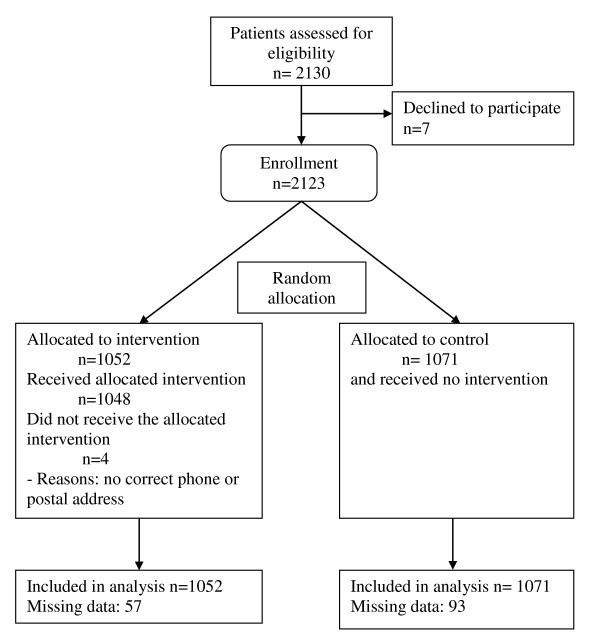
BACKGROUND: Missed appointments are known to interfere with appropriate care and to misspend medical and administrative resources. The aim of this study was to test the effectiveness of a sequential intervention reminding patients of their upcoming appointment and to identify the profile of patients missing their appointments. METHODS: We conducted a randomised controlled study in an urban primary care clinic at the Geneva University Hospitals serving a majority of vulnerable patients. All patients booked in a primary care or HIV clinic at the Geneva University Hospitals were sent a reminder 48 hrs prior to their appointment according to the following sequential intervention: 1. Phone call (fixed or mobile) reminder; 2. If no phone response: a Short Message Service (SMS) reminder; 3. If no available mobile phone number: a postal reminder. The rate of missed appointment, the cost of the intervention, and the profile of patients missing their appointment were recorded. RESULTS: 2123 patients were included: 1052 in the intervention group, 1071 in the control group. Only 61.7% patients had a mobile phone recorded at the clinic. The sequential intervention significantly reduced the rate of missed appointments: 11.4% (n = 122) in the control group and 7.8% (n = 82) in the intervention group (p < 0.005), and allowed to reallocate 28% of cancelled appointments. It also proved to be cost effective in providing a total net benefit of 1846. - EUR/3 months. A satisfaction survey conducted with 241 patients showed that 93% of them were not bothered by the reminders and 78% considered them to be useful. By multivariate analysis, the following characteristics were significant predictors of missed appointments: younger age (OR per additional decade 0.82; CI 0.71-0.94), male gender (OR 1.72; CI 1.18-2.50), follow-up appointment >1 year (OR 2.2; CI: 1.15-4.2), substance abuse (2.09, CI 1.21-3.61), and being an asylum seeker (OR 2.73: CI 1.22-6.09). CONCLUSION: A practical reminder system can significantly increase patient attendance at medical outpatient clinics. An intervention focused on specific patient characteristics could further increase the effectiveness of appointment reminders.
Overview
The claims and statistics of this paper haven’t been checked yet.
Free: it reads the open-access text and checks the first 5 claims that cite a source we can check. Create a free account to check every claim.
Integrity signals
Registry
Cites
Statistics
Figures
Verification
Claims the paper makes
The claims and statistics of this paper haven’t been checked yet.
Free: it reads the open-access text and checks the first 5 claims that cite a source we can check. Create a free account to check every claim.
Claims other papers make about this one
Each is checked against this paper’s own text: does it say what the citing paper says it does?
The cited source doesn’t support the claim as written.
In the citing paper
“Overall, the sequential reminders reduced the rate of missed appointments by 11.4%.”
From The Empirical Foundations of Telemedicine Interventions in Primary Care (2016) · cites this paper as [96]
Checked by a reasoning model — may be wrong.
Experimental — accuracy not yet measuredThe source backs part of the claim, not all of it — or backs it for a different population, condition or comparison.
In the citing paper
“Twelve percent of the patients had no phone.”
From The Empirical Foundations of Telemedicine Interventions in Primary Care (2016) · cites this paper as [96]
Experimental — accuracy not yet measuredThe cited source says what the claim attributes to it.
In the citing paper
“This reduction was statistically significant for primary care and smoking cessation appointments but not significant for human immunodeficiency virus and diet consultations.”
From The Empirical Foundations of Telemedicine Interventions in Primary Care (2016) · cites this paper as [96]
The cited source says what the claim attributes to it.
In the citing paper
“Among patients in the intervention group, 51% received a reminder on their mobile phones, 19% on fixed phone, 18% by SMS, and 10% by post.”
From The Empirical Foundations of Telemedicine Interventions in Primary Care (2016) · cites this paper as [96]
The cited source says what the claim attributes to it.
In the citing paper
“''The net financial benefit of the intervention was estimated to be e1,850 over 3 months.oncecosts linked to the intervention were deducted.''”
From The Empirical Foundations of Telemedicine Interventions in Primary Care (2016) · cites this paper as [96]
1 more claim about this paper
Create a free account to see every claim other papers make about this one.
Self-check
Percentages, sums and reported differences re-computed from the paper’s own numbers.
The self-check needs the paper’s full text.
Citations
Cites
Missed Visits and Mortality among Patients Establishing Initial Outpatient HIV Treatment
Mugavero, M. J., Lin, H., Willig, J. H., Westfall, A. O., Ulett, K. B., Routman, J. S., Abroms, S., Raper, J. L., Saag, M. S., & Allison, J. J. (2009) · Clinical Infectious Diseases · doi:10.1086/595705 · Cited by 481 · cited 1×
“Previous studies showed that overall attendance rates appear to be rather low in such populations: up to 30% of HIV infected patients scheduled for a clinic appointment never turned up for an initial evaluation [20,21] and 35% of scheduled medical appointments were not honoured in an other setting [22].”
BackgroundGardner, L. I., Metsch, L. R., Anderson-Mahoney, P., Loughlin, A. M., Rio, C. D., Strathdee, S., Sansom, S. L., Siegal, H. A., Greenberg, A. E., & Holmberg, S. D. (2005) · AIDS · doi:10.1097/01.aids.0000161772.51900.eb · Cited by 467 · cited 1×
“Previous studies showed that overall attendance rates appear to be rather low in such populations: up to 30% of HIV infected patients scheduled for a clinic appointment never turned up for an initial evaluation [20,21] and 35% of scheduled medical appointments were not honoured in an other setting [22].”
BackgroundDobkin, P. L., Civita, M. D., Paraherakis, A., & Gill, K. (2002) · Addiction · doi:10.1046/j.1360-0443.2002.00083.x · Cited by 378 · cited 1×
“Optimal attendance can reach 66 to 83% of patients enrolled in nicotine cessation program [23-25].”
BackgroundThe use of text messaging to improve attendance in primary care: a randomized controlled trial
Leong, K. C., Chen, W. S., Leong, K. W., Mastura, I., Mimi, O., Sheikh, M. A., Zailinawati, A. H., Ng, C. J., Phua, K. L., & Teng, C. L. (2006) · Family Practice · doi:10.1093/fampra/cml044 · Cited by 291 · cited 3×
“More recently, randomised controlled studies comparing SMS, phone calls and no intervention showed that SMS and phone reminders were equally effective in reducing the rate of missed appointments, SMS being more cost-effective [15,16].”
BackgroundResultGeorge, A., & Rubin, G. (2003) · Family Practice · doi:10.1093/fampra/20.2.178 · Cited by 246 · cited 1×
“Prevalence of missed appointments ranges from 5 to 55% and varies between countries, health care systems and clinical settings [3-6].”
BackgroundChen, Z.-W., Fang, L.-Z., Chen, L.-Y., & Dai, H.-L. (2008) · Journal of Zhejiang University SCIENCE B · doi:10.1631/jzus.b071464 · Cited by 231 · cited 1×
“Finally, the economic evaluation, which, proved to be economically efficient, similarly to other randomised studies testing text messaging and/or mobile phone reminders only, [2,11,16,34] was limited.”
ResultSharp, D. J., & Hamilton, W. (2001) · BMJ · doi:10.1136/bmj.323.7321.1081 · Cited by 216 · cited 2×
“Missed appointments were significantly associated with younger age, being an asylum seeker, having substance abuse problems, having a follow-up appointment after more than a year These findings are in accordance with prior studies: factors influencing missed appointments usually include patient related factors such yo…”
BackgroundResultKoshy, E., Car, J., & Majeed, A. (2008) · BMC Ophthalmology · doi:10.1186/1471-2415-8-9 · Cited by 201 · cited 2×
“Finally, the economic evaluation, which, proved to be economically efficient, similarly to other randomised studies testing text messaging and/or mobile phone reminders only, [2,11,16,34] was limited.”
BackgroundResultNeal, R. D., Hussain-Gambles, M., Allgar, V. L., Lawlor, D. A., & Dempsey, O. (2005) · BMC Family Practice · doi:10.1186/1471-2296-6-47 · Cited by 200
Predictors of outpatient medical appointment attendance among persons with HIV
Catz, S. L., Mcclure, J. B., Jones, G. N., & Brantley, P. J. (1999) · AIDS Care · doi:10.1080/09540129947983 · Cited by 192 · cited 1×
“Previous studies showed that overall attendance rates appear to be rather low in such populations: up to 30% of HIV infected patients scheduled for a clinic appointment never turned up for an initial evaluation [20,21] and 35% of scheduled medical appointments were not honoured in an other setting [22].”
Background
Research works printed but not linked: 1
- Atun AR Mohan A Uses and benefits of SMS in Healthcare Delivery 2005 Imperial College London, Centre for Health Management
Cited by
Free, C., Phillips, G., Watson, L., Galli, L., Felix, L., Edwards, P., Patel, V., & Haines, A. (2013) · PLoS Medicine · doi:10.1371/journal.pmed.1001363 · Cited by 1,187
“51], respectively) [62–64].”
The Empirical Foundations of Telemedicine Interventions in Primary Care
Bashshur, R. L., Howell, J. D., Krupinski, E. A., Harms, K. M., Bashshur, N., & Doarn, C. R. (2016) · Telemedicine and e-Health · doi:10.1089/tmj.2016.0045 · Cited by 370
“Perron et al.(96) 2010 Switzerland RCT 2,123 SMS Sequential reminders 3 months Missed appointments Y11.”
Hasvold, P. E., & Wootton, R. (2011) · Journal of Telemedicine and Telecare · doi:10.1258/jtt.2011.110707 · Cited by 263
No-Show to Primary Care Appointments: Why Patients Do Not Come
Kaplan-Lewis, E., & Percac-Lima, S. (2013) · Journal of Primary Care & Community Health · doi:10.1177/2150131913498513 · Cited by 250
mHealth for HIV Treatment & Prevention: A Systematic Review of the Literature
Catalani, C., Philbrick, W., Fraser, H., Mechael, & Israelski, D. M. (2013) · The Open AIDS Journal · doi:10.2174/1874613620130812003 · Cited by 230
“One RCT that took place in an urban European sexual health clinic found that patient reminders significantly increased appointment attendance at clinical care site [30].”
BackgroundHanauer, D. A., & Huang, Y. (2014) · Applied Clinical Informatics · doi:10.4338/aci-2014-04-ra-0026 · Cited by 142
McLean, S. M., Booth, A., Gee, M., Salway, S., Cobb, M., Bhanbhro, S., & Nancarrow, S. (2016) · Patient Preference and Adherence · doi:10.2147/ppa.s93046 · Cited by 171
“may either not have time to act on it or they may receive the reminder after the allotted appointment time.(65) Sending”
BackgroundInfluentialJunod Perron, N., Dao, M. D., Righini, N. C., Humair, J.-P., Broers, B., Narring, F., Haller, D. M., & Gaspoz, J.-M. (2013) · BMC Health Services Research · doi:10.1186/1472-6963-13-125 · Cited by 133
“In a previous study, 48 hours delay allowed reallocation of 28% of the spaces made vacant after cancellation [14].”
MethodSelf-citationSmartphone hearing screening in mHealth assisted community-based primary care
Yousuf Hussein, S., Wet Swanepoel, D., Biagio de Jager, L., Myburgh, H. C., Eikelboom, R. H., & Hugo, J. (2016) · Journal of Telemedicine and Telecare · doi:10.1177/1357633x15610721 · Cited by 125
Motavalli, D., Taylor, J. L., Childs, E., Valente, P. K., Salhaney, P., Olson, J., Biancarelli, D. L., Edeza, A., Earlywine, J. J., Marshall, B. D. L., et al. (2020) · Journal of General Internal Medicine · doi:10.1007/s11606-020-06201-6 · Cited by 127
Behavioral nudges reduce failure to appear for court
Fishbane, A., Ouss, A., & Shah, A. K. (2020) · Science · doi:10.1126/science.abb6591 · Cited by 122
Missed Appointments in Resident Continuity Clinic: Patient Characteristics and Health Care Outcomes
Nguyen, D. L., DeJesus, R. S., & Wieland, M. L. (2011) · Journal of Graduate Medical Education · doi:10.4300/jgme-d-10-00199.1 · Cited by 121
Using digital notifications to improve attendance in clinic: systematic review and meta-analysis
Robotham, D., Satkunanathan, S., Reynolds, J., Stahl, D. R., & Wykes, T. (2016) · BMJ Open · doi:10.1136/bmjopen-2016-012116 · Cited by 129
Meta-analysis on the effect of text message reminders for HIV-related compliance
Mayer, J. E., & Fontelo, P. A. (2016) · AIDS Care · doi:10.1080/09540121.2016.1214674 · Cited by 114
Odeny, T. A., Bailey, R. C., Bukusi, E. A., Simoni, J. M., Tapia, K. A., Yuhas, K., Holmes, K. K., & McClelland, R. S. (2012) · PLoS ONE · doi:10.1371/journal.pone.0043832 · Cited by 100
“Similar studies using SMS or phone reminders demonstrated financial benefits of using SMS, including costeffectiveness [15–19].”
BackgroundResultInfluentialA Rapid Review of eHealth Interventions Addressing the Continuum of HIV Care (2007–2017)
Henny, K. D., Wilkes, A. L., McDonald, C. M., Denson, D. J., & Neumann, M. S. (2017) · AIDS and Behavior · doi:10.1007/s10461-017-1923-2 · Cited by 95
“Other studies [26, 46] reported an SMS-based intervention that used SMS texting to increase retention of PLWH into HIV care by sending appointment reminders.”
InfluentialMcLean, S. M., Gee, M., Booth, A., Salway, S., Nancarrow, S., Cobb, M., & Bhanbhro, S. (2014) · Health Services and Delivery Research · doi:10.3310/hsdr02340 · Cited by 107
“Perron et al.(78) report that in a Swiss urban primary care clinic, 7.”
BackgroundMethodInfluentialHiga, D. H., Crepaz, N., & Mullins, M. M. (2015) · AIDS and Behavior · doi:10.1007/s10461-015-1204-x · Cited by 88
Comparison of Reminder Methods in Selected Adolescents With Records in an Immunization Registry
Morris, J., Wang, W., Wang, L., Peddecord, K. M., & Sawyer, M. H. (2015) · Journal of Adolescent Health · doi:10.1016/j.jadohealth.2015.01.010 · Cited by 75
Parent health literacy and adherence-related outcomes in children with epilepsy
Paschal, A. M., Mitchell, Q. P., Wilroy, J., Hawley, S. R., & Mitchell, J. B. (2016) · Epilepsy & Behavior · doi:10.1016/j.yebeh.2015.12.036 · Cited by 85
Goffman, R. M., Harris, S. L., May, J. H., Milicevic, A. S., Monte, R. J., Myaskovsky, L., Rodriguez, K. L., Tjader, Y. C., & Vargas, D. L. (2017) · Military Medicine · doi:10.7205/milmed-d-16-00345 · Cited by 79
Nitrous oxide-induced subacute combined degeneration of the cord: diagnosis and treatment
Paris, A., Lake, L., Joseph, A., Workman, A., Walton, J., Hayton, T., Evangelou, N., Lilleker, J. B., Ayling, R. M., Nicholl, D. J., et al. (2023) · Practical Neurology · doi:10.1136/pn-2022-003631 · Cited by 65
“Patients with substance abuse issues are at higher risk of missing follow-up appointments and investigations 44 ; our experience with N 2 O-SACD suggests that heavy recreational N 2 O users are no exception.”
Backgroundvan der Kop, M. L., Muhula, S. O., Nagide, P. I., Thabane, L., Gelmon, L. J., Awiti, P. O., Abunah, B., Kyomuhangi, L. B., Budd, M. A., Marra, C. A., et al. (2018) · The Lancet Public Health · doi:10.1016/s2468-2667(17)30239-6 · Cited by 77
Taylor, B. S., Fornos, L. B., Tarbutton, J., Muñoz, J., Saber, J. A., Bullock, D., Villarreal, R. E., & Nijhawan, A. E. (2018) · AIDS Patient Care and STDs · doi:10.1089/apc.2018.0039 · Cited by 65
Large-Scale No-Show Patterns and Distributions for Clinic Operational Research
Davies, M., Goffman, R. M., May, J. H., Monte, R., Rodriguez, K. L., Tjader, Y. C., & Vargas, D. L. (2016) · Healthcare · doi:10.3390/healthcare4010015 · Cited by 77
“Although the documented rates of missed appointments may vary somewhat between countries, health care systems, and clinical settings [2], appointment-breaking behaviors constitute a widespread, global issue [2–4].”
BackgroundAladeemy, M., Adwan, L., Booth, A., Khasawneh, M. T., & Poranki, S. (2019) · Applied Soft Computing · doi:10.1016/j.asoc.2019.105866 · Cited by 65
Briatore, A., Giunta, D. H., Baum, A., Luna, D. R., Waisman, G. D., & de Quirós, F. G. B. (2013) · Patient Preference and Adherence · doi:10.2147/ppa.s51841 · Cited by 76
Designing risk prediction models for ambulatory no-shows across different specialties and clinics
Ding, X., Gellad, Z. F., Mather, R. C. “., Barth, P., Poon, E. G., Newman, M. F., & Goldstein, B. A. (2018) · Journal of the American Medical Informatics Association · doi:10.1093/jamia/ocy002 · Cited by 61
Valsangkar, N. P., Eppstein, A. C., Lawson, R. A., & Taylor, A. (2016) · JAMA Surgery · doi:10.1001/jamasurg.2016.2808 · Cited by 63
A systematic review of health service interventions to improve linkage with or retention in HIV care
Brennan, A., Browne, J. P., & Horgan, M. M. (2013) · AIDS Care · doi:10.1080/09540121.2013.869536 · Cited by 56
Mugo, P. M., Wahome, E., Gichuru, E., Mwashigadi, G., Thiong’o, A. N., Prins, H. A. B., de Wit, T. F. R., Graham, S. M., & Sanders, E. J. (2016) · PLoS ONE · doi:10.1371/journal.pone.0153612 · Cited by 56
Consensus Bundle on Postpartum Care Basics: From Birth to the Comprehensive Postpartum Visit
Stuebe, A. M., Kendig, S., Suplee, P. D., & D'Oria, R. (2021) · Obstetrics & Gynecology · doi:10.1097/aog.0000000000004206 · Cited by 50
Sumarsono, A., Case, M., Kassa, S., & Moran, B. (2023) · Journal of Urban Health · doi:10.1007/s11524-023-00721-2 · Cited by 58
Taylor, D., Lunny, C., Lolić, P., Warje, O., Geldman, J., Wong, T., Gilbert, M., Lester, R., & Ogilvie, G. (2019) · Systematic Reviews · doi:10.1186/s13643-018-0921-4 · Cited by 48
Ahonkhai, A. A., Noubary, F., Munro, A., Stark, R., Wilke, M., Freedberg, K. A., Wood, R., & Losina, E. (2012) · PLoS ONE · doi:10.1371/journal.pone.0032993 · Cited by 54
“While failure to attend clinic appointments is common in the management of chronic illness, there are few data about patients with ILM in resource-limited settings [27–29].”
BackgroundWerner, K., Alsuhaibani, S., Alsukait, R. F., Alshehri, R., Herbst, C. H., Alhajji, M., & Lin, T. K. (2023) · BMC Health Services Research · doi:10.1186/s12913-023-10059-9 · Cited by 63
“Subgroup analyses in one study found that changes in attendance rates varied between different consultation types and were significantly for general and smoking cessation consultations but insignificant in HIV clinics and dietician consultations [52].”
BackgroundSutcliffe, C. G., Thuma, P. E., van Dijk, J. H., Sinywimaanzi, K., Mweetwa, S., Hamahuwa, M., & Moss, W. J. (2017) · BMC Pediatrics · doi:10.1186/s12887-017-0822-z · Cited by 41
Alkomos, M. F., Mendez, D., Mazzei-Pifano, D., Shafeek, F., Rodriguez, C., Ali, F., Banks, C., Melki, G., & Michael, P. (2020) · Journal of Community Hospital Internal Medicine Perspectives · doi:10.1080/20009666.2020.1796903 · Cited by 51
“Variable interventions were implemented to prevent or limit No- shows, including: reminders via mail, phone call, or physician reminders [6,7].”
BackgroundPredicting no-show appointments in a pediatric hospital in Chile using machine learning
Dunstan, J., Villena, F., S, J., Riquelme, V., Royer, M., Ramírez, H., & Peypouquet, J. (2023) · Health Care Management Science · doi:10.1007/s10729-022-09626-z · Cited by 48
YFHS-WHO+ Questionnaire: Validation of a Measure of Youth-Friendly Primary Care Services
Haller, D. M., Meynard, A., Pejic, D., Sredic, A., Huseinagić, S., Courvoisier, D. S., Perone, N., Sanci, L. A., & Narring, F. (2012) · Journal of Adolescent Health · doi:10.1016/j.jadohealth.2012.01.019 · Cited by 41
Why Patients Miss Scheduled Outpatient Appointments at Urban Academic Residency Clinics
Ofei‐Dodoo, S., Kellerman, R. D., Hartpence, C., Mills, K., & Manlove, E. (2019) · Kansas Journal of Medicine · doi:10.17161/kjm.v12i3.11793 · Cited by 38
Lam, Y., Westergaard, R. P., Kirk, G. D., Ahmadi, A., Genz, A., Keruly, J. C., Hutton, H. E., & Surkan, P. J. (2016) · PLoS ONE · doi:10.1371/journal.pone.0158759 · Cited by 37
“On the topic of appointment logistics, Smith et al. found that competing priorities leading to conflicts with appointment times were a barrier to retention in HIV care among a population of generally low-income, inner-city PLWHA based in the Bronx, NY [23].”
InfluentialLiu, T., Congdon, N. G., Yan, X., Jin, L., Wu, Y., Friedman, D. S., & He, M. (2012) · Investigative Ophthalmology & Visual Science · doi:10.1167/iovs.12-9798 · Cited by 39
Using overbooking to manage no-shows in an Italian healthcare center
Parente, C. A., Salvatore, D., Gallo, G. M., & Cipollini, F. (2018) · BMC Health Services Research · doi:10.1186/s12913-018-2979-z · Cited by 40
Why do Patients Miss their Appointments at Primary Care Clinics?
Ullah, S., Sangeetha, R., Todd, L., Ellen, D., Jahrstorfer, R., Swapna, A., Christina, G., & Gill, A. S. (2018) · Journal of Family Medicine and Disease Prevention · doi:10.23937/2469-5793/1510090 · Cited by 33
Missed Initial Medical Visits: Predictors, Timing, and Implications for Retention in HIV Care
Nijhawan, A. E., Liang, Y., Vysyaraju, K., Muñoz, J., Ketchum, N. S., Saber, J. A., Buchberg, M. K., Venegas, Y., Bullock, D., Jain, M. K., et al. (2017) · AIDS Patient Care and STDs · doi:10.1089/apc.2017.0030 · Cited by 33
“14,15 16–22 and it is unknown which populations benefit most from which strategies.”
Briatore, A., Tarsetti, E. V., Latorre, A., de Quirós, F. G. B., Luna, D. R., Fuentes, N. A., Elizondo, C. M., Baum, A., Serena, M. A., & Giunta, D. H. (2019) · The International Journal of Health Planning and Management · doi:10.1002/hpm.2890 · Cited by 35
Stratifying no-show patients into multiple risk groups via a holistic data analytics-based framework
Simsek, S., Tiahrt, T., & Dağ, A. (2020) · Decision Support Systems · doi:10.1016/j.dss.2020.113269 · Cited by 36
Future Prospects of Health Management Systems Using Cellular Phones
Kim, H., Hwang, Y., Lee, J., Oh, H.-Y., Kim, Y., Kwon, H. Y., Kang, H., Kim, H., Park, R. W., & Kim, J. H. (2014) · Telemedicine Journal and e-Health · doi:10.1089/tmj.2013.0271 · Cited by 35
“Other CPBMI uses examined included transmission of photographs of injuries by patients to doctors for review and treatment recommendations(7) and reminders regarding appointments by hospitals to patients.(8,9)”
MethodLunny, C., Taylor, D., Memetovic, J., Wärje, O., Lester, R. T., Wong, T., Ho, K., Gilbert, M., & Ogilvie, G. S. (2014) · Systematic Reviews · doi:10.1186/2046-4053-3-7 · Cited by 35
“SMS has been used in other health contexts in the form of smoking cessation [12-14], cancer [15], diabetes [16-23], asthma [24-34], diet or weight management [35], obesity [36], and reminder programs [37-43].”
MethodShaparin, N., White, R. S., Andreae, M. H., Hall, C. B., & Kaufman, A. G. (2014) · Journal of Pain · doi:10.1016/j.jpain.2014.03.004 · Cited by 29
“These suggestions may improve doctor-patient communication and patient satisfaction for all patient groups 19, 20 .”
InfluentialText-messaging to reduce missed appointment in a youth clinic: a randomised controlled trial
Narring, F., Perron, N. J., Dao, M. D., Righini, N. C., Humair, J., Broers, B., Gaspoz, J., & Haller, D. M. (2013) · Journal of Epidemiology & Community Health · doi:10.1136/jech-2013-202510 · Cited by 30
Self-citationKirk, G. D., Linas, B. S., Westergaard, R. P., Piggott, D. A., Bollinger, R. C., Chang, L. W., & Genz, A. (2013) · AIDS Research and Treatment · doi:10.1155/2013/594671 · Cited by 32
“Hindawi Publishing Corporation AIDS Research and Treatment Volume 2013, Article ID 594671, 10 pages http://dx.doi.org/10.1155/2013/594671”
BackgroundInfluentialFinkelstein, S. R., Liu, N., Jani, B., Rosenthal, D., & Poghosyan, L. (2013) · Health Informatics Journal · doi:10.1177/1460458212458429 · Cited by 41
Meta-analysis of Mobile Phone Reminders on HIV Patients’ Retention to Care
Jong, S., Cuca, Y. P., & Thompson, L. M. (2017) · Journal of Mobile Technology in Medicine · doi:10.7309/jmtm.6.1.2 · Cited by 31
“The pooled sample for the five RCTs is 1,135.(27,28,31,33,38) Mobile phone reminders significantly improved clinic attendance compared to usual care (pooled OR 2.”
Patient preferences and access to text messaging for health care reminders in a safety-net setting
Zallman, L., Bearse, A. M., West, C., Bor, D. H., & McCormick, D. (2016) · Informatics for Health and Social Care · doi:10.3109/17538157.2015.1113177 · Cited by 29
“To date, while studies of text message appointment reminders have been conducted among patients regardless of clinical need (10,11), interventions incorporating text reminders have largely been tested in populations with specific chronic conditions and high medical need (12–16).”
BackgroundRodrigues, R., Bogg, L., Shet, A., Kumar, D. S., & Costa, A. D. (2014) · Journal of the International AIDS Society · doi:10.7448/ias.17.1.19036 · Cited by 33
“While the most popular application of mHealth is for adherence support, the technology has also been successfully used to schedule hospital appointments and obtain diagnostic reports [33 35].”
MethodMesa, M. L. J., Morales‐Asencio, J. M., & Ruiz, F. R. (2015) · Anales del Sistema Sanitario de Navarra · doi:10.4321/s1137-66272015000200007 · Cited by 34
Mbada, C. E., Nonvignon, J., Ajayi, O., Dada, O. O., Awotidebe, T. O., Johnson, O. E., & Olarinde, A. (2013) · Hong Kong Physiotherapy Journal · doi:10.1016/j.hkpj.2012.12.001 · Cited by 32
Overbury, R. S., Huynh, K., Bohnsack, J. F., Frech, T., & Hersh, A. O. (2021) · Pediatric Rheumatology · doi:10.1186/s12969-021-00651-w · Cited by 30
“Young age has been found to be a positive predictor for these no-show visits [10, 11], putting AYA in a group at high risk for this behavior.”
BackgroundMilicevic, A. S., Mitsantisuk, K., Tjader, A., Vargas, D. L., Hubert, T. L., & Scott, B. (2020) · Military Medicine · doi:10.1093/milmed/usaa095 · Cited by 30
Christopoulos, K., Riley, E. D., Tulsky, J. P., Carrico, A. W., Moskowitz, J. T., Wilson, L., Coffin, L. S., Falahati, V., Akerley, J., & Hilton, J. F. (2014) · BMC Infectious Diseases · doi:10.1186/s12879-014-0718-6 · Cited by 24
“In addition, studies have shown that prompts and reminders are effective tools for both antiretroviral and appointment adherence [10-12].”
BackgroundMachado, A. T., Werneck, M. A. F., Lucas, S. D., & de Abreu, M. H. N. G. (2015) · Ciência & Saúde Coletiva · doi:10.1590/1413-81232014201.01012014 · Cited by 28
Steiner, J. F., Shainline, M. R., Bishop, M. C., & Xu, S. (2016) · Medical Care · doi:10.1097/mlr.0000000000000543 · Cited by 25
“Several quantitative studies have found that a prior pattern of missed appointments is strongly predictive of missing subsequent visits.(2,3,9,10) Younger age, male sex, and longer gaps between the time of scheduling and the date of the appointment are other consistent predictors of missed appointments.”
BackgroundLagman, R. L., Samala, R. V., LeGrand, S. B., Parala‐Metz, A., Patel, C., Neale, K., Carrino, C. M., Rybicki, L. A., Gamier, P., Mauk, M. E., et al. (2020) · American Journal of Hospice and Palliative Medicine® · doi:10.1177/1049909120952322 · Cited by 24
Philpott‐Morgan, S., Thakrar, D. B., Symons, J., Ray, D., Ashrafian, H., & Darzi, A. W. (2021) · PLoS Medicine · doi:10.1371/journal.pmed.1003783 · Cited by 26
“Previous studies suggested that sex was a predictor of non-attendance, with males having a higher risk [6,12,17,27].”
BackgroundLam, T. Y. T., Hui, A. J., Sia, F., Wong, M. Y., Lee, C. C. P., Chung, K. W., Lau, J. Y. W., Wu, P., & Sung, J. J. �. (2020) · Journal of Gastroenterology and Hepatology · doi:10.1111/jgh.15218 · Cited by 23
What do we know about no‐show behavior? A systematic, interdisciplinary literature review
Amberger, C., & Schreyer, D. (2022) · Journal of Economic Surveys · doi:10.1111/joes.12534 · Cited by 25
Bush, R. A., Vemulakonda, V. M., Corbett, S. T., & Chiang, G. J. (2014) · Journal of Innovation in Health Informatics · doi:10.14236/jhi.v21i3.59 · Cited by 21
Margham, T., Williams, C., Steadman, J., & Hull, S. (2020) · British Journal of General Practice · doi:10.3399/bjgp20x713909 · Cited by 23
Correlates of mobile phone use in HIV care: Results from a cross-sectional study in South Africa
Madhvani, N., Longinetti, E., Santacatterina, M., Forsberg, B. C., & El‐Khatib, Z. (2015) · Preventive Medicine Reports · doi:10.1016/j.pmedr.2015.06.010 · Cited by 25
“A number of studies have looked at the impact of mobile phones as appointment reminders (Kunutsor et al., 2010; Mills et al., 2006; El-Khatib et al., 2011; Rodrigues et al., 2012; mHealth, 2011; The World in 2013 ICT Facts and Figures, 2013; Catalani et al., 2013; Perron et al., 2010).”
BackgroundIncze, E., Holborn, P. L., Higgs, G., & Ware, A. (2020) · Health & Place · doi:10.1016/j.healthplace.2020.102496 · Cited by 22
Bellucci, E., Dharmasena, L. S., Nguyen, L., & Calache, H. (2017) · AJIS. Australasian journal of information systems/AJIS. Australian journal of information systems/Australian journal of information systems · doi:10.3127/ajis.v21i0.1405 · Cited by 21
“The financial expense of missed appointments can be quite significant and can increase the cost of the service (Stubbs et al. 2012; Milne 2010; Perron et al. 2010).”
BackgroundResultInfluentialMehta, K. G., Kumar, A. M. V., Chawla, S., Chavda, P., Selvaraj, K., Shringarpure, K. S., Solanki, D. M., Verma, P. B., & Rewari, B. B. (2018) · Global Health Action · doi:10.1080/16549716.2018.1438239 · Cited by 18
on behalf of the NYLinks Implementation Team, Addison, D., Baim‐Lance, A. M., Suchman, L., Katz, B., Swain, C.-A. E., Piersanti, K., Steinbock, C., Sawicki, S., Agins, B., et al. (2018) · AIDS and Behavior · doi:10.1007/s10461-018-2060-2 · Cited by 17
A service analytic approach to studying patient no-shows
Nasir, M., Summerfield, N. S., Dağ, A., & Oztekin, A. (2020) · Service Business · doi:10.1007/s11628-020-00415-8 · Cited by 20
Current and Potential Use of New Technologies for Reminder Notifications
Dombkowski, K. J., Harrington, L. B., Hanauer, D. A., Kennedy, A., & Clark, S. J. (2012) · Clinical Pediatrics · doi:10.1177/0009922811420715 · Cited by 15
“Nearly all the sites (18) reminded patients of upcoming appointments, using a variety of reminder mechanisms including live phone calls (11), autodialer phone calls (5), mail reminder (1), or a live phone call followed by a mail reminder (1).”
BackgroundCommunity-Level Text Messaging for 2009 H1N1 Prevention in China
Chai, S. J., Tan, F., Ji, Y., Wei, X., Li, R., & Frost, M. (2013) · American Journal of Preventive Medicine · doi:10.1016/j.amepre.2013.03.014 · Cited by 16
Izecksohn, M. M. V., & Ferreira, J. T. (2014) · Revista Brasileira de Medicina de Família e Comunidade · doi:10.5712/rbmfc9(32)960 · Cited by 15
Chaves, A. C. C., Scherer, M. D. D. A., & Conill, E. M. (2023) · Ciência & Saúde Coletiva · doi:10.1590/1413-81232023289.15342022en · Cited by 20
Guedes, R. V. D. A. P., Leite, I. B., & Baptista, A. (2013) · International Journal of Dermatology · doi:10.1111/j.1365-4632.2012.05710.x · Cited by 16
Data Science to Improve Patient Management System
Alloghani, M. A., Aljaaf, A. J., Al‐Jumeily, D., Hussain, A. J., Mallucci, C. L., & Mustafina, J. (2018) · International Conference on Developments in eSystems Engineering (DeSE) · doi:10.1109/dese.2018.00012 · Cited by 14
Aje, A. A., & Olamide, O. O. (2017) · Tropical Journal of Pharmaceutical Research · doi:10.4314/tjpr.v16i6.28 · Cited by 18
“This is similar to the low level of awareness of the impact of missed appointment reported in a study in maternal healthcare clinics in Saudi Arabia [23].”
ResultFactors Affecting Initiation of Voice Therapy for Paradoxical Vocal Fold Motion Disorder
Pasternak, K., & Thibeault, S. L. (2019) · Journal of Voice · doi:10.1016/j.jvoice.2018.12.013 · Cited by 12
Nonattendance rates of scheduled outpatient appointments in a university general hospital
Giunta, D. H., & Serena, M. A. (2019) · The International Journal of Health Planning and Management · doi:10.1002/hpm.2797 · Cited by 16
An Adherence-Enhancing Program Increases Retention in Care in the Swiss HIV Cohort
Kamal, S., Glass, T. R., Doco‐Lecompte, T., Locher, S., Bugnon, O., Parienti, J., Cavassini, M. L., & Schneider, M. P. (2020) · Open Forum Infectious Diseases · doi:10.1093/ofid/ofaa323 · Cited by 12
“The study end date was the end of 2012 as Geneva started an intervention aimed at improving clinical attendance (Short Message Service [SMS] reminders in routine care) in 2013 [18].”
BackgroundPeterson, K., McCleery, E., Anderson, J., Waldrip, K., & Helfand, M. (2015) · Europe PMC (PubMed Central) · Cited by 16
Alishahi, M. L., Sevick, C. J., Mathieu, S. S., Everhart, R. M., & Gritz, M. (2022) · Journal of Ambulatory Care Management · doi:10.1097/jac.0000000000000432 · Cited by 12
“Prior evidence suggests that no shows are associated with poor health outcomes and higher health care cost overall in both children and adults (Hwang et al., 2015; Nguyen & Dejesus, 2010; Perron et al., 2010).”
BackgroundGestão do absenteísmo na Atenção Primária em cidade brasileira de médio porte
de Morais, R. M., Sisdelli, M. F., Ferreira, G. S. A., & Costa, A. L. (2023) · Interface - Comunicação Saúde Educação · doi:10.1590/interface.220197 · Cited by 10
“O uso do WhatsApp, que tem sido empregado cada vez mais frequentemente na interação com pacientes 19-21 , é utilizado para reagendamento e tem contribuído para uma comunicação mais efetiva.”
BackgroundEffect of a Mobile Health App on Adherence to Physical Health Treatment: Retrospective Analysis
Greenstein, J. S., TOPP, R. V., Etnoyer-Slaski, J. L., Staelgraeve, M., & McNulty, J. (2021) · JMIR Rehabilitation and Assistive Technologies · doi:10.2196/31213 · Cited by 9
“Both self-discharge and no-show appointments reduce revenue, result in suboptimal use of clinical and administrative staff, may lengthen wait times for patients, and negatively affect the continuity of care [6].”
BackgroundSMS and Telephone Communication as Tools to Reduce Missed Medical Appointments
Brancewicz, M., Robakowska, M., ŚLIWIŃSKI, M., & Rystwej, D. A. (2025) · Applied Sciences · doi:10.3390/app15179773 · Cited by 12
Missing appointments by patients on antiretroviral therapy: Professional nurses’ perspective
Lowane, M. P., & Lebese, R. T. (2022) · Curationis · doi:10.4102/curationis.v45i1.2213 · Cited by 8
“The failure to keep scheduled clinic appointments has been identified as a global problem where thousands of PLWHIV on ART miss their appointments daily in healthcare settings (Alhamad 2013; Perron et al. 2010; Tan et al. 2017).”
BackgroundFridman, I., Smalls, A., Fleming, P. J., & Lafata, J. E. (2023) · JMIR Formative Research · doi:10.2196/40709 · Cited by 11
Barry, V., Steffens, C., Mattis, S., Sidonio, R. F., Tran, D. Q., & Kempton, C. L. (2018) · Haemophilia · doi:10.1111/hae.13553 · Cited by 8
Penzias, R. E., Sanabia, V., Shreeve, K. M., Bhaumik, U., Lenz, C., Woods, E. R., & Forman, S. F. (2019) · Pediatric Quality and Safety · doi:10.1097/pq9.0000000000000192 · Cited by 11
Predicting and explaining absenteeism risk in hospital patients before and during COVID-19
Borges, A., Carvalho, M., Maia, M., Guimarães, M., & Carneiro, D. R. (2023) · Socio-Economic Planning Sciences · doi:10.1016/j.seps.2023.101549 · Cited by 9
“But [20,33] state that the age group with the highest absenteeism rate is 40 years old.”
InfluentialAlmalki, A. (2014) · Journal of Hospital Administration · doi:10.5430/jha.v3n4p92 · Cited by 11
“While the international rates of missed clinical appointments vary significantly according to the types of maternal healthcare clinics, the evidence indicates that women miss their appointments at rates ranging from 2% to 30%, with higher rates for psychiatric [1] and maternal healthcare ([10]).”
BackgroundSemenova, Y. V., Кутишенко, Н. П., & Martsevich, S. Y. (2015) · Rational Pharmacotherapy in Cardiology · doi:10.20996/1819-6446-2015-11-6-618-625 · Cited by 10
Botha, A., Weiss, M. S., & Herselman, M. E. (2018) · International Conference on Artificial Intelligence, Big Data, Computing and Data Communication Systems (icABCD) · doi:10.1109/icabcd.2018.8465427 · Cited by 10
Information and Communication Technologies, Prenatal Care Services, and Neonatal Health
Beuermann, D. W., Garcia, P. J., Pérez‐Lu, J. E., Anta, R., Maffioli, A., & Rodrigo, M. F. (2019) · Journal of Economics Race and Policy · doi:10.1007/s41996-019-00038-w · Cited by 9
“Previous evidence on SMS-based interventions aimed at incentivizing desirable behaviors shows that they have been effective in improving attendance to medical outpatient clinics (Perron et al. 2010) and triggering desirable disease prevention and management practices (Cole-Lewis and Kershaw 2010; Dammert et al.”
Metadata
- Authors
- Junod Perron, N., Dominicé Dao, M., Kossovsky, M. P., Miserez, V., Chuard, C., Calmy, A., & Gaspoz, J.-M.
- Affiliations
- University Hospital of Geneva (CH)
- Venue
- BMC Family Practice
- Published
- 2010-10-25
- Volume
- 11
- Issue
- 1
- Pages
- 79-79
- ISSN
- 1471-2296 (ISSN-L)
- PMC
- PMC2984453
- OpenAlex
- W1993680757
- Semantic Scholar
- 644cf7e24e42eb7cc98b3f1f8c8d5536f311d311
- Cited by
- 150
- References
- 34
- Citations by year
- 2026: 6 · 2025: 4 · 2024: 5 · 2023: 11 · 2022: 5 · 2021: 12 · 2020: 15 · 2019: 9 · 2018: 13 · 2017: 10 · 2016: 14 · 2015: 11 · 2014: 11 · 2013: 15 · 2012: 6
- FWCI
- 11.41
- Type
- journal article
- Language
- en
- Open access
- gold
- doi.org
- Licence
- cc-by
- creativecommons.org/licenses/by/2.0 (tdm)
- Locations
- BMC Family Practice (publishedVersion, cc-by)
- PubMed Central (publishedVersion, cc-by)
- PubMed (publishedVersion)
- Archive ouverte UNIGE (University of Geneva) (acceptedVersion, other-oa)
- DOAJ (DOAJ: Directory of Open Access Journals) (submittedVersion)
- Archive ouverte UNIGE (University of Geneva) (submittedVersion, cc-by)
- Funders
- Hôpitaux Universitaires de Genève
- Topics
- Social Sciences › Decision Sciences › Management Science and Operations Research › Healthcare Operations and Scheduling Optimization
- Health Sciences › Medicine › Emergency Medicine › Emergency and Acute Care Studies
- Health Sciences › Medicine › Family Practice › Primary Care and Health Outcomes
- Keywords
- missed appointments, appointment reminders, patient attendance, primary care, SMS reminders, phone call reminders, vulnerable patients, HIV clinics, cost-effectiveness, patient satisfaction, substance abuse, asylum seekers, follow-up visits
- MeSH terms
- Adult, Appointments and Schedules, Female, Hospitals, University, Humans, Male, Middle Aged, Postal Service, Primary Health Care, Switzerland, Telephone, Reminder Systems, Patient Satisfaction, Efficiency, Organizational, Urban Health Services, Cell Phone
About these checks
Registry, retraction, Cites and statistics results are computed, not judged, with one exception: a printed reference that no index lists is read once by a model before it counts as a citation error. Claims are extracted by a model and kept only when their quote appears verbatim in the text; each cited source is then checked, with a model’s help, for whether it says what the claim relies on. Those verdicts can be wrong — read the claim’s quote and the cited source before relying on one.
Statistics and arithmetic are recomputed, not judged.
Confidence bands are shown only for fields calibrated on our annotated test set. None is calibrated yet, so no band is shown.
What counts as a claim ›How we measure confidence ›How we check this ›
Are you an author, or do you see a problem with this page? Request a review
Data sources
Bibliographic data: Semantic Scholar, OpenAlex, Crossref.
Contains information from the Semantic Scholar Academic Graph Datasets, made available under the ODC Attribution License (ODC-BY 1.0).
Semantic Scholar’s data is described in: Kinney, R., et al. (2023). The Semantic Scholar Open Data Platform. arXiv:2301.10140.
