

Barriers to apply cardiovascular prediction rules in primary care: a postal survey
Open accessThe DOI matches its Crossref record; 26 of the 26 references it cites were found in a registry or an index.
Abstract
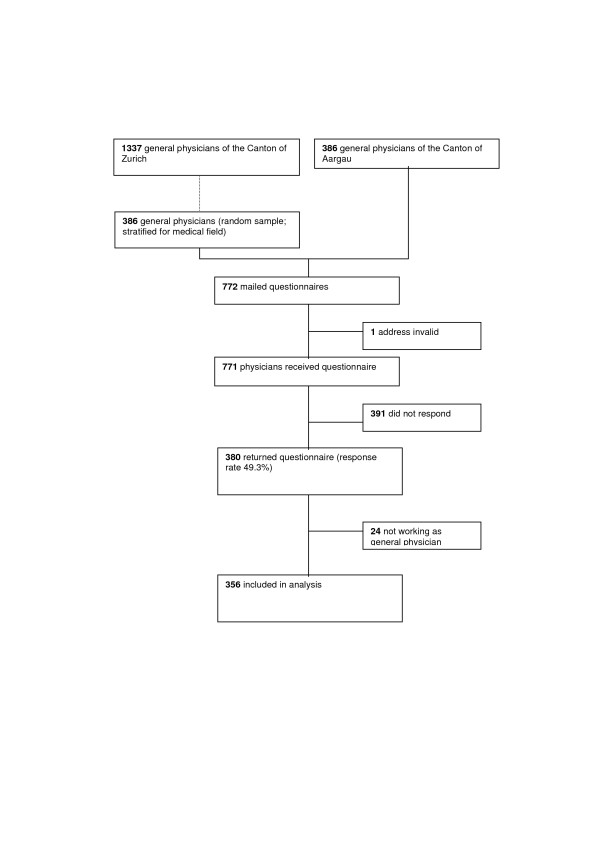
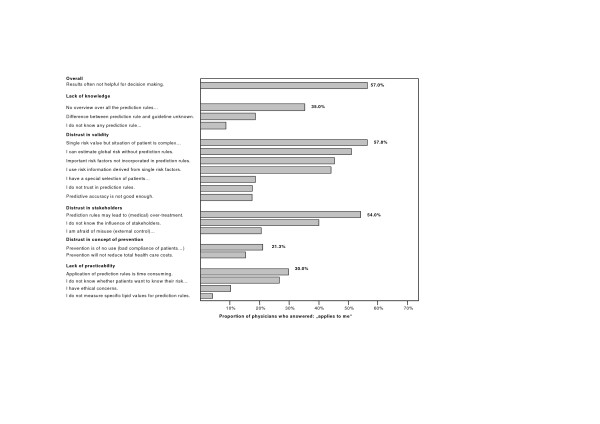
BACKGROUND: Although cardiovascular prediction rules are recommended by guidelines to evaluate global cardiovascular risk for primary prevention, they are rarely used in primary care. Little is known about barriers for application. The objective of this study was to evaluate barriers impeding the application of cardiovascular prediction rules in primary prevention. METHODS: We performed a postal survey among general physicians in two Swiss Cantons by a purpose designed questionnaire. RESULTS: 356 of 772 dispatched questionnaires were returned (response rate 49.3%). About three quarters (74%) of general physicians rarely or never use cardiovascular prediction rules. Most often stated barriers to apply prediction rules among rarely- or never-users are doubts concerning over-simplification of risk assessment using these instruments (58%) and potential risk of (medical) over-treatment (54%). 57% report that the numerical information resulting from prediction rules is often not helpful for decision-making in practice. CONCLUSION: If regular application of cardiovascular prediction rules in primary care is in demand additional interventions are needed to increase acceptance of these tools for patient management among general physicians.
Overview
The claims and statistics of this paper haven’t been checked yet.
Free: it reads the open-access text and checks the first 5 claims that cite a source we can check. Create a free account to check every claim.
Integrity signals
Registry
Cites
Statistics
Figures
Verification
Claims the paper makes
The claims and statistics of this paper haven’t been checked yet.
Free: it reads the open-access text and checks the first 5 claims that cite a source we can check. Create a free account to check every claim.
Claims other papers make about this one
Each is checked against this paper’s own text: does it say what the citing paper says it does?
The cited source says what the claim attributes to it.
In the citing paper
“A survey among general practitioners and internists working in clinical practice in two Swiss regions revealed that 74% rarely or never used CVD prediction rules, 544 due to fears of oversimplification of risk assessment (58%) or overuse of medical therapy (54%).”
From European Guidelines on cardiovascular disease prevention in clinical practice (version 2012) (2012) · cites this paper as [544]
In the citing paper
“More than half of the physicians (57%) believed that the numerical information resulting from prediction rules is frequently unhelpful for clinical decision-making.544”
From European Guidelines on cardiovascular disease prevention in clinical practice (version 2012) (2012) · cites this paper as [544]
Self-check
Percentages, sums and reported differences re-computed from the paper’s own numbers.
The self-check needs the paper’s full text.
Citations
Cites
Toprak, O., Kurt, H., Sarı, Y., Şarkış, C., Us, H., & Kırık, A. (2017) · Kidney and Blood Pressure Research · doi:10.1159/000468530 · Cited by 29,627
Grundy, S. M., Bilheimer, D. W., Chait, A., Clark, L. T., Denke, M. A., Havel, R. J., Hazzard, W. R., Hulley, S. B., Hunninghake, D. B., Kreisberg, R. A., et al. (1993) · JAMA · doi:10.1001/jama.269.23.3015 · Cited by 27,947
Expert Panel on Detection, E. (2001) · JAMA: The Journal of the American Medical Association · doi:10.1001/jama.285.19.2486 · Cited by 26,011
De Backer, G. (2003) · European Heart Journal · doi:10.1016/s0195-668x(03)00347-6 · Cited by 2,251
Forsetlund, L., Bjørndal, A., Rashidian, A., Jamtvedt, G., O'Brien, M. A., Wolf, F. M., Davis, D., Odgaard-Jensen, J., & Oxman, A. D. (2009) · Cochrane Database of Systematic Reviews · doi:10.1002/14651858.cd003030.pub2 · Cited by 1,849 · cited 1×
“A recent Cochrane review has favored interactive workshops rather than didactic presentations to influence professional practice [17].”
BackgroundEUROPEAN GUIDELINES ON CARDIOVASCULAR DISEASE PREVENTION IN CLINICAL PRACTICE
Backer, G. D., Ambrosioni, E., Borch-Johnsen, K., Brotons, C., Cifkova, R., Dallongeville, J., Ebrahim, S., Faergeman, O., Graham, I., Mancia, G., et al. (2005) · Rational Pharmacotherapy in Cardiology · doi:10.20996/1819-6446-2005-1-3-57-65 · Cited by 1,267
O'Brien, M. A., Freemantle, N., Oxman, A. D., Wolfe, F., Davis, D., & Herrin, J. (2001) · Cochrane Database of Systematic Reviews · doi:10.1002/14651858.cd003030 · Cited by 336
Hobbs, F. R. (2002) · Family Practice · doi:10.1093/fampra/19.6.596 · Cited by 253
O’Brien, M. A., Freemantle, N., Oxman, A., Wolf, F. M., Davis, D., & Herrin, J. S. (2001) · BMC News and views · doi:10.1186/2048-4623-1-s3-pc118 · Cited by 153
Cited by
European Guidelines on cardiovascular disease prevention in clinical practice (version 2012)
Authors/Task Force Members:, Perk, J., De Backer, G., Gohlke, H., Graham, I., Reiner, Ž., Verschuren, M., Albus, C., Benlian, P., Boysen, G., et al. (2012) · European Heart Journal · doi:10.1093/eurheartj/ehs092 · Cited by 8,490
Authors/Task Force Members, Graham, I., Atar, D., Borch-Johnsen, K., Boysen, G., Burell, G., Cifkova, R., Dallongeville, J., De Backer, G., Ebrahim, S., et al. (2007) · European Heart Journal · doi:10.1093/eurheartj/ehm316 · Cited by 3,753
Graham (2007) · doi:10.1097/01.hjr.0000277983.23934.c9 · Cited by 1,647
Authors/Task Force Members, Piepoli, M. F., Hoes, A. W., Agewall, S., Albus, C., Brotons, C., Catapano, A. L., Cooney, M.-T., Corrà, U., Cosyns, B., et al. (2016) · European Journal of Preventive Cardiology · doi:10.1177/2047487316653709 · Cited by 1,334
Authors/Task Force Members: Joep Perk (Chairperson) (Sweden)*, G. D. B. (. (2012) · European Journal of Preventive Cardiology · doi:10.1177/2047487312450228 · Cited by 863
European Guidelines on cardiovascular disease prevention in clinical practice (version 2012)
Perk, J., De Backer, G., Gohlke, H., Graham, I., Reiner, Ž., Verschuren, W. M. M., Albus, C., Benlian, P., Boysen, G., Cifkova, R., et al. (2012) · Atherosclerosis · doi:10.1016/j.atherosclerosis.2012.05.007 · Cited by 691
Ocan, M., Obuku, E. A., Bwanga, F., Akena, D., Richard, S., Ogwal-Okeng, J., & Obua, C. (2015) · BMC Public Health · doi:10.1186/s12889-015-2109-3 · Cited by 504
McEvoy, R., Ballini, L., Maltoni, S., O’Donnell, C. A., Mair, F. S., & MacFarlane, A. (2014) · Implementation Science · doi:10.1186/1748-5908-9-2 · Cited by 413
Risk Prediction in Patients With Heart Failure
Rahimi, K., Bennett, D., Conrad, N., Williams, T. M., Basu, J., Dwight, J., Woodward, M., Patel, A., McMurray, J., & MacMahon, S. (2014) · JACC: Heart Failure · doi:10.1016/j.jchf.2014.04.008 · Cited by 410
“Previous research on barriers to more widespread use of cardiovascular prediction tools has shown that many clinicians find risk calculation too time consuming and are not convinced of the value of information derived from these models (32).”
BackgroundPerk, J., De Backer, G., Gohlke, H., Graham, I., Reiner, Ž., Verschuren, W. M. M., Albus, C., Benlian, P., Boysen, G., Cifkova, R., et al. (2012) · International Journal of Behavioral Medicine · doi:10.1007/s12529-012-9242-5 · Cited by 311
“More than half of the physicians (57%) believed that the numerical information resulting from prediction rules is frequently unhelpful for clinical decision-making.(544) A Dutch qualitative study of the use of risk tables as a key component of risk assessments for primary prevention reported that physicians’ knowledge…”
Davy, C., Bleasel, J., Liu, H., Tchan, M., Ponniah, S., & Brown, A. (2015) · BMC Health Services Research · doi:10.1186/s12913-015-0854-8 · Cited by 291
Cowley, L. E., Farewell, D. M., Maguire, S., & Kemp, A. M. (2019) · Diagnostic and Prognostic Research · doi:10.1186/s41512-019-0060-y · Cited by 263
Physician attitudes toward shared decision making: A systematic review
Pollard, S., Bansback, N., & Bryan, S. (2015) · Patient Education and Counseling · doi:10.1016/j.pec.2015.05.004 · Cited by 250
Ford-Gilboe, M., Wathen, C. N., Varcoe, C., MacMillan, H. L., Scott-Storey, K., Mantler, T., Hegarty, K., & Perrin, N. (2016) · BMJ Open · doi:10.1136/bmjopen-2016-012824 · Cited by 225
Rocque, R., & Leanza, Y. (2015) · PLOS ONE · doi:10.1371/journal.pone.0139577 · Cited by 202
Boger, E., Ellis, J., Latter, S., Foster, C., Kennedy, A., Jones, F., Fenerty, V., Kellar, I., & Demain, S. (2015) · PLOS ONE · doi:10.1371/journal.pone.0130990 · Cited by 174
Medves, J., Godfrey, C., Turner, C., Paterson, M., Harrison, M., MacKenzie, L., & Durando, P. (2010) · International Journal of Evidence-Based Healthcare · doi:10.1111/j.1744-1609.2010.00166.x · Cited by 142
Agreement Among Cardiovascular Disease Risk Calculators
Allan, G. M., Nouri, F., Korownyk, C., Kolber, M. R., Vandermeer, B., & McCormack, J. (2013) · Circulation · doi:10.1161/circulationaha.112.000412 · Cited by 130
“Physician barriers to the implementation of risk calculation include time, a belief that the information is not helpful, a sense of oversimplification with risk tools, and an ability to predict risk subjectively.(17) Although previous research has shown that physicians struggle to subjectively estimate absolute risk a…”
ResultWood, E., Ohlsen, S., & Ricketts, T. (2017) · Journal of Affective Disorders · doi:10.1016/j.jad.2017.02.028 · Cited by 108
Barriers to cardiovascular disease risk scoring and primary prevention in Europe
Hobbs, F. D. R., Jukema, J. W., Da Silva, P. M., McCormack, T., & Catapano, A. L. (2010) · QJM · doi:10.1093/qjmed/hcq122 · Cited by 102
Cardiovascular risk scores do not account for the effect of treatment: a review
Liew, S. M., Doust, J. A., & Glasziou, P. (2011) · Heart · doi:10.1136/hrt.2010.220442 · Cited by 116
“Why don't doctors use cardiovascular risk scores in practice? Many physicians do not trust the validity of the risk scores”
BackgroundVergara, P., Tzou, W. S., Tung, R. H., Brombin, C., Nonis, A., Vaseghi, M., Frankel, D. S., Biase, L. D., Tedrow, U. B., Mathuria, N. S., et al. (2018) · Circulation Arrhythmia and Electrophysiology · doi:10.1161/circep.118.006730 · Cited by 106
Population Risk Prediction Models for Incident Heart Failure: A Systematic Review
Echouffo-Tcheugui, J. B., Greene, S. J., Papadimitriou, L., Zannad, F. M., Yancy, C. W., Gheorghiade, M., & Butler, J. (2015) · Circulation Heart Failure · doi:10.1161/circheartfailure.114.001896 · Cited by 108
“clinicians find risk calculation too time consuming and are not convinced of the value of information derived from these models.(36) Additional translation efforts are needed to convert predictions equations into user-friendly tools to improve uptake.”
BackgroundWenke, R., & Mickan, S. M. (2016) · BMC Health Services Research · doi:10.1186/s12913-016-1606-0 · Cited by 94
The Filter Detection Task for measurement of breathing-related interoception and metacognition
Harrison, O. K., Garfinkel, S. N., Marlow, L., Finnegan, S. L., Marino, S., Köchli, L., Allen, M., Finnemann, J., Keur-Huizinga, L., Harrison, S. J., et al. (2021) · Biological Psychology · doi:10.1016/j.biopsycho.2021.108185 · Cited by 83
Barriers to Routine Risk-Score Use for Healthy Primary Care Patients: Survey and Qualitative Study
Müller-Riemenschneider, F. (2010) · Archives of Internal Medicine · doi:10.1001/archinternmed.2010.66 · Cited by 84
Kolarčík, P., Čepová, E., Gecková, A. M., Elsworth, G. R., Batterham, R. W., & Osborne, R. H. (2017) · International Journal of Public Health · doi:10.1007/s00038-017-0945-x · Cited by 91
Hastings, A. (2009) · Urban Studies · doi:10.1177/0042098009344995 · Cited by 82
Evaluating a team-based approach to research capacity building using a matched-pairs study design
Holden, L., Pager, S., Golenko, X., Ware, R. S., & Weare, R. (2012) · BMC Family Practice · doi:10.1186/1471-2296-13-16 · Cited by 77
Hammoury, N., Khawaja, M., Mahfoud, Z. R., Afifi, R., & Madi, H. H. (2009) · Journal of Women s Health · doi:10.1089/jwh.2007.0740 · Cited by 81
Dunn, K. E., Sigmon, S. C., Strain, E. C., Heil, S. H., & Higgins, S. T. (2011) · Drug and Alcohol Dependence · doi:10.1016/j.drugalcdep.2011.05.033 · Cited by 65
Prospective EHR-Based Clinical Trials: The Challenge of Missing Data
Kharrazi, H. H. K., Wang, C., & Scharfstein, D. O. (2014) · Journal of General Internal Medicine · doi:10.1007/s11606-014-2883-0 · Cited by 60
Effects of health literacy to self‐efficacy and preventive care utilization among older adults
Chen, J., Hsu, H., Tung, H., & Pan, L. (2012) · Geriatrics and gerontology international/Geriatrics & gerontology international · doi:10.1111/j.1447-0594.2012.00862.x · Cited by 70
Neuner‐Jehle, S., Senn, O., Wegwarth, O., Rosemann, T. J., & Steurer, J. (2011) · BMC Family Practice · doi:10.1186/1471-2296-12-15 · Cited by 67
“Furthermore, analogous to findings in the use of calculation and communication tools to predict cardiovascular risk in primary care, doctors face many barriers, such as distrust in their validity or their contribution to encourage decision making, lack of time, and low reimbursement [44].”
Self-citationMoore, J., Crozier, K. E., & Kite, K. (2011) · Nurse Education Today · doi:10.1016/j.nedt.2011.01.014 · Cited by 55
How diabetes risk assessment tools are implemented in practice: A systematic review
Dhippayom, T., Chaiyakunapruk, N., & Krass, I. (2014) · Diabetes Research and Clinical Practice · doi:10.1016/j.diabres.2014.01.008 · Cited by 56
“screening tools for cardiovascular [67,68] or cardiometabolic diseases [69] have not been well adopted in routine practice.”
BackgroundWenke, R., Mickan, S. M., & Bisset, L. (2017) · BMC Health Services Research · doi:10.1186/s12913-017-1996-7 · Cited by 61
Lin, L.-C., Li, M., & Watson, R. (2011) · Journal of Clinical Nursing · doi:10.1111/j.1365-2702.2010.03541.x · Cited by 53
Danielsson, U. E., Bengs, C., Samuelsson, E., & Johansson, E. E. (2011) · Qualitative Health Research · doi:10.1177/1049732310391272 · Cited by 52
Mpanya, D., Çelik, T., Klug, E., & Ntsinjana, H. N. (2021) · IJC Heart & Vasculature · doi:10.1016/j.ijcha.2021.100773 · Cited by 66
“Most clinicians find risk calculation time consuming and are not convinced of the value of the information derived from predictive models [15,16].”
BackgroundDiagnostic and Prognostic Value of Circulating CircRNAs in Cancer
Wang, M., Xie, F., Lin, J., Zhao, Y., Zhang, Q., Liao, Z., & Wei, P. (2021) · Frontiers in Medicine · doi:10.3389/fmed.2021.649383 · Cited by 51
Worries of childhood cancer survivors in young adulthood
Yi, J., Kim, M. A., & Sang, J. (2016) · European Journal of Oncology Nursing · doi:10.1016/j.ejon.2016.02.003 · Cited by 52
Predicting High-Risk Patients and High-Risk Outcomes in Heart Failure
Wehbe, R. M., Khan, S. S., Shah, S. J., & Ahmad, F. S. (2020) · Heart Failure Clinics · doi:10.1016/j.hfc.2020.05.002 · Cited by 49
“62 One of the most common reasons provided for not utilizing risk models is the inconvenience and time required to manually calculate risk scores.”
BackgroundMachine learning and statistical methods for predicting mortality in heart failure
Mpanya, D., Çelik, T., Klug, E., & Ntsinjana, H. N. (2020) · Heart Failure Reviews · doi:10.1007/s10741-020-10052-y · Cited by 48
Aakvik, A., Holmås, T. H., & Islam, M. K. (2010) · Social Science & Medicine · doi:10.1016/j.socscimed.2010.01.031 · Cited by 43
Sheppard, J. P., Fletcher, K., McManus, R. J., & Mant, J. (2013) · British Journal of General Practice · doi:10.3399/bjgp14x676447 · Cited by 46
Clinical prediction rules: a systematic review of healthcare provider opinions and preferences
Kennedy, G., & Gallego, B. (2019) · International Journal of Medical Informatics · doi:10.1016/j.ijmedinf.2018.12.003 · Cited by 39
van der Steen, J. T., Albers, G., Licht-Strunk, E., Muller, M. T., & Ribbe, M. W. (2011) · International Psychogeriatrics · doi:10.1017/s1041610210001079 · Cited by 39
“We also observed the perception that aggregated data can never be applied to the individual due to uniqueness and complexity as observed in primary care (Hadorn, 1997; Eichler et al., 2007); indeed a simple cutpoint on which to base end-of-life decisions is too simplistic (Lemeshow et al.”
BackgroundLack of Preparation: Iranian Nurses' Experiences During Transition From College to Clinical Practice
Zamanzadeh, V., Jasemi, M., Valizadeh, L., Keogh, B., & Taleghani, F. (2015) · Journal of Professional Nursing · doi:10.1016/j.profnurs.2015.01.005 · Cited by 49
Newman, M. A., Ziébland, S., & Barker, K. L. (2009) · Health Informatics Journal · doi:10.1177/1460458209102974 · Cited by 45
Thakkar, J. B., Heeley, E. L., Chalmers, J. P., & Chow, C. K. (2016) · Internal Medicine Journal · doi:10.1111/imj.12982 · Cited by 44
Win, S., Hussain, I., Hebl, V. B., Dunlay, S. M., & Redfield, M. M. (2017) · Circulation Heart Failure · doi:10.1161/circheartfailure.117.003926 · Cited by 34
“180-day mortality, n (%) 67 (54) 194 (47) 295 (32) 210 (24) 506 (16) <0.”
Restricting conversations about voluntary assisted dying: implications for clinical practice
Willmott, L., White, B. P., Ko, D. N., Downar, J., & Deliëns, L. (2019) · BMJ Supportive & Palliative Care · doi:10.1136/bmjspcare-2019-001887 · Cited by 38
A 4-item PRECISE-DAPT score for dual antiplatelet therapy duration decision-making
Costa, F., Klaveren, D. V., Colombo, A., Feres, F., Räber, L., Pilgrim, T., Hong, M., Kim, H.-S., Windecker, S., Steyerberg, E. W., et al. (2020) · American Heart Journal · doi:10.1016/j.ahj.2020.01.014 · Cited by 29
“2 Yet, despite this tool has been widely endorsed from international societies and guidelines, and widely implemented in real world practice, several barriers for the routine application of risk scores still exist.(12) On this matter, the simplified 4-item iteration of the PRECISE-DAPT score presented in the current a…”
MethodHof, J. V., Duval, S., Walts, A., Kopecky, S. L., Luepker, R. V., & Hirsch, A. T. (2017) · Journal of the American Heart Association · doi:10.1161/jaha.117.006328 · Cited by 26
“Antihypertensives 21 098 (41) 16 353 (66) 14 506 (82)”
Byrne, D., O’Connor, L., Jennings, S., Bennett, K., & Murphy, A. W. (2015) · PubMed · Cited by 27
Muthee, T. B., Kimathi, D., Richards, G. C., Etyang, A. O., Nunan, D., Williams, V., & Heneghan, C. J. (2020) · Implementation Science · doi:10.1186/s13012-020-01022-x · Cited by 35
“viewed cardiovascular risk scoring as an intervention that over or/and underestimated risk leading to therapeutic inaccuracies [39, 44, 45].”
BackgroundInfluentialZha, X., Liu, Y., Ping, X., Bao, J., Wu, Q., Hu, S., & Hu, C. (2022) · Frontiers in Oncology · doi:10.3389/fonc.2022.876264 · Cited by 28
Gunn, J., Cameron, J., Densley, K., Davidson, S., Fletcher, S., Palmer, V., Chondros, P., Dowrick, C., & Pirkis, J. (2018) · Patient Education and Counseling · doi:10.1016/j.pec.2017.07.008 · Cited by 25
Medical students’ attitudes on and experiences with evidence‐based medicine: a qualitative study
Ghojazadeh, M., Hajebrahimi, S., Aghdash, S. A., Azar, F. P., Keshavarz, M., Naghavi‐Behzad, M., & Hazrati, H. (2014) · Journal of Evaluation in Clinical Practice · doi:10.1111/jep.12191 · Cited by 23
Longitudinal evaluation of a knowledge translation role in occupational therapy
Hitch, D., Lhuede, K., Vernon, L., Pépin, G., & Stagnitti, K. E. (2019) · BMC Health Services Research · doi:10.1186/s12913-019-3971-y · Cited by 28
Koetsier, L., van Mil, M. M. A., Eilander, M. M. A., van den Eynde, E., Baan, C. A., Seidell, J. C., & Halberstadt, J. (2021) · BMC Health Services Research · doi:10.1186/s12913-021-06635-6 · Cited by 27
Clinical nurses' research capacity in a Norwegian university hospital: part 2
Akerjordet, K., Lode, K., & Severinsson, E. (2012) · Journal of Nursing Management · doi:10.1111/j.1365-2834.2012.01473.x · Cited by 28
Can we really predict risk of cancer?
Thrift, A. P., & Whiteman, D. C. (2013) · Cancer Epidemiology · doi:10.1016/j.canep.2013.04.002 · Cited by 24
“, time constraints, over simplification of risk assessment, and overmedication) before they are routinely used [21–24].”
MethodKearney, L. K., Wray, L. O., Dollar, K. M., & King, P. R. (2015) · Journal of Clinical Psychology in Medical Settings · doi:10.1007/s10880-015-9443-6 · Cited by 23
Brown, B. C., Cheraghi‐Sohi, S., Jaki, T., Su, T., Buchan, I. E., & Sperrin, M. (2016) · BMC Medical Informatics and Decision Making · doi:10.1186/s12911-016-0343-y · Cited by 27
“The feeling that CPMs may lead to over-treatment of patients [13, 15] can be viewed as a manifestation of ‘compatibility’ in that family physicians strive to provide personalised care.”
BackgroundHuang, K., Mo, Z., Zhu, W. Q., Liao, B., Yang, Y., & Wu, F. (2021) · Frontiers in Oncology · doi:10.3389/fonc.2021.642945 · Cited by 27
“According to different biological factors and clinical presentations, lung cancer could be further divided into two sub-types: small cell lung cancer and non-small cell lung cancer (2).”
BackgroundScreening and prevention in Swiss primary care: a systematic review
Tandjung, R., Eisner, Zoller, Rosemann, T., Huber, Tandjung, R., & Badertscher, N. (2011) · International Journal of General Medicine · doi:10.2147/ijgm.s26562 · Cited by 22
“This includes reluctance to use tests, eg, a detection-test of alcoholism; 41 ambivalence about the use of methadone in patients with drug use disorders; 40 disbeliefs in the quality of interventions; 17 or in their necessity; 25,30 or skepticism about current guidelines.”
Stol, D. M., Hollander, M., Damman, O. C., Nielen, M. M. J., Badenbroek, I. F., Schellevis, F., & de Wit, N. J. (2020) · BMC Public Health · doi:10.1186/s12889-020-08906-z · Cited by 24
Ziser, K., Decker, S., Stuber, F., Herschbach, A., Giel, K. E., Zipfel, S., Ehehalt, S., & Junne, F. (2021) · Frontiers in Psychology · doi:10.3389/fpsyg.2021.631678 · Cited by 32
District nurses' lived experiences of meeting significant others in advanced home care
Pusa, S., Hägglund, K., Nilsson, M., & Sundin, K. (2014) · Scandinavian Journal of Caring Sciences · doi:10.1111/scs.12134 · Cited by 49
Vagholkar, S., Zwar, N. A., Jayasinghe, U. W., Denney‐Wilson, E., Patel, A. A., Campbell, T., & Harris, M. (2013) · American Heart Journal · doi:10.1016/j.ahj.2013.10.002 · Cited by 20
Radhachandran, A., Garikipati, A., Zelin, N. S., Pellegrini, E., Ghandian, S., Calvert, J. S., Hoffman, J. L., Mao, Q., & Das, R. (2021) · BioData Mining · doi:10.1186/s13040-021-00255-w · Cited by 22
Grant, S., Checkland, K., Bowie, P., & Guthrie, B. (2017) · Implementation Science · doi:10.1186/s13012-017-0586-8 · Cited by 21
Blood Pressure Management in the 21st Century: Maximizing Gains and Minimizing Waste
Rahimi, K., & MacMahon, S. W. (2013) · Circulation · doi:10.1161/circulationaha.113.006218 · Cited by 20
Hanssen, D. J. C., Ras, A., & Rosmalen, J. G. M. (2021) · Journal of Psychosomatic Research · doi:10.1016/j.jpsychores.2021.110386 · Cited by 18
Social support as a motivator of self‐management among adults with type 2 diabetes
Oftedal, B. F., Bru, E., & Karlsen, B. (2011) · Journal of Nursing and Healthcare of Chronic Illness · doi:10.1111/j.1752-9824.2010.01074.x · Cited by 24
Walker, J. N., Liddle, J., Jordan, K. P., & Campbell, P. (2017) · BMC Psychiatry · doi:10.1186/s12888-017-1354-7 · Cited by 20
Zhou, J., Yang, J., Yang, X., Chen, Z., He, B., Du, L.-S., & Chen, Y. (2016) · Chinese Medical Journal · doi:10.4103/0366-6999.173434 · Cited by 18
“Taking the limitations of the models into consideration, physicians were mainly concerned regarding the overestimation, which might lead to overuse of downstream tests and therapies.[19] To improve acceptability of the pretest probability models in clinical practice, more rigorous external validations for the existing…”
Rao, S., Li, Y., Mamouei, M., Salimi‐Khorshidi, G., Wamil, M., Nazarzadeh, M., Yau, C., Collins, G. S., Jackson, R., Vickers, A. J., et al. (2025) · The Lancet Digital Health · doi:10.1016/j.landig.2025.03.005 · Cited by 31
Validity of the ACTS intimate partner violence screen in antenatal care: a cross sectional study
Hegarty, K. L., Spangaro, J., Kyei-Nimakoh, M., Valpied, J., Walsh, J., Chapman, J., & Koziol‐McLain, J. (2021) · BMC Public Health · doi:10.1186/s12889-021-11781-x · Cited by 17
Foley, K. A., Shelton, J., Richardson, E., Smart, N., Smart-McMillan, C., Mustakem, O. “., Young, A., Davis, D., & Frayne, D. (2019) · Maternal and Child Health Journal · doi:10.1007/s10995-019-02802-8 · Cited by 17
Derivation of a clinical risk score for traumatic orbital fracture
Yadav, K., Cowan, E. A., Haukoos, J. S., Ashwell, Z. R., Nguyen, V. T., Gennis, P., & Wall, S. P. (2012) · The Journal of Trauma: Injury, Infection, and Critical Care · doi:10.1097/ta.0b013e318265cf61 · Cited by 17
Hueber, S., Kuehlein, T., Gerlach, R., Tauscher, M., & Schedlbauer, A. (2017) · PLoS ONE · doi:10.1371/journal.pone.0188521 · Cited by 19
Redman, E. A., Reay, H. J., Jones, L., & Roberts, R. J. (2011) · Public Health · doi:10.1016/j.puhe.2010.10.002 · Cited by 16
Understanding the body–mind in primary care
Davidsen, A. S., Guassora, A. D., & Reventlow, S. D. (2016) · Medicine Health Care and Philosophy · doi:10.1007/s11019-016-9710-9 · Cited by 19
Colorectal cancer screening: Understanding the health literacy needs of hispanic rural residents
Wittich, A. R., Shay, L. A., Flores, B., de la Rosa, E. M., Mackay, T., & Valerio, M. A. (2019) · AIMS Public Health · doi:10.3934/publichealth.2019.2.107 · Cited by 15
Sheha, D. S., Abdel-Rehim, A. S. M., Latif, O. M. A., Abdelkader, M. A., Raafat, R. H., Sallam, S. A., & Mostafa, N. S. (2021) · Egyptian Journal of Bronchology · doi:10.1186/s43168-021-00058-x · Cited by 20
Cardiovascular risk tables: opinion and degree of use of Primary Care doctors from Madrid, Spain
Elustondo, S. G., Aguado, P. N., Cooper, C. G. D. L. R., Manzanet, J. M. P., & Sendín, D. S. (2011) · Journal of Evaluation in Clinical Practice · doi:10.1111/j.1365-2753.2011.01785.x · Cited by 15
Christoffels, R., & Mash, R. J. (2018) · BMC Family Practice · doi:10.1186/s12875-018-0802-x · Cited by 16
District nurses' views on quality of primary healthcare encounters
Zotterman, A. N., Skär, L., Olsson, M. B., & Söderberg, S. (2014) · Scandinavian Journal of Caring Sciences · doi:10.1111/scs.12146 · Cited by 55
Nilsson, G. H., Samuelsson, E. C., Söderström, L., & Mooe, T. (2016) · BMC Family Practice · doi:10.1186/s12875-016-0505-0 · Cited by 15
“The usage of clinical guidelines in clinical practice is known to be incomplete [30, 57, 58], and the adoption of new treatment targets may be a slow process in general practice [35, 38, 39].”
BackgroundAcute care pathways for patients calling the out-of-hours services
Søvsø, M. B., Huibers, L., Bech, B. H., Christensen, H. C., Christensen, M. B., & Christensen, E. F. (2020) · BMC Health Services Research · doi:10.1186/s12913-020-4994-0 · Cited by 13
Marotti, J., Thackeray, L. A., & Midgley, N. (2020) · Journal of Infant Child and Adolescent Psychotherapy · doi:10.1080/15289168.2020.1832836 · Cited by 17
What can machines learn about heart failure? A systematic literature review
Piadlo, A., Bond, R., Biglarbeigi, P., Brisk, R., Campbell, P. C., & MCENEANEY, D. J. (2021) · International Journal of Data Science and Analytics · doi:10.1007/s41060-021-00300-1 · Cited by 17
“In support of this thesis, they cited the Postal Survey of Physicians attitudes to implement cardiovascular prediction rules [17].”
Five year trends in dyslipidaemia prevalence and management in Switzerland: The CoLaus study
Antiochos, P., Marques-Vidal, P. M., Waeber, G., & Vollenweider, P. (2015) · Nutrition Metabolism and Cardiovascular Diseases · doi:10.1016/j.numecd.2015.07.011 · Cited by 15
“In primary prevention, in the high risk group optimal LDL-C target achievement was also lower (16.3% at FU) than in the European multicenter EURIKA study [2,19].”
InfluentialHedlund, M., Zetterling, M., Ronne-Engström, E., Ekselius, L., & Carlsson, M. (2010) · Journal of Clinical Nursing · doi:10.1111/j.1365-2702.2009.02940.x · Cited by 13
Vancheri, F. (2015) · International Cardiovascular Forum Journal · doi:10.17987/icfj.v1i3.39 · Cited by 13
Test Result Management Practices of Canadian Internal Medicine Physicians and Trainees
Bodley, T. F., Kwan, J. L., Matelski, J. J., Darragh, P. J., & Cram, P. M. (2018) · Journal of General Internal Medicine · doi:10.1007/s11606-018-4656-7 · Cited by 14
Eichler, K., Hess, S., Riguzzi, M., Can, U., & Brügger, U. (2015) · Swiss Medical Weekly · doi:10.4414/smw.2015.14140 · Cited by 12
Self-citation
Metadata
- Authors
- Eichler, K., Zoller, M., Tschudi, P., & Steurer, J.
- Affiliations
- University Hospital Zurich (CH)
- University of Basel (CH)
- Corresponding author
- Eichler, Klaus
- Venue
- BMC Family Practice
- Published
- 2007-01-03
- Volume
- 8
- Issue
- 1
- Pages
- 1-1
- ISSN
- 1471-2296 (ISSN-L)
- PMC
- PMC1766351
- OpenAlex
- W1552547472
- Cited by
- 167
- References
- 26
- Citations by year
- 2026: 1 · 2025: 3 · 2024: 2 · 2023: 5 · 2022: 2 · 2021: 16 · 2020: 10 · 2019: 12 · 2018: 7 · 2017: 16 · 2016: 12 · 2015: 15 · 2014: 12 · 2013: 10 · 2012: 13
- FWCI
- 7.15
- Type
- journal article
- Language
- en
- Open access
- gold
- doi.org
- Licence
- cc-by
- creativecommons.org/licenses/by/2.0 (tdm)
- Locations
- BMC Family Practice (publishedVersion, cc-by)
- PubMed Central (publishedVersion, cc-by)
- PubMed (publishedVersion)
- Zürcher Hochschule für Angewandte Wissenschaften digital collection (Zurich University of Applied Sciences) (submittedVersion, cc-by-nc-nd)
- DOAJ (DOAJ: Directory of Open Access Journals) (submittedVersion, cc-by-sa)
- ZHAW Digital Collection (cc-by)
- Funders
- Helmut Horten Stiftung
- Topics
- Health Sciences › Medicine › Public Health, Environmental and Occupational Health › Health Promotion and Cardiovascular Prevention
- Health Sciences › Medicine › Public Health, Environmental and Occupational Health › Clinical practice guidelines implementation
- Health Sciences › Health Professions › General Health Professions › Patient-Provider Communication in Healthcare
- Keywords
- primary prevention, cardiovascular risk assessment, barriers to use, general practitioners, risk stratification, clinical decision-making, guideline implementation
- MeSH terms
- Attitude of Health Personnel, Cardiovascular Diseases, Clinical Competence, Decision Making, Family Practice, Female, Humans, Male, Middle Aged, Practice Patterns, Physicians', Postal Service, Primary Health Care, Primary Prevention, Surveys and Questionnaires, Switzerland, Risk Assessment, Guideline Adherence
About these checks
Registry, retraction, Cites and statistics results are computed, not judged, with one exception: a printed reference that no index lists is read once by a model before it counts as a citation error. Claims are extracted by a model and kept only when their quote appears verbatim in the text; each cited source is then checked, with a model’s help, for whether it says what the claim relies on. Those verdicts can be wrong — read the claim’s quote and the cited source before relying on one.
Statistics and arithmetic are recomputed, not judged.
Confidence bands are shown only for fields calibrated on our annotated test set. None is calibrated yet, so no band is shown.
What counts as a claim ›How we measure confidence ›How we check this ›
Are you an author, or do you see a problem with this page? Request a review
Data sources
Bibliographic data: Semantic Scholar, OpenAlex, Crossref.
Contains information from the Semantic Scholar Academic Graph Datasets, made available under the ODC Attribution License (ODC-BY 1.0).
Semantic Scholar’s data is described in: Kinney, R., et al. (2023). The Semantic Scholar Open Data Platform. arXiv:2301.10140.
