

A candidate probiotic with unfavourable effects in subjects with irritable bowel syndrome: a randomised controlled trial
Open accessThe DOI matches its Crossref record; 25 of the 26 references it cites were found in a registry or an index; none of the 16 sources its claims cite is checked for support yet.
Abstract
BACKGROUND: Some probiotics have shown efficacy for patients with irritable bowel syndrome (IBS). Lactobacillus (L.) plantarum MF1298 was found to have the best in vitro probiotic properties of 22 strains of lactobacilli. The aim of this study was to investigate the symptomatic effect of L. plantarum MF1298 in subjects with IBS. Primary outcome was treatment preference and secondary outcomes were number of weeks with satisfactory relief of symptoms and IBS sum score. METHODS: The design was a randomised double blind placebo-controlled crossover trial. 16 subjects with IBS underwent two three-week periods of daily intake of one capsule of 10(10) CFU L. plantarum MF 1298 or placebo separated by a four-week washout period. RESULTS: Thirteen participants (81%; 95% CI 57% to 93%; P = 0.012) preferred placebo to L. plantarum MF1298 treatment. The mean (SD) number of weeks with satisfactory relief of symptoms in the periods with L. plantarum MF1298 and placebo were 0.50 (0.89) and 1.44 (1.26), respectively (P = 0.006). IBS sum score was 6.44 (1.81) in the period with L. plantarum MF1298 treatment compared with 5.35 (1.77) in the period with placebo (P = 0.010). With a clinically significant difference in the IBS sum score of 2 in disfavour of active treatment, the number needed to harm was 3.7, 95% CI 2.3 to 10.9. CONCLUSIONS: This trial shows for the first time an unfavourable effect on symptoms in subjects with IBS after intake of a potential probiotic.
Overview
CoChat Summary
TL;DR
In a randomised double-blind placebo-controlled crossover trial, subjects with IBS reported worse symptoms during intake of the candidate probiotic *Lactobacillus plantarum* MF1298 than during placebo. The authors conclude this is the first trial showing an unfavourable symptomatic effect of a potential probiotic in IBS.
Key findings
- Thirteen of 16 participants (81%; 95% CI 57% to 93%; P = 0.012) preferred placebo to *L. plantarum* MF1298.
- Mean (SD) weeks with satisfactory relief of symptoms were 0.50 (0.89) with *L. plantarum* MF1298 versus 1.44 (1.26) with placebo (P = 0.006).
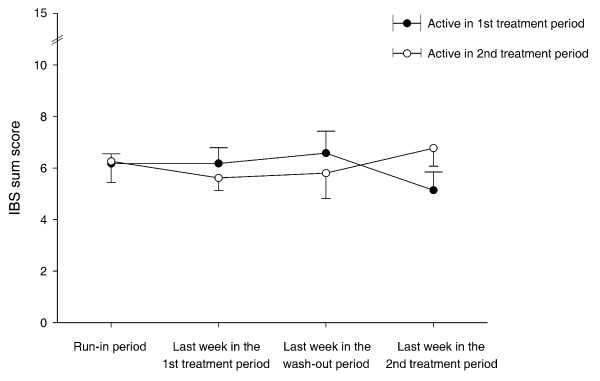
- IBS sum score was 6.44 (1.81) with *L. plantarum* MF1298 versus 5.35 (1.77) with placebo (P = 0.010); the difference was 1.09 (1.47), and the number needed to harm was 3.7 (95% CI 2.3 to 10.9) for a clinically significant ≥2-point difference in disfavour of active treatment.
- Diarrhoea score was also higher with active treatment: 6.36 (1.99) versus 5.50 (1.71) with placebo (P = 0.004).
Methods
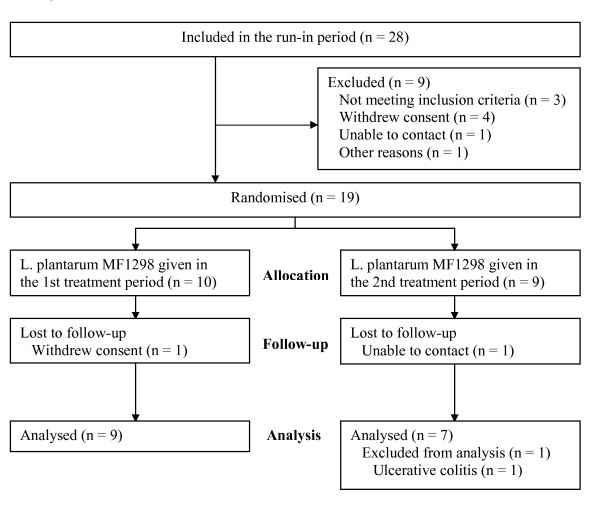
- Randomised, double-blind, placebo-controlled crossover trial with a one-week run-in, two three-week treatment periods, and a four-week washout; 16 subjects with IBS according to Rome II criteria were analysed after daily intake of one capsule of 10^10 CFU *L. plantarum* MF1298 or placebo.
- Primary outcome was treatment preference; secondary outcomes were number of weeks with satisfactory relief of symptoms and IBS sum score; faecal *L. plantarum* was assessed by real-time PCR, and adverse events were noted.
- Analysis used modified intention-to-treat; paired and independent t tests, Wilson method for preference CI/P value, marginal homogeneity test for satisfactory relief, and Walter’s method for number needed to harm.
Limitations
- The paper states that heterogeneity in bowel-habit predominance meant it could not identify aggravation of a specific symptom, that a type I error cannot be excluded, and that the IBS sum score was not validated for responsiveness or clinically significant differences; the chosen 2-point difference may be high given the run-in mean of 5.97.
- The authors also note older age and a somewhat different IBS subgroup distribution than in corresponding studies, raising questions about external validity, and state that a longer intervention would have strengthened internal validity but increased drop-out.
- Evident from the text: the analysed sample was small (16 participants), treatment periods were short (three weeks each), and endotoxins in the preparations were not checked.
Model-written summary. Check it against the paper before relying on it.
Integrity signals
Registry
Cites
Statistics
Figures
Verification
Claims the paper makes
0 Valid · 0 Not valid · 12 Not checked · 34 Own results and interpretations
A result the paper reports from its own data — it cites no other source for it, so there is none to check. The quote shows it is in the paper.
In the paper
“The mean (SD) number of weeks with satisfactory relief of symptoms in the periods with L. plantarum MF1298 and placebo were 0.50 (0.89) and 1.44 (1.26), respectively (P = 0.006).”
§ A candidate probiotic with unfavourable effects in subjects with irritable bowel syndrome: a randomised controlled trial > Abstract > Results
plain- Asserted: passes — The authors put it forward as true.
- Checkable: passes — It can be checked against evidence.
- Load-bearing: passes — The paper’s conclusions depend on it.
- Based: passes — The paper gives a reason why it holds.
A result the paper reports from its own data — it cites no other source for it, so there is none to check. The quote shows it is in the paper.
In the paper
“The subclasses of IBS (diarrhoea predominant, constipation predominant, and alternating) showed the same tendency for higher IBS sum scores in the period with L. plantarum MF1298 compared with placebo (data not shown).”
§ A candidate probiotic with unfavourable effects in subjects with irritable bowel syndrome: a randomised controlled trial > Results
hedged- Asserted: passes — The authors put it forward as true.
- Checkable: passes — It can be checked against evidence.
- Load-bearing: unclear — It is unclear whether the paper’s conclusions depend on it.
- Based: passes — The paper gives a reason why it holds.
A result the paper reports from its own data — it cites no other source for it, so there is none to check. The quote shows it is in the paper.
In the paper
“IBS sum score was 6.44 (1.81) in the period with L. plantarum MF1298 treatment compared with 5.35 (1.77) in the period with placebo (P = 0.010).”
- Also stated in: § Results · plain
“The IBS sum score in the active period was 6.44 (1.81), in the placebo period 5.35 (1.77), and the correlation between these was 0.66.”
§ A candidate probiotic with unfavourable effects in subjects with irritable bowel syndrome: a randomised controlled trial > Abstract > Results
plainn = 13 ·- Asserted: passes — The authors put it forward as true.
- Checkable: passes — It can be checked against evidence.
- Load-bearing: passes — The paper’s conclusions depend on it.
- Based: passes — The paper gives a reason why it holds.
- Also stated in: § Results · plain
A result the paper reports from its own data — it cites no other source for it, so there is none to check. The quote shows it is in the paper.
In the paper
“Thirteen participants (81%; 95% CI 57% to 93%; P = 0.012) preferred placebo to L. plantarum MF1298 treatment.”
- Also stated in: § Results · plain
“Thirteen participants (81%; CI 57% to 93%; P = 0.012) preferred placebo to L. plantarum MF1298 treatment.”
§ A candidate probiotic with unfavourable effects in subjects with irritable bowel syndrome: a randomised controlled trial > Abstract > Results
plainn = 13 ·- Asserted: passes — The authors put it forward as true.
- Checkable: passes — It can be checked against evidence.
- Load-bearing: passes — The paper’s conclusions depend on it.
- Based: passes — The paper gives a reason why it holds.
- Also stated in: § Results · plain
A conclusion the paper draws from its own results — it cites no other source for it, so there is none to check. The quote shows it is in the paper.
In the paper
“L. plantarum MF1298 was therefore proposed as a potential candidate probiotic strain.”
§ A candidate probiotic with unfavourable effects in subjects with irritable bowel syndrome: a randomised controlled trial > Background
hedged- Asserted: passes — The authors put it forward as true.
- Checkable: passes — It can be checked against evidence.
- Load-bearing: passes — The paper’s conclusions depend on it.
- Based: passes — The paper gives a reason why it holds.
10 more claims
Create a free account to see all 46 claims and to verify the 16 references still open.
- It may state two separate claims as one. 18
- The quote only partly states this claim. 1
- Probably not a substantial claim. 20
Claims other papers make about this one
Each is checked against this paper’s own text: does it say what the citing paper says it does?
The source backs part of the claim, not all of it — or backs it for a different population, condition or comparison.
In the citing paper
“Probiotics tested to date do not reduce diarrhea in patients with IBS Very low [174,179,181-183,185,187]”
From Gut microbiota role in irritable bowel syndrome: New therapeutic strategies (2016) · cites this paper as [182]
Experimental — accuracy not yet measuredThe cited source says what the claim attributes to it.
In the citing paper
“Twelve studies evaluated abdominal pain as a secondary end point only. Results from these studies were mixed: one reported a negative effect of the specific probiotic treatment,59 eight (examining six different probiotics) reported no significant effect28–38 and three reported a significant beneficial effect of three different probiotics35,39”
From Systematic review: probiotics in the management of lower gastrointestinal symptoms in clinical practice - an evidence-based international guide (2013) · cites this paper as [59]
In the citing paper
“In only one study was there symptom deterioration221 although some large, high quality trials have been negative.221 231 234 235”
From Intestinal microbiota in functional bowel disorders: a Rome foundation report (2013) · cites this paper as [221]
In the citing paper
“The safety of probiotics in IBS is acceptable but some aggravate symptoms221 and so patients should be warned of this possibility.”
From Intestinal microbiota in functional bowel disorders: a Rome foundation report (2013) · cites this paper as [221]
Self-check
Percentages, sums and reported differences re-computed from the paper’s own numbers.
Each contradiction between two passages listed here was confirmed by an independent check.
Rated minor: it would not touch a result — a value no result rests on, a p-value that stays on the same side of the significance level, or a conflict that is clerical, resolved elsewhere in the paper, or outside its own findings.
In the paper
§ A candidate probiotic with unfavourable effects in subjects with irritable bowel syndrome: a randomised controlled trial > Results
“The IBS sum score at run-in was 6.21 (1.63)”
§ A candidate probiotic with unfavourable effects in subjects with irritable bowel syndrome: a randomised controlled trial > Discussion > Strengths and weaknesses
“the mean IBS sum score in the run-in period was 5.97”
Citations
Cites
O’Mahony, L., McCarthy, J., Kelly, P., Hurley, G., Luo, F., Chen, K., O’Sullivan, G. C., Kiely, B., Collins, J. K., Shanahan, F., et al. (2005) · Gastroenterology · doi:10.1053/j.gastro.2004.11.050 · Cited by 1,448
Besselink, M. G., van Santvoort, H. C., Buskens, E., Boermeester, M. A., van Goor, H., Timmerman, H. M., Nieuwenhuijs, V. B., Bollen, T. L., van Ramshorst, B., Witteman, B. J., et al. (2008) · The Lancet · doi:10.1016/s0140-6736(08)60207-x · Cited by 1,367
Guidelines on the irritable bowel syndrome: mechanisms and practical management
Spiller, R., Aziz, Q., Creed, F., Emmanuel, A., Houghton, L., Hungin, P., Jones, R., Kumar, D., Rubin, G., Trudgill, N., et al. (2007) · Gut · doi:10.1136/gut.2007.119446 · Cited by 818 · cited 2×
“Irritable bowel syndrome (IBS) is the most frequent functional gastrointestinal disorder, with a prevalence of 5-11% in most countries [1].”
BackgroundWhorwell, P. J., Altringer, L., Morel, J., Bond, Y., Charbonneau, D., O'Mahony, L., Kiely, B., Shanahan, F., & Quigley, E. M. M. (2006) · The American Journal of Gastroenterology · doi:10.1111/j.1572-0241.2006.00734.x · Cited by 799 · cited 2×
“In a second study by the same researchers, the beneficial effect of B. infantis 35624 was confirmed [ 16 ].”
BackgroundResultProbiotic use in clinical practice: what are the risks?
Boyle, R. J., Robins-Browne, R. M., & Tang, M. L. (2006) · The American Journal of Clinical Nutrition · doi:10.1093/ajcn/83.6.1256 · Cited by 776 · cited 2×
“It has been proposed that the most potent probiotics may have increased pathogenicity [21].”
BackgroundNobaek, S., Johansson, M.-L., Molin, G., Ahrné, S., & Jeppsson, B. (2000) · American Journal of Gastroenterology · doi:10.1111/j.1572-0241.2000.02015.x · Cited by 653 · cited 2×
“The doses of probiotics used for the treatment of IBS in other trials vary from 2 × 10(8) to 2 × 10(10) CFU per day [7,15,19,23,24].”
BackgroundMethodNiedzielin, K., Kordecki, H., & Birkenfeld, B. (2001) · European Journal of Gastroenterology & Hepatology · doi:10.1097/00042737-200110000-00004 · Cited by 506 · cited 1×
“The doses of probiotics used for the treatment of IBS in other trials vary from 2 × 10(8) to 2 × 10(10) CFU per day [7,15,19,23,24].”
MethodZoetendal, E. G., Vaughan, E. E., & De Vos, W. M. (2006) · Molecular Microbiology · doi:10.1111/j.1365-2958.2006.05056.x · Cited by 389 · cited 1×
“The human gut contains over 1000 different bacterial species and an indeterminate number of strains of which a minority of the strains is cultivable [4] Probiotics are defined as “live microorganisms which when administered in adequate amounts confer a health benefit on the host” [5].”
BackgroundKAJANDER, K., MYLLYLUOMA, E., RAJILIĆ‐STOJANOVIĆ, M., KYRÖNPALO, S., RASMUSSEN, M., JÄRVENPÄÄ, S., ZOETENDAL, E. G., DE VOS, W. M., VAPAATALO, H., & KORPELA, R. (2008) · Alimentary Pharmacology & Therapeutics · doi:10.1111/j.1365-2036.2007.03542.x · Cited by 367 · cited 3×
“Kajander K, Myllyluoma E, Rajilic-Stojanovic M, Kyronpalo S, Rasmussen M, Jarvenpaa S, Zoetendal EG, de Vos WM, Vapaatalo H, Korpela R: Clinical trial: multispecies probiotic supplementation alleviates the symptoms of irritable bowel syndrome and stabilizes intestinal microbiota.”
BackgroundInfluentialGUYONNET, D., CHASSANY, O., DUCROTTE, P., PICARD, C., MOURET, M., MERCIER, C. ‐., & MATUCHANSKY, C. (2007) · Alimentary Pharmacology & Therapeutics · doi:10.1111/j.1365-2036.2007.03362.x · Cited by 365 · cited 1×
“) animalis DN-173010 increased stool frequency in subjects with constipation at entry in a large study [14].”
Background
Research works printed but not linked: 1
- FAO/WHO Expert Consultation Group Health and nutritional properties of probiotics in food including powder milk with live lactic acid bacteria 2001 Argentina: FAO/WHO
Cited by
Intestinal microbiota in functional bowel disorders: a Rome foundation report
Simrén, M., Barbara, G., Flint, H. J., Spiegel, B. M. R., Spiller, R. C., Vanner, S., Verdu, E. F., Whorwell, P. J., & Zoetendal, E. G. (2013) · Gut · doi:10.1136/gutjnl-2012-302167 · Cited by 939
“229 233 In only one study was there symptom deterioration(221) although some large, high quality trials have been negative.(221) 231 234 235”
BackgroundPetra, A. I., Panagiotidou, S., Hatziagelaki, E., Stewart, J. M., Conti, P., & Theoharides, T. C. (2015) · Clinical Therapeutics · doi:10.1016/j.clinthera.2015.04.002 · Cited by 592
Immunomodulatory mechanisms of lactobacilli
Wells, J. M. (2011) · Microbial Cell Factories · doi:10.1186/1475-2859-10-s1-s17 · Cited by 427
“While some clinical studies have been negative or inconclusive [5-8] others have shown positive results (see e.”
ResultTsilingiri, K., & Rescigno, M. (2013) · Beneficial Microbes · doi:10.3920/bm2012.0046 · Cited by 382
Didari, T. (2015) · World Journal of Gastroenterology · doi:10.3748/wjg.v21.i10.3072 · Cited by 356
The impact of probiotics and prebiotics on the immune system
Klaenhammer, T. R., Kleerebezem, M., Kopp, M. V., & Rescigno, M. (2012) · Nature Reviews Immunology · doi:10.1038/nri3312 · Cited by 334
Gut microbiota role in irritable bowel syndrome: New therapeutic strategies
Distrutti, E., Monaldi, L., Ricci, P., & Fiorucci, S. (2016) · World Journal of Gastroenterology · doi:10.3748/wjg.v22.i7.2219 · Cited by 320
Clarke, G., Cryan, J. F., Dinan, T. G., & Quigley, E. M. (2012) · Alimentary Pharmacology & Therapeutics · doi:10.1111/j.1365-2036.2011.04965.x · Cited by 216
Hungin, A. P. S., Mulligan, C., Pot, B., Whorwell, P., Agréus, L., Fracasso, P., Lionis, C., Mendive, J., Philippart de Foy, J.-M., Rubin, G., et al. (2013) · Alimentary Pharmacology & Therapeutics · doi:10.1111/apt.12460 · Cited by 212
“reported no difference between specific probiotic treatments and placebo, 37 and one study reported a significant worsening of diarrhoea with the specific probiotic treatment compared with placebo.(59)”
InfluentialDuan, R., Zhu, S., Wang, B., & Duan, L. (2019) · Clinical and Translational Gastroenterology · doi:10.14309/ctg.0000000000000012 · Cited by 185
“However, this finding is not universal with some studies recording no significant improvement or even unfavorable effects on patient symptoms (52,53).”
ResultHungin, A. P. S., Mitchell, C. R., Whorwell, P., Mulligan, C., Cole, O., Agréus, L., Fracasso, P., Lionis, C., Mendive, J., Philippart de Foy, J. ‐., et al. (2018) · Alimentary Pharmacology & Therapeutics · doi:10.1111/apt.14539 · Cited by 154
“Another study reported a significant negative effect of the specific probiotic treatment.(64) Of the 22 studies, 7 had been published since the original consensus.”
InfluentialGut Microbiota as Potential Orchestrators of Irritable Bowel Syndrome
M.P. Bennet, S., Ohman, L., & Simren, M. (2015) · Gut and Liver · doi:10.5009/gnl14344 · Cited by 141
Efficacy of Probiotics for Irritable Bowel Syndrome: A Systematic Review and Network Meta-Analysis
Zhang, T., Zhang, C., Zhang, J., Sun, F., & Duan, L. (2022) · Frontiers in Cellular and Infection Microbiology · doi:10.3389/fcimb.2022.859967 · Cited by 125
Whelan, K. (2011) · Current Opinion in Clinical Nutrition and Metabolic Care · doi:10.1097/mco.0b013e32834b8082 · Cited by 120
Modulation of microbiota as treatment for intestinal inflammatory disorders: An uptodate
Gallo, A., Passaro, G., Gasbarrini, A., Landolfi, R., & Montalto, M. (2016) · World Journal of Gastroenterology · doi:10.3748/wjg.v22.i32.7186 · Cited by 119
Intestinal microbiota in pathophysiology and management of irritable bowel syndrome.
(2014) · PubMed Central · doi:10.3748/wjg.v20.i27.8886 · Cited by 106
McKenzie, Y. A., Thompson, J., Gulia, P., Lomer, M. C. E., & (IBS Dietetic Guideline Review Group on behalf of Gastroenterology Specialist Group of the British Dietetic Association) (2016) · Journal of Human Nutrition and Dietetics · doi:10.1111/jhn.12386 · Cited by 80
“The other systematic review was published by a European expert consensus group and was based on primary outcomes for each RCT ((29)); however, over half of the included RCTs were in secondary care and included studies with less than 20 participants ((73,74)).”
BackgroundMazurak, N., Broelz, E., Storr, M., & Enck, P. (2015) · Journal of Neurogastroenterology and Motility · doi:10.5056/jnm15071 · Cited by 71
“The 29 single-strain probiotic intervention studies exhibited a large variability with respect to various design features, as shown illustrated in Table 3.(37,52,56,83-108) Four studies employed a cross-over design,(52,56,90,105) which is frequently used for motivational purposes (patients are easier to recruit when t…”
BackgroundDysbiosis in Functional Bowel Disorders
Enck, P., & Mazurak, N. (2018) · Annals of Nutrition and Metabolism · doi:10.1159/000488773 · Cited by 68
Indications for the Use of Probiotics in Gastrointestinal Diseases
Girardin, M., & Seidman, E. G. (2011) · Digestive Diseases · doi:10.1159/000332980 · Cited by 65
Ali, N. A., Hamdy, N. Μ., Gibriel, A. A., & EL-Mesallamy, H. O. (2021) · Archives of Virology · doi:10.1007/s00705-021-04981-8 · Cited by 65
Bilal, M., Ashraf, S., & Zhao, X. (2022) · Frontiers in Nutrition · doi:10.3389/fnut.2022.931458 · Cited by 58
“Clinical data also supported the use of synbiotics (Table 1), where synbiotics significantly reduced inflammatory markers in IBS (251), T2DM (252) and NAFLD (253) patients.”
BackgroundInfluentialActual concept of "probiotics": Is it more functional to science or business?
Caselli, M. (2013) · World Journal of Gastroenterology · doi:10.3748/wjg.v19.i10.1527 · Cited by 59
Prebiotics, probiotics and digestive health
Balakrishnan, M., & Floch, M. H. (2012) · Current Opinion in Clinical Nutrition and Metabolic Care · doi:10.1097/mco.0b013e328359684f · Cited by 53
“[31] uncovered a surprising finding in a small study that looked at L.”
ResultTargeting the gut microbiota for the treatment of irritable bowel syndrome
Herndon, C. C., Wang, Y., & Lu, C. (2019) · The Kaohsiung Journal of Medical Sciences · doi:10.1002/kjm2.12154 · Cited by 64
“to be no better than placebo and may have an unfavorable effect on IBS symptoms.(36) Likewise, studies show L rhamnosus to be no better than placebo in the treatment of IBS symptoms in adults,(37) however, the probiotic may hold a modest benefit for children.”
ResultThe role of probiotics in personalized therapeutics: Advances in gut microbe-driven interventions
Manan, M. A. (2025) · The Microbe · doi:10.1016/j.microb.2025.100497 · Cited by 68
Aljohani, A., Rashwan, N., Vasani, S., AlKhawashki, A. M., Wu, T. T., Lu, X., Castillo, D. A., & Xiao, J. (2024) · Probiotics and Antimicrobial Proteins · doi:10.1007/s12602-024-10287-3 · Cited by 59
“…that only two trials using the same probiotic strain L. plantarum MF1298 in our study reported direct adverse effects on gastrointestinal symptoms [57, 58], while another trial reported a potential indirect effect in neonates by reducing IL-10 levels, which could increase the incidence of NEC…”
Probiotics, Prebiotics, and Synbiotics in the Irritable Bowel Syndrome Treatment: A Review
Chlebicz-Wójcik, A., & Śliżewska, K. (2021) · Biomolecules · doi:10.3390/biom11081154 · Cited by 62
“…1010 cfu/packet 10 viable, lyophilized probiotics) 2 packets/d 11 Skim milk powder 2 packets/d 8 weeks Reduced abdominal pain and defecation discomfort Ligaarden et al. (2010) [88] The randomized double-blind, placebocontrolled, crossover trial Rome II 16 males/females18–75 y All 1010 cfu/capsule…”
BackgroundChristoffersen, T. E., Hult, L. T. O., Kuczkowska, K., Moe, K. M., Skeie, S. B., Lea, T., & Kleiveland, C. R. (2013) · Probiotics and Antimicrobial Proteins · doi:10.1007/s12602-013-9152-0 · Cited by 52
Efficacy of Lactobacillus casei Shirota for patients with irritable bowel syndrome
Thijssen, A. Y., Clemens, C. H. M., Vankerckhoven, V., Goossens, H., Jonkers, D. M. A. E., & Masclee, A. A. M. (2016) · European Journal of Gastroenterology & Hepatology · doi:10.1097/meg.0000000000000484 · Cited by 45
Probiotic strains and mechanistic insights for the treatment of type 2 diabetes
Hampe, C. S., & Roth, C. L. (2017) · Endocrine · doi:10.1007/s12020-017-1433-z · Cited by 49
Low intake of vitamin B6 is associated with irritable bowel syndrome symptoms
Ligaarden, S. C., & Farup, P. G. (2011) · Nutrition Research · doi:10.1016/j.nutres.2011.04.001 · Cited by 52
“This exploratory study was the run-in period of a randomized controlled trial [13].”
MethodSelf-citationIrritable Bowel Syndrome: Contemporary Nutrition Management Strategies
Mullin, G. E., Shepherd, S. J., Roland, B. C., Ireton-Jones, C. S., & Matarese, L. E. (2014) · Journal of Parenteral and Enteral Nutrition · doi:10.1177/0148607114545329 · Cited by 55
Co-Administration of Soy Isoflavones and Vitamin D in Management of Irritable Bowel Disease
Jalili, M., Hekmatdoost, A., Vahedi, H., Poustchi, H., Khademi, B., Saadi, M., Zemestani, M., & Janani, L. (2016) · PLOS ONE · doi:10.1371/journal.pone.0158545 · Cited by 43
“Based on the result of the study by Ligaarden et al.[22], we used G-Power software to calculate sample size for this study.”
MethodXie, P., Luo, M., Deng, X., Fan, J., & Xiong, L. (2023) · Nutrients · doi:10.3390/nu15173856 · Cited by 50
König, J., & Brummer, R. J. (2014) · Beneficial Microbes · doi:10.3920/bm2013.0033 · Cited by 42
“Some, however, showed no beneficial effects in IBS and one study even reported symptom deterioration using Lactobacillus plantarum MF1298 (Ligaarden et al. , 2010).”
Corbitt, M., Campagnolo, N., Staines, D., & Marshall‐Gradisnik, S. (2018) · Probiotics and Antimicrobial Proteins · doi:10.1007/s12602-018-9397-8 · Cited by 39
In vitrocomparison of commensal, probiotic and pathogenic strains ofEnterococcus faecalis
Christoffersen, T. E., Jensen, H., Kleiveland, C. R., Dørum, G., Jacobsen, M., & Lea, T. (2012) · British Journal Of Nutrition · doi:10.1017/s0007114512000220 · Cited by 43
“plantarum MF1298 showed excellent in vitro probiotic properties((75,76)), but this bacterium was later reported to exhibit unfavourable effects on symptoms in subjects with irritable bowel syndrome((77)).”
BackgroundHow can probiotic improve irritable bowel syndrome symptoms?
Horvat, I. B., Gobin, I., Kresović, A., & Hauser, G. (2021) · World Journal of Gastrointestinal Surgery · doi:10.4240/wjgs.v13.i9.923 · Cited by 40
Farup, P. G., Jacobsen, M., Ligaarden, S. C., & Rudi, K. (2012) · Gastroenterology Research and Practice · doi:10.1155/2012/214102 · Cited by 33
“The previous publication gives further details [6].”
BackgroundSelf-citationImmunomodulation of Monocytes by Probiotic and Selected Lactic Acid Bacteria
Jensen, H., Drømtorp, S. M., Axelsson, L. T., & Grimmer, S. (2014) · Probiotics and Antimicrobial Proteins · doi:10.1007/s12602-014-9174-2 · Cited by 38
Self-citationClick, R. E. (2011) · Virulence · doi:10.4161/viru.2.2.15647 · Cited by 38
Probiotic modulation of dendritic cells and T cell responses in the intestine
Meijerink, M., & Wells, J. M. (2010) · Beneficial Microbes · doi:10.3920/bm2010.0029 · Cited by 33
“In one study where immune assays were not used as selection criteria there was an unfavourable outcome in the treatment of irritable bowel disease (Ligaarden et al., 2010).”
Therapeutic Modulation of Gut Microbiota in Functional Bowel Disorders
Lee, H. J., Choi, J., Ryu, H. S., Choi, C. H., Kang, E. H., Park, K. S., Min, Y. W., & Hong, K. S. (2017) · Journal of Neurogastroenterology and Motility · doi:10.5056/jnm16124 · Cited by 37
“Recent studies found that a large number of IBS patients suffer from non-celiac gluten sensitivity.51 Gluten causes IBS symptoms in people with IBS, and a gluten-free diet reduces IBS symptoms in people with IBS-D.52,53 Gluten generates IBS symptoms thorough altered gut permeability, tight-junctional biology, and enha…”
BackgroundInfluentialConsenso mexicano sobre probióticos en gastroenterología
Valdovinos, M. A., Montijo, E., y Abreu, A. T. A., Heller, S., Garay, A. G. G., Nogales, D. B., Bielsa-Fernández, M. V., Bojórquez-Ramos, M. D. C., Bosques‐Padilla, F., Burguete-García, A. I., et al. (2017) · Revista de Gastroenterología de México · doi:10.1016/j.rgmx.2016.08.004 · Cited by 38
The Myth and Therapeutic Potentials of Postbiotics
Foo, H. L., Loh, T. C., Mutalib, N. E. A., & Rahim, R. A. (2019) · Elsevier eBooks · doi:10.1016/b978-0-12-815249-2.00021-x · Cited by 34
The Shortcomings of Clinical Trials Assessing the Efficacy of Probiotics in Irritable Bowel Syndrome
Rogers, N. J., & Mousa, S. A. (2012) · The Journal of Alternative and Complementary Medicine · doi:10.1089/acm.2011.0015 · Cited by 28
“One trial uses strain 299V at a dose of 5 · 10 7 cfu/mL, 1 another uses MF 1298 at a dose of 1 · 10 10 cfu/capsule, 18 and another uses DSM 9843 at 5 · 10 7 cfu/mL. 18 These studies proved unsuccessful in optimizing strain and dose, two variables that definitely pose a challenge when comparing the…”
InfluentialGuidelines for the Treatment of Irritable Bowel Syndrome
Kwon, J. G., Park, K. S., Park, J. H., Park, J. M., Park, C. H., Lee, K. J., Park, H.-J., Rhee, J. C., & The Korean Society of Neurogastroenterology and Motility (2011) · The Korean Journal of Gastroenterology · doi:10.4166/kjg.2011.57.2.82 · Cited by 26
“이들 가운데 이중 맹검이 이루어지지 않았던 한 연구에서 복 통과 복부 불편감 지수가 호전되었다고 보고하였으나(106) 각각 54명과 100명을 대상으로 시행된 위약대조군 연구들에서는 효과가 없었고(92,103) 오히려 사용 후 증상이 악화되었다는 보고 도 있다.(102) Bifidobacterium animalis균을 이용하여 267명의 변비형 과민성 장증후군 환자들을 대상으로 6주간 이루어진”
Probiotics and Their Metabolites Ameliorate Inflammatory Bowel Disease: A Critical Review
Liang, Y., Liu, M., Pu, J., Zhu, Z., Gao, Z., Zhou, Q., Gu, Q., & Li, P. (2020) · Infectious Microbes & Diseases · doi:10.1097/im9.0000000000000046 · Cited by 29
Do probiotic preparations for humans really have efficacy?
Mikelsaar, M., Lazăr, V., Onderdonk, A. B., & Donelli, G. (2011) · Microbial Ecology in Health and Disease · doi:10.3402/mehd.v22i0.10128 · Cited by 29
Bednarska, O., Biskou, O., Israelsen, H., Winberg, M. E., Walter, S., & Keita, Å. V. (2022) · Frontiers in Nutrition · doi:10.3389/fnut.2022.1004084 · Cited by 25
“plantarum strain MF1298 compared to the placebo group (35).”
BackgroundThe Mexican consensus on probiotics in gastroenterology
Valdovinos, M. A., Montijo, E., y Abreu, A. T. A., Heller, S., Garay, A. G. G., Nogales, D. B., Bielsa-Fernández, M. V., Bojórquez-Ramos, M. D. C., Bosques‐Padilla, F., Burguete-García, A. I., et al. (2017) · Revista de Gastroenterología de México (English Edition) · doi:10.1016/j.rgmxen.2017.03.003 · Cited by 27
“plantarum MF1298 worsens symptoms in IBS patients.(22) In the same manner, Lactobacillus rhamnosus (L.”
BackgroundSafety of Probiotics in Health and Disease
Daliri, E. B.-M., Lee, B. H., & Oh, D. H. (2019) · The Role of Functional Food Security in Global Health · doi:10.1016/b978-0-12-813148-0.00034-7 · Cited by 21
Close association between intestinal microbiota and irritable bowel syndrome
Fan, W.-T., Ding, C., Xu, N., Zong, S., Ma, P., & Gu, B. (2017) · European Journal of Clinical Microbiology & Infectious Diseases · doi:10.1007/s10096-017-3060-2 · Cited by 26
Strain-Specific Therapeutic Potential of Lactiplantibacillus plantarum: A Systematic Scoping Review
Chatsirisakul, O., Leenabanchong, N., Siripaopradit, Y., Chang, C.-W., Buhngamongkol, P., & Pongpirul, K. (2025) · Nutrients · doi:10.3390/nu17071165 · Cited by 20
Meijerink, M., Mercenier, A., & Wells, J. M. (2013) · Beneficial Microbes · doi:10.3920/bm2012.0035 · Cited by 21
“plantarum MF1298 showed unfavourable effects in subjects with irritable bowel syndrome in a randomised controlled trial (Ligaarden et al., 2010).”
BackgroundProbiotic lactic acid bacteria – the fledgling cuckoos of the gut?
Berstad, A., Raa, J., Midtvedt, T., & Valeur, J. (2016) · Microbial Ecology in Health and Disease · doi:10.3402/mehd.v27.31557 · Cited by 41
“Farup and his team have, however, demonstrated that IBS patients had increased abdominal pain when treated with probiotic lactic acid bacteria (29).”
BackgroundMcLeod, A., Fagerlund, A., Rud, I., & Axelsson, L. T. (2019) · Microorganisms · doi:10.3390/microorganisms7080262 · Cited by 19
“plantarum MF1298 in a randomized placebo-controlled crossover trial [16,17].”
BackgroundSelf-citationMartoni, C., Srivastava, S., Damholt, A. B., & Leyer, G. J. (2023) · World Journal of Gastroenterology · doi:10.3748/wjg.v29.i28.4451 · Cited by 31
Should probiotics be tested on ex vivo organ culture models?
Tsilingiri, K., & Rescigno, M. (2012) · Gut Microbes · doi:10.4161/gmic.20885 · Cited by 18
“However, when probiotics have been used as the actual treatment agents for induction of remission in IBD, or even to ameliorate IBS symptoms, the outcome has not always been as encouraging.(2,3) Of note, when probiotics were used to treat patients with acute pancreatitis, they significantly increased the mortality rat…”
BackgroundLanglois, L. D., Oddoux, S., Aublé, K., Violette, P., Déchelotte, P., Noël, A., & Coëffier, M. (2023) · International Journal of Molecular Sciences · doi:10.3390/ijms24087220 · Cited by 18
“For instance, another specific strain, Lactiplantibacillus plantarum MF1298, has also been shown to have deleterious effects on IBS by increasing the severity of IBS symptoms [40], but the mechanisms have not been deciphered.”
BackgroundMarteau, P. R., Nevé, B. L., Quinquis, L., Pichon, C., Whorwell, P. J., & Guyonnet, D. (2019) · Nutrients · doi:10.3390/nu11010092 · Cited by 15
“In fact, worsening of IBS symptoms has been reported with some products [18] and others appear to have differential effects on abdominal discomfort and associated psychological behaviours [19].”
BackgroundAlmansa, C., Agrawal, A. K., & Houghton, L. A. (2013) · Expert Review of Gastroenterology & Hepatology · doi:10.1586/egh.12.9 · Cited by 15
Probiotics and Irritable Bowel Syndrome
Korpela, R., & Niittynen, L. (2012) · Microbial Ecology in Health and Disease · doi:10.3402/mehd.v23i0.18573 · Cited by 19
Probiotics: are they beneficial?
Fehily, S. R., Basnayake, C., Wright, E. K., Yao, C. K., Godsell, J. D., Gibson, P. R., & Kamm, M. A. (2024) · Internal Medicine Journal · doi:10.1111/imj.16388 · Cited by 14
“67,68,112 (iv) Probiotics are biological agents and their production in different laboratories does not render them identical.”
Mokha, J. S., & Hyams, J. S. (2016) · Springer eBooks · doi:10.1007/978-3-319-43268-7_37 · Cited by 10
Santos, A. R., & Whorwell, P. J. (2014) · Proceedings of The Nutrition Society · doi:10.1017/s0029665114000706 · Cited by 10
“There have been twenty-eight controlled trials assessing the efficacy of probiotics in adults suffering from IBS with twenty (71 %) showing a positive effect, seven showing no effect and one leading to a deterioration of symptoms((82)).”
Lactic Acid Bacteria and the Human Gastrointestinal Tract
Kwok, L. Y. (2014) · Springer eBooks · doi:10.1007/978-94-017-8841-0_6 · Cited by 11
Holm, W. V., Zayed, N., Lauwens, K., Saghi, M., Axelsson, J., Aktan, M. K., Braem, A., Simoens, K., Vanbrabant, L., Proost, P., et al. (2024) · Probiotics and Antimicrobial Proteins · doi:10.1007/s12602-024-10253-z · Cited by 9
“As an example, while the candidate probiotic Lactiplan-tibacillus plantarum MF1298 showed unfavorable effects on irritable bowel syndrome [9], other L. plantarum strains (such as 299v [10]) improved the symptoms.”
Probiotics and Prebiotics for the Treatment of Irritable Bowel Syndrome—A Narrative Review
Lopes, C. M., Monteiro, C. S. D. J., Duarte, A. P., & dos Santos, J. L. (2024) · Journal of Clinical Medicine · doi:10.3390/jcm13216337 · Cited by 8
“…in the follow-up period and the chronicity that characterizes most gastrointestinal pathologies, including IBS, it would be pertinent that new trials had longer durations of treatments and follow-up after the product discontinuation, aiming to confirm their efficacy and safety for longer periods.”
BackgroundTenea, G. N., Pîrcălăbioru, G. G., Cifuentes, V., Marinescu, G. C., & Popescu, R. G. (2026) · Applied Microbiology and Biotechnology · doi:10.1007/s00253-026-13706-3 · Cited by 9
“For example, L. plantarum 299v has demonstrated benefits in improving gastrointestinal symptoms, oral health, and systemic inflammation (Chatsirisakul et al. 2025), whereas L. plantarum MF1298 has been reported to exacerbate symptoms of irritable bowel syndrome (Ligaarden et al. 2010).”
Maslennikov, R. V., Gosteeva, E., Ananeva, V., Korshunova, L., Kravtsowa, A., Poluektova, E., Ulyanin, A. I., Sigidaev, A. S., Kikhasurova, P. M., & Ivashkin, V. T. (2026) · Journal of Clinical Medicine · doi:10.3390/jcm15031152 · Cited by 16
Probiotics, with special emphasis on their role in the management of irritable bowel syndrome
Stevenson, C., & Blaauw, R. (2011) · South African Journal of Clinical Nutrition · doi:10.1080/16070658.2011.11734353 · Cited by 7
Caracterización, influencia y manipulación de la microbiota gastrointestinal en salud y enfermedad
García-Mazcorro, J. F., Garza‐González, E., Marroquín-Cardona, A. G., & Tamayo, J. L. (2015) · Gastroenterología y Hepatología · doi:10.1016/j.gastrohep.2015.01.004 · Cited by 15
Effectiveness Of Probiotics In Irritable Bowel Syndrome: A Systematic Review With Meta-Analysis
Nikfar, S., Mozafari, S., Didari, T., & Abdollahi, M. R. (2014) · Value in Health · doi:10.1016/j.jval.2014.08.799 · Cited by 3
García-Mazcorro, J. F., Amieva‐Balmori, M., Triana‐Romero, A., Wilson, B., Smith, L., Reyes-Huerta, J., Rossi, M., Whelan, K., & Remes-Troche, J. M. (2023) · Microorganisms · doi:10.3390/microorganisms11102493 · Cited by 5
“However, one study showed unfavorable effects on symptoms of a candidate probiotic based on one strain of Lactobacillus plantarum [59].”
BackgroundZeisler, B., & Hyams, J. S. (2012) · Humana Press eBooks · doi:10.1007/978-1-60761-709-9_34 · Cited by 4
Review of the Evidence for the Use of Probiotics in Gastrointestinal Disorders
Caplin, M. E. (2014) · Journal of Gastroenterology Pancreatology & Liver Disorders · doi:10.15226/2374-815x/1/4/00126 · Cited by 4
“Two studies reported no difference between specific probiotic treatments and placebo [33,34] and one study reported a significant increase of diarrhoea with the probiotic compared with placebo [35].”
Lydersen, S. (2022) · Tidsskrift for Den norske legeforening · doi:10.4045/tidsskr.22.0013 · Cited by 4
Self-citationCabanillas-Lazo, M., Pascual-Guevara, M., Chavez‐Ecos, F. A., Alva-Diaz, C., Velásquez‐Rimachi, V., Mori, N., & Micheli, F. E. (2026) · Gerontology · doi:10.1159/000547665 · Cited by 6
“The MID was extracted from previous studies was taken into account: (a) minimum bowel difference: 1.3 [30]; (b) minimum Bristol difference: 2 [31]; (c) minimum UPDRS-total difference: 4.5 [32]; (d) minimum UPDRS-II difference: 2 [33]; (e) minimum UPDRS-III difference: 2.7 [34]; (f) minimum PDQ39…”
InfluentialGoh, K. S., Chong, C. P., Tan, J. S., Ho, R. Y., Ng, Z. J., Latiff, A. Z. B. A., Sinnasamy, S., & Seberi, M. H. (2026) · Nutrients · doi:10.3390/nu18091406 · Cited by 2
“The survey component of data collection was conducted using a structured online questionnaire developed based on a validated instrument from the literature [9].”
Ervina, W. F., Madyawati, S. P., Saputro, I. D., Safari, D., Putri, R. E., & Zulqaida, S. (2024) · Medeniyet Medical Journal · doi:10.4274/mmj.galenos.2024.53822 · Cited by 3
İrritabl Bağırsak Sendromuna Güncel Bakış
Yılmaz, B., & Akbulut, G. (2018) · Journal of Nutrition and Dietetics · doi:10.33076/2018.bdd.309 · Cited by 2
Irritabel tarm-syndrom – et mikrobielt perspektiv
Valeur, J., & Berstad, A. (2013) · Tidsskrift for Den norske legeforening · doi:10.4045/tidsskr.13.1185 · Cited by 2
“Attempts to change the intestinal flora with antibiotics and probiotics are an interesting therapeutic principle for irritable bowel syndrome, but we do not yet have a full picture of their mechanisms of action and long-term effects, and this type of therapy can sometimes have unfavourable effects (34, 35).”
BackgroundModulation of the Gut Ecosystem in Irritable Bowel Syndrome
König, J., & Brummer, R. J. (2014) · AAPS advances in the pharmaceutical sciences series · doi:10.1007/978-3-319-06151-1_4 · Cited by 2
König, J., Rangel, I., & Brummer, R. J. (2013) · Food and Nutrition Sciences · doi:10.4236/fns.2013.411a005 · Cited by 2
“plantarum MF1298 [36].”
Gastric microbiota and carcinogenesis - Current evidence and controversy
Martínez, B. H. (2016) · Revista Española de Enfermedades Digestivas · doi:10.17235/reed.2016.4559/2016 · Cited by 2
Microbiota gastrointestinal y síndrome de intestino irritable
García-Mazcorro, J. F., Cruz-Valdéz, J. C., Marroquín-Cardona, A. G., & Sánchez‐Casas, R. (2014) · Revista de Gastroenterología de México · doi:10.1016/j.rgmx.2014.08.001 · Cited by 2
An Overview of Probiotic Research
Ζουμποπούλου, Γ., Tsakalidou, E., & Thomas, L. V. (2017) · Wiley eBooks · doi:10.1002/9781119214137.ch8 · Cited by 3
Kim, J. W. (2014) · Journal of Neurogastroenterology and Motility · doi:10.5056/jnm.20.555 · Cited by 1
The Evaluation of the Nutritional Status in Patients with Irritable Bowel Syndrome
Yılmaz, B., & Akbulut, G. (2021) · Clinical and Experimental Health Sciences · doi:10.33808/clinexphealthsci.646176 · Cited by 2
Proceedings from the FFF Probiotics 2012 meeting in Turku, Finland, 11–13 June 2012
(2012) · Microbial Ecology in Health and Disease · doi:10.3402/mehd.v23i0.18868
Gastrointestinal microbiota and irritable bowel syndrome
García-Mazcorro, J. F., Cruz-Valdéz, J. C., Marroquín-Cardona, A. G., & Sánchez‐Casas, R. (2014) · Revista de Gastroenterología de México (English Edition) · doi:10.1016/j.rgmxen.2014.08.002
Probiotics, with special emphasis on their role in the management of irritable bowel syndrome
Stevenson, C., & Blaauw, R. (2012) · Pharmacy management
Thijssen, A. Y. (2015) · Research Publications (Maastricht University) · doi:10.26481/dis.20151119at
권중구, Park, K. S., Park, J. H., 박재명, 박철희, Lee, K. J., Park, H., 이종철, & 대한소화기기능성질환ᆞ운동학회 (2011) · Korean Journal of Gastroenterology
Hawrelak, J. A. (2020) · Elsevier eBooks · doi:10.1016/b978-0-323-43044-9.00105-9 · Cited by 1
Guandalini, S. (2011) · Journal of Pediatric Gastroenterology and Nutrition · doi:10.1097/mpg.0b013e31823cc9bf
Lydersen, S. (2022) · Tidsskrift for Den norske legeforening · doi:10.4045/tidsskr.22.0014
Self-citation
Metadata
- Authors
- Ligaarden, S. C., Axelsson, L., Naterstad, K., Lydersen, S., & Farup, P. G.
- Affiliations
- Innlandet Hospital Trust (NO)
- Nofima (NO)
- Norwegian University of Science and Technology (NO)
- Corresponding author
- Ligaarden, Solveig C
- Venue
- BMC Gastroenterology
- Published
- 2010-02-10
- Volume
- 10
- Issue
- 1
- Pages
- 16-16
- ISSN
- 1471-230X (ISSN-L)
- PMC
- PMC2831047
- OpenAlex
- W2037366651
- Cited by
- 103
- References
- 26
- Citations by year
- 2026: 4 · 2025: 2 · 2024: 6 · 2023: 4 · 2022: 7 · 2021: 4 · 2020: 2 · 2019: 5 · 2018: 5 · 2017: 6 · 2016: 7 · 2015: 7 · 2014: 13 · 2013: 6 · 2012: 14
- FWCI
- 10.20
- Type
- journal article
- Language
- en
- Open access
- gold
- doi.org
- Licence
- cc-by
- creativecommons.org/licenses/by/2.0 (tdm)
- Locations
- BMC Gastroenterology (publishedVersion, cc-by)
- Europe PMC (PubMed Central) (publishedVersion, cc-by)
- PubMed Central (publishedVersion, cc-by)
- PubMed (publishedVersion)
- DOAJ (DOAJ: Directory of Open Access Journals) (submittedVersion, cc-by-sa)
- Topics
- Health Sciences › Medicine › Gastroenterology › Gastrointestinal motility and disorders
- Life Sciences › Agricultural and Biological Sciences › Food Science › Probiotics and Fermented Foods
- Life Sciences › Biochemistry, Genetics and Molecular Biology › Molecular Biology › Gut microbiota and health
- Keywords
- irritable bowel syndrome, probiotics, treatment preferences, symptom relief, number needed to harm, placebo comparison
- MeSH terms
- Adult, Aged, Constipation, Diarrhea, Feces, Female, Humans, Male, Middle Aged, Species Specificity, Abdominal Pain, Patient Satisfaction, Probiotics, Irritable Bowel Syndrome, Lactiplantibacillus plantarum
About these checks
Registry, retraction, Cites and statistics results are computed, not judged, with one exception: a printed reference that no index lists is read once by a model before it counts as a citation error. Claims are extracted by a model and kept only when their quote appears verbatim in the text; each cited source is then checked, with a model’s help, for whether it says what the claim relies on. Those verdicts can be wrong — read the claim’s quote and the cited source before relying on one.
A language model drew the claims from the paper on 2026-10-05, under version 3 of the claim definition (model deepseek-v4.1-flash, prompt extract-v3).
A second model labelled each claim on 2026-10-05 (model jev-1.13-20260917, definition revision gold-guideline-v0.2).
Statistics and arithmetic are recomputed, not judged.
Confidence bands are shown only for fields calibrated on our annotated test set. None is calibrated yet, so no band is shown.
What counts as a claim ›How we measure confidence ›How we check this ›
Are you an author, or do you see a problem with this page? Request a review
Data sources
Bibliographic data: Semantic Scholar, OpenAlex, Crossref.
Contains information from the Semantic Scholar Academic Graph Datasets, made available under the ODC Attribution License (ODC-BY 1.0).
Semantic Scholar’s data is described in: Kinney, R., et al. (2023). The Semantic Scholar Open Data Platform. arXiv:2301.10140.
