

Bacterial vaginosis is associated with uterine cervical human papillomavirus infection: a meta-analysis
Open accessThe DOI matches its Crossref record; 50 of the 51 references it cites were found in a registry or an index.
Abstract
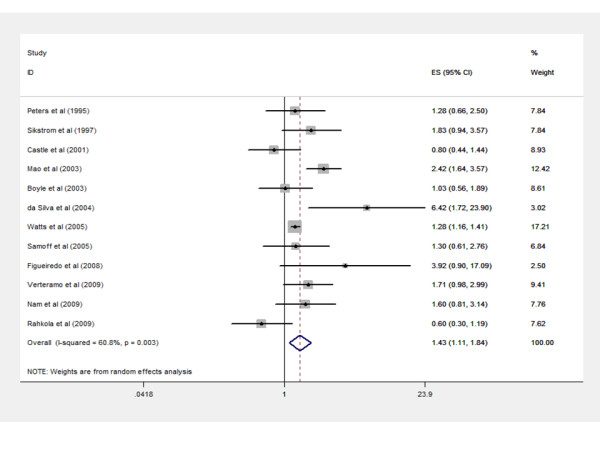
Background: Bacterial vaginosis (BV), an alteration of vaginal flora involving a decrease in Lactobacilli and predominance of anaerobic bacteria, is among the most common cause of vaginal complaints for women of childbearing age. It is well known that BV has an influence in acquisition of certain genital infections. However, association between BV and cervical human papillomavirus (HPV) infection has been inconsistent among studies. The objective of this meta-analysis of published studies is to clarify and summarize published literature on the extent to which BV is associated with cervical HPV infection. Methods: Medline and Web of Science were systematically searched for eligible publications until December 2009. Articles were selected based on inclusion and exclusion criteria. After testing heterogeneity of studies, meta-analysis was performed using random effect model. Results: Twelve eligible studies were selected to review the association between BV and HPV, including a total of 6,372 women. The pooled prevalence of BV was 32%. The overall estimated odds ratio (OR) showed a positive association between BV and cervical HPV infection (OR, 1.43; 95% confidence interval, 1.11-1.84). Conclusion: This meta-analysis of available literature resulted in a positive association between BV and uterine cervical HPV infection.
Overview
The claims and statistics of this paper haven’t been checked yet.
Free: it reads the open-access text and checks the first 5 claims that cite a source we can check. Create a free account to check every claim.
Integrity signals
Registry
Cites
Statistics
Figures
Verification
Claims the paper makes
The claims and statistics of this paper haven’t been checked yet.
Free: it reads the open-access text and checks the first 5 claims that cite a source we can check. Create a free account to check every claim.
Claims other papers make about this one
Each is checked against this paper’s own text: does it say what the citing paper says it does?
The cited source says what the claim attributes to it.
In the citing paper
“As the normal vaginal microbiota is protective against the acquisition of STI,26–29 and HIV,30 31 menstrual cups may have the potential to reduce the incidence of such infections in vulnerable girls and the spread to their partners.”
In the citing paper
“A dysbiotic or high diversity vaginal microbiota coupled with chronic subclinical inflammation, hallmarks of BV, has been correlated with higher incidence, prevalence and persistence of HPV infection (Gillet et al., 2011; Guo et al., 2012).”
From Viral Infections, the Microbiome, and Probiotics (2021) · cites this paper as Gillet et al., 2011
Self-check
Percentages, sums and reported differences re-computed from the paper’s own numbers.
The self-check needs the paper’s full text.
Citations
Cites
Bias in meta-analysis detected by a simple, graphical test
Egger, M., Smith, G. D., Schneider, M., & Minder, C. (1997) · BMJ · doi:10.1136/bmj.315.7109.629 · Cited by 56,722 · cited 1×
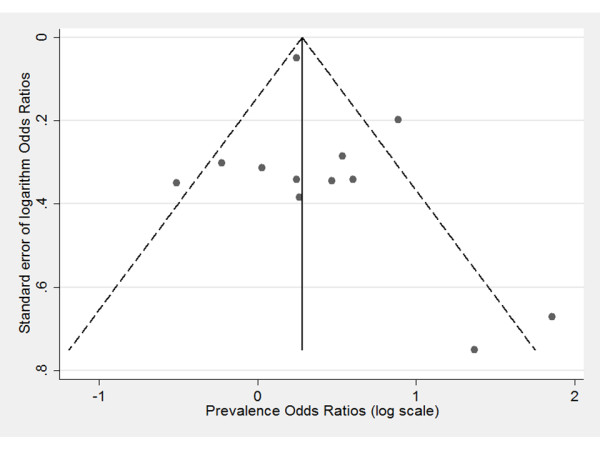
“Evidence of publication bias was ruled out by funnel plot [29] and statistically evaluated for asymmetry using the Begg rank correlation [30].”
MethodMeta-analysis in clinical trials
DerSimonian, R., & Laird, N. (1986) · Controlled Clinical Trials · doi:10.1016/0197-2456(86)90046-2 · Cited by 39,552 · cited 1×
“The resulting set of odds ratios were combined into a summary estimate of the association between BV and HPV using the random effects model of DerSimonian and Laird [28] and results were visualised in a forest plot.”
Quantifying heterogeneity in a meta‐analysis
Higgins, J. P. T., & Thompson, S. G. (2002) · Statistics in Medicine · doi:10.1002/sim.1186 · Cited by 36,763 · cited 1×
“Homogeneity of effects across studies was assessed using Cochran’s Q test [31] and quantified by Higgins and Thompson’s I2 [32].”
MethodMeta-analysis of Observational Studies in Epidemiology<SUBTITLE>A Proposal for Reporting</SUBTITLE>
Stroup, D. F. (2000) · JAMA · doi:10.1001/jama.283.15.2008 · Cited by 20,623
Operating characteristics of a rank correlation test for publication bias
Begg, C. B., & Mazumdar, M. (1994) · Biometrics · doi:10.2307/2533446 · Cited by 16,955 · cited 1×
“Evidence of publication bias was ruled out by funnel plot [29] and statistically evaluated for asymmetry using the Begg rank correlation [30].”
MethodThe combination of estimates from different experiments
Cochran, W. G. (1954) · Biometrics · doi:10.2307/3001666 · Cited by 5,380 · cited 1×
“Homogeneity of effects across studies was assessed using Cochran’s Q test [31] and quantified by Higgins and Thompson’s I2 [32].”
MethodBacterial vaginosis and HIV acquisition: A meta-analysis of published studies
Atashili, J., Poole, C., Ndumbe, P. M., Adimora, A. A., & Smith, J. S. (2008) · AIDS · doi:10.1097/qad.0b013e3283021a37 · Cited by 706 · cited 7×
“Moreover, BV has been associated with many sexually transmitted infections (STIs), including infection with Chlamydia trachomatis , Neisseria gonorrhoeae , HSV-1 and 2, and an increased risk of HIV acquisition [4,8,9].”
InfluentialNatural history and epidemiology of HPV infection and cervical cancer
Castellsagué, X. (2008) · Gynecologic Oncology · doi:10.1016/j.ygyno.2008.07.045 · Cited by 590 · cited 2×
“However, few HPV infections persist and progress to cervical cancer [11].”
BackgroundWiesenfeld, H. C., Hillier, S. L., Krohn, M. A., Landers, D. V., & Sweet, R. L. (2003) · Clinical Infectious Diseases · doi:10.1086/367658 · Cited by 546 · cited 7×
“Moreover, BV has been associated with many sexually transmitted infections (STIs), including infection with Chlamydia trachomatis , Neisseria gonorrhoeae , HSV-1 and 2, and an increased risk of HIV acquisition [4,8,9].”
InfluentialKoshiol, J., Lindsay, L., Pimenta, J. M., Poole, C., Jenkins, D., & Smith, J. S. (2008) · American Journal of Epidemiology · doi:10.1093/aje/kwn036 · Cited by 428 · cited 1×
“Persistent HPV infection is a prerequisite for progression to highgrade lesions [10].”
Background
Cited by
Items 101–200 of 359
Ali-Risasi, C., Verdonck, K., Padalko, E. Y., Broeck, D. V., & Praet, M. M. (2015) · Infectious Agents and Cancer · doi:10.1186/s13027-015-0015-z · Cited by 43
“The insertion of plant products and the increased friction during dry sex may alter the vaginal microbiota and cause traumatic microlesions in the vaginal wall facilitating the entry of HPV [62–64].”
BackgroundSelf-citationIs the role of human female reproductive tract microbiota underestimated?
Kamińska, D., & Gajęcka, M. (2017) · Beneficial Microbes · doi:10.3920/bm2015.0174 · Cited by 45
Schellekens, H. C. J., Schmidt, L., Morré, S. A., van Esch, E. M. G., & van Steenwijk, P. J. D. V. (2025) · International Journal of Molecular Sciences · doi:10.3390/ijms26093954 · Cited by 39
“A greater diversity of bacterial species is associated with vaginal dysbiosis, such as bacterial vaginosis, which positively correlates with the risk of acquiring HPV infection and cervical lesions [11].”
Malaguti, N., Bahls, L. D., Uchimura, N. S., Gimenes, F., & Consolaro, M. E. L. (2015) · BioMed Research International · doi:10.1155/2015/645853 · Cited by 45
“Research Article”
Wu, M., Li, H., Yu, H., Yan, Y., Wang, C., Teng, F., Fan, A., & Xue, F. (2022) · Frontiers in Oncology · doi:10.3389/fonc.2022.941741 · Cited by 40
Profile of women with cervical changes from a city in the Northeast Brazil
Pedrosa, T. F. M., Filho, S. D. M., & Peres, A. L. (2019) · Jornal Brasileiro de Patologia e Medicina Laboratorial · doi:10.5935/1676-2444.20190004 · Cited by 35
“Several studies have observed association of BV with HPV, showing that the prevalence of this combination can reach up to 32%((3)).”
BackgroundMitra, A., Gültekin, M., Ellis, L. B., Bizzarri, N., Bowden, S. J., Taumberger, N., Bracic, T., Vieira‐Baptista, P., Sehouli, J., & Kyrgiou, M. (2023) · The Lancet Microbe · doi:10.1016/s2666-5247(23)00257-4 · Cited by 41
Characteristics associated with Lactobacillus iners-dominated vaginal microbiota
Novak, J., Ravel, J., Ma, B., Ferreira, C. S. T., Tristão, A. D. R., da Silva, M. G., & Marconi, C. (2021) · Sexually Transmitted Infections · doi:10.1136/sextrans-2020-054824 · Cited by 43
Segui‐Perez, C., de Jongh, R., Jonkergouw, R. L. W., Pelayo, P., Balskus, E. P., Zomer, A., & Strijbis, K. (2024) · mBio · doi:10.1128/mbio.00691-24 · Cited by 36
Kelly, H. A., Ngou, J., Chikandiwa, A. T., Sawadogo, B., Gilham, C., Omar, T., Lompo, O., Doutre, S., Méda, N., Weiss, H. A., et al. (2017) · PLoS ONE · doi:10.1371/journal.pone.0174117 · Cited by 35
Huang, Q., Zhong, M., Gao, Y., Huang, L., Huang, Q., Wang, W., Wang, Z., & Yu, Y. (2014) · Journal of Clinical Virology · doi:10.1016/j.jcv.2014.09.002 · Cited by 42
Metagenomics: A new horizon in cancer research
Banerjee, J., Mishra, N., & Dhas, Y. (2015) · Meta Gene · doi:10.1016/j.mgene.2015.05.005 · Cited by 37
“The incidence of BVmakes an individual to be susceptible more to HPV infection (Gillet et al., 2011).”
BackgroundLiu, Y., Wang, S., Liu, J., Su, M., Diao, X., Liang, X., Zhang, J., Wang, Q., & Zhan, Y. (2023) · Journal of Translational Medicine · doi:10.1186/s12967-023-04676-5 · Cited by 43
Gynecological Cancers and Microbiota Dynamics: Insights into Pathogenesis and Therapy
Cocomazzi, G., Pup, L. D., Contu, V., Maggio, G., Parmegiani, L., Ciampaglia, W., Ruvo, D. D., Faioli, R., Maglione, A., Baldini, G. M., et al. (2024) · International Journal of Molecular Sciences · doi:10.3390/ijms25042237 · Cited by 35
Case for a role of the microbiome in gynecologic cancers: Clinician's perspective
Mert, İ., Walther-Antonio, M. R. S., & Mariani, A. (2018) · Journal of obstetrics and gynaecology research · doi:10.1111/jog.13701 · Cited by 34
“Oral contraceptives increase Lactobacillus species and decrease the risk of BV; increased frequency of BV has been found to be associated with higher rates of HPV infection.(38) In a study performed using 16S rDNA sequencing of twins and their families, HPV-positive women had greater microbial diversity with a lower p…”
Shah, U. J., Nasiruddin, M., Dar, S. A., Khan, M. K. A., Akhter, M. R., Singh, N., Rabaan, A. A., & Haque, S. (2020) · Microbial Pathogenesis · doi:10.1016/j.micpath.2020.104131 · Cited by 37
Martins, B. C. T., Guimarães, R. A., Alves, R. R. F., & Saddi, V. A. (2022) · Revista de Saúde Pública · doi:10.11606/s1518-8787.2022056004412 · Cited by 32
Sodhani, P., Gupta, S. K., Gupta, R., & Mehrotra, R. (2017) · Europe PMC (PubMed Central) · doi:10.22034/apjcp.2017.18.5.1289 · Cited by 31
“Many authors have supported this association of BV with cervical pre-cancerous lesions (Watts et al., 2005; Verbruggen et al., 2006; Gillet et al., 2011).”
BackgroundZhou, F., Zhou, Q., Zhu, Z., Hua, K., Chen, L., & Ding, J. (2020) · Annals of Translational Medicine · doi:10.21037/atm-20-622 · Cited by 31
“The condition, characterized by Lactobacillus depletion and anaerobic species overgrowth, is associated with bacterial vaginosis (BV), which has been related to delayed clearance of the virus (24), meaning that menopausal women probably have a higher risk of VAIN.”
BackgroundLiu, Y., Li, T., Guo, R., Chen, T., Wang, S., Wu, D., Li, J., Liu, Z., Zhao, Y., Yin, J., et al. (2023) · Journal of Medical Virology · doi:10.1002/jmv.28595 · Cited by 33
Sanchez-Garcia, E. K., Contreras‐Paredes, A., Abundis, E. M., Garcia-Chan, D., Lizano, M., & la Cruz-Hernández, E. N. D. (2019) · Journal of Medical Microbiology · doi:10.1099/jmm.0.001044 · Cited by 31
Mongelós, P., Mendoza, L. P., Rodriguez-Riveros, I., Castro, A., Giménez, G., Araujo, P., Páez, M., Castro, W., Basiletti, J. A., González, J. V., et al. (2015) · International Journal of Infectious Diseases · doi:10.1016/j.ijid.2015.08.007 · Cited by 38
Lam, K. C., Vyshenska, D., Hu, J., Rodrigues, R. R., Nilsen, A., Zielke, R. A., Brown, N. S., Aarnes, E., Sikora, A. E., Shulzhenko, N., et al. (2018) · PeerJ · doi:10.7717/peerj.5590 · Cited by 34
“In particular, multiple studies confirm vaginal dysbiosis (bacterial vaginosis) to be a risk factor for HPV infection (Gillet et al., 2011) and its progression (Gillet et al.”
BackgroundPeng, Y., Tang, Q., Wu, S., & Zhao, C. (2025) · BMC Infectious Diseases · doi:10.1186/s12879-025-10851-4 · Cited by 25
Mbulawa, Z. Z. A., Johnson, L. F., Marais, D. J., Coetzee, D. J., & Williamson, A. (2013) · Journal of Infection · doi:10.1016/j.jinf.2013.03.009 · Cited by 29
Rosca, A. S., Castro, J., Sousa, L. G. V., França, Â., Cavaleiro, C., Salgueiro, L., & Cerca, N. (2022) · Frontiers in Cellular and Infection Microbiology · doi:10.3389/fcimb.2022.824860 · Cited by 32
“, 2013), and may also lead to an increased risk of acquisition and transmission of several sexually transmitted infectious agents (Gillet et al., 2011; Haddad et al., 2018).”
BackgroundCheong, H. C., Yap, P. S. X., Chong, C. W., Cheok, Y. Y., Lee, C. Y. Q., Tan, G. M. Y., Sulaiman, S., Hassan, J., Sabet, N. S., Looi, C. Y., et al. (2019) · PLoS ONE · doi:10.1371/journal.pone.0224658 · Cited by 30
“trachomatis, signifying the importance of microbiota homeostasis and its role as a determinant in disease outcome [21, 23, 24, 35].”
BackgroundHuang, Y. F., Wu, X., Lin, Y., Li, W., Liu, J., & Song, B. (2020) · Oncology Letters · doi:10.3892/ol.2020.11738 · Cited by 35
“A previous study reported a positive association between BV and cervical HPV infection (17).”
MethodResultMengistie, Z. (2013) · JOURNAL OF CLINICAL AND DIAGNOSTIC RESEARCH · doi:10.7860/jcdr/2013/5872.3736 · Cited by 27
“[5] Gillet E, Meys JFA, Verstraelen H, Bosire C, Sutter PD, Temmerman M, et al.”
BackgroundMenon, S., Rossi, R., Harebottle, R., Mabeya, H., & Broeck, D. V. (2016) · Infectious Agents and Cancer · doi:10.1186/s13027-016-0061-1 · Cited by 28
Self-citationMolina, M. A., Coenen, B. A., Leenders, W. P. J., Andralojc, K. M., Huynen, M. A., & Melchers, W. J. G. (2022) · mBio · doi:10.1128/mbio.01619-22 · Cited by 29
“BV was found to be strongly associated with hrHPV infection (89).”
BackgroundImmune System Efficiency in Cancer and the Microbiota Influence
Barbosa, A. M., Gomes-Gonçalves, A., Castro, A. G., & Torrado, E. (2021) · Pathobiology · doi:10.1159/000512326 · Cited by 26
Ye, J., & Qi, X. (2023) · Apmis · doi:10.1111/apm.13356 · Cited by 31
“HR-HPV includes types 16,18,31,33,35,39,45,51,52,53,56,58,59,66,68, while the remaining types are classified as LR-HPV [46].”
The microbiome and gynecologic cancer: cellular mechanisms and clinical applications
Chalif, J., Wang, H., Spakowicz, D. J., Quick, A. M., Arthur, E. K., O’Malley, D. M., & Chambers, L. (2023) · International Journal of Gynecological Cancer · doi:10.1136/ijgc-2023-004894 · Cited by 28
Jain, J. P., Bristow, C., Pines, H. A., Vera, A., Rangel, G., Staines, H., Patterson, T. L., & Strathdee, S. A. (2018) · BMC Public Health · doi:10.1186/s12889-018-5965-9 · Cited by 29
Ivanov, M., Владиславович, Б. Е., Hodkevich, A. A., Dzyubenko, V. V., Krasilnikov, S. E., Mansurova, A. S., Vakhturova, I. E., Agletdinov, E. F., Shumeikina, A. O., Chernyshova, A. L., et al. (2023) · Diagnostics · doi:10.3390/diagnostics13010140 · Cited by 25
The effect of Lactobacillus casei extract on cervical cancer cell lines
Kim, S., Lee, W. M., Park, K. S., Kim, J. B., Han, D. J., & Bae, J. (2015) · Współczesna Onkologia · doi:10.5114/wo.2014.45292 · Cited by 23
“A meta-analysis has shown that BV is associated with uterine cervical HPV infection [12].”
Methodde Carvalho, N. S., Júnior, J. E., Travassos, A. G., Santana, L. B., & Miranda, A. E. (2021) · Epidemiologia e Serviços de Saúde · doi:10.1590/s1679-4974202100007.esp1 · Cited by 70
Mckee, K., Carter, K. A., Bassis, C. M., Young, V., Reed, B., Harper, D., Ruffin, M., & Bell, J. (2020) · Gynecology and Pelvic Medicine · doi:10.21037/gpm-20-10 · Cited by 19
“Epidemiologic studies have demonstrated associations between bacterial vaginosis (BV), as diagnosed by Nugent’s criteria (i.e., scoring based on light-microscopic examination of vaginal discharge), and persistence of HPV infection and disease severity (8–10).”
The role of vaginal microecology in the cervical cancer
Wei, W., Xie, L., Xia, Q. H., Fu, Y., Liu, F., Ding, D., & Han, F. (2022) · Journal of obstetrics and gynaecology research · doi:10.1111/jog.15359 · Cited by 22
“At the same time, the increase of mucin degrading enzymes will degrade the glial layer on the surface of cervical epithelial cells, making epithelial cells vulnerable to virus invasion, thereby increasing HPV susceptibility.(52,111) Proinflammatory and immune response Decreased levels of Lactobacillus lead to decrease…”
BackgroundMethodInfluentialTrifanescu, O. G., Trifanescu, R. A., Mitrica, R. I., Bran, D. M., Serbanescu, L. G., Valcauan, L., Marinescu, Ș. A., Gales, L. N., Tănase, B. C., & Anghel, R. M. (2023) · Diagnostics · doi:10.3390/diagnostics13050877 · Cited by 28
HPV-associated cervicovaginal microbiome and host metabolome characteristics
Zhang, Y., Wu, X., Li, D., Huang, R. T., Deng, X., Li, M., Du, F., Zhao, Y., Shen, J. S., Chen, Y., et al. (2024) · BMC Microbiology · doi:10.1186/s12866-024-03244-1 · Cited by 23
“All HPV( + ) subjects had infected one of 14 high-risk HPV genotypes: 16, 18, 31, 33, 35, 39, 45, 51, 52, 56, 58, 59, 66 and 68 (Supplementary Table 1).”
BackgroundEvaluation of different diagnostic methods of bacterial vaginosis
Gad, G. F. M., El-Adawy, A., Mohammed, M. S., Ahmed, A. F., & Mohamed, H. A. E. N. (2014) · IOSR Journal of Dental and Medical Sciences · doi:10.9790/0853-13181523 · Cited by 22
“There is an evidence that BV, whether it is asymptomatic or symptomatic, is an independent risk factor for severe reproductive tract and obstetric sequelae, including pre-term delivery, pre-term labor, low birth weight, post abortion endometritis, post-partum endometritis [5], development of Pelvic inflammatory diseas…”
BackgroundLi, C., Zhang, Z., Yang, Y., & Liao, H. (2022) · Cancer Medicine · doi:10.1002/cam4.4801 · Cited by 22
Study, F. T. L.-M. C., Shaw, E., Ramanakumar, A. V., El‐Zein, M., da Silva, F. R., Galan, L., Baggio, M. L., Villa, L. L., & Franco, E. L. (2016) · BMC Infectious Diseases · doi:10.1186/s12879-016-1446-x · Cited by 23
“An elevated risk of HPV infection is associated with other infections such as Chlamydia trachomatis [12, 13], human immunodeficiency virus (HIV) [14, 15], and bacterial vaginosis (BV) [16].”
BackgroundZhang, L., Dai, Y., Chen, J., Hong, L., Liu, Y., Ke, Q., Chen, Y., Cai, C., Liu, X., & Chen, Z. (2017) · Journal of Medical Virology · doi:10.1002/jmv.24931 · Cited by 24
Shi, H., Song, H., Zhao, Q.-Y., Tao, C.-X., Liu, M., & Zhu, Q.-Q. (2018) · Medicine · doi:10.1097/md.0000000000012398 · Cited by 27
Menopausal status induces vaginal dysbiosis in women with human papillomavirus infection
So, K. A., Hur, S. Y., Cho, C. H., Lee, J. K., Seong, S. J., Jeong, D. H., Ki, M., & Kim, T. J. (2024) · Scientific Reports · doi:10.1038/s41598-024-56314-9 · Cited by 21
Cervicovaginal Gardnerella sialidase-encoding gene in persistent human papillomavirus infection
Novak, J., Belleti, R., Pinto, G. V. D. S., Bolpetti, A. N., da Silva, M. G., & Marconi, C. (2023) · Scientific Reports · doi:10.1038/s41598-023-41469-8 · Cited by 20
Challa, A., Maras, J. S., Nagpal, S., Tripathi, G., Taneja, B., Kachhawa, G., Sood, S., Dhawan, B., Acharya, P., Upadhyay, A. D., et al. (2024) · Journal of the European Academy of Dermatology and Venereology · doi:10.1111/jdv.19805 · Cited by 19
Gholizadeh, O., Yekanipour, Z., Kivi, S., Farahbod, F., Aqayinejad, M., Tasoujizade, Y., Yasamineh, S., Amini, P., Akbarzadeh, S., Hajiesmaeili, M., et al. (2023) · Microbial Pathogenesis · doi:10.1016/j.micpath.2023.105980 · Cited by 21
Liu, S., Li, Y., Song, Y., Wu, X., Baloch, Z., & Xia, X. (2022) · Frontiers in Cellular and Infection Microbiology · doi:10.3389/fcimb.2022.642074 · Cited by 19
“It has been reported that vaginal microbiota protects women from different urogenital infectious diseases (Watts et al., 2005; Gillet et al., 2011; Guo et al., 2012; Lee et al., 2013; Vriend et al., 2015).”
BackgroundWang, Y., Thakur, R., Shen, Q., He, Y., & Chen, C. (2023) · Decoding Infection and Transmission · doi:10.1016/j.dcit.2023.07.001 · Cited by 22
Ou, J., Kang, Y., Medlegeh, Fu, K., Zhang, Y., & Yang, W. (2024) · Heliyon · doi:10.1016/j.heliyon.2024.e33383 · Cited by 17
“Epidemiological studies have revealed that the diversity of the non-Lactobacillus -dominated vaginal microbiome is closely associated with HPV infection [6 – 10].”
Menstrual Cycle and Detectable Human Papillomavirus in Reproductive-age Women: A Time Series Study
Liu, S., Brotman, R. M., Zenilman, J. M., Gravitt, P. E., & Cummings, D. A. T. (2013) · The Journal of Infectious Diseases · doi:10.1093/infdis/jit337 · Cited by 17
“A recent metaanalysis based on mostly cross-sectional studies has shown a positive association between BV and HPV [41].”
MethodThe microbiome of the human female reproductive tract
Stout, M. J., Wylie, T., Gula, H., Miller, A., & Wylie, K. M. (2019) · Current Opinion in Physiology · doi:10.1016/j.cophys.2019.10.011 · Cited by 19
Cervical Screening within HIV Care: Findings from an HIV-Positive Cohort in Ukraine
Bailey, H., Thorne, C., Semenenko, I., Malyuta, R., Tereschenko, R., Adeyanova, I., Kulakovskaya, E., Ostrovskaya, L., Kvasha, L., Cortina‐Borja, M., et al. (2012) · PLoS ONE · doi:10.1371/journal.pone.0034706 · Cited by 19
“84) [50].”
La vaginose en 2011 : encore beaucoup d’interrogations
Bohbot, J.-M., & Lepargneur, J.-P. (2011) · Gynécologie Obstétrique & Fertilité · doi:10.1016/j.gyobfe.2011.10.013 · Cited by 23
Lin, T.-C., Hsu, I.-L., Tsai, W.-H., Chu, Y.-C., Kuan, L.-C., Huang, M.-S., Yeh, W.-L., Chen, Y., Hsu, S.-J., & Chang, W. (2021) · Applied Sciences · doi:10.3390/app11030902 · Cited by 18
“The untreated BV increases the risk for infections of human immunodeficiency virus [4] or human papilloma virus infection [5], higher rates of”
BackgroundPrevalence and predictors of bacterial vaginosis in HIV-infected women in Maharashtra, India
Joshi, S., Mane, A. K., Muwonge, R., Divate, U., Padbidri, V., Kulkarni, V., Gangakhedkar, R., & Sankaranarayanan, R. (2020) · International Journal of STD & AIDS · doi:10.1177/0956462419878333 · Cited by 16
Peres, A. L., Camarotti, J. R. S. L., Cartaxo, M. F. D. S., Alencar, N., Stocco, R. D. C., Beçak, W., de Pontes-Filho, N. T., de Araújo, R. F. F., de Lima-Filho, J. L., & Martins, D. B. G. (2015) · Genetics and Molecular Research · doi:10.4238/2015.august.14.13 · Cited by 15
Vorsters, A., Cornelissen, T., Leuridan, E. E., Bogers, J., Broeck, D. V., Benoy, I. H., Goossens, H., Hens, N., & Damme, P. V. (2016) · BMC Public Health · doi:10.1186/s12889-016-3099-5 · Cited by 23
“Based on a meta-analysis of 12 studies, an association between BV and cervical HPV infection has been reported [22].”
MethodSelf-citationGao, Y., Shang, Q., Wei, J., & Chen, T. (2021) · Medicine in Microecology · doi:10.1016/j.medmic.2021.100043 · Cited by 15
Ssemaganda, A., Cholette, F., Perner, M., Kambaran, C., Adhiambo, W., Wambugu, P. M., Gebrebrhan, H., Lee, A. S., Nuhu, F., Mwatelah, R. S., et al. (2021) · Frontiers in Immunology · doi:10.3389/fimmu.2021.726472 · Cited by 16
Fracella, M., Oliveto, G., Sorrentino, L., Roberto, P., Cinti, L., Viscido, A., Lella, F. M. D., Giuffrè, F., Gentile, M., Pietropaolo, V., et al. (2022) · Pathogens · doi:10.3390/pathogens11111361 · Cited by 15
“Although STIs and BV were temporally associated with persistent HPV infection [24,26,30,31], the influence of microbial species on the antiviral immune response has not been fully defined.”
BackgroundHuang, J. J., Yin, C., & Wang, J. (2023) · Journal of Obstetrics and Gynaecology · doi:10.1080/01443615.2022.2161349 · Cited by 15
“Gillet et al . revealed that BV patients were more susceptible to HR-HPV infection, while Guo et al . further determined that an active BV infection radically delayed the duration and resolution time of HR-HPV infection (Gillet et al .”
BackgroundRen, A., Zhou, Y., Xu, Z., Jia, T., & Yang, L. (2024) · Current Medicine · doi:10.1007/s44194-024-00039-4 · Cited by 15
“…that the decrease in Lactobacillus abundance is associated with the incidence, prevalence, and persistence of bacterial vaginosis and cervical intraepithelial neoplasia, along with its pathogen, human papillomavirus, attracting widespread attention (Swidsinski et al. 2008; Gillet et al. 2011).”
Social, microbial, and immune factors linking bacterial vaginosis and infectious diseases
Gilbert, N. M., Hernandez, L. A. R., Berman, D., Morrill, S. R., Gagneux, P., & Lewis, A. L. (2025) · Journal of Clinical Investigation · doi:10.1172/jci184322 · Cited by 18
“…a positive association between BV and infections by several bacterial, protozoan, and viral STIs, including chlamydia (11, 24–28), gonorrhea (11, 24–29), trichomoniasis (11, 28–30), human papillomavirus (HPV) (31–33), HIV (29, 34, 35), and herpes simplex virus (HSV) (36) (see timeline in Figure 2).”
Lin, W., Zhang, Q., Chen, Y., Chen, L., Dong, B., & Sun, P. (2021) · BMC Women s Health · doi:10.1186/s12905-021-01504-0 · Cited by 16
“Currently, the association between BV and cervical HPV infection identified in several studies remains controversial [17].”
BackgroundGerli, S., Bavetta, F., & Renzo, G. C. D. (2012) · PubMed · Cited by 13
RetractedMenon, S., Rossi, R., Kariisa, M., Acharya, S. D., Zdraveska, N., Mahmood, S., Callens, S. F. J., & Ndizeye, Z. (2019) · PLoS ONE · doi:10.1371/journal.pone.0213086 · Cited by 13
Javed, A., & Manzoor, S. (2020) · Microbial Pathogenesis · doi:10.1016/j.micpath.2020.104588 · Cited by 15
Li, J., Jin, H., Sun, Y., Wang, C., Chen, H., Gong, S., & Li, J. (2024) · BMC Women s Health · doi:10.1186/s12905-023-02824-z · Cited by 12
“Therefore, further research involving larger and more diverse populations is warranted to validate and expand upon our findings.”
BackgroundZulaika, G., Otieno, F., Mason, L., van Eijk, A. M., Bhaumik, R., Green, S. J., Phillips‐Howard, P. A., & Mehta, S. D. (2024) · BMC Public Health · doi:10.1186/s12889-024-20491-z · Cited by 14
“…risk of HIV acquisition and transmission [8–10], increases risk of adverse pregnancy outcomes [11–15], and increases risk of Trichomonas vaginalis (TV) [16, 17], herpes simplex virus-2 (HSV-2) [18], Neisseria gonorrhoeae (NG), Chlamydia trachomatis (CT) [19], and human papillomavirus (HPV) [20].”
Sekyere, J. O., Trama, J. P., Adelson, M. E., Trikannad, C., DiBlasi, D., Schuster, R., Yang, J., & Mordechai, E. (2025) · iScience · doi:10.1016/j.isci.2025.113473 · Cited by 14
“35,36 This could create a micro-environment conducive to HPV persistence and progression to epithelial cell abnormalities.”
Belleti, R., Marcolino, L. D., Novak, J., Ferreira, C. S. T., Bolpetti, A. N., Pinto, G. V. D. S., Palmeira‐de‐Oliveira, A., da Silva, M. G., & Marconi, C. (2022) · Journal of Medical Microbiology · doi:10.1099/jmm.0.001527 · Cited by 12
Changes in the Cervical Microbiota of Women with Different High-Risk Human Papillomavirus Loads
Camargo, M., Vega, L., Muñoz, M., Sánchez, R., Patarroyo, M. E., Ramírez, J. D., & Patarroyo, M. A. (2022) · Viruses · doi:10.3390/v14122674 · Cited by 13
Vaginal pH value can affect the susceptibility to human papillomavirus infection
Liu, Y., & Li, Z. (2024) · BMC Infectious Diseases · doi:10.1186/s12879-024-09074-w · Cited by 14
Syntrophic bacterial and host–microbe interactions in bacterial vaginosis
Lee, E. M., Srinivasan, S., Purvine, S. O., Fiedler, T. L., Leiser, O. P., Proll, S. C., Minot, S. S., Djukovic, D., Raftery, D., Johnston, C., et al. (2025) · The ISME Journal · doi:10.1093/ismejo/wraf055 · Cited by 13
“Women from disadvantaged socioeconomic groups are at higher risk of BV [11, 12], and having a BV bacterial community is associated with increased risk of adverse sequelae such as pelvic inflammatory disease, preterm birth, and acquisition of sexually transmitted infections [13–16].”
Impact of bacterial vaginosis on sexually transmitted viral infections: a bacterial point of view
Segui‐Perez, C., van Smoorenburg, M. Y., Maranus, A. E., Geijtenbeek, T. B. H., & Strijbis, K. (2025) · FEMS Microbiology Reviews · doi:10.1093/femsre/fuaf039 · Cited by 13
“A BV-associated vaginal microbiome is also thought to increase the risk of developing HPV-induced cervical cancer (Gillet et al. 2011 , Moscicki et al. 2012 , Łaniewski et al. 2018 ).”
InfluentialThe interplay between microbiota, metabolites, immunity during BV
Zhang, Q., Chen, R., Li, M., Zeng, Z., Zhang, L., & Liao, Q. (2021) · Medicine in Microecology · doi:10.1016/j.medmic.2021.100049 · Cited by 11
Hu, J., Wu, Y., Quan, L., Yang, W., Lang, J., Tian, G., & Meng, B. (2022) · Frontiers in Microbiology · doi:10.3389/fmicb.2022.1004664 · Cited by 15
“A report also explained a positive correlation between cervical HPV infection and BV-related microbiota (Gillet et al., 2011; Lee et al., 2013).”
BackgroundCommon filaggrin gene mutations and risk of cervical cancer
Bager, P., Wohlfahrt, J., Sørensen, E., Ullum, H., Høgdall, C. K., Palle, C., Husemoen, L. L. N., Linneberg, A. R., Kjær, S. K., Melbye, M., et al. (2014) · Acta Oncologica · doi:10.3109/0284186x.2014.973613 · Cited by 12
Frąszczak, K., Barczyński, B., Siwiec, R., Kondracka, A., Malm, A., Kotarski, J., Witt, E., & Korona‐Głowniak, I. (2023) · Frontiers in Microbiology · doi:10.3389/fmicb.2023.1257587 · Cited by 12
Spurgeon, M. E., Townsend, E. C., Blaine‐Sauer, S., McGregor, S. M., Horswill, M. A., den Boon, J. A., Ahlquist, P., Kalan, L., & Lambert, P. F. (2024) · mBio · doi:10.1128/mbio.00933-24 · Cited by 10
Pawley, D., Dikici, E., Deo, S. K., Raccamarich, P. D. C., Fischl, M. A., Alcaide, M. L., & Daunert, S. (2022) · Analytical Chemistry · doi:10.1021/acs.analchem.2c02094 · Cited by 11
Muzny, C. A., Gerwen, O. T. V., Schroeder, J. A., Kay, E. S., Siwakoti, K., Aaron, K. J., Eastlund, I. C., Graves, K. J., Elnaggar, J. H., Tamhane, A. R., et al. (2023) · BMJ Open · doi:10.1136/bmjopen-2023-073068 · Cited by 11
Kwak, J., Pandey, S., Cho, J. H., Song, M., Kim, E. S., Doo, H., Keum, G. B., Ryu, S., Choi, Y., Kang, J., et al. (2023) · Frontiers in Veterinary Science · doi:10.3389/fvets.2023.1226859 · Cited by 11
Loonen, A. J. M., Verhagen, F., Vrije, I. L.-D., Lentjes, M. H. F. M., Huijsmans, C. J. J., & van den Brule, A. J. C. (2024) · Frontiers in Cellular and Infection Microbiology · doi:10.3389/fcimb.2024.1330844 · Cited by 10
“The normal vaginome in the female reproductive tract typically reveals Lactobacillus species as the predominance genus, which helps to promote a healthy vaginal environment (Gillet et al., 2011).”
BackgroundHPV vaccination among seropositive, DNA negative cohorts: a systematic review & meta-analysis
Eochagáin, C. M., Power, R. F., Parker, I., & Brennan, D. J. (2022) · Journal of Gynecologic Oncology · doi:10.3802/jgo.2022.33.e24 · Cited by 12
“It is conceivable that vaccine efficacy might differ between these clinically indistinguishable groups, or indeed that individual women may move between these groups over time during periods of relative immunosuppression [43,44,46,66], as a consequence of changes in the vaginal microbiome [67,68], or as immune respons…”
BackgroundYu, H., Li, M., Bian, M., Li, Q., & Liang, H. (2022) · The Journal of Infection in Developing Countries · doi:10.3855/jidc.15961 · Cited by 10
“A previous systematic review reported a correlation between bacterial vaginosis and HPV infection, suggesting that the presence of bacterial vaginosis increases the risk of HPV infection [28].”
BackgroundIacobone, A. D., Radice, D., Guerrieri, M. E., Spolti, N., Grossi, B., Bottari, F., Boveri, S., Martella, S., Urbinati, A. M. V., Pino, I., et al. (2023) · Diagnostics · doi:10.3390/diagnostics13020176 · Cited by 9
“Furthermore, post-menopausal women may be at increased risk of VAIN due to Lactobacillus depletion, overgrowth of anaerobic species and increased frequency of bacterial vaginosis, which have been indicated as agents responsible for delayed HPV clearance and subsequent carcinogenic progression [9,16].”
BackgroundCaractéristiques épidémiologiques et histopathologiques de 1280 cancers du col utérin à Kinshasa
Kajimina, J. C. K., Muyulu, N. P., Zakayi, P. K., Massamba, B. L., Sitwaminya, R., Beya, F. K., Kisile, O. M., Baleka, A. M., Kabongo, J.-M. M., Nicaise, M., et al. (2021) · Gynécologie Obstétrique Fertilité & Sénologie · doi:10.1016/j.gofs.2021.07.001 · Cited by 9
Risk factors associated with human papillomavirus infection status in a Korean cohort
Lee, H., Lee, D.-H., Song, Y., Lee, K. H., Sung, J., & Ko, G. (2013) · Epidemiology and Infection · doi:10.1017/s0950268813002549 · Cited by 10
Makris, N., Vena, C. I., & Paul, S. (2016) · Journal of Clinical Nursing · doi:10.1111/jocn.13491 · Cited by 9
Borgogna, J.-L. C., & Yeoman, C. J. (2017) · Methods in microbiology · doi:10.1016/bs.mim.2017.08.003 · Cited by 11
Cervantes, J., & Hong, B. (2013) · Gynecologic and Obstetric Investigation · doi:10.1159/000351309 · Cited by 9
Wu, M., Ma, X., Li, H., Li, B., Wang, C., Fan, X., Fan, A., & Xue, F. (2022) · Frontiers in Public Health · doi:10.3389/fpubh.2022.950610 · Cited by 12
Ye, Y., Li, M., Yang, W., Xu, J., Wang, X., Ma, Y., Wu, D., & Meng, Y. (2023) · Journal of Medical Virology · doi:10.1002/jmv.29267 · Cited by 8
“21 Moreover, our study findings were in agreement with those of a previous study that revealed higher parity among women with VaIN3 than among women with VaIN1 and VaIN2 and higher gravidity and parity among women with s ‐ VaIN than among women with s ‐ CIN.”
ResultCytokine response following perturbation of the cervicovaginal milieu during HPV genital infection
Selinger, C., Rahmoun, M., Murall, C. L., Bernat, C., Boué, V., Bonneau, M., Graf, C., Grasset, S., Groc, S., Reynes, J., et al. (2021) · Immunologic Research · doi:10.1007/s12026-021-09196-2 · Cited by 11
“BV is the most common vaginal infection in women of reproductive age and is associated with an increased risk of acquiring sexually transmitted infections including HPV infections [33].”
Background
Metadata
- Authors
- Gillet, E., Meys, J. F., Verstraelen, H., Bosire, C., De Sutter, P., Temmerman, M., & Broeck, D. V.
- Affiliations
- Vrije Universiteit Brussel (BE)
- Ghent University (BE)
- Ghent University Hospital (BE)
- Corresponding author
- Broeck, Davy Vanden
- Venue
- BMC Infectious Diseases
- Published
- 2011-01-11
- Volume
- 11
- Issue
- 1
- Pages
- 10-10
- ISSN
- 1471-2334 (ISSN-L)
- PMC
- PMC3023697
- OpenAlex
- W2065342949
- Cited by
- 354
- References
- 51
- Citations by year
- 2026: 21 · 2025: 27 · 2024: 34 · 2023: 32 · 2022: 42 · 2021: 28 · 2020: 29 · 2019: 19 · 2018: 22 · 2017: 17 · 2016: 21 · 2015: 19 · 2014: 12 · 2013: 16 · 2012: 13
- FWCI
- 1.62
- Type
- journal article
- Language
- en
- Open access
- gold
- doi.org
- Licence
- Locations
- BMC Infectious Diseases (publishedVersion, cc-by)
- PubMed Central (publishedVersion, cc-by)
- PubMed (publishedVersion)
- Ghent University Academic Bibliography (Ghent University) (submittedVersion, other-oa)
- eCommons - AKU (Aga Khan University) (submittedVersion)
- DOAJ (DOAJ: Directory of Open Access Journals) (submittedVersion, cc-by-sa)
- VUBIR (Vrije Universiteit Brussel) (submittedVersion)
- Funders
- Fonds Wetenschappelijk Onderzoek
- Vlaamse regering
- Topics
- Life Sciences › Immunology and Microbiology › Microbiology › Reproductive tract infections research
- Health Sciences › Medicine › Epidemiology › Cervical Cancer and HPV Research
- Health Sciences › Medicine › Obstetrics and Gynecology › Gynecological conditions and treatments
- Keywords
- bacterial vaginosis, human papillomavirus, cervical HPV infection, vaginal microbiota, lactobacilli, anaerobic bacteria, HPV acquisition, women of reproductive age
- MeSH terms
- Adolescent, Adult, Aged, Female, Humans, Middle Aged, Odds Ratio, Vaginosis, Bacterial, Papillomaviridae, Papillomavirus Infections, Young Adult
About these checks
Registry, retraction, Cites and statistics results are computed, not judged, with one exception: a printed reference that no index lists is read once by a model before it counts as a citation error. Claims are extracted by a model and kept only when their quote appears verbatim in the text; each cited source is then checked, with a model’s help, for whether it says what the claim relies on. Those verdicts can be wrong — read the claim’s quote and the cited source before relying on one.
Statistics and arithmetic are recomputed, not judged.
Confidence bands are shown only for fields calibrated on our annotated test set. None is calibrated yet, so no band is shown.
What counts as a claim ›How we measure confidence ›How we check this ›
Are you an author, or do you see a problem with this page? Request a review
Data sources
Bibliographic data: Semantic Scholar, OpenAlex, Crossref.
Contains information from the Semantic Scholar Academic Graph Datasets, made available under the ODC Attribution License (ODC-BY 1.0).
Semantic Scholar’s data is described in: Kinney, R., et al. (2023). The Semantic Scholar Open Data Platform. arXiv:2301.10140.
