

Bacterial vaginosis is associated with uterine cervical human papillomavirus infection: a meta-analysis
Open accessThe DOI matches its Crossref record; 50 of the 51 references it cites were found in a registry or an index.
Abstract
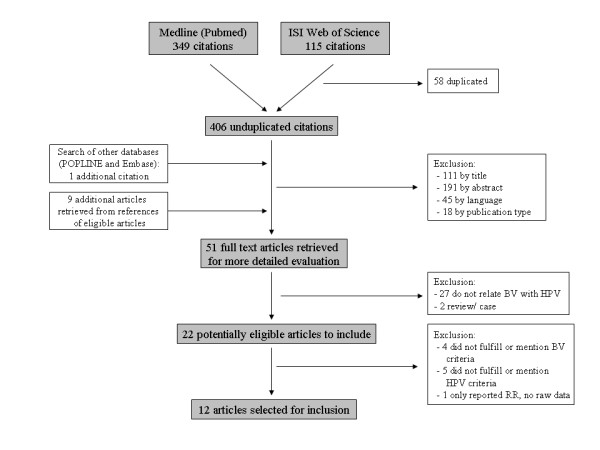
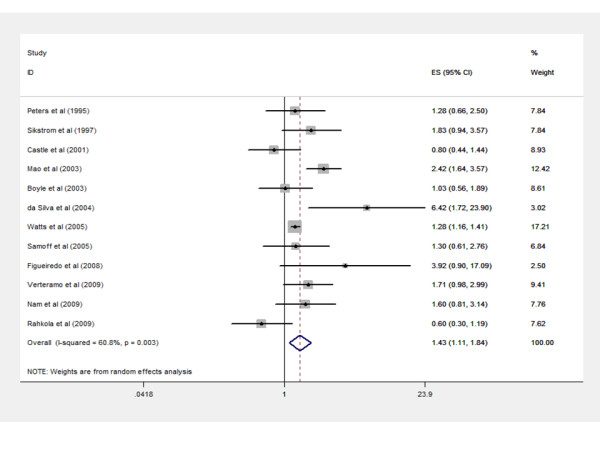
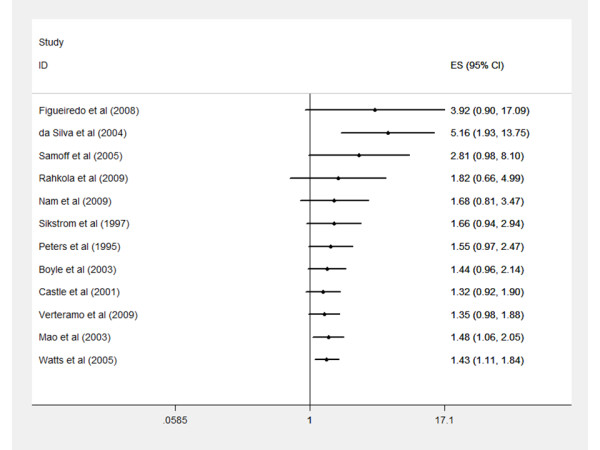
Background: Bacterial vaginosis (BV), an alteration of vaginal flora involving a decrease in Lactobacilli and predominance of anaerobic bacteria, is among the most common cause of vaginal complaints for women of childbearing age. It is well known that BV has an influence in acquisition of certain genital infections. However, association between BV and cervical human papillomavirus (HPV) infection has been inconsistent among studies. The objective of this meta-analysis of published studies is to clarify and summarize published literature on the extent to which BV is associated with cervical HPV infection. Methods: Medline and Web of Science were systematically searched for eligible publications until December 2009. Articles were selected based on inclusion and exclusion criteria. After testing heterogeneity of studies, meta-analysis was performed using random effect model. Results: Twelve eligible studies were selected to review the association between BV and HPV, including a total of 6,372 women. The pooled prevalence of BV was 32%. The overall estimated odds ratio (OR) showed a positive association between BV and cervical HPV infection (OR, 1.43; 95% confidence interval, 1.11-1.84). Conclusion: This meta-analysis of available literature resulted in a positive association between BV and uterine cervical HPV infection.
Overview
The claims and statistics of this paper haven’t been checked yet.
Free: it reads the open-access text and checks the first 5 claims that cite a source we can check. Create a free account to check every claim.
Integrity signals
Registry
Cites
Statistics
Figures
Verification
Claims the paper makes
The claims and statistics of this paper haven’t been checked yet.
Free: it reads the open-access text and checks the first 5 claims that cite a source we can check. Create a free account to check every claim.
Claims other papers make about this one
Each is checked against this paper’s own text: does it say what the citing paper says it does?
The cited source says what the claim attributes to it.
In the citing paper
“As the normal vaginal microbiota is protective against the acquisition of STI,26–29 and HIV,30 31 menstrual cups may have the potential to reduce the incidence of such infections in vulnerable girls and the spread to their partners.”
In the citing paper
“A dysbiotic or high diversity vaginal microbiota coupled with chronic subclinical inflammation, hallmarks of BV, has been correlated with higher incidence, prevalence and persistence of HPV infection (Gillet et al., 2011; Guo et al., 2012).”
From Viral Infections, the Microbiome, and Probiotics (2021) · cites this paper as Gillet et al., 2011
Self-check
Percentages, sums and reported differences re-computed from the paper’s own numbers.
The self-check needs the paper’s full text.
Citations
Cites
Bias in meta-analysis detected by a simple, graphical test
Egger, M., Smith, G. D., Schneider, M., & Minder, C. (1997) · BMJ · doi:10.1136/bmj.315.7109.629 · Cited by 56,722 · cited 1×
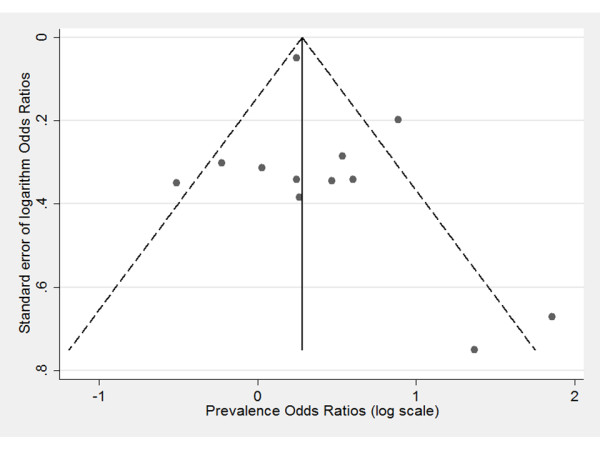
“Evidence of publication bias was ruled out by funnel plot [29] and statistically evaluated for asymmetry using the Begg rank correlation [30].”
MethodMeta-analysis in clinical trials
DerSimonian, R., & Laird, N. (1986) · Controlled Clinical Trials · doi:10.1016/0197-2456(86)90046-2 · Cited by 39,552 · cited 1×
“The resulting set of odds ratios were combined into a summary estimate of the association between BV and HPV using the random effects model of DerSimonian and Laird [28] and results were visualised in a forest plot.”
Quantifying heterogeneity in a meta‐analysis
Higgins, J. P. T., & Thompson, S. G. (2002) · Statistics in Medicine · doi:10.1002/sim.1186 · Cited by 36,763 · cited 1×
“Homogeneity of effects across studies was assessed using Cochran’s Q test [31] and quantified by Higgins and Thompson’s I2 [32].”
MethodMeta-analysis of Observational Studies in Epidemiology<SUBTITLE>A Proposal for Reporting</SUBTITLE>
Stroup, D. F. (2000) · JAMA · doi:10.1001/jama.283.15.2008 · Cited by 20,623
Operating characteristics of a rank correlation test for publication bias
Begg, C. B., & Mazumdar, M. (1994) · Biometrics · doi:10.2307/2533446 · Cited by 16,955 · cited 1×
“Evidence of publication bias was ruled out by funnel plot [29] and statistically evaluated for asymmetry using the Begg rank correlation [30].”
MethodThe combination of estimates from different experiments
Cochran, W. G. (1954) · Biometrics · doi:10.2307/3001666 · Cited by 5,380 · cited 1×
“Homogeneity of effects across studies was assessed using Cochran’s Q test [31] and quantified by Higgins and Thompson’s I2 [32].”
MethodBacterial vaginosis and HIV acquisition: A meta-analysis of published studies
Atashili, J., Poole, C., Ndumbe, P. M., Adimora, A. A., & Smith, J. S. (2008) · AIDS · doi:10.1097/qad.0b013e3283021a37 · Cited by 706 · cited 7×
“Moreover, BV has been associated with many sexually transmitted infections (STIs), including infection with Chlamydia trachomatis , Neisseria gonorrhoeae , HSV-1 and 2, and an increased risk of HIV acquisition [4,8,9].”
InfluentialNatural history and epidemiology of HPV infection and cervical cancer
Castellsagué, X. (2008) · Gynecologic Oncology · doi:10.1016/j.ygyno.2008.07.045 · Cited by 590 · cited 2×
“However, few HPV infections persist and progress to cervical cancer [11].”
BackgroundWiesenfeld, H. C., Hillier, S. L., Krohn, M. A., Landers, D. V., & Sweet, R. L. (2003) · Clinical Infectious Diseases · doi:10.1086/367658 · Cited by 546 · cited 7×
“Moreover, BV has been associated with many sexually transmitted infections (STIs), including infection with Chlamydia trachomatis , Neisseria gonorrhoeae , HSV-1 and 2, and an increased risk of HIV acquisition [4,8,9].”
InfluentialKoshiol, J., Lindsay, L., Pimenta, J. M., Poole, C., Jenkins, D., & Smith, J. S. (2008) · American Journal of Epidemiology · doi:10.1093/aje/kwn036 · Cited by 428 · cited 1×
“Persistent HPV infection is a prerequisite for progression to highgrade lesions [10].”
Background
Cited by
Kombe Kombe, A. J., Li, B., Zahid, A., Mengist, H. M., Bounda, G.-A., Zhou, Y., & Jin, T. (2021) · Frontiers in Public Health · doi:10.3389/fpubh.2020.552028 · Cited by 646
Lactobacillus species as biomarkers and agents that can promote various aspects of vaginal health
Petrova, M. I., Lievens, E., Malik, S., Imholz, N., & Lebeer, S. (2015) · Frontiers in Physiology · doi:10.3389/fphys.2015.00081 · Cited by 523
“Multiple studies have identified a positive association between BV and cervical HPV infection, supported by the overall estimated odds ratio of ameta-analysis including 12 eligible studies investigating the BV-HPV association (Gillet et al., 2011).”
BackgroundInfluentialA systematic review of the health and social effects of menstrual hygiene management
Sumpter, C., & Torondel, B. (2013) · PLoS ONE · doi:10.1371/journal.pone.0062004 · Cited by 518
“BV has been associated with an increase risk of HIV infection [12,13]; human papillomavirus infection [14] and with adverse pregnancy outcomes [15] amongst others.”
BackgroundMitra, A., MacIntyre, D. A., Lee, Y. S., Smith, A., Marchesi, J. R., Lehne, B., Bhatia, R., Lyons, D., Paraskevaidis, E., Li, J. V., et al. (2015) · Scientific Reports · doi:10.1038/srep16865 · Cited by 498
“BV, a condition diagnosed using traditional culture techniques, in part by Lactobacillus spp. depletion and increased diversity of potentially pathogenic gram negative bacteria, is associated with significantly higher rates of HPV infection and CIN 19,20 .”
BackgroundMitra, A., MacIntyre, D. A., Marchesi, J. R., Lee, Y. S., Bennett, P. R., & Kyrgiou, M. (2016) · Microbiome · doi:10.1186/s40168-016-0203-0 · Cited by 484
The microbiome and gynaecological cancer development, prevention and therapy
Łaniewski, P., Ilhan, Z. E., & Herbst-Kralovetz, M. M. (2020) · Nature Reviews Urology · doi:10.1038/s41585-020-0286-z · Cited by 450
Interplay between the temporal dynamics of the vaginal microbiota and human papillomavirus detection
Brotman, R. M., Shardell, M. D., Gajer, P., Tracy, J. K., Zenilman, J. M., Ravel, J., & Gravitt, P. E. (2014) · Journal of Infectious Diseases · doi:10.1093/infdis/jiu330 · Cited by 411
“A meta-analysis based on mostly cross-sectional studies demonstrated a positive association between BV and cervical HPV [10].”
MethodCervical Microbiome and Cytokine Profile at Various Stages of Cervical Cancer: A Pilot Study
Audirac-Chalifour, A., Torres-Poveda, K., Bahena-Román, M., Téllez-Sosa, J., Martínez-Barnetche, J., Cortina-Ceballos, B., López-Estrada, G., Delgado-Romero, K., Burguete-García, A. I., Cantú, D., et al. (2016) · PLOS ONE · doi:10.1371/journal.pone.0153274 · Cited by 400
“Mechanical factors, like vaginal douching or sexual intercourse, and biological factors, like bacterial vaginosis (VB) [4, 5], or sexually transmitted infections (STIs) [6] alter the vaginal microenvironment and have been identified as cofactors in the persistence of an HPV infection [7].”
BackgroundAldunate, M., Srbinovski, D., Hearps, A. C., Latham, C. F., Ramsland, P. A., Gugasyan, R., Cone, R. A., & Tachedjian, G. (2015) · Frontiers in Physiology · doi:10.3389/fphys.2015.00164 · Cited by 387
Association of the Vaginal Microbiota with Human Papillomavirus Infection in a Korean Twin Cohort
Lee, J. E., Lee, S., Lee, H., Song, Y.-M., Lee, K., Han, M. J., Sung, J., & Ko, G. (2013) · PLoS ONE · doi:10.1371/journal.pone.0063514 · Cited by 340
“An abnormal microbiota, such as that found in bacterial vaginosis (BV), is associated with an increased risk of upper genital tract health issues, miscarriage [7], recurrent abortion [8], preterm delivery [8], HPV infection [9], and sexually transmitted infections, including HIV [10].”
BackgroundBrusselaers, N., Shrestha, S., van de Wijgert, J., & Verstraelen, H. (2019) · American Journal of Obstetrics and Gynecology · doi:10.1016/j.ajog.2018.12.011 · Cited by 317
Self-citationDi Paola, M., Sani, C., Clemente, A. M., Iossa, A., Perissi, E., Castronovo, G., Tanturli, M., Rivero, D., Cozzolino, F., Cavalieri, D., et al. (2017) · Scientific Reports · doi:10.1038/s41598-017-09842-6 · Cited by 304
Does the vaginal microbiota play a role in the development of cervical cancer?
Kyrgiou, M., Mitra, A., & Moscicki, A.-B. (2017) · Translational Research · doi:10.1016/j.trsl.2016.07.004 · Cited by 282
“In one study, women with persistent high risk (hr) HPV had a prevalence of BV of 11% compared with only 5% in those women who cleared their hrHPV.75 Similarly, King et al.76 found that women diagnosed with BV had delayed clearance of HPV (adjusted hazard ratio 5 0.84, 95%CI: 0.72, 0.97).”
ResultInfluentialWhy do lactobacilli dominate the human vaginal microbiota?
Witkin, S., & Linhares, I. (2017) · BJOG: An International Journal of Obstetrics & Gynaecology · doi:10.1111/1471-0528.14390 · Cited by 264
Łaniewski, P., Barnes, D., Goulder, A., Cui, H., Roe, D. J., Chase, D. M., & Herbst-Kralovetz, M. M. (2018) · Scientific Reports · doi:10.1038/s41598-018-25879-7 · Cited by 282
Metagenomic analysis of double-stranded DNA viruses in healthy adults
Wylie, K. M., Mihindukulasuriya, K. A., Zhou, Y., Sodergren, E., Storch, G. A., & Weinstock, G. M. (2014) · BMC Biology · doi:10.1186/preaccept-4291631291397469 · Cited by 224
“This is consistent with other studies that show that persistent papillomavirus infection is associated with an increase in anaerobic bacteria [33,34].”
ResultPhillips-Howard, P. A., Nyothach, E., ter Kuile, F. O., Omoto, J., Wang, D., Zeh, C., Onyango, C., Mason, L., Alexander, K. T., Odhiambo, F. O., et al. (2016) · BMJ Open · doi:10.1136/bmjopen-2016-013229 · Cited by 209
Houlihan, C. F., Larke, N. L., Watson-Jones, D., Smith-McCune, K. K., Shiboski, S., Gravitt, P. E., Smith, J. S., Kuhn, L., Wang, C., & Hayes, R. (2012) · AIDS · doi:10.1097/qad.0b013e328358d908 · Cited by 203
Interplay among Vaginal Microbiome, Immune Response and Sexually Transmitted Viral Infections
Torcia, M. G. (2019) · International Journal of Molecular Sciences · doi:10.3390/ijms20020266 · Cited by 202
“Although the association of bacterial vaginosis with higher rates of HPV infection and persistence has been known from a long time [62], metagenomic data revealed that selected microbiota compositions increase the risk of infection, even in the total absence of clinical symptomatology.”
BackgroundBowden, S. J., Doulgeraki, T., Bouras, E., Markozannes, G., Athanasiou, A., Grout-Smith, H., Kechagias, K. S., Ellis, L. B., Zuber, V., Chadeau-Hyam, M., et al. (2023) · BMC Medicine · doi:10.1186/s12916-023-02965-w · Cited by 172
Hasan, U. A., Zannetti, C., Parroche, P., Goutagny, N., Malfroy, M., Roblot, G., Carreira, C., Hussain, I., Müller, M., Taylor-Papadimitriou, J., et al. (2013) · Journal of Experimental Medicine · doi:10.1084/jem.20122394 · Cited by 191
“Gillet et al. (2011) reported an association between alteration of the vaginal flora and HPV infection, suggesting that commensal bacterial subspecies could be protective against HPV infection (such as lactobacilli in the microflora).”
BackgroundGao, W., Weng, J., Gao, Y., & Chen, X. (2013) · BMC Infectious Diseases · doi:10.1186/1471-2334-13-271 · Cited by 185
“Discussion Biologic susceptibility to HPV acquisition and immune competence for clearance of an HPV infection can be affected by vaginal bacterial infection, which disrupts the balance of vaginal microbiota [12,43].”
BackgroundChen, Y., Qiu, X., Wang, W., Li, D., Wu, A., Hong, Z., Di, W., & Qiu, L. (2020) · BMC Infectious Diseases · doi:10.1186/s12879-020-05324-9 · Cited by 177
Viral Infections, the Microbiome, and Probiotics
Harper, A., Vijayakumar, V., Ouwehand, A. C., ter Haar, J., Obis, D., Espadaler, J., Binda, S., Desiraju, S., & Day, R. (2021) · Frontiers in Cellular and Infection Microbiology · doi:10.3389/fcimb.2020.596166 · Cited by 177
Javed, A., Parvaiz, F., & Manzoor, S. (2019) · Microbial Pathogenesis · doi:10.1016/j.micpath.2018.11.046 · Cited by 161
Borgogna, J., Shardell, M., Santori, E., Nelson, T., Rath, J., Glover, E., Ravel, J., Gravitt, P., Yeoman, C., & Brotman, R. (2020) · BJOG: An International Journal of Obstetrics & Gynaecology · doi:10.1111/1471-0528.15981 · Cited by 165
Vaginal microbiome and cervical cancer
Kyrgiou, M., & Moscicki, A. (2022) · Seminars in Cancer Biology · doi:10.1016/j.semcancer.2022.03.005 · Cited by 184
Lebeau, A., Bruyère, D., Roncarati, P., Peixoto, P., Hervouet, É., Cobraiville, G., Taminiau, B., Masson, M., Gallego, C., Mazzucchelli, G., et al. (2022) · Nature Communications · doi:10.1038/s41467-022-28724-8 · Cited by 185
Gupta, S., Palmer, C., Bik, E. M., Cardenas, J. P., Nuñez, H., Kraal, L., Bird, S. W., Bowers, J., Smith, A., Walton, N. A., et al. (2018) · Frontiers in Public Health · doi:10.3389/fpubh.2018.00077 · Cited by 157
“A meta-analysis covering 12 studies showed a positive correlation between BV and HPV infection (128).”
MethodPrevalent high-risk HPV infection and vaginal microbiota in Nigerian women
Dareng, E., Ma, B., Famooto, A., Akarolo-Anthony, S. N., Offiong, R. A., Olaniyan, O. T., Dakum, P., Wheeler, C. M., Fadrosh, D., Yang, H., et al. (2015) · Epidemiology and Infection · doi:10.1017/s0950268815000965 · Cited by 185
“Disturbances in the vaginal microenvironment through vaginal douching practices [10], sexually transmitted infections [11, 12] and bacterial vaginosis (BV) [13] have been shown to be likely co-factors of persistence in HPV infection.”
BackgroundPiyathilake, C. J., Ollberding, N. J., Kumar, R., Macaluso, M., Alvarez, R. D., & Morrow, C. D. (2016) · Cancer Prevention Research · doi:10.1158/1940-6207.capr-15-0350 · Cited by 154
“Mucindegrading enzymes secreted by these microbes may destroy the mucosal barrier and increase susceptibility to HPV (60).”
BackgroundMicrobiota and HPV: The role of viral infection on vaginal microbiota
Santella, B., Schettino, M. T., Franci, G., FRANCISCIS, P. D., Colacurci, N., Schiattarella, A., & Galdiero, M. (2022) · Journal of Medical Virology · doi:10.1002/jmv.27837 · Cited by 166
Trichomonas vaginalis infection-associated risk of cervical cancer: a meta-analysis
Yang, S., Zhao, W., Wang, H., Wang, Y., Li, J., & Wu, X. (2018) · European Journal of Obstetrics & Gynecology and Reproductive Biology · doi:10.1016/j.ejogrb.2018.06.031 · Cited by 111
Liang, Y., Chen, M., Qin, L., Wan, B., & Wang, H. (2019) · Infectious Agents and Cancer · doi:10.1186/s13027-019-0243-8 · Cited by 136
Clarke, M. A., Rodriguez, A. C., Gage, J. C., Herrero, R., Hildesheim, A., Wacholder, S., Burk, R., & Schiffman, M. (2012) · BMC Infectious Diseases · doi:10.1186/1471-2334-12-33 · Cited by 141
“Alterations in the vaginal microenvironment, due to vaginal douching [4], bacterial vaginosis (BV) [5], and sexually transmitted infections [6,7] have been implicated as cofactors for persistence of HPV infection.”
BackgroundVerhoeven, V., Renard, N., Makar, A., Royen, P. V., Bogers, J.-P., Lardon, F., Peeters, M., & Baay, M. (2013) · European Journal of Cancer Prevention · doi:10.1097/cej.0b013e328355ed23 · Cited by 135
“A synergy between disturbed vaginal flora or bacterial vaginosis, on the one hand, and genital HPV infection, on the other, has been documented (Verbruggen et al., 2006; Lippman et al., 2010; Gillet et al., 2011).”
BackgroundUrinary Microbiome and Cytokine Levels in Women With Interstitial Cystitis
Abernethy, M. G., Rosenfeld, A., White, J. R., Mueller, M. G., Lewicky-Gaupp, C., & Kenton, K. (2017) · Obstetrics & Gynecology · doi:10.1097/aog.0000000000001892 · Cited by 137
Łaniewski, P., & Herbst‐Kralovetz, M. M. (2021) · npj Biofilms and Microbiomes · doi:10.1038/s41522-021-00259-8 · Cited by 156
Bacterial vaginosis: a critical analysis of current knowledge
Nasioudis, D., Linhares, I. M., Ledger, W., & Witkin, S. S. (2016) · BJOG An International Journal of Obstetrics & Gynaecology · doi:10.1111/1471-0528.14209 · Cited by 140
Bacterial Vaginosis and the Natural History of Human Papillomavirus
King, C. C., Jamieson, D. J., Wiener, J., Cu-Uvin, S., Klein, R. S., Rompalo, A. M., Shah, K. V., & Sobel, J. D. (2011) · Infectious Diseases in Obstetrics and Gynecology · doi:10.1155/2011/319460 · Cited by 121
Bacterial vaginosis is conducive to the persistence of HPV infection
Guo, Y.-L., You, K., Qiao, J., Zhao, Y.-M., & Geng, L. (2012) · International Journal of STD & AIDS · doi:10.1258/ijsa.2012.011342 · Cited by 116
Wang, H., Ma, Y., Li, R., Chen, X., Wan, L., & Zhao, W. (2019) · The Journal of Infectious Diseases · doi:10.1093/infdis/jiz325 · Cited by 111
Inhibitory Effect of Vaginal Lactobacillus Supernatants on Cervical Cancer Cells
Wang, K., Xu, D.-J., Wang, B., Yan, D., Lv, Z., & Su, J. (2017) · Probiotics and Antimicrobial Proteins · doi:10.1007/s12602-017-9339-x · Cited by 125
Bacterial vaginosis: A practical review
Bagnall, P., & Rizzolo, D. (2017) · JAAPA · doi:10.1097/01.jaa.0000526770.60197.fa · Cited by 176
Microbiota dysbiosis is associated with HPV‑induced cervical carcinogenesis
Kwaśniewski, W. M., Wołuń-Cholewa, M., Kotarski, J., Warchol, W. J., Kuźma, D., Kwaśniewska, A., & Goździcka‐Józefiak, A. (2018) · Oncology Letters · doi:10.3892/ol.2018.9509 · Cited by 137
The Cervical Microbiome over 7 Years and a Comparison of Methodologies for Its Characterization
Smith, B. C., McAndrew, T., Chen, Z., Harari, A., Barris, D. M., Shankar, V., Rodríguez, A. C., Castle, P. E., Herrero, R., SCHIFFMAN, M. H., et al. (2012) · PLoS ONE · doi:10.1371/journal.pone.0040425 · Cited by 119
“susceptibility to and natural history of cervical HPV infection and the development of cervical intraepithelial neoplasia [4,5,6].”
BackgroundŁaniewski, P., Cui, H., Roe, D. J., Barnes, D., Goulder, A., Monk, B. J., Greenspan, D. L., Chase, D. M., & Herbst‐Kralovetz, M. M. (2019) · Scientific Reports · doi:10.1038/s41598-019-43849-5 · Cited by 118
Ntuli, L., Mtshali, A., Mzobe, G. F., Liebenberg, L. J. P., & Ngcapu, S. (2022) · Frontiers in Cellular and Infection Microbiology · doi:10.3389/fcimb.2022.927131 · Cited by 118
Lin, W., Zhang, Q., Chen, Y., Dong, B., Xue, H., Lei, H., Lu, Y., Wei, X., & Sun, P. (2022) · Scientific Reports · doi:10.1038/s41598-022-06731-5 · Cited by 105
Lin, A., Xiong, M., Jiang, A., Huang, L., Wong, H. Z. H., Feng, S., Zhang, C., Yu, H., Chen, L., Chi, H., et al. (2025) · iMeta · doi:10.1002/imt2.70070 · Cited by 108
The vaginal eukaryotic DNA virome and preterm birth
Wylie, K. M., Wylie, T., Cahill, A. G., Macones, G. A., Tuuli, M. G., & Stout, M. J. (2018) · American Journal of Obstetrics and Gynecology · doi:10.1016/j.ajog.2018.04.048 · Cited by 94
Ou, Y.-C., Fu, H.-C., Tseng, C.-W., Wu, C.-H., Tsai, C.-C., & Lin, H. (2019) · BMC Women's Health · doi:10.1186/s12905-019-0798-y · Cited by 87
Huang, H., Song, L., & Zhao, W. (2013) · Archives of Gynecology and Obstetrics · doi:10.1007/s00404-013-3117-0 · Cited by 95
“A meta-analysis has also shown a positive association between BV and uterine cervical human papillomavirus (HPV) infection [9].”
MethodGill, A. C., van de Wijgert, J. H. H. M., Blow, F., & Darby, A. C. (2016) · PLoS ONE · doi:10.1371/journal.pone.0163148 · Cited by 99
Relationship between the Cervical Microbiome, HIV Status, and Precancerous Lesions
Klein, C., Gonzalez, D., Samwel, K., Kahesa, C., Mwaiselage, J. D., Aluthge, N. D., Fernando, S. C., West, J. T., Wood, C. A., & Angeletti, P. C. (2019) · mBio · doi:10.1128/mbio.02785-18 · Cited by 83
Mbulawa, Z. Z. A., van Schalkwyk, C., Hu, N.-C., Meiring, T. L., Barnabas, S. L., Dabee, S., Jaspan, H. B., Kriek, J., Jaumdally, S. Z., Müller, E. E., et al. (2018) · PLoS ONE · doi:10.1371/journal.pone.0190166 · Cited by 101
Bokulich, N. A., Łaniewski, P., Adamov, A., Chase, D. M., Caporaso, J. G., & Herbst‐Kralovetz, M. M. (2022) · PLoS Computational Biology · doi:10.1371/journal.pcbi.1009876 · Cited by 96
Pacini, L., Savini, C., Ghittoni, R., Saidj, D., Lamartine, J., Hasan, U. A., Accardi, R., & Tommasino, M. (2015) · Journal of Virology · doi:10.1128/jvi.02151-15 · Cited by 92
“In agreement with this hypothesis, it has been reported that commensal bacterial subspecies could be protective against HPV infection (31).”
Vaginal Microbiota and HPV Infection: Novel Mechanistic Insights and Therapeutic Strategies
Li, Y., Yu, T., Huang, Y., Li, D., Yu, T., Yuan, T., Rahaman, A., Ali, S. M., Farhat, A., Dian, Z., et al. (2020) · Infection and Drug Resistance · doi:10.2147/idr.s210615 · Cited by 87
Gardnerella and vaginal health: the truth is out there
Rosca, A. S., Castro, J., Sousa, L. G. V., & Cerca, N. (2019) · FEMS Microbiology Reviews · doi:10.1093/femsre/fuz027 · Cited by 97
Combined effect of diet and cervical microbiome on the risk of cervical intraepithelial neoplasia
Seo, S., Oh, H. Y., Lee, J. K., Kong, J.-S., Lee, D. O., & Kim, M. K. (2016) · Clinical Nutrition · doi:10.1016/j.clnu.2016.03.019 · Cited by 83
Onywera, H., Williamson, A., Mbulawa, Z. Z. A., Coetzee, D. J., & Meiring, T. L. (2019) · Papillomavirus Research · doi:10.1016/j.pvr.2019.04.006 · Cited by 80
“5) are associated with higher HPV prevalence [5,6].”
BackgroundDepiction of Vaginal Microbiota in Women With High-Risk Human Papillomavirus Infection
Wei, Z., Chen, H., Wang, C., Yang, G., Han, S., & Zhang, S.-L. (2021) · Frontiers in Public Health · doi:10.3389/fpubh.2020.587298 · Cited by 78
Vaginal microbiota and viral sexually transmitted diseases.
Nardis, C., Mosca, L., & Mastromarino, P. (2013) · PubMed · doi:10.7416/ai.2013.1946 · Cited by 115
“However, the magnitude of association between BV and HPV infection has varied in epidemiological studies and still remains controversial, yielding conflicting results and ranging from absence of any association (80) to a clear positive relationship (79).”
BackgroundMethodSwidsinski, A. V., Loening-Baucke, V. A., Swidsinski, S., & Verstraelen, H. (2014) · Archives of Gynecology and Obstetrics · doi:10.1007/s00404-014-3484-1 · Cited by 83
“HSV [4], HPV [5], and HIV-1 [6] viruses.”
Self-citationWiik, J., Sengpiel, V., Kyrgiou, M., Nilsson, S., Mitra, A., Tanbo, T. G., Jonassen, C. M., Tannæs, T. M., & Sjøborg, K. (2019) · BMC Women s Health · doi:10.1186/s12905-019-0727-0 · Cited by 75
Manhanzva, M. T., Abrahams, A. G., Gamieldien, H., Froissart, R., Jaspan, H. B., Jaumdally, S. Z., Barnabas, S. L., Dabee, S., Bekker, L., Gray, G., et al. (2020) · Scientific Reports · doi:10.1038/s41598-020-62184-8 · Cited by 87
Bacterial vaginosis, aerobic vaginitis, vaginal inflammation and major Pap smear abnormalities
Vieira‐Baptista, P., Lima‐Silva, J., Pinto, C., Saldanha, C., Beires, J., Martinez‐de‐Oliveira, J., & Donders, G. G. G. (2016) · European Journal of Clinical Microbiology & Infectious Diseases · doi:10.1007/s10096-016-2584-1 · Cited by 69
“As the progression risk is still poorly understood, several factors need to be investigated, including smoking, contraception, presence of sexually transmitted diseases, as well as factors from the vaginal milieu [21].”
BackgroundRole of the microbiome in non-gastrointestinal cancers
Pevsner-Fischer, M., Tuganbaev, T., Meijer, M., Zhang, S.-H., Zeng, Z.-R., Chen, M.-H., & Elinav, E. (2016) · World Journal of Clinical Oncology · doi:10.5306/wjco.v7.i2.200 · Cited by 70
Gardella, B., Pasquali, M. F., Verde, M. L., Cianci, S., Torella, M., & Dominoni, M. (2022) · International Journal of Molecular Sciences · doi:10.3390/ijms23137174 · Cited by 74
Huang, X., Li, C., Li, F., Zhao, J., Wan, X., & Wang, K. (2018) · International Journal of Cancer · doi:10.1002/ijc.31342 · Cited by 74
Campisciano, G., Zanotta, N., Licastro, D., De Seta, F., & Comar, M. (2018) · Scientific Reports · doi:10.1038/s41598-018-20649-x · Cited by 67
JAK/STAT Signaling and Cervical Cancer: From the Cell Surface to the Nucleus
Valle‐Mendiola, A., Gutiérrez‐Hoya, A., & Soto‐Cruz, I. (2023) · Genes · doi:10.3390/genes14061141 · Cited by 67
“There are different risk factors, such as initiation of sexual activity at an early age, sexual multiparity, vaginal irrigation or sexual intercourse, and biological factors, such as bacterial vaginosis [13,14], malnutrition, or sexually transmitted infections [15] that alter the vaginal microenvironment and contribut…”
BackgroundKero, K., Rautava, J., Syrjänen, K. J., Grénman, S., & Syrjänen, S. (2017) · European Journal of Clinical Microbiology & Infectious Diseases · doi:10.1007/s10096-017-3048-y · Cited by 63
The Microbiome and Gynecologic Cancer: Current Evidence and Future Opportunities
Chambers, L., Bussies, P. L., Vargas, R., Esakov, E. L., Tewari, S., Reizes, O., & Michener, C. M. (2021) · Current Oncology Reports · doi:10.1007/s11912-021-01079-x · Cited by 62
Chao, X., Liu, Y., Fan, Q., Shi, H., Wang, S., & Lang, J. (2021) · Annals of Translational Medicine · doi:10.21037/atm-20-4586 · Cited by 65
“Overgrowth of anaerobic and facultative bacteria in the vagina, or bacterial vaginosis, and an increase in proinflammatory cytokines are implicated as risk factors for the development of infectious and obstetric complications (18,19).”
Dysbiosis of vaginal microbiota associated with persistent high-risk human papilloma virus infection
Mei, L., Wang, T., Chen, Y., Wei, D., Zhang, Y., Cui, T., Meng, J., Zhang, X., Liu, Y., Ding, L., et al. (2022) · Journal of Translational Medicine · doi:10.1186/s12967-021-03201-w · Cited by 67
Abbasi, A., Aghebati‐Maleki, A., Yousefi, M., & Maleki, L. A. (2020) · Journal of Reproductive Immunology · doi:10.1016/j.jri.2020.103244 · Cited by 63
Usyk, M., Schlecht, N. F., Pickering, S., Williams, L., Sollecito, C. C., Gradíssimo, A., Porras, C., Safaeian, M., Pinto, L. A., Herrero, R., et al. (2022) · Nature Communications · doi:10.1038/s41467-021-27628-3 · Cited by 66
Martínez-Peña, M. D., Castro‐Escarpulli, G., & Aguilera‐Arreola, M. G. (2013) · BMC Infectious Diseases · doi:10.1186/1471-2334-13-189 · Cited by 63
“immunodeficiency virus (HIV) and human papillomavirus (HPV) [3-5].”
BackgroundInfluentialOnywera, H., Williamson, A., Ponomarenko, J. V., & Meiring, T. L. (2020) · Frontiers in Medicine · doi:10.3389/fmed.2020.00383 · Cited by 61
“8]) (105), thus signifying that BV increases the risk of cervical HPV infection.”
BackgroundWilson, L. C., Rademacher, K. H., Rosenbaum, J., Callahan, R. L., Nanda, G., Fry, S., & Mackenzie, A. C. L. (2021) · Sexual and Reproductive Health Matters · doi:10.1080/26410397.2021.1882791 · Cited by 65
“A positive association also exists between bacterial vaginosis and human papillomavirus.(23) A 2016 study on the effect of improved menstrual hygiene on health outcomes among school girls in western Kenya found that the provision of menstrual cups, but not disposable menstrual pads, lowered rates of bacterial vaginosi…”
BackgroundEvaluation of vaginal pH for detection of bacterial vaginosis.
Rajkumar, H., Ramalaxmi, B. A., Swetha, E., Balakrishna, N., & Mastromarino, P. (2013) · PubMed Central · Cited by 64
How the Cervical Microbiota Contributes to Cervical Cancer Risk in Sub-Saharan Africa
Klein, C., Kahesa, C., Mwaiselage, J. D., West, J. T., Wood, C. A., & Angeletti, P. C. (2020) · Frontiers in Cellular and Infection Microbiology · doi:10.3389/fcimb.2020.00023 · Cited by 56
Mendoza, L. P., Mongelós, P., Páez, M., Castro, A., Rodriguez-Riveros, I., Giménez, G., Araujo, P., Echagüe, G., Diaz, V., Laspina, F., et al. (2013) · BMC Infectious Diseases · doi:10.1186/1471-2334-13-531 · Cited by 52
“It is suggested that the increased risk of developing cervical cancer in women co-infected with microorganisms mentioned above is the result of an inflammatory response [6]; but the mechanism by which these coinfections favor the development of cervical cancer is not yet clear [35].”
BackgroundCaselli, E., D’Accolti, M., Santi, E., Soffritti, I., Conzadori, S., Mazzacane, S., Greco, P., Contini, C., & Bonaccorsi, G. (2020) · Frontiers in Cellular and Infection Microbiology · doi:10.3389/fcimb.2020.540900 · Cited by 55
Xiao, B., Niu, X., Han, N., Wang, B., Du, P., Na, R., Chen, C., & Liao, Q. (2016) · Scientific Reports · doi:10.1038/srep26674 · Cited by 48
Protection and Risk: Male and Female Genital Microbiota and Sexually Transmitted Infections
Tuddenham, S., Ravel, J., & Marrazzo, J. M. (2021) · The Journal of Infectious Diseases · doi:10.1093/infdis/jiaa762 · Cited by 57
Kaelin, E. A., Skidmore, P. T., Łaniewski, P., Holland, L. A., Chase, D. M., Herbst‐Kralovetz, M. M., & Lim, E. S. (2022) · mSystems · doi:10.1128/msystems.00064-22 · Cited by 50
Human papillomavirus and cervical cancer in the microbial world: exploring the vaginal microecology
Zhang, Z., Ma, Q., Zhang, L., Ma, L., Wang, D., Yang, Y., Jia, P., Wu, Y. F., & Wang, F. (2024) · Frontiers in Cellular and Infection Microbiology · doi:10.3389/fcimb.2024.1325500 · Cited by 52
“However, some scholars have proposed that the VMB plays a signi fi cant role in the progression of cervical lesions induced by HPV infection (Gillet et al., 2011; Gillet et al., 2012; Audirac-Chalifour et al., 2016; Mitra et al., 2016; Brusselaers et al., 2019; Santella et al., 2022).”
BackgroundSecnidazole: Next-Generation Antimicrobial agent for Bacterial Vaginosis Treatment
Nyirjesy, P., & Schwebke, J. R. (2018) · Future Microbiology · doi:10.2217/fmb-2017-0270 · Cited by 46
Tan, H., Fu, Y., Yang, C., & Ma, J. (2017) · Archives of Gynecology and Obstetrics · doi:10.1007/s00404-017-4366-0 · Cited by 44
Liu, J. J., Liu, W., Liu, Y., Zhou, X., Zhang, Z., & Sun, Z. (2015) · Archives of Gynecology and Obstetrics · doi:10.1007/s00404-015-3826-7 · Cited by 51
“In accordance with the previous research, our results showed evidence of a positive association between bacterial vaginosis and HPV infection, which showed bacterial vaginosis is characterized as an alteration of the vaginal microflora that can result in inflammation and significant morbidity with HPV infection [22, 2…”
Resultde Castro‐Sobrinho, J. M., Rabelo‐Santos, S. H., Fugueiredo‐Alves, R. R., Derchain, S., Sarian, L. O., Pitta, D. R., Campos, E. A., & Zeferino, L. C. (2015) · Diagnostic Cytopathology · doi:10.1002/dc.23388 · Cited by 56
Xu, X., Zhang, Y., Yu, L., Shi, X., Min, M., Xiong, L., Pan, J., Liu, P., Wu, G., & Gao, G. (2022) · Scientific Reports · doi:10.1038/s41598-022-10532-1 · Cited by 45
Mycoplasma Co-Infection Is Associated with Cervical Cancer Risk
Klein, C., Samwel, K., Kahesa, C., Mwaiselage, J. D., West, J. T., Wood, C. A., & Angeletti, P. C. (2020) · Cancers · doi:10.3390/cancers12051093 · Cited by 41
Changes in the vaginal microbiota across a gradient of urbanization
Vargas-Robles, D., Morales, N. S., Rodríguez, I., Nieves, T., Godoy‐Vitorino, F., Alcaraz, L. D., Pérez, M.-E., Ravel, J., Forney, L. J., & Domínguez-Bello, M. G. (2020) · Scientific Reports · doi:10.1038/s41598-020-69111-x · Cited by 46
Kerubo, E., Laserson, K. F., Otecko, N., Odhiambo, C., Mason, L., Nyothach, E., Oruko, K. O., Bauman, A., Vulule, J., Zeh, C., et al. (2016) · Sexually Transmitted Infections · doi:10.1136/sextrans-2015-052371 · Cited by 40
Menon, S., Broeck, D. V., Rossi, R., Ogbe, E., Harmon, S., & Mabeya, H. (2016) · Clinical Therapeutics · doi:10.1016/j.clinthera.2016.10.005 · Cited by 44
Self-citationLavitola, G., Corte, L. D., Rosa, N. D., Nappi, C., & Bifulco, G. (2020) · BioMed Research International · doi:10.1155/2020/5476389 · Cited by 39
Metadata
- Authors
- Gillet, E., Meys, J. F., Verstraelen, H., Bosire, C., De Sutter, P., Temmerman, M., & Broeck, D. V.
- Affiliations
- Vrije Universiteit Brussel (BE)
- Ghent University (BE)
- Ghent University Hospital (BE)
- Corresponding author
- Broeck, Davy Vanden
- Venue
- BMC Infectious Diseases
- Published
- 2011-01-11
- Volume
- 11
- Issue
- 1
- Pages
- 10-10
- ISSN
- 1471-2334 (ISSN-L)
- PMC
- PMC3023697
- OpenAlex
- W2065342949
- Cited by
- 354
- References
- 51
- Citations by year
- 2026: 21 · 2025: 27 · 2024: 34 · 2023: 32 · 2022: 42 · 2021: 28 · 2020: 29 · 2019: 19 · 2018: 22 · 2017: 17 · 2016: 21 · 2015: 19 · 2014: 12 · 2013: 16 · 2012: 13
- FWCI
- 1.62
- Type
- journal article
- Language
- en
- Open access
- gold
- doi.org
- Licence
- Locations
- BMC Infectious Diseases (publishedVersion, cc-by)
- PubMed Central (publishedVersion, cc-by)
- PubMed (publishedVersion)
- Ghent University Academic Bibliography (Ghent University) (submittedVersion, other-oa)
- eCommons - AKU (Aga Khan University) (submittedVersion)
- DOAJ (DOAJ: Directory of Open Access Journals) (submittedVersion, cc-by-sa)
- VUBIR (Vrije Universiteit Brussel) (submittedVersion)
- Funders
- Fonds Wetenschappelijk Onderzoek
- Vlaamse regering
- Topics
- Life Sciences › Immunology and Microbiology › Microbiology › Reproductive tract infections research
- Health Sciences › Medicine › Epidemiology › Cervical Cancer and HPV Research
- Health Sciences › Medicine › Obstetrics and Gynecology › Gynecological conditions and treatments
- Keywords
- bacterial vaginosis, human papillomavirus, cervical HPV infection, vaginal microbiota, lactobacilli, anaerobic bacteria, HPV acquisition, women of reproductive age
- MeSH terms
- Adolescent, Adult, Aged, Female, Humans, Middle Aged, Odds Ratio, Vaginosis, Bacterial, Papillomaviridae, Papillomavirus Infections, Young Adult
About these checks
Registry, retraction, Cites and statistics results are computed, not judged, with one exception: a printed reference that no index lists is read once by a model before it counts as a citation error. Claims are extracted by a model and kept only when their quote appears verbatim in the text; each cited source is then checked, with a model’s help, for whether it says what the claim relies on. Those verdicts can be wrong — read the claim’s quote and the cited source before relying on one.
Statistics and arithmetic are recomputed, not judged.
Confidence bands are shown only for fields calibrated on our annotated test set. None is calibrated yet, so no band is shown.
What counts as a claim ›How we measure confidence ›How we check this ›
Are you an author, or do you see a problem with this page? Request a review
Data sources
Bibliographic data: Semantic Scholar, OpenAlex, Crossref.
Contains information from the Semantic Scholar Academic Graph Datasets, made available under the ODC Attribution License (ODC-BY 1.0).
Semantic Scholar’s data is described in: Kinney, R., et al. (2023). The Semantic Scholar Open Data Platform. arXiv:2301.10140.
