

Bacterial vaginosis is associated with uterine cervical human papillomavirus infection: a meta-analysis
Open accessThe DOI matches its Crossref record; 50 of the 51 references it cites were found in a registry or an index.
Abstract
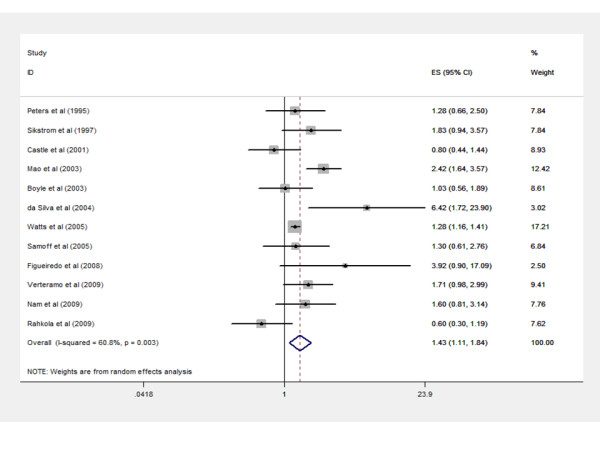
Background: Bacterial vaginosis (BV), an alteration of vaginal flora involving a decrease in Lactobacilli and predominance of anaerobic bacteria, is among the most common cause of vaginal complaints for women of childbearing age. It is well known that BV has an influence in acquisition of certain genital infections. However, association between BV and cervical human papillomavirus (HPV) infection has been inconsistent among studies. The objective of this meta-analysis of published studies is to clarify and summarize published literature on the extent to which BV is associated with cervical HPV infection. Methods: Medline and Web of Science were systematically searched for eligible publications until December 2009. Articles were selected based on inclusion and exclusion criteria. After testing heterogeneity of studies, meta-analysis was performed using random effect model. Results: Twelve eligible studies were selected to review the association between BV and HPV, including a total of 6,372 women. The pooled prevalence of BV was 32%. The overall estimated odds ratio (OR) showed a positive association between BV and cervical HPV infection (OR, 1.43; 95% confidence interval, 1.11-1.84). Conclusion: This meta-analysis of available literature resulted in a positive association between BV and uterine cervical HPV infection.
Overview
The claims and statistics of this paper haven’t been checked yet.
Free: it reads the open-access text and checks the first 5 claims that cite a source we can check. Create a free account to check every claim.
Integrity signals
Registry
Cites
Statistics
Figures
Verification
Claims the paper makes
The claims and statistics of this paper haven’t been checked yet.
Free: it reads the open-access text and checks the first 5 claims that cite a source we can check. Create a free account to check every claim.
Claims other papers make about this one
Each is checked against this paper’s own text: does it say what the citing paper says it does?
The cited source says what the claim attributes to it.
In the citing paper
“As the normal vaginal microbiota is protective against the acquisition of STI,26–29 and HIV,30 31 menstrual cups may have the potential to reduce the incidence of such infections in vulnerable girls and the spread to their partners.”
In the citing paper
“A dysbiotic or high diversity vaginal microbiota coupled with chronic subclinical inflammation, hallmarks of BV, has been correlated with higher incidence, prevalence and persistence of HPV infection (Gillet et al., 2011; Guo et al., 2012).”
From Viral Infections, the Microbiome, and Probiotics (2021) · cites this paper as Gillet et al., 2011
Self-check
Percentages, sums and reported differences re-computed from the paper’s own numbers.
The self-check needs the paper’s full text.
Citations
Cites
Bias in meta-analysis detected by a simple, graphical test
Egger, M., Smith, G. D., Schneider, M., & Minder, C. (1997) · BMJ · doi:10.1136/bmj.315.7109.629 · Cited by 56,722 · cited 1×
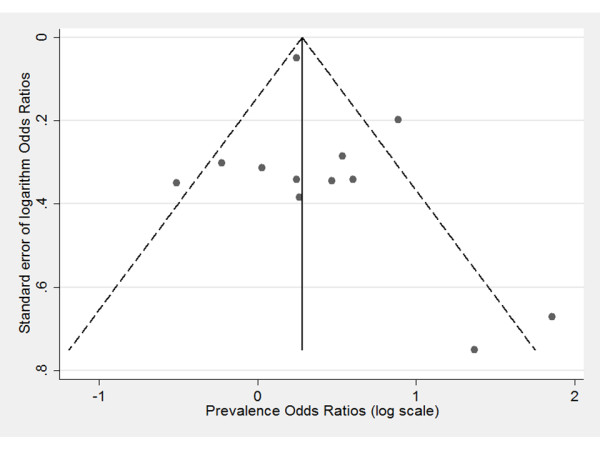
“Evidence of publication bias was ruled out by funnel plot [29] and statistically evaluated for asymmetry using the Begg rank correlation [30].”
MethodMeta-analysis in clinical trials
DerSimonian, R., & Laird, N. (1986) · Controlled Clinical Trials · doi:10.1016/0197-2456(86)90046-2 · Cited by 39,552 · cited 1×
“The resulting set of odds ratios were combined into a summary estimate of the association between BV and HPV using the random effects model of DerSimonian and Laird [28] and results were visualised in a forest plot.”
Quantifying heterogeneity in a meta‐analysis
Higgins, J. P. T., & Thompson, S. G. (2002) · Statistics in Medicine · doi:10.1002/sim.1186 · Cited by 36,763 · cited 1×
“Homogeneity of effects across studies was assessed using Cochran’s Q test [31] and quantified by Higgins and Thompson’s I2 [32].”
MethodMeta-analysis of Observational Studies in Epidemiology<SUBTITLE>A Proposal for Reporting</SUBTITLE>
Stroup, D. F. (2000) · JAMA · doi:10.1001/jama.283.15.2008 · Cited by 20,623
Operating characteristics of a rank correlation test for publication bias
Begg, C. B., & Mazumdar, M. (1994) · Biometrics · doi:10.2307/2533446 · Cited by 16,955 · cited 1×
“Evidence of publication bias was ruled out by funnel plot [29] and statistically evaluated for asymmetry using the Begg rank correlation [30].”
MethodThe combination of estimates from different experiments
Cochran, W. G. (1954) · Biometrics · doi:10.2307/3001666 · Cited by 5,380 · cited 1×
“Homogeneity of effects across studies was assessed using Cochran’s Q test [31] and quantified by Higgins and Thompson’s I2 [32].”
MethodBacterial vaginosis and HIV acquisition: A meta-analysis of published studies
Atashili, J., Poole, C., Ndumbe, P. M., Adimora, A. A., & Smith, J. S. (2008) · AIDS · doi:10.1097/qad.0b013e3283021a37 · Cited by 706 · cited 7×
“Moreover, BV has been associated with many sexually transmitted infections (STIs), including infection with Chlamydia trachomatis , Neisseria gonorrhoeae , HSV-1 and 2, and an increased risk of HIV acquisition [4,8,9].”
InfluentialNatural history and epidemiology of HPV infection and cervical cancer
Castellsagué, X. (2008) · Gynecologic Oncology · doi:10.1016/j.ygyno.2008.07.045 · Cited by 590 · cited 2×
“However, few HPV infections persist and progress to cervical cancer [11].”
BackgroundWiesenfeld, H. C., Hillier, S. L., Krohn, M. A., Landers, D. V., & Sweet, R. L. (2003) · Clinical Infectious Diseases · doi:10.1086/367658 · Cited by 546 · cited 7×
“Moreover, BV has been associated with many sexually transmitted infections (STIs), including infection with Chlamydia trachomatis , Neisseria gonorrhoeae , HSV-1 and 2, and an increased risk of HIV acquisition [4,8,9].”
InfluentialKoshiol, J., Lindsay, L., Pimenta, J. M., Poole, C., Jenkins, D., & Smith, J. S. (2008) · American Journal of Epidemiology · doi:10.1093/aje/kwn036 · Cited by 428 · cited 1×
“Persistent HPV infection is a prerequisite for progression to highgrade lesions [10].”
Background
Cited by
Items 201–300 of 359
Swanepoel, P. J., Michelow, P. M., Plessis, R. D. T. D., Proudfoot, I. G., Tarr, G. A. M., Bockel, S. L., & Swanepoel, C. J. (2012) · Cytopathology · doi:10.1111/j.1365-2303.2012.00998.x · Cited by 8
Campos, A. A. S., Leite, A. P. L., Lisboa, C. V. F., Andrade, C. C., Bezerra, A. F. D. S., Mattar, R., & de Souza, E. (2012) · Revista Brasileira Ginecologia e Obstetrícia · doi:10.1590/s0100-72032012000500004 · Cited by 8
Arul, P., Akshatha, C., & Shetty, S. (2017) · Journal of Medical Society · doi:10.4103/0972-4958.198432 · Cited by 8
Effect of Dialyzable Leukocyte Extract on chronic cervicitis in patients with HPV infection.
Acosta-Rios, M. P., Sauer-Ramírez, E., Castro-Muñoz, L. J., García-Solís, M. D. J., Gómez-García, M. D. C., Ocadiz‐Delgado, R., Martı́nez-Martı́nez, A., Monroy, V. S., la Mora, C. P.-D., Correa-Meza, B., et al. (2017) · Europe PMC (PubMed Central) · Cited by 8
Bhudia, R., Ahmad, A. S., Akpenyi, O., Whiley, A., Wilks, M., & Oliver, R. T. D. (2017) · Scientific Reports · doi:10.1038/s41598-017-13782-6 · Cited by 8
Cortés-Sarabia, K., Rodríguez-Nava, C., Medina-Flores, Y., Mata-Ruíz, O., López-Meza, J. E., Gómez-Cervantes, M. D., Parra‐Rojas, I., Illades‐Aguiar, B., Flores‐Alfaro, E., & Vences-Velázquez, A. (2020) · Applied Microbiology and Biotechnology · doi:10.1007/s00253-020-10691-z · Cited by 9
Pierro, F. D., Sampugnaro, E. G., Lomeo, G. E., Guarneri, M. F., Cusenza, S., Pivetti, A., Khan, A. P., Rabbani, F., Memon, N. M., Cazzaniga, M., et al. (2025) · Scientific Reports · doi:10.1038/s41598-025-20838-5 · Cited by 7
Museba, T. T., Howett, R., & Campbell, C. (2021) · Journal of Global Health Reports · doi:10.29392/001c.21349 · Cited by 10
Microbiota unbalance in relation to high-risk human papillomavirus cervical infection
Cherey, J. F. G., Payalef, S. N., Fleider, L. A., Reyes, A. P., Maldonado, V., Losada, M. O., Chen, X., Cardinal, L., Wang, Y., Tatti, S., et al. (2023) · International Journal of Gynecological Cancer · doi:10.1136/ijgc-2022-003760 · Cited by 8
Contribution of the Gut and Vaginal Microbiomes to Gynecological Cancers
Jayshree, R. S., & Kumar, R. V. (2019) · Springer eBooks · doi:10.1007/978-981-13-3438-2_31 · Cited by 7
Wang, F., Liu, R., Ma, Y., Wu, D.-F., Deng, L., Wang, S., Wang, G., Zhang, C.-F., & Qu, Q. (2021) · Frontiers in Medicine · doi:10.3389/fmed.2021.627355 · Cited by 7
Hallmarks of Bacterial Vaginosis
Pérez-Ibave, D. C., Burciaga-Flores, C. H., García-Mejía, X., Alcorta-Núñez, F., Solís‐Coronado, O., González-Escamilla, M., Vidal-Gutiérrez, Ó., & Garza-Rodríguez, M. L. (2025) · Diagnostics · doi:10.3390/diagnostics15091090 · Cited by 12
“Nowadays, BV is considered a condition rather than a sexually transmitted infection (STI), but it is an important risk factor for acquiring one [5,10–12].”
Rodrigues, R. C., Silva, A. R., Sousa, C., & Vale, N. (2025) · International Journal of Molecular Sciences · doi:10.3390/ijms262110635 · Cited by 7
Cervicovaginal microbiota and HPV-induced cervical cancer
Jain, A., Shrivastava, S. K., & Joy, L. (2022) · Elsevier eBooks · doi:10.1016/b978-0-323-91797-1.00010-7 · Cited by 6
Morales, C. G., Jimenez, N. R., Herbst‐Kralovetz, M. M., & Lee, N. (2022) · Medical Sciences · doi:10.3390/medsci10030052 · Cited by 6
Rates of Cervical Cancer Screening and Dysplasia Among Refugees in a Health Care Safety Net System
Fink, G. N., Abdulcadir, J., & Johnson‐Agbakwu, C. E. (2023) · Journal of Immigrant and Minority Health · doi:10.1007/s10903-023-01491-4 · Cited by 6
Klein, J. M. A., Runge, I., Pannen, A.-K., Wakuma, T., Abera, S. F., Addissie, A., Unverzagt, S., Schmitt, M., Waterboer, T., Höfler, D., et al. (2024) · ecancermedicalscience · doi:10.3332/ecancer.2024.1783 · Cited by 6
“Consequently, it has been suggested that BV may also facilitate infections with high-risk human papillomavirus (HPV) [9].”
BackgroundDelfstra, N., Uijen, A. A., Vos, M. C., Akkermans, R., Lagro‐Janssen, A. L. M., & Teunissen, D. A. M. (2023) · Family Practice · doi:10.1093/fampra/cmad005 · Cited by 7
“Gilet and colleagues 30 conducted a meta-analysis, which showed a positive association between BV and HPV. Research also shows that patients with healthy vaginal flora, dominated by Lactobacillus spp., achieved higher clearance rates of HPV. 31 Candida diagnoses were also more prevalent for the…”
BackgroundZenati, F. A., Djoudi, F., Mehelleb, D., & Madaoui, M. (2023) · Bulletin du Cancer · doi:10.1016/j.bulcan.2023.01.022 · Cited by 7
Zeng, J., Yang, S., Wang, X., Gao, Y., & Zhang, M. (2017) · Experimental and Therapeutic Medicine · doi:10.3892/etm.2017.4120 · Cited by 6
“Previous studies have focused on the association between HPV infection and gynecologic disease, and have demonstrated that numerous women with vaginitis also have HPV infection (10,11).”
Sheng, Q., Cui, X., Zhang, J., Yang, F., & Zeng, L. (2025) · International Journal of General Medicine · doi:10.2147/ijgm.s545252 · Cited by 5
“27 30 These findings directly address our primary research question: whether specific vaginal microecological features and immune markers are predictive of HPV persistence or clearance.”
Dobosz, E., Gołda, A., Kanoza, M., Kowalczuk, W., Potempa, B. A., Potempa, J., Gąsiorek, A., Madeja, N., Budziaszek, J., Mizgalska, D., et al. (2025) · mBio · doi:10.1128/mbio.00298-25 · Cited by 6
“However, a particularly significant role is played by disorders accompanied by microbial dysbiosis, such as colitis (53), bacterial vaginosis (54), and periodontitis (55), where the mucosa is significantly altered by pathogens inhabiting these niches.”
Mother to Child Transmission of HIV—Another Complication of Bacterial Vaginosis?
Watts, D. H. (2012) · JAIDS Journal of Acquired Immune Deficiency Syndromes · doi:10.1097/qai.0b013e318256941c · Cited by 5
Drozhdina, M. B. (2020) · Russian Journal of Clinical Dermatology and Venereology · doi:10.17116/klinderma202019061926 · Cited by 7
Topical aspects of etiology and prevention of cervical cancer
Leshcheva, M. Y., Astapenko, E. F., & Габбасова, Н. В. (2022) · Tumors of female reproductive system · doi:10.17650/1994-4098-2022-18-1-97-102 · Cited by 5
Nayanar, S., Kanthimathy, S. S., Kizhakkebhagam, N., Aravind, S., Parambil, N. A., & Therayangalath, B. (2020) · Cancer Research Statistics and Treatment · doi:10.4103/crst.crst_213_20 · Cited by 6
Jahufer, R., & Begum, W. (2014) · International Journal of Current Research and Review · Cited by 5
Linhares, I. M., Minis, E. E., Robial, R., & Witkin, S. S. (2019) · Elsevier eBooks · doi:10.1016/b978-0-12-815249-2.00011-7 · Cited by 6
dos Passos, E. N., Ribeiro, A. A., Tavares, S. B. D. N., de Souza, N. L. A., Batista, M. D. L. S., Filho, L. I. C., de Aquino, É. C., & Rabelo‐Santos, S. H. (2020) · Diagnostic Cytopathology · doi:10.1002/dc.24398 · Cited by 6
Brazilian Protocol for Sexually Transmitted Infections, 2020: infections causing vaginal discharge
de Carvalho, N. S., Eleutério, J., Travassos, A. G., Santana, L. B., & Miranda, A. E. (2021) · Revista da Sociedade Brasileira de Medicina Tropical · doi:10.1590/0037-8682-593-2020 · Cited by 10
“A condição também tem sido associada ao maior risco de infecção por papilomavírus humano (human papillomavirus, HPV) e lesões pré-cancerosas do colo uterino.(23) A redução de lactobacilos comensais está associada ao pH vaginal aumentado e ao crescimento da microbiota anaeróbia, com a produção de aminas (putrescina, ca…”
BackgroundWang, L., Zeng, J., Liu, H., Xu, H., Liu, Y., Luo, M., & Liu, W. (2023) · BMC Infectious Diseases · doi:10.1186/s12879-023-08659-1 · Cited by 4
“Relevant studies have confirmed that it can increase the incidence rate of HPV infection [10].”
BackgroundMicrobes in Tumoral In Situ Tissues and in Tumorigenesis
Xue, F., Han, L., Ma, S., Zhao, L., Wang, L., Zhang, K., Yin, P., Guo, L., Wei, J., & Li, Q. (2020) · Frontiers in Cellular and Infection Microbiology · doi:10.3389/fcimb.2020.572570 · Cited by 6
Meng, B., Li, G., Zeng, Z., Zheng, B., Xia, Y., Li, C., Li, M.-Y., Wang, H., Song, Y., & Yu, S. (2022) · Virology Journal · doi:10.1186/s12985-022-01908-w · Cited by 7
“The cervical microbiome has been found to be affected by HPV infection [20] and the presence of BV was reported to be associated with HPV infection and persistence [21, 22].”
BackgroundGorbunova, O. V., Zarichanska, K. V., Shcherbinska, O. S., Netskar, I., & Iarova, I. V. (2023) · Reproductive health of woman · doi:10.30841/2708-8731.5.2023.286772 · Cited by 7
Akinbo, F., & Oronsaye, I. S. (2017) · African Journal of Clinical and Experimental Microbiology · doi:10.4314/ajcem.v18i4.7 · Cited by 6
“vaginalis, a major public health imperative (31, 32, 33, 34, 35, 36).”
BackgroundGut microbiota and risk of cervical cancer: a Mendelian multivariable randomization study
Lu, L., Li, Z., Qiang, P., & Shao, Y. (2025) · Discover Oncology · doi:10.1007/s12672-025-03717-3 · Cited by 3
“Notably, anaerobic microorganisms, including Atopobium vaginae, Dialister invisus, Finegold magna, Gardnerella vaginalis, Prevotella buccalis, and Prevotella timonensis, have demonstrated carcinogenic effects [27–29].”
Advancements in the Vaginal Microenvironment and Regression of High-Risk Human Papillomavirus
He, N. S. M., Yi, C., Zeng, Q., Jing, W., & He, W. (2024) · Indian Journal of Microbiology · doi:10.1007/s12088-024-01369-5 · Cited by 4
“This sialidase can promote virulence by disrupting the protective mucosal barrier, thereby increasing susceptibility to cervical HPV infection by promoting adhesion, invasion, and eventual incorporation of HPV oncogenes into the genome of cells in the transformation zone [31].”
Onywera, H., Mbulawa, Z. Z. A., Brink, A. J., Williamson, A., & Mwapagha, L. M. (2024) · Venereology · doi:10.3390/venereology3040017 · Cited by 4
“It has been suggested that BV may facilitate HPV acquisition or reactivation by altering immunological balance within the cervical tissue [40].”
InfluentialMilanova, V., Lazarova, I., Mihaylova, K., Gomes, M., Georgieva, T., & Multmeier, J. (2025) · BMC Women s Health · doi:10.1186/s12905-025-03652-z · Cited by 3
“Evidence suggests that BV may elevate the risk of acquiring HPV [26] due to alterations in the vaginal ecosystem [17].”
An Update on the Probiotic Usage in Bacterial Vaginosis
Hattiholi, A., Tendulkar, S., & Dodamani, S. (2021) · Springer eBooks · doi:10.1007/978-981-33-6236-9_8 · Cited by 3
Kıray, E., Yalçın, S., & Kariptaş, E. (2022) · Journal of Istanbul Faculty of Medicine / İstanbul Tıp Fakültesi Dergisi · doi:10.26650/iuitfd.915299 · Cited by 4
Zhang, Q., Zhang, L., Wang, Y., Zhao, M., Chen, R., Tao, Z., Lyu, T., Huang, Z., & Liao, Q. (2019) · bioRxiv (Cold Spring Harbor Laboratory) · doi:10.1101/857052 · Cited by 4
Rosca, A. S., Chaponda, E. B., Beckers, T., de Koning, H. P., Chico, R. M., & Cools, P. (2025) · Journal of Antimicrobial Chemotherapy · doi:10.1093/jac/dkaf157 · Cited by 3
Effect of Oral Probiotics Use in HR-HPV Clearance, a Retrospective Study
Şahin, M., & Ceylan, Ö. (2025) · International Journal of Women s Health · doi:10.2147/ijwh.s539622 · Cited by 2
Linz, L., Zachau, N., Spieth, S., & Finzer, P. (2026) · Infectious Agents and Cancer · doi:10.1186/s13027-026-00734-x · Cited by 2
“Conversely, BV has been associated with an increased risk for the development of CIN [17].”
Ybaseta-Medina, J., Munive-Bendezú, R., Flores-Hernández, O., Curotto-Palomino, L., Cáceres-Bellido, F., Barrientos-Ramos, V. H., Buleje-Nuñez, C., Panay-Centeno, J. F., & Ybaseta-Soto, L. (2026) · BMC Women s Health · doi:10.1186/s12905-026-04617-6 · Cited by 2
“Women with persistent ectropion—especially when combined with other risk factors such as young age, multiple sexual partners, or bacterial vaginosis—may warrant closer follow-up and prompt colposcopic evaluation in accordance with current cervical screening recommendations [25, 26].”
The cervicovaginal microbiome: an emerging determinant of HPV infection and disease
Spurgeon, M. E. (2026) · Journal of Virology · doi:10.1128/jvi.01706-25 · Cited by 2
“Multiple meta-analyses also support positive associations between cervicovaginal dysbiosis or BV with increased risk for HPV infection (93, 118), and the presence of Lactobacillus spp. correlates with decreased detection of high-risk HPV infections (119).”
Moitry, M., Jegu, J., Avérous, G., Velten, M., Fender, M., Akladios, C. Y., & Baldauf, J. (2017) · European Journal of Obstetrics & Gynecology and Reproductive Biology · doi:10.1016/j.ejogrb.2017.07.032 · Cited by 2
Burchardt, E., Wareńczak-Florczak, Ż., Cegła, P., Piotrowski, A., Cybulski, Z., Burchardt, W., Roszak, A., & Cholewiński, W. (2021) · Diagnostics · doi:10.3390/diagnostics12010070 · Cited by 2
“It was shown that increased diversity of pathogenic Gram-negative bacteria, is associated with significantly higher rates of HPV positive cervical cancer [13].”
BackgroundHuman papillomavirus: problems and prospects for women’s reproductive health (systematic review)
Hrynevych, O. Y. (2025) · Polski Merkuriusz Lekarski · doi:10.36740/merkur202504117 · Cited by 2
Antovska, V. S., Basheska, N., Grncarova, Z., & Aleksioska, N. (2012) · Korean Journal of Obstetrics & Gynecology · doi:10.5468/kjog.2012.55.7.468 · Cited by 2
“These enzymes, like sialidases, play a role in degradation of the gel layer coating the cervical epithelium, causing micro-abrasions or alterations of epithelial cells and promoting virulence through destroying the protective mucosa barrier [14,15].”
BackgroundMarques, M. P. C., Pinto, A. C., Soares, L. C., Macedo, J. M. B., dos Santos, D. F., & Oliveira, M. A. P. (2020) · Journal of obstetrics and gynaecology research · doi:10.1111/jog.14245 · Cited by 3
“The association of BV and cervical preneoplasia is still an unsettled issue.13 A meta-analysis by Gillet et al. (2011) reported a positive association between BV and cervical HPV infection.10 The mechanisms by which the vaginal microbiome may influence HPV detection remain unknown.”
BackgroundGhaniabadi, R., Hashemi, S., Bajgiran, M. S., Javadi, S., Mohammadzadeh, N., & Masjedian, F. (2020) · Meta Gene · doi:10.1016/j.mgene.2020.100791 · Cited by 3
Impact of Age Factor in Cervical Abnormalities and Cancers Incidence in Some Iraqi Married Women
Al‐Mussawy, J. J., Faisal, A. H. M. A., Al‐Ahmer, S. D., & Qasim, A. A. (2019) · Iraqi journal of biotechnology · Cited by 3
Frick, A., Martinez, A. A., & Abdulcadir, J. (2021) · International Journal of Gynecology & Obstetrics · doi:10.1002/ijgo.13921 · Cited by 2
Chlamydia trachomatis, human papillomavirus, bacterial vaginosis and cervical neoplasia
Murta, E. F. C. (2014) · Archives of Gynecology and Obstetrics · doi:10.1007/s00404-014-3170-3 · Cited by 2
Lorenzi, N. P. C. (2020) · Digital Library of Theses and Dissertations (Universidade de São Paulo) · doi:10.11606/t.5.2020.tde-09012020-163231 · Cited by 5
Martins, B. C. T., de Camargo, K. C., Lima, J. P., Ramos, J. E. P., de Souza, C. L., Rabelo‐Santos, S. H., Saddi, V. A., & Alves, R. R. F. (2022) · Jornal Brasileiro de Doenças Sexualmente Transmissíveis · doi:10.5327/dst-2177-8264-20221216 · Cited by 1
Munne, K., Birje, S., Patil, A. D., Akula, A., Mayekar, A., Bhekare, G., Kumari, S., Babu, S., Tendulkar, L., Kerkar, S. C., et al. (2025) · Indian Journal of Dermatology Venereology and Leprology · doi:10.25259/ijdvl_1501_2024 · Cited by 1
IL-33 Participates in G. Vaginalis-Induced Bacterial Vaginosis: Involvement of Intravaginal IgA
Zhou, M., Zhou, L., Liu, J., & Yu, S. (2025) · Journal of Inflammation Research · doi:10.2147/jir.s523880 · Cited by 1
Cervico-Vaginal Microbiome Dynamics Across HPV-Driven Lesion Stages in Moroccan Women
Allali, M., Errafii, K., Fermi, R. E., Fichtali, K., Majjaoui, S. E., Ghanmi, A. E., Fazazi, H. E., Idrissi, N. A., Ghazi, B., Bakri, Y., et al. (2025) · Microorganisms · doi:10.3390/microorganisms13081884 · Cited by 1
“These factors probably enable persistent high-risk HPV infections to develop [6,7].”
Cherey, J. F. G., Payalef, S. N., Chen, X., Reyes, A. P., Maldonado, V., Losada, M. O., Wang, Y., & Perazzi, B. E. (2025) · Revista Argentina de Microbiología · doi:10.1016/j.ram.2025.11.004 · Cited by 2
“…of HPV may influence the vaginal microbial ecosystem, and the microbiome may play a significant role in susceptibility, persistence, and progression 22,54 development. determine the prevalence of infection with high-risk HPV (hr-HPV) types in different age groups; (2) to describe the hr-HPV types…”
McCullough, E., Zulaika, G., Osire, E. A., Akinyi, C., Otieno, F., Phillips‐Howard, P. A., Mehta, S. D., & Mason, L. (2026) · Frontiers in Reproductive Health · doi:10.3389/frph.2026.1817624 · Cited by 1
Chibvongodze, R., Kyama, M. C., & Muchiri, L. (2026) · Frontiers in Global Women s Health · doi:10.3389/fgwh.2026.1816885 · Cited by 1
“A significant association between BV and pooled hr-HPV infection has been reported in previous studies (5, 17, 20), but many of those findings are considered controversial because of the subjective methods used to detect BV in some of those studies.”
Chibvongodze, R., Kyama, M. C., & Muchiri, L. (2026) · Frontiers in Global Women s Health · doi:10.3389/fgwh.2026.1825375 · Cited by 1
“These findings are consistent with those of Gillet et al. and King et al., who reported that BV is a potential cofactor in HPV persistence (13, 14).”
Involvement of innate immunity in Human Papilloma Virus infection
Colín-Ferreyra, M. D. C., Domínguez, V., Romero-Figueroa, M. D. S., & Zerón, H. M. (2014) · Institutional Repository (Universidad Autónoma del Estado de México) · Cited by 1
Stemmet, M. (2012) · University of the Western Cape Electronic Theses and Dissertations Repository (University of the Western Cape) · Cited by 1
Microbiota and its therapeutic implications in reproductive health and diseases
Singh, P., & Srivastava, R. K. (2023) · Elsevier eBooks · doi:10.1016/b978-0-323-99336-4.00003-3 · Cited by 5
Saúde e higiene menstrual no Brasil: Uma revisão de literatura
de Campos, D. D., Correa, V. E. D., de Sousa, L. B., ALMEIDA, A. F. D., Baia, A. C. G., Martins, A. V., Moura, L. M., sobrinho, V. C. A., Araujo, F. M. S., Navarro, A. M., et al. (2023) · Research Society and Development · doi:10.33448/rsd-v12i9.42700 · Cited by 3
Cheng, X., Hu, L., Ma, J., Wang, Y., & Su, J. (2024) · Clinical and Experimental Obstetrics & Gynecology · doi:10.31083/j.ceog5104094 · Cited by 3
Lyulko, O. O., & Morhuntsov, V. O. (2024) · Zaporozhye Medical Journal · doi:10.14739/2310-1210.2024.4.306185 · Cited by 2
“Отже, перед фахівцями постає кілька завдань, що мають типову клінічну складову – щодо лікування пато - логії, додатковий аспект – щодо факторів соціального, організаційного ґенезу, які обтяжують перебіг захворю - вання [ 10,11,12,13,14,15,16,17,18].”
Filaggrin, Human Papillomavirus, and the Cervix
Fage, S. W., Iftner, T., Thyssen, J. P., & Kjær, S. K. (2014) · Springer eBooks · doi:10.1007/978-3-642-54379-1_33 · Cited by 1
Martínez, J. F. Z., López, L., Otálvaro, A. F. T., Upegui, L. J. G., González, B. J. D., Vergara, S. M. V., Vergara, S. M. V., & López, Y. M. (2015) · Archivos de Medicina (Manizales) · doi:10.30554/archmed.15.2.805.2015 · Cited by 1
Pérez, D. L. M., Ángel‐Müller, E., Rodriguez-Hernandez, A. E., Parra, A. I. R., Tolosa, J. E., & Gaitán‐Duarte, H. (2015) · Revista Colombiana de Obstetricia y Ginecología · doi:10.18597/rcog.292 · Cited by 7
da Silva, J. I., Rodrigues, E. G. D. A., Barros, J. M. R., da Silva, R. C. G., & Peres, A. L. (2018) · Arquivos de Ciências da Saúde · doi:10.17696/2318-3691.25.2.2018.1033 · Cited by 1
Taran, O. A., Булавенко, О. В., Konkov, D. G., & Lobastova, T. V. (2018) · Reproductive Endocrinology · doi:10.18370/2309-4117.2018.44.16-20 · Cited by 1
Kostyria, O. V., Голодок, Л. П., & Скляр, Т. В. (2020) · Bulletin of Problems Biology and Medicine · doi:10.29254/2077-4214-2020-1-155-277-282 · Cited by 1
Barbosa, I. R., Rodrigues, D. S., Ferreira, L. H. A., Borges, L. L., & Ribeiro, A. A. (2021) · Revista Brasileira de Cancerologia · doi:10.32635/2176-9745.rbc.2021v67n1.1080 · Cited by 1
Behboodi, R., Hashemi, S., Javadi, S., Ghaniabadi, R., Mohammadzadeh, N., & Razavi, S. (2021) · Reviews in Medical Microbiology · doi:10.1097/mrm.0000000000000257 · Cited by 1
“The relative abundance of vaginal microbiota obtain between vaginal microbiota and HPV infection [13,14], and this makes our study more highlighted.”
BackgroundCondyloma acuminata overlapping bacterial vaginosis under steroid therapy for SLE
Eliza, F., Damayanti, D., Misalina, K., Widyantari, S., Hidayati, A. N., & Murtiastutik, D. (2022) · International Journal of Health Sciences · doi:10.53730/ijhs.v6ns9.12180 · Cited by 1
“infection has been inconsistent across research (Gillet et al., 2011).”
BackgroundResultInfluentialCorrelation between Bacterial Vaginosis, HPV Infection and Cervical Lesions
夏, 方. (2023) · Advances in Clinical Medicine · doi:10.12677/acm.2023.133558 · Cited by 1
Xu, Y., & Jiang, A. (2023) · SSRN Electronic Journal · doi:10.2139/ssrn.4597986 · Cited by 1
Alam, M. N., Bhardwaj, A., Hoda, M. Q., & Gupta, C. (2015) · International Journal of Pharmacy and Pharmaceutical Sciences
Hiraku, Y. (2012) · InTech eBooks · doi:10.5772/27875
“Recently, meta-analysis showed that bacterial vaginosis is significantly and positively associated with cervical HPV infection (Gillet, et al., 2011), supporting the hypothesis that cervical inflammation is involved in the pathogenesis of HPV-induced cancer.”
Biopsia de cérvix: serie de casos
Rivas-Perdomo, É. E. (2013) · DOAJ (DOAJ: Directory of Open Access Journals)
Yuniarti, L., Purbaningsih, W., Fauzan, A., Mualifa, U., Ananto, L., Sad, T., & Tejasari, M. (2016)
Tariq, A. (2022) · Digital Archive @ GSU · doi:10.57709/10103209
CLINICAL CORRELATION AND LABORATORY DIAGNOSIS OF BACTERIAL VAGINOSIS
Malpekar, K., Vivek, K., & Shastri, J. S. (2016) · Journal of Evolution of Medical and Dental Sciences · doi:10.14260/jemds/2016/948
Recent Progress in Diagnosis Methods for Latent Tuberculosis Infection and Its Clinical Applications
Zhou, L. (2015) · Infection International/Infection International (Electronic Edition) · doi:10.1515/ii-2017-0110
Association Between Bacterial Vaginosis and Squamous Intraepithelial Lesions of the Uterine Cervix
Dabeski, D., Danilovski, D., Antovska, V. S., Basheska, N., Stojovski, M., Popovska, Z., Buklioska, A., & Avramovska, M. (2016) · Macedonian Medical Review · doi:10.1515/mmr-2016-0003
“Bacterial vaginosis can be associated with some sexually transmitted infections, such as infection with Chlamydia trachomatis, Neisseria gonorrhoeae, with the Human Immunodeficiency Virus and Human papilloma virus [6-8].”
BackgroundHuman papillomavirus infection and immunization strategies
Benga, A. T., & Preda, M. (2018) · Infectio ro · doi:10.26416/inf.54.2.2018.1830
Fernandez-Aristi, A. R. (2018) · Journal of Gynecology and Womens Health · doi:10.19080/jgwh.2018.10.555789
Oboma, Y. I. (2020) · Biomedical Journal of Scientific & Technical Research · doi:10.26717/bjstr.2020.26.004296
“[41] performed a meta-analysis, in which twelve eligible studies were selected to review the association between BV and HPV infection and a strong relationship was established [41].”
BackgroundMethodResultAruna, P., & Arora, K. (2020) · Asian Journal of Medical Research · doi:10.47009/ajmr.2020.9.1.pt1
“, (2011),([22]) have also reported a positive association between BV and presence of CIN .”
BackgroundHedayat, P., Derakhshan, M., & Bazzal, R. (2021) · Journal of Preventive Epidemiology · doi:10.34172/jpe.2021.22
“In 2011, Gillet et al conducted a study showing this fact is reachable through HPV infection, meaning that altered vaginal microbiota predisposes patients to HPV infection as bacterial vaginosis is a link between HPV infection and altered microbiota of the vagina (15).”
BackgroundThe effect of vaginal probiotic therapy on the outcome of papillomavirus infection
Oleynik, V. V., Александровна, К. Е., & Av, S. (2022) · Bulletin of Siberian Medicine · doi:10.20538/1682-0363-2021-4-11-17 · Cited by 1
Pattern of cervical papsmear cytology- Our experience
Bai, S., Divya, J., Subramanian, V., & Mahendranath, P. (2022) · Indian Journal of Pathology and Oncology · doi:10.18231/j.ijpo.2022.007
A microbiota vaginal e a persistência da infecção pelo papilomavírus humano
Scanagatta, V. C., Ferraz, A. L., Costa, H. V. C. C., Gama, A. V., & Peres, M. C. T. D. S. (2022) · Research Society and Development · doi:10.33448/rsd-v11i6.29402 · Cited by 1
Metadata
- Authors
- Gillet, E., Meys, J. F., Verstraelen, H., Bosire, C., De Sutter, P., Temmerman, M., & Broeck, D. V.
- Affiliations
- Vrije Universiteit Brussel (BE)
- Ghent University (BE)
- Ghent University Hospital (BE)
- Corresponding author
- Broeck, Davy Vanden
- Venue
- BMC Infectious Diseases
- Published
- 2011-01-11
- Volume
- 11
- Issue
- 1
- Pages
- 10-10
- ISSN
- 1471-2334 (ISSN-L)
- PMC
- PMC3023697
- OpenAlex
- W2065342949
- Cited by
- 354
- References
- 51
- Citations by year
- 2026: 21 · 2025: 27 · 2024: 34 · 2023: 32 · 2022: 42 · 2021: 28 · 2020: 29 · 2019: 19 · 2018: 22 · 2017: 17 · 2016: 21 · 2015: 19 · 2014: 12 · 2013: 16 · 2012: 13
- FWCI
- 1.62
- Type
- journal article
- Language
- en
- Open access
- gold
- doi.org
- Licence
- Locations
- BMC Infectious Diseases (publishedVersion, cc-by)
- PubMed Central (publishedVersion, cc-by)
- PubMed (publishedVersion)
- Ghent University Academic Bibliography (Ghent University) (submittedVersion, other-oa)
- eCommons - AKU (Aga Khan University) (submittedVersion)
- DOAJ (DOAJ: Directory of Open Access Journals) (submittedVersion, cc-by-sa)
- VUBIR (Vrije Universiteit Brussel) (submittedVersion)
- Funders
- Fonds Wetenschappelijk Onderzoek
- Vlaamse regering
- Topics
- Life Sciences › Immunology and Microbiology › Microbiology › Reproductive tract infections research
- Health Sciences › Medicine › Epidemiology › Cervical Cancer and HPV Research
- Health Sciences › Medicine › Obstetrics and Gynecology › Gynecological conditions and treatments
- Keywords
- bacterial vaginosis, human papillomavirus, cervical HPV infection, vaginal microbiota, lactobacilli, anaerobic bacteria, HPV acquisition, women of reproductive age
- MeSH terms
- Adolescent, Adult, Aged, Female, Humans, Middle Aged, Odds Ratio, Vaginosis, Bacterial, Papillomaviridae, Papillomavirus Infections, Young Adult
About these checks
Registry, retraction, Cites and statistics results are computed, not judged, with one exception: a printed reference that no index lists is read once by a model before it counts as a citation error. Claims are extracted by a model and kept only when their quote appears verbatim in the text; each cited source is then checked, with a model’s help, for whether it says what the claim relies on. Those verdicts can be wrong — read the claim’s quote and the cited source before relying on one.
Statistics and arithmetic are recomputed, not judged.
Confidence bands are shown only for fields calibrated on our annotated test set. None is calibrated yet, so no band is shown.
What counts as a claim ›How we measure confidence ›How we check this ›
Are you an author, or do you see a problem with this page? Request a review
Data sources
Bibliographic data: Semantic Scholar, OpenAlex, Crossref.
Contains information from the Semantic Scholar Academic Graph Datasets, made available under the ODC Attribution License (ODC-BY 1.0).
Semantic Scholar’s data is described in: Kinney, R., et al. (2023). The Semantic Scholar Open Data Platform. arXiv:2301.10140.
