

Sequencing of NOTCH1, GATA5, TGFBR1 and TGFBR2genes in familial cases of bicuspid aortic valve
Open accessThe DOI matches its Crossref record; 29 of the 31 references it cites were found in a registry or an index.
Abstract
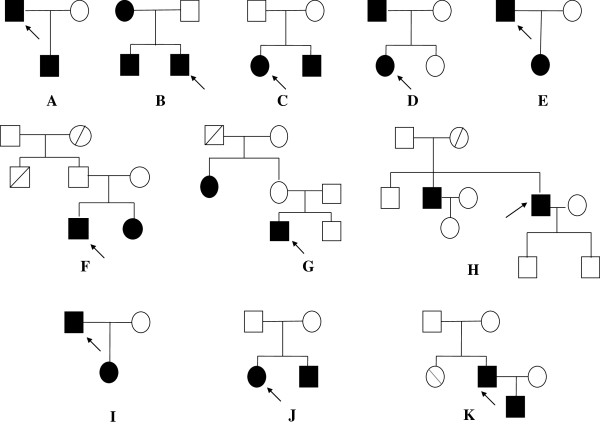
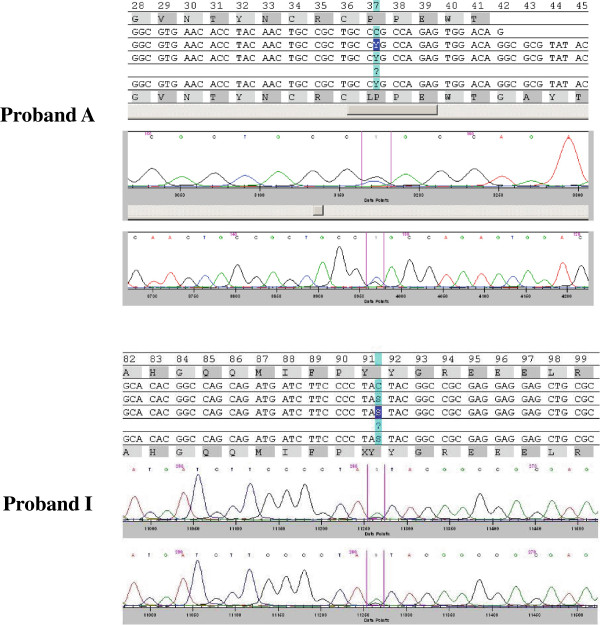
Background: The purpose of our study was to investigate the potential contribution of germline mutations in NOTCH1, GATA5 and TGFBR1 and TGFBR2 genes in a cohort of Italian patients with familial Bicuspid Aortic Valve (BAV). Methods: All the coding exons including adjacent intronic as well as 5′ and 3′ untranslated (UTR) sequences of NOTCH1, GATA5, TGFBR1 and TGFBR2 genes were screened by direct gene sequencing in 11 index patients (8 males; age = 42 ± 19 years) with familial BAV defined as two or more affected members. Results: Two novel mutations, a missense and a nonsense mutation (Exon 5, p.P284L; Exon 26, p.Y1619X), were found in the NOTCH1 gene in two unrelated families. The mutations segregated with the disease in these families, and they were not found on 200 unrelated chromosomes from ethnically matched controls. No pathogenetic mutation was identified in GATA5, TGFBR1 and TGFBR2 genes. Conclusions: Two novel NOTCH1 mutations were identified in two Italian families with BAV, highlighting the role of a NOTCH1 signaling pathway in BAV and its aortic complications. These findings are of relevance for genetic counseling and clinical care of families presenting with BAV. Future studies are needed in order to unravel the still largely unknown genetics of BAV.
Overview
The claims and statistics of this paper haven’t been checked yet.
Free: it reads the open-access text and checks the first 5 claims that cite a source we can check. Create a free account to check every claim.
Integrity signals
Registry
Cites
Statistics
Figures
Verification
Claims the paper makes
The claims and statistics of this paper haven’t been checked yet.
Free: it reads the open-access text and checks the first 5 claims that cite a source we can check. Create a free account to check every claim.
Claims other papers make about this one
Each is checked against this paper’s own text: does it say what the citing paper says it does?
The source backs part of the claim, not all of it — or backs it for a different population, condition or comparison.
In the citing paper
“NOTCH1 mutations explain approximately 4% of sporadic cases of AS that occurs in the context of a bicuspid aortic valve148;149.”
From Calcific aortic stenosis (2016) · cites this paper as [148]
Experimental — accuracy not yet measured
Self-check
Percentages, sums and reported differences re-computed from the paper’s own numbers.
The self-check needs the paper’s full text.
Citations
Cites
Bonow, R. O., Carabello, B. A., Chatterjee, K., de Leon, A. C., Faxon, D. P., Freed, M. D., Gaasch, W. H., Lytle, B. W., Nishimura, R. A., O'Gara, P. T., et al. (2008) · Journal of the American College of Cardiology · doi:10.1016/j.jacc.2008.05.007 · Cited by 2,257
Warnes, C. A., Williams, R. G., Bashore, T. M., Child, J. S., Connolly, H. M., Dearani, J. A., del Nido, P., Fasules, J. W., Graham, T. P., Hijazi, Z. M., et al. (2008) · Circulation · doi:10.1161/circulationaha.108.190811 · Cited by 2,066
Mutations in NOTCH1 cause aortic valve disease
Garg, V., Muth, A. N., Ransom, J. F., Schluterman, M. K., Barnes, R., King, I. N., Grossfeld, P. D., & Srivastava, D. (2005) · Nature · doi:10.1038/nature03940 · Cited by 1,509 · cited 2×
“H1505del) in two families represented the first demonstration of NOTCH1 germline mutations as a cause of BAV and severe valve calcification in non-syndromic autosomal-dominant human pedigrees [10].”
BackgroundTimmerman, L. A., Grego-Bessa, J., Raya, A., Bertrán, E., Pérez-Pomares, J. M., Díez, J., Aranda, S., Palomo, S., McCormick, F., Izpisúa-Belmonte, J. C., et al. (2004) · Genes & Development · doi:10.1101/gad.276304 · Cited by 985 · cited 1×
“Murine model studies indicate that Notch signaling promotes the epithelial-to mesenchyme transition that gives rise to the primordial cardiac valve, which later is sculpted into mature valves [23].”
BackgroundIncidence of Aortic Complications in Patients With Bicuspid Aortic Valves
Michelena, H. I., Khanna, A. D., Mahoney, D., Margaryan, E., Topilsky, Y., Suri, R. M., Eidem, B., Edwards, W. D., Sundt, T. M., & Enriquez-Sarano, M. (2011) · JAMA · doi:10.1001/jama.2011.1286 · Cited by 825
Bicuspid aortic valve is heritable
Cripe, L., Andelfinger, G., Martin, L. J., Shooner, K., & Benson, D. W. (2004) · Journal of the American College of Cardiology · doi:10.1016/j.jacc.2004.03.050 · Cited by 635 · cited 1×
“Clinical studies have reported high heritability in families of patients with BAV [5-7], suggesting a Mendelian pattern of inheritance and the need for echocardiography screening in first-degree relatives of patients with BAV [8].”
BackgroundHuntington, K., Hunter, A. G. W., & Chan, K.-L. (1997) · Journal of the American College of Cardiology · doi:10.1016/s0735-1097(97)00372-0 · Cited by 405 · cited 1×
“Clinical studies have reported high heritability in families of patients with BAV [5-7], suggesting a Mendelian pattern of inheritance and the need for echocardiography screening in first-degree relatives of patients with BAV [8].”
BackgroundCellular and molecular mechanisms of thoracic aortic aneurysms
El-Hamamsy, I., & Yacoub, M. H. (2009) · Nature Reviews Cardiology · doi:10.1038/nrcardio.2009.191 · Cited by 330 · cited 1×
“This is particularly important in light of evidence showing that TGFβ plays an important role in vascular remodeling and alterations in TGFβ signaling activity might enhance matrix degradation [27,28].”
BackgroundPathogenesis of Calcific Aortic Valve Disease: A Disease Process Comes of Age (and a Good Deal More)
O’Brien, K. D. (2006) · Arteriosclerosis, Thrombosis, and Vascular Biology · doi:10.1161/01.atv.0000227513.13697.ac · Cited by 295
Warnes, C. A., Williams, R. G., Bashore, T. M., Child, J. S., Connolly, H. M., Dearani, J. A., del Nido, P., Fasules, J. W., Graham, T. P., Hijazi, Z. M., et al. (2008) · Journal of the American College of Cardiology · doi:10.1016/j.jacc.2008.10.002 · Cited by 286
Cited by
Lindman, B. R., Clavel, M.-A., Mathieu, P., Iung, B., Lancellotti, P., Otto, C. M., & Pibarot, P. (2016) · Nature Reviews Disease Primers · doi:10.1038/nrdp.2016.6 · Cited by 982
Pierpont, M. E., Brueckner, M., Chung, W. K., Garg, V., Lacro, R. V., McGuire, A. L., Mital, S., Priest, J. R., Pu, W. T., Roberts, A., et al. (2018) · Circulation · doi:10.1161/cir.0000000000000606 · Cited by 654
A Typical Immune T/B Subset Profile Characterizes Bicuspid Aortic Valve: In an Old Status?
Balistreri, C. R., Buffa, S., Allegra, A., Pisano, C., Ruvolo, G., Colonna-Romano, G., Lio, D., Mazzesi, G., Schiavon, S., Greco, E., et al. (2018) · Oxidative Medicine and Cellular Longevity · doi:10.1155/2018/5879281 · Cited by 363
Notch and interacting signalling pathways in cardiac development, disease, and regeneration
MacGrogan, D., Münch, J., & de la Pompa, J. L. (2018) · Nature Reviews Cardiology · doi:10.1038/s41569-018-0100-2 · Cited by 287
Theodoris, C. V., Li, M., White, M. P., Liu, L., He, D., Pollard, K. S., Bruneau, B. G., & Srivastava, D. (2015) · Cell · doi:10.1016/j.cell.2015.02.035 · Cited by 210
“Recent studies identified N1 mutations in additional familial cases of BAV and CAVD, as well as 4% of sporadic cases, underscoring the importance of N1 in this disease (Foffa et al., 2013; Mohamed et al., 2006).”
BackgroundKerstjens‐Frederikse, W. S., van de Laar, I. M. B. H., Vos, Y. J., Verhagen, J. M. A., Berger, R. M. F., Lichtenbelt, K. D., Wassink‐Ruiter, J. S. K., van der Zwaag, P. A., Sarvaas, G. J. D. M., Bergman, K. A., et al. (2016) · Genetics in Medicine · doi:10.1038/gim.2015.193 · Cited by 161
“15,31–34 : two from a cohort of 53 patients with HLHS 33 and one from a cohort of 11 patients with familial BAV.”
InfluentialProtein-altering and regulatory genetic variants near GATA4 implicated in bicuspid aortic valve
Yang, B., Zhou, W., Jiao, J., Nielsen, J. B., Mathis, M. R., Heydarpour, M., Lettre, G., Folkersen, L., Prakash, S., Schurmann, C., et al. (2017) · Nature Communications · doi:10.1038/ncomms15481 · Cited by 123
The molecular mechanisms of cardiac development and related diseases
Li, Y., Du, J., Deng, S., Liu, B., Jing, X., Yan, Y., Liu, Y., Wang, J., Zhou, X., & She, Q. (2024) · Signal Transduction and Targeted Therapy · doi:10.1038/s41392-024-02069-8 · Cited by 128
Genetics in bicuspid aortic valve disease: Where are we?
Bravo-Jaimes, K., & Prakash, S. K. (2020) · Progress in Cardiovascular Diseases · doi:10.1016/j.pcad.2020.06.005 · Cited by 106
Genetics of bicuspid aortic valve aortopathy
Andreassi, M. G., & Corte, A. D. (2016) · Current Opinion in Cardiology · doi:10.1097/hco.0000000000000328 · Cited by 115
“A missense mutation in transforming growth factor-beta receptor 2 gene (TGFBR2) was found in a patient with BAV and aortic aneurysm [43], but no mutations were found in either TGFBR1 or TGFBR2 in patients with familial and sporadic BAV disease in earlier [44,45] and subsequent studies [38].”
BackgroundSelf-citationGillis, E., Kumar, A. A., Luyckx, I., Preuß, C., Cannaerts, E., van de Beek, G., Wieschendorf, B., Alaerts, M., Bolar, N. A., Vandeweyer, G., et al. (2017) · Frontiers in Physiology · doi:10.3389/fphys.2017.00400 · Cited by 119
“(Mohamed et al., 1797; Garg et al., 2005; McKellar et al., 2007; Foffa et al., 2013) and/or mice (Lee et al., 2000; Bosse et al., 2013) revealed borderline significance for protection from BAV/TAA (p = 0.05 and p = 0.06, respectively).”
BackgroundInfluentialNetwork-based screen in iPSC-derived cells reveals therapeutic candidate for heart valve disease
Theodoris, C. V., Zhou, P., Liu, L., Zhang, Y., Nishino, T., Huang, Y., Kostina, A., Ranade, S. S., Gifford, C. A., Uspenskiy, V., et al. (2021) · Science · doi:10.1126/science.abd0724 · Cited by 105
Congenital Heart Disease: The Crossroads of Genetics, Epigenetics and Environment
Vecoli, C., Pulignani, S., Foffa, I., & Andreassi, M. G. (2014) · Current Genomics · doi:10.2174/1389202915666140716175634 · Cited by 113
“NOTCH1 mutations have been associated with dominantly inherited BAV [33-36], and, more recently, also with left ventricular outflow tract malformations [36, 37].”
BackgroundSelf-citationGATA5 loss-of-function mutations associated with congenital bicuspid aortic valve
SHI, L.-M., TAO, J.-W., QIU, X.-B., WANG, J., YUAN, F., XU, L., LIU, H., LI, R.-G., XU, Y.-J., WANG, Q., et al. (2014) · International Journal of Molecular Medicine · doi:10.3892/ijmm.2014.1700 · Cited by 95
“Foffa and colleagues screened by direct sequencing all the coding exons including adjacent intronic as well as 5'- and 3'-untranslated of GATA5 in a cohort of 11 index patients with familial BAV, however, no pathogenetic mutation was identified in GATA (21).”
Rare GATA5 sequence variants identified in individuals with bicuspid aortic valve
Bonachea, E. M., Chang, S., Zender, G. A., LaHaye, S., Fitzgerald‐Butt, S. M., McBride, K. L., & Garg, V. (2014) · Pediatric Research · doi:10.1038/pr.2014.67 · Cited by 94
Role of Noncanonical Wnt Signaling Pathway in Human Aortic Valve Calcification
Albanese, I., Yu, B., Kindi, H. N. A., Barratt, B., Ott, L. C., Al-Refai, M., de Varennes, B., Shum‐Tim, D., Cerruti, M., Gourgas, O., et al. (2016) · Arteriosclerosis Thrombosis and Vascular Biology · doi:10.1161/atvbaha.116.308394 · Cited by 90
Pathogenic Mechanisms of Bicuspid Aortic Valve Aortopathy
Yassine, N. M., Shahram, J. T., & Body, S. C. (2017) · Frontiers in Physiology · doi:10.3389/fphys.2017.00687 · Cited by 90
“Human BAV has been associated with rare, but highly penetrant, exonal variants in NOTCH1 (Garg et al., 2005; Mohamed et al., 2006; Foffa et al., 2013; Dargis et al., 2016), AXIN1 (Wooten et al., 2010), EGFR (Dargis et al., 2016), ENG (Wooten et al., 2010), GATA5 (Padang et al., 2012; Bonachea et…”
BackgroundDevelopmental Mechanisms of Aortic Valve Malformation and Disease
Wu, B., Wang, Y., Xiao, F., Butcher, J. T., Yutzey, K. E., & Zhou, B. (2016) · Annual Review of Physiology · doi:10.1146/annurev-physiol-022516-034001 · Cited by 93
Theis, J. L., Hrstka, S., Evans, J. M., O’Byrne, M. M., de Andrade, M., O’Leary, P., Nelson, T. J., & Olson, T. M. (2015) · Human Genetics · doi:10.1007/s00439-015-1582-1 · Cited by 85
“In contrast, three were unreported loss of function mutations, including an inherited nonsense mutation in two family members with BAV (Foffa et al. 2014) and de novo frameshift and splice site mutations in two unrelated probands with HLHS (Iascone et al. 2012).”
BackgroundResultInfluentialGuauque-Olarte, S., Droit, A., Tremblay-Marchand, J., Gaudreault, N., Kalavrouziotis, D., Dagenais, F., Seidman, J. G., Body, S. C., Pibarot, P., Mathieu, P., et al. (2016) · Physiological Genomics · doi:10.1152/physiolgenomics.00041.2016 · Cited by 82
“Specific polymorphisms in NOTCH1 were detected in families affected with BAV and left ventricle outflow tract abnormalities (13, 15).”
BackgroundGiusti, B., Sticchi, E., Cario, R. D., Magi, A., Nistri, S., & Pepe, G. (2017) · Frontiers in Physiology · doi:10.3389/fphys.2017.00612 · Cited by 95
“Further evidences of a NOTCH1 haploinsufficiency as possible cause of aortic valve disease were provided by shortly subsequent studies in which targeted mutational analyses were performed, allowing the identification of not previously described missense mutations in patients with BAV and/or aortic aneurysms (Mohamed e…”
BackgroundGenetics of Valvular Heart Disease
LaHaye, S., Lincoln, J., & Garg, V. (2014) · Current Cardiology Reports · doi:10.1007/s11886-014-0487-2 · Cited by 83
The genetic basis for aortic aneurysmal disease
Saratzis, A. N., & Bown, M. J. (2014) · Heart · doi:10.1136/heartjnl-2013-305130 · Cited by 77
Embryonic Development of the Bicuspid Aortic Valve
Martin, P., Kloesel, B., Norris, R. A., Lindsay, M. E., Milan, D. J., & Body, S. C. (2015) · Journal of Cardiovascular Development and Disease · doi:10.3390/jcdd2040248 · Cited by 82
“3) [15, 16, 122, 123], FBN1 (15q21.”
Identification of Gender-Specific Genetic Variants in Patients With Bicuspid Aortic Valve
Dargis, N., Lamontagne, M., Gaudreault, N., Sbarra, L., Henry, C., Pîbarot, P., Mathieu, P., & Bossé, Y. (2015) · The American Journal of Cardiology · doi:10.1016/j.amjcard.2015.10.058 · Cited by 76
Bicuspid Aortic Valve: a Review with Recommendations for Genetic Counseling
Freeze, S. L., Landis, B. J., Ware, S. M., & Helm, B. M. (2016) · Journal of Genetic Counseling · doi:10.1007/s10897-016-0002-6 · Cited by 73
“Foffa et al. (2013) identified mutations in NOTCH1 in a small cohort of 11 patients with familial BAV (defined as 2 or more affected family members) but did not identify mutations in GATA5, TGFBR1 or TGFBR2 (other genes with hypothesized roles in isolated BAV).”
BackgroundEtiology of Valvular Heart Disease: Genetic and Developmental Origins
Lincoln, J., & Garg, V. (2014) · Circulation Journal · doi:10.1253/circj.cj-14-0510 · Cited by 74
A Decade of Discovery in the Genetic Understanding of Thoracic Aortic Disease
Andelfinger, G., Loeys, B., & Dietz, H. (2015) · Canadian Journal of Cardiology · doi:10.1016/j.cjca.2015.10.017 · Cited by 72
Bonachea, E. M., Zender, G. A., White, P., Corsmeier, D., Newsom, D. L., Fitzgerald‐Butt, S. M., Garg, V., & McBride, K. L. (2014) · BMC Medical Genomics · doi:10.1186/1755-8794-7-56 · Cited by 68
“NOTCH1 and GATA5 are the only genes that have been linked to bicuspid aortic valve in humans, yet variants in these genes are present in only a minority of individuals with BAV [8-14].”
BackgroundGenetic abnormalities in bicuspid aortic valve root phenotype: preliminary results†
Girdauskas, E., Geist, L., Disha, K., Kazakbaev, I., Groß, T., Schulz, S., Ungelenk, M., Kuntze, T., Reichenspurner, H. C., & Kurth, I. (2017) · European Journal of Cardio-Thoracic Surgery · doi:10.1093/ejcts/ezx065 · Cited by 60
Overlapping but distinct roles for NOTCH receptors in human cardiovascular disease
Meester, J., Verstraeten, A., Alaerts, M., Schepers, D., Laer, L. V., & Loeys, B. (2018) · Clinical Genetics · doi:10.1111/cge.13382 · Cited by 59
Pathophysiology of valvular heart disease
ZENG, Y., Sun, R., Li, X., Liu, M., Chen, S., & Zhang, P. (2016) · Experimental and Therapeutic Medicine · doi:10.3892/etm.2016.3048 · Cited by 63
“Normal aortic valve develops until there are three cusps, whereas in BAV disease there is a fusion of two of the leaflets during development, leading to significant morbidity primarily through valve calcification.”
InfluentialHelle, E., Córdova‐Palomera, A., Ojala, T. H., Saha, P., Potiny, P., Gustafsson, S., Ingelsson, E., Bamshad, M. J., Nickerson, D. A., Chong, J. X., et al. (2018) · Genetic Epidemiology · doi:10.1002/gepi.22176 · Cited by 39
Doppler, C., Arnhard, K., Dumfarth, J., Heinz, K., Meßner, B., Stern, C., Koal, T., Klavins, K., Danzl, K., Pitterl, F., et al. (2017) · PLoS ONE · doi:10.1371/journal.pone.0176727 · Cited by 35
Presti, F. L., Guzzardi, D. G., Bancone, C., Fedak, P. W. M., & Corte, A. D. (2020) · Progress in Cardiovascular Diseases · doi:10.1016/j.pcad.2020.06.009 · Cited by 33
Bicuspid Aortic Valve: Unlocking the Morphogenetic Puzzle
Longobardo, L., Jain, R., Carerj, S., Zito, C., & Khandheria, B. K. (2016) · The American Journal of Medicine · doi:10.1016/j.amjmed.2016.03.009 · Cited by 37
Chronic inflammation: A key role in degeneration of bicuspid aortic valve
Manno, G., Bentivegna, R., Morreale, P., Nobile, D., Santangelo, A., Novo, S., & Novo, G. (2019) · Journal of Molecular and Cellular Cardiology · doi:10.1016/j.yjmcc.2019.03.013 · Cited by 31
Musfee, F. I., Guo, D., Pinard, A., Hostetler, E. M., Blue, E., Nickerson, D. A., Bamshad, M. J., Milewicz, D. M., & Prakash, S. K. (2020) · Molecular Genetics & Genomic Medicine · doi:10.1002/mgg3.1406 · Cited by 30
“%) in patients with heritable thoracic aortic aneurysms predisposing to acute aortic dissections (HTAD) (Foffa et al., 2013).”
BackgroundYasuhara, J., Schultz, K. B., Bigelow, A. M., & Garg, V. (2023) · Frontiers in Cardiovascular Medicine · doi:10.3389/fcvm.2023.1142707 · Cited by 30
Edwards, W., Greco, T. M., Miner, G. E., Barker, N. K., Herring, L. E., Cohen, S., Cristea, I. M., & Conlon, F. L. (2023) · Developmental Cell · doi:10.1016/j.devcel.2023.04.011 · Cited by 22
Bicuspid aortic valve syndrome: a multidisciplinary approach for a complex entity
Martín, M., Lorca, R., Rozado, J., Álvarez-Cabo, R., Calvo, J., Pascual, I., Cigarrán, H., Rodríguez, I., & Morís, C. (2017) · Journal of Thoracic Disease · doi:10.21037/jtd.2017.05.11 · Cited by 24
“Following this study, mutations in NOTCH1 were described among patients with sporadic BAV and concomitant TAAs in several subsequent studies (34).”
BackgroundBicuspid Aortic Valve: Role of Multiple Gene Variants in Influencing the Clinical Phenotype
Sticchi, E., Cario, R. D., Magi, A., Giglio, S., Provenzano, A., Nistri, S., Pepe, G., & Giusti, B. (2018) · BioMed Research International · doi:10.1155/2018/8386123 · Cited by 21
Kalayinia, S., Maleki, M., Mahdavi, M., & Mahdieh, N. (2019) · Journal of Clinical Laboratory Analysis · doi:10.1002/jcla.23147 · Cited by 22
MiR-145 expression and rare NOTCH1 variants in bicuspid aortic valve-associated aortopathy
Girdauskas, E., Petersen, J., Neumann, N., Ungelenk, M., Kurth, I., Reichenspurner, H. C., & Zeller, T. (2018) · PLoS ONE · doi:10.1371/journal.pone.0200205 · Cited by 19
Girdauskas, E., Petersen, J., Neumann, N., Groß, T., Naito, S., Hillebrand, M., Reichenspurner, H. C., Blankenberg, S., & Zeller, T. (2018) · Interactive Cardiovascular and Thoracic Surgery · doi:10.1093/icvts/ivy033 · Cited by 18
Bicuspid aortic valve-associated aortopathy: update on biomarkers
Maredia, A., Greenway, S. C., Verma, S., & Fedak, P. W. M. (2017) · Current Opinion in Cardiology · doi:10.1097/hco.0000000000000481 · Cited by 19
Gillis, E., Kumar, A. A., Luyckx, I., Preuß, C., Cannaerts, E., van de Beek, G., Wieschendorf, B., Alaerts, M., Bolar, N. A., Vandeweyer, G., et al. (2017) · Frontiers in Physiology · doi:10.3389/fphys.2017.00730 · Cited by 18
Pathophysiology of Aortic Aneurysm: Insights from Human Genetics and Mouse Models
Wilson, N. K., Gould, R. A., MacFarlane, E. G., & MIBAVA Leducq Consortium (2016) · Pharmacogenomics · doi:10.2217/pgs-2016-0127 · Cited by 18
Wu, B., Li, J., Wang, Y., Cheng, Y., Wang, C., & Shu, X. (2020) · Heart and Vessels · doi:10.1007/s00380-020-01710-0 · Cited by 16
The genetic component of bicuspid aortic valve and aortic dilation. An exome-wide association study
Gago‐Díaz, M., Brión, M., Gallego, P., Calvo, F., Robledo-Carmona, J., Saura, D., Sánchez, V., Bermejo, J., Sevilla, T., Newton‐Cheh, C., et al. (2016) · Journal of Molecular and Cellular Cardiology · doi:10.1016/j.yjmcc.2016.11.012 · Cited by 19
Introduction to Molecular Mechanisms in Notch Signal Transduction and Disease Pathogenesis
Giaimo, B. D., & Borggrefe, T. (2018) · Advances in experimental medicine and biology · doi:10.1007/978-3-319-89512-3_1 · Cited by 17
Variants in cardiac GATA genes associated with bicuspid aortic valve
Alonso‐Montes, C., Martín, M., Martínez‐Arias, L., Coto, E., Naves‐Díaz, M., Morís, C., Cannata-Andía, J. B., & Rodríguez, I. (2018) · European Journal of Clinical Investigation · doi:10.1111/eci.13027 · Cited by 15
Expression Patterns of Circulating MicroRNAs in the Risk Stratification of Bicuspid Aortopathy
Girdauskas, E., Neumann, N., Petersen, J., Sequeira-Gross, T., Naito, S., von Stumm, M., Kodolitsch, Y. V., Reichenspurner, H. C., & Zeller, T. (2020) · Journal of Clinical Medicine · doi:10.3390/jcm9010276 · Cited by 15
“Young and predominantly male patients presenting with BAV regurgitation and concomitant aortic root dilatation demonstrate an increased prevalence of genetic abnormalities (i.e., TGFBR2, FBN1, NOTCH1, and SMAD2) [19,20].”
Chen, S., Jin, Q., Hou, S., Li, M., Zhang, Y., Guan, L., Pan, W., Ge, J., & Zhou, D. (2022) · Human Genomics · doi:10.1186/s40246-022-00405-z · Cited by 15
Focused Strategies for Defining the Genetic Architecture of Congenital Heart Defects
Martin, L. J., & Benson, D. W. (2021) · Genes · doi:10.3390/genes12060827 · Cited by 13
“, NOTCH1 [21,22], GATA4 [23], GJA1 [24], and LRP2 [25]”
Jaouadi, H., Gérard, H., Théron, A., Collod‐Béroud, G., Collart, F., Aviérinos, J.-F., & Zaffran, S. (2022) · Journal of Human Genetics · doi:10.1038/s10038-022-01036-x · Cited by 13
Genetics of aortic valve disease
Ackah, R. L., Yasuhara, J., & Garg, V. (2023) · Current Opinion in Cardiology · doi:10.1097/hco.0000000000001028 · Cited by 15
Activation of the AKT Pathway in the Ascending Aorta With Bicuspid Aortic Valve
Hirata, Y., Aoki, H., Shojima, T., Takagi, K., Takaseya, T., Akasu, K., Tobinaga, S., Fukumoto, Y., & Tanaka, H. (2018) · Circulation Journal · doi:10.1253/circj.cj-17-1465 · Cited by 13
Analysis of Serum Metabolites to Diagnose Bicuspid Aortic Valve
Wang, W., Maimaiti, A., Zhao, Y., Zhang, L., Tao, H., Nian, H., Xia, L., Kong, B., Wang, C., Liu, M., et al. (2016) · Scientific Reports · doi:10.1038/srep37023 · Cited by 13
Endocrinopathies and cardiopathies in patients with Turner syndrome
Allybocus, Z. A., Wang, C., Shi, H., & Wu, Q. (2018) · Climacteric · doi:10.1080/13697137.2018.1501674 · Cited by 17
Calcific Aortic Valve Stenosis with Aging and Current Development in its Pathophysiology
Kodra, A., & Kim, M. (2022) · International Journal of Angiology · doi:10.1055/s-0042-1758382 · Cited by 12
Hempel, M., Tena, T. C., Diehl, T., Burczyk, M. S., Strom, T. M., Kubisch, C., Philipp, M., & Lessel, D. (2017) · Human Genetics · doi:10.1007/s00439-017-1762-2 · Cited by 11
Evolving Surgical Approaches to Bicuspid Aortic Valve Associated Aortopathy
Hassanabad, A. F., Feindel, C. M., Verma, S., & Fedak, P. W. M. (2019) · Frontiers in Cardiovascular Medicine · doi:10.3389/fcvm.2019.00019 · Cited by 11
“Although not universally seen in BAV patients, the NOTCH signaling pathway has been implicated in most studies as a genetic cause for BAV and bicuspid aortopathy (11, 12).”
BackgroundPasipoularides, A. D. (2019) · Journal of Molecular and Cellular Cardiology · doi:10.1016/j.yjmcc.2019.05.022 · Cited by 12
“Furthermore, genetic defects in well-known putative BAV-causing genes (namely, NOTCH1, GATA5, eNOS variants) are rare—each variant allele is rare but all variants together can yield high cumulative BAV-incidence.”
BackgroundInfluentialGenetic Insights Into Bicuspid Aortic Valve Disease
Dębiec, R., Sall, H., Samani, N. J., & Bolger, A. P. (2017) · Cardiology in Review · doi:10.1097/crd.0000000000000147 · Cited by 12
Discordant Aortic Valve Morphology in Monozygotic Twins: A Clinical Case Series
Hui, D. S., Bonow, R. O., Stolker, J. M., Braddock, S. R., & Lee, R. (2016) · JAMA Cardiology · doi:10.1001/jamacardio.2016.2522 · Cited by 10
Lin, X., Liu, X., Wang, L., Jiang, J., Ying-hao, S. U. N., Zhu, Q., Chen, Z., He, Y., Hu, P., Xu, Q., et al. (2017) · International Journal of Cardiology · doi:10.1016/j.ijcard.2017.11.033 · Cited by 12
Qin, Z., & Bäck, M. (2025) · Cardiovascular Research · doi:10.1093/cvr/cvaf255 · Cited by 11
Krych, S., Gniewek, J., Kolbowicz, M., Adamczyk, M., Hrapkowicz, T., & Kowalczyk, P. (2026) · International Journal of Molecular Sciences · doi:10.3390/ijms27041855 · Cited by 9
“Through this mechanism, NOTCH1 signaling controls vascular smooth muscle cell (VSMC) proliferation, differentiation, survival, and phenotypic stability, thereby maintaining vascular wall homeostasis [38–41].”
InfluentialYang, J., Wang, Z., Zhou, Y., Jiang, S., Qin, X., Xu, Z., Wang, Y., Zuo, M., Meng, Z., Chen, S., et al. (2024) · Journal of Molecular Medicine · doi:10.1007/s00109-024-02492-y · Cited by 8
Effect of deletion of the protein kinase PRKD1 on development of the mouse embryonic heart
Waheed‐Ullah, Q., Wilsdon, A., Abbad, A., Rochette, S., Bu'Lock, F. A., Hitz, M., Dombrowsky, G., Cuello, F., Brook, J. D., & Loughna, S. (2024) · Journal of Anatomy · doi:10.1111/joa.14033 · Cited by 8
“Further, there are a number of other genes that have also been associated with BAV (Pasipoularides, 2019), including Notch1 (Foffa et al., 2013).”
BackgroundTortora, G., Wischmeijer, A., Berretta, P., Alfonsi, J., Marco, L. D., Barbieri, A., Marconi, C., Isidori, F., Rossi, C., Leone, O., et al. (2017) · Interactive Cardiovascular and Thoracic Surgery · doi:10.1093/icvts/ivx242 · Cited by 7
Urinary Metabolomics Study of Patients with Bicuspid Aortic Valve Disease
Chessa, M., Panebianco, M., Corbu, S., Lussu, M., Dessì, A., Pintus, R., Marincola, F. C., & Fanos, V. (2021) · Molecules · doi:10.3390/molecules26144220 · Cited by 7
Update on bicuspid aortic valve aortopathy
Girdauskas, E., & Petersen, J. (2017) · Current Opinion in Cardiology · doi:10.1097/hco.0000000000000456 · Cited by 6
Fuentevilla-Álvarez, G., Soto, M. E., Torres-Paz, Y. E., Meza-Toledo, S. E., Vargas‐Alarcón, G., González-Moyotl, N. J., Pérez-Torres, I., Manzano-Pech, L., Mejia, A. M., Huesca‐Gómez, C., et al. (2023) · Biomolecules and Biomedicine · doi:10.17305/bb.2023.9578 · Cited by 8
“While no research specifically focuses on this mutation, some studies have reported it in familial cases of bicuspid aortic valve [24].”
BackgroundSticchi, E., Cario, R. D., & Giusti, B. (2017) · Cardiologia Ambulatoriale · doi:10.17473/1971-6818-2017-2-6 · Cited by 6
Pathology of Sudden Death, Cardiac Arrhythmias and Conduction System
Thiene, G., Rizzo, S., & Basso, C. (2015) · Elsevier eBooks · doi:10.1016/b978-0-12-420219-1.00010-0 · Cited by 14
Miller, R. L., Diamonstein, C. J., & Benheim, A. E. (2018) · Current Opinion in Cardiology · doi:10.1097/hco.0000000000000586 · Cited by 6
Genetics in cardiovascular diseases
Celeghin, R., Thiene, G., Bauce, B., Basso, C., & Pilichou, K. (2019) · Italian Journal of Medicine · doi:10.4081/itjm.2019.1186 · Cited by 6
Pathology of sudden death, cardiac arrhythmias, and conduction system
Thiene, G., Rizzo, S., & Basso, C. (2022) · Elsevier eBooks · doi:10.1016/b978-0-12-822224-9.00007-4 · Cited by 8
Bicuspid Aortic Valve and Sudden Cardiac Death
Salzillo, C., Quaranta, A., Lizia, F. D., Lombardo, M., Ciccone, M. M., Santobuono, V. E., Macorano, E., Introna, F., Solarino, B., & Marzullo, A. (2025) · Life · doi:10.3390/life15060868 · Cited by 5
Kodolitsch, Y. V., & Kaemmerer, H. M. (2017) · Springer eBooks · doi:10.1007/978-4-431-56071-5_15 · Cited by 7
Aquila, I., Frati, G., Sciarretta, S., Dellegrottaglie, S., Torella, D., & Torella, M. (2019) · Journal of Molecular and Cellular Cardiology · doi:10.1016/j.yjmcc.2019.02.015 · Cited by 4
Girdauskas, E., Kaemmerer, H. M., & Kodolitsch, Y. V. (2020) · Journal of Clinical Medicine · doi:10.3390/jcm9010204 · Cited by 4
Genetic Disorders of the Vasculature
Brownstein, A. J., Ziganshin, B. A., & Elefteriades, J. A. (2017) · Elsevier eBooks · doi:10.1016/b978-0-12-809657-4.99692-3 · Cited by 4
The hereditary basis of bicuspid aortic valve disease: a role for screening?
Nemer, M. J., & Gharibeh, L. (2014) · Advances in Genomics and Genetics · doi:10.2147/agg.s59832 · Cited by 4
“32 Garg et al also identified two mutations in NOTCH1 : the first mutation (p.R1108X) in a European-American five generation family showed linkage for BAV to a single locus on chromosome 9q34-35, whereas the second mutation (p.H1505del) coseg-regated with the disease in three affected family…”
The bicuspid aortic valve: Is it an immunological disease process?
Howard, C., Picca, L., Smith, T., Sharif, M., Bashir, M., & Harky, A. (2019) · Journal of Cardiac Surgery · doi:10.1111/jocs.14050 · Cited by 3
Lu, Y., Zhang, L., Tao, H., Sun, X., Zhao, Y., Xia, L., Sun, X., Shen, J., Fu, J., Hamidi, M. R., et al. (2021) · Biochemical Genetics · doi:10.1007/s10528-021-10085-4 · Cited by 3
Verstraeten, A., Roos‐Hesselink, J. W., & Loeys, B. (2016) · Springer eBooks · doi:10.1007/978-3-319-44203-7_18 · Cited by 4
Genetic variation in NOTCH1 is associated with overweight and obesity in Brazilian elderly
Barcelos, E. C. S., Naslavsky, M. S., Fernandes, I. S., Scliar, M. O., Yamamoto, G. L., Wang, J. Y. T., Bride, L. D. L., de Sousa, V. P., Pimassoni, L. H. S., Sportoletti, P., et al. (2024) · Scientific Reports · doi:10.1038/s41598-024-65771-1 · Cited by 2
Innovations in Cardiovascular Patient Care
McGhee, M. (2015) · Nursing Clinics of North America · doi:10.1016/j.cnur.2015.07.004 · Cited by 2
OBSOLETE: Genetic Disorders of the Vasculature
Elefteriades, J. A. (2017) · Elsevier eBooks · doi:10.1016/b978-0-12-801238-3.99692-2 · Cited by 2
Molecular Insights into Bicuspid Aortic Valve Development and the associated aortopathy
Bolar, N. A., Verstraeten, A., Laer, L. V., & Loeys, B. (2017) · AIMS molecular science · doi:10.3934/molsci.2017.4.478 · Cited by 3
Baars, H. F., Overwater, E., Baars, M. J. H., Mulder, B. J. M., Kerstjens‐Frederikse, W. S., van Engelen, K., & Houweling, A. C. (2015) · Cardiogenetics · doi:10.4081/cardiogenetics.2015.4842 · Cited by 1
James, L., & Otto, C. M. (2017) · SA Heart · doi:10.24170/14-2-2496 · Cited by 1
Congenitalis vitiumok genetikai heterogenitása és komplexitása
Nagy, D., & Széll, M. (2018) · Orvosi Hetilap · doi:10.1556/650.2018.31054 · Cited by 4
Yıldırım, A., & Karaağaç, A. T. (2018) · InTech eBooks · doi:10.5772/intechopen.76643 · Cited by 1
CONCEITOS FISIOPATOLÓGICOS E MÉTODOS DE TRATAMENTO DA DOENÇA CARDÍACA VALVAR
Khanjar, A. S., Silva, A. S., Ricardo, B. L. X., Galletti, E., Goulart, E. T. V., do Nascimento, G. B., Murata, M. T. Y., & dos Santos, T. T. F. (2024) · EPITAYA eBooks · doi:10.47879/ed.ep.2024264p339 · Cited by 1
Ampuja, M., Selenius, S., Paatero, I., Chowdhury, I. M., Villman, J., Broberg, M. E., Ranta, A., Balboa, D., Ojala, T. H., Chong, J. X., et al. (2025) · Human Genetics and Genomics Advances · doi:10.1016/j.xhgg.2025.100446 · Cited by 1
Wang, Y., Jilaihawi, H., Song, G., Wang, M., Lv, B., Wang, H., Niu, G., Zhou, Z., & Wu, Y. (2018) · International journal of cardiac imaging · doi:10.1007/s10554-018-1310-8 · Cited by 1
Metadata
- Authors
- Foffa, I., Ait Alì, L., Panesi, P., Mariani, M., Festa, P., Botto, N., Vecoli, C., & Andreassi, M. G.
- Affiliations
- Istituto di Fisiologia Clinica (IT)
- Fondazione Toscana Gabriele Monasterio (IT)
- Corresponding author
- Andreassi, Maria Grazia
- ORCID
- Venue
- BMC Medical Genetics
- Published
- 2013-04-11
- Volume
- 14
- Issue
- 1
- Pages
- 44-44
- ISSN
- 1471-2350 (ISSN-L)
- PMC
- PMC3637327
- OpenAlex
- W2051374054
- Cited by
- 108
- References
- 30
- Citations by year
- 2025: 3 · 2024: 5 · 2023: 6 · 2022: 5 · 2021: 3 · 2020: 8 · 2019: 7 · 2018: 17 · 2017: 21 · 2016: 15 · 2015: 9 · 2014: 8
- FWCI
- 7.08
- Type
- journal article
- Language
- en
- Open access
- gold
- doi.org
- Licence
- Locations
- BMC Medical Genetics (publishedVersion, cc-by)
- Europe PMC (PubMed Central) (publishedVersion, cc-by)
- PubMed Central (publishedVersion, cc-by)
- PubMed (publishedVersion)
- Topics
- Life Sciences › Biochemistry, Genetics and Molecular Biology › Genetics › Connective tissue disorders research
- Health Sciences › Medicine › Cardiology and Cardiovascular Medicine › Cardiac Valve Diseases and Treatments
- Health Sciences › Medicine › Cardiology and Cardiovascular Medicine › Aortic Disease and Treatment Approaches
- Keywords
- bicuspid aortic valve, Notch1, GATA5, TGFBR1, TGFBR2, germline mutations, novel mutations, Notch signaling, mutation segregation, genetic counseling, aortic complications
- MeSH terms
- Receptor, Transforming Growth Factor-beta Type I, Receptor, Transforming Growth Factor-beta Type II, Bicuspid Aortic Valve Disease, Adolescent, Adult, Aged, Aortic Valve, Chromosomes, Human, DNA Mutational Analysis, Exons, Female, Genetics, Population, Heart Valve Diseases, Humans, Italy, Male, Middle Aged, Pedigree, Genetic Variation, Signal Transduction, Case-Control Studies, Protein Serine-Threonine Kinases, Germ-Line Mutation, Receptors, Transforming Growth Factor beta, Codon, Nonsense, 5' Untranslated Regions, Mutation, Missense, 3' Untranslated Regions, GATA5 Transcription Factor, Receptor, Notch1, Young Adult
About these checks
Registry, retraction, Cites and statistics results are computed, not judged, with one exception: a printed reference that no index lists is read once by a model before it counts as a citation error. Claims are extracted by a model and kept only when their quote appears verbatim in the text; each cited source is then checked, with a model’s help, for whether it says what the claim relies on. Those verdicts can be wrong — read the claim’s quote and the cited source before relying on one.
Statistics and arithmetic are recomputed, not judged.
Confidence bands are shown only for fields calibrated on our annotated test set. None is calibrated yet, so no band is shown.
What counts as a claim ›How we measure confidence ›How we check this ›
Are you an author, or do you see a problem with this page? Request a review
Data sources
Bibliographic data: Semantic Scholar, OpenAlex, Crossref.
Contains information from the Semantic Scholar Academic Graph Datasets, made available under the ODC Attribution License (ODC-BY 1.0).
Semantic Scholar’s data is described in: Kinney, R., et al. (2023). The Semantic Scholar Open Data Platform. arXiv:2301.10140.
