

Mindfulness based interventions in multiple sclerosis–a systematic review
Open accessThe DOI matches its Crossref record; 47 of the 48 references it cites were found in a registry or an index.
Abstract
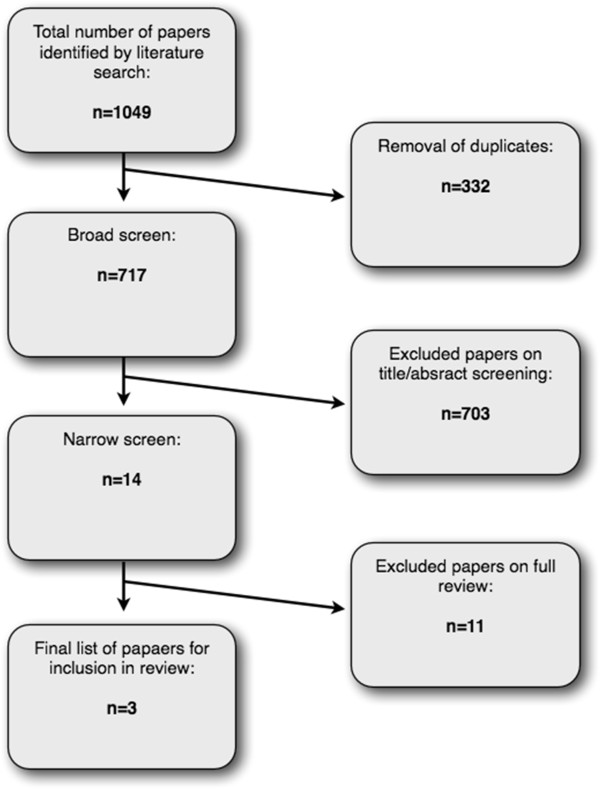
BACKGROUND: Multiple sclerosis (MS) is a stressful condition; depression, anxiety, pain and fatigue are all common problems. Mindfulness based interventions (MBIs) mitigate stress and prevent relapse in depression and are increasingly being used in healthcare. However, there are currently no systematic reviews of MBIs in people with MS. This review aims to evaluate the effectiveness of MBIs in people with MS. METHODS: Systematic searches were carried out in seven major databases, using both subject headings and key words. Papers were screened, data extracted, quality appraised, and analysed by two reviewers independently, using predefined criteria. Study quality was assessed using the Cochrane Collaboration risk of bias tool. Perceived stress was the primary outcome. Secondary outcomes include mental health, physical health, quality of life, and health service utilisation. Statistical meta-analysis was not possible. Disagreements were adjudicated by a third party reviewer. RESULTS: Three studies (n = 183 participants) were included in the final analysis. The studies were undertaken in Wales (n = 16, randomised controlled trial - (RCT)), Switzerland (n = 150, RCT), and the United States (n = 17, controlled trial). 146 (80%) participants were female; mean age (SD) was 48.6 (9.4) years. Relapsing remitting MS was the main diagnostic category (n = 123, 67%); 43 (26%) had secondary progressive disease; and the remainder were unspecified. MBIs lasted 6-8 weeks; attrition rates were variable (5-43%); all employed pre- post- measures; two had longer follow up; one at 3, and one at 6 months. Socio-economic status of participants was not made explicit; health service utilisation and costs were not reported. No study reported on perceived stress. All studies reported quality of life (QOL), mental health (anxiety and depression), physical (fatigue, standing balance, pain), and psychosocial measures. Statistically significant beneficial effects relating to QOL, mental health, and selected physical health measures were sustained at 3- and 6- month follow up. CONCLUSION: From the limited data available, MBIs may benefit some MS patients in terms of QOL, mental health, and some physical health measures. Further studies are needed to clarify how MBIs might best serve the MS population.
Overview
The claims and statistics of this paper haven’t been checked yet.
Free: it reads the open-access text and checks the first 5 claims that cite a source we can check. Create a free account to check every claim.
Integrity signals
Registry
Cites
Statistics
Figures
Verification
Claims the paper makes
The claims and statistics of this paper haven’t been checked yet.
Free: it reads the open-access text and checks the first 5 claims that cite a source we can check. Create a free account to check every claim.
Claims other papers make about this one
Each is checked against this paper’s own text: does it say what the citing paper says it does?
The cited source doesn’t support the claim as written.
In the citing paper
“In sum, some form of CBT is the only evidence-based treatment to reduce anxiety in people with MS.”
From EMDR treatment for anxiety in MS patients: A pilot study (2020) · cites this paper as [11]
Checked by a reasoning model — may be wrong.
Experimental — accuracy not yet measuredThe source backs part of the claim, not all of it — or backs it for a different population, condition or comparison.
In the citing paper
“The present study’s quantitative results related to MBI efficacy echo previous meta-analyses.59–61,117,118”
From Feasibility, Acceptability, and Efficacy of Mindfulness Training in People With Upper Motor Neuron Disorders: A Systematic Review (2022) · cites this paper as [118]
Experimental — accuracy not yet measuredThe source backs part of the claim, not all of it — or backs it for a different population, condition or comparison.
In the citing paper
“Recent systematic reviews have indicated that MBIs are effective in MS patients (Simpson et al., 2014; Levin et al., 2014; San José et al., 2016).”
From The effectiveness of a body-affective mindfulness intervention for multiple sclerosis patients with depressive symptoms: A randomized controlled clinical trial (2017) · cites this paper as Simpson et al., 2014
Experimental — accuracy not yet measuredThe source backs part of the claim, not all of it — or backs it for a different population, condition or comparison.
In the citing paper
“Both a review including only controlled trial (Simpson et al., 2014) and a review using a less restrictive criterion of effectiveness (Levin et al., 2014) concluded that MBIs can improve MS patients’ quality of life and mental health, and improve ability to cope with some of the physical symptoms, such as fatigue and pain.”
From The effectiveness of a body-affective mindfulness intervention for multiple sclerosis patients with depressive symptoms: A randomized controlled clinical trial (2017) · cites this paper as Simpson et al., 2014
Experimental — accuracy not yet measuredThe source backs part of the claim, not all of it — or backs it for a different population, condition or comparison.
In the citing paper
“and argued that there is a need for more rigorous clinical trials comparing MBI with active control groups (Levin et al., 2014; Simpson et al., 2014).”
From The effectiveness of a body-affective mindfulness intervention for multiple sclerosis patients with depressive symptoms: A randomized controlled clinical trial (2017) · cites this paper as Simpson et al., 2014
Experimental — accuracy not yet measured
16 more claims about this paper
Create a free account to see every claim other papers make about this one.
Self-check
Percentages, sums and reported differences re-computed from the paper’s own numbers.
The self-check needs the paper’s full text.
Citations
Cites
The Cochrane Collaboration's tool for assessing risk of bias in randomised trials
Higgins, J. P. T., Altman, D. G., Gotzsche, P. C., Juni, P., Moher, D., Oxman, A. D., Savovic, J., Schulz, K. F., Weeks, L., Sterne, J. A. C., et al. (2011) · BMJ · doi:10.1136/bmj.d5928 · Cited by 33,817
Dermyshi, E., Wang, Y., Yan, C., Hong, W., Qiu, G., Gong, X., & Zhang, T. (2017) · Neonatology · doi:10.1159/000454668 · Cited by 24,451
Diagnostic criteria for multiple sclerosis: 2010 revisions to the McDonald criteria
Polman, C. H., Reingold, S. C., Banwell, B., Clanet, M., Cohen, J. A., Filippi, M., Fujihara, K., Havrdova, E., Hutchinson, M., Kappos, L., et al. (2011) · Annals of Neurology · doi:10.1002/ana.22366 · Cited by 9,802 · cited 1×
“MS characteristically falls into several different diagnostic subclassifications, depending on disease activity and stage of progression [8,9].”
Background(2008) · Medical Entomology and Zoology · Cited by 7,477
McDonald, W. I., Compston, A., Edan, G., Goodkin, D., Hartung, H., Lublin, F. D., McFarland, H. F., Paty, D. W., Polman, C. H., Reingold, S. C., et al. (2001) · Annals of Neurology · doi:10.1002/ana.1032 · Cited by 6,969 · cited 1×
“MS characteristically falls into several different diagnostic subclassifications, depending on disease activity and stage of progression [8,9].”
BackgroundNew Multiple Sclerosis Phenotypic Classification
Lublin, F. D. (2014) · European Neurology · doi:10.1159/000367614 · Cited by 4,259
Systematic reviews: CRD's guidance for undertaking reviews in health care
Tacconelli, E. (2010) · The Lancet Infectious Diseases · doi:10.1016/s1473-3099(10)70065-7 · Cited by 3,245 · cited 2×
“Reviews UoYCf D, Akers J: Systematic reviews: CRD’s guidance for undertaking reviews in health care: Centre for Reviews and Dissemination.”
MethodPrevention of relapse/recurrence in major depression by mindfulness-based cognitive therapy.
Teasdale, J. D., Segal, Z. V., Williams, J. M. G., Ridgeway, V. A., Soulsby, J. M., & Lau, M. A. (2000) · Journal of Consulting and Clinical Psychology · doi:10.1037/0022-006x.68.4.615 · Cited by 3,236 · cited 1×
“Mindfulness Based Cognitive Therapy (MBCT) is a derivative of MBSR, with a greater emphasis on cognitive techniques, designed for specific mental health conditions such as recurrent depression [35].”
Background(2005) · Medical Entomology and Zoology · Cited by 3,197
Hölzel, B. K., Lazar, S. W., Gard, T., Schuman-Olivier, Z., Vago, D. R., & Ott, U. (2011) · Perspectives on Psychological Science · doi:10.1177/1745691611419671 · Cited by 3,024 · cited 1×
“MBSR appears to have neuroendocrine, immunological and neuroplastic effects, although research in this area remains explorative in nature [30-33].”
Background
Cited by
Resilience training in the workplace from 2003 to 2014: A systematic review
Robertson, I. T., Cooper, C. L., Sarkar, M., & Curran, T. (2015) · Journal of Occupational and Organizational Psychology · doi:10.1111/joop.12120 · Cited by 724
“Simpson et al., 2014).”
Origin and function of stress-induced IL-6 in murine models
Qing, H., Desrouleaux, R., Israni-Winger, K., Mineur, Y. S., Fogelman, N., Zhang, C., Rashed, S., Palm, N. W., Sinha, R., Picciotto, M. R., et al. (2020) · Cell · doi:10.1016/j.cell.2020.05.054 · Cited by 303
“Concordantly, several randomized controlled trials targeting stress management have largely lead to improvement in the morbidity of inflammatory diseases (Black and Slavich, 2016; Pbert et al., 2012; Simpson et al., 2014).”
Balance, gait, and falls in multiple sclerosis
(2018) · Handbook of Clinical Neurology · doi:10.1016/b978-0-444-63916-5.00015-x · Cited by 271
Serpa, J. G., Taylor, S. L., & Tillisch, K. (2014) · Medical Care · doi:10.1097/mlr.0000000000000202 · Cited by 169
Management of Fatigue in Persons with Multiple Sclerosis
Khan, F., Amatya, B., & Galea, M. (2014) · Frontiers in Neurology · doi:10.3389/fneur.2014.00177 · Cited by 139
“COGNITIVE AND PSYCHOLOGICAL INTERVENTIONS (LEVEL II) Several studies have investigated cognitive training in pwMS aiming mainly to improve attentional deficits, communication, and memory (66).”
BackgroundResultInfluential
Metadata
- Authors
- Simpson, R., Booth, J., Lawrence, M., Byrne, S., Mair, F., & Mercer, S.
- Affiliations
- University of Glasgow (GB)
- Glasgow Caledonian University (GB)
- Corresponding author
- Simpson, Robert
- Venue
- BMC Neurology
- Published
- 2014-01-17
- Volume
- 14
- Issue
- 1
- Pages
- 15-15
- ISSN
- 1471-2377 (ISSN-L)
- PMC
- PMC3900731
- OpenAlex
- W2162971756
- Semantic Scholar
- 6be329b9d02b59985aff702d281aff90d5bdf5d3
- Cited by
- 195
- References
- 48
- Citations by year
- 2026: 4 · 2025: 13 · 2024: 1 · 2023: 13 · 2022: 12 · 2021: 7 · 2020: 21 · 2019: 39 · 2018: 26 · 2017: 24 · 2016: 15 · 2015: 12 · 2014: 8
- FWCI
- 2.98
- Type
- journal article
- Language
- en
- Open access
- gold
- doi.org
- Licence
- Locations
- BMC Neurology (publishedVersion, cc-by)
- Europe PMC (PubMed Central) (publishedVersion, cc-by)
- PubMed Central (publishedVersion, cc-by)
- PubMed (publishedVersion)
- ENLIGHTEN (Jurnal Bimbingan dan Konseling Islam) (acceptedVersion)
- ResearchOnline (Glasgow Caledonian University) (acceptedVersion, cc-by)
- Topics
- Social Sciences › Psychology › Clinical Psychology › Mindfulness and Compassion Interventions
- Health Sciences › Medicine › Clinical Neurology › Multiple Sclerosis Research Studies
- Health Sciences › Medicine › Oncology › Cancer survivorship and care
- Keywords
- mindfulness-based interventions, multiple sclerosis, relapsing-remitting multiple sclerosis, secondary progressive multiple sclerosis, quality of life, mental health, depression, anxiety, fatigue, pain, physical health, perceived stress, psychosocial outcomes
- MeSH terms
- Anxiety, Depression, Fatigue, Humans, Multiple Sclerosis, Quality of Life, Randomized Controlled Trials as Topic, Mindfulness
About these checks
Registry, retraction, Cites and statistics results are computed, not judged, with one exception: a printed reference that no index lists is read once by a model before it counts as a citation error. Claims are extracted by a model and kept only when their quote appears verbatim in the text; each cited source is then checked, with a model’s help, for whether it says what the claim relies on. Those verdicts can be wrong — read the claim’s quote and the cited source before relying on one.
Statistics and arithmetic are recomputed, not judged.
Confidence bands are shown only for fields calibrated on our annotated test set. None is calibrated yet, so no band is shown.
What counts as a claim ›How we measure confidence ›How we check this ›
Are you an author, or do you see a problem with this page? Request a review
How to cite
Cite CoChat for the checks on this page, and the paper for its own findings.
- This page
- CoChat. (2026). Citation check: Mindfulness based interventions in multiple sclerosis–a systematic review. https://app.cochat.ai/papers/10.1186/1471-2377-14-15
- The paper
- Simpson, R., Booth, J., Lawrence, M., Byrne, S., Mair, F., & Mercer, S. (2014). Mindfulness based interventions in multiple sclerosis–a systematic review. BMC Neurology. https://doi.org/10.1186/1471-2377-14-15
Data sources
Bibliographic data: Semantic Scholar, OpenAlex, Crossref.
Contains information from the Semantic Scholar Academic Graph Datasets, made available under the ODC Attribution License (ODC-BY 1.0).
Semantic Scholar’s data is described in: Kinney, R., et al. (2023). The Semantic Scholar Open Data Platform. arXiv:2301.10140.
