

Poor glycated haemoglobin control and adverse pregnancy outcomes in type 1 and type 2 diabetes mellitus: Systematic review of observational studies
Open accessThe DOI matches its Crossref record; 40 of the 40 references it cites were found in a registry or an index.
Abstract
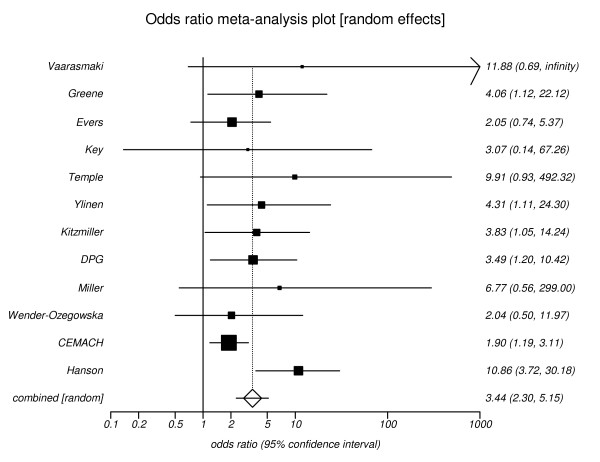
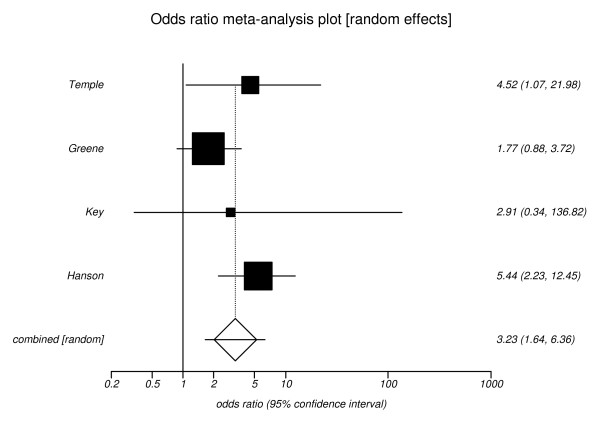
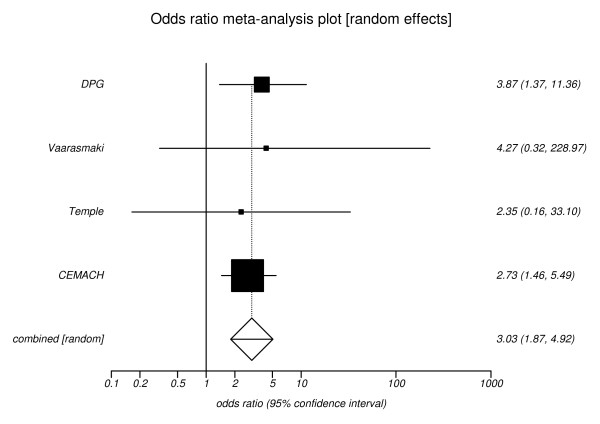
BACKGROUND: Glycaemic control in women with diabetes is critical to satisfactory pregnancy outcome. A systematic review of two randomised trials concluded that there was no clear evidence of benefit from very tight versus tight glycaemic control for pregnant women with diabetes. METHODS: A systematic review of observational studies addressing miscarriage, congenital malformations and perinatal mortality among pregnant women with type 1 and type 2 diabetes was carried out. Literature searches were performed in MEDLINE, EMBASE, CINAHL and Cochrane Library. Observational studies with data on glycated haemoglobin (HbA1c) levels categorised into poor and optimal control (as defined by the study investigators) were selected. Relative risks and odds ratios were calculated for HbA1c and pregnancy outcomes. Adjusted relative risk estimates per 1-percent decrease in HbA1c were calculated for studies which contained information on mean and standard deviations of HbA1c. RESULTS: The review identified thirteen studies which compared poor versus optimal glycaemic control in relation to maternal, fetal and neonatal outcomes. Twelve of these studies reported the outcome of congenital malformations and showed an increased risk with poor glycaemic control, pooled odds ratio 3.44 (95%CI, 2.30 to 5.15). For four of the twelve studies, it was also possible to calculate a relative risk reduction of congenital malformation for each 1-percent decrease in HbA1c, these varied from 0.39 to 0.59. The risk of miscarriage was reported in four studies and was associated with poor glycaemic control, pooled odds ratio 3.23 (95%CI, 1.64 to 6.36). Increased perinatal mortality was also associated with poor glycaemic control, pooled odds ratio 3.03 (95%CI, 1.87 to 4.92) from four studies. CONCLUSION: This analysis quantifies the increase in adverse pregnancy outcomes in women with diabetes who have poor glycaemic control. Relating percentage risk reduction in HbA1c to relative risk of adverse pregnancy events may be useful in motivating women to achieve optimal control prior to conception.
Overview
The claims and statistics of this paper haven’t been checked yet.
Free: it reads the open-access text and checks the first 5 claims that cite a source we can check. Create a free account to check every claim.
Integrity signals
Registry
Cites
Statistics
Figures
Verification
Claims the paper makes
The claims and statistics of this paper haven’t been checked yet.
Free: it reads the open-access text and checks the first 5 claims that cite a source we can check. Create a free account to check every claim.
Claims other papers make about this one
Each is checked against this paper’s own text: does it say what the citing paper says it does?
The cited source says what the claim attributes to it.
In the citing paper
“Maternal hyperglycemia in the first few weeks of pregnancy increases the risk of fetal malformations, spontaneous abortions, and perinatal mortality (14–18).”
From Diabetes and Pregnancy: An Endocrine Society Clinical Practice Guideline (2013) · cites this paper as [14]
In the citing paper
“Maternal hyperglycemia in the first few weeks of pregnancy increases the risk of fetal malformations, spontaneous abortions, and perinatal mortality (14–18).”
From Diabetes and Pregnancy: An Endocrine Society Clinical Practice Guideline (2013) · cites this paper as [14]
In the citing paper
“Maternal hyperglycemia in the first few weeks of pregnancy increases the risk of fetal malformations, spontaneous abortions, and perinatal mortality (14–18).”
From Diabetes and Pregnancy: An Endocrine Society Clinical Practice Guideline (2013) · cites this paper as [14]
Self-check
Percentages, sums and reported differences re-computed from the paper’s own numbers.
The self-check needs the paper’s full text.
Citations
Cites
2 retracted
Outcome of pregnancy in diabetic women in northeast England and in Norway, 1994-7
Hawthorne, G. (2000) · BMJ · doi:10.1136/bmj.321.7263.730 · Cited by 37 · cited 1×
“The presence of diabetes is said to increase the risk of congenital malformation (by ten-fold), the risk of stillbirth (by five-fold), and the risk of neonatal death (by three-fold) [2-7] These disappointing data are in contrast to the optimism of the 1989 St Vincent's Declaration that proposed as a five year target t…”
RetractedVery tight versus tight control for diabetes in pregnancy
Walkinshaw, S. (1996) · Cochrane Database of Systematic Reviews · doi:10.1002/14651858.cd000226 · Cited by 16
RetractedBias in meta-analysis detected by a simple, graphical test
Egger, M., Smith, G. D., Schneider, M., & Minder, C. (1997) · BMJ · doi:10.1136/bmj.315.7109.629 · Cited by 56,722
(1993) · New England Journal of Medicine · doi:10.1056/nejm199309303291401 · Cited by 24,667
Pharmacological interventions for somatoform disorders in adults
Kleinstäuber, M., Witthöft, M., Steffanowski, A., van Marwijk, H., Hiller, W., & Lambert, M. J. (2014) · Cochrane Database of Systematic Reviews · doi:10.1002/14651858.cd010628.pub2 · Cited by 11,335
QUANTITATIVE METHODS IN THE REVIEW OF EPIDEMIOLOGIC LITERATURE1
GREENLAND, S. (1987) · Epidemiologic Reviews · doi:10.1093/oxfordjournals.epirev.a036298 · Cited by 1,644 · cited 1×
“We calculated the 25th and 75th percentiles and divided the log relative risk by the difference of these 2 values to give an estimate of the effect of a 1-percent change in HbA1c [12].”
American Diabetes Association (2003) · Diabetes Care · doi:10.2337/diacare.26.2007.s106 · Cited by 988
Evers, I. M., de Valk, H. W., & Visser, G. H. A. (2004) · BMJ · doi:10.1136/bmj.38043.583160.ee · Cited by 775 · cited 5×
“Definitions for several of the outcomes varied across the studies, for example, the outcome of congenital malformations included both major and minor malformations in some studies [16,26] while in others only included major malformations [7,18].”
InfluentialMiller, E., Hare, J. W., Cloherty, J. P., Dunn, P. J., Gleason, R. E., Soeldner, J. S., & Kitzmiller, J. L. (1981) · New England Journal of Medicine · doi:10.1056/nejm198105283042204 · Cited by 665
Goldstein, D. E., Little, R. R., Lorenz, R. A., Malone, J. I., Nathan, D., Peterson, C. M., & Sacks, D. B. (2004) · Diabetes Care · doi:10.2337/diacare.27.7.1761 · Cited by 625 · cited 1×
“Glycated haemoglobin (HbA1c) reflects long-term glycaemic control and is a more accurate and stable measure than fasting blood glucose levels [ 9 ].”
Casson, I. F., Clarke, C. A., Howard, C. V., McKendrick, O., Pennycook, S., Pharoah, P. O. D., Platt, M. J., Stanisstreet, M., van Velszen, D., & Walkinshaw, S. (1997) · BMJ · doi:10.1136/bmj.315.7103.275 · Cited by 523 · cited 1×
“The presence of diabetes is said to increase the risk of congenital malformation (by ten-fold), the risk of stillbirth (by five-fold), and the risk of neonatal death (by three-fold) [2-7] These disappointing data are in contrast to the optimism of the 1989 St Vincent's Declaration that proposed as a five year target t…”
Ray, J. G. (2001) · QJM · doi:10.1093/qjmed/94.8.435 · Cited by 430 · cited 1×
“A systematic review of 14 cohort studies has shown that pre-conception care aiming to achieve tight glycaemic control is associated with a reduction in the rate of major congenital abnormalities – 2.1% in the preconception care recipients versus 6.5% in non recipients, relative risk 0.36, 95% CI 0.22 to 0.59 [ 32 ].”
InfluentialPreconception Care of Diabetes: Glycemic Control Prevents Congenital Anomalies
Kitzmiller, J. L. (1991) · JAMA · doi:10.1001/jama.1991.03460060063025 · Cited by 397 · cited 3×
“Other methods used included spectrophotometric absorption, [19] column chromatography, [20] cation exchange method, [21] thiobarbituric acid colorimetric assay, [22] electrophoresis, [23] and isoelectric focusing [24].”
InfluentialFactors predicting peri- and neonatal outcome in diabetic pregnancy
Vääräsmäki, M. S., Hartikainen, A.-L., Anttila, M., Pramila, S., & Koivisto, M. (2000) · Early Human Development · doi:10.1016/s0378-3782(00)00087-6 · Cited by 302 · cited 6×
“A single unsatisfactory HbA1c value cannot be used as an absolute predictor of fetal outcome, but it indicates a subgroup of pregnancies with substantial fetal risk [26].”
Influentialvan Oven, C., & Kwikkel, C. (1966) · PubMed · Cited by 299
Hawthorne, G., Robson, S., Ryall, E. A., Sen, D., Roberts, S. H., & Platt, M. P. W. (1997) · BMJ · doi:10.1136/bmj.315.7103.279 · Cited by 276
Greene, M. F., Hare, J. W., Cloherty, J. P., Benacerraf, B. R., & Soeldner, J. S. (1989) · Teratology · doi:10.1002/tera.1420390303 · Cited by 270 · cited 4×
“Miller [18] 8.54 1.54 7.50 9.58 2.08 1.87 2.34 0.59 Greene [ 23 ] 10.10 1.99 8.76 11.44 2.68 1.31 1.63 0.39 Evers [16] 6.5 0.70 6.03 6.97 0.94 0.65 1.99 0.50 Key [19] 10.99 1.10 10.25 11.73 1.48 1.0 1.95 0.49”
InfluentialObstetrics-Gynecology: The Physiologic Basis of Gynecology and Obstetrics
(2001) · JAMA · doi:10.1001/jama.286.17.2167-jbk1107-3-1 · Cited by 229
Ylinen, K., Aula, P., Stenman, U. H., Kesäniemi-Kuokkanen, T., & Teramo, K. (1984) · BMJ · doi:10.1136/bmj.289.6441.345 · Cited by 212 · cited 11×
“Author Country Study Design Time Period Sample size (n) Glycaemic Control Groupings (n) (HbA1c unless stated) Timing of Glycaemic Control Measurement Outcomes (n) Vaarasmaki et al, 2000 [26] Finland Cohort 1986–1995 84 Optimal < 8.0% (n = 48) Poor > 8.0% (n = 36) First antenatal visit 20 and 28th week Before delivery…”
InfluentialOutcomes of pregnancies in women with type 1 diabetes in Scotland: a national population-based study
Penney, G. (2003) · BJOG: An International Journal of Obstetrics and Gynaecology · doi:10.1016/s1470-0328(03)02967-7 · Cited by 188 · cited 1×
“The randomised, prospective Diabetes Control and Complications Trial (DCCT) has shown that timely institution of intensive therapy for blood glucose control is associated with rates of spontaneous abortion and congenital malformations that are similar to those in the non-diabetic populations [ 28 ].”
Hanson, U., Persson, B., & Thunell, S. (1990) · Diabetologia · doi:10.1007/bf00401047 · Cited by 176 · cited 4×
“Other methods used included spectrophotometric absorption, [19] column chromatography, [20] cation exchange method, [21] thiobarbituric acid colorimetric assay, [22] electrophoresis, [23] and isoelectric focusing [24].”
InfluentialTemple, R., Aldridge, V., Greenwood, R., Heyburn, P., Sampson, M., & Stanley, K. (2002) · BMJ · doi:10.1136/bmj.325.7375.1275 · Cited by 152 · cited 4×
“Five studies used high-performance liquid chromatography [7,15-18].”
InfluentialSt Vincent’s Declaration 10 years on: outcomes of diabetic pregnancies
Platt, M. J., Stanisstreet, M., Casson, I. F., Howard, C. V., Walkinshaw, S., Pennycook, S., & McKendrick, O. (2002) · Diabetic Medicine · doi:10.1046/j.1464-5491.2002.00665.x · Cited by 141 · cited 2×
“The presence of diabetes is said to increase the risk of congenital malformation (by ten-fold), the risk of stillbirth (by five-fold), and the risk of neonatal death (by three-fold) [2-7] These disappointing data are in contrast to the optimism of the 1989 St Vincent's Declaration that proposed as a five year target t…”
Diabetes and Pregnancy: Factors associated with seeking pre-conception care
Janz, N. K., Herman, W. H., Becker, M. P., Charron-Prochownik, D., Shayna, V. L., Lesnick, T. G., Jacober, S. J., Fachnie, J. D., Kruger, D. F., Sanfield, J. A., et al. (1995) · Diabetes Care · doi:10.2337/diacare.18.2.157 · Cited by 136 · cited 1×
“The presence of diabetes is said to increase the risk of congenital malformation (by ten-fold), the risk of stillbirth (by five-fold), and the risk of neonatal death (by three-fold) [ 2-7 ] These disappointing data are in contrast to the optimism of the 1989 St Vincent's Declaration that proposed as a five year target…”
Rosenn, B., Miodovnik, M., Combs, C. A., Khoury, J. C., & Siddiqi, T. A. (1994) · PubMed · Cited by 136
Hiilesmaa, V., Suhonen, L., & Teramo, K. A. (2000) · Diabetologia · doi:10.1007/s001250051565 · Cited by 115 · cited 4×
“Hiilesmaa et al, 2000 [17] Finland Case-Control 1988 – 1997 587 Optimal ≤ 6.”
InfluentialPreconception care of diabetes. Glycemic control prevents congenital anomalies
Kitzmiller, J. L. (1991) · JAMA · doi:10.1001/jama.265.6.731 · Cited by 112
Wender-Ożegowska, E., Wróblewska‐Seniuk, K., Zawiejska, A., Pietryga, M., Szczapa, J., & Biczysko, R. (2004) · Acta Obstetricia Et Gynecologica Scandinavica · doi:10.1111/j.0001-6349.2005.00606.x · Cited by 75 · cited 4×
“Studies suggest that these tissues are the most susceptible ones to the destructive action of oxygen-free radicals [20].”
InfluentialMulticenter Survey of Diabetic Pregnancy in France
Gestation and Diabetes in France Study Group (1991) · Diabetes Care · doi:10.2337/diacare.14.11.994 · Cited by 51
Predictive value of early pregnancy glycohemoglobin in the insulin-treated diabetic patient
Key, T. C., Giuffrida, R., & Moore, T. R. (1987) · American Journal of Obstetrics and Gynecology · doi:10.1016/0002-9378(87)90117-7 · Cited by 46 · cited 10×
“Author Country Study Design Time Period Sample size (n) Glycaemic Control Groupings (n) (HbA1c unless stated) Timing of Glycaemic Control Measurement Outcomes (n) Vaarasmaki et al, 2000 [26] Finland Cohort 1986–1995 84 Optimal < 8.0% (n = 48) Poor > 8.0% (n = 36) First antenatal visit 20 and 28th week Before delivery…”
InfluentialGlycosylated hemoglobin as predictor of adverse fetal outcome in type 1 diabetic pregnancies
Nielsen, G. L., Sørensen, H. T., Nielsen, P. H., Sabroe, S., & Olsen, J. H. (1997) · Acta Diabetologica · doi:10.1007/s005920050077 · Cited by 46 · cited 1×
“Past pregnancy experience may also play a role through influencing behaviour concerning diabetic control and health habits [ 31 ].”
Factors Influencing Preconception Control of Glycemia in Diabetic Women
Casele, H. L., & Laifer, S. A. (1998) · Archives of Internal Medicine · doi:10.1001/archinte.158.12.1321 · Cited by 41
Wender-Ożegowska, E., Wróblewska‐Seniuk, K., Zawiejska, A., Pietryga, M., Szczapa, J., & Biczysko, R. (2005) · Acta Obstetricia Et Gynecologica Scandinavica · doi:10.1080/j.0001-6349.2005.00606.x · Cited by 21
Walkinshaw, S. (2001) · Evidence-based obstetrics and gynecology/Evidence-based obstetrics & gynecology · doi:10.1054/ebog.2001.0292 · Cited by 20
Pregnancy in women with diabetes mellitus: Fifteen years' experience: 1970–1985
Martin, F. I. R., Heath, P., & Mountain, K. R. (1987) · The Medical Journal of Australia · doi:10.5694/j.1326-5377.1987.tb120193.x · Cited by 19 · cited 1×
“The presence of diabetes is said to increase the risk of congenital malformation (by ten-fold), the risk of stillbirth (by five-fold), and the risk of neonatal death (by three-fold) [2-7] These disappointing data are in contrast to the optimism of the 1989 St Vincent's Declaration that proposed as a five year target t…”
Minor Congenital Malformations in Infants of Insulin-Dependent Diabetic Women
Rosenn, B., Miodovnik, M., Dignan, P. S. J., Siddiqi, T. A., Khoury, J. C., & Mimouni, F. B. (1990) · Obstetrics and Gynecology · doi:10.1097/00006250-199011000-00003 · Cited by 18 · cited 1×
“As organogenesis takes place in the first trimester of pregnancy, inadequate pre-conceptual glycaemic control is associated with an increased risk of congenital abnormality and spontaneous abortion [ 10 ,11].”
Linn, T., & Bretzel, R. G. (1997) · European Journal of Obstetrics & Gynecology and Reproductive Biology · doi:10.1016/s0301-2115(97)00194-2 · Cited by 18
Maternity services for women with diabetes in the UK
Hawthorne, G., & Modder, J. (2002) · Diabetic Medicine · doi:10.1046/j.1464-5491.19.s4.10.x · Cited by 11 · cited 1×
“Background Diabetes is the most common pre-existing medical condition complicating pregnancy in the United Kingdom (approximately four occurrences per 1000 pregnancies) [1].”
LLUSIA, J. B. (1959) · PubMed · Cited by 5
The Importance of Reaching Preconception Targets for Glycemic Control in Diabetic Women
Dokken, B. B., & Johnson, D. W. (1998) · Archives of Internal Medicine · doi:10.1001/archinte.158.12.1299 · Cited by 3 · cited 1×
“Factors that seem to promote preconception care include higher educational levels, higher incomes, regular employment, and receiving encouragement from their health care providers to avoid unplanned pregnancies [30].”
Research works printed but not linked: 1
- CEMACH Confidential Enquiry into Maternal and Child Health: Pregnancy in Women with Type 1 and Type 2 Diabetes in 2002–03, England, Wales and Northern Ireland London 2005
Cited by
Preconceptional and maternal obesity: epidemiology and health consequences
Poston, L., Caleyachetty, R., Cnattingius, S., Corvalán, C., Uauy, R., Herring, S., & Gillman, M. W. (2016) · The Lancet Diabetes & Endocrinology · doi:10.1016/s2213-8587(16)30217-0 · Cited by 1,111
Diabetes and Pregnancy: An Endocrine Society Clinical Practice Guideline
Blumer, I., Hadar, E., Hadden, D. R., Jovanovič, L., Mestman, J. H., Murad, M. H., & Yogev, Y. (2013) · The Journal of Clinical Endocrinology & Metabolism · doi:10.1210/jc.2013-2465 · Cited by 561
Diabetes in sub-Saharan Africa: from clinical care to health policy
Atun, R., Davies, J. I., Gale, E. A. M., Bärnighausen, T., Beran, D., Kengne, A. P., Levitt, N. S., Mangugu, F. W., Nyirenda, M. J., Ogle, G. D., et al. (2017) · The Lancet Diabetes & Endocrinology · doi:10.1016/s2213-8587(17)30181-x · Cited by 543
Thompson, D., Berger, H., Feig, D., Gagnon, R., Kader, T., Keely, E., Kozak, S., Ryan, E., Sermer, M., & Vinokuroff, C. (2013) · Canadian Journal of Diabetes · doi:10.1016/j.jcjd.2013.01.044 · Cited by 377
Preconception care for women with diabetes and prevention of major congenital malformations
Kitzmiller, J. L., Wallerstein, R., Correa, A., & Kwan, S. (2010) · Birth Defects Research Part A: Clinical and Molecular Teratology · doi:10.1002/bdra.20734 · Cited by 369
Metadata
- Authors
- Inkster, M. E., Fahey, T. P., Donnan, P. T., Leese, G. P., Mires, G. J., & Murphy, D. J.
- Affiliations
- University of Dundee (GB)
- Royal College of Surgeons in Ireland (IE)
- Ninewells Hospital (GB)
- Trinity College Dublin (IE)
- Corresponding author
- Inkster, Melanie E
- Venue
- BMC Pregnancy and Childbirth
- Published
- 2006-10-30
- Volume
- 6
- Issue
- 1
- Pages
- 30-30
- ISSN
- 1471-2393 (ISSN-L)
- PMC
- PMC1635059
- OpenAlex
- W2133189589
- Cited by
- 233
- References
- 40
- Citations by year
- 2026: 3 · 2025: 5 · 2024: 15 · 2023: 23 · 2022: 27 · 2021: 11 · 2020: 11 · 2019: 12 · 2018: 9 · 2017: 13 · 2016: 15 · 2015: 9 · 2014: 16 · 2013: 15 · 2012: 15
- FWCI
- 0.83
- Type
- journal article
- Language
- en
- Open access
- gold
- doi.org
- Licence
- cc-by
- creativecommons.org/licenses/by/2.0 (tdm)
- Locations
- BMC Pregnancy and Childbirth (publishedVersion, cc-by)
- PubMed (publishedVersion)
- Aberdeen University Research Archive (Aberdeen University) (submittedVersion)
- Discovery Research Portal (University of Dundee) (submittedVersion, cc-by)
- DOAJ (DOAJ: Directory of Open Access Journals) (submittedVersion, cc-by-sa)
- Figshare (submittedVersion, cc-by-nc-nd)
- Topics
- Health Sciences › Medicine › Obstetrics and Gynecology › Gestational Diabetes Research and Management
- Health Sciences › Medicine › Public Health, Environmental and Occupational Health › Pregnancy and Medication Impact
- Health Sciences › Medicine › Endocrinology, Diabetes and Metabolism › Diabetes Management and Research
- Keywords
- HbA1c, glycemic control, pregnancy outcomes, type 1 diabetes, type 2 diabetes, congenital malformations, miscarriage, perinatal mortality, maternal outcomes, neonatal outcomes, preconception care
About these checks
Registry, retraction, Cites and statistics results are computed, not judged, with one exception: a printed reference that no index lists is read once by a model before it counts as a citation error. Claims are extracted by a model and kept only when their quote appears verbatim in the text; each cited source is then checked, with a model’s help, for whether it says what the claim relies on. Those verdicts can be wrong — read the claim’s quote and the cited source before relying on one.
Statistics and arithmetic are recomputed, not judged.
Confidence bands are shown only for fields calibrated on our annotated test set. None is calibrated yet, so no band is shown.
What counts as a claim ›How we measure confidence ›How we check this ›
Are you an author, or do you see a problem with this page? Request a review
Data sources
Bibliographic data: Semantic Scholar, OpenAlex, Crossref.
Contains information from the Semantic Scholar Academic Graph Datasets, made available under the ODC Attribution License (ODC-BY 1.0).
Semantic Scholar’s data is described in: Kinney, R., et al. (2023). The Semantic Scholar Open Data Platform. arXiv:2301.10140.
