

Poor glycated haemoglobin control and adverse pregnancy outcomes in type 1 and type 2 diabetes mellitus: Systematic review of observational studies
Open accessThe DOI matches its Crossref record; 40 of the 40 references it cites were found in a registry or an index.
Abstract
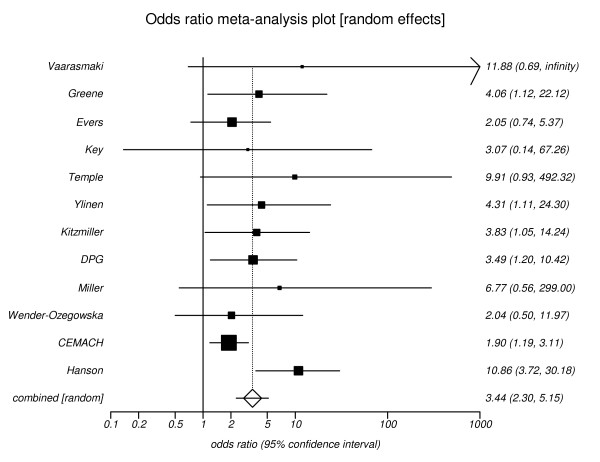
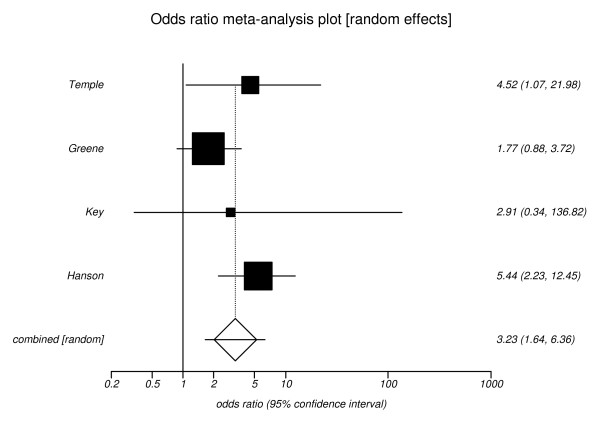
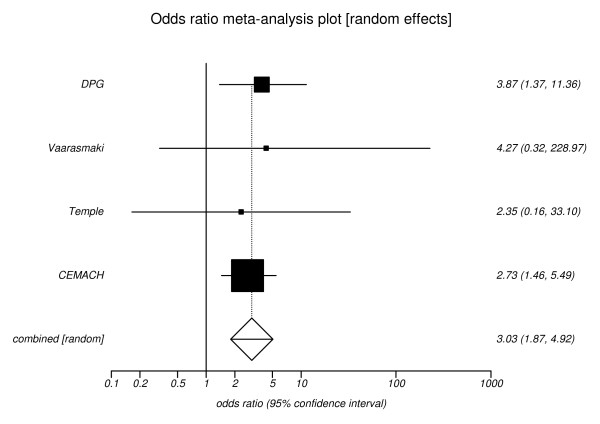
BACKGROUND: Glycaemic control in women with diabetes is critical to satisfactory pregnancy outcome. A systematic review of two randomised trials concluded that there was no clear evidence of benefit from very tight versus tight glycaemic control for pregnant women with diabetes. METHODS: A systematic review of observational studies addressing miscarriage, congenital malformations and perinatal mortality among pregnant women with type 1 and type 2 diabetes was carried out. Literature searches were performed in MEDLINE, EMBASE, CINAHL and Cochrane Library. Observational studies with data on glycated haemoglobin (HbA1c) levels categorised into poor and optimal control (as defined by the study investigators) were selected. Relative risks and odds ratios were calculated for HbA1c and pregnancy outcomes. Adjusted relative risk estimates per 1-percent decrease in HbA1c were calculated for studies which contained information on mean and standard deviations of HbA1c. RESULTS: The review identified thirteen studies which compared poor versus optimal glycaemic control in relation to maternal, fetal and neonatal outcomes. Twelve of these studies reported the outcome of congenital malformations and showed an increased risk with poor glycaemic control, pooled odds ratio 3.44 (95%CI, 2.30 to 5.15). For four of the twelve studies, it was also possible to calculate a relative risk reduction of congenital malformation for each 1-percent decrease in HbA1c, these varied from 0.39 to 0.59. The risk of miscarriage was reported in four studies and was associated with poor glycaemic control, pooled odds ratio 3.23 (95%CI, 1.64 to 6.36). Increased perinatal mortality was also associated with poor glycaemic control, pooled odds ratio 3.03 (95%CI, 1.87 to 4.92) from four studies. CONCLUSION: This analysis quantifies the increase in adverse pregnancy outcomes in women with diabetes who have poor glycaemic control. Relating percentage risk reduction in HbA1c to relative risk of adverse pregnancy events may be useful in motivating women to achieve optimal control prior to conception.
Overview
The claims and statistics of this paper haven’t been checked yet.
Free: it reads the open-access text and checks the first 5 claims that cite a source we can check. Create a free account to check every claim.
Integrity signals
Registry
Cites
Statistics
Figures
Verification
Claims the paper makes
The claims and statistics of this paper haven’t been checked yet.
Free: it reads the open-access text and checks the first 5 claims that cite a source we can check. Create a free account to check every claim.
Claims other papers make about this one
Each is checked against this paper’s own text: does it say what the citing paper says it does?
The cited source says what the claim attributes to it.
In the citing paper
“Maternal hyperglycemia in the first few weeks of pregnancy increases the risk of fetal malformations, spontaneous abortions, and perinatal mortality (14–18).”
From Diabetes and Pregnancy: An Endocrine Society Clinical Practice Guideline (2013) · cites this paper as [14]
In the citing paper
“Maternal hyperglycemia in the first few weeks of pregnancy increases the risk of fetal malformations, spontaneous abortions, and perinatal mortality (14–18).”
From Diabetes and Pregnancy: An Endocrine Society Clinical Practice Guideline (2013) · cites this paper as [14]
In the citing paper
“Maternal hyperglycemia in the first few weeks of pregnancy increases the risk of fetal malformations, spontaneous abortions, and perinatal mortality (14–18).”
From Diabetes and Pregnancy: An Endocrine Society Clinical Practice Guideline (2013) · cites this paper as [14]
Self-check
Percentages, sums and reported differences re-computed from the paper’s own numbers.
The self-check needs the paper’s full text.
Citations
Cites
2 retracted
Outcome of pregnancy in diabetic women in northeast England and in Norway, 1994-7
Hawthorne, G. (2000) · BMJ · doi:10.1136/bmj.321.7263.730 · Cited by 37 · cited 1×
“The presence of diabetes is said to increase the risk of congenital malformation (by ten-fold), the risk of stillbirth (by five-fold), and the risk of neonatal death (by three-fold) [2-7] These disappointing data are in contrast to the optimism of the 1989 St Vincent's Declaration that proposed as a five year target t…”
RetractedVery tight versus tight control for diabetes in pregnancy
Walkinshaw, S. (1996) · Cochrane Database of Systematic Reviews · doi:10.1002/14651858.cd000226 · Cited by 16
RetractedBias in meta-analysis detected by a simple, graphical test
Egger, M., Smith, G. D., Schneider, M., & Minder, C. (1997) · BMJ · doi:10.1136/bmj.315.7109.629 · Cited by 56,722
(1993) · New England Journal of Medicine · doi:10.1056/nejm199309303291401 · Cited by 24,667
Pharmacological interventions for somatoform disorders in adults
Kleinstäuber, M., Witthöft, M., Steffanowski, A., van Marwijk, H., Hiller, W., & Lambert, M. J. (2014) · Cochrane Database of Systematic Reviews · doi:10.1002/14651858.cd010628.pub2 · Cited by 11,335
QUANTITATIVE METHODS IN THE REVIEW OF EPIDEMIOLOGIC LITERATURE1
GREENLAND, S. (1987) · Epidemiologic Reviews · doi:10.1093/oxfordjournals.epirev.a036298 · Cited by 1,644 · cited 1×
“We calculated the 25th and 75th percentiles and divided the log relative risk by the difference of these 2 values to give an estimate of the effect of a 1-percent change in HbA1c [12].”
American Diabetes Association (2003) · Diabetes Care · doi:10.2337/diacare.26.2007.s106 · Cited by 988
Evers, I. M., de Valk, H. W., & Visser, G. H. A. (2004) · BMJ · doi:10.1136/bmj.38043.583160.ee · Cited by 775 · cited 5×
“Definitions for several of the outcomes varied across the studies, for example, the outcome of congenital malformations included both major and minor malformations in some studies [16,26] while in others only included major malformations [7,18].”
InfluentialMiller, E., Hare, J. W., Cloherty, J. P., Dunn, P. J., Gleason, R. E., Soeldner, J. S., & Kitzmiller, J. L. (1981) · New England Journal of Medicine · doi:10.1056/nejm198105283042204 · Cited by 665
Goldstein, D. E., Little, R. R., Lorenz, R. A., Malone, J. I., Nathan, D., Peterson, C. M., & Sacks, D. B. (2004) · Diabetes Care · doi:10.2337/diacare.27.7.1761 · Cited by 625 · cited 1×
“Glycated haemoglobin (HbA1c) reflects long-term glycaemic control and is a more accurate and stable measure than fasting blood glucose levels [ 9 ].”
Research works printed but not linked: 1
- CEMACH Confidential Enquiry into Maternal and Child Health: Pregnancy in Women with Type 1 and Type 2 Diabetes in 2002–03, England, Wales and Northern Ireland London 2005
Cited by
Preconceptional and maternal obesity: epidemiology and health consequences
Poston, L., Caleyachetty, R., Cnattingius, S., Corvalán, C., Uauy, R., Herring, S., & Gillman, M. W. (2016) · The Lancet Diabetes & Endocrinology · doi:10.1016/s2213-8587(16)30217-0 · Cited by 1,111
Diabetes and Pregnancy: An Endocrine Society Clinical Practice Guideline
Blumer, I., Hadar, E., Hadden, D. R., Jovanovič, L., Mestman, J. H., Murad, M. H., & Yogev, Y. (2013) · The Journal of Clinical Endocrinology & Metabolism · doi:10.1210/jc.2013-2465 · Cited by 561
Diabetes in sub-Saharan Africa: from clinical care to health policy
Atun, R., Davies, J. I., Gale, E. A. M., Bärnighausen, T., Beran, D., Kengne, A. P., Levitt, N. S., Mangugu, F. W., Nyirenda, M. J., Ogle, G. D., et al. (2017) · The Lancet Diabetes & Endocrinology · doi:10.1016/s2213-8587(17)30181-x · Cited by 543
Thompson, D., Berger, H., Feig, D., Gagnon, R., Kader, T., Keely, E., Kozak, S., Ryan, E., Sermer, M., & Vinokuroff, C. (2013) · Canadian Journal of Diabetes · doi:10.1016/j.jcjd.2013.01.044 · Cited by 377
Preconception care for women with diabetes and prevention of major congenital malformations
Kitzmiller, J. L., Wallerstein, R., Correa, A., & Kwan, S. (2010) · Birth Defects Research Part A: Clinical and Molecular Teratology · doi:10.1002/bdra.20734 · Cited by 369
Feig, D. S., Berger, H., Donovan, L., Godbout, A., Kader, T., Keely, E., & Sanghera, R. (2018) · Canadian Journal of Diabetes · doi:10.1016/j.jcjd.2017.10.038 · Cited by 344
“Spontaneous abortion [Grade C, Level 3 (159)]”
BackgroundBalsells, M., García-Patterson, A., Gich, I., & Corcoy, R. (2009) · The Journal of Clinical Endocrinology & Metabolism · doi:10.1210/jc.2009-1231 · Cited by 306
Diabetes: A metabolic and reproductive disorder in women
Thong, E. P., Codner, E., Laven, J. S. E., & Teede, H. (2020) · The Lancet Diabetes & Endocrinology · doi:10.1016/s2213-8587(19)30345-6 · Cited by 242
Bell, R., Glinianaia, S. V., Tennant, P. W. G., Bilous, R. W., & Rankin, J. (2012) · Diabetologia · doi:10.1007/s00125-012-2455-y · Cited by 224
“Peri-conception HbA1c has previously been reported to be associated with congenital anomaly [4], but the association with pre-existing nephropathy is, to our knowledge, previously unreported.”
BackgroundGarcía-Patterson, A., Gich, I., Amini, S. B., Catalano, P. M., de Leiva, A., & Corcoy, R. (2010) · Diabetologia · doi:10.1007/s00125-009-1633-z · Cited by 220
Bell, R., Bailey, K., Cresswell, T., Hawthorne, G., Critchley, J., Lewis‐Barned, N., & Northern Diabetic Pregnancy Survey Steering Group (2008) · BJOG: An International Journal of Obstetrics & Gynaecology · doi:10.1111/j.1471-0528.2007.01644.x · Cited by 200
Glycemic targets in the second and third trimester of pregnancy for women with type 1 diabetes
Maresh, M. J. A., Holmes, V. A., Patterson, C. C., Young, I. S., Pearson, D. W. M., Walker, J. D., & McCance, D. R. (2015) · Diabetes Care · doi:10.2337/dc14-1755 · Cited by 175
“A systematic review of the relationship between A1C and adverse outcomes (1) reported that an elevated A1C toward the end of the first trimester usually reflects suboptimal control around the time of conception and in the first trimester and has been associated with an increased incidence of congenital malformations a…”
BackgroundWahabi, H. A., Fayed, A., Esmaeil, S., Elmorshedy, H., Titi, M. A., Amer, Y. S., Alzeidan, R. A., Alodhayani, A. A., Saeed, E., Bahkali, K. H., et al. (2020) · PLOS ONE · doi:10.1371/journal.pone.0237571 · Cited by 130
“Many studies confirmed the incremental increase in the rate of adverse pregnancy outcomes, among women with diabetes, with the increase in the level of HbA1c [78–81] and the significant risk reduction in congenital malformations with one percent reduction in HbA1c level [82].”
BackgroundColstrup, M., Mathiesen, E. R., Damm, P., Jensen, D. M., & Ringholm, L. (2013) · The Journal of Maternal-Fetal & Neonatal Medicine · doi:10.3109/14767058.2013.794214 · Cited by 142
“Specifically, as organogenesis takes place in the first trimester of pregnancy, inadequate pre-conceptional glycaemic control is associated with an increased risk of congenital malformation [11].”
BackgroundDiabetes and Congenital Heart Defects
Simeone, R. M., Devine, O. J., Marcinkevage, J. A., Gilboa, S. M., Razzaghi, H., Bardenheier, B. H., Sharma, A. J., & Honein, M. A. (2015) · American Journal of Preventive Medicine · doi:10.1016/j.amepre.2014.09.002 · Cited by 119
Kallas‐Koeman, M. M., Kong, J. M., Klinke, J. A., Butalia, S., Lodha, A. K., Lim, K. I., Duan, Q., & Donovan, L. (2014) · Diabetologia · doi:10.1007/s00125-014-3163-6 · Cited by 106
“Our study was not powered to detect differences in serious adverse effects such as congenital anomalies and perinatal mortality, but reductions in both of these outcomes are associated with improved glycaemic control, particularly around conception [30–32].”
ResultYang, P., Reece, E. A., Wang, F., & Gabbay-Benziv, R. (2015) · American Journal of Obstetrics and Gynecology · doi:10.1016/j.ajog.2014.11.036 · Cited by 90
McCance, D. R. (2011) · Best Practice & Research Clinical Endocrinology & Metabolism · doi:10.1016/j.beem.2011.07.009 · Cited by 109
Ludvigsson, J. F., Neovius, M., Söderling, J., Gudbjörnsdottir, S., Svensson, A.-M., Franzén, S., Stephansson, O., & Pasternak, B. (2018) · BMJ · doi:10.1136/bmj.k2638 · Cited by 86
Maternal Mortality in the United States: Trends and Opportunities for Prevention
Wang, S., Rexrode, K. M., Florio, A. A., Rich-Edwards, J. W., & Chavarro, J. E. (2023) · Annual Review of Medicine · doi:10.1146/annurev-med-042921-123851 · Cited by 106
Performance of the Dexcom G6 Continuous Glucose Monitoring System in Pregnant Women with Diabetes
Castorino, K., Polsky, S., O'Malley, G., Levister, C., Nelson, K., Farfan, C., Brackett, S., Puhr, S., & Levy, C. J. (2020) · Diabetes Technology & Therapeutics · doi:10.1089/dia.2020.0085 · Cited by 79
ADIPS 2020 guideline for pre‐existing diabetes and pregnancy
Rudland, V. L., Price, S., Hughes, R. C. E., Barrett, H. L., Lagstrom, J., Porter, C., Britten, F. L., Glastras, S. J., Fulcher, I., Wein, P., et al. (2020) · Australian and New Zealand Journal of Obstetrics and Gynaecology · doi:10.1111/ajo.13265 · Cited by 90
Ludvigsson, J. F., Neovius, M., Söderling, J., Gudbjörnsdottir, S., Svensson, A.-M., Franzén, S., Stephansson, O., & Pasternak, B. (2019) · Annals of Internal Medicine · doi:10.7326/m18-1974 · Cited by 75
Moon, J. S., Kang, S., Choi, J. H., Lee, K. A., Moon, J. H., Chon, S., Kim, D. J., Kim, H. J., Seo, J. A., Kim, M. K., et al. (2024) · Diabetes & Metabolism Journal · doi:10.4093/dmj.2024.0249 · Cited by 90
Chong, Y.-S., Cai, S., Lin, H., Soh, S. E., Lee, Y.-S., Leow, M. K.-S., Chan, Y.-H., Chen, L., Holbrook, J. D., Tan, K.-H., et al. (2014) · BMC Pregnancy and Childbirth · doi:10.1186/1471-2393-14-345 · Cited by 74
“Gestational diabetes mellitus (GDM), even when mild, can have adverse consequences on the health of both mother and child during pregnancy and early postpartum period [1,2].”
BackgroundCollier, S. A., Mulholland, C., Williams, J., Mersereau, P., Turay, K., & Prue, C. (2011) · Journal of Women's Health · doi:10.1089/jwh.2010.2676 · Cited by 73
Impact of type 2 diabetes, obesity and glycaemic control on pregnancy outcomes
Abell, S. K., Boyle, J. A., de Courten, B., Soldatos, G., Wallace, E. M., Zoungas, S., & Teede, H. J. (2017) · Australian and New Zealand Journal of Obstetrics and Gynaecology · doi:10.1111/ajo.12521 · Cited by 70
Fetal overgrowth in women with type 1 and type 2 diabetes mellitus
Ladfors, L., Shaat, N., Wiberg, N., Katasarou, A., Berntorp, K., & Kristensen, K. (2017) · PLOS ONE · doi:10.1371/journal.pone.0187917 · Cited by 66
Different intensities of glycaemic control for pregnant women with pre-existing diabetes
Middleton, P., Crowther, C. A., & Simmonds, L. (2016) · Cochrane Database of Systematic Reviews · doi:10.1002/14651858.cd008540.pub4 · Cited by 63
Managing type 1 diabetes mellitus in pregnancy—from planning to breastfeeding
Ringholm, L., Mathiesen, E. R., Kelstrup, L., & Damm, P. (2012) · Nature Reviews Endocrinology · doi:10.1038/nrendo.2012.154 · Cited by 72
Risk of birth defects associated with maternal pregestational diabetes
Vinceti, M., Malagoli, C., Rothman, K. J., Rodolfi, R., Astolfi, G., Calzolari, E., Puccini, A., Bertolotti, M., Lunt, M., Paterlini, L., et al. (2014) · European Journal of Epidemiology · doi:10.1007/s10654-014-9913-4 · Cited by 68
Jamilian, M., Samimi, M., Kolahdooz, F., Khalaji, F., Razavi, M., & Asemi, Z. (2016) · The Journal of Maternal-Fetal & Neonatal Medicine · doi:10.3109/14767058.2015.1015980 · Cited by 59
“Gestational diabetes mellitus (GDM) can have adverse consequences on the health of both mother and neonate; notably, an increased rate of cesarean section, hyperbilirubinemia, and early postpartum period [1,2].”
RetractedMcCance, D. R. (2015) · Best Practice & Research Clinical Obstetrics & Gynaecology · doi:10.1016/j.bpobgyn.2015.04.009 · Cited by 96
Breastfeeding in Women With Type 1 Diabetes
Sparud‐Lundin, C., Wennergren, M., Elfvin, A., & Berg, M. (2011) · Diabetes Care · doi:10.2337/dc10-1916 · Cited by 58
Effect of screening and management of diabetes during pregnancy on stillbirths
Syed, M., Javed, H., Yakoob, M. Y., & Bhutta, Z. A. (2011) · BMC Public Health · doi:10.1186/1471-2458-11-s3-s2 · Cited by 66
“A similar comparison was performed by Inkster and colleagues 2006 [5].”
BackgroundDiabetes mellitus type 2 in adults
Dedov, I. I., Shestakova, M. V., Mayorov, A. Y., Шамхалова, М. Ш., Sukhareva, O. Y., Galstyan, G. R., Tokmakova, A. Y., Nikonova, T. V., Surkova, E. V., Кононенко, И. В., et al. (2020) · Diabetes Mellitus · doi:10.14341/dm12507 · Cited by 69
Shannon, G. D., Alberg, C., Nacul, L., & Pashayan, N. (2013) · Maternal and Child Health Journal · doi:10.1007/s10995-013-1370-2 · Cited by 69
“Inkster and colleagues [14] included both types, recognising that the teratogenic effect of hyperglycaemia on the developing fetus is similar regardless of the aetiology of the initial disease process.”
BackgroundResultAlmalki, M., Buhary, B. M., Almohareb, O., Aljohani, N., ALZAHRANI, S. H., El-Kaissi, S., Sherbeeni, S. M., & Almaghamsi, A. M. (2016) · Indian Journal of Endocrinology and Metabolism · doi:10.4103/2230-8210.183478 · Cited by 71
“In a systematic review[32] of observational studies on HbA1c levels categorized into poor and optimal control with data addressing miscarriage, congenital malformations, and perinatal mortality among pregnant women with Type 1 and Type 2 diabetes, there was a relative risk reduction of anomalies for each 1% decrease i…”
BackgroundAzemi, M. E., Namjoyan, F., Khodayar, M. J., Ahmadpour, F., Padok, A. D., & Panahi, M. (2012) · Jundishapur Journal of Natural Pharmaceutical Products · doi:10.17795/jjnpp-6755 · Cited by 49
“Studies show that the rate of spontaneous abortion, miscarriage and perinatal mortality in diabetic mothers was higher in the poor glycemic control groups (5).”
BackgroundParnell, A. S., Correa, A., & Reece, E. A. (2017) · Maternal and Child Health Journal · doi:10.1007/s10995-016-2209-4 · Cited by 47
“Using data from a study reported by Lapolla et al. (2009), a crude odds ratio of 2.”
MethodLevy, C. J., Kudva, Y. C., Özaslan, B., CASTORINO, K. N., O’Malley, G., Kaur, R. J., Levister, C. M., Church, M. M., Desjardins, D., MCCRADY-SPITZER, S. K., et al. (2023) · Diabetes Care · doi:10.2337/dc23-0173 · Cited by 50
Type 2 diabetes in pregnancy – An increasing problem
Temple, R., & Murphy, H. R. (2010) · Best Practice & Research Clinical Endocrinology & Metabolism · doi:10.1016/j.beem.2010.05.011 · Cited by 53
Gizzo, S., Patrelli, T. S., Rossanese, M., Noventa, M., Berretta, R., Gangi, S. D., Bertin, M., Gangemi, M., & Nardelli, G. B. (2013) · The Scientific World JOURNAL · doi:10.1155/2013/254901 · Cited by 50
“Studies evaluating the potential predictors of adverse outcomes showed that a poor glycaemic control before and during pregnancy is a relevant factor influencing obstetrical, fetal, and neonatal outcomes [5, 21, 22].”
BackgroundBarriers and facilitators to attending pre‐pregnancy care services: the ATLANTIC‐DIP experience
O’Higgins, S., McGuire, B. E., Mustafa, E., & Dunne, F. (2014) · Diabetic Medicine · doi:10.1111/dme.12370 · Cited by 46
O’Malley, G., Özaslan, B., Levy, C. J., CASTORINO, K. N., Desjardins, D., Levister, C. M., MCCRADY-SPITZER, S. K., Church, M. M., Kaur, R. J., Reid, C. L., et al. (2021) · Diabetes Technology & Therapeutics · doi:10.1089/dia.2021.0112 · Cited by 44
Kang, S., Kang, S. M., Choi, J. H., Ko, S., Koo, B. K., Kwon, H.-S., Kim, M. K., Kim, S. Y., Kim, S., Kim, Y., et al. (2025) · Diabetes & Metabolism Journal · doi:10.4093/dmj.2025.0469 · Cited by 85
Aubry, E. M., Oelhafen, S., Fankhauser, N., Raio, L., & Cignacco, E. L. (2019) · Scientific Reports · doi:10.1038/s41598-019-46179-8 · Cited by 48
Sparud‐Lundin, C., Ranerup, A., & Berg, M. (2011) · BMC Medical Informatics and Decision Making · doi:10.1186/1472-6947-11-49 · Cited by 36
“This is a high-risk group with respect to maternal, fetal and neonatal outcomes [10,11].”
BackgroundPengzong, Z., Li, Y., Xiaoming, X., Shang, D., Wei, X., Zhigang, L., Dongzhou, D., Yu, W.-J., Jianbiao, Y., Yang, X., et al. (2019) · Planta Medica · doi:10.1055/a-0881-3000 · Cited by 41
Andrade, S. E., Simas, T. A. M., Boudreau, D. M., Raebel, M. A., Toh, S., Syat, B. L., Dashevsky, I., & Platt, R. G. (2011) · Pharmacoepidemiology and Drug Safety · doi:10.1002/pds.2217 · Cited by 39
Biesty, L., Egan, A. M., Dunne, F., Dempsey, E. M., Meskell, P., Smith, V. A., Bhuinneain, G. M. N., & Devane, D. (2018) · Cochrane Database of Systematic Reviews · doi:10.1002/14651858.cd012910 · Cited by 39
Kantorowska, A., Cohen, K., Oberlander, M., Jaysing, A. R., Akerman, M. B., Wise, A.-M., Mann, D. M., Testa, P. A., Chavez, M. R., Vintzileos, A. M., et al. (2023) · American Journal of Obstetrics and Gynecology · doi:10.1016/j.ajog.2023.02.015 · Cited by 35
Perinatal mortality in diabetic pregnancy
Vitoratos, N., Vrachnis, N., Valsamakis, G., Panoulis, K., & Creatsas, G. C. (2010) · Annals of the New York Academy of Sciences · doi:10.1111/j.1749-6632.2010.05670.x · Cited by 33
Preconception care for women with diabetes: is it effective and who should provide it?
Temple, R. (2010) · Best Practice & Research Clinical Obstetrics & Gynaecology · doi:10.1016/j.bpobgyn.2010.10.001 · Cited by 41
Insulin treatment in diabetic pregnancy
Mathiesen, E. R., & Vaz, J. A. (2008) · Diabetes/Metabolism Research and Reviews · doi:10.1002/dmrr.876 · Cited by 32
“Conversely, on average, the risk of adverse outcome is halved with each percentage point HbA1c reduction prior to pregnancy [26].”
BackgroundMaternal Risk Factors for Stillbirth: A Registry–Based Study
Zīle, I., Ebela, I., & Rumba-Rozenfelde, I. (2019) · Medicina · doi:10.3390/medicina55070326 · Cited by 36
“The presence of diabetes can increase the risk of stillbirth by five times, and the risk of neonatal death by three times [18,24] which is similar to our findings (OR = 2.”
BackgroundResultArendt, L. H., Pedersen, L. H., Pedersen, L. H., Ovesen, P., Henriksen, T. B., Lindhard, M. S., Olsen, J., Sørensen, H. T., & Ramlau‐Hansen, C. H. (2021) · Clinical Epidemiology · doi:10.2147/clep.s298748 · Cited by 32
“Furthermore, most of the studies were small and few could adjust for potential confounders.(16) Figure 3 Prevalence (%) of major congenital malformations according to level of maternal HbA1c among all singleton liveborn infants of mothers with pre-existing diabetes, in the North Denmark and Central Denmark regions, 20…”
BackgroundSelf-management education among women with pre-existing diabetes in pregnancy: A scoping review
Sushko, K., Menezes, H. T., Strachan, P. H., Butt, M. L., & Sherifali, D. (2021) · International Journal of Nursing Studies · doi:10.1016/j.ijnurstu.2021.103883 · Cited by 32
Özaslan, B., Levy, C. J., Kudva, Y. C., Pinsker, J. E., O’Malley, G., Kaur, R. J., CASTORINO, K. N., Levister, C. M., Trinidad, M. C., Desjardins, D., et al. (2022) · Diabetes Technology & Therapeutics · doi:10.1089/dia.2021.0521 · Cited by 28
Psychobiobehavioral Model for Preterm Birth in Pregnant Women in Low- and Middle-Income Countries
Premji, S., Yim, I. S., Dosani, A., Kanji, Z., Sulaiman, S., Musana, J. W., Samia, P., Shaikh, K., Letourneau, N. L., & MiGHT Group (2015) · BioMed Research International · doi:10.1155/2015/450309 · Cited by 35
“Women who are metabolically challenged in early pregnancy (12 weeks), as indicated by increased levels of glycated hemoglobin [107], may present with hyperinsulinism, insulin insensitivity, and slighter high blood pressure prior to developing pregnancyinduced hypertension [99].”
BackgroundRisk factors for pregnancy outcomes in Type 1 and Type 2 diabetes
Seah, J., Kam, N. M., Wong, L., Tanner, C., Shub, A., Houlihan, C. A., & Ekinci, E. I. (2021) · Internal Medicine Journal · doi:10.1111/imj.14840 · Cited by 32
Yamamoto, J. M., Kallas‐Koeman, M. M., Butalia, S., Lodha, A. K., & Donovan, L. (2016) · Diabetes/Metabolism Research and Reviews · doi:10.1002/dmrr.2824 · Cited by 31
“Type 1 diabetes is a well-known risk for a variety of adverse pregnancy outcomes [1,2].”
BackgroundPostnatal testing following gestational diabetes: time to replace the oral glucose tolerance test?
Venkataraman, H., Sattar, N. A., & Saravanan, P. (2015) · The Lancet Diabetes & Endocrinology · doi:10.1016/s2213-8587(15)00232-6 · Cited by 27
Exercise for pregnant women with pre-existing diabetes for improving maternal and fetal outcomes
Brown, J., Ceysens, G., & Boulvain, M. (2017) · Cochrane Database of Systematic Reviews · doi:10.1002/14651858.cd012696.pub2 · Cited by 30
Hadar, E., Ashwal, E., & Hod, M. (2014) · Best Practice & Research Clinical Obstetrics & Gynaecology · doi:10.1016/j.bpobgyn.2014.05.011 · Cited by 32
Different intensities of glycaemic control for pregnant women with pre-existing diabetes
Middleton, P., Crowther, C. A., & Simmonds, L. (2012) · Cochrane Database of Systematic Reviews · doi:10.1002/14651858.cd008540.pub3 · Cited by 27
Berg, M., Adolfsson, A., Ranerup, A., & Sparud-Lundin, C. (2013) · Diabetes Technology & Therapeutics · doi:10.1089/dia.2012.0217 · Cited by 25
“The most important factor for optimizing chances of having a healthy child is maintaining maternal normoglycemia 24 h/day during pregnancy.(3,6,17,27) DIABETES WEB SUPPORT TO CHILDBEARING WOMEN 21”
Mulholland, C. B., Njoroge, T., Mersereau, P. W., & Williams, J. L. (2007) · Journal of Women s Health · doi:10.1089/jwh.2007.cdc7 · Cited by 27
“14 20 Unfortunately, one study showed that women with diabetes were less likely to plan their pregnancies than were women with no diabetes.”
Inkster, M. E., Fahey, T. P., Donnan, P. T., Leese, G., Mires, G., & Murphy, D. J. (2009) · Acta Obstetricia Et Gynecologica Scandinavica · doi:10.1080/00016340903176859 · Cited by 24
“A significant relationship between adverse outcome of pregnancy and poor glycemic control at the time of the booking visit (usually around 12 weeks’ gestation) is well documented (4).”
BackgroundSelf-citationPregnancy Management of Women with Pregestational Diabetes
Mathiesen, E. R., Ringholm, L., & Damm, P. (2011) · Endocrinology and Metabolism Clinics of North America · doi:10.1016/j.ecl.2011.08.005 · Cited by 34
Wang, H., Wender-Ożegowska, E., Garne, E., Morgan, M., Loane, M. A., Morris, J. K., Bakker, M. K., Gatt, M., de Walle, H. E. K., Jordan, S., et al. (2018) · BMJ Open · doi:10.1136/bmjopen-2016-014972 · Cited by 30
Liu, X., Wu, N., & Al-Mureish, A. (2021) · International Journal of General Medicine · doi:10.2147/ijgm.s296316 · Cited by 28
Maternal type 1 diabetes and relative protection against offspring transmission
Allen, L. A., Taylor, P. N., Gillespie, K. M., Oram, R. A., & Dayan, C. M. (2023) · The Lancet Diabetes & Endocrinology · doi:10.1016/s2213-8587(23)00190-0 · Cited by 31
Epidemiology and Prevention of Congenital Heart Defects
Botto, L. D. (2015) · KARGER eBooks · doi:10.1159/000375203 · Cited by 23
Pregnancy complicated by diabetes: what is the best level of HbA1c for conception?
Lapolla, A., Dalfrà, M. G., & Fedele, D. (2010) · Acta Diabetologica · doi:10.1007/s00592-010-0199-z · Cited by 20
“Nielsen et al. [18] HbA1C [ 7% ?1% HbA1c increase OR 5.5(3.8–7.3) CM Inkster et al. [ 21 ] OR 3.44 (2.30–5.15) CM”
BackgroundInfluentialApplication of glycated hemoglobin in the perinatal period.
Yu, H., Qi, X., & Wang, X. (2014) · PubMed · Cited by 30
Biesty, L., Egan, A. M., Dunne, F., Smith, V. A., Meskell, P., Dempsey, E. M., Bhuinneain, G. M. N., & Devane, D. (2018) · Cochrane Database of Systematic Reviews · doi:10.1002/14651858.cd012948 · Cited by 24
Glinianaia, S. V., Tennant, P. W. G., Crowder, D., Nayar, R., & Bell, R. (2014) · Diabetic Medicine · doi:10.1111/dme.12460 · Cited by 25
Diabetes mellitus type 1 in adults
Dedov, I. I., Shestakova, M. V., Mayorov, A. Y., Шамхалова, М. Ш., Nikonova, T. V., Sukhareva, O. Y., Пекарева, Е. В., Ibragimova, L. I., Mikhina, M. S., Galstyan, G. R., et al. (2020) · Diabetes Mellitus · doi:10.14341/dm12505 · Cited by 26
Maternal risk factors for congenital limb deficiencies: A population‐based case–control study
Syvänen, J., Nietosvaara, Y. A., Hurme, S. A. M., Perheentupa, A. H., Gissler, M., Raitio, A., & Helenius, I. J. (2021) · Paediatric and Perinatal Epidemiology · doi:10.1111/ppe.12740 · Cited by 19
Holmes, V. A., Hamill, L. L., Alderdice, F. A., Spence, M., Harper, R., Patterson, C. C., Loughridge, S., McKenna, S., Gough, A., & McCance, D. R. (2016) · Primary care diabetes · doi:10.1016/j.pcd.2016.07.005 · Cited by 22
“Planning pregnancy with the emphasis on optimizing glycemic control before conception reduces the risk of adverse outcomes [6-10].”
BackgroundTschirhart, H., Landeen, J., Yost, J., Nerenberg, K. A., & Sherifali, D. (2024) · BMC Pregnancy and Childbirth · doi:10.1186/s12884-024-06370-w · Cited by 18
“Managing glycemia in women with pre-existing diabetes during pregnancy remains a critical element of care to reduce the risks to the fetus caused by elevated blood glucose [3].”
Murfet, G. O., Allen, P., & Hingston, T. J. (2013) · Journal of Advanced Nursing · doi:10.1111/jan.12277 · Cited by 18
Borsari, L., Malagoli, C., Werler, M. M., Rothman, K. J., Malavolti, M., Rodolfi, R., Girolamo, G. D., Nicolini, F., & Vinceti, M. (2018) · Journal of Diabetes Research · doi:10.1155/2018/2782741 · Cited by 23
Cheong, A. T., Lee, P. Y., Sazlina, S.-G., Bujang, M. A., Chew, B., Mastura, I., Haniff, J., Alwi, S. A. R. S., Taher, S. W., & Nasir, N. M. (2013) · BMC Family Practice · doi:10.1186/1471-2296-14-188 · Cited by 20
“In addition, for women in reproductive age group, optimum glycemic control before and during pregnancy reduces the risks of fetal complications such as congenital malformations, macrosomia, perinatal mortality as well as risks of future childhood obesity, glucose intolerance, and diabetes mellitus [15-18].”
BackgroundAdolfsson, A., Lindén, K., Sparud‐Lundin, C., Larsson, P., & Berg, M. (2014) · Trials · doi:10.1186/1745-6215-15-513 · Cited by 18
“Maternal concerns include increased likelihood of worsened diabetes-related vascular complications, pre-eclampsia and eclampsia, and of caesarian section and vacuum extraction/forceps vaginal delivery [1,2].”
BackgroundVisser, G. H. A., & de Valk, H. W. (2014) · Best Practice & Research Clinical Obstetrics & Gynaecology · doi:10.1016/j.bpobgyn.2014.08.005 · Cited by 23
Diabetes in sub-Saharan Africa: from clinical care to health policy
Atun, R. A., Davies, J. I., Gale, E. A. M., Bärnighausen, T., Beran, D., & Kengne, A. P. (2018) · Yearbook of pediatric endocrinology · doi:10.1530/ey.15.13.10 · Cited by 17
Pregestational Diabetes Mellitus and Congenital Heart Defects
Correa, A. (2016) · Circulation · doi:10.1161/circulationaha.116.022960 · Cited by 20
Sushko, K., Strachan, P. H., Butt, M. L., Nerenberg, K. A., & Sherifali, D. (2023) · BMC Pregnancy and Childbirth · doi:10.1186/s12884-023-05542-4 · Cited by 20
“As evidence suggests that high glucose levels play an important role in these complications [8, 9], recent attention has focused on improving diabetes self-management education and support for expectant mothers with diabetes [10].”
BackgroundAdolfsson, A., & Jansson (2012) · Psychology Research and Behavior Management · doi:10.2147/prbm.s32799 · Cited by 18
Epidemiology of Diabetes in Pregnancy
Simmons, D. S. (2017) · Wiley eBooks · doi:10.1002/9781119043805.ch1 · Cited by 21
Stewart, Z. A., Thomson, L., Murphy, H. R., & Beardsall, K. (2019) · Diabetes Technology & Therapeutics · doi:10.1089/dia.2018.0221 · Cited by 17
“9 mmol/L) with mean (SD) CGM glucose 113 (9) mg/dL (6.”
Yoshihara, H., Goto, S., Kitaori, T., & Sugiura‐Ogasawara, M. (2024) · Human Reproduction · doi:10.1093/humrep/deae280 · Cited by 14
“Inadequate thyroid disease management and poor glycemic control are associated with miscarriage (Abalovich et al. , 2002; Inkster et al. , 2006), although further evidence is needed on the association with RPL.”
Maternal and neonatal outcomes in Korean women with type 2 diabetes
Jang, H.-J., Kim, H., & Kim, S. (2017) · The Korean Journal of Internal Medicine · doi:10.3904/kjim.2016.105 · Cited by 13
“The association between glycemic control and congenital malformations has been consistently documented [21,22].”
BackgroundPreexisting Diabetes and Pregnancy
Kitzmiller, J. L., Ferrara, A. M., Peng, T., Cissell, M. A., & Kim, C. (2018) · Europe PMC (PubMed Central) · Cited by 28
Dorney, E., Cheney, K., Musgrave, L., Hammarberg, K., Rodgers, R., & Black, K. I. (2025) · Women and Birth · doi:10.1016/j.wombi.2024.101857 · Cited by 13
Sushko, K., Menezes, H. T., Wang, Q. R., Nerenberg, K. A., Fitzpatrick‐Lewis, D., & Sherifali, D. (2022) · Canadian Journal of Diabetes · doi:10.1016/j.jcjd.2022.08.001 · Cited by 12
Time trends in pregnancy-related outcomes among women with type 1 diabetes mellitus, 2004–2017
Helman, S., James-Todd, T. M., Wang, Z., Bellavia, A., Wyckoff, J., Serdy, S., Halprin, E., O’Brien, K., Takoudes, T. C., Gupta, M., et al. (2020) · Journal of Perinatology · doi:10.1038/s41372-020-0698-x · Cited by 13
Stenhouse, E., & Letherby, G. (2009) · Midwifery · doi:10.1016/j.midw.2009.06.004 · Cited by 11
“, 2006), and close surveillance of the fetus (Inkster et al., 2006).”
Background
Metadata
- Authors
- Inkster, M. E., Fahey, T. P., Donnan, P. T., Leese, G. P., Mires, G. J., & Murphy, D. J.
- Affiliations
- University of Dundee (GB)
- Royal College of Surgeons in Ireland (IE)
- Ninewells Hospital (GB)
- Trinity College Dublin (IE)
- Corresponding author
- Inkster, Melanie E
- Venue
- BMC Pregnancy and Childbirth
- Published
- 2006-10-30
- Volume
- 6
- Issue
- 1
- Pages
- 30-30
- ISSN
- 1471-2393 (ISSN-L)
- PMC
- PMC1635059
- OpenAlex
- W2133189589
- Cited by
- 233
- References
- 40
- Citations by year
- 2026: 3 · 2025: 5 · 2024: 15 · 2023: 23 · 2022: 27 · 2021: 11 · 2020: 11 · 2019: 12 · 2018: 9 · 2017: 13 · 2016: 15 · 2015: 9 · 2014: 16 · 2013: 15 · 2012: 15
- FWCI
- 0.83
- Type
- journal article
- Language
- en
- Open access
- gold
- doi.org
- Licence
- cc-by
- creativecommons.org/licenses/by/2.0 (tdm)
- Locations
- BMC Pregnancy and Childbirth (publishedVersion, cc-by)
- PubMed (publishedVersion)
- Aberdeen University Research Archive (Aberdeen University) (submittedVersion)
- Discovery Research Portal (University of Dundee) (submittedVersion, cc-by)
- DOAJ (DOAJ: Directory of Open Access Journals) (submittedVersion, cc-by-sa)
- Figshare (submittedVersion, cc-by-nc-nd)
- Topics
- Health Sciences › Medicine › Obstetrics and Gynecology › Gestational Diabetes Research and Management
- Health Sciences › Medicine › Public Health, Environmental and Occupational Health › Pregnancy and Medication Impact
- Health Sciences › Medicine › Endocrinology, Diabetes and Metabolism › Diabetes Management and Research
- Keywords
- HbA1c, glycemic control, pregnancy outcomes, type 1 diabetes, type 2 diabetes, congenital malformations, miscarriage, perinatal mortality, maternal outcomes, neonatal outcomes, preconception care
About these checks
Registry, retraction, Cites and statistics results are computed, not judged, with one exception: a printed reference that no index lists is read once by a model before it counts as a citation error. Claims are extracted by a model and kept only when their quote appears verbatim in the text; each cited source is then checked, with a model’s help, for whether it says what the claim relies on. Those verdicts can be wrong — read the claim’s quote and the cited source before relying on one.
Statistics and arithmetic are recomputed, not judged.
Confidence bands are shown only for fields calibrated on our annotated test set. None is calibrated yet, so no band is shown.
What counts as a claim ›How we measure confidence ›How we check this ›
Are you an author, or do you see a problem with this page? Request a review
Data sources
Bibliographic data: Semantic Scholar, OpenAlex, Crossref.
Contains information from the Semantic Scholar Academic Graph Datasets, made available under the ODC Attribution License (ODC-BY 1.0).
Semantic Scholar’s data is described in: Kinney, R., et al. (2023). The Semantic Scholar Open Data Platform. arXiv:2301.10140.
