

Fibroblast growth factor 19 expression correlates with tumor progression and poorer prognosis of hepatocellular carcinoma
Open accessThe DOI matches its Crossref record; 36 of the 36 references it cites were found in a registry or an index.
Abstract
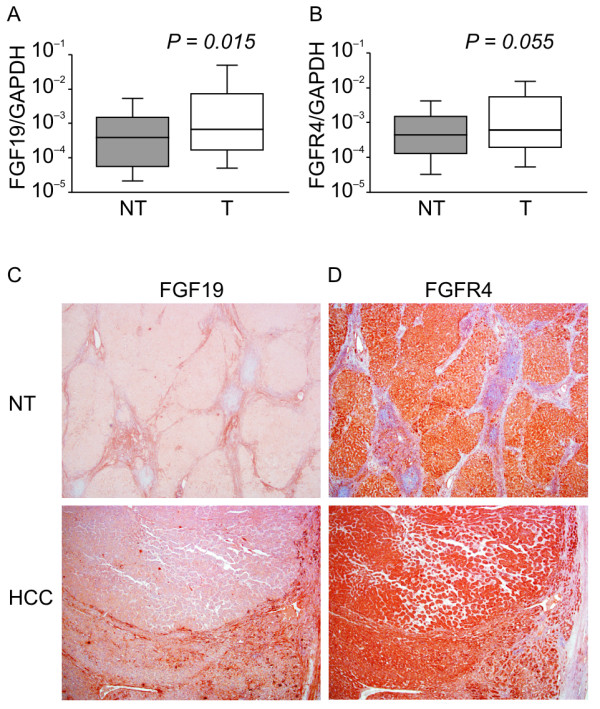
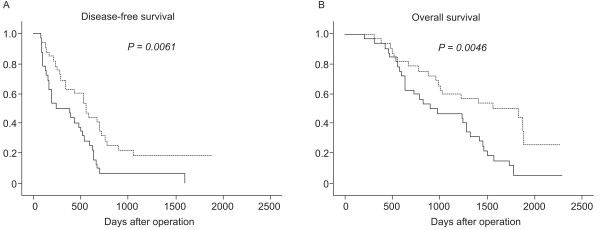
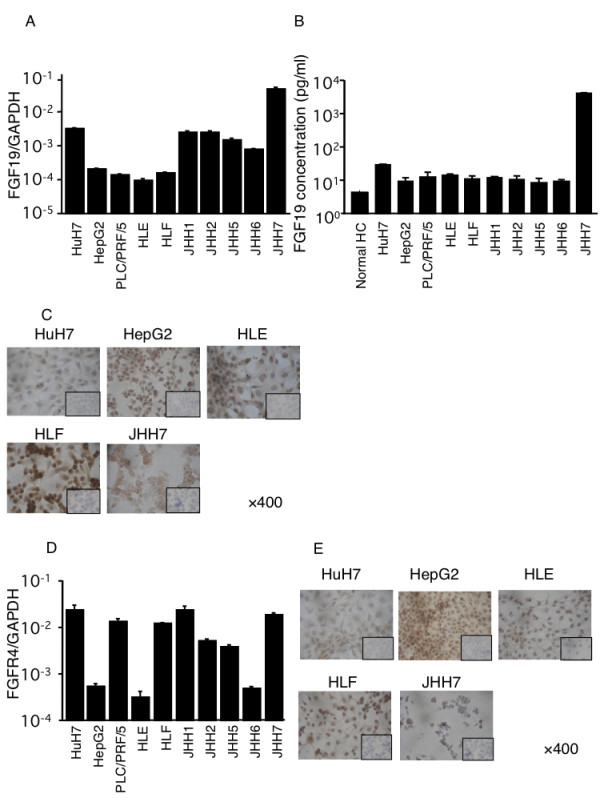
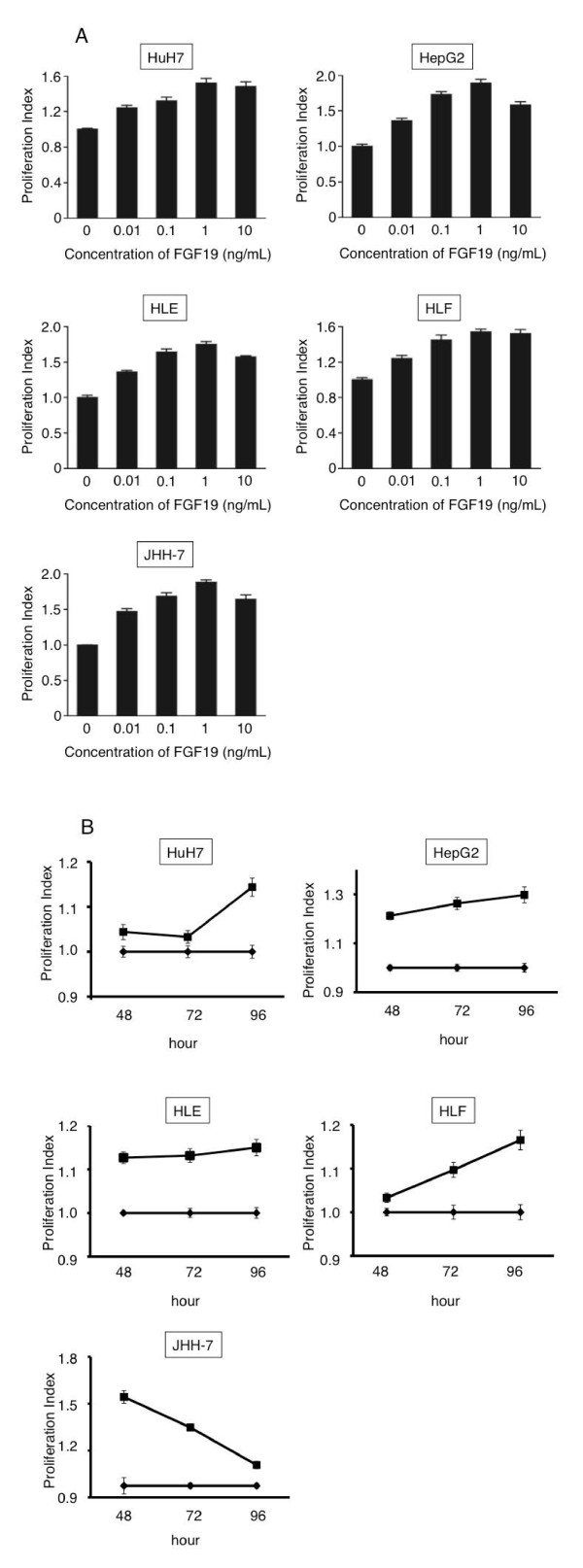
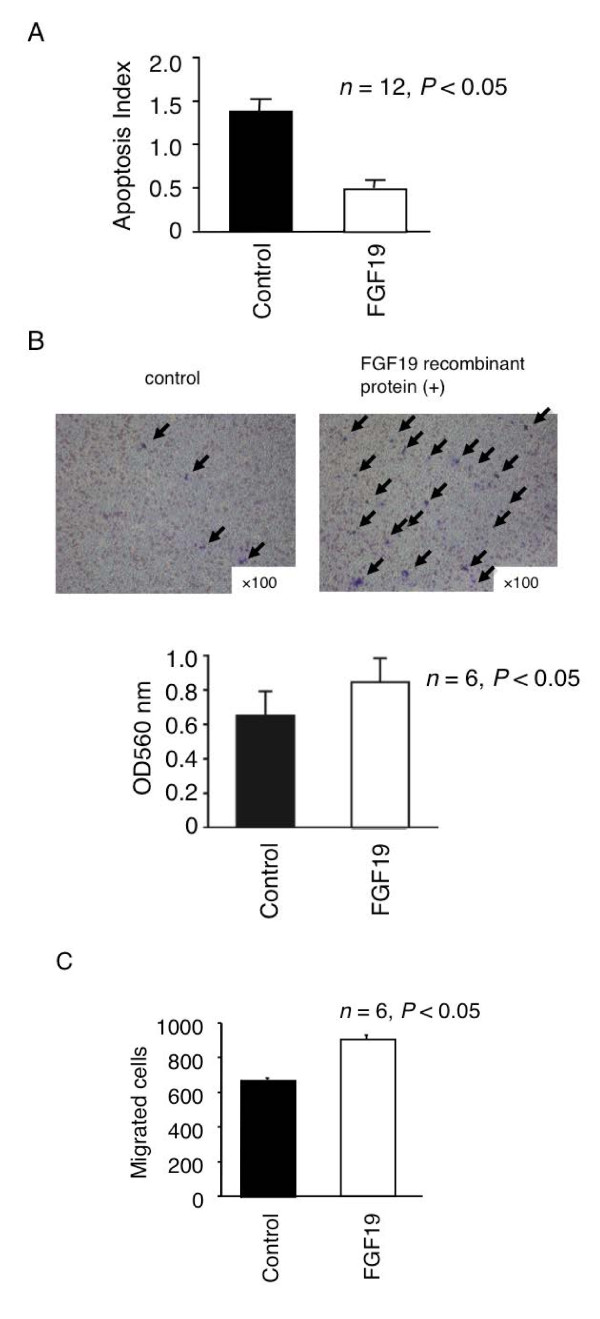
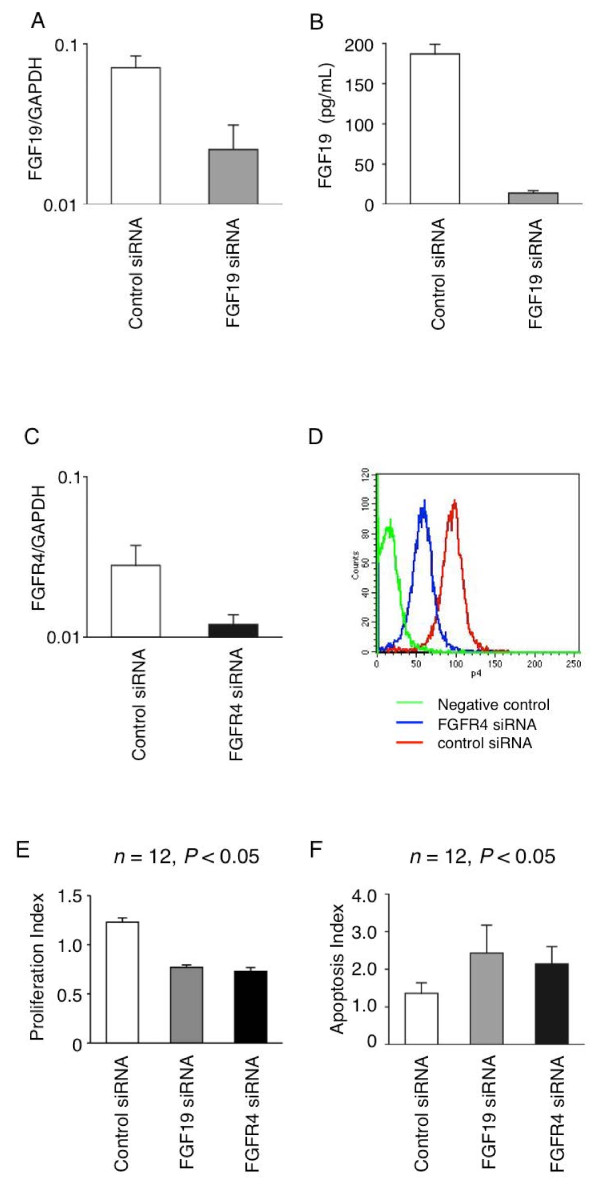
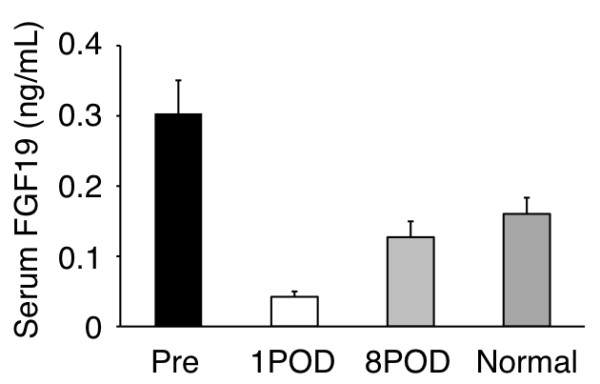
Background: Although fibroblast growth factor 19 (FGF19) can promote liver carcinogenesis in mice, its involvement in human hepatocellular carcinoma (HCC) has not been well investigated. FGF19, a member of the FGF family, has unique specificity for its receptor FGFR4. This study aimed to clarify the involvement of FGF19 in the development of HCC. Methods: We investigated human FGF19 and FGFR4 expression in 40 hepatocellular carcinoma specimens using quantitative real-time reverse transcription polymerase chain reaction (RT-PCR) analysis and immunohistochemistry. Moreover, we examined the expression and the distribution of FGF19 and FGFR4 in 5 hepatocellular carcinoma cell lines (HepG2, HuH7, HLE, HLF, and JHH7) using RT-PCR and immunohistochemistry. To test the role of the FGF19/FGFR4 system in tumor progression, we used recombinant FGF19 protein and small interfering RNA (siRNA) of FGF19 and FGFR4 to regulate their concentrations. Results: We found that FGF19 was significantly overexpressed in HCCs as compared with corresponding noncancerous liver tissue (P < 0.05). Univariate and multivariate analyses revealed that the tumor FGF19 mRNA expression was an independent prognostic factor for overall and disease-free survival. Moreover, we found that the FGF19 recombinant protein could increase the proliferation (P < 0.01, n = 12) and invasion (P < 0.01, n = 6) capabilities of human hepatocellular carcinoma cell lines and inhibited their apoptosis (P < 0.01, n = 12). Inversely, decreasing FGF19 and FGFR4 expression by siRNA significantly inhibited proliferation and increased apoptosis in JHH7 cells (P < 0.01, n = 12). The postoperative serum FGF19 levels in HCC patients was significantly lower than the preoperative levels (P < 0.01, n = 29). Conclusions: FGF19 is critically involved in the development of HCCs. Targeting FGF19 inhibition is an attractive potential therapeutic strategy for HCC.
Overview
The claims and statistics of this paper haven’t been checked yet.
Free: it reads the open-access text and checks the first 5 claims that cite a source we can check. Create a free account to check every claim.
Integrity signals
Registry
Cites
Statistics
Figures
Verification
Claims the paper makes
The claims and statistics of this paper haven’t been checked yet.
Free: it reads the open-access text and checks the first 5 claims that cite a source we can check. Create a free account to check every claim.
Claims other papers make about this one
Each is checked against this paper’s own text: does it say what the citing paper says it does?
The cited source says what the claim attributes to it.
In the citing paper
“However, the therapeutic potential of FGF19 has been hindered by its effect on potential occurrence of HCC, since mice expressing an FGF19 transgene developed liver tumors while tumor FGF19 hepatic mRNA expression was an independent prognostic factor for overall and disease-free survival [259,260].”
From Gut-pancreas-liver Axis as a target for treatment of NAFLD/NASH (2020) · cites this paper as [260]
Self-check
Percentages, sums and reported differences re-computed from the paper’s own numbers.
The self-check needs the paper’s full text.
Citations
Cites
Management of Hepatocellular Carcinoma: An Update Δσ
Bruix, J., & Sherman, M. (2011) · Hepatology · doi:10.1002/hep.24199 · Cited by 8,103
Management of Hepatocellular Carcinoma *
Bruix, J., & Sherman, M. (2005) · Hepatology · doi:10.1002/hep.20933 · Cited by 5,857
Hepatocellular Carcinoma: Epidemiology and Molecular Carcinogenesis
El–Serag, H. B., & Rudolph, K. L. (2007) · Gastroenterology · doi:10.1053/j.gastro.2007.04.061 · Cited by 5,415 · cited 1×
“Curative therapies of surgical treatment, including hepatic resection and liver transplantation, improve the chances of survival of patients with HCC [2-4].”
BackgroundGlobal cancer statistics in the year 2000
Parkin, D. M. (2001) · The Lancet Oncology · doi:10.1016/s1470-2045(01)00486-7 · Cited by 2,445
Ornitz, D. M., & Itoh, N. (2001) · Genome biology · doi:10.1186/gb-2001-2-3-reviews3005 · Cited by 2,305
Cellular signaling by fibroblast growth factor receptors
Eswarakumar, V. P., Lax, I., & Schlessinger, J. (2005) · Cytokine & Growth Factor Reviews · doi:10.1016/j.cytogfr.2005.01.001 · Cited by 1,929 · cited 1×
“Fibroblast growth factor (FGF) signaling plays an important role in a variety of processes, including proliferation, cellular differentiation, wound repair, and angiogenesis [7-9].”
BackgroundReceptor Specificity of the Fibroblast Growth Factor Family
Ornitz, D. M., Xu, J., Colvin, J. S., McEwen, D. G., MacArthur, C. A., Coulier, F., Gao, G., & Goldfarb, M. (1996) · Journal of Biological Chemistry · doi:10.1074/jbc.271.25.15292 · Cited by 1,871 · cited 1×
“FGF19 is currently unique in displaying apparent specificity for FGFR4 [23,24].”
BackgroundImamura, H., Matsuyama, Y., Tanaka, E., Ohkubo, T., Hasegawa, K., Miyagawa, S., Sugawara, Y., Minagawa, M., Takayama, T., Kawasaki, S., et al. (2003) · Journal of Hepatology · doi:10.1016/s0168-8278(02)00360-4 · Cited by 1,589 · cited 1×
“The prognosis for most patients remains poor after surgery for multicentric recurrence and intrahepatic metastasis [5,6].”
BackgroundEvolution of the Fgf and Fgfr gene families
Itoh, N., & Ornitz, D. M. (2004) · Trends in Genetics · doi:10.1016/j.tig.2004.08.007 · Cited by 1,096 · cited 1×
“Fibroblast growth factor (FGF) signaling plays an important role in a variety of processes, including proliferation, cellular differentiation, wound repair, and angiogenesis [7-9].”
BackgroundHolt, J. A., Luo, G., Billin, A. N., Bisi, J., McNeill, Y. Y., Kozarsky, K. F., Donahee, M., Wang, D. Y., Mansfield, T. A., Kliewer, S. A., et al. (2003) · Genes & Development · doi:10.1101/gad.1083503 · Cited by 696 · cited 1×
“Previous studies have reported that FGF19 and hepatocyte FGFR4 regulate biosynthesis in the bile duct by repression of CYP7A1 [25].”
Background
Cited by
Items 101–200 of 200
Curtailing FGF19’s mitogenicity by suppressing its receptor dimerization ability
Niu, J., Zhao, J., Wu, J., Qiao, G., Gu, J., Zhou, C., Li, Q., Lei, Y., Wang, D., Lin, H., et al. (2020) · Proceedings of the National Academy of Sciences · doi:10.1073/pnas.2010984117 · Cited by 31
Hu, L., & CONG, L.-X. (2015) · Oncology Reports · doi:10.3892/or.2015.4212 · Cited by 30
Loss of FGF21 in diabetic mouse during hepatocellular carcinogenetic transformation.
Zhang, Q., Yan, L., Liang, T., Lu, X., Liu, X., Zhang, C., Jiang, X. M., Martin, R. C. G., Cheng, M., & Cai, L. (2015) · Europe PMC (PubMed Central) · Cited by 34
FGF 19 genetic amplification as a potential therapeutic target in lung squamous cell carcinomas
Zhang, X., Kong, M., Zhang, Z., Xu, S., Yan, F., Wei, L., & Zhou, J. (2017) · Thoracic Cancer · doi:10.1111/1759-7714.12504 · Cited by 28
Huynh, H. T., Prawira, A., Le, T. B. U., Vu, T. C., Hao, H.-X., Huang, A., Wang, Y., & Porta, D. G. (2020) · Experimental & Molecular Medicine · doi:10.1038/s12276-020-00524-4 · Cited by 31
Lee, H., Kang, H. J., Kim, K. M., Yu, E. S., Kim, S.-M., Kim, S.-M., Lim, Y., Shim, J. H., Lim, Y. S., Lee, Y. S., et al. (2015) · Clinical and Molecular Hepatology · doi:10.3350/cmh.2015.21.1.60 · Cited by 30
“Recently, a report of 40 human HCC tissues showed that FGF19 is expressed at significantly higher levels in HCC, and that FGF19 and FGFR4 inhibition suppresses proliferation and increases apoptosis in HCC cell lines.(25) In addition, it has been reported also that FGF19/FGFR4-mediated downstream signaling is significa…”
BackgroundThe gut–liver axis in hepatocarcinoma: a focus on the nuclear receptor FXR and the enterokine FGF19
Piglionica, M., Cariello, M., & Moschetta, A. (2018) · Current Opinion in Pharmacology · doi:10.1016/j.coph.2018.08.005 · Cited by 31
Wang, H., Yang, J., Zhang, K., Liu, J., Li, Y., Su, W., & Song, N. (2021) · Frontiers in Pharmacology · doi:10.3389/fphar.2021.650388 · Cited by 34
Alteration in the serum concentrations of FGF19, FGFR4 and βKlotho in patients with thyroid cancer
Motylewska, E., Stępień, T., Borkowska, M., Kuzdak, K., Siejka, A., Komorowski, J., Stepien, H., & Ławnicka, H. (2018) · Cytokine · doi:10.1016/j.cyto.2018.02.013 · Cited by 29
“FGF19 recombinant protein increased also the proliferation and invasion capabilities of human hepatocellular carcinoma cell lines and inhibited their apoptosis [18].”
BackgroundGuo, J. F., Zhu, P., Ye, Z., Wang, M., Yang, H., Huang, S., Shu, Y., Zhang, W., Zhou, H., & Li, Q. (2021) · Frontiers in Pharmacology · doi:10.3389/fphar.2021.744578 · Cited by 28
Metwaly, H. A., El-Gayar, A. M., & El‐Shishtawy, M. M. (2018) · Archives of Biochemistry and Biophysics · doi:10.1016/j.abb.2018.06.007 · Cited by 26
Development of a long acting FGF21 analogue-albumin fusion protein and its anti-diabetic effects
Watanabe, H., Miyahisa, M., Chikamatsu, M., Nishida, K., Minayoshi, Y., Takano, M., Ichimizu, S., Kobashigawa, Y., Morioka, H., Maeda, H., et al. (2020) · Journal of Controlled Release · doi:10.1016/j.jconrel.2020.05.036 · Cited by 24
Yoo, C., Kang, J., Kim, D., Kim, K., Ryoo, B., Hong, S., Hwang, J. J., Jeong, S., Hwang, S., Kim, K., et al. (2017) · Oncotarget · doi:10.18632/oncotarget.16951 · Cited by 25
“In addition, FGF19 overexpression correlated with poor survival outcomes in patients with hepatocellular carcinoma [18].”
BackgroundFGFR1 expression defines clinically distinct subtypes in pancreatic cancer
Haq, F. U., Sung, Y., Park, I., Kayani, M. A., Yousuf, F., Hong, S., & Ahn, S. (2018) · Journal of Translational Medicine · doi:10.1186/s12967-018-1743-9 · Cited by 31
Liu, Z.-L., Liu, J., Staiculescu, D., & Chen, J. (2021) · Therapeutic Advances in Medical Oncology · doi:10.1177/17588359211018026 · Cited by 27
Chen, Y., Xue, W., Zhang, Y., Gao, Y., & Wang, Y. (2023) · Journal of Cancer Research and Clinical Oncology · doi:10.1007/s00432-023-05076-4 · Cited by 24
“The treatment of HCC, which now includes hepatic resection and live transplantation, has significantly improved since the early 2010s (Galle et al. 2018; Miura et al. 2012).”
BackgroundFibroblast growth factor 19-targeted therapies for the treatment of metabolic disease
Rysz, J., Gluba-Brzózka, A., Mikhailidis, D. P., & Banach, M. (2015) · Expert Opinion on Investigational Drugs · doi:10.1517/13543784.2015.1006357 · Cited by 28
“Also, other studies have demonstrated that ectopic expression of FGF19 in mice stimulated hepatocyte proliferation, hepatocellular dysplasia and neoplasia [54], while selective blockade of FGF19 interaction with the FGFR4 prevented in vivo colon tumor growth and liver tumor formation [1,48].”
BackgroundLin, Z., Hsu, C., Jeng, Y., Hu, F., Pan, H., Wu, Y., Hsu, H., & Cheng, A. (2019) · Liver International · doi:10.1111/liv.14055 · Cited by 26
Bartz, R., Fukuchi, K., Ohtsuka, T., Lange, T., Grüner, K., Watanabe, I., Hayashi, S., Oda, Y., Kawaida, R., Komori, H., et al. (2019) · Molecular Cancer Therapeutics · doi:10.1158/1535-7163.mct-18-0048 · Cited by 24
“Consequently, patients with liver cancer with tumors overexpressing FGF19 have a shorter overall survival than patients whose tumors express lower levels or no FGF19 (18, 19).”
BackgroundGamma-Klotho exhibits multiple roles in tumor growth of human bladder cancer
Hori, S., Miyake, M., Tatsumi, Y., Morizawa, Y., Nakai, Y., Onishi, S., Onishi, K., Iida, K., Gotoh, D., Tanaka, N., et al. (2018) · Oncotarget · doi:10.18632/oncotarget.24628 · Cited by 22
“In addition, FGF19 and FGFR4 signaling had an effect on HCC resistance to sorafenib therapy through the inhibition of reactive oxygen species generation and apoptosis [27, 28].”
BackgroundThe Enterokine Fibroblast Growth Factor 15/19 in Bile Acid Metabolism
Cariello, M., Piglionica, M., Gadaleta, R. M., & Moschetta, A. (2019) · Handbook of experimental pharmacology · doi:10.1007/164_2019_235 · Cited by 25
Zhang, Z., Li, J., Chen, H., Huang, J., Song, X., Tu, Z., Zhang, Z., Peng, L., Zhou, Y., & Ding, K. (2022) · Journal of Medicinal Chemistry · doi:10.1021/acs.jmedchem.1c01816 · Cited by 22
Regulation of bile acid homeostasis by the intestinal Diet1–FGF15/19 axis
Reue, K., Lee, J. M., & Vergnes, L. (2014) · Current Opinion in Lipidology · doi:10.1097/mol.0000000000000060 · Cited by 26
Making Way for Suppressing the FGF19/FGFR4 Axis in Cancer
Prieto‐Domínguez, N., Shull, A. Y., & Teng, Y. (2018) · Future Medicinal Chemistry · doi:10.4155/fmc-2018-0099 · Cited by 22
Novel Regulatory Factors and Small-Molecule Inhibitors of FGFR4 in Cancer
Liu, Y., Wang, C., Li, J., Zhu, J., Zhao, C., & Xu, H. (2021) · Frontiers in Pharmacology · doi:10.3389/fphar.2021.633453 · Cited by 25
Shigesawa, T., Suda, G., Kimura, M., Shimazaki, T., Maehara, O., Yamada, R., Kitagataya, T., Suzuki, K., Nakamura, A., Ohara, M., et al. (2020) · JGH Open · doi:10.1002/jgh3.12339 · Cited by 21
Sydor, S., Dandyk, C., Schwerdt, J., Manka, P. P., Benndorf, D., Lehmann, T., Schallert, K., Wolf, M., Reichl, U., Canbay, A. E., et al. (2022) · International Journal of Molecular Sciences · doi:10.3390/ijms23168841 · Cited by 20
Insight into the design of FGFR4 selective inhibitors in cancer therapy: Prospects and challenges
Chen, X., Huang, Y., Chen, B., Liu, H., Cai, Y., & Yang, Y. (2023) · European Journal of Medicinal Chemistry · doi:10.1016/j.ejmech.2023.115947 · Cited by 22
Sun, Y. X., Zhu, M., Zhao, H., Ni, X., Chang, R., Su, J., Huang, H., Cui, S., Wang, X., Yuan, J., et al. (2020) · BioMed Research International · doi:10.1155/2020/1751989 · Cited by 20
“In addition, high FGF19 concentrations have been reported to be present in HCC patients and are associated with a poor prognosis [8].”
BackgroundZhang, X., Wang, Z., Tian, L., Xie, J., Guijun, Z., & Jiang, F. (2015) · Otolaryngology · doi:10.1177/0194599815609534 · Cited by 19
FGF s: crucial factors that regulate tumour initiation and progression
Qian, J., Wang, Y., Liu, H., Deng, X., Jiang, L., Liu, R. R., Song, H., & Li, J. (2016) · Cell Proliferation · doi:10.1111/cpr.12275 · Cited by 20
Dissecting the molecular recognition of dual lapatinib derivatives for EGFR/HER2
Bello, M., Guadarrama-García, C., & Rodríguez-Fonseca, R. A. (2019) · Journal of Computer-Aided Molecular Design · doi:10.1007/s10822-019-00270-4 · Cited by 19
Wang, X., Klaassen, C. D., Chen, X., & Zhang, Y. (2025) · Pharmacological Reviews · doi:10.1016/j.pharmr.2025.100073 · Cited by 18
Carr, B. I., Pančoška, P., Giannini, E. G., Farinati, F., Ciccarese, F., Rapaccini, G. L., Marco, M. D., Benvegnù, L., Zoli, M., Borzio, F., et al. (2014) · Seminars in Oncology · doi:10.1053/j.seminoncol.2014.04.002 · Cited by 19
Okubo, H., Kushiyama, A., Nakatsu, Y., Yamamotoya, T., Matsunaga, Y., Fujishiro, M., Sakoda, H., Ohno, H., Yoneda, M., & Asano, T. (2018) · International Journal of Molecular Sciences · doi:10.3390/ijms19103064 · Cited by 23
Chen, Y.-X., Zhang, J.-X., Zhou, C., Liu, J., Liu, S., Shi, H., & Zu, Q. (2022) · Journal of Hepatocellular Carcinoma · doi:10.2147/jhc.s373250 · Cited by 23
Alteration in serum concentrations of FGF19, FGF21, and FGF23 in patients with urothelial carcinoma
Li, J., Chiu, K., Ou, Y., Wang, S., Chen, C., Yang, C., Ho, H., Cheng, C., Yang, C., Chen, C., et al. (2018) · BioFactors · doi:10.1002/biof.1460 · Cited by 18
Pohl, R., Feder, S., Haberl, E. M., Rein‐Fischboeck, L., Weiß, T. S., Spirk, M., Bruckmann, A., McMullen, N. M., Sinal, C. J., & Buechler, C. (2022) · Biomedicines · doi:10.3390/biomedicines10010132 · Cited by 16
“FGF19 is expressed by hepatocyte cell lines and CD26 by T cells [52,59].”
BackgroundZhou, H., Huang, Y., Chen, C., Song, M., & Hylemon, P. B. (2026) · Pharmacological Reviews · doi:10.1016/j.pharmr.2026.100120 · Cited by 19
EWS-WT1 Chimeric Protein in Desmoplastic Small Round Cell Tumor is a Potent Transactivator of FGFR4
Saito, T. (2012) · Journal of Cancer Science & Therapy · doi:10.4172/1948-5956.1000164 · Cited by 15
“On the other hand, it has been shown that FGF19 expression correlates with tumor progression and poorer prognosis of hepatocellular carcinoma [26], and that therapeutic inactivation of FGF19 could be beneficial for the treatment of colon and liver cancer [41].”
BackgroundNevi, L., Aiello, C., Molinaro, F., Altomare, A., Musarra, T., Gallo, P., Taffon, C., Guarino, M. P. L., Gentilucci, U. V., Baiocchini, A., et al. (2025) · npj gut and liver. · doi:10.1038/s44355-025-00038-8 · Cited by 14
Wang, L., Su, Y., & Choi, W. S. (2021) · International Journal of Molecular Sciences · doi:10.3390/ijms22189907 · Cited by 13
“According to previous studies, the FGF19/FGFR4 axis played a pivotal role in many different cancers such as hepatocellular carcinoma [36], breast cancer [37], ovarian cancer [38], and prostate cancer [39], which led to their low 5-year survival rates.”
MethodNovel therapeutic targets and predictive markers for hepatocellular carcinoma
Chan, S. L., Chan, A. W. H., & Yeo, W. (2015) · Expert Opinion on Therapeutic Targets · doi:10.1517/14728222.2015.1031109 · Cited by 12
“FGF19, in addition, is overexpressed with higher intensity in the HCC surgical specimen compared to nontumorous liver tissue, which is associated with poor prognosis [41].”
BackgroundSartorius, K., Antwi, S. O., Chuturgoon, A. A., Roberts, L. R., & Kramvis, A. (2022) · Frontiers in Oncology · doi:10.3389/fonc.2022.891812 · Cited by 12
“Stabilized siRNA transfection FGF Reduced hepatic endothelial cells (53, 54)”
BackgroundSilencing of Wnt10B reduces viability of heptocellular carcinoma HepG2 cells.
Wu, G., Fan, X., & Sun, L. (2015) · Europe PMC (PubMed Central) · Cited by 17
Interrupting the FGF19-FGFR4 Axis to Therapeutically Disrupt Cancer Progression
Lang, L., Shull, A. Y., & Teng, Y. (2018) · Current Cancer Drug Targets · doi:10.2174/1568009618666180319091731 · Cited by 12
FGF19 and its analog Aldafermin cooperate with MYC to induce aggressive hepatocarcinogenesis
Ursic-Bedoya, J., Desandré, G., Chavey, C., Marie, P., Polizzi, A., Rivière, B., Guillou, H., Assenat, E., Hibner, U., & Gregoire, D. (2024) · EMBO Molecular Medicine · doi:10.1038/s44321-023-00021-x · Cited by 11
“This genetic alteration is associated with more aggressive tumors, higher risk of recurrence after surgical resection and lower overall survival rates (Miura et al, 2012; Ahn et al, 2014; Schulze et al, 2015; Kang et al, 2019).”
Non-alcoholic fatty liver disease and liver secretome
Khan, M. S., Lee, C.-H., & Kim, S. G. (2022) · Archives of Pharmacal Research · doi:10.1007/s12272-022-01419-w · Cited by 14
“The levels of AKR1B10 were found to be higher in patients with HCC (Heringlake et al.”
BackgroundInfluentialWang, K.-Q., Ye, M.-L., Qiao, X., Yu, Z., Wu, C.-X., & Zheng, J. (2022) · Pancreas · doi:10.1097/mpa.0000000000002119 · Cited by 11
Role of fibroblast growth factor 19 in maintaining nutrient homeostasis and disease.
Zhang, J., Li, H. T., Fang, Q. C., & Jia, W. (2014) · PubMed · doi:10.3967/bes2014.056 · Cited by 12
FGF19 and its analog Aldafermin cooperate with MYC to induce aggressive hepatocarcinogenesis
Ursic-Bedoya, J., Desandré, G., Chavey, C., Marie, P., Polizzi, A., Rivière, B., Guillou, H., Assenat, E., Hibner, U., & Gregoire, D. (2023) · doi:10.1101/2023.09.15.557921 · Cited by 11
Fibroblast growth factors induce hepatic tumorigenesis post radiofrequency ablation
Markezana, A., Paldor, M., Liao, H., Ahmed, M., Zorde‐Khvalevsky, E., Rozenblum, N., Stechele, M., Salvermoser, L., Laville, F., Goldmann, S., et al. (2023) · Scientific Reports · doi:10.1038/s41598-023-42819-2 · Cited by 10
Metabolic effects of bile acid sequestration: impact on cardiovascular risk factors
Spinelli, V., Chávez‐Talavera, O., Tailleux, A., & Staels, B. (2016) · Current Opinion in Endocrinology Diabetes and Obesity · doi:10.1097/med.0000000000000235 · Cited by 13
Navigating second-line therapy after immunotherapy in advanced HCC☆
Vogel, A., Saborowski, A. L., Rimassa, L., & El-Khoueiry, A. B. (2025) · JHEP Reports · doi:10.1016/j.jhepr.2025.101630 · Cited by 18
“Fisogatinib (BLU-554) is a selective FGFR4 inhibitor that demonstrated activity in early clinical trials for FGF19-driven HCC.”
InfluentialLiu, H., Zheng, S., Hou, X., Liu, X., Du, K., Lv, X., Li, Y., Yang, F., Li, W., & Sui, J. (2020) · Cancer Science · doi:10.1111/cas.14353 · Cited by 10
Lin, X., Smaill, J. B., Squire, C. J., & Yosaatmadja, Y. (2019) · Worldwide Protein Data Bank · doi:10.2210/pdb6nvi/pdb · Cited by 9
Ye, G., Ye, M., & Jin, C. (2024) · American Journal of Cancer Research · doi:10.62347/ujvp4361 · Cited by 9
Fibroblast growth factor family as a potential target in the treatment of hepatocellular carcinoma
Grose, R. P., Coleman, S. J., & Kocher, H. M. (2014) · Journal of Hepatocellular Carcinoma · doi:10.2147/jhc.s48958 · Cited by 9
“FGF19 and FGF receptor 4 The FGF receptor 4–FGF19 signaling axis is an attractive target for progression of HCC for several reasons.(17,18,80,81) Firstly, the main FGF receptors expressed in the liver are FGF”
BackgroundThe fibroblast growth factor receptor pathway in hepatocellular carcinoma
Lee, J. J. X., & Choo, S. P. (2018) · Hepatoma Research · doi:10.20517/2394-5079.2018.42 · Cited by 7
“In vitro studies show that FGF19 induces HCC cell proliferation([29]) and inhibits apoptosis([33]).”
BackgroundZhang, B., Su, L., & Lin, Y. (2024) · Oncology Letters · doi:10.3892/ol.2024.14445 · Cited by 7
“The growing body of evidence underscores the significance of FGF pathway signalling activation in HCC development and advancement (22).”
BackgroundTSC22D2 Regulates ACOT8 to Delay the Malignant Progression of Colorectal Cancer
Zhou, N., Guo, C., Du, J., Zhang, X., Xu, Q., Zheng, X., & Tu, L. (2024) · OncoTargets and Therapy · doi:10.2147/ott.s449244 · Cited by 6
Role of fibroblast growth factor 4 in the growth and metastasis of colorectal cancer
Ye, Y., Jiang, D., Li, J., Han, C., Wang, X., Wang, F., & Li, J. (2020) · International Journal of Oncology · doi:10.3892/ijo.2020.5029 · Cited by 6
“Notably, treatment of hepatoma cell lines with recombinant FGF19 protein resulted in an increase in cell proliferation and invasion; however, this tendency was partially reversed when FGFR4 was knocked down (10).”
BackgroundShibata, O., Kamimura, K., Ko, M., Sakai, N., Abé, H., Morita, S., Mizusawa, T., Sato, H., Sakamaki, A., & Terai, S. (2020) · Internal Medicine · doi:10.2169/internalmedicine.6580-20 · Cited by 6
“In addition, aberrant expression of FGF19-FGFR4 have been reported to be correlated with tumor progression and a poorer prognosis of HCC, making them a novel therapeutic target for HCC therapy (17-19).”
BackgroundReactivation of the PI3K/mTOR Signaling Pathway Confers Resistance to the FGFR4 Inhibitor FGF401
Huynh, H. T., & Ng, W. H. (2025) · International Journal of Molecular Sciences · doi:10.3390/ijms26199818 · Cited by 5
“FGF19 overexpression and FGFR4 expression have been detected in 14% and approximately 50% of HCC patients, respectively [21,22], and are correlated with poorer prognosis, earlier recurrence, faster tumor progression, and a shorter OS [22,23].”
Lenvatinib inhibits cholangiocarcinoma progression by targeting the FGF19/PI3K/AKT signaling pathway
Wei, Y., Yang, L., Tang, C., Zhuang, H., Chen, X., Ma, X., Deng, X., Chen, Y., Tan, W., & Shang, C. (2024) · APOPTOSIS · doi:10.1007/s10495-024-02028-2 · Cited by 6
“FGF19 overexpression has been previous established to be positively correlated with tumor progression and poor prognosis in various tumors [11, 25].”
SORL1-Mediated EGFR and FGFR4 Regulation Enhances Chemoresistance in Ovarian Cancer
Jiang, Z., Bi, F., Ge, Z., Mansolf, M., Hartwich, T. M. P., Kolesnyk, V., Yang, Y., Park, W., Kim, D., Grechukhina, O., et al. (2025) · Cancers · doi:10.3390/cancers17020244 · Cited by 7
Bok, J., Kim, K.-J., Park, M., Cho, S.-H., Lee, H., Lee, E., Park, C., & Lee, J. (2012) · BMB Reports · doi:10.5483/bmbrep.2012.45.6.279 · Cited by 5
Innovative molecular targeted agents in hepatocellular carcinoma: new gladiators on the arena
Ferri, J., Dockx, Y., Vonghia, L., Papadimitriou, K., Rasschaert, M. A., Francque, S., Peeters, M., & Rolfo, C. D. (2017) · Minerva Surgery · doi:10.23736/s0026-4733.17.07311-4 · Cited by 5
Immune checkpoints in hepatocellular carcinoma and the challenges of therapeutic resistance
Tao, X., & Yang, X. (2025) · Immunopharmacology and Immunotoxicology · doi:10.1080/08923973.2025.2542137 · Cited by 4
“Ponatinib dramatically lowers the viability of Hcc cells and has shown synergistic effects with sorafenib [116]. cervello et al. compiled a thorough overview of the molecular changes seen in Hcc [120].”
Budkowska, M., Ostrycharz, E., Cecerska‐Heryć, E., Dołęgowska, K., Siennicka, A., Nazarewski, Ł., Rykowski, P., & Dołęgowska, B. (2025) · International Journal of Molecular Sciences · doi:10.3390/ijms26031299 · Cited by 3
“We know that the overexpression of FGF19 has been observed in patients with cirrhosis, NAFLD, PBC, precancerous condition, and HCC [13,27,30] and that FGF19 is a factor whose concentration tends to increase depending on the severity of pathological conditions with the significantly higher level of…”
Sun, X., Jia, W., Liang, H., & Cheng, H. (2025) · Frontiers in Immunology · doi:10.3389/fimmu.2025.1481366 · Cited by 4
Role of FGF15 in Hepatic Surgery in the Presence of Tumorigenesis: Dr. Jekyll or Mr. Hyde?
Caballeria-Casals, A., Micó-Carnero, M., Rojano-Alfonso, C., Maroto-Serrat, C., Casillas-Ramírez, A., Álvarez‐Mercado, A. I., Gracia‐Sancho, J., & Peralta, C. (2021) · Cells · doi:10.3390/cells10061421 · Cited by 5
“As the interaction of FGFR4 with its ligand, FGF19, affects the downstream signaling pathway, it is obvious that high expression of FGF19 and/or FGFR4 is correlated with a poor prognosis in HCC cancer [63].”
BackgroundDesign, synthesis and antitumor activity of phthalazine-1,4-dione-based menaquinone analogs
Fujii, S., Miura, T., Oikawa, T., Qin, X., Kojima, S., & Kagechika, H. (2021) · Bioorganic & Medicinal Chemistry Letters · doi:10.1016/j.bmcl.2021.128065 · Cited by 3
Suzuki, R., Goto, R., Kawamura, N., Watanabe, M., Ganchiku, Y., Hatanaka, K. C., Hatanaka, Y., Kamiyama, T., Shimamura, T., & Taketomi, A. (2022) · Clinical Journal of Gastroenterology · doi:10.1007/s12328-022-01643-3 · Cited by 3
The Cancer Noise Atlas (TCNA): A Webserver of Multiscale Transcriptional Noise in Cancer
Shah, R., Faisal, A., Faiz, A. B., Bashir, I., Jawaid, A., Bashir, K., Shoaib, M., & Chaudhary, S. U. (2026) · Journal of Molecular Biology · doi:10.1016/j.jmb.2026.169842 · Cited by 2
Krapf, S. A., Lund, J., Saqib, A. U. R., Bakke, H. G., Rustan, A. C., Thoresen, G. H., & Kase, E. T. (2022) · Metabolites · doi:10.3390/metabo12111095 · Cited by 2
“These included the stem cell factor KITLG, often found to be upregulated in several types of cancers [35]; fibroblast growth factor 19 (FGF19), whose upregulation is linked to hepatocellular carcinoma and unfavorable outcomes [36]; and tissue inhibitor of metalloproteinases-1 (TIMP1), which is typically upregulated in…”
BackgroundDiscovery of novel FGFR4 inhibitors through a build-up fragment strategy
Kim, J., Im, C. G., Oh, K., Lee, J. M., Al-Rubaye, F., & Min, K. H. (2024) · Journal of Enzyme Inhibition and Medicinal Chemistry · doi:10.1080/14756366.2024.2343350 · Cited by 1
“Abnormal activation of FGF19-FGFR4 signalling is closely associated with HCC progression 9 .”
Fibroblast Growth Factor 19: An Overview of its Diverse Physiological Functions
Ghosh, A. (2015) · Journal of Gastrointestinal & Digestive System · doi:10.4172/2161-069x.1000285 · Cited by 1
“In addition, administration of recombinant FGF19 protein increased the proliferation and invasion of HCC cell lines and inhibited the natural tendency of the cells to follow a programmed death pattern or apoptosis [35].”
BackgroundRuptured hepatocellular carcinoma following administration of Lenvatinib: an autopsy case
Uchida, K., Aoyama, T., Terai, Y., Yamaguchi, N., Kato, S., Yakabi, K., Kikuchi, J., Ogasawara, S., Yano, H., & Nagoshi, S. (2022) · Kanzo · doi:10.2957/kanzo.63.238 · Cited by 1
Li, X. (2024) · Elsevier eBooks · doi:10.1016/b978-0-443-15793-6.00008-1 · Cited by 1
Bile Acids and FGF19 in the Remission of Type 2 Diabetes After Sleeve Gastrectomy and Gastric Bypass
Nemati, R. (2017) · Tuwhera (Auckland University of Technology) · Cited by 1
Experimental Models of Liver Cancer
Yim, S. Y., Shim, J., Sohn, B. H., & Lee, J. (2020) · Wiley eBooks · doi:10.1002/9781119436812.ch58
Shivaprasad, N. (2019) · DigitalGeorgetown (Georgetown University Library)
Sweed, D., Kilany, S., Taha, M., Sweed, E. M., Abdelsattar, S., & Mosbeh, A. (2021) · International Journal of Cancer and Biomedical Research · doi:10.21608/jcbr.2021.73946.1206
Endocrine fibroblast growth factors in domestic animals
Brinker, E. J., Hardcastle, M., Dittmer, K. E., & Graff, E. C. (2024) · Domestic Animal Endocrinology · doi:10.1016/j.domaniend.2024.106872
Luo, X.-Y., Wu, K.-M., & He, X.-X. (2021) · Figshare · doi:10.6084/m9.figshare.14615275
Beardsley, J. M., Rohr, M., Goode, J. A., Nakkina, S. P., Parikh, J. G., & Altomare, D. A. (2026) · Molecular Oncology · doi:10.1002/1878-0261.70212 · Cited by 1
Li, Y., Zhang, F., Duan, H., & Weng, W. (2026) · Research Square · doi:10.21203/rs.3.rs-8948144/v1
Coopération oncogénique et effets métaboliques de FGF19 dans le carcinome hépatocellulaire
Bedoya, J. U. (2021) · theses.fr (ABES) · doi:10.70675/d2df913bz04e7z457dzb21dzf6ae23303e0c
Rôle des FGFs endocrines et leurs récepteurs au cours de la fibrose pulmonaire idiopathique
Ghanem, M. (2023) · theses.fr (ABES) · doi:10.70675/fd0d64f8zacf4z4856z9b1az66d4df37a332
肝細胞癌に対するレンバチニブ療法の臨床効果に及ぼすNOS3遺伝子多型の影響
Azuma, S. (2021) · Institutional Repositories DataBase (IRDB)
Peptide hormone-based combinational pharmacotherapies for chronic metabolic diseases
Chui, Z. S. W., Xue, Y., Wu, X., & Xu, A. (2026) · Pharmacological Reviews · doi:10.1016/j.pharmr.2026.100150
Chen, X., Liao, H., Chen, J., Lin-hui, P., Zhang, J.-H., Xuyun, X.-X., Ya-jin, C. H. E. N., & Chen, T. (2026) · World Journal of Gastrointestinal Oncology · doi:10.4251/wjgo.v18.i7.118522
Elazab, M., Hussien, M. A., Elshennawy, E. M., Nosair, N. A. E.-A., & Amer, I. F. (2026) · Egyptian Liver Journal · doi:10.1186/s43066-026-00530-7
“Fibroblast growth factor-19 (FGF19), an endocrine hormone mainly produced in the ileum, has emerged as an important mediator of hepatocarcinogenesis [6, 7].”
Berikkhanov, Z. G. M., Akulov, Z. A., Emtsev, M. A., Tarabrin, E. А., Shestakov, A., Kotelnikov, A., Nikolaev, A., Razumovsky, V. S., Ivanova, M. Y., Ebrahimnezhad, M., et al. (2026) · Metabolites · doi:10.3390/metabo16100721
“Therapeutic and tumor-associated effects require separate appraisal [1,56].”
BindingDB (2023) · UC San Diego · doi:10.7270/q26977p3
Bai, L., Bai, D., Han, L., & Yang, Q. (2026) · Metabolism and Target Organ Damage · doi:10.20517/mtod.2026.128
Metadata
- Authors
- Miura, S., Mitsuhashi, N., Shimizu, H., Kimura, F., Yoshidome, H., Otsuka, M., Kato, A., Shida, T., Okamura, D., & Miyazaki, M.
- Affiliations
- Chiba University (JP)
- Corresponding author
- Mitsuhashi, Noboru
- Venue
- BMC Cancer
- Published
- 2012-02-06
- Volume
- 12
- Issue
- 1
- Pages
- 56-56
- ISSN
- 1471-2407 (ISSN-L)
- PMC
- PMC3293719
- OpenAlex
- W2013424084
- Cited by
- 193
- References
- 36
- Citations by year
- 2026: 8 · 2025: 9 · 2024: 11 · 2023: 7 · 2022: 19 · 2021: 18 · 2020: 21 · 2019: 17 · 2018: 16 · 2017: 10 · 2016: 15 · 2015: 19 · 2014: 12 · 2013: 7 · 2012: 4
- FWCI
- 5.40
- Type
- journal article
- Language
- en
- Open access
- gold
- doi.org
- Licence
- Locations
- BMC Cancer (publishedVersion, cc-by)
- Europe PMC (PubMed Central) (publishedVersion, cc-by)
- PubMed Central (publishedVersion, cc-by)
- PubMed (publishedVersion)
- DOAJ (DOAJ: Directory of Open Access Journals) (submittedVersion)
- Institutional Repositories DataBase (IRDB) (submittedVersion)
- Funders
- Japan Society for the Promotion of Science (24591994)
- Topics
- Life Sciences › Biochemistry, Genetics and Molecular Biology › Molecular Biology › Fibroblast Growth Factor Research
- Health Sciences › Medicine › Hepatology › Hepatocellular Carcinoma Treatment and Prognosis
- Health Sciences › Medicine › Hepatology › Liver physiology and pathology
- Keywords
- FGF19, FGFR4, hepatocellular carcinoma, tumor progression, prognostic factors, cell proliferation, tumor invasion, apoptosis, therapeutic target
- MeSH terms
- Aged, Female, Fibroblast Growth Factors, Carcinoma, Hepatocellular, Humans, Liver Neoplasms, Male, Middle Aged, Neoplasm Invasiveness, Neoplasm Proteins, Prognosis, RNA, Messenger, Multivariate Analysis, Survival Analysis, Apoptosis, Disease Progression, Cell Line, Tumor, Cell Proliferation, Receptor, Fibroblast Growth Factor, Type 4
About these checks
Registry, retraction, Cites and statistics results are computed, not judged, with one exception: a printed reference that no index lists is read once by a model before it counts as a citation error. Claims are extracted by a model and kept only when their quote appears verbatim in the text; each cited source is then checked, with a model’s help, for whether it says what the claim relies on. Those verdicts can be wrong — read the claim’s quote and the cited source before relying on one.
Statistics and arithmetic are recomputed, not judged.
Confidence bands are shown only for fields calibrated on our annotated test set. None is calibrated yet, so no band is shown.
What counts as a claim ›How we measure confidence ›How we check this ›
Are you an author, or do you see a problem with this page? Request a review
Data sources
Bibliographic data: Semantic Scholar, OpenAlex, Crossref.
Contains information from the Semantic Scholar Academic Graph Datasets, made available under the ODC Attribution License (ODC-BY 1.0).
Semantic Scholar’s data is described in: Kinney, R., et al. (2023). The Semantic Scholar Open Data Platform. arXiv:2301.10140.
