

The DOI matches its Crossref record; 54 of the 55 references it cites were found in a registry or an index, and 1 are not checked yet.
Amyloid-β precursor protein promotes cell proliferation and motility of advanced breast cancer
Open accessAbstract
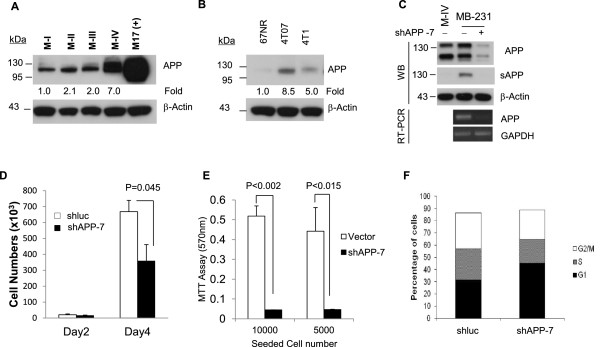
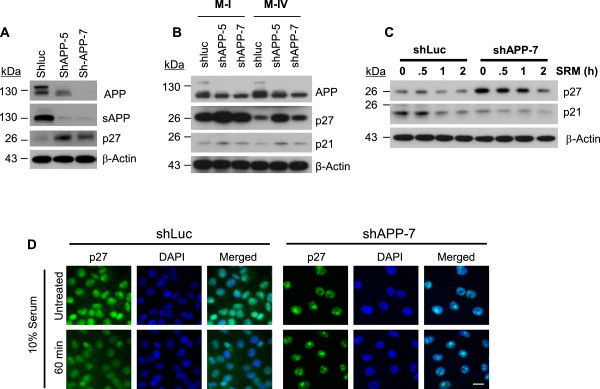
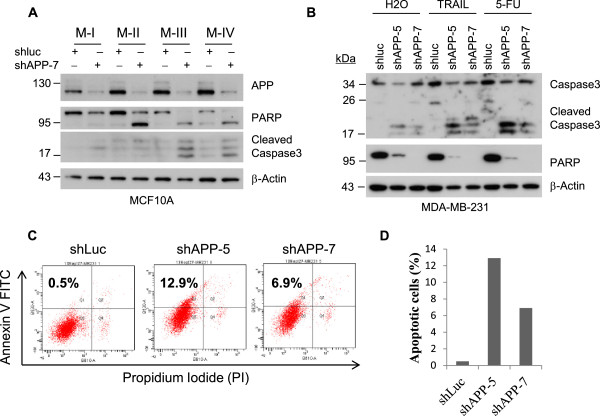
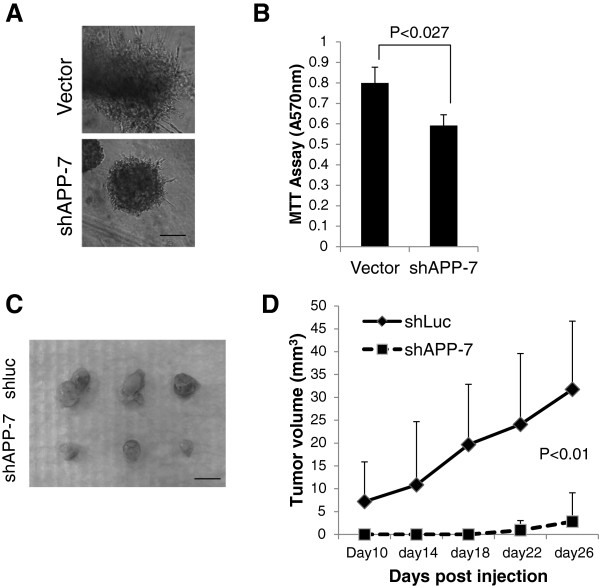
BACKGROUND: Amyloid-β precursor protein (APP) is a highly conserved single transmembrane protein that has been linked to Alzheimer disease. Recently, the increased expression of APP in multiple types of cancers has been reported where it has significant correlation with the cancer cell proliferation. However, the function of APP in the pathogenesis of breast cancer has not previously been determined. In this study, we studied the pathological role of APP in breast cancer and revealed its potential mechanism. METHODS: The expression level of APP in multiple breast cancer cell lines was measured by Western blot analysis and the breast cancer tissue microarray was utilized to analyze the expression pattern of APP in human patient specimens. To interrogate the functional role of APP in cell growth and apoptosis, the effect of APP knockdown in MDA-MB-231 cells were analyzed. Specifically, multiple signal transduction pathways and functional alterations linked to cell survival and motility were examined in in vivo animal model as well as in vitro cell culture with the manipulation of APP expression. RESULTS: We found that the expression of APP is increased in mouse and human breast cancer cell lines, especially in the cell line possessing higher metastatic potential. Moreover, the analysis of human breast cancer tissues revealed a significant correlation between the level of APP and tumor development. Knockdown of APP (APP-kd) in breast cancer cells caused the retardation of cell growth in vitro and in vivo, with both the induction of p27(kip1) and caspase-3-mediated apoptosis. APP-kd cells also had higher sensitivity to treatment of chemotherapeutic agents, TRAIL and 5-FU. Such anti-tumorigenic effects shown in the APP-kd cells partially came from reduced pro-survival AKT activation in response to IGF-1, leading to activation of key signaling regulators for cell growth, survival, and pro-apoptotic events such as GSK3-β and FOXO1. Notably, knock-down of APP in metastatic breast cancer cells limited cell migration and invasion ability upon stimulation of IGF-1. CONCLUSION: The present data strongly suggest that the increase of APP expression is causally linked to tumorigenicity as well as invasion of aggressive breast cancer and, therefore, the targeting of APP may be an effective therapy for breast cancer.
Overview
The claims and statistics of this paper haven’t been checked yet.
Run the check — free, no account needed. It reads the open-access text and checks the sources it cites.
Integrity signals
Registry
Cites
Statistics
Figures
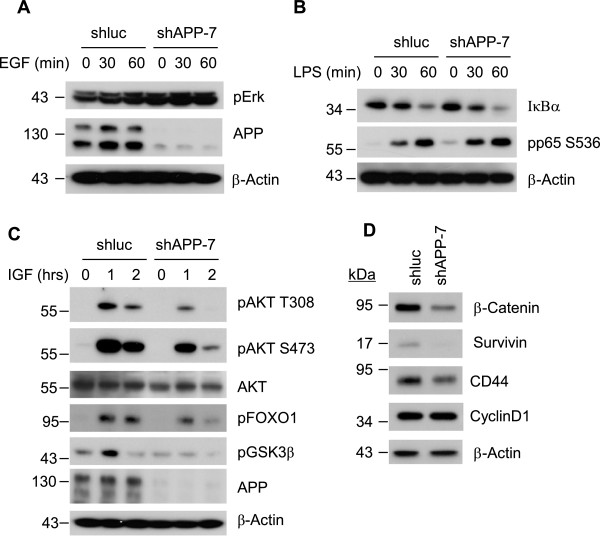
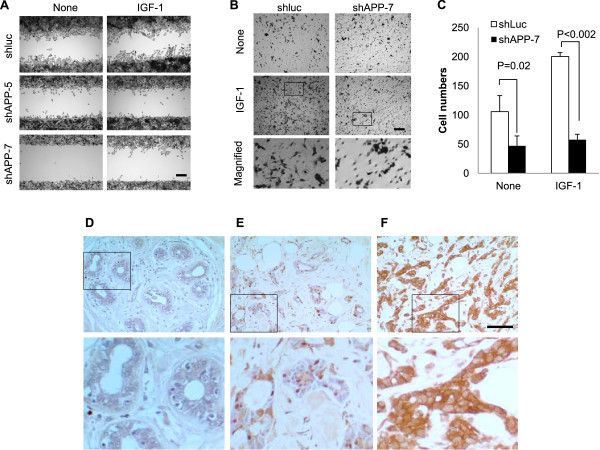
Verification
Claims the paper makes
The claims and statistics of this paper haven’t been checked yet.
Run the check — free, no account needed. It reads the open-access text and checks the sources it cites.
Claims other papers make about this one
Each is checked against this paper’s own text: does it say what the citing paper says it does?
The cited source says what the claim attributes to it.
In the citing paper
“Amyloid precursor protein (APP), for example, is upregulated in advanced breast cancer and has been associated with increased cancer cell proliferation, migration, and invasion4.”
From Oligomeric cystatin C supports the immunosuppressive activity of myeloid cells through interaction with inhibitory receptors (2025) · cites this paper as [4]
Self-check
Percentages, sums and reported differences re-computed from the paper’s own numbers.
The self-check needs the paper’s full text.
Citations
Cites
Jemal, A., Bray, F., Ferlay, J., Ward, E., & Forman, D. (2011) · CA A Cancer Journal for Clinicians · doi:10.3322/caac.20107 · Cited by 55,077
Alzheimer's disease: the amyloid cascade hypothesis
Hardy, J. A., & Higgins, G. A. (1992) · Science · doi:10.1126/science.1566067 · Cited by 7,484
CDK inhibitors: positive and negative regulators of G1-phase progression
Sherr, C. J., & Roberts, J. M. (1999) · Genes & Development · doi:10.1101/gad.13.12.1501 · Cited by 6,115
Genes that mediate breast cancer metastasis to lung
Minn, A. J., Gupta, G. P., Siegel, P. M., Bos, P. D., Shu, W., Giri, D. D., Viale, A., Olshen, A. B., Gerald, W. L., & Massagué, J. (2005) · Nature · doi:10.1038/nature03799 · Cited by 2,922
Amyloid Precursor Protein Processing and Alzheimer's Disease
O'Brien, R. J., & Wong, P. C. (2011) · Annual Review of Neuroscience · doi:10.1146/annurev-neuro-061010-113613 · Cited by 2,061
Three-dimensional culture models of normal and malignant breast epithelial cells
Lee, G. Y., Kenny, P. A., Lee, E. H., & Bissell, M. J. (2007) · Nature Methods · doi:10.1038/nmeth1015 · Cited by 1,336
Larue, L., & Bellacosa, A. (2005) · Oncogene · doi:10.1038/sj.onc.1209091 · Cited by 1,247
Aslakson, C. J., & Miller, F. R. (1992) · PubMed · Cited by 1,234
Kenny, P. A., Lee, G. Y., Myers, C. A., Neve, R. M., Semeiks, J. R., Spellman, P. T., Lorenz, K., Lee, E. H., Barcellos‐Hoff, M. H., PETERSEN, O. W., et al. (2008) · eScholarship (California Digital Library) · Cited by 1,039
Cellular actions of beta-amyloid precursor protein and its soluble and fibrillogenic derivatives
Mattson, M. P. (1997) · Physiological Reviews · doi:10.1152/physrev.1997.77.4.1081 · Cited by 1,006 · cited 1×
“APP protein expression of MDA-MB231 was comparable to that of M-IV cells while MDAMB-231, but not M-IV cells, showed fair amount of soluble APP secretion that is known to enhance cell growth and survival [25,26].”
Result
Cited by
Sorted by citations
Hypoxia-induced alternative splicing: the 11th Hallmark of Cancer
Farina, A. R., Cappabianca, L. A., Sebastiano, M., Zelli, V., Guadagni, S., & Mackay, A. R. (2020) · Journal of Experimental & Clinical Cancer Research · doi:10.1186/s13046-020-01616-9 · Cited by 136
Amyloid-beta and tau protein beyond Alzheimer’s disease
Abyadeh, M., Gupta, V., Paulo, J. A., Mahmoudabad, A. G., Shadfar, S., Mirshahvaladi, S., Gupta, V. B., Nguyen, C. T. O., Finkelstein, D. I., You, Y., et al. (2023) · Neural Regeneration Research · doi:10.4103/1673-5374.386406 · Cited by 126
Amyloid precursor protein and amyloid precursor-like protein 2 in cancer
Pandey, P., Sliker, B. H., Peters, H. L., Tuli, A., Herskovitz, J., Smits, K., Purohit, A., Singh, R. K., Dong, J., Batra, S. K., et al. (2016) · Oncotarget · doi:10.18632/oncotarget.7103 · Cited by 109
Molecular Characteristics of Amyloid Precursor Protein (APP) and Its Effects in Cancer
Lee, H. N., Jeong, M. S., & Jang, S. B. (2021) · International Journal of Molecular Sciences · doi:10.3390/ijms22094999 · Cited by 93
Self-citationFunctions of amyloid precursor protein in metabolic diseases
Guo, Y., Wang, Q., Chen, S., & Xu, C. (2020) · Metabolism · doi:10.1016/j.metabol.2020.154454 · Cited by 89
Pathways Impacted by Genomic Alterations in Pulmonary Carcinoid Tumors
Asiedu, M. K., Thomas, C. F., Dong, J., Schulte, S. C., Khadka, P., Sun, Z., Kosari, F., Jen, J., Molina, J. R., Vasmatzis, G., et al. (2018) · Clinical Cancer Research · doi:10.1158/1078-0432.ccr-17-0252 · Cited by 82
Perez‐Añorve, I. X., la Rosa, C. H. G.-D., Soto‐Reyes, E., Beltrán‐Anaya, F. O., Moral-Hernández, Ó. D., Salgado-Albarrán, M., Angeles‐Zaragoza, O., González-Barrios, J. A., Landero‐Huerta, D. A., Chávez‐Saldaña, M., et al. (2019) · Molecular Oncology · doi:10.1002/1878-0261.12483 · Cited by 72
Cancer and dementia: Two sides of the same coin?
van der Willik, K. D., Schagen, S. B., & Ikram, M. A. (2018) · European Journal of Clinical Investigation · doi:10.1111/eci.13019 · Cited by 66
Galvão, F., Grokoski, K. C., da Silva, B. B., Lamers, M. L., & Siqueira, I. R. (2018) · Ageing Research Reviews · doi:10.1016/j.arr.2018.11.007 · Cited by 68
Tsang, J. Y., Lee, M. A., Chan, T.-H., Li, J. J. X., Ni, Y., Shao, Y., Chan, S., Cheungc, S.-Y., Lau, K., & Tse, G. M.-K. (2018) · EBioMedicine · doi:10.1016/j.ebiom.2018.11.012 · Cited by 55
Klein, R. H., Lin, Z., Hopkin, A. S., Gordon, W., Tsoi, L. C., Liang, Y., Gudjonsson, J. E., & D, B. A. M. (2017) · PLoS Genetics · doi:10.1371/journal.pgen.1006745 · Cited by 54
β-Amyloid precursor protein (APP) and the human diseases
Nguyen, K. V. (2019) · AIMS neuroscience · doi:10.3934/neuroscience.2019.4.273 · Cited by 53
Sayad, A., Najafi, S., Hussen, B. M., Abdullah, S. T., Movahedpour, A., Taheri, M. N., & Hajiesmaeili, M. (2022) · Frontiers in Aging Neuroscience · doi:10.3389/fnagi.2022.853180 · Cited by 54
Kesler, S. R., Rao, V., Ray, W. J., Rao, A. U. K., & Initiative, A. D. N. (2017) · Alzheimer s & Dementia Diagnosis Assessment & Disease Monitoring · doi:10.1016/j.dadm.2017.10.002 · Cited by 48
Henneghan, A. M., Haley, A. P., & Kesler, S. R. (2019) · Biological Research For Nursing · doi:10.1177/1099800419887230 · Cited by 45
The emerging role of β-secretases in cancer
Farris, F., Matafora, V., & Bachi, A. (2021) · Journal of Experimental & Clinical Cancer Research · doi:10.1186/s13046-021-01953-3 · Cited by 42
Gao, Z., Li, Y., Zhang, C., Zhang, S., Jia, Y., Li, F., Ding, H., Li, X., Chen, Z., & Wei, Q. L. (2019) · ACS Applied Materials & Interfaces · doi:10.1021/acsami.9b01445 · Cited by 40
Dai, X., Hua, T., & Hong, T. (2017) · Scientific Reports · doi:10.1038/s41598-017-07189-6 · Cited by 36
Shen, S., Bai, J., Wei, Y., Wang, G., Li, Q., Zhang, R., Duan, W., Yang, S., Du, M., Zhao, Y., et al. (2017) · Oncology Reports · doi:10.3892/or.2017.6057 · Cited by 36
Beltrán‐Anaya, F. O., Romero-Cordoba, S. L., Rebollar‐Vega, R., Arrieta, O. G., Bautista‐Piña, V., Domínguez-Reyes, C. A., Villegas‐Carlos, F., Tenorio‐Torres, A., Alfaro‐Riuz, L., Jiménez‐Morales, S., et al. (2019) · Molecular Oncology · doi:10.1002/1878-0261.12446 · Cited by 36
Long, F., Wang, W., Li, S., Wang, B., Hu, X., Wang, J., Xu, Y., Liu, M., Zhou, J., Si, H., et al. (2023) · Journal of Translational Medicine · doi:10.1186/s12967-023-04151-1 · Cited by 36
Yang, B., Chen, Z., Huang, Y., Han, G., & Li, W. (2017) · OncoTargets and Therapy · doi:10.2147/ott.s135514 · Cited by 34
Visconte, C., Canino, J., Guidetti, G. F., Zarà, M., Seppi, C., Abubaker, A. A., Pula, G., Torti, M., & Canobbio, I. (2018) · Cellular Signalling · doi:10.1016/j.cellsig.2018.08.017 · Cited by 33
Cancer and Parkinson's Disease: Common Targets, Emerging Hopes
Filippou, P. S., & Outeiro, T. F. (2020) · Movement Disorders · doi:10.1002/mds.28425 · Cited by 30
Yang, J., Jiang, Q., Liu, L., Peng, H., Wang, Y., Li, S., Tang, Y., Yu, J., Gan, R., & Liu, Z. (2020) · Aging · doi:10.18632/aging.104199 · Cited by 27
Kondo, T., Hara, N., Koyama, S., Yada, Y., Tsukita, K., Nagahashi, A., Ikeuchi, T., Ishii, K., Asada, T., Arai, T., et al. (2022) · Nature Aging · doi:10.1038/s43587-021-00158-9 · Cited by 26
Roderburg, C., Loosen, S. H., Kunstein, A., Mohr, R. U., Jördens, M. S., Luedde, M., Kostev, K., & Luedde, T. (2021) · Cancers · doi:10.3390/cancers13092027 · Cited by 22
Bergantin, L. B. (2021) · World Journal of Diabetes · doi:10.4239/wjd.v12.i6.767 · Cited by 22
Blat, A., Wiercigroch, E., Smęda, M., Wislocka, A., Chłopicki, S., & Małek, K. (2019) · Journal of Biophotonics · doi:10.1002/jbio.201900067 · Cited by 22
Protective role of anticancer drugs in neurodegenerative disorders: A drug repurposing approach
Advani, D., Gupta, R. V., Tripathi, R. S., Sharma, S., Ambasta, R. K., & Kumar, P. (2020) · Neurochemistry International · doi:10.1016/j.neuint.2020.104841 · Cited by 24
Yuwen, H., Wang, H., Li, T., Ren, Y., Zhang, Y., Chen, P., Sun, A., Bian, G., Li, B., Flowers, D. A., et al. (2024) · Cancer Research · doi:10.1158/0008-5472.can-23-2701 · Cited by 20
Mild Cognitive Impairment and Dementia Show Contrasting Associations with Risk of Cancer
van der Willik, K. D., Ruiter, R., Wolters, F. J., Ikram, M. K., Stricker, B. H. C., Hauptmann, M., Compter, A., Schagen, S. B., & Ikram, M. A. (2018) · Neuroepidemiology · doi:10.1159/000488892 · Cited by 20
Eduardo Fuentes, Q., Palomo, I. F., & Armando Rojas, R. (2015) · Blood Reviews · doi:10.1016/j.blre.2015.11.005 · Cited by 20
Dissecting the regulation rules of cancer-related miRNAs based on network analysis
Liu, Z., Guo, Y., Pu, X., & Li, M. (2016) · Scientific Reports · doi:10.1038/srep34172 · Cited by 17
Effects of Luteolin on Human Breast Cancer Using Gene Expression Array: Inferring Novel Genes
Wang, S.-H., Wu, C., Tsai, C., Chen, T.-Y., Tsai, K.-J., Hung, C., Hsu, C., Wu, C., & Hsieh, T. (2022) · Current Issues in Molecular Biology · doi:10.3390/cimb44050142 · Cited by 17
Chrabąszcz, K., Kaminska, K. H., Augustyniak, K., Kujdowicz, M., Smęda, M., Jasztal, A., Stojak, M., Marzec, K. M., & Małek, K. (2020) · Molecules · doi:10.3390/molecules25010236 · Cited by 19
(2019) · PubMed Central
Naru, J., Aggarwal, R., Singh, U., Mohanty, A. K., Bansal, D., Mangat, N. K., Kakkar, N., & Agnihotri, N. (2016) · Tumor Biology · doi:10.1007/s13277-016-5162-3 · Cited by 16
Amyloid Precursor Protein Is Associated with Aggressive Behavior in Nonluminal Breast Cancers
Tsang, J. Y., Lee, M. A., Ni, Y., Chan, S., Cheung, S., Chan, W.-W., Lau, K., & Tse, G. M.-K. (2018) · The Oncologist · doi:10.1634/theoncologist.2018-0012 · Cited by 15
Bascetin, R., Blay, L., Kellouche, S., Carreiras, F., Picot, C. R., Briand, M., Agniel, R., Gallet, O., Vendrely, C., & Leroy‐Dudal, J. (2018) · Experimental Cell Research · doi:10.1016/j.yexcr.2018.07.047 · Cited by 17
Multi-omics analysis unveiled fibroblast-mediated pathogenesis in male genital lichen sclerosus
Lin, L., Liu, Y., Wang, X., Liu, K., Wang, W., Liu, L., Jiang, Y., Chen, J., Tang, D., Jiang, D., et al. (2025) · Cell & Bioscience · doi:10.1186/s13578-025-01453-3 · Cited by 14
Griffiths, S. G., Ezrin, A. M., Jackson, E., Dewey, L., & Doucette, A. A. (2019) · Cell Stress and Chaperones · doi:10.1007/s12192-019-01041-8 · Cited by 14
Chen, H., & Chen, G. (2022) · Frontiers in Genetics · doi:10.3389/fgene.2022.883583 · Cited by 14
miR‑373‑3p promotes lung adenocarcinoma cell proliferation via APP
Fan, X., Xu, S., & Yang, C. (2017) · Oncology Letters · doi:10.3892/ol.2017.7372 · Cited by 14
Park, Y., Jeong, J., Seong, S., & Kim, W. (2021) · Cells · doi:10.3390/cells10102673 · Cited by 13
Khashali, H. A., Ray, R., Coleman, K.-L., Atali, S., Haddad, B., Wareham, J., Guthrie, J. W., Heyl, D., & Evans, H. G. (2022) · International Journal of Molecular Sciences · doi:10.3390/ijms231810746 · Cited by 13
Petrović, N., Essack, M., Sami, A. S., Perry, G. L., Gojobori, T., Isenović, E. R., & Bajić, V. (2023) · Computational Biology and Chemistry · doi:10.1016/j.compbiolchem.2023.107925 · Cited by 12
Amyloid precursor protein and its phosphorylated form in non-small cell lung carcinoma
Ito, S., Miki, Y., Saito, R., Inoue, C., Okada, Y., & Sasano, H. (2019) · Pathology - Research and Practice · doi:10.1016/j.prp.2019.152463 · Cited by 12
An, P.-G., Wu, W., Tang, Y., & Zhang, J. (2023) · Functional & Integrative Genomics · doi:10.1007/s10142-023-01082-4 · Cited by 11
Tan, X., Wang, S., Xiao, G.-Y., Wu, C., Liu, X., Zhou, B., Jiang, Y. L., Duose, D. Y., Xi, Y., Wang, J., et al. (2024) · Journal of Clinical Investigation · doi:10.1172/jci176355 · Cited by 13
Takeshita, T., Yan, L., Peng, X., Kimbung, S., Hatschek, T., Hedenfalk, I. A., Rashid, O. M., & Takabe, K. (2020) · PubMed Central · Cited by 11
Role of APLP2 in the prognosis and clinicopathology of renal cell carcinoma
Gao, L., Zhao, H., Zhang, D., Zhou, C., Wang, H., Ren, C., Liu, Y., Xia, Y., & Shi, B. (2018) · Oncology Letters · doi:10.3892/ol.2018.9577 · Cited by 10
A centrality based multi-objective approach to disease gene association
Collins, T. K., & Houghten, S. K. (2020) · Biosystems · doi:10.1016/j.biosystems.2020.104133 · Cited by 9
Chakrapani, H. B., Chourasia, S., Gupta, S., Kumar, D. T., Doss, C. G. P., & Haldar, R. (2021) · Computers in Biology and Medicine · doi:10.1016/j.compbiomed.2021.104378 · Cited by 9
Clinicopathological Significance of TARBP2, APP, and ZNF395 in Breast Cancer
Oi, R., Koizumi, H., Maeda, I., Noguchi, A., Tatsunami, S., Iwatani, T., Kawamoto, H., Tsugawa, K., & Takagi, M. (2016) · Breast Cancer Basic and Clinical Research · doi:10.4137/bcbcr.s40820 · Cited by 9
Zhang, D., Zhou, C., Li, Y., Gao, L., Pang, Z., Yin, G., & Shi, B. (2018) · International Journal of Urology · doi:10.1111/iju.13726 · Cited by 9
Pan-cancer analysis reveals immunological and prognostic significance of CCT5 in human tumors
Ahmed, M. Z., Billah, M. M., Ferdous, J., Antar, S. I., Mamun, A. A., & Hossain, M. J. (2025) · Scientific Reports · doi:10.1038/s41598-025-88339-z · Cited by 8
Vav2 is a novel APP-interacting protein that regulates APP protein level
Zhang, Y., Yang, X., Liu, Y., Ge, L., Wang, J., Sun, X., Wu, B., & Wang, J. (2022) · Scientific Reports · doi:10.1038/s41598-022-16883-z · Cited by 8
Saide, A., Riccio, G., Ianora, A., & Lauritano, C. (2023) · Applied Sciences · doi:10.3390/app13042590 · Cited by 9
Conconi, D., Redaelli, S., Bovo, G., Leone, B. E., Filippi, E., Ambrosiani, L., Cerrito, M. G., Grassilli, E., Giovannoni, R., Dalprà, L., et al. (2016) · Tumor Biology · doi:10.1007/s13277-016-5181-0 · Cited by 8
The Role of Vitamin D and Sunlight Incidence in Cancer
Câmara, A. B., & Brandão, I. A. (2019) · Anti-Cancer Agents in Medicinal Chemistry · doi:10.2174/1389557519666190312123212 · Cited by 8
Guan, B., Li, M., Cui, D., Shen, C., Hao, Z., & Li, X. (2024) · Journal of Cellular and Molecular Medicine · doi:10.1111/jcmm.18186 · Cited by 7
Yashin, A. I., Wu, D., Arbeev, K. G., Bagley, O., Akushevich, I. V., Duan, M., Yashkin, A. P., & Ukraintseva, S. V. (2021) · Mechanisms of Ageing and Development · doi:10.1016/j.mad.2021.111477 · Cited by 7
Zhang, C., Martínez-Ledesma, E., Gao, F., Zhang, W., Ding, J., Wu, S., Li, X., Wu, J., Yuan, Y., Koul, D., et al. (2019) · PubMed Central · Cited by 7
Li, Q., Zeng, H., Zhao, Y., Gong, Y., & Ma, X. (2020) · Frontiers in Oncology · doi:10.3389/fonc.2019.01489 · Cited by 7
The β-Secretase 1 Enzyme as a Novel Therapeutic Target for Prostate Cancer
Rather, H. A., Almousa, S., Kumar, A., Sharma, M., Pennington, I., Kim, S., Su, Y., He, Y., Ghara, A. R., Sai, K. K. S., et al. (2023) · Cancers · doi:10.3390/cancers16010010 · Cited by 6
Self-citationOdongo, R., Demiroglu‐Zergeroglu, A., & Çakır, T. (2024) · BioData Mining · doi:10.1186/s13040-024-00357-1 · Cited by 6
Developing theragnostics for Alzheimer's disease: Insights from cancer treatment
Lee, H., Choi, H.-J., Jeong, Y. J., Na, Y., Hong, J. T., Han, J. M., Hoe, H., & Lim, K. (2024) · International Journal of Biological Macromolecules · doi:10.1016/j.ijbiomac.2024.131925 · Cited by 6
Self-citationGainey, M., Niles, A., Nathaniel, S. I., Goodwin, R. L., Roley, L. T., Win, O., Nathaniel, T. I., & Imeh‐Nathaniel, A. (2024) · Geriatric Nursing · doi:10.1016/j.gerinurse.2024.04.019 · Cited by 6
Insights into Dysregulated Neurological Biomarkers in Cancer
Duranti, E., & Villa, C. (2024) · Cancers · doi:10.3390/cancers16152680 · Cited by 7
Association Between the Tumor Marker Carcinoembryonic Antigen and the Risk of Dementia
van der Willik, K. D., Schagen, S. B., & Ikram, M. A. (2020) · Journal of Alzheimer s Disease · doi:10.3233/jad-200440 · Cited by 6
Do, K. V., Tran, A. V., Pham, A. D., Mac, T. T., Pham, T. L., & Do, H. N. (2026) · Frontiers in Oncology · doi:10.3389/fonc.2026.1754311 · Cited by 5
Zhou, Y. (2024) · American Journal of Cancer Research · doi:10.62347/tgba1922 · Cited by 5
HUANG, X., YANG, J., XI, H., ZHANG, M., Oh, Y., Jin, Z., & ZHENG, Z. (2023) · In Vivo · doi:10.21873/invivo.13452 · Cited by 4
Association of chromosome 6 open reading frame 106 in different cancers
Kutbi, E., Alsaif, H., AlOtaiby, S., & Baradwan, S. (2021) · Frontiers in Bioscience-Landmark · doi:10.52586/4949 · Cited by 4
Huang, J., Huo, H., & Lu, R. (2022) · Frontiers in Genetics · doi:10.3389/fgene.2022.907985 · Cited by 4
Porter, T. R., Inyushin, M. Y., & Kucheryavykh, L. Y. (2025) · Discover Oncology · doi:10.1007/s12672-025-03575-z · Cited by 3
APP deficiency and HTRA2 modulates PrPc proteostasis in human cancer cells
Biard, D. S. F., Jarray, R., Rebergue, N., Leteurtre, F., & Papy-García, D. (2021) · BBA Advances · doi:10.1016/j.bbadva.2021.100035 · Cited by 3
A methodology for disease gene association using centrality measures
Heravi, A. E., & Houghten, S. K. (2016) · IEEE Congress on Evolutionary Computation (CEC) · doi:10.1109/cec.2016.7743774 · Cited by 3
Zhang, C., He, Y., Liu, X., Xie, J., Fang, M., Yang, X., Huang, R., Lou, Q., Li, B., Gupta, A., et al. (2025) · Signal Transduction and Targeted Therapy · doi:10.1038/s41392-025-02462-x · Cited by 2
Pea Peptide Modulates Abnormal Aβ Production in PC12 Cells Induced by Lead Exposure
Li, N., Cui, N., Bakry, I. A., Ma, Y., Cheng, Y., Zhao, G., Yang, H., Song, L., Qiao, M., Hai, D., et al. (2025) · Plant Foods for Human Nutrition · doi:10.1007/s11130-025-01296-w · Cited by 2
Dementia and Cancer: Unravelling Methodological Biases in a Population-Based Cohort
Selie, A. P., van der Willik, K. D., Ikram, M. A., Labrecque, J. A., & Schagen, S. B. (2025) · Neuroepidemiology · doi:10.1159/000548633 · Cited by 2
Связь матричных процессов I и II рода: амилоиды и стабильность генома
Andreychuk, Y. V., Zadorsky, S. P., Zhuk, A. S., Stepchenkova, E. I., & Inge-Vechtomov, S. G. (2020) · Molecular Biology · doi:10.31857/s002689842005002x · Cited by 2
Liu, Y., Xu, Y., Li, X., Chen, M., Wang, X., Zhang, N., Zhang, X., Zheng, W., Zhang, H., & Zhang, Z. (2022) · bioRxiv (Cold Spring Harbor Laboratory) · doi:10.1101/2022.11.15.516622 · Cited by 2
Yin, T., Wang, G., Ma, Z., Wang, L., Chen, R., Xiang, K., Tan, L., Wang, Y., Chong, M., Liang, Y., et al. (2025) · bioRxiv (Cold Spring Harbor Laboratory) · doi:10.1101/2025.02.10.637339 · Cited by 2
Yanzhang, R., Yang, Z., Li, X., Yin, Y., Shen, R., Zhang, H., Wu, Y., & Teng, J. (2025) · Discover Oncology · doi:10.1007/s12672-025-03221-8 · Cited by 1
Li, S., Lin, J., Zheng, F., Liu, X., Xiong, S., Fu, B., & Zeng, J. (2026) · BMC Cancer · doi:10.1186/s12885-026-15603-4 · Cited by 1
Bunsuk, T., Chantaraamporn, J., Mutapat, P., Diskul‐Na‐Ayudthaya, P., Chokchaichamnankit, D., Srisomsap, C., Svasti, J., & Champattanachai, V. (2026) · PLoS ONE · doi:10.1371/journal.pone.0341971 · Cited by 1
Maungchanburi, S., Wongmek, O., Baitahay, P., Saweak, A., Wangkaranae, M., Kongwattananon, W., Sirirattanakul, S., Chatatikun, M., Phongphithakchai, A., Huang, J. C., et al. (2026) · Medical Sciences · doi:10.3390/medsci14010130 · Cited by 1
Relationship between Type I and Type II Template Processes: Amyloids and Genome Stability
Andreychuk, Y. V., Zadorsky, S. P., Zhuk, A. S., Stepchenkova, E. I., & Inge-Vechtomov, S. G. (2020) · Molecular Biology · doi:10.1134/s0026893320050027 · Cited by 1
Wang, L., Wang, J., Gong, K., Shen, Q., Fu, H., Huang, H., Chen, C., Zhang, L., Duan, Y., & Suo, T. (2020) · Nano LIFE · doi:10.1142/s1793984420400024 · Cited by 1
Network-Based Method for the Identification of Genes Related to Cancer Metastasis
田, 智. (2023) · Pure Mathematics · doi:10.12677/pm.2023.135130
Long, F., Wang, W., Li, S., Wang, B., Hu, X., Wang, J., Xu, Y., Liu, M., Zhou, J., Si, H., et al. (2024) · Figshare · doi:10.6084/m9.figshare.26586597
Long, F., Wang, W., Li, S., Wang, B., Hu, X., Wang, J., Xu, Y., Liu, M., Zhou, J., Si, H., et al. (2024) · Figshare · doi:10.6084/m9.figshare.26586603
Long, F., Wang, W., Li, S., Wang, B., Hu, X., Wang, J., Xu, Y., Liu, M., Zhou, J., Si, H., et al. (2024) · Figshare · doi:10.6084/m9.figshare.26586600
Long, F., Wang, W., Li, S., Wang, B., Hu, X., Wang, J., Xu, Y., Liu, M., Zhou, J., Si, H., et al. (2024) · Figshare · doi:10.6084/m9.figshare.26586606
Zhou, Y., Chen, C., Zuo, F., Ding, S., Wang, H., Xu, X., Zhu, B., Wu, B., Liu, C., Yuan, T., et al. (2026) · Cellular and Molecular Life Sciences · doi:10.1007/s00018-026-06101-8
Rebergue, N. (2022) · theses.fr (ABES) · doi:10.70675/1625c958z4f5az4c53zb053z9743a765c9ac
Motshudi, M. C., Naidoo, C. M., Obi, C. L., Iweriebor, B. C., Prinsloo, E., Zubair, M. S., & Mkolo, N. M. (2026) · International Journal of Molecular Sciences · doi:10.3390/ijms27093739
Astrocytoma-Specific Prognostic Associations of Amyloid-Related Biological Processes
Irizarry, F. N., Porter, T. R., Serrano, N. R., & Kucheryavykh, L. Y. (2026) · Pathophysiology · doi:10.3390/pathophysiology33020030
Metadata
- Authors
- Lim, S., Yoo, B. K., Kim, H.-S., Gilmore, H. L., Lee, Y., Lee, H.-P., Kim, S.-J., Letterio, J., & Lee, H.-G.
- Affiliations
- Case Comprehensive Cancer Center (US)
- Virginia Commonwealth University (US)
- Case Western Reserve University (US)
- CHA University (KR)
- Rainbow Babies & Children's Hospital (US)
- Corresponding author
- Lim, Seunghwan
- Lee, Hyun-pil
- Lee, Hyoung-gon
- Venue
- BMC Cancer
- Published
- 2014-12
- Volume
- 14
- Issue
- 1
- Pages
- 928-928
- ISSN
- 1471-2407 (ISSN-L)
- PMC
- PMC4295427
- OpenAlex
- W2086492959
- Cited by
- 100
- References
- 54
- Citations by year
- 2026: 10 · 2025: 8 · 2024: 9 · 2023: 8 · 2022: 9 · 2021: 9 · 2020: 13 · 2019: 11 · 2018: 10 · 2017: 6 · 2016: 6 · 2015: 1
- FWCI
- 2.89
- Type
- journal article
- Language
- en
- Open access
- gold
- doi.org
- Licence
- Locations
- BMC Cancer (publishedVersion, cc-by)
- PubMed Central (publishedVersion, cc-by)
- PubMed (publishedVersion)
- Funders
- National Institutes of Health (AG028679)
- National Institute on Aging (AG028679, R01AG028679)
- Topics
- Life Sciences › Neuroscience › Cellular and Molecular Neuroscience › Alzheimer's disease research and treatments
- Health Sciences › Medicine › Oncology › Cancer Cells and Metastasis
- Life Sciences › Biochemistry, Genetics and Molecular Biology › Molecular Biology › Mechanisms of cancer metastasis
- Keywords
- amyloid precursor protein, breast cancer, metastasis, cell proliferation, cell migration and invasion, apoptosis, p27, caspase-3, Akt signaling, insulin-like growth factor I, GSK3β, FOXO1, chemosensitivity, TRAIL, 5-fluorouracil, therapeutic target
- MeSH terms
- Animals, Breast Neoplasms, Cell Movement, Cell Survival, Disease Models, Animal, Female, Humans, Insulin-Like Growth Factor I, Neoplasm Staging, Gene Expression, Amyloid beta-Protein Precursor, Apoptosis, Xenograft Model Antitumor Assays, Cell Line, Tumor, Cell Proliferation, Cyclin-Dependent Kinase Inhibitor p27, Proto-Oncogene Proteins c-akt, Mice, Gene Knockdown Techniques
About these checks
Registry, retraction, Cites and statistics results are computed, not judged, with one exception: a printed reference that no index lists is read once by a model before it counts as a citation error. Claims are extracted by a model and kept only when their quote appears verbatim in the text; each cited source is then checked, with a model’s help, for whether it says what the claim relies on. Those verdicts can be wrong — read the claim’s quote and the cited source before relying on one.
Statistics and arithmetic are recomputed, not judged.
Confidence bands are shown only for fields calibrated on our annotated test set. None is calibrated yet, so no band is shown.
What counts as a claim ›How we measure confidence ›How we check this ›
Are you an author, or do you see a problem with this page? Request a review
