

The DOI matches its Crossref record; 34 of the 34 references it cites were found in a registry or an index.
Effects of a physical education intervention on cognitive function in young children: randomized controlled pilot study
Open accessAbstract
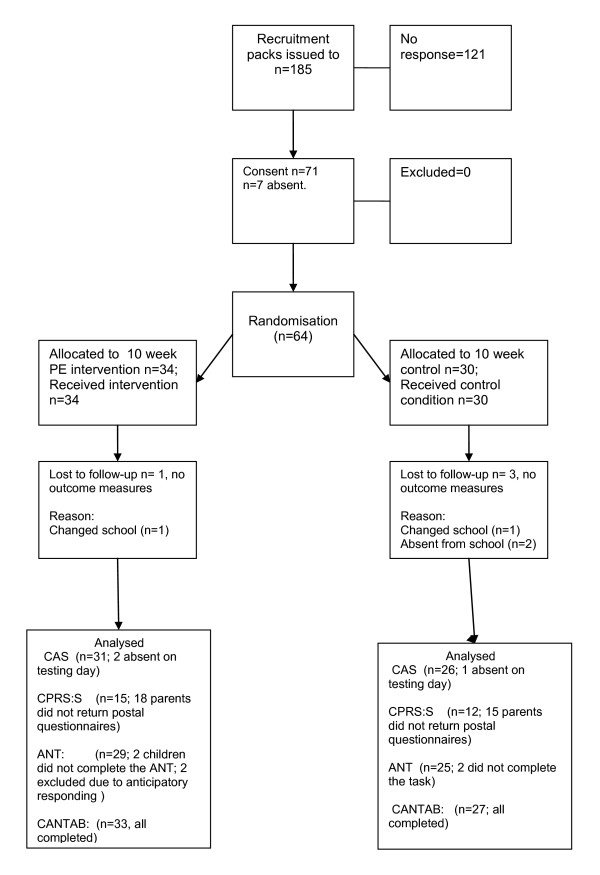
Background: Randomized controlled trials (RCT) are required to test relationships between physical activity and cognition in children, but these must be informed by exploratory studies. This study aimed to inform future RCT by: conducting practical utility and reliability studies to identify appropriate cognitive outcome measures; piloting an RCT of a 10 week physical education (PE) intervention which involved 2 hours per week of aerobically intense PE compared to 2 hours of standard PE (control). Methods: 64 healthy children (mean age 6.2 yrs SD 0.3; 33 boys) recruited from 6 primary schools. Outcome measures were the Cambridge Neuropsychological Test Battery (CANTAB), the Attention Network Test (ANT), the Cognitive Assessment System (CAS) and the short form of the Connor's Parent Rating Scale (CPRS:S). Physical activity was measured habitually and during PE sessions using the Actigraph accelerometer. Results: Test- retest intraclass correlations from CANTAB Spatial Span (r 0.51) and Spatial Working Memory Errors (0.59) and ANT Reaction Time (0.37) and ANT Accuracy (0.60) were significant, but low. Physical activity was significantly higher during intervention vs. control PE sessions (p < 0.0001). There were no significant differences between intervention and control group changes in CAS scores. Differences between intervention and control groups favoring the intervention were observed for CANTAB Spatial Span, CANTAB Spatial Working Memory Errors, and ANT Accuracy. Conclusions: The present study has identified practical and age-appropriate cognitive and behavioral outcome measures for future RCT, and identified that schools are willing to increase PE time. Trial registration number: ISRCTN70853932 (http://www.controlled-trials.com)
Overview
The claims and statistics of this paper haven’t been checked yet.
Run the check — free, no account needed. It reads the open-access text and checks the sources it cites.
Integrity signals
Registry
Cites
Statistics
Figures
Verification
Claims the paper makes
The claims and statistics of this paper haven’t been checked yet.
Run the check — free, no account needed. It reads the open-access text and checks the sources it cites.
Claims other papers make about this one
Each is checked against this paper’s own text: does it say what the citing paper says it does?
The source backs part of the claim, not all of it — or backs it for a different population, condition or comparison.
In the citing paper
“Several studies have identified a positive relationship between cardiorespiratory fitness, weight and AP (46–49) or with overall physical fitness (82).”
From Children's Physical Activity, Academic Performance, and Cognitive Functioning: A Systematic Review and Meta-Analysis (2020) · cites this paper as [46]
Experimental — accuracy not yet measured
Self-check
Percentages, sums and reported differences re-computed from the paper’s own numbers.
The self-check needs the paper’s full text.
Citations
Cites
Developing and evaluating complex interventions: the new Medical Research Council guidance
Craig, P., Dieppe, P., Macintyre, S., Michie, S., Nazareth, I., & Petticrew, M. (2008) · BMJ · doi:10.1136/bmj.a1655 · Cited by 10,995
Measures of Reliability in Sports Medicine and Science
Hopkins, W. G. (2000) · Sports Medicine · doi:10.2165/00007256-200030010-00001 · Cited by 4,635 · cited 1×
“Intraclass correlations (ICC), and standard error of measurement (SEM) - measures of within subject variation from biological difference or equipment ‘noise’ or error [28] were calculated.”
MethodFitness Effects on the Cognitive Function of Older Adults: A Meta-Analytic Study
Colcombe, S., & Kramer, A. F. (2003) · Psychological Science · doi:10.1111/1467-9280.t01-1-01430 · Cited by 3,782
Be smart, exercise your heart: Exercise effects on brain and cognition
Hillman, C. H., Erickson, K. I., & Kramer, A. F. (2008) · Nature Reviews Neuroscience · doi:10.1038/nrn2298 · Cited by 3,563
Developing and Evaluating Complex Interventions: New Guidance
Craig, P., Dieppe, P. A., MacIntyre, S., Michie, S., Nazareth, I., & Petticrew, M. P. (2006) · UCL Discovery (University College London) · Cited by 1,878
Cardiovascular fitness, cortical plasticity, and aging
Colcombe, S. J., Kramer, A. F., Erickson, K. I., Scalf, P., McAuley, E., Cohen, N. J., Webb, A., Jerome, G. J., Marquez, D. X., & Elavsky, S. (2004) · Proceedings of the National Academy of Sciences · doi:10.1073/pnas.0400266101 · Cited by 1,648 · cited 2×
“Research, largely in older adults, supports the notion that aerobic exercise can enhance human brain structure, prevent age-related brain tissue loss, and improve cognitive performance [7-9].”
BackgroundAgeing, fitness and neurocognitive function
Kramer, A. F., Hahn, S., Cohen, N. J., Banich, M. T., McAuley, E., Harrison, C. R., Chason, J., Vakil, E., Bardell, L., Boileau, R. A., et al. (1999) · Nature · doi:10.1038/22682 · Cited by 1,394 · cited 2×
“Research, largely in older adults, supports the notion that aerobic exercise can enhance human brain structure, prevent age-related brain tissue loss, and improve cognitive performance [7-9].”
BackgroundDevelopment of attentional networks in childhood
Rueda, M. R., Fan, J., McCandliss, B. D., Halparin, J. D., Gruber, D. B., Lercari, L. P., & Posner, M. I. (2004) · Neuropsychologia · doi:10.1016/j.neuropsychologia.2003.12.012 · Cited by 1,339 · cited 3×
“For a detailed description of the ANT see http://www.sacklerinstitute. org/users/jin.fan and Rueda et al [20], but in brief, the ANT was administered in four blocks of tests, each lasting approximately 5 minutes: a practice block of tests was used first to train the children in what was expected, and to identify any p…”
MethodInfluentialThe relationship between physical activity and cognition in children: a meta-analysis
Sibley, B. A., & Etnier, J. L. (2003) · Pediatric Exercise Science · doi:10.1123/pes.15.3.243 · Cited by 1,308 · cited 3×
“Experimental evidence in children is very limited [3,5]: < 1% of published exercise and cognition * Correspondence: John.”
BackgroundResearch Methods and Statistics in Psychology
Coolican, H., & Coolican, H. (2014) · Psychology Press eBooks · doi:10.4324/9780203769836 · Cited by 1,174
Research works printed but not linked: 2
- Naglieri JA, Das JP: Cognitive Assessment System: Interpretive handbook. 1997, Itasca, IL
- McLoone P: Carstairs scores for Scottish postcode sectors from the 2001 census. MRC Social and Public Health Sciences Unit, Glasgow. 2004
Cited by
Sorted by citations
Donnelly, J. E., Hillman, C. H., Castelli, D., Etnier, J. L., Lee, S., Tomporowski, P., Lambourne, K., & Szabo-Reed, A. N. (2016) · Medicine & Science in Sports & Exercise · doi:10.1249/mss.0000000000000901 · Cited by 1,864
“Cognitive measures included the random number generation (RNG) task (47), a perceptual speed task (135), the CAS (71), the Cambridge Neuropsychological Test Battery (CANTAB)(71), and the Attention Network Test (ANT) (71).”
InfluentialSelf-citationde Greeff, J. W., Bosker, R. J., Oosterlaan, J., Visscher, C., & Hartman, E. (2018) · Journal of Science and Medicine in Sport · doi:10.1016/j.jsams.2017.09.595 · Cited by 841
Verburgh, L., Königs, M., Scherder, E. J. A., & Oosterlaan, J. (2014) · British Journal of Sports Medicine · doi:10.1136/bjsports-2012-091441 · Cited by 617
Singh, A. S., Saliasi, E., van den Berg, V., Uijtdewilligen, L., de Groot, R. H. M., Jolles, J., Andersen, L. B., Bailey, R., Chang, Y.-K., Diamond, A., et al. (2019) · British Journal of Sports Medicine · doi:10.1136/bjsports-2017-098136 · Cited by 588
Self-citationÁlvarez-Bueno, C., Pesce, C., Cavero-Redondo, I., Sánchez-López, M., Martínez-Hortelano, J. A., & Martínez-Vizcaíno, V. (2017) · Journal of the American Academy of Child & Adolescent Psychiatry · doi:10.1016/j.jaac.2017.06.012 · Cited by 478
Zeng, N., Ayyub, M., Sun, H., Wen, X., Xiang, P., & Gao, Z. (2017) · BioMed Research International · doi:10.1155/2017/2760716 · Cited by 612
“Among these studies, 10 were conducted in childcare center [34–38, 40, 41, 43, 45, 46], 3 were conducted in school settings [27, 44, 47], 1 was conducted at home [39], and 1 was conducted in a laboratory setting [42].”
BackgroundInfluentialTomporowski, P. D., McCullick, B., Pendleton, D. M., & Pesce, C. (2015) · Journal of Sport and Health Science · doi:10.1016/j.jshs.2014.09.003 · Cited by 377
Self-citationTakacs, Z. K., & Kassai, R. (2019) · Psychological Bulletin · doi:10.1037/bul0000195 · Cited by 332
Physical activity and academic achievement in children: a historical perspective
Howie, E. K., & Pate, R. R. (2012) · Journal of Sport and Health Science · doi:10.1016/j.jshs.2012.09.003 · Cited by 297
“74,75,88 All studies reported positive outcomes, with two studies also reporting null effects from a 5-min exercise break 85 and an acute 20-min bout.”
BackgroundKassai, R., Futo, J., Demetrovics, Z., & Takacs, Z. K. (2019) · Psychological Bulletin · doi:10.1037/bul0000180 · Cited by 294
Diamond, A. D., & Ling, D. S. (2019) · Oxford University Press eBooks · doi:10.1093/oso/9780199974467.003.0008 · Cited by 343
Hollis, J. L., Williams, A. J., Sutherland, R., Campbell, E., Nathan, N., Wolfenden, L., Morgan, P. J., Lubans, D. R., & Wiggers, J. (2016) · Preventive Medicine · doi:10.1016/j.ypmed.2015.11.018 · Cited by 260
Pesce, C., Masci, I., Marchetti, R., Vazou, S., Sääkslahti, A., & Tomporowski, P. D. (2016) · Frontiers in Psychology · doi:10.3389/fpsyg.2016.00349 · Cited by 228
“Rather, it seems related to the fitness outcomes of larger amounts of PA (Marchetti et al., 2015), as consistently found for hippocampal-dependent associative memory (Khan and Hillman, 2014).”
BackgroundResultInfluentialSelf-citationLees, C., & Hopkins, J. (2013) · Preventing Chronic Disease · doi:10.5888/pcd10.130010 · Cited by 226
“…number of participants; long followup; standardized measure of APA and outcome; WIAT-II validated, reliable, and commonly used in children (29) None 2 Fisher et al 2011 (20) Standardized measure of APA and outcome; CAS previously demonstrated to be both valid and reliable in children older than…”
InfluentialLess-structured time in children's daily lives predicts self-directed executive functioning
Barker, J. E., Semenov, A. D., Michaelson, L., Provan, L. S., Snyder, H. R., & Munakata, Y. (2014) · Frontiers in Psychology · doi:10.3389/fpsyg.2014.00593 · Cited by 247
“…trials on the Flanker task has also been tested in prior intervention work with children (Rueda et al., 2005; Fisher et al., 2011; Röthlisberger et al., 2012), and is what improved in two prior intervention studies targeting EF in this age group (Fisher et al., 2011; Röthlisberger et al., 2012).”
BackgroundResultInfluentialVazou, S., Pesce, C., Lakes, K., & Smiley-Oyen, A. (2019) · International Journal of Sport and Exercise Psychology · doi:10.1080/1612197x.2016.1223423 · Cited by 273
“…at after-school programme C: no PA Cognitive assessment system (Planning*, Attention, Simultaneous, Successive) Reading fluency Mathematics fluency +* 0 + Fisher et al. (2011) A – S2 N = 60 Mage = 6.2 ± 0.3 y n = 33 I n = 27 C UK Aerobic (PE focused on aerobic activities; I) vs. traditional PE…”
BackgroundInfluentialMomentary assessment of affect, physical feeling states, and physical activity in children.
Dunton, G. F., Huh, J., Leventhal, A. M., Riggs, N. R., Hedeker, D., Spruijt‐Metz, D., & Pentz, M. A. (2013) · Health Psychology · doi:10.1037/a0032640 · Cited by 215
“Research indicates that attention and cognitive functioning are enhanced by physical activity (Fisher et al., 2011) and physically active children perform better academically (Singh, Uijtdewilligen, Twisk, van Mechelen, & Chinapaw, 2012).”
BackgroundBooth, J. N., Leary, S. D., Joinson, C., Ness, A. R., Tomporowski, P. D., Boyle, J. M., & Reilly, J. J. (2014) · British Journal of Sports Medicine · doi:10.1136/bjsports-2013-092334 · Cited by 177
Self-citationSyväoja, H. J., Tammelin, T. H., Ahonen, T., Kankaanpää, A., & Kantomaa, M. T. (2014) · PLoS ONE · doi:10.1371/journal.pone.0103559 · Cited by 149
“School-based interventions has shown that increased physical activity may improve children’s inhibitory control [12], planning ability [13] and working memory performance [14,15].”
BackgroundLiu, S., Yu, Q., Li, Z., Cunha, P. M., Zhang, Y., Kong, Z., Wang, L., Chen, S., & Cai, Y. (2020) · Frontiers in Psychology · doi:10.3389/fpsyg.2020.554915 · Cited by 161
“, 2018), and five articles used the blind-examiner method (Fisher et al., 2011; Telles et al., 2013; Yan et al., 2014; Jager et al., 2015; Chen et al., 2016); the rest were implemented without a blind method.”
BackgroundMethodDiamond, A. D., & Ling, D. S. (2018) · Developmental Cognitive Neuroscience · doi:10.1016/j.dcn.2018.05.001 · Cited by 158
van der Niet, A. G., Smith, J., Scherder, E. J. A., Oosterlaan, J., Hartman, E., & Visscher, C. (2015) · Journal of Science and Medicine in Sport · doi:10.1016/j.jsams.2014.09.006 · Cited by 125
Sember, V., Jurak, G., Kovač, M., Morrison, S. A., & Starc, G. (2020) · Frontiers in Public Health · doi:10.3389/fpubh.2020.00307 · Cited by 126
García‐Hermoso, A., Ramírez‐Vélez, R., Lubans, D. R., & Izquierdo, M. (2021) · British Journal of Sports Medicine · doi:10.1136/bjsports-2021-104112 · Cited by 166
Pesce, C., Crova, C., Marchetti, R., Struzzolino, I., Masci, I., Vannozzi, G., & Forte, R. (2013) · Mental health and physical activity · doi:10.1016/j.mhpa.2013.07.001 · Cited by 125
Gunnell, K. E., Poitras, V. J., LeBlanc, A. G., Schibli, K., Barbeau, K., Hedayati, N., Pontifex, M. B., Goldfield, G. S., Dunlap, C., Lehan, E., et al. (2018) · Mental health and physical activity · doi:10.1016/j.mhpa.2018.11.002 · Cited by 118
Aerobic Capacity and Cognitive Control in Elementary School-Age Children
Scudder, M. R., Lambourne, K., Drollette, E. S., Herrmann, S. D., Washburn, R. A., Donnelly, J. E., & Hillman, C. H. (2014) · Medicine & Science in Sports & Exercise · doi:10.1249/mss.0000000000000199 · Cited by 103
Lambourne, K., Hansen, D. M., Szabo‐Reed, A. N., Lee, J. D., Herrmann, S. D., & Donnelly, J. E. (2013) · Mental health and physical activity · doi:10.1016/j.mhpa.2013.06.002 · Cited by 111
Berwid, O. G., & Halperin, J. M. (2012) · Current Psychiatry Reports · doi:10.1007/s11920-012-0297-4 · Cited by 113
“Fisher et al [84] piloted a 10-week physical education (PE) intervention consisting of 2 hours per week of aerobically intense PE compared with 2 hours of standard PE.”
Rathore, A., & Lom, B. (2017) · Systematic Reviews · doi:10.1186/s13643-017-0514-7 · Cited by 106
“such as group instructors for a given PA regimen [54], or blinding of researchers themselves upon analyzing data [51].”
Tarp, J., Domazet, S. L., Froberg, K., Hillman, C. H., Andersen, L. B., & Bugge, A. (2016) · PLOS ONE · doi:10.1371/journal.pone.0158087 · Cited by 89
“Similarly, small school-based trials with manipulation of physical activity during physical education classes have demonstrated favorable intervention effects within four months in both children [35] and adolescents [36].”
BackgroundEffects of a Physical Activity Intervention in Preschool Children
Roth, K., Kriemler, S., Lehmacher, W., Ruf, K., Gräf, C., & Hebestreit, H. U. (2015) · Medicine & Science in Sports & Exercise · doi:10.1249/mss.0000000000000703 · Cited by 91
“Provided that balancing skills are related to cognitive performances, intervention effects on balancing abilities may be influenced by improvement in attentiveness (7).”
Mora-González, J., Esteban‐Cornejo, I., Cadenas‐Sánchez, C., Migueles, J. H., Rodríguez‐Ayllón, M., Molina‐García, P., Hillman, C. H., Catena, A., Pontifex, M. B., & Ortega, F. B. (2019) · Scandinavian Journal of Medicine and Science in Sports · doi:10.1111/sms.13456 · Cited by 81
Li, L., Zhang, J., Cao, M., Hu, W., Zhou, T., Huang, T., Chen, P., & Quan, M. (2020) · Journal of science and medicine in sport · doi:10.1016/j.jsams.2020.03.007 · Cited by 90
Halperin, J. M., Berwid, O. G., & O’Neill, S. (2014) · Child and Adolescent Psychiatric Clinics of North America · doi:10.1016/j.chc.2014.05.005 · Cited by 75
Booth, J. N., Tomporowski, P. D., Boyle, J. M. E., Ness, A., Joinson, C. J., Leary, S. D., & Reilly, J. J. (2013) · Mental health and physical activity · doi:10.1016/j.mhpa.2013.09.002 · Cited by 92
Self-citationTähti, P., Mbay, T., Hakkarainen, A. M., Sääkslahti, A., & Pirjo Aunio, A. (2021) · Preventive Medicine · doi:10.1016/j.ypmed.2021.106948 · Cited by 86
Okely, A. D., Salmon, J., Vella, S. A., Cliff, D. P., Timperio, A. F., Tremblay, M. S., Trost, S. G., Shilton, T., Hinkley, T., Ridgers, N. D., et al. (2012) · Research Online (University of Wollongong) · Cited by 72
Effects of High Intensity Interval Training on Executive Function in Children Aged 8–12 Years
Tottori, N., Morita, N., Ueta, K., & Fujita, S. (2019) · International Journal of Environmental Research and Public Health · doi:10.3390/ijerph16214127 · Cited by 81
“In contrast, other studies showed no effect of a physical education program consisting of aerobic activities with cognitive effort in preadolescent children [20,23].”
BackgroundResultTesting the association between physical activity and executive function skills in early childhood
Willoughby, M. T., Wylie, A. C., & Catellier, D. (2018) · Early Childhood Research Quarterly · doi:10.1016/j.ecresq.2018.03.004 · Cited by 69
Román, P. Á. L., Aguayo, B. B., Aragón‐Vela, J., & Vallejo, A. P. (2021) · Journal of Sports Sciences · doi:10.1080/02640414.2020.1864985 · Cited by 60
Shi, P., Tang, Y., Zhang, Z., Feng, X., & Li, C. (2022) · Brain Sciences · doi:10.3390/brainsci12121734 · Cited by 78
“Several studies [41,50,51,54,55,61,62,65,66,70,75] also suggest that the effects of exercise interventions on cognitive flexibility and planning are insignificant in the absence of efficient improvements in inhibitory control or working memory.”
BackgroundInternal consistency and stability of the CANTAB neuropsychological test battery in children.
Syväoja, H. J., Tammelin, T., Ahonen, T., Räsänen, P., Tolvanen, A. J., Kankaanpää, A., & KANTOMAA, M. T. (2014) · Psychological Assessment · doi:10.1037/a0038485 · Cited by 59
Context-Specific Associations of Physical Activity and Sedentary Behavior With Cognition in Children
Aggio, D., Smith, L., Fisher, A., & Hamer, M. (2016) · American Journal of Epidemiology · doi:10.1093/aje/kww031 · Cited by 62
“Positive associations have also been reported with working memory (11) and reaction time (12) when using objectively measured physical activity levels.”
Self-citationLind, R. R., Geertsen, S. S., Ørntoft, C., Madsen, M. F., Larsen, M. N., Dvořák, J., Ritz, C., & Krustrup, P. (2017) · European Journal of Sport Science · doi:10.1080/17461391.2017.1394369 · Cited by 52
“…demands) characteristics, most of the studies have focused on the quantitative characteristics of the physical activity (Drollette et al., 2014; Fisher et al., 2011; Hillman et al., 2009) which have been shown to positively affect the central nervous system through physiological responses to…”
BackgroundInfluentialAkpınar, A. (2019) · International Journal of Environmental Research and Public Health · doi:10.3390/ijerph16214281 · Cited by 55
“PA during childhood and adolescence is associated with improving bone and skeletal health [7–9], cardiovascular health [10,11], motor skill development [12,13], cognitive functioning [14,15], and sleep quality [16].”
BackgroundVasilopoulos, F., Jeffrey, H., Wu, Y., & Dumontheil, I. (2023) · Educational Psychology Review · doi:10.1007/s10648-023-09760-2 · Cited by 65
Physical Activity in Children’s Health and Cognition
Gao, Z., Chen, S., Sun, H., Xu, W., & Xiang, P. (2018) · BioMed Research International · doi:10.1155/2018/8542403 · Cited by 48
Top 10 Research Questions Related to Physical Activity in Preschool Children
Pate, R. R., O’Neill, J. R., Brown, W. H., McIver, K. L., Howie, E. K., & Dowda, M. C. (2013) · Research Quarterly for Exercise and Sport · doi:10.1080/02701367.2013.844038 · Cited by 42
“Three studies identified cognitive and attention measures to use with young children, but they had small sample sizes (Fisher et al., 2011; Holmes, Pellegrini, & Schmidt, 2006; Son & Meisels, 2006).”
BackgroundImpact of Three Years of Classroom Physical Activity Bouts on Time-on-Task Behavior
Szabo‐Reed, A. N., Willis, E. A., Lee, J., Hillman, C. H., Washburn, R. A., & Donnelly, J. E. (2017) · Medicine & Science in Sports & Exercise · doi:10.1249/mss.0000000000001346 · Cited by 42
“Similarly, a cluster randomized study (12) compared 10 wk of intense physical education to a standard physical education control group in second graders and found no significant between-group differences in attention measured by the Cognitive Assessment System.”
Virtual field trips as physically active lessons for children: a pilot study
Norris, E., Shelton, N. J., Dunsmuir, S., Duke‐Williams, O., & Stamatakis, E. (2015) · BMC Public Health · doi:10.1186/s12889-015-1706-5 · Cited by 39
“Other studies have similarly found in-class activity sessions to cause neither deficit nor improvement to academic performance [43,44].”
Morales, J. S., del Río, E. A., Valenzuela, P. L., & Martínez‐de‐Quel, Ó. (2024) · Sports Medicine · doi:10.1007/s40279-024-02020-5 · Cited by 49
“Thus, relevant cognitive outcomes seem to be improved in preschool-aged children through interventions including different approaches such as gross motor skills activities [15, 37] or aerobic PA [39, 41, 47].”
InfluentialHave, M., Nielsen, J. H., Gejl, A. K., Ernst, M., Fredens, K., Støckel, J. T., Wedderkopp, N., Domazet, S. L., Gudex, C. M., Grøntved, A., et al. (2016) · BMC Public Health · doi:10.1186/s12889-016-2971-7 · Cited by 44
“However, recent studies report positive effects of regular PA on the structures and functions of the brain [14, 23–25].”
Backgroundda Costa, B. G. G., da Silva, K. S., da Silva, J. A., Minatto, G., de Lima, L. R. A., & Petróski, E. L. (2017) · Journal of sport and health science/Journal of Sport and Health Science · doi:10.1016/j.jshs.2017.05.002 · Cited by 32
Jakšić, D., Mandic, S., Maksimović, N., Milošević, Z., Roklicer, R., Vuković, J., Poček, S., Lakičević, N., Bianco, A., Cassar, S., et al. (2020) · International Journal of Environmental Research and Public Health · doi:10.3390/ijerph17186609 · Cited by 35
“One study [27] found improvement in cognitive function (specifically, attentiveness) as a result of a 10-week PA intervention in young children.”
BackgroundInfluentialVasilopoulos, F., Jeffrey, H., Wu, Y., & Dumontheil, I. (2023) · Scientific Reports · doi:10.1038/s41598-023-35082-y · Cited by 28
“The three other studies used aerobic activities and had lower creativity ratings (0 to 3.5/14) 98–100 .”
InfluentialPhysical Activity and Nutritional Pattern Related to Maturation and Development
Bustamante-Sánchez, Á., Villegas-Mora, B. E., Martínez‐Guardado, I., Tornero-Aguilera, J. F., Ardigò, L. P., Nobarı, H., & Clemente‐Suárez, V. J. (2022) · Sustainability · doi:10.3390/su142416958 · Cited by 34
Rico-González, M. (2023) · Journal of Physical Activity and Health · doi:10.1123/jpah.2022-0452 · Cited by 27
Zhang, D., Shi, L., Zhu, X., Chen, S., & Liu, Y. (2023) · Journal of Exercise Science & Fitness · doi:10.1016/j.jesf.2023.09.004 · Cited by 36
“31 Furthermore, physical activity interventions are typically implemented in classes or occasions that resemble formal classroom settings.”
BackgroundDalziell, A., Booth, J. N., Boyle, J. M. E., & Mutrie, N. (2019) · British Educational Research Journal · doi:10.1002/berj.3514 · Cited by 26
Self-citationAguayo, B. B., Román, P. Á. L., Sánchez, J. S., & Vallejo, A. P. (2022) · Cultura Ciencia y Deporte · doi:10.12800/ccd.v17i51.1699 · Cited by 42
Lambert, K., Ford, A., & Jeanes, R. (2022) · Physical Education and Sport Pedagogy · doi:10.1080/17408989.2022.2029385 · Cited by 27
Meijer, A., Königs, M., Pouwels, P. J. W., Smith, J., Visscher, C., Bosker, R., Hartman, E., & Oosterlaan, J. (2022) · Psychophysiology · doi:10.1111/psyp.14034 · Cited by 20
López, E. J. M., Ruiz‐Ariza, A., la Torre‐Cruz, M. J. D., & Suárez-Manzano, S. (2020) · Psicologí a Educativa · doi:10.5093/psed2020a16 · Cited by 21
“In addition, many studies of the effects of school-time PA on cognition have been carried out in the Physical Education classes (Ardoy et al., 2014; Costigan et al., 2016; Fisher et al., 2011; Martínez-López et al., 2018) and to a lesser extent in the rest of school time (Aadland et al.”
BackgroundActive kids active minds: a physical activity intervention to promote learning?
lisahunter, L. H., Abbott, R. A., Macdonald, D., Ziviani, J., & Cuskelly, M. (2014) · Asia-Pacific Journal of Health Sport and Physical Education · doi:10.1080/18377122.2014.906057 · Cited by 17
Li, K., Dong, G., & Gao, Q. (2023) · Journal of Experimental Child Psychology · doi:10.1016/j.jecp.2023.105725 · Cited by 24
Sex Differences in the Association between Physical Exercise and IQ
Killgore, W. D. S., & Schwab, Z. J. (2012) · Perceptual and Motor Skills · doi:10.2466/06.10.50.pms.115.5.605-617 · Cited by 19
Physical activity and sedentary behaviour in Scottish youth with type 1 diabetes
MacMillan, F., Kirk, A. F., Mutrie, N., & Robertson, K. J. (2014) · Practical Diabetes · doi:10.1002/pdi.1874 · Cited by 15
Jiang, S., Zeng, N., Ng, J. Y. Y., Chong, K. H., Zeng, T., Leung, S. K. Y., & Ha, A. S. C. (2025) · Journal of sport and health science/Journal of Sport and Health Science · doi:10.1016/j.jshs.2025.101085 · Cited by 28
Tseng, W.-Y., Rekik, G., Chen, C.-H., Clemente, F. M., Bezerra, P., Crowley‐McHattan, Z. J., & Chen, Y. (2021) · Journal of Physical Activity and Health · doi:10.1123/jpah.2020-0823 · Cited by 15
Bugge, A., Tarp, J., Østergaard, L. J., Domazet, S. L., Andersen, L. B., & Froberg, K. (2014) · BMC Public Health · doi:10.1186/1471-2458-14-967 · Cited by 16
“Some school-based interventions have already been conducted with the aim of investigating the effect of increased PA on cognitive function and/or academic skills [20-24].”
BackgroundResultConsistency of spatial ability performance in children, adolescents, and young adults
Morawietz, C., Dumalski, N., Wissmann, A. M., Wecking, J., & Muehlbauer, T. (2024) · Frontiers in Psychology · doi:10.3389/fpsyg.2024.1365941 · Cited by 13
“Fisher et al. (2011) performed a digital spatial span task in 64 Scottish children as part of the Cambridge Neuropsychological Test Battery finding a moderate-to-good ICC value of 0.51 and an SEM value of 0.60.”
MethodInfluentialLawson, G. A. V., Ugrinowitsch, C., Costa, R. R., & Lamas, L. (2025) · Journal of Sports Sciences · doi:10.1080/02640414.2025.2468587 · Cited by 13
Latino, F., Romano, G., & Tafuri, F. (2024) · Education Sciences · doi:10.3390/educsci14111199 · Cited by 29
Enhancing problem-solving skills through physical education learning: a comprehensive analysis
Purnomo, E., Jermaina, N., Marheni, E., Gumilar, A., Widarsa, A. H., Elpatsa, A., & Abidin, N. E. Z. (2024) · Retos · doi:10.47197/retos.v58.106838 · Cited by 11
“Physical education also helps in developing important social skills such as teamwork, communication, and leadership (Esteban-Cornejo et al. 2015; Fisher et al. 2011; Purnomo, Ma’mun, et al. 2024) .”
BackgroundXie, Z.-W., Wang, L., Chen, H., Liang, G., & Yang, X.-L. (2024) · Journal of Exercise Science & Fitness · doi:10.1016/j.jesf.2024.02.003 · Cited by 10
“8,14,43 A group of factors may influence their sedentary volume and bouts in PE classes, such as, PE class environment, teaching experience, expertise and teaching behaviours of PE teachers, class size, PE activities, students ’ PE motivation, class organization and so on.”
BackgroundPattern of Sedentary Behavior in Different Periods of School Time of Brazilian Adolescents
da Costa, B. G. G., da Silva, K. S., Bandeira, A. D. S., Martins, C. R., Vieira, J. A. J., & Petróski, E. L. (2019) · Journal of School Health · doi:10.1111/josh.12716 · Cited by 10
Laurent, C. W. S., Burkart, S. A., & Alhassan, S. (2019) · International journal of exercise science · doi:10.70252/voii8947 · Cited by 10
“Furthermore, previous studies examining physical activity and cognition have mainly been implemented either during classroom time or immediately after-school (2, 3, 7, 15, 21, 31).”
BackgroundOverweight/obesity and socio-demographic disparities in children’s motor and cognitive function
Moss, S., Zhang, X., Tamplain, P. M., & Gu, X. (2023) · Frontiers in Psychology · doi:10.3389/fpsyg.2023.1134647 · Cited by 13
“The Cambridge Neuropsychological Test Battery (CANTABTM) has been deemed age-appropriate for young populations (Fisher et al., 2011).”
MethodMiera, O., Sandica, E., Haas, N. A., Schweiger, M., Stiller, B., Kozlik-Feldmann, R. G., Perez, M., Michel‐Behnke, I., Schmitt, K. R. L., Schubert, S., et al. (2024) · JHLT Open · doi:10.1016/j.jhlto.2024.100125 · Cited by 7
Li, J., Huang, Z., Feng, X., & Liu, Y. (2025) · Complementary Therapies in Clinical Practice · doi:10.1016/j.ctcp.2025.102016 · Cited by 10
Relationship between Low School Performance and Obesity in Adolescents: An Article Review
Lozano-Bustillo, A., Eguigurems, D. M. O., Melendez, W. R. B., & Chirinos, K. A. M. (2016) · World Journal of Nutrition and Health · doi:10.12691/jnh-4-1-3 · Cited by 7
Magnusson, M., Lewis, M. H., Smaga-Blom, M., Lissner, L., & Pickering, C. (2014) · BMC Public Health · doi:10.1186/1471-2458-14-763 · Cited by 7
“However, positive cognitive effects of adding more physical activity to the school curriculum of children could be measured [22], again suggesting the value of measuring these parameters in addition to those related to anthropometry.”
BackgroundFactors to affect improvement in cyber officer performance
Helkala, K., Knox, B., Jøsok, Ø., Knox, S., & Lund, M. S. (2016) · Information and Computer Security · doi:10.1108/ics-01-2016-0001 · Cited by 7
Xu, Y., Lin, N., Wu, C., Wen, X., Zhong, F., Ke-hong, Y., Li, S., & Huang, C. X. (2023) · Journal of Teaching in Physical Education · doi:10.1123/jtpe.2022-0175 · Cited by 10
Katanić, B., Aleksić‐Veljković, A., Radaković, R., Stojiljković, N., Olănescu, M., Peris, M., Suciu, A., & Popa, D. (2024) · Children · doi:10.3390/children11040479 · Cited by 10
“Meanwhile, some authors also point out the positive effects of physical education intervention on certain cognitive abilities of children [37].”
BackgroundBadu, K. M., Sugiharto, S., & Hariyanto, E. (2021) · Jurnal Pendidikan Teori Penelitian dan Pengembangan · doi:10.17977/jptpp.v6i12.15180 · Cited by 6
Hui, L., Sun, W., Luping, Q., & Nannan, G. (2024) · Frontiers in Psychology · doi:10.3389/fpsyg.2024.1355821 · Cited by 6
Syväoja, H. J. (2014) · Jyväskylä University Digital Archive (University of Jyväskylä) · Cited by 6
The impact of child care on child development in daycare and at home
Dwiyatna, A. A., Irwanto, I., Setiawati, Y., & Wardhani, I. L. (2020) · Pediatria i Medycyna Rodzinna · doi:10.15557/pimr.2020.0053 · Cited by 5
“It is recognised that parents like this tend to be flexible with upbringing towards their children (11) .”
BÖLÜKBAŞ, M. G., Vatansever, Ş., & GÜNGÖR, A. K. (2022) · Turkiye Klinikleri Journal of Sports Sciences · doi:10.5336/sportsci.2021-84119 · Cited by 5
Evaluation of Biases in Construction Project Dispute Resolution: Case Study
Tayeh, B. A., Alaloul, W., Alkurdi, M. H., Aisheh, Y. I. A., & Musarat, M. A. (2022) · Journal of Legal Affairs and Dispute Resolution in Engineering and Construction · doi:10.1061/(asce)la.1943-4170.0000525 · Cited by 2
Enhancing Visuospatial Working Memory and Motor Skills Through School-Based Coordination Training
Forte, P., Pugliese, E., Aquino, G., Matrisciano, C., Carlevaro, F., Magno, F., Magistro, D., & D’Anna, C. (2025) · Sports · doi:10.3390/sports13110396 · Cited by 5
Effect of Motivation and Physical Fitness on Cyber Tasks
Helkala, K. M., Knox, S., & Lund, M. S. (2015) · HAISA · Cited by 4
Jylänki, P., Sääkslahti, A., & Pirjo Aunio, A. (2024) · Trends in Neuroscience and Education · doi:10.1016/j.tine.2024.100227 · Cited by 4
“However, only a few studies investigate the effects of fundamental motor skill interventions on early mathematical skills [12 – 15], and no studies on mathematical problem-solving although longitudinal evidence indicates that improvements in fundamental motor skills were related to improvements in…”
BackgroundAlfaro-Chaverri, A., Miller, A., Noonan, C., Quindry, J., & Gaskill, S. E. (2026) · Sports Medicine and Health Science · doi:10.1016/j.smhs.2025.03.011 · Cited by 3
Saeed, N., Shah, R., & Khan, D. I. (2023) · Sir Syed Journal of Education & Social Research (SJESR) · doi:10.36902/sjesr-vol6-iss1-2023(61-67 · Cited by 3
Qiao, M., Yu, L., Shi, J., Wang, X., Li, R., Wan, Z., & Lu, D. (2025) · Frontiers in Public Health · doi:10.3389/fpubh.2025.1477001 · Cited by 3
Effects of aerobic exercise on memory and its neurobiological mechanism
Jinhong, K. E., & Wang, B. (2021) · Advances in Psychological Science · doi:10.3724/sp.j.1042.2022.00115 · Cited by 5
“元分析发现, 有 2/3 的研究表明有氧运动对 工作记忆有显著的促进作用 (Rathore & Lom, 2017), 其中多数研究发现可以提升记忆广度任务 中正确回忆数字或字母的个数(Albinet et al., 2016; Basso et al., 2015; Budde et al., 2010; Chang et al., 2011; Fisher et al., 2011), 少数研究发现可以缩短 反应时(Chen et al., 2014; Hogan et al., 2013)。在一 个研究中, 老年人早晨进行 30 分钟, 强度为 65% 至…”
Physical Fitness and Child Development: Interrelations in Preschool Age
Gavrilova, M., Veraksa, А., Leonov, S., & Musálek, M. (2022) · Early childhood research and education · doi:10.1007/978-3-031-05524-9_7 · Cited by 4
Metadata
- Authors
- Fisher, A., Boyle, J. M., Paton, J. Y., Tomporowski, P., Watson, C., McColl, J. H., & Reilly, J. J.
- Affiliations
- University College London (GB)
- University of Strathclyde (GB)
- University of Glasgow (GB)
- University of Georgia (US)
- Glasgow City Council (GB)
- Corresponding author
- Reilly, John J
- Venue
- BMC Pediatrics
- Published
- 2011-10-28
- Volume
- 11
- Issue
- 1
- Pages
- 97-97
- ISSN
- 1471-2431 (ISSN-L)
- PMC
- PMC3217848
- OpenAlex
- W2039422753
- Cited by
- 127
- References
- 34
- Citations by year
- 2026: 2 · 2025: 8 · 2024: 14 · 2023: 9 · 2022: 11 · 2021: 9 · 2020: 9 · 2019: 10 · 2018: 6 · 2017: 9 · 2016: 8 · 2015: 6 · 2014: 13 · 2013: 9 · 2012: 4
- FWCI
- 5.67
- Type
- journal article
- Language
- en
- Open access
- gold
- doi.org
- Licence
- Locations
- BMC Pediatrics (publishedVersion, cc-by)
- Europe PMC (PubMed Central) (publishedVersion, cc-by)
- PubMed Central (publishedVersion, cc-by)
- PubMed (publishedVersion)
- Strathprints: The University of Strathclyde institutional repository (University of Strathclyde) (acceptedVersion)
- ENLIGHTEN (Jurnal Bimbingan dan Konseling Islam) (acceptedVersion)
- DOAJ (DOAJ: Directory of Open Access Journals) (submittedVersion)
- UCL Discovery (University College London) (submittedVersion)
- Topics
- Health Sciences › Medicine › Public Health, Environmental and Occupational Health › Physical Activity and Health
- Social Sciences › Psychology › Developmental and Educational Psychology › Children's Physical and Motor Development
- Social Sciences › Education › Physical Education and Pedagogy
- Keywords
- physical education intervention, cognitive function, young children, physical activity and cognition, test-retest reliability, outcome measure selection, spatial working memory, attention, elementary school students, accelerometer-measured activity
- MeSH terms
- Child, Cognition, Physical Exertion, Female, Humans, Male, Neuropsychological Tests, Physical Education and Training, Pilot Projects
About these checks
Registry, retraction, Cites and statistics results are computed, not judged, with one exception: a printed reference that no index lists is read once by a model before it counts as a citation error. Claims are extracted by a model and kept only when their quote appears verbatim in the text; each cited source is then checked, with a model’s help, for whether it says what the claim relies on. Those verdicts can be wrong — read the claim’s quote and the cited source before relying on one.
Statistics and arithmetic are recomputed, not judged.
Confidence bands are shown only for fields calibrated on our annotated test set. None is calibrated yet, so no band is shown.
What counts as a claim ›How we measure confidence ›How we check this ›
Are you an author, or do you see a problem with this page? Request a review
