

Inter-tester reproducibility and inter-method agreement of two variations of the Beighton test for determining Generalised Joint Hypermobility in primary school children
Open accessThe DOI matches its Crossref record; 27 of the 27 references it cites were found in a registry or an index.
Abstract
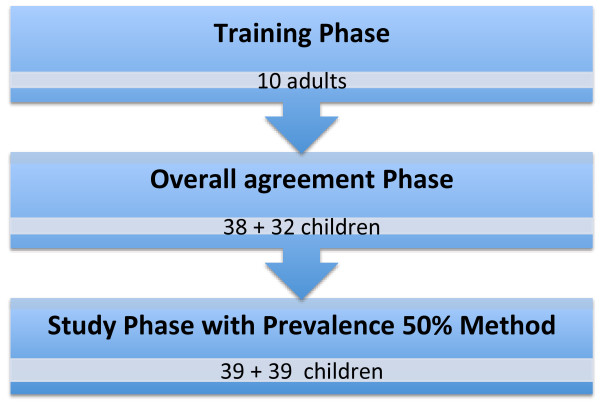
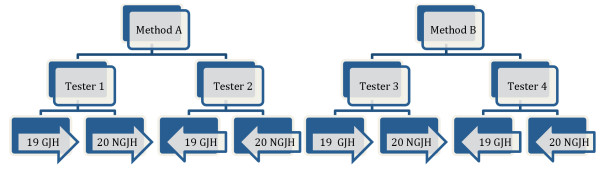
BACKGROUND: The assessment of Generalised Joint Hypermobility (GJH) is usually based on the Beighton tests, which consist of a series of nine tests. Possible methodological shortcomings can arise, as the tests do not include detailed descriptions of performance, interpretation nor classification of GJH. The purpose of this study was, among children aged 7-8 and 10-12 years, to evaluate: 1) the inter-tester reproducibility of the tests and criteria for classification of GJH for 2 variations of the Beighton test battery (Methods A and B) with a variation in starting positions and benchmarks between methods, and 2) the inter-method agreement for the two batteries. METHODS: A standardised three-phase protocol for clinical reproducibility studies was followed including a training phase, an overall agreement phase and a study phase. The number of participants in the three phases was 10, 70 and 39 respectively. For the inter-method study a total of 103 children participated. Two testers judged each test battery. A score of ≥ 5 was set as the cut-off level for GJH. Cohen's kappa statistics and McNemar's test were used to test for agreement and significant differences. RESULTS: Kappa values for GJH (≥ 5) were 0.64 (Method A, prevalence 0.42) and 0.59 (Method B, prevalence 0.46), with no difference between testers in Method A (p = 0.45) and B (p = 0.29). Prevalence of GJH in the inter-method study was 31% (A) and 35% (B) with no difference between methods (p = 0.54). CONCLUSIONS: Inter-tester reproducibility of Methods A and B was moderate to substantial, when following a standardised study protocol. Both test batteries can be used in the same children population, as there was no difference in prevalence of GJH at cut point 5, when applying method A and B. However, both methods need to be tested for their predictive validity at higher cut-off levels, e.g. ≥ 6 and ≥ 7.
Overview
The claims and statistics of this paper haven’t been checked yet.
Free: it reads the open-access text and checks the first 5 claims that cite a source we can check. Create a free account to check every claim.
Integrity signals
Registry
Cites
Statistics
Figures
Verification
Claims the paper makes
The claims and statistics of this paper haven’t been checked yet.
Free: it reads the open-access text and checks the first 5 claims that cite a source we can check. Create a free account to check every claim.
Claims other papers make about this one
Each is checked against this paper’s own text: does it say what the citing paper says it does?
The source backs part of the claim, not all of it — or backs it for a different population, condition or comparison.
In the citing paper
“Generally, most reliability studies have consistently produced kappa values between 0.4 and 0.8, indicating the BS to demonstrate moderate intra- and inter-examiner reliability in both adults and children (Table 1) [6, 47–52].”
From The Beighton Score as a measure of generalised joint hypermobility (2021) · cites this paper as [49]
Experimental — accuracy not yet measuredIn the citing paper
“The test has a moderate to high inter-tester repeatability (Junge et al., 2013) and demonstrated validity and reliability in a number of studies (Morris et al., 2017; Bulbena et al., 1992; Smits-Engelsman, Klerks & Kirby, 2011; Juul-Kristensen et al., 2007).”
From Prevalence of generalized joint hypermobility, musculoskeletal injuries, and chronic musculoskeletal pain among American university students (2019) · cites this paper as Junge et al., 2013
Self-check
Percentages, sums and reported differences re-computed from the paper’s own numbers.
The self-check needs the paper’s full text.
Citations
Cites
The Measurement of Observer Agreement for Categorical Data
Landis, J. R., & Koch, G. G. (1977) · Biometrics · doi:10.2307/2529310 · Cited by 81,148 · cited 1×
“…A and Method B, Cohen ’ s kappa statistics were used for each of the single tests and for the criterion for classification of GJH. Kappa values were classified as 0.0 = poor, 0.0-0.20 = slight, 0.21-0.40 = fair, 0.41-0.60 = moderate, 0.61-0.80 = substantial, and 0.81-1.00 = almost perfect [19].”
InfluentialPractical Statistics for Medical Research.
Walter, S. D., & Altman, D. G. (1992) · Biometrics · doi:10.2307/2532320 · Cited by 11,668
The Design and Analysis of Clinical Experiments
Fleiss, J. L. (1999) · Wiley eBooks · doi:10.1002/9781118032923 · Cited by 4,819
The kappa statistic in reliability studies: use, interpretation, and sample size requirements
Sim, J., & Wright, C. C. (2005) · Physical Therapy · doi:10.1093/ptj/85.3.257 · Cited by 4,093 · cited 3×
“As the PABAK coefficient relates to a hypothetical situation in which no prevalence or bias effects are present, prevalence and bias must be presented in addition to the obtained value of kappa [26].”
InfluentialThe Design and Analysis of Clinical Experiments.
Hills, M., & Fleiss, J. L. (1987) · Journal of the Royal Statistical Society. Series A (General) · doi:10.2307/2982050 · Cited by 3,261
Gandevia, B., & Tovell, A. (1964) · PubMed · Cited by 2,069
Articular mobility in an African population.
Beighton, P., Solomon, L., & Soskolne, C. L. (1973) · Annals of the Rheumatic Diseases · doi:10.1136/ard.32.5.413 · Cited by 1,727 · cited 7×
“Other differences between the current study and the studies previously mentioned [4,6,7,20] involve dissimilar starting positions, such as testing the thumbs with the elbows extended [4,6,20] or flexed [7].”
InfluentialHuman Experimentation: Code of Ethics of W.M.A
(1964) · BMJ · doi:10.1136/bmj.2.5402.177 · Cited by 1,449
ORTHOPAEDIC ASPECTS OF THE EHLERS. DANLOS SYNDROME
Beighton, P., & Horan, F. (1969) · The Journal of Bone and Joint Surgery. British volume · doi:10.1302/0301-620x.51b3.444 · Cited by 642 · cited 1×
“The BT was a modification of Carter and Wilkinson ’ s test for simply describing the population assessed in studies [4,11], rather than a diagnostic test.”
Beighton Score: A Valid Measure for Generalized Hypermobility in Children
Smits-Engelsman, B., Klerks, M., & Kirby, A. (2011) · The Journal of Pediatrics · doi:10.1016/j.jpeds.2010.07.021 · Cited by 389 · cited 6×
“Other differences between the current study and the studies previously mentioned [4,6,7,20] involve dissimilar starting positions, such as testing the thumbs with the elbows extended [4,6,20] or flexed [7].”
Influential
Research works printed but not linked: 4
- Surgeons, A.A.o.O Joint motion: method of measuring and recording 1965 Edinburgh: Churchill Livingstone
- Patijn J Remvig L Reproducibility and Validity Protocol Formats for Diagnostic Procedures in Manual/Musculoskeletal Medicine 2007 Available from: [ http://www.iammm.net/page7/page14/protocolformat.html]
- Wedderkopp N The CHAMPS-study Denmark 2008 Available from: http://www.sdu.dk/om_sdu/institutter_centre/rich/forskning/forskningsprojekter/svendborg+projektet
- Jensen S Agreement of Beighton score for hypermobility in children 2009 Denmark: Pilot study, CHAMPS-study
Cited by
Sperstad, J. B., Tennfjord, M. K., Hilde, G., Ellström-Engh, M., & Bø, K. (2016) · British Journal of Sports Medicine · doi:10.1136/bjsports-2016-096065 · Cited by 349
Juul‐Kristensen, B., Schmedling, K., Rombaut, L., Lund, H., & Engelbert, R. H. H. (2017) · American Journal of Medical Genetics Part C: Seminars in Medical Genetics · doi:10.1002/ajmg.c.31540 · Cited by 229
“A total of four out of the eleven studies included children [Mikkelsson et al., 1996; Hansen et al., 2002; Erkula et al., 2005; Junge et al., 2013].”
BackgroundResultSelf-citationThe Beighton Score as a measure of generalised joint hypermobility
Malek, S., Reinhold, E. J., & Pearce, G. S. (2021) · Rheumatology International · doi:10.1007/s00296-021-04832-4 · Cited by 224
Beighton scores and cut-offs across the lifespan: cross-sectional study of an Australian population
Singh, H., McKay, M., Baldwin, J., Nicholson, L., Chan, C., Burns, J., & Hiller, C. E. (2017) · Rheumatology · doi:10.1093/rheumatology/kex043 · Cited by 138
Reuter, P. R., & Fichthorn, K. R. (2019) · PeerJ · doi:10.7717/peerj.7625 · Cited by 110
“The test has a moderate to high inter-tester repeatability (Junge et al., 2013) and demonstrated validity and reliability in a number of studies (Morris et al.”
Interrater and Intrarater Reliability of the Beighton Score: A Systematic Review
Bockhorn, L. N., Vera, A. M., Dong, D., Delgado, D. A., Varner, K. E., & Harris, J. D. (2021) · Orthopaedic Journal of Sports Medicine · doi:10.1177/2325967120968099 · Cited by 85
“Cooper (2018)(15) 50, 49 (22-60), 56, community members VG NS 1 wk VG 5 item þ goniometer 1 NS NS NS A”
BackgroundHypermobility and musculoskeletal pain in adolescents
Morris, S. L., O'Sullivan, P. B., Murray, K. J., Bear, N., Hands, B., & Smith, A. J. (2017) · The Journal of Pediatrics · doi:10.1016/j.jpeds.2016.09.060 · Cited by 63
“Epidemiologic studies of GJH commonly use the Beighton scoring system,(4,5) a series of 9 dichotomous joint extensibility tests that demonstrates moderate to high intertester repeatability.(6) A Beighton score of ≥4 has been used commonly to indicate GJH in adults(2,3); however, a higher threshold has been advocated f…”
MethodResultCattalini, M., Khubchandani, R., & Cimaz, R. (2015) · Pediatric Rheumatology · doi:10.1186/s12969-015-0039-3 · Cited by 41
Evaluation of ligament laxity during pregnancy
Cherni, Y., Desseauve, D., Decatoire, A., Veit‐Rubin, N., Begon, M., Pierre, F., & Fradet, L. (2019) · Journal of Gynecology Obstetrics and Human Reproduction · doi:10.1016/j.jogoh.2019.02.009 · Cited by 56
Musculoskeletal pain and musculoskeletal syndromes in adolescents are related to electronic devices
Queiroz, L. B., Lourenço, B., Silva, L. E. V., Lourenço, D. M. R., & Silva, C. A. (2017) · Jornal de Pediatria · doi:10.1016/j.jped.2017.09.006 · Cited by 49
“Uso de internet nos dias da semana, horas/dia 3 (5-24) 3 (0-24) 0,742a”
BackgroundInfluentialMeyer, K. J., Chan, C., Hopper, L., & Nicholson, L. L. (2017) · BMC Musculoskeletal Disorders · doi:10.1186/s12891-017-1875-8 · Cited by 39
“While the Beighton score has gained international acceptance for the identification of GJH, the variation in cut-off scores used and the lack of a standardised protocol limits the comparability across reliability studies [27, 28].”
BackgroundRisk Factors for Knee Injuries in Children 8 to 15 Years: The CHAMPS Study DK
Junge, T., Larsen, L. R., Juul‐Kristensen, B., & Wedderkopp, N. (2015) · Medicine & Science in Sports & Exercise · doi:10.1249/mss.0000000000000814 · Cited by 44
“All testers were trained by two experienced physiotherapists (TJ & LRL) in a standardised protocol for the BT, describing the test procedures in detail (23).”
MethodSelf-citationSchlager, A., Ahlqvist, K., Rasmussen-Barr, E., Bjelland, E. K., Pingel, R., Olsson, C., Nilsson-Wikmar, L., & Kristiansson, P. (2018) · BMC Musculoskeletal Disorders · doi:10.1186/s12891-018-2290-5 · Cited by 35
Blajwajs, L., Williams, J., Timmons, W., & Sproule, J. (2023) · Rheumatology International · doi:10.1007/s00296-023-05338-x · Cited by 35
Junge, T., Wedderkopp, N., Thorlund, J., Søgaard, K., & Juul-Kristensen, B. (2015) · Journal of Electromyography & Kinesiology · doi:10.1016/j.jelekin.2015.02.011 · Cited by 30
“Inclusion criteria for children with GJH were a BT score (Junge et al., 2013) of P5/9, at least one hypermobile knee, and positive standing knee hyperextension confirmed by using a goniometer during supine lying (Ramesh et al.”
BackgroundSelf-citationJunge, T., Larsen, L. R., Juul-Kristensen, B., & Wedderkopp, N. (2015) · BMC Musculoskeletal Disorders · doi:10.1186/s12891-015-0611-5 · Cited by 21
“All testers were trained by two experienced physiotherapists (TJ & LR) in a standardised protocol for the BT, describing the test procedures in detail [20].”
BackgroundMethodResultSelf-citationReproducibility protocol for diagnostic procedures in Manual/Musculoskeletal Medicine: Edition 2019
Patijn, J. (2019) · Manuelle Medizin · doi:10.1007/s00337-019-00581-5 · Cited by 22
Musculoskeletal Health Complaints and Associated Risk Factors in Freshmen Music Students
Ballenberger, N., Avermann, F., & Zalpour, C. (2023) · International Journal of Environmental Research and Public Health · doi:10.3390/ijerph20043169 · Cited by 23
Musculoskeletal pain and musculoskeletal syndromes in adolescents are related to electronic devices
Queiroz, L. B., Lourenço, B., Silva, L. E. V., Lourenço, D. M. R., & Silva, C. A. (2018) · Jornal de Pediatria (Versão em Português) · doi:10.1016/j.jpedp.2017.12.004 · Cited by 25
Reliability of a musculoskeletal profiling test battery in elite academy soccer players
Grazette, N., McAllister, S., Ong, C. W., Sunderland, C. D., Nevill, M. E., & Morris, J. G. (2020) · PLoS ONE · doi:10.1371/journal.pone.0236341 · Cited by 12
Joint hypermobility and oligoarticular juvenile idiopathic arthritis: What relationship?
Cecchin, V., Sperotto, F., Balzarin, M., Vittadello, F., Martini, G., & Zulian, F. (2017) · Journal of Paediatrics and Child Health · doi:10.1111/jpc.13450 · Cited by 9
Hypermobility in individuals with Kabuki syndrome: The effect of growth hormone treatment
Schott, D. A., Schrander-Stumpel, C. T. R. M., & Klaassens, M. (2018) · American Journal of Medical Genetics Part A · doi:10.1002/ajmg.a.60696 · Cited by 9
“Both the Beighton and Bulbena scores were used for assessment of hypermobility and both have been validated for use in children, although the Bulbena score has not been validated in large cohorts (Junge et al., 2013; Smits-Engelsman, Klerks, & Kirby, 2011).”
MethodResultSchlager, A., Ahlqvist, K., Pingel, R., Nilsson-Wikmar, L. B., Olsson, C., & Kristiansson, P. (2020) · BMC Musculoskeletal Disorders · doi:10.1186/s12891-020-03524-7 · Cited by 11
Moore, N., Rand, S., & Simmonds, J. V. (2019) · Musculoskeletal Care · doi:10.1002/msc.1392 · Cited by 10
“…have been excluded with any other pathological condition with hypermobility as a known feature, a current or previous orthopaedic condition and a diagnosis of neurodevelopmental disorders (Adib et al., 2005; Ferrari et al., 2005; Junge et al., 2013; Pacey, Tofts, Adams, Munns, & Nicholson, 2015).”
BackgroundWhite, A. E., Chatterji, R., Zaman, S. U., Hadley, C. J., Cohen, S. A., Freedman, K. B., & Dodson, C. C. (2019) · Knee Surgery Sports Traumatology Arthroscopy · doi:10.1007/s00167-019-05510-6 · Cited by 9
Hornsby, E. A., Tucker, K. J., & Johnston, L. M. (2022) · Physical & Occupational Therapy In Pediatrics · doi:10.1080/01942638.2022.2151393 · Cited by 7
“Several authors have commented on the ambiguity of test item procedures (Junge et al., 2013; Juul-Kristensen et al., 2007; Scheper et al., 2013) which may reduce inter-rater reliability.”
BackgroundJunge, T., Henriksen, P., Andersen, H. L., Byskov, L. D., Knudsen, H. K., & Juul‐Kristensen, B. (2016) · BMC Sports Science Medicine and Rehabilitation · doi:10.1186/s13102-016-0044-y · Cited by 9
“The reliability of the Beighton score has been examined for the current test procedures in a corresponding age population with good to excellent inter and intra tester reproducibility [15].”
Self-citationGeneralized joint hypermobility: a timely population study and proposal for Beighton cut-offs
Simmonds, J. (2017) · Rheumatology · doi:10.1093/rheumatology/kex190 · Cited by 6
Ping, H., Kong, X., Zhang, H., Luo, D., Jiang, Q. Y., & Chai, W. (2024) · Journal of Bone and Joint Surgery · doi:10.2106/jbjs.23.01030 · Cited by 6
Benítez, C. A. V., Ruiz-Extremera, Á., & Saps, M. (2019) · Anales de Pediatría (English Edition) · doi:10.1016/j.anpede.2019.04.010 · Cited by 7
Benítez, C. A. V., Ruiz‐Extremera, A., & Saps, M. (2019) · Anales de Pediatría · doi:10.1016/j.anpedi.2019.04.006 · Cited by 5
Aukštuolytė-Bačienė, E., Daunoravičienė, A., Tamulionytė, V., Berškienė, K., Narbutaitė, J., Razón, S., & Slapšinskaitė, A. (2024) · Healthcare · doi:10.3390/healthcare12111065 · Cited by 3
“…bilateral dorsiflexion of the fifth metacarpophalangeal joint and the passive bilateral hyperextension of the elbow and knee. and the passive bilateral hyperextension of the The goniometer (SAEHAN ® , South Korea) is a plastic instrument with two arms, one fixed and one mobile. elbow and knee.”
BackgroundPosterior hip instability relocation testing: a resident’s case report
Maas, R., Wallentine, S., Gerke, D. A., Crager, S., & Stewart, J. (2017) · Journal of Manual & Manipulative Therapy · doi:10.1080/10669817.2017.1318522 · Cited by 2
Saldıran, T. Ç., Akgöl, A. C., Taşcılar, L. N., Okudan, B., Aydın, G., & Rezaeı, D. (2019) · International Journal of Health & Allied Sciences · doi:10.4103/ijhas.ijhas_90_18 · Cited by 2
“If the Beighton score is 4 or more, the participant is called hypermobile.[14,15]”
BackgroundEvaluation of Postural Habits and Awareness in Young Adults with Generalized Joint Hypermobility
Yıldız, R., & Yıldız, A. (2025) · Ergoterapi ve Rehabilitasyon Dergisi · doi:10.30720/ered.1543835 · Cited by 1
Full‐Season Injury Epidemiology in TeamGym —A Prospective Cohort Study Involving 474 Gymnasts
Anker‐Petersen, C., Clausen, M. B., Juul‐Kristensen, B., Hölmich, P., Juhl, C. B., & Thorborg, K. (2025) · Scandinavian Journal of Medicine and Science in Sports · doi:10.1111/sms.70135 · Cited by 2
“The Five-Part Questionnaire (5-PQ) [9] was used for classification of GJH [10, 11].”
Self-citationAnker‐Petersen, C., Clausen, M. B., Juul‐Kristensen, B., Hölmich, P., & Thorborg, K. (2025) · Physical Therapy in Sport · doi:10.1016/j.ptsp.2025.04.001 · Cited by 1
Self-citationAyala, D. V. S., Valencia, A. M., & Mora, M. D. P. G. (2015) · Revista Colombiana de Reumatología · doi:10.1016/j.rcreu.2015.10.005 · Cited by 1
Musculoskeletal pain in children, when hypermobility is the problem
Cattalini, M., & Cimaz, R. (2017) · Archives de Pédiatrie · doi:10.1016/j.arcped.2017.01.021 · Cited by 3
Schulterinstabilität - Klassifikationen und ausgewählte Überlegungen zur Behandlung
Grim, C., & Engelhardt, M. (2014) · Sports Orthopaedics and Traumatology · doi:10.1016/j.orthtr.2014.01.015
Patellofemoral Pain and Rehabilitation
Manton, C. (2015) · Orthopaedic Section, APTA, Inc. eBooks · doi:10.17832/isc.2015.25.3.3.3
Zadeh, A. B., Jahan, A., Hashemi, T., Salimi, M. M., & rezaei, M. (2020) · کومش · doi:10.29252/koomesh.22.1.114
“[26] Junge T, Jespersen E, Wedderkopp N, Juul-Kristensen B.”
Benign Joint Hypermobility Syndrome (BJHS)
Błasiak, A. (2020) · Springer eBooks · doi:10.1007/978-3-662-61074-9_5
Hyperlaxity and Multidirectional Shoulder Instability
Solecki, W., Błasiak, A., Laprus, H., & Brzóska, R. (2020) · Springer eBooks · doi:10.1007/978-3-662-61074-9_39
Matsuda, K., Kobayashi, K., Ikeda, T., Okoba, R., & Takano, Y. (2020) · Japanese Journal of Health Promotion and Physical Therapy · doi:10.9759/hppt.10.137
Dorich, J. M., & Little, K. J. (2019) · Elsevier eBooks · doi:10.1016/b978-0-323-53091-0.00016-6
Brzozowska, E. K., & Sajewicz, E. (2023) · Journal of Bodywork and Movement Therapies · doi:10.1016/j.jbmt.2023.11.017 · Cited by 1
Metadata
- Authors
- Junge, T., Jespersen, E., Wedderkopp, N., & Juul-Kristensen, B.
- Affiliations
- University of Southern Denmark (DK)
- Corresponding author
- Junge, Tina
- Venue
- BMC Pediatrics
- Published
- 2013-12
- Volume
- 13
- Issue
- 1
- Pages
- 214-214
- ISSN
- 1471-2431 (ISSN-L)
- PMC
- PMC3878084
- OpenAlex
- W2046602984
- Cited by
- 47
- References
- 27
- Citations by year
- 2025: 3 · 2024: 2 · 2023: 3 · 2022: 1 · 2021: 2 · 2020: 6 · 2019: 9 · 2018: 3 · 2017: 8 · 2016: 3 · 2015: 6 · 2014: 1
- FWCI
- 2.21
- Type
- journal article
- Language
- en
- Open access
- gold
- doi.org
- Licence
- Locations
- BMC Pediatrics (publishedVersion, cc-by)
- PubMed Central (publishedVersion, cc-by)
- PubMed (publishedVersion)
- NORA - Norwegian Open Research Archives (submittedVersion, other-oa)
- University of Southern Denmark Research Portal (University of Southern Denmark) (submittedVersion)
- Funders
- Gigtforeningen
- Nordisk Institut for Kiropraktik og Klinisk Biomekanik
- Nordea-fonden
- Syddansk Universitet
- TrygFonden
- Egmont Fonden
- IMK Almene Fond
- Topics
- Life Sciences › Biochemistry, Genetics and Molecular Biology › Genetics › Connective tissue disorders research
- Social Sciences › Decision Sciences › Statistics, Probability and Uncertainty › Reliability and Agreement in Measurement
- Health Sciences › Health Professions › Physical Therapy, Sports Therapy and Rehabilitation › Musculoskeletal pain and rehabilitation
- Keywords
- generalized joint hypermobility, inter-method agreement, elementary school students, cut-off values, prevalence, predictive validity
- MeSH terms
- Child, Female, Humans, Joint Instability, Male, Physical Examination, Reproducibility of Results, Observer Variation, Single-Blind Method, Range of Motion, Articular
About these checks
Registry, retraction, Cites and statistics results are computed, not judged, with one exception: a printed reference that no index lists is read once by a model before it counts as a citation error. Claims are extracted by a model and kept only when their quote appears verbatim in the text; each cited source is then checked, with a model’s help, for whether it says what the claim relies on. Those verdicts can be wrong — read the claim’s quote and the cited source before relying on one.
Statistics and arithmetic are recomputed, not judged.
Confidence bands are shown only for fields calibrated on our annotated test set. None is calibrated yet, so no band is shown.
What counts as a claim ›How we measure confidence ›How we check this ›
Are you an author, or do you see a problem with this page? Request a review
Data sources
Bibliographic data: Semantic Scholar, OpenAlex, Crossref.
Contains information from the Semantic Scholar Academic Graph Datasets, made available under the ODC Attribution License (ODC-BY 1.0).
Semantic Scholar’s data is described in: Kinney, R., et al. (2023). The Semantic Scholar Open Data Platform. arXiv:2301.10140.
