

Internet-versus group-administered cognitive behaviour therapy for panic disorder in a psychiatric setting: a randomised trial
Open accessThe DOI matches its Crossref record; 42 of the 43 references it cites were found in a registry or an index.
Abstract
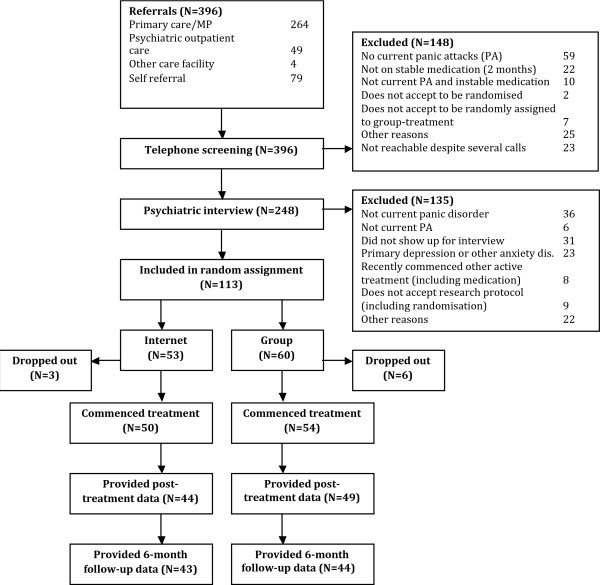
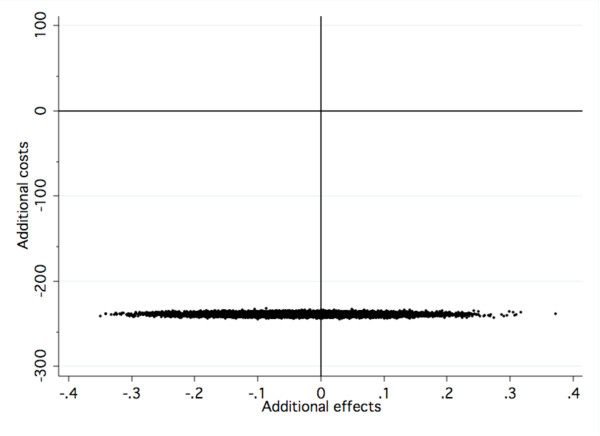
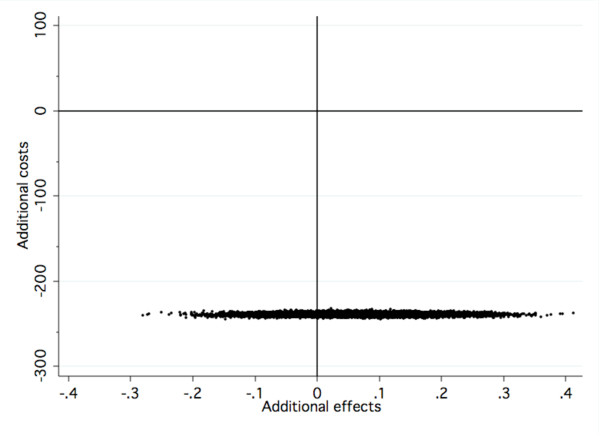
BACKGROUND: Internet administered cognitive behaviour therapy (CBT) is a promising new way to deliver psychological treatment, but its effectiveness in regular care settings and in relation to more traditional CBT group treatment has not yet been determined. The primary aim of this study was to compare the effectiveness of Internet-and group administered CBT for panic disorder (with or without agoraphobia) in a randomised trial within a regular psychiatric care setting. The second aim of the study was to establish the cost-effectiveness of these interventions. METHODS: Patients referred for treatment by their physician, or self-referred, were telephone-screened by a psychiatric nurse. Patients fulfilling screening criteria underwent an in-person structured clinical interview carried out by a psychiatrist. A total of 113 consecutive patients were then randomly assigned to 10 weeks of either guided Internet delivered CBT (n = 53) or group CBT (n = 60). After treatment, and at a 6-month follow-up, patients were again assessed by the psychiatrist, blind to treatment condition. RESULTS: Immediately after randomization 9 patients dropped out, leaving 104 patients who started treatment. Patients in both treatment conditions showed significant improvement on the main outcome measure, the Panic Disorder Severity Scale (PDSS) after treatment. For the Internet treatment the within-group effect size (pre-post) on the PDSS was Cohen's d = 1.73, and for the group treatment it was d = 1.63. Between group effect sizes were low and treatment effects were maintained at 6-months follow-up. We found no statistically significant differences between the two treatment conditions using a mixed models approach to account for missing data. Group CBT utilised considerably more therapist time than did Internet CBT. Defining effect as proportion of PDSS responders, the cost-effectiveness analysis concerning therapist time showed that Internet treatment had superior cost-effectiveness ratios in relation to group treatment both at post-treatment and follow-up. CONCLUSIONS: This study provides support for the effectiveness of Internet CBT in a psychiatric setting for patients with panic disorder, and suggests that it is equally effective as the more widely used group administered CBT in reducing panic-and agoraphobic symptoms, as well as being more cost effective with respect to therapist time. TRIAL REGISTRATION: ClinicalTrials.gov NCT00845260.
Overview
The claims and statistics of this paper haven’t been checked yet.
Free: it reads the open-access text and checks the first 5 claims that cite a source we can check. Create a free account to check every claim.
Integrity signals
Registry
Cites
Statistics
Figures
Verification
Claims the paper makes
The claims and statistics of this paper haven’t been checked yet.
Free: it reads the open-access text and checks the first 5 claims that cite a source we can check. Create a free account to check every claim.
Claims other papers make about this one
Each is checked against this paper’s own text: does it say what the citing paper says it does?
The source backs part of the claim, not all of it — or backs it for a different population, condition or comparison.
In the citing paper
“an increasing number of controlled studies indicate that for common psychiatric disorders ICBT is as effective as face-to-face delivered treatment [11-13]”
From Acceptability, effectiveness, and cost-effectiveness of internet-based exposure treatment for irritable bowel syndrome in a clinical sample: A randomized controlled trial (2011) · cites this paper as [12]
Experimental — accuracy not yet measuredThe cited source says what the claim attributes to it.
In the citing paper
“there are an increasing number of studies showing that internet-delivered CBT can be equally effective as face-to-face CBT in conditions such as panic disorder [16], depressive symptoms [17], tinnitus [18]”
From The promise and pitfalls of the internet for cognitive behavioral therapy (2010) · cites this paper as [16]
In the citing paper
“We used the effect sizes based on intent-to-treat analysis when available (in 51 comparisons); otherwise, we used complete-sample analysis results (in 2 comparisons [51,52]).”
From Internet-Delivered Cognitive Behavioral Therapy for Anxiety Disorders in Open Community Versus Clinical Service Recruitment: Meta-Analysis (2019) · cites this paper as [51]
In the citing paper
“This dropout seems to reflect the reality of trials conducted in routine mental health care, as comparable rates were found in earlier clinical trials comparing iCBT with ftfCBT [65, 74–77]; it could not be prevented by our e-mail and telephone reminders.”
Self-check
Percentages, sums and reported differences re-computed from the paper’s own numbers.
The self-check needs the paper’s full text.
Citations
Cites
(1998) · The Journal of Clinical Psychiatry · Cited by 19,139
A new depression scale designed to be sensitive to change
Montgomery, S. A., & Åsberg, M. (1979) · British Journal of Psychiatry · doi:10.1192/bjp.134.4.382 · Cited by 13,962 · cited 2×
“Other outcomes measures used were the Clinical Global Impression Scale (CGI) [25], the Montgomery Åsberg Depression Rating Scale (MADRS) [26], the Anxiety Sensitivity Index (ASI) [27], and the Sheehan Disability Scale (SDS) [28].”
MethodMethods for the Economic Evaluation of Health Care Programmes
Drummond, M. E., Sculpher, M. J., Torrance, G. W., O’Brien, B. J., & Stoddart, G. L. (2005) · doi:10.1093/oso/9780198529446.001.0001 · Cited by 13,648
(1998) · PubMed · Cited by 10,216
The mini international neuropsychiatric interview
Lecrubier, Y., Sheehan, D., Hergueta, T., & Weiller, E. (1998) · European Psychiatry · doi:10.1016/s0924-9338(99)80239-9 · Cited by 5,872
Anxiety, sensitivity, anxiety frequency, and the prediction of fearfulness
Reiss, S., Peterson, R. A., Gursky, D. M., & McNally, R. J. (1986) · Behaviour Research and Therapy · doi:10.1016/0005-7967(86)90143-9 · Cited by 3,169 · cited 2×
“Other outcomes measures used were the Clinical Global Impression Scale (CGI) [25], the Montgomery Åsberg Depression Rating Scale (MADRS) [26], the Anxiety Sensitivity Index (ASI) [27], and the Sheehan Disability Scale (SDS) [28].”
MethodBoutron, I., Moher, D., Altman, D. G., Schulz, K. F., Ravaud, P., & for the CONSORT Group* (2008) · Annals of Internal Medicine · doi:10.7326/0003-4819-148-4-200802190-00008 · Cited by 2,292 · cited 1×
“Statistical analysis and rationale for comparisons We were informed by the adapted CONSORT checklist [32], but also analysed our data according to a mixed models approach.”
MethodThe Great Psychotherapy Debate: Models Methods and Findings
Horvath, A. O. (2002) · Psychotherapy Research · doi:10.1093/ptr/12.1.108 · Cited by 1,705
Internet-based cognitive behaviour therapy for symptoms of depression and anxiety: A meta-analysis
SPEK, V., CUIJPERS, P., NYKLÍČEK, I., RIPER, H., KEYZER, J., & POP, V. (2007) · Psychological Medicine · doi:10.1017/s0033291706008944 · Cited by 1,586 · cited 1×
“The literature [37] strongly suggests that guidance/therapist contact during treatment is needed, as non-guided Internet treatments generally show smaller or nonexistent treatment effects and much larger attrition.”
BackgroundGueorguieva, R., & Krystal, J. H. (2004) · Archives of General Psychiatry · doi:10.1001/archpsyc.61.3.310 · Cited by 1,529 · cited 2×
“As a second way to analyze the data, and to account for missing data we used a mixed effects models approach [30] because in the analysis of longitudinal data repeated observations for the same individual are correlated.”
Method
Research works printed but not linked: 1
- American Psychiatric Association Diagnostic and Statistical Manual of Mental Disorders-4th edition (DSM-IV). text revision edition edition 2000 4 Washington DC: American Psychiatric Press
Cited by
Items 101–200 of 202
O’Kearney, R., Kim, S., Dawson, R. L., & Calear, A. L. (2019) · Australian & New Zealand Journal of Psychiatry · doi:10.1177/0004867419864433 · Cited by 23
Delivery of cognitive behavioural therapy to workers: a systematic review
Naidu, V. V., Giblin, E., Burke, K. M., & Madan, I. (2016) · Occupational Medicine · doi:10.1093/occmed/kqv141 · Cited by 18
Vernmark, K., Buhrman, M., Carlbring, P., Hedman‐Lagerlöf, E., Kaldo, V., & Andersson, G. (2024) · Digital Health · doi:10.1177/20552076241287059 · Cited by 29
“70 There were no statistically signi fi cant differences between the two treat-ment groups, despite considerably less therapist time spent in the ICBT treatment.”
BackgroundSelf-citationPsychometric analysis of the Swedish panic disorder severity scale and its self-report version
Svensson, M., Nilsson, T., Johansson, H., Viborg, G., Perrin, S., & Sandell, R. (2019) · Nordic Journal of Psychiatry · doi:10.1080/08039488.2018.1554699 · Cited by 16
McCombie, A., Gearry, R., & Mulder, R. (2014) · Journal of Crohn's and Colitis · doi:10.1016/j.crohns.2013.11.011 · Cited by 15
Sasseville, M., LeBlanc, A., Tchuente, J., Boucher, M., Dugas, M., Mbemba, G. I. C., Barony, R., Chouinard, M., Beaulieu, M., Beaudet, N., et al. (2023) · Systematic Reviews · doi:10.1186/s13643-023-02241-1 · Cited by 23
“Bergström [29] 2010 Sweden Panic disorder 113 Internet or website/email (SMS) Depression”
BackgroundSygel, K., Kristiansson, M., Furberg, R., & Fors, U. (2014) · International Journal of Forensic Mental Health · doi:10.1080/14999013.2014.951104 · Cited by 12
Guided Internet Treatment for Anxiety Disorders. As Effective As Face-To-Face Therapies?
Gerhard, A. (2012) · Studies in Health Technology and Informatics · doi:10.3233/978-1-61499-121-2-3 · Cited by 14
Linardon, J., Messer, M., Reid, R., Bolger, T., & Andersson, G. (2025) · Cognitive Behaviour Therapy · doi:10.1080/16506073.2025.2542364 · Cited by 23
Self-citationThe Bergen 4-day treatment for panic disorder: implementation in a rural clinical setting
Eide, T. O., Hjelle, K. M., Sætre, I. U., Solem, S., Olsen, T., Sköld, R. O., Kvale, G., Hansen, B. K. A., & Hagen, K. (2023) · BMC Psychiatry · doi:10.1186/s12888-023-04812-x · Cited by 14
Titov, N., Dear, B. F., Johnston, L., & Terides, M. (2012) · Revista de Psicopatología y Psicología Clínica · doi:10.5944/rppc.vol.17.num.3.2012.11842 · Cited by 13
Exposure Therapy: Promoting Emotional Processing of Pathological Anxiety
Zalta, A. K., & Foa, E. B. (2012) · Wiley eBooks · doi:10.1002/9781118470886.ch4 · Cited by 20
Katzman, M. A., Bleau, P., Blier, P., Chokka, P. R., Kjernisted, K. D., & Ameringen, M. V. (2023) · doi:10.32920/14638581 · Cited by 13
Receiving Online Psychological Counseling and its Causes: A Structural Equation Model
Erdem, A., Bardakçı, S., & Erdem, Ş. (2016) · Current Psychology · doi:10.1007/s12144-016-9542-z · Cited by 16
Ramzan, N., Dixey, R., & Morris, A. (2022) · The Cognitive Behaviour Therapist · doi:10.1017/s1754470x22000460 · Cited by 13
“Qualitative methods are often employed in health settings for evaluation, policy development, implementation, and identifying meaningful outcomes (Berry et al., 2017; McBride et al., 2020;).”
MethodBoberg, J., Kaldo, V., Mataix‐Cols, D., Crowley, J. J., Roelstraete, B., Halvorsen, M., Forsell, E., Isacsson, N. H., Sullivan, P. F., Svanborg, C., et al. (2023) · BMJ Open · doi:10.1136/bmjopen-2022-069427 · Cited by 12
Self-citationHovland, A., Johansen, H., Sjøbø, T., Vøllestad, J., Nordhus, I. H., Pallesen, S., Havik, O. E., Martinsen, E. W., & Nordgreen, T. (2015) · Cognitive Behaviour Therapy · doi:10.1080/16506073.2015.1022596 · Cited by 14
“Treatment response has, however, been reduced in psychiatric settings, with approximately 70% responding to treatment (Bergström et al., 2010), indicating that a substantial proportion of these patients fail to recover.”
BackgroundMethodInfluentialNordgreen, T., & Havik, O. E. (2011) · Professional Psychology: Research and Practice · doi:10.1037/a0022729 · Cited by 11
Internet‐Delivered Treatments for Social Anxiety Disorder
Andersson, G., Carlbring, P., & Furmark, T. (2014) · Wiley eBooks · doi:10.1002/9781118653920.ch26 · Cited by 12
Self-citationState-of-the-Art Treatment via the Internet: An Optimistic Vision of the Future
Carlbring, P., Andersson, G., & Kaldo, V. (2011) · Cognitive Behaviour Therapy · doi:10.1080/16506073.2011.575591 · Cited by 10
“…Psychiatry Department within the regular care in Stockholm City Council, in close cooperation with Karolinska Institute, has been the site for iCBT trials on depression, panic disorder, social phobia, irritable bowel syndrome, health anxiety, and insomnia (see, e.g., Bergström et al., 2010).”
BackgroundSelf-citationThe Efficacy and Effectiveness of Online CBT
Ruwaard, J. (2013) · UvA-DARE (University of Amsterdam) · Cited by 12
Carter, F. A., Bell, C. J., & Colhoun, H. C. (2013) · Australian & New Zealand Journal of Psychiatry · doi:10.1177/0004867412461384 · Cited by 9
“, 2010), this analysis was published prior to recent studies involving participants in secondary care settings with anxiety disorders (Bell et al., 2012; Bergström et al., 2010; Hedman et al., 2011).”
BackgroundResultInfluentialAnton, M. T., Greenberger, H. M., Andreopoulos, E., & Pande, R. L. (2021) · JMIR Formative Research · doi:10.2196/27570 · Cited by 11
“CBT: cognitive behavioral therapy GAD-7: Generalized Anxiety Disorder-7 PHQ-9: Patient Health Questionnaire-9 SPIN: Social Phobia Inventory Edited by J Torous; submitted 02.02.21; peer-reviewed by J Yu, A Rotondi; comments to author 29.03.21; revised version received 29.04.21; accepted 26.07.21; published 21.09.21 Ple…”
ResultInfluentialCiuca, A., Berger, T., Crişan, L. G., & Miclea, M. (2016) · BMC Psychiatry · doi:10.1186/s12888-016-0709-9 · Cited by 10
“Panic disorder (PD) with or without agoraphobia is one of the conditions for which ICBT programs have been developed since the late 1990s and there are several empirical studies supporting their efficacy and effectiveness [13, 17, 19, 32–42].”
BackgroundAnksiyete Bozukluklarının Tedavisinde İnternet Tabanlı Bilişsel Davranışçı Terapi Uygulamaları
Huyut, B. Ç. (2019) · Yaşam Becerileri Psikoloji Dergisi · doi:10.31461/ybpd.622846 · Cited by 14
Jung, H. W., Jang, K.-W., Nam, S., Kim, A. Y., Lee, J., Ahn, M. E., Lee, S., Kim, Y. J., Shin, J.-K., & Roh, D. D. (2025) · Journal of Clinical Medicine · doi:10.3390/jcm14051771 · Cited by 11
Participatory medicine: model based tools for engaging and empowering the individual
Sagar, M. A., & Broadbent, E. (2016) · Interface Focus · doi:10.1098/rsfs.2015.0092 · Cited by 13
Lee, S.-Y., Lyu, S.-J., Choi, S.-Y., Lyu, Y.-S., & Kang, H.-W. (2014) · Journal of Oriental Neuropsychiatry · doi:10.7231/jon.2014.25.4.319 · Cited by 6
Ciuca, A., Berger, T., & Miclea, M. (2017) · Pragmatic Case Studies in Psychotherapy · doi:10.14713/pcsp.v13i3.2011 · Cited by 7
Les nouvelles thérapies par Internet
Bergström, J. (2013) · RESET · doi:10.4000/reset.124 · Cited by 11
Self-citationStrauss, A. Y., Halaj, A., Zalaznik, D., Fradkin, I., Katz, B. A., Zlotnick, E., Barzilay, S., Andersson, G., Ebert, D. D., & Huppert, J. D. (2022) · Journal of Behavioral and Cognitive Therapy · doi:10.1016/j.jbct.2021.12.005 · Cited by 8
Self-citationApplication of E-Therapy Programs to Social Work Practice
Wodarski, J. S., & Frimpong, J. (2014) · Springer eBooks · doi:10.1007/978-3-319-12376-9_1 · Cited by 7
Exploring School Bullying: Designing the Research Question with Young Co-Researchers
O’Brien, N., & Doyle, A. (2023) · Social Sciences · doi:10.3390/socsci12050276 · Cited by 5
Muuraiskangas, S. T., Honka, A. M., Junno, U.-M., Nieminen, H., & Kaartinen, J. K. (2022) · Journal of Medical Internet Research · doi:10.2196/26569 · Cited by 8
Soares, T., Camargo, J., & Pizzinato, A. (2013) · Revista Brasileira de Terapia Comportamental e Cognitiva · doi:10.31505/rbtcc.v15i1.567 · Cited by 5
The effect of an online individualized program to prevent nurse burnout – a mixed method study
Geuens, N., Franck, E., Vlerick, P., & Van Bogaert, P. (2022) · International Journal of Workplace Health Management · doi:10.1108/ijwhm-06-2020-0090 · Cited by 5
Elvira, A. C., Santacreu, M., Giráldez, C. A. M., & Shih, P. (2021) · Clinical Psychology & Psychotherapy · doi:10.1002/cpp.2571 · Cited by 4
ICBT for Panic Disorder and Agoraphobia: From the Computer at Home to Real-Life ‘In Vivo’ Exposure
van Ballegooijen, W., Klein, B., & Lindefors, N. (2016) · Springer eBooks · doi:10.1007/978-3-319-06083-5_3 · Cited by 6
Self-citationCaractéristiques et évidences empiriques des traitements psychologiques basés sur Internet
Hohl, É., Berger, T., Bergström, J., Andersson, G., & Caspar, F. (2010) · Journal de Thérapie Comportementale et Cognitive · doi:10.1016/j.jtcc.2010.04.002 · Cited by 5
Self-citationAndersson, G., & Carlbring, P. (2010) · Springer eBooks · doi:10.1007/978-1-4419-6510-3_4 · Cited by 4
Self-citationRubel, J. A., Quest, J., Pruessner, L., Timm, C., Hartmann, S. F., Barnow, S., Rittmeyer, L., Rosenbaum, D., & Lalk, C. (2022) · Internet Interventions · doi:10.1016/j.invent.2022.100584 · Cited by 4
Cho, I., Kim, B.-H., Lee, H., Song, Y., Chang, M. J., Kim, J., & Han, E. (2025) · Journal of Anxiety Disorders · doi:10.1016/j.janxdis.2025.103074 · Cited by 7
Internet-Delivered Cognitive Behavioral Therapy for Anxiety
Onyeka, O. “., Riddle, D., Bivins, E. J., Armstrong, G. M., Upshaw, B. M., Rast, C. E., & Silva, T. (2024) · Advances in Psychiatry and Behavioral Health · doi:10.1016/j.ypsc.2024.05.003 · Cited by 9
Bäckman, J., Wallert, J., Halvorsen, M., Crowley, J. J., Mataix‐Cols, D., & Rück, C. (2025) · Discover Mental Health · doi:10.1007/s44192-025-00213-6 · Cited by 8
Self-citationSogomonjan, M., Kerikmäe, T., Ööpik, P., & Ross, P. (2019) · Cogent Psychology · doi:10.1080/23311908.2019.1637623 · Cited by 3
Uzaktan Çevrimiçi Aile Danışmanlığı: Nitel Bir Çalışma
Selver, N. A. R. (2023) · Akademik Platform Eğitim ve Değişim Dergisi · doi:10.55150/apjec.1277514 · Cited by 3
Melehin, A. I., & Ignatenko, J. S. (2018) · Journal of Modern Foreign Psychology · doi:10.17759/jmfp.2018070407 · Cited by 4
Chiou, W., Lai, S.-C., & Huang, D. (2019) · Lecture notes in computer science · doi:10.1007/978-3-030-22219-2_2 · Cited by 3
Digital Mental Health Interventions: Impact and Considerations
Shelton, C. R., Kotsiou, A., & Hetzel‐Riggin, M. D. (2021) · Advances in human and social aspects of technology book series · doi:10.4018/978-1-7998-6453-0.ch008 · Cited by 4
The Effect of We’ll App on Social-Support, Self-efficacy, and EPDS for PPD
Hsu, S.-E., Chen, H., Liu, C., Huang, D., Lo, L., Hong, T.-H., & Chiou, W. (2021) · Lecture notes in computer science · doi:10.1007/978-3-030-77077-8_13 · Cited by 3
Web-Based Psychotherapy and Exercise Interventions for Depressive and Anxiety Disorders
Carneiro, L. S. R. D. S. F., Afonso, J. R., Clemente, F. M., & Frontini, R. (2021) · Advances in psychology, mental health, and behavioral studies (APMHBS) book series · doi:10.4018/978-1-7998-8634-1.ch005 · Cited by 3
Novas abordagens terapêuticas - terapias on-line *
Crestana, T. (2015) · Cited by 3
A guide to what works for anxiety
Reavley, N. J., Allen, N., Jorm, A. F., Morgan, A. J., Ryan, S., & Purcell, R. (2013) · Cited by 4
Efficacy of an internet-based psychological treatment for agoraphobia with minimal therapist contact
Peñate, W., Dto. Psicología Clínica, P. Y. M., Roca-Sánchez, M. J., Instituto de Biotecnología, U. D. L. L. (., Pitti, C. T., Servicio Canario de la Salud, G. D. C. (., Villaverde, M. L., (Spain)., E. U. D. E. Y. F., Pérez, J. M. B., Dto. Psicología Clínica, P. Y. M., et al. (2017) · Revista Iberoamericana de Psicología y Salud · doi:10.23923/j.rips.2017.08.008 · Cited by 4
“Specifically, ICTs’ studies for panic disorder (with or without agoraphobia), attain similar improvements, even when ITCs are compared with in-person treatments, based on well-designed cognitive behavior therapies (Bergström et al., 2010; Carlbring et al., 2005; Kiropoulos et al., 2008; Klein, Richards, & Austin, 2006…”
BackgroundGuided Internet Treatment of Anxiety Disorders in Adults
Andersson, G. (2014) · Wiley eBooks · doi:10.1002/9781118775349.ch61 · Cited by 3
Self-citationEsfandiari, N., Mazaheri, M. A., Sadeghi‐Firoozabadi, V., & Cheraghi, M. (2020) · doi:10.2196/preprints.18275 · Cited by 4
Allegri, B., Deste, G., Brenna, V., Gritti, E. S., Confalonieri, L., Puzzini, A., Corbani, I. E., Zucchetti, A., Mazza, U., Rabà, T., et al. (2025) · Brain Sciences · doi:10.3390/brainsci15090963 · Cited by 3
“These results are consistent with previous studies that compared face-to-face treatments with online interventions for various mental health problems [21,23,24,51,52] and with studies favoring the effectiveness of online psychotherapy in addressing mental health problems during COVID-19 [53–55].”
Technological Interventions for Anxiety Disorders
Baños, R., Vara, M. D., Mira, A., García‐Palacios, A., & Botella, C. (2020) · Elsevier eBooks · doi:10.1016/b978-0-12-818697-8.00008-x · Cited by 2
Lalk, C., Väth, T., Hanraths, S., Pruessner, L., Timm, C., Hartmann, S. F., Barnow, S., & Rubel, J. A. (2025) · Journal of Medical Internet Research · doi:10.2196/54062 · Cited by 5
“Of particular note is the benefit of internet-based CBT (iCBT) to the healthcare system, as it is a cost-effective treatment alternative with similar efficacy to face-to-face CBT [21,22].”
The Use of Technology to Augment Clinical Care in Depression and Anxiety Disorders: An Evidence Map
Maher, A. R., Apaydin, E. A., Raaen, L. B., Motala, A., Shanman, R., & Hempel, S. (2019) · RAND Corporation eBooks · doi:10.7249/rr2177 · Cited by 2
Level 2: Services Without In-Person Contact Between Provider and Client
Wetter, T. C. (2015) · Health informatics · doi:10.1007/978-3-319-19590-2_5 · Cited by 2
Mental Health Analysis Profiles (MhAPs): Sweden
Patana, P. (2015) · OECD health working papers · doi:10.1787/5jrxr7qx6ctb-en · Cited by 2
INTERNET-BASED TREATMENT FOR DEPRESSION AND PANIC DISORDER From Development to Deployment
Bergström, J. (2010) · Figshare · Cited by 4
Self-citationSasseville, M., LeBlanc, A., Tchuente, J., Boucher, M., Dugas, M., Mbemba, G. I. C., Barony, R., Chouinard, M., Beaulieu, M., Beaudet, N., et al. (2021) · medRxiv · doi:10.1101/2021.04.12.21255333 · Cited by 2
“Bergström(37) 2010 Sweden Panic disorder 113 Internet or website/Email (SMS) Depression”
BackgroundLalk, C., Väth, T., Hanraths, S., Pruessner, L., Timm, C., Hartmann, S. F., Barnow, S., & Rubel, J. A. (2023) · doi:10.31234/osf.io/w9f4s · Cited by 2
Kang, D. H., Hwang, H., Kim, D. S., 김혜리, Kwak, S., Kim, C., & Choi, S. (2026) · Internet Interventions · doi:10.1016/j.invent.2026.100977 · Cited by 1
Scrutinized Proof of Effectiveness or Cost Effectiveness Regarding Patient Reported Outcomes
Wetter, T. C. (2015) · Health informatics · doi:10.1007/978-3-319-19590-2_15 · Cited by 1
Johansen, H., Vøllestad, J., Sjøbø, T., Nordhus, I. H., Pallesen, S., Havik, O. E., Martinsen, E. W., Nordgreen, T., & Hovland, A. (2020) · Psychiatry Research · doi:10.1016/j.psychres.2020.113381 · Cited by 3
Benzouak, T., Gunpat, S., Briner, E., Thake, J. A., Kisely, S. R., & Rao, S. (2021) · Cureus · doi:10.7759/cureus.19999 · Cited by 3
“As there is robust evidence demonstrating comparable efficacy of internetbased CBT and conventional in-person CBT [16].”
BackgroundPanic Disorder and Agoraphobia
Koch, E. I., & Fernando, M. A. (2018) · Springer eBooks · doi:10.1007/978-3-319-70539-2_27 · Cited by 1
Internet-delivered treatments for generalized anxiety disorder
Paxling, B. (2011) · Pure Amsterdam UMC · Cited by 1
Katzman, M. A., Bleau, P., Blier, P., Chokka, P. R., Kjernisted, K. D., & Ameringen, M. V. (2023) · doi:10.32920/14638581.v1 · Cited by 1
Bäckman, J., Wallert, J., Halvorsen, M., Crowley, J. J., Mataix‐Cols, D., & Rück, C. (2024) · Research Square · doi:10.21203/rs.3.rs-4246791/v1 · Cited by 1
Self-citationTowards Future Consumer Health Informatics Adapted Health Care Legislation
Wetter, T. C. (2015) · Health informatics · doi:10.1007/978-3-319-19590-2_17
Guided Internet-Based Cognitive Behaviour Therapy for Chronic Pain
Buhrman, M. (2012) · Uppsala University Publications (Uppsala University) · Cited by 1
Telepsychiatry and e-Mental Health
Fishkind, A. B., Cuyler, R. N., Shiekh, M. A., & Snodgress, M. (2012) · Springer eBooks · doi:10.1007/978-1-4614-3149-7_11 · Cited by 1
Simulation in the assessment and treatment of violent offenders
Sygel, K. (2016) · Figshare
Clinical aspects of childbirth-related anxiety
Nieminen, K. (2016) · Linköping University medical dissertations · doi:10.3384/diss.diva-126494 · Cited by 3
Coping and stress management training with special focus on women with breast cancer
Kvillemo, P. (2016) · Figshare · Cited by 1
The Application of Computer-Based Psychotherapy Programs in Clinical Psychology
王, 靖. (2018) · Advances in Psychology · doi:10.12677/ap.2018.89161
Analysis of brief Cognitive Behavioral Therapy for panic discorder
Chicaiza, N. A. (2018) · Revista Iberoamericana de Psicología · doi:10.33881/2027-1786.rip.11206
Cognitive Behavioral Therapy Implementations and Techniques in Panic Disorder: A Review
TOLAN, Ö. Ç., & Karaaslan, C. (2021) · Journal of Cognitive-Behavioral Psychotherapy and Research · doi:10.5455/jcbpr.128029 · Cited by 2
Schmidt, N. B., Korte, K. J., Norr, A. M., & Keough, M. E. (2013) · Wiley eBooks · doi:10.1002/9781118528563.wbcbt39
La terapia sistemica online: tecniche e strumenti
Risari, F. (2022) · TERAPIA FAMILIARE · doi:10.3280/tf2021-127002
Romijn, G., Batelaan, N. M., Kok, R., Koning, J., van Balkom, A. J. L. M., Titov, N., & Riper, H. M. (2018) · doi:10.2196/preprints.11706
A literature Review of Internet-Based Cognitive Behavioral Therapy in Japan
Matsumoto, K. (2022) · Anxiety Disorder Research · doi:10.14389/jsad.14.1_29
Levy, L. S., & Lowe, K. B. (2023) · Elsevier eBooks · doi:10.1016/b978-0-323-91497-0.00155-7
Arch, J. J., Kirk, A., & Craske, M. G. (2017) · Wiley eBooks · doi:10.1002/9781394258949.ch3
Individanpassad internetbehandling mot psykisk ohälsa med fokus på arbetssituation
Hedvall, H. (2011) · DiVA (Stockholm University)
Sasseville, M., LeBlanc, A., Tchuente, J., Boucher, M., Dugas, M., Mbemba, G. I. C., Barony, R., Chouinard, M., Beaulieu, M., Beaudet, N., et al. (2023) · Figshare · doi:10.6084/m9.figshare.22767515
Sasseville, M., LeBlanc, A., Tchuente, J., Boucher, M., Dugas, M., Mbemba, G. I. C., Barony, R., Chouinard, M., Beaulieu, M., Beaudet, N., et al. (2023) · Figshare · doi:10.6084/m9.figshare.22767530
Sasseville, M., LeBlanc, A., Tchuente, J., Boucher, M., Dugas, M., Mbemba, G. I. C., Barony, R., Chouinard, M., Beaulieu, M., Beaudet, N., et al. (2023) · Figshare · doi:10.6084/m9.figshare.22767518
Sasseville, M., LeBlanc, A., Tchuente, J., Boucher, M., Dugas, M., Mbemba, G. I. C., Barony, R., Chouinard, M., Beaulieu, M., Beaudet, N., et al. (2023) · Figshare · doi:10.6084/m9.figshare.22767521
Sasseville, M., LeBlanc, A., Tchuente, J., Boucher, M., Dugas, M., Mbemba, G. I. C., Barony, R., Chouinard, M., Beaulieu, M., Beaudet, N., et al. (2023) · Figshare · doi:10.6084/m9.figshare.22767527
Sasseville, M., LeBlanc, A., Tchuente, J., Boucher, M., Dugas, M., Mbemba, G. I. C., Barony, R., Chouinard, M., Beaulieu, M., Beaudet, N., et al. (2023) · Figshare · doi:10.6084/m9.figshare.22767524
Sasseville, M., LeBlanc, A., Tchuente, J., Boucher, M., Dugas, M., Mbemba, G. I. C., Barony, R., Chouinard, M., Beaulieu, M., Beaudet, N., et al. (2023) · Figshare · doi:10.6084/m9.figshare.22767512
Metadata
- Authors
- Bergström, J., Andersson, G., Ljótsson, B., Rück, C., Andréewitch, S., Karlsson, A., Carlbring, P., Andersson, E., & Lindefors, N.
- Affiliations
- Karolinska Institutet (SE)
- Linköping University (SE)
- Umeå University (SE)
- Corresponding author
- Bergström, Jan
- Venue
- BMC Psychiatry
- Published
- 2010-07-02
- Volume
- 10
- Issue
- 1
- Pages
- 54-54
- ISSN
- 1471-244X (ISSN-L)
- PMC
- PMC2910662
- OpenAlex
- W2046682955
- Semantic Scholar
- 744755a1dc5e773ea6e3309280d1dc42e1ad89e1
- Cited by
- 202
- References
- 43
- Citations by year
- 2026: 2 · 2025: 6 · 2024: 4 · 2023: 16 · 2022: 10 · 2021: 19 · 2020: 9 · 2019: 11 · 2018: 13 · 2017: 6 · 2016: 15 · 2015: 14 · 2014: 19 · 2013: 23 · 2012: 17
- FWCI
- 27.67
- Type
- journal article
- Language
- en
- Open access
- gold
- doi.org
- Licence
- cc-by
- creativecommons.org/licenses/by/2.0 (tdm)
- Locations
- BMC Psychiatry (publishedVersion, cc-by)
- PubMed Central (publishedVersion, cc-by)
- PubMed (publishedVersion)
- KTH Publication Database DiVA (KTH Royal Institute of Technology) (submittedVersion, other-oa)
- Publications (Mid Sweden University) (submittedVersion, other-oa)
- DOAJ (DOAJ: Directory of Open Access Journals) (submittedVersion)
- Funders
- Stockholms Läns Landsting
- Topics
- Social Sciences › Psychology › Applied Psychology › Digital Mental Health Interventions
- Social Sciences › Psychology › Experimental and Cognitive Psychology › Anxiety, Depression, Psychometrics, Treatment, Cognitive Processes
- Social Sciences › Psychology › Clinical Psychology › Psychological Treatments and Assessments
- Keywords
- internet-based cognitive behavioral therapy, group cognitive behavioral therapy, panic disorder, agoraphobia, cost-effectiveness, treatment effectiveness, psychiatric nursing, Panic Disorder Severity Scale
- MeSH terms
- Adult, Agoraphobia, Cost-Benefit Analysis, Double-Blind Method, Female, Follow-Up Studies, Humans, Male, Psychiatric Department, Hospital, Psychiatric Status Rating Scales, Psychotherapy, Group, Self Care, Cognitive Behavioral Therapy, Panic Disorder, Treatment Outcome, Health Care Costs, Outcome Assessment, Health Care, Internet, Diagnostic and Statistical Manual of Mental Disorders
About these checks
Registry, retraction, Cites and statistics results are computed, not judged, with one exception: a printed reference that no index lists is read once by a model before it counts as a citation error. Claims are extracted by a model and kept only when their quote appears verbatim in the text; each cited source is then checked, with a model’s help, for whether it says what the claim relies on. Those verdicts can be wrong — read the claim’s quote and the cited source before relying on one.
Statistics and arithmetic are recomputed, not judged.
Confidence bands are shown only for fields calibrated on our annotated test set. None is calibrated yet, so no band is shown.
What counts as a claim ›How we measure confidence ›How we check this ›
Are you an author, or do you see a problem with this page? Request a review
Data sources
Bibliographic data: Semantic Scholar, OpenAlex, Crossref.
Contains information from the Semantic Scholar Academic Graph Datasets, made available under the ODC Attribution License (ODC-BY 1.0).
Semantic Scholar’s data is described in: Kinney, R., et al. (2023). The Semantic Scholar Open Data Platform. arXiv:2301.10140.
