

Internet-versus group-administered cognitive behaviour therapy for panic disorder in a psychiatric setting: a randomised trial
Open accessThe DOI matches its Crossref record; 42 of the 43 references it cites were found in a registry or an index.
Abstract
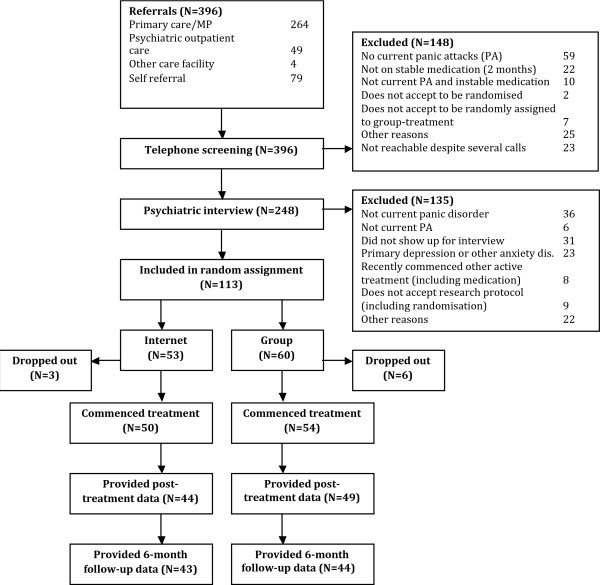
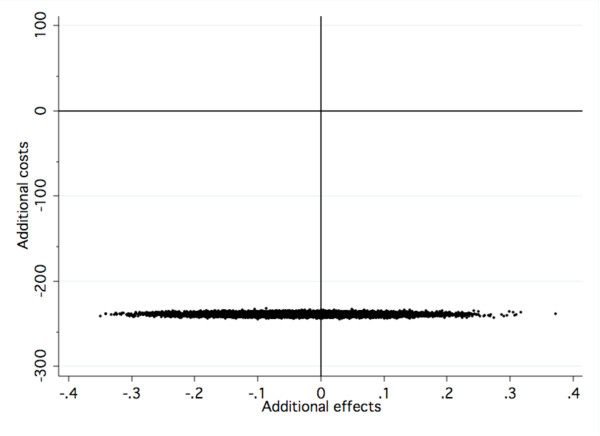
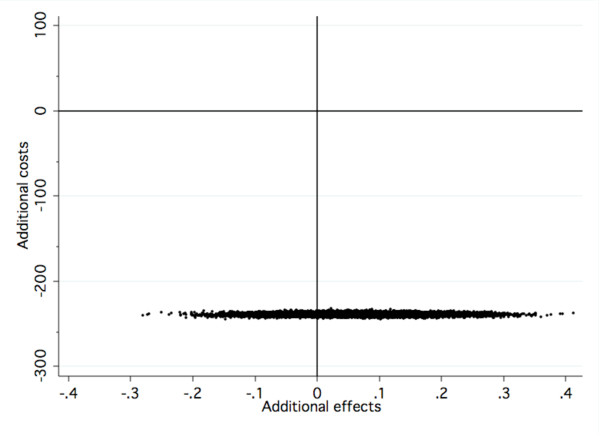
BACKGROUND: Internet administered cognitive behaviour therapy (CBT) is a promising new way to deliver psychological treatment, but its effectiveness in regular care settings and in relation to more traditional CBT group treatment has not yet been determined. The primary aim of this study was to compare the effectiveness of Internet-and group administered CBT for panic disorder (with or without agoraphobia) in a randomised trial within a regular psychiatric care setting. The second aim of the study was to establish the cost-effectiveness of these interventions. METHODS: Patients referred for treatment by their physician, or self-referred, were telephone-screened by a psychiatric nurse. Patients fulfilling screening criteria underwent an in-person structured clinical interview carried out by a psychiatrist. A total of 113 consecutive patients were then randomly assigned to 10 weeks of either guided Internet delivered CBT (n = 53) or group CBT (n = 60). After treatment, and at a 6-month follow-up, patients were again assessed by the psychiatrist, blind to treatment condition. RESULTS: Immediately after randomization 9 patients dropped out, leaving 104 patients who started treatment. Patients in both treatment conditions showed significant improvement on the main outcome measure, the Panic Disorder Severity Scale (PDSS) after treatment. For the Internet treatment the within-group effect size (pre-post) on the PDSS was Cohen's d = 1.73, and for the group treatment it was d = 1.63. Between group effect sizes were low and treatment effects were maintained at 6-months follow-up. We found no statistically significant differences between the two treatment conditions using a mixed models approach to account for missing data. Group CBT utilised considerably more therapist time than did Internet CBT. Defining effect as proportion of PDSS responders, the cost-effectiveness analysis concerning therapist time showed that Internet treatment had superior cost-effectiveness ratios in relation to group treatment both at post-treatment and follow-up. CONCLUSIONS: This study provides support for the effectiveness of Internet CBT in a psychiatric setting for patients with panic disorder, and suggests that it is equally effective as the more widely used group administered CBT in reducing panic-and agoraphobic symptoms, as well as being more cost effective with respect to therapist time. TRIAL REGISTRATION: ClinicalTrials.gov NCT00845260.
Overview
The claims and statistics of this paper haven’t been checked yet.
Free: it reads the open-access text and checks the first 5 claims that cite a source we can check. Create a free account to check every claim.
Integrity signals
Registry
Cites
Statistics
Figures
Verification
Claims the paper makes
The claims and statistics of this paper haven’t been checked yet.
Free: it reads the open-access text and checks the first 5 claims that cite a source we can check. Create a free account to check every claim.
Claims other papers make about this one
Each is checked against this paper’s own text: does it say what the citing paper says it does?
The source backs part of the claim, not all of it — or backs it for a different population, condition or comparison.
In the citing paper
“an increasing number of controlled studies indicate that for common psychiatric disorders ICBT is as effective as face-to-face delivered treatment [11-13]”
From Acceptability, effectiveness, and cost-effectiveness of internet-based exposure treatment for irritable bowel syndrome in a clinical sample: A randomized controlled trial (2011) · cites this paper as [12]
Experimental — accuracy not yet measuredThe cited source says what the claim attributes to it.
In the citing paper
“there are an increasing number of studies showing that internet-delivered CBT can be equally effective as face-to-face CBT in conditions such as panic disorder [16], depressive symptoms [17], tinnitus [18]”
From The promise and pitfalls of the internet for cognitive behavioral therapy (2010) · cites this paper as [16]
In the citing paper
“We used the effect sizes based on intent-to-treat analysis when available (in 51 comparisons); otherwise, we used complete-sample analysis results (in 2 comparisons [51,52]).”
From Internet-Delivered Cognitive Behavioral Therapy for Anxiety Disorders in Open Community Versus Clinical Service Recruitment: Meta-Analysis (2019) · cites this paper as [51]
In the citing paper
“This dropout seems to reflect the reality of trials conducted in routine mental health care, as comparable rates were found in earlier clinical trials comparing iCBT with ftfCBT [65, 74–77]; it could not be prevented by our e-mail and telephone reminders.”
Self-check
Percentages, sums and reported differences re-computed from the paper’s own numbers.
The self-check needs the paper’s full text.
Citations
Cites
(1998) · The Journal of Clinical Psychiatry · Cited by 19,139
A new depression scale designed to be sensitive to change
Montgomery, S. A., & Åsberg, M. (1979) · British Journal of Psychiatry · doi:10.1192/bjp.134.4.382 · Cited by 13,962 · cited 2×
“Other outcomes measures used were the Clinical Global Impression Scale (CGI) [25], the Montgomery Åsberg Depression Rating Scale (MADRS) [26], the Anxiety Sensitivity Index (ASI) [27], and the Sheehan Disability Scale (SDS) [28].”
MethodMethods for the Economic Evaluation of Health Care Programmes
Drummond, M. E., Sculpher, M. J., Torrance, G. W., O’Brien, B. J., & Stoddart, G. L. (2005) · doi:10.1093/oso/9780198529446.001.0001 · Cited by 13,648
(1998) · PubMed · Cited by 10,216
The mini international neuropsychiatric interview
Lecrubier, Y., Sheehan, D., Hergueta, T., & Weiller, E. (1998) · European Psychiatry · doi:10.1016/s0924-9338(99)80239-9 · Cited by 5,872
Anxiety, sensitivity, anxiety frequency, and the prediction of fearfulness
Reiss, S., Peterson, R. A., Gursky, D. M., & McNally, R. J. (1986) · Behaviour Research and Therapy · doi:10.1016/0005-7967(86)90143-9 · Cited by 3,169 · cited 2×
“Other outcomes measures used were the Clinical Global Impression Scale (CGI) [25], the Montgomery Åsberg Depression Rating Scale (MADRS) [26], the Anxiety Sensitivity Index (ASI) [27], and the Sheehan Disability Scale (SDS) [28].”
MethodBoutron, I., Moher, D., Altman, D. G., Schulz, K. F., Ravaud, P., & for the CONSORT Group* (2008) · Annals of Internal Medicine · doi:10.7326/0003-4819-148-4-200802190-00008 · Cited by 2,292 · cited 1×
“Statistical analysis and rationale for comparisons We were informed by the adapted CONSORT checklist [32], but also analysed our data according to a mixed models approach.”
MethodThe Great Psychotherapy Debate: Models Methods and Findings
Horvath, A. O. (2002) · Psychotherapy Research · doi:10.1093/ptr/12.1.108 · Cited by 1,705
Internet-based cognitive behaviour therapy for symptoms of depression and anxiety: A meta-analysis
SPEK, V., CUIJPERS, P., NYKLÍČEK, I., RIPER, H., KEYZER, J., & POP, V. (2007) · Psychological Medicine · doi:10.1017/s0033291706008944 · Cited by 1,586 · cited 1×
“The literature [37] strongly suggests that guidance/therapist contact during treatment is needed, as non-guided Internet treatments generally show smaller or nonexistent treatment effects and much larger attrition.”
BackgroundGueorguieva, R., & Krystal, J. H. (2004) · Archives of General Psychiatry · doi:10.1001/archpsyc.61.3.310 · Cited by 1,529 · cited 2×
“As a second way to analyze the data, and to account for missing data we used a mixed effects models approach [30] because in the analysis of longitudinal data repeated observations for the same individual are correlated.”
Method
Research works printed but not linked: 1
- American Psychiatric Association Diagnostic and Statistical Manual of Mental Disorders-4th edition (DSM-IV). text revision edition edition 2000 4 Washington DC: American Psychiatric Press
Cited by
Carlbring, P., Andersson, G., Cuijpers, P., Riper, H., & Hedman-Lagerlöf, E. (2018) · Cognitive Behaviour Therapy · doi:10.1080/16506073.2017.1401115 · Cited by 1,232
“The pooled between-group effect size in the three studies targeting panic disorder (Bergström et al., 2010; Carlbring et al., 2005; Kiropoulos et al., 2008) was g = .05 (95% CI, −.20 to .30), in line with the notion of equivalent effects.”
BackgroundResultInfluentialSelf-citationKatzman, M. A., Bleau, P., Blier, P., Chokka, P., Kjernisted, K., Van Ameringen, M., & the Canadian Anxiety Guidelines Initiative Group on behalf of the Anxiety Disorders Association of Canada/Association Canadienne des troubles anxieux and McGill University (2014) · BMC Psychiatry · doi:10.1186/1471-244x-14-s1-s1 · Cited by 1,090
“videoconferencing [75,159-161], and internet-based CBT (ICBT) [75,79,162-169] have been shown to be more”
MethodAndersson, G., Cuijpers, P., Carlbring, P., Riper, H., & Hedman, E. (2014) · World Psychiatry · doi:10.1002/wps.20151 · Cited by 1,077
“In the three studies targeting panic disorder (26-28), the effect size was 0.”
BackgroundSelf-citationAndrews, G., Basu, A., Cuijpers, P., Craske, M. G., McEvoy, P., English, C. L., & Newby, J. M. (2018) · Journal of Anxiety Disorders · doi:10.1016/j.janxdis.2018.01.001 · Cited by 922
Hedman, E., Ljótsson, B., & Lindefors, N. (2012) · Expert Review of Pharmacoeconomics & Outcomes Research · doi:10.1586/erp.12.67 · Cited by 672
Self-citationInternet-Delivered Psychological Treatments
Andersson, G. (2016) · Annual Review of Clinical Psychology · doi:10.1146/annurev-clinpsy-021815-093006 · Cited by 595
Self-citationResponse rates for CBT for anxiety disorders: need for standardized criteria
Loerinc, A. G., Meuret, A. E., Twohig, M. P., Rosenfield, D., Bluett, E. J., & Craske, M. G. (2015) · Clinical Psychology Review · doi:10.1016/j.cpr.2015.08.004 · Cited by 592
Psychological treatment of generalized anxiety disorder: A meta-analysis
Cuijpers, P., Sijbrandij, M., Koole, S., Huibers, M., Berking, M., & Andersson, G. (2014) · Clinical Psychology Review · doi:10.1016/j.cpr.2014.01.002 · Cited by 527
Self-citationE-Mental Health: A Rapid Review of the Literature
Lal, S., & Adair, C. E. (2014) · Psychiatric Services · doi:10.1176/appi.ps.201300009 · Cited by 417
Therapist-supported Internet cognitive behavioural therapy for anxiety disorders in adults
Olthuis, J. V., Watt, M. C., Bailey, K., Hayden, J. A., & Stewart, S. H. (2016) · Cochrane Database of Systematic Reviews · doi:10.1002/14651858.cd011565.pub2 · Cited by 390
ICBT in routine care: A descriptive analysis of successful clinics in five countries
Titov, N., Dear, B., Nielssen, O., Staples, L., Hadjistavropoulos, H., Nugent, M., Adlam, K., Nordgreen, T., Bruvik, K. H., Hovland, A., et al. (2018) · Internet Interventions · doi:10.1016/j.invent.2018.07.006 · Cited by 353
“There is a specific ICBT program for each condition, which have all been evaluated in randomized clinical trials (e.g., Andersson et al., 2005; Andersson et al., 2006; Carlbring et al., 2007; Bergstrom et al., 2010; Ljotsson et al., 2011; Kaldo et al., 2015).”
MethodSelf-citationEtzelmueller, A., Vis, C., Karyotaki, E., Baumeister, H., Titov, N., Berking, M., Cuijpers, P., Riper, H., & Ebert, D. D. (2020) · Journal of Medical Internet Research · doi:10.2196/18100 · Cited by 356
“40 (please see Multimedia Appendix 8 for references) [133-162] compared with 0.”
BackgroundArnberg, F. K., Linton, S. J., Hultcrantz, M., Heintz, E., & Jonsson, U. (2014) · PLoS ONE · doi:10.1371/journal.pone.0098118 · Cited by 330
“00) [60].”
BackgroundEconomic evaluations of Internet interventions for mental health: a systematic review
Donker, T., Blankers, M., Hedman, E., Ljótsson, B., Petrie, K., & Christensen, H. (2015) · Psychological Medicine · doi:10.1017/s0033291715001427 · Cited by 316
“…the studies which did not mention their economic perspective (but inferred societal or health insurance perspectives), guided Internet intervention appeared to be cost-effective (Nordgren et al. 2014), but only when direct intervention costs were included (Titov et al. 2009; Bergström et al. 2010).”
BackgroundMethodResultInfluentialSelf-citationWagner, B., Horn, A. B., & Maercker, A. (2014) · Journal of Affective Disorders · doi:10.1016/j.jad.2013.06.032 · Cited by 311
“This is in line with previous studies comparing face-to-face therapy with online interventions for other mental conditions (Andrews et al., 2011; Bergstrom et al., 2010; Kaldo et al., 2008; Spek et al., 2007).”
BackgroundResultAndersson, E., Enander, J., Andrén, P., Hedman, E., Ljótsson, B., Hursti, T., Bergström, J., Kaldo, V., Lindefors, N., Andersson, G., et al. (2012) · Psychological Medicine · doi:10.1017/s0033291712000244 · Cited by 274
“The effect sizes of ICBT are similar to face-to-face CBT for several psychiatric and medical conditions (Bergstrom et al. 2010), but ICBT has the advantage of being more accessible and requiring less therapist time (Andersson, 2009).”
Self-citationBerger, T., Caspar, F., Richardson, R., Kneubühler, B., Sutter, D., & Andersson, G. (2011) · Behaviour Research and Therapy · doi:10.1016/j.brat.2010.12.007 · Cited by 265
Self-citationHedman‐Lagerlöf, E., Carlbring, P., Svärdman, F., Riper, H., Cuijpers, P., & Andersson, G. (2023) · World Psychiatry · doi:10.1002/wps.21088 · Cited by 259
Self-citationAndersson, G., Paxling, B., Wiwe, M., Vernmark, K., Felix, C. B., Lundborg, L., Furmark, T., Cuijpers, P., & Carlbring, P. (2012) · Behaviour Research and Therapy · doi:10.1016/j.brat.2012.05.003 · Cited by 202
“Equal outcomes have been found in studies on panic disorder (Bergström et al., 2010; Carlbring et al., 2005; Kiropoulos et al., 2008), social anxiety disorder (Andrews, Davies, & Titov, 2011; Hedman et al., 2011), and subclinical depression (Spek, Nyklicek et al., 2007), but also in studies on…”
BackgroundResultSelf-citationEstablishing Guidelines for Executing and Reporting Internet Intervention Research
Proudfoot, J., Klein, B., Barak, A., Carlbring, P., Cuijpers, P., Lange, A., Ritterband, L., & Andersson, G. (2011) · Cognitive Behaviour Therapy · doi:10.1080/16506073.2011.573807 · Cited by 202
Self-citationAndersson, G., Hesser, H., Veilord, A., Svedling, L., Andersson, F., Sleman, O., Mauritzson, L., Sarkohi, A., Claesson, E., Zetterqvist, V., et al. (2013) · Journal of Affective Disorders · doi:10.1016/j.jad.2013.08.022 · Cited by 195
Self-citationMusiat, P., & Tarrier, N. (2014) · Psychological Medicine · doi:10.1017/s0033291714000245 · Cited by 188
“…translate well into computerized interventions, as they are based on learning models in which the therapist (or other support worker) has the function of a teacher or coach who imparts important information to the patient and teaches them a set of reproducible skills (Musiat & Schmidt, 2010).”
BackgroundAndersson, G., Paxling, B., Roch-Norlund, P., Östman, G., Norgren, A., Almlöv, J., Georén, L., Breitholtz, E., Dahlin, M., Cuijpers, P., et al. (2012) · Psychotherapy and Psychosomatics · doi:10.1159/000339371 · Cited by 183
Self-citationThe Effectiveness of Online Cognitive Behavioral Treatment in Routine Clinical Practice
Ruwaard, J., Lange, A., Schrieken, B., Dolan, C. V., & Emmelkamp, P. (2012) · PLoS ONE · doi:10.1371/journal.pone.0040089 · Cited by 173
“Nonetheless, scant research has shown that online treatment is cost-effective [12,59], and it Table 4.”
BackgroundBendelin, N., Hesser, H., Dahl, J., Carlbring, P., Nelson, K. Z., & Andersson, G. (2011) · BMC Psychiatry · doi:10.1186/1471-244x-11-107 · Cited by 173
“Internet interventions may however also resemble traditional psychotherapy with scheduled sessions [4], but overall a characteristic feature is that that patients are reached from a distance and that therapist time is reduced compared with face-to-face treatment [5].”
BackgroundSelf-citationAndersson, G., Carlbring, P., Furmark, T., & on behalf of the S. O. F. I. E. Research Group (2012) · PLoS ONE · doi:10.1371/journal.pone.0037411 · Cited by 166
“Moreover, the findings are consistent with a range of previous studies showing that guided ICBT is an effective treatment for anxiety disorders and that it can be equally effective as face-to-face CBT [16,61,62].”
ResultSelf-citationEffectiveness of Guided Internet-Based Cognitive Behavior Therapy in Regular Clinical Settings
Andersson, G., & Hedman, E. (2013) · Verhaltenstherapie · doi:10.1159/000354779 · Cited by 165
“In table 1 we describe a controlled effectiveness trial by Bergström and colleagues [Bergström et al., 2010], in which live CBT was directly compared with ICBT.”
MethodSelf-citationBerger, T., Boettcher, J., & Caspar, F. (2014) · Psychotherapy · doi:10.1037/a0032527 · Cited by 158
Uchendu, C., & Blake, H. (2017) · Diabetic Medicine · doi:10.1111/dme.13195 · Cited by 157
Therapist-supported Internet cognitive behavioural therapy for anxiety disorders in adults
Olthuis, J. V., Watt, M. C., Bailey, K., Hayden, J. A., & Stewart, S. H. (2015) · Cochrane Database of Systematic Reviews · doi:10.1002/14651858.cd011565 · Cited by 150
Nordgren, L. B., Hedman, E., Etienne, J., Bodin, J., Kadowaki, Å., Eriksson, S., Lindkvist, E., Andersson, G., & Carlbring, P. (2014) · Behaviour Research and Therapy · doi:10.1016/j.brat.2014.05.007 · Cited by 145
Self-citationHedman, E., Ljótsson, B., Rück, C., Bergström, J., Andersson, G., Kaldo, V., Jansson, L., Andersson, E., Andersson, E., Blom, K., et al. (2013) · Acta Psychiatrica Scandinavica · doi:10.1111/acps.12079 · Cited by 144
“In an RCT attempting to bridge efficacy and effectiveness, our research group has previously shown that ICBT can be as effective as group CBT when delivered in a psychiatric care setting (11).”
MethodResultSelf-citationBarnett, P., Goulding, L., Casetta, C., Jordan, H., Sheridan-Rains, L., Steare, T., Williams, J., Wood, L., Gaughran, F., & Johnson, S. (2021) · Journal of Medical Internet Research · doi:10.2196/26492 · Cited by 136
“Multimedia Appendix 2 [20-36,38,40-276] and Multimedia Appendix 3 [40-276] present further details of the study overlap.”
BackgroundLjótsson, B., Andersson, G., Andersson, E., Hedman, E., Lindfors, P., Andréewitch, S., Rück, C., & Lindefors, N. (2011) · BMC Gastroenterology · doi:10.1186/1471-230x-11-110 · Cited by 132
“The format allows for large patient volumes to be treated and an increasing number of controlled studies indicate that for common psychiatric disorders ICBT is as effective as face-to-face delivered treatment [11-13].”
BackgroundSelf-citationHaug, T., Nordgreen, T., Öst, L. G., & Havik, O. E. (2012) · Clinical Psychology Review · doi:10.1016/j.cpr.2012.04.002 · Cited by 128
Schlegl, S., Bürger, C., Schmidt, L., Herbst, N., & Voderholzer, U. (2015) · Journal of Medical Internet Research · doi:10.2196/jmir.3554 · Cited by 123
“Outcomes equivalent to face-to-face therapy were also reported [116,117].”
Cognitive-Behavioral Therapy in the Digital Age: Presidential Address
Wilhelm, S., Weingarden, H., Ladis, I., Braddick, V., Shin, J., & Jacobson, N. C. (2020) · Behavior Therapy · doi:10.1016/j.beth.2019.08.001 · Cited by 120
“Although I-CBT is effective and addresses key access barriers, most of its practice occurs within one setting (i.e., at home, in front of one’s computer).”
BackgroundInfluentialGuided internet-based CBT for common mental disorders
Andersson, G., Carlbring, P., Ljótsson, B., & Hedman, E. (2013) · Journal of Contemporary Psychotherapy · doi:10.1007/s10879-013-9237-9 · Cited by 119
“2008), and one additional Swedish effectiveness trial showing similar findings (Bergström et al. 2010).”
BackgroundResultSelf-citationThe promise and pitfalls of the internet for cognitive behavioral therapy
Andersson, G. (2010) · BMC Medicine · doi:10.1186/1741-7015-8-82 · Cited by 114
“…[12-14] and behavioral medicine [15], and there are an increasing number of studies showing that internet-delivered CBT can be equally effective as face-to-face CBT in conditions such as panic disorder [16], depressive symptoms [17], tinnitus [18], with studies on other conditions forthcoming.”
BackgroundSelf-citationMayo-Wilson, E., & Montgomery, P. (2013) · Cochrane Database of Systematic Reviews · doi:10.1002/14651858.cd005330.pub4 · Cited by 112
Holländare, F., Johnsson, S., Randestad, M., Tillfors, M., Carlbring, P., Andersson, G., & Engström, I. (2011) · Acta Psychiatrica Scandinavica · doi:10.1111/j.1600-0447.2011.01698.x · Cited by 111
“If our results from the current study can be replicated, an Internet-based approach would show promising potential as a cost-effective (28) and acceptable (50) complement for partially remitted MDD sufferers as it has the potential to reach large numbers of patients.”
BackgroundSelf-citationBerger, T., Urech, A., Krieger, T., Stolz, T., Schulz, A., Vincent, A., Moser, C. T., Moritz, S., & Meyer, B. (2017) · Psychological Medicine · doi:10.1017/s0033291716002270 · Cited by 98
“In recent years, a series of studies has evaluated the effectiveness of ICBT for anxiety disorders when delivered in psychiatric settings (Aydos et al. 2009; Bergstrom et al. 2010; Andrews et al. 2011; Hedman et al. 2011; Ruwaard et al. 2012; Hedman et al. 2013; El Alaoui et al. 2015; Titov et al. 2015) and a few tria…”
BackgroundCraig, S. L., Leung, V. W. Y., Pascoe, R., Pang, N., Iacono, G., Austin, A., & Dillon, F. (2021) · International Journal of Environmental Research and Public Health · doi:10.3390/ijerph18041541 · Cited by 104
Lenhard, F., Vigerland, S., Andersson, E., Rück, C., Mataix-Cols, D., Thulin, U., Ljótsson, B., & Serlachius, E. (2014) · PLoS ONE · doi:10.1371/journal.pone.0100773 · Cited by 104
Apolinário-Hagen, J., Drüge, M., & Fritsche, L. (2020) · Advances in Experimental Medicine and Biology · doi:10.1007/978-981-32-9705-0_17 · Cited by 100
Johansson, R., Björklund, M., Hornborg, C., Karlsson, S., Hesser, H., Ljótsson, B., Rousseau, A., Frederick, R. J., & Andersson, G. (2013) · PeerJ · doi:10.7717/peerj.102 · Cited by 102
“While there are studies on ICBT that suggests generalizability to clinical settings (e.g., Bergström et al., 2010; Hedman et al., 2013), this has yet to be proven for Internet-delivered psychodynamic therapy.”
BackgroundSelf-citationChallenges and opportunities in internet-mediated telemental health.
Yuen, E. K., Goetter, E. M., Herbert, J. D., & Forman, E. M. (2012) · Professional Psychology: Research and Practice · doi:10.1037/a0025524 · Cited by 89
“…that Internet-based self-help Web sites can be helpful for reducing symptoms for a variety of disorders, including panic disorder with agoraphobia (Bergström et al., 2010; Carlbring, Bohman, et al., 2006; Carlbring et al., 2005; Farvolden, Denisoff, Selby, Bagby, & Rudy, 2005; Kiropoulos et al.,…”
Bergman Nordgren, L., Carlbring, P., Linna, E., & Andersson, G. (2013) · JMIR Research Protocols · doi:10.2196/resprot.2292 · Cited by 92
“Internet-based cognitive behavior therapy (ICBT) in the form of guided self-help has been proven to be effective for a range of conditions, with effect sizes that equal face-to-face cognitive behavioral therapy [6-10].”
Self-citationNewby, J. M., Mewton, L. R., Williams, A. D., & Andrews, G. (2014) · Journal of Affective Disorders · doi:10.1016/j.jad.2014.04.037 · Cited by 107
Virtues, ecological momentary assessment/intervention and smartphone technology
Runyan, J. D., & Steinke, E. G. (2015) · Frontiers in Psychology · doi:10.3389/fpsyg.2015.00481 · Cited by 88
“…be designed by incorporating effective components of computer- and internet-based therapeutic interventions (cf. Kaltenthaler et al., 2006; Barak et al., 2008; Tillfors et al., 2008; Andersson, 2009; Bergström et al., 2010; Newman et al., 2011; Andersson et al., 2013; Musiat and Tarrier, 2014).”
BackgroundLonsdorf, T. B., Rück, C., Bergström, J., Andersson, G., Öhman, A., Lindefors, N., & Schalling, M. (2010) · BMC Psychiatry · doi:10.1186/1471-244x-10-99 · Cited by 88
“ICBT) did not differ in their treatment outcome [13].”
BackgroundSelf-citationFogliati, V. J., Dear, B. F., Staples, L. G., Terides, M. D., Sheehan, J., Johnston, L., Kayrouz, R., Dear, R., McEvoy, P. M., & Titov, N. (2016) · Journal of Anxiety Disorders · doi:10.1016/j.janxdis.2016.03.005 · Cited by 86
Matsumoto, K., Sutoh, C., Asano, K., Seki, Y., Urao, Y., Yokoo, M., Takanashi, R., Yoshida, T., Tanaka, M., Noguchi, R., et al. (2018) · Journal of Medical Internet Research · doi:10.2196/12091 · Cited by 83
“ICBT has been shown to be effective for OCD, PD, and SAD from several randomized controlled trials [19-35].”
Mitchell, L. M., Joshi, U., Patel, V., Lu, C., & Naslund, J. A. (2021) · Journal of Affective Disorders · doi:10.1016/j.jad.2021.01.092 · Cited by 80
“…psychological interventions for anxiety disorders and depression Part A. Quality Assessment Items Andersson 2015a Andersson 2015b Axlesson 2018 Bergstrom 2010 Bolier 2014 Brabyn 2016 Buntrock 2017 Dear 2015a Dear 2015b - Anxiety Dear 2015b- Depression Geraedts 2015 Hedman 2013 Hedman 2016…”
BackgroundDomhardt, M., Letsch, J., Kybelka, J., Koenigbauer, J., Doebler, P., & Baumeister, H. (2020) · Journal of Affective Disorders · doi:10.1016/j.jad.2020.06.059 · Cited by 75
The age of cyberpsychology: An overview.
Ancis, J. R. (2020) · Technology Mind and Behavior · doi:10.1037/tmb0000009 · Cited by 112
(2019) · Europe PMC (PubMed Central)
Digital Technologies in the Treatment of Anxiety: Recent Innovations and Future Directions
Firth, J., Torous, J., Carney, R., Newby, J., Cosco, T. D., Christensen, H., & Sarris, J. (2018) · Current Psychiatry Reports · doi:10.1007/s11920-018-0910-2 · Cited by 70
Jasper, K., Weise, C., Conrad, I., Andersson, G., Hiller, W., & Kleinstäuber, M. (2014) · Internet Interventions · doi:10.1016/j.invent.2014.04.002 · Cited by 68
“…outcomes of ICBT comparedwith regular face-to-face therapy across different mental disorders such as anxiety disorders (Kiropoulos et al., 2008; Bergström et al., 2010; Carlbring et al., 2005; Andrews et al., 2011; Hedman et al., 2011a), depression (Wagner et al., 2014; Andersson et al.,…”
BackgroundSelf-citationCost-effectiveness of interventions for treating anxiety disorders: A systematic review
Ophuis, R. H., Lokkerbol, J., Heemskerk, S. C. M., van Balkom, A. J. L. M., Hiligsmann, M., & Evers, S. (2016) · Journal of Affective Disorders · doi:10.1016/j.jad.2016.12.005 · Cited by 83
Mewton, L., Smith, J., Rossouw, P., & Andrews, G. (2014) · Psychology Research and Behavior Management · doi:10.2147/prbm.s40879 · Cited by 57
Kählke, F., Buntrock, C., Smit, F., & Ebert, D. D. (2022) · npj Digital Medicine · doi:10.1038/s41746-022-00702-w · Cited by 61
“Low risk Low risk Low risk Low risk Low risk Unclear risk 16 Bergström et al.(45) Low risk Unclear risk Low risk Unclear risk High risk Low risk 17 Dear et al.”
BackgroundKvillemo, P., Brandberg, Y., & Bränström, R. (2016) · JMIR Mental Health · doi:10.2196/mental.5457 · Cited by 56
“An increasing number of studies of patients with various mental disorders have shown the positive effects of Internet-based programs [14-18].”
Ciuca, A. M., Berger, T., Crişan, L. G., & Miclea, M. (2018) · Journal of Anxiety Disorders · doi:10.1016/j.janxdis.2018.03.009 · Cited by 58
McNamara, M. E., Zisser, M., Beevers, C. G., & Shumake, J. (2022) · Behaviour Research and Therapy · doi:10.1016/j.brat.2022.104086 · Cited by 61
Papola, D., Ostuzzi, G., Tedeschi, F., Gastaldon, C., Purgato, M., Giovane, C. D., Pompoli, A., Pauley, D., Karyotaki, E., Sijbrandij, M., et al. (2021) · The British Journal of Psychiatry · doi:10.1192/bjp.2021.148 · Cited by 71
Johansen, M. A., Berntsen, G., Schuster, T., Henriksen, E. K. K., & Horsch, A. (2012) · Journal of Medical Internet Research · doi:10.2196/jmir.2216 · Cited by 66
“Of 642 records identified and 444 abstracts reviewed, 32 articles presenting 29 studies were included [34-65] (see Figure 1 in part 1 [2]).”
BackgroundInfluentialJohansen, M. A., Henriksen, E. K. K., Horsch, A., Schuster, T., & Berntsen, G. (2012) · Journal of Medical Internet Research · doi:10.2196/jmir.2214 · Cited by 65
“Only 1 of these studies focused on cost effectiveness, and then as its second aim [70], while the other 3 did not formally analyze cost effectiveness.”
BackgroundRayner, C., Coleman, J. R. I., Purves, K. L., Hodsoll, J. P., Goldsmith, K., Alpers, G. W., Andersson, E., Arolt, V., Boberg, J., Bögels, S. M., et al. (2019) · Translational Psychiatry · doi:10.1038/s41398-019-0481-y · Cited by 59
Self-citationRomijn, G., Batelaan, N., Kok, R., Koning, J., van Balkom, A., Titov, N., & Riper, H. (2019) · Journal of Medical Internet Research · doi:10.2196/11706 · Cited by 52
“When a general measure of anxiety was not available, we used a measure for specific anxiety symptoms (see Multimedia Appendix 2 [39-49] for the order of rating scales and Multimedia Appendix 3 [7,27-31,50-85] for the outcome measures we used for all studies).”
BackgroundMethodInfluentialOromendia, P., Orrego, J., Bonillo, A., & Molinuevo, B. (2016) · Cognitive Behaviour Therapy · doi:10.1080/16506073.2016.1163615 · Cited by 52
“Second, the sample size could open a debate on the consistency of our findings but these results are comparable to those obtained by other studies with larger samples (Bergström et al., 2010; Carlbring et al., 2006; Hedman et al., 2013; Wims et al., 2010).”
BackgroundResultInternet-delivered treatment to promote health
Andersson, G., Ljótsson, B., & Weise, C. (2011) · Current Opinion in Psychiatry · doi:10.1097/yco.0b013e3283438028 · Cited by 52
Self-citationEffectiveness of computerised cognitive behaviour therapy for anxiety disorders in secondary care
Bell, C. J., Colhoun, H. C., Carter, F. A., & Frampton, C. M. (2012) · Australian & New Zealand Journal of Psychiatry · doi:10.1177/0004867412437345 · Cited by 50
“Previous studies have reported that global measures of improvement or severity of illness have tended to change less than measures of specific symptoms or functioning (Bergstrom et al., 2010).”
BackgroundUse of the Internet and Mobile Media for Delivery of Cognitive Behavioral Insomnia Therapy
Espie, C. A., Hames, P., & McKinstry, B. (2013) · Sleep Medicine Clinics · doi:10.1016/j.jsmc.2013.06.001 · Cited by 52
Therapist Effects in Guided Internet-Delivered CBT for Anxiety Disorders
Almlöv, J., Carlbring, P., Källqvist, K., Paxling, B., Cuijpers, P., & Andersson, G. (2011) · Behavioural and Cognitive Psychotherapy · doi:10.1017/s135246581000069x · Cited by 48
“Effects have at times paralleled the results found in face to face CBT (Bergström et al., 2010; Carlbring et al., 2005; Kiropoulos et al., 2008; Spek, Nyklicek et al., 2007).”
ResultSelf-citationDigital interventions in mental health: Evidence syntheses and economic modelling
Gega, L., Jankovic, D., Saramago, P., Marshall, D., Dawson, S., Brabyn, S., Nikolaidis, G. F., Melton, H., Churchill, R., & Bojke, L. (2022) · Health Technology Assessment · doi:10.3310/rcti6942 · Cited by 48
Nordgreen, T., Gjestad, R., Andersson, G., Carlbring, P., & Havik, O. E. (2018) · Cognitive Behaviour Therapy · doi:10.1080/16506073.2017.1348389 · Cited by 48
“Two effectiveness trials of guided ICBT for panic disorder from the Internet Psychiatry Clinic in Stockholm reported large treatment effects (d = 1.73–2.25) (Bergstrom et al., 2009, 2010).”
BackgroundInfluentialSelf-citationWoodford, J., Farrand, P. A., Bessant, M., & Williams, C. M. (2011) · Contemporary Clinical Trials · doi:10.1016/j.cct.2011.04.013 · Cited by 58
Schibbye, P., Ghaderi, A., Ljótsson, B., Hedman, E., Lindefors, N., Rück, C., & Kaldo, V. (2014) · PLoS ONE · doi:10.1371/journal.pone.0100614 · Cited by 48
“All treatment protocols had previously demonstrated efficacy in randomized controlled trials of ICBT [28–30] and were based on the principles of recognized cognitive behavioural treatments for the specific diagnoses [51–54].”
BackgroundMethodSelf-citationZandieh, S., Abdollahzadeh, S. M., Sadeghirad, B., Wang, L., McCabe, R. E., Yao, L., Inness, B. E., Pathak, A., Couban, R., Crandon, H. N., et al. (2024) · Canadian Medical Association Journal · doi:10.1503/cmaj.230274 · Cited by 59
Romijn, G., Batelaan, N., Koning, J., van Balkom, A., de Leeuw, A., Benning, F., Hakkaart van Roijen, L., & Riper, H. (2021) · PLOS ONE · doi:10.1371/journal.pone.0259493 · Cited by 46
“This drop-out seems to reflect the reality of trials conducted in routine mental health care, as comparable rates were found in earlier clinical trials comparing iCBT with ftfCBT [65, 74–77]; it could not be prevented by our e-mail and telephone reminders.”
Esfandiari, N., Mazaheri, M. A., Akbari-Zardkhaneh, S., Sadeghi-Firoozabadi, V., & Cheraghi, M. (2021) · International Journal of Preventive Medicine · doi:10.4103/ijpvm.ijpvm_208_21 · Cited by 45
“The pooled between‐group effect size in the two studies targeting panic disorder[14,21] was g = −0.”
BackgroundResultInfluentialInternet-assisted cognitive behavioral therapy
Andersson, G., & Carlbring, P. (2017) · Psychiatric Clinics of North America · doi:10.1016/j.psc.2017.08.004 · Cited by 45
Allen, A. R., Newby, J. M., Mackenzie, A., Smith, J., Boulton, M., Loughnan, S. A., & Andrews, G. (2016) · BJPsych Open · doi:10.1192/bjpo.bp.115.001826 · Cited by 43
Stech, E. P., Lim, J., Upton, E. L., & Newby, J. M. (2020) · Cognitive Behaviour Therapy · doi:10.1080/16506073.2019.1628808 · Cited by 43
Psicoterapia pela Internet: viável ou inviável?
Pieta, M. A. M., & Gomes, W. B. (2014) · Psicologia Ciência e Profissão · doi:10.1590/s1414-98932014000100003 · Cited by 85
El Alaoui, S., Hedman, E., Ljótsson, B., Bergström, J., Andersson, E., Rück, C., Andersson, G., & Lindefors, N. (2013) · PLoS ONE · doi:10.1371/journal.pone.0079024 · Cited by 39
“A more detailed description of the inclusion criteria and the recruitment procedure is available in the original report [8].”
BackgroundMethodSelf-citationAndersson, E., Crowley, J. J., Lindefors, N., Ljótsson, B., Hedman‐Lagerlöf, E., Boberg, J., Alaoui, S. E., Karlsson, R., Lu, Y., Mattheisen, M., et al. (2018) · Molecular Psychiatry · doi:10.1038/s41380-018-0289-9 · Cited by 40
Self-citationJankovic, D., Bojke, L., Marshall, D., Saramago Goncalves, P., Churchill, R., Melton, H., Brabyn, S., & Gega, L. (2021) · Applied Health Economics and Health Policy · doi:10.1007/s40258-020-00607-3 · Cited by 36
Montero-Marín, J., Prado-Abril, J., Botella, C., Mayoral-Cleries, F., Baños, R., Herrera-Mercadal, P., Romero-Sanchiz, P., Gili, M., Castro, A., Nogueira, R., et al. (2015) · Journal of Medical Internet Research · doi:10.2196/jmir.3985 · Cited by 34
“Web-based interventions may also resemble traditional psychotherapy with scheduled sessions [34], but a general characteristic is that patients are reached from a distance and that therapist time is reduced compared with face-to-face treatments [35].”
Remote cognitive behavioral therapy for panic disorder: A meta-analysis
Efron, G., & Wootton, B. M. (2021) · Journal of Anxiety Disorders · doi:10.1016/j.janxdis.2021.102385 · Cited by 47
Andersson, E., Hedman‐Lagerlöf, E., Ljótsson, B., Wikström, M., Elveling, E., Lindefors, N., Andersson, G., Kaldo, V., & Rück, C. (2014) · Journal of Obsessive-Compulsive and Related Disorders · doi:10.1016/j.jocrd.2014.12.004 · Cited by 33
Self-citationRozental, A., Forsström, D., Nilsson, S., Rizzo, A., & Carlbring, P. (2014) · Internet Interventions · doi:10.1016/j.invent.2014.05.005 · Cited by 32
Self-citationTRANSDIAGNOSTIC INTERNET TREATMENT FOR ANXIETY AND DEPRESSION
Titov, N., Dear, B. F., Johnston, L., & Terides, M. D. (2012) · Revista de Psicopatología y Psicología Clínica · Cited by 31
Menon, V., Kar, S. K., & Arafat, S. M. Y. (2020) · Indian Journal of Psychiatry · doi:10.4103/psychiatry.indianjpsychiatry_610_20 · Cited by 31
Digitally Delivered Psychological Interventions for Anxiety Disorders: a Comprehensive Review
Stefanopoulou, E., Lewis, D., Taylor, M., Broscombe, J., & Larkin, J. (2018) · Psychiatric Quarterly · doi:10.1007/s11126-018-9620-5 · Cited by 34
Polak, M., Tanzer, N. K., Bauernhofer, K., & Andersson, G. (2021) · Internet Interventions · doi:10.1016/j.invent.2021.100364 · Cited by 29
Self-citationChow, D. Y.-W., Jiang, X., & You, J. H. S. (2022) · Journal of Affective Disorders · doi:10.1016/j.jad.2022.05.048 · Cited by 30
Ito-Masui, A., Sakamoto, R., Matsuo, E., Kawamoto, E., Motomura, E., Tanii, H., Yu, H., Sano, A., Imai, H., & Shimaoka, M. (2023) · Journal of Medical Internet Research · doi:10.2196/45834 · Cited by 20
“Studies comparing cost-effectiveness have shown that internet-delivered CBT is cheaper than face-to-face therapy because of less therapist time [55,56].”
The Bergen 4-Day Treatment for Panic Disorder: A Pilot Study
Hansen, B. K. A., Kvale, G., Hagen, K., Hjelle, K. M., Solem, S., Bø, B., & Öst, L. (2018) · Frontiers in Psychology · doi:10.3389/fpsyg.2018.01044 · Cited by 18
“We found nine such studies (Barlow et al., 2000; Nakano et al., 2008; Bergström et al., 2010; Nordin et al., 2010; Wims et al., 2010; Nations et al., 2012; Beutel et al., 2013; Meyerbroeker et al., 2013; Otto et al., 2016) with 517 patients in total.”
Background
Metadata
- Authors
- Bergström, J., Andersson, G., Ljótsson, B., Rück, C., Andréewitch, S., Karlsson, A., Carlbring, P., Andersson, E., & Lindefors, N.
- Affiliations
- Karolinska Institutet (SE)
- Linköping University (SE)
- Umeå University (SE)
- Corresponding author
- Bergström, Jan
- Venue
- BMC Psychiatry
- Published
- 2010-07-02
- Volume
- 10
- Issue
- 1
- Pages
- 54-54
- ISSN
- 1471-244X (ISSN-L)
- PMC
- PMC2910662
- OpenAlex
- W2046682955
- Semantic Scholar
- 744755a1dc5e773ea6e3309280d1dc42e1ad89e1
- Cited by
- 202
- References
- 43
- Citations by year
- 2026: 2 · 2025: 6 · 2024: 4 · 2023: 16 · 2022: 10 · 2021: 19 · 2020: 9 · 2019: 11 · 2018: 13 · 2017: 6 · 2016: 15 · 2015: 14 · 2014: 19 · 2013: 23 · 2012: 17
- FWCI
- 27.67
- Type
- journal article
- Language
- en
- Open access
- gold
- doi.org
- Licence
- cc-by
- creativecommons.org/licenses/by/2.0 (tdm)
- Locations
- BMC Psychiatry (publishedVersion, cc-by)
- PubMed Central (publishedVersion, cc-by)
- PubMed (publishedVersion)
- KTH Publication Database DiVA (KTH Royal Institute of Technology) (submittedVersion, other-oa)
- Publications (Mid Sweden University) (submittedVersion, other-oa)
- DOAJ (DOAJ: Directory of Open Access Journals) (submittedVersion)
- Funders
- Stockholms Läns Landsting
- Topics
- Social Sciences › Psychology › Applied Psychology › Digital Mental Health Interventions
- Social Sciences › Psychology › Experimental and Cognitive Psychology › Anxiety, Depression, Psychometrics, Treatment, Cognitive Processes
- Social Sciences › Psychology › Clinical Psychology › Psychological Treatments and Assessments
- Keywords
- internet-based cognitive behavioral therapy, group cognitive behavioral therapy, panic disorder, agoraphobia, cost-effectiveness, treatment effectiveness, psychiatric nursing, Panic Disorder Severity Scale
- MeSH terms
- Adult, Agoraphobia, Cost-Benefit Analysis, Double-Blind Method, Female, Follow-Up Studies, Humans, Male, Psychiatric Department, Hospital, Psychiatric Status Rating Scales, Psychotherapy, Group, Self Care, Cognitive Behavioral Therapy, Panic Disorder, Treatment Outcome, Health Care Costs, Outcome Assessment, Health Care, Internet, Diagnostic and Statistical Manual of Mental Disorders
About these checks
Registry, retraction, Cites and statistics results are computed, not judged, with one exception: a printed reference that no index lists is read once by a model before it counts as a citation error. Claims are extracted by a model and kept only when their quote appears verbatim in the text; each cited source is then checked, with a model’s help, for whether it says what the claim relies on. Those verdicts can be wrong — read the claim’s quote and the cited source before relying on one.
Statistics and arithmetic are recomputed, not judged.
Confidence bands are shown only for fields calibrated on our annotated test set. None is calibrated yet, so no band is shown.
What counts as a claim ›How we measure confidence ›How we check this ›
Are you an author, or do you see a problem with this page? Request a review
Data sources
Bibliographic data: Semantic Scholar, OpenAlex, Crossref.
Contains information from the Semantic Scholar Academic Graph Datasets, made available under the ODC Attribution License (ODC-BY 1.0).
Semantic Scholar’s data is described in: Kinney, R., et al. (2023). The Semantic Scholar Open Data Platform. arXiv:2301.10140.
