

The DOI matches its Crossref record; 42 of the 43 references it cites were found in a registry or an index.
Experiences of guided Internet-based cognitive-behavioural treatment for depression: A qualitative study
Open accessAbstract
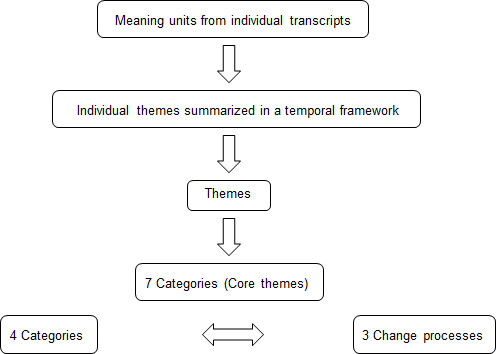
BACKGROUND: Internet-based self-help treatment with minimal therapist contact has been shown to have an effect in treating various conditions. The objective of this study was to explore participants' views of Internet administrated guided self-help treatment for depression. METHODS: In-depth interviews were conducted with 12 strategically selected participants and qualitative methods with components of both thematic analysis and grounded theory were used in the analyses. RESULTS: Three distinct change processes relating to how participants worked with the treatment material emerged which were categorized as (a) Readers, (b) Strivers, and (c) Doers. These processes dealt with attitudes towards treatment, views on motivational aspects of the treatment, and perceptions of consequences of the treatment. CONCLUSIONS: We conclude that the findings correspond with existing theoretical models of face-to-face psychotherapy within qualitative process research. Persons who take responsibility for the treatment and also attribute success to themselves appear to benefit more. Motivation is a crucial aspect of guided self-help in the treatment of depression.
Overview
The claims and statistics of this paper haven’t been checked yet.
Run the check — free, no account needed. It reads the open-access text and checks the sources it cites.
Integrity signals
Registry
Cites
Statistics
Figures
Verification
Claims the paper makes
The claims and statistics of this paper haven’t been checked yet.
Run the check — free, no account needed. It reads the open-access text and checks the sources it cites.
Claims other papers make about this one
Each is checked against this paper’s own text: does it say what the citing paper says it does?
The source backs part of the claim, not all of it — or backs it for a different population, condition or comparison.
In the citing paper
“Another limitation of Internet-based treatments for psychological disorders, delivered via computers, is that they tend to be text-based, often reaching close to 200 pages of reading ([Bendelin et al. 2011]).”
From Development and initial evaluation of a smartphone application based on acceptance and commitment therapy (2012) · cites this paper as Bendelin et al. 2011
Experimental — accuracy not yet measuredThe cited source says what the claim attributes to it.
In the citing paper
“These findings align with previous ICBT studies for adolescent and adult participants, where many seem to find the treatment material relevant and informative (Bendelin et al., 2011; Berg et al., 2020a; Lenhard et al., 2016).”
From Investigating the potential of a novel internet-based cognitive behavioural intervention for Dari and Farsi speaking refugee youth: A feasibility study (2022) · cites this paper as Bendelin et al., 2011
The cited source says what the claim attributes to it.
In the citing paper
“This might correspond with Bendelin et al.'s (2011) suggestion that patients actively participating in internet‐based treatment and exercises tend to achieve better outcomes.”
From Internet‐Based Acceptance and Commitment Therapy With Interoceptive Exposure for Panic Disorder: A Randomized Controlled Trial and Working Alliance Analysis. (2026) · cites this paper as Bendelin et al.'s (2011)
The check wasn’t confident either way, so it gives no verdict — never disputed.
In the citing paper
“The current study also meets the needs outlined in previous eHealth studies of having varied activities, a combination of audio, video, and text information, and being shorter in length (Bendelin et al., 2011).”
From ACT2COPE: A pilot randomised trial of a brief online acceptance and commitment therapy intervention for people living with chronic health conditions during the COVID-19 pandemic (2023) · cites this paper as Bendelin et al., 2011
Experimental — accuracy not yet measuredIn the citing paper
“Studies on the experiences of patients with online therapy also show that personal feedback and support are perceived as positive among patients, to optimally use the program and to keep them motivated [12-14].”
Self-check
Percentages, sums and reported differences re-computed from the paper’s own numbers.
The self-check needs the paper’s full text.
Citations
Cites
Using thematic analysis in psychology
Braun, V., & Clarke, V. (2006) · Qualitative Research in Psychology · doi:10.1191/1478088706qp063oa · Cited by 194,414
Wagner, H. R., Glaser, B. G., & Strauss, A. L. (1968) · Social Forces · doi:10.2307/2575405 · Cited by 46,525
The Discovery of Grounded Theory: Strategies for Qualitative Research
Glaser, B. G., & Strauss, A. L. (2017) · Aldine (Routledge reprint) · doi:10.4324/9780203793206 · Cited by 25,789
An Introduction to Qualitative Research
Flick, U. (2023) · SAGE Publications Ltd eBooks · doi:10.4135/9781036231712 · Cited by 9,550
Language and meaning: Data collection in qualitative research.
Polkinghorne, D. E. (2005) · Journal of Counseling Psychology · doi:10.1037/0022-0167.52.2.137 · Cited by 2,313
Dilemmas in qualitative health research
Yardley, L. (2000) · Psychology & Health · doi:10.1080/08870440008400302 · Cited by 2,310
Internet-based cognitive behaviour therapy for symptoms of depression and anxiety: A meta-analysis
SPEK, V., CUIJPERS, P., NYKLÍČEK, I., RIPER, H., KEYZER, J., & POP, V. (2007) · Psychological Medicine · doi:10.1017/s0033291706008944 · Cited by 1,586
Rennie, D. L. (1998) · Theory & Psychology · doi:10.1177/0959354398081006 · Cited by 1,449
Guy, W. L. (2025) · Springer Reference Medizin · doi:10.1007/978-3-662-65186-5_300379 · Cited by 1,441
Internet-Based and Other Computerized Psychological Treatments for Adult Depression: A Meta-Analysis
Andersson, G., & Cuijpers, P. (2009) · Cognitive Behaviour Therapy · doi:10.1080/16506070903318960 · Cited by 1,368
Self-citation
Research works printed but not linked: 1
- Beck AT, Steer RA, Brown GK: Manual for the Beck Depression Inventory-II. 1996, San Antonio, TX: Psychological Corporation
Cited by
Sorted by citations
Items 101–173 of 173
Freund, J., Buntrock, C., Braun, L., Thielecke, J., Baumeister, H., Berking, M., Ebert, D. D., & Titzler, I. (2022) · Internet Interventions · doi:10.1016/j.invent.2022.100566 · Cited by 11
“However, too much therapeutic contact can also be experienced as negative if the contact is perceived as inappropriate and its extent might be of different importance for the patients (Bendelin et al., 2011).”
BackgroundResultNomeikaitė, A., Geležėlytė, O., Berger, T., Andersson, G., & Kazlauskas, E. (2023) · Internet Interventions · doi:10.1016/j.invent.2023.100686 · Cited by 10
“Qualitative research has shown that people who take responsibility for their treatment and attribute success to themselves benefit more (Bendelin et al., 2011).”
BackgroundSelf-citationComputer und Psychotherapie – geht das zusammen?
Schuster, R., Berger, T., & Laireiter, A. (2017) · Psychotherapeut · doi:10.1007/s00278-017-0214-8 · Cited by 11
Berg, I., Hovne, V., Carlbring, P., Bernhard‐Oettel, C., Oscarsson, M., Mechler, J., Lindqvist, K., Topooco, N., Andersson, G., & Philips, B. (2022) · Internet Interventions · doi:10.1016/j.invent.2022.100592 · Cited by 10
Self-citationWestas, M., Mourad, G., Andersson, G., Neher, M., Lundgren, J., & Johansson, P. (2022) · BMC Psychiatry · doi:10.1186/s12888-022-03939-7 · Cited by 10
“This confirms that it is important that such programs require active engagement from the patients and that their beliefs are challenged in order to change emotions, thoughts, and behaviors [32].”
BackgroundResultSelf-citationFulford, H., McSwiggan, L. C., Kroll, T., & MacGillivray, S. A. (2016) · JMIR Mental Health · doi:10.2196/mental.5966 · Cited by 9
“For instance, becoming aware of holding high expectations toward technology and feeling disappointment if programs did not meet all their needs fostered a sense of consideration to revisit and work with material to see if it would be of benefit [62,63].”
InfluentialThapar, S., Nguyen, M., Khan, B. N., Fanaieyan, R., Kishimoto, V., Liu, R. H., Bolea-Alamanac, B. M., Leon-Carlyle, M., O’Riordan, A., Keresteci, M., et al. (2024) · JMIR Formative Research · doi:10.2196/50113 · Cited by 10
“Indeed, previous qualitative studies have suggested that the treatment format may act as both a facilitator and barrier to engagement for different individuals [45-49].”
BackgroundCognitive Behaviour Therapy for People with Intellectual Disabilities—How Far Have We Come?
Hronis, A. (2020) · International Journal of Cognitive Therapy · doi:10.1007/s41811-020-00091-6 · Cited by 8
Internetbasierte Selbsthilfe bei Einsamkeit – Eine systematische Übersicht
Imwinkelried, M., Seewer, N., Berger, T., & Krieger, T. (2024) · Bundesgesundheitsblatt - Gesundheitsforschung - Gesundheitsschutz · doi:10.1007/s00103-024-03934-1 · Cited by 7
Peynenburg, V. A., Wilhelms, A., Sapkota, R. P., Nugent, M., Owens, K., Titov, N., Dear, B. F., & Hadjisatvropoulos, H. (2022) · Journal of Clinical Medicine · doi:10.3390/jcm11144226 · Cited by 7
“, provided specific examples of how they applied the content to their lives and addressed barriers during treatment) were more successful in ICBT [13].”
BackgroundWeerasekara, M., & Smedberg, Å. B. (2019) · International Conference on Advanced Computer Science and Information Systems · doi:10.1109/icacsis47736.2019.8979813 · Cited by 8
“The results show that most of the interventions used a web platform to deliver the intervention over other platforms like mobile and sensors because the web platforms were regarded accessible and flexible ([32], [33], [35]).”
BackgroundCiuca, A., Berger, T., & Miclea, M. (2017) · Pragmatic Case Studies in Psychotherapy · doi:10.14713/pcsp.v13i3.2011 · Cited by 7
“Most of the former qualitative studies used interviews, written open-ended questions, and thematic analysis (Beattie, Shaw, Kaur, & Kessler, 2009; Bendelin et al., 2011; Donkin & Glozier, 2012; Halmetoja, Malmquist, Carlbring, & Andersson; Ly et al., 2015).”
BackgroundYegüez, C. E., Ogle, R. R., Jusko, M. L., Melendez, R., & Sibley, M. H. (2022) · Journal of Child and Family Studies · doi:10.1007/s10826-022-02384-0 · Cited by 7
“Qualitative interviewing methods to examine changes as a result of psychosocial treatment have been instrumental in identifying key outcome variables and hypothesis generating of perceived mediators of these outcomes (Bendelin et al., 2011; Searle et al., 2011).”
MethodLes nouvelles thérapies par Internet
Bergström, J. (2013) · RESET · doi:10.4000/reset.124 · Cited by 6
Telehealth and Women’s Perinatal Mental Health
Kingston, D. E., & Rocha, R. (2020) · Springer eBooks · doi:10.1007/978-3-030-29081-8_23 · Cited by 8
User Experiences and Perceptions of Internet Interventions for Depression
Drozd, F., Andersen, C. E., Haga, S. M., Slinning, K., & Bjørkli, C. A. (2017) · Advances in psychology, mental health, and behavioral studies (APMHBS) book series · doi:10.4018/978-1-5225-3241-5.ch002 · Cited by 5
Anderson, R., Rees, C. S., & Finlay‐jones, A. L. (2017) · Journal of Obsessive-Compulsive and Related Disorders · doi:10.1016/j.jocrd.2017.08.001 · Cited by 5
Contextual assessment: evaluating a novel self-guided online therapeutic assessment
Levis, M., & Levis, A. J. (2020) · International Journal of Psychiatry in Clinical Practice · doi:10.1080/13651501.2020.1794010 · Cited by 5
“According to Bendelin et al. (2011), having a reduced face-to-face relationship with clinicians, and therefore less therapeutic alliance, may be associated with reduced motivation to continue treatment and make personal changes.”
BackgroundInfluentialSmith, A., Mangelsdorf, S. N., Baker, S. T. E., Jafari, J., Álvarez‐Jiménez, M., Hitchcock, C., & Cross, S. P. M. (2025) · Journal of Medical Internet Research · doi:10.2196/73793 · Cited by 4
Schuster, R., Berger, T., & Laireiter, A. (2018) · doi:10.7892/boris.113561 · Cited by 4
Peynenburg, V. A., Ababei, A., Wilhelms, A., Edmonds, M., Titov, N., Dear, B. F., Kaldo, V., Jernelöv, S., & Hadjistavropoulos, H. D. (2022) · International Journal of Environmental Research and Public Health · doi:10.3390/ijerph19159337 · Cited by 4
“Resource reviewers were more engaged in the T-ICBT course across several different metrics, so this sub-group of patients may comprise treatment “doers” [42].”
BackgroundBulut, S. (2020) · Psychology and Psychotherapy Research Study · doi:10.31031/pprs.2020.03.000581 · Cited by 4
Bendelin, N., Gerdle, B. U. C., & Andersson, G. (2023) · Scandinavian Journal of Pain · doi:10.1515/sjpain-2022-0139 · Cited by 4
“Two psychologists with previous experience of ICBT and IACT [38, 56, 57] wrote the speci fi cation.”
BackgroundSelf-citationRenouf, S., Bradbury, K. J., Yardley, L., & Little, P. S. (2014) · Psychology Health & Medicine · doi:10.1080/13548506.2014.986138 · Cited by 7
“Patients have also expressed a desire for more human support to sustain motivation in qualitative studies of online interventions for other conditions, including diabetes and depression (Bendelin et al., 2011; Gerhards et al., 2011; Lyles et al., 2011).”
BackgroundWallace-Boyd, K., Boggiss, A. L., Ellett, S., Booth, R., Slykerman, R., & Serlachius, A. S. (2023) · Cogent Psychology · doi:10.1080/23311908.2023.2208916 · Cited by 3
“The current study also meets the needs outlined in previous eHealth studies of having varied activities, a combination of audio, video, and text information, and being shorter in length (Bendelin et al., 2011).”
BackgroundLang, C., Weisel, K. K., Saur, S., Fuhrmann, L. M., Schoenleber, A., Reichl, D., Enewoldsen, N., Steins‐Loeber, S., & Berking, M. (2024) · Addiction Science & Clinical Practice · doi:10.1186/s13722-024-00457-7 · Cited by 4
“One manner to explore this is through qualitative research by conducting inter-views with participants about their personal experiences in order to better understand processes in substance use disorder treatment [44, 45].”
BackgroundVarambally, M., Layton, H., Jack, S. M., & Lieshout, R. J. V. (2023) · Journal of Psychiatric and Mental Health Nursing · doi:10.1111/jpm.13007 · Cited by 3
Ly, K. H. (2015) · Linköping University Electronic Press eBooks · doi:10.3384/diss.diva-113996 · Cited by 3
“In summary, the results indicated that the participants’ experiences on the whole were comparable with previous findings within qualitative research of internet-based guided self-help treatment (Beattie, Shaw, Kaur, & Kessler, 2009; Bendelin et al., 2011; Khan, Bower, & Rogers, 2007; Macdonald, Mead, Bower, Richards,…”
ResultDisability as a Dimension of Diversity
Olkin, R. (2015) · Handbooks in health, work, and disability · doi:10.1007/978-1-4939-2920-7_23 · Cited by 3
Wahlund, T., Wallhem, M., Serlachius, E., & Engberg, H. (2021) · The Cognitive Behaviour Therapist · doi:10.1017/s1754470x21000027 · Cited by 3
“Previous research on experiences of internet-delivered treatments has found that some patients appreciate working independently, while others would have preferred face-to-face meetings (Bendelin et al ., 2011; Halmetoja et al ., 2014).”
Guided Internet Treatment of Anxiety Disorders in Adults
Andersson, G. (2014) · Wiley eBooks · doi:10.1002/9781118775349.ch61 · Cited by 3
Self-citationRozental, A. (2016) · DiVA (Stockholm University) · Cited by 3
Vernmark, K. (2017) · doi:10.3384/diss.diva-142389 · Cited by 3
Shinno, S., Matsumoto, K., Hamatani, S., Inaba, Y., Ozawa, Y., Kawasaki, Y., Ikai, T., Sutoh, C., Hayashi, H., & Shimizu, E. (2024) · JMIR Formative Research · doi:10.2196/53659 · Cited by 2
“While the therapist encourages participants to practice what they learned through chat tools, phone calls, and in-person interactions, patients might face challenges in implementing these changes or coping with symptoms [48].”
BackgroundBäckman, L., Weineland, S., Vernmark, K., Radvogin, E., Bjälkebring, P., Enbuske, E., Hermansson, I., Johansson, N., Petersen, N., & Hursti, T. (2026) · Scandinavian Journal of Psychology · doi:10.1111/sjop.70045 · Cited by 2
“This might correspond with Bendelin et al.'s (2011) suggestion that patients actively participating in internet-based treatment and exercises tend to achieve better outcomes.”
Celleri, M., Klajner, F., Cremades, F. C., Garay, C. J., Etchevers, M. J., & Osma, J. (2025) · Journal of Clinical Psychology · doi:10.1002/jclp.70037 · Cited by 2
“To the best of our knowledge, this is the first study to evaluate an ICBT created entirely in our country.”
InfluentialLindhe, N., Berg, M., Andersson, K., & Andersson, G. (2024) · BMC Psychiatry · doi:10.1186/s12888-024-06212-1 · Cited by 2
“As noted by Bendelin and colleagues [37], having face-to-face-contact may be perceived as more or less important depending on participant characteristics.”
BackgroundSelf-citationFenski, F., Heinrich, M., Schaeuffele, C., Zagorscak, P., Knaevelsrud, C., & Boettcher, J. (2025) · Cognitive Behaviour Therapy · doi:10.1080/16506073.2025.2565674 · Cited by 2
Kolstrup, N. (2014) · Tidsskrift for Forskning i Sygdom og Samfund · doi:10.7146/tfss.v0i21.20027 · Cited by 2
“Bendelin et al. classified the 12 persons involved in ICBT into readers, strivers, and doers (Bendelin et al., 2011).”
BackgroundTypes and mechanisms of idiographic change during guided self‐help for anxiety
Headley, E., Kellett, S., Bee, C., Lancashire, J., Aadahl, V., Bone, C., & Power, N. (2024) · Psychology and Psychotherapy Theory Research and Practice · doi:10.1111/papt.12536 · Cited by 2
Pugh, N. E. (2014) · oURspace (University of Regina) · doi:10.82465/5755 · Cited by 2
Jackson, H. M., Batterham, P. J., Calear, A. L., Ohan, J. L., & Farrer, L. M. (2024) · JMIR Mental Health · doi:10.2196/53794 · Cited by 1
“Similar experiences were expressed by participants in 2 previous studies of adolescent and adult users of DMHIs, wherein the authors observed that some users adopt a passive and reactive approach to applying treatment principles [39,68].”
ResultInternet-Delivered Dynamic Interpersonal Therapy (i-DIT) for Depression and Anxiety
Lemma, A., Target, M., Fonagy, P., Abrahams, D., & Luyten, P. (2024) · doi:10.1093/oso/9780198867470.003.0015 · Cited by 1
Lurie, I., Sagy, Y. W., Feldhamer, I., Greidinger, M., Yedidya, R., Shmulevich, M., Gutman, N. E., Bitan, D. T., Lavie, G., & Mendlovic, S. (2025) · Psychiatry Research · doi:10.1016/j.psychres.2025.116819 · Cited by 1
Ryan, C., Bergin, M., & WELLS, J. S. G. (2025) · Journal of Workplace Behavioral Health · doi:10.1080/15555240.2025.2599179 · Cited by 1
“These include valued aspects of online modalities such as increased convenience, flexibility and privacy (Alberts et al., 2018; Bendelin et al., 2011; Halmetoja et al., 2014; O’Mahen et al., 2015).”
Børtveit, L., Nordgreen, T., & Nordahl‐Hansen, A. (2024) · Acta Psychologica · doi:10.1016/j.actpsy.2024.104510 · Cited by 1
Learning how to recover from stress-related disorders via internet-based interventions
Asplund, R. P. (2021) · Linköping studies in behavioural science · doi:10.3384/diss.diva-172685 · Cited by 1
Internet-based psychotherapies
Andersson, G. (2021) · Elsevier eBooks · doi:10.1016/b978-0-12-822201-0.00008-3 · Cited by 1
Self-citationAtik, E., Schückes, M., & Apolinário-Hagen, J. (2022) · doi:10.2196/preprints.36806 · Cited by 1
Wilhelmsen, M. (2015) · NORA - Norwegian Open Research Archives
Rasmusson, T., & Johansson, J. (2012) · Lund University Publications Student Papers (Lund University)
Online therapy : client and counsellor experiences
Khan, S. (2014) · cIRcle (University of British Columbia) · doi:10.14288/1.0135566
A Framework for Designing and Evaluating Internet Interventions to Improve Tinnitus Care
Beukes, E. W., Andersson, G., Manchaiah, V. K. C., Allen, P. M., & Baguley, D. (2018) · Advances in medical technologies and clinical practice book series · doi:10.4018/978-1-5225-8191-8.ch006
“An Internet-based intervention can empower individuals to take responsibility and promote self-efficacy (Bendelin et al., 2011; Williams and Whitfield, 2001).”
BackgroundSelf-citationSecurity for People with Mental Illness in Telehealth Systems: A ProposalPreprint
Jiang, H. (2020) · arXiv (Cornell University) · doi:10.48550/arxiv.2008.03406
“[15] Nina Bendelin, Hugo Hesser, Johan Dahl, Per Carlbring, Karin Zetterqvist Nelson, and Gerhard Andersson.”
BackgroundBerg, M. (2021) · Linköping studies in behavioural science · doi:10.3384/diss.diva-173553
“A qualitative study by Bendelin et al. (2011) did find differences among participants in their way of processing the content of their ICBT programme.”
BackgroundTherapists' experiences of conducting CBT online vis-á-vis face-to-face
Bengtsson, J. (2014) · KTH Publication Database DiVA (KTH Royal Institute of Technology)
A Framework for Designing and Evaluating Internet Interventions to Improve Tinnitus Care
Beukes, E. W., Andersson, G., Manchaiah, V. K. C., Allen, P. M., & Baguley, D. (2021) · IGI Global eBooks · doi:10.4018/978-1-7998-8052-3.ch007
Self-citationUser Experiences and Perceptions of Internet Interventions for Depression
Drozd, F., Andersen, C. E., Haga, S. M., Slinning, K., & Bjørkli, C. A. (2019) · IGI Global eBooks · doi:10.4018/978-1-7998-2351-3.ch016
Westas, M. (2022) · Linköping University Medical Dissertations · doi:10.3384/9789179293796
INTERNET COGNITIVE BEHAVIOR THERAPY FOR POSTPARTUM DEPRESSION
Rahmawati, A. D. (2023) · Journal of Psychiatry Psychology and Behavioral Research · doi:10.21776/ub.jppbr.2023.004.01.2
Fernández, O., Pérez, J. C., Fernández, S., Krause, M., Cáceres, C., & Espinosa-Duque, D. (2023) · Digital Health · doi:10.1177/20552076231203920
“To do so, studies that include qualitative methodologies are especially relevant to capture the users’ experiences.(19,20) Researchers in several European countries and in Australia have conducted qualitative studies exploring the motivations, expectations, and experiences of users of IBIs for depression and anxiety,…”
BackgroundSmith, A., Mangelsdorf, S. N., Baker, S. T. E., Jafari, J., Álvarez‐Jiménez, M., Hitchcock, C., & Cross, S. P. M. (2025) · doi:10.2196/preprints.73793
Aminoff, V., Baltius, M., Lundström, E., Berg, M., Andersson, G., & Ludvigsson, M. (2025) · JMIR Formative Research · doi:10.2196/66908
Self-citationBerg, M., Malmquist, A., Rozental, A., Topooco, N., & Andersson, G. (2020) · Figshare · doi:10.6084/m9.figshare.12941001
Self-citationLindegaard, T., Kashoush, F., Holm, S., Halaj, A., Berg, M., & Andersson, G. (2021) · Figshare · doi:10.6084/m9.figshare.14728316
Self-citationLang, C., Weisel, K. K., Saur, S., Fuhrmann, L. M., Schoenleber, A., Reichl, D., Enewoldsen, N., Steins‐Loeber, S., & Berking, M. (2024) · Figshare · doi:10.6084/m9.figshare.26716324
Westas, M., Mourad, G., Andersson, G., Neher, M., Lundgren, J., & Johansson, P. (2022) · Figshare · doi:10.6084/m9.figshare.19654717
Self-citationBendelin, N., Björkdahl, P., Risell, M., Nelson, K. Z., Gerdle, B., Andersson, G., & Buhrman, M. (2020) · Figshare · doi:10.6084/m9.figshare.12097392
Self-citationAtkinson-Graham, M., Yu, H., Cooper, L., Weisberg, J., Connell, G. P., Allard, S., Check, L., Nkamtchoum, A. F., Flynn, T., Lorca, J., et al. (2026) · Journal of Occupational Rehabilitation · doi:10.1007/s10926-025-10354-8 · Cited by 2
The Association of Perceived Stress with Anxiety-related Symptoms during Use of the MindShift app
Jerome, E., McLean, C. P., Ameringen, M. V., Whittal, M. L., & Rappaport, L. M. (2026) · Journal of Technology in Behavioral Science · doi:10.1007/s41347-026-00616-4
Standal, B., Kenter, R. M. F., Gullslett, M. K., Nordgreen, T., Heggelund, J., & Teig, I. L. (2026) · Frontiers in Psychology · doi:10.3389/fpsyg.2026.1924186
“Much of the existing literature focuses on treatment outcomes, adherence, and user experiences, with less attention to how expectations regarding roles and responsibilities are constructed and interpreted within the treatment context (Andersson et al., 2019; Bendelin et al., 2011).”
Palmili, L. (2013) · UPT. Syiah Kuala University Library (Syiah Kuala University)
Metadata
- Authors
- Bendelin, N., Hesser, H., Dahl, J., Carlbring, P., Nelson, K. Z., & Andersson, G.
- Affiliations
- Linköping University (SE)
- Umeå University (SE)
- Corresponding author
- Andersson, Gerhard
- Venue
- BMC Psychiatry
- Published
- 2011-06-30
- Volume
- 11
- Issue
- 1
- Pages
- 107-107
- ISSN
- 1471-244X (ISSN-L)
- PMC
- PMC3142491
- OpenAlex
- W2146982643
- Cited by
- 173
- References
- 43
- Citations by year
- 2026: 3 · 2025: 7 · 2024: 10 · 2023: 9 · 2022: 16 · 2021: 10 · 2020: 18 · 2019: 12 · 2018: 11 · 2017: 12 · 2016: 12 · 2015: 21 · 2014: 15 · 2013: 9 · 2012: 8
- FWCI
- 13.62
- Type
- journal article
- Language
- en
- Open access
- gold
- doi.org
- Licence
- Locations
- BMC Psychiatry (publishedVersion, cc-by)
- Europe PMC (PubMed Central) (publishedVersion, cc-by)
- PubMed Central (publishedVersion, cc-by)
- PubMed (publishedVersion)
- DiVA (Linkoping University) (submittedVersion, other-oa)
- DiVA at Umeå University (Umeå University) (submittedVersion, other-oa)
- DOAJ (DOAJ: Directory of Open Access Journals) (submittedVersion)
- Funders
- Vetenskapsrådet
- Topics
- Social Sciences › Psychology › Applied Psychology › Digital Mental Health Interventions
- Social Sciences › Psychology › Experimental and Cognitive Psychology › Anxiety, Depression, Psychometrics, Treatment, Cognitive Processes
- Health Sciences › Medicine › Psychiatry and Mental health › Mental Health Treatment and Access
- Keywords
- depression, online therapy, guided self-help, cognitive behavioral therapy, patient experience, treatment motivation, change processes, personal responsibility, therapeutic process
- MeSH terms
- Adult, Attitude to Health, Depression, Female, Humans, Male, Middle Aged, Self Care, Therapy, Computer-Assisted, Cognitive Behavioral Therapy, Internet
About these checks
Registry, retraction, Cites and statistics results are computed, not judged, with one exception: a printed reference that no index lists is read once by a model before it counts as a citation error. Claims are extracted by a model and kept only when their quote appears verbatim in the text; each cited source is then checked, with a model’s help, for whether it says what the claim relies on. Those verdicts can be wrong — read the claim’s quote and the cited source before relying on one.
Statistics and arithmetic are recomputed, not judged.
Confidence bands are shown only for fields calibrated on our annotated test set. None is calibrated yet, so no band is shown.
What counts as a claim ›How we measure confidence ›How we check this ›
Are you an author, or do you see a problem with this page? Request a review
