

The DOI matches its Crossref record; 42 of the 43 references it cites were found in a registry or an index.
Experiences of guided Internet-based cognitive-behavioural treatment for depression: A qualitative study
Open accessAbstract
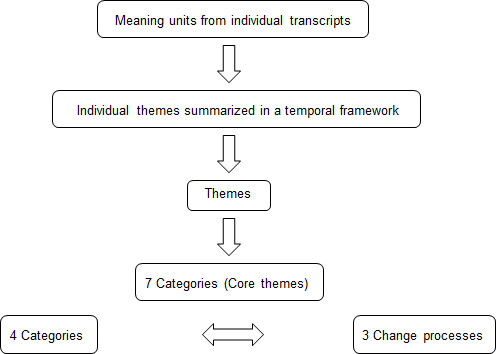
BACKGROUND: Internet-based self-help treatment with minimal therapist contact has been shown to have an effect in treating various conditions. The objective of this study was to explore participants' views of Internet administrated guided self-help treatment for depression. METHODS: In-depth interviews were conducted with 12 strategically selected participants and qualitative methods with components of both thematic analysis and grounded theory were used in the analyses. RESULTS: Three distinct change processes relating to how participants worked with the treatment material emerged which were categorized as (a) Readers, (b) Strivers, and (c) Doers. These processes dealt with attitudes towards treatment, views on motivational aspects of the treatment, and perceptions of consequences of the treatment. CONCLUSIONS: We conclude that the findings correspond with existing theoretical models of face-to-face psychotherapy within qualitative process research. Persons who take responsibility for the treatment and also attribute success to themselves appear to benefit more. Motivation is a crucial aspect of guided self-help in the treatment of depression.
Overview
The claims and statistics of this paper haven’t been checked yet.
Run the check — free, no account needed. It reads the open-access text and checks the sources it cites.
Integrity signals
Registry
Cites
Statistics
Figures
Verification
Claims the paper makes
The claims and statistics of this paper haven’t been checked yet.
Run the check — free, no account needed. It reads the open-access text and checks the sources it cites.
Claims other papers make about this one
Each is checked against this paper’s own text: does it say what the citing paper says it does?
The source backs part of the claim, not all of it — or backs it for a different population, condition or comparison.
In the citing paper
“Another limitation of Internet-based treatments for psychological disorders, delivered via computers, is that they tend to be text-based, often reaching close to 200 pages of reading ([Bendelin et al. 2011]).”
From Development and initial evaluation of a smartphone application based on acceptance and commitment therapy (2012) · cites this paper as Bendelin et al. 2011
Experimental — accuracy not yet measuredThe cited source says what the claim attributes to it.
In the citing paper
“These findings align with previous ICBT studies for adolescent and adult participants, where many seem to find the treatment material relevant and informative (Bendelin et al., 2011; Berg et al., 2020a; Lenhard et al., 2016).”
From Investigating the potential of a novel internet-based cognitive behavioural intervention for Dari and Farsi speaking refugee youth: A feasibility study (2022) · cites this paper as Bendelin et al., 2011
The cited source says what the claim attributes to it.
In the citing paper
“This might correspond with Bendelin et al.'s (2011) suggestion that patients actively participating in internet‐based treatment and exercises tend to achieve better outcomes.”
From Internet‐Based Acceptance and Commitment Therapy With Interoceptive Exposure for Panic Disorder: A Randomized Controlled Trial and Working Alliance Analysis. (2026) · cites this paper as Bendelin et al.'s (2011)
The check wasn’t confident either way, so it gives no verdict — never disputed.
In the citing paper
“The current study also meets the needs outlined in previous eHealth studies of having varied activities, a combination of audio, video, and text information, and being shorter in length (Bendelin et al., 2011).”
From ACT2COPE: A pilot randomised trial of a brief online acceptance and commitment therapy intervention for people living with chronic health conditions during the COVID-19 pandemic (2023) · cites this paper as Bendelin et al., 2011
Experimental — accuracy not yet measuredIn the citing paper
“Studies on the experiences of patients with online therapy also show that personal feedback and support are perceived as positive among patients, to optimally use the program and to keep them motivated [12-14].”
Self-check
Percentages, sums and reported differences re-computed from the paper’s own numbers.
The self-check needs the paper’s full text.
Citations
Cites
Using thematic analysis in psychology
Braun, V., & Clarke, V. (2006) · Qualitative Research in Psychology · doi:10.1191/1478088706qp063oa · Cited by 194,414
Wagner, H. R., Glaser, B. G., & Strauss, A. L. (1968) · Social Forces · doi:10.2307/2575405 · Cited by 46,525
The Discovery of Grounded Theory: Strategies for Qualitative Research
Glaser, B. G., & Strauss, A. L. (2017) · Aldine (Routledge reprint) · doi:10.4324/9780203793206 · Cited by 25,789
An Introduction to Qualitative Research
Flick, U. (2023) · SAGE Publications Ltd eBooks · doi:10.4135/9781036231712 · Cited by 9,550
Language and meaning: Data collection in qualitative research.
Polkinghorne, D. E. (2005) · Journal of Counseling Psychology · doi:10.1037/0022-0167.52.2.137 · Cited by 2,313
Dilemmas in qualitative health research
Yardley, L. (2000) · Psychology & Health · doi:10.1080/08870440008400302 · Cited by 2,310
Internet-based cognitive behaviour therapy for symptoms of depression and anxiety: A meta-analysis
SPEK, V., CUIJPERS, P., NYKLÍČEK, I., RIPER, H., KEYZER, J., & POP, V. (2007) · Psychological Medicine · doi:10.1017/s0033291706008944 · Cited by 1,586
Rennie, D. L. (1998) · Theory & Psychology · doi:10.1177/0959354398081006 · Cited by 1,449
Guy, W. L. (2025) · Springer Reference Medizin · doi:10.1007/978-3-662-65186-5_300379 · Cited by 1,441
Internet-Based and Other Computerized Psychological Treatments for Adult Depression: A Meta-Analysis
Andersson, G., & Cuijpers, P. (2009) · Cognitive Behaviour Therapy · doi:10.1080/16506070903318960 · Cited by 1,368
Self-citation
Research works printed but not linked: 1
- Beck AT, Steer RA, Brown GK: Manual for the Beck Depression Inventory-II. 1996, San Antonio, TX: Psychological Corporation
Cited by
Sorted by citations
Internet-delivered psychological treatments: from innovation to implementation
Andersson, G., Titov, N., Dear, B. F., Rozental, A., & Carlbring, P. (2019) · World Psychiatry · doi:10.1002/wps.20610 · Cited by 750
Self-citationInternet-Delivered Psychological Treatments
Andersson, G. (2016) · Annual Review of Clinical Psychology · doi:10.1146/annurev-clinpsy-021815-093006 · Cited by 595
Self-citationvan Ballegooijen, W., Cuijpers, P., van Straten, A., Karyotaki, E., Andersson, G., Smit, J. H., & Riper, H. (2014) · PLoS ONE · doi:10.1371/journal.pone.0100674 · Cited by 409
“Another qualitative study on guided iCBT pointed out that there may be subgroups who only read the instructions provided in the treatment without following them [56], which could indicate that adherence does not always equal compliance with the treatment protocol.”
BackgroundSelf-citationMixing Online and Face-to-Face Therapy: How to Benefit From Blended Care in Mental Health Care
Wentzel, J., van der Vaart, R., Bohlmeijer, E. T., & van Gemert-Pijnen, J. E. W. C. (2016) · JMIR Mental Health · doi:10.2196/mental.4534 · Cited by 371
“On a personal level, motivation and willingness to complete online therapy [17-20], trust in and credibility of the therapy [17,20-22], and need for support [17] during therapy all contribute to successful blended treatment.”
Andersson, G., Carlbring, P., Titov, N., & Lindefors, N. (2019) · The Canadian Journal of Psychiatry · doi:10.1177/0706743719839381 · Cited by 324
Self-citationInternet interventions: Past, present and future
Andersson, G. (2018) · Internet Interventions · doi:10.1016/j.invent.2018.03.008 · Cited by 315
Self-citationvan der Vaart, R., Witting, M., Riper, H., Kooistra, L., Bohlmeijer, E. T., & van Gemert-Pijnen, L. J. (2014) · BMC Psychiatry · doi:10.1186/s12888-014-0355-z · Cited by 273
“Studies on the experiences of patients with online therapy also show that personal feedback and support are perceived as positive among patients, to optimally use the program and to keep them motivated [12-14].”
BackgroundMobile mental health: a challenging research agenda
Olff, M. (2015) · European Journal of Psychotraumatology · doi:10.3402/ejpt.v6.27882 · Cited by 258
“Patients have perceived personal feedback and support as positive, which has helped to optimally use the program and to keep them motivated (e.g., Bendelin et al., 2011).”
Donkin, L., & Glozier, N. (2012) · Journal of Medical Internet Research · doi:10.2196/jmir.2100 · Cited by 212
Blackwell, S. E., Browning, M. D., Mathews, A., Pictet, A., Welch, J., Davies, J., Watson, P., Geddes, J. R., & Holmes, E. A. (2015) · Clinical Psychological Science · doi:10.1177/2167702614560746 · Cited by 244
Patel, S., Akhtar, A., Malins, S., Wright, N., Rowley, E., Young, E., Sampson, S., & Morriss, R. (2020) · Journal of Medical Internet Research · doi:10.2196/16228 · Cited by 190
“Flexibility and autonomy were emphasized in the majority of papers, with 19 papers reporting the flexible and autonomous nature of DHIs [24,35-42,45-49,52-56].”
BackgroundAndersson, G., Paxling, B., Wiwe, M., Vernmark, K., Felix, C. B., Lundborg, L., Furmark, T., Cuijpers, P., & Carlbring, P. (2012) · Behaviour Research and Therapy · doi:10.1016/j.brat.2012.05.003 · Cited by 202
Self-citationAndersson, G., Hesser, H., Veilord, A., Svedling, L., Andersson, F., Sleman, O., Mauritzson, L., Sarkohi, A., Claesson, E., Zetterqvist, V., et al. (2013) · Journal of Affective Disorders · doi:10.1016/j.jad.2013.08.022 · Cited by 195
“While we did not measure if our patients actually had returned to the text material, it is at least possible that several of them did (Bendelin et al., 2011).”
BackgroundSelf-citationRozental, A., Boettcher, J., Andersson, G., Schmidt, B., & Carlbring, P. (2015) · Cognitive Behaviour Therapy · doi:10.1080/16506073.2015.1008033 · Cited by 189
“Even though the results are in line with prior qualitative analyses of patients’ experiences of undergoing Internet interventions (Bendelin et al., 2011; Olsson Halmetoja et al., 2014; Paxling et al., 2013), more research is warranted in order to replicate the findings of the current study concerning negative effects.”
BackgroundResultInfluentialSelf-citationWilhelmsen, M., Lillevoll, K., Risør, M. B., Høifødt, R., Johansen, M.-L., Waterloo, K., Eisemann, M., & Kolstrup, N. (2013) · BMC Psychiatry · doi:10.1186/1471-244x-13-296 · Cited by 133
“Reported motivation to persist with ICBT includes a sense of control, an ability to identify with the ICBT programme applied, and additional support from important others [25-27].”
BackgroundFarrand, P., & Woodford, J. (2013) · Clinical Psychology Review · doi:10.1016/j.cpr.2012.11.001 · Cited by 125
Lappalainen, P., Langrial, S., Oinas-Kukkonen, H., Tolvanen, A., & Lappalainen, R. (2015) · Behavior Modification · doi:10.1177/0145445515598142 · Cited by 115
“This is in line with earlier findings (cf. Bendelin et al., 2011; Lillevoll et al., 2013), indicating that web-based treatments have the ability to motivate, engage, and enable people to work on their own.”
ResultInternet-based cognitive—behavior therapy for procrastination: A randomized controlled trial.
Rozental, A., Forsell, E., Svensson, A., Andersson, G., & Carlbring, P. (2015) · Journal of Consulting and Clinical Psychology · doi:10.1037/ccp0000023 · Cited by 103
Self-citationPatient experience of computerised therapy for depression in primary care
Knowles, S. E., Lovell, K., Bower, P., Gilbody, S., Littlewood, E., & Lester, H. (2015) · BMJ Open · doi:10.1136/bmjopen-2015-008581 · Cited by 89
Dennison, L., Morrison, L., Lloyd, S., Phillips, D., Stuart, B., Williams, S., Bradbury, K., Roderick, P., Murray, E., Michie, S., et al. (2014) · Journal of Medical Internet Research · doi:10.2196/jmir.3199 · Cited by 98
Experiences of non-adherence to Internet-delivered cognitive behavior therapy: a qualitative study
Johansson, O., Michel, T., Andersson, G., & Paxling, B. (2015) · Internet Interventions · doi:10.1016/j.invent.2015.02.006 · Cited by 99
Self-citationEnrique, A., Palacios, J. E., Ryan, H., & Richards, D. (2019) · Journal of Medical Internet Research · doi:10.2196/12775 · Cited by 81
“In this regard, it is possible to distinguish between active and passive engagement in internet-based interventions, where the former involves users interacting with the program and completing the activities, and the latter speaks about users who go through the program only superficially and therefore barely interacti…”
Ly, K. H., Janni, E., Wrede, R., Sedem, M., Donker, T., Carlbring, P., & Andersson, G. (2015) · Internet Interventions · doi:10.1016/j.invent.2014.12.002 · Cited by 78
“treatment is perceived differently by patients depending on expectations and outcome (Bendelin et al., 2011).”
BackgroundResultInfluentialSelf-citationTonkin-Crine, S. K., Bishop, F. L., Ellis, M., Moss-Morris, R. E., & Everitt, H. (2013) · Journal of Medical Internet Research · doi:10.2196/jmir.2672 · Cited by 85
Strandskov, S. W., Ghaderi, A., Andersson, H., Parmskog, N., Hjort, E., Wärn, A. S., Jannert, M., & Andersson, G. (2017) · Behavior Therapy · doi:10.1016/j.beth.2017.02.002 · Cited by 68
Self-citationEtzelmueller, A., Radkovsky, A., Hannig, W., Berking, M., & Ebert, D. D. (2018) · Internet Interventions · doi:10.1016/j.invent.2018.01.003 · Cited by 75
“Using qualitative methods can be helpful in investigating potential benefits and disadvantages of the treatment and foster the understanding of mechanisms of change during the treatment (Andersson et al., 2009; Bendelin et al., 2011; Khan et al., 2007).”
MethodAndersson, G., Carlbring, P., & Rozental, A. (2019) · Frontiers in Psychiatry · doi:10.3389/fpsyt.2019.00749 · Cited by 71
“, 24), as well as some qualitative studies on the client’s experience during ICBT (25).”
BackgroundSelf-citationLy, K. H., Dahl, J., Carlbring, P., & Andersson, G. (2012) · SpringerPlus · doi:10.1186/2193-1801-1-11 · Cited by 66
“Another limitation of Internet-based treatments for psychological disorders, delivered via computers, is that they tend to be text-based, often reaching close to 200 pages of reading (Bendelin et al. 2011).”
BackgroundMethodSelf-citationA qualitative exploration of Internet-based treatment for comorbid depression and alcohol misuse
Darvell, M. J., Kavanagh, D. J., & Connolly, J. M. (2015) · Internet Interventions · doi:10.1016/j.invent.2015.03.003 · Cited by 69
Holst, A., Nejati, S., Björkelund, C., Eriksson, M. C. M., Hange, D., Kivi, M., Wikberg, C., & Petersson, E. (2017) · Scandinavian Journal of Primary Health Care · doi:10.1080/02813432.2017.1288813 · Cited by 74
“[24] explored patients recruited via advertisement.”
MethodLillevoll, K. R., Wilhelmsen, M., Kolstrup, N., Høifødt, R. S., Waterloo, K. K., Eisemann, M. R., & Risør, M. B. (2013) · Journal of Medical Internet Research · doi:10.2196/jmir.2531 · Cited by 70
Ly, K. H., Carlbring, P., & Andersson, G. (2012) · Trials · doi:10.1186/1745-6215-13-62 · Cited by 61
“Another limitation of Internetbased treatments for depression, delivered via computers, is that they tend to be text-based, often reaching close to 200 pages of reading [20].”
BackgroundSelf-citationThe Implementation of Internet Interventions for Depression: A Scoping Review
Drozd, F., Vaskinn, L., Bergsund, H. B., Haga, S. M., Slinning, K., & Bjørkli, C. A. (2016) · Journal of Medical Internet Research · doi:10.2196/jmir.5670 · Cited by 67
“In one study by Bendelin et al. (2011) the users “reported feeling stressed by too high expectations and demands from the therapist behind the program” (p.”
Sethi, S. (2013) · Australian Psychologist · doi:10.1111/ap.12006 · Cited by 59
Crabb, R. M., Cavanagh, K., Proudfoot, J., Learmonth, D., Rafie, S., & Weingardt, K. R. (2012) · British Journal of Clinical Psychology · doi:10.1111/j.2044-8260.2012.02038.x · Cited by 56
“Having a flexible degree of support with a ‘real person’ throughout an Internet-based intervention appears to improve users’ experience and motivation (Bendelin et al., 2011).”
BackgroundSolomon, D., Proudfoot, J., Clarke, J., & Christensen, H. (2015) · Journal of Medical Internet Research · doi:10.2196/jmir.4207 · Cited by 55
“…may have implications for upscaling this intervention, qualitative evidence has shown that in many cases, patients withdraw for personal reasons such as improvement in symptoms (known as “e-attainers”) [59,60], not because of problems with the technology or the social environment [61].”
A Depression Prevention Intervention for Adolescents in the Emergency Department
Ranney, M. L., Freeman, J. R., Connell, G., Spirito, A., Boyer, E., Walton, M., Guthrie, K. M., & Cunningham, R. M. (2016) · Journal of Adolescent Health · doi:10.1016/j.jadohealth.2016.04.008 · Cited by 53
“Participants’ active engagementwith thematerial may both signal an intervention’s value and increase its effect [39].”
O'Mahen, H. A., Grieve, H., Jones, J., McGinley, J., Woodford, J., & Wilkinson, E. L. (2015) · Internet Interventions · doi:10.1016/j.invent.2014.11.003 · Cited by 53
“Recent qualitative studies of internet based Cognitive Behaviour Programs for depression have looked at participant's experiences (Bendelin et al., 2011; Lillevoll et al., 2013).”
Therapists' Experiences of Conducting Cognitive Behavioural Therapy Online vis-à-vis Face-to-Face
Bengtsson, J., Nordin, S., & Carlbring, P. (2015) · Cognitive Behaviour Therapy · doi:10.1080/16506073.2015.1053408 · Cited by 48
“different ways (Bendelin et al., 2011; Olsson Halmetoja, Malmquist, Carlbring, & Andersson, 2014). This study aims to fill some of the abovementioned knowledge gaps. This was done by comparing ICBT to face-to-face therapy, adopting an explorative and qualitative stance. A therapist perspective was taken since this has…”
BackgroundMethodSelf-citationPatient experiences of psychological therapy for depression: a qualitative metasynthesis
McPherson, S., Wicks, C., & Tercelli, I. (2020) · BMC Psychiatry · doi:10.1186/s12888-020-02682-1 · Cited by 52
Pugh, N. E., Hadjistavropoulos, H. D., Hampton, A. J. D., Bowen, A., & Williams, J. L. (2014) · Archives of Women s Mental Health · doi:10.1007/s00737-014-0449-0 · Cited by 50
“Recently, Bendelin et al. (2011) investigated 12 participants’ experiences of TAICBT for general depression.”
BackgroundResultSvartvatten, N., Segerlund, M., Dennhag, I., Andersson, G., & Carlbring, P. (2015) · Internet Interventions · doi:10.1016/j.invent.2015.02.004 · Cited by 53
“Ona related note a qualitative studyonguided ICBT for depression showed that some clients tended to be more of readers of the treatment texts and did not engage fully in implementing the advice given in the treatment (Bendelin et al., 2011).”
BackgroundSelf-citationDworschak, C., Heim, E., & Maercker, A. (2022) · Internet Interventions · doi:10.1016/j.invent.2022.100498 · Cited by 48
Urech, A., Krieger, T., Möseneder, L., Biaggi, A., Vincent, A., Poppe, C., Meyer, B., Riper, H., & Berger, T. (2019) · Psychotherapy Research · doi:10.1080/10503307.2018.1430910 · Cited by 43
“These findings are also in line with previous research (Beattie, Shaw, Kaur, & Kessler, 2009; Bendelin et al., 2011; van der Vaart et al., 2014; Wilhelmsen et al., 2013).”
ResultHadjistavropoulos, H. D., Peynenburg, V. A., Thiessen, D., Nugent, M., Karin, E., Dear, B. F., & Titov, N. (2022) · Internet Interventions · doi:10.1016/j.invent.2022.100499 · Cited by 45
Halmetoja, C. O., Malmquist, A., Carlbring, P., & Andersson, G. (2014) · Internet Interventions · doi:10.1016/j.invent.2014.08.001 · Cited by 46
“In a qualitative study of guided ICBT for depression (Bendelin et al., 2011) participants also voiced a variety of experiences and views regarding the treatment.”
BackgroundResultInfluentialSelf-citationInternet-assisted cognitive behavioral therapy
Andersson, G., & Carlbring, P. (2017) · Psychiatric Clinics of North America · doi:10.1016/j.psc.2017.08.004 · Cited by 45
“In addition to quantitative studies, there is also much to be learned from open-ended qualitative studies; for example, in 1 study that showed that some clients in ICBT may go through the treatment without engaging.(86) There are additional limitations of ICBT apart from the possibility of negative effects for some cl…”
Lindner, P., Olsson, E. L., Johnsson, A., Dahlin, M., Andersson, G., & Carlbring, P. (2014) · Internet Interventions · doi:10.1016/j.invent.2014.09.001 · Cited by 39
“Recent iCBT research has investigated the effect of the amount, intensity and content of the therapist support (Bendelin et al., 2011; Paxling et al., 2012; Titov, 2011; Titov et al., 2010), the potential added benefit of additional telephone support (Andersson et al.”
BackgroundSelf-citationWomen’s expectations and experiences regarding e-health treatment: A systematic review
Verhoeks, C. M., Teunissen, D. A. M., van der Stelt-Steenbergen, A., & Lagro-Janssen, A. L. M. (2017) · Health Informatics Journal · doi:10.1177/1460458217720394 · Cited by 47
Lindegaard, T., Kashoush, F., Holm, S., Halaj, A., Berg, M., & Andersson, G. (2021) · BMC Psychiatry · doi:10.1186/s12888-021-03297-w · Cited by 47
“This theme seem to reflect the overall positive outcomes obtained in the original trial [28] and indicates that at least some participants were able to translate the treatment material and homework exercises into their everyday lives in ways that were meaningful to them, similarly to results obtained in previous quali…”
BackgroundResultSelf-citationArnold, C., Williams, A., & Thomas, N. (2020) · JMIR Mental Health · doi:10.2196/16730 · Cited by 39
“As with previous research, participants who did not receive email support found that their motivation to persist with the intervention waned quickly [23,42].”
ResultFleming, T., Lucassen, M., Stasiak, K., Shepherd, M., & Merry, S. (2016) · Clinical Psychologist · doi:10.1111/cp.12052 · Cited by 52
“Other studies of cCBT have also found that some users want more personal assistance (Bendelin et al., 2011; Lillevoll et al., 2013; MacGregor, Hayward, Peck, & Wilkes, 2009).”
BackgroundRozental, A., Forsström, D., Tangen, J. A., & Carlbring, P. (2015) · Internet Interventions · doi:10.1016/j.invent.2015.05.001 · Cited by 39
Self-citationIntellectual disability and computers in therapy: Views of service users and clinical psychologists
Vereenooghe, L., Gega, L., & Langdon, P. E. (2017) · Cyberpsychology: Journal of Psychosocial Research on Cyberspace · doi:10.5817/cp2017-1-11 · Cited by 37
“…therapy programmes were in increasing their insight into their mental health problems, improving their knowledge and understanding of CBT, teaching them therapy skills and techniques (Bendelin et al., 2011; Gega, Smith, & Reynolds, 2013) and helping them feel empowered (Knowles et al., 2014).”
BackgroundSampling bias in an internet treatment trial for depression
Donkin, L., Hickie, I. B., Christensen, H., Naismith, S. L., Neal, B., Cockayne, N. L., & Glozier, N. (2012) · Translational Psychiatry · doi:10.1038/tp.2012.100 · Cited by 38
Thew, G. R. (2020) · The Cognitive Behaviour Therapist · doi:10.1017/s1754470x20000033 · Cited by 36
“One study found that for some participants whose initial expectations were high, the iCBT for depression programme examined was perceived as disappointing (Bendelin et al., 2011).”
BackgroundMontero‐Marín, J., Prado-Abril, J., Botella, C., Mayoral, F., Baños, R., Herrera‐Mercadal, P., Romero‐Sanchiz, P., Gili, M., Castro, A., Nogueira‐Arjona, R., et al. (2015) · Journal of Medical Internet Research · doi:10.2196/jmir.3985 · Cited by 38
“Those patients with symptoms of mild severity are seen as good candidates, as well as those who take responsibility for the treatment and who attribute success to themselves, focusing on action [65-67].”
Greenwell, K., Sereda, M., Coulson, N., Refaie, A. E., & Hoare, D. J. (2016) · International Journal of Audiology · doi:10.3109/14992027.2015.1137363 · Cited by 34
“In the context of selfmanagement, people with long-term conditions can be empowered by the autonomous nature of self-help that promotes self-efficacy and allows them to take responsibility for their own care (Williams & Whitfield, 2001; Bendelin et al, 2011).”
BackgroundLundgren, J., Johansson, P., Jaarsma, T., Andersson, G., & Kärner Köhler, A. (2018) · Journal of Medical Internet Research · doi:10.2196/10302 · Cited by 33
Self-citationBendelin, N., Björkdahl, P., Risell, M., Nelson, K. Z., Gerdle, B., Andersson, G., & Buhrman, M. (2020) · BMC Musculoskeletal Disorders · doi:10.1186/s12891-020-03198-1 · Cited by 33
“For some, deadlines brought on a structure that promoted autonomy which has been seen in another patient group in ICBT [9].”
BackgroundInfluentialSelf-citationNorlund, F., Olsson, E. M., Burell, G., Wallin, E., & Held, C. (2015) · Trials · doi:10.1186/s13063-015-0689-y · Cited by 33
“Participant engagement is a recognized concern in iCBT [40] and patient motivation is considered the most important factor for engagement [41].”
BackgroundFacilitating and hindering factors in Internet-delivered treatment for insomnia and depression
Blom, K., Jernelöv, S., Lindefors, N., & Kaldo, V. (2016) · Internet Interventions · doi:10.1016/j.invent.2016.03.004 · Cited by 33
“A study on ICBT for depression (Bendelin et al., 2011) found that the process of change corresponded to theories of change in face-to-face therapy, and that patients who attribute success to themselves and take responsibility for their treatment benefit more.”
BackgroundBerg, M., Malmquist, A., Rozental, A., Topooco, N., & Andersson, G. (2020) · BMC Psychiatry · doi:10.1186/s12888-020-02833-4 · Cited by 34
“[27] found a difference between clients who actively applied the material and clients who only read the treatment material.”
BackgroundSelf-citationBeukes, E. W., Manchaiah, V. K. C., Davies, A. S. A., Allen, P. M., Baguley, D., & Andersson, G. (2018) · International Journal of Audiology · doi:10.1080/14992027.2018.1514538 · Cited by 31
“Bendelin et al. (2011) also found that some participants were able to integrate the treatment principles of ICBT for depression to improve daily life.”
BackgroundInfluentialSelf-citationLindegaard, T., Wasteson, E., Demetry, Y., Andersson, G., Richards, D., & Shahnavaz, S. (2022) · Internet Interventions · doi:10.1016/j.invent.2022.100533 · Cited by 30
Self-citationBerg, M., Rozental, A., Johansson, S., Liljethörn, L., Radvogin, E., Topooco, N., & Andersson, G. (2018) · Internet Interventions · doi:10.1016/j.invent.2018.10.001 · Cited by 34
Self-citationNegative effects in internet-based interventions for depression: a qualitative content analysis
Fenski, F., Rozental, A., Heinrich, M., Knaevelsrud, C., Zagorscak, P., & Boettcher, J. (2021) · Internet Interventions · doi:10.1016/j.invent.2021.100469 · Cited by 28
Feather, J., Howson, M., Ritchie, L., Carter, P. D., Parry, D., & Koziol‐McLain, J. (2016) · Journal of Medical Internet Research · doi:10.2196/jmir.5455 · Cited by 32
“Of the studies, 5 used face-to-face interviews [34,38,41,46,47] and 5 employed phone interviews [35,42,48,50,51].”
InfluentialTreatment Outcome and Predictors of Internet Guided Self-Help for Obsessive-Compulsive Disorder
Diefenbach, G. J., Wootton, B. M., Bragdon, L. B., Moshier, S. J., & Tolin, D. F. (2015) · Behavior Therapy · doi:10.1016/j.beth.2015.06.001 · Cited by 29
Braun, P., Drüge, M., Hennemann, S., Nitsch, F. J., Staeck, R., & Apolinário-Hagen, J. (2022) · Frontiers in Digital Health · doi:10.3389/fdgth.2022.840869 · Cited by 27
Hadjistavropoulos, H. D., Peynenburg, V., Thiessen, D. L., Nugent, M., Adlam, K., Owens, K. M. B., Karin, E., Dear, B. F., & Titov, N. (2020) · Internet Interventions · doi:10.1016/j.invent.2020.100357 · Cited by 25
“It is possible that the HWRQ and 2W could be useful for “strivers” or individuals who complete all activities as has been described in past qualitative literature (Bendelin et al., 2011).”
BackgroundMontero-Marín, J., Carrasco, J. M., Roca, M., Serrano-Blanco, A., Gili, M., Mayoral, F., Luciano, J. V., Lopez-del-Hoyo, Y., Olivan, B., Collazo, F., et al. (2013) · BMC Psychiatry · doi:10.1186/1471-244x-13-64 · Cited by 26
“To date, research on these issues has been restricted to the perspective of the patient [32-35] without adequately addressing the perspectives of health officials who would be involved in recommending this type of intervention.”
BackgroundGullickson, K. M., Hadjistavropoulos, H. D., Dear, B. F., & Titov, N. (2019) · Internet Interventions · doi:10.1016/j.invent.2019.100278 · Cited by 26
“Several studies have interviewed clinical trial participants after treatment to ask about a number of topics including negative effects (Bendelin et al., 2011; Fernández-Álvarez et al., 2017; Olsson Halmetoja et al., 2014).”
BackgroundEstimating causal effects of internet interventions in the context of nonadherence
Hesser, H. (2020) · Internet Interventions · doi:10.1016/j.invent.2020.100346 · Cited by 26
“Participants may, for example, log in and read the treatment text in an internet-based psychological treatment, but this does not automatically mean that they are also engaged in treatment (see e.g., Bendelin et al., 2011).”
BackgroundSelf-citationComputer-based self-help therapy: A qualitative analysis of attrition
Hermes, E. D. A., Merrel, J. D., Clayton, A. R., Morris, C., & Rowe, M. (2016) · Health Informatics Journal · doi:10.1177/1460458216683536 · Cited by 25
Holst, A., Björkelund, C., Metsini, A., Madsen, J.-H., Hange, D., Petersson, E., Eriksson, M. C. M., Kivi, M., Andersson, P.-Å., & Svensson, M. (2018) · BMJ Open · doi:10.1136/bmjopen-2017-019716 · Cited by 24
Hronis, A., Roberts, R., Roberts, L., & Kneebone, I. (2019) · Journal of Clinical Psychology · doi:10.1002/jclp.22741 · Cited by 24
Voorhees, B. W. V., Gladstone, T. R. G., Cordel, S. L., Marko-Holguin, M., Beardslee, W. R., Kuwabara, S. A., Kaplan, M. A., Fogel, J., Diehl, A., Hansen, C., et al. (2015) · Internet Interventions · doi:10.1016/j.invent.2015.07.004 · Cited by 22
“…modules (Jane-Llopis et al., 2003), program characteristics that focus on the motivation of participants as well as their use of the intervention (Bendelin et al., 2011), enhancement of website design through Instructional Design Theory (Gagne et al., 1992) and Synchronization of the Senses…”
Lindqvist, K., Mechler, J., Midgley, N., Carlbring, P., Carstorp, K., Neikter, H. K., Strid, F., von Below, C., & Philips, B. (2022) · Psychotherapy Research · doi:10.1080/10503307.2022.2150583 · Cited by 22
Self-citationAtik, E., Schückes, M., & Apolinário-Hagen, J. (2022) · JMIR Mental Health · doi:10.2196/36806 · Cited by 22
“According to one interpretation of the data, different patients should not be given identical psychological intervention content or feedback, which is consistent with previous research [26,41,50,53,54].”
ResultIntegrating the Digital and the Traditional to Deliver Therapy for Depression
Stawarz, K., Preist, C., Tallon, D., Thomas, L., Turner, K. M., Wiles, N., Kessler, D. S., Shafran, R., & Coyle, D. (2020) · CHI Conference on Human Factors in Computing Systems · doi:10.1145/3313831.3376510 · Cited by 27
“Evidence suggests that including limited electronic contact from a health professional can help to improve patient motivation and completion rates, and increase the effectiveness of cCBT [1, 6, 10, 33, 50, 57].”
BackgroundWalsh, A., & Richards, D. (2017) · British Journal of Guidance & Counselling · doi:10.1080/03069885.2016.1153039 · Cited by 20
“…of online therapy and who enjoyed exploring their feelings through writing appeared to benefit the most from internet-delivered CBT. Similarly, Bendelin et al. (2011) also found that users who were highly motivated to gain the necessary skills and strategies to help overcome their…”
BackgroundAsplund, R. P., Jäderlind, A., Björk, I. H., Ljótsson, B., Carlbring, P., & Andersson, G. (2019) · Internet Interventions · doi:10.1016/j.invent.2019.100282 · Cited by 20
Self-citationGamified Cognitive Control Training for Remitted Depressed Individuals: User Requirements Analysis
Vervaeke, J., LOOY, J. V., Hoorelbeke, K., Baeken, C., & Koster, E. H. W. (2018) · JMIR Serious Games · doi:10.2196/games.8609 · Cited by 20
“Fortunately, enhancing treatment credibility shows potential to counter dropout [38] and improve treatment effects [39].”
BackgroundFinazzi, E., & MacBeth, A. M. (2021) · Clinical Psychology & Psychotherapy · doi:10.1002/cpp.2650 · Cited by 19
Buelens, F., Luyten, P., Claeys, H., Assche, E. V., & Daele, T. V. (2023) · Internet Interventions · doi:10.1016/j.invent.2023.100670 · Cited by 18
“Bendelin et al. (2011), in a qualitative study of participants who participated in an RCT of internet-delivered therapy, found that only a small proportion of users of a digital mental health application could be described as doers , who worked with the material in a practical way and applies it to…”
BackgroundWomen’s experiences of internet-delivered Cognitive Behaviour Therapy (iCBT) for Fear of Birth
Baylis, R., Ekdahl, J., Haines, H. M., & Rubertsson, C. (2019) · Women and Birth · doi:10.1016/j.wombi.2019.05.006 · Cited by 17
A Case Study Illustrating Therapist-Assisted Internet Cognitive Behavior Therapy for Depression
Pugh, N. E., Hadjistavropoulos, H. D., Klein, B., & Austin, D. W. (2014) · Cognitive and Behavioral Practice · doi:10.1016/j.cbpra.2013.08.002 · Cited by 16
Andersson, G., Wagner, B., & Cuijpers, P. J. (2016) · Springer eBooks · doi:10.1007/978-3-319-06083-5_2 · Cited by 15
Self-citationEmployee perseverance in a “no phone use while driving” organizational road-safety intervention
Rispler, C. H., & Luria, G. (2020) · Accident Analysis & Prevention · doi:10.1016/j.aap.2020.105689 · Cited by 18
Barceló‐Soler, A., García‐Campayo, J., Araya, R., Doukani, A., Gili, M., García‐Palacios, A., Mayoral, F., & Montero‐Marín, J. (2023) · Frontiers in Psychology · doi:10.3389/fpsyg.2023.1024966 · Cited by 14
“, 2009), facilitators/barriers, expectations, attitudes, and continual engagement with the program (Bendelin et al., 2011), From the list, inquiry processes were directed toward understanding how the intervention via ICTs might modify the therapist-patient relationship.”
BackgroundBurke, J., Richards, D., & Timulak, L. (2019) · Behavioural and Cognitive Psychotherapy · doi:10.1017/s1352465818000504 · Cited by 14
“There has, however, been some qualitative research examining the psychological experience of users in iCBT treatments for depression (Bendelin et al., 2011; Gega et al., 2013).”
BackgroundPatient experience of supported computerized CBT in an inner-city IAPT service: a qualitative study
Perera-Delcourt, R. P., & Sharkey, G. (2019) · The Cognitive Behaviour Therapist · doi:10.1017/s1754470x18000284 · Cited by 14
“…in a country other than the UK, e.g. Ireland, Norway, Sweden; variations in the nature of the eCBT programme, e.g. purely email-based treatment (Bendelin et al. , 2011); and differing amounts and types of support offered, e.g. some include telephone or face-to-face consultations (Lillevoll et…”
BackgroundEssery, R., Kirby, S. E., Geraghty, A. W. A., & Yardley, L. (2017) · Psychology and Health · doi:10.1080/08870446.2017.1310861 · Cited by 13
“…et al., 2011), perceived lack of time (Austrian, Kerns, & Carrington Reid, 2005; Medina-Mirapeix et al., 2009) and uncertainty about the therapy (Bendelin et al., 2011), are common to experiences of other self-directed physical therapies and technology-supported self-management interventions…”
BackgroundMethodResultInfluentialHaller, E., Besson, N., & Watzke, B. (2019) · BMC Health Services Research · doi:10.1186/s12913-019-4495-1 · Cited by 13
“It is noticeable that only a segment of patients with certain characteristics, such as those patients taking responsibility for their treatment and inciting motivation for the treatment, appears to benefit from the low-intensity treatment format [6].”
BackgroundSignificant events in an Internet‐delivered (Space from Depression) intervention for depression
Richards, D., Dowling, M., O'Brien, E., Viganò, N., & Timulak, L. (2018) · Counselling and Psychotherapy Research · doi:10.1002/capr.12142 · Cited by 13
“Helpful and Hindering Events in online delivered CBT A small number of studies have investigated the psychological experience of users in Internetdelivered treatments (Bendelin et al., 2011; de Graaf, Huibers, Riper, Gerhards & Arntz, 2009; Gerhards et al., 2011).”
BackgroundSayar, H., Vøllestad, J., & Nordgreen, T. (2023) · Frontiers in Psychology · doi:10.3389/fpsyg.2023.990833 · Cited by 12
Greenwell, K., Sereda, M., Coulson, N., & Hoare, D. J. (2016) · JMIR Research Protocols · doi:10.2196/resprot.5008 · Cited by 12
“A thorough understanding of the intervention context is helpful for explaining any variability in intervention outcomes [28,29].”
Hronis, A., Roberts, R., Roberts, L., & Kneebone, I. (2022) · Discover Psychology · doi:10.1007/s44202-021-00017-z · Cited by 12
“The use of technology and online programs in therapy has been found to be beneficial when working with people with ID, particularly to facilitate engagement, homework practice and the teaching of skills and techniques [2, 15, 35].”
BackgroundLow-Intensity Interventions and EMDR Therapy
Maxfield, L. (2021) · Journal of EMDR Practice and Research · doi:10.1891/emdr-d-21-00009 · Cited by 12
Metadata
- Authors
- Bendelin, N., Hesser, H., Dahl, J., Carlbring, P., Nelson, K. Z., & Andersson, G.
- Affiliations
- Linköping University (SE)
- Umeå University (SE)
- Corresponding author
- Andersson, Gerhard
- Venue
- BMC Psychiatry
- Published
- 2011-06-30
- Volume
- 11
- Issue
- 1
- Pages
- 107-107
- ISSN
- 1471-244X (ISSN-L)
- PMC
- PMC3142491
- OpenAlex
- W2146982643
- Cited by
- 173
- References
- 43
- Citations by year
- 2026: 3 · 2025: 7 · 2024: 10 · 2023: 9 · 2022: 16 · 2021: 10 · 2020: 18 · 2019: 12 · 2018: 11 · 2017: 12 · 2016: 12 · 2015: 21 · 2014: 15 · 2013: 9 · 2012: 8
- FWCI
- 13.62
- Type
- journal article
- Language
- en
- Open access
- gold
- doi.org
- Licence
- Locations
- BMC Psychiatry (publishedVersion, cc-by)
- Europe PMC (PubMed Central) (publishedVersion, cc-by)
- PubMed Central (publishedVersion, cc-by)
- PubMed (publishedVersion)
- DiVA (Linkoping University) (submittedVersion, other-oa)
- DiVA at Umeå University (Umeå University) (submittedVersion, other-oa)
- DOAJ (DOAJ: Directory of Open Access Journals) (submittedVersion)
- Funders
- Vetenskapsrådet
- Topics
- Social Sciences › Psychology › Applied Psychology › Digital Mental Health Interventions
- Social Sciences › Psychology › Experimental and Cognitive Psychology › Anxiety, Depression, Psychometrics, Treatment, Cognitive Processes
- Health Sciences › Medicine › Psychiatry and Mental health › Mental Health Treatment and Access
- Keywords
- depression, online therapy, guided self-help, cognitive behavioral therapy, patient experience, treatment motivation, change processes, personal responsibility, therapeutic process
- MeSH terms
- Adult, Attitude to Health, Depression, Female, Humans, Male, Middle Aged, Self Care, Therapy, Computer-Assisted, Cognitive Behavioral Therapy, Internet
About these checks
Registry, retraction, Cites and statistics results are computed, not judged, with one exception: a printed reference that no index lists is read once by a model before it counts as a citation error. Claims are extracted by a model and kept only when their quote appears verbatim in the text; each cited source is then checked, with a model’s help, for whether it says what the claim relies on. Those verdicts can be wrong — read the claim’s quote and the cited source before relying on one.
Statistics and arithmetic are recomputed, not judged.
Confidence bands are shown only for fields calibrated on our annotated test set. None is calibrated yet, so no band is shown.
What counts as a claim ›How we measure confidence ›How we check this ›
Are you an author, or do you see a problem with this page? Request a review
