

The DOI matches its Crossref record; 31 of the 31 references it cites were found in a registry or an index.
A patient perspective of the impact of medication side effects on adherence: results of a cross-sectional nationwide survey of patients with schizophrenia
Open accessAbstract
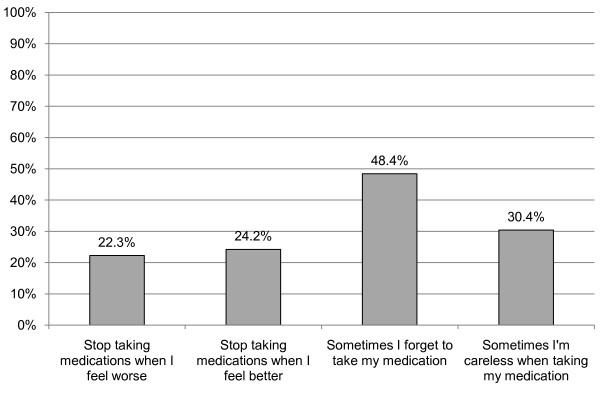
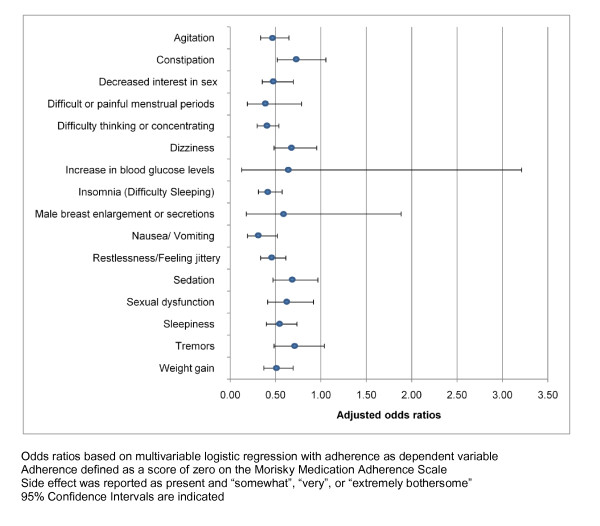
BACKGROUND: Antipsychotic medications often have a variety of side effects, however, it is not well understood how the presence of specific side effects correlate with adherence in a real-world setting. The aim of the current study was to examine the relationship between these variables among community-dwelling patients with schizophrenia. METHODS: Data were analyzed from a 2007-2008 nationwide survey of adults who self-reported a diagnosis of schizophrenia and were currently using an antipsychotic medication (N = 876). The presence of side effects was defined as those in which the patient reported they were at least "somewhat bothered". Adherence was defined as a score of zero on the Morisky Medication Adherence Scale. To assess the relationship between side effects and adherence, individual logistic regression models were fitted for each side effect controlling for patient characteristics. A single logistic regression model assessed the relationship between side effect clusters and adherence. The relationships between adherence and health resource use were also examined. RESULTS: A majority of patients reported experiencing at least one side effect due to their medication (86.19%). Only 42.5% reported complete adherence. Most side effects were associated with a significantly reduced likelihood of adherence. When grouped as side effect clusters in a single model, extra pyramidal symptoms (EPS)/agitation (odds ratio (OR) = 0.57, p = 0.0007), sedation/cognition (OR = 0.70, p = 0.033), prolactin/endocrine (OR = 0.69, p = 0.0342), and metabolic side effects (OR = 0.64, p = 0.0079) were all significantly related with lower rates of adherence. Those who reported complete adherence to their medication were significantly less likely to report a hospitalization for a mental health reason (OR = 0.51, p = 0.0006), a hospitalization for a non-mental health reason (OR = 0.43, p = 0.0002), and an emergency room (ER) visit for a mental health reason (OR = 0.60, p = 0.008). CONCLUSIONS: Among patients with schizophrenia, medication side effects are highly prevalent and significantly associated with medication nonadherence. Nonadherence is significantly associated with increased healthcare resource use. Prevention, identification, and effective management of medication-induced side effects are important to maximize adherence and reduce health resource use in schizophrenia.
Overview
The claims and statistics of this paper haven’t been checked yet.
Run the check — free, no account needed. It reads the open-access text and checks the sources it cites.
Integrity signals
Registry
Cites
Statistics
Figures
Verification
Claims the paper makes
The claims and statistics of this paper haven’t been checked yet.
Run the check — free, no account needed. It reads the open-access text and checks the sources it cites.
Claims other papers make about this one
Each is checked against this paper’s own text: does it say what the citing paper says it does?
In the citing paper
“In seven studies, patients feeling dizziness, fatigue, tiredness, sedation, lethargy, and sleepiness were the most frequently reported side-effects that contributed to medication non-adherence [11, 33, 36, 37, 50, 52, 65].”
From Psychotropic medication non-adherence and its associated factors among patients with major psychiatric disorders: A systematic review and meta-analysis (2020) · cites this paper as [33]
In the citing paper
“Likewise, in five studies, weight gain was another medication-related side-effect that associated with medication non-adherence and patients’ perception toward their medication [25, 33, 36, 44, 55].”
From Psychotropic medication non-adherence and its associated factors among patients with major psychiatric disorders: A systematic review and meta-analysis (2020) · cites this paper as [33]
In the citing paper
“In two studies, side-effects such as decreased sexual interest and having a symptom of sexual dysfunction were associated with patients’ medication adherence [33, 36].”
From Psychotropic medication non-adherence and its associated factors among patients with major psychiatric disorders: A systematic review and meta-analysis (2020) · cites this paper as [33]
Self-check
Percentages, sums and reported differences re-computed from the paper’s own numbers.
The self-check needs the paper’s full text.
Citations
Cites
Effectiveness of Antipsychotic Drugs in Patients with Chronic Schizophrenia
Lieberman, J. A., Stroup, T. S., McEvoy, J. P., Swartz, M. S., Rosenheck, R. A., Perkins, D. O., Keefe, R. S. E., Davis, S. M., Davis, C. E., Lebowitz, B. D., et al. (2005) · New England Journal of Medicine · doi:10.1056/nejmoa051688 · Cited by 5,892
Concurrent and Predictive Validity of a Self-reported Measure of Medication Adherence
Morisky, D. E., Green, L. W., & Levine, D. M. (1986) · Medical Care · doi:10.1097/00005650-198601000-00007 · Cited by 5,399
Lacro, J. P., Dunn, L. B., Dolder, C. R., Leckband, S. G., & Jeste, D. V. (2002) · The Journal of Clinical Psychiatry · doi:10.4088/jcp.v63n1007 · Cited by 1,383 · cited 2×
“Prior evidence has suggested that longer illness duration is associated with greater adherence [30]; therefore, age may be serving as a proxy for years diagnosed.”
BackgroundDeterminants of Medication Compliance in Schizophrenia: Empirical and Clinical Findings
Fenton, W. S., Blyler, C. R., & HEINSSEN, R. K. (1997) · Schizophrenia Bulletin · doi:10.1093/schbul/23.4.637 · Cited by 948
Atypical antipsychotic-induced metabolic side effects: insights from receptor-binding profiles
Nasrallah, H. A. (2007) · Molecular Psychiatry · doi:10.1038/sj.mp.4002066 · Cited by 718
Kendler, K. S. (1996) · Archives of General Psychiatry · doi:10.1001/archpsyc.1996.01830110060007 · Cited by 676
The Economic Burden of Schizophrenia in the United States in 2002
Wu, E. Q., Birnbaum, H. G., Shi, L., BALL, D. E., Kessler, R. C., Moulis, M., & Aggarwal, J. (2005) · The Journal of Clinical Psychiatry · doi:10.4088/jcp.v66n0906 · Cited by 614
Operational criteria and factors related to recovery from schizophrenia
Liberman, R. P., Kopelowicz, A. J., Ventura, J., & Gutkind, D. (2002) · International Review of Psychiatry · doi:10.1080/0954026021000016905 · Cited by 519
Obesity as a risk factor for antipsychotic noncompliance
Weiden, P. J., Mackell, J. A., & McDonnell, D. D. (2003) · Schizophrenia Research · doi:10.1016/s0920-9964(02)00498-x · Cited by 432
Self-reports of health care utilization compared to provider records
Ritter, P. L., Stewart, A. L., Kaymaz, H., Sobel, D. S., Block, D. A., & Lorig, K. R. (2001) · Journal of Clinical Epidemiology · doi:10.1016/s0895-4356(00)00261-4 · Cited by 401
Cited by
Sorted by citations
Items 101–200 of 332
Yalcin-Siedentopf, N., Wartelsteiner, F., Kaufmann, A. M., Biedermann, F., Edlinger, M., Kemmler, G., Rettenbacher, M. A., Widschwendter, C. G., Zernig, G., Fleischhacker, W. W., et al. (2014) · The International Journal of Neuropsychopharmacology · doi:10.1093/ijnp/pyu091 · Cited by 15
“Furthermore, a number of studies have reported on the negative impact of antipsychotic-induced side effects on adherence (Dibonaventura et al., 2012; Marder, 2013; Haddad et al., 2014; Hofer and Fleischhacker, 2014).”
BackgroundExperiences of Family Carers for Persons Using Antipsychotic Medication
Morrison, P., & Stomski, N. J. (2017) · Australian and New Zealand Journal of Family Therapy · doi:10.1002/anzf.1228 · Cited by 15
Regular access and adherence to medications of the specialized component of pharmaceutical services
Fritzen, J. S., Motter, F. R., & Paniz, V. M. V. (2017) · Revista de Saúde Pública · doi:10.11606/s1518-8787.2017051006932 · Cited by 14
Pochiero, I., Calisti, F., Comandini, A., Vecchio, A. D., Costamagna, I., Rosignoli, M. T., Cattaneo, A., Nunna, S., Peduto, I., Heiman, F., et al. (2021) · International Journal of General Medicine · doi:10.2147/ijgm.s320611 · Cited by 15
“14 Aside from contributing to CVD, weight gain can adversely affect quality of life(15,16) and is one of the most frequent reasons leading to treatment non-adherence or discontinuation among patients with schizophrenia.(17,18) The reason why atypical antipsychotics are more likely associated to weight gain and metabol…”
BackgroundLockwood, J., & Remington, G. J. (2015) · Expert Opinion on Emerging Drugs · doi:10.1517/14728214.2015.1050376 · Cited by 15
“A balance entails weighing the distress/incapacitation of the TD; troublesome side effects can compromise adherence and subjective well-being [136], which is also true though of polypharmacy [137].”
BackgroundEconomic Burden Associated with Extrapyramidal Symptoms in a Medicaid Population with Schizophrenia
Abouzaid, S., Tian, H., Zhou, H., Kahler, K. H., Harris, M., & Kim, E. (2012) · Community Mental Health Journal · doi:10.1007/s10597-012-9561-7 · Cited by 15
“In a recent study of 876 patients with schizophrenia using AP medications, 86 % reported experiencing at least one AE and 58 % were not completely adherent to their medication, mainly due to AEs (DiBonaventura et al. 2012).”
BackgroundSelf-citationMedication Continuity Among Medicaid Beneficiaries With Schizophrenia and Bipolar Disorder
Brown, J. D., Barrett, A., Caffery, E., Hourihan, K., & Ireys, H. T. (2013) · Psychiatric Services · doi:10.1176/appi.ps.201200349 · Cited by 14
How antipsychotics work in schizophrenia: a primer on mechanisms
Meyer, J. M. (2024) · CNS Spectrums · doi:10.1017/s1092852924002244 · Cited by 22
“14,30 Blockade of D 2 receptors on insulin secreting pancreatic β -cells and in glucose sensing hypothalamic cells impairs glycemic control, thereby putting patients at risk for metabolic syndrome and diabetes mellitus.”
Gaudiano, B. A., Moitra, E., Ellenberg, S., & Armey, M. F. (2015) · Healthcare · doi:10.3390/healthcare3030556 · Cited by 16
“Medication Side Effects How bothered were you by these side effects? [70]”
BackgroundMetabolic Side Effects in Patients Using Atypical Antipsychotic Medications During Hospitalization
Dıkeç, G., Arabacı, L. B., Uzunoğlu, G., & Mızrak, S. D. (2018) · Journal of Psychosocial Nursing and Mental Health Services · doi:10.3928/02793695-20180108-05 · Cited by 14
Translation and cultural adaptation of Glasgow Antipsychotic Side-effects Scale (GASS) in Arabic
AlRuthia, Y. S., Alkofide, H., Alosaimi, F. D., Alkadi, H., Alnasser, A. A., Aldahash, A., Basalamah, A., & Alarfaj, M. O. (2018) · PLoS ONE · doi:10.1371/journal.pone.0201225 · Cited by 14
The influence of video-based social modelling on the nocebo effect
Quinn, V. F., Pearson, S., Huynh, A., Nicholls, K., Barnes, K., & Faasse, K. (2022) · Journal of Psychosomatic Research · doi:10.1016/j.jpsychores.2022.111136 · Cited by 14
Bahta, M., Berhe, T., Russom, M., Tesfamariam, E. H., & Ogbaghebriel, A. (2020) · Integrated Pharmacy Research and Practice · doi:10.2147/iprp.s271814 · Cited by 13
Suicidal Behavior and Medication Adherence in Schizophrenic Patients
Warriach, Z. I., Sanchez‐Gonzalez, M. A., & Ferrer, G. F. (2021) · Cureus · doi:10.7759/cureus.12473 · Cited by 17
“One of the perspectives from the patient side is medication side effects resulting in non-compliance [28,29].”
BackgroundKalichman, S. C., Katner, H. P., Hill, M., Ewing, W., & Kalichman, M. O. (2021) · Psychology Health & Medicine · doi:10.1080/13548506.2021.1960391 · Cited by 13
Ulotaront: a TAAR1/5-HT1A agonist in clinical development for the treatment of schizophrenia
Højlund, M., & Correll, C. U. (2022) · Expert Opinion on Investigational Drugs · doi:10.1080/13543784.2022.2158811 · Cited by 14
“Due to its favorable side effect profile compared to most currently available antipsychotics [7], ulotaront might improve adherence and functioning as well as quality of life, which have both been impaired by current antipsychotic treatment options and their adverse effects [61,62].”
BackgroundSchizophrenia relapse, patient considerations, and potential role of lurasidone
Citrome, L. (2016) · Patient Preference and Adherence · doi:10.2147/ppa.s45401 · Cited by 13
“Patients with weight gain may be less likely to be adherent to their prescribed medications as observed in a nationwide survey of 876 US adults with schizophrenia and taking antipsychotic medication, where about 26% reported bothersome weight gain.(39) Studies examining quality-of-life improvements among persons with…”
BackgroundLiao, X., Ye, H., & Si, T. (2021) · Neuropsychiatric Disease and Treatment · doi:10.2147/ndt.s294521 · Cited by 13
“Patients with MetS are more likely to have reduced medication compliance and are at an increased risk of mental illness recurrence.(24,25) The FondaMental Academic Centers of Expertise for Schizophrenia (FACE-SZ) cohort study demonstrated that MetS is a strong predictor of a one year recurrence rate of schizophrenia,…”
BackgroundJeun, K. J., Kamal, K. M., Adhikari, K., Nolfi, D., Ashraf, M. N., & Zacker, C. (2024) · Journal of Managed Care & Specialty Pharmacy · doi:10.18553/jmcp.2024.30.2.183 · Cited by 12
Black, T., Jenkins, B. W., Laprairie, R. B., & Howland, J. G. (2024) · Neuroscience & Biobehavioral Reviews · doi:10.1016/j.neubiorev.2024.105681 · Cited by 15
“…with adverse chronic motor, sedative, cardiovascular and metabolic effects, contributing to reduced compliance and quality of life (Solmi et al., 2017; Lieberman et al., 2005; DiBonaventura et al., 2012; Huhn et al., 2019; Carbon et al., 2018; Pillinger et al., 2020; Taipale et al., 2021).”
BackgroundNomura, N., Siafis, S., Schneider‐Thoma, J., Brandt, L., Park, J., Efthimiou, O., Priller, J., Davis, J. M., Takeuchi, H., & Leucht, S. (2025) · The Lancet Psychiatry · doi:10.1016/s2215-0366(25)00025-2 · Cited by 12
Fitzgerald, I., O'Dwyer, S., Brooks, M., Sahm, L. J., Crowley, E. K., & Dhubhlaing, C. N. (2021) · Frontiers in Psychiatry · doi:10.3389/fpsyt.2021.730769 · Cited by 12
Riedel, M. J., Schmitz, M., østergaard, P. K., Ferrannini, L., Franco, M., Alfano, V., & Vansvik, E. D. (2015) · Schizophrenia Research · doi:10.1016/j.schres.2014.12.027 · Cited by 12
“Minimal adverse events (AEs) and a positive attitude towards medication are crucial for good adherence, and additionally, good cognitive function may be a strong predictor of the patients' ability to manage their medication and functionality (Jeste et al., 2003; DiBonaventura et al., 2012).”
Zeleke, T. K., Birhane, W., Gubae, K., Kebede, B., & Abebe, R. B. (2023) · Patient Preference and Adherence · doi:10.2147/ppa.s422659 · Cited by 11
“4).”
Patel, R., Brinn, A., Irving, J., Chaturvedi, J., Gudiseva, S., Correll, C. U., Fusar‐Poli, P., & McGuire, P. K. (2023) · Therapeutic Advances in Psychopharmacology · doi:10.1177/20451253231211575 · Cited by 11
“13,19 However, the extent to which poor adherence is associated with particular adverse effects is unclear.”
BackgroundStrube, W., Wagner, E. M., Luykx, J. J., & Hasan, A. (2024) · Expert Opinion on Drug Safety · doi:10.1080/14740338.2024.2348561 · Cited by 10
Joshi, K., Mao, L., Biondi, D. M., & Millet, R. A. (2018) · BMC Psychiatry · doi:10.1186/s12888-018-1594-1 · Cited by 11
“Antipsychotic medications are the mainstay of treatment for patients with schizophrenia, but adherence to medication is often poor; this compromises outcomes and increases health care resource utilization [7].”
BackgroundLamb, L., Affenzeller, N., Hewison, L., McPeake, K. J., Zulch, H. E., & Mills, D. S. (2018) · Frontiers in Veterinary Science · doi:10.3389/fvets.2018.00037 · Cited by 11
Ishigooka, J., Inada, K., Niidome, K., Aoki, K., Kojima, Y., Iwashita, S., & Yamada, S. (2021) · Human Psychopharmacology Clinical and Experimental · doi:10.1002/hup.2777 · Cited by 12
Kelly, D. L., Claxton, A., Bidollari, I., & Du, Y. (2021) · Psychiatry Research · doi:10.1016/j.psychres.2021.114030 · Cited by 12
“Sexual dysfunction can negatively impact a patient’s quality of life and potentially lead to treatment nonadherence (Bebbington et al., 2009; Dibonaventura et al., 2012; Kelly et al., 2018; Mir et al., 2008).”
BackgroundNardi, W. R., Loucks, E. B., Springs, S., Operario, D., Kronish, I. M., Gaudiano, B. A., & Sun, S. (2021) · Journal of Psychosomatic Research · doi:10.1016/j.jpsychores.2021.110585 · Cited by 11
Utomo, E., Li, L., Gao, J., Anjani, Q. K., Picco, C. J., Moreno‐Castellanos, N., Donnelly, R. F., Domínguez‐Robles, J., & Larrañeta, E. (2024) · Journal of Drug Delivery Science and Technology · doi:10.1016/j.jddst.2024.105973 · Cited by 11
“Additionally, drugs used to treat schizophrenia, such as risperidone (RIS) [39], have side effects [40 – 43] when are administered orally, affecting the quality of life of patients and potentially contributing to poor adherence [44,45].”
Üstün, G. (2018) · Journal of Psychiatric Nursing · doi:10.14744/phd.2018.87699 · Cited by 11
“görülmüştür.[8] Şizofreni hastalarında tedaviye uyumu etkileyen etkenleri değerlendiren bir çalışmada da Tıbbi Tedaviye Uyum Oranı Ölçeği uygulanmış, araştırmaya katılan hastaların büyük çoğunluğunun (%85.”
Pina‐Camacho, L., Díaz‐Caneja, C. M., Sáiz, P. A., Bobes, J., Corripio, I., Grasa, E., Rodríguez–Jiménez, R., Fernández, M., Sanjuán, J., García‐López, A., et al. (2014) · Revista de Psiquiatría y Salud Mental · doi:10.1016/j.rpsm.2014.05.004 · Cited by 11
Correll, C. U., Arango, C., Fagiolini, A. M., Giordano, G. M., Leucht, S., & de Pablo, G. S. (2024) · Neuropsychiatric Disease and Treatment · doi:10.2147/ndt.s459450 · Cited by 10
“33 Medications with fewer side effects (eg, less sedation) are recommended 64 (adverse effect profiles of selected anti-psychotic drugs can be found in Table 3).”
BackgroundZacker, C., Puckett, J. T., & Kamal‐Bahl, S. J. (2024) · ClinicoEconomics and Outcomes Research · doi:10.2147/ceor.s469001 · Cited by 10
Falkai, P., Dombi, Z. B., Acsai, K., Barabássy, Á., Schmitt, A., & Németh, G. (2021) · CNS Spectrums · doi:10.1017/s1092852921000997 · Cited by 10
Beliefs About Medicines Predict Side-Effects of Placebo Modafinil
Heller, M. K., Chapman, S., & Horne, R. (2022) · Annals of Behavioral Medicine · doi:10.1093/abm/kaab112 · Cited by 7
“Medication side-effects are common (1) and distressing for patients, leading to decreased quality of life (2) and reduced adherence (3, 4).”
BackgroundPost-discharge medication adherence in schizophrenia
Yalamova, I. (2016) · Archives of Psychiatry and Psychotherapy · doi:10.12740/app/60513 · Cited by 10
“Archives of Psychiatry and Psychotherapy, 2015; 4: 39–47 to predict antipsychotic medication adherence are illness insight [4, 7], the severity of psychopathology [7], cognitive impairments [8], attitudes toward medication [4, 9], substance abuse [2], antipsychotic side-effects [10] and the quality of the therapeutic…”
BackgroundKronbauer, M., Metz, V. G., Roversi, K., Dias, V. T., Antoniazzi, C. T. D. D., Barcelos, R. C. S., & Bürger, M. E. (2016) · Behavioural Brain Research · doi:10.1016/j.bbr.2016.10.049 · Cited by 10
Yan, T., Greene, M., Chang, E. Y., Broder, M. S., Touya, M., Munday, J., & Hartry, A. (2018) · Journal of Comparative Effectiveness Research · doi:10.2217/cer-2018-0090 · Cited by 10
Aguglia, A., Fusar‐Poli, L., Natale, A., Amerio, A., Espa, I., Villa, V., Martinotti, G., Carrà, G., Bartoli, F., D’Agostino, A., et al. (2022) · Pharmacopsychiatry · doi:10.1055/a-1804-6211 · Cited by 10
“…inade - quate efficacy of medications (depending on different clinical di - mensions), delivery systems and formulations (drops vs. oral vs. intravenous vs. intramuscular, as long-acting injectable – LAI antipsychotics) as a cause of poor adherence to pharmacological treatment [6, 20–22].”
Pina‐Camacho, L., Díaz‐Caneja, C. M., Sáiz, P. A., Bobes, J., Corripio, I., Grasa, E., Rodríguez–Jiménez, R., Fernández, M., Sanjuán, J., García‐López, A., et al. (2014) · Revista de Psiquiatría y Salud Mental (English Edition) · doi:10.1016/j.rpsmen.2014.10.004 · Cited by 10
Corbett, R., Elsom, S., Sands, N., & Prematunga, R. K. (2016) · International Journal of Mental Health Nursing · doi:10.1111/inm.12257 · Cited by 10
“…side-effect profile of many antidepressant and antipsychotic medications commonly includes sexual dysfunction (Clayton et al. 2014; Young et al. 2015), and sexual dysfunction is known to be an important factor in consumer non-adherence to medication (Clayton et al. 2014; DiBonaventura et al. 2012).”
BackgroundA Clinically Oriented Review of New Antipsychotics for Schizophrenia
Luca, M., Luca, A., & Serretti, A. (2024) · Neuropsychiatric Disease and Treatment · doi:10.2147/ndt.s501560 · Cited by 9
“Regarding the secondary measures, while the performance scale scores were similar between groups, the proportion of patients with at least 20% improvement at the NSA-16 at week 26 was higher in the pimavanserin group [53% (93/174 patients) versus 49% (84/173 patients), p = 0.30].”
InfluentialTadesse, G., Geremew, G. W., Alemayehu, T. T., Getachew, D., Demelash, D., & Fentahun, S. (2025) · BMC Public Health · doi:10.1186/s12889-025-22408-w · Cited by 9
“The other explanation for this could be that patients who experience side effects are often less likely to be motivated to adhere to treatment plans and have a negative attitude towards medication [83, 84].”
Rudå, D., Jensen, K. G., Decara, M. S., Klauber, D. G., Fagerlund, B., Jepsen, J. R. M., Línnet, K., Werge, T. M., Correll, C. U., Fink‐Jensen, A., et al. (2021) · Journal of Clinical Psychopharmacology · doi:10.1097/jcp.0000000000001490 · Cited by 9
Chien, T.-Y., Chern, J.-S., Wang, S.-P., & Yang, Y. (2022) · PLoS ONE · doi:10.1371/journal.pone.0264745 · Cited by 9
“These deficits might be partially associated with long-term use of antipsychotic medication, which further impedes postural control and increase the incidence of falls [22–24].”
Marder, S. R., Meehan, S. R., Weiss, C., Chen, D., Hobart, M., & Hefting, N. (2021) · Schizophrenia Bulletin Open · doi:10.1093/schizbullopen/sgab014 · Cited by 9
Wada, S., Iwamoto, K., Okumura, H., Hida, H., Hiraoka, S., Kamei, A., Mori, D., Yamada, K., & Ozaki, N. (2023) · BMC Psychiatry · doi:10.1186/s12888-023-04664-5 · Cited by 9
“In addition, the side effects of antipsychotics, especially metabolic side effects and those related to extrapyramidal symptoms, affect medication adherence [3].”
BackgroundThe need for educating patients with schizophrenia about the adverse effects of medications
Hashimoto, Y., & Tensho, M. (2016) · Australasian Psychiatry · doi:10.1177/1039856216634825 · Cited by 7
Zongo, F. E., Moisan, J., Grégoire, J., LESAGE, A. D., Dossa, R., & Lauzier, S. (2016) · Research in Social and Administrative Pharmacy · doi:10.1016/j.sapharm.2016.12.006 · Cited by 8
Poremski, D., Sagayadevan, V., Wang, P., Lum, A., Subramaniam, M., & Ann, C. S. (2016) · PLoS ONE · doi:10.1371/journal.pone.0166171 · Cited by 8
Mental health nurses’ views about antipsychotic medication side effects
Stomski, N. J., Morrison, P., & Meehan, T. (2016) · Journal of Psychiatric and Mental Health Nursing · doi:10.1111/jpm.12314 · Cited by 11
Lho, S. K., Kim, M., Lee, T. H., Kwak, Y. B., & Kwon, J. S. (2018) · Clinical Neurophysiology · doi:10.1016/j.clinph.2018.10.011 · Cited by 8
Performance of the International Index of Erectile Function tool in men with epilepsy
Dawson, E. A., Stutzman, S. E., Olson, D. M., & Hays, R. (2019) · Epilepsy & Behavior · doi:10.1016/j.yebeh.2019.01.044 · Cited by 8
Ivashchenko, D. V., Buromskaya, N. I., Savchenko, L. M., Shevchenko, Y. S., & Sychev, D. A. (2019) · International Journal of Risk & Safety in Medicine · doi:10.3233/jrs-195030 · Cited by 8
“Complications of psychopharmacotherapy are observed in more than 80% of patients [2, 3], so monitoring of adverse drug effects (ADEs) is especially relevant in a child psychiatric hospital.”
Lee, S., & Schwartz, S. E. (2021) · Psychiatry Research · doi:10.1016/j.psychres.2021.114277 · Cited by 8
Khardali, A., Aladwani, A., Alzahrani, F., Madkhali, O. A. A., Qahtani, S. A., Qadri, M. M., Adawi, M. D., & Hakamy, M. (2024) · SAGE Open Medicine · doi:10.1177/20503121241271820 · Cited by 7
“23,24 The patients in this study reported positive impacts of the holy month of Ramadan on their attitude toward establishing routines that facilitated medication adherence.”
Kim, E. Y., Kim, J., Jeong, J. H., Jang, J., Kang, N., Seo, J., Park, Y. E., Park, J., Jeong, H., Ahn, Y.-M., et al. (2024) · Schizophrenia Research · doi:10.1016/j.schres.2024.12.018 · Cited by 7
Self-citationLohman, M. C., Scott, V., Verma, M., Jones, P., & Fields, E. (2025) · Psychiatry Research · doi:10.1016/j.psychres.2025.116378 · Cited by 7
“…(Leucht et al., 2012; Lian et al., 2022a; Miyamoto and Wolfgang Fleischhacker, 2017); however, both classes of antipsychotic medication may also lead to distinct and often troubling neurological and metabolic side effects (Dibonaventura et al., 2012; Lally and MacCabe, 2015; Poloni et al., 2019).”
Morrison, P., & Stomski, N. J. (2017) · Contemporary Family Therapy · doi:10.1007/s10591-017-9423-0 · Cited by 7
Song, K., Wang, Y., Shen, L., Wang, J., & Zhang, R. (2022) · Medicine · doi:10.1097/md.0000000000032401 · Cited by 7
“Research shows that yoga therapy is an effective treatment for GAD.”
BackgroundInfluentialLi, X., Langleben, D. D., Lynch, K. G., Wang, G., Elman, I., Wiers, C. E., & Shi, Z. (2023) · Frontiers in Psychiatry · doi:10.3389/fpsyt.2023.1247961 · Cited by 7
“These effects may contribute to the high rates (22, 23) of treatment non-adherence with the OUD medication-assisted treatment (MAT) involving opioid agonists such as buprenorphine and methadone (24, 25), which, despite their positive clinical outcomes in terms of reducing overdose mortality, infectious diseases, crime…”
BackgroundMorris, A., Reed, T., McBride, G., & Chen, J. (2024) · Schizophrenia Research · doi:10.1016/j.schres.2024.06.056 · Cited by 7
“This is of concern because consumers with schizophrenia and MetS have a higher likelihood of poorer compliance with antipsychotic medication and experience greater severity of psychotic symptoms and illness recurrence rates (Godin et al., 2018; Dibonaventura et al., 2012; Arango et al., 2008).”
Citrome, L., Correll, C. U., Cutler, A. J., Dunbar, M., Hoberg, A. R., Hopkinson, C., Mattingly, G. W., McGrory, J. A., Rege, B., Weiden, P. J., et al. (2025) · Neuropsychiatric Disease and Treatment · doi:10.2147/ndt.s499367 · Cited by 8
Peters-Strickland, T. S., Zhao, C. Y., Perry, P. P., Eramo, A., Salzman, P. M., McQuade, R. D., Johnson, B. R., & Sanchez, R. (2016) · CNS Spectrums · doi:10.1017/s1092852916000365 · Cited by 7
“A recent nationwide survey revealed that more than one-half of patients with schizophrenia were nonadherent to their antipsychotic therapy.(5) Nonadherence in schizophrenia is associated with many negative clinical and patient-rated outcomes, including an increased risk of psychiatric * Address for correspondence: Tim…”
BackgroundKretchy, I. A., Appiah, B., Agyabeng, K., Kwarteng, E. B., Ganyaglo, E., & Aboagye, G. O. (2021) · International Journal of Clinical Pharmacy · doi:10.1007/s11096-021-01264-9 · Cited by 7
“Yet there is a paucity of studies that have examined the perspectives of both patients and caregivers about psychotropic medicines, although non-adherence in patients have been predicted by negative beliefs [30–32] and experience of side effects [29, 33].”
BackgroundResultAloudah, N. M. (2023) · Patient Preference and Adherence · doi:10.2147/ppa.s404092 · Cited by 7
Fluorescence of neutrophil granulocytes as a biomarker for clozapine use
Man, W. H., ten Berg, M. J., Wilting, I., Huisman, A., Cahn, W., Douma, J. W., den Breeijen, H., Heerdink, E. R., Egberts, T. C. G., & van Solinge, W. W. (2013) · European Neuropsychopharmacology · doi:10.1016/j.euroneuro.2013.08.005 · Cited by 7
“8% within 4–5 years, with a peak incidence in the first 6–18 weeks of treatment) (Atkin et al., 1996; Dibonaventura et al., 2012; Reid et al., 1998), necessitating weekly blood monitoring in the first 18 weeks of treatment followed by blood monitoring once every 4 weeks according to European guidelines and regulatory…”
MethodEmerging IT for Medication Adherence
Gimpel, G., Varshney, U., & Ahluwalia, P. (2016) · IT Professional · doi:10.1109/mitp.2016.49 · Cited by 7
Izadi, S. R., Pachur, T., Wheeler, C. S., McGuire, J., & Waters, E. A. (2017) · Patient Education and Counseling · doi:10.1016/j.pec.2017.05.029 · Cited by 7
“This has occurred in diverse clinical contexts, including undergoing biologic therapy for rheumatoid arthritis [12], adhering to antipsychotic [13] and antidepressant [14] medications, and initiating adjuvant chemotherapy for breast cancer [15].”
Gaudiano, B. A., Ellenberg, S., Price, L. H., & Moitra, E. (2018) · Psychiatry Research · doi:10.1016/j.psychres.2018.09.048 · Cited by 7
“, 2012); 2) positive (happiness) and negative (irritability, sadness, nervousness) affect (0 = “very slightly or not at all” to 4 = “extremely”), using items from the Positive and Negative Affect Schedule (Watson and Clark, 1994); 3) medication side effects (0 = “not at all” to 1 = “extremely bothered”) (Dibonaventura…”
MethodCorrell, C. U. (2025) · CNS Drugs · doi:10.1007/s40263-025-01206-3 · Cited by 7
“Individualized experience while a patient is undergoing antipsychotic treatment is heavily impacted by adverse side effects, such as motor abnormalities, sedation, sexual dysfunction, metabolic dysfunction, and weight gain; these are commonly associated with non-adherence [21, 24].”
Gubert, C., Kong, G., Shadani, S., Connell, S., Masson, B. A., van de Garde, N., Narayana, V. K., Renoir, T., & Hannan, A. J. (2025) · Schizophrenia Bulletin · doi:10.1093/schbul/sbaf056 · Cited by 7
Ashoorian, D. M., Davidson, R. M., Rock, D. J., Seubert, L., & Clifford, R. M. (2015) · Therapeutic Advances in Psychopharmacology · doi:10.1177/2045125315598466 · Cited by 6
Çoker, F. (2021) · Journal of Psychiatric Nursing · doi:10.14744/phd.2021.18199 · Cited by 6
Rodolico, A., Concerto, C., Ciancio, A., Siafis, S., Fusar‐Poli, L., Romano, C., Scavo, E. V., Petralia, A., Salomone, S., Signorelli, M. S., et al. (2022) · Brain Sciences · doi:10.3390/brainsci12070891 · Cited by 6
“It is likely that the disproportion between the symptoms identified by the patient and the clinician is the result of the greater tendency of patients to report symptoms that determine distress [37] as present but are otherwise recognized as mild or absent by the clinician [38].”
BackgroundWard, K. M., & Citrome, L. (2024) · Expert Opinion on Drug Safety · doi:10.1080/14740338.2024.2328812 · Cited by 6
“Furthermore, improved tolerability is associated with greater adherence [116], which in turn is associated with improved quality of life [117] and reduced relapse rates and cost of care [118].”
BackgroundNugent, K. L., Spahr, E., Toroney, J., Mojtabai, R., Nettles, C., Turner, L. W., Fenton, A., Spivak, A., Cullen, B., Everett, A. S., et al. (2015) · Journal of Clinical Psychopharmacology · doi:10.1097/jcp.0000000000000311 · Cited by 6
“Adverse effects of psychiatric medications are a major risk factor for nonadherence and reduced quality of life.(5,6) Therefore, it is crucial to assess patients for the presence of medication adverse effects in both clinical and research settings.”
BackgroundAshoorian, D. M., Davidson, R. M., Rock, D. J., Dragović, M., & Clifford, R. M. (2015) · International Clinical Psychopharmacology · doi:10.1097/yic.0000000000000072 · Cited by 6
“In a recent survey of mental health patients, nearly 80% reported at least one side effect that was bothersome and there was a significant association between their medication side effects and nonadherence (Dibonaventura et al., 2012).”
BackgroundEffect of Medication Education on Drug Adherence with Mental Disorders: A Clinical Trial Study
Sadeghian, E., dost, M. N., tapak, L., & Shamsaei, F. (2019) · نشریه روان پرستاری · doi:10.21859/ijpn-06066 · Cited by 6
Erşan, E. E. (2019) · Community Mental Health Journal · doi:10.1007/s10597-019-00506-5 · Cited by 6
The Benefits and Risks of Adherence to Medical Therapy
Scialli, A., Saavedra, K., & Fugh-Berman, A. (2021) · The Journal of Scientific Practice and Integrity · doi:10.35122/001c.21386 · Cited by 4
Addressing Patients’ Unmet Needs to Improve Outcomes in Schizophrenia
Harvey, P. D., & Kane, J. M. (2021) · The Journal of Clinical Psychiatry · doi:10.4088/jcp.ic20018ah3c · Cited by 6
Ebrahem, S. M. (2016) · American Journal of Nursing Science · doi:10.11648/j.ajns.20160506.11 · Cited by 7
Treatment of surgical infections with tobramcin.
Stone, H. H., KOLB, L. D., GEHEBER, C. E., & CURRIE, C. A. (1975) · PubMed · Cited by 6
Sun, Y., Yu, H. H., Wang, Z., Zhang, J., Zhou, Y., Cui, W., & Jiang, W. (2024) · BMC Nursing · doi:10.1186/s12912-024-01882-4 · Cited by 5
“Some individuals with schizophrenia experience noticeable medication-related adverse reactions like weight gain, sleep disturbances, and impaired attention that significantly impact their medication experience [13].”
BackgroundSharma, D., Higgins, O., Sawicki, A., Ramamurthy, P., Field, B., Hussein, P., Singh, K. A., & Ranjitkar, S. (2025) · Journal of Oral Pathology and Medicine · doi:10.1111/jop.13639 · Cited by 6
Addisu, Z. D., Demsie, D. G., Tafere, C., Siraj, E. A., Yazie, T. S., Yimer, E. G., Alemu, N. G., Milikit, Y. Z., Wabela, B. N., Yismaw, M. B., et al. (2025) · Scientific Reports · doi:10.1038/s41598-025-21647-6 · Cited by 11
Vadukapuram, R., Zahid, S., Lee, H. K., & Patel, R. S. (2020) · Cureus · doi:10.7759/cureus.7936 · Cited by 5
“A nationwide survey of self-reported adult schizophrenia patients (N = 876) found that medication adverse effects such as extrapyramidal symptoms, tardive dyskinesia, agitation, and sedation were significantly associated medication non-compliance [23,24].”
BackgroundCastillo, A. F., Davis, A. L., Fischhoff, B., & Krishnamurti, T. (2021) · Health Informatics Journal · doi:10.1177/14604582211059463 · Cited by 6
Vrubļevska, J. (2023) · Frontiers in Psychiatry · doi:10.3389/fpsyt.2023.1134692 · Cited by 5
“These side effects caused by antipsychotics therefore have a negative impact on adherence (21).”
BackgroundImpact of prescription length supply policy on patient medication adherence in Thailand
Jarujumrus, I., & Taychakhoonavudh, S. (2023) · BMC Health Services Research · doi:10.1186/s12913-023-09530-4 · Cited by 6
“Second, the database was primarily operated for reimbursements, and did not include several predictors that have previously been associated with adherence, including education level, [53] race and ethnicity, [54] socioeconomic status, [55] adverse events with medications, [56] the relationship between healthcare provi…”
MethodAdherence to Psychotropic Medication Before and During COVID-19
Froese, B., Aquino, G., Valencia, E., Tan, Q., Yogendran, M. S., Katz, C., Bolton, J. M., Falk, J., Kowalec, K., Chateau, D., et al. (2023) · Journal of Clinical Psychopharmacology · doi:10.1097/jcp.0000000000001713 · Cited by 5
“Copyright © 2023 Wolters Kluwer H disease severity, medication-induced adverse effects, and patient relationship with the healthcare system.(8,21,22) This study has important limitations to recognize.”
BackgroundChua, Y. C., Roystonn, K., Pushpa, K., Verma, S. K., & Tang, C. Y. Z. (2024) · BMC Psychiatry · doi:10.1186/s12888-024-06190-4 · Cited by 5
Cahaya, N., Kristina, S. A., Widayanti, A. W., & Green, J. (2024) · Exploratory Research in Clinical and Social Pharmacy · doi:10.1016/j.rcsop.2024.100544 · Cited by 7
Slow Carbamazepine Clearance in a Nonadherent Malay Woman With Epilepsy and Thyrotoxicosis
Yeap, L., Lim, K. S., Ng, C. C., Khor, A. H., & Lo, Y. L. (2013) · Therapeutic Drug Monitoring · doi:10.1097/ftd.0000000000000024 · Cited by 5
“Avoidance of medication adverse effects is one of the main contributing factors to poor adherence.(50) CBZ-related adverse effects are positively related to elevated serum drug concentrations, the swiftness of serum concentration surge, or the fluctuations of serum levels between dosing intervals.”
BackgroundMasuda, S., Sakamaki, S., Yasuhara, Y., Zhao, Y., Takase, K., Yoshihiro, K. A. I., Tanioka, T., & Locsin, R. C. (2016) · Open Journal of Psychiatry · doi:10.4236/ojpsych.2016.61015 · Cited by 5
“As a result, it will cause negative effects on patient recuperation because of the adverse effect caused by alteration in the therapeutic regimen [7].”
BackgroundBerry, A., Drake, R., & Yung, A. R. (2020) · BMC Health Services Research · doi:10.1186/s12913-020-05654-z · Cited by 7
Metadata
- Authors
- DiBonaventura, M., Gabriel, S., Dupclay, L., Gupta, S., & Kim, E.
- Affiliations
- Kantar Health (United States) (US)
- Novartis (United States) (US)
- Corresponding author
- DiBonaventura, Marco
- Venue
- BMC Psychiatry
- Published
- 2012-03-20
- Volume
- 12
- Issue
- 1
- Pages
- 20-20
- ISSN
- 1471-244X (ISSN-L)
- PMC
- PMC3342101
- OpenAlex
- W2157910519
- Cited by
- 333
- References
- 31
- Citations by year
- 2026: 16 · 2025: 30 · 2024: 32 · 2023: 27 · 2022: 22 · 2021: 34 · 2020: 22 · 2019: 27 · 2018: 22 · 2017: 20 · 2016: 24 · 2015: 22 · 2014: 13 · 2013: 19 · 2012: 2
- FWCI
- 15.48
- Type
- journal article
- Language
- en
- Open access
- gold
- doi.org
- Licence
- Locations
- BMC Psychiatry (publishedVersion, cc-by)
- PubMed Central (publishedVersion, cc-by)
- PubMed (publishedVersion)
- DOAJ (DOAJ: Directory of Open Access Journals) (submittedVersion, cc-by-sa)
- Topics
- Health Sciences › Medicine › Family Practice › Medication Adherence and Compliance
- Health Sciences › Medicine › Psychiatry and Mental health › Schizophrenia research and treatment
- Health Sciences › Medicine › Psychiatry and Mental health › Bipolar Disorder and Treatment
- Keywords
- schizophrenia, antipsychotic adverse effects, medication adherence, medication non-adherence, sedation, prolactin, metabolic side effects, health care utilization, hospitalization, emergency department visits, patient perspectives, community-dwelling patients, Morisky Medication Adherence Scale, health care costs, quality of life
- MeSH terms
- Adult, Attitude to Health, Cross-Sectional Studies, Female, Health Surveys, Humans, Male, Middle Aged, Schizophrenia, Schizophrenic Psychology, Antipsychotic Agents, Medication Adherence
About these checks
Registry, retraction, Cites and statistics results are computed, not judged, with one exception: a printed reference that no index lists is read once by a model before it counts as a citation error. Claims are extracted by a model and kept only when their quote appears verbatim in the text; each cited source is then checked, with a model’s help, for whether it says what the claim relies on. Those verdicts can be wrong — read the claim’s quote and the cited source before relying on one.
Statistics and arithmetic are recomputed, not judged.
Confidence bands are shown only for fields calibrated on our annotated test set. None is calibrated yet, so no band is shown.
What counts as a claim ›How we measure confidence ›How we check this ›
Are you an author, or do you see a problem with this page? Request a review
