

The DOI matches its Crossref record; 31 of the 31 references it cites were found in a registry or an index.
A patient perspective of the impact of medication side effects on adherence: results of a cross-sectional nationwide survey of patients with schizophrenia
Open accessAbstract
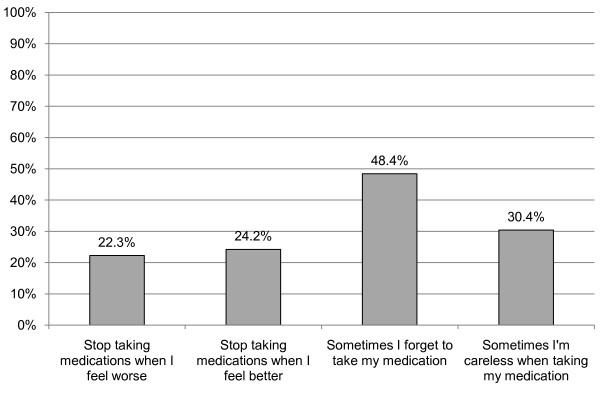
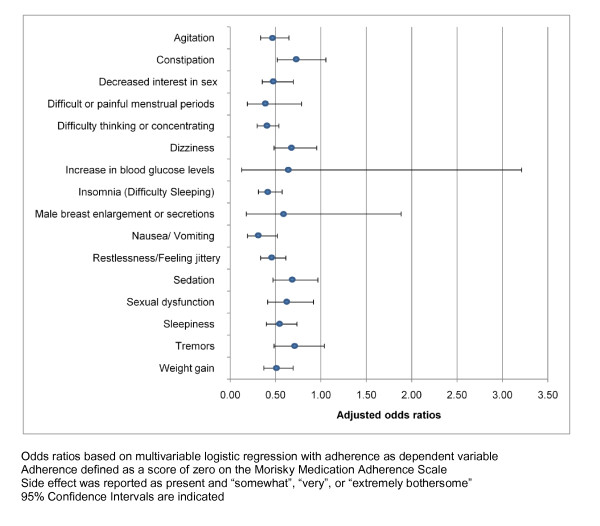
BACKGROUND: Antipsychotic medications often have a variety of side effects, however, it is not well understood how the presence of specific side effects correlate with adherence in a real-world setting. The aim of the current study was to examine the relationship between these variables among community-dwelling patients with schizophrenia. METHODS: Data were analyzed from a 2007-2008 nationwide survey of adults who self-reported a diagnosis of schizophrenia and were currently using an antipsychotic medication (N = 876). The presence of side effects was defined as those in which the patient reported they were at least "somewhat bothered". Adherence was defined as a score of zero on the Morisky Medication Adherence Scale. To assess the relationship between side effects and adherence, individual logistic regression models were fitted for each side effect controlling for patient characteristics. A single logistic regression model assessed the relationship between side effect clusters and adherence. The relationships between adherence and health resource use were also examined. RESULTS: A majority of patients reported experiencing at least one side effect due to their medication (86.19%). Only 42.5% reported complete adherence. Most side effects were associated with a significantly reduced likelihood of adherence. When grouped as side effect clusters in a single model, extra pyramidal symptoms (EPS)/agitation (odds ratio (OR) = 0.57, p = 0.0007), sedation/cognition (OR = 0.70, p = 0.033), prolactin/endocrine (OR = 0.69, p = 0.0342), and metabolic side effects (OR = 0.64, p = 0.0079) were all significantly related with lower rates of adherence. Those who reported complete adherence to their medication were significantly less likely to report a hospitalization for a mental health reason (OR = 0.51, p = 0.0006), a hospitalization for a non-mental health reason (OR = 0.43, p = 0.0002), and an emergency room (ER) visit for a mental health reason (OR = 0.60, p = 0.008). CONCLUSIONS: Among patients with schizophrenia, medication side effects are highly prevalent and significantly associated with medication nonadherence. Nonadherence is significantly associated with increased healthcare resource use. Prevention, identification, and effective management of medication-induced side effects are important to maximize adherence and reduce health resource use in schizophrenia.
Overview
The claims and statistics of this paper haven’t been checked yet.
Run the check — free, no account needed. It reads the open-access text and checks the sources it cites.
Integrity signals
Registry
Cites
Statistics
Figures
Verification
Claims the paper makes
The claims and statistics of this paper haven’t been checked yet.
Run the check — free, no account needed. It reads the open-access text and checks the sources it cites.
Claims other papers make about this one
Each is checked against this paper’s own text: does it say what the citing paper says it does?
The cited source says what the claim attributes to it.
In the citing paper
“Likewise, in five studies, weight gain was another medication-related side-effect that associated with medication non-adherence and patients’ perception toward their medication [25, 33, 36, 44, 55].”
From Psychotropic medication non-adherence and its associated factors among patients with major psychiatric disorders: A systematic review and meta-analysis (2020) · cites this paper as [33]
In the citing paper
“In seven studies, patients feeling dizziness, fatigue, tiredness, sedation, lethargy, and sleepiness were the most frequently reported side-effects that contributed to medication non-adherence [11, 33, 36, 37, 50, 52, 65].”
From Psychotropic medication non-adherence and its associated factors among patients with major psychiatric disorders: A systematic review and meta-analysis (2020) · cites this paper as [33]
In the citing paper
“In two studies, side-effects such as decreased sexual interest and having a symptom of sexual dysfunction were associated with patients’ medication adherence [33, 36].”
From Psychotropic medication non-adherence and its associated factors among patients with major psychiatric disorders: A systematic review and meta-analysis (2020) · cites this paper as [33]
Self-check
Percentages, sums and reported differences re-computed from the paper’s own numbers.
The self-check needs the paper’s full text.
Citations
Cites
Effectiveness of Antipsychotic Drugs in Patients with Chronic Schizophrenia
Lieberman, J. A., Stroup, T. S., McEvoy, J. P., Swartz, M. S., Rosenheck, R. A., Perkins, D. O., Keefe, R. S. E., Davis, S. M., Davis, C. E., Lebowitz, B. D., et al. (2005) · New England Journal of Medicine · doi:10.1056/nejmoa051688 · Cited by 5,892
Concurrent and Predictive Validity of a Self-reported Measure of Medication Adherence
Morisky, D. E., Green, L. W., & Levine, D. M. (1986) · Medical Care · doi:10.1097/00005650-198601000-00007 · Cited by 5,399
Lacro, J. P., Dunn, L. B., Dolder, C. R., Leckband, S. G., & Jeste, D. V. (2002) · The Journal of Clinical Psychiatry · doi:10.4088/jcp.v63n1007 · Cited by 1,383 · cited 2×
“Prior evidence has suggested that longer illness duration is associated with greater adherence [30]; therefore, age may be serving as a proxy for years diagnosed.”
BackgroundDeterminants of Medication Compliance in Schizophrenia: Empirical and Clinical Findings
Fenton, W. S., Blyler, C. R., & HEINSSEN, R. K. (1997) · Schizophrenia Bulletin · doi:10.1093/schbul/23.4.637 · Cited by 948
Atypical antipsychotic-induced metabolic side effects: insights from receptor-binding profiles
Nasrallah, H. A. (2007) · Molecular Psychiatry · doi:10.1038/sj.mp.4002066 · Cited by 718
Kendler, K. S. (1996) · Archives of General Psychiatry · doi:10.1001/archpsyc.1996.01830110060007 · Cited by 676
The Economic Burden of Schizophrenia in the United States in 2002
Wu, E. Q., Birnbaum, H. G., Shi, L., BALL, D. E., Kessler, R. C., Moulis, M., & Aggarwal, J. (2005) · The Journal of Clinical Psychiatry · doi:10.4088/jcp.v66n0906 · Cited by 614
Operational criteria and factors related to recovery from schizophrenia
Liberman, R. P., Kopelowicz, A. J., Ventura, J., & Gutkind, D. (2002) · International Review of Psychiatry · doi:10.1080/0954026021000016905 · Cited by 519
Obesity as a risk factor for antipsychotic noncompliance
Weiden, P. J., Mackell, J. A., & McDonnell, D. D. (2003) · Schizophrenia Research · doi:10.1016/s0920-9964(02)00498-x · Cited by 432
Self-reports of health care utilization compared to provider records
Ritter, P. L., Stewart, A. L., Kaymaz, H., Sobel, D. S., Block, D. A., & Lorig, K. R. (2001) · Journal of Clinical Epidemiology · doi:10.1016/s0895-4356(00)00261-4 · Cited by 401
Cited by
Sorted by citations
Items 201–300 of 332
Heritable Risk and Protective Genetic Components of Glaucoma Medication Non-Adherence
Barr, J. L., Feehan, M., Tak, C. R., Owen, L. A., Finley, R. C., Cromwell, P., Lillvis, J. H., Hicks, P. M., Au, E. D., Farkas, M. H., et al. (2023) · International Journal of Molecular Sciences · doi:10.3390/ijms24065636 · Cited by 5
“Patients may be less likely to adhere when the perception of long-term consequences of non-adherence medication are outweighed by concerns when current adverse side effects are experienced [24].”
BackgroundZhang, J., Rosenheck, R. A., Mohamed, S., Zhou, Y., Chang, Q. H., Ning, Y., & He, H. (2014) · Comprehensive Psychiatry · doi:10.1016/j.comppsych.2014.07.018 · Cited by 5
“Medication side effects are one of the most vexing problems in the pharmacotherapy of schizophrenia because they discourage patients from taking medications they need to treat their often severely disabling illness [1,2].”
BackgroundJørgensen, T. R., Emborg, C., Dahlen, K., Bøgelund, M., & Carlborg, A. (2017) · Psychology Health & Medicine · doi:10.1080/13548506.2017.1323108 · Cited by 5
Furrer, M., Jakob, N. J., Cattapan-Ludewing, K., Seixas, A. A., Huber, C. G., & Schneeberger, A. R. (2017) · Administration and Policy in Mental Health and Mental Health Services Research · doi:10.1007/s10488-017-0820-3 · Cited by 5
“The illness per se, the extent of the disease, unwanted side effects of the pharmacological therapies, reduced autonomy, stigmatization and discrimination due to the illness have a negative impact on QoL (Depla et al. 2005; DiBonaventura et al. 2012; Eack and Newhill 2007; El-Badri and Mellsop 2007; Karow and Naber 20…”
BackgroundLiedtke, E. I., Zhang, S., Thompson, J. A., Sillau, S., & Gault, J. (2016) · European Journal of Molecular & Clinical Medicine · doi:10.1016/j.nhtm.2016.11.002 · Cited by 5
“[10, 11] Relapse is a barrier to successful treatment and is often caused by medication noncompliance due to both intolerable side effects and lack of efficacy.[8, 10-13] Novel therapeutic interventions are desperately needed in order to address the unmet needs of people with SCZ.”
BackgroundReeve, S., Robbins, K., & Hodgekins, J. (2025) · Psychiatry Research · doi:10.1016/j.psychres.2025.116641 · Cited by 4
“In some cases sedation is taken to mean excessive sleepiness or extended sleep duration (sometimes referred to as somnolence), and in others it is attributed as more of a cognitive concern (e.g. difficulty concentrating) (DiBonaventura et al., 2012).”
Effects of forest and simulated nature meditation on university students’ well-being
Wei, Y., Shin, W.-S., Lee, M., Devisscher, T., & Wang, G. (2025) · Journal of Forestry Research · doi:10.1007/s11676-025-01909-9 · Cited by 4
Review of clinical medication adherence in patients with schizophrenia
Zhao, F., Zhong, H., Kang, P.-P., Sun, S., Zhang, T., Cui, S., & Bi, S.-J. (2025) · World Journal of Psychiatry · doi:10.5498/wjp.v15.i12.108191 · Cited by 4
Synaptic Plasticity in the Hippocampus
Bliss, T., Collingridge, G. L., Cooke, S. F., Georgiou, J., & Morris, R. (2025) · Oxford University Press eBooks · doi:10.1093/med/9780190065324.003.0010 · Cited by 4
Yang, J., Zhu, X., Wang, W., Wang, H., Gong, H., Zhang, Y., Correll, C. U., Xiao, L., & Wang, G. (2025) · Schizophrenia Research · doi:10.1016/j.schres.2025.04.011 · Cited by 4
“Additionally, hyperprolactinemia contributes to inadequate adherence to antipsychotic medication (Dibonaventura et al., 2012; Halbreich and Kahn, 2003).”
Adherence to drug treatment among schizophrenic patients in Jigawa State, Nigeria
Shehu, A., Garba, S. N., Anyebe, E. E., Tukur, M., & Gomma, H. (2019) · Annals of African Medical Research · doi:10.4081/aamr.2019.77 · Cited by 4
Sha, Z., Hou, Y., Xue, C., Li, O., Li, Z., Wang, H., Zhang, W., & Xu, J. (2020) · Trials · doi:10.1186/s13063-020-4057-1 · Cited by 4
Clinical validation of the Aarhus Side effect Assessment Questionnaire(ASAQ)
Kølbæk, P., Thorgaard, M. V., Grooss, A. S., Selvanathan, T., Larsen, S. F., Speed, M. S., Dines, D. E., & Østergaard, S. D. (2022) · Journal of Psychopharmacology · doi:10.1177/02698811221077196 · Cited by 4
“The presence of side effects may reduce adherence to treatment (Dibonaventura et al., 2012; Huhn et al., 2019), which is critical to maintain symptom control and avoid relapse, hospitalization, and, ultimately, premature death (Ascher-Svanum et al., 2009; Forsman et al., 2019; Lang et al., 2010;…”
BackgroundS3-Leitlinie: Lungenerkrankung bei Mukoviszidose – Pseudomonas aeruginosa
Schwarz, C., Bend, J., Hebestreit, H. U., Hogardt, M., Hügel, C., Illing, S., Mainz, J. G., Rietschel, E., Schmidt, S., Schulte-Hubbert, B., et al. (2024) · Pneumologie · doi:10.1055/a-2182-1907 · Cited by 5
New Targets for the Management of Schizophrenia
Dılbaz, N., & CONTINUUM Treatment Group (2015) · Klinik Psikofarmakoloji Bülteni-Bulletin of Clinical Psychopharmacology · doi:10.5455/bcp.20151125024949 · Cited by 6
Tratamento no modelo hospitalocêntrico: percepções de familiares e portadores de transtorno mental
Borba, L. D. O., Guimarães, A. N., Mazza, V. D. A., & Maftum, M. A. (2015) · Revista Enfermagem UERJ · doi:10.12957/reuerj.2015.4689 · Cited by 4
Potensi Interaksi Obat pada Pasien Skizofrenia di Salah Satu Rumah Sakit Jiwa di Provinsi Jawa Barat
Ramdini, D. A., Sumiwi, S. A., Barliana, M. I., Destiani, D. P., & Nur, I. L. (2018) · Indonesian Journal of Clinical Pharmacy · doi:10.15416/ijcp.2018.7.4.28 · Cited by 7
Deficits in Sexual Interest Among Adults With Schizophrenia: Another Look at an Old Problem
Bianco, C. L., Pratt, S. I., & Ferron, J. C. (2019) · Psychiatric Services · doi:10.1176/appi.ps.201800403 · Cited by 4
Working with People with Mental Health Difficulties to Improve Adherence to Medication
Barnes, T. R. E., & Haddad, P. M. (2020) · doi:10.1002/9781119129530.ch23 · Cited by 4
Targeting muscarinic receptors for treating schizophrenia
Paul, S. M., & Yohn, S. E. (2026) · Neurotherapeutics · doi:10.1016/j.neurot.2026.e00839 · Cited by 3
“While more than 30 APDs have been marketed to date, with few exceptions, they provide similar efficacy and differ mainly in their side-effect profiles [14 – 16].”
Ammouri, A. E., & Kisra, H. (2016) · L Encéphale · doi:10.1016/j.encep.2016.02.022 · Cited by 3
Ivashchenko, D. V., Buromskaya, N. I., Викторович, Ш. П., Shevchenko, Y. S., & Sychev, D. A. (2024) · Journal of Child and Adolescent Psychopharmacology · doi:10.1089/cap.2024.0012 · Cited by 3
“More than 80% of children and adolescents experience some form of ADE while taking antipsychotics (Dibonaventura et al., 2012; Minjon et al, 2019).”
Updated rationale for the initial antipsychotic selection for patients with schizophrenia
Markota, M., Morgan, R. J., & Leung, J. G. (2024) · Schizophrenia · doi:10.1038/s41537-024-00492-y · Cited by 3
“As discussed in the introduction, individual patient preferences are crucial, side effects in fl uence adherence 36 , and thus for patients who list weight gain as a particularly undesirable outcome olanzapine should be reserved for later trials.”
BackgroundAyhan, C. H., Aktaş, M. C., aktaş, S., & Keskiner, M. S. (2024) · Journal of Psychiatric and Mental Health Nursing · doi:10.1111/jpm.13149 · Cited by 3
Tohen, M. F., Durgam, S., Kozauer, S. G., Chen, C., Davis, R. E., & Mates, S. L. (2025) · International Clinical Psychopharmacology · doi:10.1097/yic.0000000000000596 · Cited by 3
“Therefore, low D 2 receptor occupancy is associated with a low incidence of EPS.”
InfluentialSomanathan, R., Gandhi, S., Sivakumar, T., & Manjunatha, N. (2025) · World Journal of Psychiatry · doi:10.5498/wjp.v15.i9.107720 · Cited by 3
Meaning and Management of Multiple Medications Among Public Mental Health Service Users
Scoglio, A. A. J., Adams, W. E., & Lincoln, A. K. (2019) · Community Mental Health Journal · doi:10.1007/s10597-019-00491-9 · Cited by 3
Recovery-Oriented Psychopharmacological Interventions in Schizophrenia
Mallet, J., Strat, Y. L., Dubertret, C., & Gorwood, P. A. P. M. (2022) · Comprehensive approach to psychiatry · doi:10.1007/978-3-030-98301-7_9 · Cited by 3
Patel, C. A., Pilon, D., Morrison, L., Holiday, C., Lafeuille, M., Lefèbvre, P., & Benson, C. J. (2023) · Current Medical Research and Opinion · doi:10.1080/03007995.2023.2237833 · Cited by 3
Carr, M. M., Wolkowicz, N. R., Cave, S., Martino, S., Masheb, R. M., & Midboe, A. M. (2023) · Journal of Psychiatric Research · doi:10.1016/j.jpsychires.2023.10.012 · Cited by 3
Li, Q., Su, Y., Liao, X., Fang, M., Gao, J., Xu, J., Duan, M., Yu, H., Yang, Y., Chen, Z., et al. (2024) · Frontiers in Psychiatry · doi:10.3389/fpsyt.2024.1383173 · Cited by 5
Survey of antipsychotic medication curriculum content in Australian university nursing programmes
Morrison, P., Stomski, N. J., McAllister, M., Wynaden, D., Hungerford, C. L., Usher, K. J., Maude, P., Crowther, A., & Batterbee, R. (2016) · International Journal of Mental Health Nursing · doi:10.1111/inm.12281 · Cited by 3
Ihm, H. K., Kim, S. H., Kim, J., Ha, K.-S., & Park, H. (2016) · 신경정신의학 · doi:10.4306/jknpa.2016.55.4.397 · Cited by 3
Jember, U., Prasetyo, F. A., Gunawijaya, J., & Indonesia, U. (2017) · Sosio Konsepsia · doi:10.33007/ska.v6i3.861 · Cited by 3
A rating scale to inform successful discontinuation of antipsychotics and antidepressants
Lincoln, T. M., Sommer, D., Könemund, M., & Schlier, B. (2021) · Psychiatry Research · doi:10.1016/j.psychres.2021.113768 · Cited by 3
Lecomte, T. (2014) · Evidence-Based Mental Health · doi:10.1136/eb-2014-101892 · Cited by 3
“WHAT IS ALREADY KNOWN ON THIS TOPIC? Individuals with psychotic disorders might choose to forgo antipsychotic medication because of side effects.(1) Over 40 randomised controlled trials (RCT) have demonstrated that cognitive behavioural therapy for psychosis (CBTp) is generally efficacious in improving symptoms, with…”
BackgroundThe Challenge of Nonadherence in Schizophrenia
Lawrence, R. E., & Dixon, L. B. (2019) · Springer eBooks · doi:10.1007/978-3-030-12665-0_4 · Cited by 3
Geriatric pharmacotherapy: Appraising new drugs for neurologic disorders in older patients
Seeman, M. V., Becker, R. E., & Greig, N. H. (2019) · Handbook of clinical neurology · doi:10.1016/b978-0-12-804766-8.00001-7 · Cited by 3
Salh, F. M., & Abdulridha, M. K. (2025) · Pharmacia · doi:10.3897/pharmacia.72.e140451 · Cited by 2
Budget impact analysis of long-acting injections for the treatment of Schizophrenia in Japan
Kasahara‐Kiritani, M., Sheng, C.-C., Li, N., Wakamatsu, A., Sorensen, S. V., Sachdev, R., Raj, S. S., & Inagaki, A. (2025) · Asian Journal of Psychiatry · doi:10.1016/j.ajp.2025.104455 · Cited by 2
Detyniecki, K., Strzelczyk, A., Roebling, R., Laloyaux, C., Chanteux, H., & Cloyd, J. C. (2025) · CNS Drugs · doi:10.1007/s40263-025-01213-4 · Cited by 2
Targum, S. D., Watson, C. B., Claxton, A., Nicolas, P., Novak, K. D., Kaul, I., Marder, S. R., Lin, W.-C., Horan, W. P., Marcus, R. N., et al. (2026) · Schizophrenia Research · doi:10.1016/j.schres.2026.03.004 · Cited by 2
Jones, J. D., Jackson, S., & Colquitt, C. (2013) · Research Reports in Clinical Cardiology · doi:10.2147/rrcc.s34791 · Cited by 2
“Prevention, identification, and effective management of medication induced side effects are important to maximize adherence and reduce health resource use.(39) AZL-M has the potential to help decrease patient nonadherence due to pill burden and side effects.”
Marzaioli, V., Canavan, M., Donnolly, A., Wade, S. C., Fraser, A. D., O’Sullivan, T., Harney, S., Ireland, A., Veale, D. J., & Fearon, U. (2021) · HRB Open Research · doi:10.12688/hrbopenres.13274.1 · Cited by 2
Chauhan, N., Chakrabarti, S., & Grover, S. (2023) · Industrial Psychiatry Journal · doi:10.4103/ipj.ipj_147_22 · Cited by 2
Lithium and the risk of severe COVID-19 infection: A retrospective population-based register study
Nilsson, N. H., Bendix, M., Öhlund, L., Gibbs, A., Widerström, M., Werneke, U., & Maripuu, M. (2025) · Journal of Psychosomatic Research · doi:10.1016/j.jpsychores.2025.112053 · Cited by 2
Correll, C. U., Durgam, S., Kozauer, S. G., Lakkis, H. D., Chen, C., Vanover, K. E., Mates, S. L., & Davis, R. E. (2025) · International Clinical Psychopharmacology · doi:10.1097/yic.0000000000000597 · Cited by 2
“These adverse side effects are associated with decreased quality of life, functionality, and adherence in patients with schizophrenia or bipolar disorder, with 34–80% nonad-herence reported in the literature (Dibonaventura et al ., 2012; Garcia et al ., 2016; Tandon et al ., 2020).”
Antipsicóticos para la esquizofrenia: paradigma de los medicamentos psiquiátricos
Yanguas, E. P. (2015) · Salud Colectiva · doi:10.18294/sc.2015.410 · Cited by 3
Enhancement in medication adherence amidst COVID-19 using active reminders
Saha, S. K., Adhikary, A., & Jha, A. K. (2022) · The European Physical Journal Special Topics · doi:10.1140/epjs/s11734-022-00532-7 · Cited by 2
“Although other studies have confirmed that with increase in negative perception about medication side effect the medication adherence rate decreases [25], the results of current study also show the same behavior but the same are not significant.”
BackgroundResultWeiss, C., Meehan, S. R., Lenderking, W. R., Shalhoub, H., Dias-Barbosa, C., Chen, J., Greene, M., & Arango, C. (2019) · European Neuropsychopharmacology · doi:10.1016/j.euroneuro.2019.09.658 · Cited by 2
Krankheitskonzepte von Patienten mit Schizophrenie: Eine triangulierende Untersuchung
Wigand, M. E., Reichhardt, L., Lang, F. U., Krumm, S., & Jäger, M. (2017) · Psychiatrische Praxis · doi:10.1055/s-0042-121776 · Cited by 2
“Ein Grund dafür könnte sein, dass Patienten auch unter atypischen Antipsychotika noch eine hohe Rate an unerwünschten Arzneimittelwirkungen berichten, was letztlich die Adhärenz negativ beeinflusst [26].”
BackgroundThe role of aripiprazole in the treatment of schizophrenia and mood disorders
Gorostowicz, A., & Siwek, M. (2018) · Psychiatria i Psychologia Kliniczna · doi:10.15557/pipk.2018.0037 · Cited by 1
“Niestosowanie się do zaleceń lekarskich nie tylko zwiększa ryzyko nawrotu objawów, ale także wiąże się z częstszymi i dłuższymi hospitalizacjami oraz większymi kosztami z perspektywy systemu opieki zdrowotnej (Dibonaventura et al., 2012; Sun et al., 2007).”
BackgroundTouchette, D. R., Gor, D., Sharma, D., Chennault, R. R., Ng‐Mak, D., Rajagopalan, K., & Ellingrod, V. L. (2019) · Journal of Pharmacy Practice · doi:10.1177/0897190019854566 · Cited by 2
Chen, X., Fan, Y., Ren, W., Sun, M., Guan, X., Xiu, M., & Li, S. (2023) · Frontiers in Pharmacology · doi:10.3389/fphar.2023.1264591 · Cited by 2
Sariah, A. (2012) · IHI Repository · Cited by 2
Global Clinical Consequences of Poor Adherence
Perreault, S. (2018) · Updates in hypertension and cardiovascular protection · doi:10.1007/978-3-319-76593-8_22 · Cited by 1
Marzaioli, V., Canavan, M., Donnelly, A., Wade, S., Fraser, A., O'Sullivan, T., Harney, S., Ireland, A., Veale, D., & Fearon, U. (2021) · HRB Open Research · doi:10.12688/hrbopenres.13274.2 · Cited by 2
Richards, K., Johnsrud, M. T., Zacker, C., & Sasané, R. (2024) · Community Mental Health Journal · doi:10.1007/s10597-024-01347-7 · Cited by 1
“Antipsychotic medication side effects have also been shown to significantly contrib - ute to poor medication adherence and early discontinuation (Dibonaventura et al., 2012; Ascher-Svanum et al., 2010), leading to schizophrenia relapse in the majority of patients (Kishi et al., 2019; Emsley et al.,…”
Gan, L., Ke, J., Xu, F., Zhou, C., Li, S., & Chen, J. (2025) · Fitoterapia · doi:10.1016/j.fitote.2025.106488 · Cited by 1
Ivashchenko, D. V., Che, M. D., Викторович, Ш. П., Kondratieva, R. V., Shubin, A. V., Aisin, F. R., Gragyants, B. R., Николаевна, Т. С., Денисенко, Н. П., Mirzaev, K. B., et al. (2025) · Meditsinskiy sovet = Medical Council · doi:10.21518/ms2025-246 · Cited by 1
Maravić, M. C., Birch, K., Nguyen, A. T. H., Subasinghe, A., Stafford, E. M., & Zacker, C. (2025) · Patient Preference and Adherence · doi:10.2147/ppa.s466742 · Cited by 1
“8 Therefore, properly eliciting patient perspectives on side effects related to schizophrenia treatment is paramount in evaluating patient preferences.”
Understanding Medication Adherence Challenges
Sharma, A., Sharma, S., Sunita, S., Lakshmi, P. V. M., & Sharma, A. (2025) · BENTHAM SCIENCE PUBLISHERS eBooks · doi:10.2174/9789815324457125010004 · Cited by 2
Tomczak, K. K., Swindle, J. P., Dabbous, F. M., Gilbert, D. L., Karkanias, G. B., Atkinson, S. D., Munschauer, F. E., Mazhar, F., Pettersson, C. A., Wanaski, S. P., et al. (2026) · Frontiers in Psychiatry · doi:10.3389/fpsyt.2026.1784601 · Cited by 1
Aripiprazole for neuroleptic induced hyperprolactinaemia
Kolli, V. B., Bestha, D. P., Madaan, V., & Byreddy, S. (2013) · Cochrane Database of Systematic Reviews · doi:10.1002/14651858.cd010786 · Cited by 1
Kamaraj, S., & Vuppu, S. (2023) · Molecular Biotechnology · doi:10.1007/s12033-023-00862-4 · Cited by 1
“Patients’ adherence to pharmaceutical prescriptions may be negatively impacted by the side effects of the drugs [76].”
Navigating Schizophrenia Treatment: Balancing Symptom Relief and Long-Term Needs
Barabássy, Á., Dombi, Z. B., Csehi, R., & Djuric, D. (2024) · IntechOpen eBooks · doi:10.5772/intechopen.1005488 · Cited by 1
Antipsychotics and sedation: from clinical to shared decision making
Chakrabarti, S. (2025) · The Lancet Psychiatry · doi:10.1016/s2215-0366(25)00065-3 · Cited by 1
Zacker, C., Puckett, J. T., & Kamal‐Bahl, S. J. (2025) · Current Medical Research and Opinion · doi:10.1080/03007995.2025.2493344 · Cited by 1
Tool for longitudinal monitoring of medicine‐related symptoms in older people: a feasibility study
Mekuria, A. B., Lim, R., Andrade, A. Q. D., Rowett, D. S., Boord, M. S., Hedström, M., Soriano, J., & Roughead, E. E. (2025) · Journal of Pharmacy Practice and Research · doi:10.1002/jppr.70035 · Cited by 1
Gupta, T., Damme, K. S. F., Osborne, K. J., Vargas, T., Ristanovic, I., Frosch, I. R., Zarubin, V. C., Hitczenko, K., Williams, T. F., Cowan, H. R., et al. (2021) · Elsevier eBooks · doi:10.1016/b978-0-12-818697-8.00089-3 · Cited by 1
The Moderating Effect of Demographics on Patient Adherence and Beliefs
Saha, S. K., Adhikary, A., Jha, A. K., & Mehta, V. K. (2022) · International Journal of Reliable and Quality E-Healthcare · doi:10.4018/ijrqeh.298629 · Cited by 1
Donald, D. U. (2022) · Journal of Case Reports and Medical History · doi:10.54289/jcrmh2200101 · Cited by 1
Mohamedahmed, K. A., Abdallah, A. S., Talha, A. A., Abbas, A. O. I., & Babker, A. M. A. (2022) · International Journal of Health Sciences · doi:10.53730/ijhs.v6ns2.5419 · Cited by 1
“The common side effects of these drugs include drowsiness, dizziness, restlessness, weight gain (more evident with some atypical antipsychotic drugs), dry mouth, constipation, nausea, vomiting (10).”
Background[Risk factors for treatment adherence in patients with schizophrenia: case-control study].
Aarab, C., Elghazouani, F., Aalouane, R., & Rammouz, I. (2015) · Europe PMC (PubMed Central) · doi:10.11604/pamj.2015.20.273.3380 · Cited by 1
“Ces données sont rapportées dans notre étude et dans de nombreux travaux [18].”
BackgroundEthics of User Involvement in Sensitive Design Situations
Lindberg, S. (2018) · Hogskolan Ihalmstad (Halmstad University) · Cited by 1
Kamaru-kwobah, E. W. (2013) · Cited by 1
FACTORS AFFECTING MEDICATION ADHERENCE IN RHEUMATOID ARTHRITIS
Kobue, B. O. (2014) · University of the Witwatersrand, Johannesburg Institutional Repository on DSpace (University of the Witwatersrand, Johannesburg)
MedicationContinuityAmong MedicaidBeneficiariesWith SchizophreniaandBipolarDisorder
Brown, J. D., Hourihan, K., & Ireys, H. T. (2013)
Borba, L. D. O., & Mazza, V. (2015)
Kilimann, S. (2013) · Qucosa (Saxon State and University Library Dresden)
Outstanding Awards Brief Reports
Ardic, F. C., Köse, S., Solmaz, M., Kulacaoğlu, F., Balcıoğlu, Y. H., Yıldız, E., Elboğa, G., Altındağ, A., Arslan, M., Çalışkan, A. M., et al. (2018) · Psychiatry and Clinical Psychopharmacology · doi:10.1080/24750573.2018.1467612
Quality of life of schizophrenic patients with or without depot neuroleptics
Simić-Medojević, I., & Burgić-Radmanović, M. (2015) · Scripta Medica · doi:10.5937/scrimed1501060s
Farley, P. J. (2019) · University of Birmingham Institutional Research Archive (University of Birmingham)
Everything that is wrong with mental healthcare
Wright, C. (2021) · Journal of Paramedic Practice · doi:10.12968/jpar.2021.13.4.165
Indirect Meta-Analysis of Brexpiprazole Versus Aripiprazole in the Acute Treatment of SchizophreniaPreprint
Seifritz, E., Friede, M., & Schnitker, J. (2021) · Research Square · doi:10.21203/rs.3.rs-667245/v1
A relapse prevention model for comorbid schizophrenia and cannabis use disorder in South Africa
Malaza, M. M. (2018) · Unisa Institutional Repository (University of South Africa)
Part I: Interactive case: Adverse effects associated with antipsychotic therapy
Gardner, K. N. (2021) · JACCP JOURNAL OF THE AMERICAN COLLEGE OF CLINICAL PHARMACY · doi:10.1002/jac5.1563
(2013) · Current Opinion in Supportive and Palliative Care · doi:10.1097/spc.0b013e32835e749d
Thực trạng tuân thủ điều trị của người bệnh tâm thần phân liệt tại huyện Ứng Hòa, thành phố Hà Nội
Chi, L. T. K., & Tuấn, N. V. (2022) · Tạp chí Nghiên cứu Y học · doi:10.52852/tcncyh.v151i3.642
Psychopharmacological Treatment
Sant, S. V. (2016) · Evidence-based practices in behavioral health · doi:10.1007/978-3-319-40537-7_7
(2019) · psychopraxis neuropraxis · doi:10.1007/s00739-019-00605-8
C.10.02 Getting the patients' perspective on the impact of antipsychotic side effects
Tandon, R. (2019) · European Neuropsychopharmacology · doi:10.1016/j.euroneuro.2019.09.065
Depot-Antipsychotika empfehlenswert
(2019) · psychopraxis neuropraxis · doi:10.1007/s00739-019-0584-5
Stressors and coping mechanisms of people with mental disorders in the community
Wahyuningsih, D., & Subagyo, W. (2022) · Frontiers of Nursing · doi:10.2478/fon-2022-0043
George, A. A., & Franken, A. L. (2022) · SOUTHERN AFRICAN JOURNAL OF SOCIAL WORK AND SOCIAL DEVELOPMENT · doi:10.25159/2708-9355/11130
Metadata
- Authors
- DiBonaventura, M., Gabriel, S., Dupclay, L., Gupta, S., & Kim, E.
- Affiliations
- Kantar Health (United States) (US)
- Novartis (United States) (US)
- Corresponding author
- DiBonaventura, Marco
- Venue
- BMC Psychiatry
- Published
- 2012-03-20
- Volume
- 12
- Issue
- 1
- Pages
- 20-20
- ISSN
- 1471-244X (ISSN-L)
- PMC
- PMC3342101
- OpenAlex
- W2157910519
- Cited by
- 333
- References
- 31
- Citations by year
- 2026: 16 · 2025: 30 · 2024: 32 · 2023: 27 · 2022: 22 · 2021: 34 · 2020: 22 · 2019: 27 · 2018: 22 · 2017: 20 · 2016: 24 · 2015: 22 · 2014: 13 · 2013: 19 · 2012: 2
- FWCI
- 15.48
- Type
- journal article
- Language
- en
- Open access
- gold
- doi.org
- Licence
- Locations
- BMC Psychiatry (publishedVersion, cc-by)
- PubMed Central (publishedVersion, cc-by)
- PubMed (publishedVersion)
- DOAJ (DOAJ: Directory of Open Access Journals) (submittedVersion, cc-by-sa)
- Topics
- Health Sciences › Medicine › Family Practice › Medication Adherence and Compliance
- Health Sciences › Medicine › Psychiatry and Mental health › Schizophrenia research and treatment
- Health Sciences › Medicine › Psychiatry and Mental health › Bipolar Disorder and Treatment
- Keywords
- schizophrenia, antipsychotic adverse effects, medication adherence, medication non-adherence, sedation, prolactin, metabolic side effects, health care utilization, hospitalization, emergency department visits, patient perspectives, community-dwelling patients, Morisky Medication Adherence Scale, health care costs, quality of life
- MeSH terms
- Adult, Attitude to Health, Cross-Sectional Studies, Female, Health Surveys, Humans, Male, Middle Aged, Schizophrenia, Schizophrenic Psychology, Antipsychotic Agents, Medication Adherence
About these checks
Registry, retraction, Cites and statistics results are computed, not judged, with one exception: a printed reference that no index lists is read once by a model before it counts as a citation error. Claims are extracted by a model and kept only when their quote appears verbatim in the text; each cited source is then checked, with a model’s help, for whether it says what the claim relies on. Those verdicts can be wrong — read the claim’s quote and the cited source before relying on one.
Statistics and arithmetic are recomputed, not judged.
Confidence bands are shown only for fields calibrated on our annotated test set. None is calibrated yet, so no band is shown.
What counts as a claim ›How we measure confidence ›How we check this ›
Are you an author, or do you see a problem with this page? Request a review
