

The DOI matches its Crossref record; 31 of the 31 references it cites were found in a registry or an index.
A patient perspective of the impact of medication side effects on adherence: results of a cross-sectional nationwide survey of patients with schizophrenia
Open accessAbstract
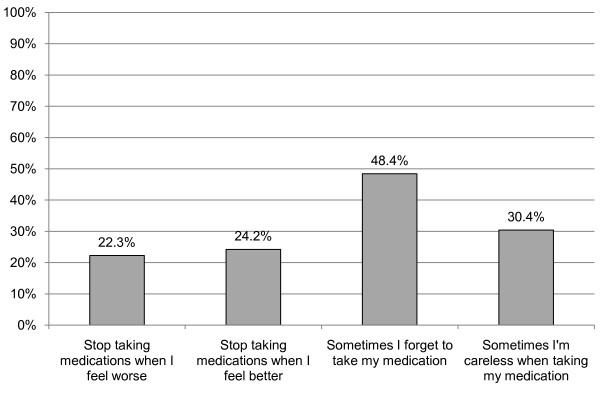
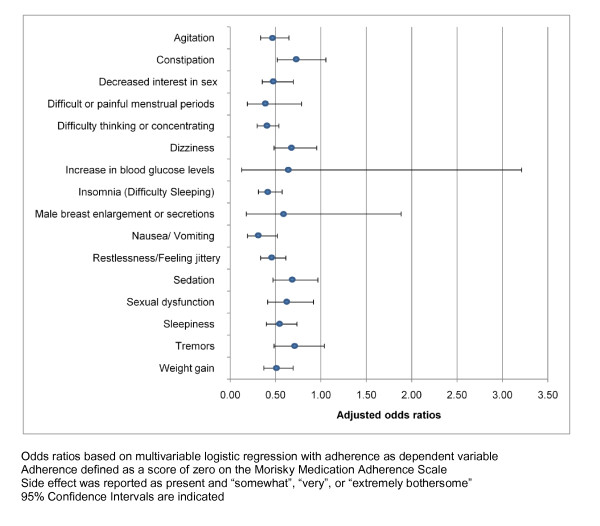
BACKGROUND: Antipsychotic medications often have a variety of side effects, however, it is not well understood how the presence of specific side effects correlate with adherence in a real-world setting. The aim of the current study was to examine the relationship between these variables among community-dwelling patients with schizophrenia. METHODS: Data were analyzed from a 2007-2008 nationwide survey of adults who self-reported a diagnosis of schizophrenia and were currently using an antipsychotic medication (N = 876). The presence of side effects was defined as those in which the patient reported they were at least "somewhat bothered". Adherence was defined as a score of zero on the Morisky Medication Adherence Scale. To assess the relationship between side effects and adherence, individual logistic regression models were fitted for each side effect controlling for patient characteristics. A single logistic regression model assessed the relationship between side effect clusters and adherence. The relationships between adherence and health resource use were also examined. RESULTS: A majority of patients reported experiencing at least one side effect due to their medication (86.19%). Only 42.5% reported complete adherence. Most side effects were associated with a significantly reduced likelihood of adherence. When grouped as side effect clusters in a single model, extra pyramidal symptoms (EPS)/agitation (odds ratio (OR) = 0.57, p = 0.0007), sedation/cognition (OR = 0.70, p = 0.033), prolactin/endocrine (OR = 0.69, p = 0.0342), and metabolic side effects (OR = 0.64, p = 0.0079) were all significantly related with lower rates of adherence. Those who reported complete adherence to their medication were significantly less likely to report a hospitalization for a mental health reason (OR = 0.51, p = 0.0006), a hospitalization for a non-mental health reason (OR = 0.43, p = 0.0002), and an emergency room (ER) visit for a mental health reason (OR = 0.60, p = 0.008). CONCLUSIONS: Among patients with schizophrenia, medication side effects are highly prevalent and significantly associated with medication nonadherence. Nonadherence is significantly associated with increased healthcare resource use. Prevention, identification, and effective management of medication-induced side effects are important to maximize adherence and reduce health resource use in schizophrenia.
Overview
The claims and statistics of this paper haven’t been checked yet.
Run the check — free, no account needed. It reads the open-access text and checks the sources it cites.
Integrity signals
Registry
Cites
Statistics
Figures
Verification
Claims the paper makes
The claims and statistics of this paper haven’t been checked yet.
Run the check — free, no account needed. It reads the open-access text and checks the sources it cites.
Claims other papers make about this one
Each is checked against this paper’s own text: does it say what the citing paper says it does?
The cited source says what the claim attributes to it.
In the citing paper
“Likewise, in five studies, weight gain was another medication-related side-effect that associated with medication non-adherence and patients’ perception toward their medication [25, 33, 36, 44, 55].”
From Psychotropic medication non-adherence and its associated factors among patients with major psychiatric disorders: A systematic review and meta-analysis (2020) · cites this paper as [33]
In the citing paper
“In seven studies, patients feeling dizziness, fatigue, tiredness, sedation, lethargy, and sleepiness were the most frequently reported side-effects that contributed to medication non-adherence [11, 33, 36, 37, 50, 52, 65].”
From Psychotropic medication non-adherence and its associated factors among patients with major psychiatric disorders: A systematic review and meta-analysis (2020) · cites this paper as [33]
In the citing paper
“In two studies, side-effects such as decreased sexual interest and having a symptom of sexual dysfunction were associated with patients’ medication adherence [33, 36].”
From Psychotropic medication non-adherence and its associated factors among patients with major psychiatric disorders: A systematic review and meta-analysis (2020) · cites this paper as [33]
Self-check
Percentages, sums and reported differences re-computed from the paper’s own numbers.
The self-check needs the paper’s full text.
Citations
Cites
Effectiveness of Antipsychotic Drugs in Patients with Chronic Schizophrenia
Lieberman, J. A., Stroup, T. S., McEvoy, J. P., Swartz, M. S., Rosenheck, R. A., Perkins, D. O., Keefe, R. S. E., Davis, S. M., Davis, C. E., Lebowitz, B. D., et al. (2005) · New England Journal of Medicine · doi:10.1056/nejmoa051688 · Cited by 5,892
Concurrent and Predictive Validity of a Self-reported Measure of Medication Adherence
Morisky, D. E., Green, L. W., & Levine, D. M. (1986) · Medical Care · doi:10.1097/00005650-198601000-00007 · Cited by 5,399
Lacro, J. P., Dunn, L. B., Dolder, C. R., Leckband, S. G., & Jeste, D. V. (2002) · The Journal of Clinical Psychiatry · doi:10.4088/jcp.v63n1007 · Cited by 1,383 · cited 2×
“Prior evidence has suggested that longer illness duration is associated with greater adherence [30]; therefore, age may be serving as a proxy for years diagnosed.”
BackgroundDeterminants of Medication Compliance in Schizophrenia: Empirical and Clinical Findings
Fenton, W. S., Blyler, C. R., & HEINSSEN, R. K. (1997) · Schizophrenia Bulletin · doi:10.1093/schbul/23.4.637 · Cited by 948
Atypical antipsychotic-induced metabolic side effects: insights from receptor-binding profiles
Nasrallah, H. A. (2007) · Molecular Psychiatry · doi:10.1038/sj.mp.4002066 · Cited by 718
Kendler, K. S. (1996) · Archives of General Psychiatry · doi:10.1001/archpsyc.1996.01830110060007 · Cited by 676
The Economic Burden of Schizophrenia in the United States in 2002
Wu, E. Q., Birnbaum, H. G., Shi, L., BALL, D. E., Kessler, R. C., Moulis, M., & Aggarwal, J. (2005) · The Journal of Clinical Psychiatry · doi:10.4088/jcp.v66n0906 · Cited by 614
Operational criteria and factors related to recovery from schizophrenia
Liberman, R. P., Kopelowicz, A. J., Ventura, J., & Gutkind, D. (2002) · International Review of Psychiatry · doi:10.1080/0954026021000016905 · Cited by 519
Obesity as a risk factor for antipsychotic noncompliance
Weiden, P. J., Mackell, J. A., & McDonnell, D. D. (2003) · Schizophrenia Research · doi:10.1016/s0920-9964(02)00498-x · Cited by 432
Self-reports of health care utilization compared to provider records
Ritter, P. L., Stewart, A. L., Kaymaz, H., Sobel, D. S., Block, D. A., & Lorig, K. R. (2001) · Journal of Clinical Epidemiology · doi:10.1016/s0895-4356(00)00261-4 · Cited by 401
Cited by
Sorted by citations
Semahegn, A., Torpey, K., Manu, A., Assefa, N., Tesfaye, G., & Ankomah, A. (2020) · Systematic Reviews · doi:10.1186/s13643-020-1274-3 · Cited by 555
“USA [43] MA was 51.9%.”
BackgroundInfluentialKane, J. M., Kishimoto, T., & Correll, C. U. (2013) · World Psychiatry · doi:10.1002/wps.20060 · Cited by 520
“Schizophrenia, USA (16) 876 Naturalistic Self-report 48.”
InfluentialVelligan, D. I., Sajatovic, M., Hatch, A., Kramata, P., & Docherty, J. (2017) · Patient Preference and Adherence · doi:10.2147/ppa.s124658 · Cited by 333
Kaplan, G., Casoy, J., & Zummo, J. (2013) · Patient Preference and Adherence · doi:10.2147/ppa.s53795 · Cited by 201
“A cross-sectional survey of patients with schizophrenia found that side effects to antipsychotic drugs were highly prevalent, and medication nonadherence was significantly associated with the occurrence of these side effects.(72) In addition, medication nonadherence was significantly associated with increased health c…”
The nocebo effect: patient expectations and medication side effects
Faasse, K., & Petrie, K. J. (2013) · Postgraduate Medical Journal · doi:10.1136/postgradmedj-2012-131730 · Cited by 201
Montejo, A. L., Montejo, L., & Baldwin, D. S. (2018) · World Psychiatry · doi:10.1002/wps.20509 · Cited by 202
Loebel, A. D., Cucchiaro, J. B., Sarma, K., Xu, L., Hsu, C., Kalali, A. H., Pikalov, A., & Potkin, S. G. (2013) · Schizophrenia Research · doi:10.1016/j.schres.2013.01.009 · Cited by 170
Siafis, S., Wu, H., Wang, D., Burschinski, A., Nomura, N., Takeuchi, H., Schneider‐Thoma, J., Davis, J. M., & Leucht, S. (2023) · Molecular Psychiatry · doi:10.1038/s41380-023-02203-y · Cited by 178
“They can be stigmatizing and unpleasant, leading to nonadherence to treatment and the subsequent negative impacts [3].”
BackgroundCorrell, C. U., Martin, A. L., Patel, C. A., Benson, C. J., Goulding, R., Sliwa, J. K., Joshi, K., Schiller, E., & Kim, E. (2022) · Schizophrenia · doi:10.1038/s41537-021-00192-x · Cited by 168
Self-citationHo, S. C., Jacob, S. A., & Tangiisuran, B. (2017) · PLOS ONE · doi:10.1371/journal.pone.0179290 · Cited by 129
Grigg, J., Worsley, R., Thew, C., Gurvich, C., Thomas, N., & Kulkarni, J. (2017) · Psychopharmacology · doi:10.1007/s00213-017-4730-6 · Cited by 132
“This is concerning, since population-based data from patients with schizophrenia have shown PRL-related side effects to be significantly associated with medication nonadherence (DiBonaventura et al., 2012).”
BackgroundMartínez, M., Postolache, T. T., García‐Bueno, B., Leza, J. C., Figuero, E., Lowry, C. A., & Malan‐Müller, S. (2022) · Frontiers in Psychiatry · doi:10.3389/fpsyt.2021.814177 · Cited by 130
“Adherence to psychiatric medications is further hindered by their side-effect profiles (5), and, due to the limited efficacy of antidepressants, nearly a third of patients do not respond to treatment (6).”
BackgroundKrogmann, A., Peters, L., von Hardenberg, L., Bödeker, K., Nöhles, V. B., & Correll, C. U. (2019) · CNS Spectrums · doi:10.1017/s109285291900124x · Cited by 120
El-Mallakh, P. L., & Findlay, L. (2015) · Neuropsychiatric Disease and Treatment · doi:10.2147/ndt.s56107 · Cited by 105
“Metabolic side effects of atypical antipsychotics, including weight gain, further contribute to lack of adherence.(17) However, some research suggests that recognition of the benefits of medications in alleviating troublesome psychotic symptoms improves willingness to tolerate the side-effect burden for the sake of me…”
InfluentialThe nocebo effect: a clinical challenge in the era of biosimilars
Pouillon, L., Socha, M., Demoré, B., Thilly, N., Abitbol, V., Danese, S., & Peyrin‐Biroulet, L. (2018) · Expert Review of Clinical Immunology · doi:10.1080/1744666x.2018.1512406 · Cited by 87
Sariah, A., Outwater, A. H., & Yahya-Malima, K. I. (2014) · BMC Psychiatry · doi:10.1186/s12888-014-0240-9 · Cited by 83
“Patients in Dar es Salaam reported sedation and exrapyramidal side effects such as rigidity, and tremors, which is consistent with prior research [14,15].”
Citrome, L. (2017) · Journal of Clinical Psychopharmacology · doi:10.1097/jcp.0000000000000665 · Cited by 92
“Among the most common adverse events (AEs) reported were restlessness (28%), insomnia (28%), and sleepiness (25%), at rates that were on par with weight gain (26%) and difficulty thinking/concentrating (32%).(6) For individual patients, preferences can vary regarding which type of adverse effect is least desired.”
BackgroundResultKelly, M., McCarthy, S., & Sahm, L. J. (2014) · European Journal of Clinical Pharmacology · doi:10.1007/s00228-014-1761-3 · Cited by 82
“The negative impact of side effects upon adherence concurs with findings from other studies [54, 55].”
Deng, M., Zhai, S., Ouyang, X., Liu, Z., & Ross, B. (2022) · BMC Psychiatry · doi:10.1186/s12888-021-03681-6 · Cited by 75
“Second, psychotropic medications like antipsychotics or antidepressants may introduce certain side effects, such as drowsiness, weight gain, diabetes, or sexual dysfunction, which might impact patients’ daily functioning and directly decrease their medication adherence [43].”
BackgroundCryo-EM: the resolution revolution and drug discovery
de Oliveira, T. M., van Beek, L., Shilliday, F., Debreczeni, J. É., & Phillips, C. (2021) · SLAS DISCOVERY · doi:10.1177/2472555220960401 · Cited by 73
Tandon, R., Lenderking, W. R., Weiss, C., Shalhoub, H., Barbosa, C. D., Chen, J., Greene, M., Meehan, S. R., Bouérat, L., Arango, C., et al. (2020) · Annals of General Psychiatry · doi:10.1186/s12991-020-00292-5 · Cited by 73
Siskind, D. J., Gallagher, E., Winckel, K., Hollingworth, S., Kisely, S. R., Firth, J., Correll, C. U., & Marteene, W. (2020) · Schizophrenia Bulletin · doi:10.1093/schbul/sbaa191 · Cited by 76
Comparative Tolerability of Dopamine D2/3 Receptor Partial Agonists for Schizophrenia
Keks, N. A., Hope, J., Schwartz, D., McLennan, H., Copolov, D., & Meadows, G. N. (2020) · CNS Drugs · doi:10.1007/s40263-020-00718-4 · Cited by 74
“Useful in acute psychosis for anxiety, agitation and insomnia, somnolence can be seriously troublesome in longer term treatment, complicating recovery and return to usual functioning and resulting in poor adherence [92].”
BackgroundNon-Coding RNA as Novel Players in the Pathophysiology of Schizophrenia
Gibbons, A. S., Udawela, M., & Dean, B. (2018) · Non-Coding RNA · doi:10.3390/ncrna4020011 · Cited by 65
“Therefore, identifying biomarkers that predict a patient’s adverse response to antipsychotics could be useful indicators of potential non-adherence [133].”
BackgroundNiarchou, E., Roberts, L., & Naughton, B. D. (2024) · Journal of Psychopharmacology · doi:10.1177/02698811231224171 · Cited by 71
“…demonstrated suboptimal levels of adherence to medication in various chronic conditions such as hypertension (Tedla and Bautista, 2016) and HIV (Zhang et al., 2016) as well as in several mental health conditions such as schizophrenia (DiBonaventura et al., 2012) and depression (Ho et al., 2017).”
BackgroundMuscarinic Receptor Activators as Novel Treatments for Schizophrenia
Paul, S. M., Yohn, S. E., Brannan, S. K., Neugebauer, N. M., & Breier, A. F. (2024) · Biological Psychiatry · doi:10.1016/j.biopsych.2024.03.014 · Cited by 62
“Further, substantial side effects associated with current treatments, including sedation, extrapyramidal motor symptoms (EPSs), akathisia, prolactin elevation, and weight gain, all have been shown to contribute to poor adherence and subsequent relapse (5).”
Achtyes, E. D., Simmons, A., Skabeev, A., Levy, N., Jiang, Y., Marcy, P., & Weiden, P. J. (2018) · BMC Psychiatry · doi:10.1186/s12888-018-1856-y · Cited by 57
Montejo, Á. L., Arango, C., Bernardo, M., Carrasco, J. L., Crespo-Facorro, B., Cruz, J. J., del Pino, J., García Escudero, M. A., García Rizo, C., González-Pinto, A., et al. (2016) · Revista de Psiquiatría y Salud Mental · doi:10.1016/j.rpsm.2015.11.003 · Cited by 55
“There was an initial meeting of a group of 18 experts in Psychiatry (15), Endocrinology (1), Internal Medicine (1) and Oncology (1) chosen by the consensus coordinator and coming from different areas of Spain, all having scientific impact and being from the clinical, research and academic environment.”
BackgroundBiagi, E., Capuzzi, E., Colmegna, F., Mascarini, A., Brambilla, G., Ornaghi, A., Santambrogio, J., & Clerici, M. (2017) · Advances in Therapy · doi:10.1007/s12325-017-0507-x · Cited by 54
“Similarly, patients completely adherent to their antipsychotic medication are at significantly reduced risk of hospitalization or emergency room visits for a mental health reason [20].”
BackgroundGibson, S., Brand, S. L., Burt, S., Boden, Z., & Benson, O. (2013) · BMC Psychiatry · doi:10.1186/1471-244x-13-153 · Cited by 53
“In their review, Clatworthy et al [9] found that concerns about side-effects were associated with nonadherence in bipolar disorder and DiBoventura et al [19] found a significant association between self-reported side effects and non-adherence in people with schizophrenia, in particular extra pyramidal symptoms and agi…”
BackgroundMedication adherence among patients with chronic conditions in Italy
Napolitano, F., Napolitano, P., Angelillo, I. F., & Collaborative Working Group (2015) · European Journal of Public Health · doi:10.1093/eurpub/ckv147 · Cited by 53
Brennan, F. X., Gardner, K. R., Lombard, J., Perlis, R. H., D, M. F. M., Harris, H. W., & Scott, R. (2015) · The Primary Care Companion For CNS Disorders · doi:10.4088/pcc.14m01717 · Cited by 55
Fabiano, N., Wong, S., Zhou, C., Correll, C. U., Højlund, M., & Solmi, M. (2024) · European Neuropsychopharmacology · doi:10.1016/j.euroneuro.2024.11.013 · Cited by 51
“…Burschinski et al., 2023; Solmi et al., 2024), which is also associated with poorer quality of life and greater nonadherence (Tandon et al., 2020; Dibonaventura et al., 2012) as well as with long-term cardiovascular and mortality risk (Vancampfort et al., 2015; Vancampfort et al., 2016; Correll…”
Kaar, S. J., Gobjila, C., Butler, E., Henderson, C., & Howes, O. D. (2019) · BMC Psychiatry · doi:10.1186/s12888-019-2304-3 · Cited by 49
Danzer, G. S., & Wilkus-Stone, A. (2015) · Bulletin of the Menninger Clinic · doi:10.1521/bumc.2015.79.3.255 · Cited by 43
“This 1% of the population was associated with $63 billion in healthcare costs (DiBonaventura et al., 2012).”
BackgroundTurncliff, R. Z., Hard, M., Du, Y., Risinger, R. C., & Ehrich, E. W. (2014) · Schizophrenia Research · doi:10.1016/j.schres.2014.09.021 · Cited by 43
“Side effects of antipsychotics including extrapyramidal symptoms, weight gain and cognitive impairment contribute to nonadherence (Ascher-Svanum et al., 2006, 2009; DiBonaventura et al., 2012).”
Management Strategies for Antipsychotic-Related Sexual Dysfunction: A Clinical Approach
Montejo, A. L., de Alarcón, R., Prieto, N., Acosta, J. M., Buch-Vicente, B., & Montejo, L. (2021) · Journal of Clinical Medicine · doi:10.3390/jcm10020308 · Cited by 43
Comparing cognitive functions in medication adherent and non-adherent patients with schizophrenia
El-Missiry, A., Elbatrawy, A. N., Missiry, M. E., Moneim, D. A., Ali, R., & Essawy, H. (2015) · Journal of Psychiatric Research · doi:10.1016/j.jpsychires.2015.09.006 · Cited by 42
Pena, J., Zameza, P. A., Pixley, J. N., Remitz, A., & Feldman, S. R. (2023) · The Journal of Allergy and Clinical Immunology In Practice · doi:10.1016/j.jaip.2023.03.022 · Cited by 41
Approaches to improve adherence to pharmacotherapy in patients with schizophrenia
Shuler, K. M. (2014) · Patient Preference and Adherence · doi:10.2147/ppa.s59371 · Cited by 41
“In patients with schizophrenia, nonadherence to prescribed medication is associated with symptom relapse, increased hospitalizations, and increased health care costs.(10,11) Given the prevalence and impact of medication non-”
Fohner, A. E., Ranatunga, D. K., Thai, K. K., Lawson, B. L., RISCH, N. J., Oni‐Orisan, A., Jelalian, A. T., Rettie, A. E., Liu, V. X., & Schaefer, C. A. (2019) · Pharmacogenetics and Genomics · doi:10.1097/fpc.0000000000000383 · Cited by 40
Spanish consensus on the risks and detection of antipsychotic drug-related hyperprolactinaemia
Montejo, A. L., Arango, C., Bernardo, M., Carrasco, J. L., Crespo‐Facorro, B., Cruz, J. J., del Pino, J., Escudero, M. A. G., García‐Rizo, C., González-Pinto, A. M., et al. (2016) · Revista de Psiquiatría y Salud Mental (English Edition) · doi:10.1016/j.rpsmen.2016.06.001 · Cited by 40
Initiation of aripiprazole once-monthly in patients with schizophrenia
Raoufinia, A., Baker, R. A., Eramo, A., Nylander, A., Landsberg, W., Kostic, D., & Larsen, F. (2015) · Current Medical Research and Opinion · doi:10.1185/03007995.2015.1006356 · Cited by 37
Why are long-acting injectable antipsychotics still underused?
Bosanac, P., & Castle, D. (2015) · BJ Psych Advances · doi:10.1192/apt.bp.114.013565 · Cited by 35
ANDERSON, J. P., Icten, Z., Alas, V., Benson, C. J., & Joshi, K. (2017) · BMC Psychiatry · doi:10.1186/s12888-017-1507-8 · Cited by 37
Hui, C. L. M., Lam, B. S. T., Lee, E. H. M., Chan, S. K. W., Chang, W. C., Suen, Y. N., & Chen, E. Y. H. (2019) · International Review of Psychiatry · doi:10.1080/09540261.2019.1613965 · Cited by 40
Ishigooka, J., Iwashita, S., & Tadori, Y. (2018) · Psychiatry and Clinical Neurosciences · doi:10.1111/pcn.12654 · Cited by 35
“These side-effects may worsen the patient’s ability to function, diminish subjective well-being and quality of life, and contribute to poor treatment adherence.(6,7) Brexpiprazole is approved in the USA, Canada, Australia, and Japan for the treatment of schizophrenia and in the USA as adjunctive treatment of major dep…”
BackgroundHalstead, S., Yap, C. X., Warren, N., Agarwal, S. M., Brand, B. A., Chan, S. K. W., Cipriani, A., Correll, C. U., Crossley, N. A., D’Ambrosio, E., et al. (2025) · The Lancet Psychiatry · doi:10.1016/s2215-0366(25)00162-2 · Cited by 39
Correll, C. U., Vanover, K. E., Davis, R. E., Chen, R., Satlin, A., & Mates, S. L. (2021) · Schizophrenia Research · doi:10.1016/j.schres.2020.12.006 · Cited by 33
“, 2017) are also associated with nonadherence (DiBonaventura et al., 2012; Kane et al., 2013) and reduced quality of life (Briggs et al.”
Wubeshet, Y. S., Muhammed, O. S., & Desse, T. A. (2019) · BMC Psychiatry · doi:10.1186/s12888-018-1999-x · Cited by 35
Shan, Y., Cheung, L., Zhou, Y., Huang, Y., & Huang, R. S. (2023) · Frontiers in Pharmacology · doi:10.3389/fphar.2023.1096366 · Cited by 32
Uslu, E., & Buldukoğlu, K. (2019) · Perspectives In Psychiatric Care · doi:10.1111/ppc.12376 · Cited by 32
Mohammadi, A., Sadighi, G., Astaneh, A. N., Ebrahimi, M. T., & Dejam, T. (2024) · Neuropsychopharmacology Reports · doi:10.1002/npr2.12431 · Cited by 33
“5,6 Taking antipsychotic drugs, which have anticholinergic and anti-histaminergic effects, increases the prevalence of constipation and weight gain-related disorders in schizophrenic patients.”
BackgroundLong-acting injectable second-generation antipsychotics in first-episode psychosis
Salgueiro, M., & Segarra, R. (2018) · International Clinical Psychopharmacology · doi:10.1097/yic.0000000000000249 · Cited by 31
“Therefore, LAI risperidone improved the adherence to treatment and decreased the relapse rate in FEP patients more than oral antipsychotics, a key factor in the treatment of psychotic disorders (Dibonaventura et al., 2012; Hasan et al., 2013).”
BackgroundUsing Long-acting Injectable Antipsychotics to Enhance the Potential for Recovery in Schizophrenia
Correll, C. U., & Lauriello, J. (2020) · The Journal of Clinical Psychiatry · doi:10.4088/jcp.ms19053ah5c · Cited by 33
Association between antipsychotic medication and clinically relevant weight change: meta-analysis
Campforts, B. C. M., Drukker, M., Crins, J., van Amelsvoort, T., & Bak, M. (2023) · BJPsych Open · doi:10.1192/bjo.2022.619 · Cited by 32
Stampfer, H. G., Gabb, G. M., & Dimmitt, S. B. (2019) · British Journal of Clinical Pharmacology · doi:10.1111/bcp.14032 · Cited by 28
“Adverse effects reduce adherence.(35) Patients should probably not be left on psychotropics, TABLE 1 Approved, maximum and ED50 doses of common central nervous system and cardiovascular system drugs”
BackgroundLeijala, J., Kampman, O., Suvisaari, J., & Eskelinen, S. (2021) · BMC Psychiatry · doi:10.1186/s12888-021-03037-0 · Cited by 35
“Factors such as poor insight [13–18], substance abuse [14, 17, 19, 20], negative attitudes toward medication [9, 13, 17, 21, 22] and side-effects [19, 23] have been associated with non-adherence.”
BackgroundAyre, M. J., Lewis, P. J., & Keers, R. N. (2023) · BMC Psychiatry · doi:10.1186/s12888-023-04850-5 · Cited by 31
Morrison, P., Stomski, N. J., & Meehan, T. (2016) · Journal of Mental Health · doi:10.1080/09638237.2016.1222060 · Cited by 28
“reported by almost four in five mental health consumers taking antipsychotic medication (Dibonaventura et al., 2012).”
BackgroundCommercial Devices-Based System Designed to Improve the Treatment Adherence of Hypertensive Patients
da Silva, V. J., Souza, V. D. S., da Cruz, R. G., de Lucena, J. M. V. M., Jazdi, N., & de Lucena, V. F. (2019) · Sensors · doi:10.3390/s19204539 · Cited by 28
“The main issue is that many factors contribute to abandoning medical treatment, such as unpleasant side effects [24], a lack of involvement from relatives and caregivers [25], and forgetfulness [12].”
BackgroundPredictors of emergency department visits for suicidal ideation and suicide attempt
Gentil, L., Huỳnh, C., Grenier, G., & Fleury, M. (2020) · Psychiatry Research · doi:10.1016/j.psychres.2020.112805 · Cited by 29
Efficacy and Safety of Long Acting Injectable Atypical Antipsychotics: A Review
Berardis, D. D., Marini, S., Carano, A., Lang, A., Cavuto, M., Piersanti, M., Fornaro, M., Perna, G., Valchera, A., Mazza, M., et al. (2013) · Current Clinical Pharmacology · doi:10.2174/15748847113089990056 · Cited by 27
The impact of negative treatment experiences on persistent refusal of antipsychotics
Lincoln, T. M., Jung, E., Wiesjahn, M., Wendt, H., Bock, T. A., & Schlier, B. (2016) · Comprehensive Psychiatry · doi:10.1016/j.comppsych.2016.07.009 · Cited by 27
“Negative previous experiences with medication, such as non-response [27] or severe side effects [28] are also likely to influence the decision of whether to accept medication as does a generalized critical attitude towards medication [4,29,30].”
BackgroundTreatment outcomes in schizophrenia: qualitative study of the views of family carers
Lloyd, J., Lloyd, H. M., Fitzpatrick, R. M., & Peters, M. (2017) · BMC Psychiatry · doi:10.1186/s12888-017-1418-8 · Cited by 26
Jørgensen, K. T., Bøg, M., Kabra, M., Simonsen, J., Adair, M., & Jönsson, L. (2021) · BMC Psychiatry · doi:10.1186/s12888-021-03634-z · Cited by 28
“This study provides further evidence of the progressive nature of schizophrenia, and emphasises the importance of providing early, effective, and tolerable treatment options that better meet a patient’s individual needs, to enable treatment adherence, recovery and prevent future relapses, which is consistent with prev…”
ResultHendrychova, T., Vytrisalova, M., Smahelova, Vlček, J., & Kubena (2013) · Patient Preference and Adherence · doi:10.2147/ppa.s47750 · Cited by 25
“12,18 In contrast to other chronic diseases, 31,32 adherence in adults with type 1 diabetes did not correlate with adverse events during treatment.”
Liu, Y., Wang, R., Huang, R., Cao, Y., Wang, J., & Feng, D. (2021) · BMJ Open · doi:10.1136/bmjopen-2020-043557 · Cited by 25
Givens, C. (2016) · Nursing Clinics of North America · doi:10.1016/j.cnur.2016.01.013 · Cited by 25
Reduced sexual dysfunction with aripiprazole once-monthly versus paliperidone palmitate
Potkin, S. G., Loze, J.-Y., Forray, C., Baker, R. A., Sapin, C., Peters-Strickland, T. S., Beillat, M., Nylander, A., Hertel, P., Andersen, H. S., et al. (2017) · International Clinical Psychopharmacology · doi:10.1097/yic.0000000000000168 · Cited by 24
“Furthermore, patients with schizophrenia who report side effects are less likely to adhere to medication (Dibonaventura et al., 2012).”
BackgroundBahta, M., Ogbaghebriel, A., Russom, M., Tesfamariam, E. H., & Berhe, T. (2021) · Annals of General Psychiatry · doi:10.1186/s12991-021-00348-0 · Cited by 24
“Association of specific adverse effect categories and non-adherence found in the present study is in line with some studies, which reported extrapyramidal [9, 15, 21, 22], hormonal [8, 9, 15], psychic [8, 9, 15, 18], and miscellaneous reactions such as weight gain [9] as determinants of non-adherence.”
ResultZhou, Y., Rosenheck, R., Mohamed, S., Ning, Y., & He, H. (2017) · Psychiatry Research · doi:10.1016/j.psychres.2017.01.036 · Cited by 23
“Thirdly, medication side effects were not assessed in the present study, which previous research suggests can be an important reason for non-adherence to prescribed mediation regimens (Dibonaventura et al., 2012).”
BackgroundSchwarz, C., Schulte-Hubbert, B., Bend, J., Abele‐Horn, M., Baumann, I. G., Bremer, W., Brunsmann, F., Dieninghoff, D., Eickmeier, O., Ellemunter, H., et al. (2018) · Pneumologie · doi:10.1055/s-0044-100191 · Cited by 24
Palapar, L., Kerse, N. M., Rolleston, A. K., den Elzen, W. P. J., Gussekloo, J., Blom, J. W., Robinson, L. A., Martin-Ruiz, C. M., Duncan, R. C., Arai, Y., et al. (2020) · Age and Ageing · doi:10.1093/ageing/afaa178 · Cited by 24
4-Methoxycinnamic acid attenuates schizophrenia-like behaviors induced by MK-801 in mice
Jeong, Y., Bae, H. J., Park, K., Bae, H. J., Yang, X., Cho, Y.-J., Jung, S. Y., Jang, D. S., & Ryu, J. H. (2021) · Journal of Ethnopharmacology · doi:10.1016/j.jep.2021.114864 · Cited by 23
Explaining Attitudes and Adherence to Antipsychotic Medication: The Development of a Process Model
Wiesjahn, M., Jung, E., Lamster, F., Rief, W., & Lincoln, T. M. (2014) · Schizophrenia Research and Treatment · doi:10.1155/2014/341545 · Cited by 23
“In support of this explanation, recent studies in patientswith psychotic disorders [20, 21] and in other populations [22] applied standardized assessments of side effects and found them to be consistently related to lower medication adherence.”
ResultGirma, S., Abdisa, E., & Fikadu, T. (2017) · Health Science Journal · doi:10.21767/1791-809x.1000520 · Cited by 22
“Similarly another study indicated patient having extra pyramidal and psychic side effects and sedation were found to be statistically significantly associated with non-adherence [23].”
ResultPu, Z., Sun, Y., Jiang, H., Hou, Q., Yan, H., Wen, H., & Li, G. (2021) · The American Journal of Chinese Medicine · doi:10.1142/s0192415x21500920 · Cited by 23
A psychological flexibility model of medication adherence in psychotic-spectrum disorders
Moitra, E., & Gaudiano, B. A. (2016) · Journal of Contextual Behavioral Science · doi:10.1016/j.jcbs.2016.10.003 · Cited by 24
Gault, I., Gallagher, & Chambers (2013) · Patient Preference and Adherence · doi:10.2147/ppa.s44894 · Cited by 21
“Although many mental health service users are prone to nonadherence, most concern around nonadherence is directed at severe mental illnesses such as schizophrenia.(4) A review of the literature concludes that the situation has not improved over the past 30 years.”
BackgroundMedication Management Frameworks in the Context of Self-Management: A Scoping Review
Cadel, L., Cimino, S. R., von den Baumen, T. R., James, K. A., McCarthy, L. M., & Guilcher, S. J. T. (2021) · Patient Preference and Adherence · doi:10.2147/ppa.s308223 · Cited by 20
Matsuda, M., & Kohno, A. (2016) · Archives of Psychiatric Nursing · doi:10.1016/j.apnu.2016.03.008 · Cited by 30
Ibrahim, W, A., Pindar, K, S., Yerima, M, M., Rabbebe, B, I., Shehu, S, et al. (2015) · Journal of Neuroscience and Behavioral Health · doi:10.5897/jnbh2015.0128 · Cited by 20
“These medication-related factors include dosing regimen, side effect profiles, fear of addiction potentials, and concerns about drug-drug interactions (Weiden and Miller, 2001; DiBonaventura et al., 2012; Higashi et al., 2013; Caldeira et al., 2014; Eticha et al., 2015).”
BackgroundResultBegum, F., Mutsatsa, S. H., Gul, N., Thomas, B., & Flood, C. (2020) · Journal of Psychiatric and Mental Health Nursing · doi:10.1111/jpm.12600 · Cited by 21
Schizophrenia through the carers' eyes: results of a European cross‐sectional survey
Svettini, A., Johnson, B., Magro, C., SAUNDERS, J. R., Jones, K., Silk, S., Hargarter, L., & Schreiner, A. (2015) · Journal of Psychiatric and Mental Health Nursing · doi:10.1111/jpm.12209 · Cited by 19
Kadakia, A., Brady, B. L., Dembek, C., Williams, G. R., & KENT, J. M. (2021) · Journal of Medical Economics · doi:10.1080/13696998.2021.2019501 · Cited by 19
Verkooyen, R., Broers, N. J., & Dandachi-FitzGerald, B. (2024) · Frontiers in Psychology · doi:10.3389/fpsyg.2024.1378456 · Cited by 18
Mallet, J., Gorwood, P. A. P. M., Strat, Y. L., & Dubertret, C. (2019) · The International Journal of Neuropsychopharmacology · doi:10.1093/ijnp/pyz043 · Cited by 18
A clinical communication tool for the assessment of psychotropic medication side effects
Ashoorian, D. M., Davidson, R. M., Rock, D. J., Dragović, M., & Clifford, R. M. (2015) · Psychiatry Research · doi:10.1016/j.psychres.2015.10.022 · Cited by 18
“%) will discontinue pharmacological treatment potentially leading to illness relapse and re-hospitalization (DiBonaventura et al., 2012; Morrison et al., 2000; Lambert et al., 2004).”
Kauppi, K., Hätönen, H. M., Adams, C. E., & Valimaki, M. A. (2014) · Journal of Advanced Nursing · doi:10.1111/jan.12567 · Cited by 17
Sun, Y., Wang, M., Zhou, Y., Wang, L., Zhang, H., Lv, Y., & Li, G. (2018) · Psychology Health & Medicine · doi:10.1080/13548506.2018.1533248 · Cited by 19
“…reported to be associated with medication adherence includes symptoms(Katherine, Clifford, Mark, Ridha, & Ashork, 2012),attitudes and low insight (Misdrahi, Petit, Blanc, Bayle, & Llorca, 2012), family support (Glick, Stekoll, & Hays, 2011) and medication side effects (Dibonaventura et al., 2012).”
BackgroundLiberato, A. C. S., São‐João, T. M., Jannuzzi, F. F., Landaas, E. J., Wongchareon, K., & Rodrigues, R. C. M. (2020) · Value in Health Regional Issues · doi:10.1016/j.vhri.2020.07.578 · Cited by 17
Prospects of Probiotic Adjuvant Drugs in Clinical Treatment
Ren, Z., Hong, Y., Huo, Y., Peng, L., Lv, H., Chen, J., Wu, Z., & Wan, C. (2022) · Nutrients · doi:10.3390/nu14224723 · Cited by 17
“Currently, drug therapy is the most common means of remission in humans [3,4], but some are not particularly effective, or they cause additional damage to the body [5,6].”
BackgroundGroup art therapy as adjunct therapy for the treatment of schizophrenic patients in day hospital
Mandić-Gajić, G. (2013) · Vojnosanitetski pregled · doi:10.2298/vsp1311065m · Cited by 17
Patel, R. S., Sreeram, V., Vadukapuram, R., & Baweja, R. K. (2020) · Schizophrenia Research · doi:10.1016/j.schres.2020.11.002 · Cited by 16
Sun, Y., Hasbi, A., & George, S. R. (2025) · The Annual Review of Pharmacology and Toxicology · doi:10.1146/annurev-pharmtox-061724-080727 · Cited by 18
Dopamine partial agonists: a discrete class of antipsychotics
Taylor, D. M., Chithiramohan, R. N., Grewal, J., Gupta, A., Hansen, L. K., Reynolds, G. P., & Pappa, S. (2022) · International Journal of Psychiatry in Clinical Practice · doi:10.1080/13651501.2022.2151473 · Cited by 15
“Sedation is a side effect that is commonly strongly disliked by patients and their carers (Bourin & Briley, 2004; Dibonaventura et al., 2012) but it is often seen as beneficial particularly in the acute settings by clinicians though usually unnecessary and disadvantageous in the medium to long-term.”
BackgroundThe impact of antipsychotic adherence on acute care utilization
Perkins, A. J., Khandker, R. K., Overley, A. M., Solid, C. A., Chekani, F., Roberts, A., Dexter, P. R., Boustani, M. A., & Hulvershorn, L. A. (2023) · BMC Psychiatry · doi:10.1186/s12888-023-04558-6 · Cited by 15
Bae, H. J., Kim, J. Y., Choi, S., Kim, S.-Y., Kim, H. J., Cho, Y. E., Choi, Y.-Y., An, J.-Y., Cho, S.-Y., Ryu, J. H., et al. (2023) · Journal of Ethnopharmacology · doi:10.1016/j.jep.2023.116627 · Cited by 15
Collins, J. C., Wheeler, A., McMillan, S. S., Hu, J., El‐Den, S., Roennfeldt, H., & O’Reilly, C. L. (2024) · Health Expectations · doi:10.1111/hex.70122 · Cited by 15
“Side effects, such as weight gain, perceived impairment of cognition and sedation, may be so bothersome that people may choose to stop taking their medications, putting them at an increased risk of relapse and hospitalisation [10 – 13].”
Metadata
- Authors
- DiBonaventura, M., Gabriel, S., Dupclay, L., Gupta, S., & Kim, E.
- Affiliations
- Kantar Health (United States) (US)
- Novartis (United States) (US)
- Corresponding author
- DiBonaventura, Marco
- Venue
- BMC Psychiatry
- Published
- 2012-03-20
- Volume
- 12
- Issue
- 1
- Pages
- 20-20
- ISSN
- 1471-244X (ISSN-L)
- PMC
- PMC3342101
- OpenAlex
- W2157910519
- Cited by
- 333
- References
- 31
- Citations by year
- 2026: 16 · 2025: 30 · 2024: 32 · 2023: 27 · 2022: 22 · 2021: 34 · 2020: 22 · 2019: 27 · 2018: 22 · 2017: 20 · 2016: 24 · 2015: 22 · 2014: 13 · 2013: 19 · 2012: 2
- FWCI
- 15.48
- Type
- journal article
- Language
- en
- Open access
- gold
- doi.org
- Licence
- Locations
- BMC Psychiatry (publishedVersion, cc-by)
- PubMed Central (publishedVersion, cc-by)
- PubMed (publishedVersion)
- DOAJ (DOAJ: Directory of Open Access Journals) (submittedVersion, cc-by-sa)
- Topics
- Health Sciences › Medicine › Family Practice › Medication Adherence and Compliance
- Health Sciences › Medicine › Psychiatry and Mental health › Schizophrenia research and treatment
- Health Sciences › Medicine › Psychiatry and Mental health › Bipolar Disorder and Treatment
- Keywords
- schizophrenia, antipsychotic adverse effects, medication adherence, medication non-adherence, sedation, prolactin, metabolic side effects, health care utilization, hospitalization, emergency department visits, patient perspectives, community-dwelling patients, Morisky Medication Adherence Scale, health care costs, quality of life
- MeSH terms
- Adult, Attitude to Health, Cross-Sectional Studies, Female, Health Surveys, Humans, Male, Middle Aged, Schizophrenia, Schizophrenic Psychology, Antipsychotic Agents, Medication Adherence
About these checks
Registry, retraction, Cites and statistics results are computed, not judged, with one exception: a printed reference that no index lists is read once by a model before it counts as a citation error. Claims are extracted by a model and kept only when their quote appears verbatim in the text; each cited source is then checked, with a model’s help, for whether it says what the claim relies on. Those verdicts can be wrong — read the claim’s quote and the cited source before relying on one.
Statistics and arithmetic are recomputed, not judged.
Confidence bands are shown only for fields calibrated on our annotated test set. None is calibrated yet, so no band is shown.
What counts as a claim ›How we measure confidence ›How we check this ›
Are you an author, or do you see a problem with this page? Request a review
