

A randomized controlled trial of CBT therapy for adults with ADHD with and without medication
Open accessThe DOI matches its Crossref record; 26 of the 27 references it cites were found in a registry or an index.
Abstract
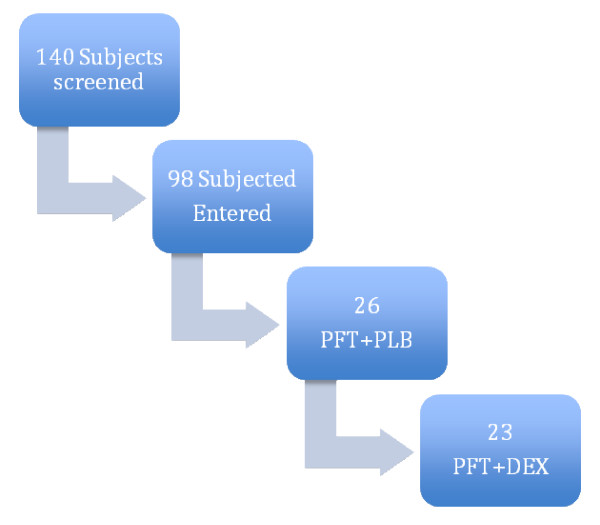
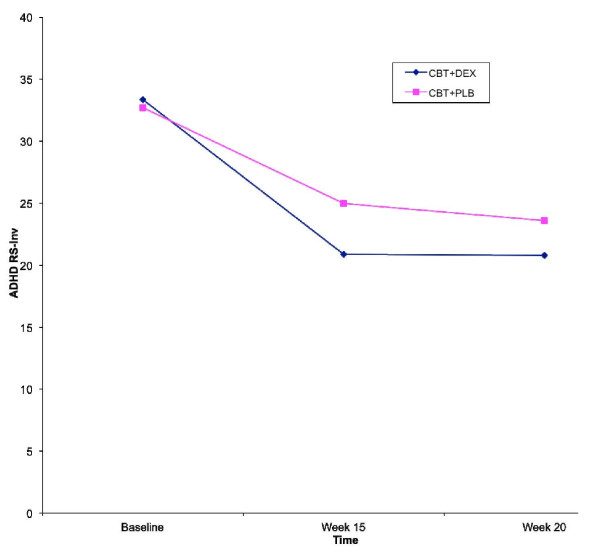
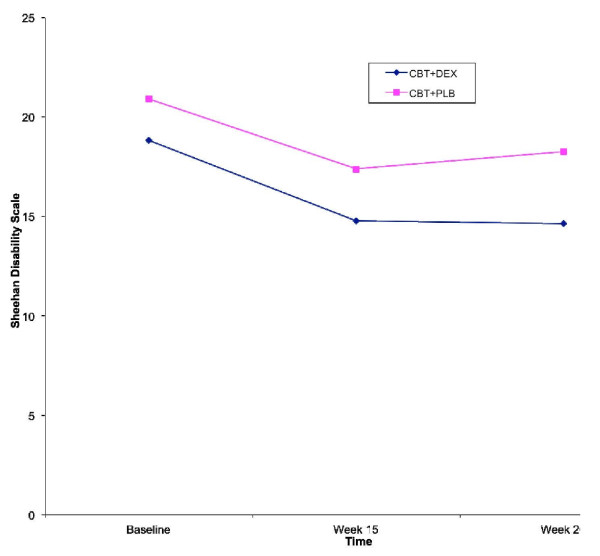
BACKGROUND: Previous studies of psychological treatment in adults with ADHD have not controlled for medication status and include either medicated participants or mixed samples of medicated and unmedicated participants. The objective of this study is to examine whether use of medication improves outcome of therapy. METHOD: This was a secondary analysis comparing 23 participants randomized to CBT and Dextroamphetamine vs. 25 participants randomized to CBT and placebo. Both patients and investigators were blind to treatment assignment. Two co-primary outcomes were used: ADHD symptoms on the ADHD-RS-Inv completed by the investigator and improvement in functioning as reported by the patient on the Sheehan Disability Scale. RESULTS: Both groups showed robust improvement in both symptoms and functioning, but the use of medication did not significantly improve outcome over and above use of CBT and placebo. CONCLUSION: This study replicates previous work demonstrating that CBT is an effective treatment for ADHD in adults. Within the limits of this pilot, secondary analysis we were not able to demonstrate that medication significantly augments the outcome of CBT therapy for adults with ADHD. The study was funded by GlaxoSmithKline, Clinical Trials Registry #GSK707.
Overview
The claims and statistics of this paper haven’t been checked yet.
Free: it reads the open-access text and checks the first 5 claims that cite a source we can check. Create a free account to check every claim.
Integrity signals
Registry
Cites
Statistics
Figures
Verification
Claims the paper makes
The claims and statistics of this paper haven’t been checked yet.
Free: it reads the open-access text and checks the first 5 claims that cite a source we can check. Create a free account to check every claim.
Claims other papers make about this one
Each is checked against this paper’s own text: does it say what the citing paper says it does?
The source backs part of the claim, not all of it — or backs it for a different population, condition or comparison.
In the citing paper
“All found that CBT reduced ADHD symptoms (self and independently rated) compared with the control treatment(s).”
From Cognitive–behavioural therapy for adult attention-deficit hyperactivity disorder: a proof of concept randomised controlled trial (2018) · cites this paper as [6]
Experimental — accuracy not yet measuredThe cited source says what the claim attributes to it.
In the citing paper
“There have been four randomized controlled trials of individualised CBT that are structured and manualised (3-6).”
From Cognitive–behavioural therapy for adult attention-deficit hyperactivity disorder: a proof of concept randomised controlled trial (2018) · cites this paper as [6]
In the citing paper
“CBT, alone and in combination with pharmacotherapy, has been successfully used to ameliorate core symptoms of adult ADHD, such as attentional deficits (Safren et al 2005, Weiss et al 2012).”
From Prefrontal cortex executive processes affected by stress in health and disease (2018) · cites this paper as Weiss et al 2012
In the citing paper
“CBT, alone and in combination with pharmacotherapy, has been successfully used to reduce impulsivity and disinhibition in ADD (Safren et al 2005, Weiss et al 2012).”
From Prefrontal cortex executive processes affected by stress in health and disease (2018) · cites this paper as Weiss et al 2012
Self-check
Percentages, sums and reported differences re-computed from the paper’s own numbers.
The self-check needs the paper’s full text.
Citations
Cites
Kessler, R. C., Adler, L., Barkley, R., Biederman, J., Conners, C. K., Demler, O., Faraone, S. V., Greenhill, L. L., Howes, M. J., Secnik, K., et al. (2006) · American Journal of Psychiatry · doi:10.1176/ajp.2006.163.4.716 · Cited by 3,886 · cited 1×
“Adult ADHD is a common and impairing condition [1].”
Background(1999) · Archives of General Psychiatry · doi:10.1001/archpsyc.56.12.1073 · Cited by 3,372
SWANSON, J. M., KRAEMER, H. C., HINSHAW, S. P., ARNOLD, L. E., CONNERS, C. K., ABIKOFF, H. B., CLEVENGER, W., DAVIES, M., ELLIOTT, G. R., GREENHILL, L. L., et al. (2001) · Journal of the American Academy of Child & Adolescent Psychiatry · doi:10.1097/00004583-200102000-00011 · Cited by 1,157 · cited 1×
“The therapy employed the key principles of CBT in challenging cognitive distortions such as personalization, overgeneralization, selective attention, disqualifying benefits, jumping to conclusions, should statements and catastrophizing-all of which are common in ADHD adults [28].”
MethodSelf-citationSheehan, D. V. (1984) · Medical Entomology and Zoology · Cited by 883
Cognitive-behavioral therapy for ADHD in medication-treated adults with continued symptoms
Safren, S. A., Otto, M. W., Sprich, S., Winett, C. L., Wilens, T. E., & Biederman, J. (2005) · Behaviour Research and Therapy · doi:10.1016/j.brat.2004.07.001 · Cited by 519 · cited 1×
“This is true for individual CBT [7-10] group psychoeducation * Correspondence: Margaret.”
BackgroundFaraone, S. V., Spencer, T., Aleardi, M., Pagano, C., & Biederman, J. (2004) · Journal of Clinical Psychopharmacology · doi:10.1097/01.jcp.0000108984.11879.95 · Cited by 404 · cited 1×
“Clinical trials of new medications for ADHD have demonstrated that up to one-quarter of patients will either not respond or not tolerate the medication, or if they do respond will improve but not achieve full remission [2,3].”
BackgroundSafren, S. A., Sprich, S., Mimiaga, M. J., Surman, C., Knouse, L., Groves, M., & Otto, M. W. (2010) · JAMA · doi:10.1001/jama.2010.1192 · Cited by 394 · cited 1×
“There are now four manuals for psychological treatment of adults with ADHD, which enable replication and use of these interventions by clinicians [16-19].”
BackgroundEfficacy of meta-cognitive therapy for adult ADHD
Solanto, M. V., Marks, D. J., Wasserstein, J., Mitchell, K., Abikoff, H., Alvir, J. M. J., & Kofman, M. D. (2010) · American Journal of Psychiatry · doi:10.1176/appi.ajp.2009.09081123 · Cited by 370 · cited 2×
“Emilsson found that CBT and medication was superior to treatment as usual and medication [20].”
BackgroundHesslinger, B., Tebartz van Elst, L., Nyberg, E., Dykierek, P., Richter, H., Berner, M., & Ebert, D. (2002) · European Archives of Psychiatry and Clinical Neuroscience · doi:10.1007/s00406-002-0379-0 · Cited by 366 · cited 1×
“and organization training [11], group cognitive remediation as used with brain injury patients [12] and dialectical behavior therapy (DBT) [13].”
BackgroundMultimodal Treatment of ADHD in the MTA: An Alternative Outcome Analysis
CONNERS, C. K., EPSTEIN, J. N., MARCH, J. S., ANGOLD, A., WELLS, K. C., KLARIC, J., SWANSON, J. M., ARNOLD, L. E., ABIKOFF, H. B., ELLIOTT, G. R., et al. (2001) · Journal of the American Academy of Child & Adolescent Psychiatry · doi:10.1097/00004583-200102000-00010 · Cited by 285 · cited 1×
“We defined improvement conservatively as a 25% drop in the ADHD-RS-Inv score and remission as a mean score less than or equal to 1 [29].”
MethodSelf-citation
Research works printed but not linked: 5
- Young S Bramham J ADHD in adults, a psychological guide to practice 2007 Sussex: Wiley and Sons
- Young SJ Ross RR R&R2 for ADHD Youths and Adults with ADHD: A Prosocial Competence Training Program 2007 http://www.cognitivecentre.ca
- Conners CK Epstein J Johnson DE Conners Adult ADHD Diagnostic Interview DSM-IV 2004 Toronto Multi Health Systems
- Conners CK Erhardt D Sparrow EP Conners' adult ADHD rating scales, technical manual 1999 New York: Multi-Health Systems
- Solanto MV Cognitive behavior therapy for adult ADHD, targeting executive dysfunction 2011 New York: Guilford
Cited by
Items 101–119 of 119
Long-term outcome in ADHD and its predictors
Cherkasova, M. V., Mongia, M., Errington, T., Pondé, M. P., & Hechtman, L. T. (2013) · doi:10.2217/ebo.12.273 · Cited by 1
Self-citationShepard, E. (2022) · Digital Commons - URI (University of Rhode Island) · doi:10.23860/thesis-shepard-emily-2022 · Cited by 1
Living SMART : an Internet course for adults with ADHD
Moëll, B. (2013) · DiVA (Digitala Vetenskapliga Arkivet)
Tratamiento psicológico cognitivo-conductual en adolescentes y adultos con TDAH
Vidal, R. (2015) · TDX (Tesis Doctorals en Xarxa) · Cited by 2
Mindfulnessbehandling i grupp för personer med ADHD
Åkerlind, K. (2016) · Lund University Publications Student Papers (Lund University)
Psychosocial treatment of ADHD: cognitive–behavioral therapy from a lifespan perspective
Mongia, M., Errington, T., Palmer, K., Dalena, K., & Hechtman, L. T. (2013) · doi:10.2217/ebo.13.297
Self-citationCognitive Behavioral Therapy: The Case of Wally
Cless, J. D. (2020) · Springer eBooks · doi:10.1007/978-3-030-57310-2_7
Relationships, Sexuality, and Sexual Behavior in Adolescents with ADHD
Walters, F. P., & Borus, J. S. (2020) · Springer eBooks · doi:10.1007/978-3-030-62393-7_17
Chapitre 7. Thérapies comportementales et cognitives : quel niveau de preuve ?
Gaillac, V., & Vera, L. (2016) · Dunod eBooks · doi:10.3917/dunod.verag.2016.01.0108
Nasri, B., Cassel, M., Enhärje, J., Larsson, M., Hirvikoski, T., Ginsberg, Y., Lindefors, N., & Kaldo, V. (2022) · Internet Interventions · doi:10.1016/j.invent.2022.100588
RetractedGeneviève, D., Ruault, V., Burger, P., Gradels‐Hauguel, J., Pallarès-Ruiz, N., Jamra, R. A., Afenjar, A., Alembik, Y., Alessandri, J., Arpin, S., et al. (2023) · Research Square · doi:10.21203/rs.3.rs-2760508/v1
Schnabel, R., Wong, A. S. K., & Woodruff, E. (2024) · Elsevier eBooks · doi:10.1016/b978-0-443-22270-2.00013-7
Attention-Deficit/Hyperactivity Disorder
Solanto, M. V. (2025) · Cambridge University Press eBooks · doi:10.1017/9781009086264.019
Developing Lifelong Learning Skills for Adults With ADHD Through Mentoring
Tasiou, K., & Nikolaou, E. N. (2025) · IGI Global eBooks · doi:10.4018/979-8-3373-3516-2.ch008
Chamorro, A. C. C., & Ortiz, G. G. R. (2025) · Religación · doi:10.46652/rgn.v11i49.1582
Existential hypnotherapy for ADHD: A novel approach to authenticity-based treatment
Podhorodecki, J. A. (2026) · American Journal of Clinical Hypnosis · doi:10.1080/00029157.2026.2630334
“…throughout the life span is associated with self-perception of inadequacy and incompetence, and even if ADHD symptoms improve in adults, poor self esteem may remain embedded in the patient’s self-concept” (Weiss et al., 2012), alongside standard issues of side effects and partial symptom relief.”
de Lima, J. H. P., Vieira, J. A. P., & de Lima, L. P. (2026) · Saúde Coletiva (Barueri) · doi:10.36489/saudecoletiva.2026v17i107p20070-20083
“Em linhas gerais, a TCC associada à medicação foi considerada factível e bem aceita pelos participantes, sem aumento consistente nas taxas de abando-no quando comparada à farmacoterapia isolada 7; 8; 10.”
Wang, X., He, H., Lan, J., Guo, Y., & Zhang, Y. (2026) · Psychotherapy Research · doi:10.1080/10503307.2026.2658745
Metadata
- Authors
- Weiss, M., Murray, C., Wasdell, M., Greenfield, B., Giles, L., & Hechtman, L.
- Affiliations
- University of British Columbia (CA)
- BC Mental Health & Substance Use Services (CA)
- Montreal Children's Hospital (CA)
- Corresponding author
- Weiss, Margaret
- Venue
- BMC Psychiatry
- Published
- 2012-04-05
- Volume
- 12
- Issue
- 1
- Pages
- 30-30
- ISSN
- 1471-244X (ISSN-L)
- PMC
- PMC3414742
- OpenAlex
- W1998279172
- Cited by
- 119
- References
- 27
- Citations by year
- 2026: 4 · 2025: 7 · 2024: 6 · 2023: 10 · 2022: 4 · 2021: 5 · 2020: 8 · 2019: 5 · 2018: 10 · 2017: 11 · 2016: 15 · 2015: 10 · 2014: 14 · 2013: 8 · 2012: 2
- FWCI
- 7.77
- Type
- journal article
- Language
- en
- Open access
- gold
- doi.org
- Licence
- Locations
- BMC Psychiatry (publishedVersion, cc-by)
- PubMed Central (publishedVersion, cc-by)
- PubMed (publishedVersion)
- DOAJ (DOAJ: Directory of Open Access Journals) (submittedVersion, cc-by-sa)
- Funders
- Eli Lilly and Company
- Purdue University
- Topics
- Health Sciences › Medicine › Psychiatry and Mental health › Attention Deficit Hyperactivity Disorder
- Health Sciences › Medicine › Epidemiology › Substance Abuse Treatment and Outcomes
- Social Sciences › Psychology › Clinical Psychology › Obsessive-Compulsive Spectrum Disorders
- Keywords
- adult ADHD, cognitive behavioral therapy, d-amphetamine, ADHD medication, treatment outcomes, ADHD symptoms, functioning, Sheehan Disability Scale
- MeSH terms
- Adolescent, Adult, Aged, Central Nervous System Stimulants, Attention Deficit Disorder with Hyperactivity, Combined Modality Therapy, Dextroamphetamine, Double-Blind Method, Female, Humans, Male, Middle Aged, Cognitive Behavioral Therapy, Treatment Outcome
About these checks
Registry, retraction, Cites and statistics results are computed, not judged, with one exception: a printed reference that no index lists is read once by a model before it counts as a citation error. Claims are extracted by a model and kept only when their quote appears verbatim in the text; each cited source is then checked, with a model’s help, for whether it says what the claim relies on. Those verdicts can be wrong — read the claim’s quote and the cited source before relying on one.
Statistics and arithmetic are recomputed, not judged.
Confidence bands are shown only for fields calibrated on our annotated test set. None is calibrated yet, so no band is shown.
What counts as a claim ›How we measure confidence ›How we check this ›
Are you an author, or do you see a problem with this page? Request a review
Data sources
Bibliographic data: Semantic Scholar, OpenAlex, Crossref.
Contains information from the Semantic Scholar Academic Graph Datasets, made available under the ODC Attribution License (ODC-BY 1.0).
Semantic Scholar’s data is described in: Kinney, R., et al. (2023). The Semantic Scholar Open Data Platform. arXiv:2301.10140.
