

The DOI matches its Crossref record; 64 of the 66 references it cites were found in a registry or an index.
Guidelines for the use and management of long-acting injectable antipsychotics in serious mental illness
Open accessAbstract
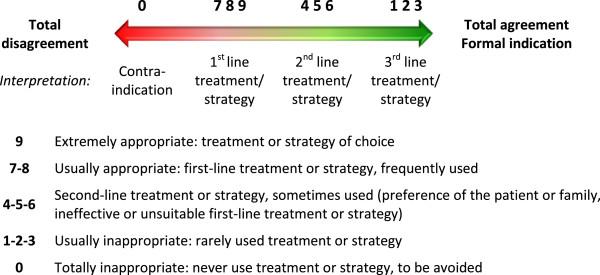
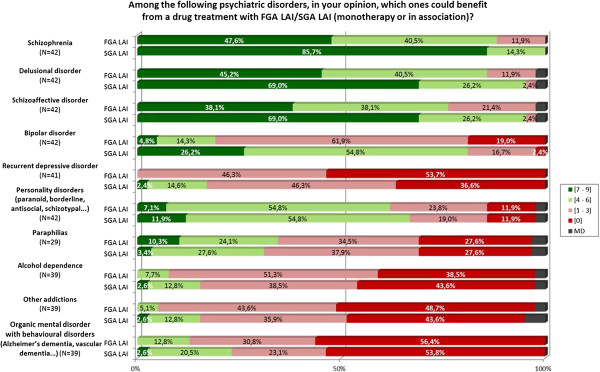
Background: Long-acting injectable (LAI) formulations are not widely used in routine practice even though they offer advantages in terms of relapse prevention. As part of a process to improve the quality of care, the French Association for Biological Psychiatry and Neuropsychopharmacology (AFPBN) elaborated guidelines for the use and management of antipsychotic depots in clinical practice. Methods: Based on a literature review, a written survey was prepared that asked about 539 options in 32 specific clinical situations concerning 3 fields: target-population, prescription and use, and specific populations. We contacted 53 national experts, 42 of whom (79%) completed the survey. The options were scored using a 9-point scale derived from the Rand Corporation and the University of California in the USA. According to the answers, a categorical rank (first-line/preferred choice, second-line/alternate choice, third-line/usually inappropriate) was assigned to each option. The first-line option was defined as a strategy rated as 7–9 (extremely appropriate) by at least 50% of the experts. The following results summarize the key recommendations from the guidelines after data analysis and interpretation of the results of the survey by the scientific committee. Results: LAI antipsychotics are indicated in patients with schizophrenia, schizoaffective disorder, delusional disorder and bipolar disorder. LAI second-generation antipsychotics are recommended as maintenance treatment after the first episode of schizophrenia. LAI first-generation antipsychotics are not recommended in the early course of schizophrenia and are not usually appropriate in bipolar disorder. LAI antipsychotics have long been viewed as a treatment that should only be used for a small subgroup of patients with non-compliance, frequent relapses or who pose a risk to others. The panel considers that LAI antipsychotics should be considered and systematically proposed to any patients for whom maintenance antipsychotic treatment is indicated. Recommendations for medication management when switching oral antipsychotics to LAI antipsychotics are proposed. Recommendations are also given for the use of LAI in specific populations. Conclusion: In an evidence-based clinical approach, psychiatrists, through shared decision-making, should be systematically offering to most patients that require long-term antipsychotic treatment an LAI antipsychotic as a first-line treatment.
Overview
The claims and statistics of this paper haven’t been checked yet.
Run the check — free, no account needed. It reads the open-access text and checks the sources it cites.
Integrity signals
Registry
Cites
Statistics
Figures
Verification
Claims the paper makes
The claims and statistics of this paper haven’t been checked yet.
Run the check — free, no account needed. It reads the open-access text and checks the sources it cites.
Claims other papers make about this one
Each is checked against this paper’s own text: does it say what the citing paper says it does?
In the citing paper
“The current and future increasing availability of LAIs will enrich the choice for the clinicians who intend to use a long-acting formulation [67].”
From The role of shared decision-making in improving adherence to pharmacological treatments in patients with schizophrenia: A clinical review (2020) · cites this paper as [67]
Self-check
Percentages, sums and reported differences re-computed from the paper’s own numbers.
The self-check needs the paper’s full text.
Citations
Cites
Second-generation versus first-generation antipsychotic drugs for schizophrenia: a meta-analysis
Leucht, S., Corves, C., Arbter, D., Engel, R. R., Li, C., & Davis, J. M. (2009) · The Lancet · doi:10.1016/s0140-6736(08)61764-x · Cited by 1,930 · cited 2×
“Some individual oral SGA (amisulpride, clozapine, olanzapine, risperidone) were better in overall efficacy in patients with schizophrenia than oral FGA [17].”
BackgroundLacro, J. P., Dunn, L. B., Dolder, C. R., Leckband, S. G., & Jeste, D. V. (2002) · The Journal of Clinical Psychiatry · doi:10.4088/jcp.v63n1007 · Cited by 1,383 · cited 1×
“For example, the majority of patients with schizophrenia (84%) discontinue their index antipsychotic during the follow-up period [2] and in the long-term perspective, 40 to 50% seem to be noncompliant [3], with no real difference in terms of adherence between first-generation antipsychotics (FGA) and second-generation…”
BackgroundGoodwin, G., Haddad, P. M., Ferrier, I. N., Aronson, J., Barnes, T., Cipriani, A., Coghill, D., Fazel, S., Geddes, J. R., Grunze, H., et al. (2016) · Journal of Psychopharmacology · doi:10.1177/0269881116636545 · Cited by 1,350
Yatham, L. N., Kennedy, S. H., Parikh, S. V., Schaffer, A., Beaulieu, S., Alda, M., O’Donovan, C., MacQUEEN, G. M., McIntyre, R. S., Sharma, V., et al. (2012) · Bipolar Disorders · doi:10.1111/bdi.12025 · Cited by 1,230
The 2009 Schizophrenia PORT Psychopharmacological Treatment Recommendations and Summary Statements
Buchanan, R. W., Kreyenbuhl, J. A., Kelly, D. L., Noel, J. M., Boggs, D. L., Fischer, B. A., Himelhoch, S. S., Fang, B., Peterson, E. L., Aquino, P. R., et al. (2009) · Schizophrenia Bulletin · doi:10.1093/schbul/sbp116 · Cited by 919 · cited 2×
“With regards to non-adherence, most of the guidelines and algorithms (except PORT 2009) state that depot antipsychotics are an effective approach [8-10], with some guidelines actually recommending that switching the antipsychotic formulation from oral to depot should be considered in maintenance treatment [11].”
BackgroundRummel‐Kluge, C., Komossa, K., Schwarz, S., Hunger, H., Schmid, F., Lobos, C. A., Kissling, W., Davis, J. M., & Leucht, S. (2010) · Schizophrenia Research · doi:10.1016/j.schres.2010.07.012 · Cited by 698 · cited 1×
“Oral SGA induced fewer extrapyramidal side effects than oral FGA but some SGA induced more weight gain or metabolic side effects than oral FGA [41,42].”
BackgroundVelligan, D. I., Weiden, P. J., Sajatovic, M., Scott, J. L., Carpenter, D., Ross, R., & Docherty, J. P. (2009) · PubMed · Cited by 625
Weiden, P. J., Kozma, C., Grogg, A., & Locklear, J. (2004) · Psychiatric Services · doi:10.1176/appi.ps.55.8.886 · Cited by 621 · cited 1×
“81 in patients with schizophrenia [37].”
Barnes, T. R. E., Drake, R., Paton, C., Cooper, S. J., Deakin, J. F. W., Ferrier, I. N., Gregory, C. J., Haddad, P. M., Howes, O. D., Jones, I. R., et al. (2019) · Journal of Psychopharmacology · doi:10.1177/0269881119889296 · Cited by 615
Leucht, S., Komossa, K., Rummel‐Kluge, C., Corves, C., Hunger, H., Schmid, F., Lobos, C. A., Schwarz, S., & Davis, J. M. (2008) · American Journal of Psychiatry · doi:10.1176/appi.ajp.2008.08030368 · Cited by 499 · cited 1×
“and tolerability (especially for SGA) [17,18].”
Research works printed but not linked: 3
- Schizophrenia: Core interventions in the treatment and management of schizophrenia in primary and secondary care (update). [http://www.ncbi.nlm.nih.gov/pubmed/20704054]
- Llorca PM, Courtet P, Martin P, Abbar M, Gay C, Meynard JA, Bayle F, Hamon M, Lancon C, Thibaut F, Thomas P, Lancrenon S, Guillaume S, Samalin L: Screening and management of bipolar disorders: methodology. Encephale. 2010, 36 (Suppl 4): S76-S85.
- NICE: National Institute for Health and Clinical Excellence: The management of bipolar disorder in adults, children and adolescents, in primary and secondary care. 2006, Alden Press UK. edn. London: The British Psychological Society and the Royal College of Psychiatrists
Cited by
Sorted by citations
Items 101–188 of 188
Tatini, L., D’Anna, G., Pietrini, F., Calligaris, E., Ballerini, A., & Ricca, V. (2021) · International Clinical Psychopharmacology · doi:10.1097/yic.0000000000000359 · Cited by 9
“…2018): (1) Outpatient status (2) PANSS total score ≤ 120 (Leucht et al., 2005) (3) MADRS total score 30 (Müller et al., 2003) (4) YMRS total score 25 (Lukasiewicz et al., 2013) (5) A score ≤ 4 on each of the following PANSS items: delusions (P1), conceptual disorganization (P2), suspiciousness…”
BackgroundOlanzapine pamoate for the treatment of schizophrenia – a safety evaluation
Samalin, L., Garay, R. P., Ameg, A., & Llorca, P. (2016) · Expert Opinion on Drug Safety · doi:10.1517/14740338.2016.1141893 · Cited by 9
Self-citationAnhedonia in Schizophrenia: Mini-Review.
Šagud, M., Filipčić, I. Š., Jakšić, N., Šimunić, L., Jezernik, D., Tudor, L., Madžarac, Z., Stefanović, I., Rajačić, B. K., Mihaljević-Peleš, A., et al. (2019) · PubMed · Cited by 9
Wong, M. M. C., Chung, A. K. K., Yeung, T. M. H., Wong, D. T. W., Lee, C. K., Lai, C. L. E., Chan, G. F. Y., Mak, G. K. L., Wong, J. O. Y., Ng, R., et al. (2021) · CNS Neuroscience & Therapeutics · doi:10.1111/cns.13374 · Cited by 9
Scott, R. K., Nachman, S., Weld, E. D., Daley, R., Atoyebi, S., Bies, R. R., Waitt, C. J., & Olagunju, A. (2026) · Clinical Pharmacology & Therapeutics · doi:10.1002/cpt.70224 · Cited by 7
“42 However, currently available LAI antipsychotics are not licensed for use in pregnant and breastfeeding women due to uncertainties about their safety.”
Tidmore, L. M., Keast, S. L., Waters, H. C., Pareja, K., Cothran, T., & Skrepnek, G. H. (2022) · Current Medical Research and Opinion · doi:10.1080/03007995.2022.2101819 · Cited by 8
Bhatta, M. P., Bista, S., Khoury, A. C. E., Hutzell, E. G., Tandon, N., & Smith, D. P. (2021) · Journal of health economics and outcomes research · doi:10.36469/jheor.2021.22979 · Cited by 8
Beusterien, K. M., Chan, E., Such, P., de Jong-Laird, A., Heres, S., Amos, K., Loze, J.-Y., Nylander, A.-G., Robinson, P., & Bridges, J. F. P. (2017) · Current Medical Research and Opinion · doi:10.1080/03007995.2017.1384717 · Cited by 8
Pilon, D., Amos, T. B., Germain, G., Lafeuille, M., Lefèbvre, P., & Benson, C. J. (2017) · Current Medical Research and Opinion · doi:10.1080/03007995.2016.1277989 · Cited by 7
Rating Opportunity for Long-Acting Injectable Antipsychotic Initiation Index (ROLIN)
Ifteni, P. I., Petric, P. S., & Teodorescu, A. (2021) · Frontiers in Psychiatry · doi:10.3389/fpsyt.2021.767756 · Cited by 7
Fond, G. B., Godin, O., Llorca, P., & Leboyer, M. (2015) · European Psychiatry · doi:10.1016/j.eurpsy.2015.09.213 · Cited by 7
Self-citationBardi, F., Moccia, L., Kotzalidis, G. D., Boggio, G., Brugnami, A., Sfratta, G., Janiri, D., Sani, G., & Simonetti, A. (2025) · Healthcare · doi:10.3390/healthcare13141709 · Cited by 6
“Additional barriers include limited flexibility about dosage, low control of potential adverse effects, healthcare system constraints (e.g., reimbursement or accessibility), and the absence of strong guideline recommendations for their early use in first episodes of schizophrenia [86–88].”
Start low, go fast? Antipsychotic titration patterns at an inpatient psychiatric hospital
Vadiei, N., Chien, J., Enwereji, J., Myslinski, B., & Guzman, A. (2020) · Mental Health Clinician · doi:10.9740/mhc.2020.09.275 · Cited by 6
“Before an LAI is administered, it is recommended that the patient be trialed on the oral formulation first to establish tolerability and efficacy.(21) However, there are no specific recommendations on how long this oral trial should last.”
BackgroundSamalin, L., Boudieu, L., & Llorca, P. (2024) · Expert Review of Neurotherapeutics · doi:10.1080/14737175.2024.2313550 · Cited by 6
“In an evidence-based clinical approach, psychiatrists should offer more systematically and through shared decision-making an LAI antipsychotic as a first-line treatment to all patients who require long-term antipsychotic treatment [42,43].”
BackgroundSelf-citationComparison of Paliperidone Palmitate and Risperidone Long-Acting Injection in Schizophrenic Patients
Limosin, F., Belhadi, D., Comet, D., Pacou, M., Bouju, S., Impe, K. V., & Guillon, P. (2017) · Journal of Clinical Psychopharmacology · doi:10.1097/jcp.0000000000000827 · Cited by 7
Sathienluckana, T., Tiangpattanawong, P., Chaiyasukthananoan, K., Jittayanan, P., Sawetwangsing, H., & Puchsaka, P. (2021) · Schizophrenia Research and Treatment · doi:10.1155/2021/8403986 · Cited by 6
“antipsychotics (the exception being paliperidone palmitate) to ensure adequate plasma levels of LAI antipsychotics [8, 17].”
BackgroundWong, K. O., Klarenbach, S. W., Martins, K. J. B., Chue, P. S., Dursun, S. M., Snaterse, M., Guigue, A., So, H., Luu, H., Vu, K. N., et al. (2022) · BMC Psychiatry · doi:10.1186/s12888-022-04075-y · Cited by 6
“Clinical guidelines recommend LAIs over oral formulations of antipsychotics for individuals who display nonadherence, have frequent relapses, or pose a safety risk to others [6, 12, 13].”
BackgroundAkindele, T., & Alwis, K. D. (2025) · Drugs - Real World Outcomes · doi:10.1007/s40801-025-00511-z · Cited by 5
“The LAI prescription rate was estimated to range between 10 and 30% on the basis of previous research data [29–31].”
Tishler, T. A., Ellingson, B. M., Salvadore, G., Baker, P. C., Turkoz, I., Subotnik, K. L., de la Fuente‐Sandoval, C., Nuechterlein, K. H., & Alphs, L. D. (2023) · Schizophrenia Research · doi:10.1016/j.schres.2023.03.023 · Cited by 5
Romstadt, N., & Wonson, E. (2018) · Mental Health Clinician · doi:10.9740/mhc.2018.01.024 · Cited by 5
“7,8 However, there is limited literature available to guide providers in the decision of when to initiate LAIs in regards to the inpatient or outpatient treatment setting.”
Ohnishi, T., Wakamatsu, A., & Kobayashi, H. (2021) · Neuropsychiatric Disease and Treatment · doi:10.2147/ndt.s294503 · Cited by 5
“However, some studies suggest that long-acting injectable antipsychotics (LAI) should be considered earlier in therapy.(20,40) In such a situation, not only maintenance of symptomatic improvement but also early symptomatic improvement should be required for LAI.”
BackgroundMurphy, A. L., Suh, S., Gillis, L., Morrison, J., & Gardner, D. M. (2023) · Pharmacy · doi:10.3390/pharmacy11020045 · Cited by 5
“, schizophrenia, schizoaffective disorder [1]).”
Lin, C.-H., Lin, H., Chiang, C.-L., Chen, Y., Liu, Y., Yang, Y. K., & Tang, C. (2023) · Clinical Psychopharmacology and Neuroscience · doi:10.9758/cpn.22.1017 · Cited by 5
“treatment guidelines for schizophrenia [8-10].”
Rolland, B., Dalon, F., Gauthier, N., Nourredine, M., Bérard, M., Carton, L., Brousse, G., Llorca, P., Jacoud, F., Ganse, E. H. V., et al. (2022) · Frontiers in Psychiatry · doi:10.3389/fpsyt.2022.1021780 · Cited by 7
“4%), especially since at least one third of all prescriptions in our study were associated with psychotic disorders, and long-acting forms should theoretically be systematically proposed to all patients with psychotic disorders (21).”
BackgroundSelf-citationBrasso, C., Beoni, A. M., Colli, G., Mariani, G. N., & Rocca, P. (2025) · Therapeutic Advances in Psychopharmacology · doi:10.1177/20451253251367591 · Cited by 4
Jin, L., Chen, Y., Zhu, J., Huang, Q., Li, B., Xu, Y., Xi, R., & Lu, W. (2021) · Frontiers in Public Health · doi:10.3389/fpubh.2021.779563 · Cited by 4
“For example, LAI was prescribed at 23.5% in France and 29% in the UK, which were already higher than anywhere else in Europe (44).”
BackgroundInfluentialBjedov, S., Ciglar, M., & Maleković, H. (2016) · PubMed · Cited by 4
Attitudes of Croatian psychiatrists towards long-acting injectable antipsychotics.
Ciglar, M., Bjedov, S., & Maleković, H. (2016) · PubMed · Cited by 4
Álvarez, J. C. G., Sánchez, L. G., Garcı́a-Resa, E., Llácer, J. M. B., Rodríguez, A. R., Esquerdo, B. P., & Martínez, E. P. (2020) · International Journal of Psychiatry in Clinical Practice · doi:10.1080/13651501.2019.1711130 · Cited by 4
“Thus, the switch from oral to depot treatment is recommended for the long-term maintenance of patients and prevention of relapses, acute exacerbations and poor adherence (Jeong and Lee 2013; Llorca et al. 2013; Kane et al. 2014).”
BackgroundLi, Q., Li, X., Ye, C., Jia, M., & Si, T. (2024) · BMC Psychiatry · doi:10.1186/s12888-024-05508-6 · Cited by 4
“In addition, this finding may contribute to the expanding body of evidence supporting the use of PP1M therapy during the acute phase as recent evidence and guidelines suggest that LAIs must also be considered earlier in therapy [53, 54].”
ResultThe Role of Long-Acting Injectable Antipsychotics in the Early Treatment of Schizophrenia
Harrison, S. J., Antunes, J., Knight, K., Johnston, K., Mehawej, J., Sanchez, P., & Correll, C. U. (2026) · CNS Drugs · doi:10.1007/s40263-026-01294-9 · Cited by 3
Throneberry, A. R., Burk, B. G., & Pruett, B. S. (2025) · Frontiers in Psychiatry · doi:10.3389/fpsyt.2025.1659290 · Cited by 3
“Timing of follow-up psychiatric appointments in the outpatient setting should be aligned whenever possible with maintenance LAI-AP frequency requirements (32).”
InfluentialCapuzzi, E., Forti, C. L. D., Caldiroli, A., Cova, F., Surace, T., Buoli, M., & Clerici, M. (2023) · International Clinical Psychopharmacology · doi:10.1097/yic.0000000000000516 · Cited by 3
“In contrast with international clinical guidelines supporting an early and broad use of LAI antipsychotics (Llorca et al ., 2013), our findings paint the picture of a use of these compounds in chronic patients.”
ResultCatatonia-related adverse outcomes after long-acting injectable antipsychotics: Case series
Dragonetti, J. D., Posada, J. G., Key, R. G., & Kugler, J. (2024) · SAGE Open Medical Case Reports · doi:10.1177/2050313x241229008 · Cited by 3
Cai, R., Decuypere, F., Chevalier, P., Desseilles, M., Lambert, M., Fakra, É., Wimmer, A., Guillon, P., Pype, S., Godet, A., et al. (2022) · BMC Psychiatry · doi:10.1186/s12888-022-03914-2 · Cited by 3
“patients with frequent relapses or who pose a risk to others) [28].”
BackgroundPractical guidelines for the use of long-acting injectable second-generation antipsychotics
Jarema, M., Wichniak, A., Dudek, D., Samochowiec, J., & RYBAKOWSKI, J. K. (2015) · Cited by 3
Chartier, F., Rouillon, F., Berggren, L., Jamonneau, I., Falissard, B., & Llorca, P. (2017) · L Encéphale · doi:10.1016/j.encep.2017.05.004 · Cited by 3
Self-citationWagner, E. M., Katyal, S., Lee, I. O., Tasnim, S., Wadia, H. E., Mortazavi, M., García-Carmona, J. A., Hasan, A., Colman, I., Taipale, H. T., et al. (2026) · The Canadian Journal of Psychiatry · doi:10.1177/07067437251412576 · Cited by 3
Basu, A., Patel, C. A., Fu, A. Z., Brown, B., Mavros, P., & Benson, C. J. (2023) · Journal of Managed Care & Specialty Pharmacy · doi:10.18553/jmcp.2023.22191 · Cited by 2
Uribe, E. S., Mundo, S. E. O., Garza, R., Gonzalez-Colmenero, F. D., Sanchez, L. M., Cantu, C., Arellano, M., Montemayor, Y. Y. H., Morales, P., Juarez, S. M., et al. (2023) · Psychiatry Investigation · doi:10.30773/pi.2022.0216 · Cited by 1
Current advances in pharmacotherapy for schizophrenia
Kim, S., & Kim, E. (2024) · Journal of Korean Medical Association · doi:10.5124/jkma.2024.67.2.96 · Cited by 2
Roy, M., Therrien, F., Boucher, M., & Oluboka, O. J. (2024) · BMC Psychiatry · doi:10.1186/s12888-024-06240-x · Cited by 2
Patel, R., Liman, C., Oyesanya, M., Ker, S., Jayaraman, A., Franzenburg, K. R., Hansen, R. T., Philbin, M. J., & Thompson, S. (2025) · BMJ Open · doi:10.1136/bmjopen-2024-092216 · Cited by 2
“22 Oral tolerability with a new AP should be established first, and oral supplementation should only be given if an LAI does not reach therapeutic levels quickly.”
An analysis of the clinical application of paliperidone palmitate injection based on real-world
Liu, R.-X., Liu, C., Hu, D., Wang, L., Feng, D., Guo, T., & Wang, Y. (2025) · Frontiers in Pharmacology · doi:10.3389/fphar.2025.1501701 · Cited by 2
Abdel‐Baki, A., Poulin, É., Medrano, S., Padilha, P. P. D. O., Stip, É., & Potvin, S. (2022) · International Journal of Psychiatry in Clinical Practice · doi:10.1080/13651501.2022.2079531 · Cited by 2
“…was to study the functional outcome of patients according to their initial route of antipsychotic medication management strategy in real-life settings, as some guidelines suggest early use of LAI-AP in FEP despite little evidence (Group, 2016; Llorca et al., 2013; NICE, 2014; Stip et al., 2019).”
MethodAripiprazole injectable à libération prolongée dans le traitement de maintenance de la schizophrénie
Samalin, L., Charpeaud, T., & Llorca, P. (2014) · L Encéphale · doi:10.1016/j.encep.2014.09.002 · Cited by 2
Self-citationPrescribing patterns of long-acting injectable antipsychotics in a community setting in South Africa
Veyej, N., & Moosa, M. Y. H. (2022) · South African Journal of Psychiatry · doi:10.4102/sajpsychiatry.v28i0.1809 · Cited by 2
Seo, S., Healey, B. E., McLin, R., Sacks, N. C., Benson, C. J., & Citrome, L. (2024) · Neuropsychiatric Disease and Treatment · doi:10.2147/ndt.s473492 · Cited by 1
“Medicaid was the primary insurance type at index for nearly half of”
BackgroundSzmulewicz, A., Martínez‐Alés, G., Logan, R. W., Joober, R., Ferrara, M., Kelly, C., Fredrikson, D. H., Thorpe, L. E., Conderino, S. E., Díaz‐Caneja, C. M., et al. (2025) · Nature Mental Health · doi:10.1038/s44220-025-00407-5 · Cited by 1
“For example, LAI therapy is often offered to more severely ill patients; conversely, those who accept LAI therapy may have better insight or everyday functioning 9,10 .”
de Filippis, R., Aloi, M., Cimino, A., Carbone, E. A., Rania, M., D’Onofrio, E., Kane, J. M., Schoretsanitis, G., Segura‐Garcìa, C., & Fazio, P. D. (2026) · Therapeutic Advances in Psychopharmacology · doi:10.1177/20451253251403263 · Cited by 1
“6–8 One obvious clinical benefit is related to better adherence compared to their oral counterparts.”
Initial physical health assessment for psychosis in Australia and New Zealand: 2026 recommendations
Warren, N., O’Gorman, C., Dark, F. L., Every‐Palmer, S., Halstead, S., Korman, N., Lappin, J., Lawn, S., O'Donoghue, B. N., Suetani, S., et al. (2026) · Australian & New Zealand Journal of Psychiatry · doi:10.1177/00048674261435740 · Cited by 1
“Guidelines were developed by international groups (Hasan et al., 2017; Kane et al., 2003; Keshavan et al., 2006; Skikic and Arriola, 2020; Stahl et al., 2013) and national organisations: Australia/ New Zealand (2016) (Galletly et al., 2016), Canada (Addington et al., 2017), Chile (Gaspar et al., 2019), Finland (2020),…”
Such, P., Olivares, J. M., Arias, L., Berg, M. T., & Madera‐McDonough, J. (2021) · Neuropsychiatric Disease and Treatment · doi:10.2147/ndt.s303292 · Cited by 1
Citrome, L., & Matthews, D. (2025) · CNS Spectrums · doi:10.1017/s1092852925100680 · Cited by 1
“17 General and focused guidelines regarding the treatment of bipolar disorder have mentioned the use of LAIs as first line for maintenance therapy.”
Engelke, C., Cordes, J., Kahl, K. G., & Schmidt-Kraepelin, C. (2019) · Journal of Clinical Psychopharmacology · doi:10.1097/jcp.0000000000001063 · Cited by 1
“Benefits include the facilitation andmonitoring of compliance, more balanced and predictable plasma levels, frequent contact with health care professionals, and, therefore, a reduced probability of relapse and rehospitalization,(2,3) all of which have a positive impact on patients' subjective quality of life.(2,3) Con…”
BackgroundBoyland, L., Darretta, K., & Porter, K. (2022) · doi:10.21007/con.dnp.2022.0037 · Cited by 1
Une utilisation optimale des antipsychotiques au profit d’un meilleur pronostic de la schizophrénie
Courtet, P. (2015) · European Psychiatry · doi:10.1016/j.eurpsy.2015.09.139
Self-citationUso de medicación antipsicótica durante el embarazo
Uriarte, J. J. U., Prieto, M., Oraá, R., Medrano, J., Zardoya, M. J., Malo, P., & Pacheco, L. (2018) · Psiquiatría Biológica · doi:10.1016/j.psiq.2018.07.002
Aripiprazole long-acting injection in first psychotic episode management
Giordano, G., Tomassini, L., Cuomo, I., Amici, E., Perrini, F., Kotzalidis, G. D., & Filippis, S. D. (2019) · European Neuropsychopharmacology · doi:10.1016/j.euroneuro.2018.11.643
Quelle modalité de traitement médicamenteux ?
Giordana, B. (2019) · Elsevier eBooks · doi:10.1016/b978-2-294-76179-9.00010-3
Tordera-Tordera, V. (2019) · Revisiones en Psicofarmacolog�a · doi:10.24875/rpsic.m19000002
Srinivasaragavan, S., Poornachandrika, P., & Raghavan, V. (2019) · INDIAN JOURNAL OF MENTAL HEALTH AND NEUROSCIENCES · doi:10.32746/10.32746/ijmhns.2019.v2.i2.28
Alinea, A. A., Antonio, C. A. T., Bermudez, A. N. C., Cochon, K. L., Martinez, M. F. V., & Guevarra, J. P. (2022) · medRxiv · doi:10.1101/2022.01.25.22269857
“Long-acting injectable (LAI) antipsychotics have been introduced in 1996 to address concerns encountered with oral antipsychotic medications 9–12 and has since been incorporated in clinical practice guidelines for the treatment of schizophrenia 5,13,14 .”
BackgroundNorman, S. (2017) · The American Pharmacists Association eBooks · doi:10.21019/pharmacotherapyfirst.bipolar_overview
Lewis, L. M., & Rodgers, J. (2022) · Journal of the American Psychiatric Nurses Association · doi:10.1177/10783903221075651
“The management of LAIs can be complicated and requires specific knowledge about practical issues such as dosing and switching to a LAI (Correll et al., 2016); there are insufficient data and recommendations within the literature (Llorca et al., 2013).”
BackgroundResultInfluentialSecond-generation long-acting injectable antipsychotics in clinical practice
Петрова, Н. Н., & Grigorieva, E. V. (2022) · S S Korsakov Journal of Neurology and Psychiatry · doi:10.17116/jnevro2022122021115
Clinical use of long-acting antipsychotics for the treatment of bipolar disorder type I patients
Uyar, B., Atlı, A., & BİLEN, D. G. (2022) · Çukurova medical journal (Online)/Çukurova medical journal · doi:10.17826/cumj.1089059
Tarchi, L., Monaco, F. D., FALCONE, D., Ballerini, A., Ricca, V., & D’Anna, G. (2023) · Minerva Psychiatry · doi:10.23736/s2724-6612.21.02293-4
Avila-Zozaya, M. (2023) · Biological Psychiatry · doi:10.1016/j.biopsych.2023.07.014
Okocha, C. I., & Haste, J. (2024) · Cambridge University Press eBooks · doi:10.1017/9781108976770.021
Advancing Long-Acting Formulations for Treating Chronic Diseases
Nayan, M. U., Sultana, A., Le, N. T. H., Poluektuva, L. Y., Edagwa, B., & Gendelman, H. E. (2024) · Springer eBooks · doi:10.1007/978-3-031-68237-7_37
Benzodiazepines: a descriptive study of prescription patterns in Tabriz, Iran, 2021–2022
Fakhari, A., Farahbakhsh, M., Matinkia, M., Khameneh, A., Azimian, A., & Aghajani, E. (2025) · Discover Health Systems · doi:10.1007/s44250-025-00245-3
“Ongoing endeavors are being made to enhance the selection of patients who might require long-term benzo-diazepines [14].”
Ward, T. M., Xu, J., Hall, D. B., Chen, X., Benavides, S., Young, H. N., & Caballero, J. (2025) · Early Intervention in Psychiatry · doi:10.1111/eip.70063
“It appears SGA are the most common class of antipsychotics prescribed by physicians for child and adolescent psychiatric disorders (Llorca et al. 2013; Seida et al. 2012).”
Hodson, N., Majid, M., Vlaev, I., & Singh, S. P. (2025) · BMC Psychiatry · doi:10.1186/s12888-025-07165-9
“While some feared that incentives would not be effective, others were concerned that it would be harder to persuade patients to stop LAI treatment, despite acknowledging that services have not previously had difficulty persuading patients to cease LAI treatment (interview 3).”
Wong, K. O., Klarenbach, S. W., Martins, K. J. B., Chue, P., Dursun, S. M., Snaterse, M., Guigue, A., So, H., Luu, H., Vu, K., et al. (2022) · Figshare · doi:10.6084/m9.figshare.20221939
Wong, K. O., Klarenbach, S. W., Martins, K. J. B., Chue, P., Dursun, S. M., Snaterse, M., Guigue, A., So, H., Luu, H., Vu, K., et al. (2022) · Figshare · doi:10.6084/m9.figshare.20221933
Wong, K. O., Klarenbach, S. W., Martins, K. J. B., Chue, P., Dursun, S. M., Snaterse, M., Guigue, A., So, H., Luu, H., Vu, K., et al. (2022) · Figshare · doi:10.6084/m9.figshare.20221927
Wong, K. O., Klarenbach, S. W., Martins, K. J. B., Chue, P., Dursun, S. M., Snaterse, M., Guigue, A., So, H., Luu, H., Vu, K., et al. (2022) · Figshare · doi:10.6084/m9.figshare.20221936
Li, Q., Li, X., Ye, C., Jia, M., & 司天梅 (2024) · Figshare · doi:10.6084/m9.figshare.26669796
Cai, R., Decuypere, F., Chevalier, P., Desseilles, M., Lambert, M., Fakra, É., Wimmer, A., Guillon, P., Pype, S., Godet, A., et al. (2022) · Figshare · doi:10.6084/m9.figshare.20023181
Wong, K. O., Klarenbach, S. W., Martins, K. J. B., Chue, P., Dursun, S. M., Snaterse, M., Guigue, A., So, H., Luu, H., Vu, K., et al. (2022) · Figshare · doi:10.6084/m9.figshare.20221930
Chan, C. M., Mayanil, T., Chengappa, K. N. R., & Suh, K. (2026) · Journal of Managed Care & Specialty Pharmacy · doi:10.18553/jmcp.2026.32.5.596
Barillà, G., Fagiolini, A. M., Bussolotti, D., Venco, C., & Cuomo, A. (2026) · Annals of General Psychiatry · doi:10.1186/s12991-026-00674-1
Sharma, J., Ahluwalia, I., Desai, D., Gadhvi, J., Chaudhury, S., & Patel, M. K. (2026) · Medical Journal of Dr D Y Patil Vidyapeeth · doi:10.4103/mjdrdypu.mjdrdypu_779_25
Zhang, L., Chen, Y., Yu, H., Sun, Y., Li, Q., Zhang, S., Jiang, W., Luo, F., & Zhou, Y. (2026) · BMC Psychiatry · doi:10.1186/s12888-026-08475-2
“This attitude-behavior discordance may reflect the mandatory nature of LAI treatment—even when patients harbor negative subjective attitudes, the external treatment structure can maintain adherence [57].”
Bernardo, I. D., Brambilla, P., Armando, D., Percudani, M., Cerveri, G., Migliarese, G., Salvi, V., Giorgio, A. D., Dalò, V., Calorio, F., et al. (2026) · International Clinical Psychopharmacology · doi:10.1097/yic.0000000000000634
Martiadis, V., Raffone, F., Cervino, A., Olivola, M., Martini, A., Pessina, E., & Scognamiglio, P. (2026) · Schizophrenia Research · doi:10.1016/j.schres.2026.09.001
Cutler, A. J., González, A., Suett, M., Shulman, K., Franzenburg, K. R., Tucker, J. L., Costa, E., & Lim, S. (2026) · Advances in Therapy · doi:10.1007/s12325-026-03697-y
Metadata
- Authors
- Llorca, P. M., Abbar, M., Courtet, P., Guillaume, S., Lancrenon, S., & Samalin, L.
- Affiliations
- Centre Hospitalier Universitaire de Nîmes (FR)
- Inserm (FR)
- Centre Hospitalier Universitaire de Clermont-Ferrand (FR)
- Corresponding author
- Samalin, Ludovic
- Venue
- BMC Psychiatry
- Published
- 2013-12
- Volume
- 13
- Issue
- 1
- Pages
- 340-340
- ISSN
- 1471-244X (ISSN-L)
- PMC
- PMC3898013
- OpenAlex
- W1982746840
- Cited by
- 188
- References
- 66
- Citations by year
- 2026: 12 · 2025: 12 · 2024: 14 · 2023: 14 · 2022: 24 · 2021: 16 · 2020: 10 · 2019: 18 · 2018: 11 · 2017: 17 · 2016: 20 · 2015: 12 · 2014: 8
- FWCI
- 9.48
- Type
- journal article
- Language
- en
- Open access
- gold
- doi.org
- Licence
- Locations
- BMC Psychiatry (publishedVersion, cc-by)
- Europe PMC (PubMed Central) (publishedVersion, cc-by)
- PubMed Central (publishedVersion, cc-by)
- PubMed (publishedVersion)
- HAL (submittedVersion, other-oa)
- Topics
- Health Sciences › Medicine › Psychiatry and Mental health › Schizophrenia research and treatment
- Social Sciences › Psychology › Clinical Psychology › Psychiatric care and mental health services
- Health Sciences › Medicine › Pharmacology (medical) › Treatment of Major Depression
- Keywords
- long-acting injectable antipsychotics, severe mental illness, schizophrenia, bipolar disorder, schizoaffective disorder, delusional disorder, long-term antipsychotic treatment, relapse prevention, medication adherence, medication management, atypical antipsychotics, typical antipsychotics, shared decision-making
- MeSH terms
- Adult, Aged, Attitude of Health Personnel, Mental Disorders, Delayed-Action Preparations, Female, Humans, Injections, Intramuscular, Male, Middle Aged, Practice Patterns, Physicians', Schizophrenia, Severity of Illness Index, Antipsychotic Agents, United States, Practice Guidelines as Topic
About these checks
Registry, retraction, Cites and statistics results are computed, not judged, with one exception: a printed reference that no index lists is read once by a model before it counts as a citation error. Claims are extracted by a model and kept only when their quote appears verbatim in the text; each cited source is then checked, with a model’s help, for whether it says what the claim relies on. Those verdicts can be wrong — read the claim’s quote and the cited source before relying on one.
Statistics and arithmetic are recomputed, not judged.
Confidence bands are shown only for fields calibrated on our annotated test set. None is calibrated yet, so no band is shown.
What counts as a claim ›How we measure confidence ›How we check this ›
Are you an author, or do you see a problem with this page? Request a review
