

Olanzapine is superior to lamotrigine in the prevention of bipolar depression: a naturalistic observational study
Open accessThe DOI matches its Crossref record; 55 of the 55 references it cites were found in a registry or an index.
Abstract
BACKGROUND: Bipolar disorder is a highly recurrent disease and has great impact on the function of patients. Depressive symptoms consist of more than 50% of life time during the illness and may lead to self harm or suicidal behaviors. Little is known about the antidepressant effects of olanzapine, an atypical antipsychotic, as monotherapy despite its indication for preventing manic episodes. In contrast, lamotrigine, a mood stabilizer, has been proven to be effective in preventing depression in patients with bipolar disorder. However, no studies have compared the efficacy between lamotrigine and olanzapine in the maintenance treatment of bipolar disorder. This enriched naturalistic study was implemented to assess the effectiveness of olanzapine and lamotrigine as monotherapy in the prevention of recurrence of bipolar disorder. METHODS: Patients with bipolar disorder in a euthymic state (Young's Mania Rating Scale (YMRS) score <12, and 21-item Hamilton Depression Rating Scale (HAM-D) score <7) for at least two months, having already received either olanzapine or lamotrigine as the maintenance treatment were recruited. The patients maintained with olanzapine (n = 22) were applied to olanzapine group whereas those maintained with lamotrigine (n = 29) were applied to lamotrigine group. They were followed up for 12 months. Differences in the efficacy between olanzapine and lamotrigine in recurrence prevention were analyzed. The Kaplan-Meier method was used to generate time-to-recurrence curves, and differences between the two groups were compared using the log-rank test. RESULTS: Olanzapine had a significantly lower recurrence rate of depressive episodes than lamotrigine (20.0% vs. 57.7%, χ2 = 6.62, p = .010). However, olanzapine and lamotrigine had similar mania (15.0% vs. 0%, χ2 = 4.17, p = .075, Fisher's exact test) and any mood episode (35.0% vs. 57.7%, χ2 = 2.33, p = .127) recurrence rates. Olanzapine was significantly superior to lamotrigine in the time to recurrence of depressive episodes (χ2 = 4.55, df = 1, p = .033), but there was no difference in the time to recurrence of any mood episode (χ2 = 1.68, df = 1, p = .195). CONCLUSIONS: This prospective naturalistic study suggests that olanzapine is more effective than lamotrigine in the prevention of depressive episodes in patients with bipolar disorder. Future large-scale randomized studies are warranted to validate our results. TRIAL REGISTRATION: ClinicalTrials.gov ID NCT01864551.
Overview
The claims and statistics of this paper haven’t been checked yet.
Free: it reads the open-access text and checks the first 5 claims that cite a source we can check. Create a free account to check every claim.
Integrity signals
Registry
Cites
Statistics
Figures
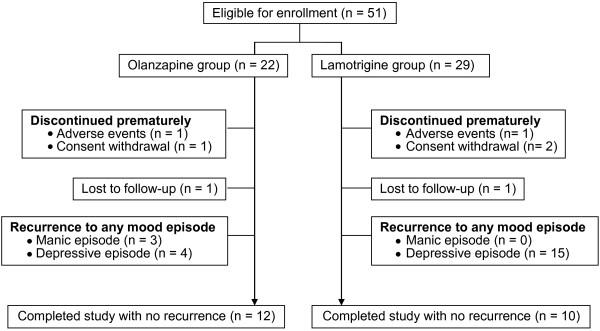
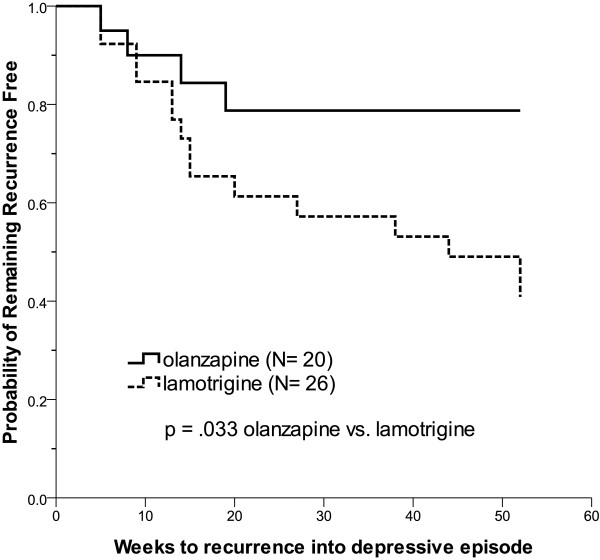
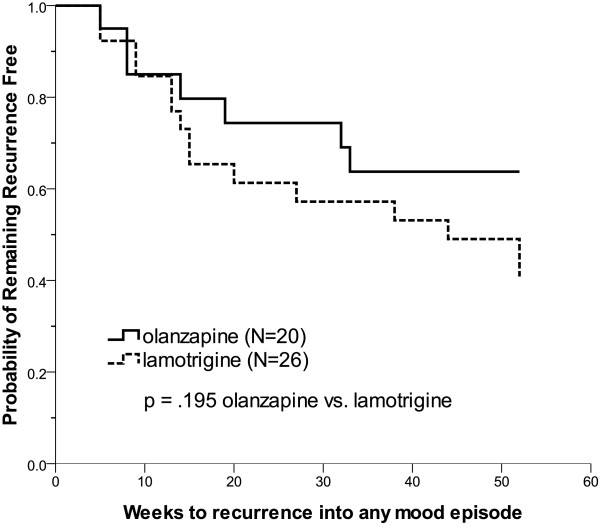
Verification
Claims the paper makes
The claims and statistics of this paper haven’t been checked yet.
Free: it reads the open-access text and checks the first 5 claims that cite a source we can check. Create a free account to check every claim.
Claims other papers make about this one
Each is checked against this paper’s own text: does it say what the citing paper says it does?
The source backs part of the claim, not all of it — or backs it for a different population, condition or comparison.
In the citing paper
“There are insufficient data to make a recommendation regarding olanzapine.506”
From Canadian Network for Mood and Anxiety Treatments ( CANMAT ) and International Society for Bipolar Disorders ( ISBD ) 2018 guidelines for the management of patients with bipolar disorder (2018) · cites this paper as [506]
Experimental — accuracy not yet measured
Self-check
Percentages, sums and reported differences re-computed from the paper’s own numbers.
The self-check needs the paper’s full text.
Citations
Cites
Yatham, L. N., Kennedy, S. H., Parikh, S. V., Schaffer, A., Beaulieu, S., Alda, M., O’Donovan, C., MacQueen, G., McIntyre, R. S., Sharma, V., et al. (2013) · Bipolar Disorders · doi:10.1111/bdi.12025 · Cited by 1,217
Relapse and impairment in bipolar disorder
(1995) · American Journal of Psychiatry · doi:10.1176/ajp.152.11.1635 · Cited by 762 · cited 1×
“Background Bipolar disorder is a highly recurrent psychiatric disorder, and nearly half of the patients experience subsequent episodes of illness within one year after the first episode [1,2], and a recurrence rate of up to 90% in the following 4–5 years [1,3-5].”
BackgroundMcElroy, S. L., Altshuler, L. L., Suppes, T., Keck, P. E., Frye, M. A., Denicoff, K. D., Nolen, W. A., Kupka, R. W., Leverich, G. S., Rochussen, J. R., et al. (2001) · American Journal of Psychiatry · doi:10.1176/appi.ajp.158.3.420 · Cited by 693 · cited 1×
“However, the patients with bipolar disorder are more likely to have the comorbidities of anxiety, substance use disorder [9] and personality disorder [10] which complicate the treatment and may be associated with a higher recurrence rate [11] and poor prognosis [12-15].”
BackgroundPerlis, R. H., Ostacher, M. J., Patel, J. K., Marangell, L. B., Zhang, H., Wisniewski, S. R., Ketter, T. A., Miklowitz, D. J., Otto, M. W., Gyulai, L., et al. (2006) · American Journal of Psychiatry · doi:10.1176/appi.ajp.163.2.217 · Cited by 689 · cited 4×
“Olanzapine has also been found to be effective in decreasing concurrent anxiety symptoms in patients with bipolar disorder [27,28] that are considered to be a predictor of depressive recurrence [11], and also to be associated with poor treatment response and worse symptom severity [29-31].”
BackgroundInfluentialBowden, C. L. (2000) · Archives of General Psychiatry · doi:10.1001/archpsyc.57.5.481 · Cited by 678 · cited 1×
“It has been reported that lamotrigine is not superior to lithium in the prevention of bipolar depression [39], and also that lithium is not indicated for the prevention of bipolar depression compared to a placebo [50].”
BackgroundBowden, C. L. (2003) · Archives of General Psychiatry · doi:10.1001/archpsyc.60.4.392 · Cited by 658
Calabrese, J. R., Bowden, C. L., Sachs, G., Yatham, L. N., Behnke, K., Mehtonen, O.-P., Montgomery, P., Ascher, J., Paska, W., Earl, N., et al. (2003) · The Journal of Clinical Psychiatry · doi:10.4088/jcp.v64n0906 · Cited by 635
Cipriani, A., Barbui, C., Salanti, G., Rendell, J., Brown, R., Stockton, S., Purgato, M., Spineli, L. M., Goodwin, G. M., & Geddes, J. R. (2011) · The Lancet · doi:10.1016/s0140-6736(11)60873-8 · Cited by 631
Judd, L. L., Akiskal, H. S., Schettler, P. J., Endicott, J., Leon, A. C., Solomon, D. A., Coryell, W., Maser, J. D., & Keller, M. B. (2005) · Archives of General Psychiatry · doi:10.1001/archpsyc.62.12.1322 · Cited by 577 · cited 2×
“Depressive symptoms and episodes dominate the course of illness [6] and may lead to social and family dysfunction, repeated hospitalizations and even suicidal behaviour [7,8].”
BackgroundOutcome in Mania: A 4-Year Prospective Follow-up of 75 Patients Utilizing Survival Analysis
Tohen, M. (1990) · Archives of General Psychiatry · doi:10.1001/archpsyc.1990.01810240026005 · Cited by 532 · cited 1×
“Background Bipolar disorder is a highly recurrent psychiatric disorder, and nearly half of the patients experience subsequent episodes of illness within one year after the first episode [1,2], and a recurrence rate of up to 90% in the following 4–5 years [1,3-5].”
BackgroundThe McLean-Harvard First-Episode Mania Study: Prediction of Recovery and First Recurrence
Tohen, M., Zarate, C. A., Hennen, J., Khalsa, H.-M. K., Strakowski, S. M., Gebre-Medhin, P., Salvatore, P., & Baldessarini, R. J. (2003) · American Journal of Psychiatry · doi:10.1176/appi.ajp.160.12.2099 · Cited by 471 · cited 1×
“Background Bipolar disorder is a highly recurrent psychiatric disorder, and nearly half of the patients experience subsequent episodes of illness within one year after the first episode [1,2], and a recurrence rate of up to 90% in the following 4–5 years [1,3-5].”
BackgroundTohen, M., Greil, W., Calabrese, J. R., Sachs, G. S., Yatham, L. N., Oerlinghausen, B. M., Koukopoulos, A., Cassano, G. B., Grunze, H., Licht, R. W., et al. (2005) · American Journal of Psychiatry · doi:10.1176/appi.ajp.162.7.1281 · Cited by 365
Tohen, M., Ketter, T. A., Zarate, C. A., Suppes, T., Frye, M., Altshuler, L., Zajecka, J., Schuh, L. M., Risser, R. C., Brown, E., et al. (2003) · American Journal of Psychiatry · doi:10.1176/appi.ajp.160.7.1263 · Cited by 342 · cited 2×
“However, despite these potential advantages in the prophylaxis treatment for bipolar depression, few studies have compared olanzapine with other mood stabilizers in the prevention of depressive episodes in patients with bipolar disorder [32,33].”
BackgroundResultTohen, M., Chengappa, K. N. R., Suppes, T., Baker, R. W., Zarate, C. A., Bowden, C. L., Sachs, G. S., Kupfer, D. J., Ghaemi, S. N., Feldman, P. D., et al. (2004) · British Journal of Psychiatry · doi:10.1192/bjp.184.4.337 · Cited by 326 · cited 1×
“To the best of our knowledge, most previous maintenance studies randomly allocated participants to different regimens from the original treatment after remission from the index episode [25,33,45,47,48].”
ResultTohen, M., Calabrese, J. R., Sachs, G. S., Banov, M. D., Detke, H. C., Risser, R., Baker, R. W., Chou, J. C.-Y., & Bowden, C. L. (2006) · American Journal of Psychiatry · doi:10.1176/appi.ajp.163.2.247 · Cited by 317 · cited 2×
“To the best of our knowledge, most previous maintenance studies randomly allocated participants to different regimens from the original treatment after remission from the index episode [25,33,45,47,48].”
BackgroundResultMetabolic side effects of antipsychotic medication
Tschoner, A., Engl, J., Laimer, M., Kaser, S., Rettenbacher, M., Fleischhacker, W. W., Patsch, J. R., & Ebenbichler, C. F. (2007) · International Journal of Clinical Practice · doi:10.1111/j.1742-1241.2007.01416.x · Cited by 253 · cited 2×
“In recent years, an increasing number of studies have emphasized the metabolic side effects and increased morbidity and mortality related to the use of atypical antipsychotics [41,54], although their role in maintenance treatment has been demonstrated in many RCTs [51].”
BackgroundSuppes, T., Vieta, E., Liu, S., Brecher, M., Paulsson, B., & Trial 127 Investigators (2009) · American Journal of Psychiatry · doi:10.1176/appi.ajp.2008.08020189 · Cited by 230 · cited 1×
“In recent years, monotherapy with atypical antipsychotics has been found to be effective in the maintenance treatment of bipolar disorder [21]; however, the efficacy of only a few have been validated for the prevention of bipolar depression [22-24].”
BackgroundAnxiety as a Correlate of Response to the Acute Treatment of Bipolar I Disorder
Feske, U. (2000) · American Journal of Psychiatry · doi:10.1176/appi.ajp.157.6.956 · Cited by 230 · cited 1×
“Olanzapine has also been found to be effective in decreasing concurrent anxiety symptoms in patients with bipolar disorder [27,28] that are considered to be a predictor of depressive recurrence [11], and also to be associated with poor treatment response and worse symptom severity [29-31].”
BackgroundVieta, E., Suppes, T., Eggens, I., Persson, I., Paulsson, B., & Brecher, M. (2008) · Journal of Affective Disorders · doi:10.1016/j.jad.2008.06.001 · Cited by 227 · cited 1×
“In recent years, monotherapy with atypical antipsychotics has been found to be effective in the maintenance treatment of bipolar disorder [21]; however, the efficacy of only a few have been validated for the prevention of bipolar depression [22-24].”
BackgroundOtto, M. W., Simon, N. M., Wisniewski, S. R., Miklowitz, D. J., Kogan, J. N., Reilly-Harrington, N. A., Frank, E., Nierenberg, A. A., Marangell, L. B., Sagduyu, K., et al. (2006) · British Journal of Psychiatry · doi:10.1192/bjp.bp.104.007773 · Cited by 223
Recurrence in affective disorder: I. Case register study
Kessing, L. V., Bolwig, T. G., Andersen, P. K., & Mortensen, P. B. (1998) · British Journal of Psychiatry · doi:10.1192/bjp.172.1.23 · Cited by 214 · cited 1×
“However, the patients with bipolar disorder are more likely to have the comorbidities of anxiety, substance use disorder [9] and personality disorder [10] which complicate the treatment and may be associated with a higher recurrence rate [11] and poor prognosis [12-15].”
BackgroundGender differences in a cohort study of 604 bipolar patients: The role of predominant polarity
Nivoli, A. M. A., Pacchiarotti, I., Rosa, A. R., Popovic, D., Murru, A., Valenti, M., Bonnin, C. M., Grande, I., Sanchez-Moreno, J., Vieta, E., et al. (2011) · Journal of Affective Disorders · doi:10.1016/j.jad.2011.04.055 · Cited by 208 · cited 1×
“In addition, the different subtypes (bipolar I, II or rapid cycling) [16-18] of bipolar disorder or the gender of the patient [19,20] may lead to different responses to treatments.”
BackgroundBipolar II disorder: arguments for and against a distinct diagnostic entity
Vieta, E., & Suppes, T. (2008) · Bipolar Disorders · doi:10.1111/j.1399-5618.2007.00561.x · Cited by 200
Bipolar I: A Five-Year Prospective Follow-up
KELLER, M. B., LAVORI, P. W., CORYELL, W., ENDICOTT, J., & MUELLER, T. I. (1993) · The Journal of Nervous and Mental Disease · doi:10.1097/00005053-199304000-00005 · Cited by 196 · cited 1×
“Background Bipolar disorder is a highly recurrent psychiatric disorder, and nearly half of the patients experience subsequent episodes of illness within one year after the first episode [1,2], and a recurrence rate of up to 90% in the following 4–5 years [1,3-5].”
BackgroundBipolar II illness: course and outcome over a five-year period
Coryell, W., Keller, M., Endicott, J., Andreasen, N., Clayton, P., & Hirschfeld, R. (1989) · Psychological Medicine · doi:10.1017/s0033291700011090 · Cited by 187 · cited 1×
“Background Bipolar disorder is a highly recurrent psychiatric disorder, and nearly half of the patients experience subsequent episodes of illness within one year after the first episode [1,2], and a recurrence rate of up to 90% in the following 4–5 years [1,3-5].”
BackgroundBaldessarini, R., Henk, H., Sklar, A., Chang, J., & Leahy, L. (2008) · Psychiatric Services · doi:10.1176/appi.ps.59.10.1175 · Cited by 173 · cited 2×
“Lamotrigine is the most well-established mood stabilizer in the prevention of depressive recurrence in bipolar disorder [34], not only for its efficacy but also for its good tolerability and adherence [35,36].”
BackgroundWeisler, R. H., Nolen, W. A., Neijber, A., Hellqvist, Å., Paulsson, B., & Trial 144 Study Investigators (2011) · The Journal of Clinical Psychiatry · doi:10.4088/jcp.11m06878 · Cited by 169 · cited 2×
“Nevertheless, among atypical antipsychotics, only quetiapine has been reported to show relatively equivalent efficacy in preventing both manic and depressive episodes [21,22].”
BackgroundFactors That Affect Adherence to Bipolar Disorder Treatments: A Stated-Preference Approach
Johnson, F. R., Özdemir, S., Manjunath, R., Hauber, A. B., Burch, S. P., & Thompson, T. R. (2007) · Medical Care · doi:10.1097/mlr.0b013e318040ad90 · Cited by 164 · cited 1×
“Since these patients are likely to have to take medication throughout their lives, the efficacy of the indicated agent should be balanced against its safety and tolerability, which are also associated with non-adherence in patients with bipolar disorder [53].”
BackgroundThe risk of suicide in patients with bipolar disorders.
Simpson, S. G., & Jamison, K. R. (1999) · PubMed · Cited by 132
Sleep disturbance in euthymic bipolar patients
Sylvia, L. G., Dupuy, J. M., Ostacher, M. J., Cowperthwait, C. M., Hay, A. C., Sachs, G. S., Nierenberg, A. A., & Perlis, R. H. (2012) · Journal of Psychopharmacology · doi:10.1177/0269881111421973 · Cited by 130 · cited 1×
“Therefore, the recurrence of depressive episodes in that study may have been highly associated with subsyndromal symptoms such like sleep disturbances [49] rather than resulting from the poor efficacy of olanzapine.”
BackgroundFrequency of comorbid personality disorders in bipolar and unipolar affective disorders
Brieger, P., Ehrt, U., & Marneros, A. (2003) · Comprehensive Psychiatry · doi:10.1053/comp.2003.50009 · Cited by 123 · cited 1×
“However, the patients with bipolar disorder are more likely to have the comorbidities of anxiety, substance use disorder [9] and personality disorder [10] which complicate the treatment and may be associated with a higher recurrence rate [11] and poor prognosis [12-15].”
BackgroundAltshuler, L. L., Kupka, R. W., Hellemann, G., Frye, M. A., Sugar, C. A., McElroy, S. L., Nolen, W. A., Grunze, H., Leverich, G. S., Keck, P. E., et al. (2010) · American Journal of Psychiatry · doi:10.1176/appi.ajp.2009.09010105 · Cited by 121 · cited 1×
“In addition, the different subtypes (bipolar I, II or rapid cycling) [16-18] of bipolar disorder or the gender of the patient [19,20] may lead to different responses to treatments.”
BackgroundPharmacological Treatment Patterns at Study Entry for the First 500 STEP-BD Participants
Ghaemi, S. N., Hsu, D. J., Thase, M. E., Wisniewski, S. R., Nierenberg, A. A., Miyahara, S., & Sachs, G. (2006) · Psychiatric Services · doi:10.1176/appi.ps.57.5.660 · Cited by 121 · cited 1×
“Taking into consideration the emerging concern of the increased morbidity and mortality associated with atypical antipsychotics [41], mood stabilizers may be considered for maintenance treatment due to fewer adverse effects despite the modest therapeutic performance [36,42], although mortality after anticonvulsant tre…”
BackgroundDepressive episodes and symptoms dominate the longitudinal course of bipolar disorder
Judd, L. L., & Akiskal, H. S. (2003) · Current Psychiatry Reports · doi:10.1007/s11920-003-0077-2 · Cited by 115 · cited 2×
“Depressive symptoms and episodes dominate the course of illness [6] and may lead to social and family dysfunction, repeated hospitalizations and even suicidal behaviour [7,8].”
BackgroundVieta, E., Günther, O., Locklear, J., Ekman, M., Miltenburger, C., Chatterton, M. L., Åström, M., & Paulsson, B. (2011) · The International Journal of Neuropsychopharmacology · doi:10.1017/s1461145711000885 · Cited by 106 · cited 6×
“Therefore, we speculated that lamotrigine might not be effective in the prevention of bipolar depression, even though two RCTs have indicated its use for maintenance treatment in bipolar depression [37,38].”
BackgroundInfluentialGaudiano, B. A., & Miller, I. W. (2005) · Depression and Anxiety · doi:10.1002/da.20053 · Cited by 86 · cited 1×
“Olanzapine has also been found to be effective in decreasing concurrent anxiety symptoms in patients with bipolar disorder [27,28] that are considered to be a predictor of depressive recurrence [11], and also to be associated with poor treatment response and worse symptom severity [29-31].”
BackgroundEffect of comorbid anxiety on treatment response in bipolar depression
Tohen, M., Calabrese, J., Vieta, E., Bowden, C., Gonzalez-Pinto, A., Lin, D., Xu, W., & Corya, S. (2007) · Journal of Affective Disorders · doi:10.1016/j.jad.2007.03.014 · Cited by 84 · cited 1×
“Olanzapine has also been found to be effective in decreasing concurrent anxiety symptoms in patients with bipolar disorder [27,28] that are considered to be a predictor of depressive recurrence [11], and also to be associated with poor treatment response and worse symptom severity [29-31].”
BackgroundA systematic review of the evidence on the treatment of rapid cycling bipolar disorder
Fountoulakis, K. N., Kontis, D., Gonda, X., & Yatham, L. N. (2013) · Bipolar Disorders · doi:10.1111/bdi.12045 · Cited by 80
Licht, R. W., Nielsen, J. N., Gram, L. F., Vestergaard, P., & Bendz, H. (2010) · Bipolar Disorders · doi:10.1111/j.1399-5618.2010.00836.x · Cited by 79 · cited 2×
“It has been reported that lamotrigine is not superior to lithium in the prevention of bipolar depression [39], and also that lithium is not indicated for the prevention of bipolar depression compared to a placebo [50].”
BackgroundOlanzapine/fluoxetine combination vs. lamotrigine in the 6-month treatment of bipolar I depression
Brown, E., Dunner, D. L., McElroy, S. L., Keck, P. E., Adams, D. H., Degenhardt, E., Tohen, M., & Houston, J. P. (2009) · The International Journal of Neuropsychopharmacology · doi:10.1017/s1461145708009735 · Cited by 73 · cited 1×
“In addition, no head-to-head trials of lamotrigine and atypical antipsychotics as monotherapy in the maintenance treatment of patients with bipolar disorder have been performed, although lamotrigine has been reported to show comparable efficacy with the combination of olanzapine and fluoxetine in terms of the incidenc…”
BackgroundMaintenance therapies in bipolar disorders
Gitlin, M., & Frye, M. A. (2012) · Bipolar Disorders · doi:10.1111/j.1399-5618.2012.00992.x · Cited by 70 · cited 1×
“Long-term prophylaxis treatment is usually recommended for the patients with bipolar disorder to prevent the recurrence of any mood episode [52].”
BackgroundSeo, H.-J., Chiesa, A., Lee, S.-J., Patkar, A. A., Han, C., Masand, P. S., Serretti, A., & Pae, C.-U. (2011) · Clinical Neuropharmacology · doi:10.1097/wnf.0b013e3182055c07 · Cited by 64 · cited 2×
“Lamotrigine is the most well-established mood stabilizer in the prevention of depressive recurrence in bipolar disorder [34], not only for its efficacy but also for its good tolerability and adherence [35,36].”
Backgroundvan der Loos, M. L., Mulder, P., Hartong, E. G., Blom, M. B., Vergouwen, A. C., van Noorden, M. S., Timmermans, M. A., Vieta, E., Nolen, W. A., & for the LamLit Study Group* (2011) · Bipolar Disorders · doi:10.1111/j.1399-5618.2011.00887.x · Cited by 61 · cited 1×
“Additionally, the higher recurrence rate of depression in the patients treated with lamotrigine may be associated with the relatively lower dosage of lamotrigine we administered in this study compared to the 200 mg/day which was recommended in previous RCTs with positive results compared to a placebo [38,55].”
ResultOlanzapine in the long-term treatment of bipolar disorder: A systematic review and meta-analysis
Cipriani, A., Rendell, J., & Geddes, J. R. (2009) · Journal of Psychopharmacology · doi:10.1177/0269881109106900 · Cited by 60 · cited 3×
“This finding is in contrast to previous reports which showed that olanzapine could prevent depressive episodes only when used in combination with fluoxetine [45] and therefore that olanzapine was only indicated for the prevention of manic episodes as maintenance treatment [46].”
BackgroundResultMaina, G., Albert, U., Rosso, G., & Bogetto, F. (2008) · The Journal of Clinical Psychiatry · doi:10.4088/jcp.v69n0413 · Cited by 50 · cited 1×
“Olanzapine has also been found to be effective in decreasing concurrent anxiety symptoms in patients with bipolar disorder [27,28] that are considered to be a predictor of depressive recurrence [11], and also to be associated with poor treatment response and worse symptom severity [29-31].”
BackgroundBieling, P. J., MacQueen, G. M., Marriot, M. J., Robb, J. C., Begin, H., Joffe, R. T., & Young, L. T. (2003) · Bipolar Disorders · doi:10.1034/j.1399-5618.2003.00014.x · Cited by 49 · cited 1×
“However, the patients with bipolar disorder are more likely to have the comorbidities of anxiety, substance use disorder [9] and personality disorder [10] which complicate the treatment and may be associated with a higher recurrence rate [11] and poor prognosis [12-15].”
BackgroundChien, I., Chang, K., Lin, C., Chou, Y., & Chou, P. (2010) · General Hospital Psychiatry · doi:10.1016/j.genhosppsych.2010.09.005 · Cited by 49 · cited 1×
“In recent years, an increasing number of studies have emphasized the metabolic side effects and increased morbidity and mortality related to the use of atypical antipsychotics [41,54], although their role in maintenance treatment has been demonstrated in many RCTs [51].”
BackgroundImpact of clinical variables on illness time course in mood disorders
Cusin, C., Serretti, A., Lattuada, E., Mandelli, L., & Smeraldi, E. (2000) · Psychiatry Research · doi:10.1016/s0165-1781(00)00233-x · Cited by 40 · cited 1×
“However, the patients with bipolar disorder are more likely to have the comorbidities of anxiety, substance use disorder [9] and personality disorder [10] which complicate the treatment and may be associated with a higher recurrence rate [11] and poor prognosis [12-15].”
BackgroundTamayo, J. M., Sutton, V. K., Mattei, M. A., Diaz, B., Jamal, H. H., Vieta, E., Zarate, C. A., Fumero, I., & Tohen, M. F. (2009) · Journal of Clinical Psychopharmacology · doi:10.1097/jcp.0b013e3181ad223f · Cited by 36 · cited 2×
“This finding is in contrast to previous reports which showed that olanzapine could prevent depressive episodes only when used in combination with fluoxetine [45] and therefore that olanzapine was only indicated for the prevention of manic episodes as maintenance treatment [46].”
ResultBipolar II and the bipolar spectrum
Skeppar, P., & Adolfsson, R. (2006) · Nordic Journal of Psychiatry · doi:10.1080/08039480500504685 · Cited by 24 · cited 1×
“In addition, the different subtypes (bipolar I, II or rapid cycling) [16-18] of bipolar disorder or the gender of the patient [19,20] may lead to different responses to treatments.”
BackgroundArsenovic, N. N., Sheehan, L., Clark, D., & Moreira, R. (2009) · Journal of Forensic and Legal Medicine · doi:10.1016/j.jflm.2009.07.021 · Cited by 20 · cited 1×
“Taking into consideration the emerging concern of the increased morbidity and mortality associated with atypical antipsychotics [41], mood stabilizers may be considered for maintenance treatment due to fewer adverse effects despite the modest therapeutic performance [36,42], although mortality after anticonvulsant tre…”
BackgroundSchoenknecht, P., Traenkner, & Sander (2013) · Neuropsychiatric Disease and Treatment · doi:10.2147/ndt.s37126 · Cited by 16
Comparative Evaluation of Olanzapine Efficacy in the Maintenance Treatment of Bipolar Disorder
Altamura, A. C., Russo, M., Vismara, S., & Mundo, E. (2004) · Journal of Clinical Psychopharmacology · doi:10.1097/01.jcp.0000132344.35713.5f · Cited by 10 · cited 1×
“To the best of our knowledge, most previous maintenance studies randomly allocated participants to different regimens from the original treatment after remission from the index episode [25,33,45,47,48].”
ResultReport: Fatal toxic epidermal necrolysis induced by sodium valproate.
Saaiq, M., & Iqbal, T. H. (2013) · PubMed · Cited by 5
Personality Pathology Predicts Outcomes in a Treatment-Seeking Sample with Bipolar I Disorder
Wenze, S. J., Gaudiano, B. A., Weinstock, L. M., & Miller, I. W. (2014) · Depression Research and Treatment · doi:10.1155/2014/816524 · Cited by 2 · cited 1×
“However, the patients with bipolar disorder are more likely to have the comorbidities of anxiety, substance use disorder [9] and personality disorder [10] which complicate the treatment and may be associated with a higher recurrence rate [11] and poor prognosis [12-15].”
Background
Cited by
Yatham, L. N., Kennedy, S. H., Parikh, S. V., Schaffer, A., Bond, D. J., Frey, B. N., Sharma, V., Goldstein, B. I., Rej, S., Beaulieu, S., et al. (2018) · Bipolar Disorders · doi:10.1111/bdi.12609 · Cited by 1,852
Meta-Analysis of the Risk of Subsequent Mood Episodes in Bipolar Disorder
Radua, J., Grunze, H., & Amann, B. L. (2017) · Psychotherapy and Psychosomatics · doi:10.1159/000449417 · Cited by 86
Besag, F., Vasey, M. J., Sharma, A., & Lam, I. C. H. (2021) · Therapeutic Advances in Psychopharmacology · doi:10.1177/20451253211045870 · Cited by 62
Wąsik, A., Białoń, M., Żarnowska, M., & Antkiewicz‐Michaluk, L. (2019) · Pharmacology Biochemistry and Behavior · doi:10.1016/j.pbb.2019.04.002 · Cited by 29
Heptakis(2,6-di-O-methyl)-β-CD as a host of olanzapine: Experimental and computational study
Yousef, F. O., Ghanem, R. A., El‐Barghouthi, M. I., Abu-Shattal, E. D., Al‐Sa'doni, H. H., & Bodoor, K. (2022) · Journal of Molecular Structure · doi:10.1016/j.molstruc.2022.134812 · Cited by 9
Metadata
- Authors
- Pan, P.-Y., Lee, M.-S., Lo, M.-C., Yang, E.-L., & Yeh, C.-B.
- Affiliations
- Tri-Service General Hospital (TW)
- National Defense Medical Center (TW)
- Corresponding author
- Yeh, Chin-Bin
- Venue
- BMC Psychiatry
- Published
- 2014-05-19
- Volume
- 14
- Issue
- 1
- Pages
- 145-145
- ISSN
- 1471-244X (ISSN-L)
- PMC
- PMC4035822
- OpenAlex
- W2072748137
- Cited by
- 9
- References
- 55
- Citations by year
- 2022: 2 · 2021: 1 · 2019: 2 · 2018: 1 · 2017: 1 · 2015: 2
- FWCI
- 0.76
- Type
- journal article
- Language
- en
- Open access
- gold
- doi.org
- Licence
- Locations
- BMC Psychiatry (publishedVersion, cc-by)
- Europe PMC (PubMed Central) (publishedVersion, cc-by)
- PubMed Central (publishedVersion, cc-by)
- PubMed (publishedVersion)
- Funders
- Tri-Service General Hospital
- Topics
- Health Sciences › Medicine › Psychiatry and Mental health › Bipolar Disorder and Treatment
- Health Sciences › Medicine › Pharmacology (medical) › Treatment of Major Depression
- Health Sciences › Medicine › Psychiatry and Mental health › Schizophrenia research and treatment
- Keywords
- bipolar depression, olanzapine, lamotrigine, recurrence prevention, antidepressant monotherapy, atypical antipsychotics, mood stabilizers, time to recurrence, euthymic bipolar patients, treatment efficacy comparison, suicide risk, suicidal behavior, self-harm
- MeSH terms
- Olanzapine, Lamotrigine, Adult, Antidepressive Agents, Benzodiazepines, Bipolar Disorder, Depressive Disorder, Female, Humans, Male, Middle Aged, Prospective Studies, Antipsychotic Agents, Triazines, Treatment Outcome
About these checks
Registry, retraction, Cites and statistics results are computed, not judged, with one exception: a printed reference that no index lists is read once by a model before it counts as a citation error. Claims are extracted by a model and kept only when their quote appears verbatim in the text; each cited source is then checked, with a model’s help, for whether it says what the claim relies on. Those verdicts can be wrong — read the claim’s quote and the cited source before relying on one.
Statistics and arithmetic are recomputed, not judged.
Confidence bands are shown only for fields calibrated on our annotated test set. None is calibrated yet, so no band is shown.
What counts as a claim ›How we measure confidence ›How we check this ›
Are you an author, or do you see a problem with this page? Request a review
Data sources
Bibliographic data: Semantic Scholar, OpenAlex, Crossref.
Contains information from the Semantic Scholar Academic Graph Datasets, made available under the ODC Attribution License (ODC-BY 1.0).
Semantic Scholar’s data is described in: Kinney, R., et al. (2023). The Semantic Scholar Open Data Platform. arXiv:2301.10140.
