

The DOI matches its Crossref record; 79 of the 82 references it cites were found in a registry or an index; 13 of the 51 sources its claims cite were checked for support.
Study protocol for a randomised controlled trial of internet-based cognitive-behavioural therapy for obsessive-compulsive disorder
Open accessAbstract
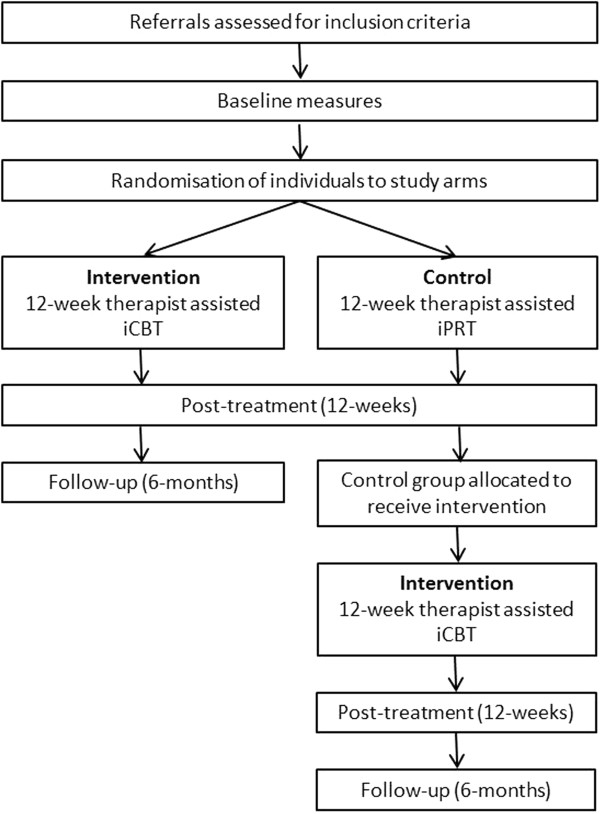
Background: Obsessive-Compulsive Disorder (OCD) is a common chronic psychiatric disorder that constitutes a leading cause of disability. Although Cognitive-Behaviour Therapy (CBT) has been shown to be an effective treatment for OCD, this specialised treatment is unavailable to many due to access issues and the social stigma associated with seeing a mental health specialist. Internet-based psychological treatments have shown to provide effective, accessible and affordable treatment for a range of anxiety disorders, and two Randomised Controlled Trials (RCTs) have demonstrated the efficacy and acceptability of internet-based CBT (iCBT) for OCD, as compared to waitlist or supportive therapy. Although these initial findings are promising, they do not isolate the specific effect of iCBT. This paper details the study protocol for the first randomised control trial evaluating the efficacy of therapist-assisted iCBT for OCD, as compared to a matched control intervention; internet-based therapist-assisted progressive relaxation training (iPRT). It will aim to examine whether therapist-assisted iCBT is an acceptable and efficacious treatment, and to examine how effectiveness is influenced by patient characteristics. Method/design: A randomised controlled trial using repeated measures with two arms (intervention and matched control) will be used to evaluate the efficacy and acceptability of iCBT for OCD. The RCT will randomise 212 Australian adults with a primary diagnosis of OCD into either the active intervention or control condition, for 12 weeks duration. Outcomes for participants in both study arms will be assessed at baseline and post-intervention. Participants in iCBT will be further assessed at six month follow-up, while participants in the control condition will be crossed over to receive the iCBT intervention and reassessed at post-intervention and six month follow-up. The primary outcome will be clinically significant change in obsessive-compulsive symptom scores. Discussion: This will be the first known therapist assisted internet-based trial of a comprehensive CBT treatment for OCD as compared to a matched control intervention. Demonstrating the efficacy of an internet-based treatment for OCD will allow the development of models of care for broad-based access to an evidence-based but complex treatment. © Kyrios et al.
Overview
CoChat Summary
## TL;DR
This is a study protocol for a randomized controlled trial testing therapist-assisted internet-based CBT (iCBT) for OCD against a matched internet-based progressive relaxation training control. The planned trial will randomize 212 Australian adults with primary OCD and measure whether iCBT produces greater clinically significant symptom change and better secondary outcomes.
## Key findings
- The trial is designed to randomize 212 Australian adults with a primary diagnosis of OCD into two arms for 12 weeks.
- The paper’s primary outcome is clinically significant change in obsessive-compulsive symptom scores; the hypothesis is that iCBT will produce greater improvement than the matched control and that gains will be maintained at 6-to-12 month follow-up.
- Sample size planning assumes 33% of the iCBT group and 15% of the control group will achieve clinically significant change in YBOCS scores, corresponding to Cohen’s d ≈ 1.0 for iCBT and d ≈ 0.5 for control; 106 participants per group were required after allowing for attrition.
- At trial status reporting, 197 participants had provided consent, 179 had completed baseline assessments and been randomized, with 91 assigned to intervention and 88 to control.
## Methods
- Design: Randomized controlled trial with repeated measures and two arms: therapist-assisted iCBT versus therapist-assisted internet-based progressive relaxation training (iPRT) as a matched control; the control group later crosses over to iCBT.
- Sample/data: 212 Australian adults aged 18+ with OCD as the primary diagnosis, recruited nationally via media, internet advertising, online treatment services, and referrals; eligibility required DSM-IV OCD on SCID, internet/email access, and no current psychosis, substance abuse, head injury/neurological disorder, or active suicidal ideation.
- Analysis: Primary analyses compare baseline vs post-intervention between groups using repeated measures and multilevel modeling; follow-up outcomes are analyzed for the original iCBT group, with intention-to-treat and completer analyses and checks for attrition bias.
## Limitations
- The paper states the trial is a protocol, so outcomes are not yet reported; effectiveness and acceptability are being tested prospectively.
- The authors note that the specific effect of iCBT was unclear in prior studies because control conditions did not match active treatment elements; this is the rationale for the matched control here.
- Evident from the text: the trial is limited to Australian adults who can use the internet and speak sufficient English, which may restrict generalizability.
Model-written summary. Check it against the paper before relying on it.
Integrity signals
Registry
Cites
Statistics
Figures
Verification
Claims the paper makes
9 Valid · 3 Not valid · 17 Not checked · 13 Own results and interpretations
The cited sources support only part of this claim — read each source’s verdict below.
In the paper
“Systematic reviews and meta-analyses support that CBT programs are effective in reducing OCD symptoms, with effect sizes ranging from 0.8 to 1.24 from pre to post treatment [10–15].”
§ Study protocol for a randomised controlled trial of internet-based cognitive-behavioural therapy for obsessive-compulsive disorder > Background > Cognitive behaviour therapy for OCD
What the sources say
- Not checked — no full text of the sourcecites [10] Abramowitz JS, Taylor S, McKay D: Potentials and limitations of cognitive treatments for obsessive-compulsive disorder. Cogn Behav Ther. 2005, 34: 140-147. 10.1080/16506070510041202. source
- Not matchedcites [11] National Institute for Health and Clinical Excellence (NICE): Core Interventions in the Treatment of OCD and BDD. 2006, London: BPS/Royal College of Psychiatrists
Couldn’t be matched to a paper in Crossref, so it can’t be checked.
- Partly supportedcites [12] Ponniah K, Magiati I, Hollon SD: An update on the efficacy of psychological treatments for obsessive-compulsive disorder in adults. J Obsessive-Compuls Relat Disord. 2013, 2: 207-218. sourceExperimental — accuracy not yet measured
The Results (Cognitive Interventions; page unavailable) report that CBT was superior to wait-list controls in every relevant trial and conclude that it reduces OCD symptoms. The paper does not report the claimed pre-to-post effect-size range of 0.8 to 1.24; searches for those numbers and for pre-to-post effect sizes did not find it. (LLM, conf=0.86)
- Not checked — no full text of the sourcecites [13] Jónsson H, Hougaard E: Group cognitive behavioural therapy for obsessive-compulsive disorder: A systematic review and meta-analysis. Acta Psychiatr Scand. 2009, 119: 98-106. 10.1111/j.1600-0447.2008.01270.x. source
- Not checked — no full text of the sourcecites [14] Olatunji BO, Davis ML, Powers MB, Smits JAJ: Cognitive-behavioral therapy for obsessive-compulsive disorder: A meta-analysis of treatment outcome and moderators. J Psychiatr Res. 2013, 47: 33-41. 10.1016/j.jpsychires.2012.08.020. source
- Partly supportedcites [15] Ougrin D: Efficacy of exposure versus cognitive therapy in anxiety disorders: Systematic review and meta-analysis. BMC Psychiatry. 2011, 11: 200-10.1186/1471-244X-11-200. sourceExperimental — accuracy not yet measured
The Discussion (Implications for Practice; page unavailable) describes CBT as an effective treatment and discusses cognitive therapy and exposure for OCD. The Results (General study characteristics; page unavailable) say the included OCD studies reported pre- and post-treatment Y-BOCS scores, but this paper compares the two therapies rather than reporting pre-to-post effect sizes of 0.8–1.24. That numerical range is not supported by our copy. (LLM, conf=0.86)
plainstates a cause- Asserted: passes — The authors put it forward as true.
- Checkable: passes — It can be checked against evidence.
- Load-bearing: passes — The paper’s conclusions depend on it.
- Based: passes — The paper gives a reason why it holds.
Every source the paper cites for this claim was checked and supports it.
In the paper
“Although therapist contact in the control group was significantly lower than iCBT (129 minutes versus 17 minutes for iCBT and control, respectively), the between groups difference remained significant after therapist contact was statistically controlled.”
§ Study protocol for a randomised controlled trial of internet-based cognitive-behavioural therapy for obsessive-compulsive disorder > Background > Internet-based interventions for OCD Although a relatively new area of investigation, a few open trials have been reported [41, 42], with only two RCTs demonstrating the efficacy and acceptability of internet-based CBT (iCBT) for OCD. The first and largest RCT to date by Andersson et al. [43] comprised 101 individuals with a primary diagnosis of OCD who were not currently receiving counseling, and had no recent history of CBT (2 years) or changes to medication (2 months). Eligible participants were randomly allocated to receive 10-week therapist guided iCBT or a 10-week control condition (online supportive therapy). The iCBT condition was associated with a significant reduction in OCD symptoms (d = 1.55) as measured by the Yale Brown Obsessive Compulsive Scale (YBOCS; [44]), compared to a medium within-group effect size (d = 0.47) for the Control Group. Additionally, there was a large between between-group effect size (d = 1.12) on the YBOCS, and only 6% participants in the control condition met criteria for clinically significant change, compared with 60% in iCBT. The results of iCBT were maintained at 4-month follow up. Although therapist contact in the control group was significantly lower than iCBT (129 minutes versus 17 minutes for iCBT and control, respectively), the between groups difference remained significant after therapist contact was statistically controlled. Nevertheless the specific effect of iCBT is unclear, as the control condition did not provide intervention elements that were experienced as similar to the active treatment (e.g., online self-help information, downloadable audio files, worksheets and homework). Similar results were found in a smaller RCT by Wootton et al. [45] which involved 56 individuals with OCD who were not currently receiving CBT and had not had any changes to medication within the previous month. The authors found that 8-week therapist guided iCBT (N = 17) and therapist guided bibliotherapy (bCBT; N = 20) were effective compared to a waitlist control condition (N = 19; between-group effect sizes of d = 1.57 and 1.40, respectively). The experimental groups were associated with a 47% (bCBT) and 39% (iCBT) reduction in OCD symptoms scores, which were maintained at 3-month follow-up, with a mean total therapist time of approximately 103 minutes for bCBT and 89 minutes for iCBT. The within group effect sizes for the experimental groups were larger than those obtained by self-help versions of the same program [41], suggesting that therapist assisted iCBT had stronger treatment effects. The same research group demonstrated similar efficacy in an earlier open trial of therapist-guided iCBT [46], which was rated as highly acceptable by participants despite their receiving an average of only 86 minutes of therapist contact. These studies demonstrate that large effect sizes, which were comparable to those obtained in face-to-face therapy [47, 48], can be obtained with minimal therapist contact, although follow-up periods have been relatively shorter than in other outcome studies for OCD that usually report 6-to-12 month follow-up data. Given that a standard course of face-to-face CBT would be around 6–12 sessions of one hour, online therapies for OCD are shown to be not only efficacious, but also cost effective. These economic, acceptability and efficacy considerations make it imperative that there is further examination into the utility of online therapy for OCD. In particular, RCTs that compare iCBT to a matched control are required to help isolate whether therapeutic outcomes are due to CBT and are independent of other intervention elements such as treatment credibility, therapist attention, therapeutic alliance, time, and use of an online modality and associated therapeutic tools (e.g., downloadable audiovisual components, homework tasks, etc.). Given the complexity and heterogeneity in presentations of OCD, therapist-assisted programs are best suited to help tailor intervention programs to individual client needs, and to promote treatment engagement and adherence.
What the sources say
- Supportedcites [43] Andersson E, Enander J, Andrén P, Hedman E, Ljótsson B, Hursti T, Bergström J, Kaldo V, Lindefors N, Andersson G, Rück C: Internet-based cognitive behaviour therapy for obsessive-compulsive disorder: A randomized controlled trial. Psychol Med. 2012, 42: 2193-2203. 10.1017/S0033291712000244. source
The Results section (Treatment adherence and attrition) reports 129 minutes of therapist time for ICBT versus 17 minutes for the control group, a significant difference. It also reports that the primary-outcome analysis remained significant after therapist time and number of messages were included as covariates (F=5.73, p<0.05). (LLM, conf=0.94)
plainstates an associationn = 101- Asserted: passes — The authors put it forward as true.
- Checkable: passes — It can be checked against evidence.
- Load-bearing: passes — The paper’s conclusions depend on it.
- Based: passes — The paper gives a reason why it holds.
- Supported
The sources with a verdict support this claim; the rest weren’t checked yet, have no full text we could read, or their verdicts aren’t rated yet.
In the paper
“Internet-based mental health interventions have been established as an effective model for the provision of CBT, without the need for intensive therapist involvement, for a variety of disorders and/or symptoms, including depression [32], panic disorder [26, 33, 34], post-traumatic stress disorder [35], and specific phobias [36].”
§ Study protocol for a randomised controlled trial of internet-based cognitive-behavioural therapy for obsessive-compulsive disorder > Background > Use of internet in mental health treatment to increase accessibility Internet access is increasing across the world [23]. In Australia, the proportion of households with Internet access at home in 2012–13 was 83%, an increase from 79% in 2010–11 [24]. It is not surprising that the majority of people (77%) seek out mental health information from the internet [25]. Hence, internet interventions represent a unique opportunity to deliver evidence-based mental health treatment to large segments of the population, who might otherwise be unable to access such treatment [26, 27]. Internet-based therapy has distinct potential advantages. It allows dissemination of standardised yet personalised treatments, which may include contact with therapists over e-mail or other modes of remote communication (e.g., telephone, video-chat). This is particularly beneficial for patients in geographically isolated regions, who may not have access to specialised mental health professionals. In contrast to face-to-face services, internet-based treatments can be accessed 24 hours a day, 7 days a week, without affecting efficiency while increasing personal convenience and being generally a lower cost option than face-to-face equivalents [28]. A further advantage of internet-based treatments is that they can be easily utilised in conjunction with other treatments, inclusive of pharmacotherapy and face-to-face supports such as supportive psychotherapy, general practice review and other psychological interventions. Particularly important for OCD, internet-based therapies allow anonymity, and in some cohorts experiencing stigma, individuals feel more comfortable with using technology than discussing their concerns in person [29–31]. Internet-based mental health interventions have been established as an effective model for the provision of CBT, without the need for intensive therapist involvement, for a variety of disorders and/or symptoms, including depression [32], panic disorder [26, 33, 34], post-traumatic stress disorder [35], and specific phobias [36]. Reviews of randomised controlled trials (RCTs) of internet interventions with therapist assistance for depressive and anxiety disorders have found reductions in symptoms, relevant cognitions and improvement in patients’ mental health literacy [37–39]. Interventions with therapist-assistance generally show larger effect sizes and lower attrition rates than self-help programs [38], while the amount and nature of the therapists’ experience has not been found to greatly influence the clinical outcome of internet therapy [40].
What the sources say
- Supportedcites [32] Christensen H, Griffiths KM, Jorm AF: Delivering interventions for depression by using the internet: Randomised controlled trial. Br Med J. 2004, 328: 265-268. 10.1136/bmj.37945.566632.EE. source
Citation [32] is attached to depression; the other disorders have separate citations. The Abstract reports that internet-delivered CBT reduced depressive symptoms compared with a control intervention. The Procedures for BluePages and MoodGYM describe weekly guidance by lay interviewers, consistent with delivery without intensive therapist involvement. (LLM, conf=0.92)
- Not checked — no full text of the sourcecites [26] Carlbring P, Ekselius L, Andersson G: Treatment of panic disorder via the Internet: a randomized trial of CBT vs. applied relaxation. J Behav Ther Exp Psychiatry. 2003, 34: 129-140. 10.1016/S0005-7916(03)00026-0. source
- Not checked — no full text of the sourcecites [33] Kenardy J, McCafferty K, Rosa V: Internet-delivered indicated prevention for anxiety disorders: A randomized controlled trial. Behav Cogn Psychother. 2003, 31: 279-289. 10.1017/S1352465803003047. source
- Not checked — no full text of the sourcecites [34] Klein B, Richards JC: A brief internet-based treatment for panic disorder. Behav Cogn Psychother. 2001, 29: 113-117. source
- Not checked — no full text of the sourcecites [35] Lange A, van de Ven JP, Schrieken B: Interapy: Treatment of post-traumatic stress via the internet. Cogn Behav Ther. 2003, 32: 110-124. 10.1080/16506070302317. source
boostedstates a cause- Asserted: passes — The authors put it forward as true.
- Checkable: passes — It can be checked against evidence.
- Load-bearing: passes — The paper’s conclusions depend on it.
- Based: passes — The paper gives a reason why it holds.
- Supported
Every source the paper cites for this claim was checked and supports it.
In the paper
“The results of iCBT were maintained at 4-month follow up.”
§ Study protocol for a randomised controlled trial of internet-based cognitive-behavioural therapy for obsessive-compulsive disorder > Background > Internet-based interventions for OCD Although a relatively new area of investigation, a few open trials have been reported [41, 42], with only two RCTs demonstrating the efficacy and acceptability of internet-based CBT (iCBT) for OCD. The first and largest RCT to date by Andersson et al. [43] comprised 101 individuals with a primary diagnosis of OCD who were not currently receiving counseling, and had no recent history of CBT (2 years) or changes to medication (2 months). Eligible participants were randomly allocated to receive 10-week therapist guided iCBT or a 10-week control condition (online supportive therapy). The iCBT condition was associated with a significant reduction in OCD symptoms (d = 1.55) as measured by the Yale Brown Obsessive Compulsive Scale (YBOCS; [44]), compared to a medium within-group effect size (d = 0.47) for the Control Group. Additionally, there was a large between between-group effect size (d = 1.12) on the YBOCS, and only 6% participants in the control condition met criteria for clinically significant change, compared with 60% in iCBT. The results of iCBT were maintained at 4-month follow up. Although therapist contact in the control group was significantly lower than iCBT (129 minutes versus 17 minutes for iCBT and control, respectively), the between groups difference remained significant after therapist contact was statistically controlled. Nevertheless the specific effect of iCBT is unclear, as the control condition did not provide intervention elements that were experienced as similar to the active treatment (e.g., online self-help information, downloadable audio files, worksheets and homework). Similar results were found in a smaller RCT by Wootton et al. [45] which involved 56 individuals with OCD who were not currently receiving CBT and had not had any changes to medication within the previous month. The authors found that 8-week therapist guided iCBT (N = 17) and therapist guided bibliotherapy (bCBT; N = 20) were effective compared to a waitlist control condition (N = 19; between-group effect sizes of d = 1.57 and 1.40, respectively). The experimental groups were associated with a 47% (bCBT) and 39% (iCBT) reduction in OCD symptoms scores, which were maintained at 3-month follow-up, with a mean total therapist time of approximately 103 minutes for bCBT and 89 minutes for iCBT. The within group effect sizes for the experimental groups were larger than those obtained by self-help versions of the same program [41], suggesting that therapist assisted iCBT had stronger treatment effects. The same research group demonstrated similar efficacy in an earlier open trial of therapist-guided iCBT [46], which was rated as highly acceptable by participants despite their receiving an average of only 86 minutes of therapist contact. These studies demonstrate that large effect sizes, which were comparable to those obtained in face-to-face therapy [47, 48], can be obtained with minimal therapist contact, although follow-up periods have been relatively shorter than in other outcome studies for OCD that usually report 6-to-12 month follow-up data. Given that a standard course of face-to-face CBT would be around 6–12 sessions of one hour, online therapies for OCD are shown to be not only efficacious, but also cost effective. These economic, acceptability and efficacy considerations make it imperative that there is further examination into the utility of online therapy for OCD. In particular, RCTs that compare iCBT to a matched control are required to help isolate whether therapeutic outcomes are due to CBT and are independent of other intervention elements such as treatment credibility, therapist attention, therapeutic alliance, time, and use of an online modality and associated therapeutic tools (e.g., downloadable audiovisual components, homework tasks, etc.). Given the complexity and heterogeneity in presentations of OCD, therapist-assisted programs are best suited to help tailor intervention programs to individual client needs, and to promote treatment engagement and adherence.
What the sources say
- Supportedcites [43] Andersson E, Enander J, Andrén P, Hedman E, Ljótsson B, Hursti T, Bergström J, Kaldo V, Lindefors N, Andersson G, Rück C: Internet-based cognitive behaviour therapy for obsessive-compulsive disorder: A randomized controlled trial. Psychol Med. 2012, 42: 2193-2203. 10.1017/S0033291712000244. source
The Methods section identifies the ICBT assessment as a 4-month follow-up. The Results (Primary outcome measure) state that the improvements were sustained at follow-up, and the Discussion says the results were maintained. Page numbers were not supplied in our copy. (LLM, conf=0.94)
plain- Asserted: passes — The authors put it forward as true.
- Checkable: passes — It can be checked against evidence.
- Load-bearing: unclear — It is unclear whether the paper’s conclusions depend on it.
- Based: passes — The paper gives a reason why it holds.
- Supported
Every source the paper cites for this claim was checked and supports it.
In the paper
“Nevertheless the specific effect of iCBT is unclear, as the control condition did not provide intervention elements that were experienced as similar to the active treatment (e.g., online self-help information, downloadable audio files, worksheets and homework).”
§ Study protocol for a randomised controlled trial of internet-based cognitive-behavioural therapy for obsessive-compulsive disorder > Background > Internet-based interventions for OCD Although a relatively new area of investigation, a few open trials have been reported [41, 42], with only two RCTs demonstrating the efficacy and acceptability of internet-based CBT (iCBT) for OCD. The first and largest RCT to date by Andersson et al. [43] comprised 101 individuals with a primary diagnosis of OCD who were not currently receiving counseling, and had no recent history of CBT (2 years) or changes to medication (2 months). Eligible participants were randomly allocated to receive 10-week therapist guided iCBT or a 10-week control condition (online supportive therapy). The iCBT condition was associated with a significant reduction in OCD symptoms (d = 1.55) as measured by the Yale Brown Obsessive Compulsive Scale (YBOCS; [44]), compared to a medium within-group effect size (d = 0.47) for the Control Group. Additionally, there was a large between between-group effect size (d = 1.12) on the YBOCS, and only 6% participants in the control condition met criteria for clinically significant change, compared with 60% in iCBT. The results of iCBT were maintained at 4-month follow up. Although therapist contact in the control group was significantly lower than iCBT (129 minutes versus 17 minutes for iCBT and control, respectively), the between groups difference remained significant after therapist contact was statistically controlled. Nevertheless the specific effect of iCBT is unclear, as the control condition did not provide intervention elements that were experienced as similar to the active treatment (e.g., online self-help information, downloadable audio files, worksheets and homework). Similar results were found in a smaller RCT by Wootton et al. [45] which involved 56 individuals with OCD who were not currently receiving CBT and had not had any changes to medication within the previous month. The authors found that 8-week therapist guided iCBT (N = 17) and therapist guided bibliotherapy (bCBT; N = 20) were effective compared to a waitlist control condition (N = 19; between-group effect sizes of d = 1.57 and 1.40, respectively). The experimental groups were associated with a 47% (bCBT) and 39% (iCBT) reduction in OCD symptoms scores, which were maintained at 3-month follow-up, with a mean total therapist time of approximately 103 minutes for bCBT and 89 minutes for iCBT. The within group effect sizes for the experimental groups were larger than those obtained by self-help versions of the same program [41], suggesting that therapist assisted iCBT had stronger treatment effects. The same research group demonstrated similar efficacy in an earlier open trial of therapist-guided iCBT [46], which was rated as highly acceptable by participants despite their receiving an average of only 86 minutes of therapist contact. These studies demonstrate that large effect sizes, which were comparable to those obtained in face-to-face therapy [47, 48], can be obtained with minimal therapist contact, although follow-up periods have been relatively shorter than in other outcome studies for OCD that usually report 6-to-12 month follow-up data. Given that a standard course of face-to-face CBT would be around 6–12 sessions of one hour, online therapies for OCD are shown to be not only efficacious, but also cost effective. These economic, acceptability and efficacy considerations make it imperative that there is further examination into the utility of online therapy for OCD. In particular, RCTs that compare iCBT to a matched control are required to help isolate whether therapeutic outcomes are due to CBT and are independent of other intervention elements such as treatment credibility, therapist attention, therapeutic alliance, time, and use of an online modality and associated therapeutic tools (e.g., downloadable audiovisual components, homework tasks, etc.). Given the complexity and heterogeneity in presentations of OCD, therapist-assisted programs are best suited to help tailor intervention programs to individual client needs, and to promote treatment engagement and adherence.
What the sources say
- Supportedcites [43] Andersson E, Enander J, Andrén P, Hedman E, Ljótsson B, Hursti T, Bergström J, Kaldo V, Lindefors N, Andersson G, Rück C: Internet-based cognitive behaviour therapy for obsessive-compulsive disorder: A randomized controlled trial. Psychol Med. 2012, 42: 2193-2203. 10.1017/S0033291712000244. source
The Methods (Interventions; page not available) describe self-help texts, worksheets and downloadable mp3 files in iCBT, while the control offered supportive therapist contact without self-help texts or worksheets. The Discussion acknowledges that differences between groups might be due to non-specific factors, supporting the claim that the treatment-specific effect was unclear. (LLM, conf=0.88)
plain- Asserted: passes — The authors put it forward as true.
- Checkable: passes — It can be checked against evidence.
- Load-bearing: passes — The paper’s conclusions depend on it.
- Based: passes — The paper gives a reason why it holds.
- Supported
6 more claims
Create a free account to see all 42 claims and every source verdict.
- It may state two separate claims as one. 23
- Probably not a substantial claim. 14
Citations
Cites
Hamilton, M. (1960) · Journal of Neurology, Neurosurgery & Psychiatry · doi:10.1136/jnnp.23.1.56 · Cited by 32,817 · cited 1×
“Mental health Hamilton Rating Scale for Depression (HRSD) [59] x x X”
MethodLovibond, P. F., & Lovibond, S. H. (1995) · Behaviour Research and Therapy · doi:10.1016/0005-7967(94)00075-u · Cited by 14,523
The assessment of anxiety states by rating
HAMILTON, M. (1959) · British Journal of Medical Psychology · doi:10.1111/j.2044-8341.1959.tb00467.x · Cited by 11,455 · cited 1×
“Hamilton Rating Scale for Anxiety (HRSA) [60] x x x”
Method(1976) · Medical Entomology and Zoology · Cited by 8,899
Jacobson, N. S., & Truax, P. (1991) · Journal of Consulting and Clinical Psychology · doi:10.1037/0022-006x.59.1.12 · Cited by 7,770 · cited 1×
“Clinically significant change will be based on a combination of reliable reduction in YBOCS scores and posttreatment YBOCS outside the clinical range [74].”
MethodThe Yale-Brown Obsessive Compulsive Scale: I. Development, Use, and Reliability
Goodman, W. K. (1989) · Archives of General Psychiatry · doi:10.1001/archpsyc.1989.01810110048007 · Cited by 7,712 · cited 8×
“OCD severity Yale-Brown Obsessive-Compulsive Scale (YBOCS) [44] x x x”
MethodInfluential(1995) · Cited by 6,909
Moher, D., Schulz, K. F., & Altman, D. G. (2001) · The Lancet · doi:10.1016/s0140-6736(00)04337-3 · Cited by 5,373
Structured clinical interview for DSM-IV axis I disorders : SCID-I : clinical version : scoresheet
First, M. B., Spitzer, R. L., Gibbon, M., & Williams, J. B. W. (1997) · American Psychiatric Press eBooks · Cited by 3,101
The Obsessive-Compulsive Inventory: Development and validation of a short version.
Foa, E. B., Huppert, J. D., Leiberg, S., Langner, R., Kichic, R., Hajcak, G., & Salkovskis, P. M. (2002) · Psychological Assessment · doi:10.1037/1040-3590.14.4.485 · Cited by 2,959 · cited 1×
“Obsessive-Compulsive Inventory (OCI) [57] x x x”
Research works printed but not linked: 5
- Ayuso-Mateos JL: Global Burden of Obsessive-compulsive Disorder in the Year 2000. 2006, Geneva: World Health Organization
- American Psychiatric Association [APA]: Diagnostic and Statistical Manual - Text Revision (DSM-IV-TR). 2000, Washington, DC: American Psychiatric Association, 4
- National Institute for Health and Clinical Excellence (NICE): Core Interventions in the Treatment of OCD and BDD. 2006, London: BPS/Royal College of Psychiatrists
- Hawthorne G, Richardson J, Osborne R, McNeil H: The Australian Quality Of Life (AQoL) Instrument. 1997, Melbourne: Centre for Health Program Evaluation
- Nedeljkovic M: Protocol for an Economic Evaluation of an Internet-based Psychological Intervention for Obsessive-Compulsive Disorder: Conducting an Economic Evaluation Alongside a Randomised Controlled Trial. Masters Thesis. 2011, Melbourne: The University of Melbourne, School of Population Health
Cited by
Kumar, V., Sattar, Y., Bseiso, A., Khan, S., & Rutkofsky, I. H. (2017) · Cureus · doi:10.7759/cureus.1626 · Cited by 105
Kyrios, M., Ahern, C., Fassnacht, D. B., Nedeljkovic, M., Moulding, R., & Meyer, D. (2018) · Journal of Medical Internet Research · doi:10.2196/jmir.9566 · Cited by 90
Self-citationThomas, N., Farhall, J., Foley, F., Leitan, N., Villagonzalo, K.-A., Ladd, E., Nunan, C., Farnan, S., Frankish, R., Smark, T., et al. (2016) · Frontiers in Psychiatry · doi:10.3389/fpsyt.2016.00196 · Cited by 70
“(43, 44)], this is the first online intervention, we are aware of, that has an explicit focus on lived experience material as the main vehicle for change.”
BackgroundSelf-citationPearcy, C. P., Anderson, R. A., Egan, S. J., & Rees, C. S. (2016) · Journal of Behavior Therapy and Experimental Psychiatry · doi:10.1016/j.jbtep.2015.12.007 · Cited by 66
Fitzpatrick, M., Nedeljkovic, M., Abbott, J.-A., Kyrios, M., & Moulding, R. (2018) · Internet Interventions · doi:10.1016/j.invent.2018.02.006 · Cited by 42
Self-citation
Metadata
- Authors
- Kyrios, M., Nedeljkovic, M., Moulding, R., Klein, B., Austin, D., Meyer, D., & Ahern, C.
- Affiliations
- Swinburne University of Technology (AU)
- Deakin University (AU)
- Australian National University (AU)
- Corresponding author
- Kyrios, Michael
- Venue
- BMC Psychiatry
- Published
- 2014-07-25
- Volume
- 14
- Issue
- 1
- Pages
- 209-209
- ISSN
- 1471-244X (ISSN-L)
- PMC
- PMC4222668
- OpenAlex
- W2098797155
- Cited by
- 12
- References
- 82
- Citations by year
- 2025: 1 · 2021: 1 · 2020: 1 · 2019: 1 · 2018: 3 · 2017: 2 · 2016: 1 · 2015: 1
- FWCI
- 1.79
- Type
- journal article
- Language
- en
- Open access
- gold
- doi.org
- Licence
- Locations
- BMC Psychiatry (publishedVersion, cc-by)
- PubMed (publishedVersion)
- Europe PMC (PubMed Central) (submittedVersion, cc-by)
- PubMed Central (submittedVersion, cc-by)
- FedUni ResearchOnline (Federation University Australia) (submittedVersion)
- Deakin Research Online (Deakin University) (submittedVersion)
- Figshare (submittedVersion, cc-by)
- ANU Open Research (Australian National University) (submittedVersion, cc-by)
- Swinburne figshare (Swinburne University of Technology) (submittedVersion, cc-by)
- Topics
- Social Sciences › Psychology › Clinical Psychology › Obsessive-Compulsive Spectrum Disorders
- Social Sciences › Psychology › Applied Psychology › Digital Mental Health Interventions
- Social Sciences › Sociology and Political Science › Impact of Technology on Adolescents
- Keywords
- obsessive-compulsive disorder, internet-based cognitive behavioral therapy, progressive muscle relaxation, treatment efficacy, acceptability, obsessive-compulsive symptoms, models of care, access to mental health care
- MeSH terms
- Adult, Anxiety Disorders, Australia, Female, Humans, Male, Obsessive-Compulsive Disorder, Research Design, Waiting Lists
About these checks
Registry, retraction, Cites and statistics results are computed, not judged, with one exception: a printed reference that no index lists is read once by a model before it counts as a citation error. Claims are extracted by a model and kept only when their quote appears verbatim in the text; each cited source is then checked, with a model’s help, for whether it says what the claim relies on. Those verdicts can be wrong — read the claim’s quote and the cited source before relying on one.
The claim verdicts this report counts are experimental: their accuracy is not yet measured.
A language model drew the claims from the paper on 2026-10-11, under version 3 of the claim definition (model deepseek-v4.1-flash, prompt extract-v3).
A second model labelled each claim on 2026-10-11 (model jev-1.13-20260917, definition revision gold-guideline-v0.2).
Cited sources are checked with a language model’s help (gpt-6-sol).
Statistics and arithmetic are recomputed, not judged.
Confidence bands are shown only for fields calibrated on our annotated test set. None is calibrated yet, so no band is shown.
What counts as a claim ›How we measure confidence ›How we check this ›
Are you an author, or do you see a problem with this page? Request a review
How to cite
Cite CoChat for the checks on this page, and the paper for its own findings.
- This page
- CoChat. (2026). Citation check: Study protocol for a randomised controlled trial of internet-based cognitive-behavioural therapy for obsessive-compulsive disorder. https://app.cochat.ai/papers/10.1186/1471-244x-14-209
- The paper
- Kyrios, M., Nedeljkovic, M., Moulding, R., Klein, B., Austin, D., Meyer, D., & Ahern, C. (2014). Study protocol for a randomised controlled trial of internet-based cognitive-behavioural therapy for obsessive-compulsive disorder. BMC Psychiatry. https://doi.org/10.1186/1471-244x-14-209
Data sources
Bibliographic data: Semantic Scholar, OpenAlex, Crossref.
Contains information from the Semantic Scholar Academic Graph Datasets, made available under the ODC Attribution License (ODC-BY 1.0).
Semantic Scholar’s data is described in: Kinney, R., et al. (2023). The Semantic Scholar Open Data Platform. arXiv:2301.10140.
