

The effectiveness of integrated treatment in patients with substance use disorders co-occurring with anxiety and/or depression--a group randomized trial
Open accessThe DOI matches its Crossref record; 79 of the 79 references it cites were found in a registry or an index.
Abstract
BACKGROUND: Integrated Treatment (IT) has proved effective in treating patients with Substance Use Disorders (SUD) co-occurring with severe Mental Disorders (MD), less is known about the effectiveness of IT for patients with SUD co-occurring with less severe MD.The aim of this study was to investigate the effectiveness of IT for patients with SUD co-occurring with anxiety and/or depression on the following parameters:1. The use of substances, as measured by the Alcohol Use Identification Test (AUDIT), the Drug Use Identification Test (DUDIT), and the Addiction Severity Index (EuropASI).2. The severity of psychiatric symptoms, as measured by the Symptom Check List 90 r (SCL 90R).3. The client's motivation for changing his/her substance use behaviour, as measured by the Substance Abuse Treatment Scale (SATSr). METHODS: This is a group randomized clinical trial comparing the effectiveness of IT to treatment as usual in Community Mental Health Centres (CMHCs). Five CMHCs were drawn to the Intervention Group (IG) and four CMHCs to the Control Group (CG). The allocation to treatment conditions was not blinded. New referrals were screened with the AUDIT and the DUDIT. Those who scored above the cut-off level of these instruments were assessed with the Structured Clinical Interview for DSM-IV 1 and 2. We included patients with anxiety and/or depression together with one or more SUDs. RESULTS: We included 55 patients in the IG and 21 in the CG. A linear multilevel model was used. Both groups reduced their alcohol and substance use during the trial, while there was no change in psychiatric symptoms in either group. However, the IG had a greater increase in motivation for substance use treatment after 12 months than had the CG with an estimate of 1.76, p = 0.043, CI95% (0.08; 3.44) (adjusted analyses). There were no adverse events. CONCLUSIONS: Integrated treatment is effective in increasing the motivation for treatment amongst patients with anxiety and/or depression together with SUD in outpatient clinics. TRIAL REGISTRATION: ClinicalTrials.gov: NCT00447733.
Overview
The claims and statistics of this paper haven’t been checked yet.
Free: it reads the open-access text and checks the first 5 claims that cite a source we can check. Create a free account to check every claim.
Integrity signals
Registry
Cites
Statistics
Figures
Verification
Claims the paper makes
The claims and statistics of this paper haven’t been checked yet.
Free: it reads the open-access text and checks the first 5 claims that cite a source we can check. Create a free account to check every claim.
Claims other papers make about this one
Each is checked against this paper’s own text: does it say what the citing paper says it does?
The cited source says what the claim attributes to it.
In the citing paper
“Only one study considered multiple substances and this sample was still largely alcohol focused.(Wüsthoff et al., 2014)”
From A systematic review and meta-analysis of psychosocial interventions for persons with comorbid anxiety and substance use disorders (2024) · cites this paper as Wüsthoff et al., 2014
Self-check
Percentages, sums and reported differences re-computed from the paper’s own numbers.
The self-check needs the paper’s full text.
Citations
Cites
Kessler, R. C., Berglund, P., Demler, O., Jin, R., Merikangas, K. R., & Walters, E. E. (2005) · Archives of General Psychiatry · doi:10.1001/archpsyc.62.6.593 · Cited by 20,391 · cited 1×
“Background Substance use disorders (SUD) are among the most common mental disorders (MD) with lifetime prevalence between 15 and 27% [1-3].”
BackgroundSAUNDERS, J. B., AASLAND, O. G., BABOR, T. F., DE LA FUENTE, J. R., & GRANT, M. (1993) · Addiction · doi:10.1111/j.1360-0443.1993.tb02093.x · Cited by 13,597 · cited 14×
“To be able to measure change in substance use during the 12 months of follow-up, the instructions for the AUDIT and the DUDIT were altered to cover substance use during the last 6 months instead of the original last 12 months.”
MethodInfluentialCONSORT 2010 Statement: updated guidelines for reporting parallel group randomised trials
the CONSORT Group, Schulz, K. F., Altman, D. G., & Moher, D. (2010) · BMC Medicine · doi:10.1186/1741-7015-8-18 · Cited by 13,371
Kessler, R. C. (1994) · Archives of General Psychiatry · doi:10.1001/archpsyc.1994.03950010008002 · Cited by 12,370 · cited 1×
“Background Substance use disorders (SUD) are among the most common mental disorders (MD) with lifetime prevalence between 15 and 27% [1-3].”
BackgroundDiagnostic and Statistical Manual of Mental Disorders, Fourth Edition, Text Revision (DSM-IV-TR)
American Psychiatric Association (2000) · doi:10.1176/appi.books.9780890423349 · Cited by 11,069
Moher, D., Hopewell, S., Schulz, K. F., Montori, V., Gotzsche, P. C., Devereaux, P. J., Elbourne, D., Egger, M., & Altman, D. G. (2010) · BMJ · doi:10.1136/bmj.c869 · Cited by 8,883 · cited 1×
“This article is to a large extent structured as recommended by the Consort group for reporting on group RCTs [68-75].”
MethodMotivational interviewing: preparing people for change.
Miller, W. R., & Rollnick, S. (2002) · Guilford Press eBooks · Cited by 7,915
Moher, D., Schulz, K. F., & Altman, D. G. (2001) · The Lancet · doi:10.1016/s0140-6736(00)04337-3 · Cited by 5,373
From best evidence to best practice: effective implementation of change in patients' care
Grol, R., & Grimshaw, J. (2003) · The Lancet · doi:10.1016/s0140-6736(03)14546-1 · Cited by 4,531
(1991) · Medical Entomology and Zoology · Cited by 4,438
Regier, D. A. (1990) · JAMA · doi:10.1001/jama.1990.03450190043026 · Cited by 3,962 · cited 2×
“A high comorbidity between MD and SUD is established from numerous studies [1,4-7].”
BackgroundThe Revised CONSORT Statement for Reporting Randomized Trials: Explanation and Elaboration
Altman, D. G., Schulz, K. F., Moher, D., Egger, M., Davidoff, F., Elbourne, D., Gøtzsche, P. C., Lang, T., & for the CONSORT Group (2001) · Annals of Internal Medicine · doi:10.7326/0003-4819-134-8-200104170-00012 · Cited by 3,835 · cited 1×
“This article is to a large extent structured as recommended by the Consort group for reporting on group RCTs [68-75].”
MethodConsort 2010 statement: extension to cluster randomised trials
Campbell, M. K., Piaggio, G., Elbourne, D. R., Altman, D. G., & for the CONSORT Group (2012) · BMJ · doi:10.1136/bmj.e5661 · Cited by 3,510
McLELLAN, A. T., LUBORSKY, L., WOODY, G. E., & O??BRIEN, C. P. (1980) · The Journal of Nervous and Mental Disease · doi:10.1097/00005053-198001000-00006 · Cited by 3,188 · cited 1×
“Their scoring of case-vignettes with the EuropASI, chapter E, [33,34] was evaluated by a certified teacher.”
Method(1997) · American Psychiatric Press eBooks · Cited by 3,056
Hasin, D. S., Stinson, F. S., Ogburn, E., & Grant, B. F. (2007) · Archives of General Psychiatry · doi:10.1001/archpsyc.64.7.830 · Cited by 2,908 · cited 1×
“A high comorbidity between MD and SUD is established from numerous studies [1,4-7].”
BackgroundMoher, D., Schulz, K. F., & Altman, D. G. (2001) · BMC Medical Research Methodology · doi:10.1186/1471-2288-1-2 · Cited by 2,755 · cited 1×
“This article is to a large extent structured as recommended by the Consort group for reporting on group RCTs [68-75].”
MethodCONSORT statement: extension to cluster randomised trials
Campbell, M. K., Elbourne, D. R., & Altman, D. G. (2004) · BMJ · doi:10.1136/bmj.328.7441.702 · Cited by 2,557 · cited 1×
“This article is to a large extent structured as recommended by the Consort group for reporting on group RCTs [68-75].”
MethodCONSORT 2010 statement: updated guidelines for reporting parallel group randomised trials
Schulz, K. F., Altman, D. G., Moher, D., & for the CONSORT Group (2010) · PLoS Medicine · doi:10.1371/journal.pmed.1000251 · Cited by 2,296
Regier, D. A., Farmer, M. E., Rae, D. S., et al. (1990) · PubMed · Cited by 1,913
Moher, D., Hopewell, S., Schulz, K. F., Montori, V., Gøtzsche, P. C., Devereaux, P. J., Elbourne, D., Egger, M., & Altman, D. G. (2010) · Journal of Clinical Epidemiology · doi:10.1016/j.jclinepi.2010.03.004 · Cited by 1,858
Confirmation of the dimensional structure of the scl-90: A study in construct validation
Derogatis, L. R., & Cleary, P. A. (1977) · Journal of Clinical Psychology · doi:10.1002/1097-4679(197710)33:4<981::aid-jclp2270330412>3.0.co;2-0 · Cited by 1,563 · cited 2×
“To examine the change in psychiatric symptoms in regard to anxiety and depression during the course of the trial, we used the sum scores of the SCL-90R anxiety, depression and general severity indexes.”
MethodSystems of psychotherapy a transtheoretical analysis
Prochaska, J. O., & Norcross, J. C. (2010) · Cited by 1,487
Revising axis V for DSM-IV: a review of measures of social functioning
(1992) · American Journal of Psychiatry · doi:10.1176/ajp.149.9.1148 · Cited by 1,407 · cited 1×
“At baseline and both follow up interviews the included patients were assessed with the Symptom Check List 90 (SCL-90R) [40-42], the European Addiction Severity Index (EuropASI), chapter E, the Health of the Nation Outcome Scale (HoNOS) [43,44], the Alcohol Use Scale (AUS), the Drug Use Scale (DUS) [45,46], the Global…”
MethodThe alcohol use disorders identification test: an update of research findings
Reinert, D. F., & Allen, J. P. (2007) · Alcoholism: Clinical and Experimental Research · doi:10.1111/j.1530-0277.2006.00295.x · Cited by 1,397 · cited 1×
“The cut offs for the AUDIT were set to 6 for women and 8 for men [37].”
MethodMotivational interviewing with problem drinkers
Miller, W. R. (1983) · Behavioural Psychotherapy · doi:10.1017/s0141347300006583 · Cited by 1,390 · cited 1×
“This treatment should be comprehensive, assertive, focusing on both rehabilitation and harm-reduction, having a long-term perspective and use multiple, evidence based therapeutic modalities like Motivational Interviewing (MI) [21-23] and Cognitive Behavioural Therapy (CBT) [24,25].”
BackgroundKessler, R. C., Nelson, C. B., McGonagle, K. A., Edlund, M. J., Frank, R. G., & Leaf, P. J. (1996) · American Journal of Orthopsychiatry · doi:10.1037/h0080151 · Cited by 1,378 · cited 1×
“A high comorbidity between MD and SUD is established from numerous studies [1,4-7].”
BackgroundHealth of the Nation Outcome Scales (HoNOS): Research and development
Wing, J. K., Beevor, A. S., Curtis, R. H., Park, S. G. B., Hadden, J., & Burns, A. (1998) · British Journal of Psychiatry · doi:10.1192/bjp.172.1.11 · Cited by 1,203
Berman, A. H., Bergman, H., Palmstierna, T., & Schlyter, F. (2005) · European Addiction Research · doi:10.1159/000081413 · Cited by 977 · cited 15×
“To be able to measure change in substance use during the 12 months of follow-up, the instructions for the AUDIT and the DUDIT were altered to cover substance use during the last 6 months instead of the original last 12 months.”
MethodInfluentialComorbidity of substance use disorders with mood and anxiety disorders
Merikangas, K. R., Mehta, R. L., Molnar, B. E., Walters, E. E., Swendsen, J. D., Aguilar-Gaziola, S., Bijl, R., Borges, G., Caraveo-Anduaga, J. J., Dewit, D. J., et al. (1998) · Addictive Behaviors · doi:10.1016/s0306-4603(98)00076-8 · Cited by 725 · cited 1×
“A high comorbidity between MD and SUD is established from numerous studies [1,4-7].”
BackgroundHopewell, S., Clarke, M., Moher, D., Wager, E., Middleton, P., Altman, D. G., Schulz, K. F., & and the CONSORT Group (2008) · PLoS Medicine · doi:10.1371/journal.pmed.0050020 · Cited by 674 · cited 1×
“This article is to a large extent structured as recommended by the Consort group for reporting on group RCTs [68-75].”
MethodCognitive-behavioral interventions : theory, research, and procedures
Kendall, P. C., & Hollon, S. D. (1979) · Cited by 620
Kokkevi, A., & Hartgers, C. (1995) · European Addiction Research · doi:10.1159/000259089 · Cited by 542 · cited 1×
“Their scoring of case-vignettes with the EuropASI, chapter E, [33,34] was evaluated by a certified teacher.”
MethodBoutron, I., Moher, D., Altman, D. G., Schulz, K. F., Ravaud, P., & for the CONSORT Group* (2008) · Annals of Internal Medicine · doi:10.7326/0003-4819-148-4-200802190-00008-w1 · Cited by 523 · cited 1×
“This article is to a large extent structured as recommended by the Consort group for reporting on group RCTs [68-75].”
MethodDiagnosis of Alcohol Use Disorders in Schizophrenia
Drake, R. E., Osher, F. C., Noordsy, D. L., Hurlbut, S. C., Teague, G. B., & Beaudett, M. S. (1990) · Schizophrenia Bulletin · doi:10.1093/schbul/16.1.57 · Cited by 497 · cited 1×
“At baseline and both follow up interviews the included patients were assessed with the Symptom Check List 90 (SCL-90R) [40-42], the European Addiction Severity Index (EuropASI), chapter E, the Health of the Nation Outcome Scale (HoNOS) [43,44], the Alcohol Use Scale (AUS), the Drug Use Scale (DUS) [45,46], the Global…”
MethodAlcohol Use and Abuse in Schizophrenia: A Prospective Community Study
DRAKE, R. E., OSHER, F. C., & WALLACH, M. A. (1989) · The Journal of Nervous and Mental Disease · doi:10.1097/00005053-198907000-00004 · Cited by 470 · cited 1×
“This comorbidity is associated with poorer effect of treatment resulting in poorer psychosocial functioning, a higher number of days in treatment, higher attrition from treatment, more admissions, and a higher burden of disease from both their MD and SUD [8-14].”
BackgroundMotivational interviewing: Research, practice, and puzzles
Miller, W. R. (1996) · Addictive Behaviors · doi:10.1016/0306-4603(96)00044-5 · Cited by 465 · cited 2×
“The use of integrated depression and alcohol treatment with CBT as the main modality has shown a greater improvement compared to TAU in depressive symptoms in patients comorbid of depression and alcohol use disorder after 3 and 6 months of follow up [60,61].”
BackgroundMethodCONSORT for reporting randomised trials in journal and conference abstracts
Hopewell, S., Clarke, M., Moher, D., Wager, E., Middleton, P., Altman, D. G., & Schulz, K. F. (2008) · The Lancet · doi:10.1016/s0140-6736(07)61835-2 · Cited by 458 · cited 1×
“This article is to a large extent structured as recommended by the Consort group for reporting on group RCTs [68-75].”
MethodDrug and Alcohol Problems among Individuals with Severe Mental Illnesses in South London
Menezes, P. R., Johnson, S., Thornicroft, G., Marshall, J., Prosser, D., Bebbington, P., & Kuipers, E. (1996) · British Journal of Psychiatry · doi:10.1192/bjp.168.5.612 · Cited by 373 · cited 1×
“This comorbidity is associated with poorer effect of treatment resulting in poorer psychosocial functioning, a higher number of days in treatment, higher attrition from treatment, more admissions, and a higher burden of disease from both their MD and SUD [8-14].”
BackgroundIntegrated Treatment for Dual Disorders: A Guide to Effective Practice
Albanese, M. J. (2004) · Psychiatric Services · doi:10.1176/appi.ps.55.8.953 · Cited by 366
Factorial invariance across gender for the primary symptom dimensions of the SCL‐90
Derogatis, L. R., & Cleary, P. A. (1977) · British Journal of Social and Clinical Psychology · doi:10.1111/j.2044-8260.1977.tb00241.x · Cited by 364 · cited 2×
“To examine the change in psychiatric symptoms in regard to anxiety and depression during the course of the trial, we used the sum scores of the SCL-90R anxiety, depression and general severity indexes.”
MethodTreatment of Patients With Psychiatric and Psychoactive Substance Abuse Disorders
Osher, F. C., & Kofoed, L. L. (1989) · Psychiatric Services · doi:10.1176/ps.40.10.1025 · Cited by 342 · cited 1×
“This approach is based on the Stages of Change [50,51] and the closely related Stages of Treatment [52].”
MethodThe Role of Psychiatric Disorders in Predicting Drug Dependence Treatment Outcomes
Compton III, W. M., Cottler, L. B., Jacobs, J. L., Ben-Abdallah, A., & Spitznagel, E. L. (2003) · American Journal of Psychiatry · doi:10.1176/appi.ajp.160.5.890 · Cited by 309 · cited 1×
“This comorbidity is associated with poorer effect of treatment resulting in poorer psychosocial functioning, a higher number of days in treatment, higher attrition from treatment, more admissions, and a higher burden of disease from both their MD and SUD [8-14].”
BackgroundThe course, treatment, and outcome of substance disorder in persons with severe mental illness.
Drake, R. E., Mueser, K. T., Clark, R. E., & Wallach, M. A. (1996) · American Journal of Orthopsychiatry · doi:10.1037/h0080153 · Cited by 283 · cited 2×
“This has often resulted in sequential or parallel treatment approaches, which tend to result in poor treatment outcomes, [12,16-18].”
BackgroundMethodGOLDMAN, M. J. (1992) · American Journal of Psychiatry · doi:10.1176/ajp.149.8.1119-a · Cited by 282
An Integrated Treatment Model for Dual Diagnosis of Psychosis and Addiction
Minkoff, K. (1989) · Psychiatric Services · doi:10.1176/ps.40.10.1031 · Cited by 281 · cited 1×
“To overcome these difficulties, the Integrated Treatment (IT) approach was developed in the United States at the end of the 1980’s [18,19] and clinical guidelines to this treatment were later described by Minkoff [20].”
MethodPsychosocial Interventions for People With Both Severe Mental Illness and Substance Misuse
Hunt, G. E., Siegfried, N., Morley, K., Sitharthan, T., & Cleary, M. (2014) · Schizophrenia Bulletin · doi:10.1093/schbul/sbt160 · Cited by 266
How important is treatment? One-year outcomes of treated and untreated alcohol-dependent individuals
Weisner, C., Matzger, H., & Kaskutas, L. A. (2003) · Addiction · doi:10.1046/j.1360-0443.2003.00438.x · Cited by 239
Substance Abuse in Schizophrenia: Service Utilization and Costs
BARTELS, S. J., TEAGUE, G. B., DRAKE, R. E., CLARK, R. E., BUSH, P. W., & NOORDSY, D. L. (1993) · The Journal of Nervous and Mental Disease · doi:10.1097/00005053-199304000-00003 · Cited by 226
Schizophrenia and Co-Occurring Substance Use Disorder
Green, A. I., Drake, R. E., Brunette, M. F., & Noordsy, D. L. (2007) · American Journal of Psychiatry · doi:10.1176/ajp.2007.164.3.402 · Cited by 213
The impact of a brief motivational intervention with opiate users attending a methadone programme
SAUNDERS, B., WILKINSON, C., & PHILLIPS, M. (2006) · Addiction · doi:10.1046/j.1360-0443.1995.90341510.x · Cited by 212 · cited 1×
“The use of integrated depression and alcohol treatment with CBT as the main modality has shown a greater improvement compared to TAU in depressive symptoms in patients comorbid of depression and alcohol use disorder after 3 and 6 months of follow up [60,61].”
MethodSubstance Abuse Treatment for Persons With Co-Occurring Disorders
Sacks, S., Ries, R. K., & Ziedonis, D. M. (2005) · The Journal of the American Medical Association (JAMA) Network (American Medical Association) · Cited by 205
The pragmatic randomised controlled trial
Hotopf, M. (2002) · Advances in Psychiatric Treatment · doi:10.1192/apt.8.5.326 · Cited by 188 · cited 1×
“TAU is a difficult term to define as it depends greatly on the preference, skills, knowledge and resources of the therapists delivering it [32].”
BackgroundKypri, K., Langley, J. D., Saunders, J. B., & Cashell‐Smith, M. L. (2007) · Addiction · doi:10.1111/j.1360-0443.2006.01632.x · Cited by 172 · cited 1×
“It may also be an effect of the assessment itself and thereby blurring experimental contrast [55,56].”
BackgroundA Scale for Assessing the Stage of Substance Abuse Treatment in Persons with Severe Mental Illness
McHUGO, G. J., DRAKE, R. E., BURTON, H. L., & ACKERSON, T. H. (1995) · The Journal of Nervous and Mental Disease · doi:10.1097/00005053-199512000-00006 · Cited by 167
Health of the Nation Outcome Scales (HoNOS): Glossary for HoNOS score sheet
Wing, J., Curtis, R. H., & Beevor, A. (1999) · The British Journal of Psychiatry · doi:10.1192/bjp.174.5.432 · Cited by 160
McLellan, A. T., Luborsky, L. B., WOODY, G. E., & O'Brien, C. P. (1980) · PsycTESTS Dataset · doi:10.1037/t00025-000 · Cited by 153
Burnam, M. A., Morton, S. C., McGlynn, E. A., Petersen, L. P., Stecher, B. M., Hayes, C., & Vaccaro, J. V. (1996) · Journal of Addictive Diseases · doi:10.1300/j069v14n04_07 · Cited by 148 · cited 1×
“This problem is even more evident in research involving people with SUD that commonly present with high attrition rates from both treatment and clinical trials [64,65].”
BackgroundBaker, A. L., Kavanagh, D. J., Kay‐Lambkin, F. J., Hunt, S. A., Lewin, T. J., Carr, V. J., & Connolly, J. (2010) · Addiction · doi:10.1111/j.1360-0443.2009.02757.x · Cited by 146 · cited 1×
“A review from 2009 found a statistically significant reduction in the use of alcohol and/or other substances with the use of Integrated Treatment amongst people with SUD and co-occurring anxiety and/or depression [57] and the use of integrated depression and alcohol treatment with CBT as the main modality has shown a…”
BackgroundRehabilitation for Adults with Severe Mental Illness and Substance Use Disorders: A Clinical Trial
LEHMAN, A. F., HERRON, J. D., SCHWARTZ, R. P., & MYERS, C. P. (1993) · The Journal of Nervous and Mental Disease · doi:10.1097/00005053-199302000-00003 · Cited by 145 · cited 1×
“This problem is even more evident in research involving people with SUD that commonly present with high attrition rates from both treatment and clinical trials [64,65].”
BackgroundHesse, M. (2009) · BMC Psychiatry · doi:10.1186/1471-244x-9-6 · Cited by 130 · cited 2×
“A review from 2009 found a statistically significant reduction in the use of alcohol and/or other substances with the use of Integrated Treatment amongst people with SUD and co-occurring anxiety and/or depression [57] and the use of integrated depression and alcohol treatment with CBT as the main modality has shown a…”
Psychosocial interventions for people with both severe mental illness and substance misuse
Cleary, M., Hunt, G. E., Matheson, S. L., Siegfried, N., & Walter, G. (2008) · Cochrane Database of Systematic Reviews · doi:10.1002/14651858.cd001088.pub2 · Cited by 128
Integrated versus parallel treatment of co-occurring psychiatric and substance use disorders
Mangrum, L. F., Spence, R. T., & Lopez, M. (2006) · Journal of Substance Abuse Treatment · doi:10.1016/j.jsat.2005.10.004 · Cited by 108 · cited 1×
“This has often resulted in sequential or parallel treatment approaches, which tend to result in poor treatment outcomes, [12,16-18].”
BackgroundThomas, T. K., Masaba, R. O., Borkowf, C. B., Ndivo, R., Zeh, C. E., Misore, A. O., Otieno, J., Jamieson, D. J., Thigpen, M. C., Bulterys, M., et al. (2011) · Cited by 99
Sacks, S., Chaple, M., Sirikantraporn, J., Sacks, J. Y., Knickman, J. R., & Martinez, J. (2013) · Journal of Substance Abuse Treatment · doi:10.1016/j.jsat.2012.11.001 · Cited by 71 · cited 1×
“One of the difficulties in treating this comorbidity is that treatment services may lack sufficient combined expertise to treat both types of disorders [15].”
BackgroundSacks, S., & Ries, R. K. (2005) · Cited by 69
Substance Abuse Treatment and the Stages of Change
Marlatt, A. G. (2002) · Addiction · doi:10.1046/j.1360-0443.2002.t01-8-00166.x · Cited by 68 · cited 1×
“This approach is based on the Stages of Change [50,51] and the closely related Stages of Treatment [52].”
MethodBaker, K. D., Lubman, D. I., Cosgrave, E. M., Killackey, E. J., Pan Yuen, H., Hides, L., Baksheev, G. N., Buckby, J. A., & Yung, A. R. (2007) · Australian & New Zealand Journal of Psychiatry · doi:10.1080/00048670701634986 · Cited by 60 · cited 1×
“This comorbidity is associated with poorer effect of treatment resulting in poorer psychosocial functioning, a higher number of days in treatment, higher attrition from treatment, more admissions, and a higher burden of disease from both their MD and SUD [8-14].”
BackgroundSchizophrenia and Co-Occurring Substance Use Disorder
Green, A. I. (2007) · American Journal of Psychiatry · doi:10.1176/appi.ajp.164.3.402 · Cited by 46
Issues in the treatment of dual diagnosis clients who have chronic mental illness.
Polcin, D. L. (1992) · Professional Psychology Research and Practice · doi:10.1037/0735-7028.23.1.30 · Cited by 44
Baker, A., Turner, A., KAY‐LAMBKIN, F. J., & Lewin, T. J. (2009) · Addictive Behaviors · doi:10.1016/j.addbeh.2009.02.002 · Cited by 41 · cited 1×
“It may also be an effect of the assessment itself and thereby blurring experimental contrast [55,56].”
BackgroundSubstance Misuse and Psychiatric Comorbidity: towards improved service provision
CROME, I. B. (1999) · Drugs Education Prevention and Policy · doi:10.1080/09687639997115 · Cited by 37 · cited 1×
“A high comorbidity between MD and SUD is established from numerous studies [1,4-7].”
BackgroundHannes, K., Pieters, G., Goedhuys, J., & Aertgeerts, B. (2009) · Community Mental Health Journal · doi:10.1007/s10597-009-9260-1 · Cited by 27 · cited 1×
“procedures [66,67].”
Under‐recruitment of patients for clinical trials: an illustrative example of a failed study
Rendell, J. M., & Licht, R. W. (2007) · Acta Psychiatrica Scandinavica · doi:10.1111/j.1600-0447.2007.01019.x · Cited by 19 · cited 1×
“This is a common problem in this type of treatment research as most randomized clinical trials fail to enrol the target number of patients during the target amount of time [62,63].”
BackgroundTransforming clinical research in the United States challenges and opportunities : workshop summary
English, R. A., Lebovitz, Y., Giffin, R. B., & Institute of Medicine (U.S.) (n.d.) · Cited by 13
Gråwe, R. W., Hagen, R., Espeland, B., & Mueser, K. T. (2007) · Journal of Mental Health · doi:10.1080/09638230701494886 · Cited by 9 · cited 1×
“We therefore computed a withingroup effect-size based on changes from baseline to follow-up in the absence of a control group in a treatment study evaluating the effects of comprehensive individual and group treatment [31].”
MethodSelf-citationWatkins, K. E., Hunter, S. B., Hepner, K. A., Paddock, S. M., Zhou, A., & Cruz, E. D. (2012) · Psychiatric Services · doi:10.1176/appi.ps.201100201 · Cited by 9 · cited 1×
“A review from 2009 found a statistically significant reduction in the use of alcohol and/or other substances with the use of Integrated Treatment amongst people with SUD and co-occurring anxiety and/or depression [57] and the use of integrated depression and alcohol treatment with CBT as the main modality has shown a…”
BackgroundWüsthoff, L. E. C., Waal, H., & Gråwe, R. W. (2012) · Substance Abuse Research and Treatment · doi:10.4137/sart.s9245 · Cited by 8 · cited 1×
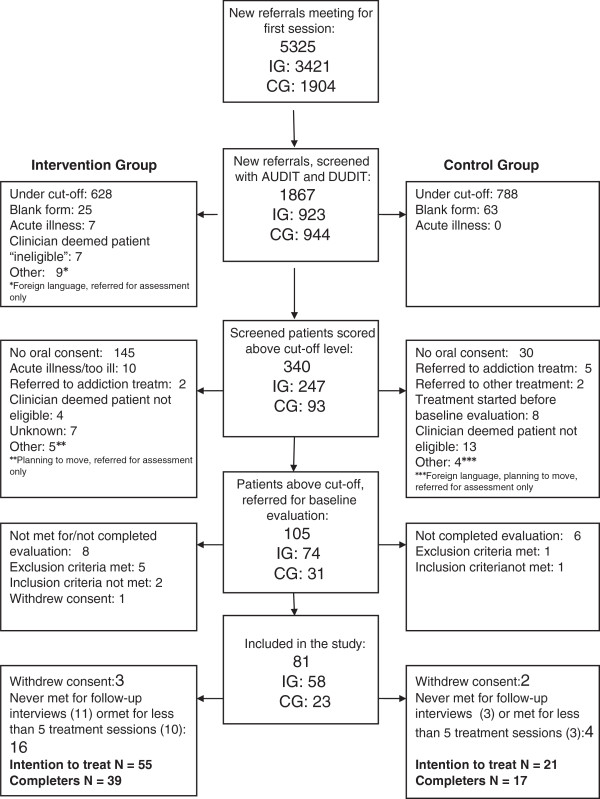
“Flowchart of patients in the Intervention Group (IG) and the Control Group (CG) [54].”
BackgroundSelf-citationKirk, I. J., Leiknes, K., Laru, L., Kt, H., Bramness, J. G., Gråwe, R. W., Haugerud, H., Helseth, Landheim, A. S., Lossius, K., et al. (2008) · Europe PMC (PubMed Central) · Cited by 1
Self-citation
Research works printed but not linked: 7
- Minkoff K Behavioral health recovery management service planning guidelines co-occurring psychiatric and substance use disorders Illinois Department of Human Services’ Office of Alcoholism and Substance Abuse, The Behavioral Health Recovery Management project An initiative of Fayette Companies 2001 Peoria, IL: Chestnut Health Systems, Bloomington, IL; and the University of Chicago Center for Psychiatric Rehabilitation 1 36
- Rush B Centre for Addiction and Mental Health Best practices concurrent mental health and substance use disorders 2002 Ottawa, Ontario, Canada: Publications Health Canada
- First MB Spitzer RL Gibbon M Williams JBW Structured Clinical Interview for DSM-IV-TR Axis I Disorders, Research Version, Patient Edition. (SCID-I/P) 2002 New York: Biometrics Research, New York State Psychiatric Institute
- Derogatis LR The SCL-90 Manual I: Scoring, administration and procedures for the SCL-90 1977 Baltimore: Johns Hopkins University School of Medicine, Clinical Psychometrics Unit
- Mueser KT Drake RE Clark RE McHugo GJ Mercer-McFadden C Ackerson TH Toolkit on evaluating substance abuse in persons with severe mental illness 1995 Cambridge, MA: Human Services Research Institute
- IBM Corp IBM SPSS Statistics for Windows, Version 20.0 2011 Armonk, NY: IBM Corp
- Wüsthoff LE Waal H Gråwe RW When Research Meets Reality- lessons Learned From a Pragmatic Multisite Group- Randomized Clinical Trial on Psychosocial Interventions in the Psychiatric and Addiction Field Substance Abuse 2012 6 95 106 22933843 PMC3427035
Cited by
Hildebrand, M. (2015) · Journal of Substance Abuse Treatment · doi:10.1016/j.jsat.2015.01.008 · Cited by 177
Abuse and misuse of antidepressants
Sullivan, M., & Evans, E. (2014) · Substance Abuse and Rehabilitation · doi:10.2147/sar.s37917 · Cited by 91
“152 Integrated treatment for co-occurring disorders is associated with better treatment outcomes, but there is a wide range of approaches included in integrated treatment, including complementary and alternative therapies such as music and art therapy 153 or acupuncture therapy.”
Butler, A., Nicholls, T. L., Samji, H., Fabian, S., & Lavergne, M. R. (2021) · Psychiatric Services · doi:10.1176/appi.ps.202000927 · Cited by 79
Zheng, E. Z., Wong, N. M. L., Yang, A. S. Y., & Lee, T. M. C. (2024) · Translational Psychiatry · doi:10.1038/s41398-024-03003-w · Cited by 73
“The neural underpinnings of these two symptoms across clinical disorders and the co-occurrence of these two symptom categories are unclear [4 – 6], potentially contributing to the lack of effective treatments [7, 8].”
BackgroundBerg, M. K., Hobkirk, A. L., Joska, J. A., & Meade, C. S. (2017) · Psychological Trauma Theory Research Practice and Policy · doi:10.1037/tra0000207 · Cited by 47
Metadata
- Authors
- Wüsthoff, L. E., Waal, H., & Gråwe, R. W.
- Affiliations
- University of Oslo (NO)
- St Olav's University Hospital (NO)
- Corresponding author
- Wüsthoff, Linda E
- Venue
- BMC Psychiatry
- Published
- 2014-03-05
- Volume
- 14
- Issue
- 1
- Pages
- 67-67
- ISSN
- 1471-244X (ISSN-L)
- PMC
- PMC3974008
- OpenAlex
- W2036552387
- Cited by
- 46
- References
- 79
- Citations by year
- 2026: 10 · 2025: 1 · 2024: 4 · 2023: 6 · 2022: 1 · 2021: 8 · 2019: 1 · 2018: 2 · 2017: 3 · 2016: 3 · 2015: 3 · 2014: 4
- FWCI
- 3.28
- Type
- journal article
- Language
- en
- Open access
- gold
- doi.org
- Locations
- BMC Psychiatry (publishedVersion)
- Europe PMC (PubMed Central) (publishedVersion, cc-by)
- PubMed Central (publishedVersion, cc-by)
- PubMed (publishedVersion)
- NORA - Norwegian Open Research Archives (submittedVersion, cc-by)
- Topics
- Health Sciences › Medicine › Epidemiology › Substance Abuse Treatment and Outcomes
- Health Sciences › Medicine › Psychiatry and Mental health › Mental Health Treatment and Access
- Social Sciences › Psychology › Clinical Psychology › Psychiatric care and mental health services
- Keywords
- integrated treatment, substance use disorders, anxiety, depression, comorbidities, treatment motivation, alcohol consumption, drug use, psychiatric symptoms, community mental health centers, outpatient care
- MeSH terms
- Adult, Anxiety Disorders, Community Mental Health Centers, Depressive Disorder, Female, Humans, Male, Referral and Consultation, Treatment Outcome, Substance-Related Disorders, Diagnostic and Statistical Manual of Mental Disorders
About these checks
Registry, retraction, Cites and statistics results are computed, not judged, with one exception: a printed reference that no index lists is read once by a model before it counts as a citation error. Claims are extracted by a model and kept only when their quote appears verbatim in the text; each cited source is then checked, with a model’s help, for whether it says what the claim relies on. Those verdicts can be wrong — read the claim’s quote and the cited source before relying on one.
Statistics and arithmetic are recomputed, not judged.
Confidence bands are shown only for fields calibrated on our annotated test set. None is calibrated yet, so no band is shown.
What counts as a claim ›How we measure confidence ›How we check this ›
Are you an author, or do you see a problem with this page? Request a review
Data sources
Bibliographic data: Semantic Scholar, OpenAlex, Crossref.
Contains information from the Semantic Scholar Academic Graph Datasets, made available under the ODC Attribution License (ODC-BY 1.0).
Semantic Scholar’s data is described in: Kinney, R., et al. (2023). The Semantic Scholar Open Data Platform. arXiv:2301.10140.
