

The DOI matches its Crossref record; 18 of the 18 references it cites were found in a registry or an index.
Use of The International Classification of Functioning, Disability and Health (ICF) as a conceptual framework and common language for disability statistics and health information systems
Open accessAbstract
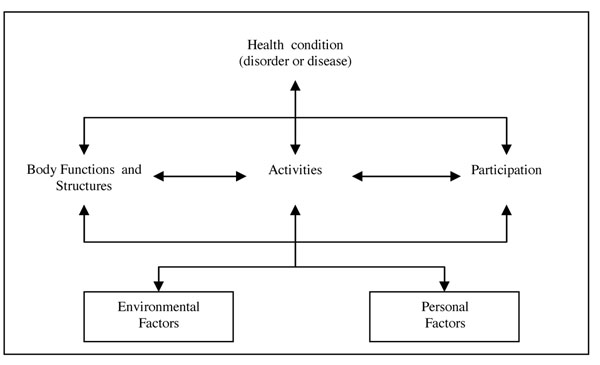
A common framework for describing functional status information is needed in order to make this information comparable and of value. The World Health Organization's International Classification of Functioning, Disability and Health (ICF), which has been approved by all its member states, provides this common language and framework. The article provides an overview of ICF taxonomy, introduces the conceptual model which underpins ICF and elaborates on how ICF is used at population and clinical level. Furthermore, the article presents key features of the ICF tooling environment and outlines current and future developments of the classification.
Overview
The claims and statistics of this paper haven’t been checked yet.
Run the check — free, no account needed. It reads the open-access text and checks the sources it cites.
Integrity signals
Registry
Cites
Statistics
Figures
Verification
Claims the paper makes
The claims and statistics of this paper haven’t been checked yet.
Run the check — free, no account needed. It reads the open-access text and checks the sources it cites.
Claims other papers make about this one
Each is checked against this paper’s own text: does it say what the citing paper says it does?
In the citing paper
“This study followed the Preferred Reporting Items for Systematic Review and Meta-analyses: the PRISMA Statement19 guidelines and was registered at the International prospective register of systematic reviews, PROSPERO, under the identification number CRD42016039393.”
From Benchmarks of Significant Change After Aphasia Rehabilitation (2019) · cites this paper as [19]
Self-check
Percentages, sums and reported differences re-computed from the paper’s own numbers.
The self-check needs the paper’s full text.
Citations
Cites
Classificação Internacional de Funcionalidade (CIF)
Battistella, L. R., & de Brito, C. M. M. (2002) · Acta Fisiátrica · doi:10.5935/0104-7795.20020003 · Cited by 4,470
Developing the World Health Organization Disability Assessment Schedule 2.0
Üstün, T. B., Chatterji, S., Kostanjsek, N., Rehm, J., Kennedy, C., Epping-Jordan, J., Saxena, S., von Korff, M., & Pull, C. (2010) · Bulletin of the World Health Organization · doi:10.2471/blt.09.067231 · Cited by 1,851
Self-citation(2010) · Virtual Defense Library (Ministerio de Defensa) · Cited by 1,530
Self-citationHealth systems performance assessment: debates, methods and empiricism.
Murray, C. J. L., & EVANS, D. B. (2003) · Cited by 855
The WHO World Mental Health Surveys: Global Perspectives on the Epidemiology of Mental Disorders
Kessler, R. C., & Üstün, T. B. (2008) · Cited by 747
Convention on the Rights of Persons with Disabilities and Optional Protocol
States, M. (2012) · Cited by 630
Development of ICF Core Sets for patients with chronic conditions
Ewert, T., Üstün, T. B., Chatterji, S., Kostanjsek, N. F. I., Stucki, G., & Cieza, A. (2004) · Journal of Rehabilitation Medicine · doi:10.1080/16501960410015353 · Cited by 524
Self-citationEwert, T., Fuessl, M., Cieza, A., Andersen, C., Chatterji, S., Kostanjsek, N. F. I., & Stucki, G. (2004) · Journal of Rehabilitation Medicine · doi:10.1080/16501960410015362 · Cited by 191
Self-citationThe University of North Carolina at Chapel Hill University Libraries (2019) · Carolina Digital Repository (University of North Carolina at Chapel Hill) · doi:10.17615/v8y6-0764 · Cited by 168
Sousa, R. M., Dewey, M., Acosta, D., Jotheeswaran, A., Castro-Costa, É., Ferri, C., Guerra, M., Huang, Y.-Q., Jacob, K., Pichardo, J. G. R., et al. (2010) · International Journal of Methods in Psychiatric Research · doi:10.1002/mpr.299 · Cited by 132
Cited by
Sorted by citations
Items 201–300 of 436
Reeves, M. L., Chotiyarnwong, C., Nair, K. P. S., Slovák, M., Healey, T. J., McCarthy, A. D., Patterson, L., Lavender, K., Strachan, L., Ali, A., et al. (2020) · Health and Technology · doi:10.1007/s12553-020-00436-3 · Cited by 6
Varahra, A., MacDermid, J. C., & Szekeres, M. (2023) · Journal of Hand Therapy · doi:10.1016/j.jht.2023.06.005 · Cited by 5
Zeleke, F. T., Admas, M., Chekole, F. A., Alem, K. G., Tenaw, S. G., Tefera, D. T., Zewudie, B. T., Chekole, B., Jiru, H. D., Demissie, M., et al. (2024) · Sexuality and Disability · doi:10.1007/s11195-023-09822-x · Cited by 5
“Thus, various gadgets like wheelchairs, crutches, or any other aiding materials were used to help them to move from one place to the other [26, 27].”
Specific within-domain cognitive impairments predict depression severity six-months after stroke
Kelleher, K., Demeyere, N., & Kusec, A. (2025) · Topics in Stroke Rehabilitation · doi:10.1080/10749357.2025.2557317 · Cited by 5
“Alternatively, impaired calculation ability may hinder engagement in ADLs like managing finances, reducing autonomy 40 and worsening mood.”
Artz, A. S., Logan, B. R., Saber, W., Geller, N. L., Bellach, A., Kou, J., Wood, W. A., McCarty, J. M., Knight, T. G., Runaas, L., et al. (2025) · Blood Advances · doi:10.1182/bloodadvances.2025018340 · Cited by 5
“24 The Behavioral Risk Factor Surveillance System studied functional disability in the context of cancer survivors, defining it as mobility disability by difficulty walking or climbing stairs and self-care disability requiring difficulty bathing or dressing.”
Zeeshan, M., Shaikh, S., & Ahmer, Z. (2021) · Child Care Health and Development · doi:10.1111/cch.12941 · Cited by 5
Bayne, D. F., & Shune, S. (2022) · Geriatrics · doi:10.3390/geriatrics7050112 · Cited by 5
“The health condition (a disease or disorder) may impact functioning at three mutually interacting levels: in relation to the body, activity, and participatory capability within the context of an individual’s environmental and personal factors [17].”
BackgroundHenríquez, M., Ramírez‐Campillo, R., Cristi‐Montero, C., Reina, R., Álvarez, C., Ferrari, G., Aguilar-Farías, N., & Sadarangani, K. P. (2023) · Frontiers in Public Health · doi:10.3389/fpubh.2023.1090050 · Cited by 8
“Disability types Respondents were categorized into five disability types according to their impairments, including physical, visual, hearing, intellectual, and mixed which generate activity limitations and restrict their daily participation according to the International Classification of Functioning, Disability, and…”
MethodJones, M. G., Clarke, P. J., Meshesha, H. S., Mulhorn, K. A., Traci, M. A., & Nieuwenhuijsen, E. R. (2023) · AJPM Focus · doi:10.1016/j.focus.2023.100152 · Cited by 6
Functioning among persons with lower limb amputation with or without prostheses in Rwanda
Ngarambe, R., Sagahutu, J. B., Nuhu, A., & Tumusiime, D. K. (2023) · African Journal of Disability · doi:10.4102/ajod.v12i0.1193 · Cited by 5
“Lower limb amputation (LLA) highly leads to physical disability because of the loss of a body part (limb) that limits activity and restricts participation in various environments (Kostanjsek 2011).”
BackgroundSaleh, N. E. H., Summaka, M., Zein, H., Fneish, S., Mazbouh, R., Hamieh, F., & Naim, I. (2024) · Discover Health Systems · doi:10.1007/s44250-024-00122-5 · Cited by 5
“Therefore, the ICF presents a conceptual driver of rehabilitation through the use of a comprehensive understanding of health and disability in a unique framework [21].”
Hasan, N., Ashraf, M., Ahmed, E., Hasan, R., & Bhattacharjee, V. (2016) · International Journal on Disability and Human Development · doi:10.1515/ijdhd-2016-0027 · Cited by 6
“The use of ICT can facilitate and improve the functions of PWDs in their daily lives at a significant rate [28], as ICT plays a useful and impactful role in the dispensation of equal opportunities for PWDs [29].”
BackgroundPlanning Walking Environments for People with Disabilities and Older Adults
Eisenberg, Y., Bouldin, E. D., Gell, N., & Rosenberg, D. E. (2017) · Transport and sustainability · doi:10.1108/s2044-994120170000009012 · Cited by 6
de la Torre‐Luque, A., Cabello, M., Lara, E., de la Fuente, J., Miret, M., Niubo, A. S., Haro, J. M., & Ayuso‐Mateos, J. L. (2020) · Health & Social Care in the Community · doi:10.1111/hsc.13031 · Cited by 5
Cairney, J., Clark, H. J., & Nair, K. (2016) · Current Developmental Disorders Reports · doi:10.1007/s40474-016-0095-5 · Cited by 5
SmartDisability: A smart system of systems approach to disability
Whittington, P., & Doğan, H. (2016) · International Conference on System of Systems Engineering · doi:10.1109/sysose.2016.7542943 · Cited by 5
“[4] N. Kostanjsek, 2011.”
BackgroundInfluentialOperationalizing and digitizing person-centered daily functioning: a case for functionomics
Janssen, E., Punt, I. M., van Soest, J., Heerkens, Y. F., Stallinga, H. A., ten Napel, H., van Rhijn, L. W., Mons, B., Dekker, A. L. A. J., Willems, P. C. P. H., et al. (2024) · BMC Medical Informatics and Decision Making · doi:10.1186/s12911-024-02584-2 · Cited by 4
“The ICF is used internationally in different types of interdisciplinary healthcare and social research settings, as well as to inform health policy development [12, 13].”
BackgroundVaccination and its social and behavioural drivers in children with disability in Fiji
Jahan, I., Vakaloloma, U., Perera, S., Tuibeqa, I. V., Devi, R. R., Volavola, L., May, W., Wilson, D., Tuimabu, L., Power, R., et al. (2025) · BMJ Global Health · doi:10.1136/bmjgh-2024-017510 · Cited by 4
Saleeby, P. W. (2016) · The review of disability studies/Review of disability studies · Cited by 4
Alatishe-Muhammad, B. W., Olubiyi, O. A., Afolayan, M. A., Rotimi, B. F., Ameen, H. A., Akeem, B. O., Salaudeen, A., & Chandran, S. P. (2023) · The Malaysian Journal of Nursing · doi:10.31674/mjn.2023.v15i01.013 · Cited by 4
Mistry, J., White, L. J., Baraks, K., Davis, C., Parikh, P., Schabrun, S. M., Heneghan, N. R., Noblet, T., Walton, D. M., & Rushton, A. (2024) · BMC Musculoskeletal Disorders · doi:10.1186/s12891-024-07790-7 · Cited by 4
“The ICF framework adopts a biopsychosocial model and conceptualises functioning and disability as a dynamic interaction between a person’s health condition, environmental factors and personal factors [22].”
BackgroundAnshebo, A. A., Larebo, Y. M., Behera, S. K., & Gopalan, N. (2024) · Frontiers in Global Women s Health · doi:10.3389/fgwh.2024.1458664 · Cited by 4
Motte-García, E., Cadena-Trejo, C., Ramirez-Flores, M. F., Gastelum‐Strozzi, A., Sánchez, A. L., Fernández-García, M. V., Hernández, K. G. C., López-Herrera, K. N., Lahr, M. M. H., Buskens, E., et al. (2025) · BMJ Open · doi:10.1136/bmjopen-2024-094798 · Cited by 5
“…International Classification of Functioning, Disability, and Health that assess body functions, activities, participation and environmental factors 24 25 and (7) we will also screen for NCDs (ie, DM2, hypertension, malnutrition) through capillary blood glucose and blood pressure, along with…”
Taşdoğan, A. M., & Kılıç, E. T. (2020) · Turkish Neurosurgery · doi:10.5137/1019-5149.jtn.29251-20.3 · Cited by 4
Aasen, E. M., Nilsen, H. K., Lyckhage, E. D., Helberget, L. K., & Kjelsvik, M. (2021) · Journal of Clinical Nursing · doi:10.1111/jocn.15771 · Cited by 4
Julier, R., & Benfield, J. K. (2022) · International Journal of Language & Communication Disorders · doi:10.1111/1460-6984.12698 · Cited by 4
A Combined Ultrasonographic and Conventional Radiographic Assessment of Hemophilic Arthropathy
Chung, S.-W., Seo, Y.-J., You, C. W., Chun, T. J., Jung, K.-J., & Kim, J. H. (2016) · Indian Journal of Hematology and Blood Transfusion · doi:10.1007/s12288-016-0717-4 · Cited by 4
The physical sequelae of perinatally acquired HIV in adolescents: a research proposal
Comley‐White, N., Potterton, J. L., & Ntsiea, V. (2019) · BMC Research Notes · doi:10.1186/s13104-019-4079-5 · Cited by 4
Mweshi, M. M. (2016) · International Journal of Neurologic Physical Therapy · doi:10.11648/j.ijnpt.20160201.12 · Cited by 4
“Each individual exhibits some degree of functioning in each domain described by the classification [28].”
BackgroundEnglish, K., & Pajevic, E. (2016) · Seminars in Hearing · doi:10.1055/s-0036-1584407 · Cited by 96
“For example, it can be used to monitor health status at different ages.(9,10) It also can be used to track responses to interventions over time.”
BackgroundTeilhabe als Gesundheitsfaktor
Wacker, E., Beck, I., Brandt, M., Köbsell, S., Lippke, S., & Niehaus, M. (2023) · Gesundheitsförderung - Rehabilitation - Teilhabe · doi:10.1007/978-3-658-40760-5_2 · Cited by 4
Byeon, H. (2024) · Healthcare · doi:10.3390/healthcare12050538 · Cited by 4
“Kostanjsek (2011) [17] provided an overview of the ICF taxonomy Recent applications of the ICF framework have further demonstrated its utility in assessing and managing health status across diverse populations and conditions. the impact of appetite alteration on self-management and malnutrition…”
BackgroundPatient Reported Outcome Measurements in Adult Spinal Deformity: A Narrative Review
Kelly, M. P., Smith, J. S., & van Hooff, M. (2025) · Global Spine Journal · doi:10.1177/21925682231188811 · Cited by 3
Alsheikh, M. Y., & Alzamil, H. A. (2023) · Springer eBooks · doi:10.1007/978-981-99-3420-1_2 · Cited by 5
Dima, A. L., Makovec, U. N., Ribaut, J., Haupenthal, F., Barnestein‐Fonseca, P., Goetzinger, C., Grant, S., Jácome, C. I. O., Šmits, D., Tadić, I., et al. (2024) · Journal of Medical Internet Research · doi:10.2196/59738 · Cited by 3
“Known examples are the World Health Organization (WHO) International Classification of Diseases [13]; International Classification of Functioning, Disability, and Health [14]; and International Classification of Health Interventions [15], as well as the Systematized Nomenclature of Medicine [16].”
Delie, A. M., Fenta, E. T., Mehari, M. G., Berihun, S., & Tiruneh, M. G. (2025) · Health Science Reports · doi:10.1002/hsr2.70573 · Cited by 3
Ogedengbe, T. O., Jaiswal, A., Dumassais, S., LOPEZ, R., Prain, M., & Wittich, W. (2025) · Otorhinolaryngology · doi:10.23736/s2724-6302.25.02557-5 · Cited by 3
Ćwirlej-Sozańska, A. B., Sozański, B., Kupczyk, M., Leszczak, J., Kwołek, A., Wilmowska-Pietruszyńska, A., & Wiśniowska-Szurlej, A. (2021) · Journal of Clinical Medicine · doi:10.3390/jcm10051053 · Cited by 4
Outcomes of Tendon Transfer Surgery for Correction of Ulnar Claw Hand: A Case Series
Verma, C. V., Bhosale, K. S., Thatte, M. R., & Sawant, A. D. (2022) · Journal of Hand Surgery Global Online · doi:10.1016/j.jhsg.2022.09.004 · Cited by 3
Authentibility Pass: An Accessible Authentication Gateway for People with Reduced Abilities
Whittington, P., & Doğan, H. (2022) · Electronic workshops in computing · doi:10.14236/ewic/hci2022.42 · Cited by 3
Demyati, H. (2023) · IntechOpen eBooks · doi:10.5772/intechopen.1003078 · Cited by 3
Silver Diamine Fluoride Use in Children with Special Health-care Needs: Breaking the Barriers
Uppal, S., Sultan, A., & Juneja, A. (2024) · Archives of Medicine and Health Sciences · doi:10.4103/amhs.amhs_293_23 · Cited by 3
Bickton, F. M., Manifield, J., Limbani, F., Dixon, J., Holland, A. E., Taylor, R. S., Calderwood, C., Wittich, W., Gregson, C. L., Heine, M., et al. (2025) · Journal of Multimorbidity and Comorbidity · doi:10.1177/26335565251343923 · Cited by 4
Louis, M., Legrain, V., Aron, V., Filbrich, L., Mouraux, A., Henrard, S., Guillaume, L., Mouraux, D., Barbier, O., Libouton, X., et al. (2025) · Pain · doi:10.1097/j.pain.0000000000003815 · Cited by 3
Newman, J., Durben, N., Baumann, K., Lambing, A. Y., Nichols, C. D., Witkop, M., Santaella, M. E. E., & Buckner, T. W. (2022) · Haemophilia · doi:10.1111/hae.14501 · Cited by 3
Exploring the Research Priorities for Occupational Therapy in India
Kamalakannan, S., Sethuraman, L., Chockalingam, M., Samuelkamaleshkumar, S., Moorthy, S. D., Srinivasan, M., Ramakrishnan, J., Muthuvel, T., & Mani, K. (2022) · The Indian Journal of Occupational Therapy · doi:10.4103/ijoth.ijoth_58_22 · Cited by 3
“Finally, the domain of interest for OT research must expand from impairments to overall disability as defined by ICF.”
BackgroundAngarita, M. M., Cortés-Reyes, É., Cárdenas-Jiménez, A., Rátiva, Z. G., & Mena-Ortiz, L. Z. (2013) · Revista de Salud Pública · Cited by 3
Stewart, J. J., Flynn, D. M., Steffen, A. D., Langford, D. J., McQuinn, H. M., & Doorenbos, A. Z. (2021) · Military Medicine · doi:10.1093/milmed/usaa463 · Cited by 3
Zespoły mobilne a zapobieganie hospitalizacji w środowiskowym modelu opieki psychiatrycznej
Bartosiewicz-Niziołek, M., Błasiak, Ł., Olszewski, B. H., Ostrowska, M., & Wojciechowska, A. (2021) · Studia Psychologica Theoria et praxis · doi:10.21697/sp.2021.21.2.02 · Cited by 2
SMIRNOVA, L. M., Fogt, E. V., Sinegub, A. V., & Solieman, H. (2022) · Journal of the Russian Universities Radioelectronics · doi:10.32603/1993-8985-2022-25-1-54-63 · Cited by 3
Charumbira, M. Y., Berner, K., & Louw, Q. A. (2022) · F1000Research · doi:10.12688/f1000research.110314.1 · Cited by 3
“The ICF’s bio-psychosocial model broadens the perspective of disability proposing that every person experiences disability at some point in their life.(17) Functioning problems refer to the aspects of disability that affect what one can do or not do at individual level.”
BackgroundHeled, E. (2021) · British Journal of Psychotherapy · doi:10.1111/bjp.12646 · Cited by 2
Pan, H., Ding, S., Liu, X., Zou, Z., Xu, Q., & Ye, Z. (2021) · Nursing Open · doi:10.1002/nop2.825 · Cited by 2
“(Kostanjsek, 2011; Wiegand et al., 2012).”
Abou, L., Martínez-Navarro, O., & Kratz, A. (2024) · Spinal Cord · doi:10.1038/s41393-024-00984-9 · Cited by 2
Dumassais, S., & Wittich, W. (2025) · BMJ Open · doi:10.1136/bmjopen-2025-100155 · Cited by 2
Alhalafi, A. H., Eljack, I. A., Almalki, S. M., Doghish, A. S., Mohammed, O. A., Alhalafi, A. F., Alqahtani, S. M., AlQahtani, H. S. H., Abdalla, G. M., & Jibo, A. M. (2025) · Saudi Medical Journal · doi:10.15537/smj.2025.46.7.20250144 · Cited by 2
Applying Principles of Trauma-Informed Caregiver Coaching in Early Language Intervention
Alper, R. M., & Eulau, K. (2025) · Language Speech and Hearing Services in Schools · doi:10.1044/2025_lshss-24-00136 · Cited by 2
“Activities and participation include activities and functions of daily life (e.g., learning and applying knowledge, communication, self-care), measured by capacity and performance (CDC, 2024; Kostanjsek, 2011; WHO, 2002).”
InfluentialBataineh, J. N., O’Hagan, R., Hand, C. L., Sibbald, S. L., Pfingstgraef, K., & Glista, D. (2025) · Disability and Rehabilitation · doi:10.1080/09638288.2025.2546559 · Cited by 2
“Third, while the World Health Organization defines one of the most important uses of the ICF to be in the area of policy and planning, most uptake has been confined to the rehabilitation settings [19].”
Pawlak, K., Romaniuk, P., Kaczmarek, K., Kiedik, D., & Fal, A. (2026) · BMC Health Services Research · doi:10.1186/s12913-026-14696-8 · Cited by 2
Nursing students contribution to rehabilitation for home-dwelling patients
Pay, B. B., & Sørbye, L. W. (2018) · Nurse Education in Practice · doi:10.1016/j.nepr.2018.03.003 · Cited by 2
Global developmental delay and intellectual disability
Srour, M., AlHakeem, A., & Shevell, M. I. (2020) · Elsevier eBooks · doi:10.1016/b978-0-12-813955-4.00019-2 · Cited by 2
Authentibility Pass: An Accessible Authentication Gateway for People with Reduced Abilities
Whittington, P., & Doğan, H. (2023) · IEEE International Conference on e-Business Engineering (ICEBE) · doi:10.1109/icebe59045.2023.00043 · Cited by 2
“Kostanjsek (2011) states that a disability should be seen as, “a complex interaction between the person and their environment” and not as a characterisation of individuals.”
BackgroundBergdolt, J., Hubert, S., Schreiter, J., Jenderny, S., Beblo, T., Drießen, M., Steinhart, I., & Dehn, L. B. (2025) · BMC Psychiatry · doi:10.1186/s12888-025-06826-z · Cited by 2
“The ICF framework provides a structured way to cover many relevant functional domains including participation and is a relevant framework for clinical practice [56].”
Poetry Therapy, Disability, and Trauma Expression: A Therapeutic-Phenomenological Perspective
Ahmadi, A., Yulianto, B., Khoiri, A., Yani, M. T., Jamain, N. B., Yusuf, K., Efendi, A. N., Hariyati, N. R., Savira, S. I., & Khozin, N. (2025) · Journal of Intellectual Disability - Diagnosis and Treatment · doi:10.6000/2292-2598.2025.13.03.7 · Cited by 2
Development of an ontology for rehabilitation: traumatic brain injury
Grove, M. J. (2013) · Cited by 2
Ulliana, F., Léon, J.-C., Palombi, O., Rousset, M.-C., & Fauré, F. (2014) · Computer-Aided Design and Applications · doi:10.1080/16864360.2014.962429 · Cited by 2
Gross Motor Function of a Child With Antley-Bixler Syndrome
Rossi, L. D. (2015) · Pediatric Physical Therapy · doi:10.1097/pep.0000000000000176 · Cited by 2
Kim, J. H. (2016) · Brain & Neurorehabilitation · doi:10.12786/bn.2016.9.e5 · Cited by 2
“For the execution of activity of daily living, those motor deficits need to be properly intervened, which would be the reason why we claim an intensive neurorehabilitation for the recovery of functions during long survival period after stroke [1-3].”
BackgroundImproving user interaction through a SmartDisability Framework
Whittington, P. (2016) · Electronic workshops in computing · doi:10.14236/ewic/hci2016.8 · Cited by 2
“interaction method between a person’s health conditions and the environment (Kostanjsek 2011).”
BackgroundMethodInfluentialO’Brien, A. T., Acosta, G. T., Huerta, R., & Thibaut, A. (2017) · BMJ Open · doi:10.1136/bmjopen-2016-015669 · Cited by 2
Zia, N., Bachani, A. M., Kajungu, D., Galiwango, E., Loeb, M. E., Diener‐West, M., Wegener, S. T., Pariyo, G. W., & Hyder, A. A. (2022) · PLoS ONE · doi:10.1371/journal.pone.0267182 · Cited by 2
The Influence of Symptoms of Anger on Pain Intensity and Activity Intolerance
Versluijs, Y., Bandell, D. L. J. I., Kortlever, J. T. P., & Ring, D. (2022) · Journal of Clinical Psychology in Medical Settings · doi:10.1007/s10880-022-09894-5 · Cited by 2
“The World Health Organization International Classification of Functioning, Disability and Health defines disability as a multidimensional construct involving a dynamic interaction between body function and structures, limitations of activity and participation restrictions and also environmental and personal factors as…”
BackgroundXu, Q., Xie, H., Zheng, D., Wu, X., Zhang, Y., Li, T., & Yan, T. (2022) · Journal of Personalized Medicine · doi:10.3390/jpm12111832 · Cited by 2
“an umbrella term for impairments, activity limitations, and participation restrictions” [8].”
BackgroundTeam rehabilitation and health care utilization in chronic inflammatory arthritis patients
Hagel, S. (2012) · Lund University Publications (Lund University) · Cited by 2
Employment Statistics of Persons with Disabilities in Russia
Владимировна, Д. А., & Александровна, Р. З. (2019) · Вопросы статистики · doi:10.34023/2313-6383-2019-26-11-36-44 · Cited by 1
Rehabilitation After Fractures and Dislocations of the Talus and Calcaneus
Hobbs, J. M. (2020) · Springer eBooks · doi:10.1007/978-3-030-37363-4_23 · Cited by 1
Nair, M., Hazarika, M., Kishore, M. T., Sengupta, N., Sheregar, G., MacGregor, H., Wickenden, M., Kaushik, N. H., Saikia, P., Kelley, M. C., et al. (2023) · PLOS Global Public Health · doi:10.1371/journal.pgph.0000833 · Cited by 1
“This approach underpins the World Health Organisation’s (WHO’s) International Classification of Functioning Disability and Health (ICF) [20] to focus on behaviour change factors and access to healthcare services which could influence opportunities, capability and motivation of parents and children to engage with a hea…”
MethodPaul, F. A., & Ali, A. (2022) · Archives of Mental Health · doi:10.4103/amh.amh_142_22 · Cited by 1
Factors associated with emotion regulation in young autistic children: a scoping review
Sung, Y.-S., Chi, I., Chu, S. Y., & Lin, L. (2024) · International Journal of Developmental Disabilities · doi:10.1080/20473869.2023.2301194 · Cited by 3
“According to the ICF-CY framework, the context domain is important for children (Kostanjsek 2011).”
Khuman, P. R., & Muruganantham, B. (2024) · Indian Journal of Medical Specialities · doi:10.4103/injms.injms_76_23 · Cited by 1
Leypold, T., Bahm, J., Schäfer, B., Beier, J. P., Dißelhorst-Klug, C., & Fonseca-Höflinger, L. C. (2024) · Scientific Reports · doi:10.1038/s41598-024-72845-7 · Cited by 1
“These domains concern body functions and structures, activity, and participation 5 .”
Kumazawa, Y., TERADA, K., Satonaka, A., Wachi, M., & Kida, N. (2024) · Social Sciences · doi:10.3390/socsci13100525 · Cited by 1
dos Santos, J. N., Castro, S. S., Lino, J. A., & Leite, C. F. (2025) · Sleep And Breathing · doi:10.1007/s11325-025-03306-2 · Cited by 1
An overview of quality of life and visual outcomes in AMD
Taylor, D. J., Enoch, J., Jones, L., Higgins, B. E., Binns, A. M., & Crabb, D. P. (2025) · Progress in brain research · doi:10.1016/bs.pbr.2025.03.007 · Cited by 1
A Scoping Review of Women with Physical Disabilities and Cervical Cancer Screening
Harper, D. M., Anderson, P. F., James, L. N., Alves, M. L., Ernst, S., McGrady, A., & Kalpakjian, C. Z. (2025) · Journal of Women s Health · doi:10.1177/15409996251374587 · Cited by 1
Crumlish, L., Angwin, A. J., Burton, B., & Wallace, S. J. (2025) · American Journal of Speech-Language Pathology · doi:10.1044/2025_ajslp-24-00516 · Cited by 1
Long-term Impact of Invasive Meningococcal Disease in Australian Adolescents and Young Adults
McMillan, M., Buttery, J. P., Angliss, M., Barton, B., Synn, A., Blyth, C. C., Booy, R., Mathew, S. M., Shaw, D., Gordon, D., et al. (2025) · The Pediatric Infectious Disease Journal · doi:10.1097/inf.0000000000004962 · Cited by 1
Aasen, E. M., Kjelsvik, M., Helberget, L. K., & Lyckhage, E. D. (2025) · Health An Interdisciplinary Journal for the Social Study of Health Illness and Medicine · doi:10.1177/13634593251374321 · Cited by 1
“The European Standard on Patient Involvement in Healthcare (Stjernswärd and Glasdam, 2022) highlights the need for further research on the empirical applications of patient participation.”
InfluentialAminparvin, H., Jaiswal, A., Ogedengbe, T. O., Dumassais, S., LOPEZ, R., Prain, M., & Wittich, W. (2025) · British Journal of Visual Impairment · doi:10.1177/02646196251382503 · Cited by 1
la Torre, A. M.-D., Leshetkina, P., Ahanor, O., & Maritz, R. (2025) · Journal of Clinical Epidemiology · doi:10.1016/j.jclinepi.2025.112093 · Cited by 1
Alveyn, E., Bechman, K., Adas, M. A., Amlani-Hatcher, P., Dey, M., Gallagher, S., Gibson, M., Jones, B. F., Mehta, D., Norton, S., et al. (2025) · Rheumatology Advances in Practice · doi:10.1093/rap/rkaf149 · Cited by 1
“This finding aligns with the International Classification of Functioning, Disability and Health (ICF) framework, which conceptualizes work disability as arising from complex interactions between health conditions, personal factors and environmental contexts [14].”
Hu, Y., Sun, C., Gu, J., Huo, X., Chen, S., Zhao, M., & Li, M. (2026) · Archives of Physical Medicine and Rehabilitation · doi:10.1016/j.apmr.2026.01.008 · Cited by 1
Domerchie, P. N., Passchier, M. J., van Wijk, I., Lange, M., van Kammen, K., & van der Sluis, C. K. (2026) · Disability and Rehabilitation · doi:10.1080/09638288.2026.2618926 · Cited by 1
“The ICF framework consists of three main domains to define functioning: (1) body structures and functions, (2) activities, and (3) participation [17].”
Kumar, R., Vedwan, K. K., & Singh, V. (2026) · Sport Sciences for Health · doi:10.1007/s11332-026-01688-8 · Cited by 2
“This multidimensional lens supports a more clinically grounded interpretation of the transformative role of adaptive sports in trauma recovery [12].”
Schneeberger, T., Jarosch, I., Kroll, D., Gloeckl, R., Schneider, C., Ulm, B., Schwaiblmair, M., Lampert, S., Greulich, T., Schoenherr, I., et al. (2026) · BMJ Open Respiratory Research · doi:10.1136/bmjresp-2026-004177 · Cited by 1
“The primary outcome was the between-group difference in change in physical HRQoL from baseline to 3 weeks post baseline (end of the REHAB or usual care period), as measured by the physical component summary (PCS) of the 12-item Short Form Health Survey (SF-12) questionnaire.”
Kriščiūnas, A., Jarmalavičiūtė, I., & Malinauskas, Ž. (2015) · Sveikatos mokslai · doi:10.5200/sm-hs.2015.016 · Cited by 1
Salvador‐Carulla, L., Saavedra, J. E., & Gutiérrez-Colosía, M. R. (2012) · The International Journal of Person Centered Medicine · doi:10.5750/ijpcm.v2i2.218 · Cited by 1
Klingler, S., Padden, B., Horridge, K., van Hedel, H. J. A., & Meyer‐Heim, A. (2019) · Praxis · doi:10.1024/1661-8157/a003167 · Cited by 1
Uliana, F., Léon, J.-C., Palombi, O., Rousset, M.-C., & Fauré, F. (2014) · International CAD Conference and Exhibition (CAD) · doi:10.14733/cadconfp.2014.28-30 · Cited by 1
Metadata
- Authors
- Kostanjsek, N.
- Affiliations
- World Health Organization (CH)
- Corresponding author
- Kostanjsek, Nenad
- ORCID
- Kostanjsek, Nenad
- Venue
- BMC Public Health
- Published
- 2011
- Volume
- 11
- Issue
- Suppl 4
- Pages
- S3
- ISSN
- 1471-2458 (ISSN-L)
- PMC
- PMC3104216
- OpenAlex
- W2027013776
- Cited by
- 434
- References
- 18
- Citations by year
- 2026: 34 · 2025: 38 · 2024: 40 · 2023: 44 · 2022: 41 · 2021: 27 · 2020: 36 · 2019: 51 · 2018: 24 · 2017: 18 · 2016: 29 · 2015: 17 · 2014: 10 · 2013: 14 · 2012: 7
- Type
- conference abstract
- Language
- en
- Open access
- gold
- doi.org
- Licence
- cc-by
- Locations
- BMC Public Health (publishedVersion, cc-by)
- PubMed Central (publishedVersion, cc-by)
- PubMed (publishedVersion)
- DOAJ (DOAJ: Directory of Open Access Journals) (submittedVersion, cc-by-sa)
- Topics
- Health Sciences › Health Professions › Physical Therapy, Sports Therapy and Rehabilitation › Medical Practices and Rehabilitation
- Health Sciences › Health Professions › Health Information Management › Medical Coding and Health Information
- Social Sciences › Economics, Econometrics and Finance › Economics and Econometrics › Health Systems, Economic Evaluations, Quality of Life
- Keywords
- International Classification of Functioning, Disability and Health, disability statistics, health information systems, functional status, conceptual framework, disability classification
- MeSH terms
- Disability Evaluation, Persons with Disabilities, Humans, Information Systems, Vocabulary, Controlled, International Classification of Diseases
About these checks
Registry, retraction, Cites and statistics results are computed, not judged, with one exception: a printed reference that no index lists is read once by a model before it counts as a citation error. Claims are extracted by a model and kept only when their quote appears verbatim in the text; each cited source is then checked, with a model’s help, for whether it says what the claim relies on. Those verdicts can be wrong — read the claim’s quote and the cited source before relying on one.
Statistics and arithmetic are recomputed, not judged.
Confidence bands are shown only for fields calibrated on our annotated test set. None is calibrated yet, so no band is shown.
What counts as a claim ›How we measure confidence ›How we check this ›
Are you an author, or do you see a problem with this page? Request a review
