

The DOI matches its Crossref record; 18 of the 18 references it cites were found in a registry or an index.
Use of The International Classification of Functioning, Disability and Health (ICF) as a conceptual framework and common language for disability statistics and health information systems
Open accessAbstract
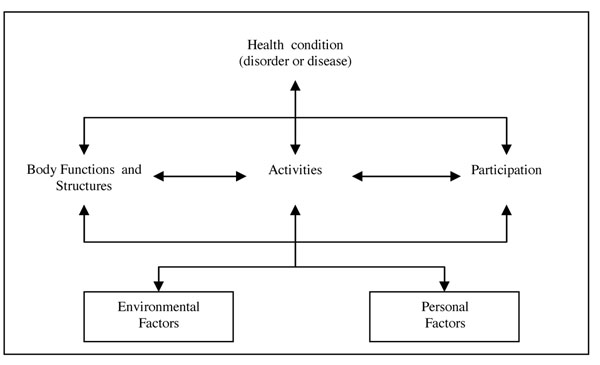
A common framework for describing functional status information is needed in order to make this information comparable and of value. The World Health Organization's International Classification of Functioning, Disability and Health (ICF), which has been approved by all its member states, provides this common language and framework. The article provides an overview of ICF taxonomy, introduces the conceptual model which underpins ICF and elaborates on how ICF is used at population and clinical level. Furthermore, the article presents key features of the ICF tooling environment and outlines current and future developments of the classification.
Overview
The claims and statistics of this paper haven’t been checked yet.
Run the check — free, no account needed. It reads the open-access text and checks the sources it cites.
Integrity signals
Registry
Cites
Statistics
Figures
Verification
Claims the paper makes
The claims and statistics of this paper haven’t been checked yet.
Run the check — free, no account needed. It reads the open-access text and checks the sources it cites.
Claims other papers make about this one
Each is checked against this paper’s own text: does it say what the citing paper says it does?
In the citing paper
“This study followed the Preferred Reporting Items for Systematic Review and Meta-analyses: the PRISMA Statement19 guidelines and was registered at the International prospective register of systematic reviews, PROSPERO, under the identification number CRD42016039393.”
From Benchmarks of Significant Change After Aphasia Rehabilitation (2019) · cites this paper as [19]
Self-check
Percentages, sums and reported differences re-computed from the paper’s own numbers.
The self-check needs the paper’s full text.
Citations
Cites
Classificação Internacional de Funcionalidade (CIF)
Battistella, L. R., & de Brito, C. M. M. (2002) · Acta Fisiátrica · doi:10.5935/0104-7795.20020003 · Cited by 4,470
Developing the World Health Organization Disability Assessment Schedule 2.0
Üstün, T. B., Chatterji, S., Kostanjsek, N., Rehm, J., Kennedy, C., Epping-Jordan, J., Saxena, S., von Korff, M., & Pull, C. (2010) · Bulletin of the World Health Organization · doi:10.2471/blt.09.067231 · Cited by 1,851
Self-citation(2010) · Virtual Defense Library (Ministerio de Defensa) · Cited by 1,530
Self-citationHealth systems performance assessment: debates, methods and empiricism.
Murray, C. J. L., & EVANS, D. B. (2003) · Cited by 855
The WHO World Mental Health Surveys: Global Perspectives on the Epidemiology of Mental Disorders
Kessler, R. C., & Üstün, T. B. (2008) · Cited by 747
Convention on the Rights of Persons with Disabilities and Optional Protocol
States, M. (2012) · Cited by 630
Development of ICF Core Sets for patients with chronic conditions
Ewert, T., Üstün, T. B., Chatterji, S., Kostanjsek, N. F. I., Stucki, G., & Cieza, A. (2004) · Journal of Rehabilitation Medicine · doi:10.1080/16501960410015353 · Cited by 524
Self-citationEwert, T., Fuessl, M., Cieza, A., Andersen, C., Chatterji, S., Kostanjsek, N. F. I., & Stucki, G. (2004) · Journal of Rehabilitation Medicine · doi:10.1080/16501960410015362 · Cited by 191
Self-citationThe University of North Carolina at Chapel Hill University Libraries (2019) · Carolina Digital Repository (University of North Carolina at Chapel Hill) · doi:10.17615/v8y6-0764 · Cited by 168
Sousa, R. M., Dewey, M., Acosta, D., Jotheeswaran, A., Castro-Costa, É., Ferri, C., Guerra, M., Huang, Y.-Q., Jacob, K., Pichardo, J. G. R., et al. (2010) · International Journal of Methods in Psychiatric Research · doi:10.1002/mpr.299 · Cited by 132
Cited by
Sorted by citations
The COMET Handbook: version 1.0
Williamson, P. R., Altman, D. G., Bagley, H., Barnes, K. L., Blazeby, J. M., Brookes, S. T., Clarke, M., Gargon, E., Gorst, S., Harman, N., et al. (2017) · Trials · doi:10.1186/s13063-017-1978-4 · Cited by 2,011
“ology used in existing health frameworks such as ICF [96], PROMIS [41], the Wilson and Cleary model [98] as well as related COS [48].”
MethodTreatment-resistant depression: therapeutic trends, challenges, and future directions
Al-harbi (2012) · Patient Preference and Adherence · doi:10.2147/ppa.s29716 · Cited by 796
“…According to the World Health Organization International Classification of Functioning, Disability and Health, that includes psychiatric disorders, 39 including major depression and treatment-resistant depression, the participation level of patients with depression is an important treatment…”
World Health Organization disability assessment schedule 2.0: An international systematic review
Federici, S., Bracalenti, M., Meloni, F., & Luciano, J. V. (2016) · Disability and Rehabilitation · doi:10.1080/09638288.2016.1223177 · Cited by 542
Choosing Important Health Outcomes for Comparative Effectiveness Research: A Systematic Review
Gargon, E., Gurung, B., Medley, N., Altman, D. G., Blazeby, J. M., Clarke, M. J., & Williamson, P. R. (2014) · PLoS ONE · doi:10.1371/journal.pone.0099111 · Cited by 343
Steuri, R., Sattelmayer, M., Elsig, S., Kolly, C., Tal, A., Taeymans, J., & Hilfiker, R. (2017) · British Journal of Sports Medicine · doi:10.1136/bjsports-2016-096515 · Cited by 332
“However, missing are (1) a comprehensive overview of all relevant interventions, (2) outcomes from all levels of disability, that is, impairments and activity limitations or participation restrictions 40 and (3) an outcome selection based on an a priori stated hierarchy.”
BackgroundXu, B. Y., Yan, S., Low, L. L., Vasanwala, F. F., & Low, S. G. (2019) · BMC Musculoskeletal Disorders · doi:10.1186/s12891-019-2950-0 · Cited by 307
“Previously, physical performances measures such as Timed-Get-Up-and-Go Test, Gait Speed Test and Modified Barthel Index were used as outcome measures under the domain of activity limitation [100].”
MethodLeonardi, M., Lee, H., Kostanjsek, N. F. I., Fornari, A., Raggi, A., Martinuzzi, A., Yáñez, M., Almborg, A., Fresk, M., Besstrashnova, Y., et al. (2022) · International Journal of Environmental Research and Public Health · doi:10.3390/ijerph191811321 · Cited by 236
“The survey was developed on the basis of previous literature and was grounded on the themes reported in the WHO’s and World Bank’s World Report on Disability [10] and on some of the most important pieces of literature on the ICF, including the first theoretical papers on ICF use [12,13,15], as well as on the previous…”
BackgroundMethodSelf-citationCompetence and Psychopathology in Development
Masten, A. S., Burt, K. B., & Coatsworth, J. D. (2015) · Wiley eBooks · doi:10.1002/9780470939406.ch19 · Cited by 215
Berghs, M. J., Atkin, K. M., Graham, H. M., Hatton, C., & Thomas, C. (2016) · Public Health Research · doi:10.3310/phr04080 · Cited by 233
“Our scoping review suggests that the potential of such an approach is still to be fully realised.(226) Furthermore, tensions have emerged, particularly in terms of how clinicians, bureaucrats and disabled people expect the ICF to do different things.”
BackgroundMethodFunctional Outcomes and Physical Impairments in Pediatric Critical Care Survivors: A Scoping Review*
Ong, C., Lee, J. H., Leow, M. K., & Puthucheary, Z. (2016) · Pediatric Critical Care Medicine · doi:10.1097/pcc.0000000000000706 · Cited by 180
A Detailed Overview of Long-Term Outcomes in Severe Traumatic Brain Injury Eight Years Post-injury
Ruet, A., Bayen, É., Jourdan, C., Ghout, I., Meaude, L., Lalanne, A., Pradat-Diehl, P., Nelson, G., Charanton, J., Aegerter, P., et al. (2019) · Frontiers in Neurology · doi:10.3389/fneur.2019.00120 · Cited by 162
“The structured interview was developed for the study to assess impairments, activities, and participation according to the International Classification of Functioning, Disability, and Health framework (25).”
MethodPirondini, E., Coscia, M., Marcheschi, S., Roas, G., Salsedo, F., Frisoli, A., Bergamasco, M., & Micera, S. (2016) · Journal of NeuroEngineering and Rehabilitation · doi:10.1186/s12984-016-0117-x · Cited by 147
“Rehabilitation has the ultimate outcome to reintroduce the patient as an active participating member in the society [5].”
BackgroundWhat Factors Are Associated With Disability After Upper Extremity Injuries? A Systematic Review
Jayakumar, P., Overbeek, C. L., Lamb, S. E., Williams, M. A., Funes, C. J., Gwilym, S. E., Ring, D., & Vranceanu, A. (2018) · Clinical Orthopaedics and Related Research · doi:10.1097/corr.0000000000000427 · Cited by 137
Paradigm Shifts in Disability and Health: Toward More Ethical Public Health Research
McDonald, K., & Raymaker, D. (2013) · American Journal of Public Health · doi:10.2105/ajph.2013.301286 · Cited by 124
The ICF has made a difference to functioning and disability measurement and statistics
Madden, R. H., & Bundy, A. C. (2018) · Disability and Rehabilitation · doi:10.1080/09638288.2018.1431812 · Cited by 108
“Kostanjsek [39], in a descriptive review of”
Adams, R. M., Eisenman, D. P., & Glik, D. C. (2019) · International Journal of Environmental Research and Public Health · doi:10.3390/ijerph16152779 · Cited by 106
Biering‐Sørensen, F., Alai, S., Anderson, K. D., Charlifue, S. W., Chen, Y., DeVivo, M. J., Flanders, A. E., Jones, L., Kleitman, N., Lans, A., et al. (2015) · Spinal Cord · doi:10.1038/sc.2014.246 · Cited by 104
Bölte, S., de Schipper, E. J., Robison, J. E., Wong, V. C. N., Selb, M., Singhal, N., de Vries, P. J., & Zwaigenbaum, L. (2013) · Autism Research · doi:10.1002/aur.1335 · Cited by 117
“Although the ICD-10 is the most widely used classification within this family, there is a growing interest in the use of the ICF and ICF-CY in international health care, with regards to both physical disabilities [Cerniauskaite et al., 2011; Fayed, Cieza, & Bickenbach, 2011; Kostanjsek, 2011; Stucki & Cieza, 2008] and…”
BackgroundMethodImpellizzeri, F. M., Jones, D., Griffin, D. R., Harris‐Hayes, M., Thorborg, K., Crossley, K. M., Reiman, M. P., Scholes, M. J., Ageberg, E., Agricola, R., et al. (2020) · British Journal of Sports Medicine · doi:10.1136/bjsports-2019-101456 · Cited by 103
Added Value of Patient‐Reported Outcome Measures in Stroke Clinical Practice
Katzan, I. L., Thompson, N. R., Lapin, B. R., & Uchino, K. (2017) · Journal of the American Heart Association · doi:10.1161/jaha.116.005356 · Cited by 103
Feeding and Swallowing Disorders in Pediatric Neuromuscular Diseases: An Overview
van den Engel-Hoek, L., de Groot, I. J. M., Swart, B. J. M. D., & Erasmus, C. E. (2015) · Journal of Neuromuscular Diseases · doi:10.3233/jnd-150122 · Cited by 95
“In accordance with the International Classification of Functioning, Disability and Health (ICF), the assessment includes information on mealtime environment (participation), activities of the child during mealtimes (activities), and motor skills, neuromotor development, and neuromuscular conditions (body function and…”
MethodPatient-Reported Outcomes in Orthopaedics
MOTION Group (2018) · Journal of Bone and Joint Surgery · doi:10.2106/jbjs.17.00608 · Cited by 97
van Roekel, E. H., WINKLER, E. A. H., Bours, M. J. L., Lynch, B. M., Willems, P. J. B., Meijer, K., Kant, I., Beets, G. L., Sanduleanu, S., Healy, G. N., et al. (2016) · Preventive Medicine Reports · doi:10.1016/j.pmedr.2016.06.022 · Cited by 92
“Compared to the traditional biomedical concept of health and disability as separate entities with a strong emphasis on physical health, the ICF adopts a broader bio-psychosocial definition of human functioning, as a multidimensional and universal concept which includes health and disability within a single spectrum (K…”
BackgroundBindawas, S. M., & Vennu, V. S. (2018) · International Journal of Environmental Research and Public Health · doi:10.3390/ijerph15030419 · Cited by 91
“According to World Health Organization, the International Classification of Functioning, Disability, and Health (ICF) outlinesdisability as an umbrella term, confining impairment, activity, and participation limitations [1].”
MethodCarneiro, D. D. C., de Araújo, L. T., Santos, G. C., Damasceno, P. K. F., Vieira, J. L., dos Santos, R. R., Barbosa, J. D. V., & Soares, M. B. P. (2023) · International Journal of Molecular Sciences · doi:10.3390/ijms24129939 · Cited by 90
“The ICF includes the influences of environmental factors, shifting the attention to impacts instead of causes, and has been increasingly implemented in many settings [62].”
BackgroundApplication of Smartphone Technologies in Disease Monitoring: A Systematic Review
Moses, J. C., Adibi, S., Islam, S. M. S., Wickramasinghe, N. S., & Nguyen, L. (2021) · Healthcare · doi:10.3390/healthcare9070889 · Cited by 91
Whitehead, L., Perkins, G. D., Clarey, A., & Haywood, K. L. (2015) · Resuscitation · doi:10.1016/j.resuscitation.2014.11.013 · Cited by 95
Ryan, Á., Murphy, C., Boland, F., Galvin, R., & Smith, S. M. (2018) · The Journals of Gerontology Series A · doi:10.1093/gerona/glx251 · Cited by 83
“Poor physical functioning is also linked to adverse health outcomes (15) and is addressed by the WHO’s International Classification of Functioning, Disability and Health (ICF) (16).”
Backgroundvan Roekel, E. H., Bours, M. J. L., de Brouwer, C. P. M., Napel, H. T., Sanduleanu, S., Beets, G. L., Kant, I., & Weijenberg, M. P. (2014) · Cancer Epidemiology Biomarkers & Prevention · doi:10.1158/1055-9965.epi-13-1144 · Cited by 85
“allows medical, individual, social, and environmental influences on functioning and disability to be described and examined (33, 34).”
BackgroundInternational and European Disability Law and Policy
Broderick, A., & Ferri, D. (2019) · Cambridge University Press eBooks · doi:10.1017/9781108289450 · Cited by 81
Devoogdt, N., Groef, A. D., Hendrickx, A. A., Damstra, R. J., Christiaansen, A., Geraerts, I., Vervloesem, N., Vergote, I. B., & Kampen, M. V. D. (2014) · Physical Therapy · doi:10.2522/ptj.20130285 · Cited by 77
Broderick, A., & Ferri, D. (2019) · Cambridge University Press eBooks · doi:10.1017/9781108289450.006 · Cited by 74
Interoception: A Multi-Sensory Foundation of Participation in Daily Life
Schmitt, C. M., & Schoen, S. A. (2022) · Frontiers in Neuroscience · doi:10.3389/fnins.2022.875200 · Cited by 91
The Concept and Epidemiology of Disability
O'Young, B. J., Gosney, J. E., & Ahn, C. (2019) · Physical Medicine and Rehabilitation Clinics of North America · doi:10.1016/j.pmr.2019.07.012 · Cited by 65
A predictive model of anxiety and depression symptoms after a lower limb amputation
Pedras, S., Carvalho, R., & Pereira, M. G. (2017) · Disability and health journal · doi:10.1016/j.dhjo.2017.03.013 · Cited by 60
Castro, S. S., & Leite, C. F. (2017) · Fisioterapia e Pesquisa · doi:10.1590/1809-2950/17118724042017 · Cited by 61
Using the ICF in transition research and practice? Lessons from a scoping review
Nguyen, T., Stewart, D., Rosenbaum, P., Baptiste, S., de Camargo, O. K., & Gorter, J. W. (2017) · Research in Developmental Disabilities · doi:10.1016/j.ridd.2017.11.003 · Cited by 62
Theis, K. A., Murphy, L. B., Hootman, J. M., & Wilkie, R. (2013) · Arthritis Care & Research · doi:10.1002/acr.21977 · Cited by 57
“WHO has proposed that the ICF be used to investigate consequences of health conditions; the comprehensive scope makes it ideal for studying arthritis (5, 6).”
Mahdi, S., Viljoen, M., Yee, T., Selb, M., Singhal, N., Almodayfer, O., Granlund, M., de Vries, P. J., Zwaigenbaum, L., & Bölte, S. (2017) · Autism Research · doi:10.1002/aur.1905 · Cited by 64
“Designed to assess functioning on a continuum beyond diagnosis, the ICF complements the International Statistical Classification of Diseases and Related Health Problems-Tenth Revision (ICD-10), which primarily defines specific health conditions in a categorical fashion [Kostanjsek, 2011; WHO, 2011].”
MethodZarchi, M. S., Bushehri, S. M. M. F., & Dehghanizadeh, M. (2018) · International Journal of Medical Informatics · doi:10.1016/j.ijmedinf.2018.03.003 · Cited by 54
Vaccination in people with disability: a review
O’Neill, J., Newall, F. H., Antolovich, G. C., Lima, S., & Danchin, M. H. (2019) · Human Vaccines & Immunotherapeutics · doi:10.1080/21645515.2019.1640556 · Cited by 53
“impairments of body function, activity limitations and participation restrictions.(13) Data from WHO suggest that 15% of the world’s population has some impairment in function, with”
BackgroundBenchmarks of Significant Change After Aphasia Rehabilitation
Gilmore, N., Dwyer, M., & Kiran, S. (2019) · Archives of Physical Medicine and Rehabilitation · doi:10.1016/j.apmr.2018.08.177 · Cited by 54
van der Veen, S., Evans, N., Huisman, M. A., Saleeby, P. W., & Widdershoven, G. A. M. (2022) · Disability and Rehabilitation · doi:10.1080/09638288.2022.2089737 · Cited by 49
An Observational Study of Adults with Down Syndrome Eating Independently
Smith, C. H., Teo, Y., & Simpson, S. (2013) · Dysphagia · doi:10.1007/s00455-013-9479-4 · Cited by 48
Álvarez, A. S. (2011) · American Journal of Physical Medicine & Rehabilitation · doi:10.1097/phm.0b013e31823d4f1c · Cited by 44
“Human functioning is understood as a continuum of health states, and every human being exhibits one or another degree of functioning in each domain, at the body, person, and society levels.(2) The ICF does not itself develop instruments to describe and to measure functioning and disability related to health conditions…”
Backgroundvan Roekel, E. H., Bours, M. J. L., Breedveld-Peters, J. J. L., Willems, P. J. B., Meijer, K., Kant, I., van den Brandt, P. A., Beets, G. L., Sanduleanu, S., & Weijenberg, M. P. (2016) · Cancer Causes & Control · doi:10.1007/s10552-016-0725-6 · Cited by 44
“The ICF adopts a broad biopsychosocial definition of human functioning as a multidimensional concept, which does not only incorporate physical health components (body perspective), but also an individual’s ability to perform his/her daily activities and societal roles (individual and societal perspectives) [23].”
BackgroundCheung, M. K. T., Hung, A. T. F., Poon, P. K. K., Fong, D., Li, L. S. W., Chow, E. S. L., Qiu, Z.-Y., & Liou, T. (2014) · Disability and Rehabilitation · doi:10.3109/09638288.2014.989336 · Cited by 43
“ICF, a well-established, universal and biopsychosocial model-based framework on health and disabilities, provides a common language for disability statistics and health information systems [27].”
Backgroundvan Roekel, E. H., Bours, M. J. L., Molder, M. E. M. T., Breedveld-Peters, J. J. L., Damink, S. W. M. O., Schouten, L. J., Sanduleanu, S., Beets, G. L., & Weijenberg, M. P. (2017) · Quality of Life Research · doi:10.1007/s11136-017-1539-z · Cited by 42
“The ICF adopts a broad biopsychosocial definition of human functioning, including physical health components (body perspective) and the ability to perform daily activities and societal roles (individual and societal perspectives) [43].”
BackgroundVisagie, S. J., Eide, A. H., Dyrstad, K., Mannan, H., Swartz, L. M., Schneider, M., Mji, G., Munthali, A., Khogali, M., Rooy, G. V., et al. (2017) · PLoS ONE · doi:10.1371/journal.pone.0186342 · Cited by 42
Disability, violence, and mental health among Somali refugee women in a humanitarian setting
Hossain, M., Pearson, R. J., McAlpine, A., Bacchus, L., Muuo, S., Muthuri, S. K., Spangaro, J., Kuper, H., Franchi, G., Cordero, R. P., et al. (2020) · Cambridge Prisms Global Mental Health · doi:10.1017/gmh.2020.23 · Cited by 39
“Certain groups may be particularly vulnerable to GBV, and among these are people with disabilities, who make up 15% of the global population (World Health Organization, 2002; Kostanjsek, 2011; World Health Organization (WHO) and The World Bank, 2011).”
A Scoping Review of Homebound Older People: Definition, Measurement and Determinants
Ko, Y., & Noh, W. (2021) · International Journal of Environmental Research and Public Health · doi:10.3390/ijerph18083949 · Cited by 40
“This definition was used in early studies [9,17,18,41] and in studies defining targets for providing long-term care services in Japan [52] or Medicaid in the United States [17,21].”
BackgroundMethodIssues of Survivorship and Rehabilitation in Soft Tissue Sarcoma
Gerrand, C., & Furtado, S. (2017) · Clinical Oncology · doi:10.1016/j.clon.2017.04.001 · Cited by 39
“The ICF supports data compilation, analysis, policy monitoring, service provision and communication between health professionals [53,54] and has been used to develop rehabilitation models [54,55].”
Work Participation Among Employees with Common Mental Disorders: A Meta-synthesis
Lyhne, C. N., Nielsen, C. V., & Bjerrum, M. B. (2017) · Journal of Occupational Rehabilitation · doi:10.1007/s10926-017-9743-9 · Cited by 39
“ICF can be a valuable tool to strength internal communication, offering a basis for improved coordination [64, 91].”
BackgroundBerardi, A., Biondillo, A., Márquez, M. A., Santis, R. D., Fabbrini, G., Tofani, M., Valente, D., & Galeoto, G. (2018) · Spinal Cord · doi:10.1038/s41393-018-0226-4 · Cited by 37
Gudu, T., Kiltz, U., de Wit, M. P. T., Kvien, T. K., & Gossec, L. (2016) · The Journal of Rheumatology · doi:10.3899/jrheum.160180 · Cited by 37
“Concepts that were linked to the ICF domain personal factors could not be linked to categories because personal factors are not yet classified in the ICF 13,15 .”
BackgroundMethodBölte, S., de Schipper, E. J., Holtmann, M. H., Karande, S., de Vries, P. J., Selb, M., & Tannock, R. (2013) · European Child & Adolescent Psychiatry · doi:10.1007/s00787-013-0496-5 · Cited by 36
“participation change dramatically from dependent relationships in infancy to complex life situations in adolescence; (c) along with developmental changes in participation, the nature and number of environments change as well; and (d) lags in emergence of functions or acquisition of skills may reflect developmental del…”
BackgroundDarcy, L., Enskär, K., Granlund, M., Simeonsson, R. J., Peterson, C., & Björk, M. (2014) · Child Care Health and Development · doi:10.1111/cch.12191 · Cited by 33
Prevalence of Disability in Iran.
Soltani, S., Khosravi, B., & Salehiniya, H. (2015) · Europe PMC (PubMed Central) · Cited by 32
Rodríguez‐Blázquez, C., Damián, J., Andrés-Prado, M. J., Almazán‐Isla, J., Alcalde-Cabero, E., Forjaz, M. J., Castellote, J. M., González-Enríquez, J., Martínez‐Martín, P., Comín, M. C., et al. (2016) · BMJ Open · doi:10.1136/bmjopen-2015-010446 · Cited by 31
Mesfin, Y., Gebremeskel, F., Estifanous, W., Yeshitila, Y. G., Jemal, S., Gebeyehu, N. A., & Metebo, K. N. (2020) · Open Access Journal of Contraception · doi:10.2147/oajc.s240817 · Cited by 31
Rade, B. K., Tamiru, A. T., Aynalem, G. L., Taye, E. B., Melkie, M., Abera, A., Cherkos, E. A., & Asaye, M. M. (2023) · BMC Women s Health · doi:10.1186/s12905-023-02373-5 · Cited by 30
“Disability is also explained as difficulties in any or all three areas of functioning: impairment, activity limitation and participation restriction [1, 2].”
BackgroundMartins, A. I., Queirós, A., Cerqueira, M., Rocha, N. P., & Teixeira, A. J. S. (2012) · Procedia Computer Science · doi:10.1016/j.procs.2012.10.033 · Cited by 30
“ICF has brought these concepts into a comprehensive whole of multiple dimensions of human functioning, such as biological, psychological, social and environmental [2].”
BackgroundThe Bidirectional Relationship Between Depressive Symptoms and Homebound Status Among Older Adults
Xiang, X., An, R., & Oh, H. (2017) · The Journals of Gerontology Series B · doi:10.1093/geronb/gbx180 · Cited by 29
“Under the ICF model, the state of being homebound is a result of the interactions between body functions and structures, activities and participation, and environmental factors (Kostanjsek, 2011).”
BackgroundVrieze, T. D., Gebruers, N., Nevelsteen, I., Tjalma, W. A. A., Thomis, S., Groef, A. D., Dams, L., der Gucht, E. V., & Devoogdt, N. (2020) · Supportive Care in Cancer · doi:10.1007/s00520-020-05375-3 · Cited by 29
“These domains comprise body functions (includingmental functions) and structures, activities and participation, and environmental factors [13].”
BackgroundEnvironmental factors influencing participation of stroke survivors in a Western Cape setting
Cawood, J., & Visagie, S. J. (2015) · African Journal of Disability · doi:10.4102/ajod.v4i1.198 · Cited by 31
“Environmental factors can compound or diminish the impact of impairments and activity limitations on life roles (Kostanjsek 2011; Schneidert et al. 2003; World Health Organisation 2001).”
BackgroundPrevalence of intellectual disability in Iran: Toward a new conceptual framework in data collection
Soltani, S., Khosravi, B., & Salehiniya, H. (2015) · Journal of Research in Medical Sciences · doi:10.4103/1735-1995.166234 · Cited by 28
“[8,9] In 1998, in order to reach a universally accepted conceptual framework to define and classify disability, World Health Organization (WHO) has developed an instrument entitled the WHO Disability Assessment Schedule (WHODAS 2.”
Warnink‐Kavelaars, J., Beelen, A., Dekker, S., Nollet, F., Menke, L. A., & Engelbert, R. (2019) · BMC Pediatrics · doi:10.1186/s12887-019-1612-6 · Cited by 28
Hendriks, T. C. C., Botman, M., de Haas, L. E. M., Mtui, G. S., Nuwass, E. Q., Jaspers, M. E. H., Niemeijer, A. S., Nieuwenhuis, M. K., Winters, H. A. H., & van Zuijlen, P. P. M. (2021) · Burns · doi:10.1016/j.burns.2020.12.024 · Cited by 30
Maierhofer, S., Almazán‐Isla, J., Alcalde-Cabero, E., & de Pedro‐Cuesta, J. (2011) · BMC Public Health · doi:10.1186/1471-2458-11-897 · Cited by 27
“The ICF is increasingly used in different sectors, including health, social affairs, labour and education [3,4].”
BackgroundZia, N., Loeb, M. E., Kajungu, D., Galiwango, E., Diener‐West, M., Wegener, S., Pariyo, G. W., Hyder, A. A., & Bachani, A. M. (2020) · BMC Public Health · doi:10.1186/s12889-020-09455-1 · Cited by 27
Stallinga, H. A., Roodbol, P. F., Annema, C., Jansen, G. J., & Wynia, K. (2013) · Journal of Clinical Nursing · doi:10.1111/jocn.12266 · Cited by 27
Tofani, M., Mustari, M., Tiozzo, E., Dall’Oglio, I., Morelli, D., Gawronski, O., Salata, M., Cantonetti, L., Castelli, E., Lallo, D. D., et al. (2022) · Disability and Rehabilitation · doi:10.1080/09638288.2022.2136269 · Cited by 26
Huyck, J. J., Anbuhl, K. L., Buran, B. N., Adler, H. J., Atcherson, S. R., Cakmak, O., Dwyer, R. T., Eddolls, M. S., May, F. E., Fraenzer, J.-T., et al. (2021) · Frontiers in Education · doi:10.3389/feduc.2021.755457 · Cited by 25
Boakye, M., Ball, T., Dietz, N. E., Sharma, M., Angeli, C., Rejc, E., Kirshblum, S., Forrest, G. F., Arnold, F. W., & Harkema, S. J. (2023) · Surgical Neurology International · doi:10.25259/sni_1074_2022 · Cited by 25
Fear of Falling and Environmental Factors: A Scoping Review
Rico, C. L. V., & Curcio, C. (2022) · Annals of Geriatric Medicine and Research · doi:10.4235/agmr.22.0016 · Cited by 26
Honado, A. S., Atigossou, O. L. G., Roy, J., Daneault, J., & Batcho, C. S. (2023) · International Journal of Environmental Research and Public Health · doi:10.3390/ijerph20032286 · Cited by 24
“Activity limitations are the difficulties a person might have in executing daily activities [6,12].”
BackgroundWenzel, T.-R., & Morfeld, M. (2016) · Bundesgesundheitsblatt - Gesundheitsforschung - Gesundheitsschutz · doi:10.1007/s00103-016-2401-0 · Cited by 24
Bettecken, K., Bernhard, F. P., Sartor‐Pfeiffer, J., Hobert, M. A., Hofmann, M., Gladow, T., van Uem, J. M. T., Liepelt‐Scarfone, I., & Maetzler, W. (2017) · PLoS ONE · doi:10.1371/journal.pone.0176816 · Cited by 24
Gelsomini, M., Spitale, M., & Garzotto, F. (2021) · Multimedia Tools and Applications · doi:10.1007/s11042-021-11164-9 · Cited by 23
“These are conceptualized by the International Classification of Functioning a “functioning levels” which stand for persons level of functioning as a dynamic interaction between their health conditions, environmental factors, and personal factors, as proposed by the biopsychosocial model of disability [33].”
BackgroundHao, J., Yao, Z., Harp, K. A., Gwon, Y., Chen, Z., & Siu, K. (2022) · Physiotherapy Theory and Practice · doi:10.1080/09593985.2022.2094302 · Cited by 22
“Extracted VR outcomes were organized based on the three levels of ICF framework (Kostanjsek, 2011), including Body Functions and Structure, Activity and Participation; and meta-analysis was performed where the same outcome measure was used.”
MethodKibret, A. K., Yilma, T. M., Davies, T. C., Genetu, Z. A., Mekonone, S. T., Alene, B. M., Addis, B. M., Nigussie, K., Getachew, R., & Araya, B. M. (2024) · Disability and Rehabilitation Assistive Technology · doi:10.1080/17483107.2024.2362248 · Cited by 30
Determinants of disability at 6 months after stroke: The GRECogVASC Study
Tasseel‐Ponche, S., Barbay, M., Roussel, M., Lamrani, A., Sader, T., Arnoux, A., Canaple, S., Lamy, C., Leclercq, C., Aarabi, A., et al. (2022) · European Journal of Neurology · doi:10.1111/ene.15319 · Cited by 21
Richardson, J. A., Beauchamp, M. K., Bean, J. F., Brach, J. S., Chaves, P. H. M., Guralnik, J. M., Jette, A. M., Leveille, S. G., Hoenig, H., Manini, T. M., et al. (2023) · The Journals of Gerontology Series A · doi:10.1093/gerona/glad143 · Cited by 21
Definition and Validation of the ICF – Usability Scale
Martins, A. I., Rosa, A. F., Queirós, A., Silva, A. G., & Rocha, N. P. (2015) · Procedia Computer Science · doi:10.1016/j.procs.2015.09.257 · Cited by 21
Dorjbal, D., Cieza, A., Gmünder, H. P., Scheel‐Sailer, A., Stucki, G., Üstün, T. B., & Prodinger, B. (2016) · International Journal for Quality in Health Care · doi:10.1093/intqhc/mzw078 · Cited by 21
The New Role of Biomedical Informatics in the Age of Digital Medicine
López–Campos, G., & Martin-Sanchez, F. J. (2016) · Methods of Information in Medicine · doi:10.3414/me15-02-0005 · Cited by 21
“…a classification for self-quan-tification systems (devices and software) and a classification for activities, such as sleep or physical exercise, that can be measured with self monitoring devices, based on the WHO International Classi - fication of Functioning, Disability and Health (ICF) [39].”
MethodThe United Nations Convention on the Rights of Persons with Disabilities
Broderick, A., & Ferri, D. (2019) · Cambridge University Press eBooks · doi:10.1017/9781108289450.009 · Cited by 21
Measuring patient outcomes: A primer
Bryant, D., & Fernandes, N. (2011) · Injury · doi:10.1016/j.injury.2010.11.049 · Cited by 21
Paramasivam, A., Jaiswal, A., Minhas, R., Holzhey, P., Keyes, K., LOPEZ, R., & Wittich, W. (2021) · PLoS ONE · doi:10.1371/journal.pone.0261413 · Cited by 20
Meeting the needs of people with neuro-developmental disorder through a phygital approach
Spitale, M., Gelsomini, M., Beccaluva, E. A., Viola, L., & Garzotto, F. (2019) · Biannual Conference of the Italian SIGCHI Chapter (CHItaly) · doi:10.1145/3351995.3352055 · Cited by 20
“Predictable rules may be also well matched to the systematic processing styles of NDD individuals [24].”
BackgroundMethodHaas, B. M., Playford, E. D., Ahmad, A., Yildiran, T., Gibbon, A. J., & Freeman, J. A. (2015) · Spinal Cord · doi:10.1038/sc.2015.155 · Cited by 20
Kostanoğlu, A., Hoşbay, Z., & Tarakçı, E. (2016) · Journal of Physical Therapy Science · doi:10.1589/jpts.28.1728 · Cited by 19
Rozevink, S. G., van der Sluis, C. K., & Hijmans, J. M. (2021) · Journal of NeuroEngineering and Rehabilitation · doi:10.1186/s12984-021-00934-z · Cited by 20
Pisa, M., Ruiz, J. A., DeLuca, G. C., Crespo, M. D. A., DelMastro, H. M., Olson, K. M., Triche, E. W., & Lo, A. (2022) · Multiple Sclerosis and Related Disorders · doi:10.1016/j.msard.2022.103917 · Cited by 19
Levy, M., Burns, R. J., Deschênes, S. S., & Schmitz, N. (2017) · Psychosomatics · doi:10.1016/j.psym.2017.03.004 · Cited by 19
Nkansah‐Dwamena, E. (2022) · Journal of International Development · doi:10.1002/jid.3663 · Cited by 20
Evaluation of Individuals with Non-Syndromic Global Developmental Delay and Intellectual Disability
AlMutiri, R., Malta, M., Shevell, M. I., & Srour, M. (2023) · Children · doi:10.3390/children10030414 · Cited by 20
Beaudrap, P. D., Pasquier, E., Tchoumkeu, A., Touko, A., Essomba, F., Brus, A., du Loû, A. D., Aderemi, T. J., Hanass‐Hancock, J., Eide, A. H., et al. (2016) · BMJ Open · doi:10.1136/bmjopen-2015-008934 · Cited by 18
Zhang, X., Qiu, H., Liu, S., Li, J., & Zhou, M. (2020) · Medical Science Monitor · doi:10.12659/msm.918811 · Cited by 18
“Therefore, the ability to perform routine daily activities or the ability to participate in activities was more likely to affect the LOS in stroke patients when compared with other categories, emphasizing the clinical significance of participation in the ICF framework [43].”
Backgroundde Castro, S. S., Filho, P. S. B. A., Bonates, M. F., da Silva, M. C., & Castaneda, L. (2019) · Acta Fisiátrica · doi:10.11606/issn.2317-0190.v26i4a169816 · Cited by 17
Metadata
- Authors
- Kostanjsek, N.
- Affiliations
- World Health Organization (CH)
- Corresponding author
- Kostanjsek, Nenad
- ORCID
- Kostanjsek, Nenad
- Venue
- BMC Public Health
- Published
- 2011
- Volume
- 11
- Issue
- Suppl 4
- Pages
- S3
- ISSN
- 1471-2458 (ISSN-L)
- PMC
- PMC3104216
- OpenAlex
- W2027013776
- Cited by
- 434
- References
- 18
- Citations by year
- 2026: 34 · 2025: 38 · 2024: 40 · 2023: 44 · 2022: 41 · 2021: 27 · 2020: 36 · 2019: 51 · 2018: 24 · 2017: 18 · 2016: 29 · 2015: 17 · 2014: 10 · 2013: 14 · 2012: 7
- Type
- conference abstract
- Language
- en
- Open access
- gold
- doi.org
- Licence
- cc-by
- Locations
- BMC Public Health (publishedVersion, cc-by)
- PubMed Central (publishedVersion, cc-by)
- PubMed (publishedVersion)
- DOAJ (DOAJ: Directory of Open Access Journals) (submittedVersion, cc-by-sa)
- Topics
- Health Sciences › Health Professions › Physical Therapy, Sports Therapy and Rehabilitation › Medical Practices and Rehabilitation
- Health Sciences › Health Professions › Health Information Management › Medical Coding and Health Information
- Social Sciences › Economics, Econometrics and Finance › Economics and Econometrics › Health Systems, Economic Evaluations, Quality of Life
- Keywords
- International Classification of Functioning, Disability and Health, disability statistics, health information systems, functional status, conceptual framework, disability classification
- MeSH terms
- Disability Evaluation, Persons with Disabilities, Humans, Information Systems, Vocabulary, Controlled, International Classification of Diseases
About these checks
Registry, retraction, Cites and statistics results are computed, not judged, with one exception: a printed reference that no index lists is read once by a model before it counts as a citation error. Claims are extracted by a model and kept only when their quote appears verbatim in the text; each cited source is then checked, with a model’s help, for whether it says what the claim relies on. Those verdicts can be wrong — read the claim’s quote and the cited source before relying on one.
Statistics and arithmetic are recomputed, not judged.
Confidence bands are shown only for fields calibrated on our annotated test set. None is calibrated yet, so no band is shown.
What counts as a claim ›How we measure confidence ›How we check this ›
Are you an author, or do you see a problem with this page? Request a review
