

Pre-pregnancy care for women with pre-gestational diabetes mellitus: a systematic review and meta-analysis
Open accessThe DOI matches its Crossref record; 47 of the 47 references it cites were found in a registry or an index.
Abstract
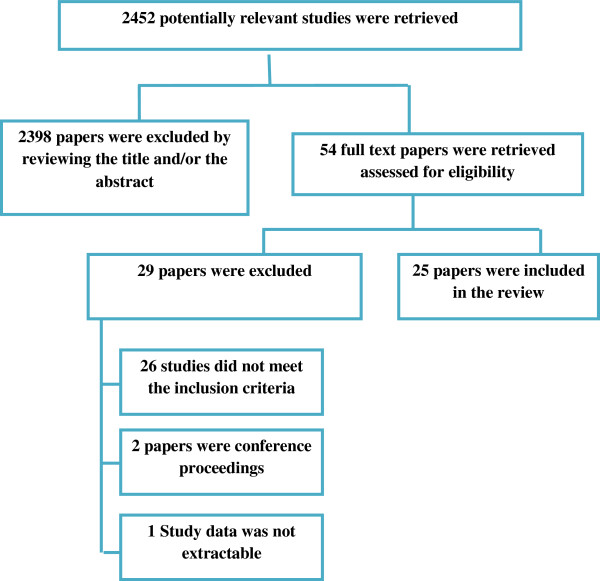
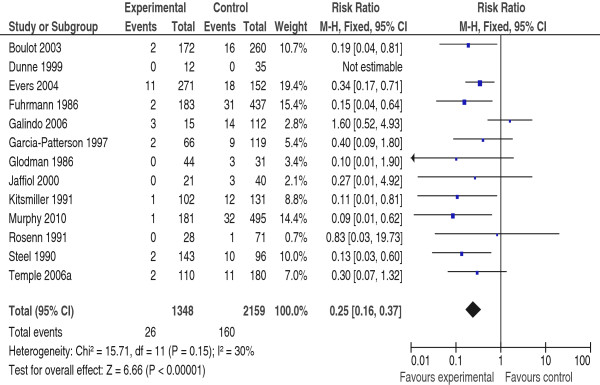
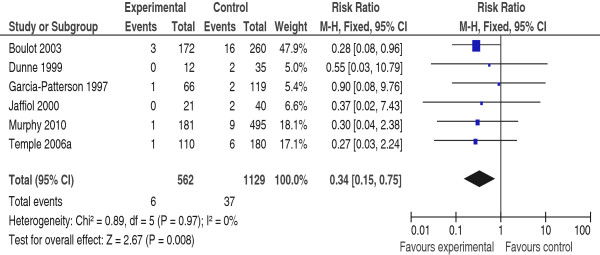
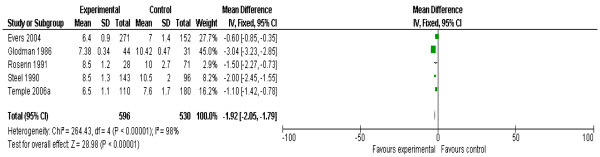
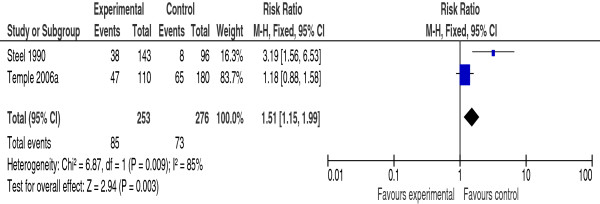
BACKGROUND: Pre-gestational diabetes mellitus is associated with increased risk for maternal and fetal adverse outcomes. This systematic review was carried out to evaluate the effectiveness and safety of pre-pregnancy care in improving the rate of congenital malformations and perinatal mortality for women with pre-gestational diabetes mellitus. METHODS: We searched the following databases, MEDLINE, EMBASE, WEB OF SCIENCE, Cochrane Library, including the CENTRAL register of controlled trials and CINHAL up to December 2011, without language restriction, for any pre-pregnancy care aiming at health promotion, glycemic control and screening and treatment of diabetes complications in women with type I or type II diabetes mellitus. Study design were trials (randomized and non-randomized), cohort and case-control studies. RESULTS: Of the 2452 title scanned 54 full papers were retrieved of those 21 studies were included in this review. Twelve cohort studies at low and medium risk of bias, with 3088 women, were included in the meta-analysis. Meta-analysis suggested that pre-pregnancy care is effective in reducing congenital malformation, Risk Ratio (RR) 0.25 (95% CI 0.16-0.37), number needed to treat (NNT) 19 (95% CI 14-24), and perinatal mortality RR 0.34 (95% CI 0.15-0.75), NNT = 46 (95% CI 28-115). Pre-pregnancy care lowers glycosylated hemoglobin A1c (HbA1c) in the first trimester of pregnancy by an average of 1.92% (95% CI -2.05 to -1.79). However women who received pre-pregnancy care were at increased risk of hypoglycemia during the first trimester of pregnancy RR 1.51 (95% CI 1.15-1.99). CONCLUSION: Pre-pregnancy care for women with pre-gestational type 1 or type 2 diabetes mellitus is effective in improving rates of congenital malformations, perinatal mortality and in reducing maternal HbA1C in the first trimester of pregnancy. Pre-pregnancy care might cause maternal hypoglycemia in the first trimester of pregnancy.
Overview
The claims and statistics of this paper haven’t been checked yet.
Free: it reads the open-access text and checks the first 5 claims that cite a source we can check. Create a free account to check every claim.
Integrity signals
Registry
Cites
Statistics
Figures
Verification
Claims the paper makes
The claims and statistics of this paper haven’t been checked yet.
Free: it reads the open-access text and checks the first 5 claims that cite a source we can check. Create a free account to check every claim.
Claims other papers make about this one
Each is checked against this paper’s own text: does it say what the citing paper says it does?
The source backs part of the claim, not all of it — or backs it for a different population, condition or comparison.
In the citing paper
“Elevated BG levels at conception and during the early first trimester are associated with increased rates of congenital malformations, spontaneous abortion, intrauterine fetal demise, pre-eclampsia, preterm delivery, and perinatal mortality.110–114”
From American Association of Clinical Endocrinology Clinical Practice Guideline: Developing a Diabetes Mellitus Comprehensive Care Plan-2022 Update. (2022) · cites this paper as [112]
Experimental — accuracy not yet measured
Self-check
Percentages, sums and reported differences re-computed from the paper’s own numbers.
The self-check needs the paper’s full text.
Citations
Cites
Grading quality of evidence and strength of recommendations
(2004) · BMJ · doi:10.1136/bmj.328.7454.1490 · Cited by 8,477 · cited 1×
“This systematic review provides a moderate to high level of evidence for the effectiveness of PPC in the improvement of maternal and fetal outcomes [44].”
BackgroundEvers, I. M., de Valk, H. W., & Visser, G. H. A. (2004) · BMJ · doi:10.1136/bmj.38043.583160.ee · Cited by 775 · cited 15×
“Reports from practically implemented PPC programs support our findings of the effectiveness of PPC in improving the rate of CM of infants of mothers with PGDM [8,33].”
BackgroundResultInfluentialOutcomes in Type 1 Diabetic Pregnancies
Jensen, D. M., Damm, P., Moelsted-Pedersen, L., Ovesen, P., Westergaard, J. G., Moeller, M., & Beck-Nielsen, H. (2004) · Diabetes Care · doi:10.2337/diacare.27.12.2819 · Cited by 486 · cited 1×
“For women with PGDM 16-28% of PM is due to CM, and an additional 21-41% is due to preterm delivery [38,39].”
BackgroundPrevention of Congenital Malformations in Infants of Insulin-dependent Diabetic Mothers
Fuhrmann, K., Reiher, H., Semmler, K., Fischer, F., Fischer, M., & Glöckner, E. (1983) · Diabetes Care · doi:10.2337/diacare.6.3.219 · Cited by 440 · cited 3×
“A total of 25 reports of 21 studies were included in this review [7,8,11-33].”
BackgroundMethodObstetric and Perinatal Outcomes in Type 1 Diabetic Pregnancies
Persson, M., Norman, M., & Hanson, U. (2009) · Diabetes Care · doi:10.2337/dc09-0656 · Cited by 436
Ray, J. G. (2001) · QJM · doi:10.1093/qjmed/94.8.435 · Cited by 430
Preconception Care of Diabetes: Glycemic Control Prevents Congenital Anomalies
Kitzmiller, J. L. (1991) · JAMA · doi:10.1001/jama.1991.03460060063025 · Cited by 397
Thompson, D., Berger, H., Feig, D., Gagnon, R., Kader, T., Keely, E., Kozak, S., Ryan, E., Sermer, M., & Vinokuroff, C. (2013) · Canadian Journal of Diabetes · doi:10.1016/j.jcjd.2013.01.044 · Cited by 377
Genetic disorders in the Arab world
Al-Gazali, L., Hamamy, H., & Al-Arrayad, S. (2006) · BMJ · doi:10.1136/bmj.38982.704931.ae · Cited by 366 · cited 1×
“These findings are also of a paramount importance to many communities in the Middle East [45], North Africa [46] and some communities in Asia [47] where the rate of CM is very high due to many causes including maternal diabetes.”
BackgroundPregnancy outcomes in the Diabetes Control and Complications Trial
(1996) · American Journal of Obstetrics and Gynecology · doi:10.1016/s0002-9378(96)70683-x · Cited by 278 · cited 4×
“A total of 25 reports of 21 studies were included in this review [7,8,11-33].”
BackgroundInfluentialFirst-Trimester Fasting Hyperglycemia and Adverse Pregnancy Outcomes
Riskin-Mashiah, S., Younes, G., Damti, A., & Auslender, R. (2009) · Diabetes Care · doi:10.2337/dc09-0688 · Cited by 277 · cited 1×
“During the period of organogenesis, maternal hyperglycemia is known to be associated with CM [34,40].”
BackgroundFrench Multicentric Survey of Outcome of Pregnancy in Women With Pregestational Diabetes
Diabetes and Pregnancy Group, F. (2003) · Diabetes Care · doi:10.2337/diacare.26.11.2990 · Cited by 257 · cited 3×
“A total of 25 reports of 21 studies were included in this review [7,8,11-33].”
BackgroundMethodCardiovascular malformations in infants of diabetic mothers
Wren, C., Birrell, G., & Hawthorne, G. (2003) · Heart · doi:10.1136/heart.89.10.1217 · Cited by 229
Wahabi, H. A., Alzeidan, R. A., Bawazeer, G. A., Alansari, L. A., & Esmaeil, S. A. (2010) · BMC Pregnancy and Childbirth · doi:10.1186/1471-2393-10-63 · Cited by 228 · cited 2×
“complications and discontinuing teratogenic medications, are as important for improving maternal and fetal outcomes and might be effective in reducing the rate of CM to the background level [7-9].”
BackgroundResultSelf-citationJensen, D. M., Korsholm, L., Ovesen, P., Beck-Nielsen, H., Moelsted-Pedersen, L., Westergaard, J. G., Moeller, M., & Damm, P. (2009) · Diabetes Care · doi:10.2337/dc08-2061 · Cited by 227 · cited 1×
“Population based studies showed a linear relationship between maternal HbA1C level above 7%, in the first trimester, and both CM and PM [41].”
BackgroundCan prepregnancy care of diabetic women reduce the risk of abnormal babies?
Steel, J. M., Johnstone, F. D., Hepburn, D. A., & Smith, A. F. (1990) · BMJ · doi:10.1136/bmj.301.6760.1070 · Cited by 205 · cited 10×
“Only two studies in this review evaluated maternal hypoglycemia, as an adverse effect of PPC [7,26].”
BackgroundMethodResultInfluentialEffectiveness of a Regional Prepregnancy Care Program in Women With Type 1 and Type 2 Diabetes
Murphy, H. R., Roland, J. M., Skinner, T. C., Simmons, D., Gurnell, E., Morrish, N. J., Soo, S.-C., Kelly, S., Lim, B., Randall, J., et al. (2010) · Diabetes Care · doi:10.2337/dc10-1113 · Cited by 186 · cited 10×
“Reports from practically implemented PPC programs support our findings of the effectiveness of PPC in improving the rate of CM of infants of mothers with PGDM [8,33].”
BackgroundResultInfluentialPrepregnancy Care and Pregnancy Outcomes in Women With Type 1 Diabetes
Temple, R. C., Aldridge, V. J., & Murphy, H. R. (2006) · Diabetes Care · doi:10.2337/dc05-2265 · Cited by 184
Willhoite, M. B., Bennert, H. W., Palomaki, G. E., Zaremba, M. M., Herman, W. H., Williams, J. R., & Spear, N. H. (1993) · Diabetes Care · doi:10.2337/diacare.16.2.450 · Cited by 176 · cited 5×
“PPC in all the cohort studies included control and self monitoring of blood glucose except for one which was designed to examine the effectiveness of pre-pregnancy counseling on fetal and neonatal outcomes [28].”
BackgroundMethodInfluentialGoldman, J. A., Dicker, D., Feldberg, D., Yeshaya, A., Samuel, N., & Karp, M. (1986) · American Journal of Obstetrics and Gynecology · doi:10.1016/0002-9378(86)90812-4 · Cited by 145
St Vincent’s Declaration 10 years on: outcomes of diabetic pregnancies
Platt, M. J., Stanisstreet, M., Casson, I. F., Howard, C. V., Walkinshaw, S., Pennycook, S., & McKendrick, O. (2002) · Diabetic Medicine · doi:10.1046/j.1464-5491.2002.00665.x · Cited by 141 · cited 1×
“For women with PGDM 16-28% of PM is due to CM, and an additional 21-41% is due to preterm delivery [38,39].”
BackgroundHbA1c in Early Diabetic Pregnancy and Pregnancy Outcomes
Nielsen, G. L., Møller, M., & Sørensen, H. T. (2006) · Diabetes Care · doi:10.2337/dc06-0914 · Cited by 140
Fetal cardiac effects of maternal hyperglycemia during pregnancy
Corrigan, N., Brazil, D. P., & McAuliffe, F. (2009) · Birth Defects Research Part A: Clinical and Molecular Teratology · doi:10.1002/bdra.20567 · Cited by 135 · cited 2×
“During the period of organogenesis, maternal hyperglycemia is known to be associated with CM [34,40].”
BackgroundFuhrmann, K., Reiher, H., Semmler, K., & Glöckner, E. (2009) · Experimental and Clinical Endocrinology & Diabetes · doi:10.1055/s-0029-1210327 · Cited by 133 · cited 3×
“A total of 25 reports of 21 studies were included in this review [7,8,11-33].”
BackgroundMethodJaouad, I. C., Elalaoui, S. C., Sbiti, A., Elkerh, F., Belmahi, L., & Sefiani, A. (2009) · Journal of Biosocial Science · doi:10.1017/s0021932009003393 · Cited by 128 · cited 1×
“These findings are also of a paramount importance to many communities in the Middle East [45], North Africa [46] and some communities in Asia [47] where the rate of CM is very high due to many causes including maternal diabetes.”
BackgroundDamm, P., & Mølsted‐Pedersen, L. (1989) · American Journal of Obstetrics and Gynecology · doi:10.1016/0002-9378(89)90656-x · Cited by 116
Stillbirth in diabetic pregnancies
Mathiesen, E. R., Ringholm, L., & Damm, P. (2011) · Best Practice & Research Clinical Obstetrics & Gynaecology · doi:10.1016/j.bpobgyn.2010.11.001 · Cited by 102 · cited 7×
“Reports from practically implemented PPC programs support our findings of the effectiveness of PPC in improving the rate of CM of infants of mothers with PGDM [8,33].”
BackgroundInfluentialPre‐conception management of insulin‐dependent diabetes: Improvement of pregnancy outcome
Rosenn, B., Miodovnik, M., Combs, C., Khoury, J., & Siddiqi, T. (1992) · International Journal of Gynecology & Obstetrics · doi:10.1016/0020-7292(92)90749-9 · Cited by 94 · cited 6×
“Additionally, and due to the relatively short duration of the pregnancy, attrition bias was noted in only one study, [24] all other studies had complete follow-up of both groups.”
BackgroundMethodResultInfluentialPersson, M., Pasupathy, D., Hanson, U., Westgren, M., & Norman, M. (2012) · BMJ Open · doi:10.1136/bmjopen-2011-000601 · Cited by 83
Five years' experience of a "prepregnancy" clinic for insulin-dependent diabetics.
Steel, J. M., Johnstone, F. D., Smith, A. F., & Duncan, L. J. (1982) · BMJ · doi:10.1136/bmj.285.6338.353 · Cited by 81
Do Multivitamin Supplements Attenuate the Risk for Diabetes-Associated Birth Defects?
Correa, A., Botto, L., Liu, Y., Mulinare, J., & Erickson, J. D. (2003) · Pediatrics · doi:10.1542/peds.111.s1.1146 · Cited by 80
Consanguinity and early mortality in the muslim populations of India and Pakistan
Hussain, R., Bittles, A. H., & Sullivan, S. (2001) · American Journal of Human Biology · doi:10.1002/ajhb.1124 · Cited by 77 · cited 1×
“These findings are also of a paramount importance to many communities in the Middle East [45], North Africa [46] and some communities in Asia [47] where the rate of CM is very high due to many causes including maternal diabetes.”
BackgroundDiabetes and pregnancy. Preconception care, pregnancy outcomes, resource utilization and costs.
Herman, W. H., Janz, N. K., Becker, M. P., & Charron‐Prochownik, D. (1999) · PubMed · Cited by 74
Outcome of fetuses in women with pregestational diabetes mellitus
Galindo, A., Burguillo, A. G., Azriel, S., & Fuente, P. D. L. (2006) · Journal of Perinatal Medicine · doi:10.1515/jpm.2006.062 · Cited by 73 · cited 3×
“A total of 25 reports of 21 studies were included in this review [7,8,11-33].”
BackgroundGlycaemic control throughout pregnancy and risk of pre-eclampsia in women with type I diabetes
Temple, R., Aldridge, V, Stanley, K., & Murphy, H. (2006) · BJOG: An International Journal of Obstetrics & Gynaecology · doi:10.1111/j.1471-0528.2006.01071.x · Cited by 63 · cited 6×
“During the 16 year interval between the two studies (Steel et al. 1990, Temple et al. 2006) many innovations in the treatment of diabetes in pregnancy have been developed.”
BackgroundMethodInfluentialOutcome of fetuses in women with pregestational diabetes mellitus
Artal, R. (2006) · Journal of Perinatal Medicine · doi:10.1515/jpm.2006.063 · Cited by 55
Ray, J. G., Vermeulen, M. J., Meier, C., & Wyatt, P. R. (2004) · QJM: An International Journal of Medicine · doi:10.1093/qjmed/hch107 · Cited by 54 · cited 2×
“Background Pre-gestational diabetes mellitus (PGDM) and maternal hyperglycemia during the time of organogenesis is a known teratogen with detrimental effects on the fetal heart, renal, musculoskeletal and central nervous systems [1-3].”
BackgroundPre-conception diabetes care in insulin-dependent diabetes mellitus
Dunne, F. P. (1999) · QJM · doi:10.1093/qjmed/92.3.175 · Cited by 52
Howorka, K., Pumprla, J., Gabriel, M., Feiks, A., Schlusche, C., Nowotny, C., Schober, E., Waldhoer, T., & Langer, M. (2001) · Diabetic Medicine · doi:10.1046/j.1464-5491.2001.00621.x · Cited by 51 · cited 1×
“Such innovations included patients’ education and counseling, intensive self-monitoring of blood glucose and functional insulin therapy [43].”
BackgroundMaternal Fuels, Diabetic Embryopathy: Pathomechanisms and Prevention
Reece, E. A. (1999) · Seminars in Reproductive Medicine · doi:10.1055/s-2007-1016225 · Cited by 47 · cited 7×
“Reports from practically implemented PPC programs support our findings of the effectiveness of PPC in improving the rate of CM of infants of mothers with PGDM [8,33].”
BackgroundInfluentialPerinatal mortality in pregestational diabetes
Melamed, N., & Hod, M. (2009) · International Journal of Gynecology & Obstetrics · doi:10.1016/j.ijgo.2008.11.024 · Cited by 46 · cited 1×
“5 – 9 folds in the PM rate in diabetic mothers compared to the background population [37].”
BackgroundDoes preconceptional counselling in diabetic women influence perinatal outcome?
García‐Patterson, A., Corcoy, R., Rigla, M., Caballero, A., Adelantado, J. M., Altirriba, O., & de Leiva, A. (1997) · PubMed · Cited by 31
Jensen, B. M., Kühl, C., Mølsted-Pedersen, L., Saurbrey, N., & Fog-Pedersen, J. (1986) · Acta Endocrinologica · doi:10.1530/acta.0.111s0081 · Cited by 30
Br, R., Rowbotham, C. J. F., & Ah, B. (1987) · PubMed · Cited by 15
Treatment of pregnant insulin-dependent diabetic women
Fuhrmann, K. (1986) · European Journal of Endocrinology · doi:10.1530/acta.0.111s0074 · Cited by 10 · cited 7×
“In addition to glycemic control, four studies included screening and treatment of complications of diabetes in the PPC program [14,17,19,20].”
BackgroundMethodInfluential[Evaluation of the benefits brought by pregnancy planning in type 1 diabetes mellitus].
Jaffiol, C., Baccara, M. T., Renard, É., Apostol, D., Lefebvre, P., Boulot, P., Daurès, J., & Bringer, J. (2000) · PubMed · Cited by 7
[Preconceptional control in diabetic women].
Ingelmo, G., de la Morena, L. H., Vaquero, P. M., Jáñez Furio, M., Grande Aragón, C., & Lf, P. S. (1998) · PubMed · Cited by 6
Research works printed but not linked: 2
- Confidential Enquiry into Maternal and Child Health (CEMACH) Pregnancy in Women with type 1 and type 2 Diabbetes in 2002–2003. England, Wales and Northern Ireland 2005 London: CEMACH
- Well GA Shea B C'Connell D Peterson J Welch V Losos M The Newcaslte-Ottawa Scal (NOS) for assessing the quality of nonrandomised studies in met-analyses 2005 http://www.ohri.ca/programs/clinical_epidemiology/oxford.asp
Cited by
Feig, D. S., Donovan, L. E., Corcoy, R., Murphy, K. E., Amiel, S. A., Hunt, K. F., Asztalos, E., Barrett, J. F. R., Sanchez, J. J., de Leiva, A., et al. (2017) · The Lancet · doi:10.1016/s0140-6736(17)32400-5 · Cited by 803
Blonde, L., Umpierrez, G. E., Reddy, S. S., McGill, J. B., Berga, S. L., Bush, M., Chandrasekaran, S., DeFronzo, R. A., Einhorn, D., Galindo, R. J., et al. (2022) · Endocrine Practice · doi:10.1016/j.eprac.2022.08.002 · Cited by 507
Lorenzo-Almorós, A., Hang, T., Peiró, C., Soriano-Guillén, L., Egido, J., Tuñón, J., & Lorenzo, Ó. (2019) · Cardiovascular Diabetology · doi:10.1186/s12933-019-0935-9 · Cited by 202
Glycemic targets in the second and third trimester of pregnancy for women with type 1 diabetes
Maresh, M. J. A., Holmes, V. A., Patterson, C. C., Young, I. S., Pearson, D. W. M., Walker, J. D., & McCance, D. R. (2015) · Diabetes Care · doi:10.2337/dc14-1755 · Cited by 175
Tinker, S. C., Gilboa, S. M., Moore, C. A., Waller, D. K., Simeone, R. M., Kim, S. Y., Jamieson, D. J., Botto, L. D., & Reefhuis, J. (2019) · American Journal of Obstetrics and Gynecology · doi:10.1016/j.ajog.2019.08.028 · Cited by 161
Metadata
- Authors
- Wahabi, H. A., Alzeidan, R. A., & Esmaeil, S. A.
- Affiliations
- King Saud University (SA)
- Corresponding author
- Wahabi, Hayfaa A
- Venue
- BMC Public Health
- Published
- 2012-09-17
- Volume
- 12
- Issue
- 1
- Pages
- 792-792
- ISSN
- 1471-2458 (ISSN-L)
- PMC
- PMC3575330
- OpenAlex
- W2108281781
- Cited by
- 126
- References
- 47
- Citations by year
- 2026: 4 · 2025: 9 · 2024: 10 · 2023: 8 · 2022: 8 · 2021: 9 · 2020: 17 · 2019: 9 · 2018: 15 · 2017: 9 · 2016: 7 · 2015: 9 · 2014: 9 · 2013: 3
- FWCI
- 1.10
- Type
- journal article
- Language
- en
- Open access
- gold
- doi.org
- Licence
- cc-by
- creativecommons.org/licenses/by/2.0 (tdm)
- Locations
- BMC Public Health (publishedVersion, cc-by)
- Europe PMC (PubMed Central) (publishedVersion, cc-by)
- PubMed Central (publishedVersion, cc-by)
- PubMed (publishedVersion)
- Warwick Research Archive Portal (University of Warwick) (acceptedVersion)
- DOAJ (DOAJ: Directory of Open Access Journals) (submittedVersion)
- Funders
- King Saud University
- College of Medicine, King Saud University
- Topics
- Health Sciences › Medicine › Obstetrics and Gynecology › Gestational Diabetes Research and Management
- Health Sciences › Medicine › Public Health, Environmental and Occupational Health › Pregnancy and Medication Impact
- Health Sciences › Medicine › Pediatrics, Perinatology and Child Health › Maternal and Neonatal Healthcare
- Keywords
- preconception care, pregestational diabetes, type 1 diabetes, type 2 diabetes, congenital malformations, perinatal mortality, glycemic control, HbA1c, hypoglycemia, pregnancy outcomes, diabetes complications screening
- MeSH terms
- Congenital Abnormalities, Diabetes Mellitus, Type 1, Diabetes Mellitus, Type 2, Female, Glycated Hemoglobin, Humans, Pregnancy, Prenatal Care, Cohort Studies, Case-Control Studies, Randomized Controlled Trials as Topic, Diabetes, Gestational, Perinatal Mortality
About these checks
Registry, retraction, Cites and statistics results are computed, not judged, with one exception: a printed reference that no index lists is read once by a model before it counts as a citation error. Claims are extracted by a model and kept only when their quote appears verbatim in the text; each cited source is then checked, with a model’s help, for whether it says what the claim relies on. Those verdicts can be wrong — read the claim’s quote and the cited source before relying on one.
Statistics and arithmetic are recomputed, not judged.
Confidence bands are shown only for fields calibrated on our annotated test set. None is calibrated yet, so no band is shown.
What counts as a claim ›How we measure confidence ›How we check this ›
Are you an author, or do you see a problem with this page? Request a review
Data sources
Bibliographic data: Semantic Scholar, OpenAlex, Crossref.
Contains information from the Semantic Scholar Academic Graph Datasets, made available under the ODC Attribution License (ODC-BY 1.0).
Semantic Scholar’s data is described in: Kinney, R., et al. (2023). The Semantic Scholar Open Data Platform. arXiv:2301.10140.
