

Social participation and mental health: moderating effects of gender, social role and rurality
Open accessThe DOI matches its Crossref record; 24 of the 26 references it cites were found in a registry or an index.
Abstract
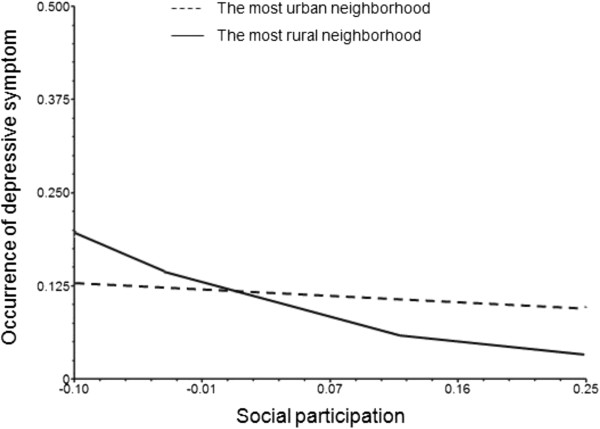
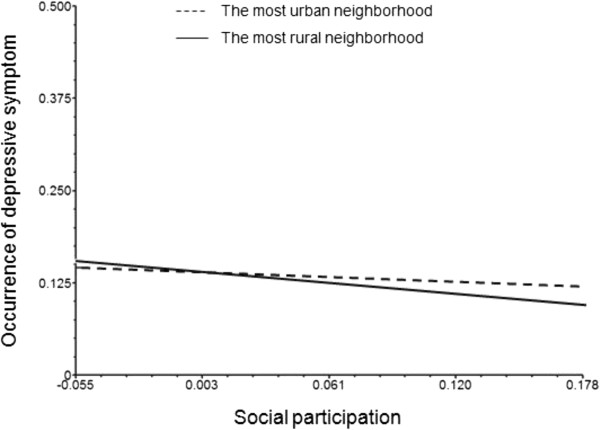
BACKGROUND: Previous studies have reported that older people's social participation has positive effects on their health. However, some studies showed that the impacts of social participation on health differ by gender. We sought to examine whether the effects of social participation on mental health differ for men and women in a Japanese population. We also examined the moderating influence of social position within the organization as well as urban/rural locality. METHODS: We used two waves of the Aichi Gerontological Evaluation Study's longitudinal survey, which targeted residents with aged 65 years or over (n=2,728) in a central part of Japan. The first wave survey was conducted in 2003, and the second wave in 2006. Depressive symptoms of the study participants were assessed using the short version of the Geriatric Depression Scale (GDS-15). A multilevel logistic regression model was used with individual-level as level 1 and the school district-level as level 2. RESULTS: We found that higher social participation and performing key roles in the organization had protective effects on depressive symptoms for women. However, there were no main effects of these variables for the mental health of men. We found an interaction between social participation, organizational position, and rural residence among men only. That is, men who occupied leadership positions in organizations reported better mental health, but only in rural areas. CONCLUSIONS: Our findings support the notion that increasing the opportunities for social participation improves older people's heath, especially for women. However, in the rural Japanese context, offering men meaningful roles within organizations may be important.
Overview
The claims and statistics of this paper haven’t been checked yet.
Free: it reads the open-access text and checks the first 5 claims that cite a source we can check. Create a free account to check every claim.
Integrity signals
Registry
Cites
Statistics
Figures
Verification
Claims the paper makes
The claims and statistics of this paper haven’t been checked yet.
Free: it reads the open-access text and checks the first 5 claims that cite a source we can check. Create a free account to check every claim.
Claims other papers make about this one
Each is checked against this paper’s own text: does it say what the citing paper says it does?
The source backs part of the claim, not all of it — or backs it for a different population, condition or comparison.
In the citing paper
“Considering gender differences is particularly important given that women may be more likely to engage in frequent social activity and are more likely to maintain close relationships and wider social networks than men [50, 97, 134–136].”
From Social Isolation and Cognitive Function in Later Life: A Systematic Review and Meta-Analysis (2019) · cites this paper as [136]
Experimental — accuracy not yet measured
Self-check
Percentages, sums and reported differences re-computed from the paper’s own numbers.
The self-check needs the paper’s full text.
Citations
Cites
Social Capital: Its Origins and Applications in Modern Sociology
Portes, A. (1998) · Annual Review of Sociology · doi:10.1146/annurev.soc.24.1.1 · Cited by 12,037 · cited 1×
“Portes [14] pointed out the “excess claims on group members” as one of the downsides of social capital.”
BackgroundSocial Foundations of Thought and Action
Bandura, A. (2002) · The Health Psychology Reader · doi:10.4135/9781446221129.n6 · Cited by 9,902 · cited 1×
“Antonucci & Jackson [6] and Bandura [7] stated that such social relationships are useful because they are helpful to develop self-efficacy.”
BackgroundKawachi, I. (2001) · Journal of Urban Health: Bulletin of the New York Academy of Medicine · doi:10.1093/jurban/78.3.458 · Cited by 3,538
Self-citationGlass, T. A., de Leon, C. M., Marottoli, R. A., & Berkman, L. F. (1999) · BMJ · doi:10.1136/bmj.319.7208.478 · Cited by 924 · cited 1×
“Studies from the field of gerontology have reported that older people’s social participation is associated with higher life satisfaction, higher self-esteem, lower rates of admission to a nursing homes, as well as lower mortality [1-3].”
BackgroundEffects of Volunteering on the Well-Being of Older Adults
Morrow-Howell, N., Hinterlong, J., Rozario, P. A., & Tang, F. (2003) · The Journals of Gerontology: Series B · doi:10.1093/geronb/58.3.s137 · Cited by 923 · cited 1×
“[12] examined the interaction effects of gender and participation in volunteer activities on self rated health, functional dependency and depressive symptoms, using panel data from three time points in the U.”
MethodThe Short Form of the Geriatric Depression Scale: A Comparison With the 30-Item Form
Burke, W. J., Roccaforte, W. H., & Wengel, S. P. (1991) · Journal of Geriatric Psychiatry and Neurology · doi:10.1177/089198879100400310 · Cited by 731 · cited 1×
“were measured by the short version of the Geriatric Depression Scale (GDS-15), using simple yes/no format, suitable for self-administration [17].”
MethodZunzunegui, M.-V., Alvarado, B. E., Del Ser, T., & Otero, A. (2003) · The Journals of Gerontology Series B: Psychological Sciences and Social Sciences · doi:10.1093/geronb/58.2.s93 · Cited by 719 · cited 1×
“Spanish research on older people also showed that friendship connections are associated with a protective effect on cognitive impairment for women, but not for men [9].”
BackgroundVolunteering and Mortality Among Older Adults: Findings From a National Sample
Musick, M. A., Herzog, A. R., & House, J. S. (1999) · The Journals of Gerontology Series B: Psychological Sciences and Social Sciences · doi:10.1093/geronb/54b.3.s173 · Cited by 585 · cited 1×
“[13] pointed out that both too little participation and too frequent participation in volunteer activities are more likely to be associated with negative impacts on the health of older people.”
BackgroundFried, L. P. (2004) · Journal of Urban Health: Bulletin of the New York Academy of Medicine · doi:10.1093/jurban/jth094 · Cited by 523 · cited 1×
“In the health promotion literature, increasing the opportunities for social participation has been suggested as a means of improving older people’s health [22-24].”
BackgroundSuccessful Aging: A Life-Course Perspective on Women's Multiple Roles and Health
Moen, P., Dempster-McClain, D., & Williams (1992) · American Journal of Sociology · doi:10.1086/229941 · Cited by 503 · cited 1×
“; licensee BioMed Central Commons Attribution License (http://creativec reproduction in any medium, provided the or increasing the participants’ range of social networks, as well as their social prestige, access to resources and emotional gratification [5].”
Background
Research works printed but not linked: 3
- Kondo K Health inequality in Japan: an empirical study of older people 2010 Melbourne: Trans Pacific Press
- Hanibuchi T Mapping and classifying of urbanization by using Japanese historic topographic maps: the case of Chita Peninsula, aichi prefecture, Japan Urban Geography of Japan 2008 3 7 17 (in Japanese)
- Antonucci TC Turner BF, Troll LE A life-span view of women’s social relations Woman growing older 1994 Thousand Oaks: Sage Publications 239 269
Cited by
Social Isolation and Cognitive Function in Later Life: A Systematic Review and Meta-Analysis
Evans, I. E. M., Martyr, A., Collins, R., Brayne, C., & Clare, L. (2019) · Journal of Alzheimer’s Disease · doi:10.3233/jad-180501 · Cited by 531
Kanamori, S., Kai, Y., Aida, J., Kondo, K., Kawachi, I., Hirai, H., Shirai, K., Ishikawa, Y., Suzuki, K., & The JAGES Group (2014) · PLoS ONE · doi:10.1371/journal.pone.0099638 · Cited by 355
“In addition, people who maintain a role in social organizations (e.g. secretary, treasurer, etc) experience a lower risk of depression,[18].”
BackgroundSelf-citationHikichi, H., Kondo, N., Kondo, K., Aida, J., Takeda, T., & Kawachi, I. (2015) · Journal of Epidemiology and Community Health · doi:10.1136/jech-2014-205345 · Cited by 240
Self-citationMaintaining older brain functionality: A targeted review
Ballesteros, S., Kraft, E., Santana, S., & Tziraki, C. (2015) · Neuroscience & Biobehavioral Reviews · doi:10.1016/j.neubiorev.2015.06.008 · Cited by 223
Wang, R., Chen, Z., Zhou, Y., Shen, L., Zhang, Z., & Wu, X. (2019) · Social Science & Medicine · doi:10.1016/j.socscimed.2019.112518 · Cited by 197
“337 338 As some prior studies have observed a gender disparity in the association between SP and mental health 339 (Takagi et al., 2013; Tomioka et al., 2017), we also stratified the sample by gender to better understand this 340 relationship.”
BackgroundGao, M., Sa, Z., Li, Y., Zhang, W., Tian, D., Zhang, S., & Gu, L. (2018) · BMC Geriatrics · doi:10.1186/s12877-018-0903-3 · Cited by 191
Fu, C., Li, Z., & Mao, Z. (2018) · International Journal of Environmental Research and Public Health · doi:10.3390/ijerph15020231 · Cited by 178
“Thus, women received more beneficial effects on health outcomes from various types of social activities than men [16,38].”
BackgroundLuo, M., Ding, D., Bauman, A., Negin, J., & Phongsavan, P. (2020) · BMC Public Health · doi:10.1186/s12889-019-7841-7 · Cited by 170
Tomioka, K., Kurumatani, N., & Hosoi, H. (2016) · The Journals of Gerontology Series B: Psychological Sciences and Social Sciences · doi:10.1093/geronb/gbw059 · Cited by 165
“Other studies have reported that gender plays a factor in the health of older adults in regards to SP (Kavanagh et al., 2006; Takagi et al., 2013).”
BackgroundResultLi, C., Jiang, S., Li, N., & Zhang, Q. (2018) · Journal of Community Psychology · doi:10.1002/jcop.21944 · Cited by 162
Mental Health and Related Factors after the Great East Japan Earthquake and Tsunami
Yokoyama, Y., Otsuka, K., Kawakami, N., Kobayashi, S., Ogawa, A., Tannno, K., Onoda, T., Yaegashi, Y., & Sakata, K. (2014) · PLoS ONE · doi:10.1371/journal.pone.0102497 · Cited by 158
“participation improves mental health, especially for females [16].”
BackgroundA survey on big data-driven digital phenotyping of mental health
Liang, Y., Zheng, X., & Zeng, D. D. (2019) · Information Fusion · doi:10.1016/j.inffus.2019.04.001 · Cited by 158
Tani, Y., Kondo, N., Takagi, D., Saito, M., Hikichi, H., Ojima, T., & Kondo, K. (2015) · Appetite · doi:10.1016/j.appet.2015.06.005 · Cited by 172
Self-citationPosselt, J. R., & Lipson, S. K. (2016) · Journal of College Student Development · doi:10.1353/csd.2016.0094 · Cited by 142
Tomioka, K., Kurumatani, N., & Hosoi, H. (2016) · Journal of Epidemiology · doi:10.2188/jea.je20150253 · Cited by 131
Tomioka, K., Kurumatani, N., & Hosoi, H. (2017) · Journal of the American Geriatrics Society · doi:10.1111/jgs.14447 · Cited by 128
Noguchi, T., Saito, M., Aida, J., Cable, N., Tsuji, T., Koyama, S., Ikeda, T., Osaka, K., & Kondo, K. (2021) · BMJ Open · doi:10.1136/bmjopen-2020-045834 · Cited by 144
Self-citationShiba, K., Kondo, N., Kondo, K., & Kawachi, I. I. (2017) · BMC Public Health · doi:10.1186/s12889-017-4427-0 · Cited by 131
“GDS-15 has been commonly used as a screening tool for depression among older adults with a cutoff of 5 or above to indicate clinical depression [23, 24].”
BackgroundMethodSelf-citationTomioka, K., Kurumatani, N., & Hosoi, H. (2017) · BMC Geriatrics · doi:10.1186/s12877-017-0502-8 · Cited by 143
“Because prior studies have pointed out that both poor physical and mental health can prevent community-dwelling elderly from participating in social groups [3, 5, 21, 42], there is a possibility of a reverse causation, that people with poor health are less likely to participate in social groups, or more likely to feel…”
BackgroundResultInfluentialTomioka, K., Kurumatani, N., & Hosoi, H. (2017) · BMC Geriatrics · doi:10.1186/s12877-017-0491-7 · Cited by 134
“Many previous studies have reported that elderly people’s SP has a positive impact on their physical and mental health including longevity [2, 3], sustention of ADL [2, 4] and cognitive function [5, 6], higher level of health-related quality of life [7], and prevention of depression [8].”
BackgroundAmagasa, S., Fukushima, N., Kikuchi, H., Oka, K., Takamiya, T., Odagiri, Y., & Inoue, S. (2017) · PLoS ONE · doi:10.1371/journal.pone.0175392 · Cited by 135
Hwang, J., Park, S. M., & Kim, S. (2018) · International Journal of Environmental Research and Public Health · doi:10.3390/ijerph15102315 · Cited by 116
“Some studies have reported that social participation produces greater benefits for the health of males than females [46,47].”
BackgroundInternet use and subsequent health and well-being in older adults: An outcome-wide analysis
Nakagomi, A., Shiba, K., Kawachi, I. I., Ide, K., Nagamine, Y., Kondo, N., Hanazato, M., & Kondo, K. (2022) · Computers in Human Behavior · doi:10.1016/j.chb.2021.107156 · Cited by 111
Self-citationTomioka, K., Kurumatani, N., & Saeki, K. (2019) · Journal of Epidemiology · doi:10.2188/jea.je20180195 · Cited by 117
“44 Most smokers cite stress relief as a perceived bene fi t and motive for smoking.”
Min, J., Ailshire, J., & Crimmins, E. M. (2016) · Age and Ageing · doi:10.1093/ageing/afw125 · Cited by 95
“For instance, a study of Japanese older adults found an association between social engagement and fewer depressive symptoms in women, but not men [16].”
BackgroundEjiri, M., Kawai, H., Fujiwara, Y., Ihara, K., Watanabe, Y., Hirano, H., Kim, H. K., Ishii, K., Oka, K., & Obuchi, S. P. (2019) · PLoS ONE · doi:10.1371/journal.pone.0222887 · Cited by 102
“It has been reported that women are more positively affected by social participation than men in terms of depression [35] and IADL [31, 45].”
BackgroundOkuzono, S. S., Shiba, K., Kim, E. S., Shirai, K., Kondo, N., Fujiwara, T., Kondo, K., Lomas, T., Trudel‐Fitzgerald, C., Kawachi, I. I., et al. (2022) · The Lancet Regional Health - Western Pacific · doi:10.1016/j.lanwpc.2022.100391 · Cited by 113
Self-citationKikuchi, H., Inoue, S., Fukushima, N., Takamiya, T., Odagiri, Y., Ohya, Y., Amagasa, S., Oka, K., & Owen, N. G. (2017) · Geriatrics and gerontology international/Geriatrics & gerontology international · doi:10.1111/ggi.12995 · Cited by 96
Gender matters: productive social engagement and the subsequent cognitive changes among older adults
Lee, Y., & Jean Yeung, W.-J. (2019) · Social Science & Medicine · doi:10.1016/j.socscimed.2018.08.024 · Cited by 75
Kanamori, S., Takamiya, T., & Inoue, S. (2015) · The Journal of Physical Fitness and Sports Medicine · doi:10.7600/jpfsm.4.315 · Cited by 87
Ide, K., Tsuji, T., Kanamori, S., Jeong, S., Nagamine, Y., & Kondo, K. (2020) · International Journal of Environmental Research and Public Health · doi:10.3390/ijerph17020617 · Cited by 88
“A leading role in an organization has an additional effect on social participation and health outcomes [15,45].”
BackgroundSelf-citationHong, J.-W., Fischer, K., Ha, Y., & Zeng, Y. (2022) · Computers in Human Behavior · doi:10.1016/j.chb.2022.107239 · Cited by 100
Ong, C. H., Pham, B. L., Levasseur, M., Tan, G. R., & Seah, B. (2024) · Frontiers in Public Health · doi:10.3389/fpubh.2024.1335692 · Cited by 99
Tomioka, K., Kurumatani, N., & Hosoi, H. (2015) · PLOS ONE · doi:10.1371/journal.pone.0139065 · Cited by 67
“Studies that examined the effects of social participation according to different types of groups showed that participation in several groups may have a protective effect on depression [23,24], well-being [25], and functional disability [13].”
BackgroundThe Effects of Income on Happiness in East and South Asia: Societal Values Matter?
Lim, H.-E., Shaw, D., Liao, P.-S., & Duan, H. (2020) · Journal of Happiness Studies · doi:10.1007/s10902-019-00088-9 · Cited by 65
Ang, S. (2018) · Social Science & Medicine · doi:10.1016/j.socscimed.2018.03.042 · Cited by 68
Wang, Y., Li, Z., & Fu, C. (2021) · BMC Geriatrics · doi:10.1186/s12877-021-02541-y · Cited by 68
Nemoto, Y., Saito, T., Kanamori, S., Tsuji, T., Shirai, K., Kikuchi, H., Maruo, K., Arao, T., & Kondo, K. (2017) · BMC Geriatrics · doi:10.1186/s12877-017-0688-9 · Cited by 67
“[8] suggested that performing leadership positions was significantly related to low odds ratio (OR) for depression for women (OR, 0.”
BackgroundSelf-citationLindgren, A. G., & Maguire, J. M. (2016) · Stroke · doi:10.1161/strokeaha.116.010648 · Cited by 66
“It is also possible to include depression into this category because social engagement is diminished in people experiencing depression.(49,50) Several covariates known to influence psychosocial aspects are included in multivariate models examining genetic influence on social participation after stroke (Table 3).”
BackgroundSu, D., Chen, Z., Chang, J., Gong, G., Guo, D., Tan, M., Zhang, Y., Liu, Y., Chen, X., Chen, X., et al. (2020) · International Journal of Environmental Research and Public Health · doi:10.3390/ijerph17249438 · Cited by 59
Social Activities, Incident Cardiovascular Disease, and Mortality: Health Behaviors Mediation
Han, S. H., Tavares, J. L., Evans, M., Saczynski, J. S., & Burr, J. A. (2016) · Journal of Aging and Health · doi:10.1177/0898264316635565 · Cited by 60
Association between the frequency and autonomy of social participation and self‐rated health
Tomioka, K., Kurumatani, N., & Hosoi, H. (2017) · Geriatrics and gerontology international/Geriatrics & gerontology international · doi:10.1111/ggi.13074 · Cited by 57
Nakagomi, A., Shiba, K., Hanazato, M., Kondo, K., & Kawachi, I. I. (2020) · Social Science & Medicine · doi:10.1016/j.socscimed.2020.113140 · Cited by 56
Self-citationSaito, T., Kondo, K., Murata, C., Jeong, S., Suzuki, K., & Kondo, N. (2015) · PubMed · doi:10.11236/jph.62.10_596 · Cited by 81
Self-citationCommunity-level Sports Group Participation and Older Individuals’ Depressive Symptoms
Tsuji, T., Miyaguni, Y., Kanamori, S., Hanazato, M., & Kondo, K. (2018) · Medicine & Science in Sports & Exercise · doi:10.1249/mss.0000000000001541 · Cited by 58
Self-citationSaito, M., Aida, J., Kondo, N., Saito, J., Kato, H., Ota, Y., Amemiya, A., & Kondo, K. (2019) · BMJ Open · doi:10.1136/bmjopen-2018-024439 · Cited by 51
Self-citationAn Overview of Social Participation in Older Adults: Concepts and Assessments
Hashidate, H., Shimada, H., Fujisawa, Y., & Yatsunami, M. (2021) · Physical Therapy Research · doi:10.1298/ptr.r0013 · Cited by 57
Sato, K., Amemiya, A., Haseda, M., Takagi, D., Kanamori, M., Kondo, K., & Kondo, N. (2020) · American Journal of Epidemiology · doi:10.1093/aje/kwaa041 · Cited by 46
“In addition, we separately analyzed the data for men and women, considering a potential gender difference in the relationship between social capital and mental health (24) (Table 3).”
Self-citationLee, H. Y., Hwang, J., Ball, J. G., Lee, J., & Albright, D. L. (2019) · Perspectives In Psychiatric Care · doi:10.1111/ppc.12447 · Cited by 57
Fujiwara, T., Takamoto, I., Amemiya, A., Hanazato, M., Suzuki, N., Nagamine, Y., Sasaki, Y., Tani, Y., Yazawa, A., Inoue, Y., et al. (2017) · Social Science & Medicine · doi:10.1016/j.socscimed.2017.04.008 · Cited by 46
Self-citationSakamoto, A., Ukawa, S., Okada, E., Sasaki, S., Zhao, W., Kishi, T., Kondo, K., & Tamakoshi, A. (2016) · International Journal of Geriatric Psychiatry · doi:10.1002/gps.4576 · Cited by 43
Self-citationTsuji, T., Kondo, K., Kondo, N., Aida, J., & Takagi, D. (2018) · Geriatrics and gerontology international/Geriatrics & gerontology international · doi:10.1111/ggi.13503 · Cited by 38
Self-citationSocial participation and mortality: does social position in civic groups matter?
for the JAGES group, Ishikawa, Y., Kondo, N., Kondo, K., Saito, T., Hayashi, H., & Kawachi, I. I. (2016) · BMC Public Health · doi:10.1186/s12889-016-3082-1 · Cited by 44
“For example, past research using AGES cohort data supports this idea that older women with roles involving responsibility in community organizations enjoyed better mental health compared to those participating as regular members [22].”
ResultSelf-citationYuri, Y., Takabatake, S., Nishikawa, T., Oka, M., & Fujiwara, T. (2016) · BMC Geriatrics · doi:10.1186/s12877-016-0277-3 · Cited by 41
“Previous reports have also found that social participation produces bigger benefits for the health of women than for men [43, 44], so the reported rates in our study may overestimate improvements for men.”
ResultAdhikari, R. K., Sherchand, J. B., Mishra, S. R., Ranabhat, K., Pokharel, A., Devkota, P., Mishra, D. K., Ghimire, Y. C., Gelal, K., Paudel, R., et al. (2015) · Journal of Tropical Medicine · doi:10.1155/2015/260359 · Cited by 36
Beneficial effects of working later in life on the health of community‐dwelling older adults
Tomioka, K., Kurumatani, N., & Hosoi, H. (2017) · Geriatrics and gerontology international/Geriatrics & gerontology international · doi:10.1111/ggi.13184 · Cited by 42
Uemura, K., Makizako, H., Lee, S., Doi, T., Lee, S., Tsutsumimoto, K., & Shimada, H. (2017) · International Journal of Geriatric Psychiatry · doi:10.1002/gps.4776 · Cited by 41
“Our findings concur with a previous observational study reporting that higher social participation and performing key roles in the organization had protective effects on depressive symptoms for women.(45) This result is also supported by existing arguments that women can obtain more health benefit from their social pa…”
ResultIde, K., Jeong, S., Tsuji, T., Watanabe, R., Miyaguni, Y., Nakamura, H., Kimura, M., & Kondo, K. (2022) · International Journal of Environmental Research and Public Health · doi:10.3390/ijerph19095096 · Cited by 36
“Like other countries, municipalities in Japan have widely different social backgrounds and sociodemographic characteristics [36].”
BackgroundSelf-citationIde, K., Nakagomi, A., Tsuji, T., Yamamoto, T., Watanabe, R., Yokoyama, M., Shirai, K., Kondo, K., & Shiba, K. (2023) · Innovation in Aging · doi:10.1093/geroni/igad084 · Cited by 39
Self-citationZaitsu, M., Kawachi, I. I., Ashida, T., Kondo, K., & Kondo, N. (2018) · Journal of Epidemiology · doi:10.2188/jea.je20170152 · Cited by 43
Self-citationMarsh, C., Agius, P. A., Jayakody, G., Shajehan, R., Abeywickrema, C., Durrant, K., Luchters, S. M. F., & Holmes, W. R. (2018) · BMC Public Health · doi:10.1186/s12889-018-5482-x · Cited by 40
“Most find that social support and social participation are protective, especially for older women [46], although it is difficult to identify the direction of causality [65].”
Lived experiences of Indian Youth amid COVID-19 crisis: An interpretative phenomenological analysis
Suhail, A., Iqbal, N., & Smith, J. A. (2020) · International Journal of Social Psychiatry · doi:10.1177/0020764020966021 · Cited by 49
“Another plausible reason for the mental health deterioration of the participants appears to be the lack of social participation, which is known to act as a protective factor against depression and other mental morbidities (Takagi et al., 2013).”
Nishio, M., Takagi, D., Shinozaki, T., & Kondo, N. (2021) · Preventive Medicine · doi:10.1016/j.ypmed.2021.106613 · Cited by 33
Self-citationSrivastava, S. K., & Panigrahi, P. K. (2019) · Communications of the Association for Information Systems · doi:10.17705/1cais.04433 · Cited by 44
Palmes, M. S., Trajera, S. M., & Ching, G. S. (2021) · International Journal of Environmental Research and Public Health · doi:10.3390/ijerph181910006 · Cited by 31
“The findings consistently showed resilience as one of the major contributors to successful aging [67], while also confirming the role social participation plays in improving the mental health of older adults [68], and subsequently improving their QOL [69].”
BackgroundNoguchi, T., Nakagawa‐Senda, H., Tamai, Y., Nishiyama, T., Watanabe, M., Kamiya, M., Wakabayashi, R., Hosono, A., Shibata, K., Ichikawa, M., et al. (2020) · Healthcare · doi:10.3390/healthcare8020087 · Cited by 35
Gender differences in social network of cognitive function among community‐dwelling older adults
Lee, S., Lee, S., Lee, E. M., Youm, Y., Cho, H. S., & Kim, W. J. (2020) · Geriatrics and gerontology international/Geriatrics & gerontology international · doi:10.1111/ggi.13906 · Cited by 33
Alcañiz, M., Riera-Prunera, M.-C., & Solé-Auró, A. (2020) · International Journal of Environmental Research and Public Health · doi:10.3390/ijerph17072442 · Cited by 36
“Gender may also play a role: greater social participation had protective effects on depressive symptoms for women [15].”
BackgroundZhao, B., Kim, J. E., Moon, J., & Nam, E. W. (2023) · SSM - Population Health · doi:10.1016/j.ssmph.2023.101341 · Cited by 38
Tu, R., Inoue, Y., Yazawa, A., Hao, X., Cai, G., Li, Y., Lin, X., He, F., & Yamamoto, T. (2018) · Geriatrics and gerontology international/Geriatrics & gerontology international · doi:10.1111/ggi.13317 · Cited by 28
Orui, M., Nakajima, S., Takebayashi, Y., Ito, A., Momoi, M., Maeda, M., Yasumura, S., & Ohto, H. (2018) · International Journal of Environmental Research and Public Health · doi:10.3390/ijerph15112381 · Cited by 32
Jakobsen, A. L., Jørgensen, A., Tølbøll, L., & Johnsen, S. B. (2022) · Health & Place · doi:10.1016/j.healthplace.2022.102905 · Cited by 31
Enjoying the golden years: social participation and life satisfaction among Chinese older adults
Wu, M., Yang, D., & Tian, Y. (2024) · Frontiers in Public Health · doi:10.3389/fpubh.2024.1377869 · Cited by 36
Nakagomi, A., Tsuji, T., Hanazato, M., Kobayashi, Y., & Kondo, K. (2019) · American Journal of Hypertension · doi:10.1093/ajh/hpz028 · Cited by 25
Self-citationSurvey, F. H. M., Nagai, M., Ohira, T., Zhang, W., Nakano, H., Maeda, M., Yasumura, S., & Abe, M. (2017) · BMC Public Health · doi:10.1186/s12889-017-4247-2 · Cited by 26
“In contrast, social participation has been associated with a decrease in functional disability [29] and depressive symptoms [30] and an improvement in subjective health [7, 31].”
BackgroundXiu, W., Lu, Y., Li, C., Larbi, A., Feng, L., Shen, Q., Chong, M. S., Lim, W. S., & Feng, L. (2020) · Aging · doi:10.18632/aging.102615 · Cited by 25
“Some studies revealed no gender-specific effects on the association between social participation and health in the elderly [16, 30], but other studies revealed that social participation was more beneficial for women than for men [44].”
Tian, S., Xu, L., & Wu, X. (2021) · International Journal of Environmental Research and Public Health · doi:10.3390/ijerph18115790 · Cited by 28
“Taking Japan as an example, in rural areas, the agricultural mode of production ensures tight social bonds [64], so elder people in rural areas do not heavily rely on social activities to achieve their social integration.”
BackgroundSepúlveda‐Loyola, W., Lopes, R. D. S., Maciel, R. P. T., & Probst, V. S. (2020) · Revista Peruana de Medicina Experimental y Salud Pública · doi:10.17843/rpmesp.2020.372.4518 · Cited by 74
“(2012)(30) Longitudinal Canadá 16 369 7218/9154 ≥60 años Participación en los últimos 12 meses en 8 actividades diferentes: (1) actividades familiares o de amistad fuera del hogar; (2) actividades religiosas o de la iglesia, como servicios, comités o coros; (3) deportes o actividades físicas con otra gente; (4) otras…”
BackgroundFan, H., & Nie, X. (2020) · Sustainability · doi:10.3390/su12187763 · Cited by 29
Mikuteit, M., Heinemann, S., Roder, S., Niewolik, J., Schröder, D., Vahldiek, K., Klawitter, S., Cossmann, A., Bergemann, T., Degen, C. V., et al. (2022) · JMIR Research Protocols · doi:10.2196/38718 · Cited by 25
“Studies have shown that social participation is associated with life satisfaction, self-esteem, and mental health, for example, in older persons [8] and adolescents [9].”
Kumar, M., Muhammad, T., & Dwivedi, L. K. (2022) · BMJ Open · doi:10.1136/bmjopen-2022-063336 · Cited by 29
Sociodemographic Heterogeneity in the Associations of Social Isolation With Mortality
Nakagomi, A., Saito, M., Ojima, T., Ueno, T., Hanazato, M., & Kondo, K. (2024) · JAMA Network Open · doi:10.1001/jamanetworkopen.2024.13132 · Cited by 22
Self-citationDomaradzka, A., Biesaga, M., Domaradzka, E., & Kołodziejczyk, M. (2022) · Sustainability · doi:10.3390/su14169887 · Cited by 30
Yuan, Z., Cheng, B., Dong, L., Zheng, T., & Wu, R. (2024) · Land · doi:10.3390/land13030317 · Cited by 26
“Many studies have examined the impact of differences in personal characteristics on the mental health of older adults, mainly in the areas of family and social support, educational level, and marital status.”
BackgroundJalali, M. T., Sarikhani, Y., Askarian, F., Marzaleh, M. A., Najibi, S. M., & Delavari, S. (2023) · BMC Geriatrics · doi:10.1186/s12877-023-03892-4 · Cited by 22
“Furthermore, some studies have shown that SP can have positive effects such as reducing the risk of depression, improving mental health, and improving the overall health of the elderly [12, 13].”
BackgroundFrequency of social participation by types and functional decline: A six-year longitudinal study
Ide, K., Tsuji, T., Kanamori, S., Watanabe, R., Iizuka, G., & Kondo, K. (2023) · Archives of Gerontology and Geriatrics · doi:10.1016/j.archger.2023.105018 · Cited by 26
Self-citationShibayama, T., Noguchi, H., Takahashi, H., & Tamiya, N. (2018) · Journal of Diabetes Investigation · doi:10.1111/jdi.12820 · Cited by 21
Pan, H., Donder, L. D., Dury, S., Wang, R., Witte, N. D., & Verté, D. (2018) · Information Communication & Society · doi:10.1080/1369118x.2018.1473460 · Cited by 25
“…effect on older adults ’ physical and mental health (Bourassa, Memel, Woolverton, & Sbarra, 2017; Chen & Janke, 2012; Kanamori et al., 2014; Takagi, Kondo, & Kawachi, 2013), and constituting an important intervention goal for health professionals (Levasseur, Richard, Gauvin, & Raymond,…”
BackgroundLi, L., Zhou, J., Zhuang, J., & Zhang, Q. (2023) · Information Processing & Management · doi:10.1016/j.ipm.2023.103299 · Cited by 21
Kanamori, M., Hanazato, M., Kondo, K., Stickley, A., & Kondo, N. (2021) · BMC Public Health · doi:10.1186/s12889-021-10469-6 · Cited by 21
“Losing this potential source of social support and social participation might have had a detrimental impact on farmers’ mental health [9, 11].”
BackgroundSelf-citationKanamori, M., Hanazato, M., Takagi, D., Kondo, K., Ojima, T., Amemiya, A., & Kondo, N. (2021) · International Journal of Health Geographics · doi:10.1186/s12942-021-00296-8 · Cited by 20
Self-citationGoodarzi, S., Jiang, J., Head, M. M., & Lu, X. (2023) · International Journal of Information Management · doi:10.1016/j.ijinfomgt.2023.102685 · Cited by 25
Nishida, M., Hanazato, M., Koga, C., & Kondo, K. (2021) · International Journal of Environmental Research and Public Health · doi:10.3390/ijerph18020500 · Cited by 21
“The risk of depression has been reported to increase with age, although this trend was reversed when educational history, income, employment, and marital status were included as covariates in this analysis [42,47].”
MethodSelf-citationMatsumoto, D., Takatori, K., Miyata, A., Yamasaki, N., Miyazaki, M., Imanishi, A., & Moon, J. (2022) · Geriatrics and gerontology international/Geriatrics & gerontology international · doi:10.1111/ggi.14354 · Cited by 18
Panigrahi, A., Panigrahi, M., Padhy, A. P., & Das, S. C. (2016) · Women & Health · doi:10.1080/03630242.2016.1181137 · Cited by 18
Tamura, M., Hattori, S., Tsuji, T., Kondo, K., Hanazato, M., Tsuno, K., & Sakamaki, H. (2021) · International Journal of Environmental Research and Public Health · doi:10.3390/ijerph18147502 · Cited by 18
“In the present study, one community area is equivalent to an elementary school district or a junior high school district, which is a range of the community area that the older people in Japan can access on foot or by bicycle [22].”
BackgroundSelf-citationSocial participation, attitudes towards ageing and depressive symptoms among Chinese older adults
Liu, H., Guo, L., & Feng, Z. (2022) · Ageing and Society · doi:10.1017/s0144686x22000071 · Cited by 18
“On the other hand, social participation might produce positive psychological states, which could then have a strong impact on depressive symptoms (Takagi et al ., 2013; Tomioka et al. , 2015).”
BackgroundLin, X., Liu, S., Hu, Z. Y., & Xu, H. (2023) · Frontiers in Psychiatry · doi:10.3389/fpsyt.2023.1131084 · Cited by 21
“They were also more likely to have fewer opportunities to make close friends on these social networks to prevent depression (43).”
BackgroundHiguchi, D., Kondo, Y., Watanabe, Y., & Miki, T. (2022) · Journal of Pain Research · doi:10.2147/jpr.s366378 · Cited by 16
“) among older Japanese females only.(49) A study in Turkey,(50) a country with a patriarchal culture, comparing females with developmental hip dysplasia who underwent total hip arthroplasty with those who declined the surgery, found significant improvements in HRQOL, particularly in social functioning and mental healt…”
BackgroundMatsuoka, Y., Haseda, M., Kanamori, M., Sato, K., Amemiya, A., Ojima, T., Takagi, D., Hanazato, M., & Kondo, N. (2023) · BMC Public Health · doi:10.1186/s12889-023-16877-0 · Cited by 21
“Sixth, although previous studies indicated gender differences in the effect of group participation on mental health [74, 75], in this study, mediation analysis stratified by gender did not converge, possibly because of the small sub-sample sizes.”
ResultSelf-citation
Metadata
- Authors
- Takagi, D., Kondo, K., & Kawachi, I.
- Affiliations
- The University of Tokyo (JP)
- Nihon Fukushi University (JP)
- Harvard University (US)
- Corresponding author
- Takagi, Daisuke
- Venue
- BMC Public Health
- Published
- 2013-07-31
- Volume
- 13
- Issue
- 1
- Pages
- 701-701
- ISSN
- 1471-2458 (ISSN-L)
- PMC
- PMC3734140
- OpenAlex
- W1988297099
- Semantic Scholar
- ac43a82d9012374b2ba7790f5bb7a746726ba762
- Cited by
- 250
- References
- 26
- Citations by year
- 2026: 15 · 2025: 20 · 2024: 34 · 2023: 24 · 2022: 33 · 2021: 27 · 2020: 20 · 2019: 16 · 2018: 16 · 2017: 19 · 2016: 13 · 2015: 8 · 2014: 5
- FWCI
- 8.72
- Type
- journal article
- Language
- en
- Open access
- gold
- doi.org
- Licence
- Locations
- BMC Public Health (publishedVersion, cc-by)
- Europe PMC (PubMed Central) (publishedVersion, cc-by)
- PubMed Central (publishedVersion, cc-by)
- PubMed (publishedVersion)
- Digital Access to Scholarship at Harvard (DASH) (Harvard University) (submittedVersion, cc-by)
- Funders
- Ministry of Education, Culture, Sports, Science and Technology
- Topics
- Health Sciences › Medicine › Public Health, Environmental and Occupational Health › Aging, Health, and Disability
- Social Sciences › Health › Health disparities and outcomes
- Social Sciences › Psychology › Developmental and Educational Psychology › Aging and Gerontology Research
- Keywords
- social participation (health and rehabilitation), mental health, depressive symptoms, older adults, gender differences, social roles, organizational position, leadership roles, rurality, urban-rural differences, Japanese older adults
- MeSH terms
- Aged, Aged, 80 and over, Depression, Female, Housing, Humans, Japan, Longitudinal Studies, Male, Mental Health, Organizations, Rural Population, Sex Factors, Logistic Models, Multilevel Analysis, Social Participation
About these checks
Registry, retraction, Cites and statistics results are computed, not judged, with one exception: a printed reference that no index lists is read once by a model before it counts as a citation error. Claims are extracted by a model and kept only when their quote appears verbatim in the text; each cited source is then checked, with a model’s help, for whether it says what the claim relies on. Those verdicts can be wrong — read the claim’s quote and the cited source before relying on one.
Statistics and arithmetic are recomputed, not judged.
Confidence bands are shown only for fields calibrated on our annotated test set. None is calibrated yet, so no band is shown.
What counts as a claim ›How we measure confidence ›How we check this ›
Are you an author, or do you see a problem with this page? Request a review
Data sources
Bibliographic data: Semantic Scholar, OpenAlex, Crossref.
Contains information from the Semantic Scholar Academic Graph Datasets, made available under the ODC Attribution License (ODC-BY 1.0).
Semantic Scholar’s data is described in: Kinney, R., et al. (2023). The Semantic Scholar Open Data Platform. arXiv:2301.10140.
