

Social participation and mental health: moderating effects of gender, social role and rurality
Open accessThe DOI matches its Crossref record; 24 of the 26 references it cites were found in a registry or an index.
Abstract
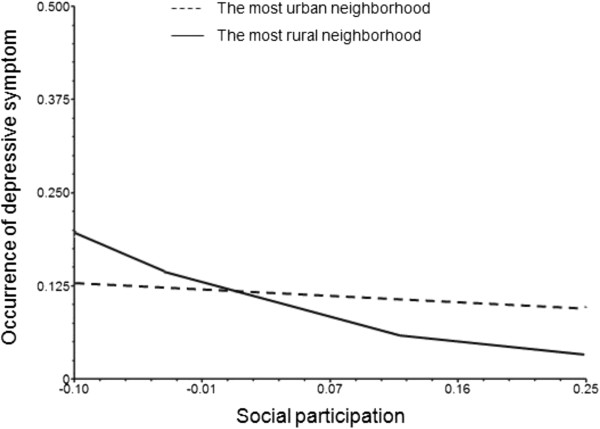
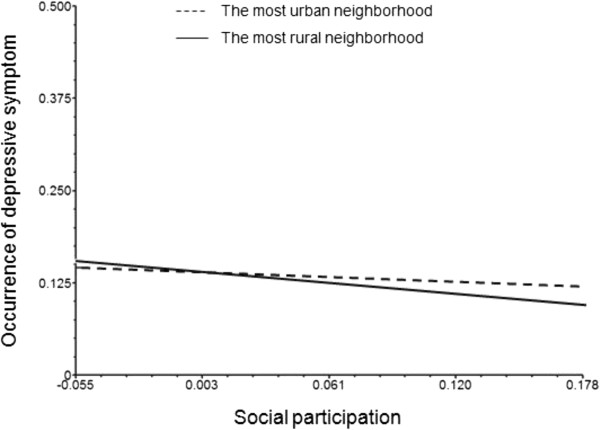
BACKGROUND: Previous studies have reported that older people's social participation has positive effects on their health. However, some studies showed that the impacts of social participation on health differ by gender. We sought to examine whether the effects of social participation on mental health differ for men and women in a Japanese population. We also examined the moderating influence of social position within the organization as well as urban/rural locality. METHODS: We used two waves of the Aichi Gerontological Evaluation Study's longitudinal survey, which targeted residents with aged 65 years or over (n=2,728) in a central part of Japan. The first wave survey was conducted in 2003, and the second wave in 2006. Depressive symptoms of the study participants were assessed using the short version of the Geriatric Depression Scale (GDS-15). A multilevel logistic regression model was used with individual-level as level 1 and the school district-level as level 2. RESULTS: We found that higher social participation and performing key roles in the organization had protective effects on depressive symptoms for women. However, there were no main effects of these variables for the mental health of men. We found an interaction between social participation, organizational position, and rural residence among men only. That is, men who occupied leadership positions in organizations reported better mental health, but only in rural areas. CONCLUSIONS: Our findings support the notion that increasing the opportunities for social participation improves older people's heath, especially for women. However, in the rural Japanese context, offering men meaningful roles within organizations may be important.
Overview
The claims and statistics of this paper haven’t been checked yet.
Free: it reads the open-access text and checks the first 5 claims that cite a source we can check. Create a free account to check every claim.
Integrity signals
Registry
Cites
Statistics
Figures
Verification
Claims the paper makes
The claims and statistics of this paper haven’t been checked yet.
Free: it reads the open-access text and checks the first 5 claims that cite a source we can check. Create a free account to check every claim.
Claims other papers make about this one
Each is checked against this paper’s own text: does it say what the citing paper says it does?
The source backs part of the claim, not all of it — or backs it for a different population, condition or comparison.
In the citing paper
“Considering gender differences is particularly important given that women may be more likely to engage in frequent social activity and are more likely to maintain close relationships and wider social networks than men [50, 97, 134–136].”
From Social Isolation and Cognitive Function in Later Life: A Systematic Review and Meta-Analysis (2019) · cites this paper as [136]
Experimental — accuracy not yet measured
Self-check
Percentages, sums and reported differences re-computed from the paper’s own numbers.
The self-check needs the paper’s full text.
Citations
Cites
Social Capital: Its Origins and Applications in Modern Sociology
Portes, A. (1998) · Annual Review of Sociology · doi:10.1146/annurev.soc.24.1.1 · Cited by 12,037 · cited 1×
“Portes [14] pointed out the “excess claims on group members” as one of the downsides of social capital.”
BackgroundSocial Foundations of Thought and Action
Bandura, A. (2002) · The Health Psychology Reader · doi:10.4135/9781446221129.n6 · Cited by 9,902 · cited 1×
“Antonucci & Jackson [6] and Bandura [7] stated that such social relationships are useful because they are helpful to develop self-efficacy.”
BackgroundKawachi, I. (2001) · Journal of Urban Health: Bulletin of the New York Academy of Medicine · doi:10.1093/jurban/78.3.458 · Cited by 3,538
Self-citationGlass, T. A., de Leon, C. M., Marottoli, R. A., & Berkman, L. F. (1999) · BMJ · doi:10.1136/bmj.319.7208.478 · Cited by 924 · cited 1×
“Studies from the field of gerontology have reported that older people’s social participation is associated with higher life satisfaction, higher self-esteem, lower rates of admission to a nursing homes, as well as lower mortality [1-3].”
BackgroundEffects of Volunteering on the Well-Being of Older Adults
Morrow-Howell, N., Hinterlong, J., Rozario, P. A., & Tang, F. (2003) · The Journals of Gerontology: Series B · doi:10.1093/geronb/58.3.s137 · Cited by 923 · cited 1×
“[12] examined the interaction effects of gender and participation in volunteer activities on self rated health, functional dependency and depressive symptoms, using panel data from three time points in the U.”
MethodThe Short Form of the Geriatric Depression Scale: A Comparison With the 30-Item Form
Burke, W. J., Roccaforte, W. H., & Wengel, S. P. (1991) · Journal of Geriatric Psychiatry and Neurology · doi:10.1177/089198879100400310 · Cited by 731 · cited 1×
“were measured by the short version of the Geriatric Depression Scale (GDS-15), using simple yes/no format, suitable for self-administration [17].”
MethodZunzunegui, M.-V., Alvarado, B. E., Del Ser, T., & Otero, A. (2003) · The Journals of Gerontology Series B: Psychological Sciences and Social Sciences · doi:10.1093/geronb/58.2.s93 · Cited by 719 · cited 1×
“Spanish research on older people also showed that friendship connections are associated with a protective effect on cognitive impairment for women, but not for men [9].”
BackgroundVolunteering and Mortality Among Older Adults: Findings From a National Sample
Musick, M. A., Herzog, A. R., & House, J. S. (1999) · The Journals of Gerontology Series B: Psychological Sciences and Social Sciences · doi:10.1093/geronb/54b.3.s173 · Cited by 585 · cited 1×
“[13] pointed out that both too little participation and too frequent participation in volunteer activities are more likely to be associated with negative impacts on the health of older people.”
BackgroundFried, L. P. (2004) · Journal of Urban Health: Bulletin of the New York Academy of Medicine · doi:10.1093/jurban/jth094 · Cited by 523 · cited 1×
“In the health promotion literature, increasing the opportunities for social participation has been suggested as a means of improving older people’s health [22-24].”
BackgroundSuccessful Aging: A Life-Course Perspective on Women's Multiple Roles and Health
Moen, P., Dempster-McClain, D., & Williams (1992) · American Journal of Sociology · doi:10.1086/229941 · Cited by 503 · cited 1×
“; licensee BioMed Central Commons Attribution License (http://creativec reproduction in any medium, provided the or increasing the participants’ range of social networks, as well as their social prestige, access to resources and emotional gratification [5].”
Background
Research works printed but not linked: 3
- Kondo K Health inequality in Japan: an empirical study of older people 2010 Melbourne: Trans Pacific Press
- Hanibuchi T Mapping and classifying of urbanization by using Japanese historic topographic maps: the case of Chita Peninsula, aichi prefecture, Japan Urban Geography of Japan 2008 3 7 17 (in Japanese)
- Antonucci TC Turner BF, Troll LE A life-span view of women’s social relations Woman growing older 1994 Thousand Oaks: Sage Publications 239 269
Cited by
Items 101–200 of 247
Yazawa, A., Inoue, Y., Cai, G., Tu, R., Huang, M., He, F., Chen, J., Yamamoto, T., & Watanabe, C. (2018) · American Journal of Human Biology · doi:10.1002/ajhb.23135 · Cited by 17
Diminished cardiovascular stress reactivity is associated with lower levels of social participation
John‐Henderson, N. A., Counts, C. J., Sanders, C. S., & Ginty, A. T. (2019) · Journal of Psychosomatic Research · doi:10.1016/j.jpsychores.2019.01.005 · Cited by 14
Fujihara, S., Miyaguni, Y., Tsuji, T., & Kondo, K. (2022) · Archives of Gerontology and Geriatrics · doi:10.1016/j.archger.2022.104632 · Cited by 18
Self-citationCorrelates of engaging in sports and exercise volunteering among older adults in Japan
Tsuji, T., Kanamori, S., Yamakita, M., Sato, A., Yokoyama, M., Miyaguni, Y., & Kondo, K. (2022) · Scientific Reports · doi:10.1038/s41598-022-07688-1 · Cited by 17
Self-citationMiyaguni, Y., Tabuchi, T., Aida, J., Saito, M., Tsuji, T., Sasaki, Y., & Kondo, K. (2021) · BMJ Open · doi:10.1136/bmjopen-2020-044631 · Cited by 18
Self-citationNishio, M., Green, M. J., & Kondo, N. (2021) · SSM - Population Health · doi:10.1016/j.ssmph.2021.101000 · Cited by 12
Schröder, D., Heinemann, S., Heesen, G., Hummers, E., Schmachtenberg, T., Dopfer‐Jablonka, A., Vahldiek, K., Klawonn, F., Klawitter, S., Steffens, S., et al. (2024) · Heliyon · doi:10.1016/j.heliyon.2024.e26130 · Cited by 16
“Historically, the discourse on social participation has predominantly centered on individuals with physical, mental, or sensory impairments, particularly in the context of aging populations [26 – 28].”
BackgroundSiette, J., Jorgensen, M. L., Georgiou, A., Dodds, L., McClean, T., & Westbrook, J. I. (2021) · BMC Geriatrics · doi:10.1186/s12877-021-02254-2 · Cited by 15
Coyte, A., Perry, R. E., Papacosta, O., LENNON, L. T., Whincup, P. H., Wannamethee, S. G., & Ramsay, A. S. E. (2021) · European Heart Journal Open · doi:10.1093/ehjopen/oeab045 · Cited by 16
“Social engagement has been shown to have positive effects on health outcomes for multiple physical and mental health conditions.(11-13) There is a growing body of evidence showing that poor social engagement in older age is associated with cardiovascular disease, such as myocardial infarction and stroke.”
BackgroundFujihara, S., Tsuji, T., Nakagomi, A., Miyaguni, Y., Hanazato, M., Muto, G., & Kondo, K. (2023) · Social Science & Medicine · doi:10.1016/j.socscimed.2023.116316 · Cited by 14
Self-citationHuang, Y., Zhou, A., Tang, P., & Ma, X. (2025) · BMC Public Health · doi:10.1186/s12889-024-21201-5 · Cited by 18
Youn, H. M., Kang, S. H., Jang, S., & Park, E.-C. (2020) · BMC Psychiatry · doi:10.1186/s12888-020-02724-8 · Cited by 9
Frailty and social participation in older citizens in Japan during the COVID ‐19 pandemic
Ozone, S., Goto, R., Kawada, S., & Yokoya, S. (2022) · Journal of General and Family Medicine · doi:10.1002/jgf2.539 · Cited by 12
Nonaka, K., Suzuki, H., Murayama, H., Hasebe, M., Koike, T., Kobayashi, E., & Fujiwara, Y. (2017) · PLoS ONE · doi:10.1371/journal.pone.0183829 · Cited by 16
Taguchi, H., Tadaka, E., Iwata, Y., & Arimoto, A. (2022) · BMC Geriatrics · doi:10.1186/s12877-022-03361-4 · Cited by 13
“Other previous studies of geriatric residents have shown that high levels of social participation and having an important role in an organization have a protective effect against depressive symptoms in women and that there is an interaction between social participation, status in an organization, and rural residence a…”
ResultMonserud, M. A. (2022) · Journal of Aging and Health · doi:10.1177/08982643221108036 · Cited by 11
“Finally, considering rural-urban disparities in the availability and access to various types of relevant resources among older adults (Takagi et al., 2013; Wang et al., 2019), future research should examine rural-urban differences in the association between leisure activities and later-life mental…”
BackgroundResultInfluentialTurcotte, S., Simard, P., Piquer, O., & Lamontagne, M. (2022) · Brain Injury · doi:10.1080/02699052.2022.2109735 · Cited by 11
Lai, D. W. L., Bai, X., & Guo, A. (2017) · Health & Social Work · doi:10.1093/hsw/hlx018 · Cited by 16
“, 2006) and increased participation in social activities contributing to lower depressive symptoms (Chiao et al., 2011; Litwin, 2012; Takagi et al., 2013).”
BackgroundMao, S., Zeng, Y., & Lü, N. (2022) · The British Journal of Social Work · doi:10.1093/bjsw/bcac118 · Cited by 12
Aly, N. M., Ihab, M., Ammar, N., Quritum, M., Moussa, H., & Tantawi, M. E. (2024) · BMC Oral Health · doi:10.1186/s12903-024-04454-9 · Cited by 9
“Less participation in social events may be an indication of social isolation [42].”
BackgroundShields, R. E., Teckchandani, T. A., Asmundson, G. J. G., Nisbet, J., Krakauer, R. L., Andrews, K. L., Maguire, K. Q., Jamshidi, L., Afifi, T. O., Lix, L. M., et al. (2023) · Frontiers in Psychology · doi:10.3389/fpsyg.2023.1145194 · Cited by 15
“Further investigations could assess the moderating effects of variables such as social support (Takagi et al., 2013), suicidal ideation (Hoge et al.”
BackgroundSchröder, D., Müllenmeister, C., Heinemann, S., Hummers, E., Klawonn, F., Vahldiek, K., Dopfer‐Jablonka, A., Steffens, S., Mikuteit, M., Niewolik, J., et al. (2023) · Health Psychology and Behavioral Medicine · doi:10.1080/21642850.2023.2249534 · Cited by 9
Bastani, F., Haghani, H., & Goodarzi, P. (2016) · Journal of Client-centered Nursing Care · doi:10.32598/jccnc.2.2.103 · Cited by 9
Saadati, F., Nadrian, H., Golkar, M. H., Taghdisi, M. H., Gilani, N., Ghassab‐Abdollahi, N., & Fathifar, Z. (2022) · American Journal of Health Promotion · doi:10.1177/08901171211069130 · Cited by 11
Social Participation Benefit in Elderly Patients With Diabetes: A Scoping Review
Ida, S., & Murata, K. (2022) · Gerontology and Geriatric Medicine · doi:10.1177/23337214221093887 · Cited by 9
“…participation is associated with the acquisition of health-related information, a decrease in physical and mental stresses, anti-inflammatory actions, and the maintenance of motor functions (Lynch et al., 2000; Snijders et al., 2010; Takagi et al., 2013; Glei et al., 2012; Buchman et al., 2009).”
BackgroundFan, H., Nie, X., & Wilson, S. (2022) · Applied Research in Quality of Life · doi:10.1007/s11482-022-10093-5 · Cited by 9
Yang, Y., Li, Y., Zhao, P., Wang, J., Mi, B., Pei, L., Zhao, Y., & Chen, F. (2022) · Frontiers in Aging Neuroscience · doi:10.3389/fnagi.2022.934801 · Cited by 12
“Furthermore, several longitudinal studies have already suggested that the association between SE and DS was limited to specific populations (Takagi et al., 2013; Hajek et al., 2017).”
BackgroundQin, A., Wu, Y., Xin, T., Xu, L., & Fu, J. (2024) · Geriatric Nursing · doi:10.1016/j.gerinurse.2024.04.018 · Cited by 11
Schröder, D., Heesen, G., Heinemann, S., Hummers, E., Dopfer‐Jablonka, A., Steffens, S., Mikuteit, M., Niewolik, J., Overbeck, T. R., Kallusky, J., et al. (2022) · Frontiers in Public Health · doi:10.3389/fpubh.2022.831087 · Cited by 8
Are diabetes-related factors associated with the social roles of elderly patients with diabetes?
Ida, S., Kaneko, R., Imataka, K., Fujiwara, R., & Murata, K. (2020) · Journal of Diabetes and its Complications · doi:10.1016/j.jdiacomp.2020.107759 · Cited by 8
Saeki, N., Mizutani, M., Tanimura, S., & Nishide, R. (2023) · Preventive Medicine Reports · doi:10.1016/j.pmedr.2023.102443 · Cited by 11
“Previous studies have shown that holding leadership positions leads to a lower risk of developing dementia (Nemoto et al., 2017) and a lower risk of depression (Takagi et al., 2018).”
Li, Y., Du, Z., & Kondo, N. (2023) · Archives of Gerontology and Geriatrics · doi:10.1016/j.archger.2023.105231 · Cited by 9
Moriyama, N., Omata, J., Sato, R., Okazaki, K., & Yasumura, S. (2020) · International Journal of Disaster Risk Reduction · doi:10.1016/j.ijdrr.2020.101630 · Cited by 11
Matsuda, K., Ariie, T., Okoba, R., HAMACHI, N., Suzuki, A., Kaneko, H., & MORITA, M. (2022) · Progress in Rehabilitation Medicine · doi:10.2490/prm.20220023 · Cited by 11
Analysis of the Factors That Disrupt Dietary Habits in the Elderly
Iwama, N., Asakawa, T., Tanaka, K., & Komaki, N. (2015) · Journal of Food System Research · doi:10.5874/jfsr.22.55 · Cited by 7
“2015) [31] Takagi D, Kondo K, Kawachi I.”
Zhang, H., Cheng, P., & Huang, L. (2023) · International Journal of Environmental Research and Public Health · doi:10.3390/ijerph20053817 · Cited by 7
“Other scholars point out that health is a good state of social life in which individuals can actively engage in social participation, fully develop their psychological potential, and have good self-perception [14,15].”
BackgroundMultilevel analysis of the impact of neighborhood environment on postpartum depressive symptoms
Miura, R., Tani, Y., Fujiwara, T., Kawachi, I. I., Hanazato, M., & Kim, Y. (2019) · Journal of Affective Disorders · doi:10.1016/j.jad.2019.11.033 · Cited by 9
Self-citationPalm, M. J. (2025) · Travel Behaviour and Society · doi:10.1016/j.tbs.2025.101030 · Cited by 8
Husain, W., Ammar, A., Trabelsi, K., AlSaleh, A. F. F., & Jahrami, H. (2025) · European Journal of Investigation in Health Psychology and Education · doi:10.3390/ejihpe15060114 · Cited by 7
Shimoda, T., Tomida, K., Nakajima, C., Kawakami, A., & Shimada, H. (2024) · Psychogeriatrics · doi:10.1111/psyg.13163 · Cited by 7
Ow, Y. S. Y., Wei, C.-S., & Li, Y.-T. (2025) · Frontiers in Public Health · doi:10.3389/fpubh.2025.1458961 · Cited by 9
Fujihara, S., Noguchi, T., Ide, K., Jeong, S., Kondo, K., & Ojima, T. (2025) · BMC Geriatrics · doi:10.1186/s12877-025-05919-4 · Cited by 7
“Furthermore, these districts host various local activities, such as senior citizen clubs and sports organizations, making them integral to evaluating local public health initiatives [31].”
Self-citationJiang, Z., Deng, J., Fan, Y. Y. K., Song, Q., Cui, Q., Liu, H., & Que, W. (2025) · PLoS ONE · doi:10.1371/journal.pone.0322903 · Cited by 7
“…the activity theory hypothesis, This finding supports the validity of the Activity Theory by demonstrating that individuals maintain self-identity and psychological adjustment capabilities through sustained participation in social roles and is also consistent with some scholarly studies [16,48,53].”
Moriyama, N., Nishikawa, Y., Hoshi, W., Kuga, T., Iwasa, H., Murayama, T., Itagaki, T., Saito, Y., & Yasumura, S. (2021) · International Journal of Environmental Research and Public Health · doi:10.3390/ijerph182111639 · Cited by 6
“For men, offering meaningful roles within organizations may be important for mental health [43].”
BackgroundZhang, P., & Xu, Z. (2023) · International Journal of Public Health · doi:10.3389/ijph.2023.1605566 · Cited by 6
A cross-sectional study on the factors related to cognitive decline in community-dwelling elderly
Nemoto, Y., Sato, S., Takahashi, M., Takeda, N., Matsushita, M., Kitabatake, Y., & Arao, T. (2017) · Nippon Ronen Igakkai Zasshi Japanese Journal of Geriatrics · doi:10.3143/geriatrics.54.143 · Cited by 8
Kim, J., Yang, J. S., Youm, Y., Kim, D. J., Kim, H. C., & Jung, S. J. (2022) · Frontiers in Psychiatry · doi:10.3389/fpsyt.2022.893290 · Cited by 7
“They reported that engagement with friends and social participation showed a protective effect on cognitive decline and mental health in women but not in men (14, 51).”
BackgroundThe clustering of lifestyle behaviors in U.S. college students: a network approach
Anderson, A. R., & Ostermiller, L. (2023) · Journal of American College Health · doi:10.1080/07448481.2023.2283740 · Cited by 7
Yokobori, Y., Fukunaga, A., Okawa, S., Hachiya, M., Nguyen, C. Q., Pham, T. T. P., Hoang, D. V., Phan, D. C., Huynh, D. V., Le, H. X., et al. (2024) · BMC Cardiovascular Disorders · doi:10.1186/s12872-024-03706-4 · Cited by 6
“This supposition is supported by the findings of previous studies conducted in Asia [39, 40], which indicated that individuals in a socially important position are more likely to feel responsible for adherence to social norms.”
Yang, Y., Xu, Y., & Wilkinson, M. (2019) · Policy Studies · doi:10.1080/01442872.2019.1667966 · Cited by 5
Oliveira-Dias, C., Morais, S., & Costa, A. R. (2022) · Health & Social Care in the Community · doi:10.1111/hsc.13889 · Cited by 8
Yu, Y. L., Min, H., Pan, W., Chen, P., Zhang, X., & Sun, X. (2024) · International Journal of Nursing Sciences · doi:10.1016/j.ijnss.2024.08.011 · Cited by 8
Osman, A., Radman, D. P., Belchior, P. D. C., & Gélinas, I. (2025) · Australian Occupational Therapy Journal · doi:10.1111/1440-1630.13013 · Cited by 8
“…family, design targeted intervention that can support them in their daily life, and evaluate the effectiveness of interventions (Barberger-Gateau et al., 2002; Dahan-Oliel et al., 2008; Desai et al., 2004; Gauthier et al., 1997; Kanamori et al., 2014; Levasseur et al., 2008; Takagi et al., 2013).”
Fraune, M. R., Langlois, D., Au, R. H. Y., Preusse, H. R., Rheman, M., Ling, K., & Tsui, K. M. (2022) · SSRN Electronic Journal · doi:10.2139/ssrn.4049530 · Cited by 6
Zeng, Q., Zhu, L., & He, Z. (2024) · Journal of Applied Gerontology · doi:10.1177/07334648241273387 · Cited by 3
“However, some research has suggested that the positive in-fl uence of social participation on wellbeing may not always exist (Li & Ferraro, 2006; Takagi et al., 2013).”
InfluentialHan, G., & Zhai, Y. (2024) · Journal of Urban Affairs · doi:10.1080/07352166.2024.2393840 · Cited by 4
“…the positive relationship between offline social capital and mental health (Kawachi & Berkman, 2001; Kawachi et al., 1999; Subramanian et al., 2001; Takagi et al., 2013), the findings of the present study were meaningful as they present new evidence that online social capital and people’s health…”
Sheng, M., Young, K. J., Li, Y., Zhang, Y., Wang, J., & Jiang, S. (2024) · Journal of Global Health · doi:10.7189/jogh.14.04193 · Cited by 6
Hwang, W., Oh, K.-R., Kim, M. G., Kim, W. B., Lee, H. S., Chung, S. G., Beom, J., Park, M. W., Kim, K. S., Kim, J., et al. (2024) · Geriatric Orthopaedic Surgery & Rehabilitation · doi:10.1177/21514593241280926 · Cited by 4
“41 All participants were older individuals residing in urban areas.”
Shimoda, T., Tomida, K., Nakajima, C., Kawakami, A., & Shimada, H. (2024) · Archives of Gerontology and Geriatrics · doi:10.1016/j.archger.2024.105387 · Cited by 3
Abe, T., Kubota, K., Nakamura, T., Kitabatake, Y., Furusawa, H., Hamaguchi, T., Kanemura, N., & Amakusa, Y. (2024) · Journal of Physical Therapy Science · doi:10.1589/jpts.36.117 · Cited by 3
“However, although the participation rate of healthy older adults is high in such community gatherings 9) , frail older adults, the target population, tend to limit their participation due to physical, mental, and environmental factors.”
BackgroundSepúlveda‐Loyola, W., Maciel, R. P. T., Teixeira, D. D. C., Araya‐Quintanilla, F., da Silva, R. A., Álvarez‐Bustos, A., Smaili, S. M., Rodríguez-Mañas, L., Valenzuela‐Fuenzalida, J. J., & Probst, V. S. (2025) · Retos · doi:10.47197/retos.v63.110528 · Cited by 8
Oshio, T., Sugiyama, K., & Ashida, T. (2022) · SSM - Population Health · doi:10.1016/j.ssmph.2022.101281 · Cited by 3
Factors related to the self-rated health of elderly residents in sloped residential areas
Nakao, R., Sugiyama, K., Kawasaki, R., Ohnishi, M., & Honda, S. (2018) · Japanese Journal of Health and Human Ecology · doi:10.3861/kenko.84.4_130 · Cited by 4
Godai, K., Kabayama, M., Kamide, K., Nogami, M., Kasuga, A., Yasumoto, S., Masui, Y., Akasaka, H., Ikebe, K., Ishizaki, T., et al. (2021) · Nippon Ronen Igakkai Zasshi Japanese Journal of Geriatrics · doi:10.3143/geriatrics.58.591 · Cited by 3
Ogawa, M., Maruo, K., Sone, D., Shimada, H., Suzuki, K., Watanabe, H., Matsuda, H., & Mizusawa, H. (2019) · Alzheimer s & Dementia Translational Research & Clinical Interventions · doi:10.1016/j.trci.2019.06.003 · Cited by 3
“Because social involvement inhibits the development of depression [19], social engagements and presence of friends to call, in the present study,”
BackgroundSocial Network and Stroke Risk: Size Matters
Hankey, G. J. (2014) · Stroke · doi:10.1161/strokeaha.114.006798 · Cited by 3
“The quality and quantity of our relationships with other humans (social network) underpin our happiness and success.(1) A social network structure also provides functional social support.”
BackgroundChen, A., & Ang, S. (2025) · Social Science & Medicine · doi:10.1016/j.socscimed.2025.118831 · Cited by 3
Shimizu, A., Ikeda, T., Miyaguni, Y., Takeda, S., Tamada, Y., & Aida, J. (2024) · Age and Ageing · doi:10.1093/ageing/afae153 · Cited by 3
Mutai, H., Obuchi, K., Yokoi, K., & Furukawa, T. (2024) · Journal of Applied Gerontology · doi:10.1177/07334648241290099 · Cited by 3
“Social participation has been reported to improve quality of life (QOL) (Lestari et al., 2021; Munford et al., 2020; Ward et al., 2019) and reduce the risk of long-term care (Ide et al., 2020), depression (Takagi et al., 2013), dementia (Nemoto et al., 2017), and mortality (Ishikawa et al., 2016).”
Mental Health in a Social Context
Bitanihirwe, B. K. Y. (2014) · African Journal of Psychiatry · doi:10.4172/psychiatry.1000169 · Cited by 3
“involuntary confinement without fair process) and may ultimately interfere with their full participation in society [5-7].”
BackgroundActive aging in rural environment in Spain
Romero, L. P. D. L., & Cabello, S. A. (2017) · Ehquidad Revista Internacional de Políticas de Bienestar y Trabajo Social · doi:10.15257/ehquidad.2017.0006 · Cited by 20
「ゼロ次予防」のための設計科学 ―暮らしている人が健康になる社会づくりに向けて―
近藤, 克. (2020) · 横幹 · doi:10.11487/trafst.14.1_16 · Cited by 2
Gender differences in prevalence and risk factors of sleep disturbances in patients with epilepsy
Xiao, Y., Zhou, J., Xiong, W., Lu, L., & Zhou, D. (2022) · Acta Epileptologica · doi:10.1186/s42494-021-00070-0 · Cited by 2
“Anticipated to undertake most financial support for family, to handle work well and develop kinds of social activities, men always confront relatively more complicated and stressful social relationships than women, who spend more time caring families [35, 36].”
BackgroundAffinity for Technology Relates to Group Cohesion for New, But Not Existing, Groups
Fraune, M. R., Langlois, D., Preusse, H. R., Rheman, J. M., Ling, K., & Tsui, K. M. (2023) · OBM Neurobiology · doi:10.21926/obm.neurobiol.2303182 · Cited by 3
Sharma, S., Patnaik, L., & Sahu, T. (2023) · Journal of Education and Health Promotion · doi:10.4103/jehp.jehp_1149_22 · Cited by 5
“[16,31,32] In the present study, women who got married without their parent’s permission live happily with their husband.”
BackgroundFraune, M. R., Langlois, D., Preusse, H. R., Rheman, J. M., Ling, K., & Tsui, K. M. (2023) · Telematics and Informatics Reports · doi:10.1016/j.teler.2023.100109 · Cited by 3
Feldberg, C., Barreyro, J. P., Hermida, P. D., Ofman, S. D., Tartaglini, M. F., & Irrazábal, N. (2023) · Psicodebate · doi:10.18682/pd.v23i2.7072 · Cited by 2
“En ellos se observó que aquellos ambientes más enriquecidos, desafiantes y que demandan un tipo de actividad más compleja, producen un incremento en la flexibilidad cognitiva y que los ambientes laborales más simples disminuyen esta habilidad intelectual (Takagi et al., 2013).”
BackgroundImpact of working time and industry type on disability incidence among older Japanese adults
Shimoda, T., Tomida, K., Nakajima, C., Kawakami, A., Doi, T., & Shimada, H. (2024) · Discover Public Health · doi:10.1186/s12982-024-00136-7 · Cited by 2
“Previous studies have shown that age and sex interact with work status and health outcomes [6, 8, 19, 27, 30, 32, 37].”
Baek, S.-U., Lee, Y.-M., Won, J.-U., & Yoon, J.-H. (2024) · Journal of urban health · doi:10.1007/s11524-024-00923-2
“A lack of outdoor activities due to neighborhood safety concerns may contribute to poor mental health [40, 41].”
Lamé, A., Thomas, E. G., van de Schraaf, S. A. J., Groot, C., Sudre, C. H., Barkhof, F., Muller, M., Ossenkoppele, R., & Rhodius‐Meester, H. F. M. (2025) · Aging Brain · doi:10.1016/j.nbas.2025.100137 · Cited by 2
“…research has shown that gender-related differences in the formation and function of social networks among older men and women are linked to cognitive function [65,66,67], highlighting the importance of studying gender to better understand their impact on cognitive health in aging populations.”
Association of Social Participation with Cardiovascular Risk Factors: A Systematic Review
Miura, M., Ikeda, A., Sato, S., Muraki, I., Okamura, T., Ohira, T., Miyazaki, J., Ishihara, M., Okamoto, K., Kamijima, J., et al. (2025) · Journal of Atherosclerosis and Thrombosis · doi:10.5551/jat.rv22035 · Cited by 2
“…it has also been reported in a Japanese study that occupying key positions within an organization has a protective role, promoting the mental health of older Japanese men in rural areas, with the interpretation that men might feel rewarded by seeking authoritative positions in their culture 31) .”
Hanssen, M., & Fujita, N. (2025) · World Leisure Journal · doi:10.1080/16078055.2025.2513945 · Cited by 2
“This finding aligns with prior evidence that older Japanese women are more likely to engage in social activities and are more positively affected by them in terms of depression (Takagi et al., 2013) and living independently (Tomioka et al., 2016).”
Chen, A., & Ang, S. (2025) · The Journals of Gerontology Series B · doi:10.1093/geronb/gbaf151 · Cited by 3
He, S., & Lai, S. L. (2025) · Journal of Applied Gerontology · doi:10.1177/07334648251380420 · Cited by 1
“They rely more on diverse SP to build social support networks, which provide greater mental health bene fi ts through the larger and more varied networks that diverse social activities foster (Lee et al., 2008; Takagi et al., 2013).”
Returning to Work: Older Adults' Labor Force Participation and Health Status
Jiang, S., Liang, Y., Mei, R., & Yu, S. (2025) · China & World Economy · doi:10.1111/cwe.70001 · Cited by 1
Allahbakhshi, H., Ardüser, A., & Rüttimann, F. (2026) · Journal of Urban Mobility · doi:10.1016/j.urbmob.2026.100241 · Cited by 1
Zhou, H., & Xu, H. (2026) · Healthcare · doi:10.3390/healthcare14131964 · Cited by 1
“…reported that social participation is positively associated with a wide range of physical and mental health outcomes, including longevity [4], maintenance of activities of daily living [5], cognitive functioning [6], higher health-related quality of life [7], and the prevention of depression [8].”
Actividad física, salud y funcionalidad entre adultos mayores según la localidad geográfica
de Oliveira, D. V., Sepúlveda‐Loyola, W., Freire, G. L. M., Maciel, R. P. T., Kerber, V. L., & Júnior, J. R. A. D. N. (2019) · Revista Brasileira de Atividade Física & Saúde · doi:10.12820/rbafs.24e0109 · Cited by 3
“70 a 79 años 59 (29,9) 59 (29,9) 48 (24,4) 31 (15,8) 5,758 0,016*”
Demographics as determinants for predicting quality of life among senior citizens in the Philippines
Palmes, M. S., Trajera, S. M., & Ching, G. S. (2021) · International Journal of Research Studies in Management · doi:10.5861/ijrsm.2021.m101 · Cited by 6
“Social participation plays a very vital role in the mental health of the senior citizens (Takagi et al., 2013), enhancing life contentment and subsequently, improving the QOL (Tobin et al.”
BackgroundOshio, T., Sugiyama, K., & Ashida, T. (2024) · Applied Research in Quality of Life · doi:10.1007/s11482-024-10399-6 · Cited by 1
“Many studies in Japan have provided evidence of the favorable health impacts of SP, especially among older adults (e.g., Amagasa et al., 2017; Takagi, 2013; Tomioka et al., 2017; Tomioka et al., 2018).”
InfluentialUkawa, S., Kato, Y., Lee, Y., Sugiyama, M., SAITO, H., OHARA, K., & Mori, K. (2024) · The Open Public Health Journal · doi:10.2174/0118749445355702241106032421 · Cited by 1
Fukutake, M., Shimamura, M., Namba, M., & Ogino, T. (2020) · Psychogeriatrics · doi:10.1111/psyg.12526 · Cited by 2
Do elderly people providing nursing or caring for others help the providers maintain their health?
Kuroiwa, S., Kita, K., Kuroiwa, M., Yoshida, K., Minami, S., & Yamashiro, S. (2021) · Nippon Ronen Igakkai Zasshi Japanese Journal of Geriatrics · doi:10.3143/geriatrics.58.235 · Cited by 1
Visualization of Health Inequalities and Social Determinants of Health
Kondo, K., & JAGESプロジェクト (2014) · Iryo To Shakai · doi:10.4091/iken.24.5 · Cited by 1
Self-citationYang, Y., Xu, Y., & Wilkinson, M. (2022) · Routledge eBooks · doi:10.4324/9781003325208-11 · Cited by 1
Everett, B. P., Xi, Y., & Wells, J. E. (2023) · The Journal of Hip Surgery · doi:10.1055/s-0042-1759611 · Cited by 1
Sepúlveda‐Loyola, W., Maciel, R. P. T., Teixeira, D. C., Araya‐Quintanilla, F., da Silva, R. A., Santos, S. M. S., Rodríguez‐Mañas, L., & Probst, V. S. (2022) · Research Square · doi:10.21203/rs.3.rs-1781691/v1 · Cited by 1
Developing an Indicator for Age-Friendly Communities: The Japan Gerontological Evaluation StudyPreprint
Fujihara, S., Noguchi, T., Ide, K., Jeong, S., Kondo, K., & Ojima, T. (2024) · medRxiv · doi:10.1101/2024.05.17.24307523 · Cited by 1
Self-citationJiménez, F. M. J., & Segura, J. A. M. (2017) · Trabajo Social Hoy · doi:10.12960/tsh.2017.0007 · Cited by 1
Metadata
- Authors
- Takagi, D., Kondo, K., & Kawachi, I.
- Affiliations
- The University of Tokyo (JP)
- Nihon Fukushi University (JP)
- Harvard University (US)
- Corresponding author
- Takagi, Daisuke
- Venue
- BMC Public Health
- Published
- 2013-07-31
- Volume
- 13
- Issue
- 1
- Pages
- 701-701
- ISSN
- 1471-2458 (ISSN-L)
- PMC
- PMC3734140
- OpenAlex
- W1988297099
- Semantic Scholar
- ac43a82d9012374b2ba7790f5bb7a746726ba762
- Cited by
- 250
- References
- 26
- Citations by year
- 2026: 15 · 2025: 20 · 2024: 34 · 2023: 24 · 2022: 33 · 2021: 27 · 2020: 20 · 2019: 16 · 2018: 16 · 2017: 19 · 2016: 13 · 2015: 8 · 2014: 5
- FWCI
- 8.72
- Type
- journal article
- Language
- en
- Open access
- gold
- doi.org
- Licence
- Locations
- BMC Public Health (publishedVersion, cc-by)
- Europe PMC (PubMed Central) (publishedVersion, cc-by)
- PubMed Central (publishedVersion, cc-by)
- PubMed (publishedVersion)
- Digital Access to Scholarship at Harvard (DASH) (Harvard University) (submittedVersion, cc-by)
- Funders
- Ministry of Education, Culture, Sports, Science and Technology
- Topics
- Health Sciences › Medicine › Public Health, Environmental and Occupational Health › Aging, Health, and Disability
- Social Sciences › Health › Health disparities and outcomes
- Social Sciences › Psychology › Developmental and Educational Psychology › Aging and Gerontology Research
- Keywords
- social participation (health and rehabilitation), mental health, depressive symptoms, older adults, gender differences, social roles, organizational position, leadership roles, rurality, urban-rural differences, Japanese older adults
- MeSH terms
- Aged, Aged, 80 and over, Depression, Female, Housing, Humans, Japan, Longitudinal Studies, Male, Mental Health, Organizations, Rural Population, Sex Factors, Logistic Models, Multilevel Analysis, Social Participation
About these checks
Registry, retraction, Cites and statistics results are computed, not judged, with one exception: a printed reference that no index lists is read once by a model before it counts as a citation error. Claims are extracted by a model and kept only when their quote appears verbatim in the text; each cited source is then checked, with a model’s help, for whether it says what the claim relies on. Those verdicts can be wrong — read the claim’s quote and the cited source before relying on one.
Statistics and arithmetic are recomputed, not judged.
Confidence bands are shown only for fields calibrated on our annotated test set. None is calibrated yet, so no band is shown.
What counts as a claim ›How we measure confidence ›How we check this ›
Are you an author, or do you see a problem with this page? Request a review
Data sources
Bibliographic data: Semantic Scholar, OpenAlex, Crossref.
Contains information from the Semantic Scholar Academic Graph Datasets, made available under the ODC Attribution License (ODC-BY 1.0).
Semantic Scholar’s data is described in: Kinney, R., et al. (2023). The Semantic Scholar Open Data Platform. arXiv:2301.10140.
