

The accessibility and acceptability of self-management support interventions for men with long term conditions: a systematic review and meta-synthesis of qualitative studies
Open accessThe DOI matches its Crossref record; 100 of the 100 references it cites were found in a registry or an index.
Abstract
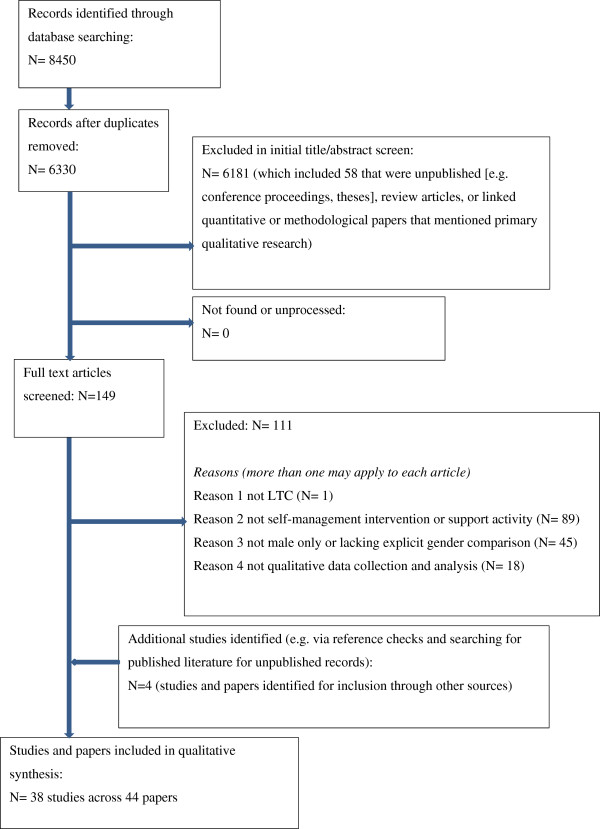
BACKGROUND: Self-management support interventions can improve health outcomes, but their impact is limited by the numbers of people able or willing to access them. Men's attendance at existing self-management support services appears suboptimal despite their increased risk of developing many of the most serious long term conditions. The aim of this review was to determine whether current self-management support interventions are acceptable and accessible to men with long term conditions, and explore what may act as facilitators and barriers to access of interventions and support activities. METHODS: A systematic search for qualitative research was undertaken on CINAHL, EMBASE, MEDLINE, PsycINFO and Social Science Citation Index, in July 2013. Reference lists of relevant articles were also examined. Studies that used a qualitative design to explore men's experiences of, or perceptions towards, self-management support for one or more long term condition were included. Studies which focused on experiences of living with a long term condition without consideration of self-management support were excluded. Thirty-eight studies met the inclusion criteria. A meta-ethnography approach was employed to synthesise the findings. RESULTS: Four constructs associated with men's experience of, and perceptions towards, self-management support were identified: 1) need for purpose; 2) trusted environments; 3) value of peers; and 4) becoming an expert. The synthesis showed that men may feel less comfortable participating in self-management support if it is viewed as incongruous with valued aspects of their identity, particularly when activities are perceived to challenge masculine ideals associated with independence, stoicism, and control. Men may find self-management support more attractive when it is perceived as action-oriented, having a clear purpose, and offering personally meaningful information and practical strategies that can be integrated into daily life. CONCLUSIONS: Self-management support is most likely to be successful in engaging men when it is congruent with key aspects of their masculine identity. In order to overcome barriers to access and fully engage with interventions, some men may need self-management support interventions to be delivered in an environment that offers a sense of shared understanding, connectedness, and normality, and involves and/or is facilitated by men with a shared illness experience.
Overview
The claims and statistics of this paper haven’t been checked yet.
Free: it reads the open-access text and checks the first 5 claims that cite a source we can check. Create a free account to check every claim.
Integrity signals
Registry
Cites
Statistics
Figures
Verification
Claims the paper makes
The claims and statistics of this paper haven’t been checked yet.
Free: it reads the open-access text and checks the first 5 claims that cite a source we can check. Create a free account to check every claim.
Claims other papers make about this one
Each is checked against this paper’s own text: does it say what the citing paper says it does?
The source backs part of the claim, not all of it — or backs it for a different population, condition or comparison.
In the citing paper
“More importantly, participants reported that e-TC reduced the stigma of mental health issues, by normalising men s feelings, and overcame embarrassment by providing privacy in help-seeking, thus providing information and support in a manner consistent with masculine ideals (Galdas et al., 2014).”
From e-TC: Development and pilot testing of a web-based intervention to reduce anxiety and depression in survivors of testicular cancer (2017) · cites this paper as Galdas et al., 2014
Experimental — accuracy not yet measuredThe source backs part of the claim, not all of it — or backs it for a different population, condition or comparison.
In the citing paper
“Galdas et al. (2014) note that consultation with male consumers of health services would help increase the congruence of services with central aspects of their identities and their appeal to such consumers, in general.”
From e-TC: Development and pilot testing of a web-based intervention to reduce anxiety and depression in survivors of testicular cancer (2017) · cites this paper as Galdas et al., 2014
Experimental — accuracy not yet measuredThe source backs part of the claim, not all of it — or backs it for a different population, condition or comparison.
In the citing paper
“The need for self-management interventions to fit with masculine ideals, such as selfsufficiency and stoicism, is directly addressed by online interventions that allow men to selfmanage their problem in a way that is convenient and confidential, appealing to their sense of toughness and self-reliance (Galdas et al., 2014).”
From e-TC: Development and pilot testing of a web-based intervention to reduce anxiety and depression in survivors of testicular cancer (2017) · cites this paper as Galdas et al., 2014
Experimental — accuracy not yet measuredThe cited source says what the claim attributes to it.
In the citing paper
“Further, research suggests that men value self-management interventions that involve and/or are facilitated by men with a shared illness experience (Galdas et al., 2014).”
From e-TC: Development and pilot testing of a web-based intervention to reduce anxiety and depression in survivors of testicular cancer (2017) · cites this paper as Galdas et al., 2014
Self-check
Percentages, sums and reported differences re-computed from the paper’s own numbers.
The self-check needs the paper’s full text.
Citations
Cites
1 retracted
Group based training for self-management strategies in people with type 2 diabetes mellitus
Deakin, T. A., McShane, C. E., Cade, J. E., & Williams, R. (2005) · Cochrane Database of Systematic Reviews · doi:10.1002/14651858.cd003417.pub2 · Cited by 862
RetractedChronic illness as biographical disruption
Bury, M. (1982) · Sociology of Health & Illness · doi:10.1111/1467-9566.ep11339939 · Cited by 3,960 · cited 1×
“construct one’s identity by adjusting to the physical, emotional, and societal implications of illness [92,93].”
BackgroundRealist review - a new method of systematic review designed for complex policy interventions
Pawson, R., Greenhalgh, T., Harvey, G., & Walshe, K. (2005) · Journal of Health Services Research & Policy · doi:10.1258/1355819054308530 · Cited by 3,190 · cited 1×
“The complex and contextually-dependent nature of men’s engagement with self-management support interventions highlighted in this review suggests that a study drawing on realist principles [99] might be one method of analysis which might have utility.”
BackgroundInterventions for enhancing medication adherence
Nieuwlaat, R., Wilczynski, N., Navarro, T., Hobson, N., Jeffery, R., Keepanasseril, A., Agoritsas, T., Mistry, N., Iorio, A., Jack, S., et al. (2014) · Cochrane Database of Systematic Reviews · doi:10.1002/14651858.cd000011.pub4 · Cited by 2,945 · cited 1×
“medicines adherence) [15] and have shown benefits in clinical, lifestyle and psychosocial outcomes.”
BackgroundNoblit, G., & Hare, R. (1988) · doi:10.4135/9781412985000 · Cited by 2,723 · cited 4×
“We undertook a systematic search of qualitative literature and employed a meta-ethnography approach to synthesis based on the methods described by Noblit and Hare [34] and Campbell and colleagues [35].”
MethodInfluentialLorig, K. R., Sobel, D. S., Stewart, A. L., Brown, B. W., Bandura, A., Ritter, P., Gonzalez, V. M., Laurent, D. D., & Holman, H. R. (1999) · Medical Care · doi:10.1097/00005650-199901000-00003 · Cited by 2,261 · cited 1×
“Other interventions include lay-led support programmes for generic LTCs such as the UK Expert Patient Programme [10] based on the Stanford Chronic Condition programme [11], which aims to promote behavioural change by improving the confidence (self-efficacy) of individuals to manage the physical and psycho-social effec…”
Meta-Ethnography: Synthesizing Qualitative Studies
Noblit, G. W., & Hare, R. D. (1988) · Medical Entomology and Zoology · Cited by 2,191
Loss of self: a fundamental form of suffering in the chronically ill
Charmaz, K. (1983) · Sociology of Health & Illness · doi:10.1111/1467-9566.ep10491512 · Cited by 1,794 · cited 1×
“It is clear that the physical and mental impacts of living with a LTC can pose significant challenges to men’s masculinity; a theme that has been recognised elsewhere as a “loss of self” [88] as men try to renegotiate and recapture”
BackgroundMen and health help‐seeking behaviour: literature review
Galdas, P. M., Cheater, F., & Marshall, P. (2005) · Journal of Advanced Nursing · doi:10.1111/j.1365-2648.2004.03331.x · Cited by 1,739 · cited 2×
“ing, reticence to access health services) are closely related to ‘traditional’ masculine attitudes that emphasise self-sufficiency, stoicism and robustness [31,32] and are associated with men’s poorer health outcomes compared to women [24-29,33].”
BackgroundSelf-citationChronic Disease Self-Management Program: 2-Year Health Status and Health Care Utilization Outcomes
Lorig, K. R., Ritter, P., Stewart, A. L., Sobel, D. S., William Brown, B., Bandura, A., Gonzalez, V. M., Laurent, D. D., & Holman, H. R. (2001) · Medical Care · doi:10.1097/00005650-200111000-00008 · Cited by 1,484 · cited 1×
“Men, as a group, are frequently underrepresented at many SMS services [10,14,21-23] and are believed to be”
Background
Research works printed but not linked: 9
- Department of Health Long Term Conditions Compendium of Information, Third Edition edn 2012 London Department of Health
- Department of Health Self-Care: A Real Choice 2005 London Department of Health
- Department of Health Supporting People with Long Term Conditions: an NHS and Social Care Model to Support Local Innovation and Integration 2005 London Department of Health
- Phillips J Self Care Reduces Costs and Improves Health - The Evidence 2010 London Expert Patients Programme
- Bury M Newbould J Taylor D A rapid Review of the Current state of Knowledge Regarding Lay Led self Management of Chronic illness: Evidence Review 2005 London National Institute for Health and Clinical Excellence
- European Commission The state of men’s health in Europe report 2011
- Critical Appraisal Skills Program Critical Appraisal Skills Programme (CASP) Qualitative Research Checklist 31.05.13. 10 questions to help you make sense of qualitative research 2013
- Schutz A Collected papers 1971 The Hague Martinus Nijhoff
- Taylor S, Greenhalgh T, Griffiths C, Pinnock H, Ribchester J, Sheikh A: A rapid synthesis of the evidence on interventions supporting self management for people with long-term conditions: report commissioned by the NIHR HTA Programme as project number 11/1014/04.NIHR HS & DR in press 25642548
Cited by
on behalf of the Born and Bred in Yorkshire (BaBY) team, Darwin, Z., Galdas, P., Hinchliff, S., Littlewood, E., McMillan, D., McGowan, L., & Gilbody, S. (2017) · BMC Pregnancy and Childbirth · doi:10.1186/s12884-017-1229-4 · Cited by 304
Self-citationCoventry, P. A., Small, N., Panagioti, M., Adeyemi, I., & Bee, P. (2015) · BMC Family Practice · doi:10.1186/s12875-015-0345-3 · Cited by 135
“Descriptive data about study aims and country of origin, number of long term conditions at recruitment, data collection and analysis methods, and sample characteristics (size, age, number/type of long term conditions, sex, ethnicity, deprivation and setting) were extracted by one reviewer (NS) using a form adapted fro…”
BackgroundMethodGender as an influencer of online health information‐seeking and evaluation behavior
Rowley, J., Johnson, F., & Sbaffi, L. (2017) · Journal of the Association for Information Science and Technology · doi:10.1002/asi.23597 · Cited by 106
Bunn, C., Wyke, S., Gray, C. M., MacLean, A., & Hunt, K. (2016) · Sociology of Health & Illness · doi:10.1111/1467-9566.12402 · Cited by 98
“…the social practice approach we have taken supports the view that such programmes are most likely to work if they bring like-minded people together (Galdas et al. 2014) and support effervescent group experiences in contexts of symbolic importance; it is partly through the interactions which…”
BackgroundSelf-citationBanbury, A., Nancarrow, S., Dart, J., Gray, L., Dodson, S., Osborne, R., & Parkinson, L. (2020) · Patient Education and Counseling · doi:10.1016/j.pec.2019.10.005 · Cited by 84
Lefkowich, M., Richardson, N., & Robertson, S. (2015) · American Journal of Men s Health · doi:10.1177/1557988315617825 · Cited by 84
“Men are often socialized to embrace risk-taking or unhealthy practices in an effort to prove their masculinity rather than engage in health-promoting practices, which are often discursively situated as feminine (Richardson, 2004; Hunt et al., 2014; Galdas et al., 2014).”
BackgroundInfluentialGaldas, P., Fell, J., Bower, P., Kidd, L., Blickem, C., McPherson, K. E., Hunt, K., Gilbody, S. M., & Richardson, G. A. (2015) · BMJ Open · doi:10.1136/bmjopen-2014-006620 · Cited by 61
Self-citationHunt, K., Wyke, S., Bunn, C., Donnachie, C., Reid, N., & Gray, C. M. (2020) · International Journal of Environmental Research and Public Health · doi:10.3390/ijerph17020584 · Cited by 62
Self-citationDesigning Men’s Health Programs: The 5C Framework
Galdas, P., Seidler, Z. E., & Oliffe, J. L. (2023) · American Journal of Men s Health · doi:10.1177/15579883231186463 · Cited by 57
“, 2020), and self-management support interventions for chronic illness (Galdas et al., 2014).”
BackgroundSelf-citationCoffey, L., Mooney, O., Dunne, S. K., Sharp, L., Timmons, A., Desmond, D. M., O’Sullivan, E. M., Timon, C. V. I., Gooberman‐Hill, R., & Gallagher, P. (2016) · Journal of Cancer Survivorship · doi:10.1007/s11764-016-0546-3 · Cited by 56
“For example, a recent synthesis of research on self-management support for men with long-term conditions suggested that marketing interventions as practical and solution-focused may appeal to a broader base [3].”
BackgroundFlurey, C., HEWLETT, S. E., Rodham, K., White, A., Noddings, R., & Kirwan, J. (2016) · Arthritis Care & Research · doi:10.1002/acr.22951 · Cited by 52
“A comprehensive literature review of the acceptability of different types of support for men with long-term conditions (36) found that men need support interventions to have a purpose, be structured, and provide opportunities to gather new information (35,40).”
Flurey, C., White, A., Rodham, K., Kirwan, J., Noddings, R., & HEWLETT, S. E. (2017) · Sociology of Health & Illness · doi:10.1111/1467-9566.12628 · Cited by 48
Men’s health: time for a new approach
Baker, P. (2018) · Physical Therapy Reviews · doi:10.1080/10833196.2018.1452562 · Cited by 43
Quested, E., Kwaśnicka, D., Thøgersen‐Ntoumani, C., Gucciardi, D. F., Kerr, D. A., Hunt, K., Robinson, S., Morgan, P. J., Newton, R. U., Gray, C. M., et al. (2018) · BMJ Open · doi:10.1136/bmjopen-2018-022663 · Cited by 43
“13–16 Consequently, men may have a skewed perception of what is a healthy body size for men and/or perceive weight loss to be irrelevant to them and ignore health concerns to adhere to stereotypes of men being ‘tough’.(17) 18 Men who aspire to lose weight face a number of cultural barriers that may limit their motivat…”
BackgroundSelf-citationVickery, A. (2022) · Health & Social Care in the Community · doi:10.1111/hsc.13788 · Cited by 43
Nøst, T. H., Steinsbekk, A., Bratås, O., & Grønning, K. (2018) · BMC Health Services Research · doi:10.1186/s12913-018-3843-x · Cited by 37
Systematic review of self‐management interventions for older adults with cancer
Haase, K. R., Sattar, S., Hall, S., McLean, B., Wills, A., Gray, M., Kenis, C., Donison, V., Howell, D., & Puts, M. T. E. (2021) · Psycho-Oncology · doi:10.1002/pon.5649 · Cited by 36
“These findings fit with prior research reporting that interventions utilizing multiple modalities may be most effective as individuals have choice over which mode of intervention delivery suits them best.(65) Such approaches to creating and delivering interventions for older adults may be most effective particularly a…”
MethodCorrelates of quality of life among individuals with epilepsy enrolled in self-management research
Sajatovic, M., Tatsuoka, C. M., Welter, E., Friedman, D. J., Spruill, T. M., STOLL, S. C., Sahoo, S. S., Bukach, A. M., Bamps, Y. A., Valdez, J., et al. (2017) · Epilepsy & Behavior · doi:10.1016/j.yebeh.2016.12.005 · Cited by 35
“Other investigators have noted that men are often underrepresented in chronic illness self-management studies [20,21].”
Gill, D. P., Blunt, W. M., Cruz, A. D., Riggin, B., Hunt, K., Zou, G., Sibbald, S. L., Danylchuk, K. E., Zwarenstein, M., Gray, C. M., et al. (2016) · BMC Public Health · doi:10.1186/s12889-016-3730-5 · Cited by 34
“Hence, interventions that target men will be more likely to succeed if they encompass physical activity as well as diet [34, 35] and similar to our findings, if they include peer groups they can identify with [12, 16, 36].”
BackgroundSelf-citationSadeghi, H., Shahboulaghi, F. M., Hosseini, M., Fallahi‐Khoshknab, M., & Harouni, G. G. (2024) · Frontiers in Public Health · doi:10.3389/fpubh.2024.1412832 · Cited by 35
Hubbard, G., Adams, R., Campbell, A., Kidd, L., Leslie, S. J., Munro, J., & Watson, A. J. M. (2016) · BMJ Open · doi:10.1136/bmjopen-2015-009284 · Cited by 33
Self-citationHeiniger, L. E., Smith, A. B., Olver, I., Grimison, P., Klein, B., Wootten, A., Abbott, J.-A. M., Price, M. A., McJannett, M., Tran, B., et al. (2017) · European Journal of Cancer Care · doi:10.1111/ecc.12698 · Cited by 32
“Galdas et al. (2014) note that consultation with male consumers of health services would help increase the congruence of services with central aspects of their identities and their appeal to such consumers, in general.”
InfluentialPeer support as a resilience building practice with men
Robinson, M., Raine, G., Robertson, S., Steen, M., & Day, R. E. (2015) · Journal of Public Mental Health · doi:10.1108/jpmh-04-2015-0015 · Cited by 32
“A systematic review (Galdas et al. 2014) found that self-management interventions engage men most in a trusted setting, with action-orientation, and peer support.”
BackgroundJbilou, J., Grenier, J., Chomienne, M., Talbot, F., Tulloch, H. E., D’Antono, B., & Greenman, P. S. (2019) · BMJ Open · doi:10.1136/bmjopen-2019-029560 · Cited by 30
Nøst, T. H., Steinsbekk, A., Bratås, O., & Grønning, K. (2018) · BMJ Open · doi:10.1136/bmjopen-2018-023017 · Cited by 27
“recruiting men for self-management interventions is a common challenge,[36] stratification 201”
BackgroundTharakan, T., Bettocchi, C., Carvalho, J., Corona, G., Joensen, U., Jones, H. T., Kadıoğlu, A., Martínez-Salamanca, J., Şerefoğlu, E., Verze, P., et al. (2019) · European Urology Focus · doi:10.1016/j.euf.2019.10.009 · Cited by 20
Cooper, E., Lound, A., Atchison, C. J., Whitaker, M. D., Eccles, C., Cooke, G., Elliott, P., & Ward, H. (2023) · PLoS ONE · doi:10.1371/journal.pone.0280943 · Cited by 26
Flurey, C., HEWLETT, S. E., Rodham, K., White, A., Noddings, R., & Kirwan, J. (2017) · Arthritis Care & Research · doi:10.1002/acr.23422 · Cited by 26
“Male participants were less interested than women in hearing from other RA patients, which may reflect men’s preferences for seeking out information rather than experiences (16).”
Living With Cluster Headache: A Qualitative Study of Patients’ Perspectives
Palacios‐Ceña, D., Talavera, B., López‐Ruiz, P., Gutiérrez‐Viedma, Á., Palacios‐Ceña, M., Navalón, J. A. A., Fernández‐de‐las‐Peñas, C., & Cuadrado, M. L. (2016) · Headache The Journal of Head and Face Pain · doi:10.1111/head.12886 · Cited by 24
“Society’s expectations on masculine behavior can influence the way disease is experienced,(31) and frustrate the acquisition of healthy habits and the seeking of medical help.(32,33) Therefore, experiences of women with CH are probably very different and should be investigated specifically.”
BackgroundEvaluating a Tool to Support the Integration of Gender in Programs to Promote Men’s Health
Struik, L. L., Abramowicz, A., Riley, B., Oliffe, J. L., Bottorff, J. L., & Stockton, L. D. (2019) · American Journal of Men s Health · doi:10.1177/1557988319883775 · Cited by 22
The impact of inflammatory bowel disease on sexual health in men: A scoping review
Ma, S., Veysey, M. J., Ersser, S. J., Mason‐Jones, A. J., & Galdas, P. (2020) · Journal of Clinical Nursing · doi:10.1111/jocn.15418 · Cited by 22
“Men’s under-use of healthcare services is consistent across many countries and is closely linked to masculine norms and ideals as well as to socio-economic factors (Galdas et al., 2014; WHO, 2018).”
BackgroundInfluentialSelf-citationPape, M., Färber, T., Seiferth, C., Roth, T., Schroeder, S., Wolstein, J., Herpertz, S., & Steins‐Loeber, S. (2022) · JMIR Formative Research · doi:10.2196/38480 · Cited by 23
“Multimedia Appendix 1 [48-77] provides an overview of the operationalization of the gender-sensitive modules and the origin of evidence.”
BackgroundSex and Gender as Social-Contextual Factors in Pain
Keogh, E. (2018) · Springer eBooks · doi:10.1007/978-3-319-78340-6_20 · Cited by 22
Cockle-Hearne, J., Barnett, D., Hicks, J., Simpson, M., White, I., & Faithfull, S. (2018) · JMIR Cancer · doi:10.2196/cancer.8918 · Cited by 16
“This is consistent with the notion that support programs need to reflect masculine ideals to involve men and optimize benefit [70,71].”
ResultForgeron, P. A., McKenzie, E., O'Reilly, J. K., Rudnicki, E., & Caes, L. (2019) · Clinical Journal of Pain · doi:10.1097/ajp.0000000000000693 · Cited by 19
Irvine, L. A., Melson, A. J., Williams, B., Sniehotta, F. F., McKenzie, A., Jones, C., & Crombie, I. K. (2017) · International Journal of Behavioral Medicine · doi:10.1007/s12529-017-9666-z · Cited by 20
Developing a measure to assess identity reconstruction in patients with multiple sclerosis.
Stepleman, L. M., Floyd, R. M., Valvano, A. K., Penwell-Waines, L., Wonn, S., Crethers, D., Rahn, R., & Smith, S. E. (2017) · Rehabilitation Psychology · doi:10.1037/rep0000126 · Cited by 19
“Conclusions drawn from previous research on identity suggest that patients engaged less in treatments that were incongruent with strongly held aspects of identity (Galdas et al., 2014).”
BackgroundHoyt, M. A., Wang, A. W.-T., Ceja, R. C., Cheavens, J. S., Daneshvar, M. A., Feldman, D. R., Funt, S. A., & Nelson, C. J. (2023) · Annals of Behavioral Medicine · doi:10.1093/abm/kaad010 · Cited by 17
Flurey, C., Pauling, J. D., Saketkoo, L. A., Denton, C. P., Galdas, P., Khanna, D., Williams, A., & Hughes, M. (2022) · Rheumatology · doi:10.1093/rheumatology/keac585 · Cited by 17
“The majority of participants reported a positive experience of taking part in the focus groups but valued an education and information component alongside peer support, aligning with a previous comprehensive literature review reporting that men with long-term conditions prefer support interventions to have a purpose,…”
BackgroundSelf-citationHammer, N. M., Midtgaard, J., Hetland, M. L., Krogh, N. S., & Esbensen, B. A. (2018) · Rheumatology · doi:10.1093/rheumatology/kex498 · Cited by 16
McIntosh, M., Opozda, M. J., Galvao, D. A., Chambers, S. K., & Short, C. E. (2019) · European Journal of Oncology Nursing · doi:10.1016/j.ejon.2019.06.006 · Cited by 16
Ma, S., Knapp, P., & Galdas, P. (2024) · Journal of Clinical Nursing · doi:10.1111/jocn.17292 · Cited by 15
Self-citationFlurey, C., HEWLETT, S. E., Rodham, K., White, A., Noddings, R., & Kirwan, J. (2016) · BMJ Open · doi:10.1136/bmjopen-2016-012051 · Cited by 13
“Collectively, there is broad consensus among the men in this study that it is important to be well informed about their medication, supporting previous findings that for men with long-term conditions receiving ‘factual’ information can offer reassurance and increase feelings of control.(18) It has been suggested that…”
ResultKrzyzanowska, M. K., MacKay, C., Han, H., Eberg, M., Gandhi, S., Laferriere, N., Powis, M., Howell, D., Atzema, C. L., Chan, K., et al. (2019) · Pilot and Feasibility Studies · doi:10.1186/s40814-019-0404-y · Cited by 13
“By providing patients with self-management strategies or alternatives to the emergency department for further assessment, early intervention can help to address toxicities before they become too severe [3, 4].”
BackgroundHoyt, M. A., Wang, A. W.-T., Ryan, S. J., Breen, E. C., Cheavens, J. S., & Nelson, C. J. (2020) · Trials · doi:10.1186/s13063-020-04242-0 · Cited by 13
“A metasynthesis of qualitative studies [62] investigating the accessibility and acceptability of self-management support interventions (both online and offline) for men with long-term conditions, including cancer, found that selfregulation interventions may be particularly more acceptable to men, as they enable the me…”
BackgroundPhase II trial of a depression self-care intervention for adult cancer survivors
McCusker, J., Yaffe⃰, M. J., Faria, R., Lambert, S., Li, M., Poirier-Bisson, J., Magalhaes, M., & de Raad, M. (2017) · European Journal of Cancer Care · doi:10.1111/ecc.12763 · Cited by 13
Developing peer support in film for cancer self-management: what do men want other men to know?
Cockle‐Hearne, J., Cooke, D. D., & Faithfull, S. (2015) · Supportive Care in Cancer · doi:10.1007/s00520-015-2938-8 · Cited by 12
Hammer, N. M., Flurey, C., Jensen, K. V., Andersen, L., & Esbensen, B. A. (2021) · Arthritis Care & Research · doi:10.1002/acr.24344 · Cited by 12
McCusker, J., Cole, M. G., Yaffe⃰, M. J., Strumpf, E., Sewitch, M. J., Sussman, T., Ciampi, A., Lavoie, K., & Belzile, É. (2016) · Health Education Journal · doi:10.1177/0017896915622515 · Cited by 12
“In general, women are more likely than men to seek care for various health conditions, including depression (Galdas et al., 2005, 2014).”
BackgroundCannabis psychosis, gender matters
Hamilton, I., Galdas, P., & Essex, H. N. (2015) · Advances in Dual Diagnosis · doi:10.1108/add-12-2014-0039 · Cited by 11
Self-citationDesigning men's health policy: the 5R Framework
Galdas, P., Seidler, Z. E., & Oliffe, J. L. (2025) · The Lancet Public Health · doi:10.1016/s2468-2667(25)00202-6 · Cited by 9
Self-citationMen’s mental health and the arts: perceived benefits and dynamics of engagement
O’Donnell, S., Lohan, M., Oliffe, J. L., Grant, D., Richardson, N., & Galway, K. (2023) · Health Promotion International · doi:10.1093/heapro/daad092 · Cited by 9
“This aligns with the hegemonic masculine ideals of logic and rational thinking (Connell and Messerschmidt, 2005) and wider literature highlighting men’s preferences for solution-focussed or problem-solving approaches in health promotion programmes (Galdas et al., 2014; Robertson et al., 2018).”
BackgroundResultInfluentialHughes, J. G., Sharma, R. K., Brough, N., Majumdar, A., & Fisher, P. (2020) · European Journal of Integrative Medicine · doi:10.1016/j.eujim.2020.101246 · Cited by 9
Nøst, T. H., Steinsbekk, A., Bratås, O., & Grønning, K. (2016) · Trials · doi:10.1186/s13063-016-1462-6 · Cited by 7
“Previous studies on interventions in primary care indicate that more women than men participate in self-management interventions [45].”
BackgroundLian, T., Reid, H., Rader, A., Dewitt-Feldman, S., Hezarkhani, E., Gu, E., Scott, M., Kutzer, K. M., Sandhu, S., Crowder, C., et al. (2022) · JMIR Research Protocols · doi:10.2196/37316 · Cited by 6
“…studies that have used SMS text messaging as an intervention medium to promote health self-management and behavior change [15], including weight loss [16,17], chronic care management [18-22], medication adherence [23-25], smoking cessation [26], mental health [27,28], and clinic attendance [29,30].”
BackgroundPetrella, R. J., Gill, D. P., Kfrerer, M., Riggin, B., Majoni, M., Blunt, W. M., Bliss, B., Silva, N. C. B. S., Aspinall, P., Adekoya, P., et al. (2023) · Contemporary Clinical Trials · doi:10.1016/j.cct.2023.107178 · Cited by 5
chung, K., Jhung, K., Cho, H. Y., & Park, J. Y. (2025) · Scientific Reports · doi:10.1038/s41598-025-13586-z · Cited by 4
Ma, S., Forshaw, G., Kanaan, M. N., Knapp, P., Robinson, W., Selinger, C. P., & Galdas, P. (2025) · Journal of Advanced Nursing · doi:10.1111/jan.70199 · Cited by 4
“…that men with long-term conditions may benefit from models of service delivery that are tailored to their gender-specific needs and preferences (Galdas et al. 2014) This research will be guided by the 5C (co-production, cost, context, content and communication) framework for developing…”
Self-citationMyers, H., Dziedzic, K., Nicholls, E. E., & Croft, P. R. (2016) · BMC Musculoskeletal Disorders · doi:10.1186/s12891-016-1276-4 · Cited by 3
Feasibility Randomised Control Trial of OptiMal: A Self-Management Intervention for Cancer Survivors
Boland, L., Bennett, K., Cuffe, S. D., Grant, C. M., Kennedy, M., & Connolly, D. (2023) · Current Oncology · doi:10.3390/curroncol30120742 · Cited by 3
“The low uptake of self-management programmes by men was highlighted by Galdas et al. [41] who reported that men are reluctant to seek help to manage long-term health difficulties due to it being perceived as an inability to cope with the impact of their cancer.”
BackgroundEngaging men with long‐term conditions in self‐management support
Galdas, P., & Baker, P. (2015) · Trends in Urology & Men s Health · doi:10.1002/tre.480 · Cited by 3
Self-citationNguyen, L. T. (2018) · Queensland University of Technology · doi:10.5204/thesis.eprints.116352 · Cited by 4
Men's Representation in Behavioral Weight Loss Trials: A Systematic Review
Regan, C., Morgan, P. J., Hardacre, S., Wade, L., Pagoto, S., Hunt, K., Knox, J. M., Drew, R. J., & Young, M. D. (2026) · Obesity Reviews · doi:10.1111/obr.70170 · Cited by 3
Self-citationInvestigating inequalities in men’s health: a literature review
Shelswell, R., & Watson, J. (2023) · Nursing Standard · doi:10.7748/ns.2023.e12160 · Cited by 2
Adding self‐management of chronic conditions to fall prevention: A feasibility study
Wurzer, B. M., Waters, D. L., Robertson, L., Hale, B., & Hale, L. A. (2016) · Australian Journal on Ageing · doi:10.1111/ajag.12356 · Cited by 2
Paradigm Shift Towards Co-production in the European Healthcare? : a Literature Review
Sześciło, D. (2017) · ReIn UW (University of Warsaw) · Cited by 2
Acceptability of healthcare interventions
Sekhon, M. (2017) · City Research Online (City University London) · Cited by 2
Let’s talk about sex, rheumatology!
Flurey, C. (2021) · Nature Reviews Rheumatology · doi:10.1038/s41584-021-00722-y · Cited by 2
Lee, H., Oh, J., & Lee, J.-S. (2026) · BMC Public Health · doi:10.1186/s12889-026-26974-5 · Cited by 1
“…have been reported to favor autonomy-preserving or self-directed health strategies in certain contexts, whereas women—particularly in rural or socioeconomi-cally vulnerable populations—may experience greater caregiving burdens and competing role demands that constrain sustained engagement [21, 22].”
Perfil dos pacientes diabéticos acompanhados pela assistência farmacêutica do Piauí, Brasil
Branco, R. R. D. O. C., Ferreira, P. R. B., Pereira, S. T., de Araújo, É. J. F., Conceição, A. M., Reis, F. M. D. S., Júnior, L. M. R., & Ferreira, P. R. B. (2018) · O Mundo da Saúde · doi:10.15343/0104-7809.20184203609627 · Cited by 1
Ketterer, F., & Vanmeerbeek, M. (2018) · Open Repository and Bibliography (University of Liège) · Cited by 1
Boland, L. (2019) · Trinity's Access to Research Output (TARA) (Trinity College Dublin) · Cited by 1
Brydges, S. (2023) · Nottingham ePrints (University of Nottingham) · Cited by 1
Walmsley, A. (2021) · Massey Research Online (Massey University) · Cited by 1
Evaluation of the Self Care to Wellness Programme (SCWP)
Evans, D., McSharry, K., & Lynott, J. (2017) · Lenus, The Irish Health Repository (Dr Steevens Hospital Library) · doi:10.13140/rg.2.2.21921.61284
Timmons, C. R. (2017) · The Scholarship East Carolina University's Institutional Repository (East Carolina University)
Atlas Men’s Well-being Programme: Evaluation Report Atlas 2.0
Sebah, I., Cheshire, A., & Ridge, D. (2020) · WestminsterResearch (University of Westminster)
Matheson, L. (2015) · Radar (Oxford Brookes University) · doi:10.24384/ccwk-ae05
Strambi, A., Gadd, A., Luzeckyj, A., Rubino, A., & Díaz-Martínez, J. (2023) · Australian Review of Applied Linguistics · doi:10.1075/aral.21024.str
Flurey, C. (2024) · Springer eBooks · doi:10.1007/978-3-031-62593-0_11
Flurey, C. (2024) · Springer eBooks · doi:10.1007/978-3-031-62593-0_9
Flurey, C. (2024) · Springer eBooks · doi:10.1007/978-3-031-62593-0_7
Flurey, C. (2024) · Springer eBooks · doi:10.1007/978-3-031-62593-0_1
Lim, X. M. L. (2022) · Tuwhera (Auckland University of Technology)
da Silva, H. B. G. (2022) · Portuguese National Funding Agency for Science, Research and Technology (RCAAP Project by FCT)
Analyses on health status and care needs among older adults
Sun, J., Luo, H., & Zeng, Y. (2025) · Frontiers research topics · doi:10.3389/978-2-8325-6700-5
O'Donnell, S. (2026) · Research Portal (Queen's University Belfast) · doi:10.17034/32631228
Hendricks, E. L. (n.d.) · UWE Research Repository (UWE Bristol)
Grushina, D. N., Bosch, N. G., & Álvarez, M. (2026) · Atención Primaria · doi:10.1016/j.aprim.2026.103589
Coping with Rheumatoid Arthritis Nursing Strategies for Pain Management
et. al, A. (2024) · Letters in High Energy Physics
Metadata
- Authors
- Galdas, P., Darwin, Z., Kidd, L., Blickem, C., McPherson, K., Hunt, K., Bower, P., Gilbody, S., & Richardson, G.
- Affiliations
- University of York (GB)
- University of Leeds (GB)
- Glasgow Caledonian University (GB)
- Manchester Academic Health Science Centre (GB)
- MRC/CSO Social and Public Health Sciences Unit (GB)
- Corresponding author
- Galdas, Paul
- ORCID
- Venue
- BMC Public Health
- Published
- 2014-11-27
- Volume
- 14
- Issue
- 1
- Pages
- 1230-1230
- ISSN
- 1471-2458 (ISSN-L)
- PMC
- PMC4295235
- OpenAlex
- W2141732486
- Semantic Scholar
- 30f08cc422e51d2b2cb9da238b592c9f2b6fc7bd
- Cited by
- 76
- References
- 98
- Citations by year
- 2026: 3 · 2025: 3 · 2024: 6 · 2023: 9 · 2022: 4 · 2021: 2 · 2020: 5 · 2019: 7 · 2018: 7 · 2017: 10 · 2016: 11 · 2015: 9
- FWCI
- 3.36
- Type
- journal article
- Language
- en
- Open access
- gold
- doi.org
- Licence
- Locations
- BMC Public Health (publishedVersion, cc-by)
- PubMed Central (publishedVersion, cc-by)
- PubMed (publishedVersion)
- White Rose Research Online (University of Leeds, The University of Sheffield, University of York) (acceptedVersion)
- ResearchOnline (acceptedVersion, cc-by)
- Liverpool John Moores University (acceptedVersion)
- ENLIGHTEN (Jurnal Bimbingan dan Konseling Islam) (acceptedVersion)
- ResearchOnline (Glasgow Caledonian University) (acceptedVersion, cc-by)
- Stirling Online Research Repository (University of Stirling) (submittedVersion, cc-by)
- Open Access Institutional Repository at Robert Gordon University (Robert Gordon University) (submittedVersion, other-oa)
- Research Explorer (The University of Manchester) (submittedVersion)
- Open Access Institutional Repository at Robert Gordon University (Robert Gordon University) (submittedVersion, cc-by)
- Funders
- Glasgow Caledonian University
- National Institute for Health and Care Research (12/5001/14)
- Health Services and Delivery Research Programme (12/5001/14)
- Topics
- Social Sciences › Gender Studies › Gender Roles and Identity Studies
- Health Sciences › Medicine › Endocrinology, Diabetes and Metabolism › Diabetes Management and Education
- Health Sciences › Nursing › Research and Theory › Nursing care and research
- Keywords
- self-management support, men's health, chronic disease, accessibility, acceptability, male identity, access barriers, peer support, trusted environment, healthcare engagement, Stoicism
- MeSH terms
- Chronic Disease, Emotions, Gender Identity, Humans, Male, Peer Group, Perception, Self Care, Social Support, Trust, Qualitative Research, Men's Health
About these checks
Registry, retraction, Cites and statistics results are computed, not judged, with one exception: a printed reference that no index lists is read once by a model before it counts as a citation error. Claims are extracted by a model and kept only when their quote appears verbatim in the text; each cited source is then checked, with a model’s help, for whether it says what the claim relies on. Those verdicts can be wrong — read the claim’s quote and the cited source before relying on one.
Statistics and arithmetic are recomputed, not judged.
Confidence bands are shown only for fields calibrated on our annotated test set. None is calibrated yet, so no band is shown.
What counts as a claim ›How we measure confidence ›How we check this ›
Are you an author, or do you see a problem with this page? Request a review
Data sources
Bibliographic data: Semantic Scholar, OpenAlex, Crossref.
Contains information from the Semantic Scholar Academic Graph Datasets, made available under the ODC Attribution License (ODC-BY 1.0).
Semantic Scholar’s data is described in: Kinney, R., et al. (2023). The Semantic Scholar Open Data Platform. arXiv:2301.10140.
