

Risk factors for developing a cutaneous injection-related infection among injection drug users: a cohort study
Open accessThe DOI matches its Crossref record; 34 of the 34 references it cites were found in a registry or an index; 5 of the 24 sources its claims cite were checked for support.
Abstract
Background: Cutaneous injection-related infections (CIRI), such as abscesses and cellulitis, are common and preventable among injection drug users (IDU). Methods: A longitudinal analysis of factors associated with developing a CIRI among 1,065 participants enrolled in the Scientific Evaluation of Supervised Injecting (SEOSI) cohort in Vancouver between January 1, 2004 and December 31, 2005 was conducted. Results: In a multivariate generalized linear mixed-effects model, female sex (AOR = 1.68), unstable housing (AOR = 1.49, 95% CI: 1.10-2.03), borrowing a used syringe (AOR = 1.60), and daily cocaine injection (AOR = 1.41) were associated with increased risk of having a CIRI.
Overview
CoChat Summary
TL;DR
In a cohort of 1,065 supervised injection facility users in Vancouver, current cutaneous injection-related infections (CIRI) remained under 10% over two years. Female sex, unstable housing, borrowing used syringes, requiring help injecting, and daily cocaine injection were independently associated with increased odds of CIRI.
Key findings
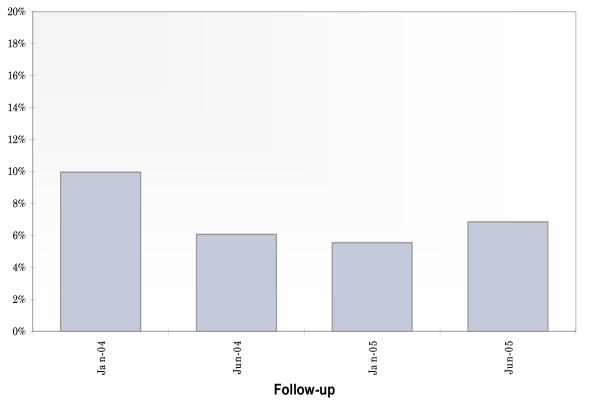
- The proportion of participants with a current CIRI ranged from 6% to 10% over the study period; at baseline, 106 (10%) reported a CIRI.
- In multivariate generalized linear mixed-effects models, CIRI was associated with female sex (AOR = 1.68, 95% CI: 1.16–2.43), unstable housing (AOR = 1.49, 95% CI: 1.10–2.03), borrowing used syringes (AOR = 1.60, 95% CI: 1.03–2.48), requiring help injecting (AOR = 1.42, 95% CI: 1.03–1.94), and injecting cocaine daily (AOR = 1.41, 95% CI: 1.02–1.95).
- In univariate analyses, older age and always using the supervised injection facility for injections were associated with decreased likelihood of CIRI (SIF use OR = 0.47, 95% CI: 0.23–0.94), while female sex, unstable housing, sex trade involvement, borrowing syringes, requiring help injecting, daily cocaine, daily heroin, and daily speedball injection were positively associated.
- Median follow-up was 12.6 months (IQR: 6.2–17.7); 877 (82%) returned for at least one follow-up visit, and 312 (29%) were female.
Methods
- Longitudinal analysis of the Scientific Evaluation of Supervised Injecting (SEOSI) cohort, recruited from North America’s first supervised injection facility in Vancouver’s Downtown Eastside; participants completed interviewer- and nurse-administered questionnaires semi-annually.
- Eligible participants completed both baseline questionnaires between January 1, 2004 and December 31, 2005; 1,065 of 1,090 recruited participants (97%) were included.
- Outcome was a current CIRI reported and visually confirmed by a study nurse; univariate and multivariate generalized linear mixed-effects models with fixed and time-updated variables and random intercepts were used, with variables significant at p < 0.05 in univariate analysis entered into the multivariate model.
Limitations
- The authors state they could not examine “skin popping” as an independent variable due to low numbers reporting it, and the questionnaire may not have captured accidental subcutaneous or intramuscular injection.
- The authors state reliance on self-report may introduce social desirability bias, though they know of no reason to suspect differential reporting by CIRI status.
- The authors state SIF users may differ from non-users and results may not generalize to the broader local IDU population; external validity should be interpreted cautiously because Vancouver’s Downtown Eastside is unique with a large open drug scene and high cocaine injection prevalence.
- Evident from the text: the observational cohort design cannot establish causality, and the study only investigates CIRI related to injection drug use rather than other behaviours.
Model-written summary. Check it against the paper before relying on it.
Integrity signals
Registry
Cites
Statistics
Figures
Verification
Claims the paper makes
5 Valid · 0 Not valid · 14 Not checked · 14 Own results and interpretations
The cited sources support only part of this claim — read each source’s verdict below.
In the paper
“With regard to the association between cocaine injection and development of CIRI [12,13], cocaine's anaesthetic properties may make it more difficult for individuals to know whether or not they are hitting a vein (as opposed to injecting in the surrounding tissue or skin), resulting in trauma through repetitive attempts to access the vein [22,23].”
§ Risk factors for developing a cutaneous injection-related infection among injection drug users: a cohort study > Discussion
What the sources say
- Not matchedcites [22] Sydney Medically Supervised Injecting Centre Final report of the evaluation of the Sydney Medically Supervised Injecting Centre 2003
Its entry has no title and year that we can search by.
- Supportedcites [23] Rhodes T Briggs D Kimber J Jones S Holloway G Crack-heroin speedball injection and its implications for vein care: qualitative study Addiction 2007 102 1782 1790 17784900 10.1111/j.1360-0443.2007.01969.x source
The 'Vein damage' section states that crack acts as a local anaesthetic at the injection site, that missed hits (including injection of solute into surrounding tissue) were common and exacerbated crack-related vein damage, and that concern over missed hits led to repeated 'flushing' — injecting and drawing back the solute — which was itself associated with increased vein damage; the 'Risk awareness and acceptability' section adds that 'the anaesthetic effects of crack on the injection site increased the chances of missing the femoral vein' ('They won't even know they are missing the vein because the crack is numbing the site'). The citing sentence's hedge ('may') matches the source's framing, which reports these as injectors' accounts plus a logical inference in the Discussion rather than clinical proof. Minor slippage only: the source's 'repeated' trauma is chiefly about flushing, not repeated needle passes. (LLM, conf=0.82)
hedgedstates a possible cause- Asserted: passes — The authors put it forward as true.
- Checkable: passes — It can be checked against evidence.
- Load-bearing: unclear — It is unclear whether the paper’s conclusions depend on it.
- Based: passes — The paper gives a reason why it holds.
- Not matched
The cited sources support only part of this claim — read each source’s verdict below.
In the paper
“Missing a vein increases vulnerability for CIRI since injecting into the surrounding tissue creates a niche environment in which bacteria can thrive [9].”
§ Risk factors for developing a cutaneous injection-related infection among injection drug users: a cohort study > Discussion
What the sources say
- Partly supportedcites [9] Ciccarone D Bourgois P Explaining the geographical variation of HIV among injection drug users in the United States Subst Use Misuse 2003 38 2049 2063 14677781 10.1081/JA-120025125 PMC1343535 sourceExperimental — accuracy not yet measured
The Clinical Observations passage (listed under Abstract; no page provided) says soft-tissue infections are common after intramuscular and subcutaneous injection of black tar heroin. It does not discuss missing a vein or say that surrounding tissue provides a niche where bacteria thrive. (LLM, conf=0.84)
plainstates a cause- Asserted: passes — The authors put it forward as true.
- Checkable: passes — It can be checked against evidence.
- Load-bearing: unclear — It is unclear whether the paper’s conclusions depend on it.
- Based: passes — The paper gives a reason why it holds.
- Partly supported
The cited sources support only part of this claim — read each source’s verdict below.
In the paper
“The observed associations between female sex, daily cocaine injection, living in unstable housing and an elevated risk of having a CIRI are congruent with previous analyses.”
§ Risk factors for developing a cutaneous injection-related infection among injection drug users: a cohort study > Discussion
What the sources say
- Partly supportedcites [10] Taylor A Hutchinson S Lingappa J Wadd S Ahmed S Gruer L Severe illness and death among injecting drug users in Scotland: a case-control study Epidemiol Infect 2005 13 193 204 15816144 10.1017/S0950268804003504 PMC2870238 sourceExperimental — accuracy not yet measured
Table 1 and the matched multivariate analysis associate female sex with increased severe illness among Scottish injecting drug users. The Discussion says cocaine users and injectors had a lower risk of illness, contrary to the claimed direction for cocaine injection; the available passages do not establish an association with unstable housing. Page numbers are not available in our copy. (LLM, conf=0.88)
- Not matchedcites [12] Lloyd-Smith E Kerr T Hogg RS Li K Montaner JSG Wood E Prevalence and correlates of abscesses among a cohort of injection drug users Harm Reduct J 2005 2 16281979 PMC1308840
We searched by its title and found no matching paper.
- Not checked — no full text of the sourcecites [13] Spijkerman IJ van Ameijden EJ Mientjes GH Coutinho RA Hoek A van den Human immunodeficiency virus infection and other risk factors for skin abscesses and endocarditis among injection drug users J Clin Epidemiol 1996 49 1149 54 8826995 10.1016/0895-4356(96)00180-1 source
plainstates an association- Asserted: passes — The authors put it forward as true.
- Checkable: passes — It can be checked against evidence.
- Load-bearing: unclear — It is unclear whether the paper’s conclusions depend on it.
- Based: passes — The paper gives a reason why it holds.
- Partly supported
A result the paper reports from its own data — it cites no other source for it, so there is none to check. The quote shows it is in the paper.
In the paper
“At baseline, 106 (10%) of participants reported a CIRI.”
§ Risk factors for developing a cutaneous injection-related infection among injection drug users: a cohort study > Results
plain- Asserted: passes — The authors put it forward as true.
- Checkable: passes — It can be checked against evidence.
- Load-bearing: unclear — It is unclear whether the paper’s conclusions depend on it.
- Based: passes — The paper gives a reason why it holds.
- Rests on an assumption not shown here.
A result the paper reports from its own data — it cites no other source for it, so there is none to check. The quote shows it is in the paper.
In the paper
“borrowing a used syringe (AOR = 1.60 [95% CI: 1.03–2.48])”
- Also stated in: § Results · plain
“borrow used syringes (AOR = 1.60 [95% CI: 1.03–2.48])”
§ Risk factors for developing a cutaneous injection-related infection among injection drug users: a cohort study > Abstract > Results
plainstates an association- Asserted: passes — The authors put it forward as true.
- Checkable: passes — It can be checked against evidence.
- Load-bearing: passes — The paper’s conclusions depend on it.
- Based: passes — The paper gives a reason why it holds.
- Rests on 2 assumptions not shown here.
- Also stated in: § Results · plain
9 more claims
Create a free account to see all 33 claims and every source verdict.
- Probably not a substantial claim. 11
- It may state two separate claims as one. 11
Claims other papers make about this one
Each is checked against this paper’s own text: does it say what the citing paper says it does?
The source backs part of the claim, not all of it — or backs it for a different population, condition or comparison.
In the citing paper
“Interestingly, being HIV positive was not a risk factor for the development of CIRI but was a predictor of hospitalization for a CIRI or related infectious complication.”
From Determinants of hospitalization for a cutaneous injection-related infection among injection drug users: a cohort study (2010) · cites this paper as [20]
Experimental — accuracy not yet measuredThe cited source says what the claim attributes to it.
In the citing paper
“Over a two year period, 6-10 per cent of IDU had a CIRI at time of interview [20].”
From Determinants of hospitalization for a cutaneous injection-related infection among injection drug users: a cohort study (2010) · cites this paper as [20]
The cited source says what the claim attributes to it.
In the citing paper
“Using the same cohort, the risk factors for the outcome of developing a CIRI have been reported to include being female, living in unstable housing, borrowing syringes, requiring help injecting and injecting cocaine daily [20].”
From Determinants of hospitalization for a cutaneous injection-related infection among injection drug users: a cohort study (2010) · cites this paper as [20]
In the citing paper
“Requiring assistance with injecting has been reported to be related to an elevated risk of HIV [20, 25, 26].”
From Determinants of Cutaneous Injection-Related Infections Among Injection Drug Users at an Emergency Department (2012) · cites this paper as [20]
In the citing paper
“as well as CIRI development [20]”
From Determinants of Cutaneous Injection-Related Infections Among Injection Drug Users at an Emergency Department (2012) · cites this paper as [20]
Self-check
Percentages, sums and reported differences re-computed from the paper’s own numbers.
Each contradiction between two passages listed here was confirmed by an independent check.
Rated minor: it would not touch a result — a value no result rests on, a p-value that stays on the same side of the significance level, or a conflict that is clerical, resolved elsewhere in the paper, or outside its own findings.
In the paper
§ Risk factors for developing a cutaneous injection-related infection among injection drug users: a cohort study > Results
“Table: Table 1 Univariate and multivariate analysis of developing a CIRI among SEOSI participants (n = 1065)”
§ Risk factors for developing a cutaneous injection-related infection among injection drug users: a cohort study > Results
“There were 14 (1%) individuals with missing data on HIV serostatus and 33 (3%) individuals with missing data on HCV serostatus at baseline; due to these small counts, these individuals were excluded from further analyses.”
Citations
Cites
Fitzmaurice, G. M., Laird, N. M., & Ware, J. H. (2011) · Wiley Series in Probability and Statistics · doi:10.1002/9781119513469 · Cited by 4,639
The ‘risk environment’: A framework for understanding and reducing drug-related harm
Rhodes, T. (2002) · International Journal of Drug Policy · doi:10.1016/s0955-3959(02)00007-5 · Cited by 1,241 · cited 2×
“The association between homelessness and an injection site infection has been reported [24].”
BackgroundAlter, M. J. (1997) · Hepatology · doi:10.1002/hep.510260711 · Cited by 1,075
Needle exchange is not enough: lessons from the Vancouver injecting drug use study
Strathdee, S. A., Patrick, D. M., Currie, S. L., Cornelisse, P. G. A., Rekart, M. L., Montaner, J. S. G., Schechter, M. T., & OʼShaughnessy, M. V. (1997) · AIDS · doi:10.1097/00002030-199708000-00001 · Cited by 661 · cited 1×
“Variable definitions were consistent with previous work [16-19].”
ResultSelf-citationThe estimated prevalence and incidence of HIV in 96 large US metropolitan areas.
Holmberg, S. D. (1996) · American Journal of Public Health · doi:10.2105/ajph.86.5.642 · Cited by 539 · cited 14×
“Discussion In this study we found that the proportion of IDU reporting a CIRI remained within the range of six to 10 per cent over a median follow-up of 12.6 (IQR: 6.2–17.7) months after SIF recruitment.”
BackgroundInfluentialIntensive injection cocaine use as the primary risk factor in the Vancouver HIV-1 epidemic
Tyndall, M. W., Currie, S., Spittal, P., Li, K., Wood, E., O'Shaughnessy, M. V., & Schechter, M. T. (2003) · AIDS · doi:10.1097/00002030-200304110-00014 · Cited by 373 · cited 14×
“Hagan H, Des Jarlais DC: HIV and HCV infection among injecting drug users.”
BackgroundResultInfluentialSelf-citationThe Everyday Violence of Hepatitis C among Young Women Who Inject Drugs in San Francisco
Bourgois, P., Prince, B., & Moss, A. (2004) · Human Organization · doi:10.17730/humo.63.3.h1phxbhrb7m4mlv0 · Cited by 318 · cited 1×
“The link between being female and having a CIRI echoes the findings of previous studies [10,12,13], and may reflect, in part, the complex gender dynamics that exist within injection drug using populations where women are often dependent on men for the attainment and administration of drugs [21].”
ResultBinswanger, I. A., Kral, A. H., Bluthenthal, R. N., Rybold, D. J., & Edlin, B. R. (2000) · Clinical Infectious Diseases · doi:10.1086/313703 · Cited by 300 · cited 2×
“The prevalence of CIRI among IDU typically ranges from 10% to 30% [ 7 ,8].”
BackgroundHospital utilization and costs in a cohort of injection drug users.
(2001) · PubMed Central · Cited by 263
Self-citationMolenberghs, G. (2005) · Journal of the American Statistical Association · doi:10.1198/jasa.2005.s24 · Cited by 262
Cited by
Supervised injection services: What has been demonstrated? A systematic literature review
Potier, C., Laprévote, V., Dubois-Arber, F., Cottencin, O., & Rolland, B. (2014) · Drug and Alcohol Dependence · doi:10.1016/j.drugalcdep.2014.10.012 · Cited by 495
McNeil, R., Small, W., Wood, E., & Kerr, T. (2014) · Social Science & Medicine · doi:10.1016/j.socscimed.2014.01.010 · Cited by 284
“, 2002), injection-related soft tissue infections (Cooper et al., 2007; Lloyd-Smith et al., 2008), and other co-morbidities common among this population, lead to frequent hospitalizations (Gebo et al.”
BackgroundSelf-citationKennedy, M. C., Karamouzian, M., & Kerr, T. (2017) · Current HIV/AIDS Reports · doi:10.1007/s11904-017-0363-y · Cited by 256
Self-citationA systematic review of injecting-related injury and disease among people who inject drugs
Larney, S., Peacock, A., Mathers, B. M., Hickman, M., & Degenhardt, L. (2017) · Drug and Alcohol Dependence · doi:10.1016/j.drugalcdep.2016.11.029 · Cited by 244
Supervised Injection Facilities as Harm Reduction: A Systematic Review
Levengood, T. W., Yoon, G. H., Davoust, M. J., Ogden, S. N., Marshall, B. D. L., Cahill, S. R., & Bazzi, A. R. (2021) · American Journal of Preventive Medicine · doi:10.1016/j.amepre.2021.04.017 · Cited by 230
Lewer, D., Freer, J., King, E., Larney, S., Degenhardt, L., Tweed, E. J., Hope, V. D., Harris, M., Millar, T., Hayward, A., et al. (2020) · Addiction · doi:10.1111/add.14892 · Cited by 161
“To provide informal comparisons with the general population, we used published frequencies of health-care utilization in the United States, Canada, Australia and the United Kingdom [21 – 23] for the general population group with the most similar age and sex pro fi le as the study population.”
InfluentialAnforderungen an die Hygiene bei Punktionen und Injektionen
(2011) · Bundesgesundheitsblatt - Gesundheitsforschung - Gesundheitsschutz · doi:10.1007/s00103-011-1352-8 · Cited by 148
Ciccarone, D., Unick, G. J., Cohen, J. K., Mars, S. G., & Rosenblum, D. (2016) · Drug and Alcohol Dependence · doi:10.1016/j.drugalcdep.2016.04.009 · Cited by 131
“Prevalence estimates of SSTI among PWID range widely: from 10% of PWID at a supervised injection program in Vancouver (Lloyd-Smith et al., 2008), 20% of PWID in Tijuana (Pollini et al., 2010), 24% of heroin PWID inpatients in Detroit (Crane et al., 1986), 32% of street sampled heroin PWID in San…”
BackgroundInfluentialMcNeil, R., Kerr, T. H., Pauly, B., Wood, E., & Small, W. (2016) · Addiction · doi:10.1111/add.13214 · Cited by 153
Self-citationTookes, H., Diaz, C., Li, H., Khalid, R., & Doblecki-Lewis, S. (2015) · PLOS ONE · doi:10.1371/journal.pone.0129360 · Cited by 109
“Similarly, the drug of choice may increase the frequency of injection and thereby the risk of infection; for example, IDUs injecting cocaine may inject more than 20 times per day [14,15].”
BackgroundMcNeil, R., Small, W., Lampkin, H., Shannon, K., & Kerr, T. H. (2013) · AIDS and Behavior · doi:10.1007/s10461-013-0540-y · Cited by 138
“rates of syringe-sharing [28, 31–33], injection-related infections [34, 35], overdose [36, 37], and violence [38].”
Self-citationJanjua, N. Z., Islam, N., Kuo, M., Yu, A., Wong, S., Butt, Z. A., Gilbert, M., Buxton, J., Chapinal, N., Samji, H., et al. (2018) · International Journal of Drug Policy · doi:10.1016/j.drugpo.2018.02.001 · Cited by 102
Self-citationHout, M. C. V., & Bingham, T. (2012) · International Journal of Drug Policy · doi:10.1016/j.drugpo.2012.01.008 · Cited by 92
Fire in the vein: Heroin acidity and its proximal effect on users’ health
Ciccarone, D., & Harris, M. (2015) · International Journal of Drug Policy · doi:10.1016/j.drugpo.2015.04.009 · Cited by 68
“The prevalence of SSTI varies: in the North American context point prevalence by clinical exam ranges from 10% (Vancouver) (Lloyd-Smith et al., 2008) to 19– 32% (San Francisco) (Binswanger, Kral, Bluthenthal, Rybold, & Edlin, 2000; Ciccarone et al.”
BackgroundLloyd-Smith, E., Wood, E., Zhang, R., Tyndall, M. W., Sheps, S., Montaner, J. S., & Kerr, T. (2010) · BMC Public Health · doi:10.1186/1471-2458-10-327 · Cited by 62
“Over a two year period, 6-10 per cent of IDU had a CIRI at time of interview [20].”
InfluentialSelf-citationFairbairn, N., Milloy, M.-J., Zhang, R., Lai, C., Grafstein, E., Kerr, T., & Wood, E. (2012) · The Journal of Emergency Medicine · doi:10.1016/j.jemermed.2011.05.020 · Cited by 63
Self-citationHarris, M., Scott, J., Hope, V., Wright, T., McGowan, C., & Ciccarone, D. (2020) · Harm Reduction Journal · doi:10.1186/s12954-020-00369-0 · Cited by 58
Wenger, L. D., Kral, A. H., Bluthenthal, R. N., Morris, T., Ongais, L., & Lambdin, B. H. (2021) · Translational research · doi:10.1016/j.trsl.2021.03.011 · Cited by 58
“During the interview, program representatives were asked to describe the following: (1) shelter-in-place/stay-at-home orders in their locale; (2) changes in staffing; (3) changes in funding; (4) organizational adaptations; (5) changes in service provision for naloxone, MOUD, and other harm reduction services; (6) chan…”
BackgroundPain Among High-Risk Patients on Methadone Maintenance Treatment
Voon, P., Hayashi, K., Milloy, M.-J., Nguyen, P., Wood, E., Montaner, J., & Kerr, T. (2015) · The Journal of Pain · doi:10.1016/j.jpain.2015.06.003 · Cited by 58
“A generalized linear mixed-effects model (GLMM) was chosen because of its abilities to longitudinally analyze individual trajectories of pain over time and capture within-subject correlation and heterogeneity of participants in an attempt to identify individual-level factors.(16,24) The random intercept was used to ac…”
Self-citationDahlman, D., Håkansson, A., Kral, A. H., Wenger, L. D., Ball, E. L., & Novak, S. P. (2017) · Substance Abuse · doi:10.1080/08897077.2016.1263592 · Cited by 65
“arate higher-risk and lower-risk behaviors: injections through clothing during the past 30 days (never D 0, once or more D 1), use of a preused syringe/needle during the past 30 days (neverD 0, once or moreD 1), and average number of times reuse own needle (never reuseD 0, reuse once ormoreD 1).(2,7,9,12,18)”
BackgroundResultPhillips, K. T., Anderson, B. J., Herman, D. S., Liebschutz, J. M., & Stein, M. D. (2017) · Journal of Addiction Medicine · doi:10.1097/adm.0000000000000346 · Cited by 53
“Demographic variables, such as female sex and unstable housing, have been shown to be associated with current and lifetime SSTIs (Lloyd-Smith et al., 2005, 2008; Hope et al., 2008; Dahlman et al., 2015).”
BackgroundEvaluating networked drug checking services in Toronto, Ontario: study protocol and rationale
Drug Checking Services in Toronto Working Group, Maghsoudi, N., McDonald, K., Stefan, C., Beriault, D. R., Mason, K., Barnaby, L., Altenberg, J., MacDonald, R. D., Caldwell, J., et al. (2020) · Harm Reduction Journal · doi:10.1186/s12954-019-0336-0 · Cited by 57
Smith, M. E., Robinowitz, N., Chaulk, P., & Johnson, K. E. (2015) · Journal of Addiction Medicine · doi:10.1097/adm.0000000000000093 · Cited by 55
“Prior studies have suggested that women are at increased risk for developing abscesses (Spijkerman et al., 1996; Ebright & Pieper, 2002; Lloyd-Smith et al., 2005, 2008; Hope et al., 2010; Fink et al., 2013) perhaps because of difficulty accessing veins, sharing of contaminated injection equipment,…”
BackgroundSemaan, S., Fleming, P. J., Worrell, C. M., Stolp, H., Baack, B. N., & Miller, M. (2011) · Drug and Alcohol Dependence · doi:10.1016/j.drugalcdep.2011.03.006 · Cited by 64
High prevalence of abscesses and self-treatment among injection drug users in Tijuana, Mexico
Pollini, R. A., Gallardo, M., Hasan, S., Minuto, J., Lozada, R., Vera, A., Zúñiga, M. L., & Strathdee, S. A. (2010) · International Journal of Infectious Diseases · doi:10.1016/j.ijid.2010.02.2238 · Cited by 51
Salter, M. L., Lau, B. M., Mehta, S. H., Go, V. F.-L., Leng, S. X., & Kirk, G. D. (2013) · JAIDS Journal of Acquired Immune Deficiency Syndromes · doi:10.1097/qai.0b013e3182a7ee2e · Cited by 55
HOPE, V. D., NCUBE, F., PARRY, J. V., & HICKMAN, M. (2015) · Epidemiology and Infection · doi:10.1017/s0950268814000284 · Cited by 50
“© Cambridge University Press 2014 doi:10.1017/S0950268814000284 [10–12] and the UK [13, 14], although lower levels have been reported by studies in Vancouver and Sydney [15, 16].”
BackgroundInfluentialIndividual-level syringe coverage among Needle and Syringe Program attendees in Australia
Iversen, J., Topp, L., Wand, H. C., & Maher, L. (2011) · Drug and Alcohol Dependence · doi:10.1016/j.drugalcdep.2011.09.030 · Cited by 44
Summers, P. J., Struve, I. A., Wilkes, M. S., & Rees, V. W. (2016) · International Journal of Drug Policy · doi:10.1016/j.drugpo.2016.08.006 · Cited by 45
Jarlais, D. C. D., Arasteh, K., Semaan, S., & Wood, E. (2009) · Current Opinion in HIV and AIDS · doi:10.1097/coh.0b013e32832bbc6f · Cited by 50
Self-citationDunleavy, K., Munro, A., Roy, K., Hutchinson, S. J., Palmateer, N. E., Knox, T., Goldberg, D. J., & Taylor, A. (2017) · Drug and Alcohol Dependence · doi:10.1016/j.drugalcdep.2017.01.020 · Cited by 47
“Others have also shown that sharing or re-using N/S is associated with increased SSTI prevalence (Hope et al., 2014a; Hope et al., 2008; Lloyd-Smith et al., 2008; Murphy et al., 2001), as is the re-use and sharing of injecting paraphernalia (Hope et al.”
InfluentialDrug consumption rooms: A systematic review of evaluation methodologies
Běláčková, V., Salmon, A. M., Day, C., Ritter, A. J., Shanahan, M., Hedrich, D., Kerr, T. H., & JAUNCEY, M. E. (2019) · Drug and Alcohol Review · doi:10.1111/dar.12919 · Cited by 51
“Do not increase risk of drug use Yes (n = 1) NA NA Yes: Attending SIF at least once a week at baseline was linked with injecting cessation via initiation of addiction treatment [195] Yes: Used SIF >25% injections not related to employment/ unemployment [206] ; SIF use always versus not always not related to cutaneous…”
BackgroundSelf-citationSelf-treatment of skin infections by people who inject drugs
Monteiro, J., Phillips, K. T., Herman, D. S., Stewart, C., Keosaian, J., Anderson, B. J., & Stein, M. D. (2020) · Drug and Alcohol Dependence · doi:10.1016/j.drugalcdep.2019.107695 · Cited by 41
Serota, D. P., Bartholomew, T. S., & Tookes, H. E. (2021) · Clinical Infectious Diseases · doi:10.1093/cid/ciaa1278 · Cited by 38
Lambdin, B. H., Davidson, P. J., Browne, E. N., Suen, L. W., Wenger, L. D., & Kral, A. H. (2022) · Journal of General Internal Medicine · doi:10.1007/s11606-021-07312-4 · Cited by 44
“These findings are similar to results from two studies in Germany and Canada that did not show statistically significant SSTI changes with SCS use in a sanctioned environment.(30, 31) However, a recent review noted that an SCS could facilitate earlier diagnosis and treatment of SSTIs because, as staff build relationsh…”
ResultMitra, S., Rachlis, B., Scheim, A. I., Bardwell, G., Rourke, S. B., & Kerr, T. H. (2017) · Harm Reduction Journal · doi:10.1186/s12954-017-0174-x · Cited by 45
“Background Injection drug use is associated with a wide range of health and social harms, including endocarditis [1], soft tissue infections [2], human immunodeficiency virus (HIV) [3, 4], hepatitis C (HCV) [5], and overdose [6].”
BackgroundSelf-citationDahlman, D., Håkansson, A., Björkman, P., Blomé, M. A., & Kral, A. H. (2015) · Substance Use & Misuse · doi:10.3109/10826084.2015.1023450 · Cited by 45
“The higher risk for SSTI in female IDUs has been noted elsewhere (Hope et al., 2008; Lloyd-Smith et al., 2005, 2008; Spijkerman et al., 1996), and may have biological reasons, for example smaller veins, or social causes—women often have less control over the drug used and mode of injection…”
BackgroundInfluentialRoux, P., Jauffret‐Roustide, M., Donadille, C., Madrid, L. B., Denis, C., Célérier, I., Chauvin, C., Hamelin, N., Maradan, G., Carrieri, P., et al. (2022) · International Journal of Epidemiology · doi:10.1093/ije/dyac120 · Cited by 40
HOPE, V. D., MARONGIU, A., PARRY, J. V., & NCUBE, F. (2010) · Epidemiology and Infection · doi:10.1017/s0950268810000324 · Cited by 35
“[3, 4, 13], and with gender [3, 4, 8, 14] and source of income [4].”
BackgroundInfluentialHarm Reduction Services to Prevent and Treat Infectious Diseases in People Who Use Drugs
Thakarar, K., Nenninger, K., & Agmas, W. (2020) · Infectious Disease Clinics of North America · doi:10.1016/j.idc.2020.06.013 · Cited by 47
Todd, C. S., Nasir, A., Stanekzai, M. R., Fiekert, K., Rasuli, M., Vlahov, D., & Strathdee, S. A. (2011) · Harm Reduction Journal · doi:10.1186/1477-7517-8-22 · Cited by 34
Gender influences on initiation of injecting drug use
Ahamad, K., DeBeck, K., Feng, C. X., Sakakibara, T., Kerr, T. H., & Wood, E. (2014) · The American Journal of Drug and Alcohol Abuse · doi:10.3109/00952990.2013.860983 · Cited by 31
“In addition, injection drug use is associated with other poor health outcomes such as soft tissue infections including infective endocarditis as well as fatal drug overdose (3,4,5).”
BackgroundSelf-citationKennedy, M. C., Hayashi, K., Milloy, M., Boyd, J., Wood, E., & Kerr, T. H. (2020) · International Journal of Drug Policy · doi:10.1016/j.drugpo.2020.102692 · Cited by 31
“The primary explanatory variable of interest was exclusive SIF use, defined in response to the question, “In the last six months, what proportion of injections did you do at Insite?” Consistent with our past work (Lloyd-Smith et al., 2008; Wood et al., 2005a), responses were classified as all vs.”
BackgroundSelf-citationSutter, A., Curtis, M., & Frost, T. (2019) · International Journal of Drug Policy · doi:10.1016/j.drugpo.2018.11.007 · Cited by 29
Adly, M., Woo, T. E., Traboulsi, D., Klassen, D. C., & Hardin, J. (2021) · Journal of Cutaneous Medicine and Surgery · doi:10.1177/12034754211004558 · Cited by 33
Acceptability of safe drug consumption spaces among people who inject drugs in rural West Virginia
O’Rourke, A., White, R. H., Park, J. N., Rodriguez, K., Kilkenny, M. E., Sherman, S. G., & Allen, S. T. (2019) · Harm Reduction Journal · doi:10.1186/s12954-019-0320-8 · Cited by 33
Jawa, R., Stein, M. D., Anderson, B., Liebschutz, J. M., Stewart, C., Phillips, K. T., & Barocas, J. A. (2021) · International Journal of Drug Policy · doi:10.1016/j.drugpo.2021.103198 · Cited by 28
The projected costs and benefits of a supervised injection facility in Seattle, WA, USA
Hood, J. E., Behrends, C. N., Irwin, A., Schackman, B. R., Chan, D., Hartfield, K., Hess, J., Banta‐Green, C. J., Whiteside, L., Finegood, B., et al. (2019) · International Journal of Drug Policy · doi:10.1016/j.drugpo.2018.12.015 · Cited by 32
Correlates of Seeking Injection Assistance among Injection Drug Users in Tijuana, Mexico
Robertson, A. M., Vera, A. Y., Gallardo, M., Pollini, R. A., Patterson, T. L., Case, P., Nguyen, L., & Strathdee, S. A. (2010) · The American Journal on Addictions · doi:10.1111/j.1521-0391.2010.00053.x · Cited by 27
Is opioid substitution treatment beneficial if injecting behaviour continues?
Gjersing, L., & Bretteville‐Jensen, A. L. (2013) · Drug and Alcohol Dependence · doi:10.1016/j.drugalcdep.2013.05.022 · Cited by 31
“15 (Lloyd-Smith et al., 2008; Pieper et al., 2009).”
Dahlman, D., Kral, A. H., Wenger, L. D., Håkansson, A., & Novak, S. P. (2017) · Substance Abuse Treatment Prevention and Policy · doi:10.1186/s13011-017-0112-7 · Cited by 29
“PWID also experience unstable housing [15, 16] which complicates their ability to achieve a medical home that can provide consistent preventive and acute care.”
BackgroundHamida, A. B., Rafful, C. M., Jain, S., Sun, S., González‐Zúñiga, P., Rangel, G., Strathdee, S. A., & Werb, D. (2017) · Journal of Urban Health · doi:10.1007/s11524-017-0188-4 · Cited by 25
“Furthermore, PWID are exposed to a higher risk of cutaneous infections [7], infective endocarditis [8], and fatal drug overdose [9].”
BackgroundFiggatt, M. C., Salazar, Z. R., Vincent, L., Carden-Glenn, D., Link, K., Kestner, L., Yates, T., Schranz, A. J., Joniak-Grant, E., & Dasgupta, N. (2021) · Harm Reduction Journal · doi:10.1186/s12954-021-00528-x · Cited by 28
Moradi-Joo, M., Ghiasvand, H., Noroozi, M., Armoon, B., Noroozi, A., Karimy, M., Rostami, A., Mirzaee, M. S., & Hemmat, M. (2019) · Journal of Substance Use · doi:10.1080/14659891.2019.1572805 · Cited by 26
“, 2013) ** * * Newcastle-Ottawa scale adapted for cross-sectional studies Lloyd-Smith et al(Lloyd-Smith et al., 2008).”
BackgroundInfluentialMitra, S., Rachlis, B., Krysowaty, B., Marshall, Z., Olsen, C., Rourke, S. B., & Kerr, T. H. (2019) · BMC Public Health · doi:10.1186/s12889-019-6606-7 · Cited by 26
Self-citationPredictors of skin and soft tissue infections among sample of rural residents who inject drugs
Baltes, A., Akhtar, W. Z., Birstler, J., Olson-Streed, H. K., Eagen, K., Seal, D. W., Westergaard, R. P., & Brown, R. (2020) · Harm Reduction Journal · doi:10.1186/s12954-020-00447-3 · Cited by 26
Six Moments of Infection Prevention in Injection Drug Use: An Educational Toolkit for Clinicians
Harvey, L. H., Boudreau, J., Sliwinski, S. K., Strymish, J. M., Gifford, A. L., Hyde, J. K., Linsenmeyer, K. D., & Branch‐Elliman, W. (2022) · Open Forum Infectious Diseases · doi:10.1093/ofid/ofab631 · Cited by 28
“Frequent injections may also lead to higher rates of needle reuse, which in turn leads to increased use of blunt needles, which cause more skin injury and impart a higher risk of introduction of skin flora and other potential pathogens into the soft tissues and bloodstream [19, 20].”
BackgroundDunleavy, K., Hope, V. D., Roy, K., & Taylor, A. (2019) · International Journal of Drug Policy · doi:10.1016/j.drugpo.2018.09.001 · Cited by 32
“behaviours have been found to be risk factors for SSTI (Dunleavy et al., 2017; Hope, Hickman, Parry, & Ncube, 2014; Hope, Kimber, Vickerman, Hickman, & Ncube, 2008; Larney et al., 2017; Lloyd-Smith et al., 2008; Murphy et al., 2001) .”
BackgroundPhillips, K. T., Stewart, C., Anderson, B. J., Liebschutz, J. M., Herman, D. S., & Stein, M. D. (2021) · Drug and Alcohol Dependence · doi:10.1016/j.drugalcdep.2021.108646 · Cited by 23
Hearne, E., Grund, J., Hout, M. C. V., & McVeigh, J. (2016) · Harm Reduction Journal · doi:10.1186/s12954-016-0105-2 · Cited by 27
“These behaviours are also important drivers of skin and soft tissue infections (SSTIs) around injection sites, affecting 10–30 % of PWID [102–104] and associated with loss of venous access and intramuscular or subcutaneous injection [102, 104, 105].”
BackgroundSex work, injection drug use, and abscesses: Associations in women, but not men
Wurcel, A. G., Burke, D. J., Skeer, M. R., Landy, D. M., Heimer, R., Wong, J. B., Chui, K. K. H., & Stopka, T. J. (2018) · Drug and Alcohol Dependence · doi:10.1016/j.drugalcdep.2017.12.028 · Cited by 23
Lloyd‐Smith, E., Rachlis, B., Tobin, D., Stone, D., Li, K. K., Small, W., Wood, E., & Kerr, T. H. (2010) · Harm Reduction Journal · doi:10.1186/1477-7517-7-6 · Cited by 21
“Such infections have been also associated with frequent cocaine injection [20,21].”
BackgroundSelf-citationGelpí-Acosta, C., Guarino, H., Benoit, E., Deren, S., Pouget, E. R., & Rodríguez, A. (2019) · International Journal of Drug Policy · doi:10.1016/j.drugpo.2019.03.016 · Cited by 22
“When factoring in that their preferred drug is speedballs, which deteriorates veins faster than heroin-only injections (Loyd-Smith et al., 2008), we surmise that the need for Gancheros will remain strong within this community, as healthy veins become increasingly harder to find.”
BackgroundInfectious diseases, comorbidities and outcomes in hospitalized people who inject drugs (PWID)
Lim, J. R., Pavalagantharajah, S., Verschoor, C. P., Lentz, E. J. M., Loeb, M. B., Levine, M., Smieja, M., Mbuagbaw, L. C. E., Kalina, D. R., Tarride, J., et al. (2022) · PLoS ONE · doi:10.1371/journal.pone.0266663 · Cited by 24
Is Neonatal Abstinence Syndrome Related to the Amount of Opiate Used?
Thajam, D., Atkinson, D. E., Sibley, C. P., et al. (2010) · Journal of Obstetric, Gynecologic & Neonatal Nursing · doi:10.1111/j.1552-6909.2010.01174.x · Cited by 17
Skin alterations due to illegal drug abuse
Fink, B., Landthaler, M., & Hafner, C. M. (2011) · JDDG Journal der Deutschen Dermatologischen Gesellschaft · doi:10.1111/j.1610-0387.2011.07699.x · Cited by 27
Transition to and from injecting drug use among regular ecstasy users
Dunn, M., Degenhardt, L. J., & Bruno, R. (2010) · Addictive Behaviors · doi:10.1016/j.addbeh.2010.06.007 · Cited by 17
Dermatologic Signs and Symptoms of Substance Abuse
Raiker, N. K., & Aouthmany, M. (2016) · Journal of Clinical & Experimental Dermatology Research · doi:10.4172/2155-9554.1000337 · Cited by 17
“Skin and soft tissue infections (SSTI) are among the most common infectious complications of injection drug abuse, comprising the majority of emergency department visits by injection drug users (IDU) [2,3,6].”
BackgroundThe fast and furious : Cocaine, amphetamines and harm reduction
Grund, J., Coffin, P. O., Jauffret‐Roustide, M., Dijkstra, M., DeBruin, D. A., & Blanken, P. (2010) · RePub (Erasmus University Rotterdam) · Cited by 19
Valerio, H., Goldberg, D. J., Lewsey, J., Weir, A., Allen, S. H., Aspinall, E., Barclay, S. T., Bramley, P. N., Dillon, J. F., Fox, R., et al. (2015) · Drug and Alcohol Dependence · doi:10.1016/j.drugalcdep.2015.06.032 · Cited by 15
“0; ICD-10: I33), deep vein thrombosis (ICD-9: 451, 453 ; ICD-10: I80), cellulitis /abscesses (ICD-9: 682; ICD-10: L02, L03) (Lloyd-Smith et al., 2008; Irish et al., 2007).”
InfluentialMoran, G. J., Anda, C. S. D., Das, A., Green, S., Mehra, P., & Prokocimer, P. (2018) · Infectious Diseases and Therapy · doi:10.1007/s40121-018-0211-4 · Cited by 17
Freibott, C. E., Phillips, K. T., Anderson, B. J., Stewart, C., Liebschutz, J. M., & Stein, M. D. (2021) · Journal of Addiction Medicine · doi:10.1097/adm.0000000000000844 · Cited by 15
“Past work has also shown that those injecting a combination of heroin and cocaine (speedballs) report a greater number of abscesses as compared to methamphetamine and cocaine injectors.(5,6,14) SSTIs have significant clinical and economic implications.”
BackgroundMezaache, S., Protopopescu, C., Debrus, M., Morel, S., Mora, M., Suzan, M., Castro, D. R., Carrieri, P., & Roux, P. (2018) · Drug and Alcohol Dependence · doi:10.1016/j.drugalcdep.2018.07.028 · Cited by 14
Gjersing, L., & Bretteville‐Jensen, A. L. (2015) · Addiction · doi:10.1111/add.13026 · Cited by 13
Peer-to-peer injection: Demographic, drug use, and injection-related risk factors
Lamb, S., Kral, A. H., Dominguez-Gonzalez, K., Wenger, L. D., & Bluthenthal, R. N. (2018) · International Journal of Drug Policy · doi:10.1016/j.drugpo.2018.07.001 · Cited by 13
“, 2001), abscesses and soft tissue infections (Lee et al., 2013; Lloyd-Smith et al., 2008), drug overdose (Fairbairn, Small, Van Borek, Wood, & Kerr, 2010), and HIV incidence (Lappalainen, Kerr, Hayashi, Dong, & Wood, 2015; O’Connell et al.”
Lloyd-Smith, E., Tyndall, M., Zhang, R., Grafstein, E., Sheps, S., Wood, E., Montaner, J., & Kerr, T. (2012) · The Open Infectious Diseases Journal · doi:10.2174/1874279301206010005 · Cited by 11
“Briefly, the cohort was assembled through random recruitment of IDU from within the SIF.”
BackgroundMethodSelf-citationHarmful Microinjecting Practices Among a Cohort of Injection Drug Users in Vancouver Canada
Rachlis, B., Lloyd‐Smith, E., Small, W., Tobin, D., Stone, D., Li, K. K., Wood, E., & Kerr, T. H. (2010) · Substance Use & Misuse · doi:10.3109/10826081003767643 · Cited by 13
Self-citationDunleavy, K., Hutchinson, S. J., Palmateer, N. E., Goldberg, D. J., Taylor, A., Munro, A., Shepherd, S. J., Gunson, R. N., Given, S., Campbell, J., et al. (2021) · International Journal of Drug Policy · doi:10.1016/j.drugpo.2021.103369 · Cited by 12
Milloy, M., Wood, E., Lloyd‐Smith, E., Grafstein, E., TYNDALL, M. W., Montaner, J. S. G., & Kerr, T. H. (2010) · Journal of Community Health · doi:10.1007/s10900-010-9269-y · Cited by 13
“In our setting of Vancouver, Canada, we have previously reported that IDU report substantial burdens of imprisonment [14] and CIRI [ 3 , 17].”
BackgroundSelf-citationDeclining trends in the rates of assisted injecting: a prospective cohort study
Pedersen, J. S., Dong, H., Small, W., Wood, E., Nguyen, P., Kerr, T. H., & Hayashi, K. (2016) · Harm Reduction Journal · doi:10.1186/s12954-016-0092-3 · Cited by 13
“Research has documented that assisted injecting is strongly associated with HIV [1, 6, 7], hepatitis C [8], and cutaneous injection-related infections [9].”
BackgroundSelf-citationGanesh, S. S., Goldshear, J. L., Wilkins, P., Kovalsky, E., Simpson, K. A., Page, C. J., Corsi, K. F., Ceasar, R. C., Barocas, J. A., & Bluthenthal, R. N. (2025) · Drug and Alcohol Dependence · doi:10.1016/j.drugalcdep.2025.112588 · Cited by 11
Jörgensen, J., Dahlman, D., Blomé, M. A., Janson, H., Riesbeck, K., & Nilsson, A. C. (2024) · Scientific Reports · doi:10.1038/s41598-024-63574-y · Cited by 9
Álvarez, E., Joshi, S., Lokker, C., Wang, A. R., Pavalagantharajah, S., Qiu, Y., Sidhu, H., Mbuagbaw, L. C. E., Qutob, M., Henedi, A., et al. (2020) · BMJ Open · doi:10.1136/bmjopen-2019-035188 · Cited by 8
Nathani, J., Iversen, J., SHYING, K., Byrne, J., & Maher, L. (2010) · Drug and Alcohol Review · doi:10.1111/j.1465-3362.2009.00165.x · Cited by 11
Kesten, J. M., Hussey, D., Lord, C., Roberts, L., Bayliss, J., Erswell, H., Preston, A. S., Telfer, M., Scott, J., Harris, M., et al. (2023) · Harm Reduction Journal · doi:10.1186/s12954-023-00823-9 · Cited by 8
Bacterial and fungal infections in persons who inject drugs
Masters, J., Goodman‐Meza, D., Russell, D. M., Marks, L. R., McCreary, E. K., Jacka, B. P., Seear, K., Davis, J. S., Matthews, G. V., Martinello, M., et al. (2025) · Clinical Microbiology Reviews · doi:10.1128/cmr.00162-23 · Cited by 9
“Frequent injecting, including stimulants such as methamphetamine and crack-cocaine, injected alone or with heroin (“speed-balling”), is associated with a higher risk for injection-related infections (55, 83, 84).”
Jozaghi, E. (2012) · Canadian Graduate Journal of Sociology and Criminology · doi:10.15353/cgjsc.v2i1.3774 · Cited by 7
Mucocutaneous alterations and complications in amphetamine abusers: a narrative review
Balali‐Mood, M., Sinclair, R. D., Darchini‐Maragheh, E., & Etemad, L. (2023) · Cutaneous and Ocular Toxicology · doi:10.1080/15569527.2023.2235425 · Cited by 6
Schneider, K. E., White, R. H., Rouhani, S., Tomko, C. A., Nestadt, D. F., & Sherman, S. G. (2022) · Drug and Alcohol Dependence Reports · doi:10.1016/j.dadr.2022.100057 · Cited by 7
“The high prevalence is likely due to the sample being women who sell sex, as both gender and sex work have been previously identified as risk factors for SSTIs (Dahlman et al., 2015; Hope et al., 2008; Lloyd-Smith et al., 2005; Lloyd-Smith et al., 2008; Pollini et al., 2010).”
Fanucchi, L. C., Havens, J. R., Fahmy, M., & Young, A. M. (2025) · Open Forum Infectious Diseases · doi:10.1093/ofid/ofaf197 · Cited by 6
Perceived Behavioral Control and Barriers to Cleaning Skin Before Injecting Drugs
Kenney, S. R., Phillips, K. T., Herman, D. S., Keosaian, J. E., Anderson, B. J., & Stein, M. D. (2019) · Journal of Addiction Medicine · doi:10.1097/adm.0000000000000564 · Cited by 5
Castro-Granell, V., Garín, N., Jaén, Á., Casado, J. L., Leal, L., Cenoz, S., & Fuster‐RuizdeApodaca, M. J. (2021) · AIDS and Behavior · doi:10.1007/s10461-021-03271-3 · Cited by 4
Roy, S., Eiden, C., Xatart, S., et al. (2021) · Therapies · doi:10.1016/j.therap.2021.05.008 · Cited by 4
Valencia, J. A. S., Troya, J., Lazarus, J. V., Cuevas, G., Álvaro‐Meca, A., Torres‐Macho, J., Gardeta, C., Lozano, D., Moreno, S., & Ryan, P. (2021) · Open Forum Infectious Diseases · doi:10.1093/ofid/ofab251 · Cited by 6
“Our results show that despite engagement in OAT and NEP, these incidence rates are even higher than those reported in previous studies of opiate-related, severe bacterial infections in this population (19-22) when harm reduction services did not offer”
ResultAnforderungen an die Hygiene bei Punktionen und Injektionen
(2012) · Krankenhaus-Hygiene + Infektionsverhütung · doi:10.1016/j.khinf.2011.12.010 · Cited by 3
Jozaghi, E. (2012) · Canadian Graduate Journal of Sociology and Criminology · doi:10.15353/cgjsc-rcessc.v2i1.16 · Cited by 3
Ganesh, S. S., Portillo, G. A. O., Trigo, D., Ninh, K., González, K., Wilkins, P., Kovalsky, E., Corsi, K. F., Barocas, J. A., & Bluthenthal, R. N. (2025) · Therapeutic Advances in Infectious Disease · doi:10.1177/20499361251344765 · Cited by 2
Responding to Illegal Drug Use in Acute Care: Patient Needs and Perspectives
Kosteniuk, B. (2020) · ERA: Education and Research Archive (University of Alberta) · doi:10.7939/r3-tne7-1j27 · Cited by 2
Fisher, H., Kesten, J. M., Hussey, D., Lord, C., Roberts, L., Bayliss, J., Erswell, H., Preston, A. S., Telfer, M., Scott, J., et al. (2022) · Research Square · doi:10.21203/rs.3.rs-1336452/v1 · Cited by 2
Piatkowski, T. M., Kill, E., & Olsen, A. M. S. (2025) · Drugs Habits and Social Policy · doi:10.1108/dhs-01-2025-0002 · Cited by 2
Metadata
- Authors
- Lloyd-Smith, E., Wood, E., Zhang, R., Tyndall, M. W., Montaner, J. S., & Kerr, T.
- Affiliations
- University of British Columbia (CA)
- St. Paul's Hospital (CA)
- Corresponding author
- Kerr, Thomas
- Venue
- BMC Public Health
- Published
- 2008-12
- Volume
- 8
- Issue
- 1
- Pages
- 405-405
- ISSN
- 1471-2458 (ISSN-L)
- PMC
- PMC2621202
- OpenAlex
- W2056127182
- Cited by
- 123
- References
- 33
- Citations by year
- 2026: 6 · 2025: 7 · 2024: 1 · 2023: 5 · 2022: 7 · 2021: 13 · 2020: 10 · 2019: 10 · 2018: 6 · 2017: 6 · 2016: 8 · 2015: 7 · 2014: 7 · 2013: 5 · 2012: 7
- FWCI
- 3.97
- Type
- journal article
- Language
- en
- Open access
- gold
- doi.org
- Licence
- Locations
- BMC Public Health (publishedVersion, cc-by)
- PubMed Central (publishedVersion, cc-by)
- PubMed (publishedVersion)
- cIRcle (University of British Columbia) (submittedVersion, cc-by)
- DOAJ (DOAJ: Directory of Open Access Journals) (submittedVersion, cc-by-sa)
- Open Collections
- Funders
- Michael Smith Health Research BC
- Health Canada
- Canadian Institutes of Health Research
- Topics
- Health Sciences › Medicine › Epidemiology › HIV, Drug Use, Sexual Risk
- Health Sciences › Medicine › Emergency Medicine › Intramuscular injections and effects
- Social Sciences › Sociology and Political Science › Homelessness and Social Issues
- Keywords
- people who inject drugs, supervised injection facilities, risk factors, abscess, cellulitis, unstable housing, cocaine use, female sex
- MeSH terms
- Adult, British Columbia, Female, Heroin Dependence, Ill-Housed Persons, Humans, Injections, Subcutaneous, Male, Middle Aged, Needles, Prospective Studies, Risk Factors, Risk-Taking, Skin Diseases, Infectious, Syringes, Substance Abuse, Intravenous, Prevalence, Substance Abuse Treatment Centers, Needle Sharing, Risk Assessment, Needle-Exchange Programs, Cocaine-Related Disorders, Drug Users, Young Adult
About these checks
Registry, retraction, Cites and statistics results are computed, not judged, with one exception: a printed reference that no index lists is read once by a model before it counts as a citation error. Claims are extracted by a model and kept only when their quote appears verbatim in the text; each cited source is then checked, with a model’s help, for whether it says what the claim relies on. Those verdicts can be wrong — read the claim’s quote and the cited source before relying on one.
The claim verdicts this report counts are experimental: their accuracy is not yet measured.
A language model drew the claims from the paper on 2026-10-10, under version 3 of the claim definition (model deepseek-v4.1-flash, prompt extract-v3).
A second model labelled each claim on 2026-10-10 (model jev-1.13-20260917, definition revision gold-guideline-v0.2).
Cited sources are checked with a language model’s help (qwen3.8-omni-flash and gpt-6-sol).
Statistics and arithmetic are recomputed, not judged.
Confidence bands are shown only for fields calibrated on our annotated test set. None is calibrated yet, so no band is shown.
What counts as a claim ›How we measure confidence ›How we check this ›
Are you an author, or do you see a problem with this page? Request a review
Data sources
Bibliographic data: Semantic Scholar, OpenAlex, Crossref.
Contains information from the Semantic Scholar Academic Graph Datasets, made available under the ODC Attribution License (ODC-BY 1.0).
Semantic Scholar’s data is described in: Kinney, R., et al. (2023). The Semantic Scholar Open Data Platform. arXiv:2301.10140.
