

The DOI matches its Crossref record; 488 of the 490 references it cites were found in a registry or an index, and 1 are not checked yet.
Characteristics of randomized controlled trials of yoga: a bibliometric analysis
Open accessAbstract
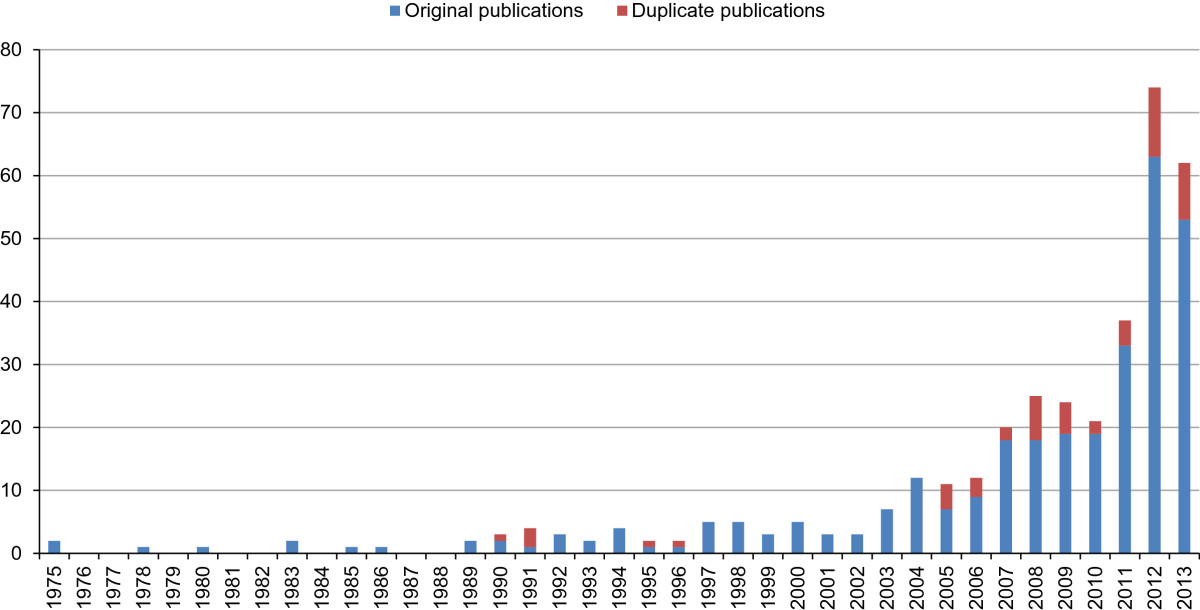
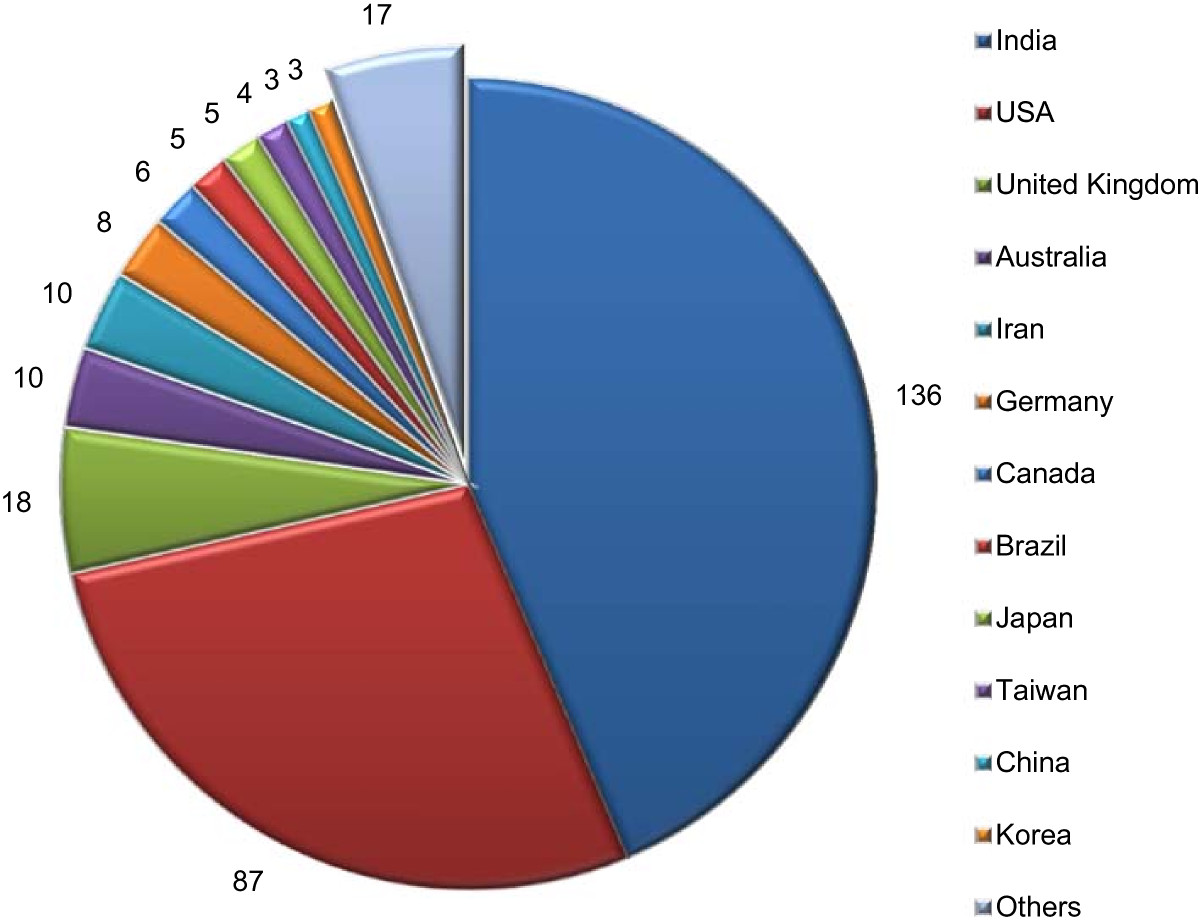
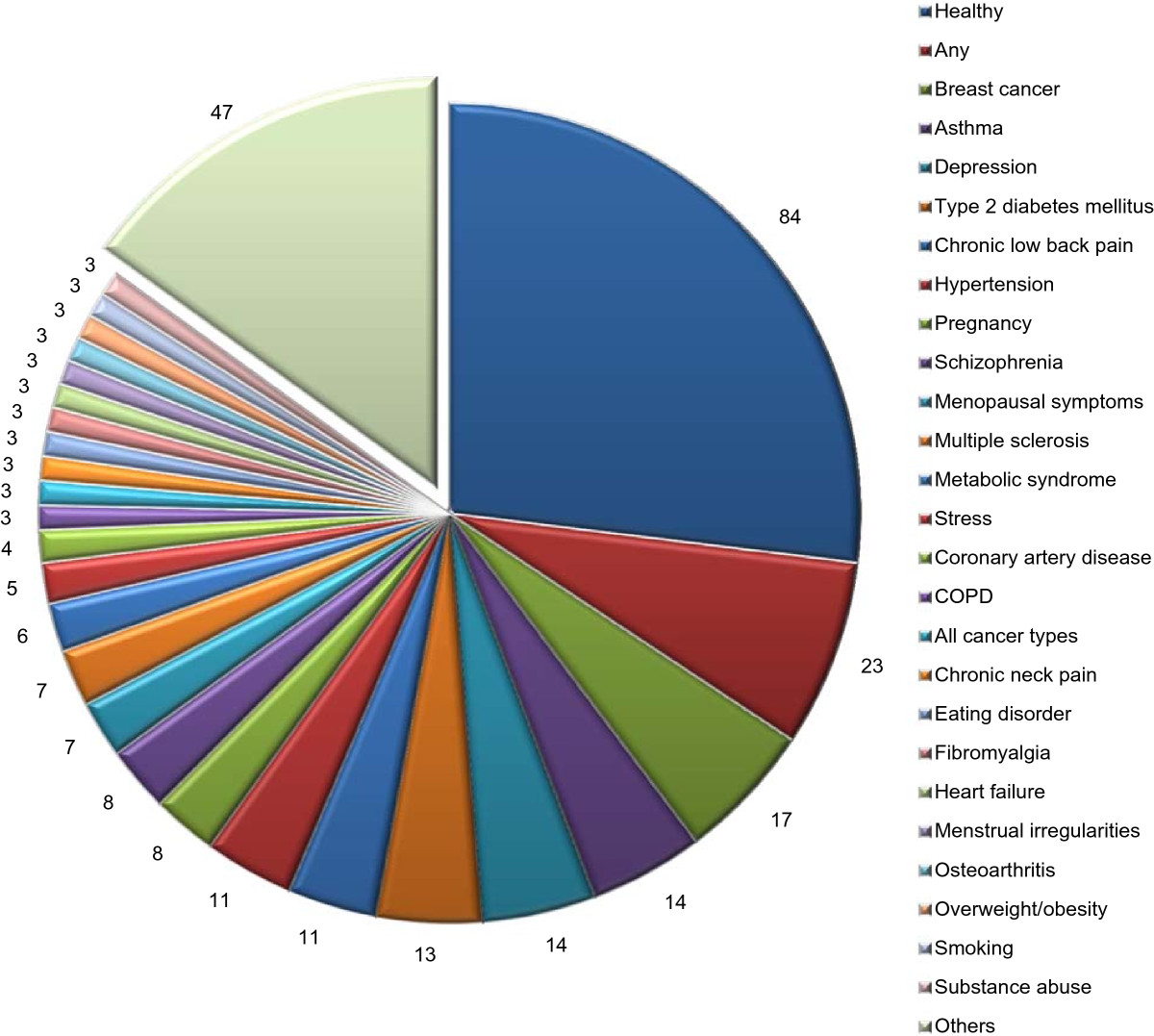
BACKGROUND: A growing number of randomized controlled trials (RCTs) have investigated the therapeutic value of yoga interventions. This bibliometric analysis aimed to provide a comprehensive review of the characteristics of the totality of available randomized yoga trials. METHODS: All RCTs of yoga were eligible. Medline/PubMed, Scopus, the Cochrane Library, IndMED, and the tables of content of yoga specialty journals not listed in medical databases were screened through February 2014. Bibliometric data, data on participants, and intervention were extracted and analyzed descriptively. RESULTS: Published between 1975 and 2014, a total of 366 papers were included, reporting 312 RCTs from 23 different countries with 22,548 participants. The median study sample size was 59 (range 8-410, interquartile range = 31, 93). Two hundred sixty-four RCTs (84.6%) were conducted with adults, 105 (33.7%) with older adults and 31 (9.9%) with children. Eighty-four RCTs (26.9%) were conducted with healthy participants. Other trials enrolled patients with one of 63 varied medical conditions; the most common being breast cancer (17 RCTs, 5.4%), depression (14 RCTs, 4.5%), asthma (14 RCTs, 4.5%) and type 2 diabetes mellitus (13 RCTs, 4.2%). Whilst 119 RCTs (38.1%) did not define the style of yoga used, 35 RCTs (11.2%) used Hatha yoga and 30 RCTs (9.6%) yoga breathing. The remaining 128 RCTs (41.0%) used 46 varied yoga styles, with a median intervention length of 9 weeks (range 1 day to 1 year; interquartile range = 5, 12). Two hundred and forty-four RCTs (78.2%) used yoga postures, 232 RCTs (74.4%) used breath control, 153 RCTs (49.0%) used meditation and 32 RCTs (10.3%) used philosophy lectures. One hundred and seventy-four RCTs (55.6%) compared yoga with no specific treatment; 21 varied control interventions were used in the remaining RCTs. CONCLUSIONS: This bibliometric analysis presents the most complete up-to-date overview on published randomized yoga trials. While the available research evidence is sparse for most conditions, there was a marked increase in published RCTs in recent years.
Overview
The claims and statistics of this paper haven’t been checked yet.
Run the check — free, no account needed. It reads the open-access text and checks the sources it cites.
Integrity signals
Registry
Cites
Statistics
Figures
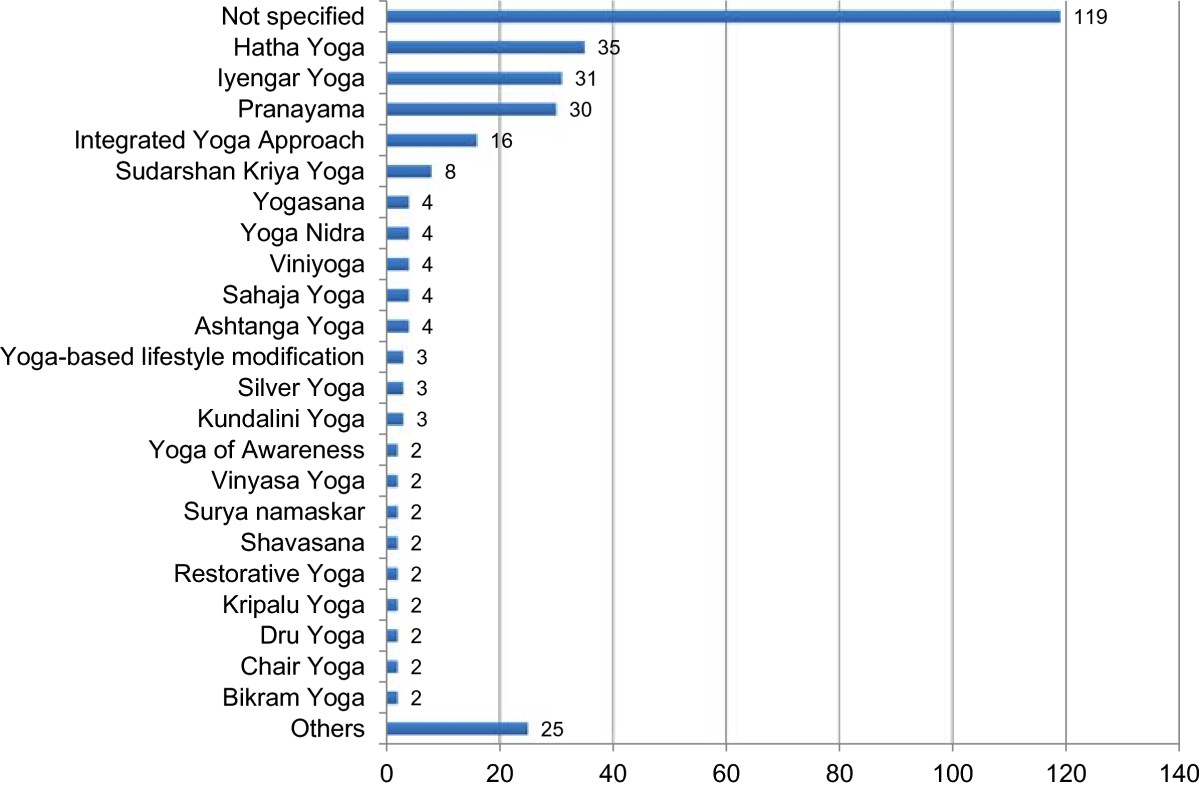
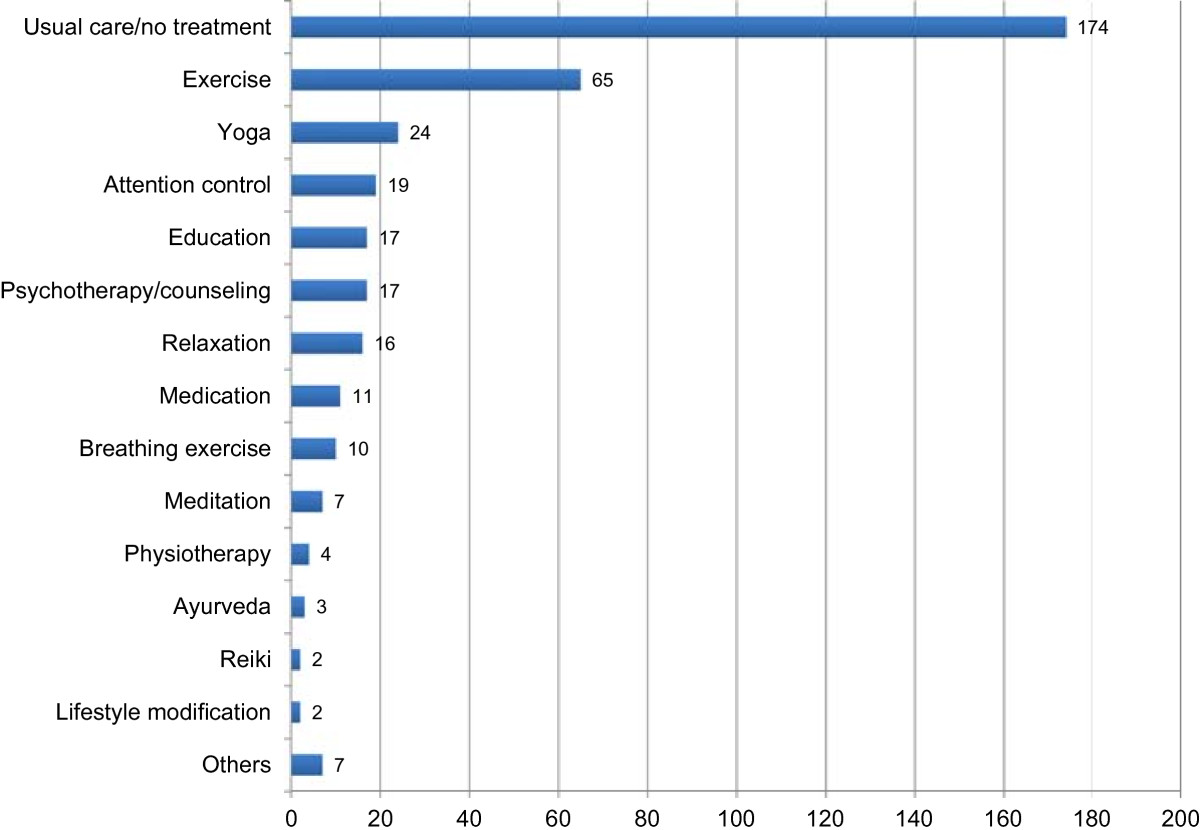
Verification
Claims the paper makes
The claims and statistics of this paper haven’t been checked yet.
Run the check — free, no account needed. It reads the open-access text and checks the sources it cites.
Claims other papers make about this one
Each is checked against this paper’s own text: does it say what the citing paper says it does?
The source backs part of the claim, not all of it — or backs it for a different population, condition or comparison.
In the citing paper
“Specifically, the ethical component of yoga has often been neglected in the past [13].”
From Embodied Cognition in Meditation, Yoga, and Ethics—An Experimental Single-Case Study on the Differential Effects of Four Mind–Body Treatments (2022) · cites this paper as [13]
Experimental — accuracy not yet measured
Self-check
Percentages, sums and reported differences re-computed from the paper’s own numbers.
The self-check needs the paper’s full text.
Citations
Cites
Items 201–400 of 489
“I'm More in Balance”: A Qualitative Study of Yoga for Patients with Chronic Neck Pain
Cramer, H., Lauche, R., Haller, H., Langhorst, J., Dobos, G. J., & Berger, B. (2013) · The Journal of Alternative and Complementary Medicine · doi:10.1089/acm.2011.0885 · Cited by 100
Cohen, D. L., Bloedon, L. T., Rothman, R. L., Farrar, J. T., Galantino, M. L., Volger, S., Mayor, C., Szapary, P., & Townsend, R. R. (2009) · Evidence-based Complementary and Alternative Medicine · doi:10.1093/ecam/nep130 · Cited by 99
Randomized trial of yoga as a complementary therapy for pulmonary tuberculosis
Visweswaraiah, N. K., & Telles, S. (2004) · Respirology · doi:10.1111/j.1440-1843.2003.00528.x · Cited by 99
Nagarathna, R., Deshpande, S., & Nagendra, H. (2008) · International Journal of Yoga · doi:10.4103/0973-6131.36785 · Cited by 98
Lack of perceived sleep improvement after 4-month structured exercise programs
Elavsky, S., & McAuley, E. (2007) · Menopause · doi:10.1097/01.gme.0000243568.70946.d4 · Cited by 98
Cade, W. T., Reeds, D., Mondy, K., Overton, E. T., Grassino, J., Tucker, S., Bopp, C., Laciny, E., Hubert, S., Lassa‐Claxton, S., et al. (2010) · HIV Medicine · doi:10.1111/j.1468-1293.2009.00801.x · Cited by 98
Acute Effects of Aerobic Exercise and Hatha Yoga on Craving to Smoke
Elibero, A., Rensburg, K. J. V., & Drobes, D. J. (2011) · Nicotine & Tobacco Research · doi:10.1093/ntr/ntr163 · Cited by 97
Positive therapeutic and neurotropic effects of yoga in depression: A comparative study
Thirthalli, J., Naveen, G., Rao, M., Varambally, S. S., Christopher, R., & Gangadhar, B. N. (2013) · Indian Journal of Psychiatry · doi:10.4103/0019-5545.116313 · Cited by 96
Effect of yoga on quality of life of CLBP patients: A randomized control study
Tekur, P., Singphow, C., Hongasandra, R., & Nagarathna, R. (2010) · International Journal of Yoga · doi:10.4103/0973-6131.66773 · Cited by 96
Effects of yoga on inner-city children's well-being: a pilot study.
Berger, D. L., Silver, E. J., & Stein, R. E. K. (2009) · PubMed · Cited by 96
Perceived Change Among Participants in an Exercise Program for Older Adults
Emery, C. F., & Blumenthal, J. A. (1990) · The Gerontologist · doi:10.1093/geront/30.4.516 · Cited by 95
Garrett, M., Hogan, N., Larkin, A., Saunders, J. A., Jakeman, P. M., & Coote, S. B. (2012) · Multiple Sclerosis Journal · doi:10.1177/1352458512461966 · Cited by 95
Functional and physiological effects of yoga in women with rheumatoid arthritis: a pilot study.
Bosch, P. R., Traustadóttir, T., Howard, P. D., & Matt, K. S. (2009) · PubMed · Cited by 95
Bowden, D., Gaudry, C., An, S. C., & Gruzelier, J. H. (2011) · Evidence-based Complementary and Alternative Medicine · doi:10.1155/2012/234713 · Cited by 94
Sathyaprabha, T. N., Satishchandra, P., Pradhan, C., Sinha, S., Kaveri, B., Thennarasu, K., Murthy, B. T. C., & Raju, T. R. (2007) · Epilepsy & Behavior · doi:10.1016/j.yebeh.2007.09.006 · Cited by 93
Ades, P. A., Savage, P. D., Brochu, M., Tischler, M. D., Lee, N. M., & Poehlman, É. T. (2005) · Journal of Applied Physiology · doi:10.1152/japplphysiol.00360.2004 · Cited by 93
Study of yoga asanas in assessment of pulmonary function in NIDDM patients.
Malhotra, V., Singh, S., Singh, K., Gupta, P., Sharma, S. B., Madhu, S. V., & Tandon, O. P. (2002) · PubMed · Cited by 92
Is there more to yoga than exercise?
(2011) · PubMed · Cited by 92
Fan, J.-T., & Chen, K. (2011) · International Psychogeriatrics · doi:10.1017/s1041610211000287 · Cited by 92
A Phase I Feasibility Study of Yoga on the Physical Health and Coping of Informal Caregivers
Puymbroeck, M. V., Payne, L. L., & Hsieh, P.-C. (2007) · Evidence-based Complementary and Alternative Medicine · doi:10.1093/ecam/nem075 · Cited by 92
Saper, R. B., Boah, A., Keosaian, J. E., Cerrada, C. J., Weinberg, J., & Sherman, K. J. (2013) · Evidence-based Complementary and Alternative Medicine · doi:10.1155/2013/658030 · Cited by 92
Pal, A., Srivastava, N., Tiwari, S., Verma, N., Narain, V. S., Agrawal, G., Natu, S. M., & Kumar, K. (2011) · Complementary Therapies in Medicine · doi:10.1016/j.ctim.2011.05.001 · Cited by 91
Yoga Training Improves Metabolic Parameters in Obese Boys
Seo, D. Y., Lee, S.-R., Figueroa, A., Kim, H. K., Baek, Y. H., Kwak, Y., Kim, N., Choi, T. H., Rhee, B. D., Ko, K. S., et al. (2012) · Korean Journal of Physiology and Pharmacology · doi:10.4196/kjpp.2012.16.3.175 · Cited by 91
Wolff, M., Sundquist, K., Lönn, S. L., & Midlöv, P. (2013) · BMC Cardiovascular Disorders · doi:10.1186/1471-2261-13-111 · Cited by 91
Katzman, M., Vermani, M., Gerbarg, P., Brown, R., Iorio, C., Davis, M., Cameron, C., & Tsirgielis, D. (2012) · International Journal of Yoga · doi:10.4103/0973-6131.91716 · Cited by 89
DiPietro, L., Seeman, T. E., Stachenfeld, N. S., Katz, L. D., & NADEL, E. R. (1998) · Journal of the American Geriatrics Society · doi:10.1111/j.1532-5415.1998.tb02722.x · Cited by 88
Effects of integrated yoga on quality of life and interpersonal relationship of pregnant women
Rakhshani, A., Maharana, S., Nagarathna, R., Nagendra, H. R., & Padmalatha, V. (2010) · Quality of Life Research · doi:10.1007/s11136-010-9709-2 · Cited by 87
Elavsky, S., & McAuley, E. (2007) · American Journal of Health Promotion · doi:10.4278/0890-1171-22.2.83 · Cited by 87
Soudarssanane, M., Saptharishi, L., Thiruselvakumar, D., Navasakthi, D., Mathanraj, S., Karthigeyan, M., & Sahai, A. (2009) · Indian Journal of Community Medicine · doi:10.4103/0970-0218.58393 · Cited by 87
Impact of Iyengar Yoga on Quality of Life in Young Women With Rheumatoid Arthritis
Evans, S., Moieni, M., Lung, K. C., Tsao, J., Sternlieb, B., Taylor, M. B., & Zeltzer, L. K. (2013) · Clinical Journal of Pain · doi:10.1097/ajp.0b013e31827da381 · Cited by 86
Effects of yoga and meditation on clinical and biochemical parameters of metabolic syndrome
Khatri, D., Mathur, K. C., Gahlot, S., Jain, S., & Agrawal, R. P. (2007) · Diabetes Research and Clinical Practice · doi:10.1016/j.diabres.2007.05.002 · Cited by 86
Changes in Autonomic Variables Following Two Meditative States Described in Yoga Texts
Telles, S., Bhat, R., Visweswaraiah, N. K., Manjunath, N. K., Kumar, S., & Subramanya, P. (2012) · The Journal of Alternative and Complementary Medicine · doi:10.1089/acm.2011.0282 · Cited by 86
Utilization of 3‐Month Yoga Program for Adults at High Risk for Type 2 Diabetes: A Pilot Study
Yang, K., Bernardo, L. M., Sereika, S. M., Conroy, M. B., Balk, J., & Burke, L. E. (2009) · Evidence-based Complementary and Alternative Medicine · doi:10.1093/ecam/nep117 · Cited by 86
Ebnezar, J. N. P., Nagarathna, R., Yogitha, B., & Nagendra, H. R. (2012) · The Journal of Alternative and Complementary Medicine · doi:10.1089/acm.2010.0320 · Cited by 85
Restorative Yoga in Adults with Metabolic Syndrome: A Randomized, Controlled Pilot Trial
Cohen, B. E., Chang, A. A., Grady, D. G., & Kanaya, A. M. (2008) · Metabolic Syndrome and Related Disorders · doi:10.1089/met.2008.0016 · Cited by 85
Yoga for Chronic Neck Pain: A Pilot Randomized Controlled Clinical Trial
Michalsen, A., Traitteur, H., Lüdtke, R., Brunnhuber, S., Meier, L., Jeitler, M., Büssing, A., & Keßler, C. S. (2012) · Journal of Pain · doi:10.1016/j.jpain.2012.08.004 · Cited by 84
Spatial and verbal memory test scores following yoga and fine arts camps for school children.
Manjunath, N. K., & Telles, S. (2004) · PubMed · Cited by 84
J.Carter, J., L.Gerbarg, P., Brown, R., Ware, R., & Katzman, M. (2013) · Journal of Traumatic Stress Disorders & Treatment · doi:10.4172/2324-8947.1000108 · Cited by 84
Strijk, J. E., Proper, K. I., van der Beek, A. J., & van Mechelen, W. (2012) · Journal of Epidemiology & Community Health · doi:10.1136/jech-2011-200626 · Cited by 84
Haffner, J., Roos, J., Goldstein, N., Parzer, P., & Resch, F. (2005) · Zeitschrift für Kinder- und Jugendpsychiatrie und Psychotherapie · doi:10.1024/1422-4917.34.1.37 · Cited by 83
Nidhi, R., Padmalatha, V., Nagarathna, R., & Ram, A. (2012) · The Journal of Alternative and Complementary Medicine · doi:10.1089/acm.2011.0868 · Cited by 82
Effect of slow and fast pranayams on reaction time and cardiorespiratory variables.
Madanmohan, Udupa, K., Bhavanani, A. B., Vijayalakshmi, P., & Surendiran, A. (2005) · PubMed · Cited by 82
Effect of pranayam training on cardiac function in normal young volunteers.
Udupa, K., Madanmohan, Bhavanani, A. B., Vijayalakshmi, P., & Krishnamurthy, N. (2003) · PubMed · Cited by 80
Ahmadi, A., Nikbakh, M., Arastoo, A. A., & Habibi, A. (2010) · Journal of Human Kinetics · doi:10.2478/v10078-010-0009-2 · Cited by 80
Yoga for asthma: a systematic review and meta-analysis
Cramer, H., Posadzki, P., Dobos, G. J., & Langhorst, J. (2014) · Annals of Allergy Asthma & Immunology · doi:10.1016/j.anai.2014.03.014 · Cited by 80
Comprehensive yogic breathing program improves quality of life in patients with diabetes
Jyotsna, V., Joshi, A., Ambekar, S., Kumar, N., Dhawan, A., & Sreenivas, V. (2012) · Indian Journal of Endocrinology and Metabolism · doi:10.4103/2230-8210.95692 · Cited by 79
Yoga for hypertension: A systematic review of randomized clinical trials
Posadzki, P., Cramer, H., Kużdżał, A., Lee, M. S., & Ernst, E. (2014) · Complementary Therapies in Medicine · doi:10.1016/j.ctim.2014.03.009 · Cited by 79
Innes, K. E., & Selfe, T. K. (2012) · Evidence-Based Complementary and Alternative Medicine · doi:10.1155/2012/294058 · Cited by 79
van Montfrans, G. A., Karemaker, J. M., Wieling, W., & Dunning, A. J. (1990) · BMJ · doi:10.1136/bmj.300.6736.1368 · Cited by 79
Martins, R. F., & Silva, J. L. P. E. (2013) · The Journal of Alternative and Complementary Medicine · doi:10.1089/acm.2012.0715 · Cited by 78
Gould, L. F., Dariotis, J. K., Mendelson, T., & Greenberg, M. T. (2012) · Journal of Community Psychology · doi:10.1002/jcop.21505 · Cited by 78
Efficacy of yoga as an add-on treatment for in-patients with functional psychotic disorder
Varambally, S. S., Manjunath, R., Thirthalli, J., Basavaraddi, I. V., & Gangadhar, B. N. (2013) · Indian Journal of Psychiatry · doi:10.4103/0019-5545.116314 · Cited by 78
Colgrove, Y., & Sharma, N. K. (2012) · Journal of Yoga & Physical Therapy · doi:10.4172/2157-7595.1000112 · Cited by 78
Madanmohan, Mahadevan, S. K., Selvakumar, B., Gopalakrishnan, M., & Prakash, E. S. (2008) · PubMed · Cited by 77
Venkatesan, P., Sahoo, R. C., & Adhikari, P. (2012) · Clinical Rehabilitation · doi:10.1177/0269215512450521 · Cited by 77
Effect of Fast and Slow Pranayama Practice on Cognitive Functions in Healthy Volunteers
Subramanian, S. K. (2014) · JOURNAL OF CLINICAL AND DIAGNOSTIC RESEARCH · doi:10.7860/jcdr/2014/7256.3668 · Cited by 77
Flexibility, functional autonomy and quality of life (QoL) in elderly yoga practitioners
Gonçalves, L. C., Vale, R. G. D. S., Barata, N. J. F., Varejão, R. V., & Dantas, E. H. M. (2010) · Archives of Gerontology and Geriatrics · doi:10.1016/j.archger.2010.10.028 · Cited by 77
Effect of Sahaja yoga practice on stress management in patients of epilepsy.
Panjwani, U., Gupta, H. L., Singh, S., Selvamurthy, W., & Rai, U. C. (1995) · PubMed · Cited by 76
Measuring the Effects of Yoga in Rheumatoid Arthritis
HASLOCK, I., Monro, R., NAGARATHANA, R., Nagendra, H., & RAGURAM, N. V. (1994) · Lara D. Veeken · doi:10.1093/rheumatology/33.8.787-a · Cited by 76
Lee, M. S., Kim, J., Ha, J. Y., Boddy, K., & Ernst, E. (2009) · Menopause The Journal of The North American Menopause Society · doi:10.1097/gme.0b013e31818ffe39 · Cited by 76
A comparative study of slow and fast suryanamaskar on physiological function
Bhavanani, A. B., Udupa, K., Madanmohan, & Ravindra, P. N. (2011) · International Journal of Yoga · doi:10.4103/0973-6131.85489 · Cited by 76
EVALUATION OF SIDDHA SAMADHI YOGA FOR ANXIETY AND DEPRESSION SYMPTOMS: A PRELIMINARY STUDY
Kozasa, E. H., Santos, R. F., Rueda, A. D., Benedito‐Silva, A. A., Ornellas, F. M., & Leite, J. R. (2008) · Psychological Reports · doi:10.2466/pr0.103.1.271-274 · Cited by 75
Yoga as Steadiness Training: Effects on Motor Variability in Young Adults
Hart, C. E. F., & Tracy, B. L. (2008) · The Journal of Strength and Conditioning Research · doi:10.1519/jsc.0b013e31818200dd · Cited by 75
The benefits of yoga for rheumatoid arthritis: results of a preliminary, structured 8-week program
Badsha, H., Chhabra, V., Leibman, C., Mofti, A., & Kong, K. O. (2009) · Rheumatology International · doi:10.1007/s00296-009-0871-1 · Cited by 75
Nidhi, R., Padmalatha, V., Nagarathna, R., & Ram, A. (2012) · International Journal of Gynecology & Obstetrics · doi:10.1016/j.ijgo.2012.01.027 · Cited by 75
Markil, N., WHITEHURST, M. A., Jacobs, P. L., & Zoeller, R. F. (2012) · The Journal of Alternative and Complementary Medicine · doi:10.1089/acm.2011.0331 · Cited by 75
Effectiveness of Shavasana on depression among university students.
Khumar, S. S., Kaur, P., & Kaur, S. (1993) · Indian journal of clinical psychology · Cited by 75
Soudarssanane, M. B., Subramanian, H., Jayalakshmy, R., Thiruselvakumar, D., Navasakthi, D., Sahai, A., & Saptharishi, L. (2011) · Indian Journal of Community Medicine · doi:10.4103/0970-0218.86519 · Cited by 73
Saxena, T. K., & Saxena, M. (2009) · International Journal of Yoga · doi:10.4103/0973-6131.53838 · Cited by 73
Personality, menopausal symptoms, and physical activity outcomes in middle-aged women
Elavsky, S., & McAuley, E. (2008) · Personality and Individual Differences · doi:10.1016/j.paid.2008.09.014 · Cited by 73
Chaya, M. S., Nagendra, H., Selvam, S., Kurpad, A., & Srinivasan, K. (2012) · The Journal of Alternative and Complementary Medicine · doi:10.1089/acm.2011.0579 · Cited by 73
A Pragmatic Multicentered Randomized Controlled Trial of Yoga for Chronic Low Back Pain
Chuang, L., Soares, M. O., Tilbrook, H. E., Cox, H., Hewitt, C. E., Aplin, J., Semlyen, A., Trewhela, A., Watt, I. S., & Torgerson, D. J. (2012) · Spine · doi:10.1097/brs.0b013e3182545937 · Cited by 72
Nagarathna, R., Ebnezar, J. N. P., Yogitha, B., & Nagendra, H. (2012) · International Journal of Yoga · doi:10.4103/0973-6131.91708 · Cited by 72
Effect of Sahaja yoga practice on seizure control & EEG changes in patients of epilepsy.
Panjwani, U., Selvamurthy, W., Singh, S., Gupta, H. L., Thakur, L., & Rai, U. C. (1996) · PubMed · Cited by 71
Yoga intervention for adults with mild-to-moderate asthma: a pilot study
Sabina, A. B., Williams, A.-L., Wall, H. K., Bansal, S., Chupp, G. L., & Katz, D. L. (2005) · Annals of Allergy Asthma & Immunology · doi:10.1016/s1081-1206(10)61131-3 · Cited by 71
Kanaya, A. M., Araneta, M. R. G., Pawlowsky, S. B., Barrett-Connor, E., Grady, D., Vittinghoff, E., Schembri, M., Chang, A., Carrion-Petersen, M. L., Coggins, T., et al. (2014) · Journal of Diabetes and its Complications · doi:10.1016/j.jdiacomp.2013.12.001 · Cited by 71 · cited 1×
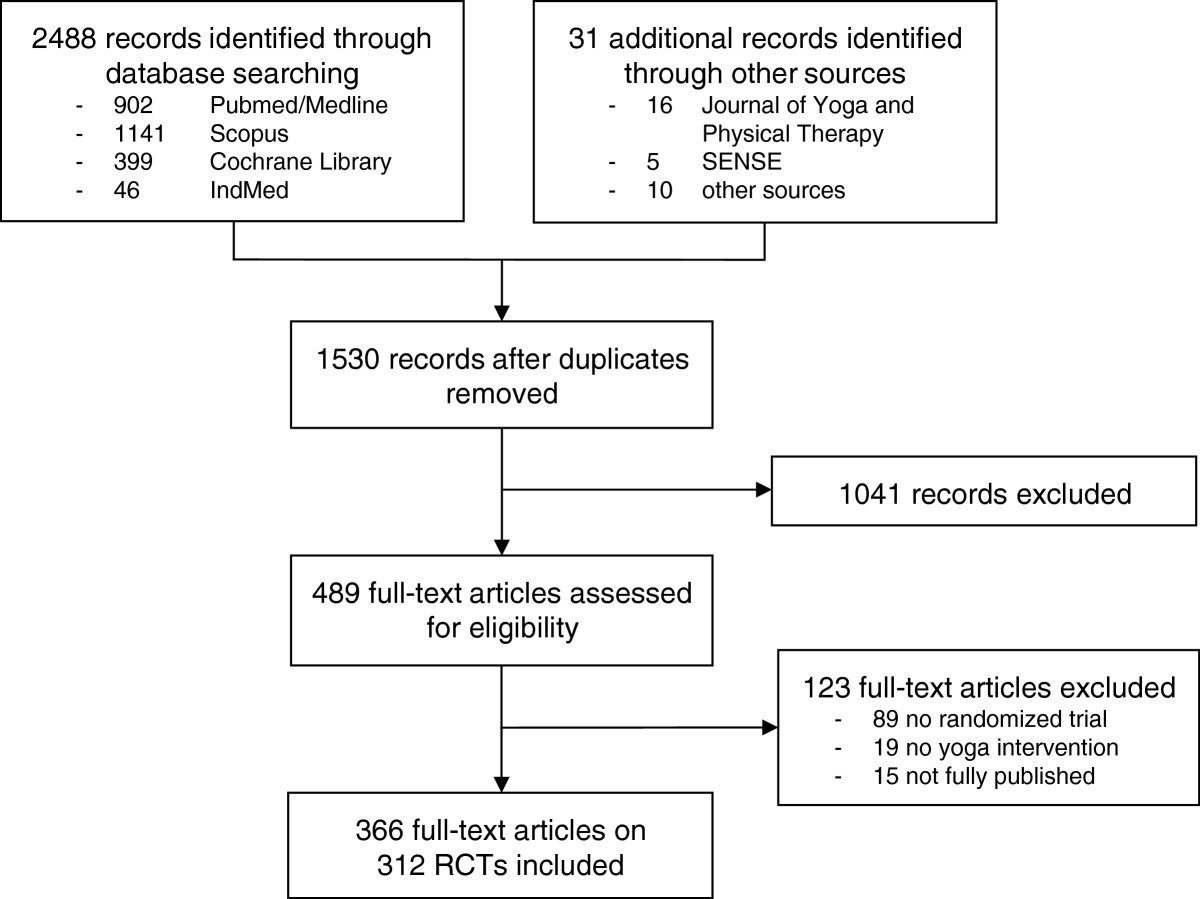
“The final analysis was conducted on 366 fulltext articles [135-500] reporting 312 RCTS with a total of 22,548 participants (Figure 1).”
BackgroundShahab, L., Sarkar, B. K., & West, R. (2012) · Psychopharmacology · doi:10.1007/s00213-012-2876-9 · Cited by 70
Iyengar Yoga for Distressed Women: A 3-Armed Randomized Controlled Trial
Michalsen, A., Jeitler, M., Brunnhuber, S., Lüdtke, R., Büssing, A., Musial, F., Dobos, G. J., & Keßler, C. S. (2012) · Evidence-based Complementary and Alternative Medicine · doi:10.1155/2012/408727 · Cited by 70
Chan, R. W., Immink, M. A., & Hillier, S. (2012) · PubMed · Cited by 70
A Randomized Controlled Trial on the Effects of Yoga on Stress Reactivity in 6th Grade Students
Hagins, M., Haden, S. C., & Daly, L. A. (2013) · Evidence-based Complementary and Alternative Medicine · doi:10.1155/2013/607134 · Cited by 69
Effect of yoga-nidra on blood glucose level in diabetic patients.
Amita, S., Prabhakar, S., Manoj, I., Harminder, S., & Pavan, T. (2009) · PubMed · Cited by 68
Yoga therapy for NIDDM: a controlled trial
Monroe, R., Power, J. M., Kumar, A., Nagarathna, R., & Dandona, P. (1992) · Cited by 68
Hagins, M., Rundle, A., Consedine, N., & Khalsa, S. B. (2014) · The Journal of Clinical Hypertension · doi:10.1111/jch.12244 · Cited by 68
Adjunct treatment with yoga in chronic severe airways obstruction.
Tandon, M. K. (1978) · Thorax · doi:10.1136/thx.33.4.514 · Cited by 68
Psychosocial and Cardiac Outcomes of Yoga for ICD Patients: A Randomized Clinical Control Trial
TOISE, S. C. F., Sears, S. F., Schoenfeld, M. H., Blitzer, M. L., Marieb, M. A., Drury, J. H., Slade, M. D., & Donohue, T. J. (2013) · Pacing and Clinical Electrophysiology · doi:10.1111/pace.12252 · Cited by 67
Effects of Exercise Training on Bone Density in Older Men and Women
Blumenthal, J. A., Emery, C. F., Madden, D. J., Schniebolk, S., Riddle, M. W., Cobb, F. R., Higginbotham, M. B., & Coleman, R. E. (1991) · Journal of the American Geriatrics Society · doi:10.1111/j.1532-5415.1991.tb02870.x · Cited by 67
Sharma, V. K. (2013) · JOURNAL OF CLINICAL AND DIAGNOSTIC RESEARCH · doi:10.7860/jcdr/2013/6912.3451 · Cited by 67
Srivastava, N., Rani, K., Tiwari, S., Singh, U., Agrawal, G., & Ghildiyal, A. (2011) · International Journal of Yoga · doi:10.4103/0973-6131.78176 · Cited by 66
Effect of a Yoga Practice Session and a Yoga Theory Session on State Anxiety
Telles, S., Gaur, V., & Balkrishna, A. (2009) · Perceptual and Motor Skills · doi:10.2466/pms.109.3.924-930 · Cited by 66
Cusumano, J. A., & Robinson, S. E. (1993) · Applied Psychology · doi:10.1111/j.1464-0597.1993.tb00725.x · Cited by 66
Ebnezar, J. N. P., Nagarathna, R., Yogitha, B., & Nagendra, H. (2011) · International Journal of Yoga · doi:10.4103/0973-6131.85486 · Cited by 65
Bikram Yoga Training and Physical Fitness in Healthy Young Adults
Tracy, B. L., & Hart, C. E. F. (2012) · The Journal of Strength and Conditioning Research · doi:10.1519/jsc.0b013e31825c340f · Cited by 65
Coote, S. B., Garrett, M., Hogan, N., Larkin, A., & Saunders, J. A. (2009) · BMC Neurology · doi:10.1186/1471-2377-9-34 · Cited by 65
Relaxation therapy reduces anxiety in child and adolescent psychiatric patients.
Platania-Solazzo, A., Field, T. M., Blank, J., Seligman, F., Kuhn, C. M., Schanberg, S. M., & Saab, P. G. (1992) · PubMed · Cited by 64
Yoga: A tool for improving the quality of life in chronic pancreatitis
Sareen, S. (2007) · World Journal of Gastroenterology · doi:10.3748/wjg.v13.i3.391 · Cited by 63
Physiological Measures of Right Nostril Breathing
Telles, S., Nagarathna, R., & Nagendra, H. R. (1996) · The Journal of Alternative and Complementary Medicine · doi:10.1089/acm.1996.2.479 · Cited by 63
Telles, S., Yadav, A., Kumar, N., Sharma, S., Visweshwaraiah, N. K., & Balkrishna, A. (2013) · Medical Science Monitor · doi:10.12659/msm.883743 · Cited by 63
An assessment of a sequence of yoga exercises to patients with arterial hypertension
Mizuno, J., & Monteiro, H. L. (2012) · Journal of Bodywork and Movement Therapies · doi:10.1016/j.jbmt.2012.10.007 · Cited by 62
Bukowski, E. L., Conway, A., Glentz, L. A., Kurland, K., & Galantino, M. L. (2006) · International Quarterly of Community Health Education · doi:10.2190/iq.26.3.f · Cited by 62
Srivastava, N., Rani, K., Tiwari, S., Singh, U., & Singh, I. (2012) · International Journal of Yoga · doi:10.4103/0973-6131.91715 · Cited by 62
Cox, H., Tilbrook, H. E., Aplin, J., Semlyen, A., Torgerson, D. J., Trewhela, A., & Watt, I. S. (2010) · Complementary Therapies in Clinical Practice · doi:10.1016/j.ctcp.2010.05.007 · Cited by 61
Effect of Sahaja Yoga Meditation on Quality of Life, Anxiety, and Blood Pressure Control
Chung, S., Brooks, M. M., Rai, M., Balk, J. L., & Rai, S. (2012) · The Journal of Alternative and Complementary Medicine · doi:10.1089/acm.2011.0038 · Cited by 61
Nagarathna, R., Usharani, M., Rao, A. R. C., Chaku, R., Kulkarni, R., & Nagendra, H. R. (2012) · International Journal of Diabetes in Developing Countries · doi:10.1007/s13410-012-0078-y · Cited by 61
Effects of Hatha yoga on stress in middle-aged women
Huang, F.-J., Chien, D.-K., & Chung, U.-L. (2013) · Journal of Nursing Research · doi:10.1097/jnr.0b013e3182829d6d · Cited by 60
Telles, S., Narendran, S., Raghuraj, P., Nagarathna, R., & Nagendra, H. R. (1997) · Perceptual and Motor Skills · doi:10.2466/pms.1997.84.1.251 · Cited by 60
Soni, R., Munish, K., Singh, K., & Singh, S. (2012) · International Journal of Yoga · doi:10.4103/0973-6131.98230 · Cited by 60
Nagarathna, R., Rao, R. M., Nagendra, H., Vinay, C., Chandrashekara, S., Gopinath, K., & Srinath, B. S. (2008) · International Journal of Yoga · doi:10.4103/0973-6131.36795 · Cited by 60
Turankar, A. V., Jain, S. K., Patel, S., Sinha, S. R., Joshi, A. D., Vallish, B., Mane, P., & Turankar, S. A. (2013) · Europe PMC (PubMed Central) · Cited by 59
Complimentary effect of yogic sound resonance relaxation technique in patients with common neck pain
Yogitha, B., Nagarathna, R., John, E., & Nagendra, H. (2010) · International Journal of Yoga · doi:10.4103/0973-6131.66774 · Cited by 59
Kyizom, T., Singh, S., Singh, K., Tandon, O. P., & Kumar, R. (2010) · PubMed · Cited by 59
Yoga Training Improves Quality of Life in Women with Asthma
Bidwell, A. J., Yazel, B., Davin, D., Fairchild, T. J., & Kanaley, J. A. (2012) · The Journal of Alternative and Complementary Medicine · doi:10.1089/acm.2011.0079 · Cited by 58
Mind-Body Medicine for Multiple Sclerosis: A Systematic Review
Senders, A., Wahbeh, H., Spain, R., & Shinto, L. (2012) · Autoimmune Diseases · doi:10.1155/2012/567324 · Cited by 58
A study of the effect of yoga training on pulmonary functions in patients with bronchial asthma.
Sodhi, C., Singh, S. K. J., & Dandona, P. (2009) · PubMed · Cited by 58
Role of yoga in management of essential hypertension.
Sundar, S., Agrawal, S. K., Singh, V., Bhattacharya, S. K., Udupa, K. N., & Vaish, S. (1984) · PubMed · Cited by 57
Gordon, L., McGrowder, D., Pena, Y. T., Cabrera, E., & Wright, M. B. L. (2013) · International Journal of Yoga · doi:10.4103/0973-6131.105944 · Cited by 57
Ikai, S., Uchida, H., Suzuki, T., Tsunoda, K., Mimura, M., & 藤井, 康. (2013) · Journal of Psychiatric Research · doi:10.1016/j.jpsychires.2013.07.017 · Cited by 57
Nidhi, R., Padmalatha, V., Nagarathna, R., & Amritanshu, R. (2012) · International Journal of Yoga · doi:10.4103/0973-6131.98223 · Cited by 57
Vaishali, K., Kumar, V., Adhikari, P., & Unnikrishnan, B. (2012) · Physical & Occupational Therapy In Geriatrics · doi:10.3109/02703181.2012.656835 · Cited by 57
STRESS, RELAXATION STATES, AND CREATIVITY
Khasky, A. D., & Smith, J. C. (1999) · Perceptual and Motor Skills · doi:10.2466/pms.1999.88.2.409 · Cited by 56
Yoga Effects on Mood and Quality of Life in Chinese Women Undergoing Heroin Detoxification
Zhuang, S., An, S., & Zhao, Y. (2013) · Nursing Research · doi:10.1097/nnr.0b013e318292379b · Cited by 56
Evaluating a Yogic Breathing and Meditation Intervention for Individuals Living with HIV/AIDS
Brazier, A., Mulkins, A., & Verhoef, M. J. (2006) · American Journal of Health Promotion · doi:10.4278/0890-1171-20.3.192 · Cited by 56
Aerobic capacity & perceived exertion after practice of Hatha yogic exercises.
Ray, U. S., Sinha, B., Tomer, O. S., Pathak, A., Dasgupta, T., & Selvamurthy, W. (2001) · PubMed · Cited by 56
Kovačić, T., & Kovačić, M. (2010) · Integrative Cancer Therapies · doi:10.1177/1534735410387418 · Cited by 55
Can yoga improve fatigue in breast cancer patients? A systematic review
Cramer, H., Lange, S., Klose, P., Paul, A. E., & Dobos, G. J. (2011) · Acta Oncologica · doi:10.3109/0284186x.2011.637960 · Cited by 55
Effect of yoga on menopausal symptoms
Joshi, S., Khandwe, R., Bapat, D., & Deshmukh, U. (2011) · Menopause international · doi:10.1258/mi.2011.011020 · Cited by 55
Progressive muscle relaxation, yoga stretching, and ABC relaxation theory
Ghoncheh, S., & Smith, J. C. (2003) · Journal of Clinical Psychology · doi:10.1002/jclp.10194 · Cited by 55
Doulatabad, S., Nooreyan, K., Doulatabad, A., & Noubandegani, Z. (2012) · African Journal of Traditional, Complementary and Alternative Medicines · doi:10.4314/ajtcam.v10i1.8 · Cited by 55
Silver Yoga Exercises Improved Physical Fitness of Transitional Frail Elders
Chen, K., Fan, J.-T., Wang, H., Wu, S.-J., Li, C., & Lin, H. (2010) · Nursing Research · doi:10.1097/nnr.0b013e3181ef37d5 · Cited by 54
Effect of aquatic respiratory exercise-based program in patients with fibromyalgia
IDE, M. R., LAURINDO, I. M. M., RODRIGUES‐JÚNIOR, A. L., & TANAKA, C. (2008) · International Journal of Rheumatic Diseases · doi:10.1111/j.1756-185x.2008.00348.x · Cited by 54
Shankarapillai, R., Nair, M. A., & George, R. (2012) · International Journal of Yoga · doi:10.4103/0973-6131.91714 · Cited by 54
Hegde, S. V., Adhikari, P., Shetty, S., Manjrekar, P., & D’Souza, V. (2013) · Complementary Therapies in Medicine · doi:10.1016/j.ctim.2013.08.013 · Cited by 54
Immediate Effect of Three Yoga Breathing Techniques on Performance on a Letter-Cancellation Task
Telles, S., Raghuraj, P., Maharana, S., & Nagendra, H. R. (2007) · Perceptual and Motor Skills · doi:10.2466/pms.104.4.1289-1296 · Cited by 54
Panjwani, U., Selvamurthy, W., Singh, S., Gupta, H. L., Mukhopadhyay, S., & Thakur, L. (2000) · Applied Psychophysiology and Biofeedback · doi:10.1023/a:1009523904786 · Cited by 53
Bryan, S., Zipp, G. P., & Parasher, R. K. (2012) · PubMed · Cited by 52
Jyotsna, V. P., Ambekar, S., Singla, R., Joshi, A., Dhawan, A., Kumar, N., Deepak, K. K., & Sreenivas, V. K. (2013) · Indian Journal of Endocrinology and Metabolism · doi:10.4103/2230-8210.111645 · Cited by 52
Effect of a Home-Based Simple Yoga Program in Child-Care Workers: A Randomized Controlled Trial
Sakuma, Y., Sasaki-Otomaru, A., Ishida, S., Kanoya, Y., Arakawa, C., Mochizuki, Y., Seiishi, Y., & Sato, C. (2012) · The Journal of Alternative and Complementary Medicine · doi:10.1089/acm.2011.0080 · Cited by 52
Yoga reduces performance anxiety in adolescent musicians.
Khalsa, S. B. S., Butzer, B., Shorter, S. M., Reinhardt, K. M., & Cope, S. (2013) · PubMed · Cited by 51
Impact of Yoga Nidra on Menstrual Abnormalities in Females of Reproductive Age
Rani, M., Singh, U., Agrawal, G. G., Natu, S. M., Kala, S., Ghildiyal, A., & Srivastava, N. (2013) · The Journal of Alternative and Complementary Medicine · doi:10.1089/acm.2010.0676 · Cited by 51
Lipid profile of coronary risk subjects following yogic lifestyle intervention
Maharajan, A. S. (1999) · Medical Entomology and Zoology · Cited by 51
The effect of pranayama on test anxiety and test performance
Nemati, A. (2013) · International Journal of Yoga · doi:10.4103/0973-6131.105947 · Cited by 50
Yoga in Premature Ejaculation: A Comparative Trial with Fluoxetine
Dhikav, V., Karmarkar, G., Gupta, M., & Anand, K. S. (2007) · The Journal of Sexual Medicine · doi:10.1111/j.1743-6109.2007.00603.x · Cited by 50
Progressive muscle relaxation, breathing exercises, and ABC relaxation theory
Matsumoto, M., & Smith, J. C. (2001) · Journal of Clinical Psychology · doi:10.1002/jclp.1117 · Cited by 50
Effect of yoga on self-rated visual discomfort in computer users
Telles, S., Naveen, K., Dash, M. K., Deginal, R., & Manjunath, N. (2006) · Head & Face Medicine · doi:10.1186/1746-160x-2-46 · Cited by 49
Nagarathna, R., Deshpande, S., & Nagendra, H. (2008) · International Journal of Yoga · doi:10.4103/0973-6131.41034 · Cited by 48
Raghuraj, P., & Telles, S. (1997) · PubMed · Cited by 47
Yoga for Chronic Neck Pain: A 12-Month Follow-Up
Cramer, H., Lauche, R., Hohmann, C., Langhorst, J., & Dobos, G. (2013) · Pain Medicine · doi:10.1111/pme.12053 · Cited by 47
Garrett, M., Hogan, N., Larkin, A., Saunders, J. A., Jakeman, P. M., & Coote, S. B. (2012) · Multiple Sclerosis Journal · doi:10.1177/1352458512461390 · Cited by 47
(2012) · PubMed · Cited by 47
Effect of yoga on musculoskeletal discomfort and motor functions in professional computer users
Telles, S., Dash, M. K., & Naveen, K. V. (2009) · Work · doi:10.3233/wor-2009-0877 · Cited by 46
The Effect of Community Exercise Interventions for People with MS Who Use Bilateral Support for Gait
Hogan, N., Kehoe, M., Larkin, A., & Coote, S. B. (2014) · Multiple Sclerosis International · doi:10.1155/2014/109142 · Cited by 46
Yoga for high-risk pregnancy: A randomized controlled trial
Ganpat, T., Kurpad, A. V., Maskar, R. P., Nagendra, H., Abbas, R., Raghuram, N., Anura, K., Rakshani, A., Dc, S., Rita, M., et al. (2013) · Annals of Medical and Health Sciences Research · doi:10.4103/2141-9248.117933 · Cited by 46
Franzblau, S. H., Echevarria, S., Smith, M. M., & Cantfort, T. E. V. (2008) · Journal of Interpersonal Violence · doi:10.1177/0886260508314329 · Cited by 46
Köhn, M., Lundholm, U. P., Bryngelsson, I., Anderzén‐Carlsson, A., & Westerdahl, E. (2013) · Evidence-based Complementary and Alternative Medicine · doi:10.1155/2013/215348 · Cited by 45
Kumar, N., Bhatnagar, S., Kashyap, K., Surajpal, Velpandian, T., Patnaik, S. K., Menon, G. R., Mehta, M., & Singh, V. (2013) · Indian Journal of Palliative Care · doi:10.4103/0973-1075.121537 · Cited by 45
Cheema, B. S., Marshall, P. W., Chang, D., Colagiuri, B., & Machliss, B. (2011) · BMC Public Health · doi:10.1186/1471-2458-11-578 · Cited by 45
Park, J., McCaffrey, R. G., Dunn, D. J., & Goodman, R. (2011) · Holistic Nursing Practice · doi:10.1097/hnp.0b013e318232c5f9 · Cited by 45
Singh, S., Soni, R., Singh, K., & Tandon, O. P. (2012) · PubMed · Cited by 45
Telles, S., & Srinivas, R. B. (1998) · International Journal of Rehabilitation and Health · doi:10.1023/a:1022912626238 · Cited by 44
Yoga training and motor speed based on a finger tapping task.
Dash, M. K., & Telles, S. (1999) · PubMed · Cited by 44
Bhavanani, A. B., Pal, G., Udupa, K., Krishnamurthy, N., & Trakroo, M. (2013) · International Journal of Yoga · doi:10.4103/0973-6131.113398 · Cited by 44
Donohue, B. C., Miller, A., Beisecker, M., Houser, D., Valdez, R., Tiller, S., & Taymar, T. (2005) · British Journal of Sports Medicine · doi:10.1136/bjsm.2005.020024 · Cited by 43
Regulation of blood volume during training in post-menopausal women
Stachenfeld, N. S., Mack, G. W., DiPietro, L., Morocco, T. S., Jozsi, A. C., & NADEL, E. R. (1998) · Medicine & Science in Sports & Exercise · doi:10.1097/00005768-199801000-00013 · Cited by 43
Dayalan, H., Subramanian, S., Elango, T., Malligarjunan, H., & Kochupillai, V. (2012) · International Journal of Yoga · doi:10.4103/0973-6131.91702 · Cited by 43
Pal, A., Srivastava, N., Narain, V. S., Agrawal, G., & Rani, M. (2013) · Eastern Mediterranean Health Journal · doi:10.26719/2013.19.5.452 · Cited by 43
Varambally, S. S., Vidyendaran, S., Sajjanar, M., Thirthalli, J., Hamza, A., Nagendra, H. R., & Gangadhar, B. N. (2012) · Asian Journal of Psychiatry · doi:10.1016/j.ajp.2012.09.017 · Cited by 43
Rao, R. M., Telles, S., Nagendra, H. R., Nagarathna, R., Gopinath, K. S., Srinath, S., & Chandrashekara, C. (2008) · PubMed · Cited by 42
Pilot study of integral yoga for menopausal hot flashes
Avis, N. E., Legault, C., Russell, G. B., Weaver, K. E., & Danhauer, S. C. (2014) · Menopause The Journal of The North American Menopause Society · doi:10.1097/gme.0000000000000191 · Cited by 42
Siedentopf, F., Utz-Billing, I., Gairing, S. J., Schoenegg, W., Kentenich, H., & Kollak, I. (2013) · Geburtshilfe und Frauenheilkunde · doi:10.1055/s-0032-1328438 · Cited by 41
Oken, B., Flegal, K. E., Zajdel, D. P., Kishiyama, S. S., Lovera, J. F., Bagert, B. A., & BOURDETTE, D. N. (2006) · The Journal of Rehabilitation Research and Development · doi:10.1682/jrrd.2004.11.0148 · Cited by 41
Jatuporn, S., Sangwatanaroj, S., Saengsiri, A.-O., Rattanapruks, S., Srimahachota, S., Uthayachalerm, W., Kuanoon, W., Panpakdee, O., Tangkijvanich, P., & Tosukhowong, P. (2003) · PubMed · Cited by 40
Effect of yogic exercise on super oxide dismutase levels in diabetics
Shete, S. U., Mahapure, H., & Bera, T. K. (2008) · International Journal of Yoga · doi:10.4103/0973-6131.36792 · Cited by 40
A comparison of two relaxation procedures for reducing cognitive and somatic anxiety
Norton, G. R., & Johnson, W. E. (1983) · Journal of Behavior Therapy and Experimental Psychiatry · doi:10.1016/0005-7916(83)90050-2 · Cited by 40
Effect of yogasanas on the visual and auditory reaction time.
Malathi, A., & Vg, P. (1989) · PubMed · Cited by 40
Performance in a Substitution Task and State Anxiety following Yoga in Army Recruits
Telles, S., Bhardwaj, A. K., Kumar, S., Kumar, N., & Balkrishna, A. (2012) · Psychological Reports · doi:10.2466/13.02.16.20.pr0.110.3.963-976 · Cited by 39
Sendhilkumar, R., Gupta, A., Nagarathna, R., & Taly, A. B. (2012) · Disability and Rehabilitation · doi:10.3109/09638288.2012.687031 · Cited by 39
Efficacy of yoga in pregnant women with abnormal Doppler study of umbilical and uterine arteries.
Narendran, S., Nagarathna, R., Gunasheela, S., & Nagendra, H. (2005) · PubMed · Cited by 39
Kim, S., Bemben, M. G., & Bemben, D. A. (2012) · Europe PMC (PubMed Central) · Cited by 39
Efficacy of two relaxation techniques in depression.
Broota, A., & Dhir, R. (1990) · Cited by 39
Effects of Yoga on Sexual Function in Women with Metabolic Syndrome: A Randomized Controlled Trial
Kim, H.-N., Ryu, J., Kim, K. S., & Song, S.-W. (2013) · The Journal of Sexual Medicine · doi:10.1111/jsm.12283 · Cited by 38
Reversal of Early Atherosclerosis in Metabolic Syndrome by Yoga – A Randomized Controlled Trial
Manchanda, S. C. (2013) · Journal of Yoga & Physical Therapy · doi:10.4172/2157-7595.1000132 · Cited by 38
Vogler, J., O’Hara, L., Gregg, J., & Burnell, F. (2011) · International Journal of Yoga Therapy · doi:10.17761/ijyt.21.1.e15852u665l710r1 · Cited by 37
Effects of Yoga and an Ayurveda preparation on gait, balance and mobility in older persons.
Krishnamurthy, M., & Telles, S. (2007) · PubMed · Cited by 37
Clark, P. G., Cortese-Jimenez, G., & Cohen, E. (2012) · Journal of Evidence-Based Complementary & Alternative Medicine · doi:10.1177/2156587212450175 · Cited by 37
Gopinathan, G., Dhiman, K. S., & Manjusha, R. (2012) · AYU (An International Quarterly Journal of Research in Ayurveda) · doi:10.4103/0974-8520.110534 · Cited by 37
Reducing psychological distress and obesity through Yoga practice
Tiwari, S., Dutt, K., Kumar, R., Dhananjai, S., & Sadashiv (2013) · International Journal of Yoga · doi:10.4103/0973-6131.105949 · Cited by 37
Telles, S., Joshi, M., & Somvanshi, P. (2012) · International Journal of Yoga · doi:10.4103/0973-6131.98220 · Cited by 36
Six-month trial of Yoga Nidra in menstrual disorder patients: Effects on somatoform symptoms
Srivastava, N., Rani, K., Tiwari, S., Singh, U., & Agrawal, G. (2011) · Industrial Psychiatry Journal · doi:10.4103/0972-6748.102489 · Cited by 36
The effect of yoga on women with secondary arm lymphoedema from breast cancer treatment
Loudon, A., Barnett, T., Piller, N., Immink, M. A., Visentin, D. C., & Williams, A. D. (2012) · BMC Complementary and Alternative Medicine · doi:10.1186/1472-6882-12-66 · Cited by 36
Positive antidepressant effects of generic yoga in depressive out-patients: A comparative study
Gangadhar, B. N., Naveen, G., Rao, M., Thirthalli, J., & Varambally, S. S. (2013) · Indian Journal of Psychiatry · doi:10.4103/0019-5545.116312 · Cited by 35
[Long-term effects of breathing exercises and yoga in patients with bronchial asthma].
Flüge, T., Richter, J., Fabel, H., Zysno, E. A., Weller, E., & Wagner, T. (1994) · PubMed · Cited by 34
Clinical effects of yoga on asthmatic patients: a preliminary clinical trial.
Mekonnen, D., & Mossie, A. (2010) · PubMed · Cited by 34
Chair Yoga: Benefits for Community-Dwelling Older Adults With Osteoarthritis
Park, J., & McCaffrey, R. G. (2012) · Journal of Gerontological Nursing · doi:10.3928/00989134-20120410-01 · Cited by 34
Kandula, N. R., Patel, Y., Dave, S. S., Seguil, P., Kumar, S., Baker, D. W., Spring, B. J., & Siddique, J. (2013) · Contemporary Clinical Trials · doi:10.1016/j.cct.2013.09.007 · Cited by 34
Transcendental meditation: A double-edged sword in epilepsy?
Lansky, E. S., & Louis, E. K. S. (2006) · Epilepsy & Behavior · doi:10.1016/j.yebeh.2006.04.019 · Cited by 34
Nagarathna, R., Deshpande, S., & Nagendra, H. (2009) · International Journal of Yoga · doi:10.4103/0973-6131.43287 · Cited by 34
Nidhi, R., Padmalatha, V., Nagarathna, R., & Ram, A. (2012) · Applied Research in Quality of Life · doi:10.1007/s11482-012-9191-9 · Cited by 33
Nagarathna, R., Jayashree, R., Malini, A., Rakhshani, A., Nagendra, H. R., & Gunasheela, S. (2013) · International Journal of Yoga · doi:10.4103/0973-6131.105945 · Cited by 33
Iranzo, M. À. C. I., Arnall, D. A., Camacho, C. I., & Tomás, J. M. (2013) · Journal of Geriatric Physical Therapy · doi:10.1519/jpt.0b013e31829938bb · Cited by 33
Us, R., Ks, H., & Selvamurthy, W. (1986) · PubMed · Cited by 33
Effect of yogic package on rheumatoid arthritis.
Singh, V. K., Bhandari, R. B., & Budhi, R. B. (2011) · PubMed · Cited by 32
Research works printed but not linked: 39
- Iyengar BKS: Light on Yoga. 1966, New York: Schocken Books
- Feuerstein G: The Yoga Tradition. 1998, Prescott: Hohm Press
- Blom KC, Baker B, Irvine J, Abbey S, Abramson B, Myers M, Perkins N, Tobe SW: The harmony study: hypertension analysis of stress reduction using mindfulness meditation and yoga. J Clin Hypertens. 2011, 13 (4 Suppl 1): A141-
- Carei Tiffany R: Randomized controlled clinical trial of yoga in the treatment of eating disorders. Diss Abstr Int. 2008, 68 (8-b): 5560-
- Kalayil JA: A controlled comparison of progressive relaxation and yoga meditation as methods to relieve stress in middle grade school children. Diss Abstr Int. 1989, 49 (12): 3626-
- LaCroix AZ, Sternfeld B, Caan B, Newton KM, Reed SD, Cohen L: Results from the MsFLASH randomized controlled trial of yoga, aerobic exercise & omega-3 supplementation for relief of vasomotor symptoms. Menopause (New York, NY). 2012, 19 (12): 1402-1403.
- Sivaraman A: Yoga breathing exercise to reduce postoperative pulmonary complications in patients undergoing elective valve replacement for valvular heart disease: a randomized clinical trial. Heart Surgery Forum. 2010, 13 (Supplement 2): S83-
- Wolfgang WJ, Mayer-Berger J, Kettner C, Pieper C, Marr A, Braeutigam U, Michalsen A, Moebus S: Randomized controlled trial of long-term use of yoga and progressive relaxation in cardiovascular rehabilitation. Eur J Cardiovasc Prev Rehabil. 2010, 17: S58-
- Bindal VD, Ghai GD: Comparative efficacy of selected physiotherapy treatment and yogic asanas on low back pain among male physical education students. J Exercise Science and Physiotherapy. 2007, 3 (2): 160-164.
- Cebria IIMD, Tortosa-Chulia MA, Igual-Camacho C, Sancho P, Galiana L, Tomas JM: Cost-consequence analysis of respiratory preventive intervention among institutionalized older people: randomized controlled trial. Rev Esp Geriatr Gerontol. 2014
- Fields KB: Effects of brief yoga exercises and motivational preparatory interventions in distance runners: results of a controlled trial: commentary. Br J Sports Med. 2006, 40 (1): 63-
- Johnson Premkumar C: Effect of selected hathayogic practices in enhancing kicking ability in soccer playing. J Exercise Sci Physiother. 2007, 3 (2): 168-170.
- Moemeni M, Iranshahi F, Ramezani N, Amirabadi F, Ghahri M: Effect of yoga training on attention and anxiety preschool children. Life Science J. 2012, 9 (2): 1133-1137.
- Uthirapathy A: Influence of yogic practices and aerobic exercises on serum protein level. J Exercise Sci Physiother. 2007, 3 (2): 153-156.
- Agarwal BB, Sharma S, Gupta MK, Sarangi R, Mahajan KC: Can Yoga improve the outcome of surgery for haemorrhoids? A prospective randomized controlled study. J International Medical Sciences Academy. 2012, 25 (1): 43-46.
- Agrawal RP, Aradhana HS, Beniwal R, Sabir M, Kochar DK, Kothari RP: Influence of yogic treatment on quality of life outcomes, glycemic control and risk factors in diabetes mellitus. International J Diabetes in Developing Countries. 2003, 23 (4): 130-134.
- Aslan UB, Livanelioǧlu A: Effects of Hatha Yoga training on aerobic power and anaerobic power in healthy young adults. Fizyoterapi Rehabilitasyon. 2002, 13 (1): 24-30.
- Bellad AS, Goudar SS: Effect of yoga on motor performance of upper limbs among laboratory workers - Randomized controlled trial. Biomedicine (India). 2012, 32 (2): 222-227.
- Bhende AM, Zade SB, Sitre SR, Wasu YH: Effect of yogic practices on the management of hypertension in working women. International J Biomedical and Healthcare Sci. 2011, 1 (1): 1-7.
- Biswas D, Yeola M, Naik A: A study of Rajyoga meditation on quality of life of patients with fibroadenosis. J Datta Meghe Institute of Medical Sciences University. 2012, 7 (4): 247-252.
- Göring A, Möllenbeck D, Schwarz G: The influence of dynamic yoga styles on spinal flexibility. Zum einfuss dynamischer yogaformen auf die wirbelsäulenbeweglichkeit. 2013, 64 (9): 280-283.
- Kannappan R, Lakshmi Bai R: Efficacy of yoga: cognitive and human relationship training for correcting maladjustment behaviour in deviant school boys. J Indian Academy of Applied Psychology. 2008
- Katiyar SK, Bihari S: Role of pranayama in the rehabilitation of COPD patients - a randomized controlled study. Indian J Allergy and Appl mmun. 2006, 20 (2): 98-104.
- Kulmatycki L: Yoga and progressive relaxation for anxiety and tension reduction. SENSE. 2012, 2 (2): 93-102.
- Kulmatycki L, BurzyÅ„ski Z: Yoga nidra and Benson’s meditative relaxation and anxiety level, anger and depression emotions. Postepy Rehabilitacji. 2007, 21 (3): 23-28.
- Latha E, Kaliappan KV: Yoga, pranayama and thermal biofeedback techniques in the mangement of stress and high blood pressure. J Ind Psych. 1991, 9: 36-46.
- Manjunath N, Telles S: Influence of Yoga and Ayurveda on the measures of Gait, Balance and mobility in a geriatric population. Med Sci Monit. 2007, 13 (12): LE19-LE20.
- Manjunath NK, Telles S: Yoga for healthy aging. SENSE. 2012, 2 (2): 32-41.
- Nagamatsu T, Kai Y, Kitabatake Y, Sensui H, Miyoshi Y: Effect of low intensity stretch exercise training program on sleep in middle-aged female workers. Bull Phys Fit Res Inst. 2008, 106: 1-8.
- Nagamatsu T, Kitabatake Y, Sensui H: Effect of brief and low-intensity stretch exercise on core temperature, stress, and mood. Bull Phys Fit Res Inst. 2012, 110: 1-7.
- Raghavendra BR: Effects of yoga on natural killer cell counts in early breast cancer patients undergoing conventional treatment. Med Sci Monit. 2008, 14 (2): LE3-LE4.
- Rahnama N, Namazizadeh M, Etemadifar M, Bambaeichi E, Arbabzadeh S, Sadeghipour HR: Effects of yoga on depression in women with multiple sclerosis. J Isfahan Medical School. 2011, 29 (136): 1-
- Ranjbar F, Broomand M, Akbarzadeh A: The effect of yoga on anxiety symptoms in women with obsessive compulsive disorder. Life Science J. 2013, 10 (4): 565-568.
- Reed SD, Guthrie KA, Newton KM, Anderson GL, Booth-Laforce C, Caan B, Carpenter JS, Cohen LS, Dunn AL, Ensrud KE, Freeman EW, Hunt JR, Joffe H, Larson JC, Learman LA, Rothenberg R, Seguin RA, Sherman KJ, Sternfeld BS, LaCroix AZ: RCT of yoga, exercise, and omega-3 supplements. Am J Obstet Gynecol. 2014, 210 (3): 244.e1-11-
- Rohini V, Pandey RS, Janakiramaiah N, Gangadhar BN, Vedamurthachar A: A comparative study of full and partial Sudarshan Kriya Yoga (SKY) in major depressive disorder. NIMHANS J. 2000, 18: 53-57.
- Sanjay US, Kulkarni DD, Thakur GS: Effect оf Yoga Practices оn HS-CRP in Indian Railway Engine Drivers of Metropolis. SENSE. 2012, 2 (2): 79-86.
- Sharma VK, Das S, Mondal S, Goswami U: Comparative effect of Sahaj Yoga on EEG in patients of major depression and healthy subjects. Biomedicine. 2007, 27 (3): 95-99.
- Sharma VK, Das S, Mondal S, Goswami U: Effect of Sahaj yoga on autonomic functions in healthy subjects and patients of major depression. Biomedicine. 2008, 28 (2): 139-141.
- Xie J, Lin Y, Guo C, Chen F: Study on influences of yoga on quality of life of schizophrenic inpatients. J Nursing (China). 2006, 13: 9-11.
Cited by
Sorted by citations
Jeter, P. E., Slutsky, J., Singh, N., & Khalsa, S. B. S. (2015) · The Journal of Alternative and Complementary Medicine · doi:10.1089/acm.2015.0057 · Cited by 466
Yoga for anxiety: A systematic review and meta-analysis of randomized controlled trials
Cramer, H., Lauche, R., Anheyer, D., Pilkington, K., de Manincor, M., Dobos, G., & Ward, L. (2018) · Depression and Anxiety · doi:10.1002/da.22762 · Cited by 329
Breedvelt, J., Amanvermez, Y., Harrer, M., Karyotaki, E., Gilbody, S. M., Bockting, C., Cuijpers, P. J., & Ebert, D. D. (2019) · Frontiers in Psychiatry · doi:10.3389/fpsyt.2019.00193 · Cited by 276
Field, T. M. (2016) · Complementary Therapies in Clinical Practice · doi:10.1016/j.ctcp.2016.06.005 · Cited by 225
A systematic review of yoga for major depressive disorder
Cramer, H., Anheyer, D., Lauche, R., & Dobos, G. (2017) · Journal of Affective Disorders · doi:10.1016/j.jad.2017.02.006 · Cited by 192
Self-citation
Metadata
- Authors
- Cramer, H., Lauche, R., & Dobos, G.
- Affiliations
- Kliniken Essen-Mitte (DE)
- Corresponding author
- Cramer, Holger
- Venue
- BMC Complementary and Alternative Medicine
- Published
- 2014-09-02
- Volume
- 14
- Issue
- 1
- Pages
- 328-328
- ISSN
- 1472-6882 (ISSN-L)
- PMC
- PMC4161862
- OpenAlex
- W2126460406
- Cited by
- 176
- References
- 490
- Citations by year
- 2026: 1 · 2025: 8 · 2024: 15 · 2023: 12 · 2022: 23 · 2021: 21 · 2020: 12 · 2019: 19 · 2018: 13 · 2017: 20 · 2016: 14 · 2015: 16
- FWCI
- 4.56
- Type
- journal article
- Language
- en
- Open access
- gold
- doi.org
- Licence
- Locations
- BMC Complementary and Alternative Medicine (publishedVersion, cc-by)
- PubMed Central (publishedVersion, cc-by)
- PubMed (publishedVersion)
- Universitätsbibliographie, Universität Duisburg-Essen (submittedVersion)
- DuEPublico (University of Duisburg-Essen) (submittedVersion, cc-by)
- UTS ePRESS (University of Technology Sydney) (submittedVersion)
- Topics
- Social Sciences › Decision Sciences › Statistics, Probability and Uncertainty › Meta-analysis and systematic reviews
- Social Sciences › Library and Information Sciences › scientometrics and bibliometrics research
- Health Sciences › Medicine › Complementary and alternative medicine › Complementary and Alternative Medicine Studies
- Keywords
- yoga, randomized controlled trials, yoga intervention, yoga styles, study characteristics, sample size, intervention duration, asanas, breath control, meditation, breast cancer, depression, asthma, type 2 diabetes, older adults, children, control measures
- MeSH terms
- Adolescent, Adult, Breast Neoplasms, Depression, Female, Humans, Male, Middle Aged, Yoga, Bibliometrics, Randomized Controlled Trials as Topic, Meditation, Young Adult
About these checks
Registry, retraction, Cites and statistics results are computed, not judged, with one exception: a printed reference that no index lists is read once by a model before it counts as a citation error. Claims are extracted by a model and kept only when their quote appears verbatim in the text; each cited source is then checked, with a model’s help, for whether it says what the claim relies on. Those verdicts can be wrong — read the claim’s quote and the cited source before relying on one.
Statistics and arithmetic are recomputed, not judged.
Confidence bands are shown only for fields calibrated on our annotated test set. None is calibrated yet, so no band is shown.
What counts as a claim ›How we measure confidence ›How we check this ›
Are you an author, or do you see a problem with this page? Request a review
