

Mindfulness training for stress management: a randomised controlled study of medical and psychology students
Open accessThe DOI matches its Crossref record; 50 of the 51 references it cites were found in a registry or an index.
Abstract
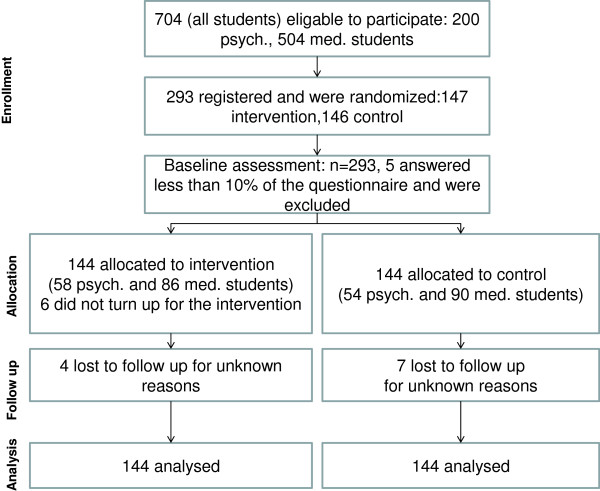
Background: Distress and burnout among medical and psychology professionals are commonly reported and have implications for the quality of patient care delivered. Already in the course of university studies, medicine and psychology students report mental distress and low life satisfaction. There is a need for interventions that promote better coping skills in students in order to prevent distress and future burnout. This study examines the effect of a seven-week Mindfulness-Based Stress Reduction (MBSR) programme on mental distress, study stress, burnout, subjective well-being, and mindfulness of medical and psychology students. Methods: A total of 288 students (mean age = 23 years, 76% female) from the University of Oslo and the University of Tromsø were randomly allocated to an intervention or control group. The control group continued with their standard university courses and received no intervention. Participants were evaluated using self-reported measures both before and after the intervention. These were: the ‘General Health Questionnaire, Maslach Burnout Inventory Student version, Perceived Medical School Stress, Subjective Well-being, and Five Facet Mindfulness Questionnaire’ and additional indices of compliance. Results: Following the intervention, a moderate effect on mental distress (Hedges’g 0.65, CI = .41, .88), and a small effect on both subjective well-being (Hedges’g 0.40, CI = .27, .63) and the mindfulness facet ‘non-reacting’ (Hedges’g 0.33, CI = .10, .56) were found in the intervention group compared with the control group. A higher level of programme attendance and reported mindfulness exercises predicted these changes. Significant effects were only found for female students who additionally reported reduced study stress and an increase in the mindfulness facet ‘non-judging’. Gender specific effects of participation in the MBSR programme have not previously been reported, and gender differences in the present study are discussed. Conclusion: Female medical and psychology students experienced significant positive improvements in mental distress, study stress, subjective well-being and mindfulness after participating in the MBSR programme. Trial registration: NCT00892138
Overview
The claims and statistics of this paper haven’t been checked yet.
Free: it reads the open-access text and checks the first 5 claims that cite a source we can check. Create a free account to check every claim.
Integrity signals
Registry
Cites
Statistics
Figures
Verification
Claims the paper makes
The claims and statistics of this paper haven’t been checked yet.
Free: it reads the open-access text and checks the first 5 claims that cite a source we can check. Create a free account to check every claim.
Claims other papers make about this one
Each is checked against this paper’s own text: does it say what the citing paper says it does?
The cited source says what the claim attributes to it.
In the citing paper
“It was suggested that unpleasant experiences are part of the intervention effect [124]”
In the citing paper
“One study reported that some participants “…experienced adverse emotional, mental or bodily states during mindfulness practice. However, this was not considered to be unintended effects of the intervention, but rather expected results of becoming more mindful of inner experiences” (page 5) [124].”
Self-check
Percentages, sums and reported differences re-computed from the paper’s own numbers.
The self-check needs the paper’s full text.
Citations
Cites
Cochrane Handbook for Systematic Reviews of Interventions: Cochrane Book Series
(2008) · doi:10.1002/9780470712184 · Cited by 25,048
Using Self-Report Assessment Methods to Explore Facets of Mindfulness
Baer, R. A., Smith, G. T., Hopkins, J., Krietemeyer, J., & Toney, L. (2006) · Assessment · doi:10.1177/1073191105283504 · Cited by 7,511 · cited 4×
“Suboptimal properties of the non-reactivity facet in a student sample have also been found in previous research [37].”
BackgroundMethodResultInfluential(1988) · NFER-Nelson eBooks · Cited by 5,560
Burnout and Engagement in University Students: A Cross-National Study
Schaufeli, W. B., Martínez, I. M., Pinto, A. M., Salanova, M., & Bakker, A. B. (2002) · Journal of Cross-Cultural Psychology · doi:10.1177/0022022102033005003 · Cited by 3,418
Baer, R. A., Smith, G. T., Lykins, E., Button, D., Krietemeyer, J., Sauer, S., Walsh, E., Duggan, D., & Williams, J. M. G. (2008) · Assessment · doi:10.1177/1073191107313003 · Cited by 2,930 · cited 2×
“However, we have found only small effect sizes for mindfulness, and the level of mindfulness measured at T2 is considerably lower than those reported in studies of experienced meditators [48].”
ResultDyrbye, L. N., Thomas, M. R., & Shanafelt, T. D. (2006) · Academic Medicine · doi:10.1097/00001888-200604000-00009 · Cited by 2,909
Assessment of Mindfulness by Self-Report: The Kentucky Inventory of Mindfulness Skills
Baer, R. A., Smith, G. T., & Allen, K. B. (2004) · Assessment · doi:10.1177/1073191104268029 · Cited by 2,298 · cited 1×
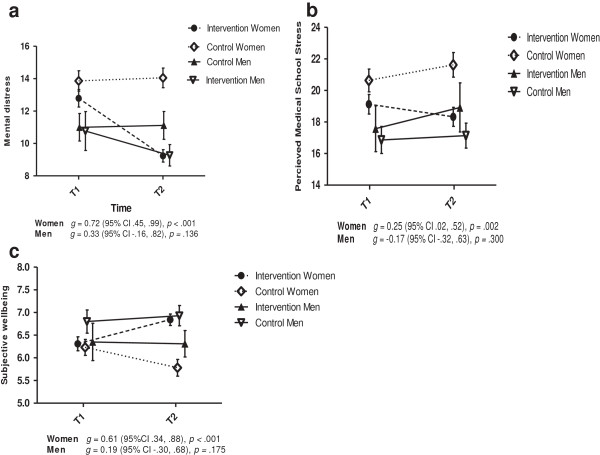
“By learning mindfulness, student mental health can be enhanced 2a), perceived medical school stress (Figure 2b) and subjective wellbeing (Figure 2c) including means and SD. through an improved ability to observe with an acceptance that is non-judging and non-reacting [47].”
BackgroundBurnout and Medical Errors Among American Surgeons
Shanafelt, T. D., Balch, C. M., Bechamps, G., Russell, T., Dyrbye, L., Satele, D., Collicott, P., Novotny, P. J., Sloan, J., & Freischlag, J. (2010) · Annals of Surgery · doi:10.1097/sla.0b013e3181bfdab3 · Cited by 2,099 · cited 1×
“Distress among medical and psychology professionals is associated with poorer patient care [1], a higher risk of future medical errors [2], as well as depression, anxiety and reduced life satisfaction [3-5].”
BackgroundEffects of mindfulness-based stress reduction on medical and premedical students
Shapiro, S. L., Schwartz, G. E., & Bonner, G. (1998) · Journal of Behavioral Medicine · doi:10.1023/a:1018700829825 · Cited by 1,493
How to Select, Calculate, and Interpret Effect Sizes
Durlak, J. A. (2009) · Journal of Pediatric Psychology · doi:10.1093/jpepsy/jsp004 · Cited by 1,446
Research works printed but not linked: 2
- De Vibe M Mindfulness training for stress management: a two-centre randomised controlled study of medical and psychology students with long-term follow up 2009 ClinicalTrials.gov [Internet] 2009-. Available from http://clinicaltrials.gov/ct2/show/NCT00892138. Identifier NCT00892138 PMC3751423 23941053
- Kabat-Zinn J Full Chatastrophe Living: Using the wisdom of your body and mind to face stress, pain and illness 2005 New York: Bantam Dell
Cited by
Items 101–200 of 394
Hanley, A. W., de Vibe, M., Solhaug, I., Gonzalez-Pons, K., & Garland, E. L. (2019) · Journal of Research in Personality · doi:10.1016/j.jrp.2019.103859 · Cited by 40
Self-citationThe undiagnosed pandemic: Burnout and depression within the surgical community
DeCaporale-Ryan, L. N., Sakran, J. V., Grant, S. B., Alseidi, A. A., Rosenberg, T., Goldberg, R. F., Sanfey, H. A., DuBose, J. J., Stawicki, S. P., Ricca, R. L., et al. (2017) · Current Problems in Surgery · doi:10.1067/j.cpsurg.2017.07.001 · Cited by 44
Errazuriz, A., Schmidt, K., Undurraga, E. A., Medeiros, S., Baudrand, R., Cussen, D., Henriquez, M., Celhay, P., & Figueroa, R. A. (2022) · Journal of Psychiatric Research · doi:10.1016/j.jpsychires.2020.11.011 · Cited by 38
Baumgartner, J. N., & Schneider, T. R. (2021) · Journal of American College Health · doi:10.1080/07448481.2021.1950728 · Cited by 62
Larger hippocampal dimensions in meditation practitioners: differential effects in women and men
Luders, E., Thompson, P. M., & Kurth, F. (2015) · Frontiers in Psychology · doi:10.3389/fpsyg.2015.00186 · Cited by 38
“…least with respect to addressing brain anatomy—the observed group-by-sex interactions seem to be in accordance with a recent study reporting sex-divergent outcomes when assessing the impact of a mindfulness intervention on behavioral measures/psychological constructs (de Vibe et al., 2013).”
BackgroundResultInfluentialSletta, C., Tyssen, R., & Løvseth, L. T. (2019) · BMC Medical Education · doi:10.1186/s12909-019-1476-3 · Cited by 53
Self-citationLin, Y., Fisher, M. E., & Moser, J. S. (2018) · Social Cognitive and Affective Neuroscience · doi:10.1093/scan/nsy113 · Cited by 48
O'Driscoll, M., Sahm, L. J., Byrne, H., Lambert, S., & Byrne, S. (2019) · Currents in Pharmacy Teaching and Learning · doi:10.1016/j.cptl.2019.05.014 · Cited by 37
Comparison of stress in freshman and senior nursing students
Mussi, F. C., Pires, C. G. D. S., Carneiro, L. S., Costa, A. L. S., Ribeiro, F. M. S. E. S., & dos Santos, A. F. (2019) · Revista da Escola de Enfermagem da USP · doi:10.1590/s1980-220x2017023503431 · Cited by 37
Stressors and Protective Factors among Veterinary Students in New Zealand
Weston, J. F., Gardner, D. H., & Yeung, P. (2017) · Journal of Veterinary Medical Education · doi:10.3138/jvme.0116-014r1 · Cited by 45
Ortet, G., Pinazo, D., Walker, D., Gallego, S., Mezquita, L., & Ibáñez, M. I. (2020) · PLOS ONE · doi:10.1371/journal.pone.0228655 · Cited by 35
“Nonetheless, [18] used six weekly sessions of only 1.”
BackgroundResultEvaluating mindfulness training for medical and PhD nursing students
Noble, H., Reid, J., Walsh, I. K., Ellison, S. E., & McVeigh, C. (2019) · British Journal of Nursing · doi:10.12968/bjon.2019.28.12.798 · Cited by 35
Neufeld, A., & Malin, G. (2021) · Teaching and Learning in Medicine · doi:10.1080/10401334.2021.1960533 · Cited by 36
Group Online Mindfulness Training: Proof of Concept
Kemper, K. J., & Yun, J. (2015) · Journal of Evidence-Based Complementary & Alternative Medicine · doi:10.1177/2156587214553306 · Cited by 34
“Given the high stress and burnout levels reported by physicians and trainees, and their adverse effects on health and quality of care, interest has emerged in the protective effect of mindfulness training.(1-6) The most established training programs rely on mindfulness-based stress reduction, adapted for health profes…”
BackgroundAlzahrani, A. M., Hakami, A., AlHadi, A. N., Al-Maflehi, N. S., Aljawadi, M. H., Alotaibi, R. M., Alzahrani, M. M., Alammari, S. A., Batais, M. A., & Almigbal, T. H. (2023) · PLoS ONE · doi:10.1371/journal.pone.0293539 · Cited by 59
Assessing Burnout and Interest in Wellness Programs in Physician Assistant Students
Johnson, A. K., Blackstone, S. R., Simmons, W. R., & Skelly, A. W. (2020) · The Journal of Physician Assistant Education · doi:10.1097/jpa.0000000000000303 · Cited by 46
“In contrast, studies of volunteer medical students or physicians have shown a reduction in burnout and stress using a similar mindfulness curriculum.(22,24) Given the success of mindfulness-based stress management courses for medical students and physicians,(22,24,27,28) similar interventions may be beneficial for PA…”
ResultJohnson, A. K., Blackstone, S. R., Skelly, A. W., & Simmons, W. R. (2020) · Health Professions Education · doi:10.1016/j.hpe.2020.04.003 · Cited by 50
Jensen, K. H. K., Krog, M. C., Koert, E., Hedegaard, S., Chonovitsch, M., Schmidt, L., Kolte, A. M., & Nielsen, H. S. (2021) · Reproductive BioMedicine Online · doi:10.1016/j.rbmo.2021.04.018 · Cited by 38
van Dijk, I., Lucassen, P. L., & Speckens, A. E. (2015) · BMC Medical Education · doi:10.1186/s12909-015-0302-9 · Cited by 32
“Three out of six strongly reduced the duration of the MBSR intervention [28-30] or used combined groups of medical students and nursing students [28] or psychology students [30].”
BackgroundSocialization, professionalism, and professional identity formation
Hafferty, F. W. (2016) · Cambridge University Press eBooks · doi:10.1017/cbo9781316178485.006 · Cited by 49
Electrophysiological effects of mindfulness meditation in a concentration test
Morais, P., Quaresma, C., Vigário, R., & Quintão, C. (2021) · Medical & Biological Engineering & Computing · doi:10.1007/s11517-021-02332-y · Cited by 31
Szarko, A. J., Houmanfar, R. A., Smith, G. S., Jacobs, N. N., Smith, B. M., Assemi, K., Piasecki, M., & Baker, T. K. (2022) · Journal of Contextual Behavioral Science · doi:10.1016/j.jcbs.2022.02.004 · Cited by 31
Aljuwaiser, S., Brazzelli, M. G., Arain, I., & Poobalan, A. S. (2023) · Journal of Mental Health · doi:10.1080/09638237.2023.2278095 · Cited by 55
Behind sleepy eyes: Implications of sleep loss for organizations and employees.
Budnick, C. J., & Barber, L. K. (2015) · Translational Issues in Psychological Science · doi:10.1037/tps0000014 · Cited by 36
The Impact of a Brief Embedded Mindfulness-Based Program for Veterinary Students
Correia, H., Smith, A. D., Murray, S. M., Polak, L. S., Williams, B., & Cake, M. A. (2017) · Journal of Veterinary Medical Education · doi:10.3138/jvme.0116-026r · Cited by 42
Fuentes, A., Oyanadel, C., Zimbardo, P. G., González-Loyola, M., Olivera-Figueroa, L. A., & Castro, W. P. (2022) · European Journal of Investigation in Health Psychology and Education · doi:10.3390/ejihpe12030022 · Cited by 44
“In an intervention for university students, women exhibited lower levels of stress and greater well-being than men post intervention [21].”
BackgroundKeng, S., Phang, C. K., & Oei, T. P. S. (2015) · International Journal of Cognitive Therapy · doi:10.1521/ijct.2015.8.4.335 · Cited by 36
Philips, K., Brintz, C., MOSS, K. L., & Gaylord, S. A. (2019) · Global Advances in Health and Medicine · doi:10.1177/2164956119879367 · Cited by 34
The impact of mindfulness apps on psychological processes of change: a systematic review
Macrynikola, N., Mir, Z., Gopal, T., Rodriguez, E., Li, S., Cox, M., Yeh, G. Y., & Torous, J. B. (2024) · npj Mental Health Research · doi:10.1038/s44184-023-00048-5 · Cited by 43
Mejia-Downs, A. (2019) · Journal of Physical Therapy Education · doi:10.1097/jte.0000000000000114 · Cited by 34
How are Medical Institutions Supporting the Well-being of Undergraduate Students? A Scoping Review
Mohmand, S., Monteiro, S., & Solomonian, L. (2022) · Medical Education Online · doi:10.1080/10872981.2022.2133986 · Cited by 39
Butcher, M. R., Thompson, K. M., Williams, M. K., Cooke, B. K., & Merlo, L. J. (2021) · Advances in Medical Education and Practice · doi:10.2147/amep.s323332 · Cited by 32
Síntomas psicopatológicos, estrés y burnout en estudiantes de medicina
Oró, P., Esquerda, M., Salas, J. V., Yuguero, O., & Pifarré, J. (2017) · Educación Médica · doi:10.1016/j.edumed.2017.09.003 · Cited by 57
Wagner, J. A., Bermúdez‐Millán, A., Damio, G., Segura‐Pérez, S., Chhabra, J., Vergara, C., & Pérez‐Escamilla, R. (2015) · Translational Behavioral Medicine · doi:10.1007/s13142-015-0332-1 · Cited by 29
Mindfulness in a Graduate Nursing Curriculum: A Randomized Controlled Study
Plummer, C., Cloyd, E., Doersam, J. K., Dietrich, M. S., & Hande, K. A. (2018) · Holistic Nursing Practice · doi:10.1097/hnp.0000000000000277 · Cited by 27
Juul, L., Brorsen, E., Gøtzsche, K., Nielsen, B. L., & Fjorback, L. O. (2021) · Frontiers in Psychology · doi:10.3389/fpsyg.2021.722771 · Cited by 40
Saúde mental de acadêmicos de medicina: estudo longitudinal
Barbosa-Medeiros, M. R., & Caldeira, A. P. (2021) · Revista Brasileira de Educação Médica · doi:10.1590/1981-5271v45.3-20190285 · Cited by 64
Chung, J., Mundy, M. E., Hunt, I., Coxon, A., Dyer, K. R., & McKenzie, S. (2021) · Frontiers in Psychology · doi:10.3389/fpsyg.2021.752060 · Cited by 26
Carrieri, D., Pearson, M., Mattick, K. L., Papoutsi, C., Briscoe, S., Wong, G., & Jackson, M. (2020) · Health Services and Delivery Research · doi:10.3310/hsdr08190 · Cited by 38
Kosugi, T., Ninomiya, A., Nagaoka, M., Hashimoto, Z., Sawada, K., Park, S., Fujisawa, D., Mimura, M., & Sado, M. (2021) · Frontiers in Psychology · doi:10.3389/fpsyg.2021.700916 · Cited by 35
Bartos, L. J., Posadas, M. P., Wrapson, W., & Krägeloh, C. U. (2023) · Mindfulness · doi:10.1007/s12671-023-02102-x · Cited by 29
Nagel, T. W. S., Remillard, C., Aucoin, R., & Takenishi, A. (2018) · Journal of University Teaching and Learning Practice · doi:10.53761/1.15.1.7 · Cited by 33
Strauss, C., Gu, J., Pitman, N., Chapman, C., Kuyken, W., & Whittington, A. (2018) · Trials · doi:10.1186/s13063-018-2547-1 · Cited by 34
“There is also growing evidence that mindfulness-based interventions (MBIs) improve stress in healthcare staff [9, 12, 14, 37, 41], including in NHS settings [28].”
BackgroundMethodLin, Y., Eckerle, W. D., Peng, L. W., & Moser, J. S. (2019) · Brain Sciences · doi:10.3390/brainsci9090226 · Cited by 26
Lo, H. H. M., Ngai, S., & Yam, K. (2021) · Mindfulness · doi:10.1007/s12671-021-01663-z · Cited by 27
Wu, Y., Wei, Y., Li, Y., Pang, J., & Su, Y. (2022) · Frontiers in Public Health · doi:10.3389/fpubh.2022.952269 · Cited by 30
Bartos, L. J., Funes, M. J., Ouellet, M., Posadas, M. P., Immink, M. A., & Krägeloh, C. U. (2022) · Mindfulness · doi:10.1007/s12671-022-01976-7 · Cited by 35
Short-Term Meditation Training Fosters Mindfulness and Emotion Regulation: A Pilot Study
Fazia, T., Bubbico, F., Iliakis, I., Salvato, G., Berzuini, G., Bruno, S., & Bernardinelli, L. (2020) · Frontiers in Psychology · doi:10.3389/fpsyg.2020.558803 · Cited by 22
Phang, C.-K., Mukhtar, F., Ibrahim, N., & Sidik, S. M. (2016) · The Journal of Mental Health Training Education and Practice · doi:10.1108/jmhtep-02-2015-0011 · Cited by 28
Women leader/ship development: mindfulness and well-being
Phillips, T., & Grandy, G. (2018) · Gender in Management An International Journal · doi:10.1108/gm-11-2016-0178 · Cited by 26
Cheng, F. K. (2016) · International Journal of Africa Nursing Sciences · doi:10.1016/j.ijans.2016.01.001 · Cited by 34
Rong, R., Chen, W., Dai, Z., Gu, J., Chen, W., Zhou, Y., Kuang, M., & Xiao, H. (2021) · BMC Medical Education · doi:10.1186/s12909-021-02813-6 · Cited by 30
“In recent years, several randomized controlled studies have investigated the ability of interventions using mindfulness-based stress reduction (MBSR) to reduce mental distress and burnout and improve coping skills [19, 20].”
BackgroundDinesh, T. K., Shetty, A., Dhyani, V. S., Shwetha, T. S., & Dsouza, K. J. (2022) · Systematic Reviews · doi:10.1186/s13643-022-01956-x · Cited by 21
“The waitlist control group is those groups where no intervention is executed in the control group [38].”
BackgroundFirst-Year Doctor of Physical Therapy Students Demonstrate Change in Coping With Stress
Veld, R. V., Slaven, E. J., Reynolds, B., Shupe, P. G., & Woolery, C. (2018) · Journal of Physical Therapy Education · doi:10.1097/jte.0000000000000037 · Cited by 22
Chittaro, L., & Vianello, A. (2016) · Interacting with Computers · doi:10.1093/iwc/iwv044 · Cited by 19
Solanes, A., Albajes-Eizagirre, A., Fullana, M. A., Fortea, L., Fusar-Poli, P., Torrent, C., Solé, B., Bonnín, C. M., Shin, J. I., Vieta, E., et al. (2021) · Revista de Psiquiatría y Salud Mental · doi:10.1016/j.rpsm.2020.08.002 · Cited by 19
Guadalupe, L. A. O., Vásquez, D. E. S., Gómez, J. C. A., & Sánchez, A. A. A. (2019) · Terapia psicológica · doi:10.4067/s0718-48082019000200116 · Cited by 70
Parental care and depressive symptoms among Chinese medical students: roles of empathy and gender
Geng, Y., Fei, W., Tang, Z., Wang, S., Yu, J., Zhang, M., & Zhang, T. (2022) · BMC Medical Education · doi:10.1186/s12909-022-03524-2 · Cited by 21
“There is an urgent need for random intervention studies involving Chinese medical students [10, 53].”
BackgroundGan, R., Xue, J., & Chen, S. (2023) · Mindfulness · doi:10.1007/s12671-023-02092-w · Cited by 20
Behavioral and psychosocial factors related to mental distress among medical students
Carlos, K. C. D. L., Ahmadi, H., Uban, K. A., & Riis, J. L. (2023) · Frontiers in Public Health · doi:10.3389/fpubh.2023.1225254 · Cited by 22
Integrative Medicine in Preventive Medicine Education
Jani, A. A., Trask, J., & Ali, A. (2015) · American Journal of Preventive Medicine · doi:10.1016/j.amepre.2015.08.019 · Cited by 21
Searching for the philosopher's stone: promising links between meditation and brain preservation
Luders, E., & Cherbuin, N. (2016) · Annals of the New York Academy of Sciences · doi:10.1111/nyas.13082 · Cited by 19
Universidad Nacional de Mar del Plata, F. D. P., Canedo, C. M., Andrés, M. L., Universidad Nacional de Mar del Plata, F. D. P., Juric, L. C., Universidad Nacional de Mar del Plata, F. D. P., Rubiales, J., & Universidad Nacional de Mar del Plata, F. D. P. (2019) · Liberabit Revista Peruana de Psicología · doi:10.24265/liberabit.2019.v25n1.03 · Cited by 47
“Particularmente, los estudiantes de Psicología han mostrado niveles muy elevados deestrés en comparación con estudiantes de otrasdisciplinas (Vibe et al., 2013; Leahy et al., 2010;omas, Caputi, & Wilson, 2014), produciendoefectos negativos tanto para su rendimiento académicocomo para su calidad de…”
BackgroundSumell, A. J., Chiang, E. P., Koch, S. F., Mangeloja, E., Sun, J., & Wu, J. (2021) · International Review of Economics Education · doi:10.1016/j.iree.2021.100213 · Cited by 21
Martin, M. W. S., Vidić, Ž., & Oxhandler, R. (2022) · Journal of American College Health · doi:10.1080/07448481.2022.2133962 · Cited by 21
“41 For example, de Vibe et al., 36 found medical and psychology students reported positive improvement in mental distress, study stress, subjective well-being and mindfulness after participation in a mindfulness stress reduction program that was independent of student curriculum.”
Crowther, L. L., Robertson, N., & Anderson, L. (2020) · Medical Education · doi:10.1111/medu.14150 · Cited by 26
Saarinen, A., Hintsanen, M., Vahlberg, T., Hankonen, N., & Volanen, S. (2022) · Journal of Adolescence · doi:10.1002/jad.12011 · Cited by 17
Wielewska, M. K., Godzwon, J. M., Gargul, K., Nawrocka, E., Konopka, K., Sobczak, K., Rudnik, A. A., & Zdun‐Ryżewska, A. (2022) · Frontiers in Psychology · doi:10.3389/fpsyg.2022.815369 · Cited by 21
Mohamed, N. F., Govindasamy, P., Rahmatullah, B., & Purnama, S. (2022) · Pertanika journal of social science & humanities · doi:10.47836/pjssh.30.2.13 · Cited by 28
Los Estudios Universitarios y el Mindfulness. Una Revisión Sistemática
Garófano, V. V., Revelles, A. B. F., Linares, M., Garcés, T. E., Puertas-Molero, P., & Chacón, R. G. (2018) · REICE Revista Iberoamericana sobre Calidad Eficacia y Cambio en Educación · doi:10.15366/reice2018.16.1.008 · Cited by 28
“Por tanto, hay una necesidad de intervenciones que promuevan mejorar las habilidades de afrontamiento en los estudiantes para prevenir la angustia y el burnout futuro (De Vibe et al., 2013).”
BackgroundWork and mental health in doctors: A short review of Norwegian studies
Tyssen, R. (2019) · Porto Biomedical Journal · doi:10.1097/j.pbj.0000000000000050 · Cited by 19
“With respect to medical students and young doctors, we have also a large longitudinal study on mindfulness-based stress reduction.(46) This is a randomized-controlled trial of second year medical and psychology students, and they have now been followed-up for 6 years, for the medical students into the first 2 postgrad…”
BackgroundSelf-citationShort, M. M., Mazmanian, D. S., Ozen, L. J., & Bédard, M. (2015) · Scholarship & Creative Works - Digital UNC a service of University Libraries (University of Northern Colorado) · Cited by 18
Repo, S., Elovainio, M. J., Pyörälä, E., Iriarte-Lûttjohann, M., Tuominen, T., Härkönen, T., Gluschkoff, K., & Paunio, T. (2022) · Advances in Health Sciences Education · doi:10.1007/s10459-022-10116-8 · Cited by 29
Skolzkov, A., & Efremova, E. (2023) · SAGE Open · doi:10.1177/21582440231166601 · Cited by 25
“Previous studies using brief versions of mindfulness-based programs have been shown to be effective (de Vibe et al., 2013; Phang et al., 2016).”
BackgroundMethodThe Impact of Mindful Learning on Subjective and Psychological Well-Being in Postgraduate Students
Wang, Q., Zhang, Y., Zhang, Y., & Chen, T.-W. (2023) · Behavioral Sciences · doi:10.3390/bs13121009 · Cited by 58
Lin, Y., Gloe, L. M., Louis, C. C., Eckerle, W. D., Fisher, M. E., & Moser, J. S. (2020) · Scientific Reports · doi:10.1038/s41598-020-71122-7 · Cited by 19
Effects of a Mindfulness Program for University Students
Queraltó, J. M., Cladellas, M., Gayete, S., Guarch, M., Maye, I. H., Parpal, G., Toledo, A., Torrent, D., & Portillo, A. T. (2020) · Clínica y Salud · doi:10.5093/clysa2020a24 · Cited by 29
“One of the fields in which the effectiveness of mindfulness programs is being demonstrated is the university setting (Bruin et al., 2015; De Vibe et al., 2013; Fuente-Arias et al., 2010; Gallego et al., 2014; Hindman et al., 2015; McConville et al., 2017; Yagüe et al., 2016).”
BackgroundResultSpruill, T. M., Reynolds, H. R., Dickson, V. V., Shallcross, A. J., Visvanathan, P. D., Park, C., Kalinowski, J., Zhong, J., Berger, J. S., Hochman, J. S., et al. (2018) · American Heart Journal · doi:10.1016/j.ahj.2018.03.028 · Cited by 17
Optimizing Lifestyle Medicine Health Care Delivery Through Enhanced Interdisciplinary Education
Clarke, C. A., Frates, J., & Frates, E. P. (2016) · American Journal of Lifestyle Medicine · doi:10.1177/1559827616661694 · Cited by 15
What's new in academic medicine: Can we effectively address the burnout epidemic in healthcare?
Stawicki, S. P., Tolentino, J. C., Guo, W., Ricca, R., Vazquez, D., Martins, N. B., Sweeney, J., Moalem, J., Derrick, E. L., Sholevar, F., et al. (2017) · International Journal of Academic Medicine · doi:10.4103/ijam.ijam_47_17 · Cited by 15
“A recent study showed the benefit of a 7‐week course in mind‐body medicine that helps students better cope with stress.[71] Similar programs have been proven to be effective in increasing empathy, ultimately leading to decreased burnout among medical students.”
BackgroundExtremera, A. B., Camacho, M. D. M. O., Sánchez, A.-M. M., & Granero‐Gallegos, A. (2021) · Revista de Psicodidáctica · doi:10.1016/j.psicod.2020.12.002 · Cited by 33
The role of therapy in reducing the risk of job burnout – a systematic review of literature
Jaworska-Burzyńska, L., Kanaffa-Kilijańska, U., Przysiężna, E., & Szczepańska-Gieracha, J. (2016) · Archives of Psychiatry and Psychotherapy · doi:10.12740/app/65815 · Cited by 21
“Archives of Psychiatry and Psychotherapy, 2016; 4: 43–52 in the level of burnout were detected [5,6] while in 25 nurses the effects were significant [15].”
BackgroundInfluentialNaturopathic medical student empathy and burnout: A preliminary study
Hicks, M., & Hanes, D. A. (2018) · Advances in Integrative Medicine · doi:10.1016/j.aimed.2018.07.001 · Cited by 13
Lekkas, D., Price, G. D., McFadden, J. R., & Jacobson, N. C. (2021) · Mindfulness · doi:10.1007/s12671-021-01723-4 · Cited by 15
“This includes attendance at instructor-led sessions, participation in weekly group discussions, adherence to daily mindfulness exercises at home, and/or completion of assigned homework (e.g., journal entries and self-reflections) (de Vibe et al., 2013).”
BackgroundParsonage-Harrison, J., Birken, M., Harley, D., Dawes, H., & Eklund, M. (2022) · British Journal of Occupational Therapy · doi:10.1177/03080226221110391 · Cited by 20
Sado, M., Kosugi, T., Ninomiya, A., Nagaoka, M., Park, S., Fujisawa, D., Shirahase, J., & Mimura, M. (2019) · JMIR Research Protocols · doi:10.2196/15892 · Cited by 11
Improvement of attention and stress levels in students through a Mindfulness intervention program
Extremera, A. B., Camacho, M. D. M. O., Marfil-Sánchez, A. M., & Granero‐Gallegos, A. (2021) · Revista de Psicodidáctica (English ed ) · doi:10.1016/j.psicoe.2020.12.002 · Cited by 15
Fakultas Psikologi, U. K. M., Fun, L. F., Kartikawati, I. A. N., Fakultas Psikologi, U. K. M., Satyawan, L. I., Fakultas Psikologi, U. K. M., Fransiska, S., & Fakultas Psikologi, U. K. M. (2021) · Mediapsi · doi:10.21776/ub.mps.2021.007.01.3 · Cited by 42
Undergraduate pharmacy students' experiences of a mindfulness-based intervention
O’Driscoll, M., Byrne, S., Byrne, H., Lambert, S., & Sahm, L. J. (2019) · Currents in Pharmacy Teaching and Learning · doi:10.1016/j.cptl.2019.07.014 · Cited by 14
Fang, C. M., McMahon, K., Miller, M. L., & Rosenthal, M. Z. (2021) · Journal of Clinical Psychology · doi:10.1002/jclp.23245 · Cited by 18
Eliassen, B. K., Sørlie, T., Sexton, J., & Høifødt, T. S. (2015) · Scandinavian Journal of Caring Sciences · doi:10.1111/scs.12261 · Cited by 12
Self-citationChung, J., Mundy, M. E., & McKenzie, S. P. (2022) · Frontiers in Psychology · doi:10.3389/fpsyg.2022.869765 · Cited by 17
“The FFMQ has been used to assess MBIs such as in De Vibe et al. (2013), Shore et al. (2018), and Světlák et al. (2021).”
MethodWalter, O., Kasler, J., & Routray, S. (2024) · BMC Psychology · doi:10.1186/s40359-024-01806-6 · Cited by 26
“Furthermore, de Vibe et al. [14] found that Indian females registered higher values on the subjective well-being scale (i.e., cognitive well-being) than Indian males did.”
BackgroundVidić, Ž. (2024) · Current Psychology · doi:10.1007/s12144-024-06395-6 · Cited by 16
“This adds to previous research (Baghurst & Kelley, 2014; de Vibe et al., 2013; Gallego et al., 2014; St. Martin et al., 2022; Vidic & Cherup, 2019; Vidic, 2021).”
InfluentialZhao, L. (2025) · Frontiers in Psychology · doi:10.3389/fpsyg.2024.1498458 · Cited by 16
Hesse, C., Shorey, R. C., Brem, M. J., Stuart, G. L., & Cornelius, T. L. (2019) · Journal of Interpersonal Violence · doi:10.1177/0886260519879264 · Cited by 14
“Furthermore, these interventions have been successfully implemented with college students (De Vibe et al., 2013; McIndoo, File, Preddy, Clark, Hopko, 2016).”
Warrier, U., Foropon, C. R. H., & Chéhimi, M. (2021) · International Journal of Manpower · doi:10.1108/ijm-02-2021-0067 · Cited by 15
Check-In: An Educational Activity to Address Well-Being and Burnout among Pharmacy Students
Fernandes, H. V. J., Richard, C. L., Bynkoski, K., Ewan, B., & Houle, S. K. D. (2020) · Pharmacy · doi:10.3390/pharmacy8040184 · Cited by 11
“A limitation of the feedback obtained from our survey was self-selection bias, which has been reported in previous studies [15,27].”
ResultKötter, T., Ritter, J., Katalinic, A., & Voltmer, E. (2016) · PLoS ONE · doi:10.1371/journal.pone.0168104 · Cited by 11
Exploring moderators of intervention effects of a mindfulness program for Filipino children
Galvez Tan, L. J. T., & Alampay, L. P. (2022) · International Journal of School & Educational Psychology · doi:10.1080/21683603.2020.1856741 · Cited by 10
Metadata
- Authors
- de Vibe, M., Solhaug, I., Tyssen, R., Friborg, O., Rosenvinge, J. H., Sørlie, T., & Bjørndal, A.
- Affiliations
- UiT The Arctic University of Norway (NO)
- University of Oslo (NO)
- University Hospital of North Norway (NO)
- Center for Child and Adolescent Mental Health, Eastern and Southern Norway (NO)
- Corresponding author
- Solhaug, Ida
- Venue
- BMC Medical Education
- Published
- 2013-08-13
- Volume
- 13
- Issue
- 1
- Pages
- 107-107
- ISSN
- 1472-6920 (ISSN-L)
- PMC
- PMC3751423
- OpenAlex
- W2164910355
- Cited by
- 398
- References
- 51
- Citations by year
- 2026: 21 · 2025: 32 · 2024: 25 · 2023: 33 · 2022: 40 · 2021: 56 · 2020: 38 · 2019: 37 · 2018: 32 · 2017: 23 · 2016: 23 · 2015: 26 · 2014: 8 · 2013: 2
- FWCI
- 21.86
- Type
- journal article
- Language
- en
- Open access
- gold
- doi.org
- Licence
- Locations
- BMC Medical Education (publishedVersion, cc-by)
- Europe PMC (PubMed Central) (publishedVersion, cc-by)
- PubMed Central (publishedVersion, cc-by)
- PubMed (publishedVersion)
- NORA - Norwegian Open Research Archives (submittedVersion, other-oa)
- NORA - Norwegian Open Research Archives (submittedVersion, cc-by)
- Funders
- Norske Legeforening
- Topics
- Social Sciences › Psychology › Clinical Psychology › Mindfulness and Compassion Interventions
- Health Sciences › Health Professions › General Health Professions › Healthcare professionals’ stress and burnout
- Social Sciences › Psychology › Social Psychology › Stress and Burnout Research
- Keywords
- mindfulness-based stress reduction, medical students, psychology students, academic burnout, psychological distress, academic stress, subjective well-being, mindfulness, gender differences, coping strategies, non-judgment
- MeSH terms
- Burnout, Professional, Female, Humans, Male, Psychiatric Status Rating Scales, Psychology, Surveys and Questionnaires, Stress, Psychological, Students, Students, Medical, Young Adult, Mindfulness
About these checks
Registry, retraction, Cites and statistics results are computed, not judged, with one exception: a printed reference that no index lists is read once by a model before it counts as a citation error. Claims are extracted by a model and kept only when their quote appears verbatim in the text; each cited source is then checked, with a model’s help, for whether it says what the claim relies on. Those verdicts can be wrong — read the claim’s quote and the cited source before relying on one.
Statistics and arithmetic are recomputed, not judged.
Confidence bands are shown only for fields calibrated on our annotated test set. None is calibrated yet, so no band is shown.
What counts as a claim ›How we measure confidence ›How we check this ›
Are you an author, or do you see a problem with this page? Request a review
Data sources
Bibliographic data: Semantic Scholar, OpenAlex, Crossref.
Contains information from the Semantic Scholar Academic Graph Datasets, made available under the ODC Attribution License (ODC-BY 1.0).
Semantic Scholar’s data is described in: Kinney, R., et al. (2023). The Semantic Scholar Open Data Platform. arXiv:2301.10140.
